Louisiana State University
LSU Digital Commons
LSU Doctoral Dissertations Graduate School
2011
Evaluation of knowledge transfer in an immersive
virtual learning environment for the transportation
community
Mary Leah Caillier Coco
Louisiana State University and Agricultural and Mechanical College, [email protected]
Follow this and additional works at:https://digitalcommons.lsu.edu/gradschool_dissertations Part of theHuman Resources Management Commons
This Dissertation is brought to you for free and open access by the Graduate School at LSU Digital Commons. It has been accepted for inclusion in LSU Doctoral Dissertations by an authorized graduate school editor of LSU Digital Commons. For more information, please [email protected].
Recommended Citation
Coco, Mary Leah Caillier, "Evaluation of knowledge transfer in an immersive virtual learning environment for the transportation community" (2011).LSU Doctoral Dissertations. 1193.
EVALUATION OF KNOWLEDGE TRANSFER IN AN IMMERSIVE VIRTUAL LEARNING ENVIRONMENT FOR THE TRANSPORTATION COMMUNITY
A Dissertation
Submitted to the Graduate Faculty of the Louisiana State University and Agricultural and Mechanical College
in partial fulfillment of the requirements for the degree of
Doctor of Philosophy in
The School of Human Resource Education and Workforce Development
by
Mary Leah Caillier Coco B.A., Louisiana State University, 2002 M.S., Louisiana State University, 2005
ii
© Copyright 2011 Mary Leah Caillier Coco
iii
DEDICATION
This work is dedicated in loving honor of my grandmother, Annie Young Glynn Hebert, whose zeal for learning was unmatched by any. She was a patient, kind, and brilliant woman that was generous beyond all imagination. For the 99 years she graced this world with her presence, the sun shone brighter and the birds chirped louder. I pray this work will be an honor to her name.
I also dedicate this work to my mother and namesake, Mary Leah Cooper Moore, who is a testament on how to love a child through any situation. I am honored when people say I remind them of you. Thank you for loving me no matter what, even when I didn‘t deserve it. To my father, Donald Mitchell Caillier, whose traits of competitiveness and perfection are surely ever present in me and a major reason I was able to complete my studies. Although he did not always tell me what I wanted to hear, he has always been supportive. Thank you for pushing me to always be the best at whatever I chose to do. For my bonus parents, Larry Landry Moore and Betsy Jones Caillier, thank you both for loving me like you have always had me in your lives. You have each blessed my life in so many ways and helped shape me to be the person I am today.
I also dedicate this work to my grandparents Vergie Mae and Malcolm Caillier, Josephine Wilson Glynn Cooper, and the late Revel Dean Cooper, Sr. Thank you for always telling me you were proud of me and encouraging me to pursue my education, something no one can take away.
To my beautiful daughter, Annie Claire, your sweet spirit is a blessing, and I know your life will touch so many people. To my husband, Jeremy, you have made countless dinners, washed endless loads of laundry, and done so with a willing spirit. Thank you for not giving up on me during this sometimes never-ending journey. I love you both to the end of the earth!
iv
ACKNOWLEDGMENTS
The journey to achieving a Doctor of Philosophy is one of many highs, innumerable lows, and one that is not finished without the support of a village to carry you to the end. I want to begin by thanking my esteemed committee for their encouragement and expertise throughout this entire process. Dr. Earl Johnson, you are truly one of the kindest, most talented educators I have ever had the privilege of knowing. Your dedication to guiding your students through the dissertation process is unwavering, and you are unsurpassed by none in your editing abilities. You are a true man of integrity! To Dr. Geraldine Johnson, my journey in the field of adult education began through conversations with you, and you forever altered my viewpoint
regarding the adult leaner. Your bright spirit lights up the room, and I truly thank you for your mentorship from the beginning of my journey. Dr. Marwa Hassan, you are a strong, brilliant, and kind woman that I am so grateful has served as my Dean‘s Representative. Thank you for your encouragement throughout this process and the reminders that I could achieve this amazing goal. Dr. Eugene Kennedy, you achieved the impossible and created a statistics lover out of me! Your patience with my countless questions as I built an understanding of statistics created a passion in me for such a menacing subject. You always brought calm to the storm, and I am so grateful for your constant guidance both inside and outside of class. I consider myself blessed to have been under the direction of such an amazing committee throughout this entire process.
To my committee chair, Dr. Krisanna Machtmes, there are no words that encapsulate my gratitude for all you have done for me during this entire process both academically,
professionally, and personally. You are one of the most strong-willed, passionate, kind, and intelligent individuals I have ever met. There has never been one time that I doubted you always wanted the best for me and my future. You pushed me academically when I didn‘t think I could
v
be pushed any more, and for that I am so grateful. I consider you, Rollin, and Ryan my family, and what an amazing family you are! Thank you for teaching me to be a scholar that always seeks to produce cutting edge research while still being a mentor to students.
Without the support of the Louisiana Department of Transportation and Development and Louisiana Transportation Research Center, this project would have never been possible. Thank you to the LADOTD- LTRC for recognizing the need in carrying out this research. Specifically, thank you to Skip Paul, Mark Morvant, and Samuel Cooper for your support through the
duration of this lengthy process. Also, thank you to Tinka McFarland, Cindy Twiner, Mike Elliot, Keith Beard, Kelvin Stone, and John Whitworth for your creative guidance throughout the development and implementation of this study. Your subject matter expertise led to an amazing end project and well executed study.
Through the partnership with the Louisiana Immersive Technologies Enterprise, the vision in my head came to life. Thank you to the entire team at LITE for your dedication to building this immersive virtual learning environment and seeing it through from
conceptualization to deployment. I want to specifically thank Scott Malo, Erin Ryan, and former Chief Creative Officer, Marty Altman. Without your passion, this project would have been much less enriching and impactful to the learners. Thank you for your hard work and dedication on this project.
If not for the entire faculty of the School of Human Resource Education and Workforce Development, this day would have never come. I came to this school as a young graduate student seeking a Master‘s degree and am leaving as a richly blessed student on every level one could imagine. Thank you to Dr. Michael Burnett, Dr. Joe Kotrlik, Dr. Donna Redmann, Dr. Reid Bates, Dr. Ed Holton, Dr. Sharon Naquin, and Dr. J.P. Hatala for mentoring me through this
vi
challenging process and inspiring me to always think critically as a scholar. To Ann Harrington and Chelsea Lewis, I thank you each for all of the support you have provided to me both
academically and personally. To all of the faculty and administrative staff of SHREWD, each of you has impacted my life profoundly, and I am forever grateful for all you have done for me.
To my Graduate Assistant, Jennifer Nides, thank you for coming to work painfully early many days to get this project rolling, sifting through page after page of information, and doing this all with a smile! You are going to do amazing things with your life, and I am honored to call you my friend.
There are many times when graduate students don‘t know where to turn for answers about the doctoral process, but when you have a friend named Leah Whitmire, the doctoral process is certainly much easier. Thank you Leah for answering question after question about paperwork, rules, procedures, and anything else I couldn‘t figure out. You are such a wonderful person, and I am so grateful for all you have done for me.
To the entire staff at the Trinity Lutheran Child Development Center, thank you loving my family through these last three years. You have lifted our family up in prayer and offered many words of encouragement. Thank you for helping carry us through this process and for loving my sweet Annie and your friendship.
The COVE has been an amazing circle of support as I trudged through this daunting process. Each of your families has prayed for guidance and fortitude for my family as we crossed this finish line together. To the Parker, Hasting, Sanchez, Murphy, and Daigle families, I am so grateful for each of you. Thank you for praying for me. To my wonderful small group leader, Ron Tyndall, I am eternally grateful for your words of love and motivation. Thank you for enriching my life through The COVE.
vii
Not many people in life can say they love their job and the people they work with each day. I am blessed to be one of those people that can make this assertion. To my work family, Melissa, Allison, Marty, Brenda, Sandy, Jenny, Emily, and Jenny, thank you so much for not only your hard work every day but for your friendship. To my boss, Dr. Glynn Cavin, you are an amazing person not only professionally but also personally. You are a genuine, kindhearted, intelligent, wise, and truly generous man. Thank you for encouraging me to stay the course and your unwavering belief in this research.
There are so many friends to whom I owe a world of gratitude for their support, patience, guidance, and love over these last few years. Thank you especially to Cheryl, Gracie, Leslie, Sara, Kimen, Melissa, Laila, Aimee, Melissa, David, Lisa, Sheetal, Alicia, Erastus, Tracy, Holly, and Melinda for your prayers, jokes, and reassurance while I traveled down this road. Your 6:00 a.m. phone calls to wish me well on exam days and uplifting messages sustained my spirit on those days when I thought I would never reach this point. Thank you for blessing me with your friendship.
I would be remiss to not thank my family. To my Mom, Larry, Dad, Betsy, Mary Katherine, Jan, Rodney, Kelley, Caleb, Colin, and Claire, thank you for steadfastly praying for me as I went through this journey. To my sweet daughter, Annie Claire, I love you more than you could ever imagine. God gave me the greatest gift when you were born, and I will always cherish you. To Jeremy, you are patient, kind, funny, sometimes tacky, but endlessly faithful. Thank you for taking this journey with me. Thank you for loving me even when I was
unlovable.
Whenever I was overcome with self-doubt or unsure of a decision I had made along this journey, I would lean upon Isaiah 30:21 which says, ―Whether you turn to the right or to the left,
viii
your ears will hear a voice behind you saying, ‗This is the way; walk in it‘.‖ God has sustained my spirit through this entire journey, and I lift my voice in praise to Him for His undeserved love, mercy, and faithfulness He has so graciously bestowed upon me.
ix TABLE OF CONTENTS DEDICATION ... iii ACKNOWLEDGEMENTS ... iv ABSTRACT ... xii CHAPTER 1. INTRODUCTION ...1 Rationale ...1
Purpose of the Study ...2
Research Question ...3
Independent and Dependent Variables ...3
Objectives ...4
Limitations ...5
Significance of the Study ...5
Definitions of Terms ...6
References ...8
CHAPTER 2. LITERATURE REVIEW ...11
A History of Distance Education ...11
Immersive Virtual Learning Environments ...15
Adult Education ...25
Experiential Learning in the Immersive Virtual Learning Environment ...31
References ...39
CHAPTER 3. METHODOLOGY ...46
Project Creation and Collaboration ...46
Population and Sample ...47
Research Implementation...47
Data Collection ...49
Institutional Review Board Approval ...51
References ...51
CHAPTER 4. TRAINING SKILLED AND UNSKILLED WORKERS IN AN IMMERSIVE VIRTUAL LEARNING ENVIRONMENT ...52
Introduction ...52
Significance of the Study ...53
Current Research ...55 Methods...58 Data Collection ...62 Deployment ...63 Results ...64 Analysis...68
Discussion and Conclusions ...68
x
CHAPTER 5. ASSESSMENT OF LEARNING IN A MARGINALIZED POPULATION OF
ADULTS IN AN IMMERSIVE VIRTUAL LEARNING ENVIRONMENT ...71
Introduction ...71
Immersive Virtual Learning Environments ...74
Purpose and Objectives ...78
Data Collection ...81
Results ...82
Discussion and Conclusions ...92
References ...94
CHAPTER 6. A MEASURE OF PRECISION REGARDING PROCEDURAL TASKS OF NON-TRADITIONAL ADULT LEARNERS IN AN IMMERSIVE VIRTUAL LEARNING ENVIRONMENT ...99
Introduction ...99
Immersive Virtual Learning Environment ...99
Purpose and Objectives ...102
Methods...103
Data Collection ...108
Results ...109
Discussion and Conclusions ...112
References ...113
CHAPTER 7. SUMMARY, CONCLUSIONS, AND RECOMMENDATIONS ...116
Summary ...116
Methods...117
Findings...119
Conclusions and Recommendations ...123
Future Research ...126
References ...128
APPENDIX 1. CHARACTERISTICS OF SEVEN LEVELS OF TAXONOMY OF STUDENT ENGAGEMENT ...129
APPENDIX 2. BASIC FLAGGING PROCEDURES DEMOGRAPHIC INFORMATION ...131
APPENDIX 3. BASIC FLAGGING PROCEDURES DEMOGRAPHIC INFORMATION CODING DOCUMENT ...133
APPENDIX 4. BASIC FLAGGING PROCEDURES PRETEST EXAMINATION BOOKLET ...135
APPENDIX 5. BASIC FLAGGING PROCEDURES POSTTEST EXAMINATION BOOKLET ...142
APPENDIX 6. IVLE RESEARCH STUDY QUALITATIVE QUESTIONS ...149
xi
APPENDIX 8. I/ITSEC PERMISSION LETTER...153 VITA ...155
xii
ABSTRACT
In the year 2009, 667 individuals lost their lives in a highway construction or
maintenance work zone (National Work Zone Safety Information Clearinghouse, 2010). Since the year 2003, 6,438 individuals have been killed in a highway construction or maintenance work zone, which is approximately 805 deaths per calendar year (National Work Zone Safety
Information Clearinghouse, 2010). This eye-opening and unfortunate statistic points to the need for a re-evaluation of training methodology as it relates to work zone safety. This study reports on the use of virtual learning technology for work-zone training.
This research tested the use of an Immersive Virtual Learning Environment (IVLE) simulating real-world highway work zones. IVLEs go beyond traditional visual learning by presenting images that combine a new form of visual learning and virtual-experiential learning in a way that is more congruent with an individual‘s visual images stored in memory, thus
improving knowledge transfer and retention (Dede, 2000; Kapp & O‘Driscoll, 2010). The visual cues that the learner experiences in the virtual world are so similar to the visual cues in the real world that recall of virtual world lessons stored in memory are triggered by the same cues in the real world. Additionally, the student can experiment, make mistakes, and repeat the activity as often as necessary, achieving a virtual-experiential understanding of the concept that can only be duplicated in real-world experiential learning, which is often not practical (Dede, 2000; Kapp & O‘Driscoll, 2010). Such immersive engagement in the learning activity will allow the learners to move beyond the memorization of the presented concepts and into the application and synthesis of the material.
A significant benefit of this research will be a better understanding of how educators can implement this advanced, user-friendly, semi-transparent technology to positively affect the inclusion of marginalized populations into virtual learning environments. This research will
xiii
establish a solid theoretical and evidence-based link between use of the virtual world learning environment and improved knowledge transfer and retention for that marginalized population that forms the bulk of the employment pool for military, construction, maintenance, and many other industrial entry-level positions.
1
CHAPTER 1. INTRODUCTION
Rationale
In the year 2009 alone, 667 individuals were killed in the United States in highway construction or maintenance work zones. More alarmingly, the total number of individuals killed in a highway construction or maintenance work zone in the U.S. since 2003 is a staggering 6,438 (National Work Zone Safety Information Clearinghouse, 2010). A State Department of Transportation defined a highway construction or maintenance work zone as an area of highway with maintenance, construction, or utility work activities (Louisiana Department of
Transportation and Development, 2010). This type of work zone is normally marked by
temporary traffic control devices such as signs, channeling devices, barriers, pavement markings, and/or work vehicles. Working in a highway construction or maintenance work zone is a highly physical activity that requires extreme focus, planning, and process implementation (Louisiana Department of Transportation and Development, 2010).
Use of IVLE technology may aid in decreasing the number of work zone fatalities that occur each year by allowing active experimentation in a highway construction or maintenance work zone to occur in a safe and supportive learning environment. Active experimentation within an IVLE will allow learners the opportunity to apply work zone regulations and
procedures in a realistic, although simulated, environment. Unlike the real world, a mistake in this virtual environment will not result in the loss of life. Studies indicated that adult learners are more apt to apply encoded instructional knowledge in the IVLE because mistakes can be made without negative consequences, encouraging application and building confidence (Blumel, Termath, & Haase, 2009). Dede (2000) highlighted that simulation and visualization tools, like
2
an Immersive Virtual Learning Environment (IVLE), can aid students in recognizing patterns, reasoning about physical processes, translating within frames of reference, and envisioning dynamic models.
This research tested the use of 3D technology in an IVLE, which simulated real-world highway work zones. The IVLE supplemented traditional course content and delivery methods to enhance the transfer of work zone safety procedure knowledge. This learning environment consisted of real-life case studies within a 3D virtual world. The research was unique due to the evaluation of the effectiveness of knowledge transfer across a diverse population of learners that had not yet been studied as it relates to IVLE implementation in the classroom. This research expanded the scientific knowledge of adult education involving knowledge transfer in an IVLE. Specifically, that an IVLE may enhance and supplement traditional learning through blended delivery methodology when utilized in a classroom environment with a diverse learner population.
Purpose of Study
The purpose of this research study was to determine if an Immersive Virtual Learning Environment (IVLE) increased the learning transfer of the knowledge obtained in a work zone safety Basic Flagging Procedures course. Studies have shown that learner engagement is paramount to learning success (Lim, Nonis, & Hedberg, 2006). This project hoped to find that through the IVLE, learning engagement was increased as the learners were fully integrated into the work zone safety simulation, with a specific focus on flagging procedures, as though they were actually performing the prescribed duties in accordance with the required rules and procedures. Such engagement in the learning activity allowed the learners to move beyond the memorization of the presented concepts and into the application and synthesis of the material.
3
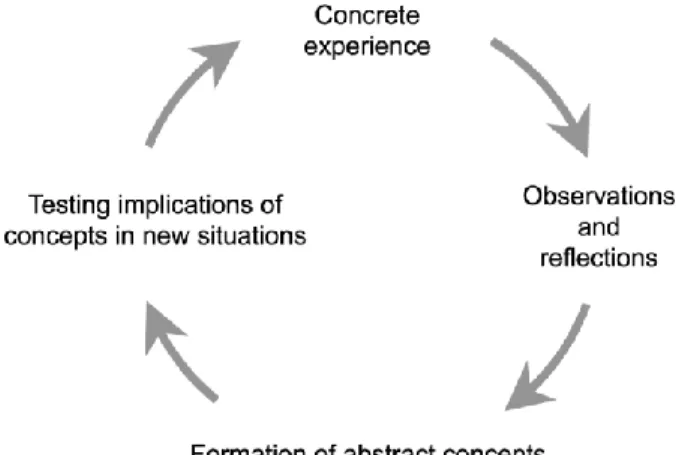
As supported by Kolb‘s (1984) Experiential Learning Theory, the IVLE allowed the adult learners to move from the concrete experience (current knowledge of work zone safety flagging procedures) to reflective observation (reflection on current knowledge of work zone safety flagging procedures as it relate to new materials) to abstract conceptualization (the application of the new knowledge of work zone safety flagging procedures) and lastly to active
experimentation (constructing new methods for using the new information on the job) (Swanson & Holton, 2001).
Blumel et al. (2009) stated that any organization‘s goal should be to provide suitable qualification measures to prepare employees for impending tasks before a new project begins. This study sought to achieve this goal by preparing transportation employees for the utilization of flagging procedures in work zones via the blended delivery method of the IVLE. By allowing the learners to explore flagging procedures as they related to work zone safety through an IVLE, the achieved success of the executable tasks connected to this environment will be evaluated as the measure as to the effectiveness of the IVLE (Blumel et al., 2009). This study did not ask ―What can the IVLE do‖ but rather ―What is the IVLE doing?‖ (Ellaway, Dewhurst, & McLeod, 2004).
Research Question
This study aimed to answer the question: Is an IVLE a more effective method than the traditional method for delivering the procedural content in the ―Basic Flagging Procedures‖ course to aid in the imprinting of the concepts presented regarding maintenance and construction work zones?
Independent and Dependent Variables
4
the traditional or immersive virtual learning environment Basic Flagging Procedures course; education level; years working in highway construction; age; race; and gender. The dependent variables will be: success rate on posttest and precision within the IVLE.
Objectives
The objectives for this research study were as follows:
1. To describe the adult learners that attended the Basic Flagging Procedures course in the southern region of the United States on the following demographic
characteristics a) Race b) Gender c) Age
d) Highest educational level completed
e) Years worked as an adult (18 years old and older) f) Years worked in highway maintenance or construction g) Previous flagger course taken or not
h) Type of organization i) Current job title
j) Total income in previous year.
2. To compare the traditional course delivery method to the IVLE course delivery method based on pre and posttest scores
3. To determine the precision of participants while in the IVLE through the use of telemetry data
post-5
telemetry measurements
5. To determine if a model exists which would explain a significant portion of variance in overall scale score.
Limitations
Within this research study, there were two limitations to address:
1. A portion of the population has taken this course content previously, thus exposing them to the material and the test prior to this study.
2. Population was limited to participants in the southern portion of Louisiana. Significance of the Study
This research will contribute fundamentally to the research of an IVLE not only as it relates to the transportation community but also to the research of the marginalized population. The hypothesis that the use of 3D technology to create an IVLE in order to increase the transfer of learning has been evaluated in a number of fields with the findings as to its success varying across the disciplines (Blascovich, Loomis, Beall, Swinth, Hoyt, & Bailenson, 2002; Clarke & Dede, 2005; de Freitas & Oliver, 2006; Jarmon, Traphagan, & Mayrath, 2008). However, the aforementioned studies were conducted with homogenous groups, with this aspect being a fundamental difference in this research study. This project was comprised of a truly
heterogeneous group on many levels (e.g. years of experience, technological proficiency, formal education, age, gender, etc.). Research conducted with extremely diverse populations increases generalizability to other populations and aids in supporting that individuals with limited
technological skills can succeed scholastically in an environment with learning technology. The prototype of blended learning utilized in this research project was very specific, but the knowledge gained and the technology developed from this research will have far-reaching impacts for any training where realistic practice is difficult and where realism during training is
6
invaluable. This research will expand the current empirical knowledge of a virtual learning environment in education, specifically that which deals with knowledge transfer in an IVLE as it enhances and supplements traditional learning through blended delivery methodology. The type of training will transcend subgroups, reducing the intergroup achievement gap, increase
participation due to the similarity to massive multiplayer online games, resulting in more students being better prepared for further educational opportunities and careers.
The IVLE also adds an avenue for increasing the knowledge and skill level of the marginalized population. Through the use of this blended methodology, the marginalized population was presented with technological advances in the realm of education that previously may have not been within their reach. By exposing this population to this type of educational element, a decrease in training resistance may be found. If a decrease in training resistance occurs, the likelihood of learning transfer increases, thus, leading to a better-trained population.
Definition of Terms
For the purpose of this research study, the following definitions are offered to assist in the understanding of terminology as it relates to this study:
1. Immersive Virtual Learning Environment: An environment that encompasses the user in a real- life, simulated environment (Savin-Badden, 2008). This environment capitalizes on natural aspects of human perception by extending the virtual information in three spatial dimensions, supplements information with other stimuli and temporal changes, and enables individuals to interact with the displayed data (Dalgarno & Lee, 2010).
2. Presence: The subjective experiences of being in one place or environment despite physically being situated in another (Witmer & Singer, 1998).
7
3. Marginalized Population: A portion of the population that is excluded, trivialized, devalued, or relegated to an unimportant or powerless position within a group or society (Merriam-Webster, 2008).
4. Education: ―The fundamental method of social progress and reform; a regulation of the process of coming to share in the social consciousness; and that the adjustment of individual activity on the basis of this social
consciousness is the only sure method of social reconstruction‖ (p. 453, Dewey in McDermott, 1981).
5. Avatar: A representation of a person in a virtual environment (Bailenson, Blascovich, Beall, & Noveck, 2006).
6. Socioeconomic Status: An individual's economic position relative to others, based on income, education, and occupation (Merriam-Webster, 2008). Socioeconomic status is used interchangeably with the category ―Total Income in the Previous Year,‖ as indicated in the demographic survey. 7. Course Definition: The ―Basic Flagging Procedures‖ course is designed to
offer participants information that is necessary to move vehicles and pedestrians safely and quickly through or around temporary traffic control zones while protecting on-site workers and equipment. Traffic regulation is a pivotal and essential duty of traffic control operations. The role of a traffic regulator/flagger is crucial to the success and safety of well-run traffic operations (Louisiana Transportation Research Center, 2010).
8. Louisiana Department of Transportation and Development: The Louisiana highway department that is responsible for the maintenance of state roadways,
8
bridges, etc. (Louisiana Department of Transportation and Development, 2010).
9. Local Government: Any parish government entity that is not the LA DOTD but receives primary funding from taxpayer dollars.
10.Private Industry: Any entity that is not federal, state, or local government. 11.Precision: The degree of refinement with which an operation is performed or a
measurement stated (Merriam-Webster, 2008).
12.Louisiana Transportation Research Center: ―Created by the legislature in 1986, the Louisiana Transportation Research Center (LTRC) conducts short-term and long-short-term research and provides technology assistance, engineering training and continuing education, technology transfer, and problem-solving services to the LA DOTD and others in the transportation community. The center is largely supported by funding authorized by the Federal Highway Administration. LTRC's goal is to merge the resources of state government and universities to identify, develop, and implement new technology to improve the state's transportation system. LTRC combines the efforts of DOTD and the state's universities to find innovative solutions to Louisiana's transportation problems‖ (pp. 1-2).
References
Bailenson, J.N., Blascovich, J., Beall, A.C., & Noveck, B. (2006). Courtroom applications of virtual environments, immersive virtual environments, and collaborative virtual environments. Law and Policy, 28(2), 249-270.
Blascovich, J., Loomis, J., Beall, A., Swinth, K., Hoyt, C. L., & Bailenson, J. (2002). Immersive virtual environment technology as a methodological tool for social psychology.
9
Blumel, E., Termath, E., & Haase, T. (2009). Virtual reality platforms for education and training in industry. InternationalJournal of Advanced Corporate Learning, 2(2), 4-12.
Retrieved August 27, 2009, from http://dx.doi.org/10.1007/978-3-642-12082-4_1. Clarke, J., & Dede, C. (2005). Making learning meaningful: An exploratory study of using
multiuser environments (MUVEs) in middle school science. Paper presented at the 2005
American Educational Research Association Conference, Montreal, Canada. Retrieved February 23, 2010 from
http://64.94.241.248/rivercityproject/documents/aera_2005_clarke_dede.pdf. Dalgarno, B., & Lee, M.J.W. (2010). What are the learning affordances of 3-D virtual
environments? British Journal of Educational Technology, 41(1), 10-32.
Dede, C. (2000). Emerging Influences of Information Technology on School Curriculum.
Journal of Curriculum Studies, 32(2), 281-303. Retrieved February 23, 2010, from http://virtual.gmu.edu/ss_pdf/DedeJCS.pdf
de Freitas, S., Oliver, M. (2006). How can exploratory learning with games and simulations within the curriculum be most effectively evaluated? Computers and Education, 46 (3), 249-264.
Ellaway, R., Dewhurst, D., & McLeod, H. (2004). Evaluating a virtual learning environment in the context of its community of practice. ALT-J:Research in Learning Technology,
12(2), 125 − 145. doi: 10.1080/0968776042000216192
Jarmon, L., Traphagan, T., & Mayrath, M. (2008). Understanding project – based learning in second life with a pedagogy, training, and assessment trio. Educational Media
International, 45(3), 157-176. doi: 10.1080/09523980802283889
Kolb, D. A. (1984). Experiential Learning. Experience as the source of learning and development. Englewood Cliffs, NJ: Prentice-Hall.
Lim, C. P., Nonis, D., & Hedberg, J. (2006). Gaming in a 3d multiuser environment: Engaging students in science lessons. British Journal of Educational Technology, 37(2), 211-231. doi: 10.111/j.1467 – 8535.2006.00531.x
Louisiana Department of Transportation and Development. (2010). Louisiana Transportation Research Center. (2010).
McDermott, J. J. (1981). The philosophy of John Dewey. Chicago: University of Chicago Press. Mish, F. C. (Ed.). (2008). Meriam-Webster‘s collegiate dictionary (11th ed.). Springfield, MA:
Merriam-Webster, Incorporated.
10
Traffic Crashes by State and Construction/Maintenance Zone (2009). Retrieved October
12, 2010, from http://www.workzonesafety.org/crash_data/workzone_fatalities/2008 Savin-Badden, M. (2008). From cognitive capability to social reform? Shifting perceptions of
learning in immersive virtual worlds. ALT-J: Research in Learning Technology, 16(3), 151-161.
Swanson, R. A., & Holton, E. F. (2001). Foundations of human resource development. San Francisco: Barrett-Koehler Publishers, Inc.
Witmer, B.G., & Singer, M.J. (1998). Measuring Presence in Virtual Environments: A Presence Questionnaire. Presence: Teleoperators and Virtual Environments, 7(3), 225-240.
11
CHAPTER 2. LITERATURE REVIEW A History of Distance Education
Sumner (2000) stated, ―Technology has always had an intimate relationship with distance education because it mediates the separation between teacher and learner through the use of print, radio, telephone, television, audio and videotapes, and computers.‖ Prewitt (1998)
highlighted that two primary forces through history have driven distance education: the need for increased and more democratic access to learning and the availability of successive new
technologies for delivery. Casey (2008) stated that distance education has flourished in the United States for three reasons:
1. The great distances of citizens from educational institutions, both geographically and socio-economically
2. The thirst for education
3. The rapid advancement of technology
Distance education is well documented beginning in the 19th century in terms of correspondence study (Sumner, 2000). The first documented distance education course was the Pittman
Shorthand training program in 1852 (Casey, 2008). Anna Eliot Ticknor founded the Society to Encourage Study at Home in 1873 in an effort to encourage continued education, with a primary female clientele, but this program provided correspondence instruction to 10,000 members over the course of a 24-year period (Casey, 2008; Sumner, 2000). In addition, the University of Chicago created the first collegiate level distance learning program in 1892, which was
supported by the United States Post Office through free delivery service (Prewitt, 1998; Casey, 2008). Despite that distance education has three centuries of historical roots, it is still met with
12
skepticism with primary concerns of quality control (Casey, 2008).
In the early part of the 20th century, such correspondence study was prevalent in
universities and private schools (Sumner, 2000). By 1921, the University of Salt Lake City, the University of Wisconsin, and the University of Minnesota had been granted the first educational radio licenses (Casey, 2008; Sumner, 2000). With two World Wars, the field of distance
education grew profoundly, and the armed services demanded correspondence education for soldiers during World War I and viewed correspondence study as a way to change society after World War II and the Great Depression (Holmberg, 1986, as cited in Sumner, 2000). The use of two-way communication was employed through the integration of broadcast media, cassettes, and some computers (Casey, 2008; Nipper, 1989). The use of televisions as an instructional tool began in 1934 with the University of Iowa (Casey, 2008). The Instructional Television Fixed Service (ITFS) was created by the Federal Communications Commission (FCC) to provide 20 television channels that were available to education institutions for providing a low-cost, fixed-range, subscriber-based system to broadcast courses (Casey, 2008).
The University of Wisconsin continued to be a leader in distance education as they created the Articulated Instructional Media (AIM) Project in 1964 whose goal was to identify, categorize, and systemize distance learning practices while offering direction on how to develop and implement instructional multimedia components to best suit the learner (Casey, 2008). Distance learning was not only flourishing in the United States but abroad as well. The British Open University was established in 1969 based upon a blueprint from the AIM Project to further distance education and has continued to be a leader in the field of distance education (Casey, 2008; Sumner, 2000). The British Open University currently provides 21% of higher education in England and provides a standard for others in the distance learning community (Casey, 2008).
13
Coastline Community College created, licensed, and implemented the first fully televised college courses in 1970 (Casey, 2008). Unique to Coastline Community College is that it had no actual college campus. Other universities across the United States followed the example set by Coastline Community College, and by 1972 colleges in Miami, FL; Costa Mesa, CA; and Dallas, TX became pioneers in televised college courses (Casey, 2008). Such televised courses sought to recreate traditional classroom settings while providing educational opportunities to an innumerable amount of learners (Prewitt, 1998). Bringing distance education to yet another level, the use of satellite communication was integrated into primarily the business community in the beginning stages during the 1980s (Casey, 2008). Although satellite television was created during the 1960s, it only began being utilized as an educational medium in the 1980s. The National Technological University (NTU) began offering online degree courses in 1982 for continuing and graduate education using satellite technology (Casey, 2008). This type of educational technology promoted system-serving forms of distance education to include:
professional accreditation, military training, human resource development, and collegiate courses (Sumner, 2000).
Quite possibly the most significant impact on the field of distance education is that of the World Wide Web, created by Tim Berners-Lee in 1991 (Casey, 2008). The web has provided a platform for online academic instruction, sharing of scholarly data, and providing a plethora of online degree programs. The web has also provided the opportunity for an array of technological advances in the field of distance education, leading to vast opportunities for academic institutions to better meet students‘ instructional needs (Casey, 2008).
Transactional Distance Education
14
learners in an environment having the special characteristic of separation of teachers from learners. Moore (1993) also highlighted that this separation leads to special patterns of teacher and learner behaviors, which has a significant impact on teaching and learning. Moore (1993) stated, ―With separation there is a psychological and communications space to be crossed, a space of potential misunderstanding between the inputs of the instructor and those of the learner. It is this psychological and communications space that is transactional distance‖ (p. 1).
Communication and psychological spaces between learners and teachers are never identical, thus, transactional distance is a continuous rather than finite, a concept that is relative rather than an absolute (Moore, 1993).
Moore (1993) posited that for successful distance education to occur is dependent upon the institution and the instructor providing appropriate opportunities for dialogue between the teacher and learner. To distinguish dialogue from interaction, Moore (1993) asserted that dialogue is used to describe an interaction or series of interactions that possess positive qualities that other interactions may not have. Furthermore, Moore (1993) stated, ―A dialogue is
purposeful, constructive, and valued by each party. Each party in a dialogue is a respectful and active listener; each is a contributor, and builds on the contributions of the other party or parties‖ (p. 2).
Saba (2007) articulated the relationship between structure and dialogue as they relate to transactional distance education. Saba (2007) presented the following hypothesis as it relates to transactional distance, ―(a) [W]hen structure increases, transactional distance increases and dialog decreases; (b) [W]hen dialog increases, transactional distance decreases and structure decreases‖ (p. 45). Peters (2007) asserted that Moore‘s theory of transactional distance is
15
distance; however, the theory describes three teaching behaviors: dialogue, structure, and autonomy (Peters, 2007). The theory of transactional distance suggests that distance education should be comprised of these three teaching – learning behaviors, which denotes Moore‘s desire to innovate and improve distance education and online learning (Peters, 2007). Through his description of dialogue, structure, and autonomy as fundamental components of distance education, Moore provided the resources for improving distance education and enhancing its pedagogical quality (Peters, 2007). Transactional distance theory, as stated by Moore (2007), allows for innumerable hypotheses for research into the following: interactions between course structure, dialogue between students and teacher, and students‘ propensity to exercise control of the learning process.
As evidenced in the above literature, distance education has a storied history from the early vocational training of factory workers to current collegiate academic programs (Casey, 2008). Further highlighting the power of distance education, Galusha (1998) stated, ―The teacher is no longer the sole source of knowledge but instead becomes a facilitator to support student learning, while the student actively participates in what and how the knowledge is
imparted. More than any other teaching method, distance learning requires a collaborative effort between student and teacher, unbounded by the traditional limits of time, space, and single-instructor effort‖ (p. 4). Technology in distance education is powerful, dynamic, and enriches learning in which time and geographic location disappear (Miltiadou & Savenye, 2003).
Immersive Virtual Learning Environments
The purpose of any learning approach is to achieve the learning objectives set out in the delivered course and ensuring the learning objectives are designed into the created course content (Selim, 2005). Online education is a subcategory of distance education that offers
16
educational alternatives and provides life-long learning opportunities for those that a traditional learning environment may not work or be possible (Miltiadou & Savenye, 2003). Online education can provide both synchronous and asynchronous learning opportunities. Miltiadou and Savenye (2003) defined synchronous learning opportunities as, ―[I]nteraction [that] allows students and instructors to exchange ideas and discuss course topics at the same time through a virtual discussion area‖ (p. 3). Miltiadou and Savenye (2003) went on to define asynchronous learning opportunities as, ―[I]nteraction [that] provides opportunities for active input from all members of the online classroom and supports learner-centered learning environments‖ (p. 3). In order to expand upon the traditional online learning environment, the virtual learning environment can provide a means for building upon an already solid instructional base. An immersive virtual learning environment, a ―fully integrated virtual world,‖ can offer learning institutions the opportunity to improve ―passive distance education‖ through increased communication, interaction, and learning activities (Schrum & Hong, 2002, p. 58).
Ellaway (2005) stated, ―The use of technology-supported teaching and learning in higher education has moved from a position of peripheral interest a few year ago to become a
fundamental ingredient in the experience of many if not most students today‖ (p. 1). The immersive virtual learning environment combines a host of tools and resources into a single system (Ellaway, 2005). Technology provides a means for enabling students to master more complex subjects via significant interactions with resources that extend beyond the traditional classroom walls (Dede, 2000). Dede (2000) stated, ―[T]echnology enhanced curricular approaches improve success for all types of learners and may differentially enhance the performance of at-risk students‖ (p. 1). Although the population in this study is not defined as ―at risk,‖ they are a population that is considered marginalized and often left behind in
17
educational research due to presumptions of their inability to succeed in a classroom setting. Nonetheless, the design and implementation of an immersive virtual learning environment must be realized through careful design of the learning environment and informed through an analysis of the critical characteristics that enhance learning (Herrington, Reeves, Oliver, & Woo, 2004). According to Hobbs, Brown, and Gordon (2006), current practice in higher education is moving away from didactic content delivery to a student-centered model with an increasing emphasis on the skills that support independent, self-directed learning. Virtual worlds provide this type of independent, self-directed learning (Hobbs et al. 2006). It is essential for educators to investigate innovative and engaging teaching methodologies to offer a more fulfilling learning experience (Cobb, Heany, Corcoran, & Henderson-Begg, 2009). Echoed by Jarmon, Traphagn, and Mayrath (2008), they indicated that the use of virtual worlds can enhance student motivation and engagement, which provides for social interaction, collaboration, increased sense of shared presence, exploration, and creation. Jarmon et al. (2008) also stated that few empirical studies document learning within virtual worlds. Educators involved with employing groundbreaking pedagogies and curricular are often viewed as innovators and are willing to challenge the
boundaries of traditional practices (Dede, 1998). Immersive learning is not new but rather dates back to the days of apprenticeships and distributed education (Johnson & Levine, 2008).
Implementation of an IVLE with a marginalized population challenges the traditional educational boundaries while still incorporating historically successful principles of the past (Johnson & Levine, 2008).
The effectiveness and value of an IVLE is not inherent to the IVLE software or platform but rather depends on its use in facilitating and mediating the needs and activities of the
18
regarding an IVLE is not ―what can it do‖ but rather ―what is it doing?‖ (Ellawayet al., 2004, p. 127). IVLE functions exist in a blended relationship with other human activities, independent of whether they are the primary delivery medium or among one of many (Ellawayet al., 2004). The use of an IVLE in adult education offers advantages over learning through real-life practice, as described in the forthcoming sections (Savin-Badden, 2008).
Virtual worlds seem to provide an ideal vehicle for providing learners with ―lived experiences,‖ while meeting the needs of individuals and society in the 21st century (Twining, 2009, p. 498). Twining (2009) highlighted that a virtual world will allow for the following:
Experiencing things that would be difficult or impossible to do in the physical world – both physically and pragmatically.
Experiences in virtual worlds suggest that these are spaces, which encourage playfulness and test boundaries (p. 498).
These ―lived experiences‖ are enhanced through the principle of immersion within the learning environment (Twining, 2009, p. 498). Witmer and Singer (1994) defined immersion as the subjective impression that one is participating in a comprehensive, realistic experience. Clarke and Dede (2005) expanded upon this concept by highlighting that immersion is a ―mediated, simulated experiment (such as a virtual environment) which involves the willing suspension of disbelief‖ (p. 2). The IVLE provides this suspension of disbelief while engaging the learners in a realistic, meaningful context (Herrington, Reeves, & Oliver, 2007). Such suspension of disbelief provides a method for preparing individuals for the necessary recognition of key aspects of tasks associated with real world activities (Clarke & Dede, 2005).
Mestre (2002) presented the following question, ―How can education prepare people to recognize the cues that signal application of appropriate knowledge?‖ (p. 9). Mestre (2002) went
19
on to states that cues in the problem or environment govern the retrieval of prior information which aids in the transfer and application of the knowledge. Dalgarno and Lee (2010) provided an affordance of an IVLE that states, ―3-D VLEs can be used to facilitate learning tasks that lead to improved transfer of knowledge and skills to real situations through contextualization of learning‖ (p. 21). The contextualized learning is where the cues are provided that aid the learner in applying the appropriate knowledge post learning, which is a key benefit of an IVLE.
A study conducted by the Computing Research Association and the International Society of Learning Sciences in 2005 highlighted that one of the main challenges facing educators is moving from the dominant view of technology being disruptive in the classroom to
understanding how to utilize the benefits that technology has to offer within the classroom. The Computing Research Association and the International Society of Learning Sciences (2005) also identified that simulations and models provide insights into scientific concepts and phenomena. However, they did note that a challenge is to lay scientific and technical groundwork to ensure that these simulations positively impact learning, thus limiting the potential negative or
distracting impacts.
If an IVLE is designed correctly, the distracting factors can be removed. A key to a well-designed IVLE is expounded upon by Pannese and Carlesi (2007),
If correctly designed, which means that the real working environment needs to be studied in order to reproduce it in the protected simulation environment, this form of exercise offers another double potential: the exercises are repeatable (with the same or slightly different conditions, should something be worth being reconsidered) and at the same time, every simulation experience is unique, as every experience in life is unqiue! On the other hand, serious games are simultaneously very close to reality (if designed as such)
20
and multisituational as difference aspects of the same situation can be experienced (p. 440).
Properly designed IVLEs, which can be considered serious games, can provide the flexibility and useful knowledge necessary to provide contextualized and anchored learning (Kiili, 2007).
Learning in an IVLE allows for exposure to a wide range of scenarios at a time and pace convenient to the learner while allowing for consistent feedback. The IVLE offers the learner chances to make mistakes without real-world repercussions, but it allows for the virtual-world repercussions to be experienced in a non-threatening environment (Savin-Badden, 2008). An IVLE also offers an opportunity for collaboration where appropriate, as well as offering new opportunities for review of abstract concepts (Savin-Badden, 2008).
Kramer and Schmidt (2001) identified the potential role of technology in education for reconstructing education and learning:
The same content can be presented using different media types.
Different perspectives and access to the same topic can be used to provide cognitive flexibility.
Education software development and knowledge modeling tools facilitate authoring of multimedia education material and technology.
Interaction provides learners with opportunities for experimentation, context-dependent feedback, and constructive problem solving.
Asynchronous and synchronous communication and collaboration helps bridge geographical distance.
Virtual laboratories and environments can be used to offer near authentic situations and opportunities for hands-on experimentation and problem solving.
21
Operation sequences and preferred learning paths can be recorded and evaluated (p. 196). To further support the above-mentioned points, Whitelock, Romano, Jelfs, and Brna (2000) reiterated that an IVLE allows learners to enter a new world that they might not otherwise get to experience. The learners no longer have to be passive spectators in their learning experience but can manipulate their learning environment in a number of ways (Whitelocket al., 2000).
As identified by Clark and Mayer (2003), instruction through an e-lesson, in this study an IVLE, must guide the learner‘s transformation of words and pictures through the sensory and working memories in order for this information to be integrated into the existing knowledge base in long-term memory. For this to occur, Clark and Mayer (2003) noted the following must transpire:
Selection of the important information in the course.
Management of the limited capacity in working memory to allow the rehearsal needed for learning.
Integration of auditory and visual sensory information in working memory with existing knowledge in long-term memory by way of rehearsal in working memory.
Retrieval of new knowledge and skills from long – term memory into working memory when needed later.
Management of all of these processes via metacognitive skills.
Clark and Mayer (2003) added that for learning transfer to occur, these e-lessons must incorporate the context of the job by offering concrete examples to take the abstract concepts into reality. Blumel et al. (2009) reiterated Clark and Mayer‘s (2003) position as they stated, ―Realistically representing and precisely visualizing the operations facilitates comprehension and hones the ability to transfer practiced procedures to a real work situation‖ (p. 6).
22
Kapp and O‘Driscoll (2010) indicated that that an IVLE offers generative learning, providing meaning and insight that challenges the status quo. In order to challenge this status quo, Kapp and O‘Driscoll (2010) asserted that although content is critical in developing an effective traditional course context is now the domain when it relates to an IVLE. To further emphasize the pervasiveness of IVLEs, Kapp and O‘Driscoll (2010) claimed,
The transformation of the web from a static, one-way conduit of information into a three-dimensional world where people, as avatars, interact, work, and collaborate virtually has undoubtedly arrived. Those who embrace the Immersive Internet to transform the learning experience will thrive, while those who ignore it will become increasingly marginalized by the businesses or students they serve (p. 44).
Blascovich, Loomis, Beall, Swinth, Hoyt, and Bailenson (2002) further stated that, ―Virtual worlds are simply synthetic representations of real or imagined physical worlds, albeit without the physical laws of nature necessarily applying‖ (p. 107). The three-dimensional IVLE provides the ―sense of being there‖ and provides mental and visual cues that ―make recall and application of the learning‖ obtained in the IVLE more effective (Kapp & O‘Driscoll, 2010, p. 44). This sense of being there was expounded in the literature as the philosophy of presence (Kapp & O‘Driscoll, 2010).
Witmer and Singer (1998) posited there are some necessary conditions for presence to occur: involvement and immersion. Witmer and Singer (1998) defined involvement as it relates to a virtual environment as:
[A] psychological state experienced as a consequence of focusing one‘s energy and attention on a coherent set of stimuli or meaningfully related activities. Involvement depends on the degree of significance or meaning that the individual attaches to the
23
stimuli, activities, or events. In general, as users focus more attention on the VE [virtual environment] stimuli, they become more involved in the VE experence, which leads to an increased sense of presence in the VE (p. 227).
To build upon the definition of involvement as it relates to presence in an IVLE, Witmer and Singer (1998) continued on to define immersion as:
[A] psychological state characterized by perceiving oneself to be enveloped by, included in, and interacting with an environment that provides a continuous stream of stimuli and experiences. A VE that produces a greater sense of immersion will produce higher levels of presence. Factors that affect immersion include isolation from the physical
environment, perception of inclusion in the VE, natural modes of interaction and control, and perception of self-movement (p. 227).
Blascovich et al. (2002) provided that IVLEs hold the promise to increase the actual presence and could hold the key to obscuring the distinction between face-to-face and ―electronically mediated social interaction‖ (p. 111). Persky, Kaphingst, McCall, Lachance, Beall, and
Blascovich (2009) defined presence as,‖[P]resence is understood as perceiving as reality the VE as opposed to the physical environment encompassing the VE‖ (p.263). Arguably, Kapp and O‘Driscoll (2010), Witmer and Singer (1998), and Blacscovich et al. (2002) each asserted that presence is a critical element for a student in order for engagement in the IVLE to not only occur but to effectively occur.
Relating to the principle of engagement, Kapp and O‘Driscoll (2010) argued that engagement is a function of interactivity multiplied by immersion as denoted below:
I * I = E
24
the learner becomes an active participant in the IVLE. In the IVLE the learning is no longer ―disembodied and transactional‖ but is rather ―embodied and experiential‖ (p. 63). This
embodied and experiential learning, according to Kapp and O‘Driscoll (2010) allows for, ―…the learner to more effectively encode the learning for future recall and provides the cues needed to apply the experience from the 3D world to actual on-the-job performance. In short, [IVLEs} are the ultimate ‗learning by doing‘ platform‖ (p. 63).
A taxonomy of student engagement developed by Bangert-Drowns and Pyke (2001) presented a progressive, seven-level matrix to aid in the evaluation of ―behavioral indicators‖ of engagement. These levels are not hierarchical and do not define determinants for engagement, but the levels do provide a guide for determining the level of engagement of the learner
(Bangert-Drowns & Pyke, 2001; Lim, Nonis, & Hedberg, 2006). Table 1, found in Appendix 1, presented this taxonomy of engagement. Determining the level at which the learner is engaged aids in evaluating the overall success of the learning event (Bangert-Drowns & Pyke, 2001). Bangert-Drowns and Pyke (2001) stated, ―The taxonomy evolved as a means to describe, not explain, different modes of engagement…The taxonomy of student engagement may be useful for teaching students to identify and initiate appropriate modes of engagement in particular learning and software contexts‖ (p. 23).
With educational technology, there are varying levels of using the technology in the classroom. An IVLE can be categorized as a simulation that provides a method for modeling a real-world simulation on the computer (de Freitas, 2006). de Freitas (2006) indicated that IVLEs, or simulations, can be used to motivate and engage learners, specifically the underserved groups with low literacy and language levels. de Freitas (2006) also indicated that utilization of an IVLE can allow for skill rehearsal, advance real-life practice, and provide therapy for
25
cognitive difficulties. In order to ensure engagement and to achieve the maximum benefit from immersion in a virtual learning environment, utilizing a framework for the design and support of the process is critical to the IVLEs success. The Four Dimensional Framework presented by de Freitas and Oliver (2006) offer the following four dimensions in terms of selecting and using educational technology in practice: context, learner specification, representation, and pedagogic model or approach used.
The context of the educational technology is central to the effectiveness of how the game is used (de Freitas, 2006; de Freitas & Oliver, 2006). The context includes where the technology is used, the general environment for game play, and the socio-political context of the technology (de Freitas, 2006). Identifying the learner specifications include aspects such as age, educational background, demographics, previous technology use, and previous learning experiences (de Freitas, 2006). Representation of the educational technology includes the level of immersion and fidelity of the game. Lastly, the pedagogic model or approach used addresses that the learning technology is rarely an isolated learning experience but is rather embedded within a set of activities or processes according to a specific pedagogical approach used, most often Kolb‘s (1984) experiential learning (de Freitas & Oliver, 2006; Kolb, 1984). This framework offered a beginning point for educators considering using immersive technology in the learning process (de Freitas & Oliver, 2006). Such a framework provides an effective guide for the field of adult education.
Adult Education
Andragogy, as defined by Knowles (1980), is the art and science of helping adults learn, in contrast to pedagogy as the art and science of teaching children. European adult educators coined the word andragogy (circa 1833) as they felt a need to have a label for the new model of
26
adult education. Andragogy is based on the Greek work aner with the stem andr- which means ―man, not boy‖ or adult (Knowles, 1980). Knowles (1980) himself argued that andragogy is an integrative concept. In Knowles‘ book Informal Adult Education (1950), he presented 13 principles of adult teaching. The principles are as follows:
Students should understand and prescribe to the purpose of the course
Students should want to learn
The learning climate should be friendly and informal
The physical conditions should be favorable
Students should participate and accept some responsibility for the learning process
Learning should be related to and should make use of students‘ experience
The teacher should know his/her subject matter
The teacher should be enthusiastic about subject being taught
Students should be able to learn at their own pace
Students should be aware of his own progress and have sense of accomplishment
Methods of instruction should be varied
The teacher should have a sense of growth
The teacher should have a flexible plan for the course
A characteristic common to most of these principles is called ―ego-involvement‖ (p. 36). According to Knowles (1950),
Ego-involvement is the condition in which a person completely identifies himself—his goals, his values, his interests—with whatever he and his fellow students are doing. He [She] becomes involved with this to the extent of losing himself [herself] in it (p. 36). Axford (1969) described the adult education process as ―one that must be woven into the
27
fabric of our institutional pattern of living. Continuing education must be made as natural as brushing our teeth‖ (p. 57). Axford (1969) said the ―ideal‖ adult educator must have the following qualities: be a humane human being, have a nose for needs, be an organizer, be flexible, be a sharer of ideas, be a philosopher of adult education, be a promoter of adult
education, be a trainer, be involved, be a leader, be a program planner/catalyst, one who practices what he preaches, have thick skin, and be committed to the adult learning process. All of these characteristics are part of a model of the ―ideal adult educator‖; however, possessing these qualities is only the beginning of being a successful adult educator. One must also understand the adult learner.
The adult learner is different than the traditional student. To understand the adult learner, educators must be aware of three points: adults have more experiences, adults have different kinds of experiences, and adults‘ experiences are organized differently (Axford, 1969). Adults‘ experiences drastically vary from those of a child (Knowles, 1950). That being said, adults hold mental models that shape their learning experiences whereas a child comes to the educational experience will little preconceived notions (Knowles, 1950). Therefore, the adult educator is partly responsible for engaging the adult learner in the double-loop learning process in order for alterations within their deeply held image to occur (Axford, 1969).
Is teaching an adult really different? Teaching adults should be different if adults learn differently than children do. Knowles, Holton, and Swanson‘s (2005) core assumptions of andragogy evolved from four to six, as indicated below:
The Need to Know: Adults want to know why they need to learn something before undertaking learning. Adult educators must understand the learners‘ desires to know why they should learn, thus making a case for why the learning is
28
important (Knowles et al., 2005).
The Learners' Self-Concept: Adults believe they are responsible for their lives (Knowles et al., 2005). Adult learners need to be viewed as capable individuals who are a driving force in their learning.
The Role of the Learners' Experiences: Adults come into an educational activity with different experiences than do youth (Knowles et al., 2005; Merriam & Caffarella, 2007). Adult learners‘ experiences are some of the richest tools an adult educator can utilize. However, just as these experiences are rich, they can also be a detriment to the learning experience if they are not utilized properly.
Readiness to Learn: Adults become ready to learn things they need to know and do in order to cope effectively with real-life situations (Knowles et al., 2005). Adults want to learn how they can utilize the learned information in the present. Although they tend to realize the learning impacts the future, they want to see how they can make the most expeditious use of the learned material(s).
Orientation to Learning: Adults are life-centered (task-centered, problem-centered) in their orientation to learning (Knowles et al., 2005). They want to learn what will help them perform tasks or deal with problems they confront in their actual life, both personally and professionally (Merriam & Caffarella, 2007).
Motivation: Adults are responsive to some external motivators, but the most potent motivators are internal. While many adults will claim that the external motivators are the real motivation, if there is no intrinsic value to the learning than the likelihood of learning occurring substantially decreases (Knowles et al., 2005).
29
In a study conducted by Bale and Dudney (2000), their research revolved around Knowles‘ core assumptions, which are stated above. Bale and Dudney (2000) set out to discern whether or not adult learners preferred the andragogical approach to teaching adults. During this study, Bale and Dudney (2000) utilized the Student Orientation Questionnaire created by Christian (1982) to closely fit Knowles‘ assumptions of adult learners, which was an adaptation of the Educational Orientation Questionnaire created by Hadley (1975). Through using this questionnaire, Bale and Dudney (2000) were able to identify that traditional college-age students prefer a hybrid approach to teaching and learning in the classroom, which included the principle of
empowerment.
Freire (1972) incorporated the theory of empowerment into his view of education. Coming from an oppressed background, Freire (1972) saw that power was shared, and that the power of many allow for strength and purpose to lead to a common vision. Shared power in learning is exercised in control over curriculum, its contents and methods, and over the
coordination of all learning activities (Freire, 1972). Just as Knowles (1984) and Axford (1969) have stated, Freire (1972) concurred that the adult learner must be seen as a decision maker in the learning process. Freire (1972) stated that literacy and other basic skills can be acquired at an astonishing speed when the fostering of these skills is linked with other activities.
Understanding the Adult Learner
Along with understanding the adult educator, comes the responsibility to understand the psychology of the adult (Knowles et al., 2005). Programs are often based on what an individual or small group thinks or ought to be interested in rather than on what the learners really need or want to know (Knowles, 1950). Possibly the most important factor for adult educators to realize is that adults are very different from one another (Merriam & Caffarella, 2007). Each adult
30
comes to learning experiences with different life experiences, different prejudices, different fears, etc… Adults have motivating forces that drive them to the educational experience. These motivational forces are as follows: physical needs, growth urge, need for security, need for new experience, need for affection, and the need for recognition (Knowles, 1950). These needs are natural, and each adult experiences a need for one or all of these motivational forces. It is crucial that adult educators illuminate the importance to adult learners that these needs be met (Knowles, 1950; Merriam & Caffarella, 2007). The suppression of such desires will lead to fear of
education or damage to one‘s personality (Freire, 1972). The purpose of the teacher is to guide the process of learning that will be meaningful to the student. The teacher is to guide the student through developing his/her own natural potential (Knowles, 1950). Therefore, it is the duty of the teacher to select and organize the teaching material to allow natural potential in students to grow. Vella (2002) claimed that for effective adult learning to occur dialogue must be included in the learning process.
The mission of the adult educator is to describe three distinct sets of needs and goals: needs and goals of individuals, needs and goals of the institution, and needs and goals of society (Knowles, 1980). It is the instructor‘s mission to help individuals learn what is required for success in whatever need they are struggling (i.e. job placement, job satisfaction, etc…).
Institutions also have needs and goals that help define the adult educator‘s mission. These needs and goals are to be met if the learning process is to succeed. The societal goal implies that the betterment of adults will foster the betterment of society as well (Knowles, 1950; Freire, 1972).
Holton and Swanson (2001) stated that, ―The goal of transfer [of learning] is the full application of new knowledge and skills to improve individual and/or group performance in an organization of community‖ (p. 245). The first place transfer of learning should take place is