Boston University
OpenBU http://open.bu.edu
Theses & Dissertations Boston University Theses & Dissertations
2014
The impact of lean implementation
on quality and efficiency of U.S.
hospitals
https://hdl.handle.net/2144/11148 Boston University
BOSTON UNIVERSITY SCHOOLOFMANAGEMENT
Dissertation
THE IMPACT OF LEAN IMPLEMENTATION ON QUALITY AND EFFICIENCY OF U.S. HOSPITALS
by
YONG TAEK MIN
B.S., Seoul National University, 2002
M.S., State University of New York at Stony Brook, 2006 M.A., Case Western Reserve University, 2008
Submitted in partial fulfillment of the requirements for the degree of Doctor of Business Administration
© 2014 by
YONG TAEK MIN All rights reserved
Approved by
First Reader
Jay Kim, Ph.D.
Associate Professor of Operations Management
Second Reade
---~~---Third Reader
Jos Restuccia, Dr.P.H.
Professor of Health Care and Operations Management Dean's Research Fellow
Michael Shwartz, Ph.D.
Richard D. Cohen Professor in Management Academic Lead of Health and Life Sciences Sector
DEDICATION
To my wonderful wife, Stephanie Ayoung Cho, for her love, patience, faith, and support,
To my respectable parents, Seok-Kee Min and Young-Soon Kim, for instilling in me the love of learning and the confidence to achieve my dreams,
To my lovely son, lan Seojoon Min, for smiling, singing, and hugging me when I needed them most.
ACKNOWLEDGMENTS
I want to express my deepest gratitude to my committee. My advisor, Professor Jay Kim continuously inspired, challenged, and encouraged me with his thoughtful insight and warm advice. He helped me grow up as a DBA and think in the way of operations management. Professors Joseph Restuccia and Michael Shwartz always have been open and supportive throughout my journey in the doctoral program. With their deep knowledge, rich experience, and warm heart, 1 could learn and get more interested in the field of healthcare operations management. I sincerely thank my committee for everything that they given to me from the beginning to the completion of this dissertation. They were not only my mentors but also my family at school. Their encouragement and guidance made it possible for me to complete my DBA degree.
I would like to thank all other faculty members of the Operations and Technology Management Department at the Boston University School of Management for their generous support and guidance during my DBA education. Especially, I am grateful to Professor Janelle Heineke. She always has been a great listener, counselor, and coach. Her clear advice and feedback helped me get though the doctoral program and beyond.
Finally, I would like to thank my faithful wife Stephanie Ayoung Cho, respectable parents, Seok-Kee Min and Young-Soon Kim, my wonderful parents-in-law, Dong-Sung Cho and lnsook Kim, my brilliant brother, Yong-Jae Min, and my lovely son, lan Seojoon Min, for their love and support throughout my DBA study and my life. They have always believed in me, been my great fans, and given me a reason to keep on.
THE IMPACT OF LEAN IMPLEMENTATION ON QUALITY AND EFFICIENCY OF U.S. HOSPITALS
YONG TAEK MIN
Boston University School of Management, 2014
Major Professor: Jay Kim, Ph.D., Associate Professor of Operations and Technology Management
ABSTRACT
Lean has been implemented in the health care sector for over a decade to address the challenges of lowering cost and improving quality. Its impact, however, has not been conclusive. Furthermore, the debate on its potential benefit has not been rigorous or systemic. This dissertation research fills this gap in literature.
This dissertation is composed of three papers. In the first paper, I develop a reliable and valid instrument to measure the extent of lean implementation in hospitals. I theoretically derive a more robust set of lean principles for the hospital environment (patient focus, standardized care, seamless coordination, and continuous improvement) and use them as a primary platform for analyzing the use of lean in the health care environment. The results show that currently hospitals have implemented lean principles at relatively low level, compared to the possible maximum implementation level. Among the four principles, continuous improvement principle showed highest implementation level in hospitals.
In the second paper, I assess the impact of lean principles implementation on quality and efficiency performance in hospitals by performing multivariate regression analysis with lean principles as independent variables and hospital performance as dependent variable. Multiple hospital performance indicators (adherence to evidence-based care processes, risk-adjusted mortality, patient satisfaction, and risk-adjusted cost) are used to measure process quality, outcome quality, perceived quality, and efficiency of each hospital. The results show that patient focus, standardized care, and continuous improvement
principles are significantly associated with hospital quality, while seamless
coordination principle is not. The result does not show any significant association
between lean principles and hospital efficiency.
In the last paper, I identify different lean implementation patterns in hospitals. Since lean is a multi-dimensional concept of four lean principles, which can be
implemented individually or in combination, several lean implementation patterns
are possible, depending on differing level of emphasis on lean principles. The
results show that when lean is implemented holistically, lean is effective in improving quality performance in the health care environment, as in the
manufacturing. The result does not show any significant association between
TABLE OF CONTENTS
INTRODUCTION ... 1
PAPER #1. An Instrument for Measuring the Extent of Lean Implementation in the US Hospitals ... 6
1. Introduction ... 6
2. Literature Review and Conceptual Model. ... 7
2.1. Structural Framework of Lean Production ... 7
2.2. Misunderstanding about Lean in the Health Sector. ... 11
2.3. Lean Principles for Hospitals ... 13
2.3.1. Patient Focus ... 15
2.3.2. Standardized Care ... 16
2.3.3. Seamless Coordination ... 18
2.3.4. Continuous Improvement. ... 19
2.4. Conceptual Model for Lean in the Health Care ... 21
3. Method ... 23
3.1. Data and Sample ... 24
3.2.1. Patient Focus ... 27
3.2.2. Standardized Care ... 28
3.2.3. Seamless Coordination ... 29
3.2.4. Continuous Improvement. ... 30
3.3. Exploratory Data Analysis ... 33
3.4. Confirmatory Data Analysis ... 34
4. Analysis ... 37
4.1. Exploratory Data Analysis ... 37
4.1.1. Patient Focus ... 37
4.1.2. Standardized Care ... 38
4.1.3. Seamless Coordination ... .41
4.1.4. Continuous Improvement. ... .43
4.1.5. Instrument Modification ... .47
4.2. Confirmatory Data Analysis ... .47
5. Results ... 50
PAPER #2. The Impact of Lean Principles Implementation on Quality and
Efficiency Performance in the US Hospitals ... 57
1. Introduction ... 57
2. Literature Review and Hypotheses Development. ... 59
2.1. Quality Assessment. ... 59
2.2. Efficiency Assessment. ... 60
2.3. Hypotheses Development. ... 62
3. Method ... 63
3.1. Data and Sample ... 63
3.2. Analysis of Hospital Performance Indicators ... 65
3.2.1. Process Quality Indicator ... 65
3.2.2. Outcome Quality Indicator ... 66
3.2.3. Perceived Quality Indicator ... 67
3.2.4. Efficiency Indicator ... 68
3.3. Impact of Lean Principles Implementation on Hospital Performance ... 70
4. Results ... 71
4.2. Impact of Lean Principles Implementation on Hospital Performance ... 73
5. Discussion ... 77
5.1. Effect of Lean on Hospital Efficiency ... 77
5.2. Underlying Lean Constructs ... 80
PAPER #3. Lean Implementation Patterns and Their Impact on Performance in the US Hospitals: A Holistic Approach ... 82
1. Introduction ... 82
2. Research Framework ... 83
3. Method ... 85
3.1. Cluster Analysis ... 85
3.2. Canonical Discriminant Analysis ... 88
3.3. Clusters Comparison ... 90
4. Analysis and Results ... 91
4.1. Hierarchical Cluster Analysis ... 91
4.2. 3 Cluster Solution ... 93
4.2.1. K-Means Cluster Analysis ... 93
4.2.3. Statistical Cross-Validation ... 1 00
4.2.4. Lean Principles Implementation ... 1 01
4.2.5. Performance ... 1 03
4.2.6. Contextual Factors ... 1 07
4.2.7. Comparison to Adjacent Cluster ... 1 09
4.3. 5 Cluster Solution ... 110
4.3.1. K-Means Cluster Analysis ... 111
4.3.2. Canonical Discriminant Analysis ... 116
4.3.3. Statistical Cross-Validation ... 120
4.3.4. Lean Principles Implementation ... 120
4.3.5. Performance ... 124
4.3.6. Contextual Factors ... 125
4.3.7. Comparison Between Clusters 1 and 2 (Two High Lean Groups) ... 127
4.3.8. Cluster 5 (Lowest Lean Group) ... 129
5. Discussion ... 131
5.1. The Impact of Lean Implementation on Hospital Quality Performance (3 Cluster Solution) ... 131
5.2. Lean Transformation Phases (3 Cluster Solution) ... 132
5.3. Lean Implementation Patterns (5 Cluster Solution) ... 135
CONCLUSION ... 137
1. Contribution ... 137
2. Limitation and Future Research ... 138
BIBLIOGRAPHY ... 142
LIST OF TABLES
Table 1. Three levels of lean production ... 1 0
Table 2. Lean concepts mentioned in the health care literature ... 14
Table 3. Four lean principles for the health care sector ... 22
Table 4. Characteristics of answered hospitals and the population hospitals ... 26
Table 5. Lean instrument and items ... 32
Table 6. Patient focus- Item purification ... 37
Table 7. Patient focus- Principle level PCA. ... 38
Table 8. Standardized care- Item purification ... 39
Table 9. Standardized care- Principle level PCA. ... .40
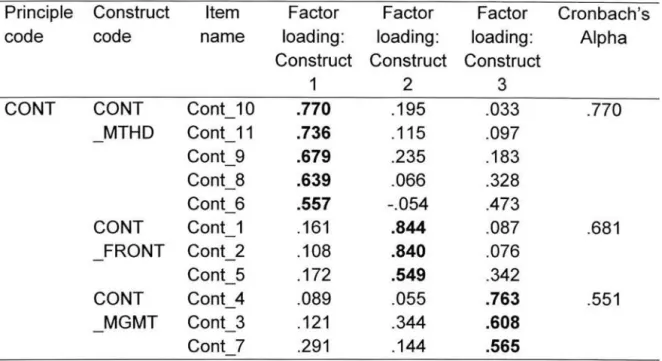
Table 10. Standardized care- Principle level PCA with Varimax rotation ... 41
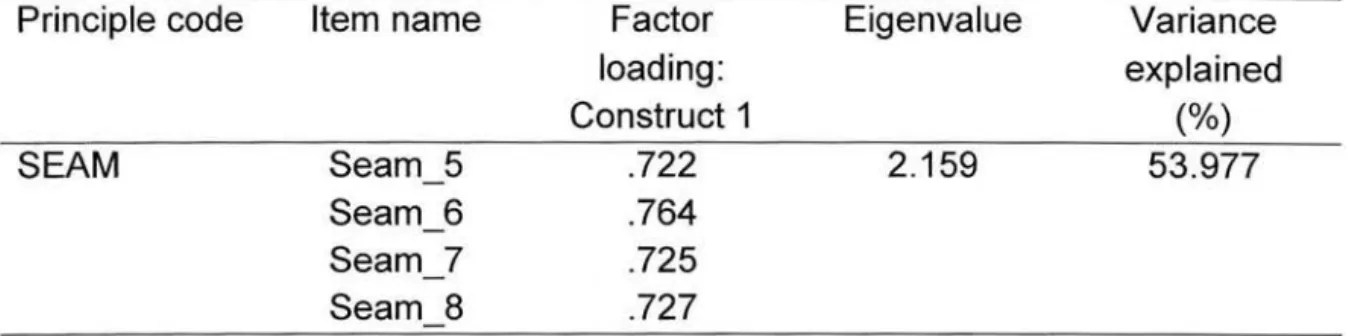
Table 11. Seamless coordination- Item purification ... .42
Table 12. Seamless coordination- Principle level PCA. ... .43
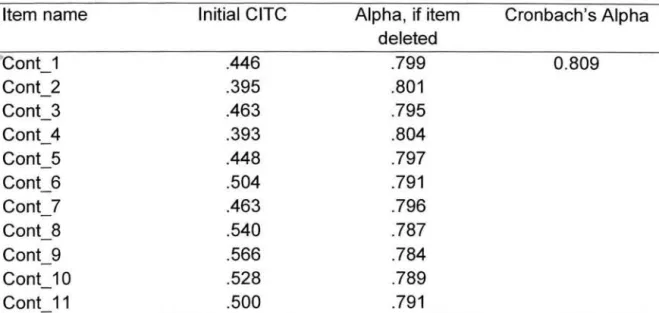
Table 13. Continuous improvement- Item purification ... .44
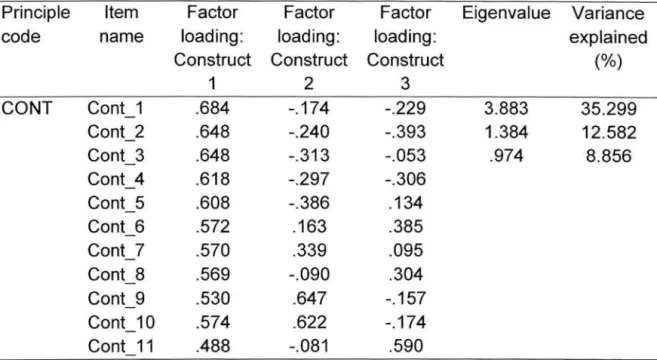
Table 14. Continuous improvement- Principle level PCA. ... .45
Table 15. Continuous improvement - Principle level PCA with Varimax rotation ... 46
Table 16. CFA results- Measurement model fit. ... .49
Table 17. CFA results- Overall fit measures ... 50
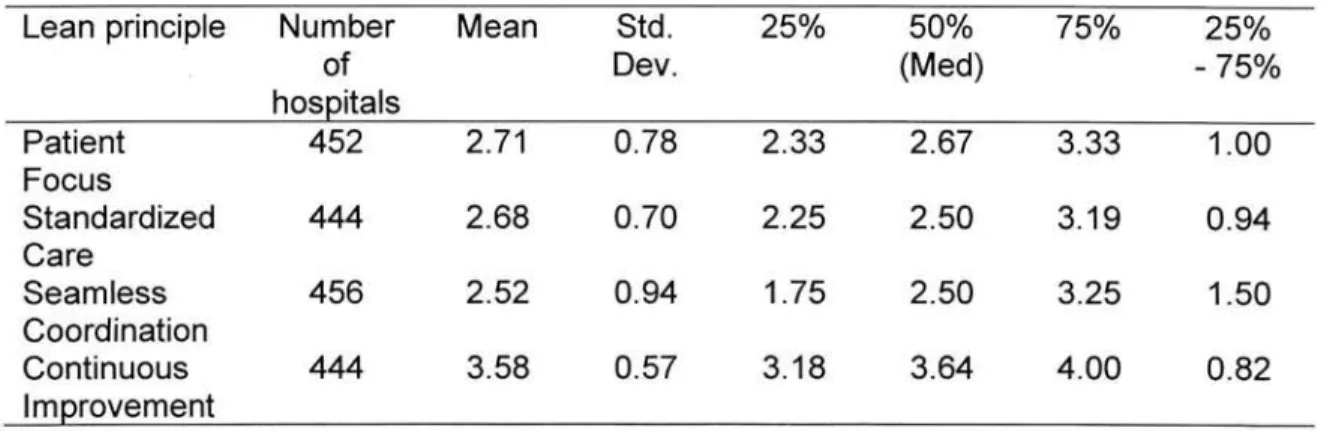
Table 18. Descriptive statistics of lean principles implementation ... 51
Table 19. Mean and standard deviation of each of the items, principles, and
underlying constructs ... 54
Table 20. Evidence-based processes of care used for this study ... 64
Table 21. Descriptive statistics of hospital performance indicators ... 72
Table 22. Correlation coefficients between hospital structural variables and lean
principle variable ... 75
Table 23. Summary of regression analyses with four lean principles ... 76
Table 24. 22 hospital activities used as clustering variables in this study ... 88
Table 25. Results from hierarchical clustering procedure ... 91
Table 26. Mean scores and Standard Errors across 22 activities for each cluster
... 94
Table 27. Results of Canonical Discriminant Analysis ... 96
Table 28. Standardized canonical function loadings and coefficients ... 98
Table 30. Lean principles implementation across clusters ... 1 02
Table 31. Hospital performance across clusters ... 1 04
Table 32. Contextual factors across clusters ... 1 08
Table 33. Cluster membership changes between 3 cluster and 5 cluster solutions
... 111
Table 34. Means and Standard Errors across 22 activities for each cluster ... 114
Table 35. Results of Canonical Discriminant Analysis ... 117
Table 36. Standardized Canonical Function Loadings and Coefficients ... 118
Table 37. Number of Observations and Percentage Cross-validated ... 121
Table 38. Lean principles implementation across clusters ... 123
Table 39. Hospital performance across clusters ... 125
Table 40. Contextual factors across clusters ... 126
Table 41. Comparison between clusters 1 and 2: Lean principles implementation ... 128
Table 42. Comparison between clusters 1 and 2: Performance ... 128
LIST OF FIGURES
Figure 1. Overview of dissertation research ... .4
Figure 2. Schematic description of lean ... 9
Figure 3. Conceptual model to describe lean in the health care sector ... 22
Figure 4. Step-by-step procedure used to develop, modify and validate lean instrument. ... 24
Figure 5. Boxplot for lean principles implementation ... 52
Figure 6. Boxplot for quality and efficiency performance indicators ... 72
Figure 7. Percentage changes in heterogeneity ... 92
Figure 8. Means across 22 activities for each cluster ... 95
Figure 9. Plot of cluster centroids on canonical functions ... 99
Figure 10. Lean principles implementation across clusters ... 1 03 Figure 11. 95 % Cl of Process quality across clusters ... 1 05 Figure 12. 95 % Cl of Outcome quality across clusters ... 1 05 Figure 13. 95 % Cl of Perceived quality across clusters ... 106
Figure 14. 95 % Cl of Efficiency across clusters ... 1 06 Figure 15. Means across 22 activities for each cluster ... 112
Figure 16. Plot of cluster centroids on canonical functions ... 119
Figure 17. Lean principles implementation across clusters ... 123
INTRODUCTION
The US health care system faces considerable challenges in controlling cost and
improving quality. Total health care costs reached $2.6 trillion in 2010 accounting
for 17.9 percent of GOP (Centers for Medicare & Medicaid Services, 2009), the
highest among developed countries (Organization for Economic Co-operation and Development, 2011 ). Rising health care cost is now considered a serious threat not only to the health care system but also to the entire economy. Hospitals are not free from these cost challenges. More than 30 percent of hospitals have experienced financial losses and nearly 80 percent have stopped, postponed, or scaled back capital projects due to their financial difficulties (American Hospital Association, 2009). Now hospitals have pressing needs to improve their operational efficiency to address this challenge of rising costs. In addition, the US health care system faces serious quality challenges. According to the Institute of Medicine, at least 44,000 people, and as many as 98,000 people, die in hospitals each year as a result of preventable medical errors (Institute of Medicine, 2000). The Institute also points out that health care providers operate as separate silos without cooperation and, as a result, the health care system does not deliver consistent, high-quality care to the patients (Institute of Medicine, 2001). The Institute describes the gap between the health care that we have now and the health care that we should have as a chasm and calls for a fundamental, sweeping redesign of the entire health care system to
deliver safe, timely, effective, efficient, equitable, and patient-centered care to every patient. However, more than a decade since its initial report, the Institute
argues that the US health care system is still not fixed yet (Institute of Medicine,
2013). Improving health care quality and operational efficiency continue to be
critical issues that should be urgently addressed.
As an effort to resolve its high cost and low-quality challenges, the health sector has adopted various operations management concepts and methodologies
(Hines et al., 2004; Radnor et al., 2012). In particular, since early 2000, many
hospitals have been interested in adopting lean thinking (De Souza, 2009; Radnor et al., 2012), believing that lean is capable of achieving high quality and high efficiency without a trade-off. Concurrently, a handful of academic studies have investigated the use of lean in hospitals, some of which reported improved outcomes (Barnas, 2011; Bohmer et al., 2006; Meyer, 201 0; Nuzum and Fund, 2007).
Despite its potential contribution to hospital operations, however, lean has not been effectively adopted by a large number of health care organizations. Some still argue that lean is not appropriate for the health care environment due to the
fundamental differences between manufacturing and service operations, or
because of the unique environment where health care is delivered. In addition, because lean involves such a wide range of objectives, measures, and programs
that have evolved over a long period of time, there has been some confusion in
understanding what lean operations is and how to apply lean to the health care
setting. As a result, there have been incomplete and often conflicting reports with regard to its effectiveness in the health care environment.
We believe this confusion is exacerbated by the paucity of systematic and rigorous research on the extent and impact of lean implementation in the health care environment. The current literature only includes descriptive case studies in single institutions using self-reported outcome data. Many of these studies were performed in single departments (e.g., emergency department), and reported only anecdotal outcomes (e.g., reduced waiting time of patients). While attempting to demonstrate the performance difference before and after implementing a lean project, these studies did not measure the degree to which lean has been implemented and how it is related to the performance improvement. Thus, there is still a lack of empirical evidence on the impact of lean on hospital quality and efficiency performance (Glasgow et al., 201 0; Poksinska, 201 0).
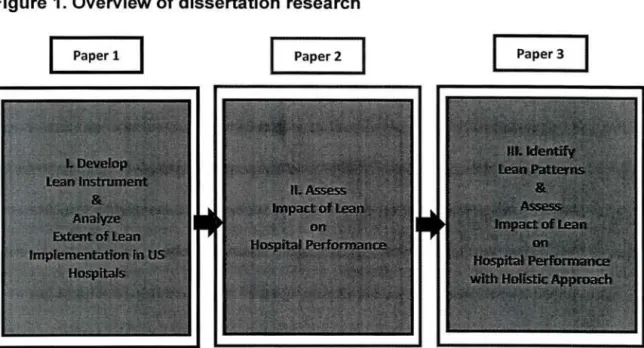
The objective of this research is to fill this gap in literature by addressing the following research questions:
• To what extent has lean been implemented in hospitals?
• Does lean implementation make a significant impact on hospital quality and efficiency performance?
• Are there different lean implementation patterns in hospitals? If so, do they show different performance?
Figure 1. Overview of dissertation research
Paper 1 Paper 2 Paper 3
In order to address these questions, in the first paper, we develop a rigorous measure for lean implementation in hospitals. Because practices and tools are observable and easy to apply, lean practices and tools have been used as
measures for lean implementation in empirical studies (Shah et al., 2008). However, because of the differences between manufacturing and health care contexts, simply applying the lean practices and tools that have been developed in the manufacturing environment is not suitable for hospital operations. Instead, we derive a robust set of lean principles for the hospital environment and use them as a primary platform for analyzing the use of lean in the health care environment. Based on the lean principles, we develop a reliable and valid instrument to measure the extent of lean implementation by associating hospitals' quality improvement activities with the lean principles. By assessing how much
hospitals have implemented those activities that are associated with the lean principles, we identify the current state of lean implementation in hospitals and the areas where lean has been more (or less) effectively implemented.
In the second paper, we assess the impact of lean principles implementation on hospital quality and efficiency performance. Using publicly available secondary data sets from the Centers for Medicare and Medicaid Services (CMS), we calculate multiple quality and efficiency performance indicators for each hospital: adherence to evidence-based process of care, risk-adjusted in-hospital mortality, patient satisfaction, and risk-adjusted cost. Through multivariate statistical analysis with these hospital performance indicators and the lean measure, we examine the effect of lean principles implementation on hospital quality and efficiency performance.
In the last paper, we further analyze the impact of lean implementation in hospitals with holistic approach. According to Operations strategy theory, so-called taxonomy of manufacturing strategies (Miller and Roth, 1994), depending on differing levels of emphasis on competitive capabilities, different operations strategies are possible. Similarly, depending on differing levels of emphasis on four lean principles, there can be different lean implementation patterns in hospitals. Therefore, we assess lean implementation with holistic view by considering four lean principles implementation altogether. After identifying lean implementation patterns, we assess if the different lean implementation patterns result in different performance.
PAPER#1
An Instrument for Measuring the Extent of Lean Implementation in the US Hospitals
1. Introduction
In order to address quality and cost challenges, many hospitals rapidly got to have interests in lean management (De Souza, 2009; Poksinska, 201 0; Radnor et al., 2012). In spite of its huge popularity in the health sector, however, there is still lack of clear understanding about lean in the health sector. As a result, many health care organizations have difficulties in implementing lean in their health care delivery environment (De Souza and Pidd, 2011).
In the health sector, lean has been perceived as a toolset and lean implementation as direct application of lean tools to the health care environment (Poksinska, 2010). However, since lean has originated and evolved over decades mainly in the manufacturing environment, most of lean tools and practices have been developed in the manufacturing environment (Holweg, 2007; Shah and Ward, 2003, 2007). Therefore, due to the contextual differences between manufacturing and health care environment, lean implementation in the health sector shouldn't be just direct application of lean production tools and practices to the health care environment. Shah argued that there are three
abstract levels to understand lean (i.e., lean philosophy, principles, and practices) and lean principles are the right abstract level to apply lean to the health care setting (Shah et al., 2008). Based on this structural framework, in this research, we aim to address the following objectives:
• Derive lean principles for the health care environment as a primary platform to apply lean to the health care organizations.
• Develop measures for the extent to which a hospital has implemented lean in its health care environment, based on the lean principles.
• Analyze the current state of lean implementation in the US hospitals, using the lean measures.
In the next section, we provide comprehensive literature review of lean in the manufacturing, and then derive lean principles for the health care environment by adapting lean production principles to the health care setting. In section 3, we describe how we develop reliable and valid measures for the lean principles. In section 4, we describe the results of the analysis and findings of the research. In the last section, we further discuss the findings of the research.
2. Literature Review and Conceptual Model
2.1. Structural Framework of Lean Production
There has been considerable confusion in the health sector about lean operations. What is known currently as lean has evolved in the manufacturing
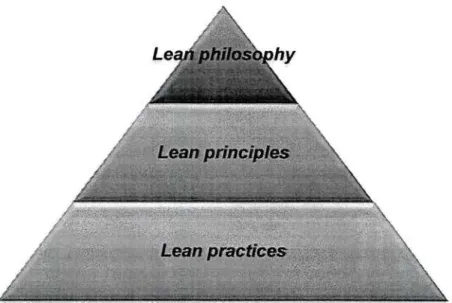
sector over a long period of time and includes numerous concepts, programs, and tools (Hines et al., 2004; Holweg, 2007; Krafcik, 1988; Ohno, 1988; Shingo and Dillon, 1989; Sugimori et al., 1977; Womack and Jones, 1996; Womack et al., 1990). Without a systematic and structural understanding of these complex elements, it is very difficult to assess how much lean is implemented in hospital operations. In their influential studies on lean production, Shah and her colleagues presented a structural framework to understand lean at three levels: philosophy, principles, and practices (Figure 2) (Shah et al., 2008; Shah and Ward, 2007). By introducing this framework, they enhanced our ability to assess and compare the extent of lean implementation and its subsequent effect. Figure 2 is a description of this schema: the philosophy view lies at the highest abstract level, the practice view at the lowest level, and the principle view at the intermediate level, linking the philosophy to the practices (Shah et al., 2008).
Lean philosophy: Lean philosophy describes the major focus and goal of lean. It
stems from the Toyota Production System (TPS) which is the origin of the lean production (Shah et al., 2008). Lean philosophy is to continuously improve a process by eliminating waste or non-value added steps (Radnor et al., 2012). Taiichi Ohno, one of major contributors to the development of TPS, believed any step that does not create value for the end customer is waste and argued any non-value added step should be eliminated (Ohno, 1988). Womack and his colleagues (1990) also pointed out that the focus of lean production is to
continuously improve a process by streamlining the production flow and seeking to eliminate waste (Womack et al., 1990).
Figure 2. Schematic description of lean
Adapted from Shah et al. (2008)
Lean principles: Lean principles are step-wise sequential guidelines for implementing lean philosophy. Through extensive study on lean production, Womack and Jones (1996) provided five lean principles: 1) identify value, 2) map the value stream, 3) create flow, 4) establish pull, and 5) seek perfection (Womack and Jones, 1996), and Spear and Bowen (1999) provided four lean principles: 1) standardize work; 2) create seamless linkages; 3) create simple and direct pathways; and 4) improve the process based on scientific methods
(Spear and Bowen, 1999). Table 1 provides detailed description of those lean production principles.
Table 1. Three levels of lean production: Lean philosophy, principles, and practices
Lean Philosophy (Ohno, 1980)
Continuously improve a process by eliminating waste or non-value added steps
Lean Principles
Womack 1. Specify value from the standpoint of the end customer.
Lean Practices (Shah and Ward, 2003)
and 2. Identify all the steps that provide the value in the value Jones stream and eliminate non-value added steps.
(1996) 3. Make the value-creating steps occur in tight sequence.
Spear and Bowen (1999)
4. Let the customer trigger the activities backwards through the value chain based on customer's demand.
5. Continue these improvement processes until a state of perfection is reached.
1. Define how people perform their work to ensure that all work is highly specified to its content, sequence, timing, and outcome.
2. Create direct and unambiguous connections between people performing the work one another, without a gray zone. 3. Create work process so that every product and service flows
along simple and direct pathways.
4. Make these improvements in accordance with the scientific method, under the guidance of a teacher, and at the lowest possible organizational level.
JIT a Lot size reductions
bundle Just-in-time I continuous flow production Pull system
TQM b
Cellular manufacturing layout Cycle time reductions
Focused factory production systems Agile manufacturing strategy
Quick changeover techniques Bottleneck/constraint removal
Reengineering production processes Quality management programs
bundle Total quality management
Process capability measurements
Formal continuous improvement program Competitive benchmarking
TPM c Predictive or preventive maintenance
bundle Maintenance optimization
Safety improvement programs Planning and scheduling strategies New process equipment or technologies HRM d Flexible, cross-functional workforce
bundle Self-directed work teams a. Just-in-time.
b. Total quality management. c. Total preventive maintenance. d. Human recourse management.
Lean practices: Lean practices are tools to operationalize lean principles as physical manifestations of lean philosophy. Through comprehensive literature review, Shah and Ward (2003) identified 22 key lean practices that have been commonly associated with lean production. They also found that those lean practices could be grouped into four bundles of inter-related and internally consistent practices: just-in-time (JIT); total quality management (TQM); total
preventive maintenance (TPM); and human resource management (HRM) (Shah
and Ward, 2003) (Table 1 ).
2.2. Misunderstanding about Lean in the Health Sector
Because lean practices are easier to observe and measure than lean philosophy,
the lean practice view has been used in most empirical studies, and lean has
sector, lean implementation has been perceived as direct application of lean
practices to the health care organizations (Poksinska, 2010). However, because
of the contextual differences between the manufacturing and the health care environment, simply applying those manufacturing-based lean practices is not
effective for implementing lean operations into the hospital setting.
Lean practices are not equally effective even in the manufacturing environment. Since lean production originated and evolved mainly in discrete manufacturing
industries (e.g., automotive industries), lean practices are more effective in
discrete manufacturing industries rather than in process manufacturing industries.
In a case-based simulation modeling study, Abdulmalek and Rajgopal (2007)
found that some lean production practices, such as just-in-time, setup time
reduction, production leveling, and cellular manufacturing, are only partially
applicable or inapplicable to process manufacturing industries (Abdulmalek and
Rajgopal, 2007).
As service operations, health care operations have unique characteristics that
are rarely found in manufacturing operations: intangibility, simultaneous
production and consumption, heterogeneity, perishability, and labor intensity (Nie and Kellogg, 1999). Especially, direct customer participation in the service process adds complexity that is generally not found in manufacturing operations (Chase and Tansik, 1983). Accordingly, studies have identified various barriers to lean implementation in health care organizations, including difficulties in data
collection, poor performance measures, and fragmentation of health care organizations into professional and functional silos (De Souza and Pidd, 2011).
Because of these reasons, direct application of lean practices is highly controversial in the health care delivery operations. We believe that lean should be understood as a set of principles instead of a set of practices in order to facilitate lean implementation in the health sector (Shah et al., 2008). By investigating lean implementation at the principle level, we can avoid some of the confusion in the literature and establish more complete and systematic measures for rigorous empirical analysis.
2.3. Lean Principles for Hospitals
From a comprehensive literature review on lean application to the health care sector, Poksinska (201 0) identified lean concepts and activities that have been frequently mentioned in the health care literature (Table 2). Surprisingly, many lean concepts that have been considered very important in the manufacturing environment, such as just-in-time, kanban, pull system, and production leveling, have not been frequently mentioned in the health care literature. In contrast, lean concepts related to a patient focus (e.g., value from patient's point of view and patient pathway/journey/flow), standardization (e.g., standardized work, waste elimination, and 5Ss), process flow improvement (e.g., process improvement, continuous flow, value stream mapping, and lead time reduction), coordination
(e.g., team work and cross training/education), and continuous improvement have appeared frequently.
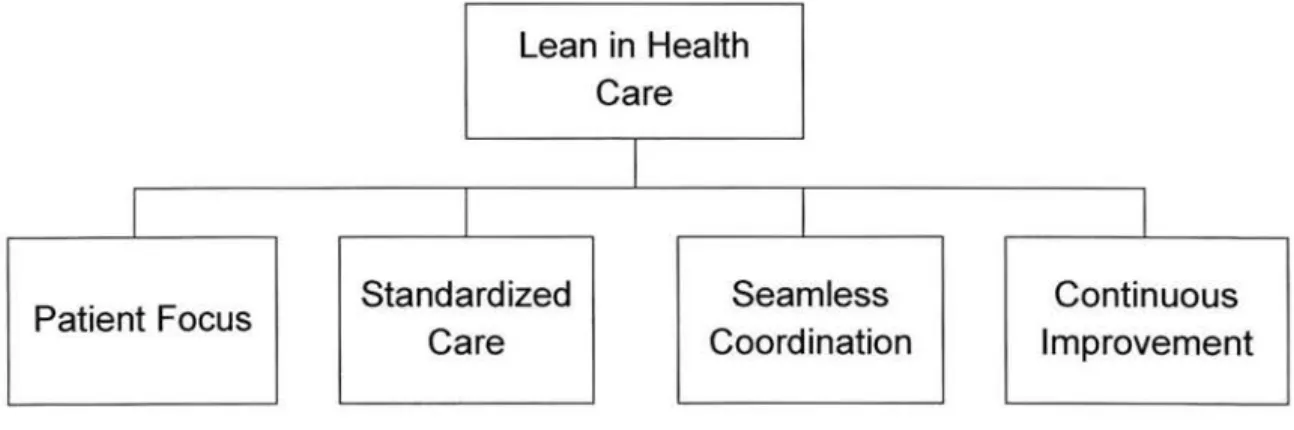
By comparing and contrasting contextual differences between manufacturing and hospital operations, we propose four lean principles for the health care environment: 1) patient focus, 2) standardized care, 3) seamless coordination,
and 4) continuous improvement, from which we develop measures for lean
implementation in hospital operations.
Table 2. Lean concepts mentioned in the health care literature
Lean concepts more frequently mentioned
Process improvement Continuous flow Value stream mapping Lead time reduction Team work
Continuous improvement Cross training/education
Value from patient's point of view Patient pathway/journey/flow Waste elimination
Standardized work 58
Adapted from Poksinska (201 0)
Lean concepts less frequently mentioned Just-in-time Kanban Pull system Production leveling Autonomation I Jidoka And on
Root cause analysis Visual management Error proofing I Poka-yoke One-piece flow
Policy development Layout adjustments Takted production
2.3.1. Patient Focus
In the manufacturing environment, customer focus has been central to lean production. Ohno believed any activity that does not create value for the end customer is waste and should be eliminated (Ohno, 1988). In order to eliminate waste, first we should identify the value that is desired by the customer. Womack and Jones (1996) argued that the first step of lean management is to specify value from the stand point of the end customer.
Unlike in the manufacturing sector, customer focus has not been a central interest in the health sector (Poksinska, 201 0). In fact, the term customer has
been ambiguous in the health sector. The primary customer in the health care delivery system is the patient, but different stakeholders (e.g., insurance companies, local communities, government, and tax payers) have different customers other than patients. The ambiguous notion of the customer and dynamics between different stakeholders have been considered one of major challenges for health care organizations (Bushell et al., 2002; Endsley et al., 2006; Young and McClean, 2008).
Furthermore, care process in large health care organizations has evolved over time but seldom been the result of conscious planning and action (Fillingham, 2007; Kim et al., 2007). Work is mostly organized around health care providers (e.g., doctors, nurses, and other clinical staff) without a clear focus on the convenience of the patient (Bahensky et al., 2005; Dickson et al., 2009;
Fillingham, 2007). In such systems, much of the work performed for the patient does not directly add value to the patient (Fillingham, 2007), and patients can easily spend hours in hospitals for only a few minutes of value-added time (Poksinska, 201 0).
Recently, there is increasing consensus that health care providers should recognize the patient as the primary customer and improve care process with a clear focus on the patient (Ben-Tovim et al., 2007; Dickson et al., 2009; Endsley et al., 2006; Fillingham, 2007; Kim et al., 2007; Laursen et al., 2003; Raab et al., 2006; Sirio et al., 2003). The Institute of Medicine also argued that the US health care system should deliver patient-centered care (Institute of Medicine, 2001 ).
2.3.2. Standardized Care
Health care providers often argue that standardizing care process is not possible in the health care setting because every patient is different, unlike high-volume products manufactured in a factory (De Souza and Pidd, 2011 ). On the other hand, standardization is an important step for eliminating waste and consistently providing evidence-based best practice. Poorly specified patient care process often results in inconsistent care, unreliable access to resources, and constant interruptions, which in turn, cause inefficiencies, long waiting times, increased risk of errors, and worker frustration (Jimmerson et al., 2005).
Standardizing production process has been heavily emphasized in the manufacturing environment. Spear and Bowen (1999) proposed standardized
work as one of the lean production principles. They thought all work should be highly specified in terms of its content, sequence, timing, and outcome so that deviations from the specification is readily apparent and individual decision making related to the work is reduced. Womack and Jones (1996) did not explicitly include standardization as one of lean production principles but argued that all steps should be specified to provide value to the customer and non-value added steps should be eliminated, implying standardization.
Care process standardization is being addressed by leading health care organizations. Increasingly, efforts are being made to categorize a large variety of patients with different conditions into groups with similar needs and value streams. If patients fall into similar categories with regard to their disease and condition, similar care process can be offered to the patients. This doesn't mean that all patients are to be provided with identical care process, particularly because patient preferences may differ, but it is an attempt to provide better care for all (De Souza and Pidd, 2011). These efforts, when consistently applied, can improve efficiency and effectiveness of patient care (Institute of Medicine, 2001 ).
Care process in hospitals, especially in the intensive-care environment, is described often as extremely complex. Yet, using a simple checklist as an effort to standardize care process is proved to significantly improve quality of care (Gawande, 201 0). A study performed in a large number of intensive-care units showed that using a simple checklist resulted in a large and sustained reduction
in catheter-related bloodstream infection (Pronovost et al., 2006). This result supports that standardization is effective in the health care environment as in the manufacturing.
2.3.3. Seamless Coordination
Health care is a complex system with many interdependent functional departments and professional workgroups (Tucker et al., 2006). This
fragmentation of health care organizations into functional and professional silos
has been considered one of critical barriers to lean implementation in the health
sector (De Souza and Pidd, 2011 ). Many problems and errors frequently occur in
the crossing between these silos.
Seamless coordination has been emphasized in the manufacturing environment. Womack and Jones (1996) argued that all steps in the value chain should occur in tight sequence. Spear and Bowen (1999) emphasized direct and unambiguous connections and simple pathways.
In the current health care system, the delivery of care often is overly complex and
uncoordinated, requiring unnecessary steps and patient handoffs (Institute of
Medicine, 2001 ). These cumbersome processes waste resources, leave
unaccountable voids in coverage, and fail to build on the strengths of all health
care professionals to ensure that care is appropriate, timely, and safe.
Redesigning of the health care delivery system is required to change the structures and process of the environment in which all health care professionals
and departments seamlessly function. Optimizing individual processes is not sufficient. It is necessary to integrate multiple processes owned by different professional groups and functional departments and optimize them as a whole (Bahensky et al., 2005; Kim et al., 2007).
2.3.4. Continuous Improvement
Health care organizations often report that lean projects provide initial
improvements while they are rarely sustained (Mann, 2005; Poksinska, 201 0).
Thus, one of the real challenges of lean implementation in the health sector is to
go beyond the simple application of a lean project and achieve sustainable improvement (Kim et al., 2007).
According to lean proponents, continuous improvement is more about developing a culture, where frontline employees are continuously focusing on the goal of eliminating waste and are encouraged to develop ideas to improve their work process. Improvement activities have to become a part of their everyday work
(Spear and Bowen, 1999; Womack and Jones, 1996). One of major elements of
lean implementation is to develop people to pursue continuous improvement. Lean organization should turn employees into problem solvers (Balle and
Regnier, 2007).
Womack and Jones (1996) explicitly pointed out continuous improvement as the last lean production principle by arguing that all the improvement processes should be continued until a state of perfection is reached. They describe
perfection as the state in which perfect value for the customer is created with no waste. Spear and Bowen (1999) argued that improvement efforts should be
pursued in accordance with scientific methods, under the guidance of a teacher,
and at the lowest possible organizational level.
Frontline clinicians are experts at performing their work. Thus, their commitment enables their professional knowledge, skill, and experience to be used for
improving the work process (Aherne, 2007; Jimmerson et al., 2005). Empowered
frontline clinicians tend to be more eager to bring forward their ideas as opposed to reluctant workers forced to carry out top-down improvement ideas (Dickson et al., 2009; Kaplan and Patterson, 2008). Therefore, it is critical to provide
appropriate training and responsibility to frontline clinicians, so that they take
initiatives to make improvements on their own (Aherne, 2007; Bahensky et al.,
2005; Balle and Regnier, 2007; Bushell et al., 2002; Endsley et al., 2006; Sirio et
al., 2003; Spear, 2006; Westwood and Silvester, 2006).
In addition, top-level managers should show a genuine interest in the lean
projects, pay attention to their results, and provide necessary resources to them
(Aherne, 2007; Bahensky et al., 2005; Fillingham, 2007; Massey and Williams,
2005). The presence of top-level managers is proposed as a necessary condition for the success of lean implementation (Nelson-Peterson and Leppa, 2007). Low-level managers should take ownership of the lean projects and actively support
Jimmerson et al., 2005; Massey and Williams, 2005; Stolle and Parrott, 2007).
Furthermore, when frontline clinicians and managers try to improve the care
process, they should rely on scientific methods instead of learning from personal
experience alone. They should reduce or eliminate intuition-based decision
making while promoting evidence-derived decision making (Spear and Bowen, 1999).
2.4. Conceptual Model for Lean in the Health Care
In the previous sections, we conducted a comprehensive and systematic review
of literature on lean application in the manufacturing and health care sectors. From the extant knowledge, we proposed four lean principles for the health care
environment: 1) patient focus, 2) standardized care, 3) seamless coordination,
and 4) continuous improvement.
The patient focus principle is to identify value from a patient perspective and to improve care processes with a clear focus on the patient as the end customer.
The standardized care principle is to specify care processes in terms of content,
sequence, timing, and outcome, based on evidence-based best practice. The
seamless coordination principle is to break down barriers and increase cooperation between multiple workgroups and units for improving patient flow
and reducing errors. The continuous improvement principle is to go beyond the
simple application of lean tools and develop organizational culture to consistently
processes. Figure 3 shows the conceptual model of this study to describe lean in the health care environment.
Figure 3. Conceptual model to describe lean in the health care sector
Lean in Health Care
I
I
I
Patient Focus Standardized Seamless Continuous
Care Coordination Improvement
Table 3. Four lean principles for the health care sector
Patient Focus Standardized Care Seamless Coordination Continuous Improvement
Identify value from the patient standpoint and improve care process with a clear focus on the needs and flow of the patient.
Specify all the care processes with regard to content, sequence,
timing, and outcome, according to disease and condition, based on evidence-based best practice.
Create seamless connections and pathways among multiple
departments and workgroups so as to improve patient care flow and reduce errors.
Continue these improvement processes until a state of perfection is reached, at the frontline clinical staff level, with a full support from management, by using scientific methods.
In the next section, we provide how we develop the instrument to measure the extent of lean implementation in healthcare with this conceptual model, and how we evaluate reliability and validity of the developed measurement instrument.
3. Method
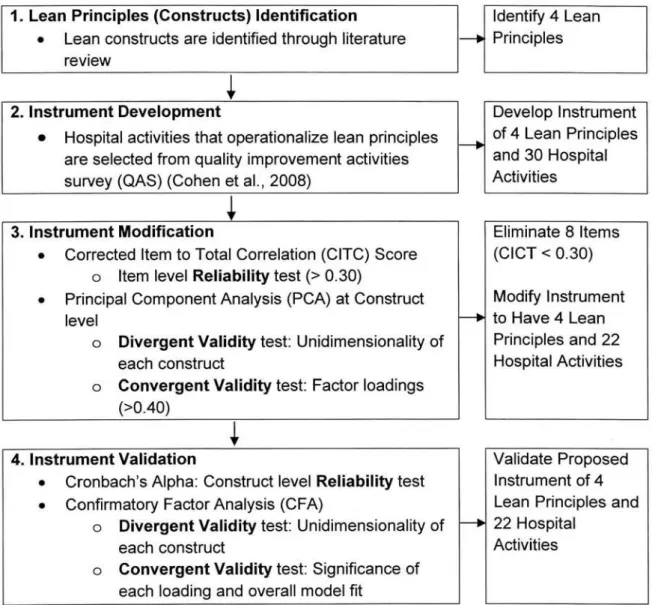
Based on the lean principles, we developed a measurement instrument for the extent of lean implementation in hospitals. Figure 4 shows the step-by-step procedure that we use to develop, modify, and validate the instrument to measure the extent of lean principles implementation in hospitals. In the first phase, we derived lean principles for the health sector through a comprehensive literature review. This phase was described in the previous section. In the second phase, we selected hospital activities and associated them with lean principles to develop the measures for lean principles implementation. In the third phase, we performed exploratory data analysis to examine how close those selected hospital activities were associated with each of the lean principles. Based on the results, we modified the measurement instrument to improve its reliability and validity. In the last phase, we performed confirmatory data analysis to validate the proposed measures for lean principles implementation.
Figure 4. Step-by-step procedure used to develop, modify and validate lean instrument
1. Lean Principles (Constructs) Identification Identify 4 Lean
•
Lean constructs are identified through literature1---.
Principles review2. Instrument Development Develop Instrument
•
Hospital activities that operationalize lean principlesf----.
of 4 Lean Principlesare selected from quality improvement activities and 30 Hospital
survey (QAS) (Cohen et al., 2008) Activities
3. Instrument Modification Eliminate 8 Items
•
Corrected Item to Total Correlation (CITC) Score (CICT < 0.30)0 Item level Reliability test(> 0.30)
•
Principal Component Analysis (PCA) at Construct Modify Instrumentlevel ~ to Have 4 Lean
0 Divergent Validity test: Unidimensionality of Principles and 22
each construct Hospital Activities
0 Convergent Validity test: Factor loadings
(>0.40)
4. Instrument Validation Validate Proposed
•
Cronbach's Alpha: Construct level Reliability test Instrument of 4•
Confirmatory Factor Analysis (CFA) Lean Principles and0 Divergent Validity test: Unidimensionality of
---.
22 Hospitaleach construct Activities
0 Convergent Validity test: Significance of
each loading and overall model fit
3.1. Data and Sample
We used a survey data on hospitals' quality improvement activities to develop the lean measures. The quality improvement activities survey (QAS) was conducted in 2006 by two authors of this study (Joseph Restuccia and Michael Shwartz) to assess the nature of quality improvement activities undertaken by hospitals, in
collaboration with the Health Research & Education Trust (HRET) and the American Hospital Association (AHA) (Cohen et al., 2008). The QAS instrument contained 173 items across a variety of quality-related practices and activities that were performed in hospitals. These improvement activities constitute a majority of the tools and programs through which the lean approach is operationalized in the health care setting. We utilized the QAS data to measure the extent of lean principles implementation in hospitals.
From the population of 4,237 nationwide short-term, nonfederal, general service hospitals having more than 25 beds, the QAS data included 470 responding hospitals (Cohen et al., 2008). Table 4 shows characteristics of the sample and population hospitals. The sample hospitals were fairly similar to the population hospitals (2005 AHA annual survey, N = 4,222) along a number of dimensions. The main differences were the higher percentages of large hospitals and teaching hospitals and the smaller percentages of nonmetropolitan hospitals and for-profit hospitals in the sample. Sample hospitals also showed somewhat better quality than population hospitals, but there were not large differences (Cohen et al., 2008). The unit of analysis of the survey was hospital, and the questionnaire was answered by a single respondent for each hospital, usually the chief quality officers (CQOs) or the equivalent position at the hospitals. Most items in the survey used 5 point Likert scales, from "1 =Strongly disagree (or Not used at all)" to "5 =Strongly agree (or Used hospital wide)."
Table 4. Characteristics of answered hospitals and the population hospitals (Cohen et al., 2008)
Hospital Categories Responding Population
Characteristics hospitals hospitals
(n
=
470) (N=
4,222)n (%) n (%)
Bed size 25-99 beds 145 (30.9) 1,810 (42.9)
1 00-399 beds 237 (50.4) 2,000 (47.4) 400 or more beds 88(18.7) 412 (9.7) Region Midwest 161 (34.3) 1 ,223 (28.9) Northeast 87 (18.5) 593 (14.1) South 160 (34.0) 1 ,638 (38.8) West 62 (13.2) 768 (18.2)
Ownership For-profit 21 (4.5) 662 (15.7)
Government, nonfederal 96 (20.4) 951 (22.5)
Nonprofit 353 (75.1) 2,609 (61.8)
Teaching status a Yes 67 (14.3) 275 (6.5)
No 403 (85.7) 3,947 (93.5)
Network affiliation Yes 164 (34.9) 1 ,278 (30.3)
No 261 (55.5) 2,187 (51.8)
Missing values 45 (9.6) 757 (17.9)
System affiliation Yes 214 (45.5) 1,900 (45.0)
No 253 (53.8) 2,322 (55.0)
Missing values 3 (0.6)
Medicare DSH b Yes 289 (61.5) 2,428 (57.5)
No 116(24.7) 889 (21.1)
Missing values 65 (13.8) 905 (21.4)
Metropolitan county Yes 302 (64.3) 2,486 (58.9)
No 168 (35.7) 1,735 (41.1)
Missing values 1 (0)
Source: American Hospital Association Annual Survey, 2005.
a. Member, Council of Teaching Hospitals, Association of American Medical Colleges. b. Disproportionate Share Hospital.
3.2. Association of Hospital Activities with Lean Principles
From the QAS, we selected 30 improvement activities that reflected lean principles in hospitals. For face validity of the instrument, the authors had several rounds of rigorous discussions.
3.2.1. Patient Focus
The patient focus principle contends that value should be identified from the patient standpoint, and care process should be optimized with a clear focus on the needs and flow of the patient, instead of health care providers. We selected five hospital activities from the QAS instrument to represent the patient focus principle (Table 5). Collectively these activities reflect a focus on actual and potential patients.
Since enhanced communication with actual and potential patients helps hospitals identify the things that patients really care about, we selected following hospital activities as measures for the patient focus principle: 'clinicians involve patients
and families in efforts to improve patient care,' 'the hospital regularly
communicates achievement of hospital-wide quality goals to the general public,'
and 'patient advisory groups.' Because nurses take more responsibilities in direct patient care than other health care providers, the nurse-to-patient ratio represents the degree of patient focus in hospitals. Therefore, we included the following hospital activity as an important measure for the patient focus principle:
addition, we added 'patient flow improvement strategies' because it represents an attempt to enhance patients' experience with various care providing functional departments of a hospital.
3.2.2. Standardized Care
The core idea behind the standardized care principle is that all the care processes should be specified with regard to content, sequence, timing, and outcome. While it can be argued that patient care in hospital requires higher degree of customization than manufactured products, there is increasing evidence that standardized care based on evidence-based best practice results in better outcome for patients with less overall cost (Gawande, 2007, 201 0; Pronovost et al., 2006). We selected six hospital activities from the QAS instrument that were associated with the standardized care principle (Table 5).
Standardization of care process has to be achieved through detailed investigation and rigorous scientific research. 'Evidence-based practice
guidelines/clinical pathways' and 'disease- or condition-specific Ql projects'
represent critical hospital activities that are necessary to achieve standardized care process based on evidence-based best practices according to disease and condition. We included 'chronic disease registries' and 'planned care for chronic
illness' as elements of the standardized care principle. The practice of 'standing
orders1
' is a specific tool to provide standardized care, so was included as well.
3.2.3. Seamless Coordination
The core idea of the seamless coordination principle is that care process should be directly and seamlessly connected between various departments and workgroups in health care organizations. This principle improves patient flow and eliminates grey zones where errors could occur. Eight hospital activities in the QAS instrument are associated with the seamless coordination principle (Table 5).
Hospitals are often criticized because their structure and processes are not well designed to facilitate coordination. In the QAS, hospitals' efforts to facilitate coordination are measured by 'the hospital's structure and work processes
impede coordination across departments and workgroups,' and 'there is little
coordination of Ql efforts across departments and workgroups.' In addition,
ambiguous and indirect connections create grey zones where errors can occur. Therefore, all the care processes should be designed to be directly and seamlessly connected between various departments and workgroups. We included the following QAS activities, which reflect the attempt to eliminate errors:
'people and processes are in place to identify, analyze, and act upon all adverse
1 They are physicians' orders that can be exercised by other health care providers when predetermined conditions have been met. Usually, they are instructions for patient management that are to be followed by the nursing staff on a regular and consistent basis, unless instructed to the contrary.
events to prevent future occurrences,' and 'people and processes are in place to
identify, analyze, and act upon near misses2 to prevent future occurrences.'
Furthermore, it has been argued that there are invisible barriers between health care professionals (e.g., between physicians and nurses). Increasing cooperation requires breaking down those barriers in health care organizations. A multidisciplinary team approach helps break down the barriers and improve coordination between health care professionals. These efforts are measured in the QAS by questions like 'shared clinical governance by nurses and physicians,'
'use of advanced practice nurses to coordinate or manage patient care,'
'pharmacists placed inpatients care units,' and 'multidisciplinary rounds.'
3.2.4. Continuous Improvement
The continuous improvement principle contends that improvement efforts should be continued until a state of perfection is reached. This principle should consist of the active involvement of the frontline clinicians, full support of the managers, and the use of scientific methods.
The lean approach emphasizes bottom-up idea flow while conventional management approaches imply top-down idea flow. The logic of the lean approach is to let frontline workers improve their working process because frontline workers understand more about the problems in the process that they face every day than managers. Managers need to empower and support frontline
2 A near miss is an incident that had the potential to cause serious harm to a person receiving care.
workers. We included the following QAS activities under this principle: 'progress
toward achieving hospital-wide quality goals is tracked and communicated to clinical staff,' 'QI project results are regularly communicated to clinical staff,'
'corrective action is taken if progress toward achieving hospital-wide quality goals
is not adequate,' 'senior managers regularly celebrate successful Ql projects and give recognition to project team members,' 'management "walk-arounds" to identify quality problems or issues,' 'QI activities to improve workforce recruitment, retention, and development,' and 'profiling of individual provider performance.'
When frontline clinicians work on improving health care process, they should rely on scientific methods instead of personal experience alone in order to reduce or eliminate intuition-based decision making while promoting evidence-based decision making. We included the following hospital activities that are associated with scientific methods: 'benchmarking within the hospital,' 'benchmarking with other hospitals,' 'learning best practices from other industries' and 'work process redesigning or reengineering.'
Table 5. Lean instrument and items Lean Item principle name Patient Pat_1· Focus (PAT) Pat_2· Pat 3 Pat_4 Pat 5 Standardized Std 1· Care (STD) Std_2 Std 3 Std 4 Std_5 Std
s·
Seamless Seam_1· Coordination (SEAM) Seam 2· Seam_3· Seam_ 4· Seam_5 Seam_6 Seam 7 Seam 8 Continuous Cont_1 Improvement (CONT) Cont_2 Cont_3 Cont_ 4 Cont_5 Cont 6 Cont_7 Cont 8 Hospital activitiesClinicians involve patients and families in efforts to improve patient care
The hospital regularly communicates achievement of hospital-wide quality goals to the general public Patient advisory groups
Specific strategies to reduce the number of patients assigned to each nurse
Patient flow improvement strategies
Patient care processes are standardized, where and when appropriate
Evidence-based practice guidelines/clinical pathways Disease- or condition-specific Ql projects
Chronic disease registries
Planned care for chronic illness (Wagner's Chronic Disease Model)
Standing orders
People and processes are in place to identify, analyze, and act upon all adverse events to prevent future occurrences People and processes are in place to identify, analyze, and act upon near misses to prevent future occurrences
The hospital's structure and work processes impede coordination across departments and workgroups (reverse coded)
There is little coordination of Ql efforts across departments and workgroups (reverse coded)
Shared clinical governance by nurses and physicians Use of advanced practice nurses (APNs) to coordinate or manage patient care
Pharmacists place in patient care units Multidisciplinary rounds
Progress toward achieving hospital-wide quality goals is tracked and communicated to clinical staff
Ql project results are regularly communicated to clinical staff Senior managers regularly celebrate successful Ql projects and give recognition to project team members
Management "walk-arounds" to identify quality problems or issues
Corrective action is taken if progress toward achieving hospital-wide quality goals is not adequate
Ql activities to improve workforce recruitment, retention, and development
Profiling of individual provider performance Work process redesigning or re-engineering
Cont_9 Benchmarking within the hospital
Cont_1 0 Benchmarking with other hospitals
Cont 11 Learning best practices from other industries
• The items are eliminated during the exploratory data analysis phase
3.3. Exploratory Data Analysis
Using SPSS, we performed exploratory data analysis with the QAS data to test reliability and validity of the measurement instrument (Shah and Ward, 2007).
First, using the internal consistency method, we evaluated Corrected Item to Total Correlation (CITC) score for each item to assess item level reliability of the instrument (Cronbach, 1951; Nunnally, 1967; Sellitz et al., 1976). CICT refers to the correlation between an item and the rest of items in the scale. It is suggested that an item with CITC score below 0.30 should not be included unless the item is considered very important to the construct. An important objective in conducting exploratory data analysis is item purification to ensure scale reliability (Kerlinger, 1986).
Second, we conducted Principal Component Analysis (PCA) for each construct (i.e., lean principle) to assess construct validity (i.e., divergent and convergent validity) of the instrument. PCA is to identify empirical indicators that are strongly linked to a particular latent variable. Critical purpose to conduct PCA is to assess whether items are loaded on a single dimension (i.e., unidimensionality) for divergent validity (Fabrigar et al., 1999) and whether factor loadings are sufficient
for convergent validity (Hair et al., 2009). For factor loadings, values above 0.40 are considered sufficient.
Based on the results from the exploratory data analysis, we modified the measurement instrument to improve its reliability and validity.
3.4. Confirmatory Data Analysis
We performed confirmatory data analysis to validate the measurement instrument proposed from the exploratory data analysis phase (Shah and Ward,
2007). Using Mplus, we performed Confirmatory Factor Analysis (CFA). CFA requires the measurement model specified prior to analyzing the data. Latent variables (i.e., constructs) and their associated empirical indicators (i.e., items) should be specified a priori. This is accomplished by restricting individual items to load on specific constructs. In this way, CFA provides enhanced control for assessing construct validity (i.e., convergent and divergent validity) (O'Leary-Kelly and
J
Vokurka, 1998).CFA allows for better and more direct means to estimate the degree to which construct validity is achieved (Bagozzi and Phillips, 1982). In CFA, first, we examined the significance of individual factor loadings. Second, we assessed overall model fit. Overall model fit portrays the degree to which the specified indicators represent the hypothesized constructs (Hair et al., 2009). There is no single statistical test that best describes how well the observed data fits the proposed model. A number of overall fit measures have been developed to