Changing Minds
:
Training educators to use drama as an
alternative method for Life Orientation
teaching.
Alix Diemont
A research report submitted to the University of the Witwatersrand,
Johannesburg, in partial fulfilment of the requirements for the degree
of Master of Education (Educational Psychology).
ABSTRACT
South Africa’s education system has undergone substantial changes in the last ten years. The shift to Inclusive Education attempts to provide all learners, regardless of their disability, learning difficulty, or disadvantage with access to education (Department of Education1, 2001). Curriculum 2005, in the context of an Outcomes Based Education (OBE) philosophy was an attempt by the Education Department to address the inadequate ‘Bantu’ education of the past. OBE was intended to replace teacher-centred approaches by encouraging children to become actively involved in the learning process, to gain knowledge as well as skills, and to think independently and creatively (DoE, 1998b). School ‘subjects’ of the past were changed to ‘Learning Areas’ some undergoing dramatic shifts in content and teaching strategies. These new Learning Areas also emerged with alternative assessment practices. Life Orientation (LO) is one such learning area. Many educators were suddenly required to teach these new Learning Areas, despite having little or no training in them. As a result many educators experienced frustration with the demands now placed upon them, and some felt unable to teach effectively. This study used a qualitative action-research design to obtain an in-depth understanding of the educators’ capacities to change their teaching practices in their Life Orientation classrooms. Six educators in a public primary school setting participated in a series of workshops aimed to introduce them to drama methods to be used in their Life Orientation teaching. The workshops were highly experiential in nature and were designed with the specific personalities and needs of each educator in mind. The results of the research indicate that educators are highly responsive to training, provided that they feel acknowledged as individuals and provided that the training builds upon their current expertise rather than attempting to change their practices altogether. Another key finding from the training was the opportunity for the educators to engage in the training as human beings with their own difficulties and frustrations being openly acknowledged. Many of the educators experienced the workshops as therapeutic and reported that this made the training both useful and personally fulfilling.
Key Words
Educator Learner
Outcomes Based Education Inclusive Education
Action research Experiential
Therapeutic Pedagogy
Mantle of the Expert Role-Play Image Theatre Teacher-in-Role
DECLARATION
I declare that this research report is my own unaided work. It is being submitted in partial fulfilment for the degree of Master of Education (Educational Psychology) to the University of the Witwatersrand, Johannesburg. It has not been submitted before for any degree or examination to any other university.
Alix Diemont
ACKNOWLEDGEMENTS
I would like to acknowledge a number of people for their invaluable contribution to this research:
1. My supervisor, Rashad Bagus, thank you for helping me to make this an intellectually stimulating and rewarding experience.
2. My mother, thank you for your support, and for giving your valuable input at the final stages of this project.
3. Sean, for insightful feedback and editing, thank you.
4. Megan, Telana and Gia, for listening to me moan, and for inspiring me along the way. And Gia, for meticulous editing! You are truly special friends.
5. And the Primary School Educators who generously gave of their time, thank you.
TABLE OF CONTENTS
ABSTRACT ... II
DECLARATION ... IV
ACKNOWLEDGEMENTS ... V
TABLE OF CONTENTS... VI
LIST OF TABLES ... VIII
INTRODUCTION ... 1
CHAPTER 1 LITERATURE REVIEW ... 4
Introduction ... 4
1.1 South African Education undergoing rapid change ... 4
1.2 What is Life Orientation? ... 5
1.3 Limitations of current methods used in LO teaching ... 7
1.4 Models of learning and behaviour change ... 8
1.5 Understanding learning and development from a constructivist perspective ...11
1.6 Drama as a constructive activity ...13
1.7 Training and Development...16
1.8 In-service training of educators...18
1.9 South African educators’ experiences of in-service training in Curriculum 2005 (C2005) and OBE ...21
CHAPTER 2 RESEARCH DESIGN AND METHODS...24
2.1 Research Questions ...24
2.2 Research Design ...24
2.3 Procedure...25
2.4 Sample ...28
2.5 Data Gathering Tools...28
2.5.1 Initial Perception Questionnaire (see Appendix B)...29
2.5.2 Intervention (See Appendices C to I)...29
2.5.3 Reflective Focus Group Discussions (See Appendix F)...36
2.5.4 Final Reflective Questionnaire (See Appendix J)...37
2.6 Data analysis ...38
2.7 Shortcomings and sources of error ...38
2.8 Ethical Considerations ...39
CHAPTER 3 RESULTS ...41
Summary of Results ...41
3.1 Research Sample ...41
3.1.1 Biographical data of the sample ...41
3.1.2 Discussion of Biographical Information...42
3.2 Educators’ general understanding of the LO Learning Area prior to the intervention ...43
3.3 Educators’ attitudes towards LO prior to the intervention ...44
3.4 Educators’ understanding and perceptions of Drama prior to the intervention ...46
3.5 Educators’ attitudes towards drama methods for LO teaching prior to the intervention...47
3.7 Themes emerging from the educators’ experiences during the workshops ...48
3.7.1 Educators’ Positive Experiences ...48
3.7.2 Educators’ perceptions of their learners’ positive experiences...50
3.7.3 Educators’ perceptions of their learners’ negative experiences ...50
3.7.4 Activities and methods tried by educators ...51
3.7.5 Educators’ personal struggles / stressors in relation to implementing the drama methods...51
3.7.6 Educators’ fear of chaos as a barrier to change ...53
3.7.7 Educators’ desire for control as a barrier to change ...54
3.7.8 The ‘newness’ of the drama methods as a barrier to change ...56
3.8 Educator’s understanding and perceptions of Drama following the intervention....57
3.9 Drama methods used since the intervention ...58
3.10 Educators’ change in understanding and perceptions of LO teaching...59
3.11 Educators’ ratings of the taught drama methods...60
3.12 Factors preventing educators from implementing the taught drama methods ...62
3.13 Educators’ overall reflections of their experience of the workshops ...63
3.14 Educators’ suggestions for future training ...66
3.15 Conclusion...67
CHAPTER 4 DISCUSSION ...68
4.1 Research Question 1: ...68
4.1.1 How useful do educators feel that drama methods are for LO teaching?...69
4.1.2 How effective do educators feel drama methods are for LO teaching?...69
4.2 Research Question 2: ...72
4.2.1 Intrapersonal Factors ...72
4.2.2 Interpersonal and Environmental Factors ...77
4.2.3 Conclusion ...79
4.3 Research Question 3: ...79
CONCLUSION...82
REFERENCES ...88
APPENDIX A: Letter of Informed Consent...95
APPENDIX B: Initial Perception Questionnaire...97
APPENDIX C: Hand out on Image theatre...100
APPENDIX D: Workshop 1...102
APPENDIX E: Assessment Rubric for Workshop 1...105
APPENDIX F: Post Workshop 1 Reflection...106
APPENDIX G: Workshop 2...107
APPENDIX H: Workshop 3...109
APPENDIX I: Workshop 4...112
LIST OF TABLES
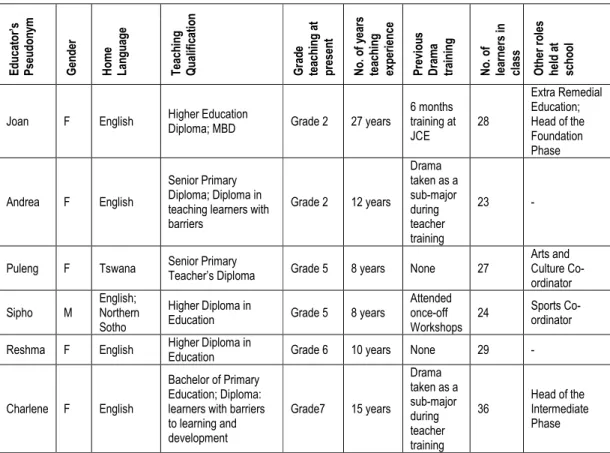
Table 1: Biographic Information of Participating Educators ...42
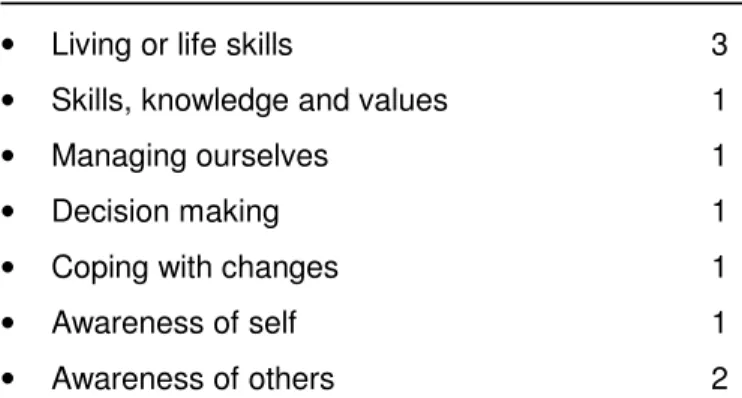
Table 2: Educators’ beliefs regarding the focus of LO ...44
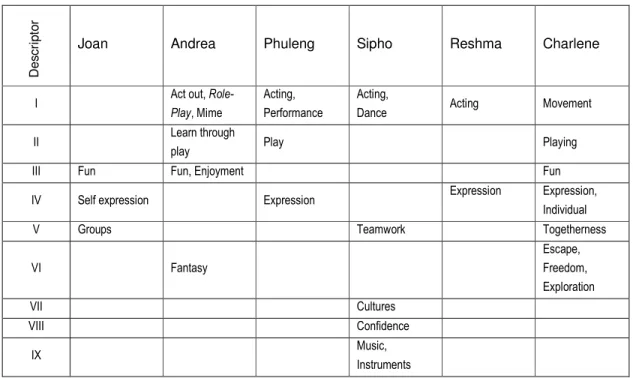
Table 3: Educators’ descriptions of Drama prior to the intervention...46
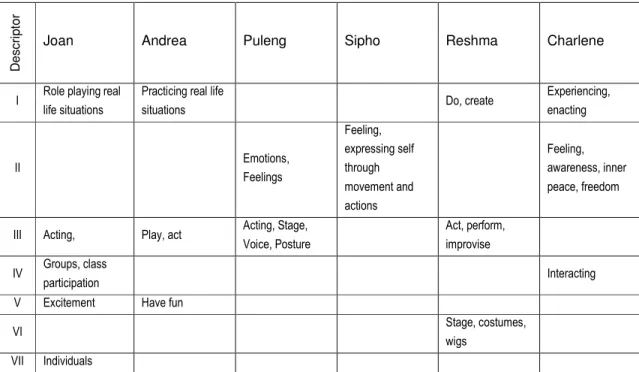
Table 4: Educators’ descriptions of Drama following the intervention ...57
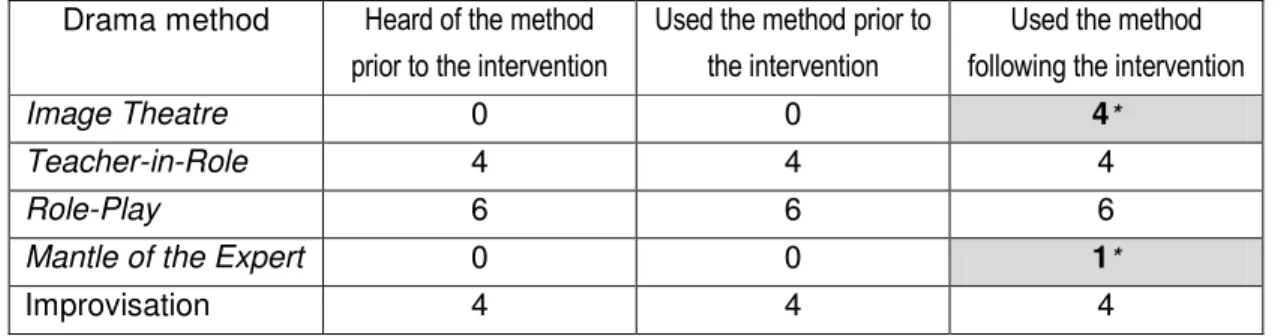
Table 5: Drama methods used by the educators ...58
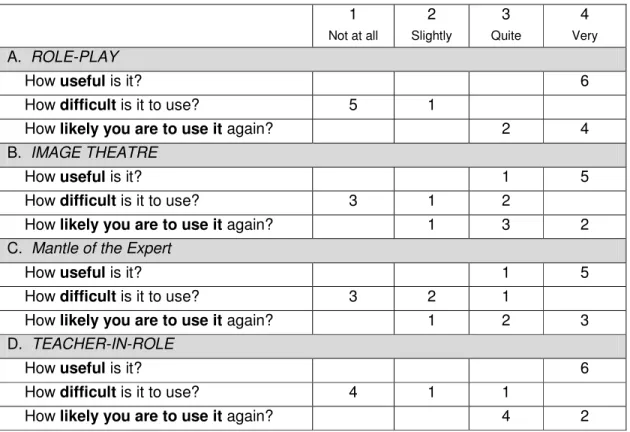
Table 6: Educators’ ratings of the taught drama methods ...61
INTRODUCTION
Life Orientation (LO) is a new Learning Area that forms part of the Revised National Curriculum Statement (RNCS). It takes its material from a number of sources and has a broad set of aims and outcomes. These outcomes range from health, social, personal and physical development to a focus on preparing learners for the world of work (DoE, 2002). Specifically, LO outcomes include the “equipment of learners for meaningful and successful living in a rapidly changing and transforming society” (DoE, 1998b, p.12). From a pragmatic perspective, the National DoE sees LO, of all the Learning Areas, as a means to address the ills in society: sexually promiscuous behaviour leading to HIV/AIDS; anti-social behaviour leading to high rates of crime; and degradation of the environment, amongst others. It is this ambition that provides the LO educator with a methodological challenge. What methods will be most effective in producing learners who are able to ”…make informed, morally responsible and accountable decisions about their health and the environment… while playing an active and productive role in the economy and society”? (DoE, 2002, p.3).
It is the researcher’s experience that many methods currently employed in schools in the teaching of LO do not actively challenge attitudes and values. Nor do they necessarily result in behaviour change. It has been shown through extensive research that people change their behaviour based on perception, attribution or attitude change (Rogers, 1983; Kincaid, 1987 & 1988; UNAIDS, 1999; Rogers & Kincaid, 1981; Latane, 1981). Many educators are adept at helping learners to acquire knowledge and skill, but they struggle to find teaching methods that will tap into learners’ attitudes and values, and are seldom able to facilitate changes in behaviour.
In contrast to this, much research supports the notion of drama methods being helpful in contributing to attitude and behaviour change (Heathcote, cited in Wagner, 1979 & 1999; Way, 1967; Boal, 1999). This suggests that such methods may be very suitable to implement the LO curriculum. In fact, research suggests that drama methods enable learners to experiment with and think
creatively in solving problems, facilitating the internalisation of knowledge and interpersonal skills (Boal, 1999). For example, the drama methods of Dorothy Heathcote (cited in Wagner, 1999) and Augusto Boal (1999) have been shown to serve a developmental purpose (Wagner, 1999; Boal, 1999). According to Heathcote (cited in Wagner, 1999), they are constructive, experiential learning processes as they enable learners to use reality and to ‘play’ with it, to become meaningfully involved with it and to experiment with different behaviours. The drama experience, according to Heathcote (cited in Wagner, 1999) and Boal (1999) thus aims for personal growth that will enhance social well being (O’Neill, Lambert, Linnell & Warr-Wood, 1988). These are also the key outcomes of the LO Learning Area.
Though the researcher has personal experience of using drama methods effectively for LO teaching, and a number of drama practitioners (Wagner, 1999; Boal, 1999; Way, 1967; O’Neill et al, 1988) have demonstrated the developmental nature of drama experiences, anecdotal evidence shows that little or no drama is used in LO teaching in Gauteng, nor is it part of educator pre-service training. This research aims to enable a group of educators to learn to use drama methods to enrich their (and the learners’) classroom experience.
Using a qualitative, explorative research design, the researcher conducted four experiential workshops with a group of primary school educators. The procedure of this study was also strongly influenced by action research principles, whereby data and experiences encountered along the way were incorporated into the design and facilitation of the subsequent workshops. Educators were required to fill out a pre-intervention perception questionnaire to give access to biographical information and their initial attitudes towards drama and LO teaching; and a post-intervention reflective questionnaire in order to highlight their final attitudes towards the drama methods for LO teaching. The workshops focused on a selection of four drama methods that have been shown (Wagner, 1999; Boal, 1999; Way, 1967; O’Neill et al, 1988) to have a specifically developmental outcome. Educators were required to participate in the workshops as if they were learners in the classroom. A strong emphasis was also placed on feedback and reflection throughout the research process.
This report begins with an outline of the relevant literature that informed the initial research question: how can educators be trained to employ drama as an alternative method in their teaching of Life Orientation? Thus, literature focusing on the in-service training of educators plays an important role in this study and is covered in Chapter One. Chapter Two outlines the Research Design of the study and this is followed by the results and a description of the data, in Chapter Three. Chapter Four provides a discussion of the results by drawing together the research problem in light of the theory and the research findings. The final chapter highlights some key findings of this study and offers guidance for future research opportunities.
CHAPTER 1
LITERATURE REVIEW
Introduction
The essential question driving this research asks how educators can be trained to use alternative methods, such as drama, in their Life Orientation (LO) teaching. As such, this literature review begins with an attempt to locate LO as a fairly new Learning Area within the South African education context. Secondly, the nature of LO as a Learning Area will be outlined. Thirdly, as the research aims to develop and change educator practices, the chapter will briefly summarise some of the popular models of learning and behaviour change, followed by an explication of literature on the in-service training of educators. Finally, there is an explanation of how drama methods can be used to achieve specific outcomes in LO teaching.
1.1 South African Education undergoing rapid change
South Africa’s education system has undergone substantial changes in the last ten years. This has created difficult challenges for those working in the field. Shifts in ideology, methodology and curriculum have led to changes at all levels in the education system. One such challenge is the shift to Inclusive Education. In the previous dispensation many learners with special education needs were excluded from school altogether or were mainstreamed by default. Inclusive Education thus called for a new approach, in an attempt to provide all learners, regardless of their disability, learning difficulty, or disadvantage with access to education (DoE, 2001). It was envisaged that the estimated 280 000 disabled children, through Inclusive Education, could be accommodated in regular and full-service schools; and those with severe disabilities could be provided with special attention in specialised schools (DoE, 2001). The intention to have a single education system is a fundamental shift in educational policy. Similarly,
Curriculum 2005 attempted to address the inadequate ‘Bantu’ education of the past and Outcomes Based Education (OBE) replaced teacher-centred approaches, encouraging children to become actively involved in the learning process, to gain knowledge as well as skills, and to think independently and creatively (DoE, 1998a).
Inclusive Education, Curriculum 2005 and Outcomes Based Education are dramatic (and many would argue necessary) policy changes. However, educators are left with the ambitious task of understanding and translating these policy changes into classroom practices. It is within this context that school subjects of the past were changed to ‘Learning Areas’, some undergoing dramatic shifts in content, teaching/learning strategies and assessment practices (DoE, 1998a, 2001). LO is one such Learning Area. The researcher has taught LO in three different schools and experienced significant frustration in her role. These experiences provided the impetus for this research.
1.2 What is Life Orientation?
The Department of Education states that Life Orientation…
guides and prepares learners for life and its possibilities. Life Orientation specifically equips learners for meaningful and successful living in a rapidly changing and transforming society. The LO Learning Area Statement develops skills, knowledge, values and attitudes that empower learners to make informed decisions and take appropriate actions regarding health promotion; social development; personal development; physical development and movement; and orientation to the world of work.
(DoE, 1998b, p.26)
LO is a development of the original “Life Skills” or “Guidance” school subject of the past. While it is difficult to define exactly what the goals of school Guidance included, in practice the researcher’s Guidance lessons at school were more likely to be used for chatting about university entrance requirements and the
watching of videos. J. Smit (personal communication: informal interview, January 2003), who matriculated in 1996, described her Guidance lessons as “free time to relax”. B. Wren (personal communication: informal interview, February 2003), who matriculated 1993, saw Guidance as a “luxury” in his school where they had the resources and time to teach it. However, he believed that his educators perceived school Guidance as a vague and unimportant subject in the school timetable.
Current educational policy posits LO as the Learning Area that aims to help develop responsible and democratic citizens of South Africa (DoE, 1998, 2002). Consequently, the LO curriculum has been more formalized than the school Guidance curriculum of the past. However, this Learning Area is still met with resistance from ‘older’ educators; and particularly from those in power who are designing timetables in schools (Diemont2, 2003c). One headmistress in Cape Town commented to the researcher that she would try to fit LO into the timetable, as she believed it was “nice for the girls to have” (Diemont, 2003b). Evidently, these attitudes towards the Learning Area create real challenges for its successful implementation in the classroom. “Nice-to-have” is not likely to be perceived by educators or learners as important, necessary or valuable.
According to the DoE, LO seeks to equip learners in a holistic way for “meaningful and successful living in a rapidly changing and transforming society” (DoE, 1998b; emphasis added). Concerned with the holistic development of learners, LO is promulgated as promoting “social, personal, intellectual, emotional, spiritual and physical growth” (DoE 1998b, 2002; emphasis added). On a practical level, LO is seen as facilitating the development of skills, knowledge, values and attitudes in order to empower learners to make life-enhancing decisions and appropriate consequent actions. It is suggested that learners’ health, social and personal development, physical fitness and career preparation will be improved through the LO curriculum (DoE, 1998b, 2002).
2
In 2003, the researcher spent 3 months at two schools in Cape Town completing her teaching practical examinations. This was in partial fulfilment of the requirements for a Post Graduate Certificate in Education at the University of Cape Town. While at these schools, the researcher was required to keep a detailed journal of her observations of classroom practices as well as
As is evident from above, LO takes its content from a variety of sources. It is not limited to a discrete body of knowledge and experience, but rather encompasses the entire spectrum of children’s lives. This is a broad spectrum of knowledge and content that certainly extends beyond the scope of psychological training. Although it requires only one year of psychological training in order to teach it, unlike other Learning Areas, the educator is not teaching psychology, the subject s/he is trained in. For these reasons, three educators have commented to the researcher that LO is the most difficult Learning Area to teach, and they frequently feel “out of their depth” (A. Roberts & G. Wilson, personal communication: informal interviews, February 2005). Thus, it is fitting to explore some of the commonly used methods in LO teaching in order to understand the nature of the educator’s struggle more completely.
1.3 Limitations of current methods used in LO teaching
During the researcher’s teacher training practical in 2003, educators were observed using three methods in most LO classrooms: discussion, worksheets, and free expression. Quite commonly, it appeared that discussion provided the perfect opportunity for confident or extrovert learners to dominate the lesson, providing little more than a boost in confidence for these talkative learners (Brookfield, 1995; Diemont, 2003b). Similarly, worksheets seemed to evoke mechanical and simplistic responses from learners who seemed more eager to finish their work than to gain any meaningful learning from it (N. Bakker, lecture notes, June 2003; Diemont, 2003c). On the other hand, free expression appeared to benefit some learners who liked writing, while frustrating the others. In addition, it could be argued that free expression goes against the OBE philosophy: it is an undirected activity, not geared towards any particular outcome (DoE, 2002; Diemont, 2003b). Overall, the researcher’s impression was that learners and educators saw LO lessons as insignificant, and this seemed to translate into little or no learning. Thus it appears that these observed methods are not particularly efficient in encouraging learners to develop meta-cognitive strategies or in facilitating the LO curriculum.
The foregoing observation reinforces the need for educators to be trained in effective methods for teaching LO. The question thus emerges as to how educators can be trained. How can efficient learning be encouraged through training efforts? Of course, this question applies to two levels of the learning process: how do we best help educators to learn a method, which then in turn enables them to implement it in an effort to educate their learners efficiently?
With these questions in mind, models of learning and behaviour change will be explored below specifically to gain an understanding of how educators learn, and in turn come to change their established teaching practices. Following the explication of models of learning and behaviour change, a summary of research related to the training and development of educators will be provided.
1.4 Models of learning and behaviour change
This research aims to bring about change in educators’ teaching practices. Therefore, it is necessary to look at models and explanations of the change process.
In the early part of the twentieth century, researchers believed that people would change their behaviour if they were provided with accurate and persuasive information. In response, models of behaviour change that focused on the “one-way-transmission of messages from a source to a receiver” were developed (Pistrow, Kincaid, Ruman & Rinehart, 1998, p.30). This idea was challenged in the 1970s when researchers began to explore the nature of the learning process. They demonstrated that communication is a dynamic process, a dialogue between participants to create and share information with one another in order to reach mutual understanding (Pistrow et al., 1998). It was found that the participants’ attitude, predisposition and thought processes need to be taken into account in order to communicate messages effectively. Thus, the interaction with the participant during learning endeavours became a key focus.
Shortly thereafter, Cognitive Theories proposed that learning occurs through the negotiation of meaning (Merriam and Caffarella, 1999). According to this view, the educator’s role is to provide numerous definitions and positive instances that clarify the concept in addition to negative instances that highlight what the concept is not (Ormrod, 1999, p. 317). Thus, the role of meaning became important in explanations of the change process.
Fishbein and Azjen (1975) added to cognitive models in their Theory of Reasoned Action when they observed that the adoption of behaviour is a function of intent, determined by a person’s attitude toward the behaviour and perceived social norms. In response to this shift in focus, Social Cognitive (Learning) Theory was developed to illustrate how audiences identify with attractive members in the mass media. It was posited that these attractive media personalities demonstrate a behaviour, which reinforces and then motivates people to adopt the behaviour (Bandura, 1977 & 1986). Similarly, Festinger (1954) developed the Social Process Theories after observing that one’s perceptions and behaviour are influenced by members of the group to which one belongs; and that we rely on other’s opinions in determining our behaviour (Festinger, 1954; Kincaid, 1987 & 1988; Latane, 1981; Moscovici, 1976; Rogers & Kincaid, 1981; Suls, 1977). More recently, UNAIDS research has shown that people are more likely to adopt new behaviours if these behaviours are communicated to them by respected members of their setting (UNAIDS, 1999; Rogers, 1962 &1983).
Therefore, these theories suggest for the present research that the attitudes of the educators towards the new behaviour (i.e. the drama methods), their perceived social norms (what educators perceive as effective teaching practice), and the value they ascribe to the facilitator (the researcher) are key factors in the design and implementation of this study.
More recently, in the 1990’s, Emotional Response Theories emerged from extensive research showing how emotional response precedes and conditions cognitive and attitudinal changes. Thus, messages high in emotional content are more likely to influence behaviour (Clark, 1992; Zajonc, Murphy & Inglehart,
1989). Parallel to these developments, in the health field, Mass Media Theories
were developed, highlighting evidence that there are multiple factors to be considered when designing health interventions. These include an individual’s perceptions of their vulnerability to a problem, the perceived seriousness of the problem, belief in the effectiveness of the new behaviour, cues to action, perceived benefits of preventive action, and barriers to taking action (UNAIDS, 1999). When related to the present study, educators’ feelings about how urgently they need guidance in their LO teaching; and their beliefs in the efficacy of the drama methods in bringing about increased learning, may be crucial applications of these theories. In addition, the researcher may need to take into account the educators’ barriers to change.
The shift towards more affective components in change processes strongly influenced sales and advertising research. The Mass Communication Impact Model was developed, demonstrating that change takes place in three steps: cognition, to affective response, to behaviour or action (Hovland, Lumsdain & Sheffield, 1949 in Rogers & Kincaid, 1981). This model was later expanded to six steps in marketing circles, moving the audience from attention to interest, comprehension, impact, a change in attitude, and then finally sales (Rogers, 1983, p.145). The fundamental shift here was in understanding the complexity of making an impact on the audience such that attitudes are changed and finally the behaviour is adopted. Along similar lines, Pistrow et al (1998) identified specific pathways to behaviour change in their Steps to Behaviour Change Theory. These included five steps, including interpretation and understanding as fundamental components of behaviour change (Pistrow et al, 1998).
In light of these theories, it is evident that the emotional and affective responses of learning cannot be underestimated. Attitudes, perceptions, understandings, meanings, and social norms are all key concepts to be taken into consideration in bringing about change. Therefore, those working to bring about change – the researcher in her role as in-service trainer and in turn educators working with learners - require a detailed awareness and understanding of the learning process. To shed more light on the learning process, we turn to examine the current understanding of learning within the context of constructivist discourse.
1.5 Understanding learning and development from a constructivist perspective
While the theories explicated above provide an account of some aspects of behaviour change, the constructivist model provides a more comprehensive explanation and framework for thinking about learning and development.
Extensive research (Hovland et al, 1949 in Rogers & Kincaid, 1981; Pistrow et al, 1998; UNAIDS, 1999) has been done in the social sciences with the view to examining how programmes instigate behaviour change in the target population. Social programmes that are heavily funded need to show a measure of success in order to ensure that resources are being wisely used. Research (UNAIDS, 1999) has shown that programmes that are randomly created with no theoretical model underpinning their design are less likely to be successful in bringing about behaviour change. For example, a study (Trigwell, Prosser & Waterhouse, 1999) conducted in a university in Australia looked at the link between educator approaches and student learning styles. It was found that there is a direct correlation between the educators who focus only on transmitting knowledge and their learners adopting a superficial approach to their learning. In contrast, those educators who were able to adopt student-focused approaches geared towards conceptual change were more successful in improving the quality of student learning.
These student-focused approaches geared towards conceptual change are constructivist by nature and have been successful in modifying attitudes, values and behaviours (Mc Loughlin, Winnips & Olivier, 2000).
The main philosophical underpinning of constructivism lies in theories of intellectual development such as Piaget’s notion of cognitive construction (Piaget, 1952, 1968, 1974; Bruner, 1974). In this developmental view, children (and adults) progress through a series of stages and learning results from adaptations to the environment, requiring them to construct ever more complex methods of
representing and organizing information (Carey, 1985; Case, 1985; Sternberg, 1984; Keil, 1984; Siegler, 1985). These ‘representations’ of information are called Schema in Piagetian language, and they become increasingly complex as the individual encounters new information in the world. As he or she does so, he3 either assimilates new information into his schema, and/or adapts his schema to include the new information. Alternatively, if the individual encounters an entirely new concept he or she may develop a new schema altogether.
Another important philosophical underpinning of constructivism rose from Vygotsky’s theory that depicts learning as a socially mediated experience where individuals construct knowledge based on interactions with their social and cultural environment (Vygotsky, 1978, 1987). We try to make sense of the environment; and as we do we internalise these processes and develop higher mental functions such as language, reasoning, memory and problem solving capability (Hardman, personal communication: Informal interview, August 2003; Vygotsky, 1978). Development of these higher mental functions depends on the nature and level of interaction that the learner has with his or her environment. If the learner is faced with increasing levels of complexity in his or her environment, s/he will be required to develop more complex mental functions. Vygotsky also argued that children who interact with adults or peers more capable than themselves will have their learning mediated by these more capable others. During the process of mediation, they will often be supported to construct greater mental capacities than they would on their own (Vygotsky, 1978, Wood, Bruner & Ross, 1976; Rosenshine & Meister, 1992).
Constructivist teaching methods as described by Hirumi (2002) are student-centred and problem-based. They are geared towards facilitating knowledge construction and the development of meta-cognitive skills (Hirumi, 2002). In constructivist learning environments, students work on solving authentic problems both independently and as part of a group. The authenticity of these problems requires the learners to become actively involved with what they are doing – they are involved with real people and real problems. This is in line with the Theory of Reasoned Action and Emotional Response Theory (Fishbein & Azjen, 1975;
Clark, 1992; Zajonc, Murphy & Ingelhart, 1989) where learners’ attitudes to and emotional investment in the ‘real’ problems’ they face is vital in bringing about attitudinal and behaviour change.
To illustrate the efficacy of the constructivist approach, a survey (Campbell, Smith, Boulton-Lewis, Brownlee, Burnett, Carrington, Purdie, 2001) of nearly 500 secondary students in 2001 compared traditional expository teaching methods with an active, learner-centred approach. It was found that students with sophisticated approaches to learning and those with under-developed learning strategies produced surface level responses on tests when the educators had used traditional, didactic methods. However, when the educator used active learner-centred approaches, students with under-developed learning strategies and those with sophisticated learning strategies were able to produce more complex responses (Campbell et al, 2001). This demonstrates that the educators’ use of active, learner-centred approaches benefits all learners, regardless of their individual capabilities.
This leads us to two central questions: In what way is drama a learner-centred, constructivist approach? And why was drama chosen as an alternative method for LO teaching in this research?
1.6 Drama as a constructive activity
Drama activities have been shown to adhere to many of the principles of constructive teaching methods. Working in the field of drama in education, John Somers (1996) found that drama is a useful tool as its processes “mark it out from other approaches such as discussion, the use of video and didactic pedagogy” (p.108) as it requires children to be actively and creatively involved in problem solving situations. Morgan and Saxton (1987) suggest, “the most significant learning which is attributable to experiences in drama is a growth in learners’ understanding about human behaviour, themselves and the world they live in” (p.38). Thus drama experience provides an authentic context in which learners are able to construct their own meanings and find their own solutions to
problems. Since LO aims to “prepare learners for life and its possibilities… and empower learners to make informed decisions and take appropriate actions” (DoE, 1998, p.26), one can see that drama methods create a context in which LO outcomes can be successfully addressed.
Drama and theatre are often not distinguished as separate concepts. “Theatre is largely concerned with communication between actors and an audience, drama is largely concerned with experience by the participants” (Way, 1967). Drama is not about taking a script or play and performing it. It does not require the learners to have any acting skill, or experience in the medium of drama for it to succeed as a method. This is an important distinction as research (Heathcote, cited in Wagner, 1999) has shown that the moment the child sees him or herself to be performing for an audience, the motivation for, and authenticity of, the experience may be lost. Heathcote, an educator and drama specialist, suggests that good drama is about taking up an attitude, a way of looking at a situation and being involved with it (Heathcote, 1980, cited in Goode, 1982). This is a constructivist, learner-centred approach to learning.
In line with the authenticity of tasks in a constructivist classroom, Slade (1995) demonstrated that drama activities are ontological, concerned with “being in the world”. He claimed that children are encouraged to find imaginative responses to problems through drama (Slade, 1995). Way (1967) suggested that personality fulfilment is dependent on the development of inner resourcefulness of the individual.
The attempt to equip young people with these aspects fails if the approach is through the intellect rather than through the intuition… and the arts are concerned with the development of intuition.
(Way, 1967, p.4-5)
Bailin (1993) explored the claim that drama experience in itself has possibilities for personal and social understanding. She argued that while drama deals with the emotions and is direct and intuitive, reflection must be integral to the process (Bailin, 1993). Heathcote (cited in Wagner, 1979 & 1999) suggests that drama
moves the learner from the particular, concrete experience to the universal, to achieve meaning. This is particularly useful in connection with the constructivist principle of equipping learners with the ability to generalise their learning to broader contexts (DoE, 2002; Mc Loughlin et al, 2000).
Drama experiences have been shown to benefit learners in a number of ways. They:
• Provide learners with distance and space to reflect (Diemont, 2003b; O’Neill et
al, 1988).
• Allow authentic voices to be heard through a role (Diemont, 2003a). • Are more accessible to non-verbal learners (Wagner, 1999).
• Encourage learners to work co-operatively together (Diemont, 2003a; O’Neill
et al, 1988).
• Encourage creative problem solving (Diemont, 2003a; Goode, 1982).
• Provide opportunities for learners to explore roles and attitudes of increasing
complexity – they can take any role that they find comfortable (H. Schiff, personal communication, October 2003; Chesner, 1995). By designing the drama in such a way that different voices or perspectives are available to the learner, the educator is essentially mediating the learning process.
• Simulate reality and therefore provide a rehearsal space for developing
life-in-society (Goode, 1982).
• Make learning enjoyable and enhance commitment, in so doing improving the
learner’s motivation to change (Wagner, 1999).
The characteristics of drama listed above parallel the constructivist learning criteria. They engage learners in authentic problem solving situations, in which they are required to search for, access, interpret and communicate information both independently and as part of a group (Hirumi, 2002). If educators can be helped to plan and implement lessons that achieve some of these outcomes, then LO may become the sphere in which skills, knowledge, values and attitudes are developed to empower learners to make life-enhancing decisions and appropriate consequent actions (DoE, 1998b & 2002).
The stated aim of this research is to train educators to adopt drama methods in their teaching of LO. The following section summarizes research on training and development efforts, in order to highlight important principles taken into account in designing the in-service training interventions for this study.
1.7 Training and Development
Educators are often required to attend training in an attempt to effect change and transformation in their schools. In recent years, major training efforts of the DoE sought to usher in the Outcomes Based Education (OBE) and Inclusive Education approaches (DoE, 2001). However, negative media attention and a high incidence of staff turnover in schools in recent years is evidence that these changes were neither smooth nor entirely effective. When consideration is given to how the shift towards OBE and Inclusive Education was introduced - via training efforts of the DoE - the question arises as to the nature of effective training and development efforts.
Davis and Davis (1998) define training as a process through which skills are developed, information is provided and attitudes are nurtured in order to help individuals become more efficient in their work. In addition, training is a systematic development of skills required by educators to reach higher levels of competence (Gravett, 2001). De Cenzo and Robbins (1996) suggest however, that there is a subtle difference between training and development. Training can be seen more as a learning experience that seeks to bring about fairly permanent change, enabling the individual to improve performance on the job. In contrast, development focuses more on the long-term personal growth of the educator (De Cenzo and Robbins, 1996). Guskey (1986, p.1) defines staff development as “a systematic attempt to bring about change – change in the classroom practices of educators, change in their beliefs and attitudes, and change in the learning outcomes of students”. Sarkar Arani and Matoba (2006) add that an important distinction should be made between training in a new skill and professional development, which aims to improve educational practice, social relationships and the accountability of each educator.
In a review of the history of staff development, Guskey (1986) came to the dismal conclusion that in-service training is “characterised primarily by disorder, conflict, and criticism” (Guskey, 1986, p. 1). In his view, staff-development practitioners or agencies fail to take into account the complexity of learning and development and the numerous factors that play a role in educators’ capacity to change. According to Guskey (1986), change is an experiential and developmental learning process for educators. In other words, it requires more than simply training, as defined by De Cenzo et al (1996). Koekemoer and Olivier (2002) add that staff development is about much more than adding to educators’ knowledge base. More specifically, change is about breaking with traditional ways of teaching, and about challenging the status quo. In order to accomplish this, educators need to develop theory, skills and to change their beliefs and attitudes (Koekemoer and Olivier, 2002).
Therefore, in order to bring about maximum change in the sample of educators involved in this research, it may be necessary to focus on changing both the job-performance and the long-term personal growth of the educators.
Koekemoer and Olivier (2002) highlight that change efforts have to take into consideration the educator’s need to feel both capable and comfortable about the change; and how vital it is that educators feel good about themselves as professionals following the training they receive. Ivers (2002) concurs by emphasizing the importance that the educator gains skill and confidence during training experiences.
In the late 1800’s, William James and Carl Lange developed the James-Lange theory (cited in Guskey, 1986), highlighting the dependent relationship between emotions and behavioural responses. For example, they drew attention to the fact that when descending a staircase, we grab onto the railing first, and then sense the fear of our near falling (Guskey, 1986). In this light, Guskey’s research (1986) highlights that educators are primarily motivated by the belief that what they do helps their learners. In other words, educators need to witness the improved learning of their students before feeling convinced that they could safely
adopt the new method or practice. Mathekga (2005) cautions that permanent change in educator practice may only occur as a result of the experience gained following the training intervention. When viewed in light of the James-Lange theory, the implication is that educators are able to change their beliefs and attitudes primarily as a result of witnessing change in the learning outcomes of their students. Thus the common cliché: “seeing is believing”!
The complexity of training and development efforts has been highlighted above. The following section provides a more explicit focus on the nature of in-service training efforts designed for educators.
1.8 In-service training of educators
“Much of what goes for in-service education is uninspiring and ineffective” (Corey, 1957, p.1)
Ivers (2002) claims that the majority of in-service training efforts are unsuccessful as they fail to take into consideration the educator’s perceived needs and goals. In his view, most training efforts are imposed upon educators, taking no account of their learning and development needs as individuals. Thus, it is common for educators to attend in-service training with negative and hostile attitudes from the start (Ivers, 2002). Extensive research has demonstrated how negative attitudes seriously impede learning (Sadock, & Sadock, 2003).
Sarkar Arani and Matoba (2006) stress that educators must feel that they are the driving force behind change; they need to feel empowered as individuals. In addition, educators should not feel threatened by change and should therefore be encouraged to choose their own goals for change (Sparks, 1986). Sarkar Arani and Matoba (2006) state that it is vital to protect the professionalism, autonomy and dignity of educators when implementing training and development programmes. Therefore, giving educators the power to choose their own development goals is one way of empowering them as adults who are responsible for their own development. In Ivers’ (2002) view, the fundamental
starting point for all in-service development efforts is a model that helps educators identify their own strengths and weaknesses and thus empowers them to pursue the right training.
Once educators are willing to attend an in-service programme, Sparks (1986) stresses the importance of the schedule and format of the training. Training should be scheduled over an extended period rather than once-off workshops, as this allows for ideas to be digested, for educators to try out a few things at a time, as well as for sufficient time to reflect on the experience in a supportive setting (Sparks, 1986). Similarly, Halsdorfer (2006) raises the difficulties educators experience when training is scheduled at the end of a school day, or during educators’ holiday periods. Educators are often too exhausted to concentrate at the end of a school day, and seem to feel bitter when required to give up their holiday rest time for staff development purposes (Halsdorfer, 2006). In addition, training scheduled towards the end of the year is far less beneficial than earlier in the year simply because educators are tired and worn out after months of teaching (Halsdorfer, 2006). Evidence also suggests that running staff training programmes off the school premises tends to allow educators the freedom to think more clearly as they are away from the stresses and demands of their familiar environment (Halsdorfer, 2006).
The format of in-service development efforts is also worthy of attention. Sparks (1986) states that small group formats seem to be beneficial as they allow opportunities for sharing experiences and for discussion of concerns or problems. In a small group that meets over an extended period, the change process can be worked through, managed and understood with the support of the trainer/facilitator (Sparks, 1986; Diemont, 2003c).
Ivers’ (2002) and Sparks’ (1986) research reveals that there are five key components to successful in-service training: presentation of theory; demonstration; practise; follow-up and feedback; and coaching. Guskey (1986) found that concrete, practical ideas, and demonstrations of training material by expert facilitators are also very beneficial for participants. Sparks’ (1986) study, in which three groups of educators were exposed to different combinations of
training modalities, illustrates another important factor for success. In the study, educators were split into three groups: group one participated only in the workshops; group two participated in workshops and peer observation; and group three took part in the workshops and received coaching. Whilst no statistically significant differences between groups were measured, it appeared that group two benefited the most from the combination of workshops and peer observation. Sparks (1986) hypothesises that educators benefited from the opportunity to observe their peers as it tended to give them practical ideas to implement in their own classrooms. In addition, the peer observations seemed to heighten the sense of trust and esteem among group members, contributing to the group’s unusually high morale (Sparks, 1986, p. 223).
Evidence (Koekemoer and Olivier, 2002) suggests that the qualities of the facilitator are as important as the factors discussed above. Koekemoer and Olivier (2002) stress that the facilitator should be able to establish a good rapport with the educators; be able to demonstrate a positive teaching approach and good classroom management abilities during the training; have extensive knowledge of the subject and training material; and should be compassionate towards the educators. Guskey (1986) reiterates this need for compassion, as, in his view, “change is a difficult and gradual process”, of which trainers need to be aware (p. 5).
In summary, Malone, Straka & Logan (2000, p. 55-59) identify the following key principles that contribute to successful in-service training efforts:
• Activities should be based on the actual and perceived needs of the
participants
• Training goals and outcomes must be clearly specified
• Training objectives should be clearly linked to the training outcomes • Specific training activities should be designed to meet the objectives
• Facilitators should blend traditional and emerging views of professional
development when planning the activities
• Training activities should take account of group size, time and composition as
• Model sites (such as a classroom) should be used to demonstrate best
practice
• A clear method of participant evaluation should be specified
(Malone et al, 2000, p. 55-59; Mathekga, 2005, p.27).
Of course, it may not always be possible to meet all of these criteria in practice. Media reports seem to have suggested that the DoE’s rapid change-over to OBE and Curriculum 2005 may not have allowed for sufficient funding or time to adopt Malone et al’s (2000) principles. In the next section, an account is given of South African educators’ experiences of the in-service training they received following the policy changes towards Curriculum 2005 (C2005) and OBE.
1.9 South African educators’ experiences of in-service training in Curriculum 2005 (C2005) and OBE
The process of training and orienting educators for the implementation of C2005 began in 1997 (Chisholm, Lubisi, Ndhlovu, Ngozi, Mahomed & Mphahlele, 2000). A Review Committee was established in order to guide the DoE in improving their change efforts. During the initial stages of the implementation of C2005, the majority of educators were trained via the “Cascade Model” (Chisholm et al, 2000, chapter 4, p.1). In this model, a core of twenty officials from each province was selected and provided with a basic understanding of C2005. Thereafter, these officials were required to ‘cascade’ the information to district officials, who in turn cascaded the information to other educators in their districts (Chisholm et al, 2000). These district workshops were conducted as once off, short, three to five day sessions during school hours. Later, restrictions were placed on training during school hours and educators had to attend training in the afternoons or at weekends (Chisholm et al, 2000).
These changes were problematic, and the Cascade Model has since been widely criticised (Khulisa, 1999; CEPD, 2000; HSRC, 2000; University of Pretoria and NAPTOSA submissions, in Chisholm et al, 2000). Firstly, educators complained that the training they received did not prepare them sufficiently for the complexity
of C2005 implementation. Secondly, the ‘cascading’ of the information resulted in the “watering down” and/or misinterpretation of crucial information (Chisholm et al, 2000). Thirdly, educators felt that the trainers lacked the confidence, knowledge and understanding required to manage the training process – some were criticised for not understanding the terminology themselves; others for not using teaching methods in line with OBE (Chisholm et al, 2000). Fourthly, educators stated that the training they received was geared towards advocacy rather than developing their skills and a substantial percentage of educators felt that the training was focused on teaching terminology rather than “engaging with the substance underlying the terminology” (Chisholm et al, 2000, chapter 4, p. 4). It has been argued that the weakness of the Cascade Model was encapsulated in the proverb: “the blind leading the blind” (CEPD, 2000 in Chisholm et al, 2000).
A number of problems with Curriculum 2005 emerged from these training efforts. Firstly, new Learning Areas such as Life Orientation (LO), Economic Management Sciences (EMS) and Arts and Culture (A&C) were introduced and educators complained that they had no formal training in these Learning Areas. Secondly, educators felt that interpreting the sixty-six specific outcomes was a struggle for them, and their training did not sufficiently mediate this struggle (Chisholm et al, 2000).
In response to the challenges that emerged following the introduction of C2005, one observation made by the Review Committee is particularly pertinent to this study: Teacher education and training does not necessarily, in itself, change classroom practices (Chisholm et al, 2000). More specifically, educators’ classroom practices seem to be influenced by a number of factors:
• How they themselves have been taught • Their own ideas of what good teaching is
• Their ideas of what the needs of their learners are
• What they believe is possible within different teaching and learning
environments
In addition, the Review Committee highlighted the following two principles:
1. New ideas are assimilated into educators’ already existing frameworks and practices. Therefore, training efforts need to take into account educators’ current knowledge before introducing new ideas and practices.
2. Expecting educators to change a lifetime of practice over three days is unrealistic.
(Chisholm et al, 2000, chapter 4, p. 5)
In conclusion, theory and research (Chisholm et al, 2000; Guskey, 1986; Sarkar Arani & Matoba, 2006; Ivers, 2002 & Sparks, 1986) has demonstrated the extreme complexity of in-service training, learning and development efforts. Training educators to break with conventional ways of doing things such that they in turn can educate their learners more efficiently is a challenging objective. The process of enabling this change in educator practice is the focus of this research. In the next chapter the researcher will outline the research methods adopted for the purposes of this study.
CHAPTER 2
RESEARCH DESIGN AND METHODS
2.1 Research Questions
This study establishes the extent to which educators are able to use drama as an alternative method for LO teaching. A key question informing the research was to understand in what ways and why educators may be resistant towards in-service training; and the extent to which they are willing and able to make use of training offered. The specific questions that informed this study were:
2.1.1 How useful and effective do educators feel that drama is as an alternative method in Life Orientation teaching?
2.1.2 What factors play an important role in educators’ capacity to learn new methods for their teaching?
2.1.3 To what extent are educators able to implement the taught drama methods in their Life Orientation teaching?
2.2 Research Design
Given the relative newness of changes in the SA education context, there has been little research done on how these changes have impacted on educators. The present research was therefore not able to rely on validated instruments or methods for measuring change in educators. A number of approaches have therefore been adopted. Consequently, this study is based on a qualitative, explorative research design and incorporates action research principles (Mouton & Marais, 1992; Mouton, 1996; Avison, Lau, Myers & Nielsen, 1999). Qualitative research attempts to access the participants’ understanding of, and the meaning they ascribe to their world and in this case, their beliefs about teaching, LO, and drama. Therefore, it was an assumption of this research that each participant’s
meaning system plays a fundamental role in their capacity to adopt the principles and methods that the research training provided.
The explorative nature of this study meant that a high degree of interest was placed in a small sample of participants. As such, it was hoped that a more in-depth understanding of each participant could be reached. Similarly, the study aimed to obtain a rich account of the educators’ understandings of and capacity to make use of the taught drama methods in their LO teaching. That is, the study aimed to go beyond a superficial exploration, towards the feelings, meanings and lived experiences of each participant in the study (Henning, 2004).
In Action Research, the theory of the researcher is tried out with practitioners in real situations and real organisations. It is an iterative process whereby the experience of the researcher and the practitioners informs the scope and process of the research (Avison et al, 1999). Action Research therefore combines theory and practise and places a high degree of importance on reflective learning (Avison et al, 1999). It was hoped that reflection would play an important role in the study, where the meanings and experiences of the participants would be taken into consideration in designing the content of each workshop.
2.3 Procedure
The researcher had previously been involved in counselling learners at the primary school at which this research was conducted. Therefore, relationships with the principal, staff and learners were already established. Initially, the researcher approached the principal to explain the requirements of the research and to ascertain if she was interested in allowing the staff to participate in the study. Furthermore, the research questions and methods were explained in detail. Confidentiality was discussed and the principal was assured that the identities of all participants and the school would not be discussed. The proposal was met with enthusiasm and permission was granted for the researcher to approach the educators on an individual basis. Of the total staff complement, only those educators who teach LO were approached. The aims of the study
were explained briefly, and educators who expressed interest in participating were given a letter informing them of the nature and process of the study: their involvement would include participation in four workshops and four reflective sessions and the completion of pre- and post-intervention questionnaires. This was detailed in the letter (see Appendix A) each educator received. Permission for the researcher to take audio-recordings during parts of the research was also requested.
Eleven of the fifteen questionnaires were completed and returned to the researcher along with the signed consent forms. However, due to time constraints, some educators were unable to make time available during the week; and others became involved in school activities they had previously been unaware of. Resistance to the introduction of new methods may have also played a significant role in the educators’ willingness to participate in the study. Thus, the final group of participants included six educators.
Information obtained from the initial questionnaires included the level of training of each educator; number of years teaching experience; the specific grades they were teaching; previous experiences of drama; attitudes towards LO teaching; and attitudes towards drama. These factors were taken into account when designing each workshop. The workshops were also designed as self-contained lesson plans. This meant that the educators had the option of taking each workshop/lesson away with them and then trying it out with their learners.
The participants met over a period of eleven weeks, after school. The first two workshops were held over two consecutive weeks, the third workshop two weeks later, and the fourth workshop was held in the sixth week. The final reflection was held after a four-week break to give the educators time to begin to implement the methods in their classrooms. It was hoped that spreading the intervention over a longer period would give the educators enough time to process what they had learnt, as well as the opportunity to provide feedback and ask for support in each of the reflective sessions. It was also hoped that the time available to the educators would allow them to gain confidence in their abilities, and sufficient opportunity to try the methods out gradually as their confidence increased.
Each workshop was based on LO learning outcomes specified by the DoE. In addition, each workshop focused on a different grade so as to give each educator sufficient exposure to material they could directly implement with their learners.
The content of the workshops was experiential in nature. Educators were required to participate in a self-contained ‘lesson’ and to do the drama activities themselves, as if they were learners in the classroom. This allowed educators to experience the activities as well as to learn from the teaching/facilitation modelled by the researcher. This experiential learning was also carried out in a reflective manner throughout, where the researcher frequently stopped the ‘lesson’ and reflected on the educators’ experiences as learners. These reflective asides also allowed the researcher to point out important principles of drama facilitation and to highlight how the activities could be adapted for different grades. It also provided opportunities to point out how difficult or uncooperative learners could be handled within the drama methods. Each ‘lesson’ was followed by a reflective discussion where the educators were encouraged to share their thoughts and feelings. Educators were also asked to think about how they could adapt the workshop material to suit their specific grade and learners. In addition, the experience of the workshop provided valuable material for the researcher to plan each successive workshop, taking into account the educators’ questions and areas of difficulty.
The researcher’s tape recording of the reflective sessions and production of written notes following each workshop allowed for greater depth and consistency of the data. This also allowed the researcher to observe non-verbal responses instead of being involved in capturing the data while the workshops progressed.
Four weeks after the fourth workshop, the final reflective session was held. Educators were asked to spend an hour filling out the post-intervention reflective questionnaire. In filling out the questionnaire, they were encouraged to be as open and honest as possible; and the researcher made a point of asking them not to write what they believed may be seen as desirable responses. The final reflective questionnaire included some questions from the initial questionnaire in
order to identify if there had been any change in the educator’s responses. Secondly, the questionnaire sought to explore attitudes and experiences of the workshops and the specific drama methods taught. Finally, the questionnaire aimed to explore how the training could be improved for future use.
2.4 Sample
This research made use of purposive and convenience sampling to access educators who met important research criteria. This implies that the research is not generalisable. The participants were drawn from a public primary school in Johannesburg that the researcher already had access to. Approximately eighty percent of the learners in the school come from previously disadvantaged backgrounds. The sample of educators included LO educators who have had no formal training in the facilitation and use of drama methods for teaching, and who have been teaching LO for a minimum of one year. Eleven educators met these research criteria and volunteered to participate, however only six of the educators were able to meet at the same time, and therefore managed to commit to, attend and complete the research process. Participation was strictly on a voluntary basis. The selected sample consisted of one male educator and five female educators, of whom two were Foundation Phase educators and the remaining four were Intermediate Phase educators. Two educators were head teachers.
2.5 Data Gathering Tools
This study made use of three sources of information gathering. Participants filled out Initial Perception Questionnaires, and then each workshop included a reflective discussion. Finally, Post-Intervention Reflective Questionnaires were completed by each of the participants.