Proceedings of SKISE Spring Conference, May 15, 2008
A Study of An Efficient Marketing System
through Integration of Web and Wireless Internet
Using CRM Technique
Y.M. Leem, Ph.D.
Kangnung National University Kangwon-Do, KoreaY.S. Hwang
Kangnung National University Kangwon-Do, Korea Abstract
Nowadays, in order to be a competitive enterprise, the most important thing is not to gather new membership but to manage existing membership with useful information in electronic commerce system. To satisfy various customers, it is vital to understand and analyze customer’s need. This study provides the historical background of development on wireless Internet including WAP and WiBro. Ultimately, this paper presents the modeling method for an efficient marketing system in mobile commerce
Key-words :CRM, Mobile, WAP, WiBro, Marketing System
1. Introduction
Internet has been widely used with the rapid development of technique on information and communication and recently, this enables us to use electronic commerce as a new culture. Due to this, new enterprise paradigm (cyber enterprise, cyber market, and cyber commerce, etc.) and the boundaries of enterprises or nations are being disappeared. Also, many suppliers and manufacturers of mobile equipment and system have competitively focused on the development of new and various services. SMS (short message service) has been settled down as a common service and wireless data service has been generalized. Nowadays, the importance of such wireless data service has been emphasized and various application services have to be developed like services in Internet for more utilized environment. Service related to electronic commerce is the most interested and activated service in Internet. The WAP Forum defines WAP as the de-facto world standard for the presentation and delivery of wireless information and telephony service on mobile telephones and other devices. The WAP Forum was formed in September 1997 by Motorola, Ericsson, Nokia and Phone.com (formerly Unwired Planet, the US developer of UP.Browser microbrowser technology). WAP functions as an XML-compliant, front-end gateway technology that web-enables smartphones and PDAs across virtually all devices, networks, and operating systems.
Applications for WAP are written in Wireless Markup Language (WML), a derivation of XML that replaced the Handheld Device Markup Language (HDML) used by early smartphones. WML is designed specifically to optimize Internet content within the current constrains of existing wireless devices: small screens, low levels of memory and processing power, and limited bandwidth [5][9].
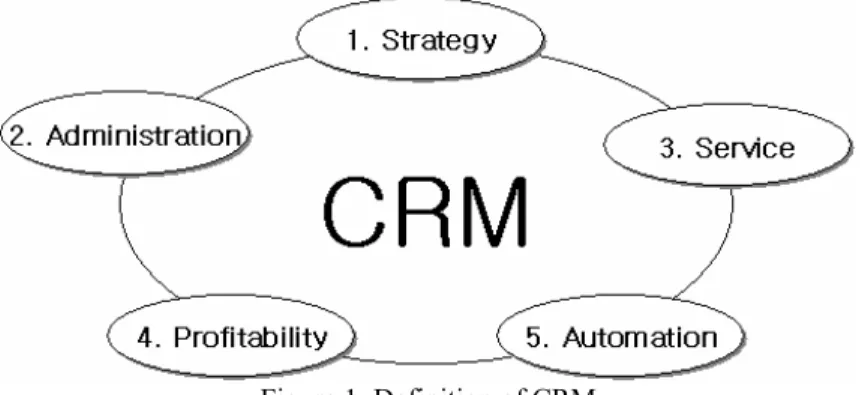
Recently, in order to overcome the demerits of existing wireless Internet, WiBro[10][6] has been developed. WiBro (Wireless Broadband) is a wireless broadband Internet technology being developed by the South Korean telecom industry. WiBro is the South Korean service name for IEEE 801.16e (mobile WiMAX[2]) international standard. WiBro adapts TDD for duplexing, OFDMA for multiple access and 8.75 MHz as a channel bandwidth. WiBro was devised to overcome the data rate limitation of mobile phones (for example CDMA 1x) and to add mobility to broadband Internet access (for example ADSL or Wireless LAN). In February 2002, the Korean government allocated 100 MHz of electromagnetic spectrum in the 2.3 ~ 2.4 GHz band, and in late 2004 WiBro Phase 1 was standardized by the TTA of Korea and in late 2005 ITU reflected WiBro as IEEE 802.16e[3] (mobile WiMAX). Two South Korean telecommunications (KT, SKT) launched commercial service in June 2006. However, existing web marketing system has to be changed for the satisfaction of various customers with the development of information and communication. According to the above demand, CRM (customer
was focused on the product itself but recently, interest of enterprise has focused on the customers and the trend of marketing activity is on mass marketing, segmentation marketing and niche marketing. At present, however, enterprise’s interest of customer has been changed into not group but individual. In this situation, CRM is used as a tool for promised solution.
This CRM starts from the data related customers. Acquisition and management of customer’s data have become easy task by Internet and the development of the technique on information and communication. Customers expect better service and their demand and taste are being complicated and varied by these changes. In order to be a competitive enterprise, it is necessary to analyze and understand customer’s demand and taste. In addition, it is inevitable to have new device on customer relationship management. Now, most enterprises that manage marketing system under web environment are making an effort to have an effective CRM system. Hereafter, similar effort for CRM will focus on wireless Internet environment that will be a core part of worldwide Internet system.
The objective of this paper is to provide the modeling method for efficient marketing system in mobile commerce. In section 2, the concept of CRM is presented and the methodology on integration of wireless Internet and web is addressed in section 3. In section 4, it is mentioned on how to use CRM technique under mobile commerce environment and finally the conclusion is given in section 5.
2. CRM
2.1 The Concept and Background of CRM
CRM, also known by other terms such as relationship marketing and customer management, is concerned with the creation, development and enhancement of individualized customer relationships with carefully
Compared to previous marketing (mass marketing, segmentation marketing, niche marketing), recent marketing, database marketing has occurred based on elements evolved from individual marketing, one-to-one marketing, and relationship marketing. CRM uses refined data of customer. Using this data, the following items can be fulfilled:
-Acquisition of new customers -Maintenance of real customers -Enhancement of customer’s value -Activation of potential customer -Whole life customization 2.2 e-CRM (electronic CRM)
The superior economics of mass markets, chain stores, improved highways and mass advertising via television and radio created more attractive value propositions to consumers than the small town shopkeeper’s customer service strengths. Now, in the early part of the 21st century, e-CRM is making it possible to recreate an “old fashioned” customer service experience in every sector of the economy. Marketing of goods and services in industries such as retailing, financial services, healthcare, automotive, steel and agribusiness is shifting from the mass marketing of standardized goods to one-to-one marketing of personalized offers. Web, wireless and voice technologies make it feasible to combine personalized touch and customized service with mass-market efficiencies of selling to millions of customers, recreating the shopping experience of Main Street at near-zero marginal cost. This is the essence of e-CRM. None of it was possible few years ago. e-CRM derives from CRM techniques which leveraged call center and direct marketing technology to market mass-produced goods and services to small market sub-segments. e-CRM expands on this technology by using next generation segmentation and analysis technologies,
Proceedings of SKISE Spring Conference, May 15, 2008
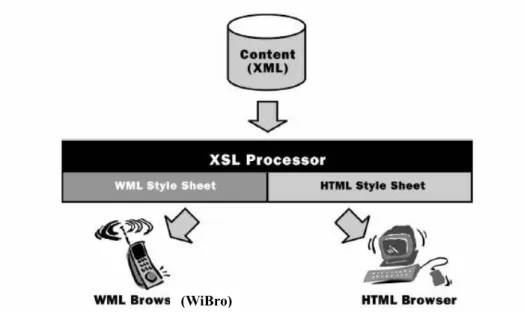
Figure 2. The Future Of Content Development
comprehensive customer interaction data, multi-channel communications and one-to-one interactions to market customized products and services to ever-more precise segments [7].
3. Wireless Internet and Web
3.1 Integration of Wireless Internet and Web
Already, web based Internet is an essential tool for human being. Now many enterprises have faced on challenge of new technique and opportunity related to mobile Internet that can eliminate the boundary of time and space with the development of mobile communication technique. Basic understanding of mobile Internet is necessary for both of existing Internet enterprise and off-line enterprise environment and technique which Internet users can obtain Internet service through wireless network under being mobility. So far, users of mobile Internet are limited but mobile Internet will be a future feature of present Internet. Figure 2 shows us the integrated form of WAP and web using XSL (eXtensible Style Language) [8].
4. Mobile CRM under Marketing System
4.1 M-Commerce
We define the core of mobile commerce as the use of a terminal (telephone, PDA or mobile terminal) and public mobile network (necessary but not sufficient) to access information and conduct transactions that result in the transfer of value in exchange for information,
services or goods [4]. The followings are attributes of M-commerce. - Ubiquity - Reachability - Security - Convenience - Localization - Instant Connectivity - Personalization
Among the above attributes, security, localization and personalization are very important factors that M-commerce providers have to consider. As time goes by, M-commerce will be developed to the direction to make added value into complex function and business activity. Evolved direction can be classified by the following four stages:
-Stage 1: e-mail (send and receive)
-Stage 2: SMS/WAP based information conveyance -Stage 3: transaction (m-banking, m-broking)
-Stage 4: Interactivity (one-to-one Marketing, mobile advertising)
As we know, stage1, 2 and 3 have already visualized. Stage 4 is incomplete but used in part.
4.2 Technique of Mobile CRM
Analysis technique and application of CRM which is used in existing web environment has many problems to apply into wireless Internet environment. Because of
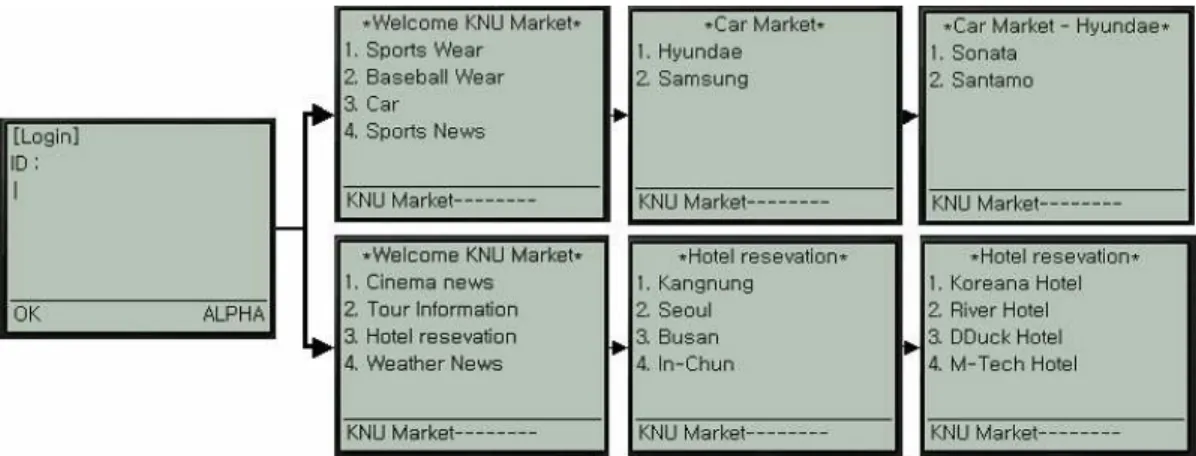
Figure 3. User Interface example
equipment limitation, it is impossible to see the contents at a glance under wireless Internet environment (PCS, PDA). Wireless Internet users have to do trial and error to get necessary information from equipment unlike web based Internet. Because marketing system has many limitations under wireless environment without the integration of existing web system, user’s analysis has to be done before the use of mobile CRM. Through the user’s analysis under web marketing system, each user should obtain different contents that are mainly used. As can be seen in figure 3, contents component has to be provided by different contents according to the user’s type.
After the completion of customized contents, log analysis that is left by users in wireless Internet has to be done. In this analysis, weighted point is provided with contents that are chosen by users and accurate path analysis has to be done from initial thinking to final transaction. Because the ultimate objective of a marketing system is to give enterprises profit, enterprises should use log analysis and path analysis in order to classify and differentiate real customers. 4.2.1 Customer’s Management
As can be seen in previous sections, the most important thing for marketing is not to gather new membership but to manage existing membership with useful information. However, managing and maintaining the existing customer is not easy. If enterprise frequently sends e-mail and short message to customers for advertising, they will delete the e-mail and message without consideration. Therefore, to satisfy various customers, it is vital to understand and analyze customer’s need and taste by not only used contents analysis but also sent e-mail and message analysis. In addition to this, management of associated users that are related to individual user is necessary to
have a more effective CRM. But considerate thinking is needed before using this kind of method because this may result in the problem of reveal on individual private information.
5. Conclusions and Future Work
Nowadays, it is important to maintain the existing customers than obtain new customers. The objective of a marketing system is not to gather customers but to give profit to the enterprise. As mentioned before, we may solve such problems through the accurate analysis on customer’s buying style and pattern. In this paper, the type of customer management is mentioned from the existing marketing system and a methodology for effective marketing system is provided by the integration of web and wireless Internet using CRM technique. The development of a specific example on addressed system and methodology remains as an ongoing research.
References
[1] Adrine Payne, “Customer Relationship Managemen t,” <http://www.crmforum.com/library/ viewdoc.ht ml>(2000).
[2] A. Ghosh, D.R. Wolter, J.G. Andrews, R. Chen, Broadband wireless access with WiMax/800.16 : current performance benchmarks and future potential, IEEE Commun, Mag. 43 (2) (2005), pp.129~136.
[3] IEEE Std 802.16-2004, Air Interface for Fixed Broadband Wireless Access Systems, Oct. 2004. [4] John Davison., Duncan Brown., and Ann Walsh,
2000, “Mobile E-commerce: Market Strategies An Ovum Report,” <http://www.ovum.com> (March 2000).
Proceedings of SKISE Spring Conference, May 15, 2008 [5] Michele Mackenzie., Mary Ann D’Loughlin., Eden
Zoller., Robin Hearn., John Davison and Dan Rid-sdale, “WAP Market Strategies An Ovum Report”, <http://www.ovum.com> (April 2000).
[6] Telecommunications Technology Association 2.3 GHz Portable Internet Project Group (PG302), 2.3 GHz Portable Internet (WiBro) Overview, Aug, 2004, Available from : <http://www.tta.or.kr/Englis h/new/main/index.htm>.
[7] “The Power of eCRM: A Primer on The Five Engines of eCRM”, 2000, <http://www.mircostrate gy.com> (June 2000).
[8] WAPForum., 2000, “Wireless Internet Today,” <http://www.wapforum.org/what/whitepapers.htm>
(June 2000).
[9] “Wireless Application & Professional Services,” 2000, <http://www.cherrytreeco.com/current/res_re p.cfm> (November 2000).
[10] Won-Hyoung Park, Sunghyun Cho, Saewoong Bahk, Scheduler design for multiple traffic classes in OFDMA networks, Computeer communications 31 (2008), pp. 174 ~ 184.
[11] Wundermann Cato Johnson., “Unlocking the true value of customer relationship management,” <http://www.crmforum.com/crm_vp/utv/sld01.htm