Published online January 30, 2014 (http://www.sciencepublishinggroup.com/j/pbs) doi: 10.11648/j.pbs.20140301.13
Factor structure, validity and reliability of the
Massachusetts General Hospital hair pulling Scale
Mehdi Rabiei
1, *, Masoud Nikfarjam
2, Kazem Khoramdel
3, Mohammad Taghi Movassagh
41
Department of Clinical Psychology, Baqiyatallah University of Medical Sciences, Tehran, Iran 2
Department of Psychiatry, Shahrekord University of Medical Science, Shahrekord, Iran 3
Department of Psychology, University of Mohaghegh Ardabili, Ardabil, Iran 4
Department of Psychology, University of Isfahan, Isfahan, Iran
Email address:
[email protected](M. Rabiei)
To cite this article:
Mehdi Rabiei, Masoud Nikfarjam, Kazem Khoramdel, Mohammad Movassagh. Factor Structure, Validity and Reliability of the Massachusetts General Hospital Hair Pulling Scale. Psychology and Behavioral Sciences. Vol. 3, No. 1, 2014, pp. 12-16. doi: 10.11648/j.pbs.20140301.13
Abstract:
The purpose of this study was to examine the factor structure, validity and reliability of the Massachusetts General Hospital Hair pulling Scale. Participants (304 male and 331 female) selected and the instruments of this study administered on them. Convergent validity of Massachusetts General Hospital Hair pulling Scale with the Obsessive– Compulsive Inventory-Revised, Yale –Brown Obsessive Compulsive Scale modified For BDD, Health Anxiety Inventory—Short Form and Skin Picking Impact Survey respectively were r=0.20, r=0.47, r=0.17 and r=0.47. Confirmatory factor analyses revealed total factor, one assessing impairment and the other symptom severity. The Cronbach's alpha for the total factor was 0.82. It can be concluded that this instrument is a useful measure for assess Hair pulling disorder symptoms in clinical assessment.Keywords:
Hair Pulling Disorder, Trichotillomania, MGH-HPS, Assessment, Factor Analysis1. Introduction
Advances in obsessive–compulsive disorder (OCD) research have led to increased attention to a range of disorders with possibly overlapping phenomenological and neurobiological features; the so-called OCD spectrum disorders (1). Some propose categorizing obsessive– compulsive spectrum disorders (OCSDs) on a broad
symptoms dimension that includes the disorders
characterized by impulsivity (i.e., sensation seeking/self-stimulatory behaviors) and compulsivity (anxiety-driven harm-reductive/avoidant behaviors)( Bartz and Hollander, 2006; Ettelt et al., 2007; Quoted from (2).
A disorder related to OCD, that is classified as part of the OCD-spectrum disorders is trichotillomania (TTM), characterized by repetitive hair pulling. (3) TTM is considered as an obsessive- compulsive spectrum disorder due to overlap in psychobiology, phenomenology (e.g., repetitive and ritualistic behavior) and comorbidity. (4)
Hair pulling may be from any region of the body but the most common areas include the scalp, eyebrows, and eyelashes, and TTM more commonly affects women, and
onset usually occurs in adolescence.(5)
Individuals with TTM experience deterioration in several psychosocial domains, including self-esteem, body image, emotions, and social functioning. (6)
Ninan, Rothbaum, Stipetic, Lewine (1992) found that 11% of a college sample reported some hair pulling and 2% reported pulling with visible hair loss(7); and King, et al. (1995) estimated a lifetime hair pulling prevalence rate of 1% among 17-year-olds. (8)
On the other, Assessment of symptom severity and change in chronic hair pulling has been limited by the absence of a psychometrically validated clinical rating scale.(12)
Of these, the Massachusetts General Hospital Hair pulling Scale (MGH-HPS) is preferred given its more sophisticated psychometric development, fewer scale items, and psychometric properties similar to those of other self-report scales(9).
The MGH-HPS is a homogeneous scale with good internal consistency, test–retest reliability, convergent validity and good divergent validity (6). The development of the MGH-HPS involved the adoption of relevant items from the Yale–Brown Obsessive Compulsive Scale, substituting hair pulling for compulsion.(12)
In addition, a subsequent study on an independent patient sample documented the test-retest reliability, convergent and divergent validity, and sensitivity to change in hair-pulling symptoms for this clinical rating scale. Advantages to use of this instrument include ease of administration and elimination of potential inter rater variability that can occur with clinician-based scales. Given the socially sensitive nature of this disorder, one might also postulate improved symptom reporting with this self-report instrument for trichotillomania. (13)
Although these studies have provided some basics about instruments hairpulling disorder, still there is some problems in diagnostic, factor analysis and assessing hair pulling disorder and there is a need for a standard assessment tool to assess special hair pulling disorder.
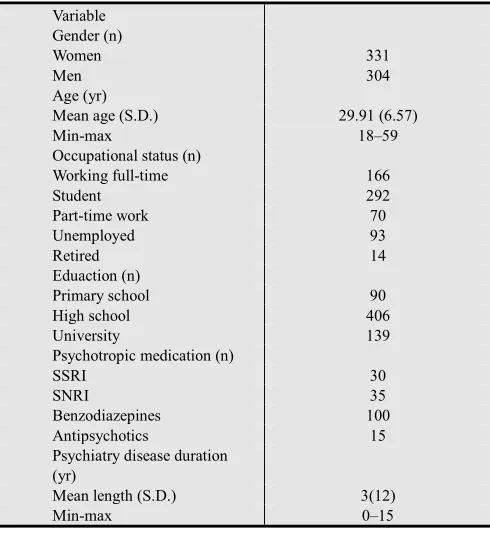
Table 1. Participants characteristics (N=635).
Variable Gender (n)
Women 331
Men 304
Age (yr)
Mean age (S.D.) 29.91 (6.57)
Min-max 18–59
Occupational status (n)
Working full-time 166
Student 292
Part-time work 70
Unemployed 93
Retired 14
Eduaction (n)
Primary school 90
High school 406
University 139
Psychotropic medication (n)
SSRI 30
SNRI 35
Benzodiazepines 100
Antipsychotics 15
Psychiatry disease duration (yr)
Mean length (S.D.) 3(12)
Min-max 0–15
In the current study, we examined the psychometric properties of the Massachusetts General Hospital Hair
pulling Scale. A positive feature of the MGH-HPS is that the scale now includes items that cover each of the impairment domains that proposed DSM-5 diagnostic criteria for Hair pulling disorder (i.e. Hair lesions, subjective distress and functional impairment.
The main aim of this study was to presentation a strong standard assessment tool to assess Hair pulling disorder and determine its validity (construct and concurrent), and reliability.
2. Method
The data for the Iranian sample were collected 2012. The Iranian sample consisted of 635 participants (304 male and 331 female) attending in medical and psychology clinics of Isfahan / Iran. The participants ranged in age from 18 to 59 years (M = 29.91; S.D. = 6.57). Multi-stage cluster sampling method was use to select the sample. The participants’ characteristics are present in Table 1.
3. Psychological Measures
The measuring tools in this study have been Massachusetts General Hospital Hair pulling Scale, Skin Picking Impact Survey, OCI-R, Yale –Brown Obsessive Compulsive Scale Modified for BDD and Depression Anxiety Stress Scales 21-item version.
1. Massachusetts General Hospital Hair pulling Scale. The most commonly used self-report measure for TTM in adults is the Massachusetts General Hospital Hairpulling Symptom Severity Scale (12). The MGH-HS is a 7-item self-report measure of hair pulling behaviors and has demonstrated both reliability and validity and may see wider use in the future.(14) It consists of seven items, each scored on a 5-point scale, with ratings of 0–4. The total score ranges from 0 to 28, with higher scores indicating greater severity and lower scores indicating decreased severity. The measure assesses urge frequency, intensity, and controllability, hair pulling frequency, resistance and associated distress during the prior week. The MGH-HS has demonstrated adequate convergent and divergent validity, strong test–retest reliability, internal consistency and sensitivity to changes in hair pulling symptom (6). Also Good internal consistency (α=0.89) (12) and test–retest reliability (r=0.97) (15). has been found for the MGH-HPS. Convergent validity support has been found with measures of trichotillomania and divergent validity support for the MGH-HPS has been found with measures of depression and anxiety (15).
2. Skin Picking Impact Survey (SPIS);(16). SPIS is a
self-report questionnaire designed to assess the
six items covering the following domains: 1. frequency of urge to pick, 2.intensity of urge to pick, 3. time spent picking, 4. interference due to skin picking, 5.distress due to picking/distress when prevented from picking and 6.avoidance behavior due to picking) (18)
3 Yale-Brown Obsessive Compulsive Scale Modified for Body Dysmorphic Disorder (BDD-YBOCS); (19) This is a reliable and valid 12-item semi-structured clinician administered instrument that evaluates current BDD severity. It assesses BDD-related preoccupations, repetitive behaviors, insight, and avoidance (19). The reliability and validity of the BDD-YBOCS Farsi version was demonstrated by Rabiei, Khoramdel, Kalantari, & Molavi, (2010) in both healthy and clinical samples. They showed that alpha coefficients ranged from .78 to .93 for the BDD-YBOCS total score and for its subscales (preoccupations, repetitive behaviors).(20)
4 The Health Anxiety Inventory—Short Form (HAI); (21)is an 18-item self-report measure of health anxiety/hypochondria symptoms. Also The Short Health Anxiety Inventory (SHAI) is a new instrument that measures cognitive factors associated with HC.(22). Specifically, the HAI-SF assesses the presence of current health worries/concerns as well as how individuals believe that they would react if they believed that they had a serious medical condition. Items have been rated on a four-point scale that allows for the assessment of symptom presence and severity. Total scores range from 0 to 54, with higher scores being indicative of greater symptomology. The HAI—SF assesses the degree of anxiety individuals experience about their health as well as how they think they would react if they thought that they had a serious medical condition. Good internal consistency (α=0.89) and test– retest reliability (r=0.90) have been found for the HAI— SF ;Convergent validity support for the HAI—SF has been found with measures of Hypochondriasis (21) Also (Abramowitz , 2006) reported that the HAI has good psychometric properties and contains three factors that assess the perceived likelihood and perceived severity of becoming ill, and body vigilance. Facets of health anxiety uniquely predicted increased safety-seeking behavior and medical utilization, behaviors that were commonly observed in HC. (22).
5 Obsessive–Compulsive Inventory-Revised (OCI-R) (23) The OCI-R is an 18-item self-report and a psychometrically sound and valid self-report scale measuring the major symptoms of OCD on six dimensions: Checking, Washing, Ordering, Hoarding, Obsessing, and Neutralizing.(24) The OCI-R questionnaire that assesses obsessive–compulsive symptoms. The OCI-R is an 18-item questionnaire based on the earlier 84-item OCI (25) Participants rate the degree to which they are bothered or distressed by OCD symptoms in the past month on a 5-point scale from 0 (not at all) to 4 (extremely). Each of these subscales includes three scale items. The psychometric properties of the OCI-R were described above. With a total score ranging from zero to 72 and
subscale scores ranging from zero to 12.(23) The OCI-R also showed significant associations with both OCD severity and other OCD symptom measures, beyond the relationships with depression, anxiety, and worry. The questionnaire also differentiated OCD from other anxiety disorders, except on the ordering and hoarding subscales. The relationships between the OCI-R subscales and dysfunctional beliefs were consistent with predictions based on cognitive models of OCD, although the coefficient sizes were generally weak (26).
4. Statistical Analysis
In order to examine the factor structure of the MGH-HPS we conducted confirmatory factor analyses. The Structural Equation Modeling program AMOS 5 was used (27) values of the Goodness of Fit Index (GFI) and the Adjusted Goodness of Fit Index (AGFI) close to 1 represents a good fit, values of the Root Mean Square Residual (RMR) and Standardized Root Mean Square Residual (SRMR) below .05 represents a good fit, and values less than .08 represents an acceptable fit.
5. Results
5.1. The MGH-HPS Structure
The factor structure of the Iranian version of the MGH-HPS was examined by means of CFAs. Findings, reported in diagram 1 and Table 2, demonstrated that the model had overall fit to the data. As the model had the best fit to the data and is closely related to the theoretical assumptions of the MGH-HPS.
MGH-HPS q1
er1
.67
q2 er2
.52
q3 er3
.63
q4 er4
.77
q5 er5
.71
q6 er6
.49
q7 er7
.63 .16 .26
Note: MGH-HPS =Massachusetts General Hospital Hair pulling Scale
Table2: Model fit indices for the model of the Iranian version of the MGH-HPS
model N GFI AGFI RMR RMSEA
635 0.92 0.90 0.04 0.031
5.2. Convergent Validity
The convergent validity was supported by testing correlation between MGH-HPS and (BDD-YBOCS), OCI-R, SPS-R and MGH-HPS. MGH-HPS was positively associated with (BDD-YBOCS), OCI-R and DASS-21 (P<0.001) ,and table (3) shows correlation results between the total score of scale after factor analysis.
Table 3: correlation results of MGH-HPS with BDD-YBOCS, SPS-R, OCI-R and HAI—SF.
Variable HAI—SF
(BDD-YBOCS) OCI-R HAI—SF
0.20 0.47 0.17
SPS-R 0.46
5.3. Internal Consistency
Internal consistency coefficients were computed version of the Hair pulling disorder using the data of the total sample. Cronbach’s alpha coefficients of the total score were generally high that indicating a high degree of homogeneity (0.91).
6. Discussion
The current study examined the psychometric properties,
factor structure, and convergent, divergent, and
discriminant validity of the Iranian version of the MGH-HPS.
Results from the present study indicate that the MGH-HPS has acceptable psychometric properties, with reliable assessing symptom severity and impairment.
The model showed an acceptable fit in the sample. This confirms the construct validity of the measure and the
underlying assumption of distinct symptom
dimensions/subtypes belonging to category Hair pulling disorder. Findings of this study revealed that the Iranian version of the MGH-HPS has a clear one-factor structure, congruent with its theoretical conceptualization (see figure 1 and table 2). This is congruent with the results of (12, 28, 15, and 9)
In addition, results indicated the higher positive correlation and significance of this scale with BDD, OCD, SPD, anxiety health which represents a good convergent validity of this scale (see Table 3).
The scale possesses high internal consistency. This is congruent with the results of (12, 28, 15, 9).
In summary, our findings demonstrate that the Iranian version of the MGH-HPS is, like the original version, a brief, psychometrically sound and valid measure for the assessment of a broad range of Hair pulling disorder symptoms, appropriate for the use in clinical and research settings. The present study replicated and extended previous findings with the original scale in a different cultural context.
7. Study Limitations and Strengths
In summary, our findings demonstrate that the Iranian version of the MGH-HPS is like the original version, a brief, psychometrically sound and valid measure for the assessment of a broad range of hair pulling disorder symptoms, appropriate for the use in clinical and research settings. The present study replicated and extended previous findings with the original scale in a different cultural context.
It would be necessary to determine the structure and reliability over time and with other samples. In addition, studies are required to examine the sensitivity of scale to treatment effects and recovery if the scales are to prove useful treatment evaluation tools. Moreover, it is suggested that non volunteer participants, lower educated and other age ranges, and particularly with larger sample sizes. In addition, studies are required to examine the sensitivity of both scales to treatment effects and recovery if the scales are to prove useful treatment evaluation tools. Ultimately, only self-report measures were included for each construct. Future studies may help these findings to be improve through using multiple measures of each construct and through using different response formats (e.g., clinician-rated, self-report, interview).
8. Conclusion
Overall, this study has successfully translated the English edition of MGH-HPS into persian language, obtained good
validity and reliability values, a significant contribution to the clinical psychology and counseling development in Iran. It can be concluded that this instrument is a useful measure for assess hair pulling disorder symptoms in clinical assessment.
Acknowledgements
The authors would also like to acknowledge the assistance of participants and all of the clinicians and research assistants who conducted the assessments.
References
[1] Stein DJ.Neurobiology of the obsessive-compulsive spectrum disorders. Biol Psychiatry. 2000: 15;47(4):296-304.
[2] Sulkowski ML, Mancil TL, Jordan C, Reid A, Chakoff
E, Storch EA. Validation of
a classification system of
obsessive-compulsive spectrumdisorder symptoms in a non-clinical sample. Psychiatry Res. 2011 Jun 30;188(1):65-70.
[4] Ferrao YA, Miguel EC, Stein DJ. Tourette’s syndrome, trichotillomania, and obsessive-compulsive disorder: how closely are they related? Psychiatry Res. 2009: 170, 32–42.
[5] Woods DW, Flessner CA, Franklin ME, Keuthen NJ, Goodwin RD, Stein DJ, et al. The trichotillomania impact project (TIP): exploring phenomenology, functional impairment, and treatment utilization. Journal of Clinical Psychiatry. 2006: 67, 1877–1888.
[6] Diefenbach GJ, Tolin DF, Crocetto J, Maltby N, Hannan S. Assessment of trichotillomania: a psychometric evaluation of hair-pulling scales. J. Psychopathol. Behav. Assess. 2005: 27, 169—178.
[7] Ninan PT, Rothbaum BO, Stipetic M, & Lewine RJ. CSF 5HIAA as a predictor of treatment response in trichotillomania. Psychopharmacology Bulletin.1992: 28, 451–455.
[8] King R, Scahill L, Vitulano L, Schwab-Stone M. Childhood trichotillomania: clinical phenomenology, comorbidity, and family genetics. Journal of the American Academy of Child & Adolescent Psychiatry. 1995: 34, 1451–1459.
[9] Keuthen NJ, Flessner CA, Woods DW, Franklin ME, Stein DJ,Cashin SE. Factor analysis of the Massachusetts General Hospital Hairpulling Scale. Journal of Psychosomatic Research.2007: 62, 707– 709.
[10] Rothbaum, Barbara Olasov; Ninan, Philip T. The assessment of trichotillomania.Behaviour Research and Therapy, Vol 32(6), Jul 1994, 651-662.
[11] Stanley MA, Bowers TC, Swann AC, Taylor DJ. Can the Yale-Brown Obsessive-Compulsive Scale be used to assess trichotillomania? A preliminary report. Behav Res Ther. 1993;31:171-177.
[12] Keuthen NJ, O'Sullivan RL, Ricciardi JN, Shera D, Savage CR, Borgmann AS, Jenkie MA, Baer L. The Massachusetts General Hospital (MGH) Hair pulling Scale: 1: development and factor analyses. Psychotherapy and Psychosomatics. 1995: 64, 141–145.
[13] Stein DJ. Gary Christenson , Eric
Hollander Trichotillomania Amer Psychiatric Pub; 1st edition (January 15, 1999)
[14] Stanley MA, Prather RC, Wagner AL, Davis ML, & Swann AC. Can the Yale-Brown Obsessive-Compulsive Scale be used to assess trichotillomania? A preliminary report. Behaviour Research and Therapy. 1993: 31, 171-177.
[15] O'Sullivan RL, Keuthen NJ, Hayday CF et al. The Massachusetts General Hospital (MGH) hairpulling scale: 2. Reliability and validity. Psychother. Psychosom. 64, 146— 148 (1995).
[16] Tucker BTP, Woods DW, Flessner CA, Franklin A, & Franklin ME. The skin picking impact project: Phenomenology, interference, and treatment utilization of pathological skin picking in a population based sample. Journal of Anxiety Disorders. 2011: 25, 88–95.
[17] Snorrason I, Olafsson RP, Flessner CA, Keuthen NJ, Franklin ME, Woods DW. The Skin Picking Impact Scale: Factor structure, validity and development of a short version. J Psychol. 2013 Aug;54(4):344-8.
[18] Keuthen NJ, Wilhelm S, Deckersbach T, Engelhard IM, Forker AE, & Jenike MA. The Skin Picking Scale (SPS): Scale construction and psychometric analyses. Journal of Psychosomatic Research. 2001: 50, 337–341.
[19] Phillips KA, Hollander E, Rasmussen SA, Aronowitz BR, DeCaria, C, Goodman WK. A severity rating scale for body dysmorphic disorder: development, reliability, and validity of a modified version of the Yale-Brown Obsessive-Compulsive Scale. Psychopharmacol Bull. 1997: 33, 17 - 22.
[20] Rabiei M, Khormdel K, Kalantari K, & Molavi H. Validity of the Yale-Brown Obsessive Compulsive Scale modified for Body Dysmorphic Disorder (BDD) in students of the University of Isfahan. Iranian Journal of Psychiatry and Clinical Psychology. 2010: 15, 343-350.
[21] Salkovskis PM, Rimes KA, Warwick HMC, Clark DM. The Health Anxiety Inventory: development and validation of scales for the measurement of health anxiety and hypochondriasis. Psychological Medicine. 2002: 32, 843– 853.
[22] Jonathan S. Abramowitz, Brett J. Deacon, David P. Valentiner. The Short Health Anxiety Inventory: Psychometric Properties and Construct Validity in a Non-clinical Sample. Cognitive Therapy and Research. December 2007, Volume 31, Issue 6, pp 871-883.
[23] Foa EB, Huppert JD, Leiberg S, Langner R, Kichic R, Hajcak G, et al.The obsessive–compulsive inventory: development and validation of a short version. Psychological Assessment. 2002: 14, 485–495.
[24] Gonner S. Leonhart R, Ecker W. The Obsessive– Compulsive Inventory-Revised (OCI-R): Validation of the German version in a sample of patients with OCD, anxiety disorders, and depressive disorders. Anxiety Disodrer.Volume 22, Issue 4, May 2008, Pages 734–749
[25] Foa EB, Kozak MJ, Salkovskis PM, Coles ME, Amir N. The validation of a new obsessive-compulsive disorder scale: the obsessive-compulsive inventory. Psychological Assessment.1998: 10,(3), 206-14.
[26] Belloch, A, Roncero M, García-Soriano G, Carrió C, Cabedo E, Fernández-Álvarez H. The Spanish version of the Obsessive-Compulsive Inventory-Revised (OCI-R): Reliability, validity, diagnostic accuracy, and sensitivity to treatment effects in clinical samples .Journal of Obsessive-Compulsive and Related Disorders, Volume 2, Issue 3, July 2013, Pages 249-256.
[27] Arbuckle JL. Amos 5.0 [Computer software]. Chicago: SPSS. (2003).