Reexamining Misconceptions About
β
-Blockers
in Patients With Diabetes
Janet B. McGill, MD
T
ype 2 diabetes and hyper-tension are two of the most common contributors to car-diovascular disease (CVD) in the United States. Diabetes is esti-mated to affect 7% of the U.S. population—a total of 21 million individuals. In many patients, dia-betes is asymptomatic, and as many as one-third of diabetic individuals are unaware that they have the disor-der.1 Hypertension, defined as blood pressure > 140/90 mmHg, affects one-third of Americans— an estimated 72 million people.1 Hypertension is a common comorbid condition of dia-betes, affecting ~ 20–60% of patients with diabetes, depending on ethnicity, age, and obesity.2 More than 3 million Americans have both conditions.3Along with cardiovascular com-plications, hypertension in patients with diabetes contributes to
increased risk of end-stage renal dis-ease and diabetic retinopathy.3,4 In patients with comorbid hypertension and diabetes, intensive pharmaco-logical treatment to reach blood pressure goals may be even more important in reducing cardiovascu-lar risk than blood glucose control.4 The high CVD risk in patients with diabetes necessitates more aggres-sive blood pressure targets.5,6 The Seventh Report of the Joint National Committee on Prevention, Detection, Evaluation, and
Treatment of High Blood Pressure (JNC-7) recommends that blood pressure in diabetic patients be con-trolled to levels ≤ 130/80 mmHg.6
The U.K. Prospective Diabetes Study and the Hypertension Optimal Treatment trial both demonstrated that tight blood pressure con-trol (< 130/85 mmHg) resulted in improved outcomes, including pre-vention of death and stroke and also prevention of microvascu-lar complications.7,8 Although tight blood glucose control decreases the frequency of microvascular com-plications such as retinopathy and nephropathy, it has not been shown to reduce diabetes-related
mortal-ity or the incidence of myocardial infarction (MI).9
Treatment of Hypertension in People With Diabetes
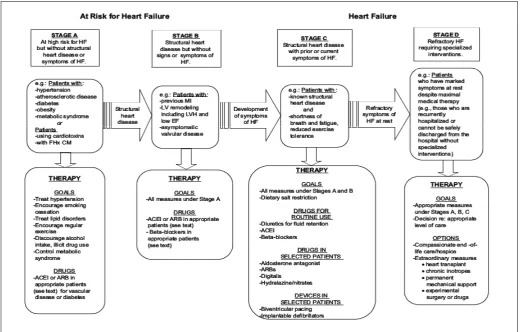
Patients with diabetes and hyperten-sion have a > 20% 10-year risk of developing coronary heart disease,10 the single greatest killer of American adults.1 Both hypertension and diabetes are considered preclinical or Stage A heart failure that, if left untreated, can progress to structural heart failure (Figure 1).11 The poten-tial for complications associated with hypertension in patients with diabetes emphasizes the need for appropriate and aggressive therapy.
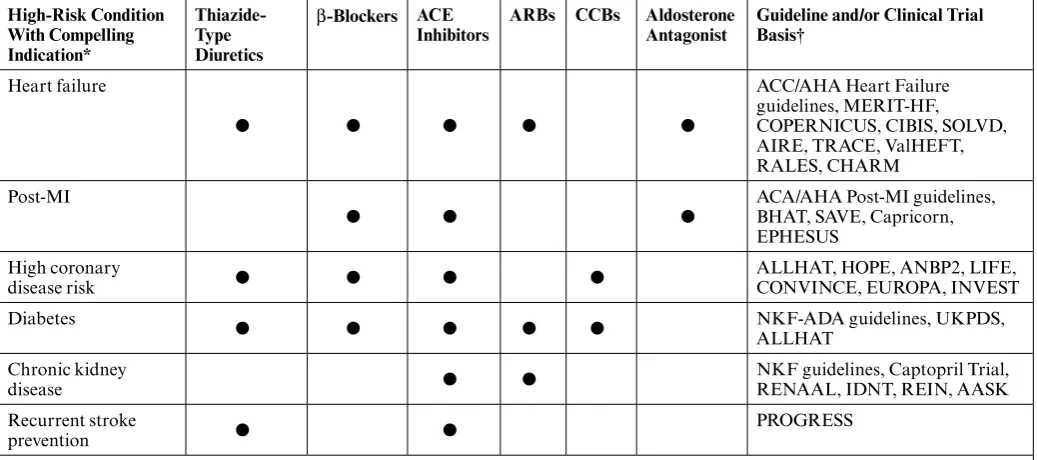
The JNC-7 recommends the use of angiotensin-converting enzyme (ACE) inhibitors, angiotensin receptor blockers (ARBs), low-dose thiazide diuretics, calcium channel blockers (CCBs), and β-blockers for first-line treatment of hypertension in patients with compelling indica-tions, including diabetes (Figure 2).6 These recommendations are based on randomized clinical trials using a variety of antihypertensive agents that have shown that even a modest reduction in systolic blood pressure of 9–11 mmHg and diastolic blood pressure of 2–9 mmHg decreases cardiovascular events by 34–69% and the microvascular complications of retinopathy or nephropathy by 13% within 2–5 years.7,8,12,13 National guidelines recommend β-blockers as a preferred therapy for the control of hypertension in patients with I n B r I e f
diabetes, heart failure, or high coro-nary heart disease risk or after MI because of the benefits and proven mortality risk reduction in these high-risk groups (Table 1).6
Based on current evidence, the American Association of Clinical Endocrinologists (AACE) has also proposed guidelines for the treat-ment of hypertension in patients with diabetes.5 Because ACE inhibi-tors and ARBs are associated with favorable effects on renal function and may improve insulin sensitivity, AACE recommends these agents as first-line therapy in the treat-ment of hypertension in diabetic patients. AACE recommends the use of diuretics in the lowest effective dosage (in conjunction with
potas-sium replacement or the addition of a potassium-sparing agent) because thiazide diuretics can worsen blood glucose control and increase the like-lihood of development of diabetes in individuals with insulin resistance.5
In recognition that β-blockers as a class may precipitate or exacerbate type 2 diabetes, these antihyper-tensive agents are not preferred as first-line agents for the treatment of hypertension in patients with dia-betes. However, because β-blockers are effective in the management of ischemic and congestive cardiomy-opathies—common cardiovascular complications of diabetes—AACE recommends the preferential use of third-generation β-blockers (e.g., nebivolol and carvedilol) as second-
or third-line agents in this high-risk patient population (Table 2).5
Benefits of β-Blockers
This class of antihypertensive drugs has ischemic as well as anti-atherogenic and anti-arrhythmic properties.14,15 These actions are important because both hypertension and diabetes cause cardiac injury that can subsequently activate the renin-angiotensin and sympathetic nervous systems and lead to myocardial remodeling and disease progression.
β-Blockers with anti-atherogenic properties can reduce inflammation, shear stress, endothelial dysfunction, and the risk of plaque rupture; the anti-arrhythmic properties result from decreased sympathetic and
heart rate activity and increased cardiac vagal tone.14,15 Considering the detrimental effects of diabetes and hypertension on the myocardium, the beneficial effects of β-blockers beyond blood pressure lowering alone should not be overlooked.
Perceived Negative Metabolic Effects of β-Blockers
Despite the proven benefits of
β-blockers in lowering blood
pres-sure and improving cardiovascular morbidity and mortality in clinical heart failure and post-MI trials, many physicians have been reluctant to prescribe β-blockers to patients with diabetes and hypertension. This reluctance is caused by per-ceived negative metabolic effects of
β-blockers, including worsening of glycemic control, insulin sensitivity, and dyslipidemia and masking of hypoglycemia.16,17
Evidence suggests that there are differential effects of β-blockers. The first-generation β-blockers (e.g., propranolol) are nonspe-cific and thus block both β1- and
β2-adrenergic receptors. The second generation β-blockers (e.g., atenolol and metoprolol) are β1-selective. Third-generation β-blockers (e.g., carvedilol and nebivolol) offer additional benefits. Carvedilol is a nonselective β-blocker with vasodilatory activity mediated by
α1-adrenergic receptor blockade. Nebivolol is a β1-selective blocker that also has vasodilatory properties believed to be a result of stimulation of nitric oxide release.
Many of the negative perceptions surrounding the use of β-blockers in diabetic patients involve traditional (i.e., first- and second-generation)
β-blockers. Studies have shown that nonselective propranolol,18
β1-selective atenolol,19 and meto-prolol20 significantly decrease insulin sensitivity in patients with hypertension.
Common Misconceptions About Glycemic Control and Lipids
The Antihypertensive Treatment and Lipid Profile in a North of Sweden Efficacy Evaluation study found that antihypertensive treatment with a low-dose diuretic (hydrochlorothiaz-ide) combined with atenolol (if needed to reach blood pressure control) was associated with negative metabolic effects compared with treatment with an ARB (candesartan), combined with a CCB (felodipine) if needed.21 Both treatment regimens lowered blood pressure, with the majority of patients requiring two-drug therapy. Fasting levels of serum insulin and plasma glucose, as well as LDL/HDL and apolipoprotein B/apolipoprotein A-I ratios increased in the diuretic and atenolol group in contrast to no change in the ARB and CCB group. In addition, at 12 months of
ment, eight patients (4.1%) in the diuretic and atenolol group versus 1 patient (0.5%) in the ARB and CCB group were diagnosed with new-onset diabetes (P = 0.030).21
Atenolol’s unfavorable metabolic effects may have a negative impact on prevention of cardiovascular events.22 A meta-analysis of tri-als with atenolol in patients with
hypertension revealed that there were no discernible differences between atenolol or placebo in the reduction of all-cause mortality (1.01 [95% CI 0.89–1.15]), cardiovascular mortality (0.99 [0.83–1.18]), or MI (0.99 [0.83–1.19]), despite the fact that 60% of patients were treated with an additional antihypertensive agent.19 More conclusively, the
Anglo-Scandinavian Cardiac Outcomes Trial–Blood Pressure Lowering Arm showed that atenolol treat-ment resulted in significantly worse outcomes, including cardiovascular events and procedures (P< 0.001), cardiovascular mortality (P = 0.001), and all-cause mortality (P = 0.0247), as well as the development of dia-betes (P< 0.0001) when compared
Table 1. Clinical Trial and Guideline Basis for Compelling Indications for Individual Drug Classes
High-Risk Condition With Compelling Indication*
Thiazide-Type Diuretics
β-Blockers ACE
Inhibitors ARBs CCBs Aldosterone Antagonist Guideline and/or Clinical Trial Basis†
Heart failure
● ● ● ● ●
ACC/AHA Heart Failure guidelines, MERIT-HF,
COPERNICUS, CIBIS, SOLVD, AIRE, TRACE, ValHEFT, RALES, CHARM
Post-MI
● ● ● ACA/AHA Post-MI guidelines, BHAT, SAVE, Capricorn, EPHESUS
High coronary
disease risk ● ● ● ● ALLHAT, HOPE, ANBP2, LIFE, CONVINCE, EUROPA, INVEST
Diabetes ● ● ● ● ● NKF-ADA guidelines, UKPDS,
ALLHAT Chronic kidney
disease ● ● NKF guidelines, Captopril Trial, RENAAL, IDNT, REIN, AASK
Recurrent stroke
prevention ● ● PROGRESS
AASK, African American Study of Kidney Disease and Hypertension; ACC/AHA, American College of Cardiology/ American Heart Association; AIRE, Acute Infarction Ramipril Efficacy; ALLHAT, Antihypertensive and Lipid-Lowering Treatment to Prevent Heart Attack Trial; ANBP2, Second Australian National Blood Pressure Study; BHAT, Beta-Blocker Heart Attack Trial; CHARM, Candesartan in Heart Failure—Assessment of Reduction in Mortality and Morbidity; CIBIS, Cardiac Insufficiency Bisoprolol Study; CONVINCE, Controlled ONset Verapamil INvestigation of Cardiovascular Endpoints; COPERNICUS, CarvedilOl PropspEctive RaNdomIzed CUmulative Survival; EPHESUS, Epleronone Post-Acute Myocardial Infarction Heart Failure Efficacy and Survival Study; EUROPA, EUropean trial on Reduction Of cardiac events with Perindopril in stable coronary Artery disease; HOPE, Heart Outcomes Prevention Evaluation; IDNT, Irbesartan Diabetic Nephropathy Trial; INVEST, INternational VErapamil/trandolapril Study; LIFE, Losartan Intervention For Endpoint reduction; MERIT-HF, Metoprolol CR/XL Randomized Intervention Trial in Heart Failure; NKF-ADA, National Kidney Foundation–American Diabetes Association; PROGRESS, Peridopril Protection against Recurrent Stroke
Study; RALES, Randomized Aldosterone Evaluation Study; REIN, Ramipril Efficacy in Nephropathy Study; RENAAL, Reduction of Endpoints in Non-Insulin Dependent Diabetes Mellitus with the Angiotensin II Antagonist Losartan Study; SAVE, Survival and Ventricular Enlargement: Capricorn, Carvedilol Post Infarct Survival Control in LV Dysfunction; SOLVD, Studies of Left Ventricular Dysfunction; TRACE, TRAndolapril Cardiac Evaluation; UKPDS, U.K. Prospective Diabetes Study; ValHEFT, Valsartan Heart Failure Trial.
*Compelling indications for antihypertensive drugs are based on benefits from outcome studies or existing clinical guidelines; the compelling indication is managed in parallel with the blood pressure.
†Conditions for which clinical trials demonstrate benefit of specific classes of antihypertensive drugs used as part of an antihy-pertensive regimen to achieve blood pressure goal to test outcomes.
with the CCB amlodipine. A total of 19,257 patients with hyperten-sion were treated an average of 5.5 years.23
The vasodilatory β-blockers (e.g., nebivolol and carvedilol) have demonstrated a more favor-able metabolic profile with respect to glycemic control and lipids.24,25 To assess the effect of nebivolol on metabolic parameters, a study randomized 30 patients with hypertension and hyperlipidemia to either atenolol or nebivolol.25 After 12 weeks of either β-blocker therapy, pravastatin was added for an additional 12 weeks of treatment. Atenolol significantly increased trig-lyceride levels by 19% (P = 0.05) and significantly increased lipoprotein(a) by 30% (P = 0.028), whereas nebiv-olol did not produce significant changes in either parameter. Glucose levels remained the same in the nebivolol-treated patients, while insulin levels were reduced by 10%, and insulin resistance was reduced by 20% (P = .05).25 These parameters were not significantly changed in the atenolol-treated patients. There was also no significant difference in these parameters between the atenolol and nebivolol treatment groups except for insulin-resistance reduction (0 vs. –20%, respectively; P = 0.05).25
Carvedilol has been uniquely shown to improve the common negative metabolic effects asso-ciated with the use of first- and second-generation β-blockers.24,26 The addition of the α1-blocking properties of carvedilol, which interfere with vasoconstriction, are theorized to increase blood flow to skeletal muscles, thereby improving metabolic parameters.27 Beneficial metabolic effects of carvedilol were demonstrated in a comparison study of metoprolol and carvedilol in the treatment of hypertension in nondia-betic patients with impaired insulin sensitivity.20 Both antihypertensive
Table 2. AACE Evidence-Based Recommendations for Management of Hypertension and Concomitant Type 2 Diabetes
Recommendation Highest Level of Evidence
Goal blood pressure ≤ 130/80 mmHg 2*
Goal blood pressure ≤ 125/75 mmHg when severe
proteinuria exists 1*
ACE inhibitor or ARB as first- or second-line agent 1* Thiazide diuretic as first- or second-line agent (in low
dos-age with adequate potassium replacement or sparing) 1*
β-Blockers (preferably drugs that block both the α and β
receptors) as second- or third-line agent 1*
CCB (preferably nondihydropyridine) as second-, third-,
or fourth-line agent 1*
The AACE hypertension guidelines have the following criteria for determining levels of evidence: Level 1 = well-controlled, generalizable, randomized trial; adequately powered; well-controlled multicenter trial; large meta-analysis with quality ratings; all-or-none evidence. Level 2 = randomized controlled trial, limited body of data; well-conducted prospective cohort study; well-conducted meta-analysis of cohort studies.
*AACE recommendation of grade A. The AACE determination of a grade A recommendation is based on the following criteria: homogeneous evidence from multiple well-designed randomized controlled trials with sufficient statistical power; homogeneous evidence from multiple well-designed cohort-controlled trials with sufficient statistical power; ≥ 1 conclusive level-1 publications demon-strating benefit >> risk.
Adapted with permission from Ref. 5. © 2006 American Association of Clinical Endocrinologists
agents effectively lowered blood pressure. However, after meto-prolol treatment, insulin sensitivity decreased, whereas it increased after carvedilol treatment. There was also a decrease in high-density lipopro-tein and an increase in triglyceride levels in patients in the metoprolol-treated group; however, these parameters remained unchanged in patients in the carvedilol-treated group. These findings suggest that
β-blocker treatment, when combined with α1-blocking activity, has advan-tageous effects on insulin sensitivity and lipids and could therefore be suitable for patients with impaired metabolic function.
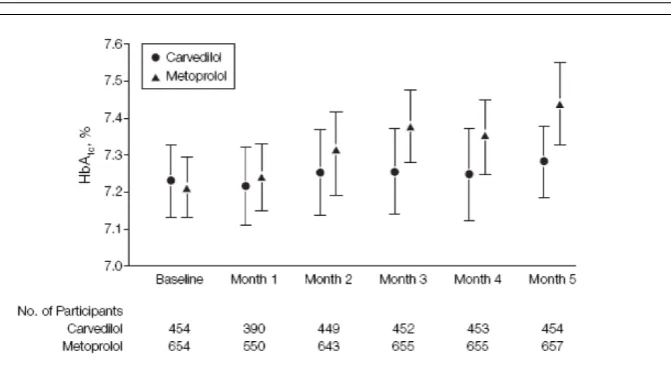
Results from the Glycemic Effects in Diabetes Mellitus: Carvedilol-Metoprolol Comparison in Hypertensives (GEMINI) trial elucidated important treatment differences between the β-blockers carvedilol and metoprolol tartrate.26 Among 1,235 patients with diabetes and hypertension, carvedilol stabi-lized A1C (Figure 3)26 and improved insulin resistance (HOMA index) and cholesterol. In contrast, metoprolol tartrate worsened glycemic and cholesterol control. Moreover, more patients treated with metoprolol withdrew because of worsening glycemic control compared with carvedilol-treated patients.
The results of the GEMINI trial support earlier studies dem-onstrating that metoprolol has a negative glycemic effect.28–30 A study of patients with essential hypertension revealed that, after 6 months of treatment, once-daily metoprolol succinate did not affect fasting plasma glucose but increased A1C levels by 5% compared to baseline levels (P = 0.04).28 This effect is of importance because an A1C reduction of as little as 0.1% was associated with 12% mortal-ity risk reduction in the Norfolk cohort of the European Prospective
Investigation into Cancer and Nutrition.29 Other studies have also found that each 1-percentage point decrease in A1C significantly reduced the risk of mortality, heart failure, and MI in patients with dia-betes and hypertension.30,31
A further substudy of the GEMINI trial demonstrated that carvedilol and metoprolol tartrate treatment produced statistically significant differences in diabetes symptom scores.32 In the Diabetes Symptom Checklist, a decrease in score indicates symptom improve-ment. Compared to baseline and to metoprolol tartrate, carve-dilol improved overall symptom score (–0.08 [P = 0.008] and –0.08 [P = 0.02], respectively), hypoglyce-mia score (–0.12 [P = 0.013] and –0.12 [P = 0.02], respectively), and hyper-glycemia score (–0.2 [P = 0.0001] and –0.16 [P = 0.005], respectively). Metoprolol tartrate treatment did not significantly improve these parameters and was associated with a worse psychological fatigue score compared with baseline levels (0.15 [P = 0.006]).32
Common Misconceptions About Microalbuminuria
Microalbuminuria (defined as urine albumin:creatinine ratio of 30–300 mg/g) is often the first clinical sign of renal dysfunction in patients with diabetes and is a recognized marker of cardiovascular risk and increased cardiovascular morbidity and mortality. A GEMINI substudy demonstrated that carvedilol treat-ment resulted in more favorable effects on microalbuminuria than metoprolol tartrate treatment.33 In GEMINI, 25% of patients had microalbuminuria. Carvedilol treatment resulted in a 16% relative reduction in the albumin:creatinine ratio (95% CI 6–25%; P = 0.003), and significantly fewer carvedilol-treated patients with normoalbuminuria
(< 30 mg/g) progressed to microal-buminuria (6.6 vs. 11.1%; odds ratio [OR] 0.53; 95% CI 0.30–0.93; P = 0.03) compared to metoprolol tartrate treatment.33
Common Misconceptions About Hypoglycemia
Hypoglycemia is a serious condition that may lead to confusion, irrational-ity, and in its most severe form, coma, seizure, and even sudden death.34 Theoretically, β-blockers could increase the risk of severe hypogly-cemia by masking the adrenergic warning symptoms of hypoglycemia, including weakness, shakiness, sweating, pallor, and palpitations.35 Clinical evidence suggests that there may be a relationship of specific antihypertensives to the development of hypoglycemia.36
A case-control study that used 1993 Medicaid data evaluated the relative risk of hypoglycemia in a cohort of patients treated for diabe-tes.36 The study cohort was divided into patients for whom the physi-cian reported hypoglycemia (using ICD-9 codes) and diabetic control subjects without hypoglycemia. Exposure to specific antihyperten-sive drugs, including ACE inhibitors,
A thorough review of the lit-erature concluded that, although adverse effects of β2-selective blockers on glucose metabolism are recognized, there is no evidence to withhold β1-selective block-ing agents from diabetic patients because these agents are not associ-ated with an increased risk of severe hypoglycemia.41
This is especially important in light of the life-threatening consequences of hypoglycemia. Hypoglycemia produces electrocar-diographic QTc interval lengthening that may play a pathogenic role in the occurrence of sudden death. Case reports have highlighted the occurrence of sudden overnight death among young patients with type 1 diabetes.42–46
It has been suggested that patients with type 1 diabetes with cardiac autonomic neuropathy have a greater risk of sudden death.47 A study that used an experimental model of hypoglycemia to test this theory in 28 patients with diabetes with and without cardiac autonomic neuropathy refuted the hypothesis.48 Participants with cardiac autonomic neuropathy tended to exhibit the smallest QTc increases, suggesting that autonomic neuropathy is not an important risk factor for sudden death from hypoglycemia. A subse-quent study of eight diabetic patients who had shown QTc lengthening during experimental hypoglycemia found that atenolol, a β1-blocking agent, significantly reduced hypogly-cemic QTc lengthening.49
Hypoglycemia is common in type 1 diabetes and is likely to occur more frequently in those who have tighter glycemic control. The potential effect of β-blockers on prevention of sudden death in diabetic patients warrants further investigation.
Common Misconceptions About Weight Gain
β-Blockers, in general, are associ-ated with weight gain, which in turn reduces insulin sensitivity. However, weight gain is not a class effect of β-blockers. An analysis of the GEMINI trial showed that there was a statistically significant difference in weight gain between carvedilol- and metoprolol-treated patients.49 Compared with baseline, patients taking metoprolol experi-enced a significant mean weight gain (1.2 ± 0.16 kg; P< 0.001), whereas patients taking carvedilol did not (0.17 ± 0.19 kg; P = 0.36). Compared with metoprolol-treated patients, carvedilol-treated patients were more likely to experience no weight change (44 vs. 35%; P = 0.005) and less likely to experience a weight gain of > 7% (1.1 vs. 4.5%; P = 0.006).49
Adherence to Guideline-Recommended Medical Care
Current American Diabetes Association (ADA) standards of medical care for patients with dia-betes use a mnemonic device (ABC) designed to remind health care providers and patients of the three clinical issues—A1C, blood pres-sure, and cholesterol— that must be addressed to minimize the vascular complications of diabetes, including MI, stroke, and peripheral vascular disease.50
Despite these guidelines, control of these clinical issues is inadequate in the community setting. Data from the National Health and Nutrition Examination Survey (NHANES) 1999–2002 showed that 44% of diabetic patients achieved optimal glycemic control (A1C < 7%).51 Moreover, only 35% of diabetic patients achieved optimal blood pressure goals (< 130/80 mmHg) in the 2003–2004 NHANES.52 Blood pressure control, in general, is poor in patients with essential
hypertension. Among adults with hypertension, 76% are aware of their disease, 65% are prescribed antihy-pertensives, and 37% achieve blood pressure goals.53
Polypharmacy is the natural consequence of providing guideline-recommended medical care to patients with diabetes.54 Varying combinations of antiglycemic medications are often necessary to correct abnormally elevated levels of blood glucose in patients with diabetes, including insulin therapy and medications to increase insu-lin production, to decrease glucose production by the liver, and to decrease carbohydrate absorption. In addition, hypertension manage-ment guidelines acknowledge that most patients, especially those with comorbid diabetes, require a com-bination of antihypertensive agents from different classes to reach blood pressure targets (< 130/80 mmHg).6 The Antihypertensive and Lipid-Lowering Treatment to Prevent Heart Attack Trial (ALLHAT) found that > 40% of individuals required multiple drug therapy (addition of ACE inhibitors, or CCB, or diuretic) to control blood pressure.55
Hyperlipidemia is a common comorbid condition among patients with diabetes and hypertension. A study of 371,221 outpatients at six Veterans Health Administration medical centers found that 30.7% had hypertension and dyslipidemia, and 66.3% had concomitant hyper-tension, dyslipidemia, and diabetes.56 If optimal lipid control cannot be achieved with lifestyle modifica-tions, statins or fibrates may be prescribed.57 The presence of other comorbid conditions (e.g., renal disease or ischemic heart disease) compounds the polypharmacy neces-sary to reach optimal disease control.
inconvenience of dosing, and lack of perception of treatment benefit of an asymptomatic condition (e.g., hypertension) can negatively affect a patient’s compliance with a treat-ment regimen. Physician reluctance to prescribe guideline-supported medications can also play a role in suboptimal disease management.
In a community study of 128 diabetic patients, in the week before the study, patients reported tak-ing a mean of four diabetes-related medicines and a total mean of six different medications daily for dia-betes and concomitant conditions: glycemic control (87%), hyperten-sion (80%), and dyslipidemia (57%).54 Despite good adherence to diabetes-related medicines, compliance with other medications was suboptimal in the previous week. The most frequent reasons for noncompliance were side effects (58%) and difficulty remembering to take all medica-tions (23%). Of note, only 23% of patients reported the occurrence of side effects to their physicians. Not surprisingly, self-reported adherence rates for medications that caused side effects were significantly lower (5.4 vs. 6.9 out of 7 days; P< 0.001). Patients with negative perceptions of the immediate and future ben-efit of prescribed medications also had lower 7-day adherence rates (P< 0.001).
Adverse effects from antihy-pertensive treatment vary by drug class.58 A general practice survey of patients who used antihypertensive medications showed that, when side effects for each drug were compared with the pooled average incidences of other antihypertensive agents, ACE inhibitors were associated with the highest incidence of dry cough (28 vs. 8%, respectively; P< 0.001); CCBs were associated with the high-est incidence of peripheral edema (22 vs. 12%, respectively; P< 0.001); and β-blockers were associated
with the highest incidence of sexual dysfunction (17 vs. 10%, respectively;
P< 0.01).59
The occurrence of adverse side effects can lead to medication nonadherence and negatively affect treatment outcomes. When multi-dosed drugs with short durations of action are taken inconsistently, blood pressure control can be com-promised. Reintroduction of drugs after inconsistent use can lead to excessive side effects.60
Simplifying treatment regimens by using once-daily dosing and combination drugs may improve adherence. A review of studies that measured medication compli-ance confirmed that the prescribed number of doses per day is inversely related to compliance. Simpler regi-mens involving less frequent dosing resulted in better compliance across a variety of therapeutic classes.61 Compliance is better in patients on once-daily medications (79%) than in patients on multiple-dosing regimens (twice daily, 69%; three times daily, 65%; four times daily, 51%). Not surprisingly, forgetfulness is cited as one of the most important reasons for noncompliance (30%).62,63
Another issue that may lead to adverse consequences is patient reluctance to tell their physician that they miss medication doses.64 Physicians may increase dosage or add medications to the treat-ment regimen of patients whose inadequate therapeutic response is actually a result of nonadher-ence to the prescribed medications. Physicians must take a proactive approach and stress the benefits of complying with medications for both short- and long-term benefit in lieu of waiting for their patients to approach them with concerns.
The poor rate of hyperten-sion control in both diabetic and nondiabetic patients may also reflect inadequate prescription of
evidence-based medications to control comorbid conditions. In a retrospective cohort study of 3,998 diabetic patients with ischemic heart disease, > 80% of patients received two cardioprotective medications (ACE inhibitor, β-blocker, or statin) despite high levels of concomitant disease, including hypertension (90%), hyperlipidemia (> 80%), heart failure (> 34%), or post-MI (~ 50%).65 Even fewer patients (< 40%) received all three lifesaving therapies. Not surprisingly, < 50% of these patients had control of blood pressure or A1C regardless of whether they adhered to medication.
Role of β-Blockers in the Therapeutic Management of Patients With Comorbid Diabetes
Proper selection of treatment regimen plays a key role in optimizing patient outcomes and quality of life. Patients with diabetes who have had an MI or have hypertension, heart failure, or coronary artery disease face a real and increased risk of morbidity and mortality that should be countered with appropriate management using evidence-based lifesaving treatments.
β-Blockers are indicated not only for the treatment of patients with hypertension, heart failure, or who are post-MI, but also for the treat-ment of hypertension in patients with diabetes. Because of the prevalence of comorbid hypertension in diabetic patients, physicians must be careful to prescribe a β-blocker that does not complicate a patient’s existing medication regimen and has the most favorable side-effect profile to prevent patient noncompliance.
pro-viding beneficial metabolic effects compared to metoprolol therapy.26 Carvedilol CR has shown efficacy in significantly lowering blood pressure in a double-blind, randomized trial involving 338 patients.66 All three doses of carvedilol CR treatment significantly decreased diastolic and systolic blood pressure by study end compared with placebo (Figure 4).66 Adverse event findings were similar in the placebo and carvedilol CR groups for headache, fatigue, dizzi-ness, and erectile dysfunction.66,67 The convenience of once-daily dosing combined with a low adverse event profile is a key strategy to improve medication adherence in patients with hypertension and diabetes.
Summary
Diabetes is increasing in the United States as the population ages, becomes less active, and grows more
obese, and the prevalence is expected to double in the next 25 years.68 Diabetes and hypertension frequently coexist, affecting > 3 million adults in the United States.2 Hypertension in patients with diabetes must be treated aggressively to reduce the risk of macrovascular and microvascular morbidity and mortality.
Because of their intrinsic high CVD risk, patients with diabetes have a more stringent blood pressure target (< 130/80 mmHg) than nondia-betic patients. National guidelines recommend β-blockers among pre-ferred therapies for control of blood pressure in patients with diabetes.5,6 When more than one drug is neces-sary to reach blood pressure goals, combinations of antihypertensives of different classes (e.g., a β-blocker and an ACE inhibitor or diuretic) provide complementary actions.
Because of the need for multiple medications to effectively manage patients with diabetes and hyperten-sion, the appropriate selection of a treatment regimen with good tolera-bility and simplified dosing is crucial to maximize positive outcomes in this high-risk population. Unlike traditional β-blockers, vasodilatory
β-blockers have favorable tolerability and metabolic profiles, while offer-ing effective blood pressure control.
REfERENCES 1Rosamond W, Flegal K, Friday G, Furie K, Go A, Greenlund K, Haase N, Ho M, Howard V, Kissela B, Kittner S, Lloyd-Jones D, McDermott M, Meigs J, Moy C, Nichol G, O’Donnell CJ, Roger V, Rumsfeld J, Sorlie P, Steinberger J, Thom T, Wasserthiel-Smoller S, Hong Y: Heart disease and stroke statistics—2007 update: a report from the American Heart Association Statistics Committee and Stroke Statistics Subcommittee. Circulation 115:e69–e171, 2007
2Arauz-Pacheco C, Parrott MA, Raskin P: Treatment of hypertension in adults with diabetes. Diabetes Care 26 (Suppl. 1):S80– S82, 2003
3Makrilakis K, Bakris G: Diabetic hyper-tensive patients: improving their prognosis. J Cardiovasc Pharmacol 31 (Suppl. 2):S34–S40, 1998
4National High Blood Pressure Education Program Working Group Report on Hypertension in Diabetes. Hypertension
23:145–158; discussion 159–160, 1994 5AACE Hypertension Task Force: American Association of Clinical Endocrinologists Medical Guidelines for Clinical Practice for the Diagnosis and Treatment of Hypertension. Endocr Pract
12:193–222, 2006
6Chobanian AV, Bakris GL, Black HR, Cushman WC, Green LA, Izzo JL Jr, Jones DW, Materson BJ, Oparil S, Wright JT Jr, Roccella EJ: Seventh report of the Joint National Committee on Prevention, Detection, Evaluation, and Treatment of High Blood Pressure. Hypertension 42:1206– 1252, 2003
7U.K. Prospective Diabetes Study Group: Tight blood pressure control and risk of macrovascular and microvascular complica-tions in type 2 diabetes: UKPDS 38. BMJ
317:703–713, 1998
8Hansson L, Zanchetti A, Carruthers SG, Dahlof B, Elmfeldt D, Julius S, Menard J, Rahn KH, Wedel H, Westerling S: Effects of intensive blood-pressure lowering and low-dose aspirin in patients with hyperten-sion: principal results of the Hypertension Optimal Treatment (HOT) randomised trial.
Lancet 351:1755–1762, 1998
9U.K. Prospective Diabetes Study Group: Intensive blood-glucose control with Figure 4. Effects of placebo or carvedilol CR on 24-hour mean systolic blood
sulphonylureas or insulin compared with conventional treatment and risk of com-plications in patients with type 2 diabetes (UKPDS 33). Lancet 352:837–853, 1998
10Expert Panel on Detection, Evaluation, and Treatment of High Blood Cholesterol in Adults: Executive Summary of the Third Report of the National Cholesterol Education Program (NCEP) Expert Panel on Detection, Evaluation, and Treatment of High Blood Cholesterol In Adults (Adult Treatment Panel III). JAMA 285:2486–2497, 2001
11Hunt SA, Abraham WT, Chin MH, Feldman AM, Francis GS, Ganiats TG, Jessup M, Konstam MA, Mancini DM, Michl K, Oates JA, Rahko PS, Silver MA, Stevenson LW, Yancy CW, Antman EM, Smith SC Jr, Adams CD, Anderson JL, Faxon DP, Fuster V, Halperin JL, Hiratzka LF, Jacobs AK, Nishimura R, Ornato JP, Page RL, Riegel B: ACC/AHA 2005 guideline update for the diagnosis and management of chronic heart failure in the adult: a report of the American College of Cardiology/American Heart Association Task Force on Practice Guidelines (Writing Committee to Update the 2001 Guidelines for the Evaluation and Management of Heart Failure). Developed in collaboration with the American College of Chest Physicians and the International Society for Heart and Lung Transplantation. Endorsed by the Heart Rhythm Society. Circulation 112:e154–e235, 2005
12Curb JD, Pressel SL, Cutler JA, Savage PJ, Applegate WB, Black H, Camel G, Davis BR, Frost PH, Gonzalez N, Guthrie G, Oberman A, Rutan GH, Stamler J: Effect of diuretic-based antihypertensive treatment on cardiovascular disease risk in older diabetic patients with isolated systolic hypertension: Systolic Hypertension in the Elderly Program Cooperative Research Group. JAMA
276:1886–1892, 1996
13Tuomilehto J, Rastenyte D, Birkenhager WH, Thijs L, Antikainen R, Bulpitt CJ, Fletcher AE, Forette F, Goldhaber A, Palatini P, Sarti C, Fagard R: Effects of calcium-channel blockade in older patients with diabetes and systolic hypertension. N Engl J Med 340:677–684, 1999
14Fonarow GC: Role of in-hospital initiation of carvedilol to improve treatment rates and clinical outcomes. Am J Cardiol
93:77B–81B, 2004
15Tse WY, Kendall M: Is there a role for beta-blockers in hypertensive diabetic patients? Diabet Med 11:137–144, 1994
16Bell DS: Optimizing treatment of diabe-tes and cardiovascular disease with combined alpha,beta-blockade. Curr Med Res Opin
21:1191–1200, 2005
17Ekbom T, Dahlof B, Hansson L, Lindholm LH, Schersten B, Wester PO: Antihypertensive efficacy and side effects of three beta-blockers and a diuretic in elderly hypertensives: a report from the
STOP-Hypertension study. J Hypertens
10:1525–1530, 1992
18 Lithell HO: Effect of antihypertensive drugs on insulin, glucose, and lipid metabo-lism. Diabetes Care 14:203–209, 1991
19Carlberg B, Samuelsson O, Lindholm LH: Atenolol in hypertension: is it a wise choice? Lancet 364:1684–1689, 2004
20Jacob S, Rett K, Wicklmayr M, Agrawal B, Augustin HJ, Dietze GJ: Differential effect of chronic treatment with two beta-blocking agents on insulin sensitivity: the carvedilol-metoprolol study. J Hypertens 14:489–494, 1996
21Lindholm LH, Persson M, Alaupovic P, Carlberg B, Svensson A, Samuelsson O: Metabolic outcome during 1 year in newly detected hypertensives: results of the Antihypertensive Treatment and Lipid Profile in a North of Sweden Efficacy Evaluation (ALPINE study). J Hypertens 21:1563–1574, 2003
22Sarafidis PA, Bakris GL: Do the metabolic effects of beta blockers make them leading or supporting antihypertensive agents in the treatment of hypertension? J Clin Hypertens (Greenwich) 8:351–356; quiz 357–358, 2006
23Dahlof B, Sever PS, Poulter NR, Wedel H, Beevers DG, Caulfield M, Collins R, Kjeldsen SE, Kristinsson A, McInnes GT, Mehlsen J, Nieminen M, O’Brien E, Ostergren J: Prevention of cardiovascular events with an antihypertensive regimen of amlodipine adding perindopril as required versus atenolol adding bendroflumethiaz-ide as required, in the Anglo-Scandinavian Cardiac Outcomes Trial-Blood Pressure Lowering Arm (ASCOT-BPLA): a multi-centre randomised controlled trial. Lancet
366:895–906, 2005
24Messerli FH, Grossman E: Beta-blockers in hypertension: is carvedilol different? Am J Cardiol 93:7B–12B, 2004
25Rizos E, Bairaktari E, Kostoula A, Hasiotis G, Achimastos A, Ganotakis E, Elisaf M, Mikhailidis DP: The combination of nebivolol plus pravastatin is associated with a more beneficial metabolic profile compared to that of atenolol plus pravastatin in hypertensive patients with dyslipidemia: a pilot study. J Cardiovasc Pharmacol Ther
8:127–134, 2003
26Bakris GL, Fonseca V, Katholi RE, McGill JB, Messerli FH, Phillips RA, Raskin P, Wright JT Jr, Oakes R, Lukas MA, Anderson KM, Bell DS: Metabolic effects of carvedilol vs metoprolol in patients with type 2 diabetes mellitus and hyperten-sion: a randomized controlled trial. JAMA
292:2227–2236, 2004
27Reaven GM, Lithell H, Landsberg L: Hypertension and associated metabolic abnormalities:the role of insulin resistance and the sympathoadrenal system. N Engl J Med 334:374–381, 1996
28Haenni A, Lithell H: Treatment with a beta-blocker with beta 2-agonism improves
glucose and lipid metabolism in essential hypertension. Metabolism 43:455–461, 1994
29Khaw KT, Wareham N, Luben R, Bingham S, Oakes S, Welch A, Day N: Glycated haemoglobin, diabetes, and mortal-ity in men in Norfolk cohort of European Prospective Investigation of Cancer and Nutrition (EPIC-Norfolk). BMJ 322:15–18, 2001
30Stratton IM, Adler AI, Neil HA, Matthews DR, Manley SE, Cull CA, Hadden D, Turner RC, Holman RR: Association of glycaemia with macrovascular and micro-vascular complications of type 2 diabetes (UKPDS 35): prospective observational study. BMJ 321:405–412, 2000
31Colagiuri S, Cull CA, Holman RR: Are lower fasting plasma glucose levels at diagnosis of type 2 diabetes associated with improved outcomes? UKPDS 61. Diabetes Care 25:1410–1417, 2002
32McGill JB, Bakris GL, Fonseca V, Raskin P, Messerli FH, Phillips RA, Katholi RE, Wright JT Jr, Iyengar M, Anderson KM, Lukas MA, Dalal MR, Bell DS: Beta-blocker use and diabetes symptom score: results from the GEMINI study. Diabetes Obes Metab
9:408–417, 2007
33Bakris GL, Fonseca V, Katholi RE, McGill JB, Messerli F, Phillips RA, Raskin P, Wright JT Jr, Waterhouse B, Lukas MA, Anderson KM, Bell DS: Differential effects of beta-blockers on albuminuria in patients with type 2 diabetes. Hypertension 46:1309– 1315, 2005
34DCCT Research Group: Adverse events and their association with treat-ment regimens in the Diabetes Control and Complications Trial. Diabetes Care 18:1415– 1427, 1995
35Barnett AH, Leslie D, Watkins PJ: Can insulin-treated diabetics be given beta-adren-ergic blocking drugs? BMJ 280:976–978, 1980
36Thamer M, Ray NF, Taylor T: Association between antihypertensive drug use and hypoglycemia: a case-control study of diabetic users of insulin or sulfonylureas.
Clin Ther 21:1387–1400, 1999
37Shorr RI, Ray WA, Daugherty JR, Griffin MR: Antihypertensives and the risk of serious hypoglycemia in older persons using insulin or sulfonylureas. JAMA
278:40–43, 1997
38Herings RM, de Boer A, Stricker BH, Leufkens HG, Porsius A: Hypoglycaemia associated with use of inhibitors of angiotensin converting enzyme. Lancet
345:1195–1198, 1995
39McMurray J, Fraser DM: Captopril, enalapril, and blood glucose [Letter]. Lancet
1:1035, 1986
receiving sulfonylurea therapy. Am J Med
89:811–813, 1990
41Sawicki PT, Siebenhofer A: Betablocker treatment in diabetes mellitus. J Intern Med
250:11–17, 2001
42Borch-Johnsen K, Helweg-Larsen K: Sudden death and human insulin: is there a link? Diabet Med 10:255–259, 1993
43Sartor G, Dahlquist G: Short-term mor-tality in childhood onset insulin-dependent diabetes mellitus: a high frequency of unex-pected deaths in bed. Diabet Med 12:607-611, 1995
44Tattersall RB, Gill GV: Unexplained deaths of type 1 diabetic patients. Diabet Med
8:49–58, 1991
45Thordarson H, Sovik O: Dead in bed syndrome in young diabetic patients in Norway. Diabet Med 12:782–787, 1995
46Ziegler D: Diabetic cardiovascular auto-nomic neuropathy: prognosis, diagnosis and treatment. Diabetes Metab Rev 10:339–383, 1994
47Lee SP, Yeoh L, Harris ND, Davies CM, Robinson RT, Leathard A, Newman C, Macdonald IA, Heller SR: Influence of autonomic neuropathy on QTc interval lengthening during hypoglycemia in type 1 diabetes. Diabetes 53:1535–1542, 2004
48Lee SP, Harris ND, Robinson RT, Davies C, Ireland R, Macdonald IA, Heller SR: Effect of atenolol on QTc interval lengthening during hypoglycaemia in type 1 diabetes. Diabetologia 48:1269–1272, 2005
49Messerli FH, Bell DS, Fonseca V, Katholi RE, McGill JB, Phillips RA, Raskin P, Wright JT Jr, Bangalore S, Holdbrook FK, Lukas MA, Anderson KM, Bakris GL: Body weight changes with beta-blocker use: results from GEMINI. Am J Med 120:610–615, 2007
50American Diabetes Association: Standards of medical care in diabetes—2008.
Diabetes Care 31 (Suppl. 1):S12–S54, 2008 51Saydah S, Cowie C, Eberhardt MS, De Rekeneire N, Narayan KM: Race and ethnic differences in glycemic control among adults with diagnosed diabetes in the United States.
Ethn Dis 17:529–535, 2007
52Wong ND, Lopez VA, L’Italien G, Chen R, Kline SE, Franklin SS: Inadequate control of hypertension in US adults with
cardiovas-cular disease comorbidities in 2003–2004.
Arch Intern Med 167:2431–2436, 2007 53Ong KL, Cheung BM, Man YB, Lau CP, Lam KS: Prevalence, awareness, treat-ment, and control of hypertension among United States adults 1999–2004. Hypertension
49:69–75, 2007
54Grant RW, Devita NG, Singer DE, Meigs JB: Polypharmacy and medication adherence in patients with type 2 diabetes.
Diabetes Care 26:1408–1412, 2003
55ALLHAT Officers and Coordinators for the ALLHAT Collaborative Research Group: Major outcomes in high-risk hypertensive patients randomized to angiotensin-con-verting enzyme inhibitor or calcium channel blocker vs diuretic: the Antihypertensive and Lipid-Lowering Treatment to Prevent Heart Attack Trial (ALLHAT). JAMA 288:2981– 2997, 2002
56Johnson ML, Pietz K, Battleman DS, Beyth RJ: Prevalence of comorbid hyper-tension and dyslipidemia and associated cardiovascular disease. Am J Manag Care
10:926–932, 2004
57Steiner G: A new perspective in the treatment of dyslipidemia: can fenofibrate offer unique benefits in the treatment of type 2 diabetes mellitus? Treat Endocrinol
4:311–317, 2005
58Munger MA, Van Tassell BW, LaFleur J: Medication nonadherence: an unrecog-nized cardiovascular risk factor [article online]. MedGenMed 9:58, 2007. Available from http://www.pubmedcentral.nih.gov/ articlerender.fcgi?tool=pubmed&pubmedid= 18092064. Accessed 11 December 2008
59Borrild NJ: Patients’ experiences of antihypertensive drugs in routine use: results of a Danish general practice survey. Blood Press Suppl 1:23–25, 1997
60Leenen FH: Intermittent blood pressure control: potential consequences for outcome.
Can J Cardiol 15:13C–18C, 1999 61Claxton AJ, Cramer J, Pierce C: A systematic review of the associations between dose regimens and medication compliance.
Clin Ther 23:1296–1310, 2001 62Lasater M: The effect of a nurse-managed CHF clinic on patient readmission and length of stay. Home Healthc Nurse
14:351–356, 1996
63Ni H, Nauman D, Burgess D, Wise K, Crispell K, Hershberger RE: Factors
influencing knowledge of and adherence to self-care among patients with heart failure.
Arch Intern Med 159:1613–1619, 1999 64Kogut SJ, Andrade SE, Willey C, Larrat EP: Nonadherence as a predictor of antidiabetic drug therapy intensification (augmentation). Pharmacoepidemiol Drug Saf
13:591–598, 2004
65Ho PM, Magid DJ, Masoudi FA, McClure DL, Rumsfeld JS: Adherence to cardioprotective medications and mortality among patients with diabetes and isch-emic heart disease [article online]. BMC Cardiovasc Disord 6:48, 2006. Available from http://www.pubmedcentral.nih.gov/ articlerender.fcgi?tool=pubmed&pubmedid= 17173679. Accessed 11 December 2008
66Weber MA, Sica DA, Tarka EA, Iyengar M, Fleck R, Bakris GL: Controlled-release carvedilol in the treatment of essential hyper-tension. Am J Cardiol 98:32L–38L, 2006
67Weber MA, Bakris GL, Tarka EA, Iyengar M, Fleck R, Sica DA: Efficacy of a once-daily formulation of carvedilol for the treatment of hypertension. J Clin Hypertens (Greenwich) 8:840–849, 2006
68Wild S, Roglic G, Green A, Sicree R, King H: Global prevalence of diabetes: esti-mates for the year 2000 and projections for 2030. Diabetes Care 27:1047–1053, 2004 Janet B. McGill, MD, is an asso-ciate professor of medicine at the Washington University School of Medicine and co-director of the Prevention and Control Core of the Diabetes Research and Training Center at Washington University in St. Louis, Mo.
Note of disclosure: Dr. McGill’s