© Global Society of Scientific Research and Researchers
http://ijcjournal.org/
Alternative Face Recognition Using Neural Network
Mr. Ali Adan Gabow
a*, Dr. Richard Rimiru
b, Dr. Michael W. Kimwele
ca,b,c
School of computing and Information Technology, Jomo Kenyatta University of Agriculture and Technology,
P.O Box 6200-00200, Nairobi, Kenya
a
Email: [email protected], bEmail: [email protected], cEmail: [email protected]
Abstract
The main goal of this paper is to asses prototype of Alternative image recognition Using Neural network to
check users As now days there are many security issues especially key areas such as banks , Government
compound, universities as creating many challenges using human talent include customer queue ,time
consuming for insuring security and high rate of security risks ,This access control as system allows only
authorized persons to access to restricted areas. there was face recognition automatic system using RF and GSM
technology but in this study we use with face recognition Neural network to overcome to the angle capture
problems in image processing and increasing security by solving orientation angle ,light, pose , low resolution
and facial expression and many factors also we compare many methods used in this area.
Keywords: Neural Network; principle component Analysis.
1. Introduction
Now days the security issues becoming the key important using technology substituting the human capability to
increase efficiency and cutting off the time consuming. This access control as system allows only authorized
persons to access to restricted areas. There was face recognition automatic system using RF and GSM
technology but in this study we use with face recognition Neural network to overcome to the angle capture
problems in image processing and increasing security by solving orientation angle ,light, pose , low resolution
and facial expression and many factors also we compare many methods used in this area. In this research we
will explore many methods that used in such face recognition in the recently years then as compared to ours
method that will enhance capability of the recognition and also asses the ways will work our method for solving
previous gap for above mentioned exist problems to enhance and improve in away in the technology age of the
day to help security measures standards that have many challenges in the world wide . In our research we will
use neural network as a solving method to existing orientation in face recognition.
---
2. Theoretical Background
Limitations in the ability of humans to vigilantly monitor video surveillance live footage led to the demand for
artificial intelligence that could better serve the task. Humans watching a single video monitor for more than
twenty minutes lose 95% of their ability to maintain attention sufficient to discern significant events[1].
Principal component analysis (PCA) is a statistical procedure that uses an orthogonal transformation to convert a
set of observations of possibly correlated variables into a set of values of linearly uncorrelated variables
called principal components (or sometimes, principal modes of variation) [2].
The number of principal components is less than or equal to the smaller of the number of original variables or
the number of observations. This transformation is defined in such a way that the first principal component has
the largest possible variance (that is, accounts for as much of the variability in the data as possible), and each
succeeding component in turn has the highest variance possible under the constraint that it is orthogonal to the
preceding components. The resulting vectors are an uncorrelated orthogonal basis set. PCA is sensitive to the
relative scaling of the original variables [3] .
In recent years, neural networks have been deeply investigated due to their applicability in solving some image
processing, signal processing, and pattern recognition problems. And neural networks have been applied in
artificial intelligence and automatic control engineering because of their good abilities of information memory
and information association[4].
Face recognition has become a very active area of research in recent years mainly due to increasing security
demands and its potential commercial and law enforcement applications. The last decade has shown dramatic
progress in this area, with emphasis on such applications as human-computer interaction (HCI), biometric
analysis, content-based coding of images and videos, and surveillance[8].
Since skin color in humans varies by individual, research has revealed that intensity rather than chrominance is
the main distinguishing characteristic. The recognition stage typically uses an intensity (grayscale)
representation of the image compressed by the 2D-DCT for further processing[8]
3. Face Recognition
3D Facial Recognition
A newly-emerging trend in facial recognition software uses a 3D model, which claims to provide more
accuracy. Capturing a real-time 3-D image of a person's facial surface, 3D facial recognition uses distinctive
features of the face -- where rigid tissue and bone is most apparent, such as the curves of the eye socket, nose
and chin -- to identify the subject. These areas are all unique and don't change over time. Using depth and an
axis of measurement that is not affected by lighting, 3D facial recognition can even be used in darkness and has
the ability to recognize a subject at different view angles with the potential to recognize up to 90 degrees (a face
in profile). Using the 3D software, the system goes through a series of steps to verify the identity of an
a) Detection:- Acquiring an image can be accomplished by digitally scanning an existing photograph (2D) or by
using a video image to acquire a live picture of a subject (3D).
b) Alignment:- Once it detects a face, the system determines the head's position, size and pose. As stated
earlier, the subject has the potential to be recognized up to 90 degrees. While with 2-D the head must be turned at least 35 degrees toward the camera[6].
c) Measurement:- The system then measures the curves of the face on a sub-millimeter (or microwave) scale and
creates a template.
d) Representation:- The system translates the template into a unique code. This coding gives each template a set
of numbers to represent the features on a subject's face.
e) Matching :- If the image is 3D and the database contains 3D images, then matching will take place without
any changes being made to the image. However, there is a challenge currently facing databases that are still in
2D images. 3D provides a live, moving variable subject being compared to a flat, stable image. New technology
is addressing this challenge. When a 3D image is taken, different points (usually three) are identified. For
example, the outside of the eye, the inside of the eye and the tip of the nose will be pulled out and
measured(S.K.Nayak ,2010) [5]
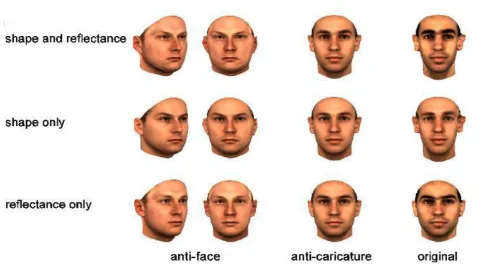
Figure 1: Figur 3D face recognition test
2.2 neural network technology
An Artificial Neural Network (ANN) is an information processing paradigm that is inspired by the way
novel structure of the information processing system. It is composed of a large number of highly interconnected
processing elements (neurons) working in unison to solve specific problems. ANNs, like people, learn by
example. An ANN is configured for a specific application, such as pattern recognition or data classification,
through a learning process. Learning in biological systems involves adjustments to the synaptic connections that
exist between the neurons. This is true for ANNs as well.
2.3 Why use neural networks?
Neural networks, with their remarkable ability to derive meaning from complicated or imprecise data, can be
used to extract patterns and detect trends that are too complex to be noticed by either humans or other computer
techniques. A trained neural network can be thought of as an "expert" in the category of information it has been
given to analyze. This expert can then be used to provide projections given new situations of interest and answer
"what if" questions.
Other advantages include:
1. Adaptive learning: An ability to learn how to do tasks based on the data given for training or initial
experience.
2. Self-Organization: An ANN can create its own organization or representation of the information it
receives during learning time.
3. Real Time Operation: ANN computations may be carried out in parallel, and special hardware devices
are being designed and manufactured which take advantage of this capability.
4. Fault Tolerance via Redundant Information Coding: Partial destruction of a network leads to the
corresponding degradation of performance. However, some network capabilities may be retained even with major network damage[7].
2.3 Existing Face Recognition
Go Global Comms's face biometrics are used to identify users from access control lists and verify their
identity. Our access control solution facilitates user management at runtime and allows users to be enrolled
on-the-fly by video capture. This technology yields excellent performance despite partial occlusions of the
face, the use of glasses, scarves or caps, changes of facial expression, and moderate rotations of the face.
Moreover, it does not allow users to be impersonated using photographs. Go Global Comms biometric technology is the perfect solution to control the access of personnel to restricted security areas[9]..
Face biometrics are useful as a means of detecting and identifying an individual, but it is also an excellent
tool for learning more about your customers. With facial analysis technology it is possible to classify
individuals based on their physical appearance and then use that information in interactive, targeted
marketing. Our face marketing solution extracts an individual’s characteristics such as age range, gender,
ethnicity, use of glasses (including tinted lenses), and facial expression. This technology yields excellent
added value to advertising systems, by assessing the segmentation of the target audience. This way, advertisements are projected to the actual targets of a campaign[9]..
Figure 1: Currency Exchange Bank
2.4 Comparative study of existing systems and proposed system (Gab study )
Table 1
Existing systems Proposed system
RF,GSM , ,eigenfaces method RF,GSM and neural network
May insecure due to angle problem and high
rate error
Secure updated technology
And neural network
for solving angle problems due to learning objects suited
the situation
3. Limitations
The limitations of this paper included many factors: hardware as processing storage ,warehouse data base
storage and cost of that elements to install and convert in real manner applications to substitute the human
talents covering over needs to enhance the security challenges and threats in public and private sectors
4. Proposed Frame work
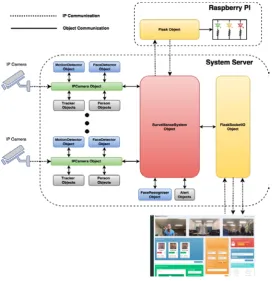
During the recognition process the LCD on-screen display provides simple and interactive feedback to the user.
Prompts show when the person’s face is correctly positioned and when it has been recognized. Pass or fail
indicators signal a recognized or rejected facial template. Access is then granted or denied; with full audit logs
being maintained within the system for both accepted and prevented access attempts. Network CCTV Go Global
Comms CCTV solutions can operate as either a standalone system or can be integrated with previously installed
network. Go Global Comms CCTV solutions are designed to the customer requirements and include
multi-channel video surveillance systems that utilises the most advanced compression technologies to provide the
highest picture quality and video recording performance. HD IP compared to Analogue The benefits of an IP
based CCTV system are immense. Users can expect vast improvements in image quality, reduced interference,
greater functionality and almost infinite scalability. Remote monitoring options include remote access, set-up
and maintenance. The image resolution of an IP based CCTV system is far superior to that of an analogue
system and has been used successfully to prosecute thieves, vandals, and trespassers throughout the UK’s criminal justice system[9].
Figure 2: frame work flow chart
5. Experiment results
The experimental results show that combined many methods for image recognition using neural network
solved many challenges includes angle error taking person’s image during surveillance area and normal
person image needed arrangement which cannot take place or difficult to prepare so .
6. Discussion
There many face recognition system in growing technology to replace human tasks and eliminate human
mistakes ,cut of time consuming long line queues in public places such as Banks , airports , universities and
still these systems have many challenges as image inclination , the position of the person to the system taking
image to match a precious one for a data base to verify the identity .
In many literature reviews showed that there is a need for improving these face recognition frame work by
many combined techniques as PCA ,N N so as to enhance the performance as Neural network solves angle
problems by its capacities .
And also discussed many problems such as angle capture, gesture, mask persons ,classes persons and these
changed their appearance in frontal and whole the face also eye contact in some ways can be different to scored
face image and face detection can lead to miss matching most recent issue.
Over all mentioned problems can be solved using Neural network with latest technology as Neural network
imitates human functions in many useful cases
7. Conclusions
The proposed alternative face recognition using neural network system uses Many methods such as :
Principal component analysis (PCA), Neural network for enhancing and correcting image angle problems in
object learning experiences and the images taken from a surveillance camera to match to the original image
from data base so as to recognize .
8. Recommendations
The future work of this paper includes: material installation and building the system in a work places and
convert in actual performance to ensure the security measures for increasing technology used in coming years
References
[1] Green, Mary W. (1999) The Appropriate and Effective Use of Security Technologies in U.S. Schools, A
Guide for Schools and Law Enforcement Agencies, Sandia National Laboratories.
[2] Pearson, K. (1901). "On Lines and Planes of Closest Fit toSystems of Points in
Space"(PDF).Philosophical Magazine.2 (11): 559–572.
[3] B. Kosko, “Adaptive bidirectional associative memories,” Applied Optics, vol. 26, no. 23, pp. 4947– 4960, 1987.
Bay City News Service.
[5] Facial Recognition Technology: An analysis with scope in India Vol. 8, No. 1, 2010.
[6] The neural-network analysis data filters Alexey Minin, JASS 2006.
[7] International Journal of Computer Science and Information Security, Vol. 8, No. 1, 2010.
[8] A. Abdallah, M. Abou El-Nasr, and A. Lynn Abbott, “A New Face Detection Technique using 2D DCT and Self Organizing Feature Map” in Proc. of World Academy of Science, Engineering and
Technology, Vol. 21, May 2007, pp. 15-19.