R E S E A R C H
Open Access
Patient-, organization-, and system-level
barriers and facilitators to preventive oral
health care: a convergent mixed-methods
study in primary dental care
Anna Rose Templeton
1*, Linda Young
2, Alison Bish
1, Wendy Gnich
3, Heather Cassie
1, Shaun Treweek
4,
Debbie Bonetti
1, Douglas Stirling
2, Lorna Macpherson
3, Sharon McCann
4, Jan Clarkson
1, Craig Ramsay
4and With the PMC study team
Abstract
Background:Dental caries is the most common chronic disease of adult and childhood, a largely preventable yet widespread, costly public health problem. This study identified patient-, organization-, and system-level factors influencing routine delivery of recommended care for prevention and management of caries in primary dental care.
Methods:A convergent mixed-methods design assessed six guidance-recommended behaviours to prevent and
manage caries (recording risk, risk-based recall intervals, applying fluoride varnish, placing preventive fissure sealants, demonstrating oral health maintenance, taking dental x-rays). A diagnostic questionnaire assessing current practice, beliefs, and practice characteristics was sent to a random sample of 651 dentists in National Health Service (NHS) Scotland. Eight in-depth case studies comprising observation of routine dental visits and dental team member interviews were conducted. Patient feedback was collected from adult patients with recent checkups at case study practices. Key informant interviews were conducted with decision makers in policy, funding, education, and regulation. The Theoretical Domains Framework within the Behaviour Change Wheel was used to identify and describe patient-, organization-, and system-level barriers and facilitators to care. Findings were merged into a matrix describing theoretical domains salient to each behaviour. The matrix and Behaviour Change Wheel were used to prioritize behaviours for change and plan relevant intervention strategies.
Results:Theoretical domains associated with best practice were identified from the questionnaire (N-196), case studies (N= 8 practices, 29 interviews), and patient feedback (N= 19). Using the study matrix, key stakeholders identified priority behaviours (use of preventive fissure sealants among 6–12-year-olds) and strategies (audit and feedback, patient informational campaign) to improve guidance implementation. Proposed strategies were assessed as appropriate for immediate implementation and suitable for development with remaining behaviours.
Conclusions:Specific, theoretically based, testable interventions to improve caries prevention and management were coproduced by patient-, practice-, and policy-level stakeholders. Findings emphasize duality of behavioural determinants as barriers and facilitators, patient influence on preventive care delivery, and benefits of integrating multi-level interests when planning interventions in a dynamic, resource-constrained environment. Interventions identified in this study are actively being used to support ongoing implementation initiatives including guidance, professional development, and oral health promotion.
* Correspondence:[email protected] 1University of Dundee, Dundee, UK
Full list of author information is available at the end of the article
Background
Despite being highly preventable, dental caries is a wide-spread and costly public health problem [1]. Globally, caries is the most common chronic disease of childhood and adulthood [1, 2]. Similar to other chronic diseases, caries aetiology is complex, influenced strongly by socio-economic factors in both childhood and adulthood [3–7]. Caries can have serious health sequelae and negatively impact quality of life and productivity across the life-span [2, 3, 8–10]. In Scotland, despite continued im-provements in national child caries rates, nearly half of primary 1 (4–7 years old) children (47 %) and a third (36 %) of primary 7 (10–13 years old) children in high-deprivation areas have obvious decay [11, 12]. Children with obvious decay have a higher burden of dis-ease (decayed, missing, or filled teeth) and low rates of restoration: 14 % P1 [11] and 55 % P7 [12]. Current caries rates for adults in Scotland are unknown. The most recent data indicate that 26 % of the adult population had not attended a dental appointment in the past 2 years; in the most deprived areas, 32 % of adults had not seen a dentist in 2 years [13]. Within the rest of the UK, lower income children have similarly high caries prevalence (41 % of 5-year-olds, 59 % of 15-year-olds) [14] and only 53 % of adults had attended a dental appointment within the past 3 years [15].
Population- and clinical-level initiatives have been de-veloped to promote oral health in Scotland. National guidance on oral health assessment in adults [16] and caries prevention and management in children [17, 18] has been published by the Scottish Dental Clinical Ef-fectiveness Programme (SDCEP) and Scottish Intercolle-giate Guidelines Network (SIGN). In an effort to shift practice toward preventive care, integrate community and clinical oral health prevention, and reduce health inequal-ities among children in Scotland, the Scottish Government has funded the development and implementation of the Childsmile programme [19]. Childsmile initiatives deliv-ered in primary dental care include the promotion of den-tal clinic-based fluoride varnish application for all children over 2 years of age and enhanced oral health advice target-ing high-risk children [20]. Despite these efforts, evalua-tions of the SDCEP child caries guidance and Childsmile programme reveal that the majority of dentists do not al-ways follow key recommendations and implementation is typically influenced by numerous factors (e.g. knowledge, beliefs about consequences, professional roles and iden-tity, social influences) which often act as both barriers and facilitators to care[21, 22].
Guidance implementation relies on strategies that con-sider the needs and experiences of users across multiple levels, the context and culture of care, and applicable, prac-tical change strategies tailored to relevant barriers and facil-itators [23–25]. To facilitate this process in primary dental
care, National Health Service (NHS) Education for Scotland established the Translation Research in a Dental Setting (TRiaDS) initiative in 2008 [26]. The multi-disciplinary TRiaDS collaboration has developed a theoretically driven framework to integrate production, dissemination, and evaluation of SDCEP guidance. The TRiaDS framework provides a systematic approach, underpinned by theories of behaviour change, to identify gaps in practice, develop translational interventions, and test intervention strat-egies in primary care practice [26]. This paper describes a mixed-methods study design using the TRiaDS ap-proach to investigate barriers and facilitators to imple-mentation of guidance-recommended care for the prevention and management of caries (PMC) in pri-mary dental care in Scotland.
The Behaviour Change Wheel was selected as the over-arching theoretical framework for this study given the wheel's direct path from behavioural assessment to selec-tion and development of theory-based intervenselec-tion strat-egies [27, 28] and the clinician-led, highly autonomous environment of dental practice. Consistent with usual operationalization processes of the wheel, we applied the Theoretical Domains Framework (TDF) [29–31] to iden-tify specific domains (e.g. knowledge, skills, environmental context and resources) influencing target behaviours. Iden-tified domains were integrated into the wheel through the capability, opportunity, motivation-behaviour (COM-B) model [27, 28]. The COM-B enabled structuring of policy-level barriers and facilitators to target behaviours and iden-tification of change strategies most likely to improve prac-tice (e.g. audit and feedback) by influencing the TDF domains salient to target behaviours. A detailed discussion of this process as applied to caries prevention and manage-ment follows in the“Methods”section.
Methods
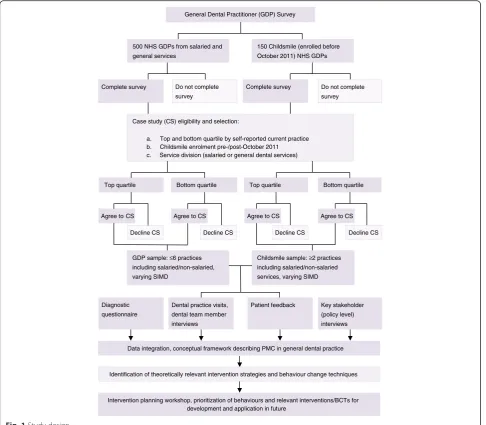
This study used a convergent mixed-methods design [32–34] incorporating the TRiaDS approach [26] and Behaviour Change Wheel. Methods (Fig. 1) comprised a diagnostic questionnaire, in-depth practice case studies, patient interviews, and system-level informant inter-views. Findings were integrated into a single matrix de-scribing factors influencing PMC practice and used with key stakeholders to collaboratively identify theoretically relevant interventions to support further implementation of recommended PMC practice.
Identifying target behaviours
prioritization exercise to identify key PMC behaviours was conducted with the TRiaDS methodology group comprising practitioners, policy makers, implementation scientists, programme leaders, and experts in dental public health. Group members prioritized PMC behaviours for children and adults according to current compliance, an-ticipated ability to increase the behaviour, measurability, and public health gains. Six behaviours (Fig. 2) were se-lected as key best-practice recommendations. Recording risk, risk-based recall intervals, and taking bitewing radio-graphs were all included as essential components of basic risk assessment. Demonstration (as opposed to discussion) of oral health maintenance was included as a universally recommended, but little practised, component of routine preventive care. Fluoride vanish application and prevent-ive fissure sealant placement ranked highly on all criteria
1. Record risk
2. Use risk-based recall intervals
3. Apply fluoride varnish
4. Place preventive fissure sealants
5. Demonstrate oral health maintenance
6. Take routine bitewing radiographs
Fig. 2Prioritized PMC behaviours Childsmile sample: ≥2 practices including salaried/non-salaried services, varying SIMD 500 NHS GDPs from salaried and
general services
150 Childsmile (enrolled before October 2011) NHS GDPs
Complete survey Do not complete survey
Complete survey Do not complete survey
Case study (CS) eligibility and selection:
a. Top and bottom quartile by self-reported current practice b. Childsmile enrolment pre-/post-October 2011 c. Service division (salaried or general dental services)
Top quartile Bottom quartile Top quartile Bottom quartile
Decline CS Agree to CS
GDP sample: ≤6 practices including salaried/non-salaried, varying SIMD
Decline CS Agree to CS
Decline CS Agree to CS
Decline CS Agree to CS General Dental Practitioner (GDP) Survey
Patient feedback Key stakeholder (policy level) interviews Dental practice visits,
dental team member interviews Diagnostic
questionnaire
Data integration, conceptual framework describing PMC in general dental practice
Identification of theoretically relevant intervention strategies and behaviour change techniques
Intervention planning workshop, prioritization of behaviours and relevant interventions/BCTs for development and application in future
and scored the highest on public health gains, particularly given the ongoing investment in Childsmile as a public health programme.
Sample
Diagnostic questionnaire
The initial study sample included 651 dentists in general dental practice providing care through NHS Scotland; 150 of whom participated in Childsmile prior to October 2011 when a fee for fluoride varnish was introduced and Childsmile became a universal programme. Dentists pro-viding Childsmile before October 2011 were oversampled to enable comparison of recommended PMC by early par-ticipation in the initial phase of the programme. Using computer-generated random numbers at the practice and dentist level, general dental practitioners (N= 501) were selected from a publicly available list published by Practi-tioner Services Division of NHS National Services for Scotland [35]; Childsmile dentists (N= 150) were selected from Information Services Division of NHS National Ser-vices for Scotland database of Childsmile demonstration practices. Sample size was calculated based on a standard response rate of 50 % as in previous questionnaires con-ducted by PMC study team members [21, 22, 36, 37]. Sample size was calculated using the recognized sample size method of 10 data items per predictor for a regression model with up to 20 predictors [38].
Case studies
A purposive, theoretical sample of case study practices (N= 8) was identified from questionnaire respondents. Case study practices were selected from the highest and lowest performing quartiles of self-reported guidance-recommended practice. Selection criteria also included Childsmile enrolment, service division (salaried/general practice), and Scottish Index of Multiple Deprivation (SIMD) quintile ranking as characteristics known to influence caries burden and preventive care delivery [11, 12, 19, 22, 39]. Invitations were sent to eligible practices until four high- and four low-performing practices were recruited. Patient feedback was initially conducted in the first four recruited practices (two high, two low) but later extended to all practices.
System-level informant interviews
System-level informants (N= 4) were identified by the PMC study team and TRiaDS methodology group for their expertise, involvement, or leadership in PMC and prevent-ive oral health. Informants represented patient, practice, and policy interests at the system (service development, planning, delivery, regulation) level. The sample was small as informants were being asked to provide general PMC feedback, not detailed, behaviour-specific assessment as in the diagnostic questionnaire or case studies.
Consent and ethical review
Ethical review and approval for the PMC study was pro-vided by East of Scotland Research Ethics Committee 1. Research and development management and approval was conducted through NHS Research Scotland Permis-sion Coordinating Centre.
Procedure
Diagnostic questionnaire
Current practice of each behaviour was measured as yes/no responses to “During a routine visit I am likely to:” across primary (i.e. deciduous), mixed, and adult dentition types. The timing of routine visits was not spe-cified as intervals should be risk-based and therefore variable [16, 17].
Beliefs were assessed using the then available 12 do-main TDF [29]. To produce a focussed, concise ques-tionnaire, nature of the behaviour was eliminated a priori consistent with other quantitative applications of the TDF [40, 41]. Domains were further reduced in a second prioritization exercise with the TRiaDS method-ology group by considering their relevance to each target behaviour. Domainsnotreasonably expected to be associ-ated with each behaviour were eliminassoci-ated. For universal behaviours (recording risk, risk-based recall, demonstra-tion of oral health maintenance), all prioritized domains (Additional file 1) were included in the questionnaire; do-mains prioritized specific to children (e.g. cooperation as social influence) were only assessed for child-focused be-haviours (fluoride varnish, preventive fissure sealants). Bitewing radiographs were assessed by dentition type as the behaviour is recommended for all patients over 4 years old, but barriers were expected to differ between children and adults. Domains were assessed on 5-point Likert scales using 1–5 established items from existing literature [29]. Specialists reviewed items to ensure clarity of the be-haviour and item fit within domains. As the number of items remained high, each participant was only assessed on two behaviours. Three versions of the belief assessment were produced: recording risk and applying fluoride var-nish, risk-based recall and placing preventive fissure seal-ants, and demonstrating oral health maintenance and taking bitewing radiographs. Similar behaviours were sep-arated to reduce bias.
The questionnaire (Additional file 2), including the three versions of belief assessment, was reviewed for comprehen-sion and face validity with a convenience sample (N= 5) of dental professionals and oral health researchers.
The questionnaire was administered by post with a re-minder and questionnaire sent at 2 weeks, a rere-minder phone call with opt-out option at 4 weeks, and a final re-minder and questionnaire at 6 weeks. No incentive was offered for completion.
Case studies
Data collection tools (Additional file 3) were developed by the five-member qualitative workgroup, a sub-group of the PMC study team comprising social sciences, health services, and health psychology researchers. Pa-tient visit observations, interviews, and focus groups were audio recorded and transcribed. Practice observa-tions were recorded as written field notes. Researchers conducting the case studies were blinded to practice per-formance (high/low) of guidance-recommended care.
Practice visits and non-participant observation of three routine adult exams were conducted in each case study to assess context of care. As observation was used to produce a general description of preventive care (rather than care specific to each behaviour), only adult exams were observed. A structured observation guide based on the TDF and CFIR was developed.
Semi-structured interviews with respondent dentists (N= 8) and up to three other dental team members (e.g. dental nurses, practice managers, vocational trainees, re-ceptionist) (N= 23) assessed guidance use and barriers and facilitators to recommended PMC. Questions were not domain specific in order to allow domains excluded from the questionnaire to emerge and to elicit more contextual detail. Interview schedules were mapped to the TDF to ensure coverage of all domains. The inter-view schedule was reinter-viewed for comprehension and face validity by the same convenience sample (N= 5) as the questionnaire.
Patient feedback was planned through a series of focus groups embedded in four case study practices. The focus group schedule emphasized patient experiences of PMC (nature of the behaviour), barriers and facilitator to PMC (beliefs about consequences), and patient expectations (so-cial influence). As focus group attendance was low, all practices were invited to provide patient feedback through structured telephone interviews. Interviews were based on the focus group schedule, emphasizing the same domains but using a less open-ended approach to reduce time re-quired for participation. Patient representatives from the study management team provided in-depth feedback and guidance in recruitment and conduct of patient focus groups and interviews. Patients were provided a £10 vou-cher in appreciation of their participation.
System-level informant interviews
Semi-structured interviews were conducted with key infor-mants in policy, service delivery, and service development. Informants were identified by the study team based on their expertise and involvement in oral health policy and delivery systems. Interview schedules were developed using the COM-B and intervention and policy categories in the Behaviour Change Wheel [28]. Interviews were con-ducted by telephone, audio recorded, and transcribed.
Analyses
Diagnostic questionnaire
Reliability analyses (Cronbach’s alpha) of TDF domains assessed for each behaviour were conducted. In domain items with alpha >0.60, items were combined into single scales. Responses were analysed using simple descriptive statistics, univariate analyses, and logistic regression in SPSS 22. Comparisons and regressions were conducted for primary, mixed, and adult dentition types based on self-reported current practice. For each of the six behaviours, TDF domain scales and demographic data (individual and practice level) were compared by self-reported provision of guidance-recommended care. Significant (p≤0.05) vari-ables from univariate analyses were entered into a logistic regression by best/not best practice and dentition type. A forward stepwise (Likelihood ratio) method was used to manage co-linearity issues with TDF scales as sam-ple sizes were restricted to respondents in each ques-tionnaire version.
Case studies
Observational data were collated in Excel. Field notes were supplemented with visit transcriptions. Practice char-acteristics and observed care, including factors influencing best practice, were analysed thematically across cases.
Dental team interviews were analysed using a TDF-based coding guide (Additional file 4). Responses were coded by behaviour, associated domains, and function as a barrier or facilitator to recommended care. Emergent themes were identified and included in the coding guide as they developed. Twenty percent of interviews were double coded to assess coder reliability and consistency. Individual analyses were produced for each case study practice including detailed description of current behav-iour, pertinent quotes, and framework matrices of codings for the six behaviours and emergent themes. Findings across cases were summarized to describe beliefs influen-cing each behaviour. Cross case summaries included fre-quency of beliefs, presence of conflicting beliefs, and participant expressions of the strength of their beliefs as an impact on behaviour [44–46].
was double coded for reliability and consistency. Due to uneven spread of feedback across practices (range of 0–8 patients per practice), patient feedback was aggregated across all cases. Cross case findings from focus groups and interviews were compiled in a single summary of patient characteristics, current behaviour, experiences related to PMC, pertinent quotes, and emergent themes.
Dental team and patient data were managed and ana-lysed in Nvivo 10.
System-level informant interviews
Informant interviews were coded by emergent themes (e.g. capacity, data systems) as barriers or facilitators to recommended care. Responses were coded into themes by policy, system, and intervention characteristics in the Behaviour Change Wheel and then mapped to the COM-B to enable later integration with questionnaire and case study data. Data were managed in Excel.
Data integration
A day-long workshop with study team members was held to integrate findings from individual study compo-nents, identify associated domains (i.e. any domain assessed as influencing behaviour), and appraise salient do-mains (i.e. dodo-mains with the greatest influence on behav-iour or potential for intervention). Study team members familiarized themselves with findings using questionnaire, case study, patient feedback, and system-level informant interview summary reports. Reports included methods, in-depth analyses, summary findings of behaviour-specific be-liefs, associated domains, and domain function as a barrier or facilitator. The workshop followed a three-step process. First, associated domains from each study component were reviewed individually for clarification, discussion of unexpected findings, and consideration of differences be-tween study components. Second, associated domains were entered into a matrix describing barriers and facilita-tors across study components for the six key behaviours. Based on emergent themes around information exchange and advice from the case studies (general preventive care) and patient feedback (oral health advice, oral health main-tenance),oral health advicewas added as an additional be-haviour to the matrix. Third, associated domains in the matrix were prioritized into salient domains based on critical appraisal of frequency within and across study components, degree to which respondents and com-ponents agreed or disagreed about the domain, and evidence of strong beliefs impacting the behaviour [44–46].
Salient domains in the finalized matrix were mapped to COM-B categories, theoretically relevant intervention strategies in the Behaviour Change Wheel, and associ-ated behaviour change techniques. Behaviour change
techniques were defined using the Behaviour Change Technique Taxonomy, version 1 [28, 47].
Intervention planning
Key stakeholders met in a half-day workshop to review findings, intervention strategies, and behaviour change techniques and prioritize approaches to improve pre-ventive care delivery in primary dental care. Stakeholders (N= 9) comprised patient-, practice-, and policy-level representatives. Stakeholders familiarized themselves with study findings through brief behavioural summaries (including pertinent quotes and routine data where available) and the barrier/facilitator matrix. Intervention planning followed a three-step nominal group technique [48]. First, stakeholders reviewed the findings for each behaviour and discussed differences in priorities by stakeholder group, current compliance with guidance recommendations, anticipated ability to increase the haviour, and anticipated public health gains. Second, be-haviours were prioritized using established criteria of appropriateness, relevance, feasibility, and potential im-pact [49–51]. Behaviours to target with interventions were agreed by consensus. Third, based on prioritized behaviours, stakeholders reviewed theoretically relevant intervention strategies and behaviour change techniques. Strategies and techniques were appraised using the af-fordable, practical, effective, acceptable, safe, equitable (APEASE) criteria [28] in order to develop consensus on approaches most likely to support further PMC guidance implementation of PMC.
Results Participants
Diagnostic questionnaire
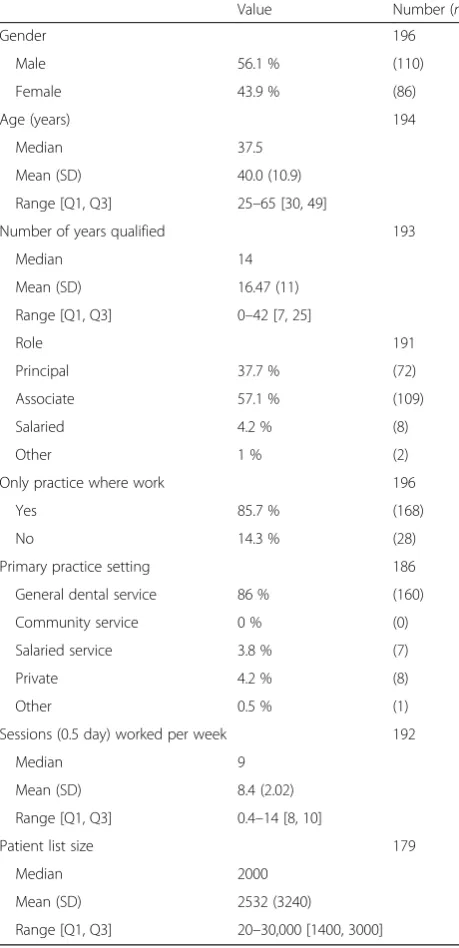
Of the original 651 dentists invited to participate, 73 were ineligible (left practice, retired, deceased, long-term leave), 59 declined taking part, and 323 questionnaires were not returned. A total of 196 dentists responded (34 % response rate). Response rates did not differ be-tween the three belief assessment sections. Responders and non-responders did not differ by health board, SIMD, or Childsmile enrolment before October 2011.
Case studies
Case study practices were selected by best practice (highest quartile for guidance-recommended care delivery) and not best practice (lowest quartile). Two practices were Child-smile practices before October 2011; one practice did not identify as a Childsmile practice. All practices were in the General Dental Service with at least 60 % of patients seen on NHS. Practices spanned all SIMD quintiles; five were SIMD 3 or below. Twenty-nine team members were inter-viewed across the eight practices. In each case, interviewees included the dentist who completed the questionnaire and one dental nurse. Other team members interviewed
included additional dentists and dental nurses, three prac-tice managers, two extended-duty nurses, two vocational trainees, one receptionist, and one hygienist.
Of the 19 patients who took part, most (73.7 %) were female, 30–50 years old (52.6 %). Just under half (47.4 %) had children under the age of 16. Patients attended seven of the eight case study practices.
System-level informant interviews
Key informants (N= 4) included representation from the Scottish Government, NHS Education for Scotland, British Dental Association, dental public health, Childsmile, guid-ance development, general and salaried dental services, pa-tient representatives, and general dental practitioners.
Intervention planning workshop
Intervention planning was conducted by nine key stake-holders and six study team members including the work-shop facilitator. Key stakeholders comprised guidance development, continuing dental education, the Scottish Government, Childsmile, dental public health, dental practice regulation, dental practitioners, and lay repre-sentatives. Study team members attending all partici-pated in the previous integration workshop.
Diagnostic questionnaire
Current practice, as the percentage of respondents who “during a routine dental visit” were “likely to” deliver the six behaviours, is summarized in Table 2. Self-reported practice tended to align with guidance-recommended care. Differences on TDF scales between best-practice and not best-practice dentists were examined usingttests. Lo-gistic regression split by dentition type identified predict-ive domains for recording risk, risk-based recall, applying fluoride varnish, demonstrating oral health maintenance, and taking bitewing radiographs (Additional file 5). The behavioural regulation domain was the most consistent predictor of performance, but the study team agreed at analysis not to treat it as associated due to item similarity with behavioural measures. Although variables identified Table 1Diagnostic questionnaire respondent characteristics
Value Number (n)
Gender 196
Male 56.1 % (110)
Female 43.9 % (86)
Age (years) 194
Median 37.5
Mean (SD) 40.0 (10.9)
Range [Q1, Q3] 25–65 [30, 49]
Number of years qualified 193
Median 14
Mean (SD) 16.47 (11)
Range [Q1, Q3] 0–42 [7, 25]
Role 191
Principal 37.7 % (72)
Associate 57.1 % (109)
Salaried 4.2 % (8)
Other 1 % (2)
Only practice where work 196
Yes 85.7 % (168)
No 14.3 % (28)
Primary practice setting 186
General dental service 86 % (160)
Community service 0 % (0)
Salaried service 3.8 % (7)
Private 4.2 % (8)
Other 0.5 % (1)
Sessions (0.5 day) worked per week 192
Median 9
Mean (SD) 8.4 (2.02)
Range [Q1, Q3] 0.4–14 [8, 10]
Patient list size 179
Median 2000
Mean (SD) 2532 (3240)
Range [Q1, Q3] 20–30,000 [1400, 3000]
Table 2Self-reported PMC in routine general dental practice by dentition type
Primary dentition (%)
Mixed dentition (%)
Adult dentition (%)
Record risk 82.1 84.2 48.2
Risk-based recall intervals 71.4 73.2 62.2
Apply fluoride varnish 80.9 67.4 17.9a
Place fissure sealants 16.7a 87.0 22.5a
Demonstrate OH maintenance
86.8 90.5 70.5
Take bitewing radiographs 9.4 63.3 93.3 a
in univariate and logistic analyses differed, given the gen-eral diagnostic nature of the questionnaire, any domain by best practice/not best practice was carried forward for consideration at the integration.
Case studies
Practice observations
Twenty-four adult patient visits were observed across the eight case study practices. Observed preventive be-haviours included recording risk, risk-based recall, and bitewing radiographs. All visits included a dental nurse supporting the dentist with record keeping. Practices displayed standard NHS information, practice-specific patient leaflets, and appointment policies. Display of oral health information or promotion of oral health initiatives like Childsmile was extremely rare. In all but two prac-tices, the majority of information displayed was to pro-mote cosmetic or private pay procedures.
Dental team member interviews
Across cases, all team members thought preventive care is important, benefits patient oral health, and is part of every team member’s role. Within individual cases, den-tal teams reflected the dentist’s beliefs about barriers and facilitators to PMC behaviours (e.g. scepticism regarding efficacy of fissure sealants). Team members’beliefs were more divergent on the emergent theme of general pre-ventive care. Dental nurses, and extended-duty dental nurses in particular, emphasized benefits of prevention (beliefs about consequences), prevention as integral but underutilized skill set in their role (social and profes-sional role and identity), and a desire to provide more preventive care. Respondents had positive attitudes to-ward guidance but emphasized guidance as often too long, complicated, and not universally applicable or practical.
Barriers and facilitators to PMC behaviours and gen-eral preventive care differed little between high- and low-performing practices. Low-performing practices tended to emphasize barriers such as patient expecta-tions (social influence), lack of time (environmental con-text and resources), and few perceived benefits (beliefs about consequences) and did not identify preventive oral health as strongly within their roles (social professional role and identity). The same barriers were identified to a lesser extent by high-performing practices. Few domains acted exclusively as a facilitator or barrier to PMC be-haviours. Most domains (e.g. social influence) functioned simultaneously as barriers (e.g. parents refuse fluoride varnish) and facilitators (parents request fluoride var-nish) to PMC behaviours. Duality applied across denti-tion types, even when some feature of the domain (e.g. a child versus an adult patient) changed. Given the consistency of domains influencing behaviour in both
high- and low-performing practices and often dual func-tion of those domains as barriers and facilitators, associ-ated domains were described across all cases rather than by best practice/not best practice. Domains associated with PMC behaviours and general preventive care are summarized in Additional file 5.
Patient feedback
Patients identified the most important factors for prevent-ive oral health as tooth brushing and cleaning for adults and supervising tooth brushing and limiting sugar intake for children. The discussion of barriers and facilitators to PMC was framed by patient’s experiences, including self-care (oral health maintenance, diet, assistance/supervision of children), advice and information from their dental team, and other sources of information (e.g. media). For both adults and children, patients identified multiple long-term benefits of preventive oral health care but were unsure about the efficacy of their self-care techniques, were anx-ious about dental appointments, and struggled with care (particularly brushing) of children’s teeth. As few patients had experienced hands-on demonstrations of oral health maintenance, few expected this type of instruction but nearly all of them anticipated it as highly beneficial and were eager to receive such care. Patient experiences and ex-pectations centred primarily on informational exchange and were categorized in emergentoral health advice and oral health management themes. Associated domains are summarized in Additional file 5.
System-level informant interviews
System-level informants emphasized improvements in preventive oral health made in recent years and were opti-mistic about narrowing the gap between patients in high-and low-deprivation areas. Persistent concern about car-ies, PMC, and disproportionate burden of disease among higher deprivation populations was common. Gains in PMC were attributed to community-based preventive care programmes (particularly in primary schools) and in-creased delivery of oral health advice in dental practices. Eighteen themes emerged as barriers, facilitators, or both (Additional file 5); themes related to all three behavioural determinants in the COM-B model.
Data integration
Step 1
Step 2
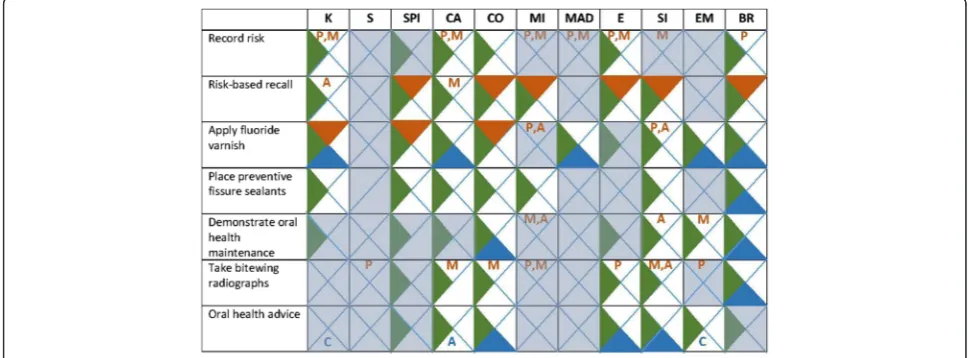
Associated domains from the questionnaire, dental team member interviews, and patient feedback were entered into a matrix comprising the six study behaviours and oral health advicetheme (Fig. 3). Domains without con-vergence in two or more components (e.g. beliefs about consequences only identified in dental team member in-terviews for recording risk) were eliminated. In the case of fissure sealants where convergence only occurred within behavioural regulation, all domains were carried forward for further consideration.
Step 3
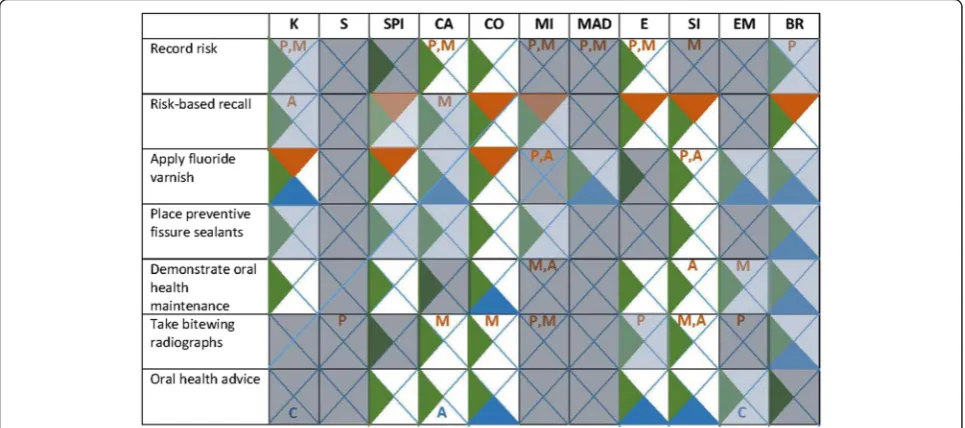
Associated domains were appraised into salient do-mains (Fig. 4) based on frequency of beliefs, presence of conflicting beliefs, and the strength of beliefs’ im-pact on behaviours [44–46]. Salient domains were agreed by consensus. Further 18 cells were removed, primarily as respondent beliefs (i.e. the domains) were mentioned frequently but without evidence of strong influence on PMC behaviours. Three cells eliminated in step 2 (demonstration of oral health maintenan-ce—social professional role and identity, environmen-tal resources and context; oral health advice—social professional role and identity) were reinstated as sali-ent domains given the strength and frequency of den-tal team member feedback.
Salient domains were annotated according to behav-iour, function as barrier or facilitator, and study compo-nents (Additional file 6). The final matrix was circulated to attendees to confirm content and constituted this study’s summative findings of barriers and facilitators to PMC in general dental practice.
Mapping to intervention strategies and behaviour change techniques
Domains from the conceptual framework were mapped through the COM-B (Fig. 5) to intervention strategies in the Behaviour Change Wheel (Fig. 6). As the COM-B consolidated domains into broader categories of capabil-ity,opportunity, and motivation, most intervention strat-egies (except training and modelling) were common across behaviours. Available behaviour change tech-niques were identified based on theoretically relevant intervention strategies, available evidence summarizing effective behaviour change techniques [28], the Behav-iour Change Technique Taxonomy [28, 47], and expert recommendations from implementation scientists on the TRiaDS group. Specific techniques included feedback on behaviour; feedback on the outcomes of the behaviour; self-monitoring of behaviour; educational interventions based on behaviour modelling and credible sources; ac-tion planning; provision of scripts to model, prompt, and reinforce behaviour; and goal setting (in addition to feedback) to help practitioners gauge actual as to per-ceived performance.
Intervention planning workshop
Stakeholders reviewed the study matrix and resolved that while guidance recommendations should be based on dentition type, interventions should be developed by patient age group given current service delivery and re-muneration structures. Using these parameters, stake-holders prioritized the 6–12-year-old age group (given the transition from primary to adult dentition, updated guidance recommends universal fissure sealant place-ment, reduced access to community-based oral health programmes in this age group) for initial development
of interventions to support improved PMC practice. Stakeholders next prioritized study behaviours for 6– 12-year-olds using established criteria of appropriateness, relevance, feasibility, and potential impact [49–51]. Criteria were assessed from all stakeholder perspectives. Fissure sealant ranked highest and was agreed as the intervention target. Discussion frequently included fluoride varnish, and while preventive fissure sealant placement was the clear priority for 6–12-year-olds, stakeholders were in agreement that where suitable, interventions could target both behaviours or be adapted from one to the other.
In the final stage of the workshop, theoretically rele-vant intervention strategies to improve fissure sealant placement were discussed. Two interventions were rec-ommended for future implementation: audit and feed-back at the provider level (persuasion, incentivization, coercion, training, enablement) and a preventive oral health awareness campaign at the patient level (enable-ment). In APEASE appraisal, equity did not score well as interventions were practice based and patients who
rarely or never attend the dentist would not benefit. However, given other criteria and continuing increases in registration rates, stakeholders were unanimous that both interventions be developed for implementation. Be-haviour change techniques agreed for the audit and feed-back intervention were action planning, feedfeed-back on behaviour and outcomes, goal setting, problem solving, review of goals and outcomes, and self-monitoring. The primary technique in the patient intervention would be social support to encourage patients (parents) to discuss fissure sealants and fluoride varnish with dental care providers and enable patient requests for preventive care or additional oral health advice.
Discussion Study strengths
The mixed-methods approach identified well-defined barriers and facilitators to preventive care; consistent ap-plication of the theoretical framework through each
component to data integration and intervention
Fig. 4Salient domains influencing PMC practice. Legend:orangequestionnaire,greencase studies,bluepatient feedback,Kknowledge,SPIsocial professional role and identity,CAbeliefs about capabilities,CObeliefs about consequences,MImotivation, goals, and intent,MADmemory, attention, and decision-making,Eenvironmental context and resources,SIsocial influence,EMemotion,BRbehavioural regulation,Pprimary dentition,Mmixed dentition,Aadult dentition or adults,Cchildren
planning resulted in specific, targeted interventions suit-able for implementation.
The questionnaire quantified beliefs of dentists following best practice versus not best practice and identified high-and low-performing practices for case study selection. At the time of writing the questionnaire, the TDF had only been applied in two quantitative studies [40, 41] and dem-onstrated varying degrees of internal consistency in do-mains and either one [41] (propensity to act) or three [40] (capability, opportunity, motivation) factor explanatory models. Subsequent quantitative applications [22, 52, 53] have shown good discriminant validity, collated a wider array of domain items, and demonstrated levels of internal consistency similar to our findings.
Consistent with case study methodology [54, 55], case studies provided detailed context and nuance to deci-sions and practices around PMC care delivery and pro-duced information essential to appraisal and identification of salient domains identified in the questionnaire. For ex-ample, the case studies emphasized the duality of domains as barriers and facilitators in both high- and low-performing practices and brought different domains (par-ticularly social influence, professional role, and identity) to
the forefront than were anticipated from previous research (remuneration within environmental context and resources, motivation and intent, beliefs about consequences).
Inclusion of patient feedback emphasized differences between patient and dentist expectations of preventive care and identified patients’social influence as an inter-vention approach to improving practitioner behaviour. This finding in particular highlights the potential bene-fits of developing interventions to encourage and em-power patients to influence the delivery and content of preventive care.
System-level informant interviews provided a broad policy context which helped identify salient domains and integrate intervention planning with ongoing initiatives including PMC guidance, audit, and service develop-ment. While the number of interviews was limited, in-terventions in all three categories of the COM-B were clearly identified. Improvement strategies emerging from the interviews (particularly audit) were consistent with those discussed in the intervention planning workshop.
structure for data integration and intervention planning. Component findings converged clearly, and qualitative findings emphasized and explain barriers and facilitators within each domain. Using the wheel, salient domains were easily mapped to appropriate, evidence-based inter-vention techniques framed in policy terms familiar to stakeholders. The practical, direct path from barriers and facilitators to interventions greatly helped to parse the diverse data collected and identify specific tech-niques to improve care.
Study limitations
While six target behaviours were prioritized from recom-mended practices, determinants varied by patient dentition types (primary, mixed, adult). This complexity necessitated design adaptations including belief assessment of only two behaviours per questionnaire respondent and discussion of preventive care in general, using the six behaviours as spe-cific examples or instances, in the case studies. These were practical compromises for initial identification of barrier and facilitator PMC in general dental practice; in the fu-ture, we would recommend focusing on a narrower range of behaviours or a single patient age group to improve comparability of findings
The response rate in our questionnaire (34 %) was lower than the anticipated 50 %. Efforts to improve the response rate (telephone call reminder, additional posted copy of questionnaire) helped produce a further 69 re-sponses after the second reminder but did not achieve the desired rate. Responses were sufficient for statistical analyses and varied enough to identify case study prac-tices but make the sample more vulnerable to self-selection bias.
Assessing PMC practice by self-report revealed higher than expected rates of recommended care delivery given nationally reported rates of fluoride varnish application to 23 % of 2–5-year-olds [56] and preventive fissure seal-ant placement to 29 % of primary 7 students (mean age 11.5 years) [57]. Due to data availability, direct compari-son of self-reported with routine data for respondent dentists was not possible prior to analyses and integration. Routine data did reveal higher rates of fluoride varnish among our sample (50.7 % overall, 56.3 % among high per-formers, 21.5 % among low performers) but similar fissure sealant rates (20 % overall, 27.1 % among high performers, 13.8 % among low performers) to national averages. Al-though routine data demonstrated lower rates of recom-mended care, the differences between high and lower performers by self-report were sufficient to enable mean-ingful comparison. Discrepancies between self-report and routine data may have been due to assessment of behav-iours at“a routine visit”rather than fixed intervals, assess-ment by dentition types rather than age ranges, or a respondent group who provided more recommended care
and self-selected to complete the questionnaire. Anecdotal evidence from system-level informants and key stake-holders indicated that some dentists are providing fluoride varnish and fissure sealants but not claiming for these treat-ments due to complexities in the payment system including documentation and age-based exclusions. These reports could not be validated in this study but were consistent with routine data findings for fluoride varnish and came up frequently enough to encourage further investigation.
The Behaviour Change Wheel helped structure our study but presented some challenges and limitations in applica-tion. First, operationalizing the framework within a multi-disciplinary study team, particularly familiarization with the TDF and COM-B model, took concentrated effort and structured communication among team members. Discrim-inating between TDF domains necessitated the develop-ment of clear guidelines for team members conducting analysis and interpretation of data. Second, once salient do-mains were mapped to relevant intervention strategies, many of the interventions and behaviour change techniques overlapped raising the question whether detailed assess-ment of TDF or even COM-B categories was necessary. Reflecting upon this with the TRiaDS group, the study team generally felt that while the interventions were not discrete to individual behaviours, the theoretical grounding of inter-ventions and potential to adapt interinter-ventions to multiple behaviours outweighed crossover of intervention strategies within the framework. Third, organizational characteristics influencing PMC practice did not emerge as strongly as ex-pected. While efforts to improve organizational assessment through the CFIR were made, the depth in which organizational characteristics were evaluated was practically limited by the number of behavioural domains assessed. Mapping the CFIR to the TDF helped remediate this issue and identified several specific characteristics (e.g. other den-tists performing the behaviour, established feedback and quality assurance systems) common to practices delivering recommended care. Focus on fewer behaviours may have enabled a more detailed assessment of organizational cli-mate and culture and identification of practice-level influ-ences on PMC. However, practical compromises were necessary to provide sufficient breadth in this initial assess-ment of PMC and it is possible that organizational factors were not as influential as expected.
Conclusions
practice—reducing both the incidence and prevalence of caries in children and adults. Across mixed-methods components, our findings emphasize the duality of do-mains as barriers and facilitators, the strength of patient influence on practitioner behaviour, and the benefit of integrating multiple levels of interest when planning in-terventions in a dynamic yet resource-constrained pre-ventive care delivery system. The development of simultaneous patient- and practice-focussed implemen-tation strategies to improve preventive services in pri-mary care is highly relevant to translational research across health services.
Findings are actively being used to review, update, and develop implementation tools accompanying the revised Scottish Dental Clinical Effectiveness guidance on child caries to be published in 2016. In collaboration with NHS Education for Scotland and Childsmile, TRiaDS has developed and piloted pre-approved national audits for fluoride varnish and fissure sealants which will be available with publication of the SDCEP guidance. Fu-ture plans include testing the use of audit and feedback interventions for preventive care (fluoride varnish, fissure sealants, bitewing radiographs) and a practice-based campaign to promote patient awareness, support, and requests for PMC.
Additional files
Additional file 1:Prioritized domains included in diagnostic questionnaire.TDF domains assessed for target behaviours.
Additional file 2:Diagnostic questionnaire.Assessment of current practice, beliefs, and demographic information.
Additional file 3:Case study and patient feedback data collection tools.Qualitative data collection tools.
Additional file 4:Dental team member interview and patient feedback coding guides.Qualitative TDF coding guides.
Additional file 5:Associated TDF domains identified in individual study components.
Additional file 6:Salient domains matrix.Annotated domains influencing targeted PMC behaviours.
Abbreviations
APEASE:affordable, practical, effective, acceptable, safe, equitable; CFIR: Consolidated Framework for Implementation Research; COM-B: capability, opportunity, motivation-behaviour; NHS: National Health Service; PMC: prevention and management of caries; SDCEP: Scottish Dental Clinical Effectiveness Programme; SIGN: Scottish Intercollegiate Guidelines Network; SIMD: Scottish Index of Multiple Deprivation; TDF: Theoretical Domains Framework; TRiaDS: Translation Research in a Dental Setting.
Competing interests
The authors declare that they have no competing interests.
Authors’contributions
JC, CR, LY, WG, HC, ST, DB, DS, LM, and SM conceived of the study. All authors contributed to the study design and oversight. AT, HC, WG, SM, and DB conducted the data collection. AT, AB, LY, WG, HC, SM, and CR conducted the analyses. AT, LY, AB, ST, JC, and CR conducted the data integration and intervention planning. DS and LM provided the additional support with
intervention planning. AT drafted and critically revised the manuscript in collaboration with AB, WG, ST, LY, DB, and LM. All authors contributed to the manuscript refinement and are responsible for its content. All authors read and approved the final manuscript.
Acknowledgements
This study was funded by the Chief Scientist Office of Scotland on Health Care Improvement Grant CZH/3/27. We are greatly appreciative of all the dental team members, patients, and policy-level stakeholders who participated in the study components and intervention planning. Further acknowledgements include the TRiaDS methodology group and the following individuals: David Conway, Colin Tilley, and Claire Tochel for the contributions to the study design, oversight, and conduct; Ruth Floate and Tina Halford-Mcguff for serving as lay representatives within the study design, management, and conduct; Susan Michie for refining the study design, providing the study oversight, and facilitating the operationalization and application of the TDF and Behaviour Change Wheel; Lou Atkins, Eilidh Duncan, and Maria Prior for assisting with the operationalization and application of the TDF and Behaviour Change Wheel; Paula Elouafkaoui for the linkage and analysis of the routine data; Gillian Forbes for the qualitative analysis and double coding; and the NHS National Services Scotland, Information Services Division, for the provision of routine data.
Author details
1University of Dundee, Dundee, UK.2NHS Education for Scotland, Edinburgh,
UK.3University of Glasgow, Glasgow, UK.4University of Aberdeen, Aberdeen,
UK.
Received: 5 August 2015 Accepted: 23 December 2015
References
1. Selwitz RH, Ismail AI, Pitts NB. Dental caries. Lancet. 2007;369:9.
2. Marcenes W, Kassebaum NJ, Bernabe E, Flaxman A, Naghavi M, Lopez A, et al. Global burden of oral conditions in 1990–2010: a systematic analysis. J Dent Res. 2013;92(7):7.
3. Peres MA, Peres KG, Thomson WM, Broadbent JM, Gigante DP, Horta BL. The influence of family income trajectories from birth to adulthood on adult oral health: findings from the 1982 Pelotas Birth Cohort. Am J Public Health. 2011;2011(4):7.
4. Tsakos G, Demakakos P, Breeze E, Watt RG. Social gradients in oral health in older adults: findings from the English Longitudinal Survey of Aging. Am J Public Health. 2011;101(10):8.
5. Christensen LB, Twetman S, Sundby A. Oral health in children and adolescents with different socio-cultural and socio-economic backgrounds. Acta Odontol Scand. 2010;68(1):9.
6. Wigen TI, Espelid I, Skaare AB, Wang NJ. Family characteristics and caries experience in preschool children: a longitudinal study from pregnancy to 5 years of age. Community Dent Oral Epidemiol. 2011;39(4):7.
7. Branden SV, Broucke SV, Leroy R, Declerck D, Hoppenbrouwers K. Oral health and oral health related behaviour in preschool children: evidence for a social gradient. Eur J Pediatr. 2012;172:7.
8. Petersen PE. The World Oral Health Report 2003: continuous improvement of oral health in the 21st century—the approach of the WHO Global Oral Health Programme. Community Dent Oral Epidemiol. 2003;31(Supplement 1):21. 9. Seirawan H, Faust S, Mulligan R. The impact of oral health on the academic performance of disadvantaged children. Am J Public Health. 2012;102(9):6. 10. Jackson SL, Jr WFV, Kotch JB, Pahel BT, Lee JY. Impact of poor oral health on
children’s school attendance and performance. Am J Public Health. 2011;101(10):7. 11. Macpherson LMD, Ball G, Carson S, Chalmers SB, Conway DI, Jones CM.
National Dental Inspection Programme (NDIP) 2014: report of the 2014 Detailed Inspection Programme of primary 1 children and the basic inspection of primary 7 and primary 1 children: Information Services Division, NHS National Services Scotland. Edinburgh; 28 October 2014. 12. Macpherson LMD, Ball G, Carson S, Ireland J, McStracick M. National Dental
Inspection Programme (NDIP) 2015: report of the 2015 Detailed National Dental Inspection Programme of primary 7 children and the basic inspection of primary 1 children: Information Services Division, NHS National Services Scotland. Edinburgh; 27 October 2015.
September 2014. Edinburgh: Information Services Division, NHS National Services Scotland. Edinburgh; 27 January 2015.
14. Health and Social Care Information Centre. Children’s Dental Health Survey: Executive summary England, Wales, and Northern Ireland, 2013: Health and Social Care Information Centre, Edinburgh; NHS National Statistics 2015. 15. Steele J, O’Sullivan I. Executive summary: Adult Dental Health Survey 2009: Health
and Social Care Information Centre, NHS National Statistics. London; 24 March 2011. 16. Scottish Dental Clinical Effectiveness Programme. Oral Health Assessment
and Review, rental clinical guidance. Dundee: Scottish Dental Clinical Effectiveness Programme; 2012.
17. Scottish Dental Clinical Effectiveness Programme. Prevention and management of dental caries in children, dental clinical guidance. Dundee: Scottish Dental Clinical Effectiveness Programme; 2010.
18. (SIGN) SIGN. Dental interventions to prevent caries in children. Edinburgh: SIGN; 2014.
19. Macpherson LMD, Ball GE, Brewster L, Duane B, Hodges C-L, Wright W, et al. Childsmile: the national child oral health improvement programme in Scotland. Part 1: establishment and development. Br Dent J. 2010;209(2):6. 20. NHS Scotland, Childsmile, Scottish Government. Childsmile—improving the
oral health of children in Scotland. 2015. http://www.child-smile.org.uk/. Accessed 13 May 2015.
21. Elouafkaoui P, Bonetti DL, Clarkson JE, Stirling D, Young L, Cassie H, et al. Is further intervention required to translate caries prevention and
management recommendations into practice? Br Dent J. 2015;218(E1):7. 22. Gnich W, Bonetti D, Sherriff A, Sharma S, Conway DI, Macpherson LMD. Use
of theoretical domains framework to further understanding of what influences application of fluoride varnish to children’s teeth: a national survey of general dental practitioners in Scotland. Community Dent Oral Epidemiol. 2015;43(3):10.
23. Titler M. The evidence for evidence-based practice implementation. In: Hughes RG, editor. Patient safety and quality: an evidence-based handbook for nurses (prepared with support from the Robert Wood Johnson Foundation). AHRQ Publication No. 08-0043. Rockville: Agency for Healthcare Quality and Research; 2008.
24. Grol R, Grimshaw JM. From best evidence to best practice: effective implementation of change in patients’care. Lancet. 2003;362(9391):6. 25. Green LW. Making research relevant: if it is an evidence-based practice,
where is the practice-based evidence? Fam Pract. 2008;25(Supplement 1):5. 26. Clarkson JE, Ramsay CR, Eccles MP, Eldridge S, Grimshaw JM, Johnston M, et al.
The translation research in a dental setting (TRiaDS) programme protocol. Implement Sci. 2010;5(57):10.
27. Michie S, Stralen MMV, West R. The behaviour change wheel: a new method for characterising and designing behaviour change interventions. Implementation Science. 2011;6(42):12.
28. Michie S, Atkins L, West R. The behaviour change wheel: a guide to designing interventions. Great Britain: Silverback Publishing; 2014. 29. Michie S, Johnston M, Abraham C, Lawton R, Parker D, Walker A, et al.
Making psychological theory useful for implementing evidence based practice: a consensus approach. Qual Saf Health Care. 2005;14:8. 30. Michie S, Johnston M, Francis JJ, Hardeman W, Eccles MP. From theory to
intervention: mapping theoretically derived behavioural determinants to behaviour change techniques. Appl Psychol. 2008;57(4):21.
31. Cane J, O’Connor D, Michie S. Validation of the theoretical domains framework for use in behaviour change and implementation research. Implement Sci. 2012;7(37):17.
32. Fetters MD, Curry LA, Creswell JW. Achieving integration in mixed methods designs—principles and practices. Health Serv Res. 2013;48(6):23. 33. Ostlund U, Kidd L, Wengstrom Y, Rowa-Dewar N. Combining qualitative and
quantitative research within mixed method research designs: a methodological review. Int J Nurs Stud. 2011;48:15.
34. Palinkas LA, Aarons GA, Horwitz S, Chamberlain P, Hurlburt M, Landsverk J. Mixed methods designs in implementation research. Adm Policy Ment Health Ment Health Serv Res. 2011;38:10.
35. NHS National Services Scotland, Practitioner Services Division. Finding a dentist. NHS National Services Scotland, http://www.psd.scot.nhs.uk/ dentists/finding-a-dentist.html. Accessed 1 August 2012.
36. Bonetti DL, Clarkson JE, Elouafkaoui P, Stirling DA, Young L, Templeton AR. Managing patients on bisphosphonates: the practice of primary care dentists before and after the publication of national guidance. Br Dent J. 2015;217(E25):7. 37. Bonetti D, Young L, Black I, Cassie H, Ramsay CR, Clarkson JE. Can’t do it,
won’t do it! Developing a theoretically framed intervention to encourage
better decontamination practice in Scottish dental practices. Implement Sci. 2009;4(31):9.
38. Altman DG. Practical statistics for medical research. London: Chapman and Hall; 1991.
39. Macpherson LMD, Ball G, Conway DI, Edwards M, Goold S, McMahon AD et al. National Dental Inspection Programme 2011: Report of the 2011 Detailed National Dental Inspection Programme of primary 7 children and the basic inspection of primary 1 and primary 7 children: Information Services Division, NHS National Services Scotland. Edinburgh; 29 November 2011. 40. Amemori M, Michie S, Korhonen T, Murtomaa H, Kinnunen TH. Assessing
implementation difficulties in tobacco use prevention and cessation counselling among dental providers. Implement Sci. 2011;6(50):10. 41. Beenstock J, Sniehotta FF, White M, Bell R, Milne EMG, Araujo-Soares V.
What helps and hinders midwives in engaging with pregnant women about stopping smoking? A cross-sectional survey of perceived implementation difficulties among midwives in the North East of England. Implement Sci. 2012;7(36):10.
42. Damschroder LJ, Aron DC, Keith RE, Kirsh SB, Alexander JA, Lowery JC. Fostering implementation of health services research findings into practice: a consolidated framework for advancing implementation science. Implement Sci. 2009;4(50):15.
43. Francis JJ, O’Connor D, Curran J. Theories of behaviour change synthesised into a set of theoretical groupings: introducing a thematic series on the Theoretical Domains Framework. Implement Sci. 2012;7(35):15.
44. Bussieres AE, Patey AM, Francis JJ, Sales AE, Grimshaw JM. Identifying factors likely to influence compliance with diagnostic imaging guideline recommendations for spine disorders among chiropractors in North America: a focus group study using the Theoretical Domains Framework. Implement Sci. 2012;7(82):26.
45. Curran JA, Brehaut J, Patey AM, Osmond M, Steill I, Grimshaw JM. Understanding the Canadian adult CT head rule trial: use of the theoretical domains framework for process evaluation. Implement Sci. 2013;8(25):10. 46. Islam R, Tinmouth AT, Francis JJ, Brehaut JC, Born J, Stockton C, et al.
A cross-country comparison of intensive care physicians’beliefs about their transfusion behaviour: a qualitative study using the Theoretical Domains Framework. Implement Sci. 2012;7(93):31.
47. Michie S, Richardson S, Johnston M, Abraham C, Francis JJ, Hardeman W, et al. The behaviour change taxonomy (v1) of 93 hierarchically clustered techniques: building an international consensus for the reporting of behaviour change interventions. Ann Behav Med. 2013;46(1):14.
48. Varga-Atkins T, Bunyan N, Fewtrell R, McIsaac J. The nominal group technique: a practical guide for facilitators. Written for the ELESIG Small Grants Scheme. Liverpool: University of Liverpool; 2011.
49. Defechereux T, Paolucci F, Mirelman A, Youngkong S, Botten G, Hagen TP, et al. Health care priority setting in Norway a multicriteria decision analysis. BMC Health Serv Res. 2012;12(39):7.
50. Lavis JN, Oxman AD, Lewin S, Fretheim A. SUPPORT tools for evidence-informed health policymaking (STP) 3: setting priorities for supporting evidence-informed policymaking. Health Res Policy Syst. 2009;7(Suppl 1(S3)):9.
51. Bower CE. Guide and template for comprehensive health improvement planning. Hartford: Connecticut Department of Health, Planning and Workforce Development Section; 2009.
52. Huijg JM, Gebhardt WA, Crone MR, Dusseldorp E, Presseau J. Discriminant content validity of a theoretical domains framework questionnaire for use in implementation research. Implement Sci. 2014;9(11):16.
53. Taylor N, Parveen S, Robins V, Slater B, Lawton R. Development and initial validation of the influence on Patient Safety Behaviours Questionnaire. Implement Sci. 2013;8(81):8.
54. Crowe S, Cresswell K, Roberson A, Huby G, Avery A, Sheikh A. The case study approach. MNC Med Res Methodol. 2011;11(100):9.
55. Baker GR. The contribution of case study research to knowledge of how to improve quality of care. BMJ Qual Saf. 2012;20 Suppl 1:6.
56. Collins C, Goold S. Dental Statistics - HEAT Target H9: fluoride varnishing for 3 and 4 year olds, Data as at 31 March 2013: Information Services Division, NHS National Services for Scotland 2013. Edinburgh; 26 2013.