Volume-5 Issue-2
International Journal of Intellectual Advancements
and Research in Engineering Computations
Processing / properties and applications of
Magnesium based metal matrix composites: a review
Purusothaman M 1, Sasikumar M 1
1
PG Degree, Department of Mechanical Engineering., Anna University Regional Campus, Coimbatore.
ABSTRACT
The scope of present study to be focused a brief literature review on the processing route, mechanical and tribological behaviour of Magnesium based MMCs. Magnesium is the lightest material with the density of 1.74 g/cc which has numerous advantages such as high strength. These combined properties of the magnesium make it as a candidate material for replacing conventional hard materials in many applications. But the poor wear resistance of the magnesium hinders its applications in wear environments. Addition of reinforcements will overcome these disadvantages among the various group of reinforcements are attracted the interest due to their enhanced properties. Various MMMC are developed by adding additional reinforcing elements but some of them only we have to be focused, such as Al, Ti, SiC, Gr, WS2, Ni, CNT and cerium etc. Effect of these reinforcing elements on the mechanical and tribological behaviour of the MMMC is discussed in detail. In addition to that the various techniques used to produce these MMMCs and the potential applications are also discussed.
Key words: Magnesium Metal Matrix Composites, Yield Strength, Hardness, Wear.
1. Introduction
MMCs are inventions during early 60‟s, composed of basically a metallic matrix reinforced with generally ceramics. MMCs exhibit a combination of metallic (toughness and formability) and ceramic (high strength and hardness with load bearing capacity) properties. These are tailor made materials to suit to particular requirements like reduction in density or improvement in stiffness, yield strength, ultimate tensile strength, which can be translated to improved specific properties. The discontinuous phase is harder and stronger than the continuous phase and is called the „reinforcement‟; Reinforcement increases the strength, stiffness, wear resistant and the temperature resistance capacity and lowers the density; whereas continuous phase is termed as the „matrix‟. The matrix holds the reinforcement to form the desired shape and bears the major portion of an applied load, while the reinforcement improves the overall
mechanical properties of the matrix. Usually the reinforcing component is distributed in the continuous or matrix component. When the matrix is a metal, the composite is termed as a metal-matrix composite. In MMCs the reinforcement usually takes the form of particles, whiskers or short fibers, or continuous fibers. Metal matrix composites (MMCs) are finding increasing applications in many of today‟s industries. Magnesium and its alloys have gained widespread attention in scientific research as well as commercial application as energy conservation and performance demands are increasing because of their low density, approximately two-third of that of aluminium, and high specific strength as compared to other structural metals [1].
At the past decades magnesium casting production reaches over 10-20% at an annual growth rate [2-4]. Due to their lightweight property Magnesium alloys have been gradually used in the automotive industry in recent years. The density of magnesium is approximately two thirds of that of aluminium, one quarter of zinc, and one fifth of steel. As a result of conventional engineering alloys, magnesium alloys offer a very high specific strength. In addition, magnesium Alloys possess good damping capacity, high stiffness, high weight ratios, good compatibility, good vibration, shock absorption, excellent cast ability and superior machinability [5].The most commonly used reinforcements are Aluminium Oxide (Al2O3), Silicon Carbide (SiC), and Titanium Carbide (TiC), etc. SiC reinforcement increases the yield strength, ultimate tensile strength, ductility, hardness and wear resistance of Mg and its alloys [1].Magnesium has a
high potential to serve for a variety of structural, hydrogen storage and bio-related applications due to its low density, good mechanical properties and bio compatibility and biodegradability.
Thus magnesium alloys have two significant disadvantages their low corrosion resistance and combustible in nature. Which have expected to be used in transportation industries. On the other hand the corrosion resistance magnesium alloys is still low. Surface treatment technology is used to prevent the corrosion of Mg and its alloys. The ceramic reinforced magnesium matrix composites (MMCs) have obtained superior mechanical and physical properties in comparison to the unreinforced alloy, such as high hardness, specific strength, low coefficient of thermal expansion (CTE) and well wear resistance and [6].
2. Processing routes of Magnesium based MMC’s
2.1 Semi Powder Metallurgy
that it will be filtered and vacuum dried at 800C for 12 h to obtain theMixture powder. Samples of pure Mg and Mg-10wt. %Ti composite were prepared using same procedure. Pure Mg, Mg-10wt. %Ti and Mg-10wt. %Ti-1.0wt. %Al composite powderswere compacted under 620 MPa pressure to obtain the green billets of 75 mm in diameter and 40 mm in height. The sintering process in the box furnace at 6300C for 110 min under argon atmosphere. The sintered billets were preheated to 3500C for an hour and extruded at 1 m/min extrusion speed. Final diameter of the rods obtained after extrusion was 16 mm. Samples from extruded rods were used for further characterization.
Fig 1: Semi Powder Metallurgy Process [7]
2.2 Powder MetallurgyProcess
PM methods are used to fabricate particulate or short fiber reinforced composites. This typically involves cold pressing and sintering, or hot pressing to fabricate primarily particles or whisker reinforced MMCs. The matrix and the reinforcement powders are blended to produce a homogeneous distribution. The blending stage is followed by cold pressing to produce what is called a green body, which is about 80% dense and can be easily handled. The cold pressed green body is scanned in a sealed container and degassed to remove any absorbed moisture
from the particle surfaces. The material is hot pressed, uniaxially or isostatically, to produce a fully dense composite and extruded. (As shown in Fig 2)
Powder production is the first stage of an powder metallurgy done by mixing the powders of matrix and the reinforcements in the weight proportions by using the Ball mill either high energy or planetary ball mill. The proper blending of powder is obtained by mixing according to the Ball to powder ratio (BPR).
Compaction is the second stage of a powder metallurgy by dominant consolidation process involves pressing in a rigid toolset, comprising a die punches and possibly mandrels or core rods. However there are several other consolidation processes that are used in various application. The most common compacting techniques are axial and isostatic pressing. In axial compacting, the metal powder is compacted between the punch faces and the die walls. Using this technique very close geometrical tolerances can be obtained. Therefore, axial powder pressing is a very economical way for pressing metal powders in mass production. The compaction process is done with Universal Testing Machine (UTM).
described as liquid phase sintering. Sintering of the compact enhances the strength and integrity.
After the sintering process the secondary processes are carried out
1. Machining, 2. Polishing, 3. Surfacing.
All other operations are carried out in the sintered composite materials in order to obtain the finished product.
Fig 2: Powder Metallurgy Process
Magnesium powder of 99.8% purity with mean particle size of 50µm is used as the matrix material. Provides necessary details of the matrix material, SiC and Gr particulates which are used as hard and soft reinforcements [8]. Particle size analyser is used to find out the particle size and phase purity of Mg, SiC and Gr powders. The mixer of powders were milled in high energy ball mill (Planetary Mono Mill PULVERISETTE 6, Fritsch, Germany) at a speed of 150 rpm for 4 hrs with WC balls of diameter 10 mm and filled with toluene in order to avoid oxidation risk and also to provide effectual mixing. The BPR is 10:1 and the compaction range at 900 MPa, and greencompacts having diameter of 10 mm were obtained. The green compacts were then sinteredin a muffle furnace (holds the arrangement for continuoussupply of
Argon gas) at 5500C for 1 hr. and gradually cooled tothe level of room temperature within the furnace itself.
2.3 Melt Stir Processing
A small amounts (up to 1 wt %) of WS2 nanotubes are mixed with Mg-alloy (AZ31) using melt-stirring process above 7000C [9]. The new MMC nanocomposite exhibit much superior mechanical properties vs. the pristine alloy. The AZ31 and the WS2 nanotubes were placed inside a stainless crucible and heated to 4000C in a resistance-heating furnace for 15 min; then a stirring vane was applied; meanwhile, CO2 and SF6 gasses were bubbled into the crucible to help mixing the melt. The CO2 and the SF6 gasses were also helpful in preventing oxidation of the melt by residual water and air. After that, the melt was heated up to 6000C for 15 min. The crucible was further heated gradually up to 700-7200C, with the molten alloy being stirred with a vane operated at 350 rev/min for 3 min. Finally, the composite melt was poured into a metallic mold. The final MMMCs containing nanotubes with weight fraction of 0.1-1 wt% were now ready for further mechanical testing. Each composition was repeated at least three times. Initially, blade stirring was used for mixing the nanotubes in the metal melt. However, due to the small size of the crucible, the blade propeller led to vortices and no uniform mixing of the nanotubes in the Mg MMC. Therefore in the later preparations, the blade stirrer was replaced by a rod stirrer.
2.4 Friction Stir Processing
(FSP) [10]. The unprocessed AZ31 plate consisted of grains of 25 μm size. By increasing the number of FSP passes from one to five, the grain size of the AZ31 plate decreased to 7.5 and 3 μm, respectively. The number of FSP passes will be increased, a uniform distribution of the reinforcements was obtained. Based on the results of X-ray diffraction (XRD) and Energy dispersive spectrometry (EDS) analyses, Mg2Ni and Al3Ni2 intermetallic compounds are insitu formed by a single-pass FSP of the composite specimens. By increasing the number of FSP passes, the amounts of Mg2Ni and Al3Ni2 compounds are dramatically reduced and AlNi and MgNi2 intermetallic compounds take their place.
AZ31-H24 plates (100×50×5 mm3) containing 3.2 Al% and 1 Zn% were used. In order to produce a surface composite layer, nickel powder with a mean diameter of 600 nm was compressed into a surface groove of 2 mm width and 3 mm depth. A pin-less FSP tool was covered by Upper surface of the groove. Shoulder and pin of the tool were made from hardened H-13 tool steel with diameter of 17 and 6 mm, respectively. The length of the pin was 4 mm. FSP was performed with a constant rotational rate of 1250 rpm and traverse speed of 40 mm/min. The tilt angle in this study was 30. In order to improve the in-situ reactions in the Mg-Al-Ni alloy system and to achieve a uniform distribution of the reinforcement particles in the matrix, one to five passes of FSP was performed with 100% overlapping.
Optical microscopy (OM) and Scanning electron microscopy (SEM) are used to analyse the microstructural features of the friction stir processed (FSPed) samples and distribution of the reinforcement particles. Estimation of the
grain sizes of samples was done using the linear intercept method. X-ray diffraction (XRD) and Energy dispersive spectrometry (EDS) analyses were used to detect the phases produced through the reactions between AZ31alloy and Ni particles.
3. Effect of reinforcements on Mg base material
3.1 Effect of Al and Ti
The addition of micron-sized 10wt.% titanium particles along with 1.0wt.% Al particles to pure Mg, resulted in an enhancement in elastic modulus, 0.2% yield strength, ultimate tensile strength, and failure strain (þ74%; þ56%; þ45%; and þ241% respectively) [7]. Besides tensile test, Vickers hardness and work-hardening behaviour of prepared composites were also examined. Impressive failure strain of Mge10Tie1Al composite can be attributed to the better compatibility of Ti particulates with Mg due to presence of alloying element Al.
Table 1: Room temperature mechanical properties of Pure Mg, Mge10Ti and Mge10Tie1Al composites [7].
Materials E ( G Pa ) 0.2 %Y S (MP a) UT S (M Pa) δ (% ) Vick ers hard ness (HV ) Pure Mg ~7
Mge10Ti e1Al
~1 2. 2
~16 3
~2 38
~2 1.2
~55
E: Elastic modulus; YS: yield stress; UTS: ultimate tensile stress; δ strain to failure.
(a)
(b)
Fig. 3: Mechanical behaviour of pure
Mg, Mge10Ti and Mge10Tie1Al
composites: (a) Engineering stresses train curves and (b) Hardening capacities [7].
Compare to monolithic Mg, the synthesized composites (Mge10Ti & Mge10Tie1Al) exhibited improved hardness, elastic modulus, 0.2% yield strength, ultimate strength and failure strain (%). The impressive increase in failure strain of the Mge10Tie1Al composite is due to the better compatibility of Mg matrix with Ti particulates due to presence of small fraction of alloying element Al. Increased hardness and tensile strength of the composites can be attributed to the (a) mismatch in CTE and Elastic modulus; (b) Orowan strengthening; and (c) load transfer
Mechanism, between Mg matrix and reinforcement.
3.2 Effect of SiC and Gr
The present research deals with development and characterisation of magnesium–SiC–Gr hybrid composites through powder metallurgy route [8].
Physical and mechanical properties
The ends of the sintered specimen were sequentially polished with abrasive paper of grades 600, 800, 1000 and 2500. The density was calculated by Archimedes‟ principle according to the ASTM: B962-13 standard. Ten trials were conducted and the mean value was taken. Micro hardness of the hybrid composites was evaluated using Vickers‟s hardness tester with a normal load of 5 kg for a fixed dwell time of 15 sec. For each specimen, at least five tests were conducted to obtain normalised values.
presence of hard SiC. Furthermore, a slight decrease in hardness is observed for the hybrid composite when compared to Mg– SiC composite due to the presence of soft Gr particles. The tribological properties of the developed composite materials were investigated using pin-on-disc wear test apparatus under dry sliding conditions.
The hardness, wear test, micro structural study and worn surface analysis of the magnesium matrix hybrid composite successfully fabricated by the powder metallurgy process were evaluated. The results of the present investigation can be summarised as follows:
• Micro hardness, density and wear resistance of the magnesium increase with increase in SiC content.
• Hybridization with Gr particles increases the density and wear resistance of the material but reveals a decrement trend for micro hardness.
3.3 Effect of WS2
Small amounts of up to 1 wt% of WS2 nanotubes (INT-WS2) were added to the AZ31 Mg-alloy using a melt-stirring reactor operated at 7000C [9]. Notwithstanding partial oxidation, the nanotubes showed quite a remarkable stability at these elevated processing temperature and were distributed quite uniformly in the processed ingot. Despite the small amounts of added INT-WS2 their addition led to remarkable improvements in the mechanical properties of the alloys. Surprisingly, both the tensile strength of the AZ31 alloy and its elongation (and consequently the fracture toughness) were largely improved. Contrarily, carbon nanotubes which were added to the same
alloy using the melt-stirring technique, did not show any favourable effect on the mechanical properties of such alloys. Metallographic analysis of the alloys clearly showed that the thermal mismatch between the nanotubes and the Mg alloy leads to the formation of numerous dislocations in the grain boundaries in the vicinity of the nanotube-matrix interface. These dislocations impede the progress of the crack under load.
3.4 Effect of Al and Ni
Thermodynamic and kinetic of interfacial solid state reactions were studied to determine the reactive mechanisms and phase evolutions during different passes of FSP [10]. The maximum amount of hardness (~106 Hv), was obtained for the composite sample after five passes of FSP.
Hardness values of the samples were measured by Micro-Vickers hardness tester under the applied load of 200 g for 15 s. In this research, hybrid surface composite based on the Mg-Al-Ni ternary system was produced during different FSP passes. The obtained results are as follow: (1) Microstructural observations revealed that increasing the number of FSP passes results in a decrease in the grain size of the specimens and a uniform dispersion of the Reinforcement particles.
(2) XRD analysis indicated that after single pass FSP, intermetallic compounds such as
Mg2Ni and Al3Ni2 are formed in the matrix. By increasing the number of FSP passes,
MgNi2 and AlNi are formed from Mg2Ni and Al3Ni2.
(4) The five passes FSP ed Al-Ni/Mg composite has the maximum average hardness value.
4. Effect of reinforcements on wear properties
The wear resistance of the developed composites improved significantly than that of the magnesium matrix due to the upright effect offered by both of the reinforcements. The SEM analysis was carried out on the worn out surfaces for better understanding of wear mechanisms. 5% Gr reinforced Mg-10SiC composites confer better wear resistance among the developed composites.
4.1 Effect of SiC and Gr
Dry sliding wear tests were performed in accordance with the ASTM: G99-05 test standards using pin-on-disc equipment [8]. The counter disc material was made of EN31 steel. The tribological performance of the hybrid composites were studied as a function of reinforcement content (wt. %), sliding speed (m/s), applied load (N) and sliding distance (m). Before and after each test, the specimen and counter face disc were cleaned with Acetone to remove the traces if any. The pin was weighed before and after testing to an accuracy of 0.0001 g so as to determine the amount of wear loss. Each test was repeated for at least three times, and the average resultant values were taken for final consideration. The coefficient of friction was also recorded during the conduct of experiments. The worn surface morphology has been analysed through SEM.
(a)
(b)
(c)
Fig. 4: SEM images of (a) Mg–5SiC– 5Gr, (b) Mg–10SiC–5Gr and (c) Mg– 10SiC–10Gr [8].
• Addition of SiC particles increases the CoF and CoF decreases with Gr addition, owing to its solid lubricant nature.
• Mg–10Gr composite exhibits lower CoF and Mg–10SiC composite shows higher CoF.
composite. Through SEM images, it could be observed that
Severe wear alters to mild wear with addition of Gr particles and higher quantity of Gr addition results in brittle fracture at the surface. Therefore, it is audible to state that the addition of Gr solid lubricant should not exceed 5%.
• The hybrid combination of hard ceramic particles (SiC) and solid lubricant particles (Gr) as reinforcements for magnesium is able-bodied and improvises the tribological properties.
Thus, the current research sets a new arena for design of materials seeking applications on self-lubricated sliding wear conditions.
4.2 Effect of CNT and Cerium
The paper aims to clarify the hybrid Mg alloy composites reinforced with multi-walled carbon nanotube (MWCNT) and Cerium (Ce) rare earth element tribological properties were investigated by using pin-on-disk test configuration under dry and lubricated sliding conditions [11]. Specimens were manufactured by powder metallurgy, but some extra mixing steps were included Both dry and lubricated tests were conducted in air with temperature of 20°C. The specimen was prepared from the as extruded rod with 9 _ 9 _ 15 mm dimensions. The specimen surfaces were polished for wear testing.
The reinforcements such as Ce and MWCNT have a decreasing effect between 1 and 2 m/sn speed tests for friction coefficient and friction force of Mg alloy. ● The microstructure has an important effect on the wear mechanism. There can be occurred both adhesive and abrasive
wear mechanism for the same composite at different sliding speeds.
● It is determined that there is no systematic relationship between reinforcement percentages and sliding speed related to wear behaviour of AZ41 matrix composites reinforced with MWCNT and Ce.
● The results indicate that different wear mechanisms are occurred at different sliding speeds. The sliding speed has affection on both an increment and decrement for wear.
● under low sliding speed the frictional heat is also low oxide and oxidized metal debris can be compacted onto the contacting surfaces and gives wear protection.
5 Applications
Aerospace applications such as castings for gearboxes, transmissions, intermediate compressors, auxiliary gearboxes, generators, canopies and engine components.
Mg materials that can be employed in the aerospace sector, consequent to the recent Lifting of the ban on magnesium based materials by Federal Aviation Administration (FAA) [12].
Due to their light weight and mechanical properties they are used in motor racing applications to reduce vehicle weights.
adjustable mechanical and corrosive properties [13].
Other applications include electronics, sporting goods, nuclear applications, office equipment, flares, sacrificial anodes, flash photography and tools.
6 Summary and Suggestions for
Material Selection
A brief review on the MMCs the addition of reinforcements will improve the mechanical and tribological properties. Because of the study we have to be concluded for adding the secondary reinforcement such as one solid lubricant to fabricate MHMMCs.
WC is a hardest ceramic material that is mostly used for coating the materials that are used in corrosive and wear applications. So addition of WC will increase the wear resistance of the magnesium, but the loss of ductility may occur when the percentage of hard reinforcement is increased. Addition of hybrid reinforcement with hard and soft reinforcement combination will overcome this obscurity. Graphite is a well-known and commonly used solid lubricant is selected as reinforcement. The composite will be fabricated through powder metallurgy method by varying the weight percentage of WC and Gr in the range of 0-10%.
Other than the Graphite reinforcement we have to prefer another one solid lubricant Molybdenum disulphide as the reinforcements through powder metallurgy Technique. Tungsten Carbide (WC) is one of the hardest carbide material having high strength and wear resistance which is generally used for
coatings and the secondary reinforcement Molybdenum disulphide (MoS2) is a solid lubricant which exhibit lower coefficient of friction. The hybrid composites are prepared by varying the reinforcement weight proportions in order to identify the effect of reinforcements over base material.
Reinforcement Selection
Reinforcing constituents in composites, as the word indicates to provide the strength that makes the composites what it is. But they also serve certain resistance to corrosion, resistance to wear and provide rigidity. Reinforcement can be made to perform all or one of these functions.
(i) Tungsten Carbide
Tungsten Carbide is one of the hardest carbide material. The grades of Tungsten Carbide will differs in strength, rigidity and other properties, but all tungsten carbide materials falls into the basic properties listed below. For more in-depth information on the properties of specific grades of tungsten carbide, or more information on carbide and other tool materials.
Strength
Rigidity
High resistance to deformation and deflection
Impact Resistance
Heat and Oxidation Resistance
Wear Resistance
Corrosion-wear Resistance
Surface Finishes
Dimensional Stability
Graphite is a piece of a marble from the saint-joviteskarn zone, Canada. Graphite is naturally occurring form of crystalline carbon. It is a native element mineral found in metamorphic and igneous rocks. Graphite is mineral of extremes. It is extremely soft, cleaves with very light pressure, and has a very low specific gravity. In contrast it is extremely resistant to heat and nearly inert in contrast with almost any other material. These extreme properties give it wide range of uses in metallurgy and manufacturing.
(iii) Molybdenum disulphide
Addition of a complex mixture of compound such as Molybdenum disulphide (MoS2) particle results in low friction of composites as it is good dry lubricant hence reduces wear and abrasion.
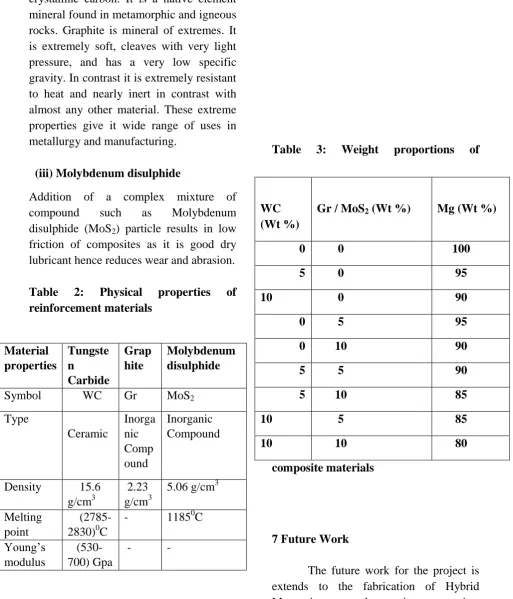
Table 2: Physical properties of reinforcement materials
The MMMC is fabricated by varying weight proportions of the Tungsten carbide
and Graphite / Molybdenum disulphide reinforcements to the Magnesium base material.
Table 3: Weight proportions of
composite materials
7 Future Work
The future work for the project is extends to the fabrication of Hybrid Magnesium metal matrix composites through powder metallurgy. The selected reinforcements Tungsten Carbide and
Material properties
Tungste n
Carbide
Grap hite
Molybdenum disulphide
Symbol WC Gr MoS2
Type Ceramic
Inorga nic Comp ound
Inorganic Compound
Density 15.6 g/cm3
2.23 g/cm3
5.06 g/cm3
Melting point
(2785-2830)0C
- 11850C
Young‟s modulus
(530-700) Gpa
- -
WC (Wt %)
Gr / MoS2 (Wt %) Mg (Wt %)
0 0 100
5 0 95
10 0 90
0 5 95
0 10 90
5 5 90
5 10 85
10 5 85
Graphite / Molybdenum disulphide is mechanically alloyed with the Magnesium base material by Ball Milling process. Then it will be compacted and sintered to get a
Magnesium hybrid MMC. The developed MHMMC will be tested for its basic properties such as density, hardness and strength. The functional property of wear behaviour will be tested through pin on disc apparatus by varying factors such as sliding velocity, sliding distance and Load.
Highlights
Manufacturing methods of MMMCs are reviewed in brief. Effect of different reinforcements
on the fundamental and tribological properties are summarized.
Small addition of reinforcing elements has great effect on the properties.
The potential applications of MMMCs were discussed.
Reference
1. Dey, Abhijit, and Krishna Murari Pandey. "Magnesium metal matrix composites-a review." Rev. Adv.
Mater. Sci 42 (2015): 58-67.
2. Edward B. Warda I I ,Light Metals Age Feb.(1989) 34.
3. Luo, Alan, et al. "Magnesium
castings for automotive
applications." JOM Journal of the Minerals, Metals and Materials
Society 47.7 (1995): 28-31.
4. BYRON B. CLOW, Adv. Mater. Proc. Feb./Oct.(1996) 33.
5. Ye, HaiZhi, and XingYang Liu.
"Review of recent studies in
magnesium matrix
composites." Journal of materials
science 39.20 (2004): 6153-6171.
6. Shen, M. J., M. F. Zhang, and W.
F. Ying. "Processing,
microstructure and mechanical
properties of bimodal size SiCp
reinforced AZ31B magnesium
matrix composites." Journal of
Magnesium and Alloys 3.2 (2015):
162-167.
7. Rashad, Muhammad, et al.
"Improved mechanical proprieties of “magnesium based composites”
with titanium–
aluminumhybrids." Journal of
Magnesium and Alloys 3.1 (2015):
1-9.
8. Prakash, K. Soorya, et al.
"Mechanical and wear behaviour of
Mg–SiC–Gr hybrid
composites." Journal of
Magnesium and Alloys 4.3 (2016):
197-206.
9. Huang, Song-Jeng, et al.
"Advanced AZ31 Mg alloy
composites reinforced by WS 2 nanotubes." Journal of Alloys and
Compounds 654 (2016): 15-22.
10.Abdollahi, S. H., F. Karimzadeh, and M. H. Enayati. "Development of surface composite based on Mg– Al–Ni system on AZ31 magnesium alloy and evaluation of formation mechanism." Journal of Alloys and
Compounds 623 (2015): 335-341.
11.Sarı, FatmaNazlı, Mehmet
BakiKaramış, and Yahya Kaya. "Friction characteristics of hybrid
reinforced with carbon nanotube and cerium." Industrial Lubrication
and Tribology 69.1 (2017).
12.Tekumalla, Sravya, and Manoj
Gupta. "An insight into ignition
factors and mechanisms of
magnesium based materials: A review." Materials & Design113 (2017): 84-98.
13.Witte, Frank, et al. "Biodegradable magnesium–hydroxyapatite metal matrix

![Table 1: Room temperature mechanical properties of Pure Mg, Mge10Ti and Mge10Tie1Al composites [7]](https://thumb-us.123doks.com/thumbv2/123dok_us/8387132.1680841/5.595.309.519.579.757/table-room-temperature-mechanical-properties-pure-mge-composites.webp)
![Fig. 3: Mechanical behaviour of pure Mg, Mge10Ti and Mge10Tie1Al composites: (a) Engineering stresses train curves and (b) Hardening capacities [7]](https://thumb-us.123doks.com/thumbv2/123dok_us/8387132.1680841/6.595.72.299.181.658/mechanical-behaviour-composites-engineering-stresses-curves-hardening-capacities.webp)
![Fig. 4: SEM images of (a) Mg–5SiC–5Gr, (b) Mg–10SiC–5Gr and (c) Mg–10SiC–10Gr [8].](https://thumb-us.123doks.com/thumbv2/123dok_us/8387132.1680841/8.595.312.483.71.539/fig-sem-images-mg-sic-gr-sic-sic.webp)