Review Article
CODEN: IJPNL6
CHRONOMODULATION: A PLATFORM FOR FUTURE DOSAGE FORMS
Rahul Bhaskar, Radhika Bhaskar*, Mahendra K. Sagar and Vipin Saini
Department of Pharmacy, Mahatma Jyoti Rao Phoole University, Jaipur, India
*Corresponding author e-mail:
[email protected]
ABSTRACT
Gone are the days when patient incompliance was due to cumbersome dosage regimen. The mesmerizing technology of alteration in the time of release of the drug has not only opened up new possibilities but also has made many drug products based on them commercially available. These systems are based on the basic physiological phenomenon known as biological clock or circadian rhythm i.e. a daily cycle of biological activities which may get influenced with the environmental and several other factors. The system ensures the drug is released at the time of its requirement hence known as chronomodulated (chrono means ‘time’ and modulation means ‘alteration’) drug delivery systems. There are a good number of platform technologies which either can be utilized as such or can be amended a bit to get the desired product. This review article deals with such technologies along with their commercially available products.
Keywords: Chronomodulation, circadian rhythm, pulsatile delivery, modified release.
INTRODUCTION
Since ancient time it is established that all the living being follow biological clock [1] at one or other phase of life. In human being this biological clock is not only responsible for day to day activity but also for the occurrence of diseases as well as adverse effects of certain drugs [2]. Biological clock stands for fixed time interval for certain biological activities. It may get influenced or disturbed by environmental factors like temperature, stress etc. Earlier pharmaceutical dosage forms used to release the entire drug content soon after its consumption; such systems were known as immediate release dosage forms. With span of time the requirements changed and the multiple dosage regimen offered by immediate release dosage form seemed cumbersome and patient unfriendly. Hence the concept of sustained release formulations came in existence. It established itself as a successful technology for majority of the instances whereas it also offered unnecessary drug exposure for longer time especially at non-required times. To resolve such problem a new technique has emerged very recently. This technique follows the biological clock or circadian rhythm of the body for delivering the
drug or pharmacologically active ingredient [3]. Such systems not only help in reduction in dose but also help in protecting the body from unnecessary exposure of the drug. The concept ensures that the drug is either released or it attains maximum concentration at the time when it is required. These innovative systems are known as chronomodulated system or pulsatile systems [4-8]. The drug delivery systems falling under this class generally show a lag time; a period signifying either no release or very less drug release. This system has opened new opportunities and pathways for drug delivery systems.
Diseases with established circadian rhythms: There a good number of diseases which follow circadian rhythm. Some of them are quite severe where as some are mild. Generally the common pattern in such type of diseases is that they have timed attack or timed threshold which seems as a sudden attack but actually the attack is a result of sequential activities taking place in the body [9]. Diseases falling under this type of category are cardiovascular disease [10-11] (including early morning
hypertension, hypercholesterolemia or
hyperlipidemia), asthma [12], rheumatoid arthritis [13], duodenal ulcer [14], various neurological disorders [15] etc. This again is attributed to different types of
physiological and/or pathological conditions
associated with these diseases e.g. bronchial asthma occurs due to constriction of airways in response to certain stimuli including and not limiting to temperature, dust, emotional state etc. Attacks if frequent at night, it is known as nocturnal asthma [16]. Symptoms associated to allergic rhinitis like running nose, sneezing, itching in the eyes and nasal congestion are generally observed more in the morning as compared to noon or afternoon [17]. Certain pains specially the one associated with rheumatoid arthritis are observed early in the morning [18] whereas that of pain associated to osteoarthritis is observed late in the evening [19]. Cardiac problem like myocardial infarction is more common early in the morning. This could be attributed to decrease in fibrinolytic and increase in platelet aggregation ability of the body at these times [20-21]
. Similarly patients suffering from hypertension such as early morning hypertension also follow circadian rhythm [22]. Cholesterol level in the blood also follows the clock system [23]. A study showed that the circadian rhythm affects daily lipid profile. The lipid profile is not same through-out the day. It varies from being lowest at 04.00 h to maximum at 14.00 to 16.00 h [24]. Certain types of epileptic fits are found to follow the circadian pattern quite significantly [25-26]. In general insulin secretion is pulsatile in nature; this is associated with pulsatile release of modulators required for insulin release form beta cells [27]. Patient suffering from Alzheimer are found with less motor active in the day time as compared to night time [28].
Dosage form that follows circadian rhythm: In the initial stages of tablet formulation, only immediate release tablets were produced. Immediate release tablets are the one which release their NLT 80% content in less than 60 min [29]. Such systems are appreciable only for conditions where immediate relief is desired. With the change in technology and time, novel technologies have been developed.
Certain technologies are involved in maintaining the steady state plasma drug concentration through-out 24 h period with zero order release kinetics. Such technologies no doubt are good approaches for conditions where constant amount of drug is required in the body through-out the day. But on the other hand, under certain conditions the release of drug is required at specified time or for maintenance point of view certain amount of drug is required round the clock and at particular time range large amount is
required. Such systems offered new challenges for technologies and to deal with such tricky situations. In chronomodulated systems the time for drug release is modulated to ensure that either the drug is release when required or maximum concentration is available at the required time range [30]. Even if the patient takes the medication at the bed time, the concentration will be maintained through-out the night to prevent the early morning attack of diseases like asthma and hypertension which follow circadian rhythm [31]. Chronotherapeutic drug delivery system can also be defined as a system in which there is initially a lag phase in drug release or if the drug is released that will be in very low amount and then after a predetermined time the release will accelerate and again end up at a predetermined time [32]. Several classifications of chronomodulated systems are drawn. Some of them are as follows;
Osmotic system
Capsular system
Erodible, soluble or rupturable membrane
system
Altered membrane permeability system
Osmotic system: In this system, device consists of a capsule shell (fig. 1) coated with semipermeable polymer, a plug made of insoluble material, osmogen and drug content. Osmogen exerts osmotic pressure on plug to get it removed from the device. Expandable orifice technology is based on this concept. In this technology, the outer shell is made of a flexible membrane consisting of a tiny orifice which is too small to be opened up in relaxed state. But under osmotic pressure the expandable device stretches to open the orifice and release the drug [34].
Capsular system: In contrast to osmotic system, this system (fig. 2) consists of an insoluble capsular body and a soluble cap. The opening of the body is occluded with the plug of swellable hydrogels. Soon after consumption the cap dissolves exposing the plug which after swelling pushes itself outside and release drug [37].
A patented technology, Pulsincap® is based on this concept. The technology comprised of insoluble capsule preferably polyethylene with a swellable plug
of hydrogels (hydroxypropylmethyl cellulose,
polymethylmethacrylate, polyvinayl alcohol,
polyethylene oxide etc.). The plug depending upon its type and concentration of excipients determines the lag time. The lag time generally achieved is about 6.0 to 6.5 h. One more approach on the same note states a pulsatile drug delivery based on an insoluble capsule body controlled by an erodible plug. The capsule as usual is of insoluble material but the plug is made of hydrophilic polymers like HPMC, PEO with congealable lipidic material with increasing HLB-value along with surfactants. The composition ensured the erosion of plug. After erosion or melting, the plug gets removed leaving the drug exposed to the medium behind. Effervescent agents can be added in the capsule to ensure rapid and complete release of the drug from the capsule body. The such prepared drug delivery system showed typical pulsatile release profiles with a lag time followed by a rapid release phase [39]. The above mentioned dosage form can also be modified with respect to agent responsible for plug erosion. One such approach is based on utilizing substrate as well as enzyme responsible for its degradation. The substrate is either degraded or consumed by the enzyme leading to erosion of plug and release of the drug from the formulation. In this study, the plug was composed of pectin (substrate) and pectinase (enzyme). For rapid release, effervescent system can also be used as conjunct [40]. An amendment to above said formulation is the use of super- disintegrants like croscarmellose sodium and sodium starch glycolate. Now the capsule-based system comprises of a drug, swelling agent, rupturable polymer layer and a superdisintegrant. For making this system pH independent, use of weak acid like fumaric acids is also offered [41]. The system prepared by Nayak et al., consisted of swellable polymer like L-HPC (L-hydroxypropylcellulose), xanthan gum, polyethylene oxide or sodium alginate together with drug tablet and erodible tablet (formulated with L- HPC or guar gum) in a pre-coated capsule. The formulation showed an initial lag time of 5 to 6 hrs and only 10±2.1% initial drug release followed by a sustained release of 99±1.7% in a total of 12 hrs [32].
Erodible, soluble or rupturable membrane system:
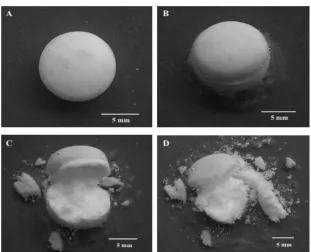
Depending upon the nature of the polymer taken, the outer shell of the formulation either erodes or swells after some time of consumption and releases drug (fig. 3). Pozi et al., developed a system named as The Time Clock®system. This system was composed of three major components carnuba wax along with bees wax (as a lipid barrier) and polyoxyethylene sorbitan monooleate (a surfactant). The system was based on the phenomenon of emulsification of lipid in presence of surfactant and water. The amount or quantity of coat was the only deciding factor for the lag time in drug release. Study carried out on human volunteers showed that there was no significant effect of gastric emptying or gastro-intestinal pH on lag time [43-44].
In contrast to the above said techniques based on either lipid system or enteric system, another novel application suggested use of hydrophilic polymers like high viscosity grade HPMC for delaying the drug release. The system was coated with high viscosity HPMC which gave a lag time of 3-4 h. For better functioning of the dosage form, it was further coated with enteric polymers. Such developed system was called as Chronotropic®. The in-vitro release profiles of enteric coated antipyrine tablet showed drug release with lag time and the in-vivo pharmacokinetic data taken from saliva confirmed the same. The lag time was in well correlation with the applied amount of the hydrophilic retarding polymer. This system was found suitable for both tablets and capsules [45, 46].
Conte et al., developed a tri-layered tablet for two drugs. The drugs were separated by a gel forming polymer. The whole tablet was coated with impermeable polymer except the top area from which the initial release of drug was required. As soon as the formulation came in contact with the dissolution media, the drug from top most layer got released immediately. The upper vacant layer exposed the gel forming polymer to the dissolution media. Due to its characteristic, the polymer formed gel and retarded the release of drug from the second layer. With span of time, the swelling of gel increased and exerted pressure on the outer coat, resulting in bursting of the coat and release of second layer of drug. The drug release in this system was controlled by both, the composition and thickness of the middle gel forming layer as well as the strength of the impermeable coating [47-48].
swellable layer which was coated with an outer rupturable layer. The release of drug from the device was depended upon the thickness of the outer layer and hardness of the inner layer. For complete and better release effervescent system was also applied using citric acid or tartaric acid. Another approach says about application of superdisintegrants for
complete rupture of outer membrane [49].
Chronomodulated drug delivery system of salbutamol sulphate developed for the treatment of nocturnal asthma consisted of an effervescent core surrounded by consecutive layers of swellable and rupturable polymers. The polymer used for swellable layer was HPMC E5 and for erodible layer Eudragit RL/RS (1:1). Since the symptoms of asthma occur typically between midnight and 8:00 am, especially around 4.00 am hence the dosage form was designed for bed time dosing with a lag time of six hours in drug release [50].
Roy et al., had also worked on a similar type of concept. They added insoluble polymer like ethyl cellulose along with enteric coated polymer (hydroxypropyl methyl cellulose phthalate) while preparing the outermost layer. The ratio of EC: enteric coated polymer was kept 1:1. Like the previous system, here also the drug core was covered with a middle layer of HPMC. System was found to be effective for a lag time of 3.5 to 5 h [51].
Altered membrane permeability system: This system
(fig. 4) is based on the utility of certain ingredients which can alter the pH of the formulation and in turn alter the membrane permeability. The consequence of this is drug release.
Narisawa et al., developed altered permeability system for acetaminophen using eudragit RS with
organic acid like succinic acid. When such prepared microbeads were administered to beagle dogs, a typical sigmoidal release curve was obtained. The probable reason behind such release pattern resides in positively polarized quaternary ammonium groups in polymer which are counter accompanied by the negative ions of hydrochloric acid. The study concluded that small amount of organic acid in formulation helps in fast release [53-54].
Bodmiere et al., worked on similar principle to get a sigmoidal release pattern of diltiazem microbeads coated with eudragit RL/RS. The formulation showed pH depended drug release with an anion exchange when the dissolution was carried out in different media [55].
Recent technologies based on chronomodulation: Some novel technologies based on the above mentioned platform systems are described in table 1.
CONCLUSION
The review has tried to touch all the possible perspective and advancement with respect to chronomodulation. The basic platform techniques as well as furnished pharmaceutical products based on them are the victory cases in this regard. The requirements are changing and to fulfil them the system will have to change. Though there are still some theoretical concepts lying untouched, but the review reveals that many a theoretical concepts of past have become practical dosage forms in the present world. With these emerging technologies, field of pharmaceutical sciences will be able to serve the mankind much accurately. Such systems being patient friendly are well accepted and in turn will increase the compliance rate.
Fig. 2: Capsular chronomodulated release system [38]
Fig. 3: Sequential presentation of swelling followed by rupture of the outer membrane leaving inner active layer exposed to dissolution media. [42]
(A) (B) (C) (D)
Table 1: Recent technologies based on chronomodulation:
Technology Rationale Developed by Marketed
formulation
SODAS®
(Spheroidal
Oral Drug
Absorption System) [56]
System is a mixture of immediate and delayed and/or sustained release coated non peril seeds. [57]
Elan
Pharmaceuticals
Avinza™,
Ritalin® LA
and Focalin®
XR. [58]
IPDAS®
(Intestinal Protective Drug Absorption System) [60]
Gastro-retentive high density
multiparticulate system. [59]
Elan Naprelan® [58]
CODAS™ Chronotherape utic Oral Drug Absorption System [56]
System ensures a lag time in drug release hence maximum amount is attained at the time required long after the formulation administration. [61]
Elan Verelan® PM
[58]
PRODAS®
Programmable
Oral Drug
Absorption System [56]
System consists of multiparticulates (minitabs) able to release the drug at different time intervals and different release rates and/or mechanisms[56]
Geoclock®[62] Compression coated controlled dosage
form containing coat of a wax material to ensure pH independent erosion along with superdisintegrant to ensure complete release. [62]
SkyePharma Lodotra™ [62]
Geomatrix™ [63]
Multilayered matrix tablet having
mixutre of hydophilic and hydrophobic polymers in a suitable ratio to ensure [63]
Sular®, ZYFLO CR™, Coruno®, diclofenac-ratiopharm®
Madopar DR®
[63] PULSYS™ [64] Multiparticulate system in a tablet dosage
form. Minitabs with different release patterns are compressed into a single tablet
MiddleBrook™ Pharmaceuticals
Moxatag™ [64]
OSDrC® (one
step dry
coating) Technology [65]
Tablet with in tablet for pulsatile or controlled release pattern [65]
Hypermatrix™ [66]
A drug matrix assembly is defined as
five dimensional in nature: length,
height, width, space, and time. The
understanding and controlling of
properties associated with these
dimensions facilitates responses to the multivariate external environment of the Gastro-Intestinal Tract (GIT) resulting in time-release delivery of a wide range of pharmaceuticals [66]
IntelliMatrixT M [67]
Matrix prepared by intelligent polymers like hydroxyethyl cellulose as matrix former and lactose as channelling agent. [67]
IntelliPharmacetical
Eurand
Minitabs®
technology [ 6 8 ]
Cylindrical minitabs containing drug mixed in controlled release polymer with an optional controlled release coating. Supplied in capsule. [ 6 8 ]
Aptalis Pharmaceutical
(formerly Eunard
Pharmaceuticals) Diffucaps®
multiparticulat e [69]
Drug layering on sugar pellets or cellulose spheres followed by release controlling polymer coating. It is able to provide a lag time of 4-5 hrs. [69-70]
Aptalis Pharmaceutical
(formerly Eunard
Pharmaceuticals)
Innopran® XL tablet
Diffutab® technology for [71]
Produces a once daily dosage regimen with the help of mixtures of hydrophilic polymers allowing diffusion of drug in controlled fashion[71]
Aptalis Pharmaceutical
(formerly Eunard
Pharmaceuticals) Orbexa®
technology [72]
Multiparticulate system based on
extrusion-spheronization for sensitive drugs like proteins. Shperoids are coated with release controlling polymer. Helps in incorporating high dose in a single dosage form as compared to diffucaps [72]
Aptalis Pharmaceutical
(formerly Eunard
Pharmaceuticals)
OROS [73] Dosage form consisting of drug and
osmotically active compound enclosed in a polymeric membrane with one minute orifice. [74]
Alza corporation Chronset™,
INVEGA, CONCERTA. [73]
Port [75] Combination of immediate and delayed
release components. Device enclosed in a
housing sequencing IR component,
polymeric plug, delayed component, osmotic agent. The cap of device
dissolves immediately after
administration and releases the IR component. With span of time osmotic agent pushes the plug to release the delayed component.
REFERENCES
1. Pittendrigh CS. Annu Rev Physiol, 1993; 55: 16–54.
2. Adkisson PL. Science, 1966; 154: 234–41.
3. Ohdo S, Koyanagi S, Suyama H, Higuchi S, Aramaki H. Nat Med, 2001; 7: 356 –60.
4. Smolensky MH, D’Alonzo GE. Am J Med, 1988; 85:34 – 46.
5. Redferm PH, Lemmer B. Pharmacology of Biological Rhythms, Springer, New York, 1997.
6. Roemeling RV, Hrushesky WJ. J Nat Cancer Inst, 1990; 82: 386 – 93.
7. Roemeling RV, Hrushesky WJ. J. Clin Oncol. 1989; 7:1710-19.
8. Rivard GE, Intente-Rivard C, Hovoux C, Champagne J. Lancet, 1985; 2:1264-66.
9. Lemmer B, Bruguerolle B. Clin Pharmacokinet, 1994; 26:419 –27.
10. Anwar YA, White WB. Drugs, 1998; 55: 631–43.
11. Carter BL. Am J Health Syst Pharm, 1998; 55(3): S17–S23.
12. Smolensky MH, Scott PH, McGovern JP. Prog Clin Biol Res, 1987: 259–70.
13. Vener KJ, Reddy A. Semin Arthritis Rheum, 1992; 22: 83–97.
14. Pounder RE. Aliment Pharmacol Ther, 1991; 5(1): 5–13. 15. Poirel C, Ennaji M. Psychol Rep, 1991; 68:783 – 801.
16. Martin RJ, Banks-Schlegel S. Am J Respir Crit Care Med, 1998; 158:1002–7.
18. Saitohl T, Watanabe Y, Kubo Y, Shinagawa M, Otsuka K, Ohkawa SA, Watanabe T. Biomed Pharmacother, 2000;55: s138–41.
19. Bruguerolle B, Labrecque G. Adv Drug Deliv Rev, 2007; 59: 883–95.
20. Tofler GH, Brezinski D, Schafer AI, Czeisler CA, Rutherford JD, Willich SD
21.Gleason GH, Williams GH, Muller JE. N Engl J Med, 1987; 316:1514–18.
22.Portaluppi F, Hermida RC. Adv Drug Deliv Rev, 2007; 59: 940–51.
23. Hermida RC, Ayala DE, Calvo C, Portaluppic F, Smolensky MH. Adv Drug Deliv Rev., 2007; 59: 923–39.
24.Jones PJH, Schoeller DA. J Lipid Res, 1990; 31: 667–73.
25. Coll AR, Arderiu XF, Noguera AD. Clin Chem, 1994; 40(8): 1549-53
26.Hofstra WA,Weerd AWD. Epilepsy Behav, 2008;13: 438–44.
27. Poirel C, Ennaji M. Psychol Rep, 1991; 68:783–801.
28. Waldhäusl W. Diab Res Clin Pract, 1989; 6:S17–S24.
29. Volicer L, Harper DG, Manning BC, Goldstein R, Satlin A. Am. J. Psychiatry, 2001;
158:704–711.
30. http://www.fda.gov/downloads/Drugs/GuidanceComplianceRegulatoryInformation/Guidances/ucm070237.
pdf.
31. Prisant LM, Devane JG, Butler J, 2000; 7: 345–351.
32. Bhattacharya S, Sagi AR, Gutta M, Chiruvella R, Boinpally RR. Programmable Drug Delivery Systems. In
Li X, Jasti BR. (eds). Design of Controlled Release Drug Delivery Systems; Mc Graw-Hill Chemical Engineering: 2006, pp. 405-428.
33. Nayak UG, Shavi GV, Nayak Y, Averinen RJ, Mutalik S, Reddy SM, Gupta PD, Udupa N. 2009; J Controlled Release, 136:125-131.
34. McConville JT, Ross AC, Chambers AR, Smith G, Florence AJ, Stevens HNE, 2004; 57:541–549.
35. Linkwitz A, Magruder JA, Merrill S. US Patent, US 5,318,558, 1994.
36. Niwa K, Takaya T, Morimoto T, Takada K. J Drug Targetting, 1995; 3:83–89.
37. Barzegar-Jalali M, Siyahi-Shadbad M. Iranian Journal of Pharmaceutical Sciences, 2006; 2:65–72.
38. Steven Howard NE. Pulsincap and hydrophilic sandwich (HS) capsule; Innovative time-delayed oral drug
delivery technologies. In: Rathbone JM, Hadgraft J, Roberts MS. (eds.). Modified Release Drug Delivery Technology. New York; Marcel Dekker: 2003:pp. 258-262.
39. Stevens HNE, Rashid A, Bakshee M. US Patent, US 5474784, 1995.
40. Krogel I, Bodmeier R. 1998. Pharm Res, 1998; 15:474–481.
41. Krogel I., Bodmeier R. 1999. Evaluation of an enzyme-containing capsular shaped pulsatile drug delivery system, Pharmaceutical Research,16, 1424–1429.
42. Mohamad A, Dashevsky A. Eur J Pharm Biopharm, 2006; 64:173–179.
43. Sungthongjeen S, Puttipipatkhachorn S, Paeratakul P, Dashevsky A, Bodmeier R. J Controlled Release, 2004; 95:147–159.
44. Pozzi F, Furlani P, Gazzaniga A, Davis SS. J Controlled Release, 1994; 31:99–108.
45. Wilding IR, Davis SS, Pozzi F, Furlani P, Gazzaniga A, 1994. Enteric coated timed release systems for colonic targeting. Int J Pharm, 111, 99–102.
46. Gazzaniga, A., Iamartino, P., Maffione, G., Sangalli, M.E. Int J Pharm, 1994; 108: 77–83.
47. Sangalli ME, Maroni A, Zema L, Busetti C, Giordano F, Gazzaniga A. J Controlled Release, 2001; 73:103–
110.
48. Conte U, Giunchedi P, Maggi L, Sangalli ME, Gazzaniga A, Colombo P, La Manna A. Eur J
Pharm, 1992; 38:209–212.
49. Conte U, La MannaA, Colombo P. US Patent, US 4,865,849, 1989.
50. Krogel I, Bodmeier R. Int J Pharm, 1999; 187:175–184.
51. Qureshi J, Amir M, Ahuja A, Baboota S, Ali J. Indian J Pharm Sci, 2008; 70:351- 356
52. Roy P, Shahiwala A. J Controlled Release, 2009; 134:74–80.
53. Mastiholimath VS, Dandagi PM, Samata S, Jain Gadad AP, Kulkarni AR. Int J Pharm, 2007; 328:49–56.
54.Narisawa S, Nagata M, Hirakawa Y, Kobayashi M, Yoshino H. J. Pharm. Sci, 1996;
85:184–188.
55.Narisawa S, Nagata M, Danyoshi C, Yoshino M, Murata K, Hirakawa Y, Noda K. Pharm
Res, 1994; 11:111–116.
56. Bodmeier R, Guo X, Sarabia RE, Skultety P. Pharm. Res. 1996; 13:52–56.
57. Verma RK, Sanjay Garg S. Pharm Tech, 2001; 25(2):1–14.
59. http://www.elan.com/images/elan%202011%20annual%20report_tcm10-28631.pdf
60. http://www.naprelan.com/
61. Panoz DE, Geoghegan EJ. US Patent, US 4863742, 1989.
62. http://www.skyepharma.com/Technology/Oral_Technology/Geoclock/Default.aspx?id=61
63. http://www.skyepharma.com/Technology/Oral_Technology/Geomatrix/Default.aspx?id=62
64.
http://www.drugs.com/newdrugs/fda-approves-middlebrook-s-moxatag-amoxicillin-pulsys-pharyngitis-tonsillitis-adolescents-adults-824.html
65. http://www.osdrc.com./technology/index.html.
66. http://www.intellipharmaceutics.com/hypermatrix.cfm
67. http://www.intellipharmaceutics.com/technology_portfolio.cfm
68. http://www.aptalispharmaceuticaltechnologies.com/content/technology-eurand-minitabs%C2%AE
69. http://www.aptalispharmaceuticaltechnologies.com/content/technology-diffucaps
70. Percel PJ, Vishnupad KS, Venkatesh GM. US Patent, US 6500454, 2002.
71. http://www.aptalispharmaceuticaltechnologies.com/content/technology-diffutab%C2%AE
72. http://www.aptalispharmaceuticaltechnologies.com/content/technology-orbexa%C2%AE
73.
http://files.shareholder.com/downloads/JNJ/2176116457x0x435734/42EC23B9-8DCB-4398-99E1-CDDFD6E76253/Q42010pipeline.pdf
74. Gupta SK, Guinta DR, Christopher CA, Saks SR, Hamel LG. US Patent, US 8,163,798, 2003.