STANDARDIZING NURSE-TO-NURSE PATIENT HANDOFFS IN A CORRECTIONAL HEALTHCARE SETTING: A QUALITY IMPROVEMENT PROJECT TO IMPROVE END-OF-SHIFT NURSE-TO-NURSE COMMUNICATION
USING THE SBAR I-5 HANDOFF BUNDLE
Jemma Glenda Superville
A DNP project submitted to the faculty at the University of North Carolina at Chapel Hill in partial fulfillment of the requirements for the degree of Doctor of Nursing Practice in the Doctor
of Nursing Practice Program in the School of Nursing.
Chapel Hill 2017
Approved by:
© 2017
ABSTRACT
Jemma Glenda Superville: Standardizing Patient Handoffs in a Correctional Healthcare Setting: A Quality Improvement Project to Improve
Nurse-to-Nurse end-of-shift Communication Using the SBAR I-5 Handoff Bundle (Under the direction of Janna Dieckmann)
Background. Ineffective nurse-to-nurse communication at handoffs can result in patient harm, including death. Effective communication addresses key technical and non-technical components including: the comprehensiveness and veracity of information exchanged, as well as the mutual understanding of the information shared. When either of these features is missing, ineffective communication results. In the jail setting communication is often based on patient information that is fractured, poorly accessible, and non-verifiable. Of the jail nurses in the study setting, 57% are foreign born; 55% speak a non-English native language, and 35% trained and practiced in foreign countries. This “internationalization” of nursing with the potential for variations in how nurses interpret and act on information exchanged can severely undermine patient safety.
Purpose. The purpose of this DNP project was to utilize evidence-based practice
processes to standardize the content and format of the nurse-to-nurse handoff communication at the jail, and to explore whether these structural and process changes would improve the quality of the handoff communication.
using a convenience sample of nurses at a 22-bed acute medical services unit of a jail. The study employed a mixed methods approach utilizing questionnaires, observations, interviews, and retrospective chart reviews to collect and compare pre/post-test data.
Methods. The primary investigator observed morning and evening end-of-shift handoffs. Problems identified were: inconsistent handoff start and ending times; wide variability in report content, format and style; the absence of information verification; and failure to validate the mutual understanding of information shared. Differences in nurses’ pre/post-test survey responses, interviews, and handoff observations were analyzed. Nurses’ interview responses were examined for salient themes.
Results. Post-intervention, jail nurses reported improved handoff quality. Although a marginal increase in the patient care error rate occurred, a 10-fold increase in the handoff error capture rate improved patient safety overall. Thematic analysis yielded two themes: Improved communication and improved team dynamics.
I dedicate this project to my parents, Cedric and Stella Millington for instilling in me at an early age the value of a formal education, even though they themselves were not as privileged to have had access to the same.
ACKNOWLEDGEMENT
I offer my sincerest gratitude to my committee members, Drs. Janna Dieckmann, Coretta Jenerette, and Cathie Fogel. This dissertation would not have been possible without your useful suggestions, constructive critiques, and countless thoughtful revisions.
I owe a special thank you to Cenean Raphemot, my classmate and friend who encouraged me at times of my deepest despair, pointed me to useful resources, and provided words of
encouragement that helped me stay the course.
I would like to acknowledge my friends and family for their prayers, love and support throughout this journey; for their understanding of the countless social events and celebrations at which I was absent. And for their confidence that the sacrifices will benefit us all!
I am particularly grateful to my children, Abiola and Kwame, and their families for supporting me every step of the way. Special thanks to Kwame and Brittany for their personal commitment and unwavering support throughout this journey, very often at great personal sacrifice.
who carried an extra shift to allow me the time to meet my academic obligations. Finally, to my dear friend, Sherry Fortune, without whom this final product could not have been completed.
TABLE OF CONTENTS
LIST OF TABLES ... xi
LIST OF DIAGRAMS ...xii
LIST OF ABBREVIATIONS... xiii
CHAPTER 1: INTRODUCTION ... 1
Problem Statement ... 4
Background and Significance... 5
The Case for Change ... 6
Purpose of the Study ... 8
CHAPTER 2: LITERATURE REVIEW ... 9
Barriers/Facilitators to Effective Handoff ... 12
Clinical Handoff: Structure and Process ... 14
Clinical Handoff Tools ... 16
Paper-Based Tools ... 17
EMR Integrated Tools ... 17
Tools for Nurses and Physicians ... 18
Handoff: Critical Success Factors ... 19
Summary of Tools: Best Practice ... 21
CHAPTER 3: CONCEPTUAL FRAMEWORK ... 23
Overview of Donabedian’s Quality Framework ... 23
Structure in Donabedian’s Quality Triad ... 24
Process in Donabedian’s Quality Triad ... 25
Outcome in Donabedian’s Quality Triad ... 25
CHAPTER 4: METHODOLOGY ... 27
Setting ... 27
Subjects ... 28
Outcome Measures ... 28
Manser Handover Quality Rating Tool ... 29
Survey Recruitment ... 30
Data Collection Methods and Process ... 30
Pre-Intervention/ Post-Intervention Survey Questionnaires ... 30
Observations ... 31
Nurses’ Interviews ... 32
Nurses perception of their Own Communication in the Handoff ... 32
Confidentiality of Participant’s Identity ... 33
Anonymity of Data ... 33
Conflict of Interest ... 33
Project Monitoring & Response to Intervention Challenges ... 33
Data Analysis: Quantitative Analysis ... 34
Data Analysis: Qualitative Analysis ... 35
CHAPTER 5: RESULTS ... 36
Quantitative Analysis ... 36
Descriptive Statistics: Population ... 37
Descriptive Statistics: Study Sample ... 38
Qualitative Analysis ... 38
Results of Study Questions ... 39
Improved Inter-Nurse Dynamics during the Nurse-to-Nurse Handoff ... 46
Study Strengths and Limitations ... 48
Survey Response Rate ... 48
Non-Randomized Sampling ... 49
Timing of Study Implementation ... 49
Threats to External Validity ... 50
Threats to Internal Validity ... 50
Management of Challenges and Barriers ... 51
CHAPTER 6: ANALYSIS AND DISCUSSION ... 53
Policy Implications / Future Research ... 54
APPENDIX A-1: UNC IRB APPROVAL ... 69
APPENDIX A-2: APPROVAL LETTER ... 71
APPENDIX A-3: THE I-5 VERIFICATION TOOL ... 72
APPENDIX A-4: THE PARTICIPANT LETTER OF INVITATION ... 73
APPENDIX A-5: HANDOVER QUALITY RATING FORM ... 74
APPENDIX A-6: THE 11-ITEM ADAPTED HANDOFF EVALUATION SCALE ... 75
APPENDIX A-7: SBAR HANDOFF TOOL ... 76
APPENDIX A-8: QUALITY DATA CAPTURE FORM: ERRORS ... 77
APPENDIX A-9: SAMPLE OF INTERVIEW QUESTIONS FOR CONDUCT OF SEMI-STRUCTURED INTERVIEW ... 78
APPENDIX A-10: THE AACCN GRADING SYSTEM ... 79
APPENDIX B-1: COMPARISON OF NURSES’ SATISFACTION PRE/POST SBAR I-5 INTERVENTION ... 80
APPENDIX B-2: MAJOR FACTORS IMPACTING NURSES’ SATISFACTION WITH THE HANDOFF ... 81
APPENDIX B-3: COMPARISON OF THE DIFFERENCES IN PERCEPTION IN STUDY SAMPLE VERSUS CONTROL GROUP POST-SBAR I-5 INTERVENTION ... 82
APPENDIX B-4: HANDOFF QUALITY RATING PRE/POST SBAR I-5 INTERVENTION ... 83
APPENDIX B-5: RESULTS OF NURSES INTERVIEW POST-SBAR I-5 INTERVENTION ... 84
LIST OF TABLES
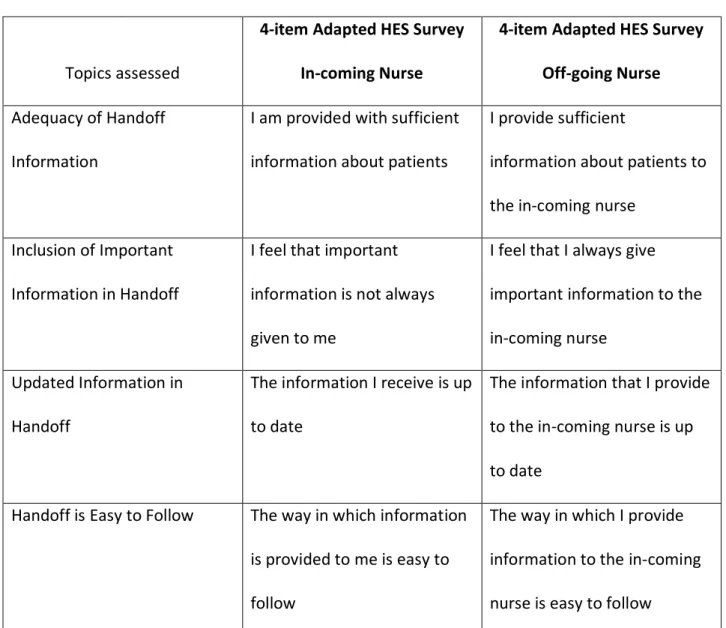
Table 1 - Construction of The 4-item adapted HES survey ... 57
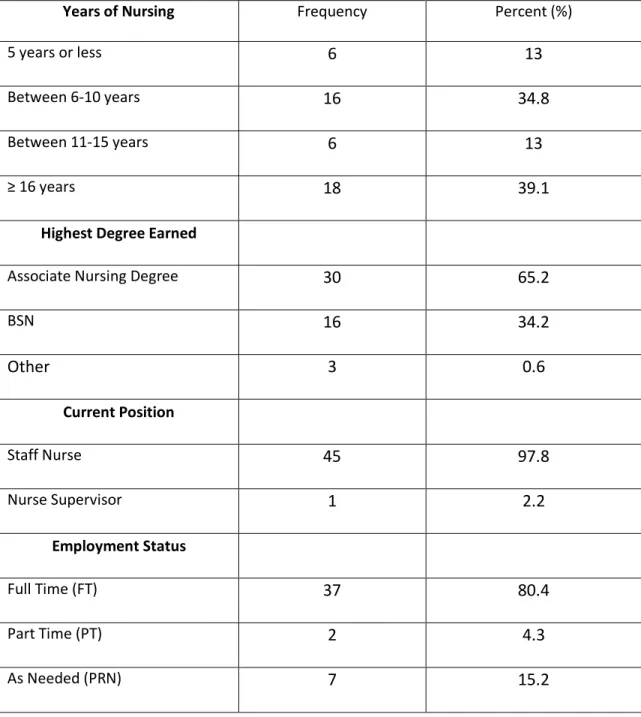
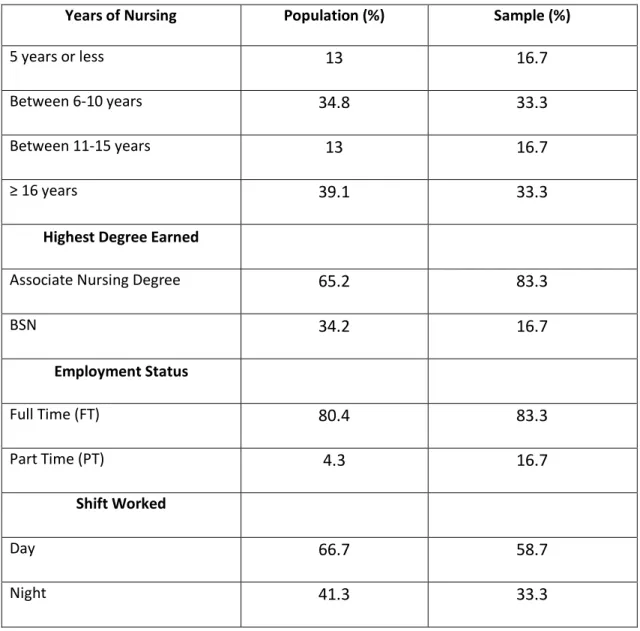
Table 2 - Summary: Descriptive Statistics Study Population All Nurses (N=46) ... 58
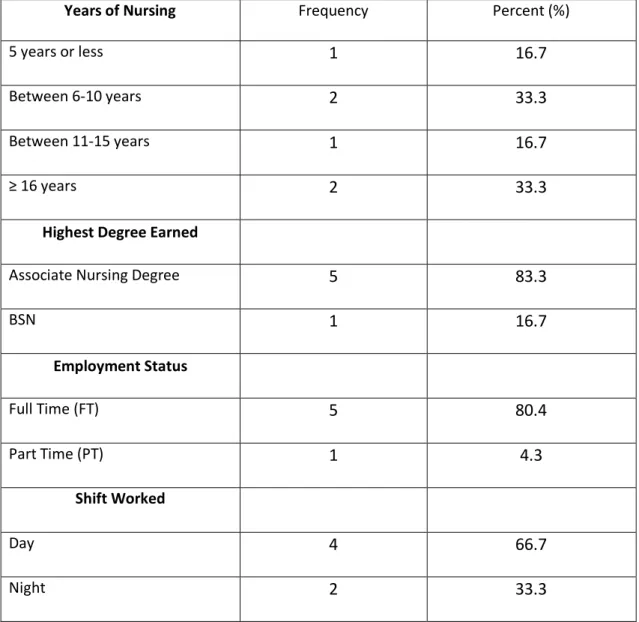
Table 3 - Summary: Descriptive Statistics Study Sample (n=6) ... 59
Table 4 - Summary: Comparison of Descriptive Statistics Study Population
and Sample Population (N=46) Compared to Study Sample (n=6) ... 60 Table 5 - Comparison of Nurses’ Satisfaction: Pre- and Post-SBAR I-5 Intervention
Paired Study Sample Results (n=6) ... 40
Table 6 - Comparison of Nurses’ Satisfaction: Pre- and Post-SBAR I-5 Intervention
in the Control Group (n=6) ... 40
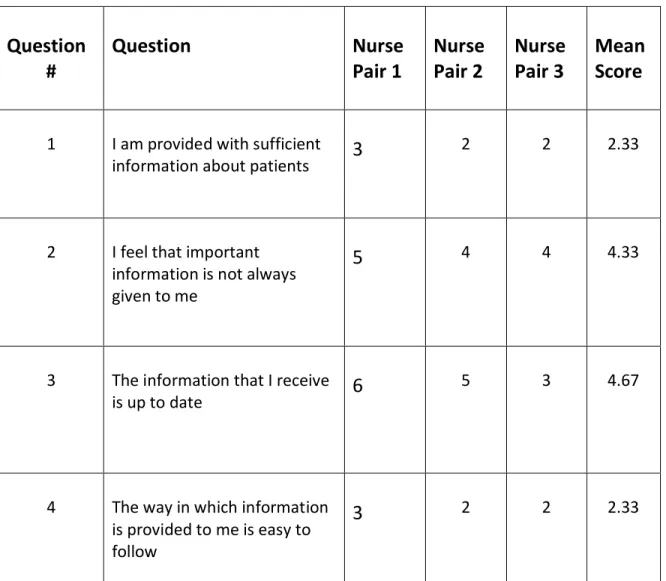
Table 7 - 4-Item adapted HES survey Questionnaire Incoming Nurse’s Perception
of Handoff Communication Received Pre-Intervention (baseline) ... 61
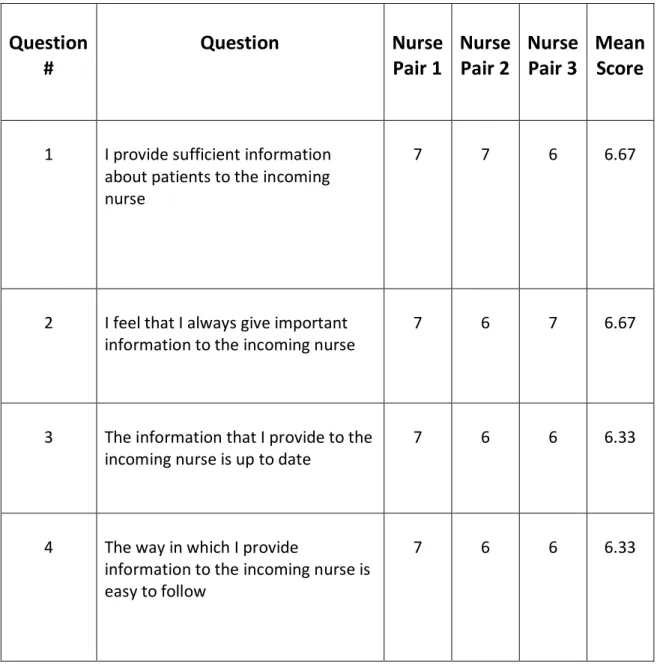
Table 8 - 4-item adapted HES survey Questionnaire Off-going Nurse’s Perception
of Handoff Communication Given Pre-Intervention (baseline) ... 62
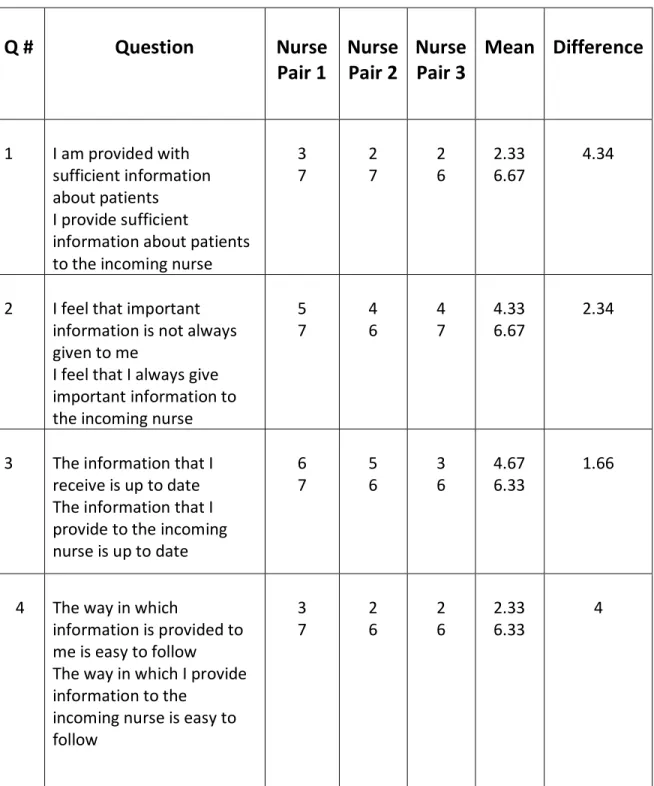
Table 9 - Differences in Paired Responses of In-coming and Off-going Nurses’ Perceptions of Handoff Communication Pre-Intervention (baseline)
Pre-Intervention (n=3pairs) ... 63
Table 10 - Differences in Paired responses of In-coming and Off-going Nurses’ Perceptions of Handoff Communication Post-Intervention SBAR I-5
(n=3 pairs) ... 64
LIST OF DIAGRAMS
Diagram 1 - Article search and selection process using the PRISMA framework ... 66
Diagram 2 - Donabedian S-P-O Quality Triad As Applied To Project ... 67
LIST OF ABBREVIATIONS
AACCN American Association of Critical Care Nursing
ACU Acute Care Unit
AHRQ Agency for Healthcare Research and Quality
APA American Psychological Association
BSN Bachelor of Science in Nursing
ED Emergency Department
HER Electronic Health Record
EMR Electronic Medical Record
HES Handover Evaluation Scale
IHI Institute for Healthcare Improvement
IOM Institute of Medicine
IRB Institutional Review Board
MICU Medical Intensive Care Unit
MOU Medical Observation Unit
NCBON North Carolina Board of Nursing PCICU Pediatric Cardiac Intensive Care Unit
PICOT Population Intervention Comparator Outcome Timeframe
PRISMA Preferred Reporting Items for Systematic Reviews and Meta-Analyses
PRN As needed
PSC Public Safety Center
PT Part-Time
RN Registered Nurse
RRT Rapid Response Team
SBAR Situation Background Assessment Recommendation
SPO Structure Process Outcome
STD Sexually Transmissible Diseases
SW Suicide Watch
TJC The Joint Commission
UNC-CH University of North Carolina at Chapel Hill
US United States
CHAPTER 1: INTRODUCTION
Every day in our nation’s hospitals, the care of hundreds of thousands of patients is transferred from one provider to another. This process typically occurs two to three times a day for each patient, and can occur even more often when caregivers change mid-shift.
Communication exchanges between changing caregivers are designed to relay pertinent patient information that the incoming caregiver will use to safely continue the patient’s care. The Joint Commission, one of the most widely known advocates for patient safety, defines safe
communication as that which is “clear, precise, and accurate” (TJC, 2012).
recipient is much more likely to properly interpret the information received. On the other hand, defective communication is fraught with deficiencies that can lead to unintended outcomes. In healthcare, effective communication takes on additional importance because deficient
communication can lead to serious patient harm, suffering, and even death (Agarwal, Saville, & Slayton, 2012; The Joint Commission, 2013).
Recognizing the important link between effective nurse-to-nurse communication and patient safety at care transition, hospital leadership has invested considerable resources into identifying barriers to effective communication with the expectation that removal of these
barriers would improve patient safety. Barriers to effective communication are multifactorial and arise from a complex interplay of structural and process factors at the individual, group, and organizational levels (Dayton & Henrikson, 2007). Researchers have identified several
structural barriers to proper nurse-to-nurse handoff communication. These may include language barriers, frequent interruptions, deficient information, information overload, cognitive overload, wide variability in report content and format, and differences in authority gradients between in-coming and off-going nurses (Dayton & Henrikson, 2007; Gephart, 2012; Goldsmith et al., 2010; Welsh, Flanagan, & Ebright, 2010).
Researchers have noted the wide variability of the handoff report content and style, and have questioned the “reliability and efficiency of the handoff process” (Burton, Kashiwagi, Kirkland, Manning, & Varkey, 2010). To close this gap in handoff reporting content and style, and to improve handoff communication, some experts have promoted the adoption of
increase the completeness of information transferred, reduce patient care errors, promote continuity of care, and increase nurse satisfaction (Abraham, Kannampallil, Patel, Almoosa, & Patel, 2012; Frietag & Carroll, 2011; Patterson & Wears, 2010; Staggers, Clark, Blaz, & Kapsandoy, 2011; Welsh et al., 2010).
Manser et al. (2010) found that existing handoff research over-emphasized the
“technical” aspects of communication, such as the accuracy and completeness of the information exchange; the psychological and physical environment surrounding the transfer; and the impact of these factors on communication effectiveness. Further, this occurred while neglecting the “non-technical” roles of communication such as socialization, training, the maintenance of group cohesiveness, and organizational learning (Berger et al., 2012; Deering at al., 2011; Manser et al., 2010). Manser et al (2010) argued that much of the work on improving handoff
communication conducted before their study, focused on ensuring the veracity and completeness of the information transferred, while failing to address the social aspects of communication and their impact on patient safety.
In addition to content accuracy, effective communication is also founded upon a shared understanding between the sender and receiver of the message conveyed. Such reciprocal understanding assumes even greater significance in circumstances where there are wide disparities in training, skills, experience, and/or knowledge between the sender and receiver, which is often the case in the healthcare field. Given this context, it is imperative to build a component into the handoff structure that validates the mutual understanding of communication exchanges between the in-coming and off-going nurses at shift changes.
patients; lack of full patient disclosure due to security presence during nurse-patient interviews; patient mistrust; and rebellion (Costa & Lusk, 2017). Unintentional inaccuracies attributable to patient memory deficits related to drug impairment or the residual effects of chronic disease, also contribute to information gaps in the jail setting (Costa & Lusk, 2017). Jail nurses’ attempts to validate patient information can also be frustrated by patients’ refusal to provide consent for release of information, by patients’ provision of incorrect information sources, and lack of connectivity of jail information systems with community health providers. Collectively, these barriers create information deficits that can undermine the quality of the nurse-to-nurse handoff communication, provide a source of frustration for nurses, and potentially threaten patient safety.
Problem Statement
Patient safety and continuity of care are heavily dependent on the accuracy of
information passed on to an incoming nurse at handoff (Chung, Davis, Moughrabi, & Gawlinski, 2011). In addition to the accuracy and completeness of the information exchanged, the mutual understanding of these communication exchanges between clinicians at handoff is critical to effective communication (Chaboyer et al., 2009; Manser et al., 2010). Care transitions, including the patient handoff, represent a time of vulnerability during which the patient is at risk of harm due to incomplete or inaccurate information transfer, and/or due to misunderstood
communication exchanges between nurses.
organization by increasing the healthcare budget through higher costs incurred for healthcare services at tertiary care institutions. Additionally, deteriorations in patient health status that can be linked to nurse-to-nurse handoff errors have the potential to increase litigation from aggrieved patients.
Baseline observations of handoff processes in the health care areas at the local county jail reveal structural and process deficiencies that could adversely impact the accurate transfer of information at shift change. These communication deficiencies in the nurse-to-nurse handoff at the local county jail can be linked to poor outcomes including delayed, missed, or incorrect treatments, which potentially increase patients’ morbidity. In the jail setting where patients have higher disease burdens, and lower physiologic reserve (Biswanger et al. (2009) compared to the general population, the consequences of failed communication can be catastrophic.
Background and Significance
The centrality of effective communication in patient safety and continuity of care is widely acknowledged (Braun, 2012; Drach-Zahavy & Hadid, 2014; Thomas & Donohue, 2012; Vardaman et al., 2012). Researchers and healthcare systems experts have explored strategies to improve the nurse-to-nurse handoff communication process. Their findings have linked gains in the handoff process to improved outcome measures, including completeness of information transfer, reduction in patient care errors, reduction in handoff communication errors, increased continuity of patient care, and increased nurse satisfaction (Arora, Johnson, Meltzer, &
Humphrey, 2008; Thomas & Donohue, 2012; Vardaman et al., 2012).
performance audits (Cohen & Hilligoss, 2010; Hilligoss & Cohen, 2011; Schuster et al., 2014). Employing a behavioral approach, some hospitals have responded by adopting more structured clinical handoff protocols (Dayton & Henriksen, 2007; Gephart, 2012; Watson et al., 2015; Smith & Flanders, 2014). Some health system managers have promoted the practice of increased patient involvement in the handoff report through bedside shift reports (Sand-Jecklin &
Sherman, 2014; Smith & Flanders, 2014). Other health system managers have opted to integrate the electronic health record (EHR) and computerized tools as alternative strategies for reducing handoff errors (Anderson et al., 2010; Braun, 2012; Davis et al., 2015; Frietag & Carroll, 2011; Nelson & Massey, 2010).
Over nine million inmates enter U.S jails annually with an average length of stay of 45 days and a median length of stay of nine days (Glowa-Kollisch et al., 2014). With such large jail populations and high turnover rates, the EHR is a useful quality improvement tool in tracking patients’ health status throughout their stay and across repeated visits. Use of an EHR reduces testing redundancies by providing readily accessible data, and facilitates continuity of care by establishing vital linkages among community health care providers. Notwithstanding the potential benefits of the EHR, jail health systems have been notably slow in adopting this technology. The Wake County Detention Center presently utilizes a manual health record, and although officials have considered introducing an EHR, plans to do so are still in the formative stage.
The Case for Change
estimates that the figure in 2013 was closer to 440,000 per year, making it the third leading cause of death in the U.S. after cancer and heart disease (James, 2013). The Joint Commission (TJC) report of its investigation of medical errors reported that “65% of sentinel events and 90% of root cause analyses cited communication error as a contributor” (Coleman et al., 2006 p. 131). During the six-year period between 2004 and 2010, communication breakdowns were cited as the main cause of adverse events in the U.S. (TJC, 2011). Similarly, in an Australian study involving over 14,000 patient hospital admissions, 17% were associated with adverse events; of these,
communication breakdown was causally linked to the adverse events in 70% of those cases (Riesenberg, Leitzsch, & Cunningham, 2010; Smeulers et al., 2014).
As a result of the findings of the landmark report, To Err is Human: Building a Safer Health System ( Kohn, Corrigan & Donaldson, 1999), and based on its own investigation of medical errors in the United States during 2004, The Joint Commission established safe
communication at patient handoff as its National Patient Safety Goal for 2006 (JCAHO, 2011). In 2006, The Joint Commission also mandated the standardization of patient handoffs with the inclusion of a face-to-face, question-and-feedback component between nurses. At the time of implementation, this strategy was expected to improve information sharing and reduce errors (Breuer, Taicher, Turner, Cheifetz, & Rehder, 2015; Gephart, 2012). Following The Joint
Purpose of the Study
The purpose of this study was to improve the quality of the nurse-to-nurse handoff communication at a local jail by implementing structural and process changes to the existing handoff. To pursue this objective, the project was informed by current best practices for
CHAPTER 2: LITERATURE REVIEW
An effective patient handoff from an outgoing nurse to an incoming nurse is crucial to patient safety and continuity of patient care (Arora et al., 2008). An inefficient handoff is one that leads to patient care errors, redundancy, and the search for and need to reconstruct missing information. Together these result in lower nurse and patient satisfaction (Smeulers et al., 2014). The omission of clinically relevant patient information can potentially cause harm to patients by delaying diagnosis and treatment, contributing to redundancies in tests and diagnostics,
preventing timely and accurate care, and increasing patient pain and suffering (Chaboyer et al., 2009; Zou & Zhang, 2016).
There is broad support in the healthcare literature for use of a standardized tool for handoff communication (Arora et al., 2008; Frietag & Carroll, 2011; Gephart, 2012). The purpose of handoff communication is to provide the incoming nurse with information that is clear, complete, and devoid of inaccuracies (TJC, 2012). Halm (2013) presents evidence that demonstrates the positive impact on patient care processes of standardizing change-of-shift and departmental handoff reports. Examples of positive impacts include significant improvements in clinical performance (as evidenced by improved communication); fewer technical errors;
improved patient outcomes, such as reduced complications and patient satisfaction; and improved financial outcomes related to shorter handoff duration (Halm, 2013).
improving handoff quality and effectiveness (Gephart, 2012; Holly & Poletick, 2013; Klee et al., 2012; Zou & Zhang, 2016). Despite the acknowledged adverse consequences of ineffective handoffs, very little research has been conducted to establish best practice methods, nor has research directly linked practice changes to outcome improvements (Foster & Manser, 2012; Riesenberg et al., 2010). To inform the development of this quality improvement project, a systematic search of the literature was conducted to identify which nursing handoff styles were associated with improved handoff communication, patient care outcomes, and nursing care processes and outcomes.
To determine the best approach to improve handoffs at the clinical unit level, this project sought to answer four key clinical practice questions that are expressed in a PICOT format, in which the term, P = Population; I= Intervention, C = Comparator; O = Outcome, and T = Timeframe. Utilizing the PICOT format, the four clinical practice questions identified are:
1. Would a standardized patient handoff employing the SBAR I-5 Bundle in a local county jail be more effective than current practices in reducing handoff error rates? 2. Would nurses exhibit lower patient care error rates following application of the
SBAR I-5 Bundle, compared to the pre-intervention practices?
3. Would standardization of the handoff protocol using the SBAR I-5 Bundle increase nurses’ satisfaction compared to baseline?
4. Would standardization of the handoff protocol using the SBAR I-5 Bundle decrease the gap in nurses’ perception of each other’s performance in the handoff compared to baseline?
performance in the handoff, a detailed search was conducted of two databases: PubMed (Public/Publisher MEDLINE) and CINAHL (Cumulative Index to Nursing and Allied Health Literature). The search included all English-language studies published between January 1, 2006, and January 31, 2016, which contained the following search terms: report, nurse report, handoff, handover, end-of-shift report, nurse communication, and in-patients. The inclusion criteria were original, hospital-based studies that investigated handoff structure, content, and style, including the evaluation of paper-based or electronic tools and their impact on the research endpoints. The reference lists of included studies and relevant reviews were screened for additional articles pertinent to the research question. Selected articles address the standardization of the handoff process, the incorporation of standardized tools in the handoff, and the impact of the
standardization of the nursing process and structure on patient and nursing outcomes. Articles excluded were departmental reports, perspectives, editorials, opinions, posters, inter-facility transfer reports, and hospital discharges.
This study employed the PRISMA (Preferred Reporting Items for Systematic Reviews and Meta-Analyses) guideline for identifying, screening, selecting, and including articles [See Diagram1, p. 66]. The quality of the research evidence used to guide this project was evaluated based on the American Association of Critical Care Nurses (AACCN) grading of evidence taxonomy [See Appendix A-10, p. 79].
into four domains: Barriers/Facilitators to Effective Handoff; Handoff Structure and Process (standardized protocol, defined data set); Handoff Tools; and Critical Components to a Successful Handoff.
Barriers/Facilitators to Effective Handoff
A “clinical handoff” refers to the passing of responsibility and accountability for patient care at care transition, from the off-going clinician to the in-coming clinician. The handoff involves the transfer of pertinent patient information to assure patient safety and care continuity (Cohen & Hilligoss, 2010). Poor clinical handoffs create discontinuities in patient care that are associated with patient harm (Jeffcott, Evans, Cameron, Chin & Ibrahim, 2009). Ineffective handoffs are associated with missed or delayed tests; unnecessary repeat tests and diagnostics; treatment delays; decreased patient and provider satisfaction; increased lengths of stay; and clinical complications (Jeffcott et al., 2009). Ineffective handoffs also contribute to information omissions and inaccuracies (Abraham, Kannampallil, & Patel, 2014; Goldsmith et al., 2010), and communication breakdowns related to language differences, experience, skills, status, and lack of training (Abraham et al., 2014).
identified specific structural and process elements that facilitated effective handoffs. These included: A report that delivers relevant patient-specific information of an appropriate amount, which also utilizes a formal, structured format with an opportunity for face-to-face interaction for fielding questions and receiving feedback.
Thomas and Donohue-Porter (2011) piloted a shift handoff involving eight of fifteen hospitals in a secular, non-profit healthcare system. Some problem-based triggers that had been identified by nurses and which fueled the change included: Inordinately long shift reports with discrepancies found between information handed-off and actual patient status; too many interruptions/disturbances during report; time constraints; poor support from colleagues; poor quality of leadership; and the paucity of information received (Thomas & Donohue-Porter, 2011).
A systematic review of the literature of patient handoffs by Riesenberg et al. (2010) highlights some specific causes of handoff communication failures and suggests potential solutions. According to Riesenberg at al. (2010), researchers exploring medical errors in the intensive care setting attributed 37 percent of patient care errors to verbal miscommunication between physicians and nurses. Similar research in an emergency department (ED) noted that all communication in that setting, including handoff communication, experienced a 31 percent interruption rate, which combined with multi-tasking, contributed to errors (Riesenberg et al., 2010). The researchers described these communications as “partial, cryptic, and haphazard” , whether in nurse-to-nurse or physician-to-nurse interactions, as (Riesenberg et al., 2010).
recall rates (20-34%) were found with the task-centered, content-inconsistent format (Riesenberg et al., 2010). Similar research on handoff styles (written, verbal, or a combination thereof) found that the combination style yielded a 96% recall rate, compared to the inferior performance of exclusively verbal or written styles which yielded just a 0-58% recall rate (Riesenberg et al., 2010).
Clinical Handoff: Structure and Process
Clinical handoff practices are recognized as essential to the effective transfer of patient information between nurses involved in end-of-shift handoff communication (Anderson, Malone, Shanahan, & Manning, 2014; Thomas & Donohue, 2012). Though the nurse-to-nurse handoff at shift change is pivotal to patient safety, continuity of care, and nurses’ satisfaction, it remains an event that is highly vulnerable to errors for a number of reasons (Arora et al., 2008; Dayton & Henriksen, 2007; Thomas & Donohue, 2012). One prominent reason is the lack of standardized handoff tools (Abraham et al., 2014; Cairns et al., 2013; Jukkala, James & Autrey, 2012; Riesenberg et al., 2010; Staggers & Blaz, 2012).
crucial for enhancing clinician communication and improving patient safety at handoff (Pothier et al., 2005).
Argawal et al. (2012) evaluated the role of the handoff process on patient outcomes when pediatric patients were handed over from the operating room to a pediatric cardiac intensive care unit (PCICU). Researchers conducted a three-phase study, with Phase One evaluating the verbal handoff process typically utilized during transfer of pediatric patients to the PCICU after cardiac surgery. Phase Two of the study involved the use of a structured handoff process with
multidisciplinary team involvement, that included an opportunity for asking questions and receiving feedback when pediatric patients were handed over to the PCICU team post-cardiac surgery. Phase Three of the study evaluated the structured handover process one year after implementation to assess for any loss of information during handoff and to evaluate the overall quality of the structured process (Argawal et al., 2012). Of 700 patients in the verbal handoff phase, there was a 24% complication rate, but just a 12% complication rate with the structured handoff process (p <0.001). Data analysis from all three phases led researchers to conclude that a structured handoff process for the transfer of pediatric cardiac patients post- surgery was
positively associated with a reduction in 24-hour complications, an improvement in information transfer at handoff, and an improvement in 24-hour patient outcomes (Argawal et al., 2012).
report tasks was assessed as a percentage of the duration of the handoff report. The percent of time spent on report tasks at baseline was 54.6%, compared to 62.7% for the paper SBAR, and 66.4% using an electronic SBAR. These differences (f = 3.67, p <0.03) indicated a statistically significant, favorable increase in shift report tasks using either SBAR interventions. The authors concluded that the standardized handoff process utilizing the SBAR tool facilitated a concise, structured, and standardized report that was far more patient-focused than previous approaches (Cornell et al., 2014).
Welsh et al. (2010) sought to determine the specific design features of the handoff report that enhance effective communication. The authors concluded that an effective handoff report must include essential structure and process design features. Structural features that must be addressed are the inclusion of sufficient, pertinent patient-focused content; written notes and space for notes; a structured form/checklist; and access to the electronic medical record (EMR) to locate missing information and validate information received in the report. In addition, the opportunity for face-to-face interaction between off-going and in-coming nurses is a key process component that must be included when designing an effective handoff protocol.
Based on these findings, Welsh et al. (2010) endorsed key structural and process features of an effective handoff. The handoff should include well-defined, unit-specific content, and a formal, structured end-of-shift report. Recommended process features were identified as
embedding an opportunity for questions and answers, and an acknowledgement that the report is a three-phase process consisting of patient-specific information transfer, clarification and
inquiry, and historical review (Welsh et al., 2010).
Clinical Handoff:
handoffs at care transition, hospitals exerted considerable time and effort to achieve compliance. Abraham et al. (2014) found that the broad guidelines for handoff standardization led to wide variations in handoff tools. These variations were in part a reflection of the complexity of the healthcare system as well as the wide variances among clinical practice settings. Collectively, these factors spurred the adoption of a range of handoff tools by hospitals that complemented the various clinical settings.
Abraham et al. (2010) conducted a systematic review of the literature on handoff tools to investigate the adequacy and appropriateness of these in meeting standardization goals
established by The Joint Commission. Handoff tool characteristics were classified using the following criteria: (a) paper or electronic tools; (b) EMR-integrated tools; and (c) tools specifically targeting nurses and physicians.
Paper-Based Tools
The key characteristics of paper-based tools that were found to enhance handoffs, included a single page design with tabular or checklist-based templates, which was organized according to data categories of patient demographics, reason for admission, medications, and nurse to-do lists (Abraham et al., 2014).
EMR-Integrated Tools
Despite these limitations, Abraham et al. (2014) identified key features of
EMR-integrated tools that have been found to enhance nurse-to-nurse handoff communication. These features include: The capability for automated download of handoff information; connectivity with other ancillary clinical information support systems; capability of automatic population of information in designated fields; safety flagging capabilities; and the capacity to support clinical handoff workflow (Abraham et al., 2014).
Tools for Nurses and Physicians
Some researchers have concentrated on the design features of handoff tools that increase handoff quality from the perspective of the end-users, particularly nurses and physicians, who engage in handoff report at shift change. Of the articles addressing handoff tools to support end-users, 47% reported on tools for exclusive physician use; 34% examined tools specifically designed for nurses; and 20% examined nurse-physician handoff support tools (Abraham et al., 2014). The findings indicated that a significant percentage, 68 percent, of tools designed exclusively for physician-use were either EMR-integrated (42%) or electronic-based (24%), in comparison to tools for nurse-use, which were found to be 16% EMR-integrated handoff support tools, and 34% electronic-based handoff tools Abraham et al. (2014). However, no statistically significant association was found between the type of end-user (nurse or physician), and the type of tool (paper or electronic) which was most successful (Abraham et al., 2014).
hierarchical communication barriers, was adapted by Kaiser Permanente of Colorado as a communication framework for conveying key information. The tool is now supported by The Joint Commission and the Institute for Healthcare Improvement (IHI) for use in healthcare facilities (Pope, Rodzen, & Spross, 2008; TJC, 2012).
Handoff: Critical Success Factors
Standardized tools under various mnemonics have been credited with influencing communication improvements at handoffs; reducing handoff error rates; and improving patient safety and caregiver satisfaction. As a single, stand-alone intervention, mnemonics have not been shown to improve patient safety or bring about significant improvements in patient care
outcomes. Rather, it has been shown that the combination of handoff standardization with
education and training in communication and teamwork skills have together led to improvements in patient care outcomes (Beckett & Kipnis, 2009; Deering, Johnson & Colacchio, 2011; Grogan et al., 2004; Papaspyros et al., 2010). Beckett and Kipnis (2009) used the SBAR mnemonic augmented by communication education and a skills training component, to produce improvements in nurse-to-nurse communication; a reduction in handoff error rates; and improved nurses’ satisfaction with communication at handoff.
Use of standardized tools and communication skills training as a strategy for improving patient safety and improved patient and caregiver outcomes was supported by research
conducted by Starmer et al. (2014), which involved a prospective quasi-experimental
and communication skills, as well as I-PASS handoff techniques; a one-hour simulation and role-playing session for practicing skills; a computer module to facilitate independent learning; a faculty development program; direct observation tools used by faculty to provide feedback to residents; and a process and culture change component (Starmer et al., 2014). Among 10,740 patient admissions, the post-intervention medical error rate decreased by 23%, and the preventable errors rate decreased by 30%. There was no significant statistically increase in handoff time, nor in resident workflow (Starmer et al., 2014).
In a different approach, Dingley et al. (2008) utilized a pre-test/post-test design to
implement a standardized communication tool, the SBAR, for communicating changes in patient status over a 24-month period. The tool was implemented in conjunction with multi-disciplinary patient-centered rounds using a daily goals sheet, with team huddles during shifts at the medical intensive care (MICU) and acute care (ACU) units of the Denver Medical Center. The results of the study demonstrated that after the implementation of team/communication strategies: (a) communication time surrounding patient care issues was decreased; (b) nurses perceived increased satisfaction with communication; and (c) overall, higher rates of patient care issue resolution occurred (Dingley et al., 2008).
Smeulers and Vermeulen (2016) generated a blueprint for standardization of the handoff process utilizing a RAND-modified Delphi consensus process, and combined evidence from four systematic reviews of handoffs using nurses’ expert opinions. This research sought to answer four key questions: “How to handover; what to handover; where to handover; and preconditions for handover” (Smeulers & Vermeulen, 2016, p. 3). This research generated three key
handoffs. Secondly, the incorporation of a safety-check to assign joint control to nurses involved in the handoff, and to create the opportunity for early detection of errors is critical for
safeguarding patient safety. Thirdly, the appropriate preconditions for an effective handoff must include a quiet, interruption free environment, with adequate time for the handoff, and which is conducted by nurses who are adequately trained in the handoff process (Smeulers & Vermeulen, 2016). Smeulers and Vermeulen also caution that although standardization of the handoff is a necessary prerequisite for patient safety and continuity of care, any prescription for
standardization must be adapted to the local context, given the wide variations in health care settings and clinical practice (Smeulers & Vermeulen, 2016).
Summary of Tools: Best Practice
The literature review identifies a number of key research findings that suggest key design features for a successful handoff protocol. The research identifies four essential components of a paper-based tool that constitute critical success factors. First is the standardization of the handoff along with an educational and training component in communication for nurses. A second key design feature is a paper-based handoff tool using a single pagination design organized in a tabular format, and including minimum data sets on patient demographics, admitting diagnosis, medical history, current treatment plan, to-do lists, and anticipated problems/issues. A third key design feature is a verbal face-to-face report, with opportunities for note-taking, obtaining clarification, and feedback. A fourth feature is an information verification check against the medical record to confirm the veracity of the communication, with an information transfer check to validate mutual, shared understanding by both nurses of the information exchanged at handoff.
intervention to decrease handoff and patient care error rates, increase nurses’ satisfaction, and decrease the gap in nurses’ perception of each other’s performance in the handoff. The
CHAPTER 3: CONCEPTUAL FRAMEWORK
During the last several decades, interest in organizational performance has increased, and researchers, clinicians, and hospital managers have been tasked to improve patient care
outcomes. Given strict austerity measures and increasingly lean operational budgets, managers are pursuing ways of improving organizational performance by optimizing the efficiencies of its existing resources. In so doing, managers have scrutinized the organizational structure-process-quality-outcome relationship to identify opportunities for quality improvement.
In selecting an appropriate theoretical framework to inform this evidence-based practice project, a thorough search was conducted to identify literature describing conceptual frameworks and empirical evidence associated with quality improvement. Theoretical frameworks in the behavioral, organizational, and health services research fields were examined. Of the many potential frameworks from these and other fields, the Donabedian quality framework was selected because it provided a basis for understanding both the inter-connectedness between the quality triad of structure-process-outcome [S-P-O], as well as how quality improvements can be accomplished by manipulating antecedent structure and process variables. Donabedian’s S-P-O triad provides a good fit for this project because it is congruent with its conceptual
underpinnings.
Overview of Donabedian’s Quality Framework
manufacturing sector, especially in the automobile and aviation industries. Donabedian’s quality improvement theory is based on a quality triad defined as structure, process, and outcome
(Donabedian, 1966; McDonald, Sundaram, & Bravata, 2007). In measuring quality in the health sector, Donabedian posited that “outcomes are valid measures of quality only to the extent that they relate to the antecedent processes of care” (Donabedian, 1978). Donabedian (1988) developed the quality triad, a three-part approach of structure, process, and outcome, that he predicated on the premise that “good structure increases the likelihood of good process, and good process increases the likelihood of good outcome” (p. 1745).
Structure in Donabedian’s Quality Triad
Donabedian defined the structure of healthcare as the setting in which healthcare is delivered. He included the physical plant and equipment, personnel, as well as the operational and financial processes supporting medical care (Donabedian, 1988; Smitz, Naranjo &
Process in Donabedian’s Quality Triad
In Donabedian’s quality framework, “process” represents the second dimension and refers to all activities performed “to improve patient health in terms of promoting recovery, functional restoration, survival and even patient satisfaction” (Donabedian, 1966; Smitz Naranjo & Viswanatha Kaimal, 2011; Sundaram et al., 2007). According to Donabedian, “process refers to what is actually done in giving and receiving care” (Donabedian 1980, p. 1745). The process component of Donabedian’s quality triad offers the greatest opportunity for using change to impact the outcomes congruent with the study goals. As applied to this project, the process elements targeted for intervention include the standardization of the reporting style; verification of the accuracy and comprehensiveness of the report content; and validation of mutual
understanding of the information transferred by both nurses involved in the communication exchange at handoff. Given the causal relationship between process and outcome, as
conceptualized in Donabedian’s quality framework, it is predicted that the manipulation of the structure and process variables will create a measureable impact on outcomes (Donabedian, 1966, 1978, 1988).
Outcome in Donabedian’s Quality Triad
information verification, and validation of mutual shared understanding checks will predictably impact outcomes, when performed jointly by both nurses involved in the handoff. Donabedian’s S-P-O Quality Triad as applied to this project is represented schematically in Diagram 2 [See p. 67].
Based on Donabedian’s triad, the first objective of the current study was to effect structural changes in the format and content of the nurse-to-nurse, end of shift handoff, through standardization of communication using the SBAR I-5 Handoff Tool. The second objective was to develop process changes by including an information verification and validation component, which could be executed jointly by both nurses engaged in the end-of-shift nurse-to-nurse handoff. The operationalization of the structural and the process objectives will improve
outcomes in two ways. First, the verification feature embedded in the study tool will improve the technical aspects of communication, that is, the veracity and comprehensiveness of information exchanged at handoff. Secondly, the validation feature of the selected study tool assures mutual understanding of information exchanged between nurses at handoff. According to Donabedian, these structure and process changes will improve outcomes. Applied to this project, the
intervention is expected to improve the outcome measures, quality of the handoff
CHAPTER 4: METHODOLOGY
This quality improvement project evaluated the effectiveness of the SBAR I-5 Handoff Bundle in improving the quality of the nurse-to-nurse handoff communication at a local county jail in North Carolina. This study employed a mixed methods design using a
pre/post-intervention questionnaire, observations, interviews, and retrospective review of patient’ medical charts. The study was approved by the Institutional Review Board of the University of North Carolina at Chapel Hill (UNC-CH IRB) in February 2017 (IRB 16-3396), following agency approval by the Medical Director of the Wake County Jail. The study was implemented from February 2017 through March 2017.
Setting
This study was conducted in an in-patient, 22-bed acute care medical services unit of a local county jail. This unit consists of a mix of single occupancy jail cells and larger, shared occupancy dorm units; each houses up to four occupants. The study unit had 22 staffed beds, with an average daily census of 14 patients (65% occupancy). Lengths of stay average eight days, with a mean patient-to-nurse ratio of 14:1. Patients are typically admitted to the unit through the intake screening process: Through assessments conducted after emergency
The clinical care needs of patients assigned to this unit are delivered by the nurse assigned to cover the 12-hour shift; patients have diverse healthcare needs covering a range of chronic health conditions (for example, diabetes, hypertension, and chronic kidney disease), acute health care needs (including gunshot wounds, stab wounds, and post-surgical care), and mental health conditions such as bipolar disorder and schizophrenia. The unit is staffed 24 hours a day by nurses working two twelve-hour shifts (either 7:00 AM.-7:00 PM, or 7:00 PM.-7:00 AM), with one nurse assigned to each 12-hour shift.
Subjects
Potential study participants included 46 nurses employed by the Medical Department of the Wake County Jail. Study participants were men or women, 18 years or older, who possessed an active NC nursing license, and who then practiced nursing at the Medical Department of the Wake County Jail. Exclusion criteria include non-nursing personnel employed in the Medical Department of the Wake County jail, patients, and visitors.
Outcome Measures
This study targeted four main outcomes: Improvements in the quality of the handoff; improved patient safety; increased nurses’ satisfaction; and a decrease in the gap in nurses’ perception of each other’s performance in the handoff. In research, tools are often used to measure the outcomes targeted. This study employedThe Handover Evaluation Scale Survey (HES) to measure nurses’ satisfaction with the handover process, and the Manser Handover Quality Rating Tool to measure the quality of the Handover.
The Handover Evaluation Scale
Information quality; Interaction and support; and Efficiency. Each subscale is further broken down into subscales as follows: Information quality comprising six subscales; Interaction and support comprising five subscales; and Efficiency comprising three subscales.
With the authors’ permission, this study utilized an 11-item adapted HES tool with subscales in each of the three factors distributed as follows: For the Quality of Information scale, five subscales were selected; for the Interaction and Support scale, three subscales were selected; and for the Efficiency scale, two subscales were selected. Each subscale of the HES was
evaluated on a 7-point Likert scale ranging from 1 (strongly disagree) and increasing positively to 7 (strongly agree). Using the 11-item adapted HES tool, the primary investigator evaluated and rated each nurse-to-nurse handoff observed. For each handoff observed and rated, the individual score of each dimension was summed to produce an overall global score for each handoff. This procedure was done at pre-intervention and repeated at post-intervention. Manser Handover Quality Rating Tool
each handoff observed. The same procedure was performed at pre-intervention, and repeated at post-intervention.
Survey Recruitment
Nurses were recruited for the study through an initial on-line Participant Letter of Invitation circulated to all nurses employed in the Medical Department of the Wake County Jail through the Medical Department’s intra-net. This initial contact was followed up with a face-to-face educational presentation during the nurses’ monthly meeting. Also, during this meeting the primary investigator presented a basic outline of the study, a description of the project
implementation phases, expectations of participants, protections offered to participants, and the benefits of participation at both a personal and institutional level.
Data Collection Methods and Process
Four types of data collection methods were employed by this study: Surveys;
observations; semi-structured interviews; and retrospective patient chart reviews. Data were collected at baseline (pre-intervention) using the four data collection methods identified.
Following implementation of the intervention, data were again collected using the data collection methods employed at baseline.
Pre-Intervention/Post-Intervention Survey Questionnaires
were asked to affix their personal self-coded identifier to the pre-intervention and
post-intervention questionnaires to facilitate pairing of responses in the analysis phase, as well as for blinding of the study.Completed responses to the pre-intervention and post-intervention surveys were collected within 48 hours of distribution.
Of the eight nurses assigned to the study unit for the duration of the study, only seven provided informed consent to participate. A total of 18 nurses, including the seven at the study unit, completed the intervention survey. Seven of the 11 nurses who completed the post-intervention survey were not exposed to the study post-intervention. The survey responses of these seven nurses were paired through matching, and were used as a control group for the study. Observations
The primary investigator collected data from nurses identified in the sample using the observation method. Prior to the introduction of the study intervention, three randomly selected end-of-shift handoffs were observed by the primary investigator and evaluated on three
dimensions: Conduct of the handover; teamwork; and handover quality, using the 10-item adapted Manser Handover Quality Rating Tool.
Nurses’ Interviews
The Interview method constituted the third means by which data were collected during this study. The primary investigator interviewed nurses who participated in end-of-shift handoffs at the 22-bed acute care medical services study unit at the pre-intervention phase of the study. Interviews were conducted using a combination of a 5-item questionnaire developed by the investigator, and spin-off questions generated from interviewees’ responses. Repeat interviews were conducted by the primary investigator during the post-intervention period. Pre-intervention nurse interview responses were coded to facilitate pairing with responses obtained from the same nurses during the post-intervention phase. Questions addressed during the pre-intervention interview with nurses covered structural and process issues involved with the handoff, as well as their perceptions of changes in study outcomes noted following implementation of the study intervention, the SBAR I-5 Handoff Bundle [See Appendix A-9, p. 78].
Nurses Perception of their Own Communication in the Handoff
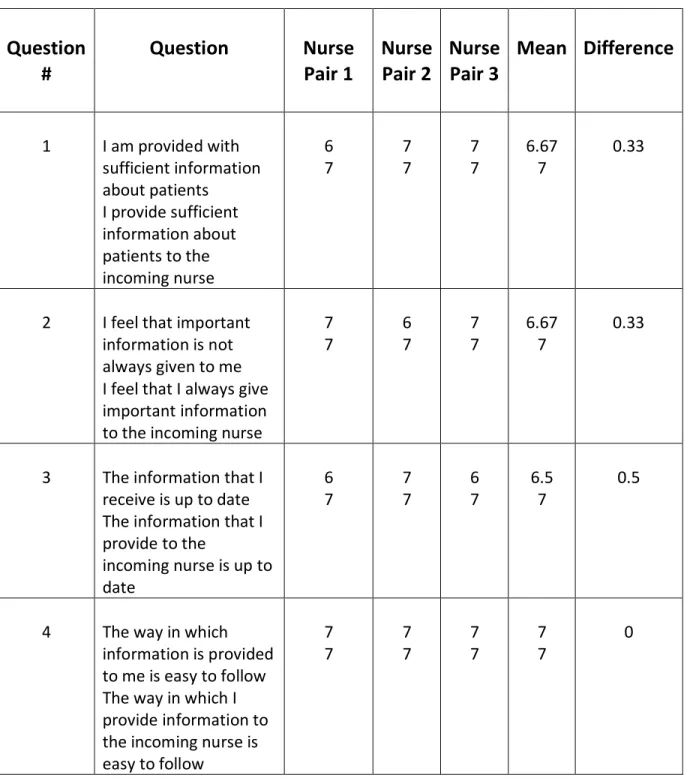
To fully understand and to resolve communication deficiencies with the nurse-to-nurse handoff, the primary investigator sought answers to the fourthproject question: Firstly, how do individual nurses involved in the nurse-to-nurse handoff perceive the quality of their own communication exchange at handoff? Are there differences in the way each nurse in the handoff pair perceives the quality of the other nurse’s communication in the handoff? And, if differences exist, how are these likely to contribute to communication failures at handoff?
nurse) were analyzed to identify differences in perceptions of the quality of the information exchanged at handoff between the sender of the message (the off-going nurse) and the receiver of the message (the in-coming nurse)
Nurse responses to the 4-item HES survey were based on a 7-point Likert scale ranging from 1 (strongly disagree) and increasing positively to 7 (strongly agree) similar to that utilized in the 11-item adapted HES survey. This 4-item adapted HES survey was distributed to paired nurses at baseline and repeated post-SBAR I-5 Handoff Bundle study intervention.
Confidentiality of Participant’s Identity
Patients’ and nurse participants’ data were protected throughout the conduct of this study. In the case of jail patients, “booking numbers” were used as identifiers to retrieve and file
patients’ medical charts. Anonymity of Data
Surveys of nurse participants did not request personal identifying information that would expose the identity of respondents. Instead, participants were encouraged to affix their self-generated coded identifier to all survey responses associated with this study.
Conflict of Interest
There were no conflicts of interest identified or disclosed in this study. Project Monitoring & Response to Intervention Challenges
the study, and to address nurse participants’ concerns in a timely manner. Monitoring was also performed through random retrospective patients’ medical chart reviews.
Data Analysis:Quantitative Analysis
Demographic data were collected on several variables of the population and study sample including: Age; highest level of education, shift worked; gender, nursing experience, other language spoken besides English. Descriptive statistics were used to describe the population and study sample.
Pre-intervention/post-intervention questionnaire data were compared to determine differences in outcome over time. The small sample size (n=6) precluded the application of SPSS statistical testing as well as independent sample t-test or paired t-test statistics to determine statistical significance of group differences because these would yield no meaningful results. Instead, descriptive statistics for pre-intervention and post-intervention data were presented for each study outcome, with a qualitative interpretation of those findings and the conclusions drawn.
Responses to the self-administered written 11-item adapted HES survey questionnaires completed by nurses during the pre-intervention and the post-intervention phases were examined. The individual responses to each question of the 11-item pre-intervention HES survey
Handoff error rates and patient care error rates were computed from data extracted from random retrospective patient chart reviews at the pre-intervention and post-intervention phases to facilitate comparative analysis and to inform conclusions drawn. For purposes of this study, a handoff error was defined as any miscommunication between the nurses at handoff whether through wrong information communicated by the off-going nurse (Misinformation);
misinterpretation of information received by the incoming nurse (Misunderstanding); or failure of the off-going nurse to communicate pertinent patient information to the in-coming nurse (Omission). A patient care error is defined as missed, deficient, and/or delayed care received by the patient as a direct result of miscommunication between nurses at handoff.
Data Analysis: Qualitative Analysis
Qualitative data included recorded notes from nurse observations and nurses’ semi-structured interviews, as documented by the primary investigator. During observations, the primary investigator recorded notes on nurses’ use of the SBAR I-5 Tool, nurse to nurse
interaction during the handoff (including tension or ease of engagement at start of the shift), and whether any leadership patterns emerged during the handoff.
CHAPTER 5: RESULTS
Introduction
This study sought answers to four clinical questions. First: Following implementation of the SBAR I-5 Handoff Bundle, would there be improvements in the quality of the nurse-to-nurse handoff communication. Secondly: Would there be improvements in patient safety? Thirdly: Would nurses’ satisfaction increase post implementation of the SBAR I-5 Handoff Bundle? And, fourthly: Would the gaps in nurses’ perception of each other’s performance in the handoff
diminish following introduction of the SBAR I-5 Handoff intervention? The analysis was informed by quantitative and qualitative methods which are presented below.
Quantitative Analysis
Of a possible 46 nurses, seven participated in the SBAR I-5 intervention. There were 33 completed pre-intervention surveys (72%), and 18 (33%) completed post-intervention surveys. This significant drop in the post-intervention response rate was predictable since nurses who were not exposed to the study intervention were less inclined to complete the post-intervention survey.
Results of the quantitative analysis of each outcome measure: the adapted 11-item
Handover Evaluation Scale; Manser 10-item adapted Handover Quality Rating Tool; and Manser 4-item adapted Handover Quality Rating Tool are presented and discussed in relation to each study question addressed below.
Descriptive Statistics: Population
Demographic information was collected on seven variables: Years of nursing; highest academic degree earned; current position; employment status; shift worked; gender; and languages spoken other than English. Participants’ nursing experiences ranged from two to 39 years with 39% of participants having more than 16 years nursing experience, and with 35% having 6-10 years of nursing experience. Nurse participants with less than 5 years and between 11-15 years of nursing experience were equally distributed at 13% each. The gender distribution was heavily skewed to females at 85% (39 of 46 nurses), with males at 15% (7 of 46 nurses).
Fifty-seven percent of nurses employed by the jail were born in a foreign country, and 55% of nurses employed at the jail speak a native language other than English. A summary of the descriptive statistics of the study population is shown [See Table 2, p. 58].
Descriptive Statistics: Study Sample
The demographics of the study sample closely paralleled that of the Wake County Detention Center jail nurses’ population with the exception of gender with no males included in the study sample. The absence of a male in the study sample was purely due to chance. Nursing experiences among study participants ranged from 2 to 34 years with the experiences distributed as follows: Two nurses (33%) had practiced nursing between 6-10 years and two other nurses had more than 16 years nursing experience. The categories of less than 5 years and 11-15 years of nursing experience each had one nurse which represented 16.7% of the sample. Of these nurses, one nurse (16.7%) had attained the Baccalaureate degree in Nursing, and 5 of the 6 nurses (83.3%) attained the Associate degree level. Regarding employment status, 5 nurses (83.3%) have full-time employment, with one nurse (16.7%) employed part-time. Two-thirds (4 of 6, or 66.7%) of the study sample nurses work the day shift (7A-7P), with the remaining one-third of the study participants working the night shift (7P-7A). Comparative descriptive statistics of the population and study sample are shown [See Table 4, p. 60].
Qualitative Analysis
The recorded notes from the primary investigator’s observations of nurses’ handoffs and semi-structured interviews were analyzed using Corbin’s grounded theory methods. Two
These included the predictable, standardized format of the report comprising: The mandatory inclusion of specific patient data sets; the incorporation of the SBAR I-5 script during patient rounding at handoff; and the inclusion of the information verification and validation steps. Study participants also endorsed feelings of greater connectedness through the close collaboration fostered by the new SBAR I-5 Tool that requires both handoff nurses to co-jointly confirm the handoff report, and to validate mutual understanding of the information shared.
Results of Study Questions
Results of Study Question #1: Would nurses’ satisfaction with the Handoff improve post
SBAR I-5 implementation?
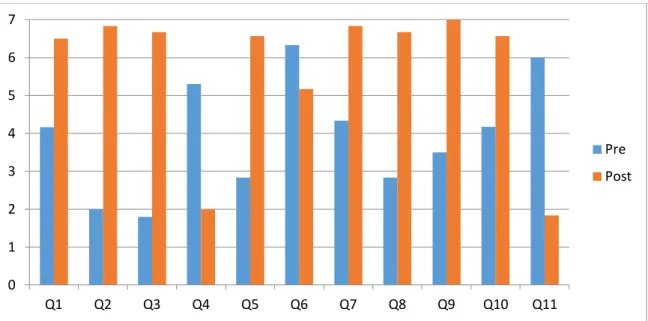
The results of the completed pre-intervention and post-intervention survey questionnaires were compared to determine whether there was a change in the nurses’ satisfaction with the quality of the handoff following the study intervention, the SBAR I-5 Handoff Bundle. Survey responses from nurse participants in the study sample reflected improvements in all 11 HES questions surveyed in the post-intervention phase [See Table 5, p. 40].
These results demonstrate that some of the key contributors to nurses’ satisfaction with the quality of the handoff in this study were the quality of the information exchanged; interaction and support; and the efficiency of the handoff. Overall, the effect size between the
Table 5: Comparison of Nurses’ Satisfaction: Pre and Post SBAR I-5 Implementation Paired Study Sample Results (n=6)
Of the improvements noted, the largest increases were recorded for the questions shown [See Appendix B-2, p. 81].
Pre-test/post-test differences in survey responses in the study sample were also compared to pre-test/post-test differences in the control group to determine whether differences in the outcome were attributable to the study intervention. Results are shown [See Appendix B-3, p. 82].
Table 6: Comparison of Nurses’ Satisfaction: Pre- and Post-SBAR I-5 Implementation in the Control Group (n=6)
0 1 2 3 4 5 6 7
Q1 Q2 Q3 Q4 Q5 Q6 Q7 Q8 Q9 Q10 Q11
Pre
Post
0 1 2 3 4 5
Q1 Q2 Q3 Q4 Q5 Q6 Q7 Q8 Q9 Q10 Q11
Pre
Marginal differences in the pre/post test results in the control group are noted. Nurses in the control group were not exposed to the study intervention so the marginal differences shown are purely due to chance or a poor response recall by the nurses completing the post-intervention survey. Compared to the study sample, significant differences in the pre/post-test responses were noted, and are positively associated with exposure to the SBAR I-5 study intervention.
Results of Study Question #2: Would nurses’ perception of the quality of the Handoff
improve post SBAR I-5 Implementation?
The quality of the nurse-to-nurse handoff communication was measured using the results of three data sets:(1) Observations of nurse-to-nurse interactions, report content, and style at handoff as documented by the primary investigator using the 10-item adapted Manser Handover Quality Rating Tool [See Appendix B-4, p. 83]:(2) content analysis of anecdotal nurses
‘responses to’ semi-structured interviews; and (3) nurses’ handoff error and “error-capture” rates computed post-implementation of the SBAR I-5 Handoff Bundle.
The following is a summary of comments from nurses’ interviews that reflect nurses’ improved perception of the quality of the handoff communication post-SBAR I-5
Implementation. These comments also served to clarify the four formal communication themes identified: Improved communication; improved information transfer; improved confidence; and improved patient safety.
Study Question #2, Theme One: Improved Communication
RN1: Stated that “the handoff report follows a more predictable, organized structure that makes it a whole lot easier to follow.”
RN3: Stated that, “the report is now structured; it follows a logical format.”
RN4: Stated that, “everyone is now using the same format; I feel like we are on the same page, and that helps a lot!”
Study Question #2, Theme Two: Improved Information Transfer
RN1: One nurse stated that the report was more comprehensive. She commented specifically that, “Now I know more than just why the patient is here; I have information on the patient’s history- medical, mental, surgery. I now have a context and can take better care of the patient.” RN2: “Before this SBAR, I wasn’t sure I was getting everything; now, if I don’t get something, I just have to look at the form and I know what is missing, and I ask for it.”
RN3: “I like the new form (SBAR I-5 tool) and the check off of orders at the end. If there is a problem, we usually catch it here and take care of it. Now I don’t have to waste time looking for information that wasn’t passed on.”
Study Question #2, Theme Three: Improved confidence
Care continuity: One nurse spoke of the benefit of validating all orders at handoff. She commented specifically that, “by checking all orders with the off-going nurse, this gives me greater confidence that my information is up to date, increases my confidence to continue the patient’s care, and at least, I don’t have to waste time looking for missing information after the nurse has gone.”
Prioritization of Patient Care: One nurse shared her experience as follows: “Good thing, the nurse gave me a heads up! So I changed things a little, I started with the sickest patient first. And guess what, the patient was actively vomiting when I got there. I gave him a shot and kept my eyes on him for the rest of the night.”
Another nurse related that she was forewarned about a patient’s seizure history, “and sure enough, the patient had a seizure that night; we ended up sending him out (to the hospital).” Study Question #2, Theme Four: Improved Patient Safety
Reducing errors: One nurse commented that, “since we started checking orders during handoff, we discover errors sooner, and before they can get to the patient to cause harm. This makes patient care safer.” Another off-going nurse said, “today was extremely busy for me with a lot of distractions and I forgot to give the patient his pain med at 6 o’clock (6 PM dose). But thanks for the handoff check, the error was identified and I was able to correct it promptly.” In response to this incident, the in-coming nurse commented, “I’m happy that we found the error and corrected it; otherwise I would have an angry patient on my hand, and would have to waste a lot of time trying to find out whether the patient received his dose or not. This is not the way that you want to start your shift.”
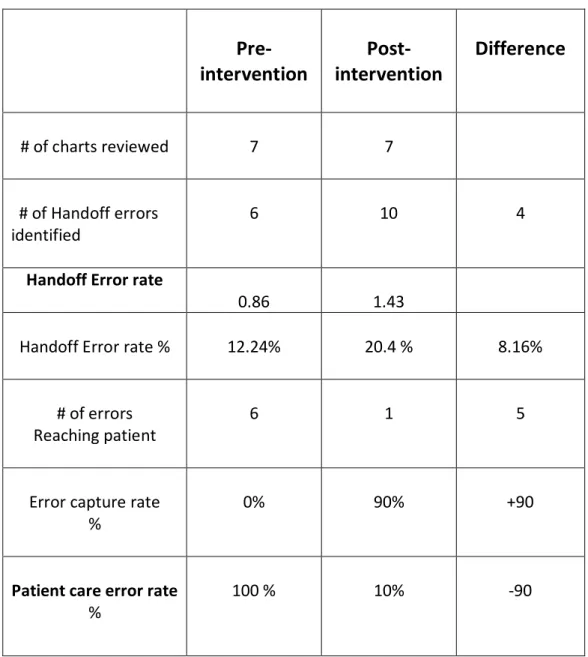
One of the measures used to evaluate the quality of the handoff was the handoff error rate. Compared to the pre-intervention phase, the handoff error rate post-SBAR I-5 Handoff implementation increased slightly (20.4% vs. 12.2%). Even with this slight increase, there was a distinct reduction in handoff errors reaching the patient (increased error capture) to cause harm due to the information verification check introduced by the study intervention.