Content Based Image Retrieval By Using Modified KNN And
Genetic Algorithm –A Praposal
Kriti Joshi Mtech Scholar
CSE, LNCTS Bhopal, India
Amrit Suman Assistant Professor
CSE, LNCTS Bhopal, India
Dr. Sadhna Mishra Head of Department
CSE, LNCTS Bhopal, India
Abstract: - Image retrieval is one of the most attractive and greatest on the increase examine areas in all fields. Image retrieval refers to extracting illustrate images form a large database. The image retrieval is two types. First is text based and other is content based. Here content based retrieval is performed. Content based image retrieval techniques are done by three method color, texture and shape. In this paper a procedure are be relevant to color histogram, shape as well as texture features of the image. The image provides a hardiness feature position of image retrieval. Based on the key of CBIR system uses color, texture and shape features to reclaim give details image from large database and for this reason provides additional effectiveness or enhancement in image retrieve than the single features retrieval system which resources better image retrieval conclusion. The classification of the image features to different categories or levels, features extraction in term of levels and feature similarity comparison and the distances measure of the query images for better results k- nearest neighbors (KNN) and genetic algorithm (GA) suited.
Keyword-component: - content based image retrieval (CBIR), features extraction, similarity matching, k-nearest neighbors, and genetic algorithm.
I. INTRODUCTION
The growth of the Internet and the accessibility of image capturing strategy such as digital cameras, image scanners, and the size of digital image collection are growing speedily. Well-organized image pointed, browsing and retrieval tools are necessary by users from a mixture of domains, together with remote sensing, fashion, crime prevention, publishing, medicine, structural design annotated by text descriptors, which are then worn by a dataset. For this principle, a lot of general function image retrieval systems contain be industrial. There are two frameworks: text-based and content-based. The text-based come up to be able to be traced back to 1970s. In such systems, the images are manually based database management system (DBMS) to achieve image retrieval. Here are two disadvantagesby means of this approach. The first is that a substantialintensity of human labor is essential for labor-intensive explanation. The second is the footnote wrongness. Due to the objectivity of human perception [1]. To conquer the on top of disadvantages in text based retrieval system, content-based image retrieval (CBIR) be
introduced during the before time 1980s. In CBIR, images are indexed by their illustration content, such as color, texture, shapes [2].
"Content-based" means that the investigate analyzes the contents of the image to a certain extent than the metadata such as keywords, tags, or imagery connected with the image. The expression "content" in this context strength refers to colors, shapes, textures; otherwise any additional information with the intention of can be derived from the image itself. CBIR is attractive since the bulk web-based image investigate engines rely simply on metadata and this produces a group of refuse in the outcome. In addition having humans yourself enter keywords designed for images in a huge database be able to incompetent, exclusive and cannot imprison each keyword that describes the image. Therefore a scheme that can pass through a filter images based resting on their content would give improved indexing and come back extra precise domino effect [3]. CBIR is the study of browsing digital descriptions from huge database collected works. This is a rising investigate region having a lot of applications in the fields of image processing, pattern recognition, and medical field’s etc.CBIR is a performance inside which look for images beginning great image database takes rest based resting on image content itself. At what time a demand is agreed by the consumer. The two major ladders in a CBIR technique are feature extraction and similarity measurement. a variety of algorithms worn for recounting color, shape, and texture features, manufacture an imprecise representation for image semantics and contain a lot of boundaries when measured by way of broad content image databases. a lot of researches’ in CBIR systems have proved with the intention of low level content is not clever to explain the high Level semantic idea in user’s mind. And this gap sandwiched between low level visual features (color, texture, shape etc.) and the high level semantics inside the images is called as semantic gap. If we be clever to drawing low-Level features on the way to high level concepts, the semantic gap stuck between the two semantic levels is able to be compact [4].
not by resources of index or address. The query image is an image in which a consumer is attracted and requirements to discover comparable images from the image group. The CBIR system retrieves applicable images beginning an image gathering based on involuntary resulting features. The resulting features contain ancient features like texture, color, and shape. The features may as well be consistent features similar to characteristics of objects exposed, abstract features similar to consequence of some scene-depicted etc [5].
Color, texture and shape are the primary characteristic of an images. The functioning of a CBIR system has two significant steps. The first stair is analyzing every feature of the image and in place of it in conditions of numerical standards. When additional and more features are analyzed, an improved illustration of the image can be obtained. Each of the color, texture, shape features represents a dissimilar phase of the image.
Figure1. Example of Content based image retrieval System
Thus the grouping of features increases system presentation. Following extracting the features of the query image, combine and store the feature ethics, the similar features are extracted for all of the database images. In the second stair, the feature ethics of query and all of the database images are compared and a distance vector is computed. The retrieval is complete on the origin of this distance measure. This progression is called feature similarity matching. Content-Based Image Retrieval (CBIR) is as well as represent by Query by Image Content (QBIC) and Content-Based Visual Information Retrieval (CBVIR). Penetrating for digital images in huge databases is a large difficulty which is the image retrieval trouble is solving with the assist of CBIR. Beginning the name itself Content-based is that the investigate will examine the real contents of the image. In CBIR system 'content' represent the framework with the aim of refers colors, shapes, textures etc. Without the keyword we are not capability to inspect image content. In this organization the features are extract for together the database images and query images.
In CBIR every image that is stock up in the database has its features extracted and compared to the features of the query
images. The content based image retrieval (CBlR) system have the principle is to agree to user to retrieve applicable
the Images from huge image repositories or database. In CBIR an image is habitually represent as a position of low level feature Descriptors beginning that a sequence of fundamental comparison or distance calculation are implement to successfully contract with the similar types of queries [6].
There are two approaches for CBIR
I) Text-based approach (directory images with keywords) Text based technique worn the keywords images at the same time as an input and obtain the preferred output in the outward appearance of parallel types of images.
Like that Google, Lycos, etc.
II) Content-based approach (Index images with images) Content based approach by means of image as an input query and it create the output of parallel types of images.
II. LITERATURE REVIEW
Literature review is the mainly significant for accepting and gaining a great deal additional acquaintance regarding explicit region of a subject.
In [7] author proposed segment introduces several significant literatures evaluation which content based image retrieval (CBIR). The text-based approach can be traced back to 1970s. Because the images require to be manually annotated through text descriptors, it requires a great deal person work for explanation, and the explanation correctness is focus to person awareness. In early on 1990s, researchers have built a lot of content- based image retrieval systems, such as QIBC, MARS, Virago, and Photo book, FIDS, Web Seek, Nitra, Cortina, Visual SEEK and Simplicity. Seeing as the index is in a straight line resulting starting the image content, it requires no semantic classification .In common, the investigate of CBIR technique mostly focus on two aspects: part-based object retrieval and low-level visual feature-based image retrieval. Single difficulty by means of every one present approach is the dependence on illustration comparison for judge semantic similarity, which may be challenging suitable to the semantic gap stuck between low-level content and higher-level concepts [7].
In [9] proposed Image retrieval is one of the majorities attractive and greatest rising investigate areas in every field. It is a successful and well-organized instrument for organization great image databases. In mainly Content-Based Image Retrieval (CBIR) systems, an image is representing through a position of low-Level visual features; that's why a direct association through high-level semantic information will be missing. So a gap exists between high-level information and low-high-level features, which is the major cause that hinders the development of the image retrieval correctness. In this work, major focal point is on the semantic based image retrieval system by Gray Level Co-occurrence Matrix (GLCM) for texture feature extraction. Based on the texture features, semantic interpretations are known to the extract textures. The images are retrieved according to customer fulfillment and by this means decrease the semantic gap between low level features and high level features [9].
In [10] author proposed a capable algorithm used for Content Based Image Retrieval (CBIR) based lying on Discrete Wavelet Transform (DWT) plus Edge Histogram Descriptor (EHD) feature of MPEG-7. The future algorithm is explained for image retrieval base on shape and texture features simply not on the foundation of color information. at this time input image is initial decomposed interested in wavelet coefficients. These wavelet coefficients present mostly horizontal, vertical as well as diagonal features in the image. Following wavelet transform, Edge Histogram Descriptor is after that used on chosen wavelet coefficients to get together the information of overriding edge orientations. The grouping of DWT and EHD techniques increase the presentation of image retrieval organization for shape and texture base search. The concert of different wavelets is as well compare to discover the appropriateness of exacting wavelet meaning designed for image retrieval. The algorithm is qualified and experienced for Wang image database. The outcome of retrieval is expressed in conditions of accuracy and remembers and compare by way of various other proposed scheme to illustrate the dominance of our system [10].
In [11] the paper author proposed Digital images contain a lot of applications in special field similar to medical imaging and diagnostics, weather forecasting, space research, military etc. The digit of images accessible and their broad diversity increase with the easiness of acquire store and giving out digital images suitable to the advance in knowledge. As a product, the implication of image retrieval algorithms plus systems has been significantly improved. A lot of research on content-based image retrieval (CBIR) is individual carried out. In this paper, a fast image retrieval algorithm call feature levels is planned. Feature levels algorithm workings through the categorization of image features to dissimilar category or level, feature extraction in expressions of levels and feature similarity evaluation of the query image by means of database images. The scheme retrieves images starting the associated database. The database is re-written before every stage according to Database Revision (DR) algorithm.
In this paper [12] author proposed Image retrieval refers to extract preferred images starting a large database. The retrieval might be of text based or content based. At this time content based image retrieval (CBIR) is performing. CBIR is a extended reputation investigate theme in the field
of multimedia. Here features such as texture & shape are analyzed. Gabor filter is use to extract texture features beginning images. Morphological closing process joint with Gabor filter give enhanced retrieval rightness. The parameter measured is scale and orientation. Before apply Gabor filter on the image, texture features such as mean and standard deviations are designed. This forms the feature vector. Shape feature is extracted by means of Fourier Descriptor and the centroid distance. In order to recover the retrieval presentation, collective texture and shape features are utilize, since several features supply additional information than the single feature. The images are extract base on their Euclidean distance. The performance is evaluated using precision-recall graph [12].
In [13] author proposed an original structure for combine in addition to weighting every of three i.e. color, shape and texture features to get elevated retrieval effectiveness. The color feature is extract via quantify the YUV color space as well as the color attribute similar to the mean value, the standard deviation, and the image bitmap of YUV color space is represented. The texture features are obtained by the entropy base on the gray level co occurrence matrix and the edge histogram descriptor of an image. The shape feature descriptor is resulting starting Fourier descriptors (FDs) and the FDs derived as of dissimilar signature. While compute the similarity stuck between the query image and objective image in the database, normalization in sequence distance is as well used for adjust distance values into the similar level. And after that the linear combination has used to combine the normalized distance of the color, shape and texture features to get the resemblance as the indexing of image. Still, an investigational outcome indicate, a weight variation to get elevated retrieval inefficiency and the planned technique certainly outperforms extra scheme in conditions of the exactness as well as effectiveness [13].
Content based image retrieval method [14] is complete by three primeval methods specifically through color, shape and texture. This paper provide particular pathway to utilize these primeval features to retrieve the preferred image. The performance by which we get the necessary image is CBIR. In CBIR first the HSV color space is quantify to gain the color histogram and texture features. by means of these mechanism a feature matrix is created. Then this matrix is map with the distinguishing of global color histogram and local color histogram, which are analyzed as well as compare. Designed for the co- occurrence matrix connecting the local image plus the images in the database to retrieve the image. Used for extract shape feature gradient method is used here. Based on this principle, CBIR system use color, texture and shape fused features to retrieve preferred image beginning the great database and therefore provide additional effectiveness or development in image retrieval than the single feature retrieval system which income enhanced image retrieval results [14].
III. PROPOSED METHEDOLOGY FOR IMAGE RETRIEVAL
image and searching the database for images having similar features.
A. Querying image
Querying allow queries based on example images, user Constructed sketches or selected color and texture patterns. In the case the users chose color and texture from samples. The percentages of a desired color in images are adjusted by moving sliders. The user selects an images and output to the system. The sample image is the query for the retrieved process. It can be an images selected from any of the databases associated with the system or other images from outside.
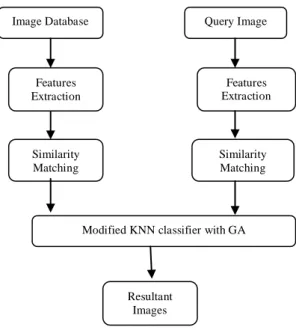
Figure 2 .Block diagrams for proposed algorithm
B. Image database
In this data base all the images are stored and performed to the color, texture and shape features. While a query image is submit for image retrieval, its color and texture features be extract and similar process is perform stuck between query image features and The image features store inside the database, the outcome close to the uncertainty image is then retrieve as of the database.
C. Features extraction
Feature extraction is especially critical step in image retrieval structure to explain the image by means of lowest amount figure of descriptors. The essential illustration features of images consist of color, texture and shape. Study in content based image retrieval nowadays is a lively restricted, increasing in extent. Representative features extracted as of images are stored in feature database and used for object-based image retrieval. Content based image retrieval is based resting on extracting the features of the image and searching the database for images having parallel features. In classify to include rapid image retrieval feature extraction is confidential into groups. Working here for the three categories of features and database of any size is reduced to 50 images by means of elevated feature similarity in all the three levels of search.
Three levels of feature extraction are color, texture and shape.
1. Color features extractions
Color is the initial and a large amount basic illustration Feature used for Indexing and retrieval of images, comparatively strong and easy to characterize. It is also the majority normally Used feature in the field. Color has been a dynamic region of study in image retrieval, additional than in some other stem of computer visualization. The selection of a color scheme is of huge significance for the reason of correct image retrieval. An important principle is that the color arrangement is self-determining of the original imaging tool. This is necessary when images in the image database are recorded by similar imaging policy such as scanners, camera’s and cam recorder (e.g. images on Internet). One more requirement capacity is that the color system be supposed to display perceptual equivalence sense those arithmetical distances inside the color space can be linked to human being perceptual differences. In Color feature extraction color similarity is achieved.
Color histogram is a demonstration of the allocation of colors in an image. Color histogram represent the image but from an additional perspective. It counts related pixels and store it. In essence, Color histogram is a color descriptor and every descriptor contains a feature extraction algorithm and matching function. The color histogram feature search works RGB images as follows. First, the image is cropped to find the histogram of only the central portion of the image to concentrate on the localized color feature of the object to Depicted in the image, concentrate on the localized color feature of the object depicted in the image, discarding the surroundings. Then the color histogram of the cropped portion is extracted.
Color histogram represents the allotment of strength of the color during the image. Color features are generally divided into two groups.
I. Global color descriptors II. Local color descriptors.
I. Global color histogram based CBIR: - It is color histogram be the majority identified color histogram new to detected similar images. Global color histogram used CBIR calculates frequency of color. So, the spatial distribution of color information is lost.
II. Local color histogram based CBIR: - The picture is divided into NXN titles. The dimension of the designate is theoretical to not be too huge or as well too small. At this time, the dimension of the designate measured as 3X3, as it is establish to be more successful. So, the local color histogram based CBIR is establishing to be more successful than global color Histogram based CBIR.
2. Texture Feature extraction
Texture events seem for illustration pattern in the images and how they are spatial definite texture are represented by Texel’s which are then placed into a number of sets depending on who a lot of texture are detected in the images. These sets not only define the texture, but also where in the images the texture is located.
Texture is significant goods of many types of images. To extract the texture features, entropy, local range and standard deviation measures are used as performance parameters. Texture feature of an image is derived from a
Image Database Query Image
Features Extraction
Features Extraction
Similarity Matching
Modified KNN classifier with GA
Resultant Images Similarity
combination of pixels that reoccur several times in the image. The significance of extracting the texture is that it differentiates between objects with same backgrounds. Gray level co- occurrence matrix (GLCM) is used in this system to represent the texture feature. Texture is a repetitive tone in an image. For calculating texture feature used the following method.
Co-occurrences matrix
Laws texture energy
Wavelet transform
3. Shape features extraction
An additional distinguishing feature of images is their shapes. Shape is an important descriptor. An important shape feature is edge histogram descriptor (EHD). It represents the relative frequency of occurrence of the four types of edges, vertical horizontal, diagonal and anti-diagonal, in the corresponding 4x4 sub-image blocks of the image. The image is alienated into 8x8 blocks and the two adjacent blocks are measured at the same time to establish the arrangement of the object. Here Edge fundamentals taking out by Thresholding technique are used.
The majority of the edge detection techniques contain two steps.
I. Judgment the speed of transform of gray levels, i.e. the Gradient of the image.
II. Extracting the edge fundamentals designed for which gradient exceeds a predefined threshold.
Method of classified shape includes:
Fourier Transform
Moment of invariant
In general, Fourier descriptors (FDs) are obtained by applying Fourier transform on a shape signature, the normalized Fourier transformed coefficients are called the Fourier descriptors of the shape. The shape signature is any one-dimensional function representing two-dimensional areas. Tree shape signatures are considered in our case, these are centroid distance, complex coordinates, and curvature signature which is derived from shape boundary coordinates.
4. Similarity measure
The similarity measure of the features in the experimental system, we use linear combinations of three feature distance measurements to evaluate the similarity which is the distance of color features, the distance of texture feature, and the distance of the shape descriptor feature. When computing the similarity of each feature between the query image and the target image in the database.
5. K-nearest neighbors (KNN) and genetic algorithm (GA)
KNN is a non parametric method for classified objects Based on closest training for example in the features space KNN is a simple algorithm that stores all variable cases and classifier new cases based on similarity measures (for example- Distances formula). KNN has been used in statistical estimation and pattern recognition already in the beginning of 1970’s as non parametric techniques.A case is classifier by a majority vote of its neighbors, with case
being assigned to the class most common amongst its K nearest neighbors measured by a distances formula, if k=1 Then the case is simply assigned to the class of its nearest neighbors.
In KNN algorithm find k closest training points to Euclidean distances.
Classified by the majority vote among the k points.
There are 3 steps to find the majority of features:- I. How many neighbors to consider?
ii. What distances to use?
iii. How to combine neighbors labels (majority votes)?
Genetic algorithm is adaptive heuristic search algorithm based on the evolutionary ideas of nature’s selection and genetics. It is a part of evolutionary, a rapidly growing area of Artificial intelligence. Genetic algorithm an intelligent exploitation of a random search used to solve optimization problems. In genetic algorithm randomized, exploit historical information to direct the search into the region of better performances with the search space.
Figure3.Steps for Enhancement in Genetic algorithm process
Steps for KNN with using GA (Proposed):-
Supervised classification technique
Training method on chosen pre-classified outcome
Stores every one the most excellent training points.
categorization start for other original enhanced effect through GA optimization
Seem to be up its k nearest point and then marker the original point according to which position contains the common of its k neighbors and optimized with GA.
Calculate the closing retrieved images effect.
Be relevant class function to display image according to its distances.
show the ending retrieval outcome.
IV. CONCLUSION
In this paper will have study various research papers and conclusion of the mention or research is planned a scheme Designed for image retrieval by histogram values and texture descriptor investigation of image. The semantic gap stuck between the low-Level illustration features (color, shape, texture) and semantic concepts acknowledged by the user remainder a chief difficulty in content based image retrieval (CBIR).Using collective texture and shape features
Initialize population
Evaluation
Selection
Cross Over
for retrieving the images the retrieval performed was enhanced. The study presents a development scheme by introduction a new algorithm based on features categories into levels over other than using any one of the single features. The work is completed when a query images is submit its color and texture value is compared with the color and texture value of different images stored in database. thus we undertake to improvement an algorithm that will overcome these challenge in enhancing the previous work done so that the image retrieval raise a large amount as achievable. In this series we are going enhance the CBIR to use k-nearest neighbors and genetic algorithm.
REFERENCES
[1] J.Earika, M.Graham, “Content-based image retrieval” Technical Report University of Northumbaia at New Castle, 1999.
[2] Jun YANG, Shijiao ZHU," An image retrieva1 method by Integrating semantics and visual features “, Journal of computational information system 2011.
[3] Ying Liu, Dengsheng Zhang, Guojun Lu, Wei- Ying Ma" A Survey of content-based image retrieval with high –level Semantics” ELSEVIER 2007
[4] Semantics” ELSEVIER 2007. Wasimkhan, shivkumar “A proposed method for image Retrieval uses histogram values and texture descriptor Analysis”. International journal of soft computing and Engineering (IJSCE) 2011.
[5] Nishant Singh, Shiv Ram Dubey “Semantic image retrieva By combining color, texture and shape features”. International Conferences on computing sciences 2012.
[6] Mr. S Manoharam, Dr.S.Sathapan “A novel approaches for Content based image retrieval using hybrid filter techniques”. The 8th international conferences on computer sciences and education (ICCSE) 2013.
[7] A Srinagesh, K.Aravinda “A modified shape features Extracting techniques for image retrieval” international Journal of emerging sciences and engineering (IJESE) 2013. [8] Gulfishan Fridose Ahmed, Raju Barskar “A study on different
image retrieval techniques in image processing”.international journal of soft computing and engineering (IJSCE) 2011. [9] Jisha.K.P.Thusnavis Bella Mary.I, Dr.A.Vasuki “image
retrieval techniques based on texture features using semantic properties”. International conferences on signal processing, image processing and pattern reorganization (ICSIRP) 2013. [10] Swati Agarwal, A.K.Verma, Preetvanti Singh “Content based
image retrieval using Discrete Wavelet Transformation and edge Histogram Descriptors”. International conferences on information system and computer network (ICISCN) 2013. [11] Sreedevi S., Shinto Sebastian “Fast image retrieval with
Features levels”. International conferences on micro electronics, communication and renewable energy (ICMICR) 2013.
[12] M.Mary Helta Daisy, Dr.S.Tamilselvi,“ Combined texture and shape features for content based image retrieval”. International conferences on circuits, power and computing technologies (ICCPCT) 2013.
[13] Machine Bounthanh, Boonwat Attachoo, Tha Bounthanh “Content based image retrieval system based on combined and weighted multi-features”. International symposium on communication and information technologies (ISCIT) 2013. [14] Ms.Apurva N.Ganar, prof C.S.Gode. “Enhancement of image
retrieval by using color, texture and shape