SINGLE NUCLEOTIDE POLYMORPHISMS IN NUCLEOTIDE EXCISION REPAIR GENES AND HEAD AND NECK CANCER RISK AND OUTCOMES
Annah B. Wyss
A dissertation submitted to the faculty of the University of North Carolina at Chapel Hill in partial fulfillment of the requirements for the degree of Doctor of Philosophy in the Department of Epidemiology.
Chapel Hill 2013
iii
ABSTRACT
ANNAH B. WYSS: Single Nucleotide Polymorphisms in Nucleotide Excision Repair Genes and Head and Neck Cancer Risk and Outcomes
(Under the direction of Dr. Andrew Olshan)
An estimated 52,140 incident head and neck cancers (HNC), with 11,460 associated deaths occurred in the US during 2011. Cigarette smoke contributes to HNC risk by causing bulky DNA adducts. Such adducts are removed by nucleotide excision repair (NER) processes. Previous studies have suggested that polymorphisms in NER genes are independent risk factors for HNC, as well as modifiers of smoking-HNC associations. Treatment of HNC with radiation and platinum-based chemotherapies also produce bulky DNA adducts, and previous studies suggest independent NER SNP and joint SNP-treatment associations with HNC survival.
Race-specific (white and African American) odds ratios (ORs) and 95% intervals (Is) for the individual and joint effects of 84 single nucleotide polymorphisms (SNPs) in 15 NER genes and cigarette smoking on HNC risk were estimated from unconditional and hierarchical logistic regression models using data from the Carolina Head and Neck Cancer Epidemiology (CHANCE) Study (1,227 cases and 1,325 controls). Race-specific hazard ratios (HRs) and 95% confidence intervals (CIs) for the individual and joint effects of the same SNPs in NER genes and treatment (surgery, radiation, and chemotherapy) on survival among cases were estimated using Cox proportional hazards models, with Bonferroni corrected p-values to account for multiple comparisons.
iv
HNC risk (OR=0.62, 95% I=0.45, 0.86). For HNC survival, no associations were significant at a
Bonferroni-corrected alpha of 0.0006. However, rs3136038 and rs3136130 of ERCC4 and rs50871 of ERCC2 (XPD) were suggestively associated with similarly improved survival among whites at an uncorrected 0.05 alpha (overall survival HRs≈0.80 and disease-specific survival HRs≈0.70). Likewise, rs2607755 of XPC was suggestively associated with improved survival among African Americans (overall survival HR=0.62 and disease-specific survival HR=0.51). A few SNP-cigarette smoking and SNP-treatment interactions suggested possible additive effects.
v
DEDICATION
To my husband, Richie, for your love and support
and
vi
ACKNOWLEDGEMENTS
I would first like to thank my dissertation committee: Drs. Andrew Olshan, Christy Avery, Jeannette Bensen, Amy Herring, and Mark Weissler. Thank you for the many hours you invested in my dissertation. Thank you for offering both your expertise and encouragement. I also wish to honor my late committee member Dr. Robert Millikan, whom I thank for his guidance in my coursework and on this dissertation. Bob, you are missed.
I express deep gratitude to my adviser, Dr. Olshan, for his years of exceptional mentoring. Thank you for always making time to advise me despite your busy schedule. Thank you for
facilitating many valuable research opportunities. Under your mentoring, I have expanded my understanding and appreciation for cancer epidemiology in countless ways. I am grateful for the opportunity to work with you on several CHANCE and INHANCE projects. Thank you for going above and beyond the call of duty as my adviser.
vii
To the CHANCE participants and their families, I offer sincere gratitude for their participation. I hope our research continues to move the field forward to better serve you.
viii
TABLE OF CONTENTS
List of Tables ... xv
List of Figures ... xvii
List of Abbreviations ... xviii
Chapter 1: Background and Literature Review ... 1
1.1 Specific Aims ... 1
1.2 Head and Neck Cancer: Overview ... 3
1.2.1 Definition ... 3
1.2.2 Natural progression ... 4
1.2.3 Global and US Burden ... 4
1.3 Head and Neck Cancer: Demographic Risk Factors... 5
1.3.1 Age ... 5
1.3.2 Sex ... 5
1.3.3 Race ... 6
1.3.4 Socioeconomic Status ... 6
1.3.5 Family History ... 7
1.3.6 Genetic Variation ... 7
1.4 Head and Neck Cancer: Environmental and Behavioral Risk Factors ... 8
1.4.1 Cigarette Smoking ... 8
1.4.2 Use of Other Tobacco Products ... 10
1.4.3 Environmental Tobacco Smoke... 11
1.4.4 Alcohol Consumption ... 12
ix
1.4.6 Diet and Body Mass Index ... 13
1.4.7 Oral Health ... 14
1.4.8 Marijuana Use ... 15
1.5 Head and Neck Cancer: Survival Specific Factors ... 15
1.5.1 Stage ... 15
1.5.2 Grade ... 16
1.5.3 Treatment ... 17
1.6 Nucleotide excision Repair ... 17
1.6.1 DNA Damage and Repair ... 17
1.6.2 DNA Adducts ... 18
1.6.3 Nucleotide Excision Repair Mechanism ... 19
1.6.4 Health Consequences of Variants in Nucleotide Excision Repair Genes ... 20
1.7 Single Nucleotide Polymorphisms in Nucleotide Excision Repair Genes, Cigarette Smoking, and HNC Incidence ... 21
1.7.1 ERCC3 (XPB)... 21
1.7.2 XPC ... 21
1.7.3 XPA ... 23
1.7.4 RAD23B ... 23
1.7.5 ERCC6 ... 24
1.7.6 ERCC5 (XPG) ... 24
1.7.7 ERCC4 (XPF) ... 26
1.7.8 ERCC2 (XPD) ... 27
1.7.9 ERCC1 ... 31
1.7.10 LIG1 ... 32
1.7.11 ERCC8, CDK7, CCNH, DDB2 (XPE), RAD23A ... 33
1.7.12 Nucleotide Excision Repair Genes and Oral Premalignant Lesions Incidence ... 34
x
1.8 Single Nucleotide Polymorphisms in Nucleotide Excision Repair Genes,
Treatment, and Head and Neck Cancer Mortality ... 35
1.8.1 XPA and XPC ... 35
1.8.2 ERCC5 (XPG) ... 36
1.8.3 ERCC4 (XPF) ... 36
1.8.4 ERCC2 (XPD) ... 36
1.8.5 ERCC1 ... 38
1.8.6 ERCC3 (XPB), ERCC8, CDK7, CCNH, RAD23B, ERCC6, DDB2 (XPE), RAD23A, LIG1... 39
1.8.7 Summary of NER Genes, Treatment, and HNC Mortality ... 39
1.9 Summary of Literature Review ... 40
Chapter 2: Methods... 56
2.1 Study Population ... 56
2.1.1 Carolina Head and Neck Cancer Epidemiology (CHANCE) Study ... 56
2.1.2 Recruitment Methods ... 57
2.1.3 Study Population ... 57
2.2 Exposure Assessment: Genetic Factors ... 59
2.2.1 Biologic Specimen Collection ... 59
2.2.2 Genotyping Methods ... 60
2.2.3 Single Nucleotide Polymorphisms Selection ... 61
2.2.3.1 MD Anderson Head and Neck Cancer Study ... 61
2.2.3.2 Carolina Breast Cancer Study (CBCS) ... 62
2.2.3.3 Carolina Head and Neck Cancer Epidemiology Study ... 62
2.2.3.4 Variation Captured by CHANCE SNPs ... 62
2.2.3.5 SNP Exclusion Criteria ... 63
2.2.4 Assessment of Hardy-Weinberg Equilibrium ... 63
2.2.5 Genetic Model ... 64
xi
2.3.1 Cigarette Smoking ... 65
2.3.2 Treatment ... 65
2.4 Outcome Assessment ... 67
2.4.1 Incidence ... 67
2.4.2 Mortality ... 67
2.5 Covariate Assessment ... 67
2.5.1 Interview Variables ... 67
2.5.1.1 Demographics ... 67
2.5.1.2 Alcohol Drinking ... 68
2.5.1.3 Other Tobacco Use ... 68
2.5.1.4 Family History of Cancer ... 69
2.5.1.5 Oral Health ... 69
2.5.2 Tumor Characteristics ... 69
2.5.3 Ancestral Informative Markers (AIMs)... 70
2.5.4 Assessment of Confounding and Effect Measure Modification ... 71
2.6 Statistical Analysis ... 72
2.6.1 Aim 1: Incidence Models ... 72
2.6.2 Aim 1: Multiple Testing ... 74
2.6.2.1 Bonferroni Method ... 74
2.6.2.2 Hierarchical Regression ... 75
2.6.3 Aim 2: Survival Models ... 77
2.7 Power ... 80
2.7.1 Aim 1: Incidence Models ... 80
2.7.1.1 Power Calculations ... 80
2.7.1.2 Power Results ... 81
xii
2.7.2.1 Power Calculations ... 82
2.7.2.2 Power Results ... 83
2.8 Summary of Methods ... 85
2.8.1 Limitations ... 85
2.8.2 Strengths ... 86
Chapter 3: Single Nucleotide Polymorphisms in Nucleotide Excision Repair Genes, Cigarette Smoking, and the Risk of Head and Neck Cancer ... 109
3.1 Overview ... 109
3.2 Background... 110
3.3 Methods ... 111
3.3.1 Study Population ... 111
3.3.2 Cigarette Smoking ... 112
3.3.3 SNP Selection and Genotyping ... 112
3.3.4 Statistical Analysis ... 113
3.3.4.1 Cigarette Smoking-HNC Associations. ... 113
3.3.4.2 SNPs-HNC Associations ... 113
3.3.4.3 Joint Effects ... 115
3.4 Results ... 116
3.4.1 Characteristics of Study Population ... 116
3.4.2 Cigarette Smoking-HNC Associations ... 116
3.4.3 SNPs-HNC Associations ... 117
3.4.4 Joint Effects ... 118
3.5 Discussion ... 119
Chapter 4: Single Nucleotide Polymorphisms in Nucleotide Excision Repair Genes, Cancer Treatment, and Head and Neck Cancer Survival ... 136
4.1 Overview ... 136
xiii
4.3 Methods ... 138
4.3.1 Study Population ... 138
4.3.2 SNP Selection and Genotyping ... 139
4.3.3 Treatment ... 139
4.3.4 HNC Survival ... 140
4.3.5 Statistical Analysis ... 140
4.3.5.1 Treatment-Survival Associations ... 141
4.3.5.2 SNPs-Survival Associations ... 142
4.3.5.3 Joint Effects ... 142
4.4 Results ... 143
4.4.1 Characteristics of Study Population ... 143
4.4.2 Treatment-Survival Associations... 144
4.4.3 SNPs-Survival Associations ... 144
4.4.4 Joint Effects ... 145
4.5 Discussion ... 146
Chapter 5: Summary and Conclusions... 159
5.1 Summary of Specific Aims ... 159
5.2 Summary of Results by Specific AIM ... 160
5.2.1 Aim 1 ... 160
5.2.2 Aim 2 ... 160
5.3 Summary of Results Across Specific Aims ... 161
5.3.1 Racial Differences ... 161
5.3.2 “Double-Edged Sword” ... 163
5.4 Strengths and Limitations ... 164
5.4.1 Strengths ... 164
xiv
5.5 Implications and Conclusions ... 168
5.5.1 SNP Main Effects ... 168
5.5.2 SNP-Cigarette Smoking and SNP-Treatment Joint Effects ... 170
5.5.3 Other Considerations for Future Studies ... 171
5.5.4 Public Health Implications... 173
5.5.5 Summary ... 175
Appendix A: Aim 1 Supplemental Tables Referenced in Chapter 3 ... 176
Appendix B: Aim 1 Supplemental Tables Not Referenced in Chapter 3 ... 187
Appendix C: Aim 2 Supplemental Tables Referenced in Chapter 4 ... 200
Appendix D: Aim 2 Supplemental Tables Not Referenced in Chapter 4 ... 214
xv
LIST OF TABLES
Table 1. Head and Neck Cancer Incidence in the United States from SEER, 2004-2008 ... 42
Table 2. Head and Neck Cancer Mortality in the United States from SEER, 2004-2008 ... 42
Table 3. Oral and Pharyngeal Cancer Survival in the United States from SEER 9, 1988-2007 ... 43
Table 4. Laryngeal Cancer Survival in the United States from SEER 9, 1988-2007 ... 43
Table 5. Nucleotide Excision Repair Genes Locations and Function ... 44
Table 6. Characteristics of case-control studies on the association between polymorphisms in nucleotide excision repair genes and head and neck cancer incidence ... 45
Table 7. Effect estimates among case-control studies on the association between polymorphisms in nucleotide excision repair genes and head and neck cancer incidence ... 47
Table 8. Effect estimates by cigarette smoking among case-control studies on the association between polymorphisms in nucleotide excision repair genes and head and neck cancer incidence ... 50
Table 9. Characteristics of case-only studies on the association between polymorphisms in nucleotide excision repair genes and head and neck cancer mortality ... 52
Table 10. Effect estimates of case-only studies on the association between polymorphisms in nucleotide excision repair genes and head and neck cancer mortality ... 53
Table 11. Characteristics of the Overall CHANCE Study Population and Participants with Genotype Data Included in Dissertation... 88
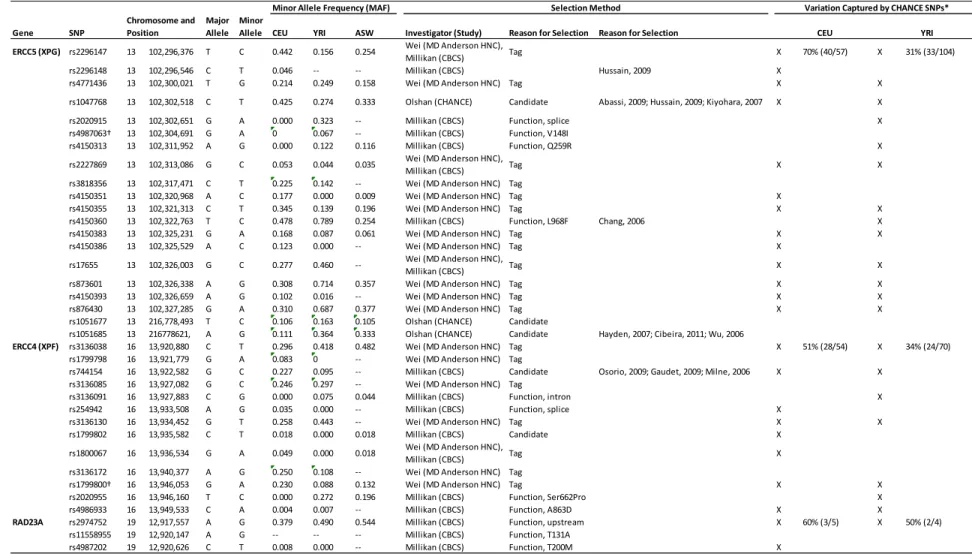
Table 12. Single nucleotide polymorphisms in nucleotide excision repair genes included in the Carolina Head and Neck Cancer Study ... 89
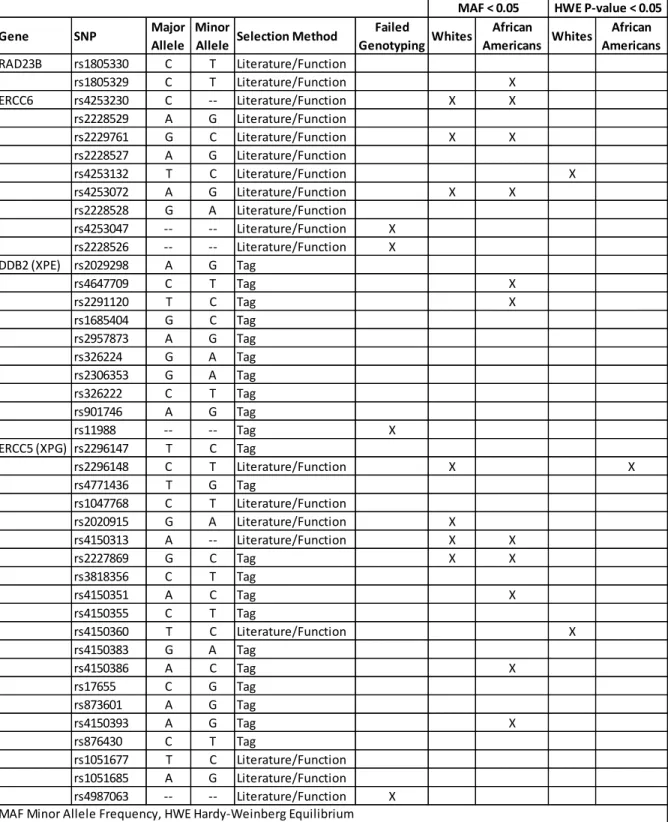
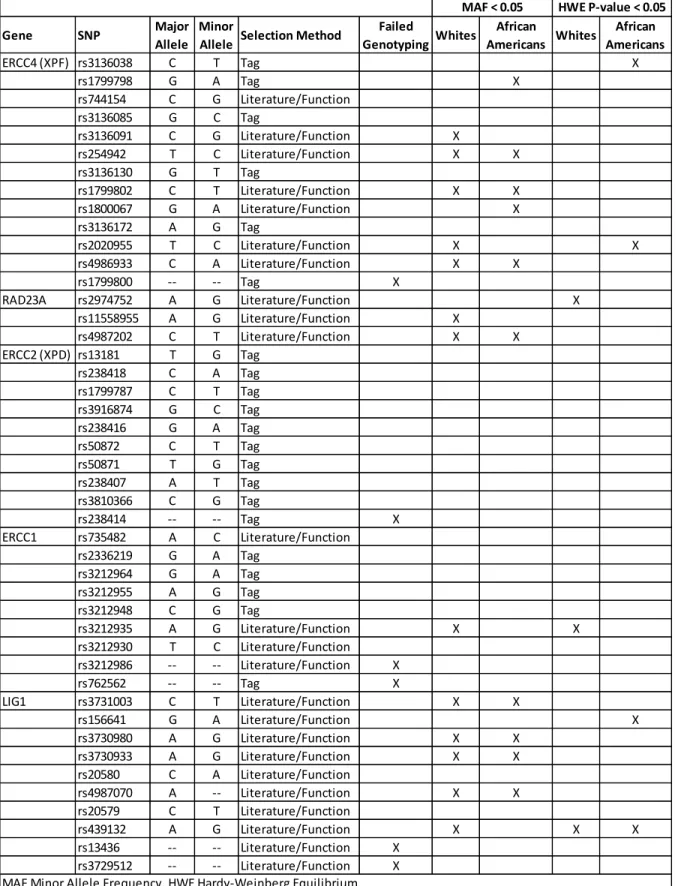
Table 13. Single Nucleotide Polymorphisms (SNPs) in Nucleotide Excision Repair (NER) Genes Inclusion and Exclusion Criteria, Carolina Head and Neck Cancer Epidemiology (CHANCE) Study ... 93
Table 14. Questions Related to Cigarette Smoking from the CHANCE Questionnaire ... 96
Table 15. Ancestral Informative Markers using in CHANCE ... 96
Table 16. Example of SNP-gene matrix (Zj ) using select single nucleotide polymorphisms and genes included in the Carolina Head and Neck Cancer Study ... 97
xvi
Table 18.Demographic Characteristics of Study Population, Carolina Head and Neck Cancer Epidemiology (CHANCE) Study ... 124 Table 19. Odds Ratios for Cigarette Smoking and Head and Neck Cancer in the
Carolina Head and Neck Cancer Epidemiology (CHANCE) Study ... 125 Table 20. Odds Ratios for Single Nucleotide Polymorphisms (SNPs) in Nucleotide
Excision Repair (NER) Genes and Head and Neck Cancer Using Hierarchical Logistic Regression for SNPs by Gene, the Carolina Head and Neck Cancer
Epidemiology (CHANCE) Study, Whites ... 126 Table 21. Odds Ratios for Single Nucleotide Polymorphisms (SNPs) in Nucleotide
Excision Repair (NER) Genes and Head and Neck Cancer Using Hierarchical Logistic Regression for SNPs by Gene, the Carolina Head and Neck Cancer Epidemiology (CHANCE) Study, African Americans ... 128 Table 22. Odds Ratios and Relative Excess Risk Estimates for Joint Effects of Single
Nucleotide Polymorphisms (SNPs) in Nucleotide Excision Repair (NER) Genes and Cigarette Smoking on Head and Neck Cancer Risk Using Conventional Logistic Regression, the Carolina Head and Neck Cancer
Epidemiology (CHANCE) Study, Whites ... 130 Table 23. Odds Ratios and Relative Excess Risk Estimates for Joint Effects of Single
Nucleotide Polymorphisms (SNPs) in Nucleotide Excision Repair (NER) Genes and Cigarette Smoking on Head and Neck Cancer Risk Using Hierarchical Logistic Regression, the Carolina Head and Neck Cancer Epidemiology (CHANCE) Study, Whites ... 133 Table 24. Demographic Characteristics of Head and Neck Cancer Cases, Carolina Head and Neck Cancer Epidemiology (CHANCE) Study ... 151 Table 25.Hazard Ratios for Cancer Treatment and Head and Neck Cancer Survival in
the Carolina Head and Neck Cancer Epidemiology (CHANCE) Study ... 152 Table 26. Hazard Ratios for Single Nucleotide Polymorphisms (SNPs) in Nucleotide
Excision Repair (NER) Genes and Survival among Head and Neck Cancer Cases in the Carolina Head and Neck Cancer Epidemiology (CHANCE) Study, Whites ... 153 Table 27. Hazard Ratios for Single Nucleotide Polymorphisms (SNPs) in Nucleotide
xvii
LIST OF FIGURES
Figure 1. Overview of Nucleotide Excision Repair Pathway ... 55 Figure 2. Flowchart of CHANCE Cases Included in Dissertation ... 98 Figure 3. Flowchart of CHANCE Controls Included in Dissertation ... 99 Figure 4. Direct Acyclic Graph for Nucleotide Excision Repair Genes (SNPs) and Head and Neck Cancer Incidence ... 100 Figure 5. Direct Acyclic Graph for Cigarette Smoking and Head and Neck Cancer Incidence ... 101 Figure 6. Direct Acyclic Graph for Nucleotide Excision Repair Genes (SNPs) and
Head and Neck Cancer Mortality... 102 Figure 7. Direct Acyclic Graph for Treatment and Head and Neck Cancer Mortality ... 103 Figure 8. Power to detect main effects of single nucleotide polymorphisms in
nucleotide excision repair genes on head and neck cancer incidence, CHANCE ... 104 Figure 9. Power to detect joint effects of single nucleotide polymorphisms in
nucleotide excision repair genes and cigarette smoking on head and neck cancer incidence, CHANCE ... 105 Figure 10. Power to detect main effects of single nucleotide polymorphisms in
nucleotide excision repair genes on head and neck cancer mortality, CHANCE ... 106 Figure 11. Power to detect joint effects of single nucleotide polymorphisms in
nucleotide excision repair genes and treatment on head and neck cancer mortality, CHANCE ... 108 Figure 12. Kaplan-Meier Plots for Overall (OS) and Disease-Specific (DS) Survival
by Genotype, CHANCE, Whites ... 157 Figure 13. Kaplan-Meier Plots for Overall (OS) and Disease-Specific (DS) Survival
xviii
LIST OF ABBREVIATIONS
AFT Accelerated failure time AIM Ancestral informative marker ACC American Cancer Society
AJCC American Joint Committee on Cancer
ARCAGE Alcohol Related Cancers and Genetic Susceptibility in Europe
ASW African ancestry in Southwest United States
BER Base excision repair
CCNH Cyclin H (non-italicized for enzyme, italicized for gene)
CDK7 Cyclin-dependent kinase 7 (non-italicized for enzyme, italicized for gene) CEU Utah Residents with Northern and Western European Ancestry
CHANCE Carolina Head and Neck Cancer Epidemiology
CI Confidence interval
CSA Cockayne syndrome A (non-italicized for enzyme, italicized for gene); also known as ERCC8
CSB Cockayne syndrome B (non-italicized for enzyme, italicized for gene); also known as ERCC6
DDB2 Damage-specific DNA binding 2 (non-italicized for enzyme, italicized for gene); also known as XPE
DNA Deoxyribonucleic acid DS Disease-specific survival
ERCC1 Excision repair cross-complementing 1 (non-italicized for enzyme, italicized for gene)
ERCC2 Excision repair cross-complementing 2 (non-italicized for enzyme, italicized for gene); also known as XPD
xix
ERCC4 Excision repair cross-complementing 4 (non-italicized for enzyme, italicized for gene); also known as XPF
ERCC5 Excision repair cross-complementing 5 (non-italicized for enzyme, italicized for gene); also known as XPG
ERCC6 Excision repair cross-complementing 6 (non-italicized for enzyme, italicized for gene); also known as CSB
ERCC8 Excision repair cross-complementing 8 (non-italicized for enzyme, italicized for gene); also known as CSA
GWA Genome wide association HNC Head and neck cancer HPV Human papillomavirus
HR Hazard ratio
INHANCE International Head and Neck Cancer Epidemiology IARC International Agency for Research on Cancer ICR Interaction contrast ratio
LD Linkage disequilibrium
LIG1 Ligase 1 (non-italicized for enzyme, italicized for gene) MAF Minor allele frequency
NCI National Cancer Institute NDI National Death Index NER Nucleotide excision repair NOS Not otherwise specified OPL Oral premalignant lesions
OR Odds ratio
OS Overall survival
xx
RAD23A RAD23 homolog A (non-italicized for enzyme, italicized for gene) RAD23B RAD23 homolog B (non-italicized for enzyme, italicized for gene) RFC Replication factor C
RPA Replication protein A
RERI Relative excess risk due to interaction SEER Surveillance, Epidemiology and End Results SNP Single nucleotide polymorphism
TFIIH Transcription factor II H UADT Upper aerodigestive tract
XPA Xeroderma pigmentosum A (non-italicized for enzyme, italicized for gene) XPB Xeroderma pigmentosum B (non-italicized for enzyme, italicized for gene); also
known as ERCC3
XPC Xeroderma pigmentosum C (non-italicized for enzyme, italicized for gene) XPD Xeroderma pigmentosum D (non-italicized for enzyme, italicized for gene); also
known as ERCC2
XPF Xeroderma pigmentosum F (non-italicized for enzyme, italicized for gene ; also known as ERCC4
XPE Xeroderma pigmentosum E (non-italicized for enzyme, italicized for gene); also known as DDB2
XPG Xeroderma pigmentosum G (non-italicized for enzyme, italicized for gene); also known as ERCC5
CHAPTER 1
BACKGROUND AND LITERATURE REVIEW
1.1 SPECIFIC AIMS
In the United States an estimated 52,140 incident cases of oral cavity, pharyngeal and laryngeal cancers, with 11,460 associated deaths occured in 2011 (1). Tobacco is a well-established risk factor for head and neck cancer (HNC) incidence, with well over 20 cohort and case-control studies demonstrating strong associations (2). Nucleotide excision repair (NER) genes remove bulky DNA adducts caused by cigarettes smoking (3) and are therefore considered independent predictors for HNC, as well as important modifiers of associations between tobacco and HNC (4,5).With regard to HNC mortality, treatment is a strong prognostic factor and NER genes are believed to also modify the association between treatment and HNC survival through increased/decreased DNA repair activities (6,7).
Previous research indicates significant associations between polymorphisms in NER genes and HNC risk, but vary with regard to which particular genes are predictive of HNC, as well as the magnitude of associations (4,5,8-46). Studies regarding the joint effects of cigarette smoking and NER genes on HNC risk are more limited, but some indicate stronger effects among smokers with polymorphisms in NER genes (4,8-10,13,15,16,22,24,26-28,30,31,33,35-38,40,44). Studies on HNC survival have also demonstrated important effects of polymorphism in NER genes and treatment, especially with regard to radiation and platinum-based chemotherapy (7,47-55).
2
experience higher smoking rates compared to whites in the US (56) and a previous study using data from the Carolina Head and Neck Cancer (CHANCE) study reported higher magnitude odds ratios for cigarette smoking and HNC associations among African Americans compared to whites (57). In addition, HNC incidence and mortality rates vary by race in the US, and HNC survival is particularly low among African Americans men (58-62). Yet studies generally do not consider such associations stratified by race; only one study to date has reported NER variant-HNC estimates specific to African Americans (15).
The CHANCE study contains previously collected demographic, lifestyle and survival data, as well as DNA samples, for a large and racially diverse population (959 white and 330 African
American cases and 1100 white and 261 African American controls) (57,63,64). DNA samples were recently genotyped for 1235 single nucleotide polymorphisms (SNPs) in 208 genes (64). Therefore, the CHANCE study is suitable to investigate the associations between polymorphisms in NER genes, cigarette smoking, and treatment and HNC outcomes by addressing the following dissertation aims:
Aim 1: Assess the individual and joint effects of polymorphisms in NER genes (15 genes, 84
3
adjustment method(s) such as the Bonferroni method. In addition, hierarchical regression will be employed to address correlation of exposures (i.e. SNPs in in linkage disequilibrium, LD).
Aim 2: Assess the individual and joint effects of polymorphisms in NER genes (15 genes, 84
SNPs) and treatment (various types of chemotherapy, radiation therapy, and surgery) on risk of
mortality among HNC cases. Hypothesis. Polymorphisms in NER genes will be associated with overall survival and disease-specific survival, with varying prognosis across treatment types. Methods. To assess survival, CHANCE data was linked with the National Death Index (NDI) to ascertain deaths through 2009. Cox proportional hazards models will be used to estimate hazard ratios (HRs) and 95% CIs to compare hazards of mortality among cases based on SNPs in NER, treatment (various types of chemotherapy, radiation therapy, and surgery), and their joint effects. Interactions will be assessed similar to aim 1. Adjustment variables will be determined using the methods described in aim 1, and will include clinical variables, such as tumor stage and site, in addition to demographic and behavioral covariates. Models will also be adjusted for ancestral informative markers (AIMS) and stratified by race (African American and white). The Bonferroni method will be used to account for multiple comparisons. Absolute differences in months of survival will also be assessed via Kaplan-Meier plots.
1.2 HEAD AND NECK CANCER: OVERVIEW
1.2.1 Definition
Head and neck cancer (HNC) is defined as cancers of the oral cavity (lips, gums, tongue, and floor and roof of the mouth, also known as the hard palate), pharynx (nasopharnynx, oropharynx, including tonsils and base of tongue, and hypopharynx), and larynx (65-67). Nasopharyngeal cancers are generally considered separate from HNC given the different risk factor profile and global
4
risk factor for these cancers is sun exposure and not smoking and alcohol drinking (69). More than 90% of HNC are squamous cell carcinomas (70).
1.2.2 Natural progression
Although many HNCs arise without detectable premalignant conditions, the presence of leukoplakia and erythroplakia may indicate developing disease (71). Leukopakia is characterized by white lesions, while erythroplakia is characterized by red lesions (71). Several factors affect the likelihood and rate of progression of pre-malignant lesions to cancer, such as anatomic site, demographic profile of the individual (e.g., age) and behavioral risk factors (e.g., types of tobacco used)(71). For example, it has been suggested that premalignant lesions on the floor of the mouth are more likely to progress to cancer than other sites within the oral cavity (71). Likewise, some studies have reported higher rates of regression among pipe smokers or tobacco chewers compared to cigarette smokers, and smoking cessation has also been associated with a greater likelihood of tumor regression (71). Genetic susceptibility is also an important factor in tumor progression (71). Alterations of tumor suppressor genes, including p53, are strongly associated with tumor
progression (71) A complete description of molecular and clinical progression from hyperplasia to cancer can be found in Forastiere et al., 2001 (72).
1.2.3 Global and US Burden
Head and neck cancer is among the most common cancers worldwide with nearly 600,000 incident cases and 300,000 deaths occurring globally each year (73).High incidence regions include India and other parts of Southeast Asia, Brazil, Russia, Australia (which is mostly due to lip cancers attributed to sun exposure), parts of Europe (mainly Spain and France), and the United
5
and the mortality rate is 2.5 per 100,000 people per year (59) (tables 1 and 2). For laryngeal cancers, the US incidence and mortality rates are 3.4 per 100,000 and 1.2 per 100,000, respectively (60) (tables 1 and 2). HNC is a relatively fatal disease with poor survival. Within three years of diagnosis, approximately a third of patients have died; among African Americans more than 40-50% have died (61,62) (table 3 and 4). By five years, 40% of patients have died; among African Americans nearly 50-60% (61,62) (table 3 and 4). As of January 1, 2008, the prevalence of HNC in the US was
approximately 341,656 men and women (59,60). It is estimated that 1 in 98 people in the US will be diagnosed with oral cavity or pharyngeal cancer, and 1 in 277 with laryngeal cancer, during their lifetime (59,60).
1.3 HEAD AND NECK CANCER: DEMOGRAPHIC RISK FACTORS
1.3.1 Age
The median age of diagnosis among oral cavity and pharyngeal cancer cases in the US is 62 years, with “approximately 0.6% diagnosed under age 20; 2.3% between 20 and 34 years; 6.3% between 35 and 44 years; 20.5% between 45 and 54 years; 27.5% between 55 and 64 years; 21.2% between 65 and 74 years; 15.6% between 75 and 84 years; and 6.0% 85+ years” (59). The median age at death among oral cavity and pharyngeal cancer cases in the US is 67 years, with
“approximately 0.2% [dying] under age 20; 0.8% between 20 and 34 years; 3.3% between 35 and 44 years; 14.6% between 45 and 54 years; 24.0% between 55 and 64 years; 23.8% between 65 and 74 years; 22.1% between 75 and 84 years; and 11.3% 85+ years” (59). The median age at diagnosis and death among laryngeal cancer cases is 65 and 68, respectively, with age distributions similar to oral cavity and pharyngeal cancers (60).Survival decreases with increasing age (61) (table 3 and 4).
1.3.2 Sex
6
and laryngeal cancers in men were 2.5 and 4.6 times, respectively, the incidence rates in women (15.7 versus 6.2 and 6.0 versus 1.3 per 100,000, respectively) (59,60). With respect to mortality, the age-adjusted mortality rates for oral cavity and pharyngeal and laryngeal cancers in men were 2.8 and 4.4 times, respectively, the mortality rates in women (3.9 versus 1.4 and 2.2 versus 0.5 per 100,00 people, respectively, table 2) (59,60).
1.3.3 Race
The incidence of oral cavity and pharyngeal cancers has historically been higher among African Americans compared to whites in the US; however, starting in 2005 incidence rates began to be higher among whites due to more rapid decline in incidence among African American men (58,75). In 2008, the age-adjusted incidence rates of oral cavity and pharyngeal cancers were 9.1 per 100,000 among African Americans and 11.0 per 100,000 among whites (58). In contrast, age-adjusted mortality rates continue to be higher among African Americans compared to whites for all HNC subsites (59,60). Incidence and mortality rates based on the 2004-2008 Surveillance, Epidemiology and End Results(SEER) data are presented in tables 1 and 2 according to HNC subsite, race, and gender. For African Americans, 5-year survival rates are 30.7% for males and 50.6% for females (61,62,76) (tables 3 and 4). For whites, corresponding rates are 58.9% and 61.2%, respectively (tables 3 and 4) (61,62,76).
1.3.4 Socioeconomic Status
7
associations between various measures of SES and oral cavity cancer (77,78). Since the individual
studies varied greatly with regard to measurement scale of income, occupation and education,
Conway et al. (77) selected the lowest and highest categories for each variable as reported by the
original authors and then collapsed across the heterogeneous definitions to form ‘high’ and ‘low’
categories for the meta-analysis. Of the 41 studies considered, five studies reported information on
household income resulting in a summary OR (95% CI) for low income compared to high income of
2.41 (1.59, 3.65) (77). Fourteen studies reported on occupation resulting in a summary OR (95% CI)
of 1.84 (95%CI 1.47, 2.31) for low occupation social class compared to high occupation social class
(77). Thirty-seven studies reported on education resulting in a summary OR (95% CI) of 1.85 (1.60,
2.15) for low educational attainment compared to high educational attainment (77).
1.3.5 Family History
Family history is often considered as a marker of inherited genetic susceptibility, which can play a strong role in cancer incidence and mortality (79). In 2004, International Head and Neck Cancer Epidemiology (INHANCE)Consortium began pooling HNC case-control studies throughout the world to better characterize risk factors (80). In an INHANCE study on family history, having a relative diagnosed with HNC was associated with increased risk; OR (95% CI) was 1.62 (1.32, 1.98)
for 1 affected relative and 2.65 (1.13, 6.22) for 2 or more affected relatives (79). Specifically, having
a parent with HNC was associated with a 45% increase in risk [OR (95% CI0 = 1.45 (1.14, 1.84)] and
having a sibling with HNC was associated with a 123% increase in risk [OR (95% CI) = 2.23 (1.61,
3.08)] (79).
1.3.6 Genetic Variation
In addition to variants in nucleotide excision repair (NER) genes (as will be discussed in detail
in later sections), associations between variants in a number of other genes and HNC have been
8
and the Alcohol Related Cancers and Genetic susceptibility in Europe (ARCAGE) study, recently
published a genome-wide analysis (GWA) detailing the association between 294,620 variants and
upper-aerodigestive tract (UADT) cancers, including HNC (81). In the first phase of this study,
associations between all 294,620 single nucleotide polymorphisms (SNPs) and UADT cancers were
examined in the Central Europe and ARCAGE study populations (2,091 cases and 3,513 controls
from the studies, plus an additional 4,821 genomic controls) (81). In the second phase, the top
nineteen SNPs associated with UADT cancer, as identified in phase 1, were then examined for
association with only HNC in the INHANCE population (6,514 cases and 7,892 controls) (81). From
this paper it is unclear which NER variants were tested, but based on a Bonferroni corrected alpha
level of (p ≤ 5x10⁻⁷), five SNPs were found to be significantly associated with UADT cancers:
rs4767364 in ALDH2; rs1494961in HEL208 (related to the ADH genes); and rs1573496, rs1229984
and rs698 in ADH7, AHD1B, and ADH1C, respectively (81). All of these genes are known to function
in alcohol metabolism, and the individual and joint effects of variants in ALDH2 and ADH genes and
alcohol on HNC incidence and survival in CHANCE were recently analyzed by Dr. Anne Hakenewerth
as part of her dissertation (64,82).
1.4 HEAD AND NECK CANCER: ENVIRONMENTAL AND BEHAVIORAL RISK FACTORS
1.4.1 Cigarette Smoking
Although the cigarette smoking is on the decline in the US, an estimated 17.2% of
9
cancer based on biologic and epidemiologic evidence. The monograph summarizes the findings of 3 cohort studies on cigarette smoking and HNC with risk ratios (RR) from 1.5 to 3.4 and over 15 case-control studies with odds ratios (OR) ranging from approximately 2.0 to 10.0. Strong dose-response trends in frequency and duration were also noted across studies (2).
10
A recently published analysis from the Carolina Head and Neck Cancer Epidemiology (CHANCE) Study reported an adjusted OR (95% CI) for current cigarette smoking compared to never cigarette smoking was 3.92 (3.00, 5.13) which agreed with estimates from similarly powered studies included INHANCE (57). Likewise, risk appeared to increase with increasing frequency, duration, and packyears of use, with ORs over 3.0 for the highest levels of frequency and duration in CHANCE (57). CHANCE also provided an opportunity to consider race-stratified estimates. The adjusted ORs (95% CIs) for current cigarette smoking were 15.1 (7.11, 32.0) among African Americans and 3.14 (2.36, 4.20) among whites (57). Increasing trends in frequency, duration, and packyears of use were noted for each race (57).
Cigarette smoking has also been linked to decreases in survival. In the National Institutes of Health – American Association of Retired Persons (NIH-AARP) cohort study, investigators from the National Cancer Institute (NCI) found adjusted hazard ratios (HRs) for former and current smokers, compared to never smokers, of 3.47 (2.06, 5.87) and 12.96 (7.81, 21.52), respectively (85). Elevated risk of death among HNC cases who currently smoke compared to non-smokers was also noted in a Japanese study (86).
1.4.2 Use of Other Tobacco Products
11
Heavy daily use of smokeless tobacco products directly exposes the oral cavity to carcinogens and can result in exposure to nicotine comparable to that of heavy smokers (88). Previous estimates on the risk of HNC among smokeless tobacco users in the US are varied and often hard to interpret due to low frequencies of users and indistinct definitions of exposure (89). A review by Boffetta on smokeless tobacco and risk of head and neck cancer in the US (90), considered nine studies with risk estimates ranging from 0.9 (0.1, 6.7) to 11.2 (4.1, 30.7). The pooled relative risk (RR) and 95% CI for the nine studies was 2.6 (1.3, 5.2 (90). Likewise, studies summarized in the IARC Monograph on Smokeless Tobacco (88) varied between null and elevated ORs for ever tobacco chewers and ever snuff users. In an unpublished INHANCE study, the adjusted ORs (95% CIs) among never cigarette smokers were 1.40 (0.71, 2.09) for ever tobacco chewing and 1.56 (0.68, 2.44) for ever snuff use in the US (91). Internationally, betel quid and other regional forms of smokeless tobacco products have been more strongly associated with HNC (88).
1.4.3 Environmental Tobacco Smoke
12
home or at work of 1.07 (0.85, 1.34) in the International Head and Neck Cancer Epidemiology (INHANCE) consortium (92) and 1.87 (1.08, 3.23) and 1.98 (0.77, 5.07) with respect to
oral/oropharyngeal and laryngeal/hypopharngyeal cancer in the ARCAGE study (96). Both of these studies also found evidence for increasing HNC risk with increasing intensity of ETS exposure (92,96).
1.4.4 Alcohol Consumption
Next to cigarette smoking, alcohol drinking is the second most established risk factor for HNC. Alcohol contains several possible, probable and known carcinogens, including nitrosamines (98). Further, genetic variants that help regulate the metabolism of alcohol can impact the levels of acetaldehyde which may cause DNA damage through several pathways, including the formation of DNA adducts (98). The IARC Monograph on Alcohol Consumption (98) concluded that there is sufficient evidence to classify alcohol as a carcinogen for HNC. Nearly 20 cohort and case-control studies have reported positive associations between alcohol and HNC, including dose-response relationships with highest risk among heaviest consumption (98).
In the first INHANCE study on alcohol drinking, investigators found the OR (95% CI) between ever drinking alcohol and HNC to be 1.18 (0.93 to 1.50) among never tobacco users, with the
association being significantly elevated after ‘influential’ studies were dropped from the analysis (83). In addition, risk of HNC increased with increasing frequency of alcohol drinking (ptrend<0.0001), with elevated risk among individuals who consumed 3 or more drinks a day (83). In a subsequent INHANCE publication on the joint effects of alcohol and tobacco, the authors reported a greater than multiplicative effect with an interaction parameter [Ψ = OR11 / (OR01 * OR10)] and 95% CI of 2.15 (1.53-3.04) (84). Approximately 7% of HNC are attributed to alcohol drinking alone, and 75% to alcohol drinking and cigarette smoking combined (83,84).
13
laryngeal cancer, the summary estimate was found to be RR (95% CI) = 1.90 (1.59, 2.28), with null associations among light drinkers and increased risk among heavy drinkers (99). For oral cavity and pharyngeal cancers, both light drinkers (1 drink or less per day) and heavy drinkers (4 or more drinks per day) had increased risk; summary RRs (95% CIs) for 45 studies were 1.21 (1.10, 1.33) and 5.24 (4.36, 6.30), respectively (100). Neither meta-analysis appeared to consider the effects of alcohol on HNC risk among non-smokers, however.
1.4.5 Human Papillomavirus
Human papillomavirus (HPV) up-regulates oncoproteins, namely E6 and E7, which disrupt p53 and pRb tumor suppression pathways (101). An estimated 20-25% of HNC are attributed to oral infection with HPV (101). Increases in HPV infection have been implicated in recent increases in oropharyngeal cancer incidence, especially as alcohol and tobacco consumption appear to remain stable or decline in the US (78,101). The IARC Monograph on HPV summarizes several case series which report the prevalence of HPV in HNC ranging from 0% to 100%. A review of case-control studies showed mixed results, but most demonstrated elevated ORs for HNC, especially for oropharyngeal cancer, among HPV-positive individuals (102). With regard to survival, a meta-analysis reported a decrease in the 5-year risk of dying among HNSCC cases who were HPV-positive compared to HPV-negative, with hazard ratios (HR) ranging from 0.20 to 0.75 (103).
1.4.6 Diet and Body Mass Index
14
consumption. In a separate meta-analysis by Riboli (106), 12 studies on oral/pharyngeal cancer (9 studies and 7 studies included for fruits and vegetables, respectively) and 8 studies on laryngeal cancer (5 studies and 7 studies included for fruits and vegetables), produced summary ORs (95% CIs) of 0.53 (0.37, 0.76) for fruits and oral/pharyngeal cancer, 0.84 (0.67, 1.07) for vegetables and
oral/pharyngeal cancer, 0.73 (0.64, 0.84) for fruits and laryngeal cancer, and 0.93 (0.83, 1.02) for vegetables and laryngeal cancer. In addition to fruits and vegetables, other diets and foods have been associated with lower or higher risk of HNC (78,104).
With regard to BMI, a recent INHANCE study showed increased risk of HNC among low BMI individuals and decreased risk among high BMI individuals at reference (diagnosis for cases and enrollment for controls) (107). Specifically, the study reported adjusted ORs (95% CIs) of 2.13 (1.75, 2.58) for BMI ≤18.5 kg/m, 0.52 (0.44, 0.60) for BMI >25-30 kg/m, and 0.43 (0.33, 0.57) for BMI ≥30 kg/m (BMI >18.5-25 was used as the referent).
1.4.7 Oral Health
Poor oral health is believed to contribute to HNC risk due to chronic bacterial infection (78). Studies investigating oral health and HNC risk have reported mixed results, but most suggest a modest increased risk associated with ‘poor’ oral health (63,78,108,109). Individual evaluations of two multicenter studies included in IHANCE found a positive association between poor general oral health and HNC in Central Europe [OR (95% CI) = 2.89 (1.74, 4.81)] and Latin America [OR (95% CI) = 1.91 (1.49, 2.45)], where general oral health was scored by a trained dentist as good, average, or poor based on the presence of tartar, gingival bleeding, mucosal irritation, and decaying teeth (108). Tooth loss was also assessed and was not associated with HNC in Central Europe [OR (95% CI) =1.09 (0.73, 1.62) for 6-15 teeth lost and 0.70 (0.44, 1.11) for greater than 15 teeth lost], but was
15
namely frequency of tooth brushing, were also assessed but no strong (i.e. significant) associations were found in either the Central European or Latin American populations (108).
In a recent CHANCE study, tooth loss and use of mouth wash were not strongly associated HNC; adjusted ORs (95% CIs) were 1.07 (0.81, 1.42) for 6-15 teeth lost, 1.21 (0.94, 1.56) for 16-28 teeth lost, and 0.95 (0.78, 1.15) for mouthwash use (63). In contrast, tooth mobility was associated with an increased risk of HNC [OR (95% CI) = 1.33 (1.07, 1.65)] and routine dental visits was
associated with a decreased risk of HNC [OR (95% CI) = 0.68 (0.53, 0.87)] (63).
1.4.8 Marijuana Use
Since marijuana contains combustion-related carcinogens similar to cigarettes, associations between marijuana use and HNC have been suggested (110). However, results of several case-control studies have been mixed. While one study reported elevated risk (111) and another study reported decreased risk among ever marijuana smokers (112), the majority of studies report near null ORs (110,113-117). The INHANCE pooled analysis of 5 case-control studies on marijuana use reported a summary adjusted OR (95% CI) of 0.88 (0.67, 1.16) for ever use (110).
1.5 HEAD AND NECK CANCER: SURVIVAL SPECIFIC FACTORS
1.5.1 Stage
Cancer stage is a measure of tumor progression or metastasis (59,60). SEER classifies stage into four general categories: localized (confined to primary site), regional (spread to lymohnodes), distant (cancer has metastasized), and unknown (unstagged) (59,60). Approximately half of oral cavity and pharyngeal cancers are diagnosed at a regional stage (59). An additional one-third of oral cavity and pharyngeal cancers are diagnosed at a localized stage, while 15% at a distant stage (59). For laryngeal cancers, the bulk of tumors are diagnosed at a localized stage (57%) (60).
16
ranges from approximately 80% for localized tumors to around 33% for distant cancers based on the SEER estimates from 2001-2007 (59,60).
Survival based on TNM staging display similar survival distributions. TNM staging, as instituted by the American Joint Committee on Cancer (AJCC) and utilized by the American Cancer Society (ACS), classifies tumors based on the size of the tumor (T), the spread of the tumor (N), and metastasis to other locations (M) into 7 standard stages: 0 (in situ) I, II, III, IVA, IVB, and IVC (118). Based on this system, five- year survival rates range from 70-80% for stage 1 to 30-40% for stage IV among oral cavity cancers and from 60-90% for stage 1 to 35-45% for stage IV among laryngeal cancers (119). Survival among oropharyngeal and hypopharyngeal cancers is somewhat lower and more consistent across TNM stages (119).
1.5.2 Grade
Tumor grade is used to classify cancer cells with respect to appearance (also known as histologic grade or differentiation) and progression as measured by nucleus size and shape and cell division (also known as nuclear grade) (120). SEER classifies grade into 4 general categories: well-differentiated (low grade, G1), moderately well-differentiated (intermediate grade, G2), poorly differentiated (high grade, G3), and undifferentiated (high grade, G4) (120). Among oral cavity cancers, approximately 18% of tumors are grade 1, 43% grade 2, 21% stage 3 or 4, and 18% are of unknown stage at diagnosis (121). Among oropharyngeal and hypopharyngeal cancers,
approximately 6% of tumors are grade 1, 39% grade 2, 40% stage 3 or 4, and 15% are of unknown stage (121). In general, survival improves with increasing level of differentiation (decreasing grade number) for HNC (120,121). Among cancer sites in the oral cavity, 5-year survival ranges from 63-70% for grade 1 to 40-48% for grade 3 or 4 (121). For cancer of the pharynx, 5-year survival ranged from 50% (oropharynx) to 26% (hypopharynx) for grade 1 and 55% (oropharynx) to 29%
17
1.5.3 Treatment
Treatment for HNC usually involves one or more of the following medical procedures: surgery, radiation therapy, or chemotherapy (122). Choice of treatment is determined based on a variety of factors such as tumor location, tumor size, and tumor stage, as well as the patients’ age, health, and preference (122). Historically, HNC was treated by surgery, radiation therapy, or both, with patients with stage 3 and 4 tumors received higher doses of radiation (65,72). Chemotherapy was reserved for treating recurrent tumors (65,72). However, in the 1990’s a series of clinical trials demonstrated improved survival among advanced primary HNC by adding chemotherapy to existing treatment regimens (72). Radiation and chemotherapy can be administered using an induction (chemotherapy before surgery or radiation), concurrent (chemotherapy and radiotherapy at the same time), or adjuvant (chemotherapy after surgery or radiation) approach (72). Patients with stage 1 and 2 tumors are still typically treated with surgery and/or radiation therapy (possibly chemotherapy), but the majority of advanced tumors (stage 3 and 4), especially those that have metastasized to be inoperable, are now treated with concurrent or induction chemotherapy (65,72). It should also be noted that given the potential for voice loss with surgery, laryngeal and
hypopharyngeal cancers are usually treated with radiotherapy and/or chemotherapy; though advances in surgical techniques which preserve the voice are making surgery more feasible (65,72).
1.6 NUCLEOTIDE EXCISION REPAIR
1.6.1 DNA Damage and Repair
DNA damage includes base substitutions, strand breaks, and bulky adducts which bind to DNA (123). DNA damage is caused by a host of endogenous and exogenous factors (123).
18
(123,124). To resolve DNA damage, endogenous systems detect and repair alterations (123). Specifically, DNA repair comprises several biologic processes or pathways which include direct reversal, mismatch repair (MMR), nucleotide excision repair (NER), base excision repair (BER), homologous recombination, and non-homologous end joining (125,126).
Direct reversal repairs methylation damage and unlike other DNA repair pathways it is a single step process that does not involve excision of bases (123,125). Mismatch repair (MMR) corrects single base insertions and deletions (125). MMR plays a crucial role in a number of cancers including colorectal cancer, skin cancer, and lymphomas (125).Nucleotide excision repair (NER) removes bulky adducts (around 30 nucleotides) and base excision repair (BER) removes smaller adducts (typically 1-13 nucleotides) (123-125). Homologous recombination and non-homologous end joining genes are responsible for repairing double strand breaks in the DNA in conjunction with cell cycle genes (125). Non-homologous end joining repairs 90% of double strand breaks in
mammals (125).
This dissertation focused on the function of genes in the NER pathway. In addition to a number of studies linking SNPs in NER genes directly to HNC (as will be detailed in later sections), genes within the NER pathway were chosen as the focus of this dissertation for two reasons. First, NER is the pathway primarily responsible for removing bulky DNA adducts produced from tobacco smoke (3,126). Second, NER genes also repair bulky DNA adducts produced from ionizing radiation and platinum containing agents such as several chemotherapies used in treating HNC (6). Therefore, NER has been shown to have the potential to impact both HNC incidence and survival.
1.6.2 DNA Adducts
19
benzo[a]pyrene, have been shown to form bulky DNA adducts (3,4). In addition, radiotherapy and platinum-based chemotherapy have been associated with DNA adduct formation (6,7,48). If left unrepaired, DNA adducts can contribute to cancer initiation and progression (127).
1.6.3 Nucleotide Excision Repair Mechanism
Nucleotide excision repair involves four general phases: recognition, pre-incision, incision, polymerization and ligation (also known as repair synthesis) (123,124,128). Table 5 and figure 1 (adapted from Friedberg 2001 (124)) provide an overview of the proteins involved in each phase of NER. During the recognition phase, XPC, HHRAD23A, and HHRAD23B proteins (encoded by XPC, RADA, and RADB genes, respectively) bind with a DNA adduct, followed by XPA (encoded by the XPA gene) and the RPA complex which begin to distort the damaged nucleotide region, marking it for incision (123,124,128) (figure1, panel b). The transition from the recognition phase to the incision phase continues with the binding of the TFIIH complex (123,124,128) (figure 1, panel c). This complex is composed of several subunits, including proteins ERCC3 (XPB), ERCC2 (XPD), CDK7, and CCNH which are encoded by genes of the same name, and has the primary function to unwind the DNA strands surrounding the damaged nucleotides (123,124,128). Following the denaturing of the double helix, incisions on either side of the damaged site, known as a dual incision, occur via ERCC1 and ERCC4 (XPF) at the 5’ end and ERCC5 (XPG) at the 3’ end (proteins encoded by genes of the same name) (123,124,128) (figure1, panel d). Once the DNA adduct (approximately 27-30 nucleotides) is removed, the gap is filled with functional nucleotides which are mobilized by DNA polymerase, in connection with RPA, RFC, and PCNA (123,124,128) (figure1, panel e). Finally, the functional nucleotides are covalently bound by DNA ligase which is encoded by LIG1 (123,124,128) (figure1, panel e). DDB2 (XPE) also contributes to NER, but its exact function remains to be
transcription-20
coupled NER have been outlined, the exact mechanisms of transcription-coupled NER, namely during the recognition phase, is not known as well as the NER mechanisms previously discussed (123,124).
1.6.4 Health Consequences of Variants in Nucleotide Excision Repair Genes
Germline mutations in NER genes can result in a number of diseases and conditions including Xeroderma pigmentosum (XP), Cockayne syndrome (CS), Cerebo-oculo-facio-skeletoal syndrome, and UV-sensitive syndrome (123). Most of these conditions are neurological and/or skin-related and arise when mutations in NER genes prevent repair of nucleotides damaged by UV-radiation (123). In addition, mutations in NER genes have been linked to a number of cancers, including skin cancer, lung cancer, bladder cancer and head and neck cancer (3). As described in detail in the Nature Reviews Cancer article titled How Nucleotide Excision Repair Protects Against Cancer by Friedberg (124), SNPs in NER genes can contribute to carcinogenesis if left unrepaired. Although Friedman’s article is in specific reference to skin cancer (124), the principle holds for HNC; when SNPs render NER genes inoperative, DNA damage persists and HNC can arise.
21
the hypothesis of improved survival associated with polymorphisms in NER genes, some studies suggest no association or a counter effect with respect to mortality (7,47-55).
The following sections summarize previous epidemiologic studies on the effects of SNPs in NER genes, as well as interactions between NER genes and tobacco, on HNC incidence. Previous epidemiologic studies on the associations between SNPs in NER genes, as well as interactions between NER genes and treatment, and HNC mortality will also be discussed.
1.7 SINGLE NUCLEOTIDE POLYMORPHISMS IN NUCLEOTIDE EXCISION REPAIR GENES, CIGARETTE SMOKING, AND HNC INCIDENCE
1.7.1 ERCC3 (XPB)
XPB, previously known as ERCC3, is one of many components in the TFIIH subunit which is responsible for unwinding the double helix surrounding the DNA adduct (123). The gene which encodes this protein is located at 2q21 (129,130). Only one study has reported on the association between variants in XPB and HNC incidence (table 7) (31). Michiels et al. (31) investigated the role of rs423358 among former and current smokers in France. Age, tobacco, and alcohol adjusted ORs (95% CIs) of 0.37 (0.15, 0.90) and 0.62 (0.39, 0.97) for AA and AC, respectively, compared to CC were reported (31).
1.7.2 XPC
XPC acts first in the NER pathway to bind the DNA adduct in a complex (123). The XPC gene is located at 3p25 (129,130). Three SNPs in XPC have been considered for HNC incidence: PAT, rs2228001, and rs2228000 (table 7). The PAT SNP, an insertion/deletion polymorphism, has been associated with increased odds of HNC in two studies, but not in a third (24,35,40). Contrasting the ++ versus - - genotypes, Kietthubthew et al. (24) reported an adjusted OR (95% CI) of 1.60 (0.55, 2.36) for oral cancer among a Thai population, and the more powered study by Shen et al. (35) (287 HNC cases and 311 controls) reported an OR (95% CI) of 1.85 (1.12, 3.05) for HNC among a
22
population by Sugimura et al. (40) reported an OR (95% CI) of 0.83 (0.51, 1.34) for PAT and oral cancer using a dominant genetic model. A meta-analysis by Flores-Obando et al. of these three studies (131), plus a South Korean study which focused on expression of XPC but reported frequency of PAT (42), resulted in crude ORs (95% CIs) of 1.09 (0.861.37) for + versus ++, 1.39 (0.991.97) for -- versus ++, and 1.14 (0.92--1.43) for +-- and ---- versus ++. These results therefore suggest elevated risk may be associated with the absence of the PAT SNP. Another meta-analysis which considered the studies on XPC and oral cancer separate from the studies on HNC found similar results (132).
Three studies have investigated the association between rs2228001, which is a Lys939Gln substitution, and HNC incidence (4,5,24). The largest case-control study (829 HNC cases and 854 controls) in the US reported a near null association, with an adjusted OR (95% CI) of 1.08 (0.81, 1.43) under a recessive model (Gln/Gln vs. Lys/Gln + Lys/Lys) (5). A dominant model of this SNP (Gln/Gln + Lys/Gln vs. Lys/Lys) was also explored in a large study (248 laryngeal cases and 647 controls) in Germany, and also resulted in near null results; OR (95% CI) = 0.98 (0.68, 1.40) (4). A Thai study on oral cancer reported an OR (95% CI) of 1.35 (0.50, 3.92) for CC versus AA genotypes, but as evidenced by the wide confidence interval for the estimated effect estimate, this study was much smaller (106 oral cancer cases and 164 controls) (24). A meta-analysis of these three studies by Flores-Obando (2010) (131) suggested modest increased risk from rs2228001 with crude ORs (95% CIs) of 0.94 (0.80-1.12) for Lys/Gln versus Lys/Lys, 1.17 (0.92-1.49) for Gln/Gln versus Lys/Lys, and 0.99 (0.85-1.16) for Lys/Gln and Gln/Gln versus Lys/Lys. The large US-based study by An et al. (5) also reported an elevated association for the genotype associated with Val/Val of rs2228000. Even after adjustment for age, gender, tobacco, and alcohol, the OR (95% CI) was 1.65 (1.16, 2.36) (5).
23
ORs (95% CIs) were 1.87 (0.72, 4.86), 1.83 (0.85, 3.94), and 1.69 (0.66, 4.35), respectively (35). A Japanese study by Sugimura et al. (40) also reported on the interaction between XPC-PAT and tobacco finding the OR (95% CI) for HNC to be 0.48 (0.13, 1.87).
1.7.3 XPA
XPA is located at 9q22.3 (129,130). The XPA protein, along with the RPA complex, acts early in the NER pathway to bind DNA and proteins in a pre-incision complex (123). One SNP in XPA has been studied extensively in relation to HNC incidence; a nucleotide substitution of A23G (rs1800975) (table 7). Across five studies mixed results have been observed, with a dominant model suggesting some elevated risk (OR = 1.20; 95% CI = 0.86, 1.70 for AG + AA versus GG) (4), a recessive model also suggesting an effect (OR = 2.04; 95% CI =1.18, 3.55 for AG + GG versus AA) (40) and other recessive and general models suggesting no or weak associations (5,9,18). A recent meta-analysis of these five studies found a summary crude ORs (95% CIs) of 1.15 (0.96, 1.36) for GG vs. AA (general model) and 1.12 (0.95-1.32) for AG + GG vs. AA (dominant model)(131).
One of the studies which considered the SNP rs1800975 reported on the interaction with tobacco, concluding a synergistic effect of the SNP and cigarette smoking (9). Specifically, this Taiwanese study (154 cases and 105 controls) reported ORs with wide confidence intervals of 3.52 (1.26, 9.84) for nonsmokers with the risk genotype and 47.7 (15.48, 147.01) for smokers with the risk genotype compared to nonsmokers with the reference genotype (table 8) (9). Another study which considered this SNP found an interaction OR (95% CI) of 0.48 (0.11, 2.16) for smokers with the risk genotype AG or GG in a Japanese population (122 cases and 241 controls) (40).
1.7.4 RAD23B
24
of 248 laryngeal cancer cases and 647 controls in Germany, reported a borderline elevated OR (95% CI) of 1.30 (0.92, 1.90) for rs1805239 (Ala/Val + Val/Val versus Ala/Ala) after adjusting for age, gender, education, tobacco, and alcohol. Unfortunately, this study did not consider joint effects of this SNP with tobacco.
1.7.5 ERCC6
ERCC6 operates in transcription-coupled NER (123). The gene which encodes this protein is located at 10q11.23 (129,130). Five different SNPs in ERCC6 have been investigated in the context of HNC incidence (table 7) (4,13). Abbasi et al. (4) reported on two SNPs, finding a protective effect of an arginine substitution of proline in a dominant model of rs4253211 (OR = 0.52; 95% CI = 0.34, 0.85) and no apparent effect for an arginine substitution of glycine in a similar model of rs2228527 (OR=0.87; 95% CI = 0.61, 1.20) on laryngeal cancer among 248 cases and 647 controls in Germany. Chiu et al. (13) investigated 3 additional SNPs among 292 oral cancer cases and 290 controls in Taiwan using unadjusted logistic regression. Elevated odds were found in a dominant model of rs2228528 (OR = 1.43, 95% CI = 1.02, 2.01 for GA + AA vs. GG) (13). For the other two SNPs, rs2228526 and rs228529, no strong associations were noted (13).
Abbasi et al. (4) and Chiu et al. (13) both examined the joint effects of selected SNPs and tobacco on HNC incidence (table 8). For rs4253211, the ORs (95% CIs) were similar between light (≤ 20 packyears) and heavy (>20 packyears) smokers; 0.52 (0.18, 1.50) and 0.56 (0.34, 0.93),
respectively (4). For rs2228528, the OR (95% CI) among ever smokers was 0.99 (0.64, 1.55) using never smokers as the referent (13).
1.7.6 ERCC5 (XPG)
25
Asp1104His substitution (table 7) (4,5,15,28,40,41,45). The study with the most power (1059 cases and 1066 controls) was conducted in Texas and reported a null association for rs17655 and HNC (OR=0.99, 95% CI=0.83, 1.19) using a dominant genetic model (CG + GG vs. CC) (28). Another large study from Texas (829 HNC cases and 854 controls) found an adjusted OR (95% CI) for rs17655 and HNC of 0.80 (0.51, 1.28) based on a recessive model (Asp/Asp versus His/Asp + His/His) (5). Likewise, a study in Los Angeles by Cui (2005) (15) used a recessive model (Asp/Asp vs. His/Asp + His/His) and found a similar adjusted OR (95% CI) of 0.67 (0.42, 1.10). Stratifying by race, this study was also the only study on polymorphisms in NER genes and HNC to date to report the effects in African Americans only, finding an OR (95% CI) of 0.51 (0.15, 1.80) among 119 African Americans (15). A study conducted among 397 cases and 900 controls in China reported an OR (95% CI) of 0.97 (0.82, 1.15) using an additive model (CC vs. CG vs. GG) (45). Finally, two other studies reported on rs17655, with one using a dominant genetic model (His/Asp + His/His versus Asp/Asp) in a German population (4) and the other contrasting the heterozygote genotype with the wild-type genotype (Asp/His versus Asp/Asp) in a Chinese population (41). Both studies reported elevated ORs (95% CIs) of 1.30 (0.93, 1.90) [OR = 0.77 if referent group assigned to be His/Asp + His/His as in other studies] and 1.88 (1.05, 3.40), respectively (4,41).
26
The most comprehensive exploration of interaction between XPG and tobacco HNC was conducted by Cui et al. (15) (table 8). Using never smokers with the referent genotype for rs17655 (Asp/Asp) as the referent, the adjusted ORs (95% CIs) were 3.60 (1.20, 11.00) for never smokers with the risk genotype, 2.20 (0.51, 9.60) for individuals who smoked 1-20 packyears with the referent genotype, and 3.20 (1.10, 9.50) for individuals who smoked 1-20 packyears with the risk genotype (15). Although the risk genotype resulted in larger magnitude ORs in both nonsmokers and smokers, interaction between this SNP and smoking did not appear to be additive. Abbasi et al. (4) also considered joint effects by stratifying the adjusted ORs (95% CIs) for rs1047768 by cigarette
smoking, finding that the odds among heavy smokers (>20 packyears, OR = 1.40, 95% CI = 0.97, 2.20) appeared larger than among light smokers (≤20 packyears, OR = 0.85, 95% CI = 0.43, 1.70). In
addition, Ma et al. (28) stratified the adjusted ORs (95% CIs) for rs4150351 by cigarette smoking and found similar odds among never (OR = 0.84, 0.63, 1.34) and ever (OR=0.79, 95% CI=0.62, 1.00) cigarette smokers.
1.7.7 ERCC4 (XPF)
ERCC4, also commonly known as XPF, is located at 16p13.12 (129,130). The XPF protein acts along with XPG as an incision nuclease on the 5’ end of the DNA adduct (123). Five studies have explored the relationship between XPF and HNC (table 7) (4,11,40,44). XPF SNP rs1800067 is marked by an amino acid substitution of Arg415Gln (4,11,40,44). Canova et al. (11), the largest study to date with 1511 cases of HNC and esophageal cancer and 1457 controls from the ARCAGE study,
27
borderline elevated OR (95% CI) of 1.40 (0.89, 2.20) after adjustment for age, gender, education, tobacco, and alcohol. Canova et al. (11) also reported on SNP rs1799801, finding a near null OR (95% CI) of 1.06 (0.80, 1.41) for CC versus TT and Yu et al. (44) also reported on SNPs rs2776466,
rs1799798, and rs3136038 finding near null OR 95% CIs based on recessive models. In addition, Sugimura et al. (40) explored a nucleotide replacement of A for T at position 2063 on XPF in a small Japanese case-control study (122 oral cancer cases and 241 controls), resulting in an OR (95% CI) of 0.84 (0.53, 1.32) for a dominant model.
Yu et al. (44) assessed the effects of rs2276466 and rs3136038 within strata of nonsmokers and smokers, finding both SNPs were associated with reduced HNC risk among nonsmokers
(OR=0.57, 95% CI=0.33, 1.00 and OR=0.55, 95% CI=0.34, 0.88, respectively) but not smokers (OR= 0.78, 95% CI=0.52, 1.17 and OR=0.96, 95% CI=0.66, 1.39, respectively] (table 8). For a 5’ UTR SNP on ERCC4 (XPF), Sugimura et al. (40) reported an interaction OR (95% CI) of 0.60 (0.17, 2.12) for
smokers with a risk genotype (TA or AA). Krupa et al. (26), which used a dominant genetic model (Arg/Gln + Gln/Gln) vs Arg/Arg) in a study population of 253 laryngeal cancer cases and 253 controls in Poland, found similar near null odds associated with the risk genotype of rs1800067 among 4 smoking levels. The ORs (p-values) were 1.13 (p=0.69) among never smokers, 1.07 (p=0.80) among ever smokers, 1.06 (p=0.85) among moderate smokers, and 0.98 (p=0.95) among heavy smokers (26).
1.7.8 ERCC2 (XPD)
ERCC2, also commonly known as XPD, is located at 19q13.3 and encodes a protein which functions as a component of the TFIIH subunit to denature the double helix in preparation for incision (123,129,130). With respect to HNC incidence, XPD is the most studied NER gene. In
28
rs13181 is known as a nucleotide substitution as A35931C and as an amino acid substitution as Lys751Gln (4,5,8-10,14,16,17,19-22,24,25,29,30,32-34,36,37,45,133). Over 20 case-control studies have studied the impact of rs13181 on HNC (4,5,8-10,14,16,17,19-22,24,25,29,30,32-34,36,37,45,133). Chuang et al. (14) investigated the effect of rs13181 on HNC risk in the INHANCE study, the largest study to date to explore this association, finding a null association based on a general model (OR=0.97, 95% CI=0.87, 1.07 for Lys/Gln vs. Lys/Lys and OR=1.03, 95% CI=0.88, 1.21 for Gln/Gln vs. Lys/Lys). An et al. (5), the study with the next largest sample size (829 HNC cases and 854 controls), reported an OR (95% CI) of 1.06 (0.79, 1.43) for a recessive model (Gln/Gln vs. Lys/Gln + Lys/Lys). Another study from Texas which considered a recessive model (CC vs. AA + AC) noted an even stronger positive association with an OR (95% CI) of 1.55 (0.96, 2.52) (37). Seven studies with similar sample sizes (250 to 550 cases) used a dominant model ((Lys/Gln + Gln/Gln vs. Lys/Lys or AC + CC vs. AA) and reported OR (95% CIs) ranging from 0.83 (0.41, 1.69) to 1.5 (1.3, 2.0)
29
rs17991793 results from a nucleotide substitution of G23591A and an amino acid substitution of Asp312Asn (4,5,8,10,17,19,21,22,29,30,38). Eleven different case controls studies have investigated rs17991793 and HNC incidence (4,5,8,10,17,19,21,22,29,30,38). The study with the most power was An et al. (5) which used a recessive model (Asn/Asn vs. Asp/Asn + Asp/Asp). This study reported a borderline elevated OR (95% CI) of 1.15 (0.85, 1.57) (5). Four studies used a dominant genetic model (Asp/Asn + Asn/Asn vs. Asp/Asp or GA + AA vs. GG). The two studies with the largest number of cases (approximately 275 to 300 cases) were both conducted in the US (Texas and Pennsylvania) and reported nearly identical elevated adjusted odds (OR= 1.3; 95% CI = 1.0, 1.8 and OR=1.28; 95% CI = 0.93, 1.76, respectively) (10,39), while the other two studies reported near null results (OR =0.97; 95% CI=0.68, 1.40 and OR=0.86; 95% CI=0.57, 1.30, respectively) (4,19). It is important to note that the Pennsylvania study included both HNC and lung cancer cases (10). Four studies considered general genetic models, but none of the studies reported any significant findings (17,22,29,30). A meta-analysis of rs17991793 and HNC incidence, which included the majority of studies listed in table 7, found a summary crude ORs (95% CIs) of 1.14 (1.01, 1.29) for GA versus AA (general model) and 1.11 (0.99, 1.25) for GA and AA versus GG (dominant model) suggesting a weakly increased risk with the variant allele (131).
30
Nine studies reported joint effects for rs13181 and tobacco smoking (table 8)
(8-10,16,22,30,33,36,37). The study with the largest population (655 cases and 805 controls) reported an adjusted additive OR (95% CI) for rs13181 among never tobacco users as 0.55 (0.28, 1.08), among exclusive users of chewing tobacco as 0.76 (0.59, 0.97), among exclusive smokers as 0.78 (0.59, 1.03), and among individuals with mixed tobacco habits as 0.78 (0.59, 1.03) (8). A study by Buch et al. (10)conducted among 273 cases and 269 controls in the US found that compared to nonsmokers with the reference genotype, the adjusted ORs (95% CIs) were 1.26 (0.73, 2.18) among nonsmokers with the risk genotype, 0.79 (0.45, 1.36) among smokers with the referent genotype, and 3.99 (2.30, 6.92) among smokers with the risk genotype suggesting a possible additive effect. Likewise, a smaller study in Taiwan by Bau et al. (9) concluded a synergistic effect of rs13181and cigarette smoking. However, this conclusion was based on imprecise ORs (95% CIs) of 28.48 (13.93, 58.23) for nonsmokers with the risk genotype and 26.33 (7.87, 88.04) for smokers with the risk genotype compared to nonsmokers with the reference genotype (9). In addition, a study conducted in India by Ramachandran et al. (33) noted a stronger association between the variant of allele of rs13181 and HNC among ever smokers (OR=3.37, 95% CI=1.51, 7.51) than among never smokers (OR=1.48, 95% CI = 0.80, 2.74). Other studies which stratified by the effect of rs13181 by smoking status did not note substantial differences in effect across smoking groups (22,30,36,37).
31
Among light and heavy smokers, Ji et al. (22) reported ORs (95% CIs) for GA vs. AA of 2.4 (0.78, 7.35) and 0.94 (0.47, 7.35), respectively.
Two other studies considered the joint effects between rs238406 and tobacco. Using a recessive genetic model (AA vs. CA +CC), Sturgis et al. (37) reported ORs (95% CIs) of 1.15 (0.57, 2.32) among never smokers, 0.72 (0.41, 1.58) among former smokers, and 1.48 (0.64, 2.44) among current smokers suggesting little modification by cigarette smoking. In a separate study of only current smokers, or at least controls who smoked, Gajecka et al. (16) reported an OR (95% CI) of 0.81 (0.49, 1.31).
1.7.9 ERCC1
ERCC1 encodes a 5' incision nuclease subunit and is located at 19q13.32 (123,129,130). Several SNPs within this gene have been considered in the etiology of HNC (table 7). The most studied SNP is an adenine replacement of cysteine at 8092 (rs3212986) (4,5,38,40,43). Five studies have investigated the effects of this SNP on HNC incidence, with three resulting in comparable near null ORs for various dominant (CA + AA vs. CC) and recessive models (AA vs. CA + CC and CC vs. CA +AA) (4,5,38), one reporting little difference in the frequency of genotypes between cases and controls (43), and one suggesting increased risk (i.e. an elevated OR) in a Japanese population using a recessive model (AA vs. CC + CA) (40). In 2010, Flores-Obando et al. (131) meta-analyzed the four studies which investigated rs3212986 in ERCC1. The summary ORs (95% CIs) were 1.07 (0.80-1.43) for A/A versus C/C (general model) and 1.00 (0.87-1.14) for C/A + A/A versus C/C (dominant model) (131).