Greenwich Academic Literature Archive (GALA)
– the University of Greenwich open access repositoryhttp://gala.gre.ac.uk
__________________________________________________________________________________________ Citation:
Kluever, Izette (2012) The usefulness of fair value: the users' views within the context of the conceptual framework for financial reporting. MRes thesis, University of Greenwich.
__________________________________________________________________________________________
Please note that the full text version provided on GALA is the final published version awarded by the university. “I certify that this work has not been accepted in substance for any degree, and is not concurrently being submitted for any degree other than that of (name of research degree) being studied at the University of Greenwich. I also declare that this work is the result of my own investigations except where otherwise identified by references and that I have not plagiarised the work of others”.
Kluever, Izette (2012) The usefulness of fair value: the users' views within the context of the conceptual framework for financial reporting. ##thesis _type## , ##institution##
Available at: http://gala.gre.ac.uk/9933/
__________________________________________________________________________________________
University of Greenwich
THE USEFULNESS OF FAIR VALUE:
THE USERS’ VIEWS WITHIN THE
CONTEXT OF THE CONCEPTUAL
FRAMEWORK FOR FINANCIAL
REPORTING.
Izette Kluever
(000634351)
December 2012
A thesis submitted in partial fulfilment of
the requirements of the University of
Greenwich for the degree of Masters by
Research in Business.
1
DECLARATION
I certify that this work has not been accepted in substance for any degree, and is not concurrently being submitted for any degree, other than that of Masters by Research being studied at the University of Greenwich. I also declare that this work is the result of my own investigations except where otherwise identified by references and that I have not plagiarised the work of others.
Izette Kluever (Student) Dr Julia Mundy (Supervisor) December 2012 December 2012
2 ABSTRACT
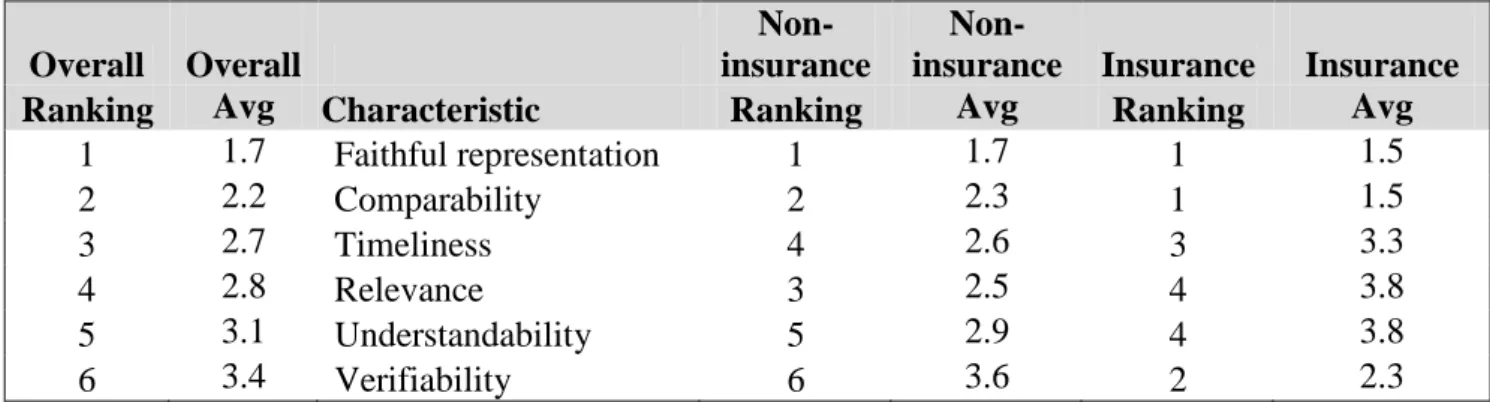
The International Accounting Standards Board (IASB) defines the objective of financial reporting as the provision of information that is useful for decision making. Fair value is a prominent measurement basis in the financial reports of financial sector organisations. The current research integrates the concepts of fair value and usefulness in order to as certain the extent to which fair value is deemed useful. The literature tends to group financial reporting stakeholders into distinct groups such as users, preparers and auditors. This thesis focuses on the perspective of the user whom, prior research has shown, is the least responsive when stakeholders are approached concerning accounting matters. NVivo, a qualitative analysis software, is employed to allow the thematic analysis of twenty semi-structured interviews with financial sector analysts. The results of prior studies are confirmed: fair value is more useful than not. While several studies have indicated that usefulness is impacted by certain factors, the contribution of the current study is its investigation into a comprehensive list of factors that impact fair value’s usefulness in a systematic and detailed way. A further contribution is this study’s extensive use of the Conceptual Framework to measure usefulness. The current study considers analysts’ perceptions of fair value’s usefulness against the qualitative characteristics of the Conceptual Framework. Issues are identified with modelled fair values’ neutrality, accuracy and verifiability. Reported fair values also need to improve in terms of the completeness, understandability and comparability. Fair value under IFRS is deemed both relevant and timely enough to impact decisions. Of the qualitative characteristics, interviewees view faithful representation and comparability as the most important. This should assist standard-setters in prioritising improvements. Finally, this study contributes by allowing users to influence the academic literature through direct quotes. As such, the research bridges the gap between theory and practice.
3 CONTENT Page number 1. INTRODUCTION 8 2. LITERATURE REVIEW 10
2.1 Contextualising the focus on the Conceptual Framework 10
2.2 Research questioning user participation in accounting matters 14
2.3 Empirical research focused on the end-user and fair value information 14
2.4 Other strands of research involving usefulness 16
2.5 The usefulness of fair value according to prior studies 17
2.5.1 Users’ use of fair value 18
2.5.2 Users’ views on the usefulness of fair value 18
2.5.2.1 Third party verification 19
2.5.2.2 Availability of other information 19
2.5.2.3 Users contribute to usefulness 19
2.5.2.4 Entity-specific factors impact usefulness 20
2.5.2.5 Usefulness is impacted by the market 22
2.5.3 The extent to which users perceive fair value as useful as defined by
the IASB’s (2010b: QC3) “qualitative characteristics of useful
information” 23 2.5.3.1 Faithful representation 24 2.5.3.1.1 Neutrality 25 2.5.3.1.2 Completeness 25 2.5.3.1.3 Accuracy 26 2.5.3.2 Comparability 26 2.5.3.3 Verifiability 26 2.5.3.4 Timeliness 27 2.5.3.5 Understandability 27 2.5.3.6 Relevance 28
2.5.4 Comparison between users’ information needs and their perceptions of fair value
28
2.5.5 Summary 28
2.6 The current study’s contribution to the field 29
3. METHODOLOGY 31
3.1 Constructivist pragmatism ontology and interpretive epistemology 31
3.2 Applying the “decision-usefulness theory” to the current study 33
3.3 Methods 35
3.3.1 Concepts being researched 35
3.3.2 Population 37
3.3.3 Qualitative methods of data collection and analysis 38
3.3.4 Sampling method and sample size 39
3.3.4.1 Sampling method 39
3.3.4.2 Sampling size 41
3.3.5 Period under investigation 42
3.3.6 The research instrument 42
4
3.3.6.2 Testing the research instrument 43
3.3.6.3 Significant observations and resulting changes following the pilot
44
3.3.6.4 Format of the interview schedule 45
3.3.7 Data collection 55
3.3.8 Ethics 57
3.3.9 Length of interviews 58
3.3.10 Data description 58
3.3.11 Manipulation of primary data prior to analysis 60
3.3.12 Possible limitation in data collection 62
3.3.13 Framework of analysis 63
3.3.13.1 Method of analysis employed in prior studies 64
3.3.13.2 Method of analysis employed in the current study 66
3.3.14 Generation of codes, coding of data and use of codes 67
3.3.15 Limitations of the coding process 70
3.3.16 Reliability and validity of the research process 71
3.3.16.1 Reliability and replication 71
3.3.16.2 Validity of the research 73
4. DATA FINDINGS AND DATA ANALYSIS 75
4.1 The use of fair value under IFRS 75
4.2 Analysts’ views on the usefulness of fair value under IFRS 76
4.2.1 Third party verification 78
4.2.2 Availability of other information 79
4.2.3 Analysts contribute to usefulness 80
4.2.3.1 Analysts need to apply themselves 80
4.2.3.2 Analysts focus on riskier areas 81
4.2.3.3 Analysts have limitations 81
4.2.3.4 Analysts are resourceful 82
4.2.4 Entity-specific factors impact usefulness 83
4.2.4.1 Balance sheet size 83
4.2.4.2 Business intent 84
4.2.4.3 Divulgence of information 84
4.2.4.4 Entity type 85
4.2.4.5 Geographic location 86
4.2.5 Usefulness is impacted by the market 86
4.2.5.1 Liquidity 86
4.2.5.2 Volatility 87
4.2.5.3 Cyclicality 88
4.2.6 Summary 89
4.3 The extent to which analysts perceive fair value as useful as defined by
the IASB’s (2010b: QC3) “qualitative characteristics of useful information”
89 4.3.1 Faithful representation 90 4.3.1.1 Neutrality 90 4.3.1.2 Completeness 91 4.3.1.3 Accuracy 92 4.3.2 Comparability 93 4.3.3 Verifiability 93
5
4.3.5 Understandability 95
4.3.6 Relevance 96
4.3.7 Summary 97
4.4 Comparing analysts’ information needs with their perception of fair value
under IFRS
98
4.5 Summary 100
4.6 Limitations of data analysis and findings 101
5. DISCUSSION 104
5.1 Research objective one: Understanding analysts’ use of fair value under IFRS
104 5.2 Research objective two: Exploring analysts’ views on the usefulness of
fair value under IFRS
105 5.3 Research objective three: Assessing the extent to which analysts perceive
fair value as useful as defined by the IASB’s (2010b: QC3) “qualitative
characteristics of useful information”
106
5.4 Research objective four: Comparing analysts’ information needs with their perceptions of fair value under IFRS
108
6. CONCLUSION 110
6
TABLES/FIGURES
Page number
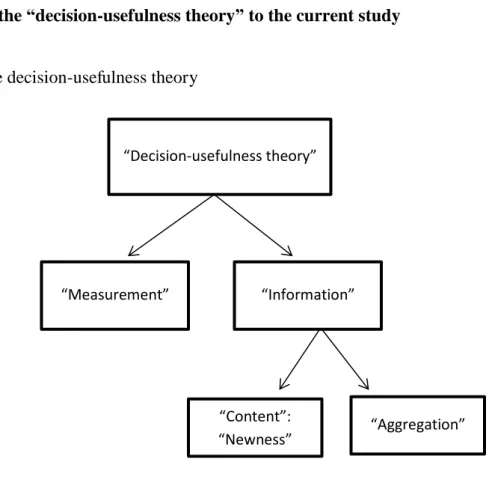
Figure 1 The decision-usefulness theory 33
Figure 2 Interview questions one – six 46
Figure 3 Interview question seven 48
Figure 4 Interview questions eight – eleven 49
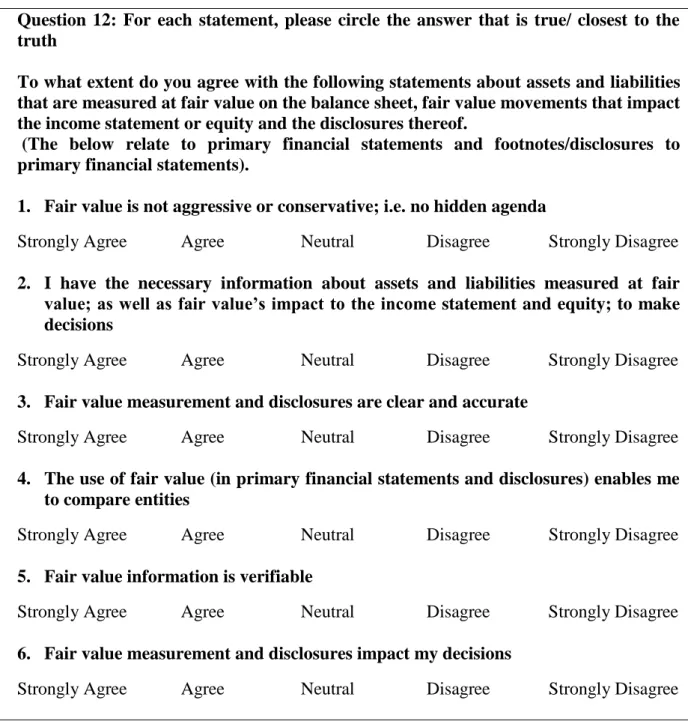
Figure 5 Interview question twelve 51
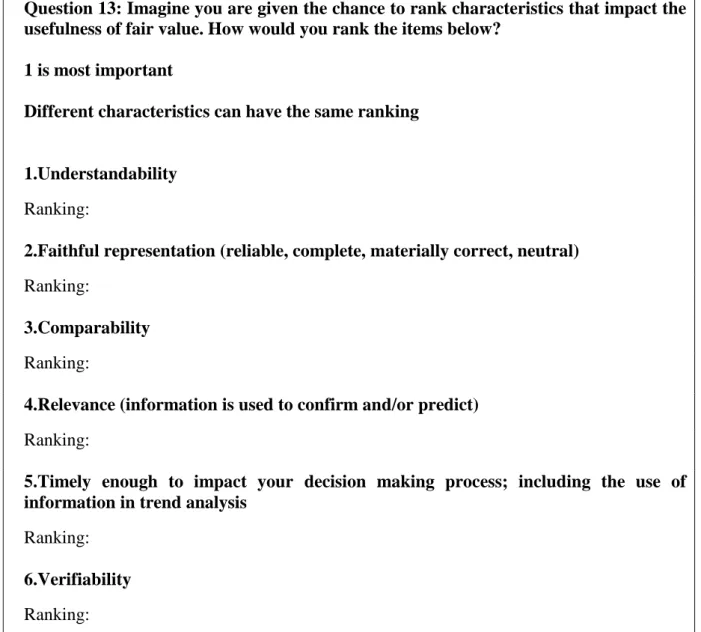
Figure 6 Interview question thirteen 54
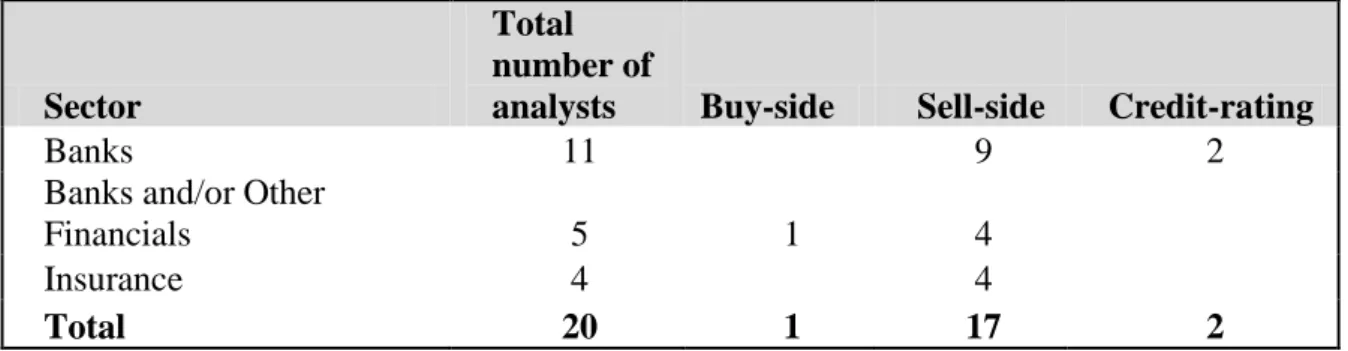
Figure 7 Breakdown of sub-sector and analyst-type 59
Figure 8 Factors impacting the perceived usefulness of fair value 77
7
APPENDICES
Page number
Appendix A Interview schedule used in pilot study 122
8
1. INTRODUCTION
The current study explores whether users of financial reporting perceive fair value a s useful. Fair value is defined as: “the price that would be received to sell an asset or paid to transfer a liability in an orderly transaction between market participants at the
measurement date.” (IASB, 2011b: 11)1
. Fair value has recently received attention from academics, standard-setters and politicians and this attention is fuelled by the financial crisis. Proponents of fair value note how fair value reflects reality and enhances transparency, whilst opponents of fair value criticise the volatility and resulting instability that is caused by fair value reporting (Chasan, 2008; SEC, 2008).
The overall aim of this research is to gauge to what extent end-users of information measured at fair value perceive fair value as useful. Usefulness is measured against the
“qualitative characteristics” of the IASB’s (2010b, QC32) Conceptual Framework for Financial Reporting 2010 (hereafter referred to as the Conceptual Framework).
The specific objectives of the study are to:
1. Understand users’ use of fair value under IFRS
2. Explore users’ views on the usefulness of fair value under IFRS
3. Assess the extent to which users perceive fair value as useful as defined by the IASB’s (2010b: QC3) “qualitative characteristics of useful information” and
4. Compare users’ information needs with their perception of fair value under IFRS.
The focus of this thesis directly addresses a research need expressed by Barth (2006: 15):
“Relating specifically to accounting measurement, research can provide insights into
whether and the extent to which various measurement bases, in various contexts, meet the
qualitative characteristics of accounting information specified in the current Framework”.
1
This is the new definition for fair value that is based on IFRS 13 (IASB, 2011a: 9).
2 It is practice to reference accounting standards by citing the paragraph instead of the page. In the case of
the Conceptual Framework, the opening two letters refer to the chapter in the framework. OB relates to chapter one: “The objective of general purpose financial reporting”, QC relates to chapter three: “Qualitative
9
The timing of the study also addresses a research gap noted by Gassen and Schwedler (2010: 507):
“it might be a fruitful avenue for future research to re-investigate the attitudes of professional investors towards alternative financial accounting measurement concepts post
2008/2009.”
Summary of methods, finding and contribution:
The data for the current study were gathered via semi-structured interviews with twenty financial sector analysts and thematically analysed through the use of NVivo, a software analysis tool. The results of prior studies (such as Landsman, 2007; PwC, 2010; SEC, 2008) are confirmed: fair value is more useful than not. Respondents to the current study perceive market values are useful, whilst modelled fair values are generally regarded with cynicism and distrust. Whilst several studies (for example the Chartered Financial Analysts (CFA) Institute, 2009; Gassen & Schwedler, 2010; Landsman, 2007; PwC, 2010; SEC, 2008) have indicated that usefulness is impacted by certain factors, the contribution of the current study is its investigation of a comprehensive list of factors that impact fair
value’s usefulness in a systematic and detailed way. Another contribution is the current
study’s extensive use of the Conceptual Framework to measure usefulness and its focus on International Financial Reporting Standards (IFRS). The current study identifies faithful representation and comparability as the two characteristics that are most important to financial sector analysts. The current study further adds to the field by allowing the analysts to contribute to the academic literature through direct quotes. Therefore the current research assists in bridging the gap between theory and practice. The rec entness of
the primary data is another of the study’s strengths. The newness of the information is
important because financial instrument reporting is a moving target and recent data will be more informative in terms of encompassing recent changes.
The rest of the thesis will develop as follows: chapter two contains a literature review that contextualises the focus on the Conceptual Framework, usefulness, the user and fair value
and considers prior studies that focused on users’ perceptions of fair value; chapter three focuses on the methodology; chapter four consists of the data analysis and data findings; chapter five includes a discussion of the results and links with existing literature and chapter six concludes the study.
10
2. LITERATURE REVIEW
2.1 Contextualising the focus on the Conceptual Framework, usefulness, the user and fair value:
What follows is an explanation of the meaning and use of the Conceptual Framework, the rationale for focusing on the user (and more specifically analysts as a specific user group), the meaning of the term usefulness and the use and meaning of the term fair value in order to better understand the research aim and research objectives.
Listed companies in member states of the European Union are required to follow the international accounting rules for their consolidated financial statements since 2005 (EC, 2002). These standards have also been adopted in numerous countries across the globe (PwC, 2011). The International Accounting Standards Board (IASB) is the international accounting standard-setter (ICAEW, 2008). The financial standards that were issued by
the IASB’s predecessor are tagged as International Accounting Standards (IASs), whilst the IASB issues International Financial Reporting Standards (IFRSs) (Melville, 2011).
The Conceptual Framework contains the principles underpinning the composition and layout of externally used financial statements and guides the IASB in developing and reviewing accounting standards (IASB, 2010b). The introduction to the Conceptual Framework conveys the IASB’s belief that the general needs of most users are met by financial statements that are useful in economic decision making. As such, usefulness is linked to aiding investment decisions. The IASB (2010b: OB2) narrows down this broad user base of “general purpose financial reporting” to “existing and potential investors,
lenders and other creditors”.
The current study is concerned with the usefulness of reported fair values to analysts. Analysts are the advisors of the IASB’s (2010b: OB2) “existing and potential investors”.
The IASB (2010b, QC32) expects the user to have “a reasonable knowledge of business
and economic activities” and to “review and analyse the information diligently”. By
definition analysts review and analyse information. Véron (2007) ranks the analyst as equally important to the investor. Analyst inclusion in user-based research can be found in
11
Campbell and Slack (2008; 2011); Gassen and Schwedler (2010) and PwC (2010).
Chatham et al. (2010: 100) refer to financial analysts as “the classic user”.
Chapter 3 of the Conceptual Framework introduces qualitative attributes that characterise useful financial information. “Relevance” and “faithful representation” are the primary
qualities; whilst “comparability, verifiability, timeliness and understandability” enhance
usefulness (IASB, 2010b: QC5 and QC19). The IASB (2010b) defines relevant information as information that could impact decisions. Information remains relevant even if there are users who opt not to utilise it or if the information has been communicated previously by another source. Financial information can impact decisions if it helps to either predict or confirm or both. Faithfully represented data consist of complete and neutral information without errors. The objective is to meet these aims as far as possible, seeing as perfection is a near impossible feat. This error-free state does not mean absolute perfection. Instead the application and description of the process need to be without errors. Comparability is achieved by providing consistent information and enables the user to
consider the reporting entity’s data trends and compare the entity with other entities. Verifiability allows different well-informed, unrelated individuals to reach reasonable agreement that a particular item is faithfully presented. Timeliness is a function of the capability to influence decisions. Timeliness and usefulness normally share a direct relation. Finally, the IASB (2010b) defines understandable information as information that is arranged, defined and displayed in a clear and concise manner.
The current study utilises the qualitative characteristics as evaluation criteria to understand to what extent actual users of fair value reporting find fair value useful. The proposed interaction with the standard-setter’s criteria matches Barth et al.’s (2001) observation: the Framework3 communicates the standard-setter’s benchmark to evaluate accounting data; as such research only needs to utilise and not set the measures. The current research will not only utilise the standard-setter’s benchmark, but also investigate the users’ own views on usefulness.
3 Barth et al. (2001) refer to the Framework used in US Generally Accepted Accounting Practice (US
GAAP). The current research utilises Barth et al.’s principle (that the standard-setter’s accounting framework can be used as benchmark to evaluate accounting data) when using the Conceptual Framework under International Generally Accepted Accounting Practice. The Conceptual Framework is used as benchmark to measure the usefulness of fair value.
12
The current research will consider the usefulness of fair value across the spectrum of methods that are available to companies to communicate their results. The usefulness concept is contextualised by the IASB (2010b: OB2, BC1.18) in terms of “general purpose financial reporting”. This type of financial report is linked to the communication of assets,
liabilities and equity as well as changes to these in answer to “common information”
needs. The IASB (2010b: QC3) broadly links the “qualitative characteristics of useful
financial information” to both “financial statements” and “financial information” communicated in alternative ways. In order for the IASB’s criteria of usefulness to be
applicable to the current study; usefulness will be considered within an area where the international standard-setter’s financial accounting rules apply. Information is prepared
under the IASB’s rules if the standard-setter’s promulgated rules and principles are followed in arriving at the numbers and information is disclosed as prescribed by the international standard-setter. Companies apply the same measurement methods and policies across annual, interim and quarterly statements; albeit with varying degrees of disclosure. When thinking about press releases that relate to financial numbers, companies utilise the same general principles, which apply to quarterly and annual results, in arriving at the numbers that are released to the press. The consistency in application is confirmed when listed companies note that they have used similar policies in their annual financial statements, interim results and quarterly management statements (for example: Barclays, 2012; HSBC, 2011; RBS, 2011). Another example of general consistency can be found in the media release of a typical financial sector entity, Julius Baer (2012a). In this release the company shows selected values. The total asset and equity figures in the media release tie back to the official half year results. The half year results mention that the accounting policies that were applicable to the prior full year results were applied to the half year being reported. The full year results confirm that IFRS rules were followed in compiling the consolidated financial statements (Julius Baer, 2011, 2012a, 2012b). For the purpose of the current research, financial information that is prepared in line with the IASB’s rules
will be classified as “reported under IFRS”. The term IFRS is used to indicate the
International Generally Accepted Accounting Practice and includes both the recent IFRSs and older IASs that are still in use.
Fair value is one of a number of measurement bases through which monetary values are allocated to elements (assets, liabilities, income, expenses, equity) within the financial reports (IASB, 2010b). Cairns (2006: 10) notes that both active and illiquid markets are
13
included in the definition of fair value. He uses the primary definition of fair value (amounts at which unrelated parties would be willing to exchange assets and liabilities) to deduce that value in use and the discounted value of future cash flows (present value) could approximate fair value if market participants were to consider these aspects in their valuation. When prices are observable in the market place, fair value reflects the observable price that can be achieved in an arm’s length transaction (IASB, 2011a). However, when prices are not observable the fair value is established via the use of models with maximum use of observable inputs (IASB, 2011a). Gassen and Scwhedler (2010: 505) refer to the first scenario as “mark-to-market” and the latter as “mark
-to-model”. IFRS 13 establishes a “fair value hierarchy” to measure the transparency of inputs
(IASB, 2011a: 72). In this hierarchy there are three levels of input. An entity needs to disclose to what level(s) their instruments belong. Level one would relate to instruments with quoted prices such as exchange traded instruments. Level two would relate to instruments which do not fall within category one, but have observable inputs. For example instruments that are traded over the counter or priced based on similar, actively traded instruments with quoted prices. Level three instruments relate to instruments that are modelled and at least one significant input to these instruments is not observable.
The current research proposes to integrate the concepts of fair value and usefulness in order to ascertain to what extent analysts perceive fair value, reported under IFRS, to be useful. This research will focus on the usefulness of fair value within the financial industry. The choice is justified by the extensive use of fair value when accounting for financial instruments (accounting standards include IFRS7, IFRS 9, IAS 32 and IAS39 (IASB, 2011b, 2011c, 2011d, 2011e)) and the research trend to marry fair value and the financial industry or financial sector related products (for example Koonce et al., 2011; Landsman, 2007; PwC, 2010; SEC, 2008).
14
2.2 Research questioning user participation in accounting matters
The current study’s focus on the user is validated by prior research. Young (2006: 596) criticises the US standard-setter4 who bases accounting standards on a “hypothetical” rather than an “actual” user. Closely related to Young’s hypothetical user is the AFG and FFSA’s (2007) comment that standard-setters bear criticism for neglecting investors’ views. PwC (2010: 4) underpins this idea when noting that comment letters to standard
setting bodies are heavily weighted towards “accounting firms, preparers, trade groups and academics” as opposed to the end-user. Chatham et al. (2010) describe how only four out of 168 commenters to the IASC’s paper on Accounting for Financial Assets and Financial Liabilities were users as opposed to preparers, regulators, auditors or standard-setters. The
current study’s focus on end-users is validated by the identified gap in users’ contributions concerning accounting matters. However, Durocher and Gendron (2010) find that even if the user is considered, these users tend to preserve ideals. Durocher and Gendron apply
Douglas’s (1966, cited in Durocher and Gendron, 2010) theory about purity and
Foucault’s (1975: 159, cited in Durocher and Gendron, 2010: 7) theory about “docile”
actors to interviews that were conducted shortly after the adoption of IFRS in Europe. Durocher and Gendron (2010: 1) argue that well-informed users identify issues with
comparability under IFRS. However, these users want to preserve the “ideal of comparability” and, in an attempt to preserve the ideal, they find excuses for the
limitations in accounting. Durocher and Gendron’s findings serve as a reminder that results should not be accepted at face value. Instead, an interpretative and critical approach is warranted.
2.3 Empirical research focused on the end-user and fair value information
Research that has taken the end-user’s view on fair value into consideration includes the CFA Institute (2009), Chatham et al. (2010), Gassen and Schwedler (2010), Papa and Peters (2011), PwC (2010) and the SEC (2008). The CFA Institute (2009) gathered
4 The Financial Accounting Standards Board (FASB) and the IASB are working on converging Generally
Accepted Accounting Principles in the United States (US GAAP) and IFRSs (Hoogervorst & Seidman, 2012). The Conceptual Framework was the result of a joint project between the FASB and the IASB (FASB, 2010) and this framework places a prominent focus on the user of financial statements. The combined efforts
of the FASB and the IASB and the bodies’ focus on users make Young’s (2006) paper, which was mainly
15
members’ views concerning IFRS 9, an accounting standard on the recognition and
measurement of financial instruments. The institute was also interested in members’ views
regarding the use of fair value across assets and liabilities. Chatham et al. (2010) consider different stakeholders’ support towards fair value and these stakeholders’ arguments to substantiate their support or lack thereof. Gassen and Schwedler (2010) research investors’ and their advisors’ views concerning the decision usefulness of various measurement methods, of which fair value is one. Papa and Peters (2011) focus on users’ perceptions concerning financial instrument risk disclosures under IFRS7. IFRS 75 is an accounting standard that requires entities to disclose the relative importance of their financial instruments as well as the risks associated with holding these instruments (IASB, 2011d).
PwC (2010) explores investors’ and analysts’ use of financial instrument6
information, their views on this information as well as their need for changes. The SEC (2008)
investigates users’ perspectives concerning fair value. The SEC study is a direct result of the credit crisis and considers whether fair value accounting is useful.
The CFA Institute (2009) surveyed their members. More than 600 responses were gathered of which 48% were either research analysts7 or portfolio managers. Chatham et
al. (2010) utilised secondary data in the form of comment letters to the IASC’s discussion
paper: Accounting for Financial Assets and Financial Liabilities. These letters were subjected to content analysis. In fact, Chatham et al. (2010) is an example of prior research that utilised the characteristics of useful information to analyse their data. They utilised the qualitative characteristics of the 1998 Conceptual Framework as codes to understand why different stakeholders agree or disapprove of the fair valuation of all financial instruments. Gassen and Schwedler (2010: 498) collected data from fund managers, rating experts, financial analysts and institutional investors via an online survey in an attempt to gather
the views of “professional investors and their advisors”. Papa and Peters’ (2011) survey
5 IFRS 7 and the Papa and Peters (2011) study consider disclosures for financial instruments as opposed to
fair value per se. However, the prominence of fair value in these disclosures makes their study relevant to the current research.
6
Fair value accounting is a prominent measure when accounting for financial instruments. This was argued from the accounting standards and literature in section 2.1. Therefore the PwC (2010) study, with its focus on financial instruments, is relevant to the current study that focuses on fair value.
7The CFA Institute (2009: 17) also included “corporate financial analyst(s)” in their study. However, it is
uncertain whether all of these respondents analyse external financial statements in their decision making process or whether they bear the title analyst within their corporate role. Therefore, the current study only focuses on the responses from research analysts and portfolio managers in an attempt to keep the user-focus.
16
was administered to CFA members8 and 50 sell-side analysts who served as a control group. PwC (2010) conducted semi-structured, cross-sectional interviews with buy-side, sell-side and credit-rating investors and analysts in the banking, insurance and generalist sectors. The SEC (2008: 140) obtained primary data via comment letters on fair value accounting from investors, analysts, credit-rating agencies “and other users” and
supplemented this with analysts’ reports on fair value. They also partook in roundtable discussions with “investors, issuers, auditors, academics, former regulators and others with
experience in financial institutions’ fair value accounting practices” (SEC, 2008: 146)9.
2.4 Other strands of research involving usefulness
In contrast to the studies that considered the actual user; two other strands of research are concerned with aspects of usefulness. These include “value relevance” (Landsman, 2007: 22) studies10 and experimental studies11. These studies do not consult the individual user but utilise artificial constructs of reality and market indicators as proxies for actual users’ perceptions. They are therefore considered as peripheral and will not be reviewed as part of the current research.
8
The CFA members who participated in Papa and Peters’ (2011: Appendix I) study are chosen for their expertise in accounting and/or use of financial statements. Because there is uncertainty regarding the
members’ end-user status, the current study only includes views attributed to the sell-side analyst control group as well as excerpts specifically attributed to end-users.
9Even though the SEC (2008: A24) indicates which views belong to “individual investors and other users,
investor groups, investor protection agencies, and attorneys representing users”; as opposed to members of congress, academics, preparers, standard-setters, consultants, professional organisations or auditors, and only views specifically allocated to the above defined user group are used in the current study, there is a
limitation in this approach. This is because the SEC’s categorisation was not necessarily correct or as stringent as the categorisation used in the current study. For example, the SEC allocates the CFA Institute’s
comment letters to the user category. However, not all of the CFA Institute’s members are end-users. The
SEC staff could have used the part of the CFA Institute’s letter that relates to users only or they could have
made a holistic decision based on the general membership and the large representation of end-users within
the CFA Institute’s membership. Due to pragmatic considerations, the current study utilises the SEC’s attribution with the caveat that the SEC’s categorisation was not verified for accuracy or reasonability.
10 Landsman (2007: 20) provides an overview of the existing “capital market” research that considered the
“usefulness of fair value accounting information to investors”.
11
Koonce et al. (2011) is an example of experimental research that uses MBA students as proxy for the actual investor.
17
2.5 The usefulness of fair value according to prior studies
The results of empirical studies that consider the end-user are mixed. Durocher and
Gendron’s (2010) claim to a complacent user-base takes shape in a string of answers that
convey partial satisfaction with fair value. The SEC’s (2008) unstructured methods of
data collection and reporting make it difficult, if not impossible, to review the body of answers and conclude a general consensus from the data. A general consensus can be
drawn from Gassen and Schwedler’s (2010) survey answers, but the information is devoid of depth. Chatham et al.’s (2010) content analysis is very detailed. However, only four of the commenters12 were users and as such the research is fairly meaningless in terms of conveying the end-user’s view. Chatham el al. (2010) also chose to group analysts, regulators and standard-setters from the second question onwards; this means the users’ views cannot be distinguished from those of other stakeholders.
Both the PwC (2010) and SEC (2008) studies reflect that fair value is more useful than
not. However, this usefulness seems to be tied to various factors. Gassen and Schwedler’s
(2010) respondents generally agree decision usefulness for fair valued assets that are derived from market prices. Users tend to rank modelled fair values as least useful. The one exception is financial assets where modelled fair values are more informative than historic cost. Both Chatham et al.’s13 (2010) and the CFA Institute’s (2009) results align closely with those of Gassen and Schwedler in the sense that users show a definite support for the fair valuing of financial instruments.
What follows is a review of the prior studies’ findings in light of the current study’s
objectives. Hence, the data will be considered in terms of users’ use of fair value, their
views on the usefulness of fair value and the extent to which users perceive fair value as useful as defined by the IASB’s (2010b: QC3) “qualitative characteristics of useful information”. Comparisons will also be made between analysts’ information needs and their perceptions of fair value. It should be noted that the aim of the reviewed studies was not a detailed understanding of the usefulness of fair value to the end-user through the utilisation of the Conceptual Framework as measurement tool. The reviewed studies’
12The term “commenter” is used to refer to a person or group commenting via a comment letter.
13 This is the only one of Chatham et al.’s (2010) conclusions that is user-specific. The other results are
based on a combination of analysts, regulators and standard-setters. As such, the other findings of the Chatham et al. (2010) paper will not be considered in the current literature review.
18
concern with fair value led to each study contributing towards the current study’s research objectives in part. However, the richness of the data that is available to answer each of the
current study’s research questions is varied and different studies tend to focus on different
aspects of fair value. This serves as proof that the current study, which is concerned with a comprehensive understanding of the usefulness of fair value and the analysis of said usefulness in a single dissertation, contributes to the current literature.
2.5.1 Users’ use of fair value
The existing literature considering the end-user indicates that users use fair value and this use varies. However, PwC (2010: 5) notes how fair value is not the main consideration
when analysts and investors analyse an entity. Uses of fair value include forming “views on an entity’s liquidity or capital adequacy” and calculating “enterprise valuation”. Many respondents to the PwC (2010: 7) study refer to large fair value shifts as “risk indicators”
and only a few respondents would use fair valued instruments in their cash flow projections. Linking to this idea of risk indicators, Papa and Peters (2011) note how 90% of the 50 surveyed sell-side analysts use IFRS 7 risk disclosures. These analysts use the disclosures as model inputs and/or to qualitatively consider the risks facing the company. The SEC (2008), based on an analysis of analysts’ reports, noted additional uses for fair
value: fair values are used to compare entities’ valuations and then speculate on
differences and in limited instances fair valuations are used to support investment recommendations in analysts’ reports.
In summary, prior studies clearly indicate that fair value is used by the end-user. Therefore, applying the Conceptual Framework’s objective for financial reporting,
financial information needs to be “useful in making economic decisions” (IASB, 2010b: Introduction), the utilisation of fair value (in economic decisions or in advice that feeds economic decisions) renders it useful.
2.5.2 Users’ views on the usefulness of fair value
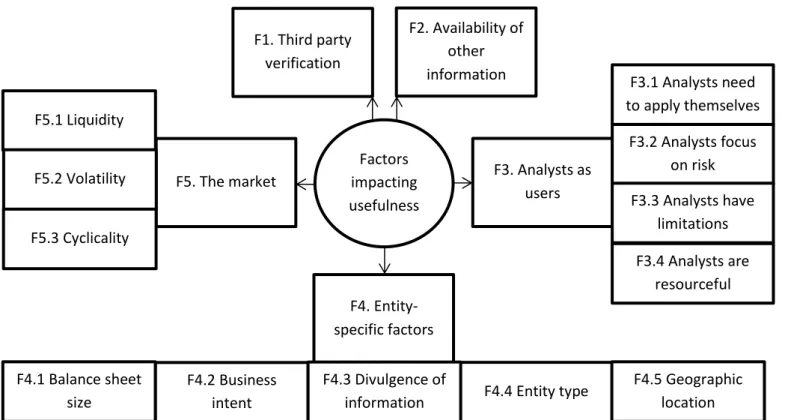
An amalgamation of the results of prior studies give the impression that users’ perceptions of fair value are impacted by various factors. Firstly, third party verification impacts the
19
usefulness of fair value. Secondly, fair value in financial statements is used in combination with other information. Thirdly, users contribute to the usefulness of fair value. Fourthly entity-specific factors such as the business intent, the type of instrument being invested in
and the type of entity play a role in fair value’s usefulness. Lastly, the market impacts the usefulness of fair value through its liquidity, volatility and cyclicality. What follows is a closer look at each of the factors that impacts fair value.
2.5.2.1 Third party verification
A respondent to Papa and Peters’ (2011) study notes the importance of auditing IFRS 7 disclosures to ensure the quality of information. Therefore it is deducted that fair value is more useful if it is audited by an independent third party.
2.5.2.2 Availability of other information
PwC (2010) highlights the fact that users are not only dependent on the accounting records for information on financial instruments. In fact, other sources such as discussion and
analysis by management, analysts’ reports and market-based information are also used to inform users. Linking to this study’s focus on fair value, it is found that fair value in financial statements is useful, but its usefulness is dependent on other information being available to allow a holistic analysis.
2.5.2.3 Users contribute to usefulness
In terms of users’ impact on fair values, a commenter to the SEC (2008: 142) noted how
investors should apply “diligence” when analysing fair values. This implies that the
usefulness of reported fair values is not only dependent on what is reported but how the reported information is used.
20
The PwC (2010) study also notes how users are prompted by risk indicators (such as large decreases in fair values) to further investigate the possibility of impairment14. This implies
that users’ use is driven by their own agenda and that they will perceive the availability of certain information as useful depending on whether or not they wish to focus on it.
In summary, both users’ diligence and analysis focus impact how useful they perceive the fair value information to be.
2.5.2.4 Entity-specific factors impact usefulness
The first entity-specific factor that impacts usefulness is business intent. This takes shape
when the majority of PwC’s (2010) respondents choose fair value as balance sheet
measure for instruments, such as traded instruments, that will probably be sold or settled in the near future. On the other hand, fair value disclosures (as opposed to values impacting the balance sheet) are deemed more appropriate for instruments that have longer expected lives. PwC (2010: 12) gives the example of “loans held for the long term,
deposits” and “an entity’s own debt”. To summarise this paragraph: fair value is useful if it is the entity’s intent to trade or settle the instrument in the short term. However, fair value is less useful if the entity intends to hold the instrument for the long term.
Closely related to this idea of business intent is the type of instrument that the entity holds. This is the second entity-specific factor that impacts the usefulness of fair value. The CFA
Institute’s (2009) respondents support fair value for all financial instruments, and are
unsure about fair valuing own debt15 and non-financial assets and liabilities. This blanket
acceptance of fair value’s suitability differs from PwC’s (2010) study where interviewees did not prefer the use of fair value for loans held for the long term, fixed income held until maturity, deposits and own debt. This difference, between respondents answering the CFA
Institute’s survey and interviewees partaking in PwC’s interviews, mirrors the different
14 The IASB (2011c: 63) describes impairment as the process whereby financial assets, which are not fair
valued, need to be written down to the present value of the expected cash flows (using the “original effective interest rate”) when there are indications that the financial assets are carried at inflated values. Actual losses,
and not those that are expected to occur, are recognised.
15 Fair valuing own debt relates to the situation where a company fair values its liabilities. Included in the
fair value of a liability is the reporting entity’s own creditworthiness (IASB, 2010c). Should a reporting entity become less creditworthy, its liability would decrease in value and the entity would make a profit from being downgraded in terms of creditworthiness (Goff, 2011).
21
stances that were initially taken by the FASB and the IASB. According to Hoogervorst and Seidman (2012) the IASB issued IFRS 9 whereby financial instruments will be measured using a mixture of fair value and amortised cost16; whilst the FASB’s exposure draft in 2010 suggested fair valuation of nearly all financial instruments. Since then the FASB has incorporated more use of amortised cost. The CFA Institute’s (2009) study and that of PwC (2010) took place at a time (around 2010) when the two accounting bodies were in two very distinct camps. The difference in views between PwC’s (2010) and the CFA Institute’s (2009) studies cannot be attributed to geographic composition as both studies had more than 50% representation from the Americas, around 30% from Europe, Middle East and Africa and around 15% from Asia Pacific. However, the CFA Institute’s (2009) geographic breakdown applies to a combination of research analysts, portfolio managers, accountants, auditors and corporate analysts. For the purpose of the current study, only the research analysts and portfolio managers (as end-users) were included. It is possible that the geographic breakdown of the end-user group differs from the breakdown of the total sample. It should also be noted that, even though the studies’ results differ on the absolute level, there is a lot of overlap. A sizeable portion of the respondents to the CFA Institute’s (2009) study are unsure or vote against the use of fair value for instruments with longer term, non-trading use (such as demand deposits, loans and financial liabilities). On the other hand, a large number of PwC’s (2010) respondents were pro-fair value disclosures17 for long-term loans and deposits and a noticeable number of respondents voted to measure all debt securities at fair value in the balance sheet akin to
the CFA Institute’s respondents. In summary, fair value is useful for certain types of
instruments and therefore fair value’s usefulness is tied to instrument type. Gassen and Schwedler’s (2010) study underscores this point when they conclude that mark-to-market fair values are useful for all assets and modelled fair values are useful for all financial assets.
The final entity-specific factor that impacts the usefulness of fair value is the type of entity. PwC (2010) finds that investment professionals focusing on the insurance sector perceive fair value as more useful than those focusing on banks. PwC (2010) links this
16Amortised cost is a measurement method whereby future cash flows’ present value is calculated using an
“effective interest rate” (IASB, 2011c: 9).
17When an item’s fair value is disclosed this means the item is not measured at fair value in the financial
statements. However, the fair value number is communicated to the user of financial statements within the notes to the financial statements.
22
preference to insurers’ larger fair valued portfolios relative to that of banks. In terms of
factors impacting fair value’s usefulness, this is interpreted as fair value being more useful
in entities with larger fair valued portfolios.
To conclude this section, entity-specific factors impact upon the perceived usefulness of
fair value. Some respondents perceive business intent as impacting fair value’s usefulness,
where fair value is more useful when the business intent is to trade the item in the near
term. Some respondents view fair value’s usefulness in relation to the type of instrument that the entity holds. In this instance fair value is generally seen as useful for financial
instruments. Finally, fair value’s usefulness is also linked to the type of entity. It is perceived that fair value is more important for insurers, who hold large fair valued portfolios, relative to banks, who hold smaller fair valued portfolios.
2.5.2.5 Usefulness is impacted by the market
The first market-related factor that impacts the usefulness of fair value is its liquidity. Liquidity refers to the extent to which items are traded in the markets and the ease with which a fair value can be established in the market place. In fact, one of the comments
made in the SEC’s (2008) study suggests that the liquidity of the asset should decide the
method of valuation. Gassen and Scwhedler’s (2010) study confirms the importance of liquidity when investment professionals vote market values to be the most decision useful for all assets but mostly rank modelled fair values as least decision useful. The difference between market values and model values is liquidity and transparency, market values are liquid and transparent; whilst modelled fair values are illiquid and less easy to verify. Hence, fair value is more useful if markets (and the instrument) are liquid.
The second market-related factor that impacts fair value’s usefulness is the volatility in the market. This is because fair value is pro-cyclical in nature, meaning it follows the volatility of the market. One commenter to the SEC (2008) noted that mark-to-market fair values introduce volatility to the balance sheet. Linking this volatility to illiquid markets, it was also noted that short-term changes in illiquid markets distort the balance sheet. This is especially true if assets are held for the long-term (SEC, 2008). This statement refers to the fact that fair value introduces short term fluctuations to the balance sheet that are not
23
necessarily warranted if the company does not intend to trade out of the instrument in the near future. In summary, fair value is less useful in volatile markets if the entity does not intend to trade out of the position in the near future.
The final market-related factor that impacts fair value’s usefulness is the cycles in the market and particularly the downward cycles. A few commenters highlighted how fair
value’s pro-cyclicality led to a further reduction in prices in “illiquid or distressed
markets” (SEC, 2008: A-2). This pro-cyclical effect of fair value led to some commenters suggesting that it might be more sensible to have the fair value information as part of disclosures rather than recognised numbers. As such, the capital structure need not be weakened in distressed markets. On the other hand, it was noted how fair value reflects the risks and actual market condition and as such fair value acts as a timely warning (SEC,
2008). In summary, users vary in terms of fair value’s usefulness in times of distress. On
the one hand, the view is held that fair value artificially forces prices downwards when markets are illiquid or at the trough of a cycle. On the other hand, the view is held that fair value is an honest reflection of risks and liquidity issues. Therefore, the exact stage in the
market’s cycle does impact on fair value’s perceived usefulness; however, users vary in terms of fair value being more or less useful in times of distress.
To conclude this section: the market impacts the perceived usefulness of fair value. This is done through its liquidity, volatility and cyclicality. Fair value is more useful when the market and the fair valued instrument are liquid. Fair value is more useful when the
market is less volatile and perceptions concerning fair value’s usefulness when the market
is at a trough or heading towards a trough differ. One view is that fair value causes downward pressure on prices and therefore is less useful. Another view is that fair value honestly reflects risk and the market situation and is therefore still useful.
2.5.3 The extent to which users perceive fair value as useful as defined by the IASB’s (2010b: QC3) “qualitative characteristics of useful information”
The current study is not only concerned with users’ views on the usefulness of fair value,
but utilises the Conceptual Framework’s qualitative characteristics to understand the
24
Conceptual Framework, the prior studies were considered for references to the
“qualitative characteristics” of the Conceptual Framework (IASB, 2010b: QC3).These characteristics are: faithful representation (which can be disaggregated into neutrality, completeness and accuracy); comparability; verifiability; timeliness; understandability and relevance (IASB, 2010b).
Seeing as the reviewed literature was not focused on understanding end-users perceptions concerning usefulness as defined by the qualitative characteristics, the following section represents the piece-meal view of what was available in the reviewed literature. What follows is a detailed consideration of the usefulness of fair value against the qualitative characteristics that should distinguish useful information.
2.5.3.1 Faithful representation
The comment was made that fair value contributes to general “transparency”18
in the financial sector (SEC, 2008: 141). Some commenters to the SEC (2008) note how fair value allows a faithful reflection of the actual market and risks and the SEC staff summarise their findings by noting that investors perceive fair value to be more reliable than other measurement methods. However, several analysts, in their reports, discount the profit attributable to a decrease in own debt (SEC, 2008).This indicates that analysts do not perceive the profit associated with a company’s decreased creditworthiness to be a faithful representation of the economic reality. This negativity towards the fair valuation
of own debt is also evident in the CFA Institute’s (2009) and PwC’s (2010) results. However, the CFA Institute’s (2009) respondents are divided in almost equal numbers of
supporters, opponents and people who are simply unsure regarding the appropriateness of fair valuing own debt. Faithful representation can be disaggregated into neutrality,
completeness and accuracy. What follows is a consideration of users’ perceptions
concerning fair value’s neutrality, completeness and accuracy.
18
The IASB (2010b: BC3.44, QC12) notes how transparency is a word used “to describe information that has the qualitative characteristics of relevance and representational faithfulness enhanced by comparability,
verifiability, timeliness and understandability”. For the purpose of the current research transparency is seen as a contributing component of faithful representation as transparent information will provide a complete picture of the phenomenon. Completeness and a faithful representation of the “phenomena that it purports to represent” are all linked to faithful representation.
25 2.5.3.1.1 Neutrality
It seems as if neutrality is not always achieved. A possible distrust is exposed when several respondents note that they would make adjustments to the financial instrument values for indications that management was biased (PwC, 2010). The PwC (2010) interviewees request more information on management’s fair value estimates when instruments are illiquid. This link between estimates and illiquid instruments suggests that management has the ability to include biased information through models. This is based on the fact that estimates feed into models, whereas market values should not be based on estimates but market values. A commenter to the SEC (2008) confirms modelled fair
value’s susceptibility to manipulation when noting that fair value allows too much room for interpretations and judgement.
2.5.3.1.2 Completeness
Looking at completeness, there seems to be a general lack in the current offering of disclosure around fair values (Papa and Peters, 2011; PwC, 2010; SEC, 2008). PwC’s (2010: 5) respondents define a need for more disclosures on fair values. These
interviewees call for “portfolio composition”, information on “risk factors”, “valuation methods and assumptions” and “sensitivity analyses”. Investors at the roundtable
discussions echoed the need for more information concerning methods, assumptions and sensitivities to assumptions (SEC, 2008). Methods, assumptions and sensitivity analyses again focus the lack of information on modelled fair values. The current sensitivity analysis, that forms part of market risk disclosures, is faulted for its subjectivity, assumptions, the immateriality of alternative scenarios, lack of compound scenarios and lack of considering the impact of correlations between market risk factors (Papa and Peters, 2011).
However, amidst this call for additional information, PwC (2010) notes how respondents warned against an information overload. This proves that there is a fine line between sufficient information and too much data. A respondent to Papa and Peters’ (2011: 10) study assists preparers in deciding on which information to include: “crucial information
26 2.5.3.1.3 Accuracy
What follows is information to support the general theme that fair value is not that accurate. However, inaccuracy seems to be tied to illiquid or inactive markets.
A number of commenters postulated that market prices do not give an accurate reflection
when markets are illiquid or inactive (SEC, 2008). This focus of the SEC’s (2008)
respondents on the accuracy of market prices in times of distress is logical given the
timing of the SEC’s investigation. The SEC’s research occurred in the midst of the credit crisis. In fact, some commenters noted how the credit crisis was exacerbated by inflated fair values prior to the crisis; followed by undervalued prices during the crisis (SEC, 2008). One commenter to the SEC’s (2008: A-11) study requested the inclusion of a
“range of prices” when markets are “inactive or illiquid” and an analyst participating in
the Papa and Peters (2011: 50) study highlighted the importance of “a sensitivity analysis” to “market variables”. The PwC respondents (2010) also requested an indication of
financial instruments’ sensitivities to changes in fundamental assumptions. This call for a range of prices and sensitivities suggest that fair value is not necessarily a specific value and accuracy could be enhanced by reporting a range as opposed to a specific point.
2.5.3.2 Comparability
The reviewed studies did not elaborate much on comparability. However, the SEC staff (2008) note how investors indicated a preference for fair value when trying to achieve comparability. However, Papa and Peters (2011) include a citation that the comparability in IFRS 7 disclosures amongst companies needs to improve.
2.5.3.3 Verifiability
Mark-to-market seems to be verifiable, whilst mark-to-model fair value is not. Gassen and Schwedler (2010) link their respondents’ preference for market as opposed to modelled fair values to the importance of external verifiability. The SEC (2008: 145), based on a review of 106 analyst reports, note how a number of analysts highlight the “softness” of
27
fair value estimates. Such a “softness” would prohibit the individual users from verifying the numbers.
2.5.3.4 Timeliness
Timeliness is part and parcel of information that can influence decisions (IASB, 2010b). The general idea that fair value is used (see section 2.5.1) renders fair value timely enough to be useful. It was noted how fair value gives a timely warning of issues because it reflects the actual market situation (SEC, 2008).
However, individual issues were identified with timeliness. PwC (2010) notes how some users obtain financial instrument information from sources other than financial statements because of timeliness issues. However, this is a general issue with the timing of financial statement issuance as opposed to reported fair values specifically.
In summary reported fair values are timely enough to impact decisions, but the general timing of financial statements are seen to be lagging.
2.5.3.5 Understandability
Understandability is linked to clarity and conciseness (IASB, 2010b). The reviewed literature highlight issues with understandability. PwC (2010: 9) concludes that disclosures around fair value need to improve. Interviewees note the need for enhanced disclosure on
illiquid instruments “to help them better understand” managements’ assumptions.
Investors, participating in the SEC’s (2008) first roundtable, suggest the consolidation of
dispersed information on fair values into one location in the financial statements. This suggests that investors did not perceive the information to be as concise as it could be. Papa and Peters (2011: 15) quote a sell-side analyst who notes the need for more detail
28 2.5.3.6 Relevance
Overall, fair value is deemed relevant because it has the capability of “making a difference
in the decisions made by users” (IASB, 2010b: QC6) and section 2.5.1 has shown that users utilise fair value. PwC (2010: 5) summarises that most investors and analysts perceive fair value as “relevant and valuable”. The SEC (2008: 146) notes how investors,
as part of roundtable discussions, perceive fair value as the “most relevant” measure for
financial instruments. However, as part of the comment letter process, the view was expressed that fair value is less relevant when markets are distressed because prices are uncertain (SEC, 2008).
2.5.4 Comparison between users’ information needs and their perceptions of fair value
The referenced research does not prioritise users’ needs in terms of the qualitative
characteristics in order to establish the urgency of voiced inefficiencies. However, the previous section highlights that users perceive limitations with the current offering. It is deducted that users would not voice inefficiencies if these are not important on some level.
As such users’ reservations about neutrality, completeness, accuracy, comparability, verifiability, timeliness and understandability need to be addressed.
2.5.5 Summary
Prior literature shows that users use fair value. Users’ perceptions of fair value seem to be impacted by various factors, namely: third party verification, the availability of other
information, users’ interaction with the data, entity-specific factors and the market. It is concluded that fair value is open to manipulation when using modelled fair values, the disclosures accompanying fair value seem to be lacking (particularly for modelled fair values) and fair value is deemed inaccurate when markets are illiquid. Even though little is said about the comparability of fair values, the SEC staff (2008) summarise investors’ preference for fair value to achieve comparability. However, Papa and Peters (2011) reveal limitations in comparability of fair value disclosures. Mark-to-market is verifiable, whilst mark-to-model is not. Fair value is timely enough to impact decisions. Issues are
29
identified with fair value’s understandability and it is concluded that fair value is relevant. The examined literature did not enable the identification of the gap between users’
perceptions of the current fair value offering and users’ needs.
2.6 The current study’s contribution to the field
The current study contributes to the literature because the analytical lens is that of usefulness and this lens is focused by the Conceptual Framework’s qualitative characteristics. The CFA Institute (2009), Chatham et al. (2010), Gassen and Schwedler (2010), Papa and Peters (2011), PwC (2010) and the SEC (2008) all touch on elements of usefulness. However, the studies are focused on different research questions and do not necessarily exhaust themes concerning users’ perceptions on the granular level of the Conceptual Framework.
Another contribution is the current study’s focus on usefulness under IFRS. Apart from the CFA Institute (2009) and Papa and Peters (2011), the other reviewed studies do not commit to either a US GAAP or an IFRS focus. Chatham et al. (2010) refer to the IASB and International Accounting Standards, but the comment letters, which they analyse, include the Unites States where US GAAP is prevalent. The geographically mixed
response pool would suggest a combined focus. The CFA Institute’s study (2009) and that
of Papa and Peters (2011) also tend to focus on very specific aspects of IFRS, namely IFRS 9 and IFRS 7 respectively. The SEC (2008: 24) identifies a general consistency in the way that fair value is defined under both US GAAP and IFRS. Fair value is also the
predominant measure in accounting for “financial assets and liabilities” under both
accounting standards. PwC (2010) specifically notes how there tends to be similarity in views across geographic boundaries. However, there are some differences in accounting application (SEC, 2008). The FASB and IASB have been working on converging accounting for financial instruments (SEC, 2011) and this process is still ongoing (Hoogervorst & Seidman, 2012).Therefore the current study’s focus on a single set of reporting standards ensures greater homogeneity across participants; which in turn could support clarity of themes.
30
This study also contributes because most of the primary data were gathered from January 2012 onwards. This is of particular importance because fair value standards and companies’ interpretation of the standards have evolved since the credit crisis and respondents were given the chance to reflect on the credit crisis and changes to financial reporting in the interviews. Examples of recent changes to financial instrument accounting include: allowing the reclassification of financial instruments effective from July 2008 (IASB, 2008); IFRS 7’s introduction of the “fair value hierarchy” and enhancements to disclosures on liquidity risk effective from January 2009 (IASB, 2009: 3) and IFRS 7’s improved disclosures regarding the transfers of financial assets issued October 2010 (IASB, 2010a). Another example of recent change is the issuance of IFRS 9 with an effective date of January 2015 and allowance for early adoption (IASB, 2011e). Gassen and Schwedler (2010) conducted their studies prior to the credit crisis. The CFA Institute (2009), Papa and Peters (2011), PwC (2010) and the SEC (2008) gathered their data after the start of the credit crisis. However, it is still argued that, given financial reporting’s evolving nature; the recentness of the current study’s primary data is one of its attributes.
The current study is focused on the usefulness of fair value to financial sector analysts. The prior chapter considered the existing studies in the field and positioned the current study within the literature. The next chapter will focus on the ontology and epistemology that are relevant to the current study and the methods that were utilised to understand the extent to which analysts perceive fair value, under IFRS, to be useful.