Graduate Theses, Dissertations, and Problem Reports
2016
Mineral Asset Valuation Under Economic Uncertainty: A Complex
Mineral Asset Valuation Under Economic Uncertainty: A Complex
System for Operational Flexibility
System for Operational Flexibility
Marcell B. B. Silveira
Follow this and additional works at: https://researchrepository.wvu.edu/etd
Recommended Citation Recommended Citation
Silveira, Marcell B. B., "Mineral Asset Valuation Under Economic Uncertainty: A Complex System for Operational Flexibility" (2016). Graduate Theses, Dissertations, and Problem Reports. 6645.
https://researchrepository.wvu.edu/etd/6645
This Thesis is protected by copyright and/or related rights. It has been brought to you by the The Research Repository @ WVU with permission from the rights-holder(s). You are free to use this Thesis in any way that is permitted by the copyright and related rights legislation that applies to your use. For other uses you must obtain
Contents
List of Figures ix List of Tables xi Dedication xii Acknowledgements xiii 1 Introduction 1 1.1 Background . . . 11.2 Objectives and Approach . . . 2
1.3 Organization . . . 3
2 Literature Review 5 2.1 Price Forecasting . . . 5
2.1.1 Commodity Market Overview . . . 5
2.1.2 Price Volatility . . . 9
2.1.3 Stochastic Dierential Equations Models . . . 13
2.2 Computer Modeling for Mine Valuation . . . 16
2.2.1 Mine Valuation Methods . . . 16
2.2.2 Decision-making under uncertainty . . . 18
2.2.3 Material stockpiling . . . 19
2.2.4 Stockpile Models . . . 20
2.2.5 Mathematical and Computer modeling . . . 21
2.2.6 Optimization and Algorithm Structure . . . 24
2.3 Optimization Methods . . . 25
2.3.1 Multi-variable non-linear solving . . . 25
2.3.2 Genetic Algorithm . . . 26
2.3.3 Interior point method (IPM) . . . 28
2.3.4 Integrating simulation and optimization . . . 28
2.4 Summary and Conclusions . . . 29
3 Price Forecasting 31 3.1 Stochastic Dierential Equation Modeling . . . 32
3.1.1 Geometric Brownian Motion . . . 33
3.1.2 Mean-Reverting . . . 35
3.2 Simulation of Price Forecasts . . . 36
3.2.1 Number of simulations required . . . 38
3.3 Methodology . . . 41
3.3.2 Price sorting, validation and plotting . . . 43
3.3.3 Experiment Design . . . 44
3.4 Results . . . 44
3.5 Summary and Conclusions . . . 48
4 Computer Modeling for Mine Valuation 49 4.1 Discounted Cash Flow Model . . . 49
4.1.1 Overview . . . 50
4.1.2 Mechanics . . . 51
4.1.3 Discount Rate . . . 52
4.1.4 Revenue . . . 53
4.2 Real Options Valuation Model . . . 53
4.2.1 Overview . . . 54
4.3 Dynamic Option Valuation Model . . . 54
4.3.1 Overview . . . 56
4.4 Application example . . . 58
4.5 Results . . . 62
4.6 Summary and Conclusions . . . 64
5 Optimization Methods 65 5.1 Genetic Algorithm . . . 65
5.2.1 Evaluation of solvers for DOV . . . 70
5.2.2 Determining the required number of function evaluations . . . 71
5.3 DOV Problem Formulation . . . 72
5.3.1 Dynamic modeling procedure . . . 72
5.3.2 Generating a complex system . . . 75
5.4 Summary and Conclusions . . . 76
6 Results and Discussion 78 6.1 Base study - Pilot scale valuation . . . 79
6.2 Case Study - Greenvale Deposit . . . 85
6.3 Discussion . . . 91
6.3.1 Analysis of Variance . . . 92 7 Conclusion and Recommendations 94
List of Figures
2.1 Nickel Price . . . 6
2.2 Nickel Supply and Demand versus time . . . 8
2.3 Commodity price change along time . . . 10
2.4 Complex System . . . 23
2.5 Genetic Algorithm . . . 27
2.6 Interior Point Method . . . 29
3.1 Geometric Brownian Motion model generation . . . 35
3.2 Linear Regression for Hull-White/Vasicek model determination . . . . 37
3.3 Hull-White/Vasicek model generation . . . 37
3.4 Simulation example . . . 38
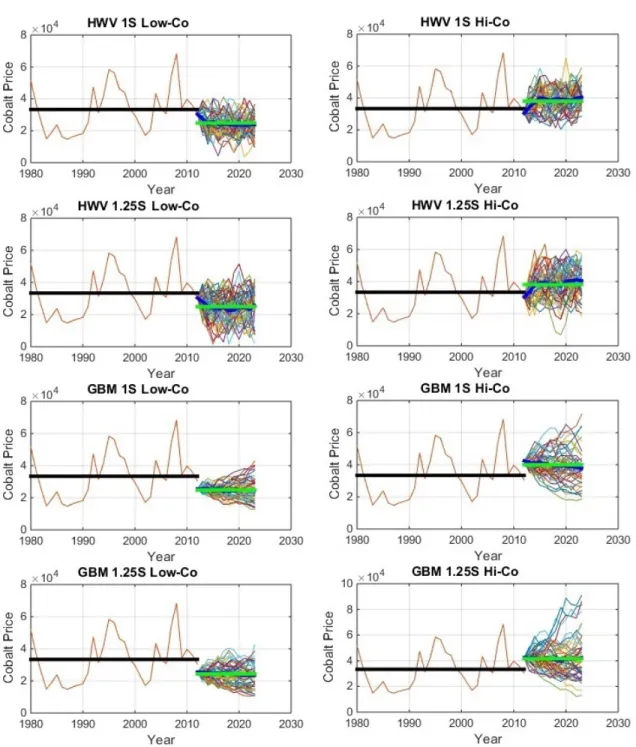
3.5 Price forecasting overview . . . 43
3.6 Nickel price forecasts . . . 46
3.7 Cobalt price forecasts . . . 47
4.1 Discounted Cash Flow Model . . . 50
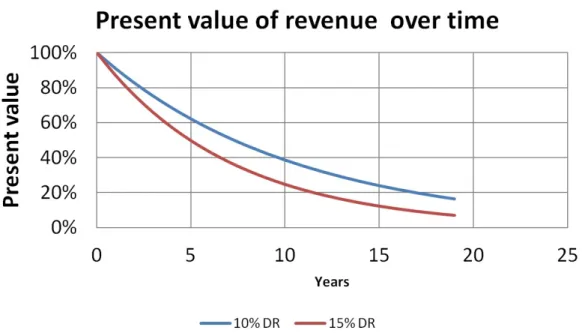
4.2 Present value of money for two discount rates . . . 52
4.4 Dynamic option valuation - Feasible operating region . . . 57
4.5 Buer structures on the dynamic option valuation method . . . 58
4.6 Standard vs Dynamic mill throughput example . . . 59
4.7 Commodity prices used on mine valuation . . . 61
4.8 Mine Valuation Methods Comparison . . . 63
5.1 Fmincon approximation to the genetic algorithm . . . 70
5.2 Required number of function evaluations to reach Fmincon minimum 72 5.3 Interface between mine and mill in the dynamic model . . . 75
5.4 Complex System for Mine Valuation . . . 76
6.1 Mine throughput plotting - Base study . . . 81
6.2 Mill throughput plotting - Base study . . . 81
6.3 Buer pile inventory plotting - Base study . . . 82
6.4 Nickel sales plotting - Base study . . . 83
6.5 Cobalt sales plotting - Base study . . . 84
6.6 Scandium sales plotting - Base study . . . 84
6.7 Revenue x Net Present Value Ratio - Base study . . . 85
6.8 Mine throughput plotting - Case study . . . 87
6.9 Mill throughput plotting - Case study . . . 88
6.10 Buer pile inventory plotting - Case study . . . 88
6.12 Cobalt sales plotting - Case study . . . 90 6.13 Scandium sales plotting - Case study . . . 90 6.14 Revenue x Net Present Value Ratio - Case study . . . 91
List of Tables
2.1 Beta value interpretation . . . 12
2.2 Mine Valuation Methods . . . 17
2.3 Summary of risk buildup discount rate . . . 18
3.1 Nickel price log dierentiation . . . 35
3.2 Number of simulations required . . . 40
3.3 SDE model modifying parameters . . . 41
3.4 Beta values for Nickel and Cobalt . . . 43
3.5 Experiment Design . . . 44
4.1 Greenvale resource table . . . 60
4.2 Material specication . . . 62
4.3 Capital and Operating Costs . . . 62
4.4 NPV results . . . 63
6.1 Base study - Result data . . . 80
6.2 Case study - Result data . . . 86
Dedication
I dedicate my work to my family and many friends who helped me in this long journey. Kara Savage, Hassan Amini, Brunno Almeida, Wesley Edge, Chris Vass, Grant Speer, Aanand Nandula, Neel Gupta, Xue Zhai and Jerica Yingling, I dedicate my work to you and all the many others who allowed me to be successful.
I also dedicate this work to the person who motivated me the most and never stopped believing in me: Aaron Noble. Thank you.
Acknowledgements
I would like to thank the committee members who were extremely helpful with their expertise and precious time. A special thanks to Dr. Aaron Noble, my friend, Re-search Advisor and committee chairman. Thank you for the patience and motivation you gave me to pursue my objectives.
Thank you Dr. John Herbst, for sharing your extensive knowledge in a charismatic way.
Thank you Dr. Brijes Mishra, for giving the example of how successful a young professional can be in such short career time.
Acknowledgements to the Minerals Engineering Technology Development Lab, a group of individuals with high achievement and motivation levels.
Acknowledgements to the Coordination for the Improvement of Higher Educa-tion Personnel (CAPES), the FoundaEduca-tion within the Ministry of EducaEduca-tion in Brazil whose central purpose is to coordinate eorts to improve the quality of Brazil's fac-ulty and sta in higher education through grant programs.
Chapter 1
Introduction
1.1 Background
The mineral industry has faced dicult challenges in the recent years. Mining com-panies are pressured by investors and society to be more productive and protable under volatile economic scenarios. Mining and its related activities (prospecting, exploration, metallurgy) are very dependent on the commodity prices in the mar-ket. Mineral commodities, like other goods, are subjected to the market volatility, changes in supply and demand, and most importantly, the overall economic context of a given time period. Therefore, the mineral industry may be subjected to economic recessions, demand decrease and resource scarcity.
The mineral market is as an attractive long-term investment. Mining projects are subjected to careful mineral asset valuation studies, and only the ones which present protability in the long term are selected for future development. Therefore, valuation is one of the most important stages of economic analysis. On the other hand, commodity price volaltility may cause decrease in demand, undervaluing the potential of future mining projects. Base metals, for instance, may lose their natural value in times of recession. There is a cyclical nature in the overall mining industry, noticed since the beginning of international trade in the 18th century [Jacks et al., 2009].
Quantifying risk in such volatile market is a challenge that requires specic method-ologies. Besides the usual risk of producing a commodity and selling it for a protable price on the market, it is necessary to be aware of the stock market and its practices. A company can only obtain funding for the development of a mining project if it is
proven that such operation will be protable not only on short term, but also on the long term, and will remain protable for as much time as the investor requires. The value of money over time is also a matter of concern, considering that mineral asset valuation is done with discount rates that exceed 10% a year [Haque et al., 2014].
Accurate feasibility studies are a recurring theme in mine valuation. The future value of mining project must be calculated carefully to attract investors and obtain funding. The company that intends to move forward with a mining project must perform price forecasting, to identify the economicity of revenue generation based on future market prices. Decision-making is one of the biggest diculties consider-ing commodity price volatility, and, because of that, operational exibility must be considered for project valuation.
The current methodologies of mineral asset valuation are primarily based on static discounted cash ows over time [Darling, 2013]. Real Option Valuation (ROV) is considered one of the few methodologies able to measure the value of a mining deposit with the possibility of expanding or shrinking production on a given economic context [Zhang et al., 2015]. However, this methodology is limited to comparing possible operational scenarios and identifying the most protable outcome on a nite number of possibilities. It is not robust and usually does not account for price volatility or stockpile inventory on a mineral operation.
1.2 Objectives and Approach
The main goal of this research is to develop a novel mineral asset valuation method-ology, based on economic uncertainty and operational exibility. The economic anal-ysis can be manifested by subjecting the valuation model to dierent scenarios of commodity price trend and volatility, generated through simulation. Flexibility, on the other hand, corresponds to subjecting the design parameters of the operation to dynamic valuation, targetting higher economic prot.
In summary, the objectives of this study are to:
1. Investigate and quantify the benets of operational exibility under economic uncertainty on mineral asset valuation
2. Quantify the impact and economic consequences of stockpiling material for future processing and sales while performing mineral asset valuation under a dynamic methodology
The development of the mineral asset valuation model will consist of the generation of a complex system comprising price forecasting, dynamic modeling and optimiza-tion methods for mine valuaoptimiza-tion. Price forecasting will be based on generating future commodity price paths based on two dierent stochastic models (Geometric Brow-nian Motion and Mean-Reverting Drift), in order to simulate dierent scenarios of trend and volatility for commodities.
A dynamic methodology of discounted cash ow (DCF) will be created, allowing operational exibility of mining, processing, rening, stockpiling and selling material on a mining operation. The combination of price forecasting and dynamic modeling will then provide basis for optimization using two distinct techniques (Interior-point method and genetic algorithm) for the identication of optimal operating parameters under dierent economic scenarios, targetting increase in NPV. Variable inventory conguration for material stockpiling will be evaluated under this procedure. It corresponds to a new approach in mine valuation, not described previously in other techniques.
Finally, the complex system intends to evaluate the ecacy of dierent optimiza-tion approaches in mine valuaoptimiza-tion. The objective of the study will be to identify the economic benets of valuating a mineral deposit using a robust model, which takes in consideration the market behavior for commodity price trend and volatility. The economic gain in using this methodology will be targeted as a mean of evaluating the benets of such method.
1.3 Organization
This thesis is divided into seven chapters.
Chapter 1 is the Introduction, describing the background objectives of the study. Chapter 2 presents a Literature Review on Commodity Price Forecasting, Com-puter Modeling for Mine Valuation and Optimization Methods for Mine Valuation.
Chapter 3 presents a study performed in Commodity PriceForecasting and the de-velopment of an algorithm to forecast commodity prices using two dierent Stochastic Dierential Equations Systems.
Chapter 4 presents a study on Computer Modeling for Mine Valuation, focusing on the development of a dynamic mine valuation model used to calculate NPV for mining projects.
Chapter 5 presents a study on optimization methods for Mine Valuation, focusing on Genetic Algorithm and Interior-point methods for problem optimization.
Chapter 6 presents the nal results of the study, combining the previous chapters into an overall study on Mine Valuation under price and stockppile conguration uncertainty. It presents a case study on the mineral asset valuation of the SCONI mining project.
Chapter 7 presents the conclusions of the study, as well as recommendations for future work.
Chapter 2
Literature Review
2.1 Price Forecasting
In this section, a summary of current practices of global mineral trade will be pre-sented. Aspects such as determination of commodities prices, market volatility, types of commodity sales and current innovations in commodity nance will be presented. In addition, a brief analysis of price forecasting methodologies will be presented, as well as current research advances associated to the forecasting practices.
2.1.1 Commodity Market Overview
Mineral commodities are products openly sold for subsequent use in industry, which will then transform the material into products with higher degree of alteration. Davis [Davis, 2010] denes that mineral ores generate the rst saleable product of mining as mineral concentrates. Mineral ores correspond to a concentration of miner-alization located either proximate to the surface or underground. The USGS Mineral Commodity Summary [USGS, 2015] describes a total of 119 commodities whose pro-duction, market context, pricing and supply/demand relationship is evaluated in the USA.
Given the low relative price for mineral ores compared to nal products, the inter-national market for materials with no alteration is practically non-existent [Hummels and Skiba, 2004] . However, the commodity market for mineral concentrates and -nal products is very well established worldwide [USGS, 2015], considering the global
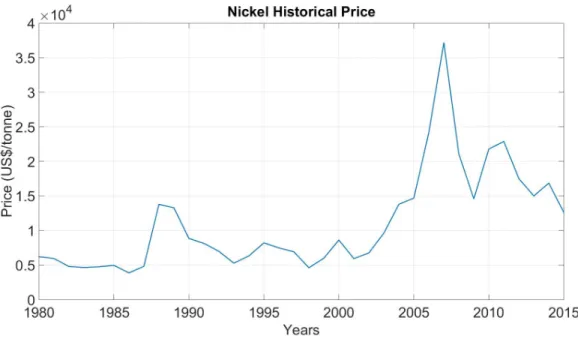
Figure 2.1: Nickel Price
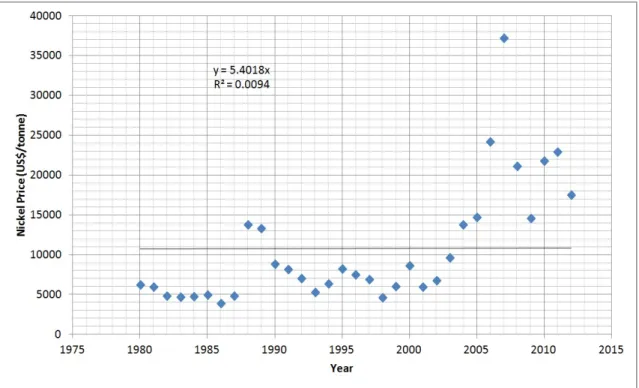
shows the changing prices of nickel on the international market along time.
Mineral commodities are usually produced by mining companies and sold in the exchange market, for a stipulated price. This value is dictated by supply and demand, the type of commodity, and the degree of alteration applied to it. On a background paper to the 2010 World Trade Report, Davis [Davis, 2010] presents a study on the economics of international trade in mineral resources. The researcher evaluates the commodity market and points out that, according to the Standard International Trade Classication, these materials are beneciated and sold under the ores and concentrates category. The dierentiation between dierent types of commodities corresponds to the aggregated value that they contain.
Davis species, using a study by Radetzki [Radetzki, 2008], that prices per unit of bulk-scale commodities such as iron ore and steam coal correspond to a fraction of high-aggregated value goods such as coee and wool. Therefore, they do not con-tain enough intrinsic value to allow international transportation at economic rates. Industrial minerals (such as crushed stone) have even lower prices, and the only al-ternative for these commodities to be protable is through sales to close locations, due to their low value per weight.
As specied by Radetzki [Radetzki, 2008] previously, there are certain types of commodities that have a preference to be negotiated internationally, as opposed to domestically (with the distinct case of industrial minerals and construction aggre-gates). The prices for these commodities have obtained great importance in the beginning of the 2000s, after the unexpected and rapid increase of their value in the international market [Cuddington and Zellou, 2013].
Several researchers [Krugman, 2008,Kilian, 2009,Hamilton, 2009] have attributed such abrupt changes in the commodities market to the emergence of BRICs (Brazil, Russia, India and China) and other developing nations, whose rapidly-growing in-dustry impelled the demand for base metals, coal and other mineral products [Tang and Xiong, 2010]. In a paper related to the market of commodities, Tand and Xiong present two distinct views regarding the exaggerated volatility of certain mineral commodities. The researches then specify the two probable causes: (1) Changes in prices caused by supply and demand and (2) Market speculation in commodity indices.
The rst view is based on the observation that the demand for mineral commodities peaked by the summer of 2008, and then fell after the economic crisis initiated. The second view, however, is based on an analysis performed by two investigators [Mas-ters, 2008, Commission, 2008], attesting that the total value of various commodity index-related instruments purchased by institutional investors has increased from an estimated $15 billion in 2003 to at least $200 billion in mid-2008 [Tang and Xiong, 2010].
The growth of both importance, volatility and price values of these commodities inuenced the initiation of more intense investigations on the international com-modity market, focusing on the inuence of comcom-modity prices and the subsequent impact in mining and mineral processing operations that are part of the production chain. Stuermer [Stuermer, 2014] provides accurate evidence on the dynamics eect of supply and demand for a period of 150 years, presenting four dierent commodi-ties: copper, lead, tin and zinc. The researcher then points out that demand is the main factor responsible for price modications, while mineral supply has a smaller inuence on the factor in analysis. Finally, the investigation concludes that price changes (more specically, price increase) is caused by quick industrialization, and is a phenomenon that repeats through history. Two main observations can be obtained from this study. The rst corresponds to the cyclical nature of commodity prices (with respect to ination and relative power of purchase), while the second is the principle that prices tend to return to their stable value in the long term.
The cyclical nature of mineral commodity prices is described on a nancial study performed by Cuddington and Zellou [Cuddington and Zellou, 2013]. The inves-tigators developed a mineral market forecasting model, considering an attempt to observe the so-called super cycles in commodity prices (cycles within a period of 20-70 years), proposed to be an explanation regarding behavior of commodity prices in long period of time. The researchers then conclude that using the economic context and reasonable supply and demand parameters, price dynamics can be simulated.
The results generated by the researchers correspond to an asymmetric price cycle with 20 years of expansion and a peak price that is approximately 250% beyond trajectories. The creation of the super-cycle proves to be worthy of consideration to study the circumstances associated with changing commodity prices in longer terms.
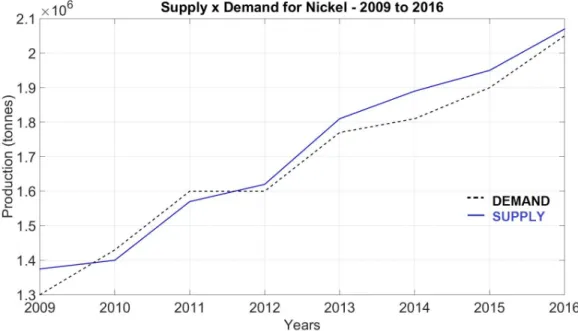
Figure 2.2: Nickel Supply and Demand versus time
Figure 2.2 shows the supply and demand data for nickel since the year 2009, illustrating the gap of supply and demand for nickel due to changing prices. The concerning issue of supply/demand gap for nickel is presented, especially after year 2010. Since more nickel was available on the market at that particular time, prices naturally fell to the ranges that can be noticed nowadays, at around US$15,000 per tonne [USGS, 2015].
of nickel mines, according to Mills [Mills, 2012]. Taking in consideration that nickel is a global commodity, the global players on the international market take demand in consideration while evaluating new projects. The author describes a scenario of global demand growth dominated by China, with yearly increases ranging from 4 to 8% per year. In North America, the demand is expected to grow at around 7% per year. Higher commodity prices could be reached in case production delays would happen in current operations.
Given these isues and the magnitude of inuence, commodity cycles must be in-cluded in mine valuation techniques. The current methods are focused substiantlly in technical parameters and engineering design. A proper mineral asset valuation must take into consideration the impact of price trends on the operating principles of a mining operation, since prices will be the main driver of revenue generation.
2.1.2 Price Volatility
Mineral commodity price volatility is a recurring theme both for mining companies and general investors on the commodity market. Gilbertie [Gilbertie, 2012] presents an idea of duality for commodity volatility: They represent a merchandise sold in the international market with a price that is subject to constant change (and consequent inherent volatility), and they also represent a product similar to a stock, in the form of commodity funds. These instruments are traded in stock markets, and contain their own volatility. The denition of a commodity fund is more accurately explained by Smith [Smith, 2008], describing four types of investments:
1. Commodity Funds: Traded in the stock market that hold stocks of mineral assets (such as gold);
2. Commodity Derivative (Options) Funds: Based on the purchase of future stocks;
3. Natural Resources Funds: Based on investment in companies engaged in ex-tracting natural resources (encompassing energy, mining, oil, etc);
4. Combination Funds: Any combination of the funds specied above.
purpose of this study, the focus will be on the price volatility of mineral commodities. Nevertheless, commodity funds has been addressed by researchers as a topic of great sensitivity. Gilbertie [Gilbertie, 2012] states that commodities are important pieces to increase risk on a stock portfolio, since they are both diversiers and volatility reducers.
Focusing on the mineral industry, Darling [Darling, 2013] describes that commod-ity funds can also be considered instruments to evaluate the economiccommod-ity of a given commodity, while developing mine valuation. Jacks, O'Rourke and Williamson [Jacks et al., 2009] developed a study focusing on commodity price volatility and world mar-ket integration since the year 1700. Their research relates the impact of volatility on the destabilization of emerging economies, that are more susceptible to crisis on a volatile market context. This perspective is endorsed by Brown, Crawford and Gibson [Brown et al., 2008].
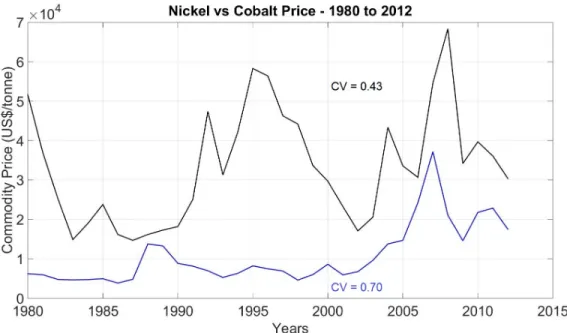
Figure 2.3 compares the price trend of nickel and cobalt over the course of 32 years. Volatility can be visualized as the measure of price dispersion that a certain commodity may possess in that specied timeframe. In the example, nickel is the commodity that presents a higher volatility compared to cobalt. Even though cobalt has more varying absolute values, nickel presented a higher coecient of variation.
Price specication in a volatile market is examined by Pindyck [Pindyck, 2004] . The researcher investigated the role of volatility in the commodity market, and developed a model for determination of optimal commodity inventory based on prices and market volatility, using data compiled in the petroleum industry. Volatility can be overcome by keeping inventories of oil, and consequently hedging prices in the long run.
A report compiled by the World Bank Group by the end of 2014 [WBG, 2014] shows that metal prices are expected to decline 5.5 percent, on top of a similar decline last year. A similar decline is forecasted in precious metals as institutional investors are viewing them less attractive as `safe haven' investment vehicles; reduced demand by China will also contribute to the weakness. This type of language indicates that, even though commodities are an important form of investment, they are currently unattractive because of their declining value on their natural cycle.
The relative volatility of security, portfolio, or equity can be quantied by the β parameter [Vardy, 2015]. β is a measure of systematic risk for a given commodity, and this analysis can also be applied to minerals, expressed in form of the inherent commodity volatility compared to the overall market in which it is inserted. The volatility of commodities, compared to the overall market, is a relevant parameter for evaluation.
Noble [Noble, 2014] compiled a list of mineral commodity Beta values ranging from 1900 to 2012, identifying the volatility of a certain commodity in the overall market. The formulation for its calculation is the following:
β =r·(σcommodity σoverall
) (2.1)
where:
• r = coecient correlation between commodity and overall market • σcommodity = Commodity standard deviation
• σoverall = Overall market standard deviation
Table 2.1: Beta value interpretation Beta factor Denition
β = 1 Same volatility as the market
β >1 More volatility in the same direction 0 <β <1 Less volatility in the same direction β = 0 Uncorrelated to the market
β <0 Opposite direction to the market
Even though the Beta coecient is a well-recognized aspect on the investment market, some authors consider the range of commodities and their respective trade funds to be limited. Kaplan [Kaplan, 2012] points out that, even though it is rela-tively easy to invest on a commodity ETPs (Exchange-Traded Products), there are very few choices of selection. A portfolio management must rely on the use and investment in several indexes (The Russell 3000, SP 500, Dow Jones Wilshire 5000, for instance), and commodities lack the versatility that general funds oer, according to the investigator. The perspective is endorsed by Nadig [Nadig, 2014].
Conerly [Connerly, 2014] presents the idea of hedging programs for commodity purchase. The author species that companies which purchase commodities should adopt a strategy of hedging prices to smooth price uctuations while acquiring these products. The concept of hedging prices, but in this case for mineral commodity sale, is presented in the mine valuation methodology presented by Runge [Runge, 1998], [Darling, 2013] and other researchers.
Price trend and volatility have signicant impact in mineral asset valuation, es-pecially when future prices must be forecasted through simulation. Trench and Sykes [Trench and Sykes, 2014] present a framework to analyze the impact of com-modity price forecasts in future mining operations, proposing opportunities subjected to dierent market dynamics. Their study focuses on the economics of a mine opera-tions under possible scenarios of uncertainty, describing the importance of contouring instable market prices with pre-determined decisions. The study also presents data regarding the percentage of pages devoted to economic aspects in mine valuation studies performed for four dierent rare earths projects under the Canadian Mining Code. Approximately 51% of the content in these reports corresponds to technical details, while the economic and market evaluations are not discussed with the same level of importance, with around 6% of content only.
Assessing price risks is consequently not performed with the same extent of detail as the mining and metallurgical factors. The researchers describe that commodity prices uctuate and are inuenced by factors outside the control of a mining com-pany. Factors such as geological and technical problems at mines, labour strikes, mining costs (including fuel prices), infrastructure and environmental issues cause economic impact on the valuation of a mining deposit. Geopolitical factors may also be included in the analysis [Trench and Sykes, 2014].
Expanding on micro-economic level factors, Noble and Luttrell [Noble and Luttrell, 2015] presented a study describing commodity price becoming an important aspect for technical evaluation in coal separation. The researchers present a novel analytical procedure for equipment design, which takes in consideration the overall objective of higher revenue while selecting the cut point in a density separator. This study illustrates the importance of commodity price in engineering design, and subsequent valuation of mineral projects, both under feasibility study or operation.
2.1.3 Stochastic Dierential Equations Models
The modeling of commodity prices possesses a vast range of possible solutions. As a matter of concern for both the mineral, energy and agriculture industries, it generates discussion in academia and industry regarding the most accurate models to represent prices of commodities [Postali and Picchetti, 2006]. Two methodologies for this application stand out, according to Willingham [Willingham, 2013]. They are both based on Stochastic Dierential Equations (SDEs) models: Geometric Brownian Motion (GBM) and Hull-White/Vasicek (HWV).
A stochastic dierential equation is a dierential equation containing one or more terms as a stochastic process [Oksendal, 2003]. The stochastic aspect will generate models based on random processes, allowing the application of these models in pro-cesses that require a wide range of results. Modeling phenomena such as unstable stock prices or physical systems with great uctuation can be done through these equations. More specically, commodity future prices and their volatile behavior can be expressed as SDEs, and their values can be generated through simulation.
The HWV model is a gaussian diusion model with mean-reverting drift [Shreve, 2004]. Values generated from this model possess a random (stochastic) component and also an approximation to the original values presented in the model
determi-nation. Future paths generated with the model will orbit around a pre-determined mean, usually corresponding to the mean provided in the historical data used for parameter specication. On the context of commodity prices, the historical prices would determine the mean for this model in particular.
Geometric Brownian Motion, on the other hand, corresponds to a stochastic pro-cess in which the logarithm of randomly varying quantity follows stationary indepent increments, generated through countinuous-time motion [Glasserman, 2004]. The implications indicate that the values generated through GBM modeling are not af-liated necessarily to the mean of the historical input values. The random aspect is more evident in this model.
Both of the models contain stochastic conguration, however, Geometric Brownian Motion possesses a more randomized characteristic and generally a higher stochastic variance, based on the experimentation made by Willingham [Willingham, 2013]. The Hull-White/Vasicek, as a type of Stochastic Equation Model based on mean-reverting drift [Oksendal, 2003], can be used to model commodity prices that are subjected to cycles. The dierence between the two methodologies represents the key to evaluate the accuracy of price forecasting with multiple methodologies.
Other researchers have investigated these SDE models and their application on price forecasting. Geman [Geman, ] investigated mean reversion (main principle of HWV) opposed to random walk (main principle of GBM) in oil and natural gas prices, subsequently conducting econometrics studies to conclude if mean reversion is in fact applicable to commodity price behavior. His investigation accepted mean-reverting models for modeling future oil and gas prices.
Postali and Pichetti [Postali and Picchetti, 2006] present a study on gas and oil prices as well, focusing exclusively on Geometric Brownian Motion. They conclude that a period between 4 and 8 years (depending on the model set-up) is enough to allow an accurate approximation of a geometric brownian motion pattern. Deng [Deng, 1999] describes the use of stochastic models for price forecasting of non-tangible commodities, focusing on electricity prices. The author species several dierent types of formulations for mean-reverting models, varying types of jumps and sparks. Price uncertainty for non-tangible items was also reviewed by the World Bank Group report [WBG, 2014], specifying that energy and food price indices dropped aprroximately 6% in 2014.
develop-ment of GBM models using the R statistical programming language, illustrating that Brownian Motions plays a signicant role in building a statistical model. The author points out that complex stochastic models require computer applications for accurate modeling, given their intrinsic complexity. This opinion is endorsed by other investigators [Willingham, 2013].
2.1.4 Monte Carlo Simulation for Price Forecasting
Computer simulation is a tool often required while performing sensitivity calcula-tions and simulation on nancial aspects of mine valuation [Darling, 2013], given the simplicity of operation while solving complex mathematical equations. Haque, Topal and Lilford [Haque et al., 2014] present a method to construct real option valuation of mining assets through the use of Matlab software. The researchers' nal objective is to demonstrate how a GBM model can be used to estimate commodity prices and obtain optimal net present value for a mining project. Apart from the real option val-uation, the investigators apply hedging strategies and the use of commodity futures contracts to analyze the proposed scenarios.
Zhang, Nieto and Kleit [Zhang et al., 2015] also perform a similar study on oper-ational exibility using mean-reverting generated gold prices, in order to determine optimal price threshold for a mine operation. The use of price forecasting proves to be positive considering that, in order to obtain a reliable understanding of the future context for the commodity, it is necessary to generate a forecast.
The topic of simulation has been addressed and investigated by the majority of researchers who deal with options valuations for mineral commodities. The works of Willingham [Willingham, 2013], Nieto and Zhang [Nieto and Zhang, 2013] and others have attested the relevancy of computer simulation on a price uncertainty context.
Monte Carlo simulation corresponds to a methodology of simulation based on using randomly selected input values, allowing the user to investigate distributions of results for processes that rely on uncertain input factors [Mathworks, 2015]. The guidelines for the use of Monte Carlo simulation on the development of properties in advanced exploration or mine valuation scenarios are illustrated [Darling, 2013] and used intensely in industry and academia.
statistical analysis. The diversity of software functions, as well as the existence of several packages of interest for creation of SDE models and Monte Carlo simulation is exemplied by Anderson [Anderson, 2004] in his book about MATLAB for Business Economics and Finance Simulation Models. The Financial Optimization Toolbox contained inside MATLAB allows the specication of price forecasting models, espe-cially problems regarding pricing for mine valuation under uncertainty [Willingham, 2013].
Product prices in cut-o grade of a mining operation are evaluated by Nieto and Zhang [Nieto and Zhang, 2013], who exemplify a byproduct mining operation in which both Neodymium (Nd) and Dysprosium (Dy) are considered for NPV calcula-tion. The price variability of the byproduct (Dysprosium) signicantly inuences the cuto grade of neodymium. By-products are relevant alternatives to generate revenue and balance capital and operating costs, obtaining more future prot. Commodities such as Rare Earth Elements (REEs) and other rare metals are scarce and highly-valued on the international market, especially after becoming part of strategic coun-try development guidelines by nations such as United States and China [Humphries, 2013]. Given the high demand and importance of such, there is a supply chain issue that has brought REEs to a higher level of importance.
More specically on REEs, Nieto and Zhang propose equivalent combined grades for byproducts, elucidating that the price of both commodities ended up impacting the NPV signicantly, and therefore the existence of a mineral byproduct can aect the mining strategy completely. Finally, Zhang, Nieto and Kleit [Zhang et al., 2015] exemplify forecasting commodity prices to generate the required results for the Real Options Approach, as opposed to the usual Discounted Cash Flow. Their study, however, was focused exclusively on gold, and does not comprise the possibility of two or more commodities.
2.2 Computer Modeling for Mine Valuation
2.2.1 Mine Valuation Methods
Mine Valuation corresponds to the study and determination of valuation of a mineral asset. It can be analyzed in many dierent ways, as presented in the Table 2.2 (after [Darling, 2013]).
Table 2.2: Mine Valuation Methods Types of Property
Method Exploration Feasibility Development Operation
Market transaction x x x
Market multiples approach x x
Replacement cost x x x x
Real options x
Monte Carlo Simulation x x x x
The Real Options methodology was used for the rst time in the 1980s, as specied by Shaee, Topal and Nehring [Shaee et al., 2009]. It gained popularity because the standard Discounted Cash Flow methodology was insucient, not being able to account for external factors such as commodity price changes, commodity scarcity, and the observation that deposits, especially the ones containing REEs, can contain more than one commodity.
Cut-o grade has always been considered a relevant factor in the industry. How-ever, the use of Discounted Cash Flow for its determination is potentially inaccu-rate, according to Caldentey, Epstein and Saure [Caldentey et al., 2004]. Therefore, a more sophisticated approach for those considerations is necessary. The potential of expansion or reduction of production in a mining operation must also be evalu-ated. Shaee, Topal and Nehring [Shaee et al., 2009] conclude that the successful evaluation of a mining project consists in identifying the most economically viable option, which may include expansion, reduction, or even abandonment. A more exible decision-making methodology can reduce economic risks, according to the researchers.
Supply bottlenecks for the rare earth elements has been addressed by Nassar et al [Nassar et al., 2015], in which the researchers discuss the impact of commodity demand while developing mineral asset valuation for projects with REEs as by-products. Flexibility must be addressed by selecting the material to be mined and sold, based on the market demand, and not on the overall mining and processing rate. A study in production scheduling with uncertain supply has been addressed by Ramazan and Dimitrakopoulos [Ramazan and Dimitrakopoulos, 2013].
2.2.2 Decision-making under uncertainty
Uncertainty in the mineral industry has been addressed in several expertise areas, with dierent approaches and wide application ranges. Montiel and Dimitrakopoulos [Montiel and Dimitrakopoulos, 2015] describe risk-based solutions that outperform deterministic ones, for mining complexes with multiple processing and transportation alternatives.
A special regard on the balance between return and risk is specied by Runge [Runge, 1998]. The author describes the criteria used for the determining the ap-propriate discount rate to be used at a DCF valuation. He arms that low discount rates represent more condence on the economic viability of a mining operation, however, they do not represent the best solution for valuation.
Technical and economic parameters under uncertainty on a mining operation (com-modity prices, ore grade, metallurgical recovery, nal sales) are also backed up by a high discount rate. Darling [Darling, 2013] presents risk-buildup for discount rate, which corresponds to a process in which the discount rate for a mining project is dismembered in several aspects, one of each corresponding to a risk characsteristic. See Table 2.3.
Table 2.3: Summary of risk buildup discount rate
Item Rate, %
Real risk-free rate of return 2.5 Public company risk premium 7.0 Small cap premium 3.0 Industry-specic risk 2.5 Site-specic risk 3.0 Total (pre-tax) 18.0 Total (after-tax) 12.0
Darling also exemplies economic principles for decision making, describing that a narrow focus on technical issues is not enough to guarantee economic success, under even with the a high-grade mine deposit. The researcher points out several method-ologies to develop strategies in mining, including cost reduction, understanding the time value of money, and establishing a discounted- cash-ow analysis.
The investigator uses a conservative discount rate of 15% for his calculations, which is a value synchronized with the principles specied previously by other re-searchers evidencing risk. Given all of these specications it is a relevant idea to use a conservative discount rate for the project.
2.2.3 Material stockpiling
Material stockpiling is one of the issues addressed by mining professionals seeking higher productivity, quality and cost reduction. It is normally used both for ore, waste and product in the mining industry. Stockpiling for ore, as specied by War-nelid [WarWar-nelid, 2011], is largely used in industry to ensure material homogenization, and subsequent grade variability reduction. In addition, the existence of a stockpile will ensure that the subsequent stages of mineral processing will contain material to be fed when required. Basically, the raw stockpile acts as a buer for the milling process.
Several studies have been conducted on the optimization of materials handling and stockpiling conguration, in order to allow ease of handling and subsequent target achievement for feed grade. Darling [Darling, 2013] species a typical formulation for cuto and stockpile optimization, in which the determination of material allocation is performed in a way to achieve maximum NPV, considering that there will be higher revenue generated by certifying that material tonnage and grade will be optimal.
The optimization procedure has been described in a study conducted by Asad [Asad, 2005], in which the researcher develops an optimization algorithm to maximize the NPV of a given mine deposit, considering uncertainty of mineral grade, and the shifting of cut-o grade based on maximum mining, milling and sales capabilities. The investigation relies on procedures determined by Dagdelen [Dagdelen, 1992], and contains three assumptions largely accepted while developing mine valuation on a given mine deposit:
• Constant price for the commodities • Immediate product sales
The target of the study (cut-o grade optimization) is largely mentioned, however, the uncertainty principle of stockpiling tonnage is not addressed by the researcher. In fact, another researcher [Rendu, 2014] develops a meticulous study on cut-o grade estimation, presenting capacity constraints and opportunity costs.They correspond to the opportunity to decrease the mining or milling cut-o grade in order to generate higher NPV values during optimization. Marginal grades of material are then shifted from the category of waste to ore, depending on the conditions and parameters specied on the study.
A recurring theme in by-product mine valuation, specially regarding REEs, is supply chain constraints that such commodities possess on the international market. Nassal, Graeder and Harper [Nassar et al., 2015] investigate the production and marketing of by-product metals that are used in specialized functions and have very limited supply. The researchers introduced companionality, which corresponds to the degree to which a metal is obtained largely or entirely as a by-product of one or more host metals from geologic ores. The dependence of companion metal availability on the production of the host metals introduces a new facet of supply risk to modern technology.
The main point addressed by the investigators is that, given the extremely lim-ited supply of such commodities, their location, and nally the extremely low rates of end-of-life recycling, these commodities in particular may represent an economic challenge. The conclusion obtained by the investigation is that, even though these products are technologically essential for the industry, their extraction and use must be modied, otherwise they may become unusable, due to substitution or new tech-nology development.
2.2.4 Stockpile Models
As specied previously, the use of stockpile models in mine valuation and operation is usually assessed to investigate cut-o grade examination. However, the models can also be analyzed for dierent applications. Three main denitions for the use of stockpiles are accepted in the mining industry [Darling, 2013] :
• Blending stockpile: Built and maintained for the purpose of material homog-enization. Material is stored for an unspecied amount of time, and keep
constantly blending the pile with increments from run-of-mine or other materi-als, in order to achieve grade, volume, or other relevant targets for subsequent processes (usually mineral processing). They are used for all sorts of material • Grade stockpile: Maintained for the purpose of postponing low-grade material.
This methodology is applied usually for the purpose of NPV increase in later years. Increments are deposited over the course of many years for posterior milling. The process is normally associated to precious and base metals • Buer stockpile: Designed to act as a buer between two connected processes,
such as mine to mill, mill to smelter or smelter to sales. They are smaller compared to the ones specied previously, and are usually located just beside the beginning of a mineral processing circuit. All types of commodities are associated with type of stockpile.
Even though the stockpile types represent a wide range of applications and pos-sibilities on a mining project, there is no specication of stockpiling methodologies or procedures for material whose value can increase along time. The grade stockpile usually holds material that possesses no economic value in the present. However, there is deciency in investigation on developing stockpiles for optimal revenue after sales, considering the modication of money value along time, and also changing commodity prices. Finally, it is relevant to point out that the management of stock-piles is possible following two dierent practices [Mohammad, 1997,Mohammad and Khan, 2004]:
• Stockpile is built with increments parallel to the mining operation. Conse-quently, the material can be sent to the mill either from the mine operation or the stockpile (depending on the ore characteristics)
• Stockpile was built during the operating years, and its material is only used after the mine is exhausted. All material is sent to the processing plant, coming from that single source
2.2.5 Mathematical and Computer modeling
The use of computer applications for mine valuation (on a broader range, mine val-uation in general) has been widely recognized both in industry and academia.
Dar-Valuation chapter of the SME Mining Engineering Handbook. The author speci-es the use of conventional spreadsheet models, manipulated by an user (engineer, geologist or analyst) who usually creates models with best-case, worst-case, and average-case scenarios. The researcher then illustrates that single spreadsheet mod-els are not the most accurate representation of the complex array of possibilities that a mining project requires. His conclusion is that the use of simulation methodologies (such as Monte Carlo) allows analysis of the full range of possible outcomes, given the capabilities of computer software.
Statistics and simulation prove to be a successful method for the development of mine valuation. Haque, Topal and Lilford [Haque et al., 2014] use the MATLAB software and explicit nite dierence method (FDM) to develop a numerical study for a mining project under commodity price uncertainty, as well as an operational exibility methodology. Willingham [Willingham, 2013] develops a mining economics case study for iron ore, using systems of SDEs to forecast iron prices, and using the forecasting functions present on MATLAB. Anderson [Anderson, 2004] presents several dierent methodologies for mathematical and simulation in project valuation in his book, focusing on MATLAB for economics and nance. The use a high-level technical computing language and environment for algorithm development is praised in this case.
Finally, Willingham [Willingham, 2013] presents a visual representation of mine valuation using MATLAB interchangeably with Microsoft Excel. Easy data im-porting on both platforms stands out as a major aspect for the software selection, considering that Excel is the most recognized spreadsheet software available for gen-eral use. The researcher points out the sevgen-eral capabilities of MATLAB, its intrinsic programming language and the toolboxes available in dierent packages. In order to calculate NPV distribution, develop modelling and simulation of future prices and interest price paths, as well as develop risk assessments based on distribution of economic outcomes, the following packages are used: Econometrics, Financial, Optimization and Statistics and Machine Learning toolboxes.
Compiling discounted cash ow models, price forecasting through the use of SDE models, and optimization in a parallel structure requires the use of a system in which the components interact with each other. The works developed by Mohammad and Khan [Mohammad and Khan, 2004] and Willingham [Willingham, 2013] present re-sults with a wide spectrum of distributions and scenarios. This plurality of processes and practices allowed the denition of the system as a complex system. [Richards et al., 1998].
A complex system comprises a usually large number of iteracting entities, pro-cesses, or agents dependent of each other for the generation of results. Simon [Simon, 1995] further enhances the denition of the model by specifying that it corresponds to a system of many components with many interactions among them, and subsequent dependent behavior. The dierentiation between complex systems on a mathemati-cal modeling perspective can be understood in Figure 2.4.
Figure 2.4: Complex System
Veld [Veld, 2014] described complex systems in Financial Economics. The author exemplies the use of Monte Carlo simulation and robust optimization on the stock market and other nancial venues as a means to evaluate these markets and obtain data for investment and decision-making. Treating the nancial market as a complex system proves to be an ecient methodology, considering the level of complexity that the globalized nancial market possesses.
McDaniel and Driebe [McDaniel and Driebe, 2005] address the problem of oper-ational exibility on a nancial complex systems by using real option valuation in their research. Finally, Hassan [Hassan, 2005] proposed a similar methodology to investigate the value-at-risk of a complex system composed of an aerospace satellite,
describing the use of exibility in nancial decision making.
2.2.6 Optimization and Algorithm Structure
The use of optimization for mine valuation is a recurring theme both in industry and academia. Regarding the construction of algorithm methodologies for mine valuation. Maximizing the NPV for a proposed project is the main objective. For other applications, or standalone cases, the algorithm is set up for other purposes (such as minimizing the operational cost for equipment or maximizing recovery on the processing plant).
Researchers use linear programming and mixed-integer linear programming func-tions for the development of optimization. Dagdelen [Dagdelen, 1992], Mohammad and Khan [Mohammad and Khan, 2004] present a simple methodology for the cal-culation of optimal NPVs on a ctitious mining project. The objective function of the optimization algorithm is then presented as maximization of the NPV, subjected to several constraints. The majority of these constraints include non-negativity for mine, mill and sales throughputs, while the corresponding variables of interest are usually associated with the following:
TIME VARIABLES:
1. Total number of project years
2. Total operating years for each process (mining and milling) 3. Time steps in consideration (usually in years)
TECHNICAL VARIABLES: 1. Metallurgical recovery
2. Production Rate (Mine and Mill Throughputs) 3. Commodity Grade
1. Discount rate 2. Commodity Price
3. Natural Resources Funds: Funds that invest in companies engaged in extracting natural resources (encompassing energy, mining, oil, etc)
4. Costs (Fixed, Variable, Capital , Operating)
The algorithm then calculates the optimal NPV for a given scenario by identify-ing the most appropriate production rate for processes, the one that will generate higher overall prot and maximize the value of money along time. The decision vari-ables, consequently, will correspond to the throughputs. This standard methodology contains the major assumption that the material produced by the smelter (or pro-cessing plant, depending on the case) will be sold in its totality. It does not take in consideration the operational exibility that a possible delay in sales could generate.
2.3 Optimization Methods
2.3.1 Multi-variable non-linear solving
Solving optimization problems is a recurring theme in nancial modeling, especially the ones that involve some type of non-linear models [Vasant, 2012, Brandimarte, 2006]. The main topic of relevance discussed in this section will be the use of global optimization versus local optimization.In general terms, global optimization pro-motes search in all the spectrum of possible scenarios, while local optimization starts from a pre-determined location and works in a serial way to nd a minimum.
Muller [Mueller, 2004] presents a dierentiation between these two methodologies, specifying that the global approach can be serial or parallel in its search structure, while a local approach must be serial. Two solvers will be discussed in this section: genetic algorithm (global optimization) and linear search (local optimization).
2.3.2 Genetic Algorithm
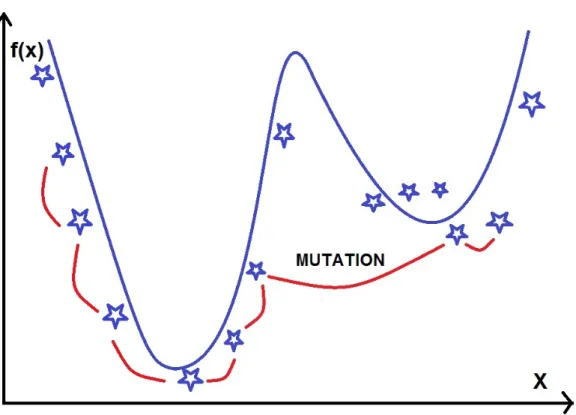
Genetics is a means by which each individual evolves. Evolution can also occur because of learning or random structural or functional alteration, which corresponds to the concept of mutation. The individual adaptation, in this context, corresponds to the idea that the individual is able to survive in a given environment, considering its tness.
The genetic algorithm is a mathematical algorithm inspired on the natural evolu-tion mechanism and genetic recombinaevolu-tion [Holland, 1975]. This provides a search mechanism based on adaptation conditions similar to Darwinism reproduction, sur-vival of the ttest and genetic mutation. Input parameters are subjected to tness evaluation, and values that better t the criteria are selected for reproduction.
Subsequently, the values are subjected to crossover and mutation, with a new population being generated. The process continues until the ttest population is dis-covered. Contextualizing on a mine valuation context, operational parameters (mine and mill throughputs, for instance) are subjected to mutation until the algorithm discovers the values that generate the highest NPV for a given mineral deposit.
The International Seminar on Mineral Processing Technology compendium [Gupta et al., 2005] describes the genetic algorithm as a probabilistic parallel search algo-rithm based on natural selections. Focusing on the optimization principle of the genetic algorithm, the evolution principle corresponds to reaching values closer to the target (minimization or maximization, depending on the objective). Figure 2.5 corresponds to visual representation of the working process of a genetic algorithm.
In the mineral industry, the genetic algorithm is used for modeling mining and metallurgical operations, given its versatility and adaptability to dierent contexts. Indian researchers [Gupta et al., 2005] state that "virtually every technical disci-pline, from science and engineering to nance and economics, frequently encounters problems of optimization".
Considering that the mining industry deals with parameters that are usually es-timates and predictions based on models (ore grade, future commodity price, met-allurgical recovery equipment eciency, among others), there is an expertise gap to be fullled by the genetic algorithm and its capabilities.
Figure 2.5: Genetic Algorithm
NPV maximization by modication of operation parameters [Gupta et al., 2005,Yun et al., 1990]. However, other correlated activies (extraction, processing, rening and sales) have been addressed in academic research. Investigators [Yun et al., 1990] use the evolutionary system for the optimization of underground mine development. The application proves to be succesful in a chinese gold-copper mine for long-range mine planning.
Crow, Clean and Cresser [Croew et al., 2006] use the technique to promote ro-bust optimization of soil organic and mineral fraction densities, assuming that such problem requires non-linear solving to achieve its purpose. In the context of mineral exploration, Rahman, Dutta and Smith [Rahman et al., 2013] present a novelty ap-plication of genetic algorithm for obtaining mineral domains. They evaluated gold assay and geochemical datasets obtained from a gold mine in Western Australia. The experimental results demonstrate that the genetic algorithm was able to identify do-mains accurately.
Salim and Cai [Salim and Cai, 1997] developed a methodology for the optimization of railway scheduling with environmental considerations, illustrating that basically every technical principle of a mining operation can be modeled and optimized via evolutionary algorithms. Even though the genetic algorithm is as an interesting methodology for process optimization, and its global optimization aspect is praised by many researchers [Goldberg, 1989, Vasant, 2012], the computational power required by the algorithm is a major topic of concern [Chen, 2002].
2.3.3 Interior point method (IPM)
The interior point method is a a non-linear solver capable of identifying the near global optimal solutions for tness functions, with strong approximation to global convergence [Vasant, 2012]. More specically on the MATLAB platform, the non-linear solver is named Fmincon. This algorithm is a method that relies on nding minimum values for continuous and constrained functions, whose main criteria is possessing continuous rst derivatives. The interior point method was well described by Powel [Powell, 1983] and explained by Vasant [Vasant, 2012].
Brandimarte [Brandimarte, 2006] states that Fmincon may not be most suitable for certain optimization models, and therefore its results must be compared to a global optimization algorithm. Kienitz and Wetterau [Kienitz and Wetterau, 2013] specify that the Fmincon requires specic lower and upper boundaries for constraints. How-ever, optimization problems with any constraint type can be solved by the commands specied on the solver declaration. Figure 2.6 represents the line search principle of Interior Point Method and Fmincon.
2.3.4 Integrating simulation and optimization
The combined use of simulation and optimization methods may seem redundant, since both methods have the same basic purpose, which corresponds to nding opti-mal values for variables in a model. However, the use of both methodologies combined has been addressed by numerical methods investigators.
Brandimarte [Brandimarte, 2006] exposes the idea that integrating both method-ologies is worthy of consideration, given that it provides a way to optimize complex
Figure 2.6: Interior Point Method
and stochastic systems, which cannot contain stochastic evaluation in some part of their models. The investigator concludes that non-linear programming methods that do not use derivatives are interesting for simulation optimization, given their time eciency.
Mine valuation happens to be an interesting topic for optimization, and the de-limitation of specic events (referred as scenarios and cases) inside a stochastic complex system instinctively requires the use of a simulation optimization method-ology. This perspective is corroborated by Law and McComas [Law and McComas, 2000], who describe a simulation optimization methodology to account for a set of single events contained within an optimization problem.
2.4 Summary and Conclusions
Mining companies often require several dierent types of nancial considerations for decision making while evaluating mineral commodities for potential mining, process-ing and sales. This valuation process requires years of data collection, technical evaluation and nancial considerations regarding the value of the desired commodi-ties.
Commodities are negotiated on a global scale and, as objects of international trade, they are subjected to the inherent volatility present on the market, containing a value subjected to supply and demand needs. Since a potential mine operation can last more than 30 years, it is necessary and relevant to establish predictions of the commodity prices along time. Willingham [Willingham, 2013] species that the future economic potential and associated risks of a mineral project are better understood with an accurate risk/return prediction.
The commodity prices will be used by mining companies to establish cash ows over time, and determine the economic valuation of a given mine deposit, consider-ing the amount of material it contains, specifyconsider-ing how much material will be sold on a given time. This valuation methodology is classically dened as Discounted Cash Flow (DCF). In general terms, DCF is a valuation method used to estimate the attractiveness of an investment, considering the Net Present Value (NPV) that the given mine deposit can obtain, given its technical aspects, and the market con-siderations, while considering the time value of money.
Commodity price will be the ultimate factor to be analyzed while evaluating a min-eral project, since the price of a certain commodity will be the necessary parameter required to calculate revenue for a mining project, allowing management to decide whether that project is economic or not. Considering the life of such operation, de-termining accurate forecasts for price will be extremely resourceful to evaluate the actual value of a mine project. The uncertainty is inherent to the market and must be observed or projected.
The current valuation methodologies are limited because they are either too fo-cused on commodity grade or too simplistic in regard to optimization procedures. In addition, they are majoritarily based in deterministic simulation processes, which are classically less robust than stochastic methodologies. The following shortcom-ings can be described: (1) Lack of nancial studies based on material stockpiling for future processing and sales; (2) Limited use of complex nancial studies for project feasibility, based on evaluation of commodity cycles and volatility.
Stockpiling material, allowing a buer pile to control the inventory, and attempt-ing to generate more prot over time is a topic of great consideration in a cyclical mining industry. The commodity market must be evaluated with the same level of complexity as the technical parameters of engineering equipment and processes.
Chapter 3
Price Forecasting
Economic uncertainty is a relevant theme in mine valuation, particularly when deal-ing with varydeal-ing commodity prices. The most important parameter to be input in any mine valuation study is the commodity price, which will inuence all other ma-jor decisions regarding the economic viability of a mineral deposit. Price forecasting corresponds to the use of techniques to anticipate future prices for a given commod-ity whose value is dictated by the open market, and the process is largely used in all types of market trade, with special focus in commodities in the context of this research.
Bowman and Husain [Bowman and Husain, 2004] present the importance of fore-casting prices for commodities, indicating that commodity price forecasts are es-sential for planning and project design. Fluctuation in prices may aect global economy, and have signicant impact on macroeconomics, considering that countries which produce and export them obtain a signicant amount of their export earn-ings through commodity sales. The researchers' objective was to assess the accuracy of price forecasts for a specic group of commodities, evaluating whether dierent methodologies were in fact able to predict the price of a mineral commodity on a specic period of time.The researchers also identify three dierent types of forecast in their analysis:
1. Judgemental forecast, based on quantitative or qualitative external factor anal-ysis (e.g.: supply/demand)
2. Forecasts based on statistical models based exclusively on historical price 3. Forecasts that attempt to rely on all the possible data (including future prices)
Unlike the study specied above, the purpose of this work is not to present a single methodology that will outperform all others already existing in academia and industry. Also, this research does not seek to identify a single price path for a given commodity and forecast an accurate projection for the future. Instead, price forecasting intends to be performed for a wide spectrum of market scenarios for mine valuation purposes. Instead, the generation of prices, which can be applied in a model that simulates mine valuation will serve as a basis to identify consequences of a given market scenario in mineral asset valuation. The methodology is similar to the one proposed by Zhang, Nieto and Kleit [Zhang et al., 2015], and will rely on simulation and generation of several dierent paths for analysis. SDE's will be used to simulate price paths for nickel and cobalt.
Price trend and volatility will be the evaluated in this stage. Distinct future prices for the two commodities in study, based on historical data provided by USGS [USGS, 2015], will generated here. Computer simulation will be applied and used as the means of data storage, forecast generation and subsequent use for mine valuation. MATLAB was selected as the platform for this project. The platform contains a Financial Toolbox, which corresponds to a series of functions for mathematical mod-eling and statistical analysis of nancial data.
MATLAB has been selected for use because it is an easily available software in the academic environment, and many studies have already been done in this tool. In addition, it contains a matrix structure that proves to be ideal for the study to be performed, particularly for the use of loops and iterations. The platform also contains both stochastic dierential equation models inside its functions. Finally, the plotting and graphing tools are of extreme importance for visualization of the parameters in study.
3.1 Stochastic Dierential Equation Modeling
The number of dierent models available in academia and industry for price fore-casting is substantial. MATLAB's Financial Toolbox [Mathworks, 2016b] describes a total of seven dierent models for price forecasting, and these can be grouped into two categories: random drift and mean-reverting drift. Therefore, the selection of two distinct methodologies was considered in order to encompass a wider spectrum of possible alternatives for commodity price forecasting. The two selected models
were the following:
1. Hull-White/Vasicek (HWV) Gaussian Diusion model (also referred in this thesis as "HWV" model or Mean-Reverting model)
2. Geometric Brownian Motion (GBM) model
The use of these models in particular was rstly based on the recognition of mean-reverting models accurately behaving as historical prices for commodities. Secondly, even though the random drift is not completely recognized in academia as the most accurate prediction procedure for a commodity price, is certainly a good means to obtain a wide spectrum of price scenarios to be generated and evaluated with the dynamic mineral asset valuation model.
Pindyck [Pindyck, 1999,Pindyck, 2001] recognizes the superiority of mean-reverting models over geometric brownian motion, as expressed in a study done by Postali and Pichetti [Postali and Picchetti, 2006]. These researchers establish the relationship between supply/demand and the commodity prices, describing how lower prices usu-ally banish less ecient producers, generating a market controlled by bigger players who raise the commodity price with less competition. Consequently, smaller players are able to enter the market, generating higher supply and consequently decreasing the prices. In this case, there is a reversion to the mean, due to the principle that the prices vary along a target value.
3.1.1 Geometric Brownian Motion
The formulation for the GBM model is given by:
dXt=µ(t)Xtdt+D(t, Xt) +V(t)dWt (3.1)
where:
• µ is the expected mean of the forecast, expressed as a vector of means over time
• D is diagonal matrix, in which each element on the main diagonal is the cor-responding element of Xt
• V is the parameter that controls the volatility rate
• dWt is a Brownian motion vector (responsible for stochastic movement)
The command for declaring and generating a GBM model le in Matlab is the following:
GBM =gbm(Return, Sigma) (3.2)
where:
• Returncorresponds to the expected mean of the forecast
• Sigma corresponds to the standard deviation of the data input for analysis Given the exponential form of the GBM model, prices in this case were expressed as year to year percent change of the log price value. The Return parameter corresponds to the commodity price mean. The sigma parameter, in the same fashion, corresponds to the standard deviation of the relative percentual change of prices expressed by their logarithm values. A simple representation of how the generation of this model is performed can be visualized in Table 3.1 and Figure 3.1.
Rate of change (in percentage) is the ultimate factor extracted from the historical data, which will base future prices on the pace of changing prices in the historical data. The starting point for the forecasts can either be the last historical price value or the overall mean of the historical data.
The resultant GBM model will be used to simulate a specied number of price forecasts. The model is stored on a MATLAB le.