Doctor of Education in Teacher Leadership
Dissertations Office of Collaborative Graduate Programs
Spring 4-9-2020
The Use of E-books, Computers, and Tablets To Enhance Reading
The Use of E-books, Computers, and Tablets To Enhance Reading
Skills
Skills
Nicole B. Ingram
Follow this and additional works at: https://digitalcommons.kennesaw.edu/teachleaddoc_etd
Part of the Educational Leadership Commons
Recommended Citation Recommended Citation
Ingram, Nicole B., "The Use of E-books, Computers, and Tablets To Enhance Reading Skills" (2020). Doctor of Education in Teacher Leadership Dissertations. 41.
https://digitalcommons.kennesaw.edu/teachleaddoc_etd/41
This Dissertation is brought to you for free and open access by the Office of Collaborative Graduate Programs at DigitalCommons@Kennesaw State University. It has been accepted for inclusion in Doctor of Education in Teacher Leadership Dissertations by an authorized administrator of DigitalCommons@Kennesaw State University. For more information, please contact [email protected].
The Use of E-books, Computers, and Tablets To Enhance Reading Skills
Nicole Bernadette Ingram
Kennesaw State University
May 2020
A Dissertation Presented in Partial Fulfillment
of the Requirements for the Degree of Doctor of Education in Teacher Leadership in the Bagwell College of Education
Raynice Jean-Sigur, PhD, Chair Debra Coffey, PhD, Committee Member Mark Warner, EdD, Committee Member
Dedication
When I started this journey, I did not imagine I would learn so many things about myself and my family. I learned that even when I got discouraged, frustrated, tired, and even sad, my family stood by me. Especially my mom. She dedicated over 45 years in education. Accepting this quest to fulfill the requirements for this degree was because of her. As a child in the womb, I was molded to become a great educator like my mom. Therefore, I dedicate this body of work to my super mom, dad, brother, nephews, and angles above. Thank you for never giving up on me, pushing me when my car was almost out of gas, and standing with me to receive the trophy at the finish line. I love you all to pieces and I could not be prouder to call you my family, my heart, and my world.
Acknowledgments
I would like to thank my family, friends, adopted family, and colleagues for all their prayers, support, and love throughout this process. The encouraging words, hugs, tears, inspirational texts, and cheers allowed me to see this special day. Auntie’s best nephews Chandler and Ian, thank you for being my biggest inspiration and support. My educational directors of this ship, mom, dad, brother, Dr. Howard, and my administrators at work, thank you. Dr. Raynice, I appreciate your calming and positive spirit you always seem to display when I needed most. Your professionalism and motivation helped guide me to the finish line. Dr. Coffey and Dr. Warner, thank you for being a part of this journey with your guidance and time assisting me through this dissertation process. I am appreciative to have worked with the both of you. I am incredibly grateful to have had such a knowledgeable group of professionals on my committee. Please know you have all played a significant role in me finding my wings at Kennesaw State University.
Four and a half years ago I had a vision. My educational knowledge began to flourish because of all the educational support from all the professors throughout the journey. The knowledge I have gained as I establishing my path has helped me become a better student, educator, and person. Thank you to everyone who assisted me in some type of capacity during this process. I have arrived at that special destination that was once just a dream. Now, my dream and vision have become a reality in 2020.
Abstract
The purpose of the study was to identify teacher’s opinions of technology and its usage with reading instruction. The study explored teachers’ use of e-books, computers (reading programs), and tablets to enhance reading skills. Specifically, the researcher wanted to investigate
elementary teachers’ beliefs regarding the use of e-books (electronic books), computers (reading programs), and tablets for enhancing reading skills with students who struggle with reading. To determine the impact of e-books, computers, and tablets on reading practices, data were collected from four urban elementary teachers in a southeastern school district. The research was
conducted using surveys, interviews, and observations. The research questions guided the study:
1. What are teachers’ beliefs about e-books, computers, and tablets in motivating elementary students to engage in more reading at school?
2. How do teachers scaffold knowledge and facilitate learning using these technological devices?
Key Words:
Table of Contents
List of Tables...9
List of Figures ...10
List of Key Words ...4
Chapter1: Introduction ...11 Statement of Problem ...15 Research Questions ...17 Definition of Terms ...17 Purpose of Study ...18 Significance of Study...19 Conceptual Framework...20 Researcher's Perspective...21
Chapter 2: Literature Review...23
E-books and Their Usage in Early Childhood Education...27
Digital Devices for 21st Century Learners...32
The Role of the Teacher in E-book and E-text Instruction...33
Scaffolding and Teaching Reading using Technology...39
Theoretical Framework...40
Chapter 3: Methodology ...43
Process of Research...43
Purpose Statement...44
Research Purpose...45
Qualitative Research Questions ...46
Research Setting and Participants...47
Sampling Procedures...49
Data Collection Methods...51
Data Analysis ...52
Trustworthiness...54
Credibility...54
Chapter 4: Case Study Analysis...56
Five Emerging Themes...67
Technology as a motivator for student engagement...68
Time spent with reading technology is perceived as not beneficial reading instructional time...69
Technology is not viewed as an assessment tool for reading...71
E-books/technological devices...76
Need for professional development...81
Findings by Theme...65
Research of scaffolding practices...85
Chapter 5: Conclusions and Discussion ...90
Summary of Findings...90
Recommendations for Practice...98
Teacher Leadership Recommendation...100
Recommendation for Teachers and School Administration...101
Limitations of Study...102
REFERENCES...103
APPENDIX A: QUALTATIVE RESEACH QUESTIONS...125
List of Tables
Table 1. Participant Demographics (N=4) ...48
Table 2. Description of Participants...57
Table 3. Professional Experience...59
Table 4. Technology used in classroom...65
List of Figures
Chapter 1: Introduction
Teachers at times may need to utilize different teaching resources to support and enhance reading. With recent events and increase use of technology, materials such as e-books, tablets and computers are being implemented into elementary reading classrooms. Research is needed to determine if there is an impact on reading skills using e-books, computers, and tablets in early childhood education. The focus of this research needs to include information on how teachers are utilizing technology such as e-books, computers, and tablets during classroom instruction to help students improve reading and writing skills. According to data from The Nation's Report Card (2020), reading scores in Georgia have decline from 2017-2019. The data were measured using Northwest Education Assessment Measures of Academic Progress (MAP) (2020). School and state data results signal traditional reading strategies implemented alone may not be working effectively to bridge student reading score gaps in especially those in urban settings. Using additional technological strategies during reading instruction may motivate students to read and write more proficiently.
As a teacher and researcher, I have observed children’s positive attitude while engaging with technology during play, using computers at school, and video games outside the school environment. Many students carry that same motivation into the classroom when engaged in lessons using computers. However, formal research regarding the use of electronic books (e-books), computers (used with reading programs), and tablets as additional resources to use along with traditional reading strategies when teaching reading in the classroom has not been done. Children in the 21st century are exposed early to technology in the form of e-books, computers, and tablets; therefore, it might be an easy transition to encourage them to read using this
What are E-books?
E-books or electronic books are a new type of electronic book that connect children to reading. These books can be shared with friends, parents, and teachers while improving literacy in all environments (Wright et al., 2013). Many e-books provide dictionary features using digital devices such as I-pads, Nooks, and Kindles. An I-Pad is a computer tablet developed by Apple. The Nook is a device created by Barnes and Noble that uses a touch screen like the I-Pad. The Kindle which is created by Amazon is also a tablet style computer. However, it uses a keyboard to manipulate screen features. All these devices support e-reading. Furthermore, you can use an app to sync information such as books to read using the devices. Using these devices to read e-books gives flexibility on when and where reading can take place (Falcone, 2012). E-e-books must be used with other interventions to provide improved vocabularies so that children’s reading and writing skills will be enhanced (Drori et al., 2009).
E-books and Reading
Reading is being impacted by the introduction of e-books along with print books. Emerging digital media and increased collection of digital documents have greatly impacted reading (Ziming, 2005). I-pads, Nooks, Kindles have given rise to an increase in reading e-books because these tools can be used to access e-books. Reading e-books may work better for some people because they offer features that enable the reader to change the text by increasing the size of the font. Studies show that the impact of new ways that people read digital media compared to print material, is easier for persons with disabilities (Ziming, 2005). Some authors of e-books have found ways to use the computerized tools such as e-readers, and I-pads to help students improve their vocabularies and phonological awareness. Research has indicated that computers
and software can provide exciting and interesting materials that help readers improve their reading/writing skills (Adina et al., 2012). E-books provide students engagement, which improves reading comprehension. Part of the reason students become engaged in e-books is because there is action along with the print material. Students can get involved in the reading. When e-books are used compared to reading print books, teachers must select e-books that contain animation and sound effects if they want students to become engaged in the reading. Not all e-books offer these features, so care must be taken when e- books are selected.
All e-books are not designed for young readers; therefore, teachers must be selective in the books they choose for early readers. Whereas studies show that children benefit from well-designed e-books with sound, music, and visualizations (Roskos et al., 2012). E-books that are designed for young children to begin to read, need to place emphasis on beginning reading strategies. When e-books are designed to introduce vocabulary and teach word sounds, they will help young readers become aware of concepts in the story. The electronic books provide
dictionaries and pictures that make reading enjoyable (Greschik et al., 2011).
Teachers must consider children’s stage of development when selecting e-books as learning tools. Teachers can use CD-ROM storybooks to teach young children to begin to read (Pearman, 2008). The use of reading standards and goals must be used along with CD-ROM storybooks in order for the young child to benefit and learn to read. When considering e-books for beginning readers, a choice of fiction and non-fiction books must be carefully selected. Fiction books are often used to teach students to begin to read. E-books on CD-ROM, the internet, and using digital devices can provide readers with story books for reading. The good thing about using technology to read these e-books is they are usually up to date books. Printed textbooks used for school activities may be out of date, whereas e-books are published at a faster
rate, and can be easily updated (Maynard & Cheyne, 2005). Tablets and e-readers are necessary mobile digital devices that can make reading easy for children. Tablets and e-readers provide dictionaries, and other search engines when word meanings are not clear (Grant, 2004). Digital devices are changing the way children read and locate information-books provide a variety of stories in interactive format that engage children in reading (Pena, 2010). Technology may be a new approach to teaching children of all ages, cultures, and disabilities how to become better readers.
The explosion of e-books demands that they be used to help students become better readers. Teachers need to use laptops, tablets, and other digital devices in order to plan and integrate technology in the classroom (Johnson, 1996). Using reading software as a motivational tool encourages students to read more (Ciampa, 2012). E-books can be used to motivate students who do not like to read. A possible positive effect of using e-books is the motivation students must read, thus exposure to additional reading opportunities. Reading and writing work together because writing is the result of information that has been read and understood. Some studies reveal that e-books are ineffective in comparison to printed text because readers rapidly browse through e-books and remember less (Dunbar & Murat, 2012). Problems may occur if the teacher does not provide guidance when e-books are being used. Therefore, education programs in schools must require future teachers to engage in methods of teaching that use technology and materials other than print books (Johnson, 1996).
Statement of the Problem
Based on research and conversation with educators, Elementary students have been struggling with reading for years. According to the Georgia Report Card, reading scores have continued to decline in the state of Georgia (Georgia Department of Education 2019). I have also witnessed teachers struggling to find additional strategies and resources to help students meet their academic needs in reading. I have realized following my observations that teachers are not applying technology strategies nor using reading resources enough to assist with daily instruction due to a lack of reading professional development sessions. Furthermore, teachers might not receive enough professional development opportunities that prepare them for applying technology instructional uses into their teaching lessons, such as using e-books, tablets, and computer programs. I am extremely interested in the ways in which teachers may use technology to help them support reading lessons. According to Jones and Brown (2011), electronic books (e-books) are becoming popular personal reading sources because they offer a large selection of reading materials. In a study of a comparison between e-books and traditional print books in an elementary school, children welcomed e-books and the technology but did not ignore print books. According to Wigfield et al., (2008), the amount of time children spend on reading activities is an indicator of their motivation to read and make gains in reading achievement.
Elementary teachers where I teach try to focus on assisting students with a variety of interventions to help shrink their weaknesses in reading. Teachers, administrators, and staff members work collaboratively to create a plan and form partnerships to assist students with their academic needs. Some students are struggling to read on grade level and cannot enjoy a variety of reading experiences in school. As reading strategies are implemented into instructional practices, students reading skills should improve. Teachers in my school including myself, are
trained to perform many instructional practices to assist with struggling readers. However, I believe there is still more work that can be done to help students successfully learn to read and enjoy books in hard copy or electronically. According to Schmoker (2018), “The most important component when assisting students in reading is to make sure they receive effective instruction in school which can be a life-changing benefit" (p.94). Furthermore, students need to be involved with the tasks and resources their teachers may expose them to in the classroom According to research materials provided in the home by parents (Arzubiaga, et al., 2002) or classroom material chosen by the teacher are vital in children's literacy development (Flowerday et al., 2004).
Schmoker (2018), suggests that " teachers must be well trained in basic elements of effective teaching when presenting daily lessons to help students meet academic goals rather than focusing on technology usage," (p. 93). Schmoker (2018) further states that "many school
districts use a large portion of their budgets for technology initiatives and training for professional development for teachers, and some of them have not learned to implement
effective lessons or a coherent curriculum,"(p.93). The study will also explore teacher beliefs and scaffolding approaches to technology and reading in order to assist in professional development opportunities for educator resources for learning. Bauerlein (2009) indicates that the use of digital devices does not increase vocabulary or improve thinking skills, but reading does. Many U.S. schools use computer-based games, tools, and instructional programs to improve learning and lower the student achievement gap (Schmoker, 2018). According to this researcher, none of the highest achieving countries is spending the bulk of their money on technology. Schmoker (2018) also suggests that" we invest in evidence-based practices to improve student learning offer professional development opportunities,"(p. 95) but many do not offer hands-on
experiences and continuous learning for teachers and staff. Support through provision of various resources from school staff, district staff, and administrators could assist with improving reading skills of students who read below grade level. My intent for the research is to provide
stakeholders with evidence needed to determine whether teachers believe if resources such as e-books, computers, and tablets should be used to enhance reading skills of students to support reading lessons. This study will be guided by the research questions below:
Research Questions:
1.What are teachers’ beliefs about e-books, computers and tablets in motivating elementary students to engage in more reading at school?
2.How do teachers scaffold knowledge and facilitate learning using these technological devices?
Definition of relevant terms:
App: A computer software or program generally small in size that can be used with mobile devices such as a smartphone or tablet. An app can also be used on a desktop computer
CD-ROMS: A computer digital reading operation memory system used for accessing education software on computers
Computers: A computer is a device that accepts information (in the form of digitalized data) and manipulates it for some result based on a program, software, or sequence of
instructions on how the data is to be processed
Digital Devices: Digital devices are various types of technology, such as laptop computers, I-pads, Nooks, Kindles, and I-phones
(Definitions from whatis.com) and (definitions from Google.com), 2018
E-books: An e-book is an electronic book or digital version of a book using different reading devices such as e-readers, I-pads, I-phones, and CD-ROMS
IELS: IELS is an interactive e-book learning system used to improve reading with children in Elementary Schools
MAP: Measures of Academic Progress- a norm-referenced measure of student growth, (https://www.hcpss.org>mapfaq)
Tablets: Tablets are smaller versions of computers, also called handheld devices, such as I-pads, e-readers, and I-phones
Purpose and Significance of the Study
The purpose of the study is to identify teachers’ beliefs and the use of e-books, computers (reading programs), and tablets to improve reading skills. In addition, the research will observe and investigate how elementary teachers scaffolding reading using technological devices. With recent increase and requirement of technology to be used in instruction, there is a need to study the perceptions and usage of technology such as e-books, computers (reading programs), and tablets, on individual learners with reading deficiencies because technology is a part of daily living experiences in the 21st century. The technology revolution effects on reading
comprehension are being studied because there is not a multitude of research available to guide teacher's instructional strategies. Evidence on technology use to teach reading in elementary schools is somewhat limited and require further study because of the vast amount of technology being used in education settings. I believe the use of technology is rapidly growing in schools
and the world even without evidence of the effects of use in reading sessions. According to Wyatt (2016) “education must become more productive in its work and more responsive in its program without losing its perceptive in the process" (p. 8). Teachers provide new strategies that include the use of technology along with research-based reading strategies to improve reading.
It is particularly important that students be given the best learning experiences in order for them to succeed academically and socially. My goal is to assist all my students in achieving at the highest levels in all subjects. Teachers should use technology when possible, along with research-based reading strategies to determine if reading improves amongst students who have reading deficiencies.
Significance of the study
The study is significant due to the fast-growing use of technology in education settings and at home. Teachers and administrators need to know if the money spent on technology reading programs, e-books, and tablets is justifiable. They need to know if the use of technology will yield the reading results they expect. I want to know the same thing because every child deserves an education that will address 21st century job skills. Students must be able to read in order to acquire jobs that require highly trained workers. Reading at an early age
supports learning. Therefore, researchers are searching daily for strategies teachers can
implement in the classroom. Educators are not sure if e-books, computers, and tablets improve reading skills. Teachers need to know how technology benefits their students when implementing the tool during instruction. The study is also significant because the research will provide
teacher leaders with insight to provide assistance in finding techniques, lessons, and resources that will improve the reading of their students. The use of e-books, computers (with reading software programs), and tablets provided additional research that determined what if any impact
use of technology enhances reading skills of elementary students in grades second through fifth.. The focus in this study is on teachers’ beliefs about the use of e-books, computers, and tablets and how students can benefit from technology and reading instruction.
Conceptual Framework
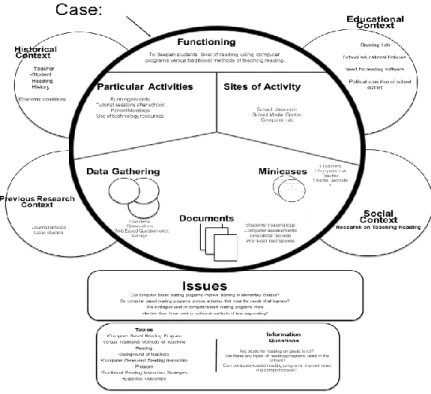
It is especially important that students be given the best learning experiences for them to succeed academically and socially. In constructing my conceptual framework for this research, I followed two guiding research questions to direct the research to determine teacher believes about e-books, computers, and tablets and reading performance. I understand that different tools must be used to capture and promote the learning of all students. There is no one size fits all model for teaching and learning. My research was guided by the constructivist’s theory of Vygotsky, which suggests that teachers must apply his learning theory that promotes the belief, “What is learned must be taught” (Wilhelm, 2001, p.8). If there is no teaching, then learning does not occur.
The conceptual framework is to serve as a guide for developing the research based on what has been learned. The conceptual framework was used in planning and
conducting the research according to Ravitch and Riggan (2012). A case study design was used to observe, survey, and interview four participants who were highly qualified teachers who taught reading in an elementary school. According to Ravitch and Riggan (2012) the conceptual framework is what guides and aligns the research process. Participants used some or all the technology featured in the study to supplement reading lessons. Research questions were answered through qualitative data related to teaching practices using researched -based strategies.
Researcher's Perspective
Personal teaching goals have led me to pursue further research on the use of e-books, computers, and tablets to improve reading skills. Teachers in the study have acknowledged students at the urban elementary school tend to struggle with reading and score lower than students in suburban schools in my district based on school and district data. Having worked in a previous urban setting as a teacher, I noticed the same trend. School test data from the local Department of Education's website revealed lower test scores in reading and math than schools in the suburbs. I wanted to find solutions to change the statistics reading deficiencies an urban elementary school setting. I am driven by my personal interests and goals to help students succeed in reading. With that being said, I understand the importance of teachers being knowledgeable and prepared to tackle any issues that may affect students academically. As a teacher leader I would like to assist other teachers, paraprofessionals, and other coaches through voice, modeling of skills, resources, and advocacy for needed tools to help students grow. One assessment tool that I as well as other teachers use to monitor and assess reading growth is MAP reading. Using Measures of Academic Progress (MAP Reading) scores through Northwest
Evaluation Association (NWEA), I Ready data and Georgia Milestone Assessment System scores (GMAS), I can monitor, and assess student growth in reading at a local inner-city school through formative and summative assessments used in the classroom. According to school data many students are not reading at grade level; however, the goal is to have one hundred percent of the students reading on grade level or at least show a significant amount of growth. Reading sessions are being taught to students in grades second through fifth by grade level teachers and one Early Intervention Program (EIP) teacher. Due to my concerns for every child to become a successful reader, and data indicating low reading scores, I am driven to find additional reading
strategies to implement in reading lessons. Several students possessing low MAP scores, below level achievement on iReady diagnostic test, as well as GMAS data have displayed the need to receive additional help through an Early Intervention Program (EIP) teacher.
Additional interventions from the general education teacher like myself will help stimulate the development of reading tools to promote success in reading. According to
Schmoker (2018) all subject areas should include reading lessons if student's reading skills are to improve.
Worldview
The worldview that technology is a vital component of twenty-first century teaching and learning is based on pragmatism. As a pragmatist my approach to teaching is based on the learning theory that children must be taught to read (Wilhelm 2001). As a researcher my
assumptions that technology can enhance reading lessons must be further studied. I believe that more research needs to be explored on the impact of technology when used during reading lessons. My orientation to the topic, my understanding of the school setting, the socio
backgrounds of those involved in the study have led me to dig deeper into research regarding the use of e-books, computers, and tablets to improve reading.
Chapter 2: Literature Review
The literature review examines research and studies to better understand how e-books, computers, and tablet use affect learning through the teaching process. According to Salmon (2013) the establishment of computers and other technological devices have played a significant role in the lives of many students and adults. One major role being the implementation of computers and other devices from the technology world being used inside and outside the classroom to teach students (Salmon, 2013, p.85). The internet has seen an unprecedented
amount of growth in usage since first being introduced in the United States. The internet/network can be viewed as a colossal resource that stores and disseminates huge amounts of information (JIA-Rong Wen etal., 2012).
According to Goodfellow (2004), the desire to prosperously interact with textual reading opportunities and interplay in digital atmospheres is more so greater now than before due to a more evolving technology abundant society. Access to computers once was considered original, but now is thought of as a vital component of everyday life and school instruction (Roskos, et al, 2009). The effect of tablet ownership is significant and is expanding rapidly, therefore educators have been swift to explore what benefits these touchscreen devices may offer in an educational setting (Bannister, 2010; Merchant, 2012). On the other hand Zucker et al. (2009), suggested that electronic books (e-books) are accepted methods for merging technology in preschool and elementary classrooms; however, there is no consensus agreement regarding the magnitude to which e-books expand literacy skills in the areas of “comprehension and decoding” ( Zucker et al., 2009, p.47).
Technology has continued to grow as well as the debate on the interpretation of what reading, and literacy are defined as by definition; attention in reading digital texts has risen, as indicated by retailers having more customers interested in purchasing text in digital formats rather than printed (Miller & Bosman 2011). The use of e-books is winning popularity so much, that some restaurant chains that offer drive through service, and offer CD-ROM books inside kids’ meals, “featuring characters such as Arthur and Junie B. Jones” (Amster-Burton, 2007). Together with marketing power, those who study literacy can now in the notion that e-books can be an asset to comprehension development (Leu, 2000).
While e-book availability on several electronic gadgets have become an increasingly popular method of choice to read, many researchers have examined how to utilize this modern technology practice for learning (Bierman et al., 2010; 2010; Grimshaw et al., 2007; Woody et al., 2010). There have been many studies conducted that investigated undergraduate students’ experiences with e-books, however no attention has been directed to children’s learning
experiences with the use of e-books, in conjunction with other reading features, choices, and cognitive abilities (Salmeron & Garcia, 2011). There has been no easy partnership established of how reading and comprehension connect (Schugar, et al., 2013). Pearman (2008); Zucker, et al., (2009) stated research that pinpoints that affiliation between reading and comprehension is just simply limited.
Although there is an emergence of, and an increasingly popularity of e-books, there is still a lack of clear evidence that supports whether e-books truly effect children’s development in literacy and to what degree those effects measure (Zucker et al., 2009). Reading patterns play a particularly important role in determining a student’s overall reading status and may be
Liang and Haung (2013) concluded it is necessary to execute more in-depth studies with interest to the use of e-books with children in educational circumstance.
Children are interacting with digital text, inside school classrooms and home
environments evermore with the availability of electronic storybooks and interactive storybooks via CD-ROMs. There is a dramatic growth of the number of young individuals who find
themselves engaging in reading using an e-book text format (Labbo & Kuhn 2000; Levy 2009; Smith 2001). Digital technological devices have a variety of uses in the home environment rather than a school setting, even when made available for educational purposes (Kerwalla & Crook 2002). Facer and Kent (2009) suggested some technologies may be more appropriate for home-school communication than others. Arguments have developed suggesting that too much research into educational uses of digital technologies centers around the possible learning benefits of technology use outside of engaging with the compounded forced realities of education technology use from the outside world (Selwyn, 2010). Children need to obtain
proficiency in the contemporary literacies of today’s technologies to become literate (Leu, 2000).
Technology can offer positive benefits for struggling first grade students’ literacy learning, but the bulk of evidence is limited and focuses on technology-infused intravenously (Cheung & Slavin, 2013). E-books are appealing to many educators because they can simply be merged into literacy instruction, involving students to have little procedural understanding beyond the ability to operate a mouse (Zucker et al., 2009). Progressively, there have been policies, and learning norms put in place to ensure teachers apply technology tactics to aid literacy instruction, therefore electronic books provide a popular method for capturing these standards and promoting children’s literacy development (Zucker et al., 2009).
Zucker, et al., (2009) stated for this reason, there is a lack of agreement regarding e-books with respect to:
a) the extent to which electronic books support different aspects of students’ literacy b) which students may benefit from use of this technology; and
c) which “supportive” features within e-books improve literacy outcomes (Anderson-Inman & Horney 2007; Leu, 2000, p.49).
Tensions continue to exist between “what can be done and what should occur with e-books”, along with a variety of other technology resources (Labbo & Reinking, 1999, p.49). Although many have displayed opposition towards the use of computer technology for young adolescents learning (Cordes & Miller, 2000), the benefits of implementing technology into educational environments with children has recorded positive results. For instance, children who become engaged with daily use of a computer, tend to display an increasing rate of growth with their intelligence level, fundamental knowledge, problem solving skills, and language abilities in comparison to those individuals who choose not to include technology use in their lessons (Clements & Samara 2003; Haungland 1999; Swaminathan & Wright 2003; Vernadakis et al., 2005). However, obstacles in early childhood education may rise when teachers and
administrators start looking for new possibilities with integrating technology into the educational regiment, as young children seek stimulation and involvement with their own learning (Couse & Chen 2010). For this reason, best practices of reading preparation must expand beyond print and into digital reading settings if students are to prosper in the second decennium of the 21st century (Couse & Chen 2010).
E-books and their usage in early childhood education
To understand how e-books are integrated into an elementary/early childhood setting, there first must be a definition established as to what an e-book means. An “e-book” is recognized as an “electronic representation of a book” (Garrish 2011, p.1). The design of e-books can use an array of software platforms in which team leaders may have an issue locating them easily (Sargeant 2015). Sargeant (2015) found:
The educational theorist, Bill Cope explains a nonspecific meaning of the term “book”: According to Cope (2001), “a book is no longer a physical thing” (p. 6-7). A book is what a book does…a book in this definition does not have to be printed. It can be rendered in many ways, including electronic-visual and audio (talking books). A book [is] not a thing. It is a textual form, a way of communicating. A book is not a product. It is an information architecture (Cope 2001, pp. 6-7; emphasis in original, p.455).
As Cope (2001) stated there is no one form a book can be created. Books can be developed by hand, printed through a machine, viewed electronically, and listened to through audio (Sargeant,2015). Additionally, the possibility of books being created using only visuals and no written text can exist (Nodelman, (1988). Many theorists acknowledge that the different interpretations of books and digital formats being introduced, may eliminate the significance of an original book format Stephenson (1999). Despite apprehension, digital and printed text will continue to give readers an option of the type of text format they may obtain (Eisenstein 2011; Yokata & Teale, 2014). Nevertheless, “basic text and image documents” were a result of the creation of e-book software established to be used in conjunction with e-reading gadgets (Garrish 2011, p.458). As a result of the discovery e-books, they are known to be and still are, changeless
digital alternatives of printed books or books formatted to be compatible with handheld devices, such as e-readers (Sargeant, 2015). Since 2010, there has been an enormous increase in the amount of tablet like computers being used, made, and sold (Sargeant ,2015).
The massive growth in production and sales was attributed to the introduction of touch screen tablets, such as the Samsung Galaxy Tab and the Apple iPad (Sargeant,2015).
Researchers found that these devices are very much in high demand in the technological world (Goodwin 2012; Murray & Olcese, 2011; Rideout, 2011; Tahnk, (2011). Rideout (2011)
conducted a recent survey with the United States Department of Education that revealed that fifty two percent of children ages two though eight were able to retrieve some type of handheld device inside the home. More than eleven percent of those same children spent at least forty-three minutes a day engaging with the device. The survey also concluded that thirty-eight percent of children had prior contact with the devices (Rideout, 2011). According to Neumann and
Neumann (2013) tablets may play a vital role in the cognitive development of children today and in the future.
There are several pre-requisite emergent literacy skills that may contribute to reading and writing abilities in the future. The skills include letter name, sound development, early stages of writing, print concepts, and phonological awareness (Bowman & Treiman, 2004; Cohen & Cowen, 2011; Whitehurst & Lonigan, 1998; Snow et al.,1998). Emergent literacy skills may be formed due to tablets offering print-based connections with various features (Neumann & Neumann, 2013). Touch screen tablets seem to offer a friendlier interface when compared to those of a traditional base computer system (McManis & Gunnewig, 2012). Therefore, tablets can prepare multimedia displays that are able to trigger many kinesthetic sensory structures and generate immediate feedback based on a child's response, (Copper 2005; Tahnk, 2011). For this
reason, children are fit to use computers fast by investigating, learning new skills, and obtaining early literacy understanding (McManis & Gunnewig, 2012).
E-books provide interest, and enjoyment in reading experiences which prepares children for learning (Roskos,Bustein, & You, 2012). When children read e-books, they get involved in the technology aspect of them, especially if they are interactive books. Interactive e-books offer readers a chance to use gestures and respond to noises made when they activate the books' features. Interactive books get children involved in the story by allowing them to click hot spots or features that produce sound. The reading behavior of people who prefer e-books is different from those who prefer print books.
When children experience e-books, they can mark the text, search for content
information, and track what they have learned. Interactive e-book learning systems (IELS) are used in elementary schools to help children increase their learning experiences and keep up with information learned. Personal experiences increase children's desire to learn more. The reading behavior on electronic devices is based on how people who read books on paper feel about electronic books (Greschik et al., 2011). Teachers can observe students to see which type of book is best for them to read. If students have never tried e-books, there is no advanced technology attachment to show them what to do, or there are no notes for teachers to plan instruction.
Research does show there is a need to use multi-media sources based on children’s development as learning tools in the classroom (Lefever-Davis & Pearman, 2005). Pre-K students, and those in kindergarten will need books designed for their age groups. E-books designed for first graders will be different, because they have developed skills for more advanced reading than beginning readers in pre-k and kindergarten. Teachers must also consider the
content of e-book reading materials. The content used with e-books includes fiction and non – fiction as well as audio and animation features (Maynard & Cheyne, 2005). Researchers state that e-books are more flexible, and more readily available than paper texts (Huang, Liang, Su & Chen, 2012). Using e-books in education may improve reading among young beginning readers and should be considered to improve literacy of young children. If children are to be impacted by e-books in reading and writing, they need more exposure to them in school. Based on my
readings, the more educators use e-books, the greater the impact on learning, especially if they are used with traditional researched reading strategies.
Technology Skills
Technology requires strategies that are beyond reading from a printed book or writing on paper with a pencil. In order to use today’s technology, skills are needed to enable the user to interact with other technology users, using reading strategies to understand the text, and integrate reading and writing (Tancock & Segedy, 2004). In other words, just having technology serves little purpose if the teacher, and students do not know how to use it. The internet gives teachers an opportunity to help students construct knowledge using multimedia environments. Using the internet can present challenges for young children; therefore, teachers may need to provide instruction before introducing e-books, and other technologies to them. Children can learn with the help of teachers when technology is integrated into the classroom activities. The e-book industry’s current focus is on changing printed books to electronic books.
Technology also includes the laptop and desk top computer. The computer can be used to assist non-readers in instruction. Word identification is a basic skill that is taught in schools to all students including those with physical, and cognitive disabilities. Technology can help these
students learn to read using strategies that help them with fluency, word identification, and comprehension. Computer assisted instruction as an effective method to provide identification of words in a non-verbal reading approach is useful in teaching reading and writing to students. Students who have severe speech impairments and physical disabilities, and autism were given instruction in decoding and word identification instruction using non-reading approaches (Coleman-Martin et al., 2005). The computer can assist these non-readers while the teacher works with others who may need her help.
Children who cannot use technology may be embarrassed to ask the teacher for help. While doing so may waste time, they need to learn technology skills in today’s digital world to benefit from e-books. Children who are skilled at using computers, and other technology to read do not experience time delays as those who have no experience with computers and digital medium (Grimshaw et al., 2007). Children must learn to use digital devices at an early age, including I-phones, I-pads, computers, nooks, and kindles. Software designers should consider children’s literary knowledge at different ages when designing books to support language and literacy of preschoolers who have not learned to read or write (Korat, 2010). The development of reading software will improve the reading and writing skills of the students who use technology devices. Not only will preschoolers’ benefit, but children in kindergarten all over the world, especially in Israel will benefit. Children from Israel were a part of a study using e-books. The study indicated that computer assisted learning promotes language, and literacy development of children in other countries using e-books (Shamir et al., 2008).
Digital Devices
Digital devices refer to electronic tools used to read books or access information. These devices include reading devices such as Amazon’s Kindle, Barnes & Noble’s Nook, and Apple’s I-Pad. The devices are portable, and provide storage capabilities for children’s story books, both fiction and non-fiction. While the I-phone was developed in the past ten years, there is little if any research on its use as a classroom digital device. Interactive e-books may be read on digital devices designed for reading. Most of the reading devices are compatible with their own
computer applications (apps). E-books provide interest and enjoyment in reading experience which prepares children for learning (Roskos et al., 2012). When children engage in e-book reading, they have a sense of control of multi-sensory behavioral communication. If children could not read these interactive e-books using digital devices, they would miss the pleasure of reading (Roskos et al., 2012).
Using e-books, e-readers, and tablets, also called digital devices may change the behaviors of readers due to the type of technology involved (Zambarbieri & Carniglia, 2012). The advantages of digital reading devices can be due to the interactivity they provide. The text, pictures, sound, and visuals can benefit readers. With the addition of digital devices young children, and adults have more opportunities to read. The price of e-readers, and I-pads is dropping, and more book publishers are promoting electronic books (Jones & Brown, 2011). Schools are beginning to purchase these devices for their students as well as for teachers. E-readers need to become a part of the classroom in order for children to have immediate access to e-books. When using digital technologies with electronic books, vocabulary building strategies need to be used to encourage reading. Vocabulary building strategies along with animation are beneficial when used with e-books, but there is no difference in comprehension when compared
to printed books (Higgins & Hess, 2000). In the new digital learning environment, multimedia offers opportunities to meet some of the learning needs of students (Roskos et al., 2012). Due to the limitations of the human mind, multimedia programs such as cognitive theory of multimedia learning by Mayer (CTML), provide cognitive theories that exceed the human mind, and
promote the thinking process (Kim, Kim, & Whang, 2013). Just reading e-books alone does not promote reading achievement even if they are multimedia. Researched-based reading strategies are still vital to promote fluency, vocabulary building, comprehension, and motivation.
Electronic books may not be a satisfactory replacement for printed books read by adults or children who are read to by adults. Reading electronic books to children introduces digital devices, and technology at an early age. As children read more stories using digital devices, they become less dependent on animation to understand the story. Internet research-based strategies need to be explored in the teaching and learning environment so that using digital devices in the classroom is beneficial to students and the teachers. The internet has brought about interactive informational text; therefore, new types of reading strategies may be needed for students who use the internet to locate information, and narrative text (Corio & Dobler, 2007). The internet has also brought this new technology into the classroom. The introduction of technology takes students beyond reading from a printed text and beyond writing on paper with pencils.
The role of the teacher in e-book and e-text instruction
Researchers found evidence suggesting that many changes are happening such as the development and teaching methods in an online environment. A call to re-examine the role of a teacher is essential when incorporating technology into the learning environment (Salmon, 2000; Bonk, 2003; Jones, 2004). Especially because of the essential role pedagogy has played in the
e-learning setting. A debate from teachers regarding this information is plausible to determine the true purpose for learning and educating (Singh, et al., 2002). The researchers found e-learning environments clearly develop new roles for teachers, such as “e-authoring and e-moderating” (Singh, et al., 2002, p. 44). As a result, difficult questions in education form regarding pedagogy and curriculum (Berge & Collins, 1995; Mason, 1998; Salmon, 2000; Anderson et al., 2001; Laurillard, 2002; Bonk, 2003; Garrison & Anderson, 2003). Researchers indicate this is happening because finding alternative methods of turning traditional teaching items into electronic artifacts is not an easy process, instead it fosters individuals to think about pedagogy in a critical and technological sense (Bonk & Cunningham, 1998; Bonk, 2003; Jochems et al., 2003; Westera, 2004). Jones (2004) indicates that pedagogy is the most significant element, as this ascertains student engagement. In addition, it was stated that university leaders should examine information and communications technology as a new way to look at curriculum based on newly added pedagogies that are in collaborative and constructive form (Jones, 2004).
However, Weller (2002) signaled a warning stating the following:
"In order to successfully deliver an online course, it requires a strong pedagogical strategy. This may require much more thought and reflection that is perhaps given
to a traditional lecture series" (p.44).
Present-day pedagogical practices are widely invaded by tools, and semiotic resources of the digital era, an age which as recently sustained transition metaphorically characterized as
expected from the hard culture of the 19th and 20th centuries to the fluid informational culture of the 21st century (Area & Pessoa, 2012). Therefore, e-books and e-textbooks may be defined as examples of such instruments, which suggest current opportunities as well as obstacles for
teachers and learners in a constant developing educational atmosphere (Oliveria et al., 2013). To date most research conducted on e-books, has been on undergraduates, who are anticipated to have greater experience with refined study methods, and work routines, than students who are enrolled in an elementary setting (Sun et al., 2012; Quan-Haase & Martin, 2011; Rose, 2011; Nicholas et al., 2010).
One conclusion reached through the study while conducting the research regarding e-reader use is that many users lack time at using devices. The lack of time may attribute to the level of expertise individuals can perform tasks using the devices. Some tasks that face hindrance include reading, while engaged with technology tools/devices (McAnulty et al., 2012).
Researchers agree with this debate and recommend that before using e-readers for academic use, teachers should look at taking time to assist students with learning the key functions of these multi-touch devices and the body language to engage with them. New users can find easy tasks such as opening a book, turning pages, and adapting to the screen could be major obstacles. Therefore, it is recommended to enlighten students with reading books on the iPad, or other e-reader using specific steps. Schugar, Smith and Schugar (2013) recommend these steps:
Demonstrate to students how to turn on the device and gain access to the apps they seek.
Model to students how teachers can control devices such as implementing locking features.
Model to students how to open an e-book, flip pages, and use interactive features based on the app being used on the device.
Give students specific expectations regarding their use and interactions with devices as they read and re-read information in the future (p.618).
Teachers must not be naive when it comes to the level of experience students have with using tablet devices (or other mobile devices, like an iPhone), instead, teachers must be sure students are prepared with all the necessary training using technological devices to obtain and read an e-book efficiently, (Schugar, Smith, & Schugar, 2013). Furthermore, researchers state that teachers should teach students to transfer what they know about print reading to e-reading (Schugar, Smith, & Schugar, 2013). Teachers involved in reading e-books with their students can aid comprehension through scaffolding the skill with a specific strategy when teaching practices are being implemented (Schugar, Smith, &, 2013). Mainly it is important that teachers
demonstrate how they implement strategies to reading e-books, and clearly reveal how the implementation of the strategy is either related or divergent across the two options (Schugar, Schugar, & Penny, 2012). Strategies used when reading such as inferring, predicting,
retelling/summarizing, and comprehension are appropriate ones that may be applied when transferring from print rich to electronic text (Schugar, Schugar, & Penny, 2012).
Nevertheless, all strategies are not transferable between the various types of text. Researchers found strategies such as coding and previewing are troublesome or unachievable to do before engaging in the reading process in numerous interactive picture e-books (Schugar, Schugar, & Penny, 2012). Additionally, teachers must review with students the proper use (s) of those supports that involve interactive use (Schugar, Schugar, & Penny, 2012). Features such as a dictionary and option to read to the individual, are necessary skills students should know how to use, when teachers are assisting them with the transfer of targeted print-based reading skills (Schugar, Schugar, & Penny, 2012). Researchers believe students should not depend on the features when engaging in e-reading opportunities because the time necessary to use dictionary functions may interfere with the reading process (Schugar, Schugar, & Penny, 2012).
In order for students’ experiences with use of e-books to be positive and not negative, teachers can help them in negotiating a balance between using the interactions to support
comprehension, and using them in a way that hinders their opportunities to implement strategies while reading (Schugar, Schugar, & Penny, 2012). Additionally, teachers must take a role when students are e-reading on tablet devices, so that they may assist the students with applying their existing strategies for establishing main ideas and important information as well as overcoming distractions within the text (Schugar, Smith, & Schugar, 2013). E-books have become easily available to teachers and students in many languages and offer instructional support features/ and or multimedia features for use (de Jong & Bus, 2003).
According to Korat and Shamir (2004) today’s e-books come in a variety of versions, such as animated and interactive. They reported there are many children’s’ e-books which are programmed to be interactive including having multimedia effects, written print, oral, musical sound, and animation (Korat & Shamir, 2012). These features enable young children to enjoy e-books in addition to allowing them to learn new words and storytelling (Korat & Shamir, 2012). Researchers stated that there are e-books that were developed using thinker reader software which, enables teachers to match the e-books to identified comprehension strategies that support the instructional needs of students (Zucker et al., 2009). E-books provide the technology
component of instruction for students.
However, there has been a huge push in policy and learning standards for teachers to use technology to support literacy teaching. Electronic books seem to be a favored approach for assisting students with meeting the standards and acquiring development in their literacy stages (Zucker et al., 2009). Nevertheless, there is a deficiency of solidarity concerning e-books regarding the following statements listed.
Anderson-Inman & Horney’s (2000, p. 49) study found the following:
• the extent to which electronic books support different aspects of students’ literacy development.
• which students may benefit from the use of this technology; and
• which “supportive” features within e-books improve literacy outcomes (p.49).
Researchers urge teachers to provide guided instruction when implementing the use of interactive picture e-books through initiating students’ experience before reading, eliciting students to answer comprehension questions during reading, and assisting students with the process of extending their thinking beyond the text after reading. It is possible teachers may be able to guide students, so that they may be able to overcome problems that may arise with interactive features when using interactive e-books. Additionally, educators are encouraged to consider how some interactive features of the text may motivate students, while diverting them from important information in the text. It is imperative that teachers model strategies for e-reading, help students in shifting traditional reading actions to electronic texts, and make selections on quality interactive-e-books that will scaffold students’ reading. Furthermore, according to Schugar, Smith and Schugar (2013, p. 623) the following should be considered when implementing e-books:
1. Review whether the interactive qualities in the e-books you use with children disturb, aid, or expand their understanding of the text.
2. Give students an interchangeable strategy when instructing, that can be used with e-book reading.
3. Examine e-books for value, precision, and readability before utilizing them for instruction.
4. Offer students chances to practice reading with both traditional and electronic books.
Scaffolding and Teaching Reading using Technology
By implementing the components of social constructivism in the classroom environment, reading and writing can be taught using approaches based on the theories of Vygotsky (1978) in Blake and Pope (2008). Teachers may use e-books, I-pad, I-phones, and internet technologies to enhance teaching strategies that improve learning though cognitive and social theories ascribed by Piaget and Vygotsky (1978) in Blake and Pope (2008). Social constructivism and cognitive constructivism can assist teachers in developing tools for an effective classroom (Blake & Pope, 2008). Teachers often use Piaget’s theory of cognitive or individual constructivism to help students to learn but have ignored Vygotsky’s social theory in the classroom. Blake and Pope (2008) indicated that teachers who incorporate the theories of Piaget and Vygotsky into their teaching strategies, will have a better opportunity of increasing the achievement of their students than those who do not. According to Blake and Pope (2008) Vygotsky emphasizes the roles of social interaction and instruction. It is suggested that development does not occur before
socialization. However, social relations enforce developmental functions according to Vygotsky (1978) in Blake & Pope (2008).Vygotsky’s theory developed concepts of cognitive learning zones referred to as the zone of actual development (ZAD), which form when students can independently complete tasks (Blake & Pope, 2008). In the study for the research being undertaken, observations will be used to document students who engage in social activities as well as charting their cognitive growth during progress monitoring. There is also the zone of
proximal development (ZPD) which shows a gap of what learners can do without the help of the teacher, and those tasks that require help or assistance (Daniels, 2001). Both instruction and learning occur in the ZPD, and students can experience success when the theory is given thought. While researchers believe that tablet devices have excellent potential for classroom instruction, they argue that educators should use caution when determining whether to introduce them into the classroom to assist with instruction. Various circumstances should be considered by teachers when developing and scaffolding reading instruction.
Schugar, Smith, & Schugar (2008, p. 623) recommend the following questions for teachers to ask:
1. Will the e-reader allow access to content that is unlike or better suited to the assignment?
2. What kind of help will the students need to read e-books?
3. What will be the proportion of devices to students (e.g., one to one or many to one)?
4. What monetary limitations exist for incorporating these devices into the classroom?
Furthermore, researchers are hesitant to completely support e-reading for instruction until more research has occurred on how students read interactive books. E-book reading does have a place in a 21st century classroom according to Schugar, Smith and Schugar (2013).
Theoretical Framework
Teachers need to have a greater understanding of the theories of Vygotsky and Piaget to assist them with student reading challenges. Today’s classrooms should be designed to give
greater power to students to become involved in their own learning (Creswell, 2014). Teachers need effective professional development and researched based resources to be effective in their presentation of instructional strategies (Creswell, 2014). Teachers also need to understand how to incorporate the theories of Vygotsky and Piaget into the classroom for a positive result in student learning (Creswell, 2014).
Schools may need to be restructured to include the developmental theories of Piaget and Vygotsky (1978) which might be useful in raising student achievement. Teachers have various opinions about reading sessions that might help students with reading skills in elementary schools. Not all teachers believe that e-books, computers (reading programs), and tablets motivate students to engage in more reading at school and home. In fact, some teachers believe that computers are babysitters and should be used as a reward for students who do not
misbehave. Teachers need a better understanding of the use of technology in conjunction with psychological theories such as those introduced by Vygotsky and Piaget (1978). Using Piaget’s and Vygotsky’s (1978) theories in teaching strategies in elementary classrooms, student learning might increase when those theories are used with technology assisted instruction.
The theories of social constructivism provide a framework for teaching reading from a cognitive and social perspective, such as engaging students in scaffolding learning, and are the foundation for the development of early reading programs used in classrooms, such as Reading Recovery and Guided Reading (Creswell, 2014). Using Vygotsky’s theory, the teacher can guide his or her students through instruction (Creswell, 2014). Students will engage in scaffolding, small groups, cooperative learning, and group problem solving, peer tutoring, assistive learning, and/or alternative assessment (Blake & Pope, 2008). Vygotsky’s theory focuses on social interaction through play to impact student and adult learning (Blake & Pope, 2008). Fogarty
(1999) stated “Vygotsky’s theory suggests that we learn first through person-to-person interactions and then individually through an internalization process that leads to deep understanding” (p.77).
Vygotsky"s Zone of Proximal Development (ZPD) suggests peers or other adults give help to students who cannot successfully finish a task alone; the ZPD refers to the gap between what students can do by themselves and what they need assistance with (Daniels, 2011). Students experience success in the ZPD when they receive instructional support. According to Northrop and Killeen (2013) using iPads to build literacy skills suggests that technology creates a new opportunity to use technology tools in early literacy skill development. Although technology increases student engagement and motivation, it does not automatically lead to increased student achievement (Northrop & Killeen, 2013). The instructional framework of gradual release must be used when students work with iPads and tablets (Northrop & Killeen, 2013). Teachers must ensure that students are working at their instructional level or independent level and accessing and working with the desired literacy content (Duke & Pearson, 2002; Pearson & Gallagher, 1983). The instructional framework of gradual release of responsibility can be changed and made usable with other technology devices (Northrop & Killeen, 2013). Neumann and Neumann (2014) suggest use of ipads, tablets, e-books, computers, computer programs are linked to student-centered learning. Northrop and Killeen (2013) do not offer any empirical data for using apps and other technologies, just a framework for effective teaching. The framework would benefit this qualitative study because it provides evidence of effective teaching strategies such as scaffolding (Vygotsky, 1978). This needs to be investigated with the use of technology
Chapter 3: Methodology
Process of Research
This study utilized qualitative methodology as its research design. The dependent variable in this case study was e-books, computers, and tablets. The independent variables were teachers, students, and one administrator. Qualitative data from observations, interviews, questionnaires, school MAP (Reading) scores, videos, art projects, and emails were collected during the research process. The collected data was used to determine the effects of e-books, tablets, and computers on student performance (pre and posttest MAP). The targeted population included second-fifth grade students, grade level teachers, and an administrator. Eight students in grades second-fifth grade, four grade level reading teachers, and one administrator made up the numbers for the targets of the study. The teachers who are participants facilitated reading lessons to students who were not reading on grade level. Field notes of observations, and interviews were conducted with each participant. The case study included a principal, and four teachers who taught grades 2-5 in an elementary school. Teachers that were used in the research taught
students in an inner-city school in which many students were under performing in reading. All the students in the study were on free or reduced lunch, of black ethnicity, and ranged in ages 7-12. All research took place in an inner-city school that is a newly constructed two- story facility with a modern media center, and an interior gymnasium for student use.
Qualitative research was chosen because it is designed to open a target audience’s scope of behavior and change the perceptions that push it with specific subjects or issues. Qualitative research uses in depth studies of mini groups of people to facilitate, and support the construction and hypotheses (Yazan, 2015). Additionally, qualitative research desires to get a better
understanding through immediate, honest reporting, and quotations of actual discussions. Furthermore, it serves to understand how the participants gain meaning from their environment, and how their meaning impacts their behavior (Yazan, 2015). There was a concern that many students were not prepared for working in a global society driven by technology resources that are not available at the school nor in some of their homes. I believe the students need to be immersed in reading using various technology programs which may provide active engagement when reading lessons are occurring. Therefore, using qualitative research may assist with data collection for writing grants to secure technology and reading resources that support reading during instruction. According to several readings, it has been determined that qualitative research uses more than one format and may be used to solve the problem associated with reading using technology. Qualitative research explores the problem through observation, interviews, and explanation of artifacts (Creswell, 2014).
Purpose Statement
The purpose of this study is to investigate e-books, computers, tablets, and the how they enhance reading skills. There is a problem with reading achievement as measured by the MAP assessment in reading achievement of student performance in the case study. According to data from the Georgia Department of Education’s (2018) report card found on their website, there are several Georgia schools struggling to meet the required proficiency level in reading among students to include children in this case study. Despite providing additional reading interventions to increase overall test scores from eighty percent to eighty five percent passing, based on
reading scores (MAP-reading scores), students reading scores continue to decline in the state of Georgia (Georgia Department of Education, 2018). The problem has negatively impacted the students in elementary grades second through fifth because they are struggling to read on grade