Socioeconomic and Medical Characteristics
Associated with Health-Related Quality of Life in
North Carolina's Adults with Diabetes Mellitus
By
Deborah Patrick Wubben, MD
A Master's Paper submitted to the faculty of the University of North Carolina at Chapel Hill in partial fulfillment of the requirements for the degree of Master of Public Health in the
Public Health Leadership Program.
Background:
In addition to the substantial mortality, medical morbidity, and disability among people in North Carolina and the US with diabetes mellitus, poor health-related quality of life is increasingly being documented among people with diabetes. As we consider
interventions to improve health-related quality of life among people with diabetes, information about which subgroups have a poor quality of life may help target our resources and interventions more effectively.
Objective:
To determine which groups of people with diabetes in North Carolina have lower health-related quality of life.
Methods:
A Centers for Disease Control and Prevention (CDC) collaboration resulted in the creation ofthe Healthy Days measures, a set of four questions to assess general well-being that have been included in the core questions of the Behavior Risk Factor
Surveillance System (BRFSS) in every state since 1993. The BRFSS, sponsored by the CDC, is a state-based, random-digit dialed telephone survey of civilian,
non-institutionalized adults 2: 18 years old. We used the North Carolina BRFSS from 1998-2001 to explore associations between HRQOL and sociodemographic and medical
characteristics among adults with diabetes using the Healthy Days questions as outcomes. We hypothesized that age, sex, race, income, education, employment, insurance status, obesity, duration of diabetes, and insulin use would be associated with health-related quality of life among people with diabetes. We dichotomized the non-linear outcomes of physically unhealthy days, mentally unhealthy days, and functionally limited days into seven days or less and more than seven days since one week of unhealthy days is a clinically and socially significant outcome.
Statistical Analyses:
All analyses were conducted using Stata version 7.0. Descriptive analyses were
conducted using tests of proportions and means with standard deviations. Relationships between sociodemographic and medical characteristics with the dichotomized Healthy Days measures were done using Pearson's Chi-square. Results were considered statistically significant if the p-value was less than 0.05.
Results:
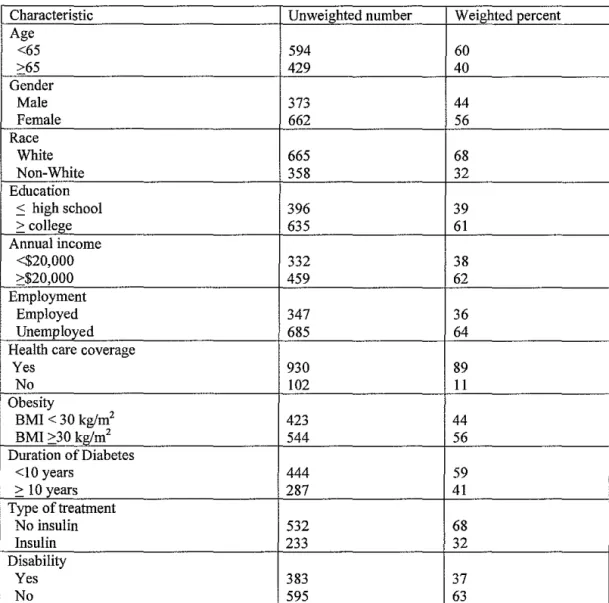
The majority of adults with diabetes in North Carolina were female, younger than 65 years, White, had a household income of greater than $20,000 per year, had a college education or greater, were not employed, had insurance, did not use insulin, were diagnosed less than 10 years ago, and were not disabled. An equal number of adults in North Carolina with diabetes rated their health as excellent, very good, or good (49%) compared to fair or poor (51%). The overall mean for physically unhealthy days was 9.3 per month, for mentally unhealthy days was 4.5 per month, and for functionally limited days was 5.7 per month.
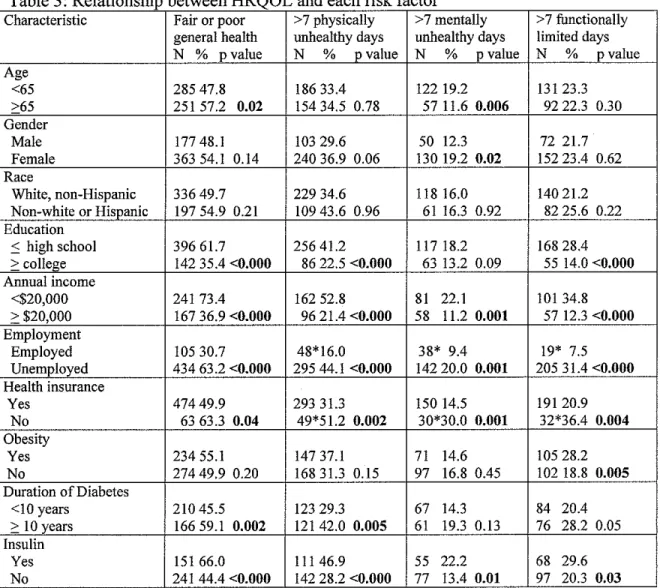
lower household income, were unemployed, had no health insurance, had a longer duration of diabetes, and were using insulin. Race was the only sociodemographic characteristic with no relation to quality of life. Female sex was only related to more mentally unhealthy days. Younger age was associated with more mentally unhealthy days and older age was associated with a lower general health rating. Obesity was only associated with more functionally limited days, not the total number of mentally or physically unhealthy days.
Conclusions:
In this study of health-related quality oflife among persons with diabetes in North Carolina, the greatest differences were between socioeconomic groups, with those of lower socioeconomic status having lower HRQOL. In addition, markers of more severe diabetes, including longer duration and use of insulin, are associated with a worse overall health-related quality oflife. The significant degree of difference in the Healthy Days measures between various subgroups of people with diabetes based on the
sociodemographic and medical characteristics we studied suggests that medical
interventions could help reduce health disparities if targeted accordingly. The continual nature of the BRFSS will allow the NC DCP to track HRQOL over time and compare the results to other subgroups of the population. As the North Carolina Diabetes Control Program participates in efforts to increase the number of healthy years among people with diabetes, following the differences in HRQOL among subgroups will help direct resources and monitor the effectiveness of interventions.
L
Background: the burden of diabetes mellitus
Diabetes mellitus is a health challenge in North Carolina due to the large
and increasing number of people affected, the shortened life expectancy, the
associated complications and disability, and the high economic costs.
Furthermore, in almost every study comparing people with diabetes to the general
population, diabetes mellitus is associated with worse health-related quality oflife L
(HRQOL) [1-9]. Health-related quality oflife is defined by the Centers for
Disease Control and Prevention (CDC) as "an individual's or group's perceived
physical and mental health over time" [1 0]. Not only is quality oflife an
important health outcome as a measure of well-being, but people's subjective
perceptions of health are also related to more conventional health outcomes such
as mortality and health care use [1 0, 11].
The prevalence of diagnosed diabetes in North Carolina's adult population
increased 42% in the last six years, from 4.5% in 1995 to 6.4% in 2000 [12]. This
prevalence underestimates the total number of persons with diabetes since
approximately one-third are undiagnosed [12]. The number of people affected
L
prevalence of risk factors for diabetes such as obesity and older age. In North
Carolina, the percentage of people who are obese increased in the last decade
from 12.9% in 1990 to 21.8% in 2000 [13]. The number ofe1derly is also
expected to rise from 991,000 on July 1, 2000 to 2,004,000 by July 1, 2025 [14].
Previous research has focused on the significant mortality and medical
morbidity caused by diabetes. Diabetes mellitus is ranked the 4th most common
cause of death among both Blacks and American Indians in North Carolina, and
the 8'h most common among both Whites and Hispanics [14]. These rankings of
death are based only on the "underlying cause" listed on death certificates and do
not reflect that diabetes is a major contributing factor to other top causes of death
such as heart disease and stroke. Since diabetes is three times more likely to be
recorded as a contributing cause of death than an underlying cause, these statistics
likely underestimate the burden of diabetes [15]. Diabetes also contributes to
substantial medical morbidity. Approximately 13,000 hospitalizations and 3,000
lower extremity amputations occur each year in North Carolina due to
complications of diabetes [12]. Nationally, diabetes is the leading cause of both
new cases of blindness and new cases of end-stage renal disease among adults
[16].
The significant medical complications of diabetes contribute to the higher
rates of disability among those with the disease. In the 1989 National Health
Interview Survey, people with diabetes reported two to three times more activity
limitations than those without diabetes [16]. A study in the Netherlands
chronic diseases, and found that diabetes was associated with an increased risk of disability over six years [17]. One study of community-dwelling men and women 60 years or older found that those with diabetes had a 46-50% higher risk of disability than those without diabetes, even after controlling for age, ethnicity, education, body mass index, and a number of comorbid diseases [18]. Other studies among community-dwelling elderly also detected higher rates of
disability, as measured both by self-report and physical performance tests, among people with diabetes compared to those without [5, 19-23].
The economic costs of diabetes are significant, owing to both direct medical expenses and the indirect costs of lost work. Using a model developed by the CDC, Kegler et al estimated the total cost of diabetes in North Carolina during 1990 to be approximately $1.2 billion, including $490 million for inpatient care, $84 million for outpatient care, and $664 million for indirect costs [15]. By 1998, the estimated hospitalization costs alone were more than $1.5 billion [12]. Using 1993 Medicare data, researchers determined that patients with diabetes were 76% more likely to be hospitalized than patients without diabetes, and hospitalization costs were almost 60% higher for those with diabetes [24]. Researchers have calculated substantial indirect costs of diabetes due to excess lost work and wages compared to persons without diabetes. Persons with type 2 diabetes mellitus in the 1989 National Health Interview Survey were less likely to be employed and more likely to report work loss days than those without diabetes [16]. Using claims records and population-based survey data, other researchers also observed that persons with diabetes were more likely to report both
term work absences and permanent disability [25-28]. Not only are persons with
diabetes more likely to miss work compared to persons without diabetes, but one
study found that persons with diabetes were significantly more likely to also lose
work hours due to the failure to meet productivity standards while on the job [29].
In addition to the substantial mortality, medical morbidity, and disability
among people in North Carolina and the US with diabetes mellitus, poor
health-related quality of life is increasingly being documented among people with
' l diabetes. Using general quality oflife measures, people with diabetes
consistently rate their health status worse than those without diabetes. Although
some studies suggest that people with diabetes may have slightly better quality of
life than those with other chronic conditions [6, 30], other studies observe that
having diabetes is associated with a lower general health rating versus having
other chronic conditions [1]. Most studies comparing people with diabetes to the
general population find that both physical and mental health-related quality of life
is worse among people with diabetes [1-5, 7-9].
The CDC and public health community are interested in measuring
health-related quality of life as recognition of a broader definition of health other than
traditional outcomes of morbidity and mortality associated with disease. As
people live longer, clinicians, researchers, and policy-makers are acknowledging
the importance of the quality of those years. The Division of Adult and
Community Health in the CDC's National Center for Chronic Disease Prevention
and Health Promotion initiated a collaborative program in 1989 to develop a
surveillance [I 0]. The collaboration resulted in the creation of the Healthy Days measures, a set of four questions to assess general well-being in a defined set of time [10]. The measures assess overall self-rated health, a global measure of physical health in the last 30 days, a global measure of mental health in the last 30 days, and a fourth question regarding functionally limited days in the last 30 days as a global indicator of "productivity and human capital" [I 0]. These four measures have been included in the core questions of the Behavior Risk Factor Surveillance System (BRFSS) in every state since 1993.
In addition to the importance of health-related quality oflife as an outcome, other studies suggest that quality of life is associated with more
nationally among people with diabetes of functionally limited days, one ofthe CDC's measures of quality oflife [28]. They calculated that men and women with diabetes were less likely to participate in the labor force than those without diabetes. In addition, people with diabetes who did work had more functionally limited days per month than those without diabetes. Using the value of annual lost earnings in 1994 dollars, people with diabetes who dropped out of the labor force contributed $76 million in economic loss. However, the greater economic cost was days missed due to disability from perceived poor health among people with diabetes who still worked, contributing another $9.2 billion ofloss. As our health care system and employers face increasing numbers of people with diabetes mellitus, the substantial morbidity associated with diabetes becomes a burden not only to those with the disease, but their families, employers, and communities.
Can medical interventions improve health-related quality of life among patients with diabetes?
Most ofthe current interventions are designed to target people with diabetes who have medical indicators of more severe disease, such as those with higher mortality rates, higher diabetes complication rates, or higher disability rates. However, to meet a goal of increasing the number of healthy years that people with diabetes live, then we should also target those with a greater
perceived burden of disease and worse health-related quality of life. If quality of life can be improved through specific interventions, then not only can the
subjective perceptions of health be enhanced, but people with diabetes may also
have better medical outcomes and increased functional days. Therefore, tracking
health-related quality of life in people with diabetes is a valid outcome of interest
only if clinicians and the public health community can implement medical care
and community programs that improve HRQOL.
Researchers have discovered a few interventions directed towards
individuals that improve health-related quality of life [11]. Some of the medical
interventions that resulted in an enhanced HRQOL included intensified treatment
with improved glycemic control, treatment of diabetic symptoms, and physical
rehabilitation [11]. Most of the counseling or educational interventions were
designed to enhance coping skills and resulted in improved emotional well-being
[11]. Current research has not yet investigated whether public health
interventions can affect quality of life among people with diabetes.
Indirect evidence suggests that by implementing treatments to decrease the
number and severity of diabetes complications, we can improve the quality of life
of people with diabetes. Studies looking at both type 1 and type 2 diabetes
mellitus have shown that the microvascular complications of diabetes can be
prevented with improved metabolic control and medical care [32, 33]. In
addition, researchers have examined the cost-effectiveness of intensive therapy as
practiced in effective clinical trials and found acceptable incremental costs for the
decrease in morbidity and mortality [34, 3 5]. Since research links the number of
complications inversely to health-related quality of life [8, 36-46], implementing
proven diabetes treatment and monitoring regimens that decrease complications
indirect costs of diabetes through improved work performance. One study
compared patients with type 2 diabetes mellitus who were receiving glipizide
versus those receiving placebo, and found that those receiving active therapy had
higher retention of employment, greater retained productive capacity, and less
absenteeism than those in the placebo group [47].
Health-related quality of life among patients with diabetes mellitus
Research has previously shown that people with diabetes have a lower
health-related quality oflife than the general population. As we consider
interventions to improve health-related quality of life among people with diabetes,
information about which subgroups have a poor quality of life may help target our
resources and interventions more effectively. Tracking health-related quality of
life specifically among people with diabetes also contributes to knowledge about
health disparities and allows for comparisons between subgroups based on
diabetes-specific complications and treatment not applicable to the general
population.
Research by Glasgow et al is the most comprehensive and representative
study of quality oflife among people with diabetes in the United States [3 7].
Glasgow et al mailed adults with diabetes in the United States who were part of a
marketing company sample the Medical Outcomes Study (MOS) Short-Form
General Health Survey, the most widely used generic measure of quality of life in
clinical research. Achieving a 73% response rate, the total sample size was 2056
education or less, and 95% were White. The average age was 59. The
researchers examined the association of a variety of socioeconomic, medical,
diabetes-related and health-behavioral characteristics with social, physical, and
mental health-related quality of life measures. In addition to comparing each
characteristic with these three quality of life scores, the researchers also created
prediction models of quality oflife adjusting for all of the characteristics.
According to Glasgow et a!' s study results, multiple sociodemographic,
medical, diabetes-related, and health behavioral characteristics are associated with
quality oflife. All of the sociodemographic characteristics were related to quality
of life except race. Older age, female sex, lower income, high school education or
less, living alone, and government health insurance were all associated with lower
physical and social quality of life. Younger age, female sex, lower income, high
school education or less, and government health insurance or no insurance were
all also associated with lower mental quality of life. In addition to socioeconomic
characteristics, Glasgow eta! also examined medical and diabetes-related
characteristics. Having two or more comorbid diseases and two or more diabetes
microvascular complications were associated with the largest reductions in
physical, social, and mental quality of life compared to the other characteristics.
Persons with type 2 diabetes who used insulin also had worse physical and social
quality of life than either persons with type 1 diabetes or those with type 2
diabetes not using insulin. Longer duration of diabetes was related to worse
physical and social quality of life. Of the health behaviors, more frequent blood
mental quality of life whereas less physical activity was associated with worse
physical, social, and mental quality of life. According to the results from the
prediction models, quality oflife was independently significantly related to most
of the sociodemographic characteristics as well as the number of comorbidities,
the number of complications, taking insulin or not, and exercise level. When
adjusting for the other characteristics, a longer duration of diabetes was no longer
associated with quality oflife.
Although most of the other research on quality of life among people with
diabetes only focused on a few characteristics, many of the observed associations
are consistent with Glasgow et al. Sociodemographics, specifically increasing age
[3, 9, 20, 29, 46, 48], female sex [3, 8, 39, 45, 46, 48, 49], and lower income [3,
39], were associated with worse health-related quality oflife in the majority of the
research. Studies also verify Glasgow et al's findings that race is not associated
with quality oflife [37, 38, 45, 49, 50]. Of studies that investigated educational
level, only one verified Glasgow et al' s finding that those with less than a high
school education had lower health-related quality oflife [39], whereas most found
no difference [3, 20, 38, 50]. Glasgow et al found differences in quality oflife
between persons with diabetes who lived alone versus those who lived with
someone, but other studies found no significant association when using similar
outcomes for living status such as marital status or cohabitation [2, 3, 39, 50].
Employment status was only examined in one study of persons with diabetes, but
those who were unemployed had lower HRQOL [3]. Studies that did not find
homogeneous populations of people with diabetes than the study by Glasgow et a!
[2, 38, 50, 51].
Researchers investigating the association of other chronic diseases and
health-related quality oflife among patients with diabetes have found that all
chronic diseases decrease quality oflife and increase disability. Rather than
investigating the effects of the number of comorbidities, most researchers
specifically examined individual diseases. Chronic diseases negatively affecting
quality of life among patients with diabetes include: cardiovascular disease [2, 6,
46], arthritis [6, 50], obesity [2], chronic lung disease [6], and depression [38, 50,
52,53].
Researchers have also focused on the associations between different
diabetes-related characteristics and health-related quality oflife. Studies
investigating complications of diabetes, duration of diabetes, and insulin use,
discovered similar results as Glasgow et a!. Complications of diabetes, both
microvascular and macrovascular, were consistently associated with worse quality
oflife [8, 36, 38-46]. In one study of patients with type 2 diabetes who were less
than 65 years old, low visual acuity, neuropathy, and microalbuminuria did not
affect HRQOL after adjusting for obesity and coronary heart disease [2].
However, results from another study of patients with diabetes suggest that the
severity of microvascular complications is more important than the number of
complications [54]. The relationship between duration of diabetes and HRQOL
depended on whether adjustments were made for the confounding of other
diabetes complications, most studies observed that longer duration of diabetes
was associated with worse health-related quality oflife [ 48-50]. However, the
association was not significant in other studies, especially after adjusting for
additional characteristics [2, 8, 38, 39, 41, 45, 51]. Researchers also observed that
insulin use in patients with type 2 diabetes was associated with worse quality of
life [8, 38, 49]. However, one study found that the sex ofthe person with diabetes
may interact with the association of insulin use and quality oflife. In that study,
women using insulin had worse quality of life compared to women using diet
L and/or pills, but men using insulin had less anxiety than men using diet and/or
pills [55].
In addition to the diabetes-related characteristics investigated in the study
by Glasgow et a!, other studies also examined the association between
diabetes-treatment related factors such as glycemic control, diabetes-treatment intensity, and
glycemia-related symptoms with quality of life. Overall, hyperglycemia
symptoms and perhaps poor metabolic control contribute to decreased quality of
life. Symptoms due to diabetes were consistently associated with a lower quality
oflife [39, 40, 46, 50, 56]. Poor glycemic control was associated with a lower
health-related quality oflife in some studies [39, 46, 47, 56], but other studies
found no relation [2, 4, 8, 36]. Studies that looked at the intensity of treatment
found no difference in quality of life between intensively treated versus
conventionally treated patients in both type 1 patients [51] and type 2 patients
improved health-related quality of life, especially if symptoms were decreased [47, 50, 56].
Less evidence exists regarding the association between health behavioral factors such as smoking, alcohol, and exercise with quality oflife among those with diabetes. One study specifically examined general health-related quality of life and found that smoking was associated with worse scores on all the Medical Outcomes Study measures in primary care patients with diabetes [46]. However, most studies only investigated the association between smoking and disability with inconsistent results [17, 18, 20, 57]. All of the studies examining levels of physical activity have found that high levels of activity were associated with
'
associated with worse quality oflife and more disability [20, 46, 57-59].
I
better quality of life and less disability whereas sedentary lifestyles wereHowever, physical activity is a similar measure as the physical health-related quality oflife scales. In addition, none ofthese studies were able to look at either physical activity prior to the onset of disability or the association between changes in physical activity with changes in disability status and quality of life.
Limitations of previous research on HRQOL among people with diabetes
population of people with diabetes in North Carolina. Many of the
population-based studies of people with diabetes were done in Europe where population
characteristics differ significantly from the United States and health care is
universal [2-4, 8, 9, 39, 48, 49, 53]. Most of the other studies of quality oflife
among people with diabetes were done using a select group of clinic patients,
including patients seen at diabetes clinics [6, 38, 41, 45, 46, 50, 52, 56, 59, 60],
patients with specific diabetes complications [36, 42-44], and patients who
participated in clinical trials [ 40, 4 7, 51]. Some of the researchers also focused on
a subgroup of the general population such as the elderly, white women, Mexican
Americans, or African Americans. Comparisons of the results are also limited
since many of the studies were specifically looking at the difference in quality of
life between two subgroups of people with diabetes such as the difference
between males and females, between intensively controlled and conventionally
treated, or between patients with various diabetes complications and those
without, rather than investigating associations between multiple characteristics
with health-related quality oflife.
The variety of quality of life scales used also makes comparison of
research results difficult. Most studies used general quality of life scales rather
than diabetes-specific scales to measure health related quality of life. Although
diabetes-specific scales allow for focus on problems posed by diabetes such as
hypoglycemia, hyperglycemia, self-monitoring of blood glucose, dietary
restrictions, and fear of complications, the generic scales allow for better
measures used include the Medical Outcomes Study Short-Form General Health
Survey, including the Swedish translation, the Nottingham Health Profile, and the
Sickness Impact Profile [11]. Diabetes-specific measures include the Diabetes
Quality of Life measure, developed for use in the Diabetes Control and
Complications Trial; the Diabetes-39 instrument; and the Problem Areas in
Diabetes survey [ 11].
The benefits of using the BRFSS Healthy Days measures of HRQOL
The most common general health-related quality of life scale used in
previous studies was the Medical Outcomes Study Short-Form General Health
Survey with physical, social, and role functioning scales as well as measures of
mental health, perceptions of overall health, and pain intensity. Although
extensively used and validated, the length of the MOS form is impractical to use
for population surveillance and does not quantify the effects of a poor quality of
life in a manner relevant to policy makers. Therefore, the CDC developed a scale
using four basic questions regarding self-rated health and the number of unhealthy
days that would be both shorter and relevant to policy makers. Healthy Days
measures ask about a person's self-rated health, physical health, and mental health
by assessing the number of unhealthy days and the number of days when a person
had activity limitations due to poor health in the past month. Analyses of the
Behavior Risk Factor Surveillance Survey core Healthy Days questions in
representative surveys of adults have found the measures to be internally
life, and to have concurrent validity when compared with responses of the
self-rated health measure for all adults [I 0]. In a nationwide follow-up study of
Norwegian adults by the University of Oslo, researchers found that "the Healthy
Days measures had good internal consistency reliability and that response changes
on the follow-up survey were indicative of actual changes in respondent health
status" [10]. Another study by the Columbia University School of Public Health
found the measures had acceptable construct validity [10].
The Behavioral Risk Factor Surveillance Survey (BRFSS) monitors state
and national populations on an annual basis and is "an important public domain
resource for continuous, comparable data about population health" [I 0]. By
including measures ofHRQOL, the BRFSS now allows researchers and public
I
health officials to track whether we are meeting the Healthy People 2010 goals ofincreasing the quality and years of healthy life and eliminating health disparities.
The Healthy Days outcomes measure health-related quality of life according to
both current approaches, including level of function and perception of health [61].
The quantification of unhealthy days measures the 'absolute' level of functioning
in relation to the general population whereas the general health rating measures
the individuals' perception of their health status. Calculating the number of days
that are limited due to poor health-related quality of life also allows researchers
Research objectives for HRQOL among people with diabetes in North Carolina
The North Carolina Diabetes Control Program (NC DCP) is involved with
several efforts throughout the state to improve the care of people with diabetes
mellitus. Previous work for people with diabetes has focused on improving
short-term medical outcomes. However, an additional important method of assessing
the status of people with diabetes in our state includes measuring health-related
quality oflife. Subjective perceptions of health are an important component of
well-being and are related to medical and possibly economic outcomes.
The NC DCP is interested in determining if there are subgroups of people
with diabetes and a poor HRQOL who can then be targeted for interventions
designed to improve quality of life. Although researchers have used the Healthy
Days measures asked in the BRFSS to compare patients with diabetes mellitus to
the general population, no study has looked for identifiable subgroups of patients
with diabetes who are at risk for poor quality of life using Healthy Days. Even
though important medical and diabetes-related characteristics such as other
chronic diseases and diabetes complications are not asked about in the Behavior
Risk Factor Surveillance Survey, using a population-based HRQOL measure with
the ability to translate available information into economic and social costs is
beneficial to a public health agency. In addition, the continual nature ofthe
survey will allow the NC DCP to track HRQOL over time and compare the results
Methods
In order to better understand which groups of people with diabetes in
North Carolina have poor health-related quality of life vs. which groups are doing
relatively well, we used the NC BRFSS data and Healthy Days measures to
explore associations between HRQOL and sociodemographic and medical
characteristics. The BRFSS, sponsored by the Centers for Disease Control and
Prevention, is a state-based, random-digit dialed telephone survey of civilian,
non-institutionalized adults 2:: 18 years old. The true response rate is difficult to
calculate since many of the phone numbers are not household phone numbers. In
1999, for example, although only 18.5% of all telephone numbers contacted
completed the interview, the refusal rate was only 6.1 %, termination during the
interview was 0.1 %, language barrier prevented the interview in 0.4%, and a
physical or mental impairment prevented the interview in 0.3% [62]. The
majority of noncompleted interviews were due to non-working telephone numbers
(45.9%) and business numbers (16.8%), plus multiple times of no answer or a
busy line (7. 7%) and the respondent not being available during the required time
(3.6%) [62]. The final BRFSS sample data is weighted to adjust for unequal
probabilities of selection as a result of the disproportionate sampling method,
people living in households with different numbers oftelephones and different
numbers of adults, and the unequal non-response rates among different
demographic groups [62].
After reviewing the literature, we hypothesized that age, sex, race, income,
health-related quality oflife among people with diabetes. Many studies, including the
research by Glasgow eta!, observed associations between sociodemographic
characteristics and health-related quality of life, except for race. We included
race in our analyses since research among the general population using the
Healthy Days measures found that both Blacks and Hispanics had lower quality of
life than Whites [ 1]. In addition, minorities have higher rates of some diabetes
complications that are associated with lower quality oflife. We included only
obesity as a comorbid disease due to survey differences each year and inconsistent
collection of the presence of other conditions such as cardiovascular disease. We
included the diabetes-related risk factors of duration of the disease and use of
insulin since the BRFSS does not ask about specific diabetes complications.
Despite previous research findings that physical activity is related to quality of
life, we did not include activity level due to the previous mentioned limitations in
a cross-sectional study of using a variable that is a similar measure as the
outcome.
Our protocol was assessed by the North Carolina Public Health
Institutional Review Board and was determined to be exempt from review.
Adults with diabetes were identified by yes responses to the question "have you
ever been told by your doctor that you have diabetes?" Females with a history of
gestational diabetes only are not included in the analyses. Due to the relatively
small number of adults with diabetes per year, we combined data from years
1998-2001. We used the separate outcomes of general health rating, physically
limitations due to poor physical or mental health. All respondents were asked 1)
"Would you say that in general your health is excellent, very good, good, fair, or
poor?"; 2) "Now thinking about your physical health, which includes physical
illness and injury, for how many days during the past 30 days was your physical
health not good?"; 3) "Now thinking about your mental health, which includes
stress, depression, and problems with emotions, for how many days during the
past 30 days was your mental health not good?"; and 4) "During the past 30 days,
for about how many days did poor physical or mental health keep you from doing
your usual activities, such as self-care, work, or recreation?"
Statistical Analyses
All analyses were conducted using Stata version 7.0. The data set was
first analyzed to assess the range of data, the effect of missing data, and the
linearity of the outcome measures. Descriptive analyses were conducted using
tests of proportions and means with standard deviations. Relationships between
sociodemographic and medical characteristics with the dichotomized Healthy
Days measures were done using Pearson's Chi-square. Results were considered
statistically significant if the p-value was less than 0.05. Our analyses accounted
for the complex weighting of the survey. In the course of our analyses, we
encountered strata with only one primary sampling unit (PSU). According to the
methods ofKom and Graubard, strata with single-sampled PSU's were collapsed
with a neighboring stratum in order to perform design-based variance estimators
characteristics independently associated with a higher number of functionally
limited days among adults with diabetes. We will first test for interactions and
collinearity between the sociodemographic and medical characteristics. A logistic
regression model will then be used to identify variables that were independently
associated with the outcome after controlling for potential confounders.
Results
Descriptive Data
Table 1 describes the characteristics of the population of adults with
diabetes in North Carolina. The majority were female, younger than 65 years,
White, had a household income of greater than $20,000 per year, had a college
education or greater, were not employed, had insurance, did not use insulin, were
diagnosed less than 10 years ago, and were not disabled. Most of the measures
had good response rates with less than 5% refusing to answer each question.
However, almost 25% did not tell their household income. Those who were older
than 65 and unemployed were more likely to refuse to answer their income level.
General health rating was dichotomized into those who rated their health
as excellent, very good, or good compared to those who rated their health as fair
or poor. Overall, an equal number of adults in North Carolina with diabetes rated
their health as excellent, very good, or good ( 49%) compared to fair or poor
(51%). The overall mean for physically unhealthy days was 9.3 per month, for
mentally unhealthy days was 4.5 per month, and for functionally limited days was
5.7 per month (Table 2). However, the unhealthy days outcomes were all greatly
therefore dichotomized the outcomes of physically unhealthy days, mentally
unhealthy days, and functionally limited days into seven days or less and more
than seven days since one week of unhealthy days is a clinically and socially
significant outcome.
Relationship of sociodemographic and medical characteristics to quality of life
Table 3 describes the differences in quality of life by the various
independent variables. Race was not associated with any ofthe quality oflife
measures. People with diabetes were more likely to have a poor quality of life on
all of the measures if they had less household income, were unemployed, and had
no health insurance. They were also more likely to rate their health as fair or poor
and have both physically and functionally limited days if they had a high school
education or less. Older age was associated only with a higher likelihood of
rating their general health as fair or poor; however, younger age was related to
more than one week of mentally unhealthy days. Females were more likely to
have mentally unhealthy days than males, but there was no difference by gender
for physically unhealthy or functionally limited days. Obesity was only
associated with more than one week of functionally limited days, not with the
likelihood of physically or mentally unhealthy days. A longer duration of
diabetes was associated with a lower general health rating and more physically
unhealthy days whereas taking insulin was associated with all ofthe quality oflife
measures.
We are still conducting statistical analyses to determine the independent
association of the characteristics with health-related quality oflife. We chose
functionally limited days as the model's outcome due to the economic and social
significance to policy makers oflost work days. Our next step is to determine if
there are any statistically significant correlations or interactions between the
characteristics before we can determine the independent associations between
each characteristic and functionally limited days.
Conclusions
In this study of health-related quality oflife among persons with diabetes
L
in North Carolina, the greatest differences were between socioeconomic groups,
with those oflower socioeconomic status having lower HRQOL. A study among
the general population found similar results when using the Healthy Days
measures for quality oflife [!]. The relationships between lower incomes and
less education to a lower HRQOL are consistent with the results of Glasgow eta!
on a representative national sample of people with diabetes. Our results are also
similar to Glasgow et al's in that younger age and female sex were related to
worse mental quality of life. However, unlike Glasgow et a!, this study did not
find relationships between older age or female sex and worse physical quality of
life.
We were unable to measure the association between diabetes
complications and health-related quality of life due to the limitations of the survey
questions. Both duration of diabetes and insulin use may be associated with the
presence of complications (which is likely associated with quality oflife );
rating and more than one week of physically unhealthy days, whereas insulin use
was associated with all of the Healthy Days measures. These results suggest that
insulin use may be more closely related to the number of complications than
duration of disease. Despite diabetes complications such as end-stage renal
disease and diabetes deaths being more common among most Non-whites
compared to Whites, race was not related to quality of life. Investigating the
reasons for the similar health-related quality of life may help better define how
minorities adjust to diabetes complications.
In addition to interventions aimed at decreasing complications, our results suggest that other medical interventions may be needed, especially for certain
subgroups of people with diabetes. Those who are obese have a similar number
of physically and mentally unhealthy days but may be more likely to miss work
on those days since they have more functionally limited days than those who are
not obese. Helping people with diabetes lose weight may not only prevent the
progression of their disease but may also decrease the number of days limited by
poor health. In addition, some important differences were seen in the
associations between age and sex with mentally unhealthy days. More than one
week of mentally unhealthy days was associated with younger age and female
sex. These results suggest that mental health screening and interventions should
be targeted towards younger adults and women in addition to the lower
socioeconomic groups.
The results of this study are strengthened by the use of a random,
and validity of the quality oflife outcome measures. Cross-sectional studies are
better for chronic, relatively common diseases with low mortality or a prolonged
course such as diabetes. However, cross-sectional population-based studies can
only describe associations by stating prevalence odds ratios. This study is not
designed to prove that any of these characteristics are a cause of poor quality of
life. People with diabetes who have a poor quality of life may be less likely to
continue school or get a job. In addition, those with a poor quality oflife may be
more likely to gain weight, to develop diabetes earlier, or to have poor glycemic
control leading to the need for insulin and more diabetes complications. A
number of comorbid illnesses related to HRQOL such as depression,
cardiovascular disease, arthritis, and lung disease were not asked about in the
I
BRFSS in North Carolina every year and could not be included as potential' associated factors. The microvascular complications of diabetes mellitus are also
not asked about in the survey and could not be assessed for the relationship with
the Healthy Days measures. Future research needs to include other chronic
diseases and complications of diabetes when assessing the independent
association of sociodemographic and medical characteristics since previous
studies determined that both are strongly related to quality oflife among people
with diabetes.
Some limitations exist due to the methods of the BRFSS. The BRFSS
only includes households with telephones; therefore, there is the potential for
excluding a portion of the population with a low SES and a higher risk for poor
functional capacity is required to take the survey and the institutionalized are not
included. In addition, some of the variation in HRQOL by different
sociodemographic groups may reflect differences in interpretation of questions.
For example, researchers have suggested that women are more likely to report
symptoms and men are more likely "to deny the seriousness of their problems"
[61]. The data collected through the BRFSS also relies on self-report. However,
researchers have found a high agreement between the self-report and the medical
report of common medical conditions in the elderly [64], and between self-report
and medical report of diabetes and heart disease in other population groups [65].
In addition, some of the results of the study may have been statistically significant
because of multiple testing. The results also may have been affected by the
substantial number of people who did not respond to the question about income
and the small numbers of people who were employed and were uninsured.
The significant degree of difference in the Healthy Days measures
between various subgroups of people with diabetes based on the
sociodemographic and medical characteristics we studied suggests that medical
interventions could help reduce health disparities iftargeted accordingly. The
subgroup of people with diabetes who have a higher number of unhealthy mental
and physical days can be said to suffer in their general quality of life compared to
the general population. However, the core Healthy Days measures do not assess
specific causes for poor health-related quality oflife. In order to more accurately
direct medical and public health interventions to improve quality of life, future
as pain, depression, anxiety, sleeplessness, and vitality. The CDC added an
optional 1 0-item set of questions in 1995 for the BRFSS to further assess
health-related quality of life. These questions should be added to future surveys in North
Carolina so that the data can be used to design interventions for those individuals
with the highest burden from diabetes.
This study provides additional support that among people with diabetes,
lower socioeconomic status and markers of more severe diabetes, including
longer duration and use of insulin, are associated with a worse health-related
quality of life. In order to track HRQOL among adults with diabetes in North
Carolina, future surveillance using the BRFSS should include important predictor
variables such as questions regarding chronic disease diagnoses and diabetes
complications on an annual basis. As the NC DCP participates in efforts to
eliminate health disparities and increase the number of healthy years among
people with diabetes, tracking the significant differences in HRQOL among
subgroups will help target resources and monitor the effectiveness of
Table 1: Characteristics of the sample (Unweighted number: 1 035)
Characteristic Unweighted number Weighted percent
Age
<65 594 60
>65 429 40
Gender
Male 373 44
Female 662 56
Race
White 665 68
Non-White 358 32
Education
:0 high school 396 39
>college 635 61
Annual income
<$20,000 332 38
>$20,000 459 62
Employment
Employed 347 36
Unemployed 685 64
Health care coverage
Yes 930 89
No 102 II
Obesity
BMI < 30 kg!m2 423 44
BMI >30 kglm2 544 56
Duration of Diabetes
<10 years 444 59
> 10 years 287 41
Type of treatment
No insulin 532 68
Insulin 233 32
Disability
Yes 383 37
No 595 63
Table 2: Average scores for HRQOL among adults with diabetes in NC
Measure %or Mean Median %<7days
Self-reported health status
fair or poor 51%
excellent, very good or good 49%
# days during the past 30 days that physical health was not good 9.3 1.0 66% # days during the past 30 days that mental health was not good 4.5 0 84% # days during the past 30 days that poor physical or mental health 5.7 0 77%
Table 3 · Relationship between HRQOL and each risk factor
Characteristic Fair or poor >7 physically >7 mentally >7 functionally general health nnhealthy days unhealthy days limited days N % pvalue N % p value N % p value N % p value Age
<65 285 47.8 186 33.4 122 19.2 131 23.3
>65 251 57.2 O.o2 154 34.5 0.78 57 11.6 0.006 92 22.3 0.30 Gender
Male 177 48.1 103 29.6 50 12.3 72 21.7
Female 363 54.1 0.14 240 36.9 0.06 130 19.2 0.02 152 23.4 0.62
Race
White, non-Hispanic 336 49.7 229 34.6 118 16.0 140 21.2 Non-white or Hispanic 197 54.9 0.21 109 43.6 0.96 61 16.3 0.92 82 25.6 0.22 Education
:S high school 396 61.7 256 41.2 11718.2 168 28.4
>college 142 35.4 <0.000 86 22.5 <0.000 63 13.2 0.09 55 14.0 <0.000 Annual income
<$20,000 241 73.4 162 52.8 81 22.1 101 34.8
> $20,000 167 36.9 <0.000 96 21.4 <0.000 58 11.2 0.001 57 12.3 <0.000 Employment
Employed 105 30.7 48*16.0 38* 9.4 19* 7.5
Unemployed 434 63.2 <0.000 295 44.1 <0.000 142 20.0 0.001 205 31.4 <0.000 Health insurance
Yes 47449.9 293 31.3 150 14.5 191 20.9
No 63 63.3 0.04 49*51.2 0.002 30*30.0 0.001 32*36.4 0.004 Obesity
Yes 234 55.1 147 37.1 71 14.6 105 28.2
No 274 49.9 0.20 16831.3 0.15 97 16.8 0.45 102 18.8 0.005 Duration of Diabetes
<10 years 210 45.5 123 29.3 67 14.3 84 20.4
> 10 years 16659.1 0.002 121 42.0 0.005 61 19.3 0.13 76 28.2 0.05 Insulin
Yes 151 66.0 11146.9 55 22.2 68 29.6
No 241 44.4 <0.000 142 28.2 <0.000 77 13.4 0.01 97 20.3 0.03
Predictive Model:
LogitP(>avg. functionally limited days)= a+ ~!(age)+ ~2(sex) + ~3(race) +
~4(education) + ~5(annual income)+ ~6(employment) +~?(geography)+
I. Centers for Disease Control, Health-related quality of life - Los Angeles County, California, 1999. MMWR Weekly, 2001. 50(26): p. 556-559. 2. Hanninen, J., J. Takala, and S. Keinanen-Kiukaanniemi, Quality of life in
NIDDM patients assessed with the SF-20 questionnaire. Diabetes Research & Clinical Practice, 1998. 42(1 Supplement): p. 17-27. 3. Jonsson, P., eta!., Sociodemographic predictors of self-rated health in
patients with diabetes of short duration. Scandinavian Journal of Public Health, 2001. 29: p. 263-270.
4. Larsson, D., I. Lager, and P. Nilsson, Socio-economic characteristics and quality of life in diabetes mellitus- relation to metabolic control.
Scandinavian Journal of Public Health, 1999.27: p. 101-105.
5. Moritz, D., eta!., The health burden of diabetes for the elderly in four communities. Public Health Report, 1994. 109: p. 782-790.
6. Stewart, A., eta!., Functional status and well-being of patients with chronic conditions: results from the Medical Outcomes Study. lAMA,
1989. 262(7): p. 907-913.
7. Valdmanis, V., D. Smith, and M. Page, Productivity and economic burden associated with diabetes. American Journal of Public Health, 200 I. 91(1 ): p. 129-130.
8. Wandell, P. and J. Tovi, The quality of life of elderly diabetic patients.
Journal of Diabetes and Its Complications, 2000. 14(1): p. 25-30. 9. Wandell, P., B. Brorsson, and H. Aberg, Quality of life among diabetic
patients in Swedish primary health care and in the general population: comparison between 1992 and 1995. Quality of Life Research, 1998. 7(8): p. 751-760.
10. Centers for Disease Control and Prevention, Measuring Healthy Days.
2000, CDC: Atlanta, Georgia.
II. Rubin, R. and M. Peyrot, Quality of life and diabetes.
Diabetes/Metabolism Research and Reviews, 1999. 15(3): p. 205-218. 12. Diabetes Prevention and Control Unit, Diabetes in North Carolina: a
summary report- 2001. 2001, Department of Health and Human Services, North Carolina: Raleigh, NC.
13. Centers for Disease Control and Prevention, Behavior Risk Factor Surveillance Survey, trend data.
14. U.S. Census Bureau, State population projections.
15. Kegler, M., eta!., The burden of diabetes in North Carolina. North Carolina Medical Journal, 1995. 56(4): p. 141-144.
16. Harris, M., Summary, in Diabetes in America, M. Harris, eta!., Editors. 1995, U.S. Government Printing Office: Washington DC. p. 1-13. 17. Mackenback, J., eta!., Determinants of levels and changes of physical
functioning in chronically ill persons: results from the GLOBE Study.
Journal of Epidemiology and Community Health, 2001. 55: p. 631-638. 18. Gregg, E., eta!., Diabetes and physical disability among older US. adults.
Diabetes Care, 2000. 23(9): p. 1272-1277.
Hispanic established populations for epidemiologic studies of the elderly.
American Journal of Public Health, 1999. 89(4): p. 546-552.
20. Gregg, E., et al., Diabetes and incidence of fimctional disability in older women. Diabetes Care, 2002. 25(1): p. 61-67.
21. Guccione, A., eta!., The effects of specific medical conditions on the
functional/imitations of elders in the Framingham Study. American Journal ofPub1ic Health, 1994. 84: p. 351-358.
22. Haan, M. and M. Weldon, The influence of diabetes, hypertension, and
stroke on ethnic differences in physical and cognitive functioning in an ethnically diverse older population. AEP, 1996. 6(5): p. 392-398. 23. Perkowski, L., eta!., Lower-extremity functioning in older Mexican
Americans and its association with medical problems. Journal of the American Geriatric Society, 1998. 46: p. 411-418.
24. Salas, M., T. Bubolz, and J. Caro, Impact of physical functioning of health
status on hospitalizations, physician visits, and costs in diabetic patients.
Archives of Medical Research, 2000. 31(2): p. 223-227.
25. Mayfield, J., P. Deb, and E. Whitecotton, Work disability and diabetes. Diabetes Care, 1999. 22(7): p. 1105-1109.
26. Olsson, 1., eta!., Comparison of excess costs of care and production losses
because of morbidity in diabetic patients. Diabetes Care, 1994. 17: p. 1257-1263.
27. Ramsey, S., et al., Productivity and medical costs of diabetes in a large
employer population. Diabetes Care, 2002. 25(1): p. 23-29.
28. Yassin, A., G. Beckles, and M. Messonnier, Disability and its economic
impact among adults with diabetes. 1 ournal of Occupational and Environmental Medicine, 2002. 44(2).
29. Burton, W., eta!., The role of health risk factors and disease on worker
productivity. Journal of Occupational and Environmental Medicine., 1999. 41: p. 863-877.
30. Rose, M., eta!., Determinants of the quality of life of patients with
diabetes under intensified insulin therapy. Diabetes Care, 1998. 21(11 ): p. 1876-1885.
31. Mor, V., et al., Functional transitions among the elderly: patterns,
predictors, and related hospital use. American Journal of Public Health, 1994. 84(8): p. 1274-1280.
32. Diabetes Control and Complications Trial Research Group, The effect of
intensive treatment of diabetes on the development and progression of long-term complications in insulin-dependent diabetes mellitus. New England Journal of Medicine, 1993. 329(14): p. 977-986.
3 3. UK Prospective Diabetes Study Group, Intensive blood-glucose control
with sulphonylureas or insulin compared with conventional treatment and risk of complications in patients with type 2 diabetes. Lancet, 1998. 352: p. 837-853.
34. Diabetes Control and Complications Trial Research Group, Lifetime
benefits and costs of intensive therapy as practiced in the Diabetes Control and Complications Trial. lAMA, 1996.276: p. 1409-1415.
f--L
35. Gray, A., et al., Cost effectiveness of an intensive blood glucose control policy in patients with type 2 diabetes: economic analysis alongside
randomised controlled trial. BMJ, 2000. 320: p. 1373-1378.
36. Benbow, S., M. Wallymahmed, and I. MacFarlane, Diabetic peripheral neuropathy and quality of life. QJM, 1998. 91(11): p. 733-737.
37. Glasgow, R., eta!., Quality of life and associated characteristics in a large national sample of adults with diabetes. Diabetes Care, 1997. 20( 4): p. 562-567.
38. Brown, G., eta!., Quality of life associated with diabetes mellitus in an adult population. Journal of Diabetes & Its Complications, 2000. 14(1): p. 18-24.
39. Wikblad, K., J. Leksell, and L. Wibell, Health-related quality of life in relation to metabolic control and late complications in patients with insulin dependent diabetes mellitus. Quality of Life Research, 1996. 5: p. 123-130.
40. UK Prospective Diabetes Study Group, Quality of life in type 2 diabetic patients is affected by complications but not by intensive policies to
improve blood glucose or blood pressure control. Diabetes Care, 1999. 22(7): p. 1125-1136.
41. Stover, J., eta!., Perceptions of health and their relationship to symptoms in African American women with type 2 diabetes. Applied Nursing Research, 2001. 14(2): p. 72-80.
42. Siddique, R., et al., Quality of life in a US national sample of adults with diabetes and motility-related upper gastrointestinal symptoms. Digestive Diseases & Sciences, 2002. 47(4): p. 683-689.
43. Tennvall, G. and J. Apelqvist, Health-related quality of life in patients with diabetes mellitus and foot ulcers. Journal of Diabetes and Its Complications, 2000. 14: p. 235-241.
44. Resnick, H., et al., Diabetes, peripheral neuropathy, and old age disability. Muscle & Nerve, 2002. 25(1): p. 43-50.
45. Coffey, J., eta!., Valuing Health-Related Quality of Life in Diabetes.
Diabetes Care, 2002. 25(12): p. 2238-2243.
46. Klein, B., R. Klein, and S. Moss, Self-rated health and diabetes of long duration. The Wisconsin Epidemiologic Study of Diabetic Retinopathy.
Diabetes Care, 1998. 21(2): p. 236-240.
47. Testa, M. and D. Simonson, Health economic benefits and quality of life during improved glycemic control in patients with type 2 diabetes mellitus.
JAMA, 1998. 280: p. 1490-1496.
48. Keinanen-Kiukaanniemi, S., eta!., Health related quality of life in diabetic patients measured by the Nottingham Health Profile. Diabetic Medicine,
1996. 13(4): p. 382-388.
49. Petterson, T., et al., Well-being and treatment satisfaction in older people with diabetes. Diabetes Care, 1998. 21(6): p. 930-935.
50. Claiborne, N. and E. Massaro, Mental quality of life: an indicator of unmet needs in patients with diabetes. Social Work in Health Care, 2000. 32(1): p. 25-43.
:=--51. Diabetes Control and Complications Trial Research Group, Influence of
intensive diabetes treatment on quality-of-life outcomes in the Diabetes Control and Complications Trial. Diabetes Care, 1996. 19: p. 195-203. 52. Jacobson, A., M. de Groot, and J. Samson, The efficts of psychiatric
disorders and symptoms on quality of life in patients with type I and type II diabetes mellitus. Quality of Life Research, 1997. 6(1): p. 11-20. 53. Kohen, D., eta!., The role of anxiety and depression in quality of life and
symptom reporting in people with diabetes mellitus. Quality of Life Research, 1998. 7(3): p. 197-204.
54. Jacobson, A., M. de Groot, and J. Samson, The evaluation of two
measures of quality of life in patients with type I and type II diabetes.
Diabetes Care, 1994. 17: p. 267-274.
55. Wredling, R., eta!., Well-being and treatment satisfaction in adults with
diabetes: a Swedish population-based study. Quality of Life Research, 1995. 4(6): p. 515-522.
56. Bagne, C., F. Luscombe, and A. Damiano, Relationships between
glycemic control, diabetes-related symptoms, and SF-36 scales scores in patients with NIDDM Quality Life Research., 1995. 4: p. 392-393.
57. LaCroix, A., eta!., Maintaining mobility in late life. II Smoking, alcohol
consumption, physical activity, and body mass index. American Journal of Epidemiology, 1993. 137: p. 858-868.
58. Hubert, H., D. Bloch, and J. Fries, Risk factors for physical disability in an
aging cohort: the NHANES I epidemiologic follow-up study. Journal of Rheumatology, 1993.20: p. 480-488.
59. Stewart, A., eta!., Long-term functioning and well-being outcomes
associated with physical activity and exercise in patients with chronic conditions in the Medical Outcomes Study. Journal of Clinical
Epidemiology, 1994. 47: p. 719-730.
60. Watkins, K., eta!., Effect of adults' self-regulation of diabetes on
quality-of-life outcomes. Diabetes Care, 2000. 23(10): p. 1511-1515. 61. Eiser, C. and J. Tooke, Quality-of-life evaluation in diabetes.
Pharmacoeconomics, 1993. 4(2): p. 85-91.
62. State Center for Health Statistics, Health risks among North Carolina
Adults: 1999. 2001, Department of Health and Human Services: Raleigh, NC. p. 1-69.
63. Kom, E. and B. Graubard, Analysis of health surveys. 1999, New York. 64. Bush, T., eta!., Self-report and medical record report agreement of
selected medical conditions in the elderly. American Journal of Public Health, 1989. 79(11): p. 1554-1556.
65. Harlow, S. and M. Linet, Agreement between questionnaire data and