University of Huddersfield Repository
Ali, Majid
Perceptions of learning difficulties: a study examining the views of Pakistani and white chldren with learning difficulties, their parents, peers and school staff
Original Citation
Ali, Majid (2008) Perceptions of learning difficulties: a study examining the views of Pakistani and white chldren with learning difficulties, their parents, peers and school staff. Doctoral thesis, University of Huddersfield.
This version is available at http://eprints.hud.ac.uk/id/eprint/729/
The University Repository is a digital collection of the research output of the University, available on Open Access. Copyright and Moral Rights for the items on this site are retained by the individual author and/or other copyright owners. Users may access full items free of charge; copies of full text items generally can be reproduced, displayed or performed and given to third parties in any format or medium for personal research or study, educational or notforprofit purposes without prior permission or charge, provided:
• The authors, title and full bibliographic details is credited in any copy;
• A hyperlink and/or URL is included for the original metadata page; and • The content is not changed in any way.
For more information, including our policy and submission procedure, please contact the Repository Team at: [email protected].
PERCEPTIONS OF LEARNING DIFFICULTIES
A STUDY EXAMINING THE VIEWS OF PAKISTANI AND WHITE CHILDREN WITH
LEARNING DIFFICULTIES, THEIR PARENTS, PEERS AND SCHOOL STAFF
MAJID ALI
A thesis submitted to the University of Huddersfield in partial fulfilment of the requirements for
the degree of Doctor of Education University of Huddersfield
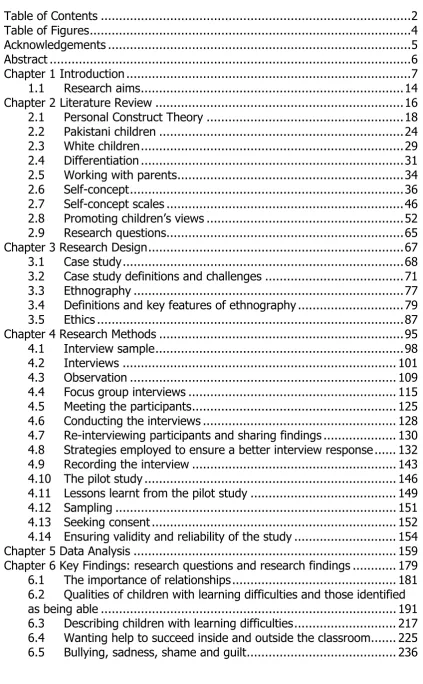
Table of Contents
[image:3.595.86.510.106.791.2]Table of Contents ...2
Table of Figures...4
Acknowledgements ...5
Abstract ...6
Chapter 1 Introduction ...7
1.1 Research aims...14
Chapter 2 Literature Review ...16
2.1 Personal Construct Theory ...18
2.2 Pakistani children ...24
2.3 White children...29
2.4 Differentiation ...31
2.5 Working with parents...34
2.6 Self-concept...36
2.7 Self-concept scales ...46
2.8 Promoting children’s views ...52
2.9 Research questions...65
Chapter 3 Research Design...67
3.1 Case study...68
3.2 Case study definitions and challenges ...71
3.3 Ethnography ...77
3.4 Definitions and key features of ethnography ...79
3.5 Ethics ...87
Chapter 4 Research Methods ...95
4.1 Interview sample...98
4.2 Interviews ... 101
4.3 Observation ... 109
4.4 Focus group interviews ... 115
4.5 Meeting the participants... 125
4.6 Conducting the interviews ... 128
4.7 Re-interviewing participants and sharing findings ... 130
4.8 Strategies employed to ensure a better interview response... 132
4.9 Recording the interview ... 143
4.10 The pilot study ... 146
4.11 Lessons learnt from the pilot study ... 149
4.12 Sampling ... 151
4.13 Seeking consent ... 152
4.14 Ensuring validity and reliability of the study ... 154
Chapter 5 Data Analysis ... 159
Chapter 6 Key Findings: research questions and research findings ... 179
6.1 The importance of relationships... 181
6.2 Qualities of children with learning difficulties and those identified as being able ... 191
6.3 Describing children with learning difficulties... 217
6.6 Understanding of learning difficulties ... 258
6.7 They have a feeling but no denial ... 261
6.8 Causes of learning difficulty... 265
6.9 Parental support... 271
6.10 Ambition... 277
6.11 School culture ... 288
Chapter 7 Reflections on Methodology... 294
Chapter 8 Conclusion, Recommendations and Implications... 299
8.1 Contribution to research... 300
8.2 Children with learning difficulties – perceptions of learning ... 301
8.3 Peer perceptions of children with learning difficulties... 307
8.4 Parent perceptions of children with learning difficulties... 310
8.5 Staff perceptions of children with learning difficulties... 315
8.6 Next steps ... 319
8.7 Implications for pupils... 321
8.8 Implications for schools ... 322
8.9 Implications for parents ... 324
References ... 325
Appendices... 345
1 Glossary... 345
2 Research context... 348
3 Background to Bradford ... 350
4 Researcher’s personal values ... 352
5 Inner City Primary School (Context) ... 354
6 Outer City Primary School (Context) ... 355
7 Letter sent to the school informing them of the research ... 356
8 Letter sent to parents informing them of the research ... 357
9 Introduction to all interviews ... 359
10 An example of a pupil interview schedule ... 361
11 An example of a parent interview schedule... 367
12 An example of a school staff interview schedule... 371
13 An example of a focus group interview schedule ... 374
14 Observation schedule... 376
15 Completed Self-image Profiles (Butler 2001) ... 377
Table of Figures
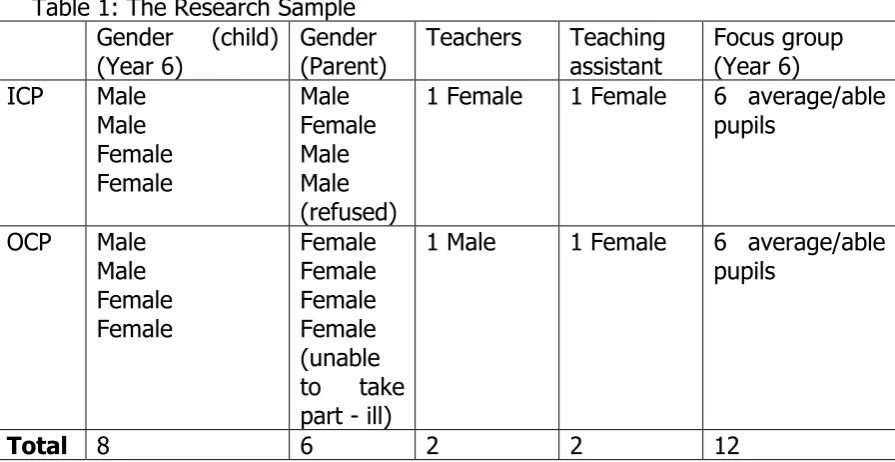
Table 1: The Research Sample...99
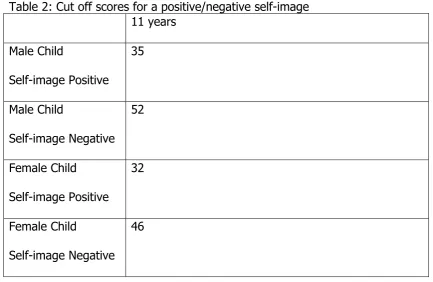
Table 2: Cut off scores for a positive/negative self-image... 162
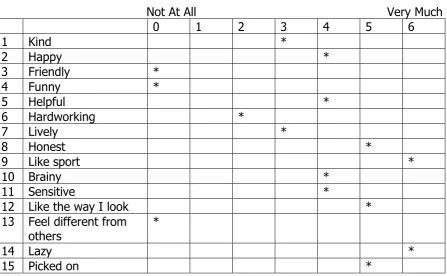
Table 3: Completed Self-image Profile (Butler 2001) ... 163
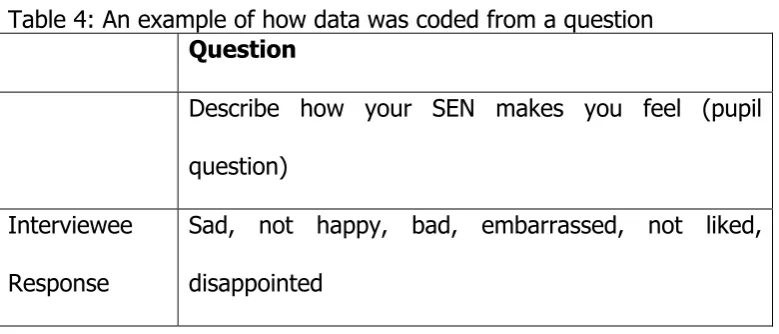
Table 4: An example of how data was coded from a question... 171
Table 5: How the research questions relate to the research findings ... 179
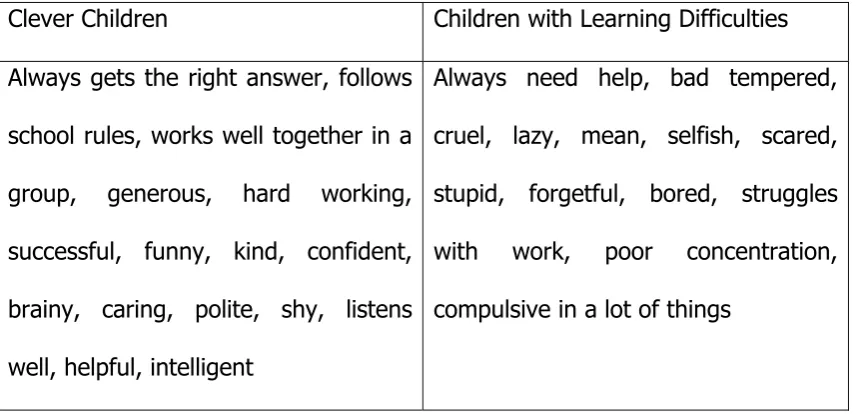
Table 6: Words and phrases used to describe children with/without learning difficulties... 195
Table 7: Words and phrases used to describe children with/without learning difficulties... 202
Table 8: Words and phrases used to describe children with/without learning difficulties... 214
Table 9: Words and phrases used to describe children with/without learning difficulties... 215
Acknowledgements
Abstract
This research investigates cultural differences and similarities in the perceptions of four British Pakistani and four British white children aged eleven with learning difficulties. This is pursued through four main aims that examine how aware pupils are of their learning difficulties; how they and their significant others perceive their learning difficulties; how they respond to key labels used to refer to them; and to what extent there are cultural differences and similarities between the two groups of pupils. This work has been carried out because there is currently limited research in this area. The pupils’ views are explored in two contrasting Bradford (West Yorkshire) primary schools where the cultural population is either predominantly Pakistani or white. A variety of data collection methods, including semi-structured interviews, a self-image profile, focus group interviews and observations have been used to collect data. The findings indicate that there are more commonalities between the Pakistani and white cultures than there are differences, for example although Pakistani and white children enjoy coming to school and want to do well, they are unhappy, embarrassed, and humiliated about having a learning difficulty and hence face these additional pressures in school. Pakistani children expressed more of an interest in attending university and then embarking on professional careers compared to white children.
Peers of average/higher ability perceive children with learning difficulties to be more prone to bullying, slow learners, unpopular and these peers have low expectations of what the children with learning difficulties are able to do. Staff view children with learning difficulties as lacking in confidence and self-esteem, experiencing unhappiness, having a low self-image, working at a slower pace and often lacking motivation.
Chapter 1Introduction
This chapter considers why the research is being carried out; it also looks at some of the terms and phrases associated with the research. The research aims are explored followed by a discussion of the background to the research including the two primary schools and Bradford as a city.
The aim of this research project is to investigate cultural differences and similarities in pupils’ perceptions of their learning difficulty (moderate learning difficulty) in two contrasting Bradford primary schools, which are anonymised as Inner City Primary (the researcher’s own school, where he works) and Outer City Primary. The study ascertains views of significant others, including parents of children with learning difficulties, their peers, teachers and support staff, in order to obtain a fuller picture of perceptions of those with learning difficulties.
recalls working hard, but for some reason he was unclear of what more he needed to do to achieve and “be like the rest”. The researcher recalls sitting in the classroom and looking at the “red crosses” in his books with comments like “See me” from the teacher. The researcher remembers his teacher saying to the children “when you have finished your work, turn over to the next page”. The same work was presented for all children regardless of their abilities. The researcher also remembers being picked on and bullied both in the classroom and in the playground for being “slow”. He was embarrassed to tell his parents how poorly he scored in tests as this disappointed them.
Having these beliefs about learning made the researcher determined to fight against his learning difficulty by sheer hard work, motivation, determination, accessing support from many sources including home tutoring and persevering with learning when approaching tasks. The researcher was fully aware that for him to succeed, he had to work twice as hard as others. He placed this internal pressure on himself and was aware that what kept him going were his ambition, drive and high expectations from his parents who had already mapped out his life, expecting the researcher (their son) to go to college and university.
enjoy and achieve? Are there children in the classroom feeling inferior and sad about their learning? Do children with learning difficulties want to do well?
Regarding the researcher’s experience of school improvement, the second reason the research is being carried out is that schools are driven by targets. The aim for many schools is to get as many pupils to National Curriculum (NC) Level 4 (national average) in English, mathematics and science by the time children leave primary school in Year 6. The Year 6 teacher focuses his or her energy on providing additional support to the children who have a chance of getting an NC Level 4. Enabling children to get a Level 4 is fine, but what about the children who have learning difficulties? These are the most vulnerable group of children and are possibly at the greatest risk of underachievement; what about these children? How do these children feel and view their learning in what can be deemed as a pressurised environment where the teacher is focused on working with children to ensure that as many children as possible get a Level 4? How do children with learning difficulties feel given the competition they are faced with from their peers? Do the children think that they are going to get a Level 4? If not, how do they feel when the support is focused on other children who have a chance of getting that Level 4?
vulnerable groups of pupils, in particular those with learning difficulties. The “Every Child Matters” (DfES 2003) agenda highlights the importance of providing pupils with opportunities to achieve and enjoy as well as to give pupils an opportunity to make a contribution in decisions that affect them. This research aims to provide pupils with an opportunity to talk about their learning difficulties. It also seeks pupils’ views about their learning difficulties since pupils’ perspectives on school and schoolwork have been relatively under researched especially from a British perspective, involving ethnic minority groups (Norwich and Kelly 2004). Furthermore, in a report by the DoH (2001), the authors claimed that little work has been undertaken regarding people with learning difficulties from minority ethnic backgrounds.
The inclusion of children and young people with learning difficulties is central to government policy on inclusion. Whilst there is increasing government research and debate on inclusion (DfES 2003), the government is stressing more importance on seeking children’s views on their own learning and involving pupils in decisions that directly affect them (DfES 2002).
The United Nations (UN) Convention on the Rights of the Child (1989) calls for parties to:
‘Assure to the child who is capable of forming his or her own views the right to
Since the introduction of the Education Act 1981, the trend has moved towards a decreasing number of children in special schools and towards their inclusion in mainstream settings. Estimates in 2002 indicated that there were about 1.3% of pupils in special schools in England (Norwich 2002). Over 50% of pupils with significant learning difficulties, including those who have statements of special educational need, are now receiving their education in mainstream schools. One of the key reasons for focusing this study on pupils with moderate learning difficulties is because this group constitutes the largest group amongst those with learning difficulties in schools. Since the learning difficulty for these pupils is moderate, they are able to take part in the interview process. Kavale and Forness (1995) argue that learning disability and difficulty is the largest category in special education.
The terms “general learning difficulty”, “learning difficulty” and “moderate learning difficulty” will be used synonymously throughout the research.
belong to different religions and cultures. In his report, Cantle (2001) uses the terms Pakistani, Muslim and white to refer to groups of people.
For the purpose of this research, the term culture is used to refer to values, beliefs and practices of these two groups of people (Fenton 1999). Although many different characteristics may distinguish one ethnic group from another, the most usual consist of language, religion and styles of dress (Giddens 1989). Thomas (1994) argues that ethnicity is a label that reflects perceived membership of, and has a sense of, belonging to a distinctive social group; some of these distinguishing features include physical appearance, first language, family structure, religious beliefs and practices. Frederickson and Cline (2005) argue that culture encompasses the learned traditions and aspects of lifestyle that are shared by members of a society. This includes their habitual ways of thinking, feeling and behaving. The researcher is aware of the complexities of culture and the varying aspects of culture (Rooney 1996); however this research considers culture in terms of children’s ethnicity (Pakistani and white), everyday views, attitudes, beliefs and values on how they make sense of learning within the classroom. Other facets of culture may emerge from the research.
1.1 Research aims
Considering one in three children are assessed as having special educational needs (DfES Code of Practice, 2001), there is currently very little research describing Pakistani and white children’s experiences of their learning difficulties (Norwich and Kelly 2004). Knowing how children feel and what they experience is central to understanding and planning for their needs. This research investigates how Pakistani and white children view their learning and establishes whether there are cultural differences and/or similarities.
The main aims of the study (or statement of objective) are to examine:
• How aware pupils are of their learning difficulties
• How pupils and significant others perceive their learning difficulty
• How children with learning difficulties respond to labels used to refer to them
• To what extent are there cultural differences and similarities between the two groups of pupils (Pakistani and white)
Chapter 2Literature Review
This chapter aims to summarise, analyse and critique the literature review undertaken to support the aims of the research. Literature that has been reviewed includes research on ethnicity, SEN and inclusion, differentiation, using labels to refer to children with learning difficulties, the importance of schools working in partnership with parents to promote effective learning, recognising feelings and attitudes of pupils with learning difficulties, personal construct theory, identifying the self-concept of pupils with SEN and involving pupils in decision making. The final section of this chapter offers a critique on current research literature. The above literature has been reviewed as it supports the research aims but it also shows where there are gaps in knowledge; this research addresses this through its research questions.
As stated earlier, the SEN Code of Practice (DfES 2001) claims that, at anytime, approximately one in three children is assessed as having SEN of some type. Hart et al (2004) argue that children who are labelled as the “bottom or lower achieving group” experience low self-esteem. This research considers whether children with learning difficulties have a low self-image, given that the government and school focus is on removing barriers to learning and raising standards for all children. This research seeks pupils’ views on their learning difficulties, which is crucial in driving the special educational needs agenda forward since this allows practitioners to have a better understanding of pupils’ needs. The government document “Working Together: Give Children and Young People a Say” (DfES 2002) encourages
2.1 Personal Construct Theory
This research takes an ideographic approach, as this allows for a more thorough inquiry into how pupils think and feel about themselves from their own perspectives in their own terms (Kelly 1955). An ideographic approach supports this research, which uses interpretive methodology (case study and ethnography) and qualitative data collection methods. This is fully explored in Chapter 3 (Research Design) and Chapter 4 (Research Methods). Construct theory is discussed below because the researcher uses key principles of the theory to support this research. Kelly’s infamous first principle is “if you want to ask what’s wrong then ask”; this asking could be in a questionnaire or interview format. The latter was used in this research. Kelly proposed the personal construct, as his basic unit analysis, as the means by which an individual accesses the world through making sense of it by giving it meaning. Kelly believed that individuals categorize, interpret, label and judge themselves and their world. Kelly further argues that children behave in particular ways because it makes sense to them no matter how bizarre, deviant and self-defeating it may appear to the onlooker and is a pivotal theme arising from personal construct psychology. For this reason, the researcher chose to adopt this approach for this research project.
difficulties or share similar backgrounds. Life is not experienced uniquely by all. This is not to say that there are commonalities in experiences. The key principle behind personal construct psychology is the way in which individuals view the world, not how they are viewed by the world.
Kelly was interested in how individuals, children, perceive themselves, for example asking children for three things that best described the way they were. If the children had described themselves as active, the researcher would then ask the child to describe someone who is not active and then the researcher would ask the child to give a preference as to which end of the pole the child prefers to be at and why. Through effective questioning, Kelly aimed for children to elaborate so that one could understand the actions or behaviour that underpin the construct. According to Kelly, constructs are often polar, in that they have opposites. Thus, the construct of good implies another of bad. Polar constructs create one another: thus “good” cannot exist without “bad”. Kelly’s central belief is that if one is to understand people’s actions in order to resolve their problems, one must make a determined effort to see the world from their eyes. The child is the expert of his or her own experience. The researcher in this study ensured that he learnt from the child through seeing the world through the eyes of the child.
child is first asked who knows him or her best and then taking this individual from the list, for example the mother, the teacher, the friend, the child describes him or herself as others see them. In this way, the child is encouraged to think if the mother is asked to say something about her child, what she would say. In this way, the child is trying to stand in another person’s shoes and possibly the child feels less apprehensive about describing him or herself. Other types of questioning favoured by Ravenette include “tell me three things about the sort of girl who worries about going to school”. Part of this questioning was used in this research. Jackson (1988) argues that by writing or thinking in the third person, an individual can step back from himself, making it perhaps easier to answer the questions.
Kelly uses other strategies to ensure pupil engagements, such as self-characterisation when children are invited to describe themselves as if they are characters in a play. Kelly also proposed the idea for children to draw images of themselves and portraits of faces with a variety of facial expressions. Through this approach, the children are then asked questions like “How is this person feeling? Have you ever felt like that? What has made this person feel this way?”
research scientist whose central aim is to predict and control. Peck and Whitlow (1975) argue that Kelly (1955) trivialises important aspects of behaviour such as learning, motivation, emotion and situational influences on behaviour, hence personal construct theory places the person in an “empty world”.
To overcome the criticisms of personal construct theory, the researcher used elements of the theory such as Ravenette’s (1977) line of questioning and seeking how individuals view the world. Furthermore, the researcher used aspects of the personal construct theory by ensuring that, when using the self-image profile (SIP), he gave the participant a construct and asked them to indicate how they perceived themselves against the construct. Following this, the researcher asked the children to elaborate on why and how they perceived themselves in given ways. Other theories including Mead’s (1934) symbolic interactionism were considered, where Mead argued that self-concept is created by society and needs social support to maintain it; however, the researcher favoured the personal construct approach as this theory has a line of questioning that is appropriate to the research.
spatial (associated with the arts) and the final two which Gardner refers to as ‘personal intelligences’, interpersonal and intrapersonal. Subsequent research and reflection by Gardner (1999) has looked at three other forms of intelligences; naturalist, spiritual/existential and moral.
Kornhaber (2001) argues:
‘… the theory validates educators’ everyday experience; students think and learn in many different ways. It also provides educators with a conceptual framework for organising and reflecting on curriculum assessment and pedagogical processes. In turn, this reflection has led many educators to develop new approaches that might better meet the needs of the range of learners in their classrooms.’ (p. 276).
2.2 Pakistani children
Before looking at research on special educational needs, it is important to consider research on ethnicity, as this will provide an increased understanding of the ethnic group, Pakistani. A report by the DoH (2001) claimed that minority ethnic communities face substantial inequality, discrimination and disadvantage in education, health, employment and social services. Research on ethnicity from the work of many writers, including Shain (2003), suggest that images and ideas that referred to Asians as being heathen, backward and barbarous emerged in the racialisation of immigration that took place from the 1950s in England when Asians came to Britain. This presented a threat to the “British way of life”. Shain (2003) argues that, since the 1950s, Asian men have been regarded as fundamentalists, cheats, hotheads and welfare scroungers, whereas Asian women have been referred to as welfare dependants who breed like rabbits and threaten to use up resources. Shain (2003) refers to the current discourses, which refer to Muslims as terrorists and asylum seekers. Shain suggests that such discourses imply that something is inherently inferior in the cultural backgrounds of those from ethnic minority groups, and this places them in a relationship of inferiority to a white majority group.
apparent lack of discipline and absence of family ties. This is the opposite for Asian families where there is an over focus on “too much” discipline and the family is seen as highly close-knit.
According to the cultural discourse, problems arise for Asian youths because of the family and cultural constraints that are imposed on them. Asian girls are regarded as shy, timid and passive and are caught between two cultures, that of school, which is equated to freedom, and that of home, which represents restriction to the traditional role, a strict upbringing. Hence, Asian girls in the classroom have limited ideas because of their culture (Brah 1996).
counterparts in East London and those from West London. This research looks at children whose parents live in Bradford but have a particular link (relatives, including grandparents) in small villages surrounding Kashmir in Pakistan.
The following quote is important, as it demonstrates Asian children’s exposure to British values, norms and attitudes and that of their parents’ traditional authority.
The Community Relations Commission (1976) argued:
‘The children of Asian parents born or brought up in Britain, are a generation caught between two cultures. They live in a culture of their parents at home, and are taught a different one at school, the neighbourhood, at work … parents cannot fully understand their children and children cannot fully understand their parents.’ (p.30)
In a study conducted by both Shaw (1988) and Mirza (1989), Muslims made distinctions between the religious teachings and cultural interpretations of Islamic teachings. The girls in both studies were clearly able to distinguish between Islamic teachings from the Koran and cultural interpretations of Islam. This research asks parents what expectations they have of their children, given that some Pakistani children attend mosque school, and that some Pakistani parents are unable to speak English. It also asks the value of education for both Pakistani and white parents.
about friends and, in terms of culture, which group of children they prefer to play with and why.
Whatever the ethnic or religious background of pupils, teacher expectations can have powerful consequences for young people’s career paths. Wright (1992) argues:
‘Teachers expect pupils of Asian origin to be industrious, courteous and keen to learn. They also tend to assume that Asians are well disciplined, highly motivated children from family backgrounds where educational success is highly valued.’ (p.39)
Asian youths have been portrayed as hardworking and passive but, since the 1980s and in the wake of the Rushdie affair, new discourses of Asian masculinity have emerged that regard young Asian youths as volatile, aggressive, angry, hot-headed and as posing a threat to social order (Solomos and Back 1994). This is partly because they refuse to accept the passive status. Since the “riots” in English towns and cities such as Burnley, Bradford in 2001 and the September 11 attacks on America, these discourses have been further strengthened and connect Muslims with being barbaric and backward (Shain 2003). This research considers teacher expectations of children with learning difficulties and to what extent children with learning difficulties can access the curriculum given the difficulties they face.
2.3 White children
In his study on pupils’ views on schoolwork and school, Blatchford (1996) found that, at the age of 11, white children had lower academic self-concept scores than black (Caribbean) children. Black children also were more likely to cite going to college as more important than white children.
special educational needs. The study examines whether there are any cultural differences and/or similarities. In his study, Blatchford (1996) found that white working-class parents gave their children significantly less help with schoolwork than did black working-class parents. White parents were also less positive about helping their children at home and were less likely to stress the importance of passing exams.
2.4 Differentiation
The model of differentiation is based on early writings, including the more recent work of Gardner’s (1993) thoughts on children’s learning styles. Visser (1993) defines differentiation as a process whereby pupils’ needs are met through the teacher differentiating the curriculum in order to ensure that all pupils are able to access this, with or without some support. This model is used in this study. McNamara and Moreton (1997) argue that differentiation is about equal opportunity; it is children’s right to access the same curriculum; it is about recognising and meeting individual needs. Differentiation stretches the most able pupils and ensures that the less able do not get lost. Having said this, there are repeated complaints that teachers do not differentiate adequately among their pupils in order to take into account the wide range of differences in ability, and that tasks are poorly matched to pupil needs (Nind et al 2003).
pupils’ attitudes towards learning. The research focuses on looking at cultural differences and similarities between the Pakistani and the white participants.
Hart et al (2004) suggest that, from an early age, young people begin to hear and understand the judgements that their teachers make about them and everything they do. They learn very quickly about their ability position in class in relation to their peers. They learn where they belong and what is expected from them (Elliott et al 1999). Using categories helps the class teacher to make tasks manageable, especially if children have similar levels of ability; it is assumed that they have similar learning needs. However, labels have been used to refer to children with special educational needs. These have sometimes been criticised as children are seen as different and are perceived in negative ways, and this devalues them and lowers their perception of themselves. Furthermore, labels can also “pigeon-hole” children defining what they are able to do or not do (Corbett 1995). This research looks at how children with learning difficulties respond to varying labels used to refer to them, and to what extent they are aware of their position in class in relation to their peers.
2.5 Working with parents
Nind et al (2003) argue that meaningful education of the “whole child” depends on many factors, including schools working effectively in partnership with the parents. The Plowden Report (1967) clearly demonstrated that children’s progress and success throughout schooling was closely related to the nature of their home background. The Warnock Committee (1978) suggested that the relationship between parents and professionals should be conceptualised as a partnership and ideally an equal one. Research, including the work of Tizard and Hughes (1984), found strong correlations between the school and the home. It emphasised the need for schools to work in partnership with parents, the primary educators of their children, in order to bridge the home-school gap. The idea of parents and teachers as partners in supporting young people’s learning may not sit so comfortably with teachers.
2.6 Self-concept
The terms “self-concept” and “self-esteem” (global self-worth) are used in educational literature sometimes distinctively and sometimes as if they were synonymous. When distinctions are made, “self-concept” is viewed as cognitive understanding about one’s ability, while “self-esteem” is viewed as an evaluative judgement reflecting the individual’s sense of worth. These constructs are often interdependent and difficult to assess as separate entitities (Cosden et al 1999). Emler (2001) argues that those with low self-esteem treat themselves badly and may invite bad treatment by others, but that they tend not to treat others badly.
In this study, self-concept is used to describe perceptions of competence in academic and social domains; self-esteem (global self-worth) is used to describe one’s overall sense of worth.
the formation of a positive self-concept (Coopersmith 1967). Because school represents the first occasion in which children act on their own and measure themselves against others, schooling plays an important role in the formation of self-concept (Hart et al 2004). This will be explored with pupils during their interviews. Several studies, including that of Black (1974), have shown that pupils with learning difficulties have lower self-esteem than those without learning difficulties. See also Chapter 6, where findings from the research are discussed.
The self-concept of pupils with learning disabilities has been the subject of considerable research since the mid-1970s (Chapman 1988). Studies, including that of Bryan (1986), indicate that pupils with learning disabilities and difficulties have problems in social and emotional areas as well as academic performance. Studies show that the fewer areas in which pupils experience mastery, the more negative their self-concept may become. Furthermore, Mercer (1987) has argued that pupils with learning disabilities have a more negative self-concept than pupils without learning disabilities. This research evaluates to what extent pupils with learning difficulties have low/high self-concept, since at present there is limited research that indicates the self-concept of Pakistani pupils with learning difficulties and how this differs from white children.
learning disabilities, but not less competent on global self-worth or some of the non-academic domains. The writers looked at factors that contribute to a positive global self-concept in pupils with learning disabilities and they found that most of the pupils in the study have a positive global self-concept. However, when academic self-concept was examined, the majority of the pupils reported a negative academic self-concept. This has been consistent with findings of Chapman and Boersma (1979) in which children with learning disabilities tend to feel good about themselves in general but less adequate about their scholastic and academic competence. This research explores this issue, particularly looking at the similarity and difference between Pakistani and white children.
than those children without learning difficulties. This is particularly true for academic self-concept.
Pupils who have positive self-perceptions usually try harder when faced with difficult or challenging tasks. Pupils who feel worthless tend to reduce their efforts and give up when work is difficult (Bandura 1982). Pupils who experience learning difficulties have been subject to considerable research in terms of self-concept. Deci and Chandler (1986) claim that emotional and motivational variables including self-concept are central to some if not all learning disabilities either as initial causes or as factors that compound the source of the learning problems. Persistent failure is seen as negative and long-lasting, particularly in terms of social-emotional development (Bryan 1986). It has been argued that pupils with learning difficulties have low self-concepts, and negative self-beliefs that are associated with poor achievement, social and emotional behaviour (Mercer 1987). This research explores the self-concept of both the Pakistani and white children and considers differences and similarities.
Poplin (1984) argues that many children with learning difficulties are able to maintain a sense of self-worth in activities such as sports, music and hobbies. These help the children to have feelings of accomplishment that may help compensate for academic failure and prevent substantial decrements in general self-concept. This research considers whether children with learning difficulties excel in any particular activities such as sports.
It can be argued that children with special educational needs experience difficulties in identified areas of academic functioning (Cambra and Silvestre 2003). Furthermore, children with special educational needs may also experience difficulties surrounding their social or behaviour skills (Bryan 1986); these children may further encounter peer rejection. Studies by Bear et al (2002) have shown that children with learning difficulties perceived their
academic ability less favourably than those without learning difficulties. This research sets out to investigate to what extent this is apparent and explores whether there are any cultural differences and similarities in the ways pupils and significant others (peers, parents, teachers and support staff) perceive SEN.
in itself result in poor self-esteem. They argue that academic and non-academic factors can result in high self-esteem such as positive factors of one’s physical appearance. Harter (1999) also argues that there is not necessarily a direct relationship between a child’s academic, behaviour and social ability and his/her global self-worth. Children with learning difficulties may have positive feelings of self-worth, particularly in areas of talent such as sports (Harter 1999). This then suggests that children with learning difficulties may have positive global self-perceptions on the basis of their non-academic skills and strengths. This research investigates cultural similarities and differences in children’s feelings of self-worth in relation to their academic and social domain. Furthermore, the research reviews to what extent a child’s self-worth is protected by social support from parents, teachers and friends; as Harter (1999) suggests, self-worth can be protected by biased, exaggerated self-perceptions of competency.
Self-concept is built in our own perception of how we perceive ourselves and are valued by significant persons in our environment. Self-concept is constructed from social experiences in the family and at school. The study of self-concept requires information not only on what the individual thinks about him/herself, but also about the variables related to identity, the persons close to him/her and the effects of group membership on the construction of social identity (Kelly and Norwich 2002). For this reason, the views of significant others are sought.
that low self-concept is related to learning difficulties. The researcher is also aware that the various domains of the self that contribute to the overall feelings that individuals have are protected from each other; for example, what is felt in one area filters over to some extent to other areas.
Hamachek (1991) draws a distinction between self-concept and self-esteem. He argues that the former is purely a descriptive aspect of an individual’s self-perceptions. For example, an individual might say “I have many friends”; this descriptive statement can be verified. On the other hand, Hamachek (1991) argues that self-esteem is the evaluative component of self-perceptions and is reflected in statements such as “I am an excellent student”. Self-esteem is then constructed out of our evaluations of the things we do, of who we are and what we achieve in terms of our assessments of the goodness, worthiness or significance of those things.
may come to evaluate his/her academic ability in a negative way (self-esteem), and may more easily be swayed into doing something about his/her educational ability, or in extreme cases he/she may withdraw and do nothing to improve the situation.
2.7 Self-concept scales
The range and variety of self-concept/self-esteem scales is vast. Blascovitch and Tomaka (1991) argue that there have been at least 200 measures of self-esteem that have been developed; Wylie (1961) claims that of these scales, many tend to be short lived and of debatable quality. The researcher looked at a number of self-concept scales and considered the value of each. A number of scales were looked at, including the Piers-Harris Children’s Self-concept Scale (SCS), which was regarded as the most frequently reported measure. Other self-concept scales were considered, including the Self-image Profile (Butler 2001), the Tennesse Self-concept Scale (Fitts and Warren 1996), the Multidimensional Self-concept Scale (Bracken 1992), the Self Perception Profile for Children (Harter 1985) and the Self Description Questionnaire (Marsh 1988). The researcher in this study discounted many of the frequently reported scales. The Tennessee SCS was disregarded because it focuses primarily on the adolescent years, with extensions into adulthood.
to facilitate the child making judgements about self. The self-image profile encourages the individuals to describe themselves through verbalised self-representations across a series of domains from appearance, academic, and social to emotional behaviour (a completed profile can be seen in Appendix 15 of this research). The profile contains a set of descriptions along which children are invited to rate where they consider themselves to be. Items on the scale are of necessity and meaningful to the population for whom the scale is designed, and are representative of the events in a child’s life (Butler 1994). Because the self-descriptions or constructs are child generated, children are familiar with them. The SIP has been used as all the other scales have been developed and published in the USA, with American norms.
In addition to this, scales have been based on geographically limited samples with problems in generalizability. The SIP involved children and adolescents (males and females) from a range of schools with differing socio-cultural populations. What the scale does not do is provide norms for ethnicity, unlike the Piers Harris SCS and the Bracken (1992) Multidimensional Self-concept Scale that considers both gender and ethnicity with samples fairly closely representative of the USA population census. Butler and Gasson (2005) argue that current scales are of Western origins, which take little account of “cultural philosophies”.
notions such as physical appearance and achievement. In contrast, the Eastern culture considers the self in relation to others and specific social contexts. The self is viewed as inter-dependently connected with the social context, (Markus and Kitayama 1999). Another disadvantage of the SIP is that it only has 25 items; it is not the shortest or the longest of scales. Wells and Marvwell (1976) argue that scales with a greater number of items yield a more heterogeneous and representative instrument with increased validity and generality. Given the child generated nature of the self-descriptions, Kelly (1955) equated validity with usefulness and increased understanding. If the profile makes sense to the child and it taps into his or her vision of self and reveals patterns, then it will have served its purpose. Winter (1992) argues that, given that personal construct psychology is primarily concerned with the viewpoint of its object of study, namely the child, any measures derived from the child are thus objective. Unlike other scales, Winter argues that the SIP has no hidden agenda, no intent to disguise the purpose of the scale, nor does it wish to catch the child out.
the scale, one can argue that there is a shared meaning of the items on the scale that can be readily understood by the population for whom the scale was designed to be employed (Butler and Gasson2005).
An assumption underlying scale construction was that self-descriptions are contrasts and therefore bi-polar in nature. For example, one can only consider self to be honest because an individual also has a notion of dishonesty. This is a central principle of personal construct theory (Bannister and Fransella 1986). Where scales are composed of items developed by psychologists influenced by particular models or structures of self, there is an assumption of shared meaning, as items derived by psychologists tend to reflect their thinking rather than the meanings common to the population being studied. Hughes (1984) argues that only instruments that allow individuals to provide their own descriptions of their self-perception should be considered as measures of self-concept.
self-functioning, it can provide a more comprehensive understanding than single self-concept scales (Butler and Green 1998).
Burns (1982) argues that although there are self-concept scales that are used to measure self-concept, caution needs to be taken when using these scales such as the extent to which the scales take into account a range of an individual’s possible self-concept element. One also needs to take into account whether the scale is valid and whether it measures what it says it is measuring. Further difficulties that the researcher may encounter include, does the participant answer honestly, or does he or she give answers that are socially desirable or which defend the “you” that you do not wish to acknowledge?
Family factors also play a key part in influencing a child’s reactions and attitudes, which also condition interaction with others (Leigh and Stinson 1991). This study uses a self-concept scale to establish the self-concept of children with learning difficulties and establishes to what extent there are similarities and differences between the two cultures. In particular, the research explores to what extent there are any similarities or differences in the self-concept of children, since a distinctive feature of this study is the collection of information from pupils from two different cultures.
2.8 Promoting children’s views
aware that had he chosen to interview children at school action plus, children would have been less forthcoming in their response due to their complex special educational needs, as was evident in the pilot study.
Many writers, including Lewis and Lindsay (2000), argue the importance for children to contribute to and participate in decisions about educational provision. This research sets out to invite children to talk about their learning difficulty, which will enable others (practitioners) to gain an increased understanding of children with moderate learning difficulties. The research will enable practitioners to understand what feelings children with learning difficulties experience.
Over the past decade, there has been a growing interest and benefit for involving pupils in the assessment of their educational and other needs. Involving pupils can be seen as a way of respecting their right to have a voice in their education (Davie et al 1996). With increasing acceptance of inclusive practice, it becomes important to find out how those who are assessed as having learning difficulties think and feel about their SEN. A number of small-scale studies (Cooper 1993; Cheston 1994) have investigated children’s perspectives of SEN. These studies have shown that there is stigma among SEN pupils in mainstream schools.
special attention that they received. Earlier studies, including that of Cheston (1986), indicate that pupils with learning difficulties reflect a tension of wanting and appreciating help with negative aspects such as not wanting help as this is seen to be stigmatising and devaluing. In his research on exploring the perspectives of adolescents with moderate learning difficulties, Norwich (1997) argued that the majority of children with learning difficulties did not favour getting help in mainstream schools. Many reasons for this were given by the students, such as that teachers did not have enough time for them and pupils cannot get the help they need. Kelly and Norwich (2002) found that pupils reported receiving more help from teaching assistants than from their teachers.
During the 1990s, a number of small-scale studies, including that of Wade and Moor (1993), have investigated children’s perspectives on special education. However, more recently, researchers have been interested in the dynamics and processes that are involved in interviewing children with SEN (Christensen and James 2000). Some of the factors include the child’s competence and characteristics in engaging in an interview, the questioner’s competence, the setting and context, power, relationship and emotional factors, and issues relating to ethical and human rights considerations. The researcher is aware of the extent that he is able to elicit reliable and valid information from pupils as sometimes they may not provide the right information because they want to please the interviewer by giving answers that they think the researcher wants to hear (Stalker 1998). Begley (2000) argues that, for this reason, it is vital to be clear about the initial explanation of the focus of the interview. There is also a growing trend to treat children as participants in the research process, a paradigm approach whose ideal is to empower children and see them as experts (Warren 2000). This is a move against this power differential and this is reinforced by the call for children to have a voice as an expression of their human rights (Davie et al 1996). The researcher has taken all of these factors into consideration and addresses these in the methodology section.
Reasons for preferring to be withdrawn from class included the following: better quality support, less noise, more fun, and more attention, less bullying.
The second research question explores how children prefer to be taught, in the whole class or in small groups withdrawn from the class, and the extent to which pupils have positive feelings about their school, and explores similarities and differences in culture.
The third research question explores the extent to which pupils are aware of their learning difficulty and whether children experience any difficulties in school from others because of their learning difficulty.
There is some evidence that the cohort broadly categorised as pupils “with moderate learning difficulties” represents the largest within the totality of students with “special educational needs” (DfES Code of Practice 2001). Williams (1993) argues that pupils with moderate learning difficulties have general rather than specific learning difficulties that are linked to a curriculum area. Furthermore, Williams argues that pupils with moderate learning difficulties have greater difficulty in learning. Johnston (1988) suggests that the following features characterise pupils with moderate learning difficulties: deficiencies in cognition, memory and language, short attention span, inadequate achievement, social skills deficit and emotional problems.
‘These often include mild and multiple physical and sensory disabilities, an impoverished or adverse social or educational background, specific learning difficulties and limited general ability.’(p. 219)
Bryan (1986) argues that children with learning difficulties experience difficulties in social and emotional as well as academic performance. These children may experience behaviour difficulties such as attention-seeking, difficulty in concentration, lack of motivation, disruption, and displays of frustration and temper. The combination of difficulties that children with moderate learning difficulties encounter makes these children challenging (Lewis and Lindsay 2000). The latter point needs to be taken into consideration when interviewing young people with moderate learning difficulties in that the children may not enter into a deep meaningful conversation with the researcher unless they are given prompts and questions are worded in a manner that enables them to answer appropriately. For this reason, the interview schedule was designed in a way to take into consideration the needs of these pupils (see the pupil interview schedule, Appendix 10).
used inappropriately, a person’s failures can be explained in terms of personal deficiencies and his or her successes dismissed as due to external circumstances. Even when labels are not used to refer to individuals, similar responses can be evoked if labels are used through differential treatment in learning. For example, if a support assistant is attached to (sits next to) a child who has special educational needs, this too can act as a sign of a negative identity as this is associated with receiving different kinds of devalued educational provision (Norwich 1997). Contrary to this, using labels has been shown to be beneficial in that they can evoke an accommodating and a protective response (Felner and Hust 1976). The current system of special educational needs requires children with learning difficulties to be identified (and labelled according to need) in order to provide a curriculum that is appropriate, additional and different from the differentiated curriculum.
The fourth research question explores the nature of labels; it seeks children’s and others views on the use of labels. Furthermore, the study explores which labels are preferred by pupils and others and compares similarities and differences between the two cultures.
replaced one set of labels of special educational needs with another set in terms of a broad label of special educational need. The introduction of the SEN Code of Practice (DfES 1994) brought in specific kinds of SEN, including moderate learning difficulties, specific learning difficulties and others. The focus of this study looks at children who are identified as having moderate general learning difficulties. If some children are labelled as having learning difficulties, there is a risk of negative labelling; if they are not identified, there is a risk that their individual needs will not fully be met (Norwich 1997).
Tomlinson (1996) found that students disliked disability labelling but recognised that labels were useful for receiving the support they required. In their study involving a sample of undergraduate students, Hastings and Remington (1993) found that the students evaluated terms such as “learning difficulties” and “learning disability” more positively than older terms such as “mental handicap” and “mental subnormality”. However, most of the labels were evaluated negatively; the only term that received a positive evaluation was “exceptional”.
term “abnormality” was the most negative term. This study asks teachers, support staff, parents and pupils their preferred term and which they see as being most positive and why.
The use of labels and labelling has been a concern in the special education field (Kelly and Norwich 2004). Labels that are used to refer to people with intellectual impairments such as special educational needs have been criticised for identifying some children to be different in a negative way, which devalues them (Solity 1991). Labels can be used in negative ways, such as limiting people’s expectations, and encourage judgements about those with impairments, stigmatising them.
It has also been argued that labels can be helpful as they can identify a group of children who require help with their education (Norwich 1997). In this study, Norwich (1997) found that some labels such as special educational needs and learning difficulties were evaluated positively by trainee and experienced teachers, whereas other labels that were linked with medical terminology (for example abnormality, deficit, disability and impairment) were evaluated negatively. This study asks pupils to comment on which labels they prefer.
perceptions were found in mainstream schools. In their study, the findings indicated that pupils with moderate learning difficulties in mainstream schools had positive self-perceptions of general characteristics, though many had mixed self-perceptions particularly around educational abilities. Some studies make the distinction between global self-concept, sometimes interpreted as self-esteem (Cosden et al 1999).
Norwich and Kelly (2004) found that older and more formal terms such as “retarded” and “backward” were rarely recognised by pupils, as a minority of pupils compared to the associated term “learning difficulty” had heard current terms such as “SEN”. The more lay and everyday terms that were also evaluated negatively such as “stupid and thick”, were recognised more frequently. In this study, some of the terms used by Norwich (1999) were used with participants. The reason for using the terms identified in the study (for example, learning difficulty, stupid and thick) was because Norwich (1999) has done some valuable work on examining the connotations of several key terms or labels used in special education. The range of terms identified by Norwich (1999) includes both positive and negative terms, and these can be understood by both children and adults.
addressed. The aim of this research is to address these gaps. Of all the literature examined, no literature specifically reports on the direct experiences and the attitudes to learning of Year 6 Pakistani children with learning difficulties. Although there is some research on white children’s experiences of special educational needs (Norwich and Kelly 2004), this is very limited and it is not clear the extent to which the children have special educational needs (for example, whether the child is at school action or school action plus on the SEN register, or whether the child has a statement of special educational need). It is also unclear whether there are gender differences in children’s experiences of their learning difficulty. There is also limited research on examining Year 6 children’s perspectives of their learning difficulty. This is a crucial age for many children as it is their last year in primary school and it is the age where children undertake their formal tests and hence are under pressure to achieve their personal best.
2.9 Research questions
Current research acknowledges that children with special education needs have low self-esteem and that a stigma is attached to having SEN. However, given pupil’s learning difficulties, there appears to be limited research that considers the type of SEN (as there are many, from moderate learning difficulties to visual impairement etc.), children’s perspectives and their attitude to learning, their enjoyment of school and experience of any extra help they receive, their feelings towards having a learning difficulty, their ambitions, expectations and fears, their understanding of their learning difficulties and how they see themselves and others who they regard as being “more able or clever”. This research addresses all of the above areas through its research questions.
The four research questions emerged following the review, analysis and critique of the literature; these formed the basis of deciding on data collection tools for the research. The four research questions were grouped with subsidiary questions with cultural (Pakistani and white) differences and similarities embedded in all research questions.
1a. How are children with learning difficulties perceived by themselves and significant others as learners?
1c. What expectations do significant others have of children with learning difficulties? What hopes do parents have of their children and to what extent are parents supportive of their children’s learning? How do children respond to any special help they receive?
2a. How do children with learning difficulties like to be taught?
2b. What feelings do children with learning difficulties have about school? 2c. What can be said about the self-concept of children with learning difficulties? Do they have a low or high self-concept? Do children with learning difficulties excel in particular activities such as sports?
3a. How aware are children of their learning difficulty?
3b. Do children perceive their learning difficulty to be temporary or permanent?
3c. What if any difficulties do children with learning difficulties experience in school?
Chapter 3 Research Design
3.1 Case study
This section looks at what a case study is and why it was used.
This study uses case study and ethnographic methodology to address the research questions. The research does not strictly follow a case study or an ethnographic approach, but uses a combination of both.
Another real advantage of using a case study is that the researcher is able to conduct the research in the participant’s natural setting (not in an artificially created environment for a specific research purpose), in this case, the school (Merriam 1988). Yin (1994) argues that the case is a “naturally occurring” phenomenon; it exists prior to the research project and continues to exist once the research has finished. A case study has been chosen for this research since it invites and encourages the researcher to use a range of research methods in order to capture the complex reality; in this case, semi-structured interviews, focus group interviews and non-participant observation is employed.
3.2 Case study definitions and challenges
This section looks at definitions of case studies, their uses and limitations.
Robson (2002) refers to the case in case study to mean the situation, individual, group, organisation or whatever the researcher is interested in. In this study, the case refers to a group of participants (namely pupils, parents, teachers and teaching assistants) in two schools. Robson (2002) provides examples of what may constitute a case study. He argues that case studies can be anything from individual case studies, where detailed accounts of one person are explored, to sets of individual case studies, which are similar to individual case studies, but common features of the small number of individuals are studied. He argues that community studies can be classed as case studies where one or more local communities are studied. Furthermore, he claims that case studies can be studies of organizations, institutions, events, roles and relationships. Similarly, Hammersley (1992) argues that a “case” can comprise single individuals or a group as well as a social institution.
Creswell (1994) argues that a case study is the study of one single or a small number of cases. The researcher in this study defines each of the two schools (Inner City and Outer City Primary) to be a case, and within each case or main unit there are subunits; these subunits are referred to as the participants in the study. Given the above definition, this research was bounded by time and activity and collected detailed data about its participants.
Cohen and Manion (1989) state that the case study researcher typically observes the characteristics of an individual unit. This unit may be a child, a class, a school or a community. The purpose of this observation is to probe deeply and analyse intensively this unit with a view to establishing generalisations about the wider population to which that unit belongs.
Sturman (1994) offers the following description of case studies. He argues that:
‘Case study is a generic term for the investigation of an individual, group or phenomenon. While the techniques used in the investigation may be varied, and may include both qualitative and quantitative approaches, the distinguishing feature of case study is the belief that human systems develop a characteristic wholeness or integrity and are not simply a loose collection of traits. As a consequence of this belief, case study researchers hold the view that to understand a case, explain why things happen as they do, and to generalise or predict from a single example requires an in-depth investigation of the interdependencies of parts and the patterns that
emerge.’(p.61)
Stenhouse (1985) identified four broad styles of a case study. These are ethnographic, evaluative, educational and action research case studies.
Stenhouse (1985) described the evaluative case study as:
‘A single case or collection of cases is studied in depth with the purpose of providing educational actors or decision makers with information that will help them to judge the merit and worth of policies, programmes or institution.’ (p.50)
Further, he described an educational case study as:
‘Many researchers using case study methods are neither concerned with social theory nor with evaluative judgement, but rather with understanding of educational action. They are concerned to enrich the thinking and discourse of educators either by the development of educational theory or by refinement of prudence through the
systematic and reflective documentation of evidence.’ (p.50)
In this study, the researcher uses an evaluative case study where two cases (two schools) are studied in depth. Each school represents a case with subunits and each subunit represents a participant. The researcher is also partly using the educational case study where through in-depth interviewing he is aiming to understand social action.
others feel. Bassey’s “story telling” case study is similar to what Stake (1995) describes as “intrinsic” case study.
Although Payne and Payne (2004) argue that a case study is a detailed study on a single social unit, these writers argue that the social unit may be one child, a classroom of pupils, a school or a street gang and by definition a case study would not compare two or more schools. For this reason, this research does not use an entirely case study and ethnographic approach.
findings but to form a unique interpretation of events, which can allow another researcher to acknowledge the limitations of the research and take the research further or relate it to their own setting. Although each case in some respects is unique, it is also a single example of a broader nature of things. The extent to which findings from the case study can be generalised to other examples, and other schools, depends on how far the case study example is similar to others of its type. The findings from this research can be used to apply to other schools if they share similar school characteristics.
One of the characteristics of qualitative research that is most criticised is the lack of external validity and generalizability (Verschuren 2003). Yin (1989) argues that the results of a case study are in principle generalizable to theoretical propositions not to populations or universes. Yin refers to these as analytical and statistical generalizations, respectively. Mitchell (1983) defends the external validity of the case study by arguing that researchers have to rely on logical inference instead of statistical inference, which according to him is the same as Znainiecki’s (1934) distinction between analytical and enumerative induction. Mitchell formulates a plausible rationale for generalizing case study results on the basis of analytical induction; these are to be grounded on theoretical knowledge and in-depth analysis of a case.
3.3 Ethnography
This section considers what ethnography is and why it has been used in the research design.
The origins of ethnography lie in the work of nineteenth century anthropologists who primarily observed different and “other” cultures. In the last three decades, educational settings have been used for ethnography (Scott and Morrison 2006). Although ethnographers in the past have chosen data collection strategies that avoid enumeration and standardized instruments, the literature in educational ethnography reflects a more eclectic use of quantitative data collection strategies (Deyhle 1989). The researcher in this study uses non-participant observation, semi-structured interviews and focus group interviews to collect data.