Design Algorithm for 3D Motion Gesture
Recognition Using IR Proximity Led Sensor with
Least Square Curve Fitting Method
Shinde Shital1, Mrs. Pushpalatha G. S2
1PG Student, VLSI and Embedded System Department of ECE, 2Assistant ProfessorDepartment of ECE, SJBIT, Bangalore, India
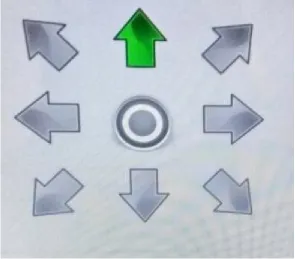
Abstract: 3D Hand Motion recognition on the Air is now making more evolution in Automotive Infotainment Domain and its highly challenging work. This paper proposing the technique to detect the Basic and Advanced level Linear Swipes by tracking the Object over the photodiode sensor. The proposed method detects the linear movement in different direction (like N, S, E, W, NE, NW, SE, SW and Z – axis) using single photodiode sensor. The Linear swipe gesture is determined by with minimal set of samples. The resulting information will give the direction of swipe movement that could be used in the Automotive Infotainment like Entertainment system, GPS Enabling and it can also use in automotive controller system like Head Light control, Air conditioner control and door control etc.
Keywords: Air Gesture; Photo Diode Sensor; Linear Swipe; Automotive; Control system; Infotainment; Least Square Curve Fitting.
I. INTRODUCTION
In the recent years there is enormous evolution happening in the modern world, particularly in automotive field. While mean time safety organization have issue of accidents because driver concentration distracted while ping or answer call, change songs, or wake up GPS for voice guidance. This paper will give the solution for safety drive on road and safety is the primary concern for all. The main motive of this paper is control all the secondary control of vehicle using the robust hand recognition, instead of physical touch with the button. This ensure that the driver can keep eye on road always while driving, so that it offer a safety very well [1]-[5].
The existing methods can recognize basic hand gestures and this paper approach the advanced gesture recognition like Z – axis movement and NE, SE, NW, SW gestures.
This gestures can be used in the automotive control and Infotainment division using microcontroller based swipe recognition system [6].
In this paper the detection of the linear swipe direction using single photodiode (IR based) sensor. The mechanism of the sensor is converts the reflected light rays into the voltage or current signal. The photodiode has the feature of sense the more than one light beam [7].
The signal value represent how much physical quantity of light waves fall over the photodiode sensor. The signal value given to the ADC so that the digital instrument can read the signal level. The signal level often changing based on the intensity of light falling on the photodiode sensor.
The LED light projected on the air and the projected light will be reflected to photodiode sensor when the object coming in the path of led light projection. The reflected light intensity value will be less when the object far from the sensor and the value will be increasing as long as coming close to the sensor with in the FOV of photodiode sensor.
Using the reflected intensity value we can find the direction of basic and advanced swipes with help of Least Square Curve Fitting method.
This photodiode with IR led sensor operate with low power so it has low power consumption and cos When object reached in the Field Of View of photo diode sensor we can detect the swipe direction using the reflected light intensity signal on the photo diode sensor.
HAND
`
FOV
PD LED
Figure 1. Photo Diode Sensor
II. RELATEDWORK
In this article we are doing basic and advanced swipe determination over the single photo diode sensor.
A. Photo Diode Linear Swipe Determination
In Automotive Control and Infotainment system the photo diode linear swipe determination is used to control the doors, air-conditioner, head lights and entertainment system. The swipe determination represented as N, S, W, E, NE, SE, NW, SW and z – axis gestures. This swipe determination determined using Least Square Cure Fitting method. We are finding the direction of swipe using the set of signals obtained from photo diode sensor. Here we can get three different type of directions because we defined x, y and z axis over the photo diode. We can find the x and y direction using the Least Square Curve Fitting and z direction movement determined using the reflected signal (change in the x and y direction will be lesser than offset value). We are assuming x direction swipes are East direction or West direction, y direction swipes are North or South direction swipes and z direction swipes are consider as approach to the object.
B. LSCF
This algorithm used to detect the direction using the photo diode sensor. LSCF is the mathematical derivation used to fit the line curve by given set of points. This points are used to fit the best-curve by sum of the squares of the offsets of the curve points. The LSCF method is the best solution for fit straight line over the given points with minimal error and it is a successful method too [8]. 1) Find the start and end point of the line using the given set of points.
2) Find sum value of all given points.
3) The line provide best line fit with minimum error.
The straight line derived from mathematical derivation.
y = mx + c ……….. (1)
By the way we are going to find the vertical curve fitting for this we are going to make change function as per our convince F(a, b) = bx + a ……… (2)
For the vertical curve fitting we need to find the sum of square of the vertical deviation [9].
………….. (3)
So R2(a,b)=
On differentiating we get
n a+b = ………... (8)
+b = ……… (9)
[ ]= [ ] ………….. (10) So
[ ]= [ ] ……….. (11)
[ ]= [ (12)
So
a = ……… (13)
b = ………….... (14)
III.METHODOLOGY
The template is used to format your paper and style the text. All margins, column widths, line spaces, and text fonts are prescribed; please do not alter them. You may note peculiarities. For example, the head margin in this template measures proportionately more than is customary. This measurement and others are deliberate, using specifications that anticipate your paper as one part of the entire proceedings, and not as an independent document. Please do not revise any of the current designations. In this paper we are trying to find the swipe direction using Least Square Curve Fitting with help of photo diode sensor. The photo diode sensor gives an intensity level and this intensity level will change based on the object presence and how to close photo diode sensor. We can detect the swipe direction with help of mathematical derivation.
The led will project the light on the open air and the photo diode sensor place near the led so that we can view range is 120 degree. The field of view make symmetric view so that the photo diode sensible area will same on both side. We are comparing the intensity signal of the photo diode with offset signal value so that we will come to know that any object crossing on field of view portion. Initially we are get the digital value of photo diode sensor. Based on this value we can find the x and y point with help of the ratio calculation. In the photo diode sensor we have four photo diode surface to find the starting and ending position over the photo diode sensor.
The placement of the photo diode inside the sensor is placed well like on each quadrant has one surface. Namely we can say North side, south side, east side and west side. Using this placement of the photo diode we can take advantage of it. To calculate the x point we take the value from east and west side photo diode sensor and do the ratio calculation it will give the point of x. To calculate the y point we will the use low led so that power consumption of the board will reduce. The photo diode sensor has the field of value north and south side photo diode value and do the ratio calculation.
From this calculation we can find x and y point using that point we can plot the graph and find the best-fitting line. From the plot we can find the slope value and based on the slope value we can find the direction.
If we are doing the north swipe, the value should be positive value because start value present in the negative quadrant may present in the second or third quadrant and stop point in the positive quadrant portion may be in the first or fourth quadrant. The rise and run calculation give positive value.
If we are doing the south swipe the value should be negative value because the start point in the positive quadrant may be in the first or fourth quadrant and stop value in the negative quadrant may present in the second or third quadrant portion. The rise and run calculation will give the negative value.
If we are doing the east swipe the value should be positive value because the start point in the negative quadrant may be in the third or fourth quadrant and the stop point in the positive quarter may be in the first or second quadrant portion. The rise and run calculation will give the positive value.
If we are doing the west swipe the value should be negative value because the start point in the positive quadrant may be in the first or second quadrant and stop point in the negative quarter may be in the third or fourth quadrant portion. The rise and run calculation will give negative value.
Figure 4. PD View
To find the advanced gesture we need to do the symmetric of quarter portion. We have field of view portion of 360 degree. We can divide this 360 degree portion in to eight quadrant. So we can find the advanced gesture using this symmetric partition. Using the photo diode sensor intensity value we can also find the horizontal and vertical angle.
θx = (Xleft - Xright)/(Xleft + Xright) θy = (Ytop - Ydown)/(Ytop + Ydown)
If you are doing the North West swipe the start point is in the second quadrant and end point in the fourth quadrant. There is chance maybe this swipe can be north swipe too because the quadrant direction is negative to positive. To conclude this we need to find the angle respective of origin point. If the angle is less than the threshold angle we can decide it is a north east swipe was performed. you are doing the South East swipe the start point is in the fourth quadrant and end point in the second quadrant. There is chance maybe this swipe can be south swipe too because the quadrant direction is positive to negative. To conclude this we need to find the angle respective of origin point. If the angle is greater than the threshold angle we can decide it is a South East swipe was performed. If you are doing the South West swipe the start point is in the first quadrant and end point in the third quadrant. There is chance maybe this swipe can be north swipe too because the quadrant direction is negative to positive. To conclude this we need to find the angle respective of origin point. If the angle is less than the threshold angle we can decide it is a South West swipe was performed. we are doing the z direction movement, we need to follow another method to determine it. While doing the z direction movement there is no change in the x and y direction so we can check this change of rate of the signal in x and y direction. If there is no change in the x and y direction we need to check the intensity signal level and check the time duration of intensity signal detection start and end time and angle determination will help us to determine the Z direction.
Figure. 5 Application view
IV. RESULT
So we discussed in this paper regarding determination of basic and advanced type swipes by least square curve fitting method using photo diode sensor. The type of swipe is North, South, East, West, North East, North West, South East, South West and Z direction movement.
V. CONCLUSION
So we discussed in this paper regarding determination of basic and advanced type swipes by least square curve fitting method using photo diode sensor. The type of swipe is North, South, East, West, North East, North West, South East, South West and Z direction movement.
VI.FUTUREWORK
REFERENCES
[1] C.-T. Chuang, T. Chang, P.-H. Jau, and F.-R. Chang, “Touchless posi-tioning system using infrared LED sensors,” in Proc. IEEE Int. Conf. Syst. Sci. Eng., Jul.
2014, pp. 261–266.
[2] A. Colaço, A. Kirmani, H. S. Yang, N.-W. Gong, C. Schmandt, and V.K. Goyal, “Mime: Compact, low power 3D gesture sensing for interaction with head
mounted displays,” in Proc. 26th Annu. ACM Symp. User Interf. Softw. Technol., 2013, pp. 227–236.
[3] S. K. Tang, W. C. Tseng, W. W. Luo, K. C. Chiu, S. T. Lin, and Y.P. Liu, “Virtual mouse: A low cost proximity-based gestural pointing device,” in Proc.
Human-Comput. Interact, 2011, pp. 491–499.
[4] Carl A. Pickering, Keith J. Burnham, Michael J. Richardson, “A Research Study of Hand Gesture Recognition Technologies and Applications for Human
Vehicle Interaction”
[5] Y. S. Kim and K.-H. Baek, “A motion gesture sensor using photodiodes with limited field-of-view,” Opt. Exp., vol. 21, no. 8, pp. 9206–9214, Apr. 2013.
[6] Position Detection Based on Intensities of Reflected Infrared Light “Henrik Vie Christensen” Publication: Research › Ph.D. thesis 2006.
[7] Sounak Rajan Das, Emima Jakulin“Linear and rotational Air Gesture Detection using Optical Sensors Setup in Automotive Infotainment System” IEEE Int.
Conf. April 6-8, 2016.
[8] Jeong Seok Kim, Seong Jin Yun, Dong Jin Seol, and Yong Sin Kim, “An IR Proximity-Based 3D Motion Gesture Sensor for Low-Power Portable
Applications.” IEEE Sensors Journal, Vol. 15, No. 12, December20
[9] http://www.wudpeckerresearchjournals.org/JSRR/abstract/2012/November/Ahuja%20and%20Parande.html [10] York, D. "Least-Square Fitting of a Straight Line." Canad. J. Phys