© 2016, IRJET | Impact Factor value: 4.45 | ISO 9001:2008 Certified Journal | Page 425
Implementation of Motion Detector and study it’s Behavior
Abhilasha Kumari
1, Marender
21M.Tech in Computer Science & Engineering from SRCEM, Palwal, Haryana, INDIA
2Assistant Professor Department of Computer Science & Engineering SRCEM, Palwal, Haryana, INDIA
---***---Abstract
– In this paper presents an algorithm for detecting moving objects from a static background scene to detect moving object based on background subtraction. We set up a reliable background updating model based on statistical. After that, morphological filtering is initiated to remove the noise and solve the background interruption difficulty. At last, contour projection analysis is combined with the shape analysis to remove the effect of shadow; the moving human bodies are accurately and reliably detected. Video surveillance has a wide range of applications both in public and private environments, such as homeland security, crime prevention, traffic control, accident prediction and detection, and monitoring patients, elderly and children at home. It only detect moving object so, required less amount of storage media compare to traditional system.Key Words: Motion Detection, Track moving object,
Computer vision, Security system, Minimum storage.
1. INTERODUCTION
Intelligent video surveillance is considered to be one of the most active research areas in computer vision. The aim is to systematically retrieve useful information from a great amount of videos composed by surveillance cameras by automatically observing, tracking and identifying objects of interest, and understanding and investigating their schemes. Video surveillance has a wide range of applications both in public and private environments, such as homeland security, crime prevention, traffic control, accident prediction and detection, and monitoring patients, elderly and children at home. These applications need observe indoor and outdoor scenes of airports, train stations, highways, parking lots, stores, shopping malls and offices. There is a growing interest in video surveillance because of growing possibility of cheap sensors and processors, and also a requirement for safety and security from the public. Today, there are tens of thousands of cameras in a city collecting a heavy amount of data on a daily basis. Researchers are recommending establishing intelligent systems to systematically extract information from large scale data. Background subtraction provides important cues for numerous applications in
[image:1.595.309.557.313.408.2]computer vision, for example surveillance tracking or human poses estimation. However, background subtraction is generally based on a static background hypothesis which is often not applicable in real environments. With indoor scenes, reflections or animated images on screens lead to background changes. In a same way, due to wind, rain or illumination changes brought by weather, static backgrounds methods have difficulties with outdoor scenes.
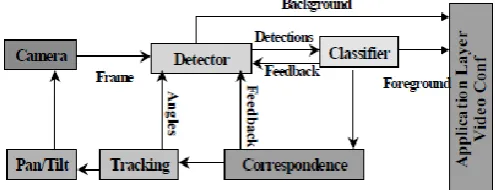
Figure 1 Modular organization of the system.
2. LITERATURE REVIEW
Che-Chang Yang et al: This paper analyzes the
establishment of wearable accelerometry-based motion detectors. The principle of accelerometry measurement, sensor properties and sensor placements are first popularized. Several kinds of research with the use of accelerometry-based wearable motion detectors for physical activity supervise and assessment, composing posture and movement categorization, evaluation of energy expenditure, fall detection and balance control decision, are also audited. Ultimately, this paper reviews and contrast current commercial products to deliver an overall outlook of existing establishment status and available technologies.
Chiara Lucarotti et al: This paper survey the state of the art
© 2016, IRJET | Impact Factor value: 4.45 | ISO 9001:2008 Certified Journal | Page 426 sensing is investigated with respect to the available
perspectives to formulate the outer interface layer: synthetic skin versus bio-artificial skin. With specific respect to the synthetic skin perspective, a detailed overview is delivered on several technologies and transduction principles that can be united beneath the skin layer. Then, the main attention moves to perspectives classified by the use of bio-artificial skin as an outer layer of the artificial sensory system. Within this design solution for the skin, bio-hybrid and fully-biological tactile sensing systems are thoroughly presented: although powerful outcome have been reported for the establishment of tissue engineered skins, the establishment of mechanotransduction units and their combination is a current trend that is still undeveloped, therefore need research efforts and investments. In the last part of the paper, application domains and perspectives of the audit tactile sensing technologies are explained
K.S Devi et al: Presented motion detection using
background frame matching. This method is very efficient method of comparing image pixel values in subsequent still frames captured after every two seconds from the camera. Two frames are required to detect movement. First frame is called reference frame and the second frame, which is called the input frame contains the moving object. The two frames are compared and the differences in pixel values are determined.
Kavitha and Tejaswini et al: Presented motion detection by
overcoming the disadvantages of background subtraction algorithm. In this robust an efficiently computed background subtraction algorithm has been used, which is able to cope with the problem of local illumination changes such as shadows and highlights as well as global illumination changes.
Nan Lu et al: Presented motion detection by proposing a
real time detection algorithm. In this the algorithm integrates the temporal differencing method, optical flow method and double background filtering (DBF) method and morphological processing methods to achieve better performance.
Rakibe and Patil et al: Presented motion detection by
developing a new algorithm based upon the background subtraction algorithm. In this firstly reliable background model based upon statistical is used. After that subtraction between the current image and background image is done based upon threshold. And then detection of moving object is done. After that, morphological filtering is initiated to
remove the noise and solve the background interruption difficulty.
Shyamal Patel et al: The main objective of this review
paper is to outline current establishment in the field of wearable sensors and systems that are pertinent to the field of rehabilitation. The growing body of work main attention is on the application of wearable technology to supervise older adults and subjects with chronic conditions in the home and community settings explains the spotlight of this review paper on encapsulate clinical uses of wearable technology recently drawing undergoing assessment rather than outlining the establishment of new wearable sensors and systems. A short sketch of key enabling technologies (i.e. sensor technology, communication technology, and data analysis techniques) that have permitted researchers to perform wearable systems is followed by a brief explanation of prime areas of application of wearable technology. Applications outline in this review paper involve those that focus on health and wellness, safety, home rehabilitation, assessment of treatment efficacy, and early identification of disorders. The combination of wearable and ambient sensors is suggested in the context of attaining home observer of older adults and subjects with chronic conditions. Future work need to enhance the field toward clinical classification of wearable sensors and systems is suggested.
Xiaogang Wang et al: This paper explains the current
establishment of pertinent technologies from the approaches of computer vision and paradigm identification. The covered topics involves multi-camera calibration, computing the topology of camera networks, multi-camera tracking, object re-discover, multi-camera activity investigation and cooperative video surveillance both with active and static cameras. Brief illustration of their technical limitation and equivalence of various solutions are delivered. It main attention is on the connection and combination of distinct modules in several environments and application framework. According to the most current works, some issues can be jointly solved in order to upgrade coherence and accuracy. With the fast establishment of surveillance systems, the scales and confusions of camera networks are enlarged and the supervised environments are becoming more and more difficult and crowded. This paper explores how to face these apparent challenges.
3. EXISTING SYSTEM
© 2016, IRJET | Impact Factor value: 4.45 | ISO 9001:2008 Certified Journal | Page 427 permits a stationary camera and it is not necessary to use
multiple conventional cameras or to use a pan-tilt camera to cover the same size of field of view. A stationary camera simplifies the detection and tracking algorithms and is most suitable to difference or statistical methods.
In this section they are briefly presented. All of them are used for surveillance, i.e. detecting and tracking moving persons.
4. SYSTEM DESIGN AND ARCHITECTURE
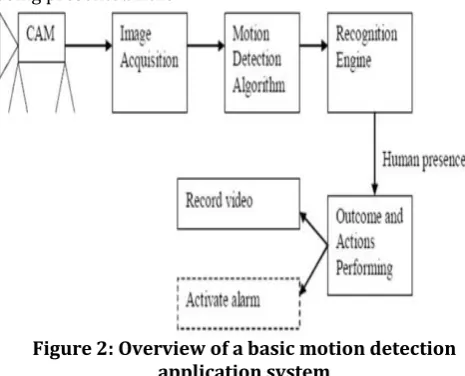
[image:3.595.39.272.283.471.2]System design of the methods and techniques implemented in the final prototype system. Diagrams of the architecture of motion detection algorithms are being presented here
Figure 2: Overview of a basic motion detection application system
As shown in Figure 2, the basic human motion detection would have an alarm system integrated. Thus, to get a clearer picture of the system developed, Figure 3. is shown below:
Figure 3: Overview of the prototype motion detection application system
5.METHODOLOGY
Detection of moving object from a sequence of frames captured from a static camera is widely performed by frame difference method. The objective of the approach is to detect the moving objects from the difference between the existing frame and the reference frame. The frame difference method is the common method of motion detection. This method adopts pixel-based difference to find the moving object.
5.1 Background Image Initialization
There are many civilizations to obtain the initial background image. For instance, with the first frame as the background directly or, the average pixel brightness of the first few frames as the background or using a background image sequences without the hope of moving objects to approximate the background model parameters and so on. From these methods average method is commonly used for background Image initialization but there are many shadow problems will occur which can be removed by median method, So the median method is selected in this paper to initialize the background.
Expression is as follows:
Binit (L,M) = median Fk(l,m) k =1,2 ….n
Where Binit is the initial background, n is the total number of frames selected.
5.2 Background Subtraction
Background subtraction is a popular technique to fragment out the interested objects in a frame. This technique involves subtracting an image that contains the object, with the previous background image that has no foreground objects of interest. The area of the image plane where there is a significant difference within these images indicates the pixel location of the moving objects. These objects, which are represented by groups of pixel, are then separated from the background image by using threshold technique. The moving object can be detected after threshold operation.
Expression is as follows:
Dk(l,m)= 1 if Fk (l,m)-Bk(l,m) ≥ T
© 2016, IRJET | Impact Factor value: 4.45 | ISO 9001:2008 Certified Journal | Page 428 5.3 Noise Removal
[image:4.595.300.560.444.750.2]Noises might be included in the image due to environmental factors, illumination changes, during transmission of video from the camera to the further processing. Therefore, noise needs to be removed. Morphological methods are used for further processing. Corrosion operation is taken to effectively filter out non-human activity areas and by using the development operation they can filter out most of the non-body motion regions while preserving the shape of human motion without injury. After expansion and corrosion operations, some inaccessible spots of the image and some intrusion of small pieces are eliminated, and we get more accurate human motion region.
Figure 4: Flow chart of system
5.4 Feature Extraction
Using point tracking algorithm, they can pose estimation on the human motion to distinguish them from other moving objects. Their work refers to Johansson’s stimuli where each joint of the body is shown as a moving dot which is the basis of the point tracking algorithm. Thus, to perform a point tracking algorithm, a motion detection algorithm would have to first initialize the feature points on the segmented foreground objects and track their movements using either the Kanade-Lucas-Tomasi algorithm or using a derivation of the Kanade-Lucas-Tomasi algorithm as researched by Birchfield. After tracking the movements of these points, their position and velocity of their movements resulting from the tracking algorithm would be used to map them with the model structure of the body. Accurate mining of the moving object affected by the presence of shadow. By analyzing the characteristics of motion detection, we combine the projection operator with the previous methods. height of the motion region will get detected by adopting the method of combining horizontal with vertical projection. This can eliminate the impact of the shadow to a certain level.
© 2016, IRJET | Impact Factor value: 4.45 | ISO 9001:2008 Certified Journal | Page 429 6. CONCLUSIONS
Our proposed method of moving object detection will help to find the moving object perfectly in the approved manner and required to minimum amount of storage media. The experiment shows that the method has good performance and efficiency. Future enhancement may include alerting the user by sending multimedia SMS, by email or by capturing video and streaming it online.
7. FUTURE SCOPE OF PROJECT
Since this system has been generated by using Object Oriented programming, there are many chances of reusability of the codes in other environment even in different platforms. Also its present features can be enhanced by some simple modification in the codes so as to reuse it in the changing scenario.
This project can be used as Artificial intelligence project using the gestures technology by which we can perform the task in the system using the motion the of hand or some special motion. This project can be used as traffic control system by detecting the suspected vehicle according to speed of vehicle and by scanning the number plate we can accessed the database of the suspected person.
This application can be utilized as Eye retina and all other security purposed system.
Future changes can be done as following extra features:
i. Enable Face Detection ii. Automatic Video Recording iii. Remote Logging and monitoring.
iv. Glyph Detection and advanced gesture detection v. Traffic analysis and control
vi. Stereo Image Processing
REFERENCES
[1] A.J. Lipton, H. Fujiyoshi and R.S. Patil. Moving target
clas-sification and tracking from real time video. In IEEE Work-shop on Applications of Computer Vision, pp. 8-14, 1998.
[2] Che-Chang Yang and Yeh-Liang Hsu, ‘A Review of
Accelerometry-Based Wearable Motion Detectors for Physical Activity Monitoring’, 20 August 2010.
[3] Chaitali S. Panchal IJAERS/Vol. I/ Issue III/April-June,
2012/268-269
[4] Chiara Lucarotti , Calogero Maria Oddo, Nicola Vitiello
and Maria Chiara Carrozza, ‘Synthetic and Bio-Artificial Tactile Sensing: A Review’, , 24 January 2013.
[5] K. Suganya Devi, N. Malmurugan, M. Manikandan, Object
© 2016, IRJET | Impact Factor value: 4.45 | ISO 9001:2008 Certified Journal | Page 430
[6] K.Kavitha, A.Tejaswini, Background Detection and
Subtraction for Image Sequences in Video, International Journal of Computer Science and Information Technologies, vol.3, Issue 5, pp. 5223-5226, 2012.
[7] Nan Lu, Jihong Wang, Q.H Wu, Li Yang, An Improved
Motion Detection Method for Real-Time Surveillance, International Journal Of Computer Science, vol.1, Issue 6, 2008.
[8] RupaliS.Rakibe, BharatiD.Patil, Background Subtraction
Algorithm Based
[9] Shyamal Patel, Hyung Park, Paolo Bonato, Leighton
Chan and Mary Rodgers, ‘A review of wearable sensors and systems with application in rehabilitation’, 2012
[10] Xiaogang Wang, ‘Intelligent multi-camera video
surveillance: A review’, 20 July 2012
BIOGRAPHIES
Abhilasha Kumari
(M.Tech in Computer Science & Engineering from Shri Ram College of Engineering & Management, Palwal Haryana, INDIA)
Email ID- [email protected]
Marender
Assistant Professor Department of Computer Science & Engineering SRCEM, Palwal, Haryana, INDIA