Heading off Peripheral Neuropathy with Exercise:
The Hope Study
Constance Visovsky
1,*, James A. Bovaird
2, Cindy Tofthagen
1, Janique Rice
31University of South Florida, College of Nursing, Tampa, Florida, USA 2University of Nebraska, Lincoln, Nebraska, USA
3University of Nebraska Medical Center, USA
Copyright © 2014 Horizon Research Publishing All rights reserved.
Abstract
Early detection methods and novel therapies have increased the life span of individuals with breast cancer. These survivors are living longer lives with the effects of disease and treatment. Chemotherapy-induced peripheral neuropathy (CIPN) has become a significant dose-limiting toxicity of breast cancer treatment with taxane-based chemotherapy such as paclitaxel. The sensory and motor neuron dysfunction accompanying taxane chemotherapy can interfere with physical functioning, and impair quality of life. The purpose of this pilot study was to determine the efficacy or feasibility of an aerobic and strength training exercise program on neuropathic symptoms, gait and balance, and quality of life (QOL) in individuals treated for breast cancer with paclitaxel as compared to those in an attention control group. Nineteen women receiving weekly paclitaxel for two months were randomized to receive a home-based aerobic/strength training exercise program (EG) or breast cancer educational information (AC). Data were collected at before chemotherapy was initiated, and at every 4 weeks during the intervention phase for a total of 12 weeks (4, 8, and 12 weeks), and then at 3 months post-intervention (24 weeks). An intent-to-treat data analysis plan utilizing a combination of linear mixed modeling (LMM) and analysis of covariance (ANCOVA) was employed. Results indicate there was a differential negative trend in neuropathy symptoms, with fewer neuropathy symptoms present at post-intervention and follow-up in the EG compared to AC groups over time. There were no differences in gait and balance and QOL during the intervention period between the AC and EG groups. However, the EG showed improved gait and balance and improved QOL at follow-up.Keywords
Breast Cancer, Exercise, Chemotherapy-induced Peripheral Neuropathy1. Introduction
In 2011, over 230,000 new cases of invasive breast cancer
were expected to be diagnosed in the United States.1 Treatment of invasive breast cancer requires the use of chemotherapeutic agents to affect cure or maintain disease control. Breast cancer chemotherapy regimens often consist of a taxane-based preparation such as paclitaxel (Taxol™, Abraxane™) or docetaxel (Taxotere™). In addition, newer dose-dense chemotherapy treatment schedules can improve disease-free survival, but with more notable neurotoxicity as a result. 2 The addition of taxane preparations into breast cancer chemotherapy regimens has increased the incidence of neurotoxicity, with 50-60% of all patients receiving taxanes expected to develop peripheral neuropathy. 3,4,5 Taxanes can induce sensory and motor peripheral neuropathy by impairing axon structure and function most specifically by inducing mitochondrial and vascular dysfunction. 6, 7 In rodents, treatment with taxanes resulted in functionally impaired, swollen, vacuolated axonal mitochondria in both myelinated and unmyelinated axons.8 Sensory manifestations include diminished proprioception, vibratory and cutaneous sensation and symptoms of numbness, tingling, burning, and pain. Motor neuropathy from taxanes results in muscle atrophy and weakness. 7 Difficulties with activities of daily living (ADL) such as buttoning clothing and writing are reported by patients receiving taxanes. Therefore, peripheral neuropathy has emerged as a serious, dose-limiting side effect and an important consequence of breast cancer therapy.
There are no evidence-based strategies that have been consistently effective in ameliorating chemotherapy-induced peripheral neuropathy; however, there is emerging evidence that exercise can modify or prevent peripheral neuropathy.
nerve function, exercise improved balance in persons with diabetic peripheral neuropathy.10 In studies of individuals with chronic peripheral nerve disorders, short-term (6 & 12 weeks) home and community-based exercise programs resulted in increased average muscle strength, improved walk time, significant improvements in activity tolerance and overall health. 11, 12 Exercise appears to be a biologically plausible means of improving vascular perfusion and facilitating delivery of nutrients to peripheral nerves damaged by taxane chemotherapy. Short-term exercise stimulates endothelium dependent vasodilation. Higher levels of vascular endothelial growth factor present during exercise may be partly responsible for increases in endoneurial blood flow. Exercise can improve vascular perfusion facilitating oxygen delivery to the peripheral nerves and increasing oxygen to mitochondria for cellular energy production.
While both aerobic and resistance (strength training) exercises have been tested in differing cancer populations with a variety of outcomes, no study has been conducted to examine the effect of a combination of aerobic and resistance exercise for the prevention or treatment of chemotherapy-induced peripheral neuropathy.
The purpose of this randomized, prospective pilot study was to determine the effect of an aerobic and strength training exercise intervention on neuropathic symptoms, quality of life (QOL) and gait and balance in women receiving taxane-based chemotherapy for breast cancer as compared to those in an attentional control group. Potential covariates of patient age, taxane dose received, baseline level of exercise participation, and breast cancer treatment-related symptoms were also explored.
2. Methods
Design, Sample and Setting
The research team used a longitudinal, prospective design for this pilot study. The research team recruited participants from an oncology clinic in the Midwestern region of the United States. Participants were enrolled prior to their first dose of paclitaxel. Inclusion criteria were (a) age 19 years or older; (b) newly diagnosed with stage I-IIIa breast cancer; (c) scheduled to receive weekly paclitaxel as part of a multi-drug regimen; (d) English-speaking; and (e) able to complete the research instruments. Exclusion criteria included any disease or disorder precluding aerobic and/or resistance exercise (e.g. bone metastasis, osteoporosis, cardiopulmonary disease); a history of peripheral neuropathy from other causes (e.g. diabetes, human immunodeficiency disease); any disease or disorder resulting in muscle weakness (e.g. chronic fatigue syndrome, multiple sclerosis, stroke) and diagnosed lymphedema. Twenty-one women who met eligibility criteria were approached for participation in the study. Two eligible participants declined due to lack of interest or not having enough time to devote to the study. Nineteen women were enrolled in the study, with final
enrollment completed August, 2010.
Procedures
The institutional review board reviewed and approved the study. Oncology clinicians identified eligible women and invited them to participate in the study. A research nurse met patients expressing interest in the study at the oncology clinic in person and screened for eligibility. The research nurse arranged to meet eligible participants after 4 cycles of doxorubicin and cyclophosphamide were completed, and prior to the first paclitaxel infusion. This meeting took place in a private setting in the oncology clinic. The research nurse obtained written informed consent and performed baseline data collection and study randomization.
Study participants were randomized into either the 12-week, home-based aerobic and strength training exercise intervention group (EG) or an educational attention control group (AC). Randomization was generated by the use of sealed envelopes that were numbered and selected sequentially. The entire study was conducted over a 6 month time frame with 12 weeks of intervention or control conditions. Data were collected at before chemotherapy was initiated, and at every 4 weeks during the intervention phase for a total of 12 weeks (4, 8, and 12 weeks), and then at 3 months post-intervention (24 weeks).
Instruments
Demographic and medical data were collected by questionnaire prior to study enrollment (age, gender, race, ethnicity, marital status, education, employment, level of exercise participation). Data abstracted from the medical records consisted of diagnosis, disease stage, estrogen, progesterone, and human epidermal growth factor receptor 2 status, type of breast surgery, lymph node dissection status and dose of paclitaxel received.
The questionnaire and physical functioning data that follows were collected for both AC and EG participants at baseline (before chemotherapy), 4, 8, 12, and 24 weeks.
0.86-0.94 with the current data. The taxane subscale yields a total score for neuropathic symptoms specific to taxanes.For neuropathy symptoms, a composite score was created based upon the FACT-Taxane Additional Concerns Subscale. Scores from the FACT-Taxane subscale similarly demonstrated strong internal consistency, ranging from α = 0.85-0.93 with the current data.
Gait and Balance. Gait and balance was measured using the Timed Up and Go Test (TUG). The TUG is a short test that begins with the participant seated in an arm chair with both arms placed on the armrest of the chair. On the command “Ready, Go”, the participant is asked to stand up, walk forward three meters at a comfortable pace, turn around and return to the original seated position.16 The time it takes each subject to complete the test is then recorded. Reliability and validity for scores from the TUG have been previously established 17, 18, specifically for peripheral neuropathy.19 Specifically, interrater reliability as measured with an ICC(3,3) was reported to be r = .98. 17 While standard cut off scores to predict the risk of falls have yet to be established, scores of > 30 seconds correspond with declines in functional mobility .16
Control Variables. Four control variables (age, total paclitaxel dose, baseline level of exercise participation,and breast cancer-related symptoms) were also examined for their influence on the main outcome variables. Age and the
total dose of paclitaxel chemotherapy received were
obtained from the medical record. At the baseline interview, participants completed the Leisure Time Exercise (LTE) questionnaire.21 This short assessment form captures mild, moderate, and strenuous exercise performed by subjects at each data collection point during the study. The reliability of the LTE was favorable when compared to 9 other self-report measures of exercise based on test-retest scores, objective activity monitors, and fitness indices.22 The LTE has been validated recently as a measure of exercise behavior in 212 breast cancer survivors from the time of diagnosis to treatment completion 23 and in ovarian and head and neck cancer populations. 24,25
The Symptom Experience Scale (SES) was used to
measure the symptom experience associated with treatment for breast cancer. The physical symptoms included in the instrument are those directly relevant to breast cancer treatment: nausea, pain, appetite, sleep disturbance, fatigue, bowel pattern, concentration, and appearance. The frequency, intensity, and distress of each of the eight symptoms over the prior 7 days were rated on a five point Likert scale by each woman. The 24-item scale ranges from 0 (absence of symptoms) to 4 (most negative symptom experience) range (0-96). A higher score indicates a more negative symptom experience. Alpha reliabilities for a composite score based on the eight items have been reported to range from 0.86 to 0.95 26 and were observed to range from 0.87 to 0.93 across waves of measurement in this study.
Intervention and Control Conditions
Exercise Group Protocol. The HOPE exercise intervention consisted of a 12-week, home-based program of both aerobic (walking and progressive interval training) and resistance exercises for upper and lower extremities using resistance power bands, followed by a data collection follow-up at 24 weeks (2 months post-intervention). To objectively capture the aerobic exercise component, a Yamax ® Digi-Walker™ pedometer was given to each exercise group participant to be worn for each walking session throughout the entire 24-week study. Proper pedometer placement was also reviewed at this time. The pedometer recorded steps, distance and kilocalories burned at each walking session. Exercise group participants were also given a printed home-based exercise guide that outlined each strength training exercise in full color detail. For strength training, resistance training bands were also given and instructed to use according to their self-report of exercise experience (e.g. beginner, intermediate, advanced).
Participants were given a diary to record both aerobic and resistance exercises. The sessions began with a warm-up and stretching activity, and instructions to briskly walk 5-7 days per week for the first four weeks and then to advance to an interval based workout consisting of light to moderate intensity exercises performed for a 30-minute duration for weeks 4-16 of the intervention.
Strength training sessions were conducted 3 times weekly The strength training exercises consisted of bicep curls, triceps extensions, front and lateral raises, shoulder press, calf raises, lunges, supine leg curls and supine leg extensions. Strength training exercises initially began with performing 1-2 sets of each exercise for 8 repetitions 1-2 times per week. At week 4, the number of sets was increased to 2-3 sets and 8-12 repetitions of each exercise per session for the remainder of the study period.
Attention Control Protocol. Participants randomized to the AC group received a day-timer/journal in which to record their treatment-related appointments, and standardized American Cancer Society pamphlets for reference. At each data collection encounter, a member of the study team discussed the content of each pamphlet, allowing time for questions related to the material. The educational materials consisted of topics related to coping with cancer, physical appearance, lymphedema, sun safety, and life after cancer. The topics chosen were specifically selected to provide relevant, timely information the individual could use at that specified point in the survivorship trajectory, while avoiding those related to exercise/physical activity to prevent contamination between groups. These educational sessions lasted approximately 45 minutes and occurred at the same intervals as the intervention group and preceded data collection. Additionally, Attention Control group participants received a social visit with data collection reminder telephone calls every other week to further equalize contact. Participants assigned to the Attention Control group agreed not to begin a new exercise program or change their level of exercise during the course of the study.
collection, and study interventions to ensure the fidelity of the intervention. Each nurse received 6 hours of training in the conduct of the HOPE intervention which included direct, hands on training, role play, and intervention problem solving. Ongoing supervision of the intervention was provided by the principal investigator. A checklist of the intervention components was used to ensure research nurse adherence to the prescribed protocol and ensure fidelity of the intervention..
Data Analysis
A combination of linear mixed modeling (LMM) and analysis of covariance (ANCOVA) was used to evaluate the effects of the exercise intervention on a) changes in outcome variables both during the intervention and during follow-up, and b) at 12 and 24 weeks, respectively.
Linear Mixed Modeling. Specifically, the usage of LMM in this study allowed for testing whether the difference in slopes across the two experimental groups (EG vs. AC) during each phase of the study (intervention in weeks 0-12 or during follow-up in weeks 12-24) are different from each other. Parameters were included to test the a) main effect of assignment to condition, b) change over time (i.e. a slope) during the 12-week intervention efficacy period, and c) change over time during the 3-month follow-up period. The interaction effects between assignment to condition and each phase of the study then specifically test whether the difference in slopes during each phase (intervention through week 12, and follow-up from week 12 through week 24) are different from each other.
LMM further allows for modeling of both time-varying control variables or covariates (breast cancer-related symptoms and level of exercise participation) as well as time-invariant covariates (age, total paclitaxel dosage, and baseline levels of exercise participation). Time-varying controls were entered in two parts: as a group-mean centered within-persons effect and as a grand-mean centered within-person mean representing the between-persons variability. All time-invariant controls were grand-mean centered as well.
An additional benefit of a LMM analytic approach is to allow for individual differences in outcomes at baseline and individual differences in improved outcomes due to the intervention by allowing initial status and change over time to be random (latent) variables. Variance components were included for a random intercept, a random intervention slope, and a random follow-up slope. Random effects were allowed to covary through an unstructured variance-covariance structure.
The Kenward-Rogers method for calculating degrees of freedom was used because of the small and unbalanced sample sizes involved in this study. Three parallel models were run (one for each of the three outcomes: quality of life, neuropathy symptoms, and gait and balance), and no error rate control was implemented to allow for identification of all possible trending or marginal effects for future investigation. All analyses were conducted under an
intent-to-treat design, and all available data for each participant were included in the LMM analyses using full information maximum likelihood. All study participants were evaluated according to the randomization schema regardless of completion of exercise sessions.
Analysis of Covariance. ANCOVA was used to evaluate whether there were mean differences in outcomes attributable to assignment to one of the experimental conditions at 12 and 24 weeks, controlling for baseline outcome levels as well as important covariates. A pair of parallel analyses were conducted for each outcome variable to determine if there is a significant mean difference between treatment conditions at both the end of intervention (12 weeks) or at the end of follow-up (24 weeks). In addition to testing for mean group differences at 12 and 24 weeks conditional upon baseline levels of the respective outcome, a) within-person average breast cancer-related symptoms, b) within-person average level of exercise participation, total paclitaxel dosage, participant age, and baseline level of exercise participation were included as covariates.
3. Results
A comparison of the baseline outcome characteristics of the participants by experimental group was obtained directly through the LMM analyses. There were no significant differences between groups in their level of neuropathy symptoms (F(1,17) = 4.28, p =.06), gait and balance (F(1,23.1) = 0.53, p =.47), or quality of life (F(1,23.1) = 0.14, p =.71). Based on independent samples t-tests, there were no significant differences between the groups at baseline with regard to primary covariates such as level of exercise (t(17) = -.16, p =.87), age (t(17) = -.12, p =.90), paclitaxel dose received (t(17) = -.52, p =.61), or severity of breast cancer-related symptoms (t(17) = .91, p =.38). The sample characteristics can be found in Table 1.
Table1. Sample Characteristics
Age 48.8 years (range: 24-65)
Race Caucasian 16 (84.2%) African American 2 (11%) Asian 1 (5.3%)
Surgical Treatment Mastectomy 6 (31.6%) Lumpectomy 8 (42.1%) Neoadjuvant Chemotherapy 5 (26.3%)
Breast Cancer Stage Stage I 9 (47.4%) Stage II 7 (36.8%) Stage III 2 (10.5%)
Employed 15 (78.9%)
Marital Status 13 (68.4%)
time-varying breast cancer-related symptoms (both the group-mean centered within-persons effect and the grand-mean centered within-person mean) were used as covariates in the reported LMM analyses. Similarly, only the within-person average breast cancer-related symptoms and baseline level of exercise participation were included as covariates in the reported ANCOVA models. These decisions were further justified based on the small number of degrees of freedom available for inferential testing due to the small sample size in this study.
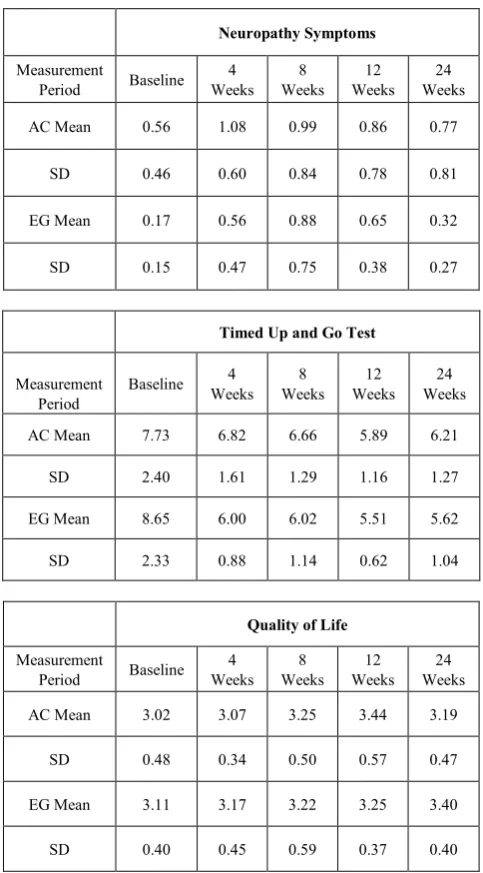
Neuropathy symptoms were measured using the FACT-Taxane (version 4). The EG group appeared to exhibit fewer neuropathy symptoms throughout the study as compared to the AC group. While there may be a marginal trend in neuropathy symptoms averaged across both the EG and AC groups over time (0-12 weeks: F (1,19.8) = 3.59, p =.07, dRM =.74; 12-24 weeks: F(1,55.1) = 2.18, p =.15, dRM = -0.62), the within-condition trends themselves (EG vs. AC) are not significantly different from one another based on the LMM analyses (0-12 weeks: F(1,18.8) = .81, p =.38; dRM = .47; 12-24 weeks: F(1,52.2) = 1.76, p =.19, dRM = -.74). That is, while there is a marginal overall (i.e. across both groups) increase in neuropathy symptoms during the 0-12 week intervention phase, and a marginal overall decrease during the 12-24 week follow-up phase, participants in both groups exhibited the same average initial increase and then decrease. ANCOVA results suggested no discernable differences between participants in each condition at 12 weeks (F(1,12) = 0.06, p =.81, d = -.34); however, ANCOVA results did suggest that the difference between conditions at 24 weeks is marginally statistically significant (F(1,12) = 2.66, p =.13, d = -.80). This may indicate that long-term, participants in the EG condition may experience lower/fewer/less severe neuropathy symptoms than participants in the AC condition.
Overall quality of life (QOL) was also measured using the FACT-Taxane (version 4). There was a small, but non-significant, increase in QOL during the intervention phase on average across both conditions (F(1,16.8) = 1.45, p =.17, dRM = 0.44), and the condition by time interaction was also non-significant (F(1,15.3) = 0.47, p = .50, dRM = -.29). There was a small, but again non-significant, decrease in QOL over the 3-month follow-up period on average across the two conditions (F(1,16.8) = 2.12, p =.16, dRM = -0.46), but the interaction term appeared to trend towards significance (F(1,16.2) = 2.08, p =.17, dRM = 0.63). ANCOVA results suggested no discernable differences between participants in each condition at 12 weeks (F(1,12) = 1.72,
p = \.22, d = -0.41) or at 24 weeks (F(1,12) = 0.22, p =.65, d = 0.50). Taken together, the LMM, ANCOVA, results may suggest that participants in both conditions experience an improvement in quality of life during the intervention phase, but participants in the EG condition continue to experience an improvement in quality of life long-term while AC participants level off or even decline again.
On average across both conditions, participants showed a slight, but non-significant, decrease in gait and balance during the intervention (F(1,17.5) = 1.87, p =.19, dRM = -0.45). The difference between rates of change across the two conditions was also non-significant during the intervention phase (F(1,19.5) = 1.97, p =.18, dRM = -0.66). No average change in levels (F(1,51.1) = .04, p = .85, dRM = 0.12) or differential trend across conditions (F(1,48.2) = .77, p = .39, dRM = 0.76) were observed across the follow-up period as well. ANCOVA results suggested no discernable differences between participants in each condition at 12 weeks
(F(1,12) = 1.33, p =.27, d = -0.40) or at 24 weeks (F(1,11) = 0.54, p =.48, d = -0.51). These results may suggest a potential long-term recovery in gait and balance among participants in the EG condition. This trend is not statistically significant, but it may warrant future study with a larger sample. Descriptive statistics are noted in Table 2.
Table 2. Descriptive Statistics for Outcome Variables
Neuropathy Symptoms
Measurement
Period Baseline Weeks 4 Weeks 8 Weeks 12 Weeks 24
AC Mean 0.56 1.08 0.99 0.86 0.77
SD 0.46 0.60 0.84 0.78 0.81
EG Mean 0.17 0.56 0.88 0.65 0.32
SD 0.15 0.47 0.75 0.38 0.27
Timed Up and Go Test
Measurement
Period Baseline 4
Weeks Weeks 8 Weeks 12 Weeks 24
AC Mean 7.73 6.82 6.66 5.89 6.21
SD 2.40 1.61 1.29 1.16 1.27
EG Mean 8.65 6.00 6.02 5.51 5.62
SD 2.33 0.88 1.14 0.62 1.04
Quality of Life
Measurement
Period Baseline Weeks 4 Weeks 8 Weeks 12 Weeks 24
AC Mean 3.02 3.07 3.25 3.44 3.19
SD 0.48 0.34 0.50 0.57 0.47
EG Mean 3.11 3.17 3.22 3.25 3.40
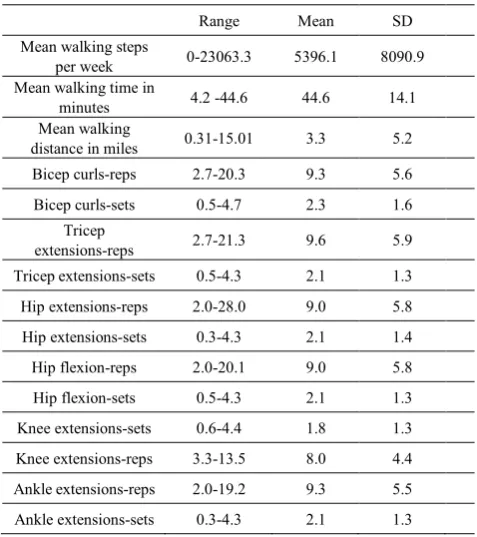
[image:5.595.311.553.311.748.2]Table 3. Weekly exercise data for intervention group
Range Mean SD
Mean walking steps
per week 0-23063.3 5396.1 8090.9
Mean walking time in
minutes 4.2 -44.6 44.6 14.1
Mean walking
distance in miles 0.31-15.01 3.3 5.2
Bicep curls-reps 2.7-20.3 9.3 5.6
Bicep curls-sets 0.5-4.7 2.3 1.6
Tricep
extensions-reps 2.7-21.3 9.6 5.9
Tricep extensions-sets 0.5-4.3 2.1 1.3
Hip extensions-reps 2.0-28.0 9.0 5.8
Hip extensions-sets 0.3-4.3 2.1 1.4
Hip flexion-reps 2.0-20.1 9.0 5.8
Hip flexion-sets 0.5-4.3 2.1 1.3
Knee extensions-sets 0.6-4.4 1.8 1.3
Knee extensions-reps 3.3-13.5 8.0 4.4
Ankle extensions-reps 2.0-19.2 9.3 5.5
Ankle extensions-sets 0.3-4.3 2.1 1.3
4. Discussion
Though the study involved a small sample, it is the first exercise intervention focused on the amelioration of taxane-induced CIPN. This pilot data provides preliminary evidence that persons who engaged in a home-based aerobic and strength training exercise program following paclitaxel chemotherapy for breast cancer may experience fewer neuropathic symptoms, better physical functioning , and experience improved quality of life after the completion of therapy, as compared to those in an attention control group. Our findings are consistent with earlier studies demonstrating that exercise enhances quality of life in persons with cancer 26-28 and improves gait and balance in persons with peripheral neuropathy 29-31. The results are consistent with previous research in non-cancer populations9-12. The trend in the EG toward fewer neuropathic symptoms, better quality of life, and improved gait and balance, particularly at post-intervention, should be interpreted with caution, given the small sample size and variation in breast cancer disease stage, which may have an influence on response to the intervention and influence outcome variables. However, of note, is that all patients received the same chemotherapy regimen despite stage of disease or adjuvant or neoadjuvant treatment setting. Results demonstrate that the exercise intervention produced effect sizes in the small to moderate range for neuropathic symptoms, gait and balance, and quality of life. One may anticipate that with a large scale trial, more significant effect sizes would be achieved.
This study demonstrated that women could be recruited and retained in the study following the completion of
taxane-based chemotherapy for breast cancer. The participants in this study safely engaged in this home exercise program, as no injuries or falls were reported. This outcome supports the results of earlier studies that showed that individuals with chronic illness and impaired physical functioning can safely and effectively engage in programs when exercises are tailored to the individual’s level of fitness and physical condition 22-24. Future exercise intervention studies aimed at improving neuropathic symptoms, physical functioning, and quality of life in persons with CIPN are needed. Future studies should include larger sample sizes and include patients with other types of cancer who are receiving chemotherapy regimens that include neurotoxic agents.
This study demonstrated that women could be recruited and retained in the study following the completion of taxane-based chemotherapy for breast cancer. The participants in this study safely engaged in this home exercise program, as no injuries or falls were reported. This outcome supports the results of earlier studies that showed that individuals with chronic illness and impaired physical functioning can safely and effectively engage in programs when exercises are tailored to the individual’s level of fitness and physical condition 22-24. Future exercise intervention studies aimed at improving neuropathic symptoms, physical functioning, and quality of life in persons with CIPN are needed. Future studies should include larger sample sizes and include patients with other types of cancer who are receiving chemotherapy regimens that include neurotoxic agents.
REFERENCES
[1] American Cancer Society (2011). Cancer Facts and Figures, 2007. Retrieved from http://www.cancer.org
[2] Ziegler, J., & Citron, M. (2006). Dose-dense adjuvant chemotherapy for breast cancer. Cancer nursing, 29(4), 266-272.
[3] Partridge,A. H., & Winer, E. P. (2004). Long-term complications of adjuvant chemotherapy for early stage breast cancer. Breast Disease, 21, 55-64.
[4] Partridge, A. H., & Winer, E. P. (2004). Long-term complications of adjuvant chemotherapy for early stage breast cancer. Breast disease, 21(1), 55-64.
[5] Eniu, A., Palmieri, F. M., & Perez, E. A. (2005). Weekly administration of docetaxel and paclitaxel in metastatic or advanced breast cancer. The Oncologist, 10(9), 665-685. [6] Polomano, R. C., Mannes, A. J., Clark, U. S., & Bennett, G.
J. (2001). A painful peripheral neuropathy in the rat produced by the chemotherapeutic drug, paclitaxel. Pain, 94(3), 293-304.
122(3), 245-257.
[8] Balducci, S., Iacobellis, G., Parisi, L., Di Biase, N., Calandriello, E., Leonetti, F., & Fallucca, F. (2006). Exercise training can modify the natural history of diabetic peripheral neuropathy. Journal of diabetes and its complications, 20(4), 216-223.
[9] Fisher, M. A., Langbein, W. E., Collins, E. G., Williams, K., & Corzine, L. (2006). Physiological improvement with moderate exercise in type II diabetic neuropathy. Electromyography and clinical neurophysiology, 47(1), 23-28.
[10] Richardson, J. K., Thies, S. B., DeMott, T. K., & Ashton‐
Miller, J. A. (2004). A comparison of gait characteristics between older women with and without peripheral neuropathy in standard and challenging environments. Journal of the American Geriatrics Society, 52(9), 1532-1537.
[11] Ruhland, J. L., & Shields, R. K. (1997). The effects of a home exercise program on impairment and health-related quality of life in persons with chronic peripheral neuropathies. Physical therapy, 77(10), 1026-1039.
[12] Graham, R. C., Hughes, R. A. C., & White, C. M. (2007). A prospective study of physiotherapist prescribed community based exercise in inflammatory peripheral neuropathy. Journal of neurology, 254(2), 228-235.
[13] Cella, D., Peterman, A., Hudgens, S., Webster, K., & Socinski, M. A. (2003). Measuring the side effects of taxane therapy in oncology. Cancer, 98(4), 822-831.
[14] Cella, D. F., Tulsky, D. S., Gray, G., Sarafian, B., Linn, E., Bonomi, A., ... & Brannon, J. (1993). The Functional Assessment of Cancer Therapy scale: development and validation of the general measure. Journal of clinical oncology, 11(3), 570-579.
[15] Calhoun, E. A., Fishman, D. A., Royland, P.Y., Lurain, J.R., Chain, C.H., & Cella,D. (2000). Validity and selective sensitivity of the FACT/GOG-Ntx. Proceedings of the American Society of Clinical Oncology (446a).
[16] Podsiadlo, D., & Richardson, S. (1991). The timed" Up & Go": a test of basic functional mobility for frail elderly persons. Journal of the American geriatrics Society, 39(2), 142.
[17] Shumway-Cook, A., Brauer, S., & Woollacott, M. (2000). Predicting the probability for falls in community-dwelling older adults using the Timed Up & Go Test. Physical Therapy, 80(9), 896-903.
[18] Norén, A. M., Bogren, U., Bolin, J., & Stenström, C. (2001). Balance assessment in patients with peripheral arthritis: applicability and reliability of some clinical assessments. Physiotherapy Research International, 6(4), 193-204. [19] Manor, B., Doherty, A., & Li, L. (2008). The reliability of
physical performance measures in peripheral neuropathy. Gait & posture, 28(2), 343-346.
[20] Godin, G., & Shephard, R. J. (1985). A simple method to assess exercise behavior in the community. Canadian journal of applied sport sciences. Journal canadien des sciences appliquees au sport, 10(3), 141-146.
[21] Taylor, C. B., Coffey, T., Berra, K., Iaffaldano, R., Casey, K., & Haskell, W. L. (1984). Seven-day activity and self-report compared to a direct measure of physical activity. American Journal of Epidemiology, 120(6), 818-824.
[22] VALENTI, M., PORZIO, G., AIELLI, F., VERNA, L.,
CANNITA, K., MANNO, R., ... & FICORELLA, C. (2008). Physical exercise and quality of life in breast cancer survivors. International journal of medical sciences, 5(1), 24. [23] Stevinson, C., Faught, W., Steed, H., Tonkin, K., Ladha, A.
B., Vallance, J. K., ... & Courneya, K. S. (2007). Associations between physical activity and quality of life in ovarian cancer survivors. Gynecologic oncology, 106(1), 244-250.
[24] Rogers, L. Q., Courneya, K. S., Robbins, K. T., Malone, J., Seiz, A., Koch, L., ... & Nagarkar, M. (2006). Physical activity and quality of life in head and neck cancer survivors. Supportive care in cancer, 14(10), 1012-1019.
[25] Samarel, N., Leddy, S. K., Greco, K., Cooley, M. E., Torres, S. C., Tulman, L., & Fawcett, J. (1996). Development and testing of the symptom experience scale. Journal of pain and symptom management, 12(4), 221-228.
[26] Yeo, T. P., Burrell, S. A., Sauter, P. K., Kennedy, E. P., Lavu, H., Leiby, B. E., & Yeo, C. J. (2012). A progressive postresection walking program significantly improves fatigue and health-related quality of life in pancreas and periampullary cancer patients. Journal of the American College of Surgeons, 214(4), 463-475.
[27] Headley, J. A., Ownby, K. K., & John, L. D. (2004, September). The effect of seated exercise on fatigue and quality of life in women with advanced breast cancer. In Oncology nursing forum (Vol. 31, No. 5, pp. 977-983). Oncology Nursing Society.
[28] Gautam, A. P., Maiya, A. G., & Vidyasagar, M. S. (2011). Effect of home-based exercise program on lymphedema and quality of life in female postmastectomy patients: Pre-post intervention study. J Rehabil Res Dev, 48(10), 1261-1268. [29] Allet, L., Armand, S., De Bie, R. A., Golay, A., Monnin, D.,
Aminian, K., ... & De Bruin, E. D. (2010). The gait and balance of patients with diabetes can be improved: a randomised controlled trial. Diabetologia, 53(3), 458-466. [30] Kruse, R. L., LeMaster, J. W., & Madsen, R. W. (2010). Fall
and balance outcomes after an intervention to promote leg strength, balance, and walking in people with diabetic peripheral neuropathy:“feet first” randomized controlled trial. Physical therapy, 90(11), 1568-1579.