Original Article
The effectiveness of optimal acupuncture prescription
for post-stroke motor dysfunction: a study protocol
of a randomized controlled trial
Xiaoqian Ye1*, Ying Xu1*, Cai Jiang1*, Shufang Lin2,5, Yijing Jiang2,3, Zhengkun Lin4, Yinyan Li2, Haicheng Ye6, Shanli Yang2,3,4, Lidian Chen3,4,5
1College of Rehabilitation Medicine, Fujian University of Traditional Chinese Medicine, Fuzhou, China; 2Fujian
University of Traditional Chinese Medicine Subsidiary Rehabilitation Hospital, Fuzhou, China; 3National
Rehabili-tation Research Center of Traditional Chinese Medicine, Fuzhou, China; 4Fujian University of Traditional Chinese
Medicine, Fuzhou, China; 5Fujian Key Laboratory of Rehabilitation Technology, Fuzhou, China; 6Department of
Rehabilitation Medicine, The First Affiliated Hospital of Xiamen University, Xiamen, China. *Equal contributors.
Received November 24, 2016; Accepted February 6, 2017; Epub March 1, 2017; Published March 15, 2017
Abstract: Background: Post-stroke motor dysfunction (PSMD) affects the daily activities and social life of patients
with PSMD. Acupuncture may be beneficial for patients with PSMD, but no randomized controlled trial has confirmed its effectiveness. We aim to provide study protocol of a randomized controlled trial for assessing the effectiveness of
acupuncture in patients with PSMD and the comparative effectiveness of optimal acupuncture versus conventional
acupuncture. Methods/design: This is a randomized, open label, parallel-controlled trial. A total of 264 participants
with PSMD will be randomly assigned to 3 groups (optimal acupuncture group, conventional acupuncture group, waiting-list group). Participants in the optimal acupuncture group (the acupuncture points will be selected accord-ing to a Delphi method) or the conventional acupuncture group (the acupuncture points will be selected accordaccord-ing to textbooks) will receive 4-week acupuncture treatment in addition to background treatment. Participants in the waiting-list group receive only the background treatment. The primary outcomes include the Fugl-Meyer assessment
(FMA), Modified Ashworth Scale (MAS), and the Berg balance scale (BBS). The secondary outcomes include the Modified Barthel Index (MBI), National Institute of Health Stroke Scale (NIH-SS), and indicators of the blood oxygen
level dependent-functional magnetic resonance imaging (BOLD-fMRI). Discussion: The study protocol is approved by the ethics committee in Traditional Chinese Medicine of Fujian University. The result of this study will be published in a peer-reviewed journal. Trial registration: Chinese Clinical Trial Registry: ChiCTR-IOR-15007062. Registration date: 15 September 2015.
Keywords: Stroke, acupuncture, motor dysfunction
Introduction
Stroke is the second most common cause of death, and it is also a major cause of disability worldwide [1, 2]. In China, nearly 80% of stroke patients caused by cerebral ischemia, and has become the main reason of disability [3]. Post-stroke motor dysfunction (PSMD) is the most common sequelae in patients after stroke [4, 5]. PSMD affects patients’ daily activities and social life, and it causes heavy economic bur-den on family and society. Therefore, a reason-able and effective treatment is urgently needed for patients with PSMD.
However, a Cochrane review have demonstrat-ed that there is no clear evidence showing the benefit of acupuncture for PSMD [13]. Conflict findings from randomized trials evaluating the effectiveness of acupuncture may be caused by heterogeneity in selection of acupoints dur-ing treatment and outcome measures or under-powered design. Therefore, we design a ran-domized control trial to investigate the effe- ctiveness of the acupuncture for PSMD, with the used of Delphi method to select an optimal acupuncture prescription.
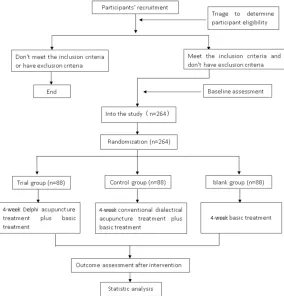
method whereas the conventional acupuncture is developed according to textbooks. Outcomes will be collected at baseline, 4 weeks, 9 weeks after randomization. Figure 2 shows a flowchart of the trial.
Part One: Establish an optimal acupuncture protocol
A review of ancient literature
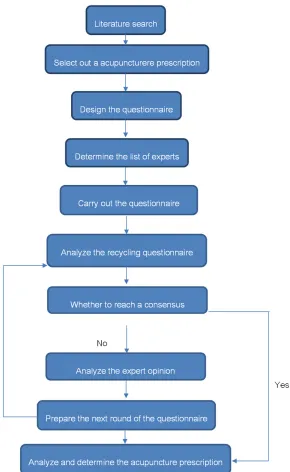
[image:2.612.90.380.69.541.2]Both electronic and manual retrieve will be used to search acupuncture points used to Figure 1. Delphi expert consultation method.
Methods
Overview of trial design
treat PSMD in the Canon of Medicine in Chinese and Chinese Dictionary of Acupuncture Head- quarters, two books recording most of the ancient Chinese literature about acupuncture treatment. The first 10 acupoints with the high-est frequency in acupuncture prescriptions will be sorted out.
The Delphi method
The Delphi method is a method of expert con-sultation [14, 15], making full use of expert knowledge, experience and wisdom. It has great value in scientific and democratic deci-sion-making. The Delphi method is a structured communication technique or method, which relies on a panel of experts, so the choice of experts is the key to the success of the Delphi method [16]. The experts will be chosen from the mainland of China, and they should have a minimum of 10 years of experience in the acu-puncture treatment for stroke.
The process of Delphi method includes several rounds of feedback, and the feedback will be returned anonymously. Experts and the facilita-tor should communicate through letters. The
ples of integrity, brief, operability and applica-bility. We will consult the experts through anon-ymous letters. Selection of acupoints for PSMD is based on the experts’ clinical experience. Two additional columns (the amendments of acupoints and supplementary point) are pro-vided for the experts to fully express their opinions.
Assignment of index
Experts’ familiarity with the acupoints will be classified into one of the five grades: 0.1 points indicates unfamiliar; 0.3 points indicates mild familiarity; 0.5 points indicates median famil-iarity; 0.7 points indicates good familfamil-iarity; 0.9 points indicates extremely familiarity.
Part two: Evaluating the effectiveness of the acupuncture for patients with PSMD
Participants and recruitment
[image:3.612.93.377.73.369.2]A total of 264 subjects will be recruited from the in-patient department of the Rehabilitation Hospital Affiliated to Fujian University of Traditional Chinese Medicine (Fujian province, Figure 2. Technology Roadmap.
way of anonymous enquiry ensures the experts focusing on the value of the opinion itself rather than a person’s identity.
We will perform multiple rounds of feedback survey, since the opinion of the experts may be dispersed if we make only a round. Each round of feedback will be col-lected, analyzed and sum-marized by the facilitator. Then the summarized result will be distributed to the experts before the next sur-vey. Each expert may draw lessons from the opinions of the others and modify their own opinions. We will repeat the above steps until con-sensus is reached to deter-mine an optimal protocol of acupuncture.
The questionnaire design
princi-China). Advertisement will be released on the homepage of the hospital, and leaflets will be disseminated at several locations of the hospi-tal. Individuals who are interested in participa-tion can consult the investigators for details about the trial. A CONSORT diagram of partici-pant recruitment is shown in Table 1. Eligible patients will be screened according to the fol-lowing criteria.
Inclusion criteria
Participants have to fulfill the following criteria: (1) diagnosed with stroke and confirmed by CT or MRI, (2) with motor dysfunction caused by ischemic stroke, (3) with Fugl-Meyer score rang-ing from 0 to 95, (4) with modified Ashworth score equal to or lower than grade II, (5) aged between 18 to 80 years, (6) with stable vital sign and consciousness, (7) with written inform consent provided.
Exclusion criteria
Patients with any of the following conditions will be excluded: (1) motor dysfunction caused by cerebral trauma, brain tumor, or encephalopa-thy in the cerebellum or brainstem, (2) Mini-Mental State Examination score <22, (3) bone disease or joint damage that causes limb defor-mities, (4) serious disease in the heart, liver, kidney, hematopoietic, or endocrine system; (5) being pregnant or breastfeeding; (6) in the
pro-Considering a 10% dropout rate, 264 partici-pants in total is powered to reject the null hypothesis.
Randomization and concealment
Eligible patients will be randomly assigned to the optimal acupuncture group, conventional acupuncture group, or waiting list group at a ratio of 1:1:1. The randomization sequence will be generated by an independent statistician using SAS9.1. The statistician will not be involved in the process of recruitment and out-come assessment. The allocation of partici-pants will be concealed by using consecutive numbered, sealed and opaque envelopes. Blinding
This study uses open label design, but outcome assessors, data manager and statistical ana-lyst will be blinded to the group assignment. Blinded implementation process will be moni-tored by a quality inspector.
Intervention
[image:4.612.91.320.83.302.2]All participants will receive background treat-ment delivered by neurologists in the partici-pating hospitals. The background treatment includes conventional medical treatment, he- alth education and rehabilitation program. Participants in the optimal acupuncture group or the conventional acupuncture group will
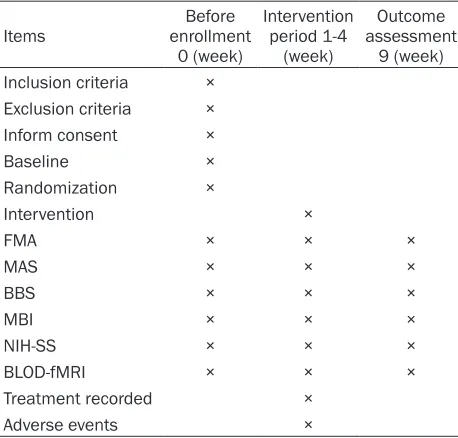
Table 1. Trial processes chart
Items enrollment Before 0 (week)
Intervention period 1-4
(week)
Outcome assessment
9 (week) Inclusion criteria ×
Exclusion criteria ×
Inform consent ×
Baseline ×
Randomization ×
Intervention ×
FMA × × ×
MAS × × ×
BBS × × ×
MBI × × ×
NIH-SS × × ×
BLOD-fMRI × × ×
Treatment recorded ×
Adverse events ×
cess of other clinical trials that may affect the results of the trial.
Sample size
The sample size is calculated on the basis of the change in Fugl-Meyer Assessment (FMA) scores from baseline to the end of treatment. Conventional acupuncture can increase the average FMA score by an average of 8.23 points (SD=7.21). According to our preliminary test, the in- crease in FMA score was estimated to be 5 points, with a standard deviation of 0.84, with a power of at least 80% and an α value of 0.05, β value of 0.10. Sample size is calculated according to the following formula:
[ / ]/[ ( ) /( 1)]
n s k X_ _X k
1 1
i k
i k
i
i
2 2 2
=} -
-= =
receive an additional 30-min acupuncture ses-sion every day at a frequency of 6 days/week for 4 consecutive weeks.
Optimal acupuncture group
Participants allocated to the optimal acupunc-ture group will receive 4 weeks of optimal acu-puncture treatment in addition to background treatment. The optimal acupuncture will be delivered by experienced acupuncturists with at least five years of experience in acupuncture practice. When receiving optimal acupuncture, participants will take the supine position with the acupoints disinfected. The acupoints in the optimal acupuncture group will be in accor-dance with the result of the Delphi method. Acupuncturists will needle the acupoints with sterile, disposable needles (0.3 mm in diame-ter 40 mm in length for body acupoints; 0.25 mm in diameter and 25 mm in length for scalp acupoints). Manual stimulation will be applied to the body acupoints until the patients experi-ence Deqi, a sense that is characterized by heaviness, distension, soreness, or numbness [17, 18]. The acupuncturist will retain the nee-dles in situ for 30 minutes and follow the rec-ommendations of a standard acupuncture text-book for the depth and angle of insertion into each acupoint [19].
Conventional acupuncture group
The participants in the conventional acupunc-ture group will receive 4-week acupuncacupunc-ture on the basis of syndrome differentiation in addi-tion to background treatment. The background treatment will be the same as in the optimal acupuncture group. Acupuncturists will select the acupuncture points according to textbook based on syndrome differentiation, a diagnosis method in traditional Chinese medicine con-taining an overall assessment of patients’ symptoms, signs, tongue and pulse. The param-eters for acupuncture are same as in the opti-mal acupuncture group.
Waiting-list group
Participants in the waiting-list group will not receive any acupuncture treatment until the trial ends. The participants receive background treatment only.
Outcome measurements
The researchers will collect the baseline char-acteristics of included participants, including age, gender, occupation, and medical and treatment history of ischemic stroke and so on. All outcome measurements will be assessed at baseline, 4-week and 9-week after randomi- zation.
Primary outcomes
Primary outcomes will be motor function as- sessment, muscle tension evaluation and bal-ance function evaluation. The motor function will be assessed by the Fugl-Meyer Assessment (FMA) scale. The FMA assesses limb function, with a final score ranging from 0 to 100 points (66 points for assessing the upper extremity and 34 points for the lower extremity) [20]. A higher score of FMA indicates the less motor dysfunction. The muscle tension will be evalu-ated by the Modified Ashworth Scale (MAS). The MAS belongs to one of the skill evaluation method for assessing spasticity, by means of feeling resistance when moving joints passively [21]. The balance function will be evaluated by Berg Balance Scale (BBS). The BBS has been widely applied in the assessment of balance function after stroke [22]. It contains 14 items, including stand up, sit down, stand indepen-dently, close eyes to stand, upper arm forward, turn around, alternate tread the stairs, and stand on one leg. It can be finished within 20 minutes. The lowest score of each item is 0 points, and the highest score is 4 points; the total score varies from 0 to 56 points. A score of ≤40 points indicates risk of falls; 0-20 indi-cates poor balance; 21-40 indiindi-cates accept-able balance; and 41-56 indicated good bal-ance [23].
Secondary outcomes
stairs. The normal score is 100, and lower scores indicate greater dependency.
The NIH Stroke Scale (NIH-SS) is a standardized stroke severity scale used to describe neuro-logical deficits in stroke patients. It strongly pre-dicts the likelihood of a patient’s recovery after stroke. It comprises tests of 11 items (the level of consciousness, selected cranial nerves, mo- tor function, sensory function, cerebellar func-tion, language, and inattention and so forth). The total score of NIH-SS ranges from 0 to 42, with a score ≥25 indicating very severe neuro-logical impairment, 5-24 moderately severe to severe impairment, and ≤5 mild impairment [26, 27].
The Bold-fMRI is a new neuroimaging method, measuring dynamic changes in neuronal activi-ty. The Bold-fMRI has been widely used in basic research, and activation in the brain can be accurately detected. The Bold-fMRI will be observed in order to investigate the relation-ship between the effect of acupuncture and the activated area in the brain, which may help us to understand the central mechanism of acupuncture.
Date collection and management
Data will be entered into a well-designed elec-tronic case report form (eCRF). A research assistant will independently conduct quality control of data collection process. Besides, an independent Data and Safety Monitoring Board (DSMB) consisting of two senior therapists and a rehabilitation physician who are experienced in treatment of PSMD will be set up to monitor the safety of this trial. The DSMB is an indepen-dent board that is responsible for data validity and management and report of adverse events. For safety concerns, the DSMB have the privi-lege to call termination of the study to a partici-pant when substantial harms are or may be caused by experimental treatments.
Patient safety
Adverse events occur during the intervention period will be recorded, such as dizziness, faint-ing durfaint-ing acupuncture treatment, bleedfaint-ing, local hematoma, unbearable prickling, retained needle, and broken needle. They will be han-dled according to the standard operating procedure.
Statistical analysis
A statistician who is blinded to the allocation of participants will carry out the statistical analy-sis after the data entry completes. The analyanaly-sis will be based on intention to treat (ITT) popula-tion. The last observation carried forward (LOCF) method will be adopted to deal with missing data. Baseline characteristics will be presented with means, standard deviations or 95% confidence intervals, or with numbers and percentages. The primary outcomes and sec-ondary outcomes are continuous data, so they will be compared between the 3 groups with the analysis of covariance (ANCOVA). Null hypothesis will be that the 3 groups are with the same treatment effect, and a P<0.05 rejects the null hypothesis. P values in multiple comparisons between groups will be corrected with Bonferroni method, and baseline charac-teristics will be included as covariates. The data will be analyzed using the SPSS 18 for Windows, and all of the statistical test indexes will use the bilateral inspection. The P≤0.05 will be considered as statistically significant, and the P≤0.01 will be considered as significant statistical significance.
Discussion
Acupuncture is widely used in China to treat stroke. World Health Organization points out that stroke is one of the most common indica-tion for acupuncture [28]. However, the result of a Cochrane review has questioned the effec-tiveness of acupuncture for stroke rehabilita-tion, which may be owing to small sample size, different acupoints selection and poor meth- odology.
Besides, the experience of acupuncturists is considered to play an important role in the effect of acupuncture treatment. Thus, in this study, all acupuncturists have more than 5 years of clinical experience in acupuncture treatment.
be launched to investigate the effectiveness of optimal acupuncture for PSMD.
Acknowledgements
This study is funded by the Collaborative Innovation Center of Rehabilitation Technology of Fujian province of the People’s Republic of China (grant number: X2014009-XIETONG), the Project of science and Technology Department of Fujian Province of the People’s Republic of China (grant number: 2016I0005), and the Science and technology platform construction project of Fujian science and Technology Department (Grant No. 2015Y2001).
The result of our study will be published in a peer-reviewed journal. All participants in this study will be fully informed, and the written inform consent will be signed by the partici-pants prior to participation.
Disclosure of conflict of interest
None.
Address correspondence to: Shanli Yang, Fujian University of Traditional Chinese Medicine Subsidiary Rehabilitation Hospital, No 282 Wusi Road, Gulou,
Fuzhou 350003, China; National Rehabilitation
Research Center of Traditional Chinese Medicine,
No 1 Huatuo Road Shangjie Minhou, Fuzhou
350-122, China; Fujian Key Laboratory of Rehabilita-
tion Technology, Fuzhou 350003, China. E-mail:
[email protected]; Lidian Chen, National Re- habilitation Research Center of Traditional Chinese Medicine; Fujian University of Traditional Chinese Medicine, No. 1 Huatuo Road Shangjie Minhou,
Fuzhou 350122, China; Fujian Key Laboratory of Rehabilitation Technology, Fuzhou 350003, China.
E-mail: [email protected]
References
[1] Wang Z, Li J, Wang C, Yao X, Zhao X, Wang Y, Li H, Liu G, Wang A and Wang Y. Gender differ-ences in 1-year clinical characteristics and out-comes after stroke: results from the China Na-tional Stroke Registry. PLoS One 2013; 8: e56459.
[2] Lozano R, Naghavi M, Foreman K, Lim S,
Shibuya K, Aboyans V, Abraham J, Adair T, Ag-garwal R, Ahn SY, Alvarado M, Anderson HR, Anderson LM, Andrews KG, Atkinson C, Bad-dour LM, Barker-Collo S, Bartels DH, Bell ML, Benjamin EJ, Bennett D, Bhalla K, Bikbov B,
Bin Abdulhak A, Birbeck G, Blyth F, Bolliger I, Boufous S, Bucello C, Burch M, Burney P, Cara-petis J, Chen H, Chou D, Chugh SS, Coffeng LE, Colan SD, Colquhoun S, Colson KE, Condon J, Connor MD, Cooper LT, Corriere M, Cortinovis M, de Vaccaro KC, Couser W, Cowie BC, Criqui MH, Cross M, Dabhadkar KC, Dahodwala N, De Leo D, Degenhardt L, Delossantos A, Denen-berg J, Des Jarlais DC, Dharmaratne SD, Dors-ey ER, Driscoll T, Duber H, Ebel B, Erwin PJ,
Espindola P, Ezzati M, Feigin V, Flaxman AD, Forouzanfar MH, Fowkes FG, Franklin R, Fran -sen M, Freeman MK, Gabriel SE, Gakidou E,
Gaspari F, Gillum RF, Gonzalez-Medina D, Hala -sa YA, Haring D, Harrison JE, Havmoeller R,
Hay RJ, Hoen B, Hotez PJ, Hoy D, Jacobsen KH,
James SL, Jasrasaria R, Jayaraman S, Johns N, Karthikeyan G, Kassebaum N, Keren A, Khoo JP, Knowlton LM, Kobusingye O, Koranteng A,
Krishnamurthi R, Lipnick M, Lipshultz SE,
Ohno SL, Mabweijano J, MacIntyre MF, Mallinger L, March L, Marks GB, Marks R,
Mat-sumori A, Matzopoulos R, Mayosi BM, McAnul -ty JH, McDermott MM, McGrath J, Mensah GA, Merriman TR, Michaud C, Miller M, Miller TR, Mock C, Mocumbi AO, Mokdad AA, Moran A, Mulholland K, Nair MN, Naldi L, Narayan KM, Nasseri K, Norman P, O’Donnell M, Omer SB,
Ortblad K, Osborne R, Ozgediz D, Pahari B, Pandian JD, Rivero AP, Padilla RP, Perez-Ruiz F,
Perico N, Phillips D, Pierce K, Pope CA 3rd, Por-rini E, Pourmalek F, Raju M, Ranganathan D,
Rehm JT, Rein DB, Remuzzi G, Rivara FP, Rob -erts T, De Leon FR, Rosenfeld LC, Rushton L, Sacco RL, Salomon JA, Sampson U, Sanman E,
Schwebel DC, Segui-Gomez M, Shepard DS,
Singh D, Singleton J, Sliwa K, Smith E, Steer A, Taylor JA, Thomas B, Tleyjeh IM, Towbin JA, Tru-elsen T, Undurraga EA, Venketasubramanian N, Vijayakumar L, Vos T, Wagner GR, Wang M, Wang W, Watt K, Weinstock MA, Weintraub R, Wilkinson JD, Woolf AD, Wulf S, Yeh PH, Yip P,
Zabetian A, Zheng ZJ, Lopez AD, Murray CJ, AlMazroa MA and Memish ZA. Global and re -gional mortality from 235 causes of death for 20 age groups in 1990 and 2010: a systematic analysis for the global burden of disease study 2010. Lancet 2012; 380: 2095-2128. [3] Sveinsson OA, Kjartansson O and
Valdimars-son EM. [Cerebral ischemia/infarction - epide-miology, causes and symptoms]. Laeknabladid 2014; 100: 271-279.
[4] Dennis MS, Lewis SC, Warlow C and Collabora-tion FT. Effect of timing and method of enteral tube feeding for dysphagic stroke patients (FOOD): a multicentre randomised controlled trial. Lancet 2005; 365: 764-772.
[5] Carnaby G, Hankey GJ and Pizzi J. Behavioural
randomised controlled trial. Lancet Neurol 2006; 5: 31-37.
[6] da Silva PB, Antunes FN, Graef P, Cechetti F and Pagnussat Ade S. Strength training asso-ciated with task-oriented training to enhance upper-limb motor function in elderly patients with mild impairment after stroke: a
random-ized controlled trial. Am J Phys Med Rehabil
2015; 94: 11-19.
[7] Au-Yeung SS, Wang J, Chen Y and Chua E. Tran-scranial direct current stimulation to primary motor area improves hand dexterity and selec-tive attention in chronic stroke. Am J Phys Med Rehabil 2014; 93: 1057-1064.
[8] Sale P, Mazzoleni S, Lombardi V, Galafate D,
Massimiani MP, Posteraro F, Damiani C and Franceschini M. Recovery of hand function with robot-assisted therapy in acute stroke
pa-tients: a randomized-controlled trial. Int J Re -habil Res 2014; 37: 236-242.
[9] Thieme H, Bayn M, Wurg M, Zange C, Pohl M and Behrens J. Mirror therapy for patients with
severe arm paresis after stroke--a randomized
controlled trial. Clin Rehabil 2013; 27: 314-324.
[10] Au-Yeung SS and Hui-Chan CW. Electrical acu-point stimulation of the affected arm in acute
stroke: a placebo-controlled randomized clini -cal trial. Clin Rehabil 2014; 28: 149-158. [11] Litscher G. Ten years evidence-based
high-tech acupuncture-a short review of centrally measured effects (Part II). Evid Based Comple-ment Alternat Med 2009; 6: 305-314. [12] Wu HM, Tang JL, Lin XP, Lau J, Leung PC, Woo
J and Li YP. Acupuncture for stroke rehabilita-tion. Cochrane Database Syst Rev 2006; CD004131.
[13] S WHO. Acupuncture: review and analysis of reports on controlled clinical trials. Geneva,
Switzerland: World Health Organization.
[14] Elmer F, Seifert I, Kreibich H and Thieken AH. A delphi method expert survey to derive
stan-dards for flood damage data collection. Risk
Anal 2010; 30: 107-124.
[15] Efstathiou N, Ameen J and Coll AM. A Delphi study to identify healthcare users’ priorities for cancer care in Greece. Eur J Oncol Nurs 2008; 12: 362-371.
[16] B B. Delphi process: a methodology using for the elicitation of opinions of experts. The Rand Corporation 1987; 9: 3925.
[17] Hui KK, Nixon EE, Vangel MG, Liu J, Marina O, Napadow V, Hodge SM, Rosen BR, Makris N
and Kennedy DN. Characterization of the
“deqi” response in acupuncture. BMC Comple-ment Altern Med 2007; 7: 33.
[18] Zhu SP, Luo L, Zhang L, Shen SX, Ren XX, Guo MW, Yang JM, Shen XY, Xu YS, Ji B, Zhu J, Li XH and Zhang LF. Acupuncture De-qi: from
charac-terization to underlying mechanism. Evid
Based Complement Alternat Med 2013; 2013: 518784.
[19] XM S. Acupuncturology. Beijing: China 2002. [20] Sanford J, Moreland J, Swanson LR, Stratford
PW and Gowland C. Reliability of the Fugl-Mey-er assessment for testing motor pFugl-Mey-erformance in patients following stroke. Phys Ther 1993; 73: 447-454.
[21] Ansari NN, Naghdi S, Moammeri H and Jalaie S. Ashworth scales are unreliable for the as-sessment of muscle spasticity. Physiother The-ory Pract 2006; 22: 119-125.
[22] Wang CH, Hsueh IP, Sheu CF, Yao G and Hsieh
CL. Psychometric properties of 2 simplified
3-level balance scales used for patients with stroke. Phys Ther 2004; 84: 430-438.
[23] Berg KO, Wood-Dauphinee SL, Williams JI and Maki B. Measuring balance in the elderly: vali-dation of an instrument. Can J Public Health 1992; 83 Suppl 2: S7-11.
[24] Wade DT and Collin C. The Barthel ADL index: a standard measure of physical disability? Int Disabil Stud 1988; 10: 64-67.
[25] Quinn TJ, Dawson J, Walters MR and Lees KR. Functional outcome measures in contempo-rary stroke trials. Int J Stroke 2009; 4: 200-205.
[26] Goldstein LB and Samsa GP. Reliability of the national institutes of health stroke scale. Ex-tension to non-neurologists in the context of a clinical trial. Stroke 1997; 28: 307-310. [27] Adams HP Jr, Davis PH, Leira EC, Chang KC,
Bendixen BH, Clarke WR, Woolson RF and Han-sen MD. Baseline NIH stroke scale score strongly predicts outcome after stroke: a re-port of the trial of Org 10172 in acute stroke treatment (TOAST). Neurology 1999; 53: 126-131.