doi:10.4236/ijcns.2011.46046 Published Online June 2011 (http://www.SciRP.org/journal/ijcns)
Performance Study of the Association TCM-UGM/STBC to
Reduce Transmission Errors of JPEG Images
Mohamed Benaissa1*, Abdesselam Bassou2, Mohammed Beladgham1, Abdelmounaim Moulay Lakhdar1 1
University of Bechar, Bechar, Algeria 2
Telecommunication and Digital signal Processing Laboratory, Djillali Liabes University, Sidi Bel Abbes, Algeria E-mail: [email protected]
Received February 24, 2011; revised March 20, 2011; accepted March 31, 2011
Abstract
The purpose of this work is to associate the channel encoder called ‘trellis-coded modulation with Unger-boeck-Gray mapping’ (TCM-UGM) to ‘space-time block code’ (STBC), in order to study its performance to correct the transmission errors of a JPEG image. The performance of the proposed scheme is evaluated in senses of bit error rate (BER), frame error rate (FER) and peak signal-to-noise ratio (PSNR) of the recon-structed image. Compared to the association TCM/STBC for a throughput of 2 bits/s/Hz, TCM-UGM/STBC permits to obtain a PSNR gain up to 2 dB.
Keywords:Trellis-Coded Modulation, Trellis Coded Modulation with Ungerboeck-Gary Mapping, Logarithm of Maximum a Posteriori, Space-Time Block Code, JPEG
1. Introduction
In future wireless communication systems, high data rates need to be reliably transmitted over time-varying band limited channels. The wireless channel mainly suf-fers from time-varying fading due to multipath propaga-tion and destructive superposipropaga-tion of signal received over different paths. Fortunately, the effects of fading can be substantially mitigated by the use of diversity. Different transmit diversity techniques have been introduced. In [1], Tarokh et al. proposed space-time trellis coding by jointly designing the channel coding, modulation, trans-mit diversity and the optional receiver diversity. The proposed space-time trellis codes perform extremely well at the cost of high complexity. In addressing the issue of decoding complexity, Alamouti [2] discovered a re-markable scheme for transmissions using two transmit antennas. A simple decoding algorithm was introduced, which can be generalised to an arbitrary number of re- ceive antennas. This scheme is significantly less complex, than space-time trellis coding using two transmit anten-nas, although there is a loss in performance [3]. Despite the associated performance penalty, Alamouti’s scheme is appealing in terms of simplicity and performance. This proposal motivated Tarokh et al. [3,4] to generalise the scheme to an arbitrary number of transmit antennas, leading to the concept of space time block codes. Space-
time block codes were designed for achieving the maxi-mum diversity order of n × m for n transmit and m re-ceive antennas. However, they were not designed for achieving additional coding gain.
Hence, in this contribution, we combine space-time block codes with Trellis Coded Modulation (TCM) [5,6], and TCM-UGM [7] in order to achieve additional coding gains. The simulation results showed that the TCM- UGM outperforms the original TCM scheme proposed by Ungerboeck by 2.59 dB over Rayleigh fading channel [7]. The comparison is done at a Bit Error Rate (BER) of 10 - 5. Visual signals such as compressed still images are very vulnerable to channel noise.
TCM-UGM system (TCM-UGM/STBC). The considered image is compressed using JPEG compression algorithm then coded with TCM-UGM/STBC or TCM/STBC. At the receiver, symbol-by-symbol MAP TCM-UGM or TCM decoding algorithm is applied, and the image is reconstructed by decompression algorithm.
2. Space-Time Block Codes
A Space Time Block Code describing the relationship between the original transmitted signal and the signal replicas artificially created at the transmitter for trans- mission over various diversity channels is defined by an
nTxp dimensional transmission matrix. The entries of the
matrix are constituted of linear combinations of the
k-airy input symbols x1, ,x2, k 1 i
x and their conjugates. The k-airy input symbols x i kare used to repre-sent the information-bearing binary bits to be transmitted over the transmit diversity channels. In a signal constel-lation having 2m constellation points, a number m of bi-nary bits are used to represent a symbol xi. Hence, a
block of kxm binary bits are entered into the STB en-coder at a time and it is, therefore, referred to as a STB code. The number of transmitter antennas is nT and p
represents the number of time slots used to transmit k
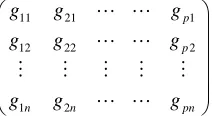
input symbols. Hence, a general form of the transmission matrix of a STBC is written as
11 21 1
12 22 2
1 2
p
p
n n pn
g g g
g g g
g g g
(1)
where the entries gij represent linear combinations of the
symbols x1, ,x2 , k
1,
x
n
and their conjugates. More spe-cifically, the entries gij, where xi, are
trans-mitted simultaneously from transmit antennas in
each time slot .
1, , T
i
1,,nT
,
j p
The transmission matrix in Equation (1) (which de-fines the STBC) is based on a complex generalized or- thogonal design, as defined in [3]. Since there are k
symbols transmitted over p time slots, the code rate of the STBC is given by
k Rate
p
(2)
At the receiving end, one can have an arbitrary num-ber of nR receivers. A simple transmit diversity scheme
for two transmit antennas was introduced by Alamouti in [2]. The transmission matrix is
1 2 2 2 1 x x G x x
It can be seen in the transmission matrix G2that there are nT = 2 (number of columns in the matrix G2) trans-
mitters, k = 2 possible input symbols, namely, x1, x2 and
the code spans over p = 2 (number of rows in the matrix
G2) time slots. Since k = 2 and p = 2, the code rate is unity. The associated encoding and transmission process is shown in Table 1. At any given time instant T, two signals are transmitted simultaneously from the antennas
Tx1 and Tx2. For example, in the first time slot T = 1,
signal x1 is transmitted from antenna Tx1 and signal x2 is
transmitted simultaneously from antenna Tx2. In the next
time slot T = 2, signals x2 and x1 (the conjugates of
symbols x1and x2) are simultaneously transmitted from
[image:2.595.309.538.369.695.2]antennas Tx1 and Tx2, respectively.
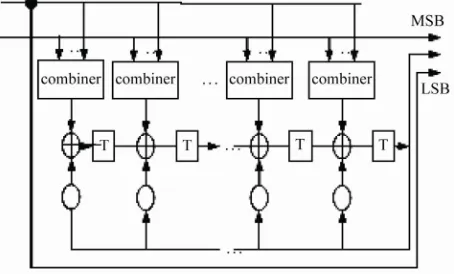
Figure 1 shows the base band representation of a sim-ple two-transmitter STBC, namely, that of the G2 code seen in Equation (3) using one receiver. We can see from the Figure 1 that there are two transmitters, namely, Tx1
as well as Tx2 and they transmit two signals
simultane-ously. As it can be seen from the Figure 1, the transmit-ted symbol x1 and x2 propagates through two different
fading channels, namely, h1 and h2. As mentioned earlier,
Table 1. Encoding and transmission process for the STBC.
Antenna
Time slot, T Tx1 Tx2
1 x1 x2
2 x2 x1
[image:2.595.136.242.412.470.2]the complex fading envelope is assumed to be constant across the corresponding two consecutive time slots.
h1h T1
1
h T1
2
(4) h2h T2
1
h T2
2
1
(5) At the receiver, independent noise samples, n1 and n2
are added in each time slot; hence the signals received over non dispersive or narrow-band channels can be ex- pressed with the aid of Equation (3) as
1 1 1 2 2
yh xh x n (6)
2 1 2 2 1
yh xh x n2 (7)
where y1 is the first received signal and y2 is the second.
Note that the received signal y1 consists of the
transmit-ted signals x1 and x2, while y2 consists of their conjugates.
In order to determine the transmitted symbols, we have to extract the signals x1 and x2 from the received signals y1 and y2. Therefore, both signals y1 and y2 are passed to
the combiner, as shown in Figure 1. In the combiner- aided by the channel estimator, which provides perfect estimation of the diversity channels in this example sim-ple signal processing is performed in order to separate the signals x1 and x2. Both signals x1 and x2 are then
passed to the maximum likelihood detector of Figure 1, based on the Euclidean distances between the combined signal x and all possible transmitted symbols. The sim-plified decision rule is based on choosing xi if and only if
ˆ
ˆ
dist x x, i dist x x, j i j (8)
where dist(A, B) is the Euclidean distance between sig-nals A and B and the index j spans all possible transmit-ted signals. From Equation (8), we can see that maxi-mum likelihood transmitted symbol is the one having the minimum Euclidean distance from the combined sig-nal ˆx.
3. Trellis Coded Modulation with
Ungerboeck-Gray Mapping
The TCM scheme, proposed by Ungerboeck, was de-signed for throughput of m bits/sec/Hz, where m bits are input to the encoder (among input bits are un- coded) and m + 1 bits are output and mapped with 2m+1-airy modulation using set partitioning yielding a coding rate
0
m
1
m R
m
(9)
In this case the mapping by set partitioning (called also Ungerboeck mapping) is applied. The Ungerboeck TCM encoder was chosen by maximizing df. In [5], df is
compute by an algorithm that replaces the search in TCM trellis for the path that maximizes df. In [7], the
TCM-UGM scheme considered, for a throughput of m
bits/sec/Hz, that the mapper is a 2m+1-airy that uses a mapping technique combining Ungerboeck mapping and Gray code mapping. In this case, bits are input to the encoder, and systematically output and mapped using Ungerboeck mapping. The Gray mapping is applied on the remaining
m m
1
m m uncoded bits and the gener-ated parity bit. When no uncoded bits are considered (m 0), this scheme is equivalent to Ungerboeck TCM scheme with m 0
0
m
. In [7], the optimal encoder code- generator is obtained by searching in the trellis, of two different paths (with a minimum Euclidean distance) that begin at state zero and finish to the same state. The op- timal code-generator is obtained by maximizing df. In this work, the TCM-UGM encoder, illustrated in Figure 2, considers m = 2 input bits of which no uncoded bits are considered ( ).
4. Proposal System
Figure 3 represents the image transmission system for which we evaluate the FER and PSNR after decoding. An input image is compressed by JPEG. The binary symbols resulting from the JPEG compressing constitute the sequence of data to be transmitted. The information data is first encoded by the TCM or TCM-UGM encoder exposed in section 3. The complex constellation symbols, generated by mapper, are interleaved and fed into the space-time block encoder described in section 2 (with nT
transmit and nR receive antennas). At each time slot T,
the output symbols xi are modulated and transmitted
si-multaneously each from a different transmit antenna. At the receiver end, the received noisy symbol is decoded using space-time block decoder and deinterr leaved giving a soft-decision exploited by TCM or TCM-UGM de- coder and is used for the reconstruction image.
5. Simulation Result
[image:3.595.310.537.569.706.2]The performance simulation of the associations TCM/
Figure 3. A block diagram of a communication system, nT = 2; nR = 1.
that the system TCM-UGM/STBC presents better results than the TCM/STBC from a Eb/N0 of 10 dB for BER
curves and 7 dB for FER curves. The TCM-UGM/STBC system outperforms the performance of the association TCM/STBC by 0.4 dB at BER = 10–5 and 0.9 dB at FER = 10–3.
STBC and TCM-UGM/STBC using 8PSK Ungerboeck mapper (for TCM) and Ungerboeck-Gray mapper (for TCM-UGM) are investigated for throughput 2 bit/s/Hz for JPEG image transmission. Rate 2/3 and 16-state TCM or TCM-UGM encoder is considered. Transmis-sion over MRF channel, using one receiver antenna, is simulated employing STBC with G2as orthogonal code. The optimal encoders’ code-generator (in sense of df) for
the used TCM and TCM-UGM encoders are illustrated in Table 2 (the average power per dimension in the con-stellation is normalized to 1/2).
The Peak Signal-to-Noise Ratio (PSNR) is the most commonly used as a measure of quality of reconstruction in image compression. The PSNR were identified using the following formulae:
22
1 1
1 ˆ
MSE , ,
MxN j M i N
i j
I i j I i j
(10)In simulation, a variety of raw images with high resolution (512 × 512 pixels) are used (boat image in
Figure 9, goldhill image in Figure 12 and concord aerial in Figure 15). The images transmitted have different bit per pixel (bpp) (Table 3) to illustrate the effectiveness of the proposed system
Mean Square Error (MSE) which requires two MxN
grayscale images I and Iˆ where one of the images is considered as a compression of the other is defined as: The PSNR is defined as:
The performance of the encoding schemes is evaluated in terms of BER (Bit Error Rate) and FER (Frame Error Rate) versus bit energy to noise ratio (Eb/N0). The FER
computation considers a frame length of 1024.
2
10
(Dynamics of image) PSNR 10 log
MSE
(11)
Figures 4 and 5 illustrate the performance in sense of BER and FER, respectively, of TCM/STBC and TCM-UGM/STBC considering one receiver antenna for the transmission of this JPEG images. It can be observed
Usually an image is encoded on 8 bits. It is repre- sented by 256 gray levels, which vary between 0 and 255, the extent or dynamics of the image is 255.
Table 2. Code-generator for throughput 2bits/s/Hz STBC encoding and transmission process for the STBC.
Code-generator 2
f
d Memory
order h0 h1 h2
TCM 5.172 4 31 14 30
TCM-UGM 5.172 4 23 34 15
Figure 6 to Figure 8 illustrate the performance curves of the PSNR of the reconstructed image vs Eb/N0. From
these figures, it can be shown clearly that the proposed system based on TCM-UGM gives better performance. For an Eb/N0 of 11 dB a PSNR improvement of around 2
dB is obtained for Boat and Goldhill images and around 0.6 dB to the Concord-aerial image.
Table 3. Bit Per Pixel rate for different images.
Image Concord-aerial Boat Goldhill Bit per pixel 0.5 0.4 0.61
Figures 10 and 11 represent, respectively, the recon- structed Boat image after transmission using the TCM-UGM/STBC and TCM/STBC for Eb/N0 equals 11
Figure 4. BER performance of TCM/STBC and TCM- UGM/STBC schemes over MRF channel (nR = 1).
Figure 5. FER performance of TCM/STBC and TCM- UGM/STBC schemes over MRF channel (nR = 1).
Figure 6. Performance PSNR vs Eb/N0 for JPEG boat image
[image:5.595.58.285.295.476.2]transmission bpp = 0.4.
Figure 7. Performance PSNR vs Eb/N0 for JPEG goldhill
image transmission bpp = 0.61.
Figure 8. Performance PSNR vs Eb/N0 for JPEG concord-
aerial image transmission bpp = 0.5.
[image:5.595.310.537.296.475.2] [image:5.595.59.284.517.693.2] [image:5.595.328.519.518.704.2]Figure 10. Reconstructed Boat image for TCM-UGM/STBC, bpp = 0.4, Eb/N0 = 11dB, PSNR = 24.52 dB.
Figure 11. Reconstructed Boat image for TCM/STBC, bpp = 0.4, Eb/N0 = 11 dB, PSNR = 22.28 dB.
[image:6.595.333.513.295.476.2]Figure 12. Original goldhill image.
[image:6.595.83.261.296.476.2]Figure 13. Reconstructed Goldhill image for TCM-UGM/ STBC bpp = 0.61, Eb/N0 = 11dB, PSNR = 27.92 dB.
Figure 14. Reconstructed Goldhill image for TCM/STBC bpp = 0.61, Eb/N0 = 11 dB, PSNR = 25.58 dB.
[image:6.595.326.520.514.706.2] [image:6.595.78.266.516.707.2]formance in sense of FER and PSNR of the reconstructed images, compared to TCM/STBC scheme. For a through- put of 2 bits/s/Hz and an Eb/N0 of 11 dB, TCM-
UGM/STBC permits to obtain a PSNR gain of 2 dB.
7. References
[1] V. Tarokh, N. Seshadri and A. R. Calderbank, “Space- Time Codes for High Data Rate Wireless Communication: Performance Criterion and Code Construction,” IEEE Transactions on Information Theory, Vol. 44, No. 2, 1998, pp. 744-765. doi:10.1109/18.661517
[2] S. M. Alamouti, “A Simple Transmit Diversity Tech-nique for Wireless Communications,” IEEE Journal on Selected Areas in Communications, Vol. 16, No. 8, 1998, pp. 1451-1458. doi:10.1109/49.730453
Figure 16. Reconstructed concord-aerial image for TCM- UGM/STBC bpp = 0.5, Eb/N0 = 11 dB, PSNR = 22.26 dB.
[3] V. Tarokh, H. Jafarkhani and A. R. Calderbank, “Space- Time Block Codes from Orthogonal Designs,” IEEE Transactions on Information Theory, Vol. 45, No. 5, 1999, pp. 1456-1467. doi:10.1109/18.771146
[4] V. Tarokh, H. Jafarkhani and A. R. Calderbank, “Space- Time Block Coding for Wireless Communications: Per-formance Results,” IEEE Journal on Selected Areas in Communications, Vol. 17, No. 3, 1999, pp. 451-460.
[5] G. Ungerboeck, “Channel Coding with Multilevel/Phase Signals,” IEEE Transactions on Information Theory, Vol. 28, No. 1, 1982, pp. 55-67.
doi:10.1109/TIT.1982.1056454
[6] L. T. Hanzo, H. Liew and B. L. Yeap, “Turbo Coding, Turbo Equalisation and Space Time Coding for Trans-mission over Wireless Channels,” John Willy IEEE Press, New York, 2002. doi:10.1002/047085474X
[7] A. Bassou and A. Djebbari, “Contribution to the Im-provement of the Performance of Trellis-Coded Modula-tion,” WSEAS Transactions on Communications, Vol. 6, No. 2, 2007, pp. 307-311.
Figure 17. Reconstructed concord-aerial image for TCM/ STBC bpp = 0.5, Eb/N0 = 11 dB, PSNR = 21.58 dB.
[8] “Digital Compression and Coding of Continuous tone Still Images Part 1: Requirements and Guidelines,” In-ternational Telecommunication Union, 1991.
image and, Figure 16 and Figure 17 for the Concord- aerial image).
[9] “Digital Compression and Coding of Continuous Tone still Images: Requirements and Guidelines,” International Standard Organization, 1994.
6. Conclusions
[10] G. Lakhani, “DCT Coefficient Prediction for JPEG Image Coding Image Processing,” IEEE International Confer-ence on Image Processing, San Antonio, 16 Septem-ber-19 October 2007, pp. 189-192.doi:10.1109/ICIP.2007.4379986 In this work, TCM-UGM/STBC encoding scheme has