Action research project to analyse and evaluate
14-19 vulnerable learner and parent perceptions
to progression within a collaborative framework
Report produced by: Dr John Ryan Professor John Dwyfor Davies University of the West of England [August 2010]
Research Project Group: John Walker, Concorde Partnership
Dave Baker, Bradley Stoke Community School Dee Mooney, Connexions West
Katie Harwood, Connexions West John Davies, UWE, Bristol
2
CONTENTS
Executive Summary
3 – 6
Phase 1 Report - Pupil Questionnaire
7 - 32
Phase 2 Report – Pupil Interviews
33 - 41
3
Executive Summary
This small scale research project involved three separate aspects of data gathering, analysis and evaluation. A Phase 1 report was drawn up from an online questionnaire involving year 9, 10 and 12 students in all of the Concorde Partnership schools that generated over 1200 responses. It also included data gathered from a parent questionnaire (a mix of online and hardcopy) that was
distributed throughout the partnership schools, generating around 200 responses. A Phase 2 report followed a series of focus group interviews with students, carried out in small groups,
typically 4-6 students, in year groups (i.e. not mixed groups of year 9, 10 or 12 students). Overall, we found that students were positive about their own school, in most cases expressing loyalty and a general satisfaction with it. Their awareness of other schools/sites/curriculum offer, however, seemed to lack the clear and accurate information necessary to enable then to make informed judgements and/or to compare and contrast their school with others in the partnership.
Researching the operation of a collaborative framework within the Concorde Partnership has highlighted a number of significant factors, from the perspective of students and parents that will allow the partnership to exploit particular opportunities, and to better understand the inherent challenges and constraints within an on-going planning process for future collaborative activity and cross-site working. The views of students and parents to students travelling were the vehicle used to gain much of the baseline data, but it became apparent very early on that there were
fundamental social and location issues underlying the attitudes to travel held by students, and parents, that could impact negatively upon collaborative working within the Concorde partnership schools.
1.1 There were five main reasons given by students for travelling within the region. They related to; sport and leisure, shopping, the cinema and visiting family. It is helpful to consider these activities in the context of those directly associated with the school and those that did not relate to their school.
1.2 The most common activities organised by school that involved students travelling to another school/site, were associated with sporting activities and competitions. Typically they would be accompanied by a responsible adult, and would be travelling with friends and/or with people that they were familiar with. Transport was organised and paid for by the school so it involved little or no organisation and/or responsibility on their part. It was, therefore, a relatively safe and protected environment. A relatively small number of students indicated that they were already travelling to study at other schools/sites. In general, we found that transport was not a very significant factor influencing students’ views on inter-site working and collaboration; their expectation was that transport would be
arranged for them and would be free. Being safe and amongst friends were much more significant factors for them and these issues are discussed further below.
4
of their immediate communities. It appears that when students travel they tend to do so with a responsible adult (teacher, coach or parent) and/or with friends or team mates known to them, few seemed to have had experience of, or responsibility for, organising and
engaging in independent travel. We also got the impression that students may have had limited engagement with other young people, beyond those that they had travelled with. This is an area requiring further investigation as it has the potential to make a significant impact on students’ awareness and understanding of a wider range of young people and of the communities that they live within.
1.4 Although students expressed a very strong desire to be with their friends, and that they often lacked confidence in meeting with ‘strangers’, there appeared to be a willingness to be put in situations where they could get to know and work with young people not from their own school and community. In all three year groups (9, 10, 12) involved in the research over 70% of the students indicated that they would be happy for students from another school to attend classes in their school, with ‘making new friends’ rated the highest of the reasons. 50% to 60% of students said that they would be happy to attend classes at another school, with ‘making new friends’ again rating as the highest reason. Year 10 students were slightly less positive than year 9 students about making new friends stating that they already had established friendships. It is possible that more cross-site working in years 7 to 9 would help to avoid any dip in motivation to work across sites at Key Stage 4. By Year 12, however, the students in many of the schools indicated a willingness to work with students from, or at, other sites. This included students at New Siblands School, but students from the other two schools in Thornbury seemed less positive. This may be the result of less positive experiences of the current transport provision that was mentioned by some students.
1.5 With regard for the views of parents, whereas 79% of parents indicated that they found it acceptable or very acceptable for students from another school attend classes at the school of their son/daughter only 64% felt that it would be acceptable or very acceptable for their son/daughter to travel to another school for part of their education. This may warrant further investigation, but some parents pointed out that they had chosen a particular school for their son/daughter and that they would not be happy for them to be travelling to other schools that they had not chosen. This was echoed by a number of students, some referring to their school having better examination results and Ofsted reports than other schools. Interestingly, the majority of students seemed to have little or no knowledge of the quality of teaching and/or the facilities available (including specialist facilities associated with the particular subject specialism(s)) for any school other than their own within the Concorde Partnership of Schools.
5
1.7 In Phase 2 interviews with students, when we explored the issues that might prevent students from travelling outside of their local area, a number of factors were highlighted by the students. The most significant of these was fear and anxiety associated with being in contexts that would either be new and therefore unknown to them, or, for which a very negative picture had been built up in their minds. Having to travel to an area that was unfamiliar to them, whether this was another school site or to a public facility e.g. a leisure or shopping centre, students clearly felt uncomfortable with it unless they were with their friends or even others from their own school, a teacher or a family member. Getting lost and not knowing their way around worried them, and understanding the systems and protocols, such as, lunch arrangements provided them with much anxiety if they had to manage it on their own. Some also expressed a fear of travelling on public transport on their own. Some felt that it was too dangerous to travel on their own, expressing concerns for the reputation of an area, or another school.
1.8 Some students mentioned how parents worry about them, and it is likely that some of the students’ own fears may have developed from the views expressed by their parents or other adults and/or from stories of negatives experiences of their parents or other adults in the past.
1.9 The parent questionnaire showed a very clear first choice option for their son/daughter after age 16 was for them to stay at school, the 2nd choice was for them to go to a Further Education college. Doing an apprenticeship and starting work with training were ranked 3rd and 4th choices respectively. This highlights the value that most parents hold for continued education beyond age sixteen and this resonates with parent feedback elsewhere in the questionnaire that students today have a good educational choice at age 16; for example, 84% thought that the choices available to their son/daughter were good or very good compared with 44% stating that the choice that had been available to them at age 16 was good or very good.
2.0 The parent questionnaire also revealed that 58% of them had stayed in full time education after age 16 gaining a broad range of qualifications, from ‘A’ levels through to Masters and PhD. A significant number also had PGCE, BEd and Cert Ed qualifications and others had NNEB and Sport and Life Coaching qualifications. Others detailed professional
qualifications in nursing and social care and a range of other qualifications were also listed, such as, BTEC, HND and HNC. Almost 80% of parents had gained work related
qualifications since leaving school in areas such as Management, Accounting and Finance, Child Care, Hairdressing, ICT/Computing and HLTA/TA. This amount of qualifications gained by parents post 16 shows a commitment on their part to lifelong learning which could be exploited more in promoting and supporting educational programmes post 16 education and beyond. The information provided by parents within this research about their educational backgrounds and their qualifications would be valuable to schools. For schools to gather such data more systematically on an ongoing basis could be a significant outcome for this project.
2.1 Although a few students expressed apathy towards travelling out of their school,
6
their desire to travel with friends, or people that they know, consideration of more cross-site work for the purpose of confidence building and developing social engagement skills is as desirable an outcome for preparing young people for life beyond school as the initial purpose of enabling and supporting a broader curriculum across the partnership. 2.2 Furthermore, this type of engagement could provide a very valuable experience for
7
Phase 1 Report
Pupil Questionnaire
In phase 1 an online questionnaire was used with a sample of pupils in Years 9, 10 and 12 (see Annex A). A questionnaire (online and hardcopy) was also used with a sample of parents of pupils in Years 9, 10 and 12 (see Annex 2). The questionnaire was designed to gain an awareness of, in particular, attitudes to ‘travel to learn’ and adapting to different learning cultures and social groups on more than one site. The data gathered from the questionnaires will be used inform Phase 2 of the research project which will involve in-depth interviews with a much smaller sample of pupils.
[image:7.595.51.240.563.630.2]The pupil questionnaire was facilitated during school hours and as a result the completed questionnaire return rate was high. In total 1,230 student questionnaires were received. Table I below shows the completed questionnaire by school and year group.
Table 1
Year Bradley Stoke
Filton Patchway Marlwood Castle Brimsham Green
Chipping Sodbury
Total
9 109 90 58 153 95 70 13 588
10 64 32 96 88 106 23 19 428
12 N/A 39 43 41 66 18 7 214
Data Processing early Analysis
Question 1
The intention for this first question was to determine the extent that students already travel to activities not organised by the school (e.g. sports or clubs, music lessons). In each of the three year groups the results showed that approximately half of the pupils did travel. However, it may be more significant that at least half of the pupils in each year group did not appear to travel within, or outside, their local area. The overall results are detailed in Table 2 below. In phase two the reasons for pupil mobility and/or immobility needs to be explored to understand the opportunities and barriers to travel within, and outside, the local area.
Table 2
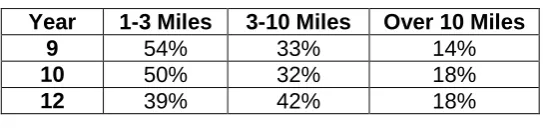
The distances travelled indicate that majority of the students do not travel very far with
approximately 50% not travelling more than 3 miles. The overall results are detailed in Table 3 below.
Table 3
Year Travel Not Travel
9 50% 50%
10 49% 51%
12 43% 57%
Year 1-3 Miles 3-10 Miles Over 10 Miles
9 54% 33% 14%
10 50% 32% 18%
[image:7.595.56.328.717.781.2]8
The following charts present the data gathered for each year group from the schools in the Concorde partnership1. Due to a number of factors returns from some schools were not as great as expected, but in general there appears to be a similar pattern of responses (in percentage terms) from all of the schools, regardless of the sample size. That is not to say that there is no variation across the schools, for example, in Chart 1 below the two schools in Thornbury show a 60/40, Yes/No, split for travel for Year 9 pupils compared with 50/50 for many others and those in Filton High appear to engage is much less travel than pupils in other schools having a 30/70, Yes/No split for travel. In Chart 2, Year 10 pupils appear to travel even less with all schools apart from Bradley Stoke indicating more than 50% do not travel. In Chart 3, the data for Year 12 and New Siblands display a very mixed picture of travel. A majority of pupils in the three schools in Thornbury do travel. This contrasts with schools in other areas where the vast majority of pupils do not travel.
Chart 1
Chart 2
9 Chart 3
Chart 4
10 Chart 6
Question 1 - Issue to explore in Phase 2
Why do approximately 50% of the students, in each year group, not travel out of their
immediate/local area for social/sport and/or education activities? What reasons might prevent them from travelling e.g. financial, fear/anxiety, lack of motivation/interest, happy to remain local?
For those that travel we might want to explore, what they travel for, how do they travel (car, bus, walk) and where they travel to (geographical location)?
Question 2
[image:10.595.76.513.81.314.2]To determine student views towards students from another school attending their classes. In all year groups YES attained a much higher percentage than NO, at least 70 to 30, as shown in Table 4:
Table 4
Year Yes No
9 76% 24%
10 71% 29%
12 84% 16%
11 Chart 7
Chart 8
12
The students who said that they would be happy to have students from another school attending their classes tended to highlight social reasons, such as, making new friends in the follow up questions. Some of the reasons chosen (from a list provided) by the different year groups, by school, are shown below. Within the ‘Other’ free text box the issue of friends also featured as the following comments show:
I have friends in other schools
I am friends with some people at other schools I know people from Castle and that would be fun So I can see my friends
Could be an old friend
A large number of the responses made the point that it was an issue for them, such as:
Wouldn’t make any difference, people are people I just don’t mind them being there
Just doesn’t bother me I really don’t mind No reason why not
Several students indicated positive benefits:
Because it would be cool They’re welcome
It would be different
If it helps to benefit people then I would not disagree with them joining the class
13 Chart 11
Chart 12
The students who said that they would not be happy to have students from another school attending their classes were given just two follow up options to choose from. The data by year group for each school are shown below in Charts 13, 14 and 15. Within the ‘Other’ free text box the concerns raised tended to focus on disruption and distraction, for example:
Because there would be more arguments
They might hold me back with their lack of knowledge and social skills. Plus they scare me, the people from other schools, they’re always hitting each other and laughing They will cause trouble
14
Because I need to focus on my studies and become very knowledgeable
Chart 13
15 Chart 15
Question 3
This question was designed to enable the partnership to gain an insight into student attitudes towards attending classes at another school/college. In all year groups YES attained a higher percentage than NO, approximately 60 to 40, as shown in Table 5 below. Comparing the data for question 3 with the data for question 2, students are much happier for students to travel to attend classes in their school (approximately 80%) than for them to travel to another school, college or workplace for part of their learning (approximately 60%).
Question 3 data is relatively consistent across the different year groups with approximately 60% for and 40% against.
[image:15.595.88.498.109.344.2]
Table 5
Year Yes No
9 59% 41%
10 54% 46%
12 57% 43%
16 Chart 16
Chart 17
17
The students who said that they would be happy to attend classes at another school tended to highlight social reasons, such as, making new friends given in the follow up question. Some of the reasons chosen (from a list provided) by the different year groups, by school, are shown in Charts 19, 20 and 21 below. Within the ‘Other’ free text box having a new experience or a change of scene featured highly as the following selected comments show:
It would be a change Change of scene
It would be a new experience To get away from my school
It would be better than being at - - - - School every day Something new
Different opportunities and experience
New experience and to learn other topics in lessons and make me more confident It’s different
Some responses highlighted curriculum and/or facilities and expertise:
Yes as they may have better subject teachers, however, it would depend on the journey distance
Because I like being myself and focusing on education Learn more
May offer more courses To do another course So I can do the subject Better education elsewhere
Other responses indicated a lack of concern about attending one particular school site: I don’t care where I learn
Because it would be fun Would be cool
I don’t care
I’m open for anything
18 Chart 20
19
The students who said that they would not be happy to attend classes at another school tended to choose friendship issues and knowing other students from the choices given that would change their mind – see Charts 22, 23 and 24 below. Transport also featured a lot within some of the individual school responses. Within the ‘Other’ free text box friendship issues also tended to be highlighted:
I would only go to Castle cause I know people there I wouldn’t mind if I was with a friend
It would depend whether I liked the classes
Chart 22
20 Chart 24
21
We already know that going with friends (or just people from their own school) and/or having friends at another school is very important to them. With a large number of students commenting on wanting ‘a change’ and having ‘a new experience’ it would be helpful to find out what excites them about going to different schools for part of their learning. I would be worth exploring what they think would/could be different in another school to their own school, and what exactly are these new experiences and opportunities that some feel they might get by going to another school.
We also know that at least 40% in any year group are not keen to travel to another school, much higher in some schools. It is not very clear why they do not want to go to another school and we could try to clarify what those concerns are (fear of bullying or being shown up, being isolated, being in an unfamiliar work environment, no established relationship with their teachers etc) and the barriers (poor transport, costs, aspirations, parental engagement, ensuring support for additional needs across different sites).
Question 4
Curriculum/subject choice and willingness to travel. Table 6 below shows the percentage of students that said they would never travel even if they had a subject they really wanted to do. The percentages for each year group appear to be relatively small, around 10% taking those that Agree and Strongly Agree together. The percentages of those that would be prepared to travel are over 60%, taking Disagree and Strongly Disagree together. However, with around 30% of students answering that they were not there is a need to find out the reasons for their uncertainty in Phase 2 of this project. The data for each school, by Year, is presented in charts 25, 26 and 27. There appears to be a lot of consistency in the responses received from the schools, and the different year groups, across the partnership.
Table 6
Year Strongly Disagree
Disagree Not sure Agree Strongly Agree
9 21% 38% 29% 7% 4%
10 15% 41% 34% 7% 3%
12 23% 43% 22% 10% 2%
22 Chart 26
23 Question 4 - Issue to explore in Phase 2
The main issue to be explored may be the reasons why so many (approximately one third of the students) said that they were unsure if they would travel to another school even if they offered a subject that was not available to them in their own school. This might be best done by asking the students what they think would encourage people to travel to another school.
Question 5
Facilities and students willingness to travel. In Table 7 below the data shows that approximately 50% of Year 9 and Year 12 students and 40% of Year 10 students agree or strongly agree that good, or better, facilities would make them more willing to attend another site for part of their learning. The number of those responding ‘Not sure’ was high, with over 40% of Year 10 choosing this option. This is something to be explored in Phase 2, but there is also an issue about people choosing the middle option when presented with a five point scale. For many respondents choosing the middle option is easier than making a decision either way. With hindsight using a four point scale may have been more revealing. In Charts 28, 29 and 30 data by school and year group is presented. Although there is some variance by school, within each of year group, a general consistency in the overall pattern of results is also evident. Only 14%-16% disagree or strongly disagree that good facilities at another site make a difference to their willingness to travel. Year 12 were the most positive about accessing better facilities.
Table 7
Year Strongly Agree
Agree Not sure Disagree Strongly disagree
9 13% 34% 38% 11% 3%
10 9% 32% 43% 13% 3%
24 Chart 28
Chart 29
25 Question 5 - Issue to explore in Phase 2
As for question 4 above, one of the issues to be explored is why so many (approximately 40% of the students) said that they were unsure if they would travel to another school to access better facilities than those on offer at their own school.
There may be a need to find out what they think ‘facilities’ is referring to in the questions. They may not associate facilities with specialist subject facilities, for example, in Question 9 when students had the opportunity to comment on any other issues one or two did mention better sporting facilities and better food.
This might be best done by asking the students, for example,
‘what facilities would another school/college/workplace need to have to encourage you to travel’
In addition to subject specific facilities e.g. Engineering, Hair and Beauty, Science -
recreation/sports, food/drink and Information and Communication Technology related facilities may be significant factors that would encourage students to travel.
Question 6
26
This is something to be explored in Phase 2. Also as with question 5 there may also be an issue about people choosing the middle option of a five point scale. For Year 12, 29% chose the middle option, but in Year 9 this rose to 38% and to 43% for Year 10.
In Charts 31, 32 and 33 data by school and year group is presented. There is a lot of consistency across schools by Year group, but Year 12 data shows a much more positive response to
accessing more experienced/better teachers than Year 10 and Year 9 students.
Only 12% of Year 12 students disagree or strongly disagree that more experienced/better teachers at another site make a difference to their willingness to travel. However, twice as many Year 10 students (25%) disagree or strongly disagree, and 18% of Year 9. In Phase 2 there is a need to examine what students consider to be better teachers and/to teaching and learning experiences. They may also be a need to explore issues around the maturity of students and their willingness to travel, and related to question 2 above the importance of friendship and peer networks over other factors more directly relevant to teaching and learning.
Table 8
Year Strongly Agree
Agree Not sure Disagree Strongly disagree
9 11% 33% 38% 15% 3%
10 9% 24% 43% 19% 6%
12 16% 43% 29% 7% 5%
27 Chart 32
Chart 33
Question 6 - Issue to explore in Phase 2
28 Question 7
Student attitudes to inter-site travel and meeting new people/making new friends.
This question provided an opportunity to explore further the friendship issues raised in earlier questions, but with an emphasis on meeting new people and making new friends. Almost 50% of Year 12 and Year 9 Students expressed a positive attitude to meeting new people as a result of travelling to other sites (agree and strongly agree in Table 9). However, only 37% of Year 10 pupils appear to be positive about the opportunity to make new friends as a result of travelling (agree or strongly agree in Table 9). Almost a quarter (24%) of Year 10 student, 20% of Year 12 and 18% of Year 9 students provided a negative response to making new friends (disagree or strongly agree in Table 9). The five point scale has once again provided a high number of responses, approximately one third for each Year group.
Table 9
Year Strongly Agree
Agree Not sure Disagree Strongly disagree
9 10% 39% 34% 12% 6%
10 6% 33% 37% 20% 4%
12 7% 42% 31% 14% 6%
29 Chart 35
Chart 36
Question 7 - Issue to explore in Phase 2
30 Question 8
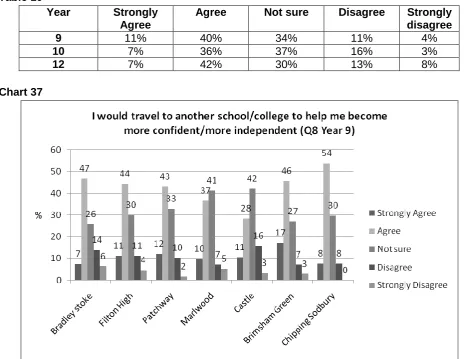
[image:30.595.58.523.226.585.2]Inter-site travel and confidence building for students.
Table 10 shows that 51% of Year 12 and Year 9 students, and 43% of Year 10 students, agree or strongly agree that inter-site travel could help to boost their confidence. However, as with previous questions approximately one-third of the students in each year group chose the middle option ‘not sure’. The data for those that disagree or strongly disagree with building their confidence by travelling to another site for part of their learning is reasonably high, Year 12 (21%), Year 10 (19%) and Year 9 (15%). Chart 37, 38 and 39 show the data by year group for each school. Year 12 data is reasonably consistent across the different schools, but there is some variety with the Year 9, and particularly the Year 10 data, across the schools in the partnership.
Table 10
Year Strongly Agree
Agree Not sure Disagree Strongly disagree
9 11% 40% 34% 11% 4%
10 7% 36% 37% 16% 3%
12 7% 42% 30% 13% 8%
31 Chart 38
Chart 39
Question 8 - Issue to explore in Phase 2
32 Question 9
This was an open ended question to provide students’ with an opportunity to raise any other issue associated with students from other schools joining their classes, or for them to travel to another school/college for part of their learning. For easy of analysis the comments made have been grouped into a number of broad common themes/areas, some could be in more than one group. N.B. the text in this section has been copied from the original responses and made anonymous where necessary.
Facilities
I would not go to another school because our facilities are good enough here
Because better learning and I want to do sport and if there are better sport facilities then that would be better than our school because we don’t have a lot of sports things
Better facilities
if I didn't like my school anymore or they had better facilities and courses. I would not go to another school because our facilities are good enough here.
If they provided better facilities for G&T pupils, and the classes were all 'setted' (there would be less disruption for other students not wanting to learn).
If they were more musically orientated.
If they had novelty activities such as- rock climbing, canoeing etc...
If they have good sport facilities’ or there renowned for being a good school Because they may have better food in the canteen
Different teaching approaches
To see how other schools learn different things.
To see the ways in which they teach and how effective it is. Because the teacher are different and teach u in different ways? To learn in different ways/methods.
To take the opportunity of special courses to help in future life plans.
Better qualifications or grades
If they provided better grades then I would go to get the grades I can achieve Get better marks and grades
To get better qualifications to be more successful
To help in exams and learn new things. such as Marlwood specialises in science, so if I wanted to do creative media Bradley stoke school would be a better place to do it.
More choice of course, or better courses If they have better courses
They might have a course that I would like to do
To see the other options of GCSEs and to meet old friends.
If the other school had different courses, then I could meet different people who have the same interests as me.
I would go if I missed a subject that is not important for me to get into university, E.G general studies. I would prefer to not go if it disrupts my important lessons
If they offer different courses
A change / more interesting
It would be different to the daily school routine/make the week more interesting. It would make a day more interesting
Nice to have a change instead of staying in the same school all the time
To make the day more interesting and less like a normal day. To do different things. A new experience (a bit different)
33 past 3/4 years. socialising is good
To vary and make education more interesting
To have break from our normal lessons, classrooms and teachers
I think it would make my 6th form experience far more varied, and making full use of the facilities of multiple schools would be a HUGE advantage i.e. help with Unis and subjects.
Cost
I would travel to another school if the bus fare got any more expensive than it is now- £20 a week which is a lot of money if it increased more I know me and a lot of my friends that travel on the bus westward travel 6c say that they would also travel to another school.
Friends
I would travel to another school if there were other people from my old school and if it was a good school
I do already travel to a different school 3 times a school year for a master class day but I would like to do it more as you make lots of new friends, learn from other students and use a lot of tools you wouldn’t in this school normally.
Environment
See the environment and atmosphere in different schools.
To feel the atmosphere of a different school other than mine for a change. They might have smaller classes and some might find it easier to use. Nice learning environment.
To try new things in a new environment I find it hard to work with people I don’t know
Because I am very shy around other people and I wouldn't know what to talk about with the other students.
Because some people would pick on you and take advantage
I would not travel to another school; if other schools were better I would have gone there in the first place!
Personal Development
I would like to visit another school because it is a learning curve to get more experience out of meeting new people and visiting new places, like we will be doing when we go for a job, or apply for a job. I also think that it will help people gain more confidence on meeting new people. I think that this is a very good idea
I wouldn’t mind travelling to another school to help prepare me for change when I’m older. So that I can have a new start and try something new
I wouldn’t want to go to another school because I’m sure my school is perfectly capable of teaching me in the correct way and I am not good at interacting with new people ...therefore if a course that I want to take part in takes place at another school I would reject it without regret. And plus I have everything I could possibly require at the school I attend at the moment yours in great disgust ...
34
Focus Group Interviews with Concorde Partnership Students
The statistical data gathered from students via questionnaires (and presented in the Phase 1 report) highlighted a number of ‘travel’ issues requiring further investigation in Phase 2. The first of these involved finding out the reasons for students travelling in general and where they travelled to. For those that did little or no travel we were keen to find out what restricted or prevented them from travelling. The second set of issues explored in Phase 2 were those associated with
travelling to other schools sites, we wanted to find out about the positive and negative influences on students’ motivation to travel and engage with learning opportunities offered at different sites within the partnership. The third are investigated was the current knowledge the students had about other schools within the partnership, for example, curriculum specialism, facilities and
teachers/teaching at other sites. Finally, we provided students with an opportunity to suggest ways of supporting them to engage more in cross-site partnership working.
Phase 2 involved a series of focus group interviews with students from across the Concorde partnership schools. These were organised by year group and involved from 3 to 9 students. The interviews were structured around a number of questions designed by members of the Concorde Partnership, Connexions and UWE staff. Apart from the first question, they were asked to provide their views on how people of their own age might respond to a series of questions i.e. they were not asked specifically for their personal views, although as you will see from the notes below in many cases they referred to personal experiences and viewpoints. The information presented in bullet points below is taken from the notes made by the interviewers during the interviews, i.e. it is not necessarily verbatim quotes from students.
Seventeen student focus group interviews were carried out, five with Year 12/13 students, six with Year 10 and six with Year 9. An analysis of the data gathered is presented below, using headings based on the questions they were asked to discuss (see Annex 1 for a list of the questions/topics used by the interviewers). The interviews were carried out by Janet Tope (New Siblands) and Helen Jaworska Webb, Jane Andrews, Christine Poole, Kath Fare and Jo Harris (Connexions staff).
1. To begin the discussions the students were asked to outline the main reasons why they travel, locally and beyond, how they travel, who they travel with and where they travel to.
1.1. By far the most popular reason for travelling anywhere was for sporting activities and competitions. This included a very broad range of activities, mostly as participants, for example, swimming, football, rugby, athletics, horse-riding, trampolining. Parents driving, lifts in shared cars, bus, cycle and walk were the main modes of transport and students were mostly accompanied by a parent or a sports coach/teacher, and in many cases with friends or as part of a team.
1.2. Travelling to go shopping out of the area (e.g. Cabot Circus, Cribbs Causeway) was mentioned by a lot of students.
1.3. Visiting relatives/family (in some cases a dad living elsewhere). 1.4. Going to the cinema
35
For 1.2 to 1.5 above students mostly travelled with friends or family, depending on the activity, and travelled by all modes of transport, those mentioned above as well as trains and planes.
They travel to:
a) Good Leisure centres that as accessible to them via available transport.
b) Sport (games and competitions) – a very broad spread of locations, but probably more local to Bristol and South Glos, than regional or national.
c) Cribbs Causeway and Cabot Circus – shopping/cinema/food outlets. d) Holidays – UK and Abroad
What this travel information shows is that travel within the region is mainly associated with sport and leisure activities. It is very focused activity, with students accompanied by a responsible adult (teacher/coach/parent), and/or a family member or friend(s). There did not appear to be much opportunity for the young people to engage/socialise with people other than those they travelled with, or that they went to see in the case of visiting family. It was not clear how much engagement or socialising with other people took place when on holiday in the UK or abroad. Although there was some evidence that Year 12 students did engage in more independent travel within the region their responses to the follow up questions below were not significantly different from Year 9 and Year 10 students.
2. Students were asked what (they think) would prevent people from travelling out of their local area.
A number of students indicated that there may be no need to go anywhere else as there were enough things to do locally and all their friends or their family lived in the area. But mostly they highlighted concerns and reasons for not travelling, as follows:
2.1 The most significant factor related to fear and anxiety of the unknown and/or their perception of other areas as illustrated by some of the issues noted during the interviews:
Some areas might have a reputation / X is really rough
The stereotype of people in an area / ..if I did not like the people there Violence being mugged / gang wars
Might not know the area well Might not know their way around Unfamiliar places
Outside of comfort zone
Feel safer around home Don’t like new places
Feel uncomfortable on public transport Insecurity
I usually go to places where there are a lot of people
36 I like travelling with friends
Too dangerous on my own
Might not be allowed by parents Strict parents stopping them going May not be allowed by parents
Fear – more for parents they worry more
2.2 They may prefer to stay at home to play on my Xbox social networking(online) want to be on their own
2.3 For practical reasons - Difficulty with transport, such as, the timing of buses/trains, lifts not available, traffic jams, the cost of travel and the distance.
With regard for 2.3 above, in terms of travelling to another site for part of their learning, providing there is ‘free’ and well planned transport available these practical concerns would not appear to be insurmountable problems. There are, however, associated issues/concerns, raised in questions 3 and 4 below.
The issues raised in 2.2 above may highlight the changing nature of social engagement and the way young people network in the 21st Century. Technology certainly plays a part in enabling many young people (and people of all ages) to engage in social networking and game
playing/entertainment within their own homes, and significantly without face-to-face interaction. The views expressed by students in this research (Phase 1 and Phase 2) clearly highlight a lack of confidence, and in some cases fear and anxiety, associated with meeting people that they do not know in a face-to-face situation. A lack of confidence, fear and anxiety is also clearly voiced about travelling to, and across, areas that students are unfamiliar with. This may be partly explained by students spending more time in the home as outlined in b) above, but there appear to be other significant issues raised in a) above that need to be addressed to overcome barriers to inter site travel from the students perspective, such as:
Engaging in activities that enable students to consider the reputation of people and places in an objective manner. Community cohesion strategies and activities that are being used locally and/or nationally may be helpful in identifying ways of building more cohesion across different
communities. Ironically, the movement of students between schools could play an important part in facilitating and sustaining this in the long term.
Anything that can be done to engage students in more cross-community understanding and activity will also help with the concerns raised by students about getting lost, not knowing an area and being uncomfortable in an unfamiliar area.
37
cross-site engagement with other students to help to reduce the fear of meeting and working with people beyond their friendship groups. The students suggested a range of ways of achieving this in their responses to question 6 below.
One other influential factor suggested by students that might prevent them from travelling out of their area was parental control and/or the concern that parents expressed about them travelling out of their own area. One student comment above articulates clearly the fear and worry that some parents have may be far more than the students themselves have. Whilst it is important that students are sensible, cautious and careful in different situations this must be balanced with rational and real concerns for safety and personal wellbeing. There were some indications within the parent questionnaires in Phase 1 that parents did have concerns about some of the different sites that their sons/daughters may be expected to travel to.
3. The third question related to the Concorde Partnership providing transport e.g. Bus or bicycle to travel to another school. They were asked if this would make them feel more positive about travelling to another setting for part of their learning.
Overall, transport did not appear to be the most significant factor in making decisions about travelling to another site. This may be because it was taken for granted that transport would be provided, as evidenced in their responses to question 4 below. Some of the issues noted by interviewees about having a more positive attitude to travelling to another site were as follows:
Depend on who you were travelling with
More comfortable with friends so not singled out Easier and there would be people you knew Might not know people
Might not have anyone to go with
X might be alright as I know some people there
If a lot of people from our school went, preferably friends ..I would only travel to schools where I liked people
It’s about what happens when you get there
If it were a mini-bus it would be better than a big coach Time wasted by travelling
More complicated to travel, you have to travel back and ensure you are on time
Would be a direct route on the bus so no problems with getting lost Experience of bus not being on time
..in my experience so far the transport provided has been unreliable
38
4. The students were then asked if the transport was ‘Free’ would that make them feel more positive about travelling.
The suggestion of paying for transport was very unpopular, with a very strong message that it should, or must, be ‘free’ as the following comments illustrate:
I definitely wouldn’t do it if it wasn’t free
Knowing it might not be free would put me off it even more If it wasn’t free people would back out
People would compromise on subjects if it wasn’t free
Free transport is provided by school to all other educational activities
5. Would you or other students not be keen to travel to another school for part of your learning?
Quite a few who had travelled had had negative experiences…
..attended a master class…entered a huge hall full of people I did not know, very intimidating as an individual
You wouldn’t want to walk in and have people looking at you. Just not feel comfortable.
Found out you had to sort out your own food when I got there – was not able to use the canteen - felt left out
Others were very concerned about finding their way in another area
Might get lost – they feel more comfortable knowing where they are going How do we get there safely
Worried about getting (back) home in time
People might not feel familiar with their surroundings, so wouldn’t want to travel anywhere.
Might get lost in another school Feel less confident in another school An alien world
Afraid of being late (traffic)
A number of students highlighted concerns about friendship and social engagement No common ground with others
Would have to make new friends
Social groups – hard to make new friends – our groups are established Happier as part of a group that I know
Might not know anyone
Don’t like people from other schools Fearful of meeting new people
Some mentioned the bad reputation/image of other schools and/or their students Schools reputation
39
Some students raised a concern about working with, and accessing, teachers in another school
Hard to communicate with teachers face-to-face (which they would prefer) as they were not at the same school they would have to rely on email
Would not know anybody, teachers or pupils
Teacher/student relationships would need re-building Teachers might favour students from their own school
You’re used to your own teachers and like them
Won’t get the same help from a teacher who doesn’t know my needs
Might not have suitable facilities, if you had a learning difficulty. Teachers from another school may not know your difficulty
Parental views was suggested as a potentially significant factor in influencing students Parental views on other schools would influence my opinion
Parents’ views are very important. They sent us to this school they want us to come here so why go elsewhere?
A number of students simply could not understand why they should travel to another school Our school is best in area so why go to a lesser school
Our reputation is good so why go anywhere else Don’t see the point if I can do it here
What’s the point if I’m doing the same thing here
6. What do you think would encourage more students to travel to another school for part of their learning? What would make it easier for you to meet and work with new people?
The students provided a detailed list of strategies and activities that could be used to encourage more students to want to travel:
6.1 Information, induction and time to get to know other students/teachers Someone who had done it before could come in to explain what it was like Knowing more about what it would be like, more information
Inductions with a group of people, like they do to prepare for Year 7
Induction days…. longer than one day, otherwise end up sticking with your friends If they did it regularly they’d be more comfortable and used to it.... maybe have a rugby or football tournament after.
Attend events, shows, performances at other schools Advertise events, joint activities, more visits
Exchange programme, someone from another school could come to our school for a week.
Your teacher swopped into another school
Teacher presentations, new ideas for teaching plans Planned activities over a longer period of time
A day of activities which were, for example, themed or involved team building If the people from all the schools went on a residential trip, regularly so that
40 6.2 Choice, reputation and Exam Results
Choice, reputation and Exam Results
If they give you results, tests/exams, of previous students achievements Having better subject choices
Bigger range and choice of subject
Opportunities elsewhere have opened more doors for me (Yr 12)
6.3 Teaching and learning taster activities Do trial lessons to see if you like it Do some joint lessons
If I was doing activities related to that particular subject Taster so they know what it’s like before they go
More information about a course, like what work you will have to put in and what is expected of you
6.4 Overcoming fear and building confidence
Happy as part of a group, more visits to get used to it and get to know people/places better
Go in groups of people you know
If going with people from you own school Confidence to face different people Would need to be with friends (Yr 12) If they have the same interests as you Meeting somewhere neutral
Joint activities e.g. football matches Joint visits and trips with other schools
7. Did the students know the specialisms of the other schools in the Concorde Partnership?
Although most of the students knew their own school specialism(s), they had little or no knowledge of the specialisms of other schools in the Concorde partnership. This was the same for all year groups, including Year 12. There appears to be a need to provide more information to make students (and parents) aware of the expertise and facilities that are available across the schools in the partnership. If this information is already available e.g. on websites and/or distributed/provided as hard copy there is a need to evaluate its impact in terms of awareness raising and engagement with the information, that is already made available to students and parents.
8. Did they think there were better facilities at other schools and, if so, what were they?
41
9. Did the students think there were better teachers/teaching and learning approaches in the other schools in the Concorde Partnership? How did they know?
A large majority of students said that they did not know because they had not been to another school and had not been taught by, or seen, other teachers teach. They did, however, suggest a number of ways to enable them to find this out:
....if we went over every 2 weeks we could say If we looked at the results we can get an idea
….we have one of the best Ofsted reports (implying others may not be so good) Ofsted grades would show where the good teachers are
Parents with pupils from other schools telling your parents about things... Wider internet access
Heard this from friends who moved for X school to Y school Cousin goes to Filton....
Although some students said that they were able to gather information on other schools from friends and family, as the final two bullet points above show, other students indicated that what went on at school was not something that they necessarily talked about with friends or family as the following comment shows:
We don’t know as we don’t talk about school with people from other schools
10. The final question provided students with an opportunity to discuss what schools could do to help students prepare for meeting and working with students and staff at other schools, and for working with people at College/University or Work after they leave school.
Across the 17 focus groups the students were able to identify a range of activities and practices, including many that they had already had experience of or knew about, including:
Open days
Progression days to meet other people on your course More camping trips – an Aim Higher activity
Tour or visit other schools Role play
Show videos
University and college visits
Professional people visiting to tell us about their job Having people in from world of work
Joint work experience to raise confidence with others Work experience with people from other schools
More opportunities for work experience (another week, sampling a few not just one) Doing work experience helps
Learn more vocational skills Business Days
Skills building workshops
42
Conclusions/recommendations
The Concorde partnership strategic action plan 2009-13 outlines how partnership courses are structured to allow access to all students, and that this entails; travel to learn, adapting to different learning cultures and new social groupings on more than one site. The views of vulnerable learners formed an important part of student voice within this small scale research project. Throughout the focus group discussions the students articulated concerns and fears that they had associated with travelling to new sites, and geographical areas, and meeting new people. Related to this, they identified a need for students to build personal confidence and develop social skills to help with engagement in cross-site working. It was also clear from the interviews that students lacked knowledge of what other schools could offer them and that there was a need for greater understanding of other communities within the partnership area.
It would appear that current guidance and induction is not enabling students to make informed decisions, appreciate the benefits of partnership working and/or motivating them to engage in cross-site working.
However, many students did express a willingness to involve themselves in cross-site working, providing there were appropriate and sufficient opportunities for them to be properly inducted and to meet with students and staff from other sites. They welcomed the prospect of more social engagement with students from other schools/sites in advance of meeting for formal learning activities. A number of suggested, for example, joint work experience, trips/visits and sporting activities as providing valuable opportunities to enable this to happen. Coupled with the discussions above about community cohesion and more cross-community understanding and engagement, there appears to be a need for more of this type of activity to take place if
43 Parent Questionnaire
The questionnaire for parents was made available electronically and in hard-copy. Twenty five responses were received electronically from parents at one school; a further 156 were received in hard copy from the other schools. As the data by school and year group was relatively small, it was processed and analysed across the Concorde partnership as a whole and is presented below in charts one to eight.
Data Processing and early Analysis
Questions 1 and 2
These two questions asked parents for their views on the choice of education and training available to them when they were 16 and the choices that are available for their children today. Chart 1 shows that almost 50% of parents felt that the choices available to them at 16 were good or very good and that 84% said that it was fair or better. Chart 2 clearly shows that parents believe the choices available for children today are much better with 85% selecting good or very good and 95% fair or better.
Chart 1
44 Question 3
Parents were asked where they would be happy for their son/daughter to be after the age of 16. Chart 3 shows that almost all selected ‘Stay at School’ as a desirable option. Two thirds selected ‘College’ as a desirable option. Approximately half felt that an apprenticeship was a desirable option and one third that work with training was an option. Very few thought that starting work with no training was a desirable.
Chart 3
Question 4
Parents were asked to rank order their preferences for their son/daughter after age 16. ‘Staying at school’ was the first choice with ‘College’ a close second. An apprenticeship was a clear third choice. Starting work with no training was very clearly identified as the least desirable option.
45 Question 5
Parents were asked about their willingness for their son/daughter travelling to another school, college or workplace, for part of their education. In Chart 5 below it can be seen that two thirds (65%) said that it was acceptable or very acceptable. A relatively large number (26%) selected ‘Not sure’, and from a few comments made on the questionnaire their concerns appear to be related to the distance that they might have to travel and what the travel arrangements were. A significant minority of parents (9%) felt that it was unacceptable or totally unacceptable.
Chart 5
How would you feel about your son/daughter travelling to another school (college or workplace) for part of their learning?
Question 6
Parents were asked about students from another school being taught with son/daughter.
46 Chart 6
Question 7
Parents were asked if they had stayed in full time education after age 16. Chart 7 shows that approximately 60% did and the 40% did not. Looking back at the data presented in Chart 3 and Chart 4 above it is clear that many of the parents who did not stay at school themselves post 16 would prefer that their own children did stay at school.
Chart 7
Qualifications gained by Parents who stayed at school post 16
A large and very diverse range of qualifications were listed, with many parents gaining a broad range of qualifications. This made it difficult to tabulate the data but it did provide some very useful information. There was also an overlap between the qualifications listed by those answering yes to having had full-time post 16 education and the work related qualifications listed in the next
question, although they will be addressed separately here some duplication may have occurred.
47
gaining a first degree went on to gain a PGCE, and there were some with BEd and Cert Ed qualifications. There were also a number of NNEB qualified parents, making the total number of parents with teaching related qualifications quite significant. There were also a good number of parents who had listed Sports Coaching (e.g. gymnastics, swimming) and a few with Life Coaching Diplomas and other qualifications.
There were a good number of parents who had Nursing and/or Social Care Diplomas and/or RGN qualifications. Many of the parents listed RSA and City and Guilds qualifications, with typing, secretarial skills and ICT identified as the subject area, but also other areas, such as, dry stone walling were mentioned. A good number listed HND/C, OND/C, BTec, and NVQs. Although not all mentioned their work areas, those that did included, for example, Nursing and Community Care, Child Care, Family and Community Care, Catering, Veterinary Nurse.
Question 8
Parents were asked if they have gained work related qualifications since leaving school. Almost 80% had gained additional qualifications, the nature and type of these qualifications may provide some useful insights into parents’ commitment to learning and vocational training opportunities.
Chart 8
Work related qualifications gained by parents.
Perhaps not surprisingly NVQs (Level 1 to Level 4) were by far the largest qualification to be listed by parents in this section, although few stated the work area. Similarly apprenticeships were listed by many, with engineering and electrical being two noticeable areas. Nursing qualifications were also mentioned here and in question 7 above. Other noticeable clusters of parent qualifications were in areas, such as:
Management (Post Grad and Certificate in Management) Chartered Accountancy and Booking
HLTA/TA
Child Care and Children’s Learning Hairdressing
48
Several parents listed First Aid qualifications and a number SIA Security Licences. The range of other work related qualifications included, for example, Fork Lift Truck, Policing, Project