IMPLEMENTATION AND BEHAVIOUR
ANALYSIS OF HONEYPOT
1
Mintu Patel,
2Needa Mugut,
3Shubham Telkar
1, 2, 3Student 1,2,3School Of Engineering,
1,2,3Ajeenkya DY Patil University, Pune, India
Abstract : Honeypot is a mechanism to collect data about the attacker’s method and pattern of attack and also get useful information about the intrusive activity. It is a well-designed system used to attract hackers into it. The aim of the honeypot is examining, understanding, observing and following hacker’s behaviors in order to make more secure system. When a honeypot is positioned in front of a firewall, it can serve as an early warning system, while when positioned behind a firewall, it can serve as part of a defense-in-depth system and can be used to detect attackers who evade the firewall and the intrusion detection system (IDS). This paper deals with the basic features of honeypots, their use in computer networks and their implementation. It explains the different types on the basis of levels i.e. low level interaction honeypot, medium level interaction honeypot, high level interaction honeypot and functions of honeypots. We will also make a real- life scenario, using honeypots. Different types of honeypot are used in this paper to demonstrate how the honeypots are works in real-time environment and how it react at the time of malicious activity.
Index Terms - firewall, intrusion detection, computer networks, implementation.
I.INTRODUCTION
Computer network security has progressively become a very wide field of research. Networking has opened various new fields to explore beyond the limitation. This situation has led to the introduction of new threats to computerized systems. With the increasing rate of cyber-attacks, information safety has become an important issue all over the world. Different techniques have been used to support the security. Firewall filters and create logs to further examine any bad practices. Intrusion detection systems are used to overcome the limitations of existing network. Intrusion detection system observes the network’s traffic and notifies the alerts about any kind of intruders. Various issues were seen with the IDS while facing with an increasing number of false negatives and false positives. Honeypots were then introduced in the network to analyze, understand, observe and follow hacker’s behavior to secure the system. Honeypots improve IDS by decreasing the numbers of false positives. With the integrated honeypots network security accuracy increases rather than the only implementing Intrusion detection system. Deployed honeypots l must look realistic and is capable for generating logs for all unauthorized activities. Hardware-based honeypots are deployed in big organization as it is expensive and complex to install. Software based low-interaction honeypot are more suitable for the medium and small sized companies. On the basis of detected malicious logs behavior of attacker, tools and methods used by the attacker so that evidence can be obtained and further actions can be taken. In addition of Honeypot in an existing security system can build an active protection system.
1.1 Types of Honeypots
Low Interaction Honeypots
Low Interaction Honeypots allow only limited amount of interface for an attacker . Low Interaction Try to pretend like a large network but works on a single physical host, but can hardly be used to gain information on the application layer. Therefore when it comes to the detection of new botnets and learning about emerging malware technologies, the same restrictions apply here as with application layer based net flow observation.
Medium Interaction Honeypots
Medium Interaction Honeypot provides more emulated services . Scripts makes it more interactable. As attacker assume it as real system try to gain access and attempt various malicious activity and this provides intruder information save in honeypot system log file. These kind of honeypots emulate various services but fail to stimulate as operating system or real system. Also it cannot implement all details of an application protocol. But it interact sufficiently with the intruder to inject the payload in the system, Which is downloaded and extract the shell code and analyzed it. Developing this honeypot is more complex and time consuming and also initially decide the goals for deployment of this type of honeypot.
High Interaction Honeypots
High Interaction Honeypots make use of the real vulnerabilities of a system or software .High-interaction honeypots are highly complex solutions as they consist of real operating systems and applications. In High Interaction Honeypots nothing is outdid everything is real. High Interaction Honeypots provides more information of an intruder or how it progress or how it executed the particular malware in real-time.
© 2019 IJRAR June 2019, Volume 6, Issue 2 www.ijrar.org (E-ISSN 2348-1269, P- ISSN 2349-5138) with the main system. High Interaction Honeypots are used to detect day attack vectors and automatically adapt to any new command and control protocol.
Examples and Functions
There are a large number of open source or commercially available honeypot , such as the following: Kippo - Kippo records and even allows for replay of the attack.
Glastopf- A low-interaction honeypot that pretend known web vulnerabilities such as SQL injection.
Honeyd- A mid-interaction honeypot that simulates multiple services and hosts on a single machine via virtualization. As a result, it presents a more convincing environment to hackers. Honeyd download the payload and store in honeypot log file for analysis.
Thug- A client-side honeypot that pretend as a web browser. It is designed to automatically interact with the malicious website to explore its exploits and malicious artifacts, often in the form of JavaScript.
Ghost-USB - This mounts as a “ghost” USB drive to serve as a honeypot for malware that uses USB drives to replicate. Dionaea – Its an malware detecting honeypot which replicates the malwares for analysis purpose.
Tpot - This honeypot provide all in one platform by providing various types of honeypots like Kibana for graphical interface.
Advantages
1. Any activity with the honeypots is unauthorized by definition, therefore reduces false positives. 2. Honeypots are designed to identify and capture new attacks and hence false negatives are reduced. 3. Though it collects data in small sets, it is valuable and easier to analyse.
4. Honeypots act as endpoints, where the activity is decrypted, so the encrypted activities are captured. 5. It is highly flexible as it is extremely adaptable and can be used in a variety of environments. Disadvantages.
1. Honeypots have limited field of view as they can only see what interacts with them and cannot detect attacks on other systems. 2. Sometimes honeypots can be risky as attacker may take over the honeypot and use it to attack other systems.
3. Fingerprinting: Means attacker can easily identify the honeypot.
II.
LITERATURE REVIEW
Navneet Kambow has overview of types of honeypot and its advantages and disadvantages. The author also analyzes the log files through these honeypots and honeynets could be used to enhance the Intrusion detection system to make it smarter in catching intrusions.
Yogendra Kumar and Surabhi Singh has focused on legal issues and they define honeypot as entrapment i.e. “Entrapment is the conception and planning of an offense by an officer, and his procurement of its commission by one who would not have perpetrated it except for the trickery, persuasion, or fraud of the officers."
Marcin Nawrocki∗ , Matthias Wahlisch and other co-authors have made an survey paper on various honeypot software and analyze data and also categorise on the basis of ports.
Ty First Last Services / Applications Design / Details
DTK [31] 1997 1999 ✓ SMB, SSH, DNS, FTP, Netstat(++) implement many known vulnerabilities BOF [32] 1998 1999 ✓ Back Orifice, Telnet, SMTP(+) waste intruders time, easy deployment NetFacade [42] 1998 2002* ✓ not specified class C network emulation
CyberCop String [33] 1999 1999 ✓ Telnet, FTP, SendMail, SNMP emulating different network devices Specter [44] 1999 2005 ✓ SMTP, FTP, HTTP and Telnet(+) commercial deployment, decoy files Sandtrap [57] 2002* 2002* ✓ dialup modem war dialing trapping
single-honeypot [43] 2002 2002 ✓ all ports, but no emulation mere logging, KISS architecture HoneyWeb [68] 2002 2003 ✓ HTTP various web server header emulation LaBrea [39] 2002 2003 ✓ all ports, but no emulation simple TCP tarpit by SYN/ACK SMTPot [58] 2002 2003 ✓ SMTP spam accumulation, KISS
THP [46] 2002 2003 ✓ SSH (shell), HTTP, FTP coexistence honeypot and real services Jackpot [55] 2002 2004 ✓ SMTP delay spam, utilizing spam databases FakeAP [79] 2002 2005 ✓ 802.11b AP beacons p.o.c wireless honeypots
HoneyBot [34] 2002* 2007* ✓ SSH, SMTP, FTP, HTML(++) windows vulnerabilities and GUI BigEye [8] 2003 2003 ✓ HTTP, FTP emulation of different web servers
lo
w Spamhole [59] 2003 2003 ✓ SMTP silent dropping of emails Spampot [60] 2003 2003 ✓ SMTP platform independence HoneyPerl [36] 2003 2003 ✓ HTTP, FTP, SMTP, Telnet(+) extensibility by modules Decoy Server [45] 2003* 2003 ✓ SMTP, POP3 fake email server traffic Smoke Detector [8] 2003* 2004* ✓ FTP, HTTP, IMAP, SSH, SMB(++) honeypot as a hardware NetBait [41] 2003 2007* ✓ not specified honeypot as a service
HoneyD [28] 2003 2008 ✓ HTTP, POP3, SMTP, FTP(+) emulating heterogeneous networks KFSensor [38] 2003 2015 ✓ HTTP, SMTP, MSSQL, FTP(+) commercial deployment of honeypots SpamD [56] 2003 2015* ✓ SMTP tarpit against spam
HOACD [35] 2004 2004 ✓ compare HoneyD live bootable CD (HoneyD, Arpd) ProxyPot [57] 2004* 2004* ✓ SMTP email spammer identification Impost [37] 2004 2004 ✓ all ports, but no emulation full packet sniffing
Kojoney [63] 2005 2006 ✓ SSH (shell activity) first dedicated SSH honeypot Mwcollect [53] 2005 2009 ✓ compare Nepenthes, Honeytrap merging Nepenthes and Honeytrap Nepenthes [47] 2005 2009 ✓ FTP, HTTP, TFTP, MSSQL(++) capture worm payload
Kippo [65] 2009 2014 ✓ SSH (shell activity) emulate entire shell interaction Artemisa [73] 2010 2011 ✓ VoIP, SIP Bluetooth Malware
bluepot [81] 2010 2015 ✓ Bluetooth Bluetooth Malware HoneySink [91] 2011 2011 ✓ DNS, HTTP, FTP, IRC bot sink holing
HoneyDroid [83] 2011 2014* ✓ compare Kippo, HoneyTrap p.o.c Android OS honeypot
lo
w Glastopf [67] 2011 2015 ✓ HTML, PHP, SQL web applications, vulnerability types Kojoney2 [64] 2012 2015 ✓ SSH (shell activity) applying Kojoneys lessons learned Conpots [89] 2013 2015 ✓ kamstrup, BACnet, mosbus ICS and SCADA architectures IoTPOT [85] 2014* 2015 ✓ telnet IoT (ARM, MIPS, and PPC) honeypot-camera [86] 2014 2015 ✓ HTTP Tornado Web, Webcam Server Shockpot [87] 2014 2015 ✓ Apache, Bash Shellshock vulnerability Cowrie [66] 2014 2015 ✓ SSH (shell activity) Kippos successor Canarytokens [99] 2015 2016 ✓ URLs, bitcoin, PDF honeypot tokens elastichoney [69] 2015 2015 ✓ elasticsearch elasticsearch RCEs
h
Sebek [97] 2003 2011 ✓ Win32 and Linux systems attackers OS activities, state-based Honeywall [93] 2005 2009 ✓ compare Sebek, CentOS live bootable CD
h
ig HoneyBow [96] 2006 2007 ✓ Win32 Systems extraction of malware, state-based Argos [92] 2006 2014 ✓ Linux, Windows XP-7 0-day exploits identification, tainting HIHAT [94] 2007 2007 ✓ php-BB,-Nuke,-Shell,-Myadmin PHP framework extension, state-based OVERVIEW AND CLASSIFICATION OF CLIENT HONEYPOT SOFTWARE BY THEIR INTERACTION LEVEL TYPE. (+) INDICATES SOME ADDITIONAL
SERVICES, (++) INDICATES MANY ADDITIONAL SERVICES, (*) MARKS VAGUE TIMESTAMPS.
Savita Paliwal try to give overview on different types of honeypot framework and it’s function.
III.WORKING
Honeypot is a system to collect techniques. Honeypots are usually positioned behind the firewall. Honeypot mainly used to put on a variety of services and holes, to attract the occurrence of various attacks, attack data. When an intruder tries to access the system with a malicious activity, the administrator system will be notified. When someone tries to enter the system, a log is generated about all the entries. Even though the attackers gain access in the system and start downloading the data from the database, we can spoof them by storing the fake data which is done by honeypot, but intruder will not be able to know about the fake information. So, by this we can save our system by fooling the intruders. Simultaneously the logs will be generated, and the intruder information like IP address, hardware specification get saved in honeypot and also attack method, that can be used as evidence for further actions.
Fig.1. General Figure of honeypot
IV.SYSTEM REQUIREMENT
In our demonstration the following resources was deployed: 1. Virtual Machine (Vmware)
2. Honeypot Packages( Tpot and pentbox)
3. Or iso images disc can directly install in Virtual Machine
4.1 INSTALLATION OF TPOT
Tpot can install on various system which requires designated specification. Depended on goals of organization it can install in following ways:
Standard Installation
Honeypot Packages: adbhoney, ciscoasa, conpot, cowrie, dionaea, elasticpot, heralding, honeytrap, mailoney, medpot,
rdpy, snare & tanner
Software or Tools: cockpit, cyberchef, ELK, elasticsearch head, ewsposter, NGINX, spiderfoot, p0f and suricata
Hardware: minimum 6-8GB for better function.
© 2019 IJRAR June 2019, Volume 6, Issue 2 www.ijrar.org (E-ISSN 2348-1269, P- ISSN 2349-5138)
Sensor Installation
HoneypotsPackages: adbhoney, ciscoasa, conpot, cowrie, dionaea, elasticpot, heralding, honeytrap, mailoney, medpot, rdpy, snare & tanner
Software or Tools: cockpit
Hardware: minimum 6-8GB for better function.
128 GB SSD or more for storing event.
Industrial Installation
HoneypotsPackages: conpot, cowrie, heralding, medpot, rdpy
Software or Tools: cockpit, cyberchef, ELK, elasticsearch head, ewsposter, NGINX, spiderfoot, p0f and suricata
Hardware: minimum 6-8GB for better function.
128 GB SSD or more for storing event.
Collector Installation (goal is to catching credentials)
HoneypotsPackages:: heralding
Software or Tools: cockpit, cyberchef, ELK, elasticsearch head, ewsposter, NGINX, spiderfoot, p0f and suricata
Hardware: minimum 6-8GB for better function.
128 GB SSD or more for storing event.
NextGen Installation (Glutton replacing Honeytrap, HoneyPy replacing Elasticpot)
HoneypotsPackages:: adbhoney, ciscoasa, conpot, cowrie, dionaea, glutton, heralding, honeypy, mailoney, rdpy, snare & tanner
Software or Tools: cockpit, cyberchef, ELK, elasticsearch head, ewsposter, fatt, NGINX, spiderfoot, p0f and suricata
Hardware: minimum 6-8GB for better function.
128 GB SSD or more for storing event.
For successful deployement of tpot must require a working, non-proxied, internet connection requires for all tpot installation.
4.2 INSTALLATION OF PENTBOX
Virtual Machine (Vmare) Pentbox Package OR iso image Harware: Just a normal system
V.ARHITECTURE
General architecture system design of honeypot architecture is shown in Fig-1. Entire network is firstly protected by a firewall, then data layers are separated from network inside the organization and outside customers’ or operations’ network. Organization network is then protected by a mechanism called as honeynet, which is a network of computers participation in honeypot architecture. For enhancement of security and detection IDS is implemented in the system. Monitoring control system stores the logs created by the honeynet and spectate all the incoming entries in the network. To monitored the system organization need special honeynet administrator.
Hosted Honeypots
Deployments of honeypot on a singular system are said to be hosted. Mainly consist of low interaction Honeypot. As it is deployed on singular physical system , it required minimum hardware and software resources.
Fig2. Hosted Honeypot Network (Honeynet)
Fig.3. Architecture of honeynet VI.ANALYSIS (REPORT)
Our hosted Network Detected various intruder and on that basis the following points reveal 1. Most of intruder can not differentiate between real system and honeypot.
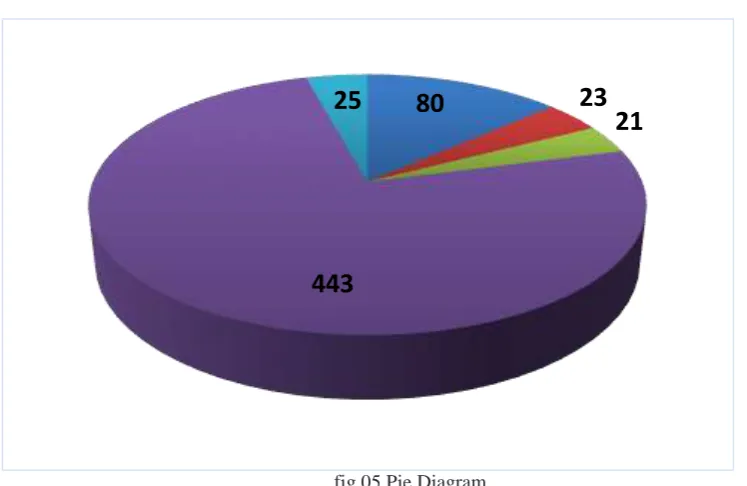
2. Most attack was on port no. 80, 23 etc as it is easy to crack. 3. On unsuccessful attempt most of intruder did not attempt again. 4. Only External intruder detected.
5. The inflow traffic was increase after deploying honeypot.
6. The following data id of 1 week on that basis below table and diagram ae created
Table no.01. Intruders attack on the basis of 1 week analysis
fig.05.Pie Diagram
Sr. No. Port No. No. Of Attempts Name Of Ports
1 80 39.39% HTTP
2 23 21.21% TELNET
3 21 27.27% FTP
4 443 3.03% HTTP over Secure Shell
5 25 9.09% SMTP
80
23
21
© 2019 IJRAR June 2019, Volume 6, Issue 2 www.ijrar.org (E-ISSN 2348-1269, P- ISSN 2349-5138)
Fig.5.IDS(pentbox) generates the alert.
Fig.6. Screen from attacker side
VII.CONCLUSION
VIII.REFERENCE
1. Navneet Kambow and Lavleen Kour Passi “Honeypots: The need of network security”. 2. Yogendra Kumar Jain and Surabhi Singh “Honeypot based Secure Network System”
3. Marcin Nawrocki∗ , Matthias Wahlisch:” A Survey on Honeypot Software and Data Analysis” 4. Lance Spitzner “Honeypots: Catching the Insider Threat”.
5. Monali S Gaigole “The Study of Network Security with Its Penetrating Attacks and Possible Security Mechanisms”. 6. Maitri Shukla and Pranav Varma “Honeypot: Concepts, Types and Working”.
7. Savita Paliwal “Honeypot: A Trap For Attacker”
8. https://dtag-dev-sec.github.io/mediator/feature/2015/03/17/concept.html
9.
http://www.omnisecu.com/security/infrastructure-and-email-security/low-interaction-honeypots-and-high-interaction-honeypots.php
10. https://docplayer.net/10290859-Medium-interaction-honeypots.html