R E S E A R C H A R T I C L E
Open Access
Synthesis, characterization and X-ray structural
studies of four copper (II) complexes containing
dinuclear paddle wheel structures
Samson Jegan Jenniefer and Packianathan Thomas Muthiah
*Abstract
Background:Various dinuclear copper (II) complexes with octahedral geometry have been reported. The majority of these complexes contain N containing aromatic rings as axial ligands. There are also a few cases where the solvent used in the reaction occupies the axial position of the dinuclear copper (II) complex. This may occur by planned synthesis or some times by serendipity. Here we report some four copper (II) complexes containing solvent and or N containing heterocyclic ring as the axial ligand.
Results:Four compounds, each containing dinuclear Copper (II) units (with the most robust, frequently occurring paddle wheel structures) were synthesized and characterised by single crystal X-ray diffraction and by IR
spectroscopy. The compounds 1 & 2 have the general formula Cu2(RCOO)4(L)2[(for (1) RCOO= 4-Chloro Benzoate, L= Isopropanol; for 2 RCOO= Benzoate, L= 2-Amino-4,6-dimethyl pyrimidine )] while 3 & 4 have the general formula, Cu2(RCOO)4(S)2Cu2(RCOO)4(L)2[RCOO=5-Chloro-thiophene-2-carboxylate L= 2-Amino-4,6-dimethyl pyrimidine, for 3 S= ethanol; for 4 S= methanol ]. A wide range of hydrogen bonds (of the O-H. . .O, N-H. . .O and N-H. . .N type) andπ-πstacking interactions are present in the crystal structures.
Conclusions:All compounds contain the dinuclear units, in which two Cu (II) ions are bridged by foursyn,syn -η1
:η1:μcarboxylates, showing a paddle-wheel cage type with a distorted octahedral geometry. The compounds1& 2contain a single dimeric unit while3&4contain two dimeric units. The structures3and4are very interesting co-crystals of two paddle wheel molecules. Also it is interesting to note that the compounds3&4are isostructural with similar cell parameters. Both the compounds3&4differ in the solvent molecule coordinated to copper in one of the dimeric units. In all the four compounds, each of the copper dimers has an inversion centre. Every copper has a distorted octahedral centre, formed by four oxygen atoms (from different carboxylate) in the equatorial sites. The two axial positions are occupied by copper and the corresponding ligand.
Keywords:Paddle wheel structures, Cu (II) complexes, Supramolecular architectures, Carboxylates, Crystal structure
Background
Copper carboxylate complexes have properties of im-portance in various areas and accordingly have been ex-tensively studied [1]. They are known to form different kind of structures even with same kind of ligand. The reasons for this diverse nature are the basic nature of ligand, steric factor, starting compound, solvents etc. They also have properties of special interest in the fields of biology and magnetism [2]. Since the first copper(II) carboxylate dimer ie copper(II) acetate hydrate [Cu2
(MeCO2)4(H2O)2] reported by van Niekerk and Schoening in 1953 [3], there have been reports of these kind of compounds. The dimeric copper (II) carboxylates [Cu2 (RCOO)4L2] are found to contain two or more antiferro-magnetically coupled metal centres [4-7] and their magneto-structural correlation has been studied exten-sively [8]. Halogenated 2-thiophene carboxylic acids are used as building blocks for a new family of insecticides which also possess low mammalian toxicity [9]. The metal complexes formed by the interaction of thiophene carbox-ylic acid show an elevation in their biological activity [10,11]. It is also used in study of biological systems involving microbial degradation studies of sulphur * Correspondence:[email protected]
School of Chemistry, Tiruchirappalli, 620024, Tamil Nadu, India
© 2013 Jenniefer and Muthiah; licensee Chemistry Central Ltd. This is an Open Access article distributed under the terms of the Creative Commons Attribution License (http://creativecommons.org/licenses/by/2.0), which permits unrestricted use, distribution, and reproduction in any medium, provided the original work is properly cited.
containing compounds [12,13]. In contrast, in this regard, the use of carboxylic acid ligands with thiophene skeleton to construct Cu (II)– carboxylate compounds has been less investigated to date. Pyrimidine and aminopyrimidine derivatives are biologically very important compounds as they are components of nucleic acids [14]. The carboxyl-ate group exhibits a variety of coordination behaviour displaying non identical bonding modes towards metal cations, such as monodentate and chelate, as well as η1:η2:μ2
bridging ligands in syn, syn, syn, anti, and anti,anti conformations [15,16]. In all the compounds1–4the syn-syn arrangement (Figures 1, 2, 3, 4) of carboxylate groups keeps the copper ions close enough making the possibility of copper-copper interaction [17]. The most important feature of the six fold coordinated copper complex is the close approach of the Cu-Cu distance [16,18]. In this fre-quently occurring octahedral geometry each of the copper atoms forms (in addition to the bonds from four oxygens that lies in the mean plane) a bond with copper atom and the corresponding axial ligand or solvent molecule. The co-crystals of inorganic complex with another inorganic complex are not common [19]. Recently there have been reports of co-crystal of two or more inorganic neutral complexes, there are also reports each neutral part having
paddle wheel structure [19-22]. In this paper we report the synthesis and crystal structures of four copper (II) com-plexes with amino pyrimidine and different substituted carboxylate ligands which also include two isostructural, co-crystals of two inorganic neutral complexes.
Results and discussion IR spectra
The FT-IR spectra of the complex1–4were recorded in a KBr pellet. The IR spectra of 1–4 gives the values of the asymmetric νasym(COO–), symmetric νsym(COO–) and Δν [the difference between (νasym(COO–) and νsym (COO–)]. This can indicate the coordination mode of the (COO–). Δν for compounds 1–4 are 183 cm-1, 208 cm-1, 162 cm-1, 162 cm-1respectively. This result in-dicates the symmetrical bridging coordination mode of the carboxylate (syn, syn-η1:η1:μ2
) giving rise to a paddle-wheel type structure [16,23-26]. For compounds1, 3,and 4the difference was all less than 200 cm-1, which indicated the symmetrical bridging coordination mode of the carb-oxylate. However, the difference betweenνasym(COO-) and νsym(COO-) for compound2was greater than 200 cm-1. The hydrogen bond between N3-H6—O1 renders the sym-metrical carboxylate asymsym-metrical, which is attributed to
Figure 1ORTEP view of compound (1) showing the atom-numbering scheme.Displacement ellipsoids are drawn at the 50% probability level and H atoms are shown as small spheres of arbitrary radii [symmetry code a: 1-x,1-y,1-z].
Jenniefer and MuthiahChemistry Central Journal2013,7:35 Page 2 of 15
the large difference betweenνasym(COO-) andνsym(COO-) for compound2[27]. The IR spectra of3and4are essen-tially similar. In the IR spectra of2–4,νasym(COO–) is split into two components, which is due to the hydrogen bond-ing of the bridged carboxylate ligand [28].
Crystal structure
Crystal structure description of
Cu2ðClC6H4COOÞ4ðIsopropanolÞ2
ð1Þ
The title compound [Cu2(ClC6H4COO)4(Isopropanol)2],
1was obtained by serendipity while trying to crystallize mixed ligand complex involving 2-Amino-4,6-dimethyl pyrimidine in isopropanol solvent. The molecular struc-ture of 1 is more comparable with copper (II) acetate hydrate. Each copper atom is six coordinated in an octa-hedral fashion by four equatorial oxygen atoms belong
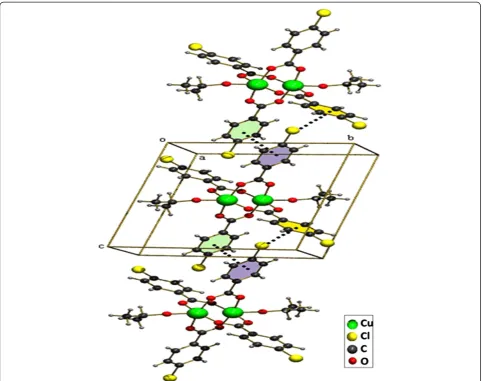
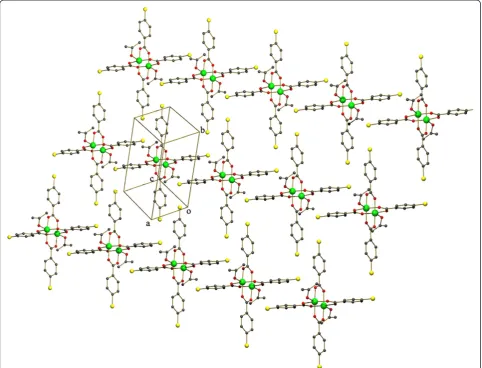
to four carboxyl groups (Table 1) with Cu-Oeqdistance which ranges from 1.959(2) to 1.965(2)Å. The O atoms at the apical positions belong to isopropanol. The Cu-Cu distance is small hence it is also considered as a bond. An ORTEP view of the dimer is shown in (Figure 1). π-π stacking interaction is found between two 4chloro benzoate rings (C2, C3, C4, C5, C6, C7) -(Figure 5) along the a axis: d(cg-cg) 3.8105 Å. Cl - π interaction (Cl. . .cg distance,3.7701 Å) is found in be-tween Cl of the 4-chloro benzoate ring and the six member ring comprised of (C9, C10, C11, C12, C13, C14) along the c axis (Figure 5). This leads to a 2D sheet (Figure 2).
Crystal structure of Cu2ðC6H5COOÞ4ðAMPYÞ2
ð2Þ
The structure consists of the centrosymmetric dimeric molecule [Cu2(C6H5COO)4(AMPY)2], (AMPY= 2-Amino
Figure 2Formation of 2D sheet due to theπ–πstacking and Cl -πinteractions between 4-chloro benzoate molecules.
Jenniefer and MuthiahChemistry Central Journal2013,7:35 Page 3 of 15
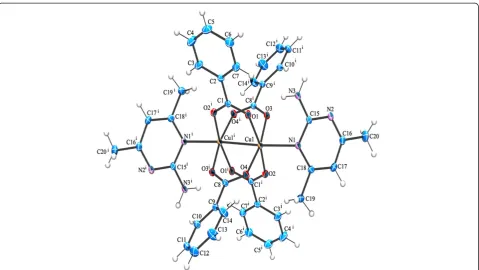
-4,6-dimethyl pyrimidine) in which two copper(II) atoms are bridged via four benzoate anions thus forming a square base of four oxygen atoms (Table 1) around each copper (the average Cu–O distances lie from 1.9474(16) -1.9655(16) Å). The apical positions of the octahedral co-ordination polyhedron are occupied by the N of a AMPY molecule (the Cu1 -N1 distance being 2.2724(18) Å and the Cu atom of the dimer). The Cu-Nax distance in unsubstituted pyrimidine containing copper complexes lies in range of (2.033 (4) Å and 2.025 (4) Å) [29,30]. The copper atoms are displaced from the respective basal planes towards the apical nitrogen atoms by 0.176 Å, and the Cu–Cu separation within the dimer was found to be 2.6691(5) Å, is typical for the dinuclear paddle wheel type of copper coordination compounds. An ORTEP view of the dimer is shown in (Figure 6). The amino group of the axial ligand interacts with the pyrimidine nitrogen of the next molecule through a pair of N- - -H-N hydrogen bonds, forming a cyclic hydrogen bonded motif with
graph set notation, R22(8) (Figures 3, 7). The inter molecu-lar N-H—N hydrogen bonds are found in between N3-H6a- - - N2 [symmetry code a: (1-x,1-y,-z)]. Intra molecu-lar hydrogen bonds are found in between N3 -H6b- - -O1 [symmetry code b: (1/2x,1/2+y,1/2z)] and C19 H22c -- --O2 [symmetry code c: (−1/2+x,1/2-y,-1/2+z)].
Crystal structure of Cu2ð5TPCÞ4ðethanolÞ2
Cu2ð5TPCÞ4ðAMPYÞ2
ð3Þ
The compound 3 is a co-crystal and it contains two neutral inorganic units with the dimeric paddle wheel structure. The crystal structure of 3 consists of two centrosymmetric dimeric units [Cu2(5-TPC)4(ethanol)2] [Cu2(5-TPC)4(AMPY)2] (5-TPC = 5-Chloro-thiophene-2-carboxylate). In dimeric unit(i)two copper (II) atoms are bridged via four thiophene carboxylate anions while the apical positions are occupied by ethanol molecule
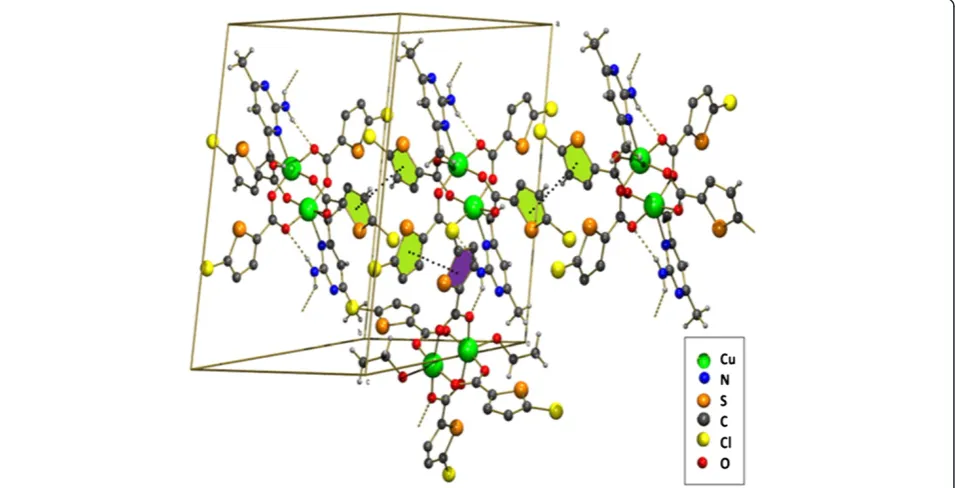
Figure 3The packing diagram and cyclic hydrogen bonded motif R22(8) in (2).Hydrogen atoms of the benzoate molecules have been
omitted for clarity.
Jenniefer and MuthiahChemistry Central Journal2013,7:35 Page 4 of 15
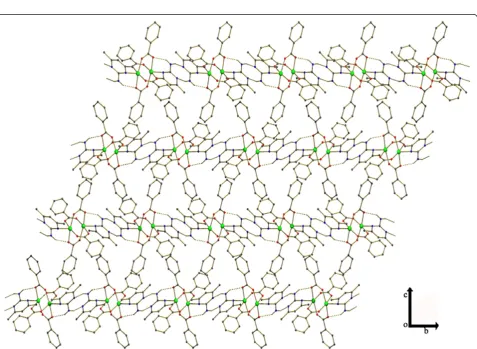
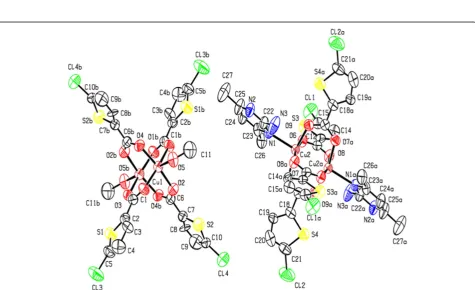
and Cu atom of the same dimer (Table 1). In dimeric unit(ii)two copper (II) atoms are bridged via four thio-phene carboxylate anions while the apical positions are occupied by AMPY molecule and Cu atom, thus forming a square base of four oxygen atoms around each copper. An ORTEP view of compound 3 is shown in (Figure 4). The average Cu–O distance in dimer (i) lies from 1.952(8) to 1.964(10) Å and the average Cu–O dis-tance in dimer(ii)lies from 1.950(9) to 1.974(9) Å. The axial Cu-O distance in dimer(i) is 2.170(9) Å while the Cu-N distance is 2.311(11) Å in dimer (ii)is [less than that of2]. Intra molecular interactions are found in be-tween N3-H3a- - -O8 and C27-H27a- - -O6 [symmetry code a: (−x, 1-y,-z)] (Figure 8). The dimeric unit (i)and (ii) are linked by N-H- - -O hydrogen bond between N3- H3b- - -O1 [symmetry code b:(1-x,-y,1-z)] (Figure 8). Additional stabilization is found through π-π stacking interactions between nearly parallel coordinated 5-TPC five member rings [S(4),C(19),C(20),C(21),C(22) & S(1),
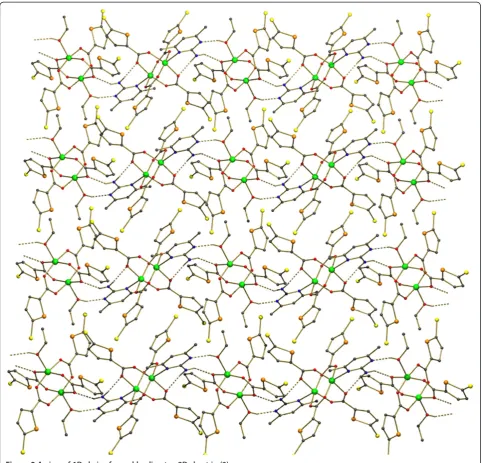
C(2),C(3), C(4),C(5)]: d(cg-cg) 3.798(7) Å. Another π-π stacking interactions are found between [S(3),C(14),C (15),C(16),C(17) & S(3),C(14),C(15),C(16),C(17)]: d(cg-cg) 3.693(9) Å. This N-H···O hydrogen bonds by the AMPY molecules lead to a 1D chain as in 2 leading to 2D sheets (Figure 9). Two of these sheets are stacked to-gether byπ-πstacking interactions (Figure 10).
Crystal structure of Cu2ð5TPCÞ4ðmethanolÞ2
Cu2ð5TPCÞ4ðAMPYÞ2
ð4Þ
As compound3, compound4is also a co-crystal and it contains two neutral inorganic units with the dimeric paddle wheel structure. Compounds 3 and 4 are isostructural. Different from 3, complex 4 exhibits a methanol solvent coordinated to copper ion in the place of ethanol. In the compound 4 there are two dimeric units with an inversion centre located between each of the copper ions [Cu2(5-TPC)4(methanol)2] [Cu2(5-TPC)4
Figure 4ORTEP view of compound (3) showing the atom-numbering scheme.Displacement ellipsoids are drawn at the 50% probability level and H atoms are shown as small spheres of arbitrary radii [symmetry code: a(−x,1-y,-z)] [symmetry code: b (1-x,-y,1-z)].
Table 1 Representing the dimers in compounds (1–4)
Ligands 1 2 3 4
Dimer Dimer Dimer (i) Dimer ( ii) Dimer ( i) Dimer ( ii)
RCOO 4-Chloro Benzoate Benzoate 5-TPC 5-TPC 5-TPC 5-TPC
L Isopropanol AMPY AMPY AMPY
S Ethanol Methanol
General formula for (1) and (2) Cu2(RCOO)4(L)2, general formula for (3) and (4) Cu2(RCOO)4(S)2Cu2(RCOO)4(L)2.
Jenniefer and MuthiahChemistry Central Journal2013,7:35 Page 5 of 15
Figure 5Showing the packing diagram of (1) and theπ–πstacking and Cl -πinteractions between 4-chloro benzoate molecules.
Figure 6ORTEP view of compound (2) showing the atom-numbering scheme.Displacement ellipsoids are drawn at the 50% probability level and H atoms are shown as small spheres of arbitrary radii [symmetry code: a (1-x,1-y,-z)].
Jenniefer and MuthiahChemistry Central Journal2013,7:35 Page 6 of 15
(AMPY)2]. In dimeric unit (i) two copper (II) atoms are bridged via four thiophene carboxylate anions while the apical positions are occupied by methanol molecule and Cu atom of the same dimer. In dimeric unit (ii)two cop-per (II) atoms are bridged via four thiophene carboxylate anions while the apical positions are occupied by AMPY
molecule (Table 1) and Cu atom of the same dimer, thus forming a square base of four oxygen atoms around each copper. An ORTEP view of the structure is shown in (Figure 11). The average Cu–O distance in dimer (i) is 1.948(7) - 1.980(6)Å and the average Cu–O distance in dimer (ii) is 1.959(6)- 1.974(6)Å. The axial Cu-O
Figure 7A view of supramolecular chains formed by N-H···O hydrogen bonds.
Figure 8The supramolecular architecture in compound (3).The H atoms of 5-TPC rings are omitted for clarity.
Jenniefer and MuthiahChemistry Central Journal2013,7:35 Page 7 of 15
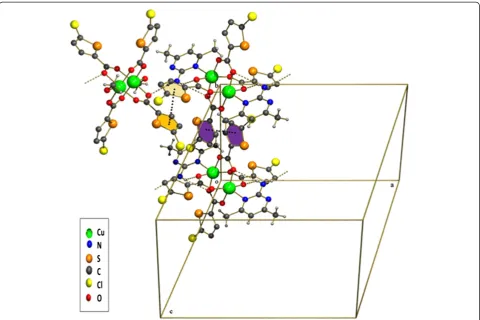
distance 2.155(6) Å in dimer(i) is slightly less than that compared to 3, while the Cu-N distance 2.301(7) Å in dimer(ii)is lesser than as compared to2and3. The C-H. . .O hydrogen bonds are observed inbetween C26 -H26a - - -O7 [symmetry code a:-x,1-y,1-z ]. The H3b attached to the NH2of the AMPY is involved in bifurcated hydrogen bonding N3-H3b- - -O8 [symmetry code b:1-x,2-y,-z ] and N3 -H3b- - -O9 [symmetry code b:1-x,2-y,-z ]. The dimers (i) and (ii) are linked by N3-H3a- - -O4 hydrogen bond [symmetry code a:-x,1-y,1-z] (Figure 12). Twoπ-πstacking are observed between nearly parallel coordinated 5-TPC five member rings [S(3),C(13), C(14),C(15), C(16 and S(2),C (7),C(8),C(9),C(10)]: d(cg-cg) 3.801(2) Å. π-π stacking are
observed between nearly parallel coordinated 5-TPC five member rings [S(4),C(18),C(19),C(20),C(21) and S(4),C(18), C(19),C(20),C(21)]: d(cg-cg) 3.668(6) Å. A view of the pack-ing is shown in (Figure 12).
Comparison of geometrical parameters
There is a relationship between Cu-–Cu distance and the plane from which the Cu moves from the mean square base made up of four oxygen of the benzoate. It has been proposed after analysis of various dimeric Cop-per (II) acetate dihydrate analogue complexes [1]. As there is increase in Cu- - -Cu distance within the dimer, there is greater deviation of the Cu atom from the mean
Figure 9A view of 1D chains formed leading to a2D sheet in (3).
Jenniefer and MuthiahChemistry Central Journal2013,7:35 Page 8 of 15
Figure 10Two parallel 2D sheets stacked together in (3).
Figure 11ORTEP view of compound (4) showing the atom-numbering scheme.Displacement ellipsoids are drawn at the 50% probability level and H atoms are omitted for clarity [symmetry code a:-x,1-y,1-z,] [symmetry code b:1-x,2-y,-z].
Jenniefer and MuthiahChemistry Central Journal2013,7:35 Page 9 of 15
O4 plane .It has also been studied that whenever there are substituent’s on the 2-and/or 6-position of the axial pyridine ligand, the Cu-N distance is relatively long [31]. Based on these and extending these ideas to pyrimidine ligands we have tabulated the corresponding bond lengths and bond angles for all copper complexes (Table 2). In the dimeric units of3and4it can be noted that where ever there is an axial pyrimidine ligand, there is higher deviation of copper from the mean plane. Cor-respondingly we can note from the (Table 2) that when-ever the Cu- - -Cu distance is higher, greater is the deviation of copper from the mean plane. From the (Table 2) it can be found that the Cu-N distance is high compared to that of Cu-N distances in similar systems containing un substituted pyrimidine ligands [29,30]. The increase in Cu. . .Cu distance and Cu-N distance in systems containing substituted pyrimidine ligands 3,4 may be due to steric and electronic factor of the apical ligand. It is found that such position of the ligand is very important as it strongly influences the Cu–Cu distances and also the carboxylate cage. The geometry around each Cu(II) ion can be best described as a slightly distorted octahedron showing tetracarboxylate type Cu2
-(RCO2)4 unit. The Cu–Cu distance in compounds 1–4 lies in the range of (2.6143(5)- 2.758(3)Å), which is observed within the normal range for dinuclear paddle-wheel units in the structures of Cu(II) carboxylate complexes [16,32-38]. The axial N-Cu-Cu-N distance and O-Cu-Cu-O distances; are almost same as that of (Cu-Cu + Cu-N) and (Cu-Cu + Cu-O) distances respect-ively [Table 2]. This shows that the shortening of Cu-Cu distance is compensated by the axial Cu-N or Cu-O elongation. Thus we can conclude that there is an in-versely proportional relationship between Cu–Cu and the Cu–L bond lengths, respectively. In copper carboxyl-ate dimers if the Cu–Cu bond is longer shorter will be Cu–L distance and vice versa.
Experimental Materials and methods
Commercial starting materials were used without fur-ther purification. 5-Chloro thiophene 2- carboxylic acid (Hoechst Aktiengesellschaft), methanol and Cu(NO)
3.6H2O (Qualigens, India) and ethanol (Changhhu Yangyuan chemicals, China) were used. IR spectra of the complex in region 400–4000 cm-1were recorded as
Figure 12A view of packing diagram (4) and theπ-πstacking interactions between the two nearly parallel 5-TPC rings.Hydrogen of 5-TPC are removed for clarity.
Jenniefer and MuthiahChemistry Central Journal2013,7:35 Page 10 of 15
Table 2 Comparison of geometric parameters (Å) for some copper(II) benzoate dimers of compounds 1-4
Equtorial O-Cu-O distance (Å)
Axial Cu-O distance (Å)
Axial Cu-N distance (Å)
Cu - deviation from mean plane (Å)
Cu-Cu distance (Å)
O-Cu-O equatorial bond angle (°)
O- Cu-O axial bond angle (°)
O-Cu-N axial bond angle (°)
Cu-Cu + Cu-N (Å)
Cu-Cu + Cu-O (Å)
Compound (1) 1.959(2) to 1.965(2) 2.167(2) 0.161 2.6143(5) 88.46(9)-92.98(9) 95.30(8)- 96.42(8) 4.7813
Compound (2) 1.9474(16) to 1.9655(16) 2.2724(18) 0.176 2.6691(5) 87.47(6)- 89.87(6) 91.47(6) - 101.43(7) 4.9415
Compound (3) Dimer (i) 1.952(8) to 1.964(10) 2.170(9) 0.160 2.658(3) 88.2(4)- 90.9(4) 95.0(4)- 96.8(4) 4.828
Dimer (ii) 1.950(9) to 1.974(9) 2.311(11) 0.208 2.758(3) 87.9(4)- 89.4(4) 93.9(4)- 101.0(4) 5.0690
Compound (4) Dimer (i) 1.948(7) to 1.980(6) 2.155(6) 0.167 2.653(2) 88.0(3)- 91.5(3) 93.9(3)- 98.4(3) 4.808
Dimer (ii) 1.959(6) to 1.974(6) 2.301(7) 0.207 2.7473(19) 88.1(3)- 89.1(3) 93.6(3)- 101.4(3) 5.0483
Jenniefer
and
Muthiah
Chemistry
Central
Journal
2013,
7
:35
Page
11
of
15
http://jou
rnal.chemist
rycentral.co
m/content/7/1/
pressed disks (1% by weight in KBr) on a Shimadzu FT IR spectrophotometer.
Synthesis of Cu2ðClC6H4COOÞ4ðIsopropanolÞ2
ð5Þ
Cu(NO3)2.3H2O (0.0352 g) was dissolved in methanol (25 mL). To this solution, 4- chloro benzoic acid (0.0391 g,) was added and the mixture was stirred for 10 min to obtain a greenish blue solution. 2-Amino-4,6-dimethyl pyrimidine AMPY (0.0391 g) was added dir-ectly into the reaction mixture (Scheme 1). The resulting greenish solution was kept for crystallisation. After 72 -hours a green precipitate appeared. The precipitate was recrystallised with 20 mL of (1:1) isopropanol/H2O mix-ture. After 2 days green crystals suitable X-ray diffrac-tion studies were obtained.
Synthesis of Cu2ðC6H5COOÞ4ðAMPYÞ2
ð6Þ
A solution of Cu(NO3)2.3H2O (0.0302 g) in 15 mL Methanol was stirred over a hot plate magnetic stirrer for half an hour and benzoic acid solution (0.03053 g) dissolved in 10 mL of hot water was added to it. The mixture was stirred for additional 2 hours. A green coloured solution was formed. About (0.03079 g) of (AMPY) was dissolved in 10 mL of hot water and added to the reaction mixture. The mixture was stirred for 3 -hours (Scheme 1). The resulting bluish green solution was kept for slow evaporation. Crystals were deposited at room temperature from the saturated solution. After 3 days green coloured crystals suitable for X-ray diffrac-tion were obtained. The crystals were filtered and washed with small portions of methanol and were dried
in air. The same product was obtained when the CuSO4.5H2O was used, but the yield was very low.
Synthesis of Cu2ð5TPCÞ4ðmethanolÞ2
Cu2ð5TPCÞ4ðAMPYÞ2
ð7Þ
Cu(NO3)2.3H2O (0.0352 g) was dissolved in methanol (25 mL). To this solution, 5-Chloro-thiophene-2-carbox-ylic acid 5-TPC (0.0866 g) was added and the mixture was stirred and 10 mL H2O was added to obtain a green solution. AMPY (0.03079 g) was added directly into the reaction mixture (Scheme 1). After two days, crystals were deposited at room temperature from the saturated solution.
Synthesis of Cu2ð5TPCÞ4ðethanolÞ2
Cu2ð5TPCÞ4ðAMPYÞ2
ð8Þ
The structure of compound 4 inspired us to design the preparation of compound3. For the preparation of3 the procedure similar to that of 4 was followed, but ethanol was used in the place of methanol.
Single crystal X-ray structure analysis
Intensity data sets were collected at room temperature, on a BRUKER SMART APEXII CCD [39] area-detector diffractometer equipped with graphite monochromated Mo Kα radiation (λ = 0.71073 Å). The data were re-duced by using the program SAINT [39] and empirical absorption corrections were done by using the SADABS [39]. The structures were solved by direct methods using SHELXS-97 [40] and subsequent Fourier analyses,
Cu(NO3)2.3H2O
Methanol
Methanol Ethanol
Methanol AMPY + 4-Chloro benzoic acid [Cu2(ClC6H4COO) 4(Isopropanol)2] (1)
Isopropanol
[Cu2(C6H5COO)4(AMPY)2] (2)
AMPY + Benzoic acid H2O
[Cu2(5-TPC)4(methanol)2] [Cu2(5-TPC)4(AMPY)2] (4) [Cu2(5-TPC)4(ethanol)2] [Cu2(5-TPC)4(AMPY)2] (3)
5-TPC + AMPY
H2O 5-TPC + AMPY
Scheme 1Preparation of compounds (1–4).
Jenniefer and MuthiahChemistry Central Journal2013,7:35 Page 12 of 15
refined anisotropically by full-matrix least-squares method using SHELXL-97 [40] within the WINGX suite of software, based on F2with all reflections. All carbon hydrogens were positioned geometrically and refined by a riding model with Uiso1.2 times that of attached atoms. All non H atoms were refined anisotropically. The hydrogens attached to the neutral alchol ligands (H1 in1, H5 in3and 4) were located in difference Fou-rier maps and refined using O—H distance restraints of 0.82 (2) Åviathe DFIX command. The molecular struc-ture was drawn using the ORTEP-III [41] and POV-ray [42]. Crystal data parameters for compounds 1–4 were summarized in (Table 3). The crystals remained stable throughout the data collection.
Conclusions
We have crystallised four dinuclear paddle wheel copper(II) complexes of types Cu2(RCOO)4(L)2and Cu2(RCOO)4(S)2 Cu2(RCOO)4(L)2, which retain the Copper acetate paddle wheel geometry. The compounds1–4contain different car-boxylates, axial ligands, and solvents. The compounds 3 and 4 are co-crystals of inorganic complex with another
inorganic complex which is not common. In addition to it 3and4are differ only in the solvent molecule coordinated to copper atom. We have also investigated the supra-molecular architectures present in the four compounds and compared their geometrical parameters. The structural re-sults of compounds1–4are in good agreement with similar typed Cu(II) complexes with a paddle wheel geometry. The observed (Cu-Cu, Cu-O, Cu-N distances) are comparable with that of previously reported structures. The crystal structure of 1 is stabilised by π-π and C-H- - -π interac-tions. The crystal structure of 2 is stabilised by C-H—O and N-H—O interactions. The crystal structures of3and4 are stabilised by C-H—O and N-H—O interactions and π-πinteractions.
Competing interests
The authors declare that they have no competing interests.
Authors’contributions
This work was prepared in the research group of PTM. He proposed the work and drafted the manuscript. SJJ participated in the design and presiding the experiments, collected the X-ray data and drafted the manuscript. Both authors read and approved the final manuscript.
Table 3 Crystallographic data for compounds (1–4)
Compound (1) Compound ( 2) Compound (3) Compound (4)
Empirical Formula C34H30Cl4Cu2O10 C40H38Cu2N6O8 C56H44Cl8Cu4N6O18S8 C54H40Cl8Cu4N6O18S8
Formula weight 867.48 857.86 1883.33 1855.28
Temp, K 296 296 296 296
λ(Å) 0.71073 0.71073 0.71073 0.71073
Crystal system Triclinic Monoclinic Monoclinic Monoclinic
Space group P−1 P 21/n P 21/c P 21/c
a (Å) 6.6551(1) 10.1209(2) 16.8999(17) 16.8477(3)
b (Å) 11.5284(2) 11.3724(2) 11.8885(12) 11.8527(3)
c (Å) 12.4116(2) 17.1914(4) 19.118(2) 19.0258(4)
α(º) 94.814(1) 90 90 90
β(º) 103.696(1) 91.695(1) 105.533(7) 105.487(1)
γ(º) 100.183(1) 90 90 90
V (Å3) 902.69(3) 1977.85(7) 3700.8(7) 3661.33(14)
Z 1 2 2 2
ρcalcd (g/cm3) 1.596 1.441 1.690 1.683
μ(mm-1) 1.530 1.135 1.717 1.734
F(000) 440.0 884.0 1892.0 1860.0
Crystal size (mm) 0.15 × 0.12 × 0.10 0.20 × 0.18 × 0.15 0.09 × 0.06 × 0.05 0.16 × 0.15 × 0.12
No of reflections collected 5830 4880 3478 4049
Number restraints 1 0 1 1
Goodness-of-fit on F2 1.042 1.069 1.095 1.061
Final R1 index [I> 2σ(I)] 0.0463 0.0379 0.0651 0.0535
wR2 (all data) 0.1254 0.0973 0.1871 0.1725
Largest difference in peak and hole (e Å-3) 1.14 and−0.96 0.34 and−0.45 1.71 and−0.54 1.97 and−0.55
R1= P
(||Fo|-|Fc||)/P| Fo |;wR2=[ P
w(|Fo|-|Fc| 2
)2
] /Pw(|Fo|2 )]1/2
.
Jenniefer and MuthiahChemistry Central Journal2013,7:35 Page 13 of 15
Acknowledgements
SJJ thank the UGC-SAP for the award of RFSMS. The authors thank the DST India (FIST programme) for the use of the diffractometer at the School of Chemistry, Bharathidasan University, Tiruchirappalli, Tamilnadu, India.
Received: 23 January 2013 Accepted: 13 February 2013 Published: 21 February 2013
References
1. Sundberg MR, Uggla R, Melnik M:Comparison of the structural parameters in copper(II) acetate-type dimers containing distorted square pyramidal CuO4O and CuO4N chromophores.Polyhedron1996,15:1157–1163.
2. Cotton FA, Wilkinson G, Murillo CA, Bochmann M:Advanced Inorganic Chemistry. 6th edition. Singapore: John Wiley & Sons; 1999.
3. van Niekerk JN, Schoening FRL:A new type of copper complex as found in the crystal structure of cupric acetate, Cu2(CH3COO)4.2H2O.Acta Cryst
1953,6:227–232.
4. Chadjistamatis I, Terzis A, Raptopoulou CP, Perlepes SP:First use of the succinamate(−1) ligand in 3d-metal chemistry: dinuclear copper(II) complexes with the rare [Cu2(η1:μ2-O2CR)2(η1:η1:μ2-O2CR)]+, [Cu2
(η1:η1:μ
2-O2CR)2]2+and [Cu2(μ-OH)(μ-OH2)(η1:η1:μ2-O2CR)]2+cores, and a
novel one-dimensional polymerization of two different dimers (R=CH2CH2CONH2).Inorg Chem Commun2003,6:1365–1371.
5. Baranwal BP, Das SS, Singh P:Hydroxycarboxylato Complexes of Copper (II): Synthesis and Characterization.Synth React Inorg Met Org Chem1998,
28:1689–1696.
6. Baran EJ, Etcheverry SB, Torre MH, Kremer E:Preparation and properties of copper(II) sebacate.Polyhedron1994,13:1859–1862.
7. Campbell GC, Haw JF:Determination of magnetic and structural properties in solids containing antiferromagnetically coupled metal centers using NMR methods. Magneto-structural correlations in anhydrous copper(II) n-butyrate.Inorg Chem1988,27:3706–3709. 8. Kawata T, Uekusa H, Ohba S, Furukawa T, Tokii T, Muto Y, Kato M:
Magneto-structural correlation in dimeric copper(II) benzoates.Acta Cryst B1992,
48:253–261.
9. Hull JW Jr, Romer DR, Podhorez DE, Ash ML, Brady CH:Development of potential manufacturing routes for substituted thiophenes–Preparation of halogenated 2-thiophenecarboxylic acid derivatives as building blocks for a new family of 2,6-dihaloaryl 1,2,4-triazole insecticides.Beilstein J Org Chem2007,3:23.
10. Sharma RC, Nagar R:Synthesis and antifungal properties of some transition metal complexes involving potentially active heterocyclic ligands.Croat Chem Acta1988,61:849–855.
11. Lumme P, Elo H, Janne J:Antitumor activity and metal complexes of the first transition series. Trans-bis(salicylaldoximato)copper(II) and related copper(II) complexes, a novel group of potential antitumor agents.
Inorg Chim Acta1984,92:241–251.
12. Amphlett MJ, Callely AG:The degradation of 2-thiophenecarboxylic acid by a Flavobacterium species.J Biochem1969,112:12–13.
13. Gogoi BK, Bezbaruah RL:Microbial degradation of sulfur compounds present in coal and petroleum.Prog Ind Microbiol2002,36:427–456. 14. Hemamalini M, Muthiah PT, Butcher RJ, Lynch DE:The interplay of
hydrogen-bonding and metal-coordination motifs in the formation of supramolecular patterns: Copper/zinc malonates–aminopyrimidine complexes.Inorg Chem Commun2006,9:1155–1160.
15. Buvaylo EA, Kokozay VN, Vassilyeva OY, Skelton BW, Jezierska J, Ozarowski A:A new Cu/Zn carboxylato-bridged 1D polymer: Direct synthesis, X-ray structure and magnetic properties.Inorganica Chimica Acta2011,373:27–31. 16. Marinho MV, Yoshida MI, Guedes KJ, Krambrock K, Bortoluzzi AJ, Hoerner M, Machado FC, Teles WM:Synthesis, Crystal Structure, and Spectroscopic Characterization oftrans-Bis [(μ-1,3-bis(4-pyridyl)propane) (μ -(3-thiopheneacetate-O)) (3-thiopheneacetate-O)] dicopper(II), {[Cu2
(O2CCH2C4H3S)4μ-(BPP)2]}n: From a Dinuclear Paddle-Wheel Copper(II)
Unit to a 2-D Coordination Polymer Involving Monatomic Carboxylate Bridge.Inorg Chem2004,43:1539–1544.
17. Lewis J, Linn C, Royston LK, Thompson RC:The chemistry of polynuclear compounds. Part III. Magnetic properties of some carboxylic acid derivatives of copper(II).J Chem Soc1965, :6464–6477.
18. Morzyk-Ociepa B, Rozycka-Sokolowska E:Structures and spectroscopic studies of indolecarboxylic acids. Part III. Diamminetetrakis-μ-(O,O0 -indole-3-carboxylate)dicopper(II).J Mol Str2006,78:69–77.
19. Morgan YR, Turner P, Kennedy BJ, Hambley TW, Lay PA, Biffin JR, Regtop HL, Warwick B:Preparation and characterization of dinuclear copper– indomethacin anti-inflammatory drugs.Inorg Chim Acta2001,
324:150–161.
20. Barooah N, Karmakar A, Sarma RJ, Baruah JB:Self-assembly through hydrogen-bonding and C–H⋯πinteractions in metal complexes of N-functionalised glycine.Inorg Chem Commun2006,9:1251–1254. 21. Sarma R, Karmakar A, Baruah JB:Synthesis and characterization of pyridine
N-oxide complexes of manganese, copper and zinc.Inorg Chim Acta
2008,361:2081–2086.
22. Deka K, Sarma RJ, Baruah JB:Nitrogen–oxygen bond formation during oxidative reactions of copper(II)benzoate complexes having 3,5-dimethylpyrazole.Inorg Chem Commun2006,9:931–934.
23. Dey SK, Bag B, Malik KMA, El Fallah MS, Ribas J, Mitra S:A Quasi-Tetrahedral Cu4 Cluster and a Helical-Chain Copper(II) Complex with Single Syn−Anti Carboxylate Bridges: Crystal Structure and Magnetic Properties.Inorg Chem2003,42:4029–4035.
24. Dey SK, Bag B, Zhou Z, Chan ASC, Mitra S:Synthesis, characterization and crystal structure of a monomeric and a macrocyclic copper (II) complex with a large cavity using benzylacetylacetone ligand.Inorg Chim Acta
2004,357:1991–1996.
25. Saha MK, Dey DK, Samanta B, Edwards AJ, Clegg W, Mitra S:Synthesis, structure and magnetic properties of a mononuclear Cu(II) complex with a NNO donor Schiff base ligand and its oxalato- and oxamidato-bridged dinuclear complexes.J Chem Soc Dalton Trans2003, :488–492.
26. Datta A, Choudhury CR, Talukder P, Mitra S, Dahlenburg L, Matsushita T:A novel doubly phenoxo-bridged Cu(II) trimer: synthesis, crystal structure and low-temperature magnetic behavior.J Chem Res2003,10:642–644. 27. Deacon GB, Phillips RJ:Relationships between the carbon-oxygen
stretching frequencies of carboxylato complexes and the type of carboxylate.Coord Chem Rev1980,33:227–250.
28. Agterberg FPW, Provo Kluit HAJ, Driessen WL, Reedijk J, Oevering H, Buijs W, Veldman N, Lakin MT, Spek AL:Three dinuclear copper(II) carboxylates with the paddle-wheel cage structure as intermediates in copper(II) catalyzed oxidations of carboxylic acids. X-ray crystal structures of [tetrakis(diphenyl acetato-μ-O,O0)bis(acetonitrile-N)dicopper(II)] tetrakis (acetonitrile), [tetrakis(diphenyl acetato-μ-O,O0) bis(acetone-O)dicopper (II)] and [tetrakis(1-phenyl-1-carboxylato-μ-O,O0-cyclopentane)-bis (ethanol-O)dicopper(II)] bis (ethanol).Inorg Chim Acta1998,267:183–192. 29. Riggio I, van Albada GA, Mutikainen I, Turpeinen U, Reedijk J:Catena-Poly
[[bis(nitrato)(pyrimidine)copper(II)] -[mu]-pyrimidine-N:N'].Acta Cryst C
2000,56:380–381.
30. Yasui M, Ishikawa Y, Akiyama N, Ishida T, Nogami T, Iwasaki F: Dipyrimidine-copper(II) dinitrate complexes showing magnetic interactions.Acta Cryst B2001,57:288–295.
31. Bora SJ, Sarmah P, Phukan P, Das BK:Tetrakis([mu]-benzoato-[kappa]2O:O) bis{[4-(dimethylamino)pyridine-[kappa]N1]copper(II).Acta Cryst C2007,
63:392–394.
32. Moncol J, Múdra M, Lönnecke P, Hewitt M, Valko M, Morris H,Švorec J, Melník M, Mazúr M, Koman M:Crystal structures and spectroscopic behavior of monomeric, dimeric and polymeric copper(II) chloroacetate adducts with isonicotinamide, methylnicotinamide and N, N-diethylnicotinamide.Inorg Chim Acta2007,360:3213–3225. 33. Selvakumar PM, Suresh E, Subramanian PS:New macrocyclic
Cu(II)-bischelates with paddle wheel Cu2-acetate cage.Inorg Chim Acta2008,
361:1503–1509.
34. Makhankova VG, BeCuischenko AO, Kokozay VN, Zubatyuk RI, Shishkin OV, Jezierska J, Ozarowski A:Direct Synthesis, Crystal Structures, High-Field EPR, and Magnetic Studies of Heterometallic Polymers Containing Manganese(II) Carboxylates Interconnected by [Cu(en)2]2+.Inorg Chem
2008,47:4554–4559.
35. Moncol J, Kalinakova B, Svorec J, Kleinova M, Koman M, Hudecova D, Melnik M, Mazur M, Valko M:Spectral properties and bio-activity of copper(II) clofibriates, part III: crystal structure of
Cu(clofibriate)2(2-pyridylmethanol)2, Cu(clofibriate)2(4-pyridylmethanol)2(H2O) dihydrate, and Cu2(clofibriate)4(N,N-diethylnicotinamide)2.Inorg Chim Acta2004,
357:3211–3222.
36. Kozlevcar B, Radisek M, Jaglicic Z, Merzel F, Glazar L, Golobi A, Segedin P:
Strong antiferromagnetism in the dinuclear 2-pyridone complex with N– C–O bridges: A paddle-wheel analogue of the dinuclear
tetracarboxylates.Polyhedron2007,26:5414–5419.
Jenniefer and MuthiahChemistry Central Journal2013,7:35 Page 14 of 15
37. Youngme S, Cheansirisomboon A, Danvirutai C, Pakawatchai C, Chaichit N, Engkagul C, van Albada GA, Costa JS, Reedijk J:Three New Polynuclear Tetracarboxylato-Bridged Copper(Ii) Complexes: Syntheses, X-Ray Structure and Magnetic Properties.Polyhedron2008,27:1875–1882. 38. Ma L, Lin W:Chirality-Controlled and Solvent-Templated Catenation
Isomerism in Metal−Organic Frameworks.J Am Chem Soc2008,
130:13834–13835.
39. Bruker:APEX2, SAINT and SADABS. Madison,Wisconsin, USA: Bruker AXS Inc; 2008.
40. Sheldrick GM:Acta Cryst A2008,64:112. 41. Spek AL:Acta Cryst D2009,65:148.
42. Farrugia LJ:POV-Ray - 3.5. Australia: Glasgow University; 2003.
doi:10.1186/1752-153X-7-35
Cite this article as:Jenniefer and Muthiah:Synthesis, characterization and X-ray structural studies of four copper (II) complexes containing dinuclear paddle wheel structures.Chemistry Central Journal20137:35.
Open access provides opportunities to our colleagues in other parts of the globe, by allowing
anyone to view the content free of charge.
Publish with
Chemistry
Central and every
scientist can read your work free of charge
W. Jeffery Hurst, The Hershey Company.
available free of charge to the entire scientific community peer reviewed and published immediately upon acceptance cited in PubMed and archived on PubMed Central yours you keep the copyright
Submit your manuscript here:
http://www.chemistrycentral.com/manuscript/
Jenniefer and MuthiahChemistry Central Journal2013,7:35 Page 15 of 15
![Figure 1 ORTEP view of compound (1) showing the atom-numbering scheme. Displacement ellipsoids are drawn at the 50% probabilitylevel and H atoms are shown as small spheres of arbitrary radii [symmetry code a: 1-x,1-y,1-z].](https://thumb-us.123doks.com/thumbv2/123dok_us/429733.2040550/2.595.58.540.386.702/compound-numbering-displacement-ellipsoids-probabilitylevel-spheres-arbitrary-symmetry.webp)