Iranian Journal of Electrical and Electronic Engineering, Vol. 14, No. 4, December 2018 308
A Nonlinear Method to Estimate Simultaneous Force Pattern
Generated by Hand Fingers; Application in Prosthetic Hand
S. Mirzakuchaki*(C.A.) and Z. Paydar*
Abstract: Inthis study a method has been introduced to map the features extracted from the recorded electromyogram signals from the forearm and the force generated by the fingers. In order to simultaneously record of sEMG signals and the force produced by fingers, 9 requested movements of fingers conducted by 10 healthy people. Estimation was done for 6 degrees of freedom (DoF) and generalized regression neural network (GRNN) was selected for system training. The optimal parameters, including the length of the time windows, the parameters of the neural network, and the characteristics of the sEMG signal were calculated to improve the performance of the estimate. The performance was obtained based on R2 criterion. TheTotal value of R2 for 6 DoF was 92.8±5.2% that obtained by
greedy looking system parameters in all the subjects. The result shows that proposed method can be significant in simultaneous myoelectric control.
Keywords: Surface Electromyogram Signals (sEMG), Generalized Neural Network (GRNN), R2 Criterion.
1 Introduction1
NE way to control an artificial prosthesis is using the surface electromyography signals in the remaining muscles of the amputee’s hand. Indeed useful information about the subject's intended movements and informative features from the electromyogram signal is given to the system as an input data and the desired output is taken from the system [1]. Information on the motor system at the level of the spinal cord or the higher nerves can be extracted by appropriate methods of signal processing [1, 2]. There are many methods in machine learning that use them to make the connection between their movements and neural activity [3-6]. Recent techniques can classify multiple functions, with an accuracy higher than 95% [7]. However, the use of myoelectric prostheses based on pattern recognition is still not customary. Synchronism and proportional control for multi-functional prostheses with different
Iranian Journal of Electrical and Electronic Engineering, 2018. Paper first received 07 January 2018 and accepted 24 May 2018. * The authors are with the Department of Electrical and Electronic Engineering, Iran University of Science and Technology (IUST), Narmak, Tehran, Iran.
E-mails: [email protected] and [email protected]. Corresponding Author: S. Mirzakuchaki.
degrees of freedom is one of the newest issues in myoelectric control.
To solve this problem, Jiang and colleagues [3] recently have offered a method to estimate the relative time and muscle power in different degrees of freedom using the convenient features of electromyogram signal. The most important result of this study was that the clinical operation of the method is limited because it requires the simultaneous recording of force and signal for training the network. Overall previous studies in the field of myoelectric control, have used the one-way hand contraction method in different ways [8-10]. None of them has cited the simultaneous and relative estimates of force to control the degree of freedom. For example, Sebelius and colleagues [8] have used neural network training using electromyogram signals recorded from the residual amputee’s muscles to estimate the angle between the joints and ankles. However, this method unlike our study, does not provide the proportional and simultaneous control with several degrees of freedom for hand prosthesis. The most relevant study was done by Atzori and colleagues [11]. Although the purpose of aforementioned study was to estimate the force generated by hand fingers using nonlinear regression, but there were not simultaneous control of different degrees of freedom and another disadvantage of reported method was that performance
O
Iranian Journal of Electrical and Electronic Engineering, Vol. 14, No. 4, December 2018 309
report has been done only for individual movement patterns. The aim of this study is simultaneous estimate of multiple different pattern of creating force in the tandem and with different degrees of freedom.
2 Materials and Methods 2.1 Experimental Protocols
The dataset that used in this study is the second version of Ninapro project [11]. The goal of this project is to develop scientific methods able to increase the skill level in EMG controlled prostheses. In the process of data recording, people performed a lot of hand motions and in each trial, each motion was repeated six times. At the same time, myoelectric signals were recorded and for each patient 12 record electrodes were placed on the skin. Eight uniformly spaced electrodes are placed just beneath the elbow at a fixed distance from the radio-humeral joint to record the high rate of the near muscles of the forearm activity. Electrodes 9 and 10, respectively, were placed at the main point of the bending muscles, flexor and extensor muscles. Electrodes 11 and 12 respectively, were placed over the biceps and triceps brachii muscles. These muscles were selected according to their importance in the hand and forearm control and the availability of them in most amputation cases.
During the acquisitions, persons were seated at a desk and their hands were comfortably on the desktop. A laptop in front of the persons was playing movements and was provided visual stimuli while at the same time recorders were recording data (Fig. 1). A total of 40 intact subjects participated in the data acquisition, consisting of 28 males and 12 females, 34 right-handed and 6 left-handed. The finger force patterns registered during the experiment can be observed in Table1.
2.2 Pre-Processing
First, Surface electromyographic signals were filtered by 8th order Butterworth band pass filter with a high cutoff frequency of 400 Hz and a low cutoff frequency of 10 Hz. Then all channels were standardized to have a zero mean and unit standard deviation. After standardization of the data, the data were classified into two groups: training and testing. For each person, test data, were the chain tandem of repetitions of each movement, whereas the other iterations were used for training. Also, data relating to force were synchronized with EMG signals and then were filtered with a low-pass filter at cutoff frequency of 4 Hz.
2.3 Data Processing and Feature Extraction
Due to the good classification performance of hand movements using EMG signals and time features extracted from them, these features have found wide application in the force modeling and regression and kinematic information. This study has used the varied
features for estimate. The time features include the mean absolute value (an estimate of the mean absolute value of the signal), zero crossing (the rate at which the signal changes from positive to negative or back) [13, 14], slope sign change (the number of times the slope of the waveform changes sign) and wave length (the cumulative length of the waveform over the time segment). In addition to time domain features, transform domain features also are used individually. The features used in this field are included the discrete wavelet transform (DWT) using the seventh order of daubechies wavelet at different levels of analysis, and autoregressive coefficients (AR). All feature extraction methods were applied to signal in the specified time windows. Because of the high dependence that some of the features have with each other, and have no significant improvement in system performance, all possible combinations of features are not used.
2.4 The Model Structure
Artificial neural networks are the valuable and popular tools for modeling the nonlinear systems that have the capability of dealing with complex problems of structural instability and estimate each arbitrary function. In this study a generalized artificial neural network has been used to find the relationship between myoelectric signals and the force produced by fingers. generalized artificial neural networks (GRNN) are a modified version of the radial basis neural network. Due to the features such as a sharp decrease in the time of calculation and in some cases, more accuracy than neural networks, some studies have used these types of networks [16, 17]. These networks such as back propagation networks do not require to repetitive learning process and define an arbitrary function between input and output then models the new inputs into the corresponding outputs. These types of networks that obey learning methods based on kernel, are include four layers: The input layer, the template layer, the picker layer and the output layer. In the learning stage, linear functions and arbitrary radial basis functions are used as template layer and output layer functions. Each unit of the template layer is connected to S and D neurons in the output layer. S neuron calculates the total output weighting of pattern layer, whereas D neuron calculates the output without weighting of pattern layer. Finally, the output layer divides the output of S summation neurons on the output of D summation neurons. The predicted values of the model using X
input vector are in the form of (1) and (2) [17].
1 1 exp , exp , n i i n i i i iy D x x
Y
D x x
(1)2 1 ( , ) m i ik i k x x
D x x
(2)Iranian Journal of Electrical and Electronic Engineering, Vol. 14, No. 4, December 2018 310 Table 1 The force patterns that created by fingers.
Number of the force Description of the movement
1 Small finger flexion
2 Bent ring finger
3 Bending the middle finger
4 Bend the index finger
5 Getting away thumb
6 Bending the thumb
7 Bend the index finger and little finger
8 Bending ring finger and middle finger
9 Bend the index finger and thumb Fig. 1 Structure of system impedance monitoring method [15].
In the formulas yi is the weight between the ith neuron
and S summation neurons in pattern layer, n is the total number of training data, D is Gaussian function, m is the number of features or input vectors, xk and xik are
respectively the kth views of train and test inputs, and σ
is splashed parameter that is obtained by a greedy search.
2.5 The Model Performance Metrics and Statistical Analysis
To report estimation performance of neural network, the R2 criterion was used. This criteria introduced by
d'Avella [18] for the first time and is defined as (3) [19]:
2
2 1 0
2
1 0
1
D N
i i
i t D N
i i
i t
f t f t R
f t f t
(3)where N is the number of points, fi(t) is the ith force in
degrees of freedom, fi
t is the estimated ith force indegrees of freedom by GRNN, fi
t is the time averageof fi(t), and D is the number of degrees of freedom.
Another criterion of system performance is RMSE that despite its low performance, has been reported by various groups. But R2 criteria in different studies have
been proposed to be a good gauge for the estimation of performance, because it represents the estimated output changes as a percentage of the original output. In order to find the best distribution parameter, network was trained 10 times for each mode of combining training and test data. And then the optimal dispersion parameter is selected to testing stage based on largest R2 in train
stage. This process has done for each person and for the 6 combinations of test and train data. Finally overall performance was reported as mean and standard deviation of obtained R2 values for each person. In order
to introduce the best features and the best window length, the ANOVA (analysis of variance) test, and followed by that, the posthoc Tukey-Kramer test, was used to evaluate the effects of various parameters on the system performance.
3 Result
In order to view the system performance by the proposed method, an example of force estimation for three recording channels of the subject is shown in Fig.2. This figure shows the EMG signals of 9 consecutive movement patterns (one repeat each move) for 8 different channels. Also, the force generated in the 3 output channels and its comparison with the estimated force by the algorithm is shown.
3.1 Features Selection
System performance in fingers force estimation has been calculated using a combination of different features (Fig. 3). Time features (TD), the coefficient of discrete wavelet transform (DWT) and combines features of time domain and discrete wavelet transform (TD-DWT) were calculated using MATLAB software. The results show that these features have similar and good performances. Also, they have shown remarkable improvement in compared with the AR, ZC, and SSC properties. By applying single-variable ANOVA test on different groups with different lengths and overlaps, the effect of window length change (F = 3.31, P < 0.05) was significant. Also, the results of posthoc test show that the difference between TD and TD-DWT and DWT is not statistically significant; however, the highest values of the performance is reached by TD-DWT feature that is reported as 92.8± 2.5%. Also TD-DWT feature with mean RMSE of 0.0573±0.0131is the best feature.
3.2 Window Length
The effect of time window on force estimation
Iranian Journal of Electrical and Electronic Engineering, Vol. 14, No. 4, December 2018 311
(a) (b)
Fig. 2 An example of model performance in force estimation. a) A sample of the signals recorded from 8 channels on the forearm and b): The graph in red color shows the real force recorded from the fingers and the graph with black color show
the force estimated by the model for 3 degrees of freedom.
Fig. 3 R2 value (Mean ± SD) has been reported for 10 subjects on the test data. TD-DWT feature has the best performance (92.8±2.5%). Three symbols (o, +, ×) represent the features that despite of the difference in performance, are in the same group in
the posthoc test.
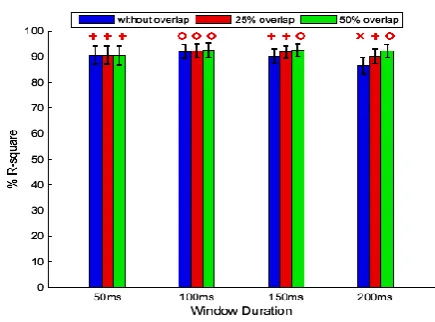
Fig. 4 R2 value (Mean ± SD) has been reported for 10 subjects on test data, The performance of a window with a length of 300
and an overlap of 75 ms is (92.8% ± 2.5).
Fig. 5 Force estimation Performance has been reported for all subjects with different combinations of training and testing data. Person 8 and 7, respectively, with R2 value (mean ± SD) equal to 95.87±0.56 % and 88.25±2.23% have the highest and lowest
performance.
performance in system were investigated by keeping all other parameters fixed (Fig.4). The effects of window length (F = 3/31, P < 0/05) have been reported significant by applying single variable ANOVA test on different groups with different lengths and different overlaps. Also, by applying a posthoc test, the window with a length of 150 and an overlap of 75 ms has the highest value of R2. Although changing this time
window with some other selection modes is not statistically significant, but due to the ease of computing among the group, window with a length of 150 ms is selected.
Using the optimal parameters previously defined, the performance of the system in force estimates calculated for 10 subjects and mean ± standard deviation for different subjects is shown in Figs. 5 and 6. Average R2
value has been reported for all subjects (92.8±2.5%).
Also the overall RMSE for 10 subject is 0.0570±0.012.
4 Discussion
The method used in this paper has the same performance as those reported in studies [20, 22, 23] with the difference that the force estimation performance has been reported for 1 DoF, whereas in this paper performance has been calculated for the simultaneous estimation of 6 DoFs. Generally, the most relevant work carried out by this study can be found in the Atzori’s work [22]. In the aforementioned study, estimation performance is calculated using nonlinear regression techniques for each movement separately. But in this study, the model is calculated for the chain of successive movements. However, we found similar results in both of the studies that reflects the strength of
Iranian Journal of Electrical and Electronic Engineering, Vol. 14, No. 4, December 2018 312 Fig. 6 Force estimation performance has been reported for all
subjects with different combinations of training and testing data. Person 8 and 7, respectively, with RMSE value (mean ± SD) equal to 0.0348±0.0045% and 0.0776± 0.0163%
have the lowest and highest performance.
the presented method in this article. On the other hand, Atzori’s work [22] does not consider simultaneous control of 6 DoFs, whereas in this method different degrees of freedom are estimated simultaneously. A similar study is done by Nielsen and colleagues [23] for simultaneous estimate forces in several degrees of freedom for mirror movements of both hands.
5 Conclusion
In this study we calculated estimation for 6 degrees of freedom (DoF) and used the generalized regression neural network (GRNN) for system training. Several parameters, including the length of the time windows, the parameters of the neural network, and the characteristics of the sEMG signal were important and effective. Hence by applying an ANOVA test and posthoc test on different groups, the highest value of R2
was related to a window with length of 150 ms and overlap of 75 ms. It is significant that the maximum value of force estimation performance that reported in previous studies was 90±0.02 whereas system performance in our study is 92.8±0.2 %.
References
[1] P. Parker, K. Englehart and B. Hudgins, “Myoelectric signal processing for control of powered limb prostheses,” Journal of Electromyography and Kinesiology, Vol. 16, No. 6, pp. 541–548, 2006.
[2] N. Jiang, K. B. Englehart and P. A. Parker, “Extracting simultaneous and proportional neural control information for multiple- prostheses from the surface electromyographic signal,” IEEE Transactions on Biomedical Engineering, Vol. 56, No. 4, pp. 1070–1080, 2009.
[3] B. Hudgins, P. Parker and R. Scott, “A new strategy for multifunction myoelectric control,” IEEE Transactions on Biomedical Engineering, Vol. 40, No. 1, pp. 82–94, 1993.
[4] K. Englehart, B. Hudgins, P. Parker and M. Stevenson, “Classification of the myoelectric signal using time-frequency based representations,” Medical Engineering & Physics, Vol. 21, No. 6–7, pp. 431–438, 1999.
[5] Y. Huang, K. Englehart, B. Hudgins and A. Chan, “A gaussian mixture model based classification scheme for myoelectric control of powered upper limb prostheses,” IEEE Transactions on Biomedical Engineering, Vol. 52, No. 11, pp. 1801–1811, 2005. [6] M. Lucas, A. Gaufriau, S. Pascual, C. Doncarli and
D. Farina, “Multi-channel surface EMG classification using support vector machines and signal-based wavelet optimization,” Biomedical Signal Processing and Control, Vol. 3, No. 2, pp. 169–174, 2008.
[7] R. Merletti and P. A., Parker, Electromyography: physiology, engineering, and non-invasive applications. Vol. 11, John Wiley & Sons, 2004. [8] F. Sebelius, L. Eriksson, C. Balkenius and
T. Laurell, “Myoelectric control of a computer animated hand: A new concept based on the combined use of a tree-structured artificial neural network and a data glove,” Journal of Medical Engineering & Technology, Vol. 30, No. 1, pp. 2– 10, 2006.
[9] M. DiCicco, L. Lucas and Y. Matsuoka, “Comparison of control strategies for an EMG controlled orthotic exoskeleton for the hand,” in
Proceedings of IEEE International Conference on Robotics and Automation (ICRA'04),pp. 1622–1627 2004.
[10]A. Ajiboye and R. Weir, “A heuristic fuzzy logic approach to EMG pattern recognition for multifunctional prosthesis control,” IEEE Transactions on Neural Systems and Rehabilitation Engineering, Vol. 13, No. 3, pp. 280–291, 2005. [11]M. Atzori, A. Gijsberts, S. Heynen, A. Hager,
O. Deriaz, P. van der Smagt, C. Castellini, B. Caputo and H. Muller, “Building the Ninapro database: A resource for the biorobotics community,” in IEEE RAS & EMBS International Conference on Biomedical Robotics and Biomechatronics (BioRob), No. EPFL-CONF-192329, 2012.
Iranian Journal of Electrical and Electronic Engineering, Vol. 14, No. 4, December 2018 313
[12]M. Atzori, A. Gijsberts, C. Castellini, B. Caputo, A. Hager, S. Elsig, G. Giatsidis, F. Bassetto and H. Müller, “Electromyography data for non-invasive naturally-controlled robotic hand prostheses,” Scientific Data, Vol. 1, p. 140053, 2014.
[13]M. Zecca, S. Micera, M. Carrozza and P. Dario, “Control of multifunctional prosthetic hands by processing the electromyographic signal,” Critical Reviews in Biomedical Engineering, Vol. 30, No. 4– 6, pp. 459–485, 2002.
[14]M. Asghari Oskoei and H. Hu, “Myoelectric control systems—A survey,” Biomedical Signal Processing and Control, Vol. 2, No. 4, pp. 275–294, 2007. [15]“Masthead,” The Journal of Organic Chemistry,
Vol. 31, No. 12, pp. 3A–3A, 1966.
[16]B. Kim, D. Lee, K. Park, S. Choi and S. Choi, “Prediction of plasma etching using a randomized generalized regression neural network,” Vacuum, Vol. 76, No. 1, pp. 37–43, 2004.
[17]H. Cigizoglu and M. Alp, “Generalized regression neural network in modelling river sediment yield,” Advances in Engineering Software, Vol. 37, No. 2, pp. 63–68, 2006.
[18]A. d'Avella, A. Portone, L. Fernandez and F. Lacquaniti, “Control of fast-reaching movements by muscle synergy combinations,” Journal of Neuroscience, Vol. 26, No. 30, pp. 7791–7810, 2006.
[19]J. L. Nielsen, S. Holmgaard, N. Jiang, K. Englehart, D. Farina and P. Parker. “Enhanced EMG signal processing for simultaneous and proportional myoelectric control,” in Annual International Conference of the IEEE Engineering in Medicine and Biology Society (EMBC 2009), pp. 4335–4338, 2009.
[20]M. Liu, W. Herzog and H. Savelberg, “Dynamic muscle force predictions from EMG: an artificial neural network approach,” Journal of Electromyography and Kinesiology, Vol. 9, No. 6, pp. 391–400, 1999.
[21]M. E. Hahn, “Feasibility of estimating isokinetic knee torque using a neural network model,” Journal of Biomechanics, No. 5, pp. 1107–1114, 2007. [22]A. Gijsberts, M. Atzori, C. Castellini, H. Müller
and B. Caputo, “Movement error rate for evaluation of machine learning methods for sEMG-based hand movement classification,” IEEE Transactions on Neural Systems and Rehabilitation Engineering, Vol. 22, No. 4, pp. 735–744, 2014.
[23]J. L. Nielsen, L. G. Johnny, S. Holmgaard, N. Jiang, B. Englehart, D. Farina and A. Parker, “Simultaneous and proportional force estimation for multifunction myoelectric prostheses using mirrored bilateral training,” IEEE Transactions on Biomedical Engineering, No. 3, pp. 681–688, 2011.
S. Mirzakuchaki received the B.Sc. in Electrical Engineering from the University of Mississippi in 1989, and the M.Sc. and Ph.D. in Electrical Engineering from the University of Missouri-Columbia, in 1991 and 1996, respectively. He has been a faculty member (Associate Professor) of the College of Electrical Engineering at Iran University of Science and Technology (IUST), Tehran, since 1996. His current research interests include Cryptography, Steganography, and design of VLSI circuits. Dr. Mirzakuchaki is a member of IEEE and IET (formerly IEE) and a Chartered Engineer.
Z. Paydar was born in Kohgiluyeh and Boyer-Ahmad, Iran. She received the B.Sc. degree in Electrical Engineering from the University of Isfahan and the M.Sc. from Iran University of Science and Technology (IUST), Tehran. Her current research interests include system design in field-programmable gate arrays, Biomedical Signal Processing and Image.
© 2018 by the authors. Licensee IUST, Tehran, Iran. This article is an open access article distributed under the terms and conditions of the Creative Commons Attribution-NonCommercial 4.0 International (CC BY-NC 4.0) license (https://creativecommons.org/licenses/by-nc/4.0/).
![Fig. 1 Structure of system impedance monitoring method [15].](https://thumb-us.123doks.com/thumbv2/123dok_us/23265.2002540/3.595.303.537.97.288/fig-structure-impedance-monitoring-method.webp)