Babinets L. S., Shevchenko N. A., Sasyk H. N., Zemlyak О. S. Research of lipid exchange diffusion of medium-age patients with chronic pancreatitis with diabetes mellitus. Journal of Education, Health and Sport. 2017;7(11):309-318. eISSN 2391-8306. DOI
http://dx.doi.org/10.5281/zenodo.1136094
http://ojs.ukw.edu.pl/index.php/johs/article/view/5191
The journal has had 7 points in Ministry of Science and Higher Education parametric evaluation. Part B item 1223 (26.01.2017). 1223 Journal of Education, Health and Sport eISSN 2391-8306 7
© The Authors 2017;
This article is published with open access at Licensee Open Journal Systems of Kazimierz Wielki University in Bydgoszcz, Poland
Open Access. This article is distributed under the terms of the Creative Commons Attribution Noncommercial License which permits any noncommercial use, distribution, and reproduction in any medium, provided the original author(s) and source are credited. This is an open access article licensed under the terms of the Creative Commons Attribution Non Commercial License (http://creativecommons.org/licenses/by-nc/4.0/) which permits unrestricted, non commercial use, distribution and reproduction in any medium, provided the work is properly cited. This is an open access article licensed under the terms of the Creative Commons Attribution Non Commercial License (http://creativecommons.org/licenses/by-nc/4.0/) which permits unrestricted, non commercial
use, distribution and reproduction in any medium, provided the work is properly cited. The authors declare that there is no conflict of interests regarding the publication of this paper.
Received: 06.11.2017. Revised: 20.11.2017. Accepted: 30.11.2017.
УДК 616.37-002.2:616.12-008.64
RESEARCH OF LIPID EXCHANGE DIFFUSION OF MEDIUM-AGE PATIENTS
WITH CHRONIC PANCREATITIS WITH DIABETES MELLITUS
L. S. Babinets1, N. A. Shevchenko2, H. N. Sasyk1, О. S. Zemlyak1
1SHEI «I.Ya. Horbachevsky Ternopil State Medical University of the Ministry of the
public health of Ukraine»
2Odessa National Medical University, Ukraine
Abstract
Chronic pancreatitis refers to diseases in which both excretoric and incretoric sections
of the pancreas are damaged, which in later stages leads to the development of concomitant
diabetes mellitus (DM), which are not sufficiently studied in this pathology. This article
presents a study of lipid metabolism in patients with chronic middle-aged pancreatitis with
concomitant diabetes. It has been proved that the presence of DM significantly complicated
the clinical course of chronic pancreatitis (CP) in the ballistic system M - ANNHEIM, which
correlated with changes in the program (r=0,67; p<0,001), the criteria for ultrasound (r=0,54;
p<0,01), the level of glycosylated hemoglobin (r=0,66; p<0,001). In patients with CP with
concomitant diabetes the severity of the disease was more pronounced than in patients with
CP: the average severity (C) predominated in 69,56% of patients in group 2, with 26,32% of
the 1st, and cases of severe and severe severity. A direct reliable correlation between all the
course of the CP were found, which makes it possible to assume the age and duration of the
CP by factors of the deepening of the dyslipidemia. In patients with CP in combination with
DM and dyslipidemia, the lower index of fecal α-elastase level was established in comparison
with the CP group: (157,15 ± 7,36) versus (112,86 ± 2,98), respectively (p<0,001) which
proved a deepening of dyslipidemia in the development of excretory insufficiency of the
pancreas.
Key words: chronic pancreatitis, diabetes mellitus, middle age, dyslipidemia,
fecal α-elastase.
Introduction. The study of etiopathogenetic factors and clinical features of the
combination of chronic pancreatitis (CP) and diabetes mellitus (DM) is an urgent problem due
to its high prevalence, the formation of numerous metabolic changes that are progressing and
severely subjected to correction. In accordance with the adapted clinical guidelines for CP
since 2014, the incidence of CP in European countries is 4-8 cases, and the prevalence is 25
cases per 100 thousand population. In Ukraine, the epidemiological indicators of the
incidence of CP in 3-4 times worse than in Europe, and the prevalence continues to increase.
According to researches, in Ukraine, the level of morbidity of the pathology of the pancreas
(MS) in 2012 amounted to 226 cases per 100 thousand population, prevalence - 2471 per 100
thousand population. Such a difference in the number of patients with CP in Ukraine and in
other countries may be due to hyperdiagnosis in the diagnosis of CP, with a higher level of
alcohol abuse, which is one of the main causes of the development of this pathology of
software, as well as with unbalanced nutrition.
In the case of CP both excretoric and incretoric secretion units of pancreas are
damaged, which at later stages leads to the development of concomitant diabetes, the course
of which in this pathology has not been studied sufficiently. It occurs in 10-90% of patients
with CP [5, 8]. Such a large difference in literature data on the frequency of diabetes at CP is
associated with a different probability of development of endocrine disorders in various forms
of pancreatitis [2, 4, 7]. It should also be taken into account that the development of endocrine
disorders can contribute not only to absolute insulin deficiency, which is due to destruction
and sclerosis of the incretory apparatus, but also constitutional tissue insulin resistance (IR),
which occurs in the population in 10-12% of cases (this is higher in people with obesity).
Interesting is the relationship of dyslipidemia, obesity and CP in the aspect that the violation
there are pathological changes in the functioning of all organs, including the software.
Allocate even a dislipidemic variant of CP, which is most often combined with pancreas. In
some scientific sources, there is evidence that CP with changes in lipid metabolism can be
traced the most frequent combination with diabetes. Therefore, it was considered relevant to
clarify the existence of interrelationships of dyslipidic changes in patients with a comorbid
flow of CP with diabetes with a violation of endocrine and exocrine function of the software
[3, 8, 10]. Until now, unclear factors of deepening of dyslipidemia in CP with combination
with DM are still unknown, as well as the dependence of lipidogram parameters on severity of
violations of excretory and inoculum function of pancreas.
The aim of the study is to evaluate the parameters of the lipidogram in patients with
CP in conjunction with diabetes, identifying the factors for deepening dyslipidemia in such
patients.
Materials and methods. We examined the indexes of 112 patients with a diagnosis of
CP, of which -35 with CP and 77 - with a combination of CP and DM. The average age of
patients was (49,9 ± 2,0) years, with such patients with CP - (45,3 ± 3,4) years, and patients
with CP and DM - (53,6 ± 2,2) years Diagnosis CP and DM were verified according to
generally accepted criteria in the clinic [6]. The severity of the course of CP was evaluated
using the M-ANNHEIM system, taking into account the clinical stage, index and severity. In
this case, the presence of excretory and inocular pancreatic insufficiency, structural changes
in the software according to the ultrasound, coprogram, level of glycosylated hemoglobin in
the blood, the number of complications was analyzed.
Non-invasive pancreatic test, which is considered as a "gold standard" - determination
of the level of fecal α-elastase, proteolytic enzyme of the software [7, 9, 10], by the method of
immunoassay analysis using the standard sets of the company Bioserv, was used to estimate
the depth of the external-secretion insufficiency of the software Elastase 1-Elisa [1, 10]. The
assessment of the parameters was carried out according to generally accepted international
standards: expressed in terms of external secretion - <100 μg/g; external secretion of
medium-grade - 100-150 μg/g; light weight - 150-200 μg/g; the normal function of pancreas without
the phenomena of external secretion-> 200 μg/g [2, 3, 9]. The evaluation of blood α-amylase
and α-amylase (diastase) parameters in the urine were also evaluated, which were determined
according to generally accepted methods in the clinic. The norm was considered: the level of
α-amylase in the blood (by Karavey method) - 12.0-32.0 mg / (hour x ml) and α-amylase
pancreas in the case of diabetes, glucose levels in the blood were determined by the glucose
oxidase method, assuming a norm of 3.5-5.5 mmol/l
The parameters of serum lipidograms in the examined patients were determined using
Lachema sets on the analyzer using the following methods: triglycerides (TG) - by reaction
with methyl acetone and ammonium ions after ointment with potassium hydroxide, total
cholesterol (TC) - by reaction of cholesterol esters after oxidation to hydrogen peroxide with
phenol and 4-amino-antipyrine. The calculation of Low density lipoproteins was carried out
using the Freudwald formula:
Cholesterol Low Density Lipoproteins = Total Cholesterol - cholesterol high density
lipoprotein - (0.2 x). Lipoproteins of very low density = triglycerides / 2,2.
Atherogenicity = (total cholesterol – lipoproteins high density) / high density lipoprotein).
Infringement of lipid status was evaluated according to the level of total cholesterol,
triglycerides, lipoproteins of low density, lipoproteins of very low density, lipoproteins of
high density in accordance with the criteria of the third report of the experts of the National
Program on Cholesterol (2001), phenotyped according to the classification of hyperlipidemia
D.S. Fredrickson with modern additions [5, 7].
The evaluation of the coprogram was carried out with an increase in the amount of
muscle fibers, vegetable fiber digestible, fatty acids, neutral fat, leukocytes, the appearance of
mucus, eggs of worms. Each pathological symptom was evaluated as 1 point. The reliability
of the differences in mean values was estimated by the Mann-Whitney U-criterion (p <0.05).
Results and discussion. Patients were divided into 2 groups: patients with CP (35
patients) and CP with concomitant diabetes (77 patients). According to the M-ANNHEIM
classification, all patients belonged to the diagnostic category of "defined" CP. Of the 112
patients studied, 38,10% of patients had II B, 7,14% of patients - II C, 45,24% of patients - III
A and 9,52% of patients - III B clinical stage.
In the majority of patients with CP with concomitant DM - 52.17% - there was a
proven out-of-secretory insufficiency, which corresponded to 2 points, in 47.83% - the
presence of moderate out-of-secretory insufficiency (1 point). In patients with CP, 84.21%
had a proven - (2 points) and 15.79% - light (1 point) out-of-secretory insufficiency. Patients
without a lack of functions of pancreas in the study was not.
Endocrine insufficiency was evaluated for the absence or presence of diabetes and
detected in 100% of CP with concomitant DM.
21.06% of patients - moderate (3 points). Significant changes in the structure of pancreas for
ultrasound were noted in 5,26% of patients, which corresponded to a severe degree (4 points).
Patients with CP with concomitant DM changes in ultrasound examination were expressed to
a greater extent. In particular, in 43,48% of patients, changes in the structure of pancreas
corresponded to a mild severity (2 points), in 56,52% of patients - moderate (3 points).
Patients with CP and CP on the background of diabetes complications were found in 3 in 4
patients, respectively. 73.68% of patients with moderate (B) and 26.32% with average (C)
severity were identified by M-ANNHEIM classification. However, among patients with CP
and DM, 8.70% of patients with moderate (B), 69.56% with average (C), 13.04% with severe
(D) and 8.70% with severe (E) degree of gravity.
In the analysis of indicators of lipidograms in patients with CP + CD, it was concluded
that they had IIa, IIb and IV type of hyperlipoproteinemia according to the classification of
D.S. Fredrickson-8 (9.8%), 31 (38.2%), 33 (40.7%), respectively, 9 (11.1%) were other types
of hyperlipoproteinemia. It was found that hypertriglyceridemia was combined with other
pathological changes in the lipidogram, which were more pronounced in the CP + DM group
(Table 1).
Tab. 1 Analysis of parameters of lipidograms in CP and CP with DM
Indicator of lipidogram
Сomparison group
Group of control (n=20)
CP
(n=35) CP+DM
(n=77)
triglycerides,
mmol/l 0,95±0,09
1,19±0,05 p<0,05*
2,72±0,07 p<0,001* p<0,001**
total cholesterol,
mmol/l 4,72±0,11
5,15±0,24 p>0,05*
6,97±0,17 p<0,001* p<0,001**
Low density lipoproteins,
mmol/l 2,92±0,12
3,66±0,29 p<0,05*
5,35±0,15 p<0,001* p<0,001**
Very low density lipoprotein,
mmol/l 0,12± 0,03
0,54±0,02 p<0,001*
1,22±0,03 p<0,001* p<0,001**
high density lipoprotein,
mmol/l 1,28±0,10
0,96±0,05 p<0,05*
0,81±0,02 p<0,001* p<0,05**
Atherogenicity coefficientо 2,20±0,10 3,6±0,21 p<0,05*
7,2±0,34 p<0,01* p<0,05** Notes: 1. * the likelihood of a difference in the indicators for those in the control
The analysis of lipidogram parameters proved the presence of dyslipidemia in all
patients with CP, but in the group with concomitant diabetes, patients with deeper violations
of lipid homeostasis (significantly higher levels of total cholesterol, triglycerides, lipoproteins
of low density, lipoproteins of very low density, lipoproteins of high density compared with
the control group and the CP group) were detected. HDL as an antiatherogenic blood factor
was within the normal range in the CP group, while in the CP + DM group, this indicator was
significantly lower in relation to such control and CP groups.
It was found that in the CP + DM group, the level of total cholesterol was 1.82 mmol/l
(35.3%) higher compared to that in the CP group (p<0.001). The same tendency was observed
when comparing other atherogenic lipid fractions of blood of both groups. In particular, the
triglyceride level in the CP + CD group was significantly higher in the CP group by 1.53
mmol / L, more than twice (p <0.001). The LDL-value in patients with dyslipidemia was 1.69
mmol / l (46.1%) higher than that in the group of patients without diabetes (p <0.001), the
atherogenicity rate was twice that in this group of patients compared with the group of
patients with CP (p <0, 05). The level of high density lipoprotein was significantly lower in
the CP + DM group by 15.6% compared with the CP group (p<0.05).
Analyzing the data of the coprogram, the ultrasound and the level of glycosylated
hemoglobin, the following changes were detected (Table 2). In patients with CP with
concomitant DM changes in the program were significantly more significant than in patients
without diabetes (5,45 ± 0,18) against (4,73 ± 0,14) points.
Tab 2. Dynamics of changes of the coprogram, data of ultrasound and blood glucose
level in patients with CP and CP with DM
Laboratory and instrumental index
Group of patients with CP
CP (n = 35)
CP+DM (n = 77)
Coprogram, points 4,73±0,14 5,45±0,18*
ultrasound diagnostics 4,05±0,30 5,21±0,23*
Glycosylated hemoglobin,% 5,15±0,19 7,13±0,36*
Note: * - the reliability of the difference in the parameters in the CP + DM group for
A similar trend was observed with respect to changes in the criteria for ultrasound
scores in balls - (5.21 ± 0.23) vs. (4,05 ± 0,30) points. The level of glycosylated hemoglobin
in patients with diabetes (7,13 ± 0,36) significantly exceeded that in patients with chronic
obstructive pulmonary disease (5,15 ± 0,19) mmol/l.
Correlation and regression analysis revealed direct correlation between the severity of
CP for M-ANNHEIM and changes in the coprogram (r = 0.67; p<0.001), ultrasound criteria (r
[image:7.595.70.522.320.586.2]= 0.54; p<0.01), the level of glycosylated hemoglobin (r = 0.66; p <0.001).
Table 3 shows data that establishes a link between the individual criteria of the CP and
the parameters of the lipidogram.
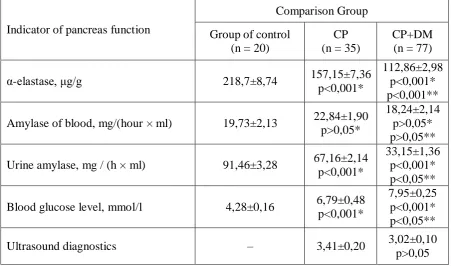
Tab. 3 Analysis of indicators of excretory and inacrurate function of the pancreas and
structural changes in the software for patients with chronic obstructive pulmonary disease
Indicator of pancreas function
Comparison Group
Group of control (n = 20)
CP (n = 35)
CP+DM (n = 77)
α-elastase, μg/g 218,7±8,74 157,15±7,36
p<0,001*
112,86±2,98 p<0,001* p<0,001**
Amylase of blood, mg/(hour × ml) 19,73±2,13 22,84±1,90 p>0,05*
18,24±2,14 p>0,05* p>0,05**
Urine amylase, mg / (h × ml) 91,46±3,28 67,16±2,14 p<0,001*
33,15±1,36 p<0,001* p<0,05**
Blood glucose level, mmol/l 4,28±0,16 6,79±0,48 p<0,001*
7,95±0,25 p<0,001* p<0,05**
Ultrasound diagnostics – 3,41±0,20 3,02±0,10
p>0,05
Notes: 1. * the likelihood of a difference in the indicators for those in the control group.
2. ** Likelihood of difference between the indicators for those in the CP group.
It was proved that against the background of more pronounced pathological changes in
the lipid status, deeper violations of external secretion of the pancreas in patients with CP are
noted. This is evidenced by the level of α-elastase in the CP + DM group, which is
significantly lower than that in the CP group and control group. The index of fecal α-elastase
in the CP + DM group corresponded to the average severity of external secretion of the
16 (19.7%) patients with a dyslipidemia group, an isolated external secretion of pancreatic
insufficiency. In the CP group, this figure is 55.5% (15 patients). The following percentage
distribution of patients according to the degree of severity of external-secretory pancreatic
insufficiency on the level of α-elastase is noted: in 21% (26.0%) patients in the CP + DM
group, 11.9% were in the CP group, the average degree was 45 (55.5%) versus 11 (40.7%),
light - in 15 (18.5%) versus 13 (48.2%) respectively.
It was also analyzed the existence of correlation between the lipidogram values and
the main characteristics of CP in combination with DM, which are shown in (Table 4). Age of
patient and duration of CP, according to the data, were in reliable direct moderate correlation
bonds with practically all parameters of the lipidogram, with the exception of high density
lipoprotein, where the inverse correlation connection was traced. It has been shown that the
age and duration of CP leads to an increase in lipid metabolism disorders. The level of
α-elastase was found to be in moderate or strong inverse correlation relationships with lipid
profiles (cholesterol, triglycerides, very low density lipoprotein, high density lipoprotein), and
a significant strong correlation correlation with HDL level was observed. Thus, the increase
in external secretion of the pancreas (by the level of a-elastase) led to a deepening of lipid
imbalance, and the level of dyslipidemia can serve as a predictor of the onset and progression
of CP.
Tab. 4 Matrix of correlation relations between indicators of lipidograms of patients with CP
with diabetes and the main characteristics of the disease (n = 77)
The couple in a regression relation
Age of a patient, years
Duration of CP, years
Level of α-elastase, μg/g Ultrasound diagnostics Total cholesterol, mmol/l 0,548
р<0,05 р<0,05 0,482 р<0,05 -0,416 р<0,05 0,306 triglycerides,
mmol/l
0,615
р<0,001 р<0,001 0,639 р<0,05 -0,528 р<0,05 0,581 Low density lipoproteins, mmol/l 0,693 р<0,001 0,427 р<0,001 -0,410 р<0,001 0,457 р<0,05
very low density lipoprotein mmol/l 0,599 р<0,05 0,348 р<0,05 -0,528 р<0,05 0,530 р<0,05 high density lipoprotein mmol/l -0,603 р<0,001 -0,526 р<0,001 0,633 р<0,05 -0,324 р<0,05 Notes: 1. n - the number of pairs in the correlation analysis.
It was also proved that the parameters of lipidogram and ultrasound in points in
patients with CP with diabetes mellitus are interdependent. Thus, the deepening of structural
changes in the software contributed to the deepening of atherosclerotic changes in patients
with CP in combination with diabetes.
Conclusions: 1. The presence of diabetes significantly compromised the clinical
course of CP in the ball system M-ANNHEIM, which correlated with changes in coprogram
(r = 0.67; p <0.001), ultrasound criteria (r = 0.54; p <0.01), the level of glycosylated
hemoglobin (r = 0.66; p <0.001).
2. In patients with CP with concomitant diabetes, the severity of the disease was more
pronounced than in patients with non-urgent insufficiency: the average severity (C) was
prevalent in 69.56% of patients in the second group, compared with 26.32% of the 1st, with
There were cases of severe and severe severity.
3. A direct reliable correlation between all the atherogenic indicators of the lipidogram
and the age of the patients and the duration of the course of the CP was found, which suggests
that the age and duration of HP are factors of deepening of dyslipidemia.
4. Patients with CP in combination with DM with dyslipidemia have established a
significantly lower level of fecal α-elastase compared with the CP group: 157.15 ± 7.36
versus 112.86 ± 2.98 respectively (p <0.001), which has brought deepening of dyslipidemia
with the progression of external secretion of the pancreas.
In the future of further research, we plan to analyze the trophological status of patients
with a combination of CP and DM and the association of its parameters with the quality of
life of such patients.
Reference
1. Babinets' LS. Analiz vplyvu riznykh etiolohichnykh chynnykiv na vynyknennya
khronichnoho pankreatytu [Analysis of the influence of various etiological factors on the
occurrence of chronic pancreatitis] // Visnyk Vinnyts'koho derzh. med. universytetu. 2003:
7(2/1); 444–445.
2. Babinets' LS., Mihen'ko LM. Porushennya lipidnoho obminu v patohenezi
khronichnoho pankreatytu[Infringement of lipid metabolism in the pathogenesis of chronic
pancreatitis] // Visnyk Klubu Pankreatolohiv. 2012: 3 (16); 23–25.
3. Vinokurova LV. Kliniko-patogeneticheskie mekhanizmy razvitiya vneshne – i
mechanisms of development of external and intracerebral insufficiency in chronic
pancreatitis] Avtoref. diss... d-ra med. nauk:14.00.47 / Moskva. 2009; 24 s.
4. Gubergrits NB. Novaya mezhdunarodnaya klassifikatsiya khronicheskogo
pankreatita [New international classification of chronic pancreatitis] Vestnik Kluba
Pankreatologov. 2008: 1(2);10–25.
5. Rebrov AP., Kunitsyna MA., Kashkina EI., Arkhangel'skaya EE. Pankreatogennyy
sakharnyy diabet: aktual'nye problemy patogeneza i lecheniya[Pancreatogenic diabetes
mellitus: current pathogenesis and treatment problems] (obzor). Saratovskiy
nauchno-meditsinskiy zhurnal. 2012: 8(3); 862–867.
6. Suchasni klasyfikatsiyi ta standarty likuvannya rozpovsyudzhenykh zakhvoryuvan'
vnutrishnikh orhaniv [Modern classifications and standards for the treatment of widespread
diseases of the internal organs] za red. Yu.M. Mostovoho. – 15-te vyd. dop. i pererob. –
Vinnytsya, 2016; 535 s.
7. Meier JJ., Menge BA., Breuer TG., Müller CA. [at al.]. Functional assessment of
pancreatic b-cell area in humans. Diabetes. 2009: 58(7); P. 1595–1603.
8. Niebisz–Cieślak AB., Karnafel W. Insulin sensitivity in chronic pancreatitis and
features of insulin resistance syndrome. Pol. Arch. Med. Wewn. 2010: 120(8); 255–263.
9. Schrader H., Menge BA., Zeidler C., Ritter PR., [at al.]. Determinants of glucose
control in patients with chronic pancreatitis. Diabetologia. 2010: 53(6); 1062–1069.
10. Schneider A. Lohr J.M., Singer M.V. The M–ANNHEIN — classification of
chronic pancreatitis: Introduction of a unifying classification system based on review of