EFFECTS OF STUDENT COLLABORATION ON LEARNING MOTIVATION, COLLABORATIVE PROBLEM SOLVING, AND SCIENCE PROCESS SKILLS
IN ROBOTIC ACTIVITIES
By Kellie Taylor
A dissertation
submitted in partial fulfillment of the requirements for the degree of Doctor of Education in Educational Technology
Boise State University
© 2016 Kellie Taylor
DEFENSE COMMITTEE AND FINAL READING APPROVALS
of the dissertation submitted by
Kellie Taylor
Dissertation Title: Collaborative Robotics, More Than Just Working in Groups: Effects of Student Collaboration on Learning Motivation, Collaborative Problem Solving, and Science Process Skills in Robotic Activities Date of Final Oral Examination: 3 May 2016
The following individuals read and discussed the dissertation submitted by student Kellie Taylor, and they evaluated her presentation and response to questions during the final oral examination. They found that the student passed the final oral examination.
Youngkyun Baek, Ph.D. Chair, Supervisory Committee Yu-Hui Ching, Ph.D. Member, Supervisory Committee Jesús Trespalacios, Ph.D. Member, Supervisory Committee
iv DEDICATION
This dissertation is dedicated, first and foremost, to my husband, Kelly Taylor. He has always been my most ardent supporter. His belief in me and the never ending encouragement he has shown through my post baccalaureate career has never wavered. I would also like to dedicate this dissertation to my children, Nathan, Jackie, and Katie, for whom I strive to be a role model. Not only have they demonstrated their support but they have also inspired me through their personal academic pursuits. Sacrifices have been made by these wonderful people I love. For my husband’s and children’s support, love, inspiration, company during late nights, and hours spent listening, I dedicate this
v
ACKNOWLEDGMENTS
vi ABSTRACT
Robotics in education has shown the potential to positively benefit student
learning and attitudes towards learning. However, a necessary part of robotics instruction is group collaboration. Therefore, the purpose of this study was to determine what
vii
viii
TABLE OF CONTENTS
DEDICATION ... iv
ACKNOWLEDGMENTS ... v
ABSTRACT ... vi
LIST OF TABLES ... xi
LIST OF FIGURES ... xii
LIST OF PICTURES ... xiii
LIST OF ABBREVIATIONS ... xiv
CHAPTER ONE: INTRODUCTION ... 1
Statement of the Problem ... 6
Research Questions ... 9
Definition of Terms... 10
CHAPTER TWO: LITERATURE REVIEW ... 12
Constructivist Learning in Robotics ... 13
Problem-Based Learning in Robotics ... 17
Collaboration in Robotics ... 20
Learning Motivation in Robotics ... 24
Collaborative Problem Solving in Robotics ... 26
Science Process Skills in Robotics ... 28
Group Role Assignment in Robotics ... 30
ix
Level of Expertise in Robotics ... 36
CHAPTER THREE: METHOD ... 39
Research Design ... 39
Research Context ... 40
Participants ... 41
General Method of Instruction ... 44
Interventions ... 50
Classroom Discussion ... 50
Assigned Group Roles ... 53
Previous Instructional Practices ... 56
Tools ... 57
Fowler Science Process Skills Assessment... 57
Robotics Expo 2012 [Pre CEENbot] - Adapted 2015 Student Survey ... 58
Data Collection and Analysis... 60
CHAPTER FOUR: RESULTS ... 65
Research Question 1 ... 65
Research Question 2 ... 69
Research Question 3 ... 74
CHAPTER FIVE: DISCUSSION ... 78
Limitations ... 81
Potential Impacts ... 86
x
REFERENCES ... 91
APPENDIX A ... 96
Lesson Plans for Robotics Project ... 96
APPENDIX B ... 118
Assigned Group Roles ... 118
APPENDIX C ... 121
Fowler Science Process Skills Assessment Pre-Test/Posttest Scoring Sheet ... 121
APPENDIX D ... 125
Robotics Expo 2012 [Pre CEENbot] - Adapted 2015 ... 125
APPENDIX E ... 129
Robotics Resources ... 129
APPENDIX F... 131
xi
LIST OF TABLES
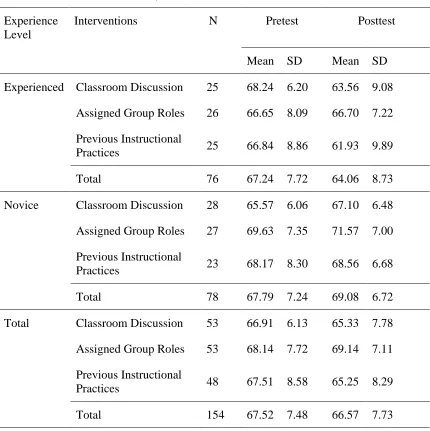
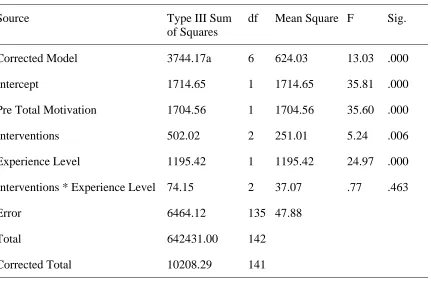
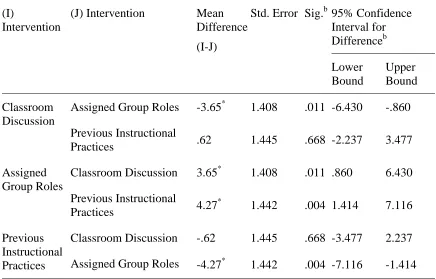
Table 1. Students in Intervention Conditions by Experience Level ... 44 Table 2. Collaborative Robotics Teaching Sequence ... 48 Table 3. Condition Sizes, Means and Standard Deviations of Motivation
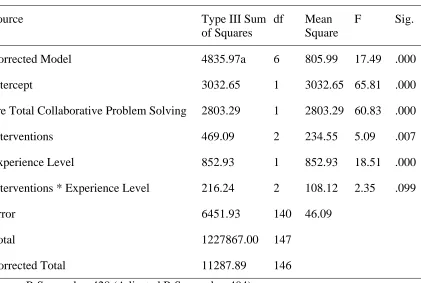
Scores ... 66 Table 4. ANCOVA for Post Total Motivation ... 68 Table 5. Post Hoc Test for Post Total Motivation ... 69 Table 6. Condition Sizes, Means and Standard Deviations of Collaborative
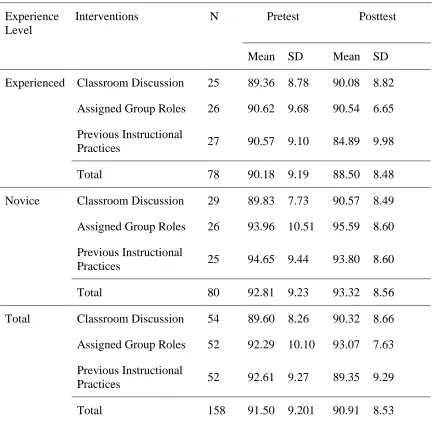
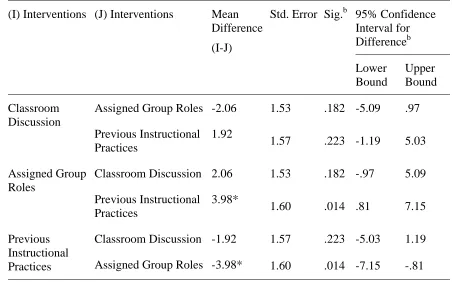
Problem Solving Scores ... 71 Table 7. ANCOVA for Post Total Collaborative Problem Solving ... 72 Table 8. Post Hoc Test for Post Total Collaborative Problem Solving ... 74 Table 9. Condition Sizes, Means and Standard Deviations of Science Process
xii
LIST OF FIGURES
xiii
LIST OF PICTURES
Picture 1. LEGO EV3 Build ... 83
Picture 2. LEGO NXT Build ... 83
Picture 3. EV3 HappyBot ... 114
Picture 4. EV3 Snack Holder ... 114
Picture 5. NXT Trashanator ... 114
xiv
LIST OF ABBREVIATIONS
CHAPTER ONE: INTRODUCTION
Robotics have been used for educational purposes since the 1980s (Bers, 2010; Castledine & Chalmers, 1993; Chambers, Carbonaro, Rex, & Grove, 2007; Papert, 1993). Educational robotics provides a fun and developmentally appropriate way to teach
technology and engineering to students of all ages (Bers, 2010; Slangen, Keulen, & Gravemeijer, 2010; Sullivan & Bers, 2016). A variety of content areas, as well as social skills, can also be taught using educational robotics (Eguchi, 2012; Grandgenett, Ostler, Topp, & Goeman, 2012; Hwang & Wu, 2014; Sullivan & Bers, 2016). For the purpose of this study, educational robotics are defined as the use of robotics as a learning tool (Eguchi, 2012). Typical goals for these learning tools include; generating student interest in technology through robotic activities or lessons and engaging students in learning while teaching difficult or abstract concepts through non-traditional methods (Eguchi, 2012). Learning with robotics can facilitate student collaboration, problem solving, and critical thinking (Jordan & McDaniel, 2014; Mills, Chandra, & Park, 2013).
that benefit them in a variety of real world situations all within the educational setting (Mills et al., 2013; Papert, 1993; Sullivan, 2008). Collaborative robotics projects have the potential to use robotics as an educational tool that combines hands-on learning in a collaborative environment and provides the opportunity for students to develop learning motivation, collaborative problem solving, and scientific process skills.
Students in the elementary engineering lab at Galileo STEM Academy currently participate in collaborative robotics projects and work in groups when designing, building, and programming robotic solutions in fourth and fifth grades. With little information available on classroom implementation for elementary students, the first year’s (2012-2013) robotics instruction in the elementary engineering lab consisted of teaching students the basics of programming based upon the tutorials in the LEGO Mindstorms software. Students programmed every other class sharing eight pre-built NXT robots. The 2013-2014 school year brought additional grant funding and new opportunities for students to apply their programming knowledge to designing, building, and programming a robotic solution for a real-world problem. Students received
instruction in robotics to assist with the development of basic programming skills, engineering concepts, and problem solving skills that have the potential to transfer to the general classroom.
work during programming practice for all three grade levels provides additional feedback and peer support for the programming tasks or activities, in addition to reinforcing
appropriate collaboration behaviors. Students are taught from their first time working with the robots to alternate turns modifying the program and running the robot so that both students have the opportunity to develop the basic programming skills and knowledge necessary for higher level tasks in addition to building the collaborative environment. Working with a peer is designed to reinforce the basic collaboration skills needed for working with a larger group during the collaborative robotics projects.
Students complete their first collaborative robotics project in fourth grade and a second project in fifth grade. The robotics projects have evolved over the years from 2013 to 2015. The criteria for the robotic solution can easily change from year to year, but creating the supports and scaffolds to promote maximum student benefits has been a challenging area for instructional planning. Students have difficulty working together within a collaborative project, which impacts the benefits to the students in those groups. The basic reminders of making sure everyone gets a turn building and programming has not been sufficient scaffolding in order to support students in a beneficial collaborative learning process. Identifying existing components in the instructional sequence for the robotics project may assist in determining what scaffolds, supports, or interventions would best assist the students in working successfully on a collaborative robotics project.
students created robotics that could make art using a repeating pattern and fifth grade students developed a Mars rover that had to survive a ‘landing on Mars’ (a drop from a ladder onto a padded surface) and still execute the program of locating ‘water’ (blue bricks). For the purpose of the study, both grade levels were asked to complete the same robotics challenge. This school year (2015–2016) students in both grade levels were required to identify problems around the school that could be solved with a robotic solution. The project offered challenges first by identifying a problem in the school and brainstorming an idea for a possible solution. Secondly, once a potential solution was chosen, students had to design, build, and program the robotic solution. Many students in the past have had difficulty with isolating and solving problems in the design and
program components of the robotic solution using a systematic scientific approach for successful completion of the project. Although the teacher provided support and
instruction in regard to the design process and technical aspects over the past two years of projects, with previous classes, many students continued to use a trial and error method and lacked a systematic method for solving problems that arose during the course of the project. Even though trial and error may be a viable problem solving strategy, when used without a systematic or scientific approach, it seemed to impede student progress in developing a working design or program and, therefore, a solution to the robotics problem. In order to assist students with developing a more systematic approach to developing robotic projects and problem solving issues with the robotic solution, science process skills will be focus of the overall project and for problem solving while
Science process skills and the engineering process of identifying a problem and
developing a working solution in the collaborative robotics project require similar skills. In addition, students may be able to transfer those skills to the general classroom for science concepts and general problem solving.
Use of both constructivist and problem-based learning have demonstrated the potential for developing student problem solving with students creating hands-on robotic solutions to authentic problems (Eguchi, 2012; Jordan & McDaniel, 2014; Mills et al., 2013; Papert, 1993). However, the potential student benefits may not be realized if the instructional practices in the elementary lab are not supporting the students in their collaborative effort. Although robotics promotes collaboration, it is important to teach students collaboration strategies for group projects (Denis & Hubert, 2001; Jordan & McDaniel, 2014). Groups’ varied success with collaborative work within the
collaborative robotics project have seemed to produce a variety of student experiences with both positive and negative effects on student learning and motivation outcomes.
students need to learn how to manage the collaboration process in order to promote similar benefits for all students. The teacher, though a facilitator, may need to provide direct instruction on collaborative strategies in order for students to learn the desired techniques. Furthermore, collaborative supports may increase the learning benefits for more students rather than simply having a few students experience satisfaction with the project. The classroom educator needs to evaluate the robotics program and determine the most beneficial supports for the collaborative nature of robotics in an educational setting.
Statement of the Problem
Elementary students work in collaborative groups during robotics instruction with the intention of improving student problem solving skills and reinforcing student
engineering concepts by designing, building, and programming robotic solutions. Many students have difficulty working beneficially in groups and do not get the potential maximum benefit from working on collaborative robotics projects. While it is common for students working with robotics to have challenges with programming and the
mechanics (Ucgul & Cagiltay, 2014), beneficial learning outcomes and motivational benefits from the robotics projects are also limited due to the lack of successful
less than enjoyable experience. Can the collaborative environment be supported to improve the learning motivation, collaborative problem solving, and scientific process skills for students?
With the use of robotics in the elementary engineering classroom for the last three years, beginning in 2012-2013, the focus has been a continuous effort to improve
group was also established that continued using previous years’ instructional practices as an intervention to examine the effectiveness of prior instructional strategies, Previous Instructional Practices. No additional strategies were implemented to support this group in the collaborative environment.
Existing research indicates robotics is an appropriate tool for teaching problem solving, science skills, and improving student motivation and attitudes toward learning due to the hands-on nature and the immediate feedback on whether or not the tested solution worked (Eguchi, 2012; Jordan & McDaniel, 2014; Papert, 1993). In addition, robotics is an educational tool that is well suited for collaborative projects because of its tangible and observable nature (Papert, 1993; Yuen et al., 2014). If student benefits can be maximized by developing a supportive and safe collaborative environment for the robotics projects, more students may see benefits in collaborative problem-solving, science process skills, and learning motivation.
The ability to successfully support student collaboration in robotics groups, as well as learning motivation, collaborative problem solving, and science process skills, would fill a practical need of robotics integration into the classroom. The implementation of collaborative interventions determines if such interventions can assist students in the collaborative process and support increased student learning motivation, collaborative problem solving, and science process skills. Data gathered on collaboration interventions can provide guidelines for collaborative robotics projects and may provide a clear
integrative format for educators interested in bringing robotics into the classroom and meeting similar learning objectives. Furthermore, collaborative learning is an
successful collaboration scaffolds can be identified that support hands-on collaborative instructional methods, the benefits could extend beyond robotics instruction.
Research Questions
1. Are there effects of the collaboration interventions and prior student experience with collaborative robotics on student learning motivation, controlling for students’ pretest scores?
1.1 Are there effects of the collaboration interventions on student learning motivation, controlling for students’ pretest scores?
1.2 Are there effects of prior student experience with collaborative robotics on student learning motivation, controlling for students’ pretest scores?
1.3 Is there an interaction effect between the collaboration strategy interventions and prior student experience with collaborative robotics on student learning
motivation, controlling for students’ pretest scores?
2. Are there effects of the collaboration interventions and prior student experience with collaborative robotics on student collaborative problem solving, controlling for students’ pretest scores?
2.1 Are there effects of the collaboration interventions on student collaborative problem solving, controlling for students’ pretest scores?
2.2 Are there effects of prior student experience with collaborative robotics on student collaborative problem solving, controlling for students’ pretest scores? 2.3 Is there an interaction effect between the collaboration interventions and prior
3. Are there effects of the collaboration interventions and prior student experience with collaborative robotics on student science process skills, controlling for students’ pretest scores?
3.1 Are there effects of the collaboration interventions on student science process skills, controlling for students’ pretest scores?
3.2 Are there effects of prior student experience with collaborative robotics on student science process skills, controlling for students’ pretest scores?
3.3 Is there an interaction effect between the collaboration interventions and prior student experience with collaborative robotics on student science process skills, controlling for students’ pretest scores?
Definition of Terms
Novice – A novice level student is one that has basic programming skills, but has not designed, built, and programmed a robot to solve an identified problem.
Experienced – An experienced level student is one that has programming skills beyond the basics of movement that includes the use of sensors and has designed, built, and programmed a robot to solve an identified problem.
Previous Instructional Practices – The teaching practices that have been used in the past for the engineering classroom when implementing a robotics project.
Classroom Discussions – While all classes may have a period of teacher provided direction and an opportunity to ask questions, classroom discussion provides an
teacher models appropriate collaborative behavior and redirects students to do so as well, if necessary.
Assigned Group Roles – Group roles that are developed by the teacher and implemented in a purposeful way to help students take part in all aspects of the project. There are four assigned group roles to meet the needs of the largest group size.
Learning Motivation – Motivation is a learning attitude that encourages students to take an active role in and a responsibility for their own learning. This may also include developing an interest in a subject area that previously had been of little or no interest.
Collaborative Problem Solving – Identifying problems and developing solutions through testing, improving, and using the collective ideas of the group.
CHAPTER TWO: LITERATURE REVIEW
Classrooms integrate robotics for various reasons, a few of which include; teaching technology and robotics, an attempt to improve problem solving skills and attitudes toward particular content areas, and to teach engineering principles. The arguments for the benefits of robotics in the classroom continue to grow. However, integration of robotics into the formal educational setting is still relatively new and, therefore, represents an important advance in educational practices (Somyürek, 2014). In addition, much of the robotics research conducted focuses on informal programs, short time periods, and participants at middle school or secondary level (Mills et al., 2013; Mohr-Schroeder, Little, & Schroeder, 2014; Park, 2015; Sullivan, 2008). While robotics has also been shown to be beneficial in afterschool and summer programs for a variety of age groups (Benitti, 2012; Mohr-Schroeder et al., 2014; Ringwood, Monaghan, &
Maloco, 2005), limited information is available for implementation of robotics in the formal educational settings. The present study has the potential to promote student benefits in the traditional elementary classroom setting, offer possible implementation solutions, and identify successful collaboration strategies for supporting the student skills required in a collaborative robotics project.
participants in the experience (Jordan & McDaniel, 2014; Mohr-Schroeder et al., 2014). However, bringing robotics into a classroom does not ensure student learning benefits without a shift in the learning environment (Eguchi, 2012). Despite the fact that many researchers discussed collaborative groups as an important aspect of the shift required for robotics projects, there was little implementation information to assist a classroom practitioner in integration in the elementary classroom (Benitti, 2012; Mohr-Schroeder et al., 2014). Hwang and Wu (2014) determined that a well-designed collaborative project should support collaboration, communication, interaction, and negotiation among the group members but provided no implementation strategies to achieve the desired student relationships. The role of the teacher and the scaffolding provided to students were viewed by many studies as critical for student success, but only basic guidelines were given for implementation, and there were few, if any, examples of scaffolding to put into practice in a classroom setting (Castledine & Chalmers, 1993; Eguchi, 2012; Kang, Choi, & Chang, 2007; Papert, 1993). Since implementation, modeling, and scaffolds are an important aspect of collaborative robotics project both for the robotics content and the collaboration skills, understanding the characteristics of the learning process, the
classroom setting, and the nature of the robotics project is important for determining the models and scaffolds to put in place.
Constructivist Learning in Robotics
The student learning process in the elementary engineering lab focuses on
experiences and use of preexisting knowledge (Barker & Ansorge, 2007; Blanchard, Freiman, & Lirrete-Pitre, 2010; Chambers et al., 2007; Liu, Lin, & Chang, 2010; Papert, 1993). Although this method of learning can be a bit messy in the classroom setting, it allows students to take ownership of their learning and develop meaningful connections (Barak & Zadok, 2007; Hussain, Care, & Practice, 2006; Papert, 1993). Constructivist learning also focuses on experiential learning and solving of problems which creates connections between prior knowledge, newly acquired knowledge, and the real world (Lin et al., 2010; Papert, 1993; Somyürek, 2014). In addition, small group and student-centered tasks take priority over whole class direct instruction (Barak & Zadok, 2007; Hussain et al., 2006; Papert, 1993). Collaborative robotics projects use constructivist learning to promote the connections between prior knowledge, concrete materials, and the real world in order for students to construct new knowledge.
students do not perform these student-centered tasks alone. Constructivist learning promotes students actively guiding and taking responsibility for their own learning (Barak & Zadok, 2007; Bers, 2010; Somyürek, 2014), in addition, the engineering lab requires students to consider their peers’ learning. Constructivist learning is appropriate for the elementary engineering lab due to the nature of the robotics project and the fact that learning promotes collaboration as students are required to work together for the length of the project.
students (Blumenfeld et al., 1991; Papert, 1993). While the elementary engineering lab is not a typical classroom, understanding the structure of the classroom, the nature of the learning, and the intended instructional goals, allows the classroom educator to make informed decisions in regards to instructional planning and developing appropriate supports to promote the benefits of constructivist learning.
Just as the students’ roles shift with constructivist learning, to promote social interaction and hands-on experiences, the teacher’s role shifts to that of facilitator. The role of facilitator requires less direct instruction on content and more modeling and instruction on appropriate forms of collaboration to support the constructivist learning, collaboration, and development of co-constructed knowledge (Eguchi, 2012; Gillies, 2014; Papert, 1993). Petre and Price (2004) described the use of robotics as a hands-on constructivist way of learning with students acquiring or building their knowledge through experimentation in student-centered tasks. With student-centered tasks, the teacher may at times need to act as expert but during robotics projects students should retain as much responsibility as possible for their own learning (Eguchi, 2012; Jordan & McDaniel, 2014; Papert, 1993). Facilitators or teachers should not provide direct
solutions, but rather offer an appropriate amount of support based on observations of the needs of the students (Papert, 1993; Ucgul & Cagiltay, 2014). While facilitating
explanations helped them with their projects and saved them significant amounts of time and effort. A balance needs be achieved by the elementary engineering teacher by providing enough instruction to support foundational skills and avoid student frustration while still allowing the learners to construct their own knowledge through their
experiences with a collaborative robotics project.
Constructivist learning requires a shift in roles for both students and teacher. Some researchers consider this a radical shift in paradigm for educators (Kang et al., 2007). Kang et al. (2007) suggest that there is an incomplete understanding of
constructivist learning. They argue that constructivist learning focuses too heavily on the learning process minimizing the teaching process. Kang et al.’s support of the
importance of the teacher role for successful construction of knowledge aligns with Gillies’s (2014) findings that collaboration needs to be modeled and taught as well. Barak and Zadok (2007) determined that some direct instruction is beneficial and welcomed by the students. Blumenfeld et al. (1991) emphasize the amount of support required during constructivist learning for students and teachers due to the shift in paradigm from instructor to facilitator, and suggest it is a potential pitfall for constructivist learning. Identifying specific scaffolds that could support collaborative robotics project in
elementary engineering would not only support the constructivist learning experience but could also support students as they work through the process of developing solutions to real world problems.
Problem-Based Learning in Robotics
problem corresponds not only with constructivist learning, but with problem-based learning as well. In fact, problem-based learning is based on constructivist learning in that it encourages students to activate their prior knowledge to build new knowledge by solving a problem and is especially applicable for science classrooms (Blanchard et al., 2010; Denis & Hubert, 2001; Eguchi, 2012; Somyürek, 2014). The students have to develop some type of strategy for solving the problem, even if it is trial and error, which can deeply engage the students in the learning process (Blanchard et al., 2010; Denis & Hubert, 2001). Scaffolding or instructional support may be needed to assist students in activating prior knowledge and guide students when they lose sight of the project or may not have the skills to make their big idea happen (Blanchard et al., 2010; Eguchi, 2012). Helping students to stay focused, on-task, and develop realistic goals is a critical function of the elementary engineering teacher during the collaborative robotics projects.
The elementary engineering teacher also assists students in the creation of connections between classroom learning and the real world. Papert (1993) suggests that without a connection to a problem students are experiencing disassociated learning, or instruction where rote learning does not have connections to the real world and is
therefore not connected to students’ experiences, which could lead to difficulty in making concrete connections to abstract subjects. The use of real world problems and hands-on experience provides an avenue for learning-by-doing and an opportunity to apply traditionally abstract educational concepts (Blanchard et al., 2010; Papert, 1993; Park, 2015; Somyürek, 2014). Furthermore, effective robotics instruction should be focused on authentic tasks and problem-based learning should mirror the unpredictable
Somyürek, 2014). Ill-structured problems mimic the unpredictable characteristics of the real world and require multiple solutions and multiple perspectives collaborating to reach the optimum solution (Somyürek, 2014). Problem-based learning involves a problem and meaningful connections that can improve student motivation and engage students in thinking (Blumenfeld et al., 1991; Denis & Hubert, 2001). Collaborative problem-based learning in the elementary engineering lab strives to combine an emphasis on group interactions to promote the building of a common knowledge through a variety of different perspectives.
project and instructional practices. It is important to identify what supports and instructional practices create student benefits in the elementary educational setting.
Collaboration in Robotics
Even though collaboration has been required of the students in the elementary engineering classroom, little time has been spent on developing student collaboration skills to create a successful collaborative classroom environment. Can scaffolds or supports assist in the developing safe and inclusive collaborative groups to increase the positive impacts of robotic instruction? To understand how to support collaboration, it is important to understand collaboration. Hwang and Wu (2014) define collaboration as mutual control within a group as compared to cooperation with independent control and coordination, or directed collaboration where a coordinator is in charge. Just as robotics has been used in constructivist learning, with students working together to build their knowledge of problem solving, robotics design, and programing collaboration promotes constructivist learning, assisting students in reconciling differences in understanding, and constructing a shared understanding of concepts (Denis & Hubert, 2001; Eguchi, 2012; Papert, 1993; Yuen et al., 2014). The interpersonal activity of collaborative learning becomes an intrapersonal experience when students are able to internalize the
co-constructed knowledge and develop mutual understandings (Gillies, 2014; Papert, 1993; Yuen et al., 2014). Collaboration though required by necessity in the classroom can be used to benefit students.
Research demonstrates positive student benefits with the classroom
learning attitudes. Gillies (2014) notes collaborative learning can promote student
engagement and learning, evidenced by increases in student academic performance for up to three years following collaborative interventions. Eguchi (2012) confirms that
educational robots can be used to encourage collaborative work among students,
engagement in collaborative decision-making, and acquisition of communication skills. Research demonstrates collaborative learning, a growing pedagogical practice, is
beneficial to students (Gillies, 2014; Yuen et al., 2014). However, simply adding
collaboration in a classroom setting will not necessarily produce student benefits. As with other pedagogical practices, the addition of collaborative learning strategies must be done carefully, grounded in the research.
Past collaboration strategies with the elementary engineering lab consisted only of teacher established groups of mixed gender and mixed ability in an attempt to create a balance in each group. This study will proceed with more focused groupings. Both mixed and similar ability groupings have been shown to be beneficial to all types of learners within the group (Yuen et al., 2014). However, collaboration should strive for balanced groups and equal participation by all group members to promote increased conceptual learning or engagement for higher order thinking (Eguchi, 2012; Yuen et al., 2014). Though balanced groups may not be entirely possible, successful collaboration can support beneficial outcomes for students (Eguchi, 2012). In order to promote and support successful collaboration within groups, Yuen et al. (2014) identified key
highly sought after skills within STEM careers, which would indicate successful student collaboration has the potential to prepare students academically as well as professionally. Research emphasizes the importance of the students’ roles and interactions in
collaborative groups arguing for the intentionality of the developed group during the projects (Yuen et al., 2014). In order to support students in these collaborative efforts, Gillies (2014) emphasized the importance of the teacher’s role for effective collaboration through the implementation of classroom supports. The elementary engineering lab requires instruction beyond the engineering and robotics contents. The teacher needs to also support the required collaborative environment by implementing strategies and scaffolds for successful student collaboration.
Papert, 1993). Since collaboration has the potential to support as well as constrain individual thinking (Mills et al., 2013), and the focus of a group can shift from finding a solution to a struggle between the group members’ ideas and forms of communication (Mill et al., 2013), assisting students in developing successful collaborative skills may minimize possible negative effects from collaboration and instead promote positive student effects.
Effective collaboration has the potential to positively impact the students in the robotics project and create a learning environment in which more students experience improved learning outcomes. Robotics fosters collaboration, and robotics activities make it easier and more enjoyable for some students to participate in the collaborative process (Wainer, Ferrari, Dautenhahn, & Robins, 2010). Yuen et al. (2014) suggest students feel they learn more by working collaboratively because the group can discuss, question, work, and learn together. The impact of the social and cultural dimensions of student learning, such as collaboration, discussion, and co-constructing knowledge, cannot be ignored (Hwang & Wu, 2014; Mills et al., 2013; Papert, 1993; Slangen et al., 2010). The collaborative skills learned during robotics projects can transfer to other activities outside of robotics (Nelson, 2012; Yuen et al., 2014). This study provides students with a
Discussion groups and reinforcement of the Assigned Group Roles. The teacher models appropriate dialogue and models group discussion strategies such as revoicing or
restating others’ responses. The interventions were designed to improve upon past instructional practices based upon research recommendations. With appropriate collaboration interventions, collaborative robotics projects have the potential to benefit students learning attitudes and achievement.
Learning Motivation in Robotics
The hands-on nature and materials in the elementary engineering lab seem to provide sufficient motivation to some students (Petre & Price, 2004). However,
researchers continually turn to instructional methods that involve a problem, meaningful units, and are cross-curricular in order to motivate and engage other students (Blumenfeld et al., 1991). Increases in student motivation are associated with constructivist and
problem-based learning (Barak & Zadok, 2007; Bers, 2010; Eguchi, 2012, Papert, 1993; Somyürek, 2014). Moreover, integrated robotics projects combine educational tools with experiential learning to promote an increase in student learning motivation for STEM subjects (Blanchard at al., 2010; Mohr-Schroeder et al., 2014; Petre & Price, 2004; Somyürek, 2014; Ucgul & Cagiltay, 2014). The role of facilitator becomes critical in robotics projects to help sustain student motivation and promote the desired higher level learning (Blumenfeld et al., 1991). When students have the necessary collaborative provisions in order to create a supportive classroom environment during robotics projects, the results can positively impact student learning motivation (Yuen et al., 2014). Student motivation contributes to successfully learning and retaining the content
students to learn, however, it must be noted that the introduction of robotics alone does not guarantee positive student impacts (Eguchi, 2012). Indeed, the teacher must shift to a new role and implement appropriate instructional practices in order to support the
learning process, collaboration, and to promote the benefits of student learning and motivation (Blumenfeld et al., 1991; Yuen et al., 2014).
With teachers taking on new roles as facilitators in the shifting learning
environment, students are also asked to take on new roles as collaborators. The new roles allow students to take a more active role in their own knowledge development when participating in constructivist and problem-based learning, which increases motivation (Barker & Ansorge, 2007; Blanchard et al., 2010; Chambers et al., 2007; Hwang & Wu, 2014; Liu et al., 2010; Papert, 1993). Not only do students have the opportunity to be active learners, they also have the potential to positively impact student learning and motivation through peer collaboration (Blumenfeld et al., 1991; Eguchi, 2012; Robinson, 2005). Small group settings for robotics necessitates social and peer interaction. With scaffolding and direction for students on successful collaboration, robotics has the potential to promote quality social interactions which support successful collaboration and increase motivation (Denis & Hubert, 2001; Hwang & Wu, 2014). If the nature of robotics is not motivating enough for students, the collaborative nature of robotics
projects, constructivist learning, and problem-based learning may offer social interactions that support and maintain student motivation (Slangen et al., 2010; Yuen et al., 2014). The collaborative robotics projects in the elementary engineering lab integrate
Collaborative Problem Solving in Robotics
While there are opportunities in the elementary engineering lab to practice problem solving at the individual level, the fourth and fifth grade robotics projects rely heavily on collaborative problem solving. Collaborative problem solving is defined by Mills et al. (2013) as a process where peers construct new knowledge together that neither of them had prior knowledge of before working together. By practicing
Understanding the characteristics of collaborative problem solving will assist in determining what scaffolds would best support student learning. Since collaborative problem solving is a form of problem solving requiring peer interactions (Mills et al., 2013) students need to ask questions, gather information, and reflect on what they have learned in order to solve a problem (Somyürek, 2014). Though the process may seem simple enough, it requires complex skills (Somyürek, 2014). In fact, problem solving is a complex phenomenon that utilizes both conscious and unconscious processes as well as combinations of explicit knowledge and intuition (Barak & Zadok, 2007). However, the process can be simplified for students by breaking problem solving into a series of steps (Mills et al., 2013). Another potential support for collaborative problem solving is the use of language to promote the collaboration and the development of newly
co-constructed knowledge (Mills et al., 2013). The potential benefits for collaborative robotics projects to facilitate teamwork, problem solving, and critical thinking may be supported through language scaffolds (Hwang & Wu, 2014; Mills et al., 2013). While collaborative problem solving may prove to be a challenge for students because of the complexities, experiences with collaborative problem solving allow students to develop group solutions to meet the common group goal (Denis & Hubert, 2001; Jordan &
McDaniel, 2014; Mills et al., 2013). However, the uncertainties of collaborative problem solving may also create barriers to students’ development of solutions (Jordan &
strategies in relation to real world contexts could boost confidence levels in the subject area (Castledine & Chalmers, 1993).
The collaborative problem solving and the group work required with robotics projects may also make it more difficult to identify individual student progress. Teachers must closely monitor individual students, their understanding, and their performance in order to support successful projects (Eguchi, 2012). Papert (1993) identifies ways in which to guide student thinking, but cautions that problem solving cannot be as simple as memorizing a procedure, such as a math algorithm, because the variety of problems are always changing. In addition, Papert (1993) reminds us that students do not have to give up old methods to learn new ones. Furthermore, structured thinking is powerful thinking and is not a skill that all students develop when left to construct their own knowledge (Papert, 1993). The role of the teacher, as facilitator, then, is to develop the proper balance as well as organize the instructional plan to support the learning process.
Science Process Skills in Robotics
While instruction in the elementary engineering lab focuses on engineering, the use of cross-curricular instruction is also a priority in order to develop connections for the students between the general classroom and the engineering lab. Nelson (2012)
robotics projects and robotic materials provide an opportunity to focus student learning on engineering (Bers, 2010; Jordan & McDaniel, 2014; Petre & Price, 2004; Ringwood et al., 2005; Yuen et al., 2014). With the cross-curricular potential of robotics, the use of a collaborative robotics project can easily combine science and engineering in addition to creating connections between the elementary engineering lab and the general classroom. Research identified three main skills developed through the use of robotics; thinking skills, science process skills/problem-solving skills, and social interaction/teamwork skills (Benitti, 2012; Hwang & Wu, 2014; Mills et al., 2013; Ringwood et al., 2005; Slangen et al., 2010). These skills are applicable and valuable for engineering, science, and the general classroom setting. In addition to the identified three main skills, Benitti (2012) noted robotics activities required the use of thinking skills and scientific
reasoning. Furthermore, Sullivan (2008) maintained that an appropriate open-ended instructional approach, in conjunction with the use of robotics promotes the use of thinking and science process skills, as well as increased systems understanding.
not have the iterative feedback loops (Sullivan, 2008). Sullivan (2008) makes clear connections between the scientific process and the engineering design process by arguing that students must control variables and change only one variable at a time. This is key in the use of the scientific method and science process skills. A study by Somyürek (2014) indicates that during robotics instruction, students learn by designing and programming robots to solve problems. They use scientific skills such as making predictions,
generating a hypothesis, conducting experiments or tests, and presenting their results. Robotics provides a hands-on method for teaching critical thinking, science process skills, and support for learning abstract concepts (Eguchi, 2012; Papert, 1993; Slangen et al., 2010; Sullivan, 2008). Though the learning objectives for the collaborative robotics project may not connect specifically with science standards, implementation scaffolds and problem-based learning could assist the students in achieving similar beneficial learning outcomes.
Group Role Assignment in Robotics
there is a clear division and sharing of responsibilities (Eguchi, 2012; Mills et al., 2013). Yuen et al. (2014) suggest that group roles be determined by individual strengths and weaknesses. However, a classroom educator’s goal is to develop strengths where none may exist and allow all students to exposure to a variety of tasks. Lack of exposure may have limited the development of strength or interest. Moreover, Hwang and Wu (2014) defined collaboration as a group who were mutually engaged in solving problems or completing a task. Assigning group roles in this study was an attempt to promote mutual engagement and provide an outline for how that engagement would function with
interlocking roles.
The roles, for the purpose of this study, were not assigned based on strengths but rather for the purpose of exposure and achievement of the learning objectives Students also had the opportunity to work in their areas of strength and to improve areas of weakness. In order to guide students in equal participation and work on various aspects of the robotics projects, assigned group roles were developed. The assigned group roles did not take into account Yuen et al.’s (2014) recommendation to be aware of the group members’ strengths and weaknesses. Even in Yuen et al.’s (2014) study, after
discussions of assigning roles based upon participant strengths, group roles were
group size was relevant, for as group size increased the number of students with strengths in a particular area increased as well; however, materials were limited, which may prove an imbalance of the group members with the available materials (Ucgul & Cagiltay, 2014). If groups are too large, students may have difficulty remaining active participants (Eguchi, 2012; Ucgul & Cagiltay, 2014).
Providing supports and scaffolds, such as assigned group roles, has the potential to alleviate some of the challenges of collaborative group projects, such as actively participating and equal share of the work load. When examining the use of educational robotics, it is important that group roles be assigned to balance quiet group members with more dominant group members (Somyürek, 2014). It is also important for all group members to have a visible contribution to the completion of the robotics task (Somyürek, 2014). Ucgul and Cagiltay (2014) noted that the main cause of problems within groups occurred when members felt as though they had to do a larger share of the work or were not given the opportunity to build and share in the work. While these situations may occur no matter the established group structure, the assigned group roles may alleviate such occurrences and provide a method for the group members to address the issue via the assigned group roles. Additionally, assigning group roles encourages students to work cooperatively and engage in task sharing or equal divisions of labor (Ucgul & Cagiltay, 2014).
Research indicates assigned group roles have the potential to counter difficulties within collaborative student groups and may actually promote collaboration and
The educational setting may actually have different goals for group members than a team setting. However, implementing potential roles or jobs, such as builder, programmer, or tester, with a job description may manage questions of what each of the group members should be doing during class and rotation of the jobs can provide students with a variety of experiences (Yuen et al., 2014). With such job descriptions, students may also be able to be address any questions or concerns within the group, rather than requiring the
teacher as a mediator, thereby further supporting the collaborative nature of the group and promoting the common goal or purpose of the group.
Classroom Discussions in Robotics
increasingly complex problem solving skills. Student participants even begin using clarifying questions and directive statements to focus their group members on particular solutions (Mills et al., 2013). The SPIRIT robotics curriculum also begins each lesson by asking questions to promote classroom discussion and the sharing of student ideas
(Grandgenett et al., 2012). Mills et al. (2013) use discussions between teacher and students as a check for understanding as well as a method to teach collaboration strategies. In order to support students in collaboration and collaborative projects,
developing student discussion skills may benefit collaborative problem solving and assist the teacher in identifying students’ understanding of both content and collaboration skills.
Students need to practice and develop discussion skills that support collaboration. Modeling of the vocabulary in the discussion can help students internalize the terms and use a common vocabulary with each other (Hwang & Wu, 2014). In addition, language is integral to student learning and problem solving interaction (Mills et al., 2013), thereby indicating that classroom discussions create benefits, not only by promoting desired group interaction, but also by benefiting student collaborative problem solving and academic achievement. Furthermore, discussion allows students to self-examine and to enhance their cognitive development (Mills et al., 2013). For each new task, Mills et al. (2013) allow groups an opportunity to discuss and formulate a plan to solve the
challenge. While these are important topics, the discussions may not be beneficial if all the group members ideas are not shared or valued and if the interaction between the group members takes on a negative characteristic.
In fact, social learning may be the most important student benefit of collaborative
robotics projects skills (Ucgul & Cagiltay, 2014; Mills et al., 2013; Hwang & Wu, 2014). Hwang and Wu (2014) emphasized that learning to carry out collaborative tasks is critical for the development of students’ social interactions. The use of communicative skills such as listening, accepting, and responding, encouraged students to express their own ideas and opinions as well as make constructive comments (Hwang & Wu, 2014). Language also plays an important role in the collaborative problem solving behaviors of students (Mills et al., 2013). Students with the appropriate language skills begin with statements of the problem and used clarifying questions and directive statements to maintain the group’s focus on identifying solutions (Mills et al., 2013).
Since effective collaboration is so important, discussion skills should be taught in order to further develop the collaborative nature of the groups and potentially increase student benefits in learning motivation, collaborative problem solving, and science process skills. Yuen et al. (2014) found that when groups had difficulty with the
collaborative process, students reverted to group members’ ability and experience levels rather than taking turns effectively. Students’ whose groups had difficulty collaborating indicated that they had not learned as much nor did they have as positive experiences as students’ whose groups collaborated effectively (Yuen et al., 2014). A review of the literature suggests that discussion is paramount to successful collaboration. In order to promote successful collaboration and support student learning in collaborative robotics projects, for the purposes of this study, a classroom discussion intervention is
Level of Expertise in Robotics
This study was conducted with elementary engineering students of two different experience levels. Students in fourth grade had no prior experience with designing and building a robotic solution. The fifth grade students who had attended the school during fourth grade had previous experience with a similar-styled projects. Although some differentiation was provided in the past in the elementary engineering lab, based upon experience level, it may not have been sufficient to promote student success in
collaborative robotics projects. Eguchi (2012) argues that it is very important to provide inexperienced students with supports, and in fact, emphasized the essential teacher’s role as facilitator to support inexperienced students. Teachers should provide modeling, guiding, and project planning and assist with the necessary skills and thought processes for students to successfully complete robotics projects (Barak & Zadok, 2007; Eguchi, 2012). While, neither fourth nor fifth grade students had experienced this particular collaborative robotics project, the fifth grade students had more prior knowledge and experiences to draw upon in order to help them successfully complete their robotics projects. The past instructional practices and the design of the study may not provide enough support for the inexperienced students since they are receiving the same interventions as the fifth grade students and no other scaffolds.
The lack of additional supports for inexperienced students may impact potential benefit for the fourth grade students in the study. According to Barak and Zadok (2007) students with varying experience levels tend to approach robotics problems from
experienced students may be able to use collaborative techniques such as being able to re-describe or re-define problems (Barak & Zadok, 2007; Blanchard et al., 2010). If a description of the problem is an issue, robotics vocabulary instruction or modeling may be beneficial to inexperienced students to alleviate possible barriers to problem solving issues. Furthermore, modeling of appropriate discussion could provide support for inexperienced students to overcome any differences in perspectives. Another concern with the differences in experience levels is that novices may rely more on trial and error where experts use domain-specific strategies (Barak & Zadok, 2007; Papert, 1993). Blanchard et al. (2010) demonstrate that experienced students still may use trial and error, but may also use it more efficiently base upon their prior knowledge. Experts are able to develop “chunks” of specialized knowledge that are transferable while novices tend to memorize small disconnected facts (Barak & Zadok, 2007). The expert use of knowledge may allow for shortcuts or efficiency in problem solving rather than having to follow a specific method from start to finish (Barak & Zadok, 2007; Blanchard et al., 2010). It is recommended that students within a group be at similar levels of expertise so that one group member is not an expert, and thereby supporting the co-construction of knowledge rather than expert to novice transmission of information, as in a teacher-directed situation (Barak & Zadok, 2007; Mills et al., 2013). The Mills et al. (2013) study also demonstrates that novices with no prior knowledge of building or
programming a robot continue to improve their speed of problem solving. Can this increase in speed or success of problem solving be maintained at the experienced level?
CHAPTER THREE: METHOD
Research Design
A quasi-experimental method was used to examine the research questions within the natural classroom setting. A true experimental method could not be used since students were assigned to groups based upon their general classroom teacher and their grade levels, rather than a random selection of the entire potential participant pool. It was not possible to introduce all three interventions in a single classroom because the
interventions would potentially impact each other within that small setting. Each intervention was, instead, assigned to one classroom from each grade level. One fourth and fifth grade class received intervention through structured classroom discussions. Another fourth and fifth grade class received assigned group roles as the intervention. The last set of fourth and fifth grade classes received no interventions and experienced the previous instructional practices as it had been conducted in the elementary
engineering lab in the past. However, the randomization of the student groups in each classroom provided an opportunity to evaluate groups with varying abilities, interests, and skills.
Data collection consisted of quantitative data. Independent variables included the interventions implemented and grade level or robotic experience level. Dependent
Adapted 2015 Student Survey. Pre and post measures were given for both quantitative measurements.
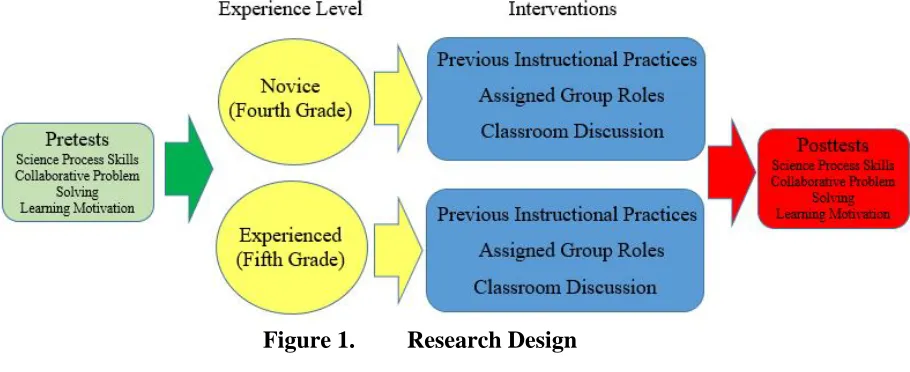
Figure 1 illustrates the research design for this study. Each of the experience levels have groupings for the three levels of intervention. This creates a total of six groups of participants, Novice/Classroom Discussion, Novice/Assigned Group Roles, Novice/Previous Instructional Practices, Experienced/Classroom Discussion,
Experienced/Assigned Group Roles, and Experienced/Previous Instructional Practices.
Figure 1. Research Design
Research Context
Currently, students working in the elementary engineering lab experience
difficulty with successful group interactions and developing appropriate robotic solutions to real-world problems. Last academic year (2014-2015), fifth grade students
working model, or modification. When some students discovered issues with the design, they took the build completely apart to start over, even with limited time, rather than identifying the problem in the design and correcting the issue. Other students could identify the problem with their design but did not know how to undertake the process to change the design even after identifying the problem. Students had difficulty identifying issues with the programming of the robotic solution as well. While constructivist
learning emphasizes students developing their learning through hands-on experience, proper scaffolding and facilitation is also necessary to assist the students in developing the collaboration and problem solving skills needed for robotics success. The elementary engineering robotics projects are collaborative due to the limited number of robotics kits and recommended instructional practices. Observing the groups in the past, some groups have better experiences than others. In the present study, developing collaborative supports for the required group work in robotics projects may improve the benefits from robotic projects for all students.
Participants
the elementary grade levels. Each classroom may have, at most, five new students added each year. The lack of fluctuation in students maintains a consistent student population for the majority of the first through fifth grades.
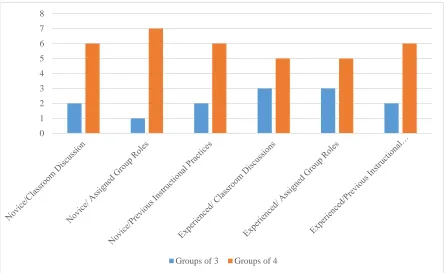
Student groups within each classroom were established with random assignments, based on an existing strategy used in the class of students, choosing a number from a deck of cards and sitting at the corresponding table. The majority of the student groups consisted of four students with some groups of three as indicated in Figure 2. The number of groups with three students totals 13 groups overall. In December 2015, toward the end of the study, new students were added to existing groups of three in two of the fifth grade classrooms. The number of groups with four student members totaled 33 groups at the beginning of the study and 35 upon completion of the study. Group size is determined by class size, and available materials. Enough LEGO Mindstorms robotics kits were secured for the purposes of the study in order to ensure no groups exceeded four student members.
Figure 2. Group Sizes. The chart identifies the number of groups of three and four students based upon the experience levels and the intervention.
0 1 2 3 4 5 6 7 8
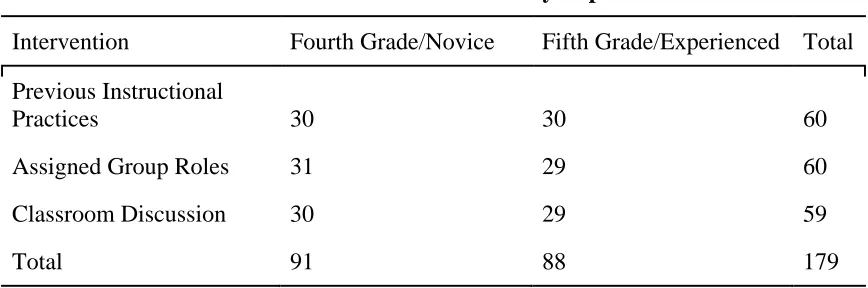
Each of the three intervention conditions started with sizes of approximately 60 students as seen in Table 1. Furthermore, each of the sub conditions divided by
experience level had approximately 30 students.
Table 1. Students in Intervention Conditions by Experience Level
Intervention Fourth Grade/Novice Fifth Grade/Experienced Total Previous Instructional
Practices 30 30 60
Assigned Group Roles 31 29 60
Classroom Discussion 30 29 59
Total 91 88 179
All six intervention conditions, or all six classes, used Engineering Notebooks with the specific instructions for the notebooks in writing for the Assigned Group Roles. The addition of the notebook was planned for the 2015-2016 instructional year and was not an aspect of any collaborative intervention. The Engineering Notebook was
introduced to promote student recording of their thoughts, co-construction of knowledge, discussion, and reflection during elementary engineering, and was not specifically used for the purposes of the present study.
General Method of Instruction
students are given criteria for the build with no instructions to follow. For example, fifth grade students are asked to build a vehicle that can climb inclines. When testing the design, the incline is adjusted to see how steep of an incline the vehicle can successfully navigate. Students use prior knowledge from instruction guided builds to design and build a working vehicle. Open-ended challenges sometimes use groups of three to four students, or partners, depending upon the complexity of the project. Rarely do students complete open-ended challenges individually. Projects in elementary engineering requiring the students work in groups of three to four students do not typically extend beyond three to four classes and only occur, at most, two to three times an instructional period. The robotics project is the only project that requires students to work within the same group for extended periods of three to four months.
necessary experiences and prior knowledge for students to take on the more complex collaborative robotics projects.
The robotics projects take place only in fourth and fifth grade and require students to design, build, and program a robotics solution with the criteria for the project changing each year. Collaborative robotics projects are designed to reinforce and assist with learning in the general classroom by targeting science, math, language, and engineering standards. The use of technology, through the robots, promotes the cross-curricular aspect of STEM in real world practices. The use of the Engineering Notebooks and the presentation of their group solution to their peers reinforces language standards, promotes student reflection, and co-construction of knowledge in group projects. The process of identifying problems and developing solutions promotes science process skills and engineering practices. The collaborative robotics project requires students to use what they have learned about robots and fosters the development of new knowledge in order to design, build, and program an original solution to a problem they identify based upon the given criteria. Students have the option of using instructions to design the base of their robotic solutions, but are required to add an original working part or modifications. Ucgul and Cagiltay (2014) found that students had the most difficulty with mechanical building and programming; however, the use of instructions alleviated some of these issues. Allowing groups to begin their design with the use of instructions can assist students in managing the project within the given time constraints.
the end. Eight robotics kits were available for each class which allowed for an entire grade level of classes to complete a project at the same time with group sizes of three to four students. The majority of the groups have four students with the minority of groups being the recommended size of three students. Students were required, as in past projects, to brainstorm problems and potential solutions prior to receiving their robotics kits. In the past, in order to support the group work, students have been given criteria for the project and asked to ensure everyone is included in developing the design, building the robot, and programming the robot. Student participants completed their collaborative robotics project over sixteen weeks for one hour each week. The project was extended from the usual twelve week, or trimester, project from past instructional years for the purposes of the study. Students were reminded each class of the time limitations because it has been difficult in the past for students to understand the limited amount of time available when a project extends for four months. Therefore, time reminders were given in terms of hours rather than days, or weeks, to provide a more realistic understanding of the actual available time. Robotics projects in the past have been limited to a trimester in order to share kits between fourth and fifth grade. The additional robotics kits for the study allowed both grade levels to participate at the same time and provided an opportunity to extend the traditional trimester time frame and allow both grade levels more time to experience designing, building, and programming a robotic solution.
everyone had a turn building and programming the robot, and that each student should include notes each class in their Engineering Notebooks. No specific modifications or changes were made based upon the experience level of the students.
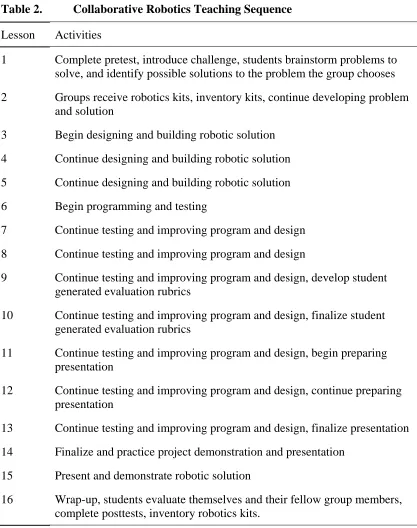
Table 2. Collaborative Robotics Teaching Sequence
Lesson Activities
1 Complete pretest, introduce challenge, students brainstorm problems to solve, and identify possible solutions to the problem the group chooses 2 Groups receive robotics kits, inventory kits, continue developing problem
and solution
3 Begin designing and building robotic solution 4 Continue designing and building robotic solution 5 Continue designing and building robotic solution 6 Begin programming and testing
7 Continue testing and improving program and design 8 Continue testing and improving program and design
9 Continue testing and improving program and design, develop student generated evaluation rubrics
10 Continue testing and improving program and design, finalize student generated evaluation rubrics
11 Continue testing and improving program and design, begin preparing presentation
12 Continue testing and improving program and design, continue preparing presentation
13 Continue testing and improving program and design, finalize presentation 14 Finalize and practice project demonstration and presentation
15 Present and demonstrate robotic solution
In addition to following the same basic instructional outline for the collaborative robotics project, all three intervention conditions, Previous Instructional Practices, Assigned Group Roles, and Classroom Discussion, were reminded and encouraged to collect their own notes in their Engineering Notebooks, but all group members in Assigned Group Roles had notes as part of the jobs under their assigned roles. The data manager was specifically required to take detailed notes for the group each class. The students used a notebook for the first time this year (2015-2016) in the elementary engineering classroom. The Engineering Notebook was introduced briefly prior to the start of the study through the use of other activities that encourage observation and recording of data. However, the students only used the Engineering Notebook for two classes before beginning the collaborative robotics projects. Reminders were needed for students to utilize the tool and reinforce the teacher expectations but were not always heeded. The Engineering Notebook provided an opportunity for students to record individually constructed and co-constructed ideas and observations. Not all students took advantage of the opportunity. The students also had the opportunity to reflect upon various aspects of robotics in the Engineering Notebook. Students created and
appropriate tasks were completed in all three of the interventions, especially the Assigned Group Roles. The notebook was not a component of the data collection or analysis.
Interventions
Classroom Discussion
The interventions are designed to create a safe and supportive collaborative environment for all the students. The first collaborative support used classroom discussions including establishing expectations and developing a safe environment for sharing ideas. Additional supports were included throughout the project to reinforce the expectations and promote effective discussions both within the group and as a whole class (Lesson Plans, Appendix A). Restating someone else’s thoughts, increasing wait time, partner talk, and encouraging many contributors were strategies used for the intervention, modeled after the classroom strategies in Classroom Discussions Using Math Talk to Help Children Learn (Chapin, O’Connor, & Canavan Anderson, 2012). Whole class discussions provided the teacher time to model strategies and assist students in developing the strategies, with redirection if necessary. The teacher also had the opportunity to monitor group discussions by visiting groups during the course of the class time. Checking in with each group allowed the teacher to assess how the group
discussions were progressing and provided opportunities for additional modeling and redirecting within a small group setting rather than the whole class (Mills et al., 2013). The goal was to model and promote collaborative discussion techniques and assist students in implementing these strategies in their collaborative robotics groups.