Effect of Different Processing Methods on the Proximate
Composition of Cassava Peels
*Unigwe, Cyprian Robinson
1, Raji, Ademola Moshood
1, Popoola, Abiola Moshood
1, Balogun,
Fatima Adeola
1, Adekunle, Femi Olayinka
1and Nwokwu, Gilbert N
21Federal College of Animal Health and Production Technology, Moor Plantation, Ibadan, Oyo State, Nigeria. 2Ebonyi State University, Abakaliki, Ebonyi State, Nigeria.
Fresh sweet cassava (Manihot esculenta Crantz) peels were collected at Orile-Ilugun; an industrial layout in Oyo State, Nigeria, where cassava is being processed to dry granules (garri). The peels were subdivided into four portions and subjected to submerged fermentation, ensiling, boiling and sun-drying treatments. These were further sundried for 3-5 days till they were crispy. Each of them was subjected to proximate analysis and chemical quantification for hydrogen cyanide. The result showed, with respect to crude protein, that ensiled (10.69%) and fermented (9.25%) cassava peels were statistically similar (p<0.05) and superior to boiled (4.92%) and sundried (4.86%). Similarly, the fermented (16.88mg/kg) and ensiled (21.62mg/kg) cassava peels reduced HCN content to permissible levels when compared to boiled (55.21mg/kg) and sun-dried (46.44mg/kg). It is therefore recommended that fermentation and/or ensiling enhance the nutritional value and usability of cassava peel as ingredient in pig’s diet.
Keywords: Cassava peels, processing, fermentation, ensiling, boiling, sun-drying
INTRODUCTION
Cereal grains supply the bulk of livestock feed, especially for poultry and pigs. However, in developing countries like Nigeria, cereal grains are in high demand for human uses and the production has never been adequate to meet the need of the ever increasing population, consequently, there is little or no excess grain for livestock feed (Adesehinwa et al., 2011). The problem of increasing feed cost in monogastric animal production is an age-long one for which cheaper alternative feedstuffs have been developed to replace the expensive conventional ones (Salami and Odunsi, 2003). One of such alternatives for partial replacement of maize in animal diets is the processed cassava peel meal (Abu and Onifade, 1996; Ikurior and Onuh, 1996; Eruvbetine et al., 1996; Salami, 1999; Salami, 2000). Cassava peel is the outer covering (first layer being brownish red, followed by a whitish mesoderm) of the tuber, which is usually removed manually with sharp knife, with little or no pulp in the process of turning the raw pulp into various human foods
such as garri, fufu, lafun, and tapioca among others in many tropical countries (International Institute of Tropical Agriculture, IITA, 1990).
Cassava peel which constitute about 10-13% of tuber weight (Oyebimpe et al., 2006), is of no use to the human populace and often constitute waste disposal problems could be of great potential in livestock feeding. Also the recent campaign to increase the production of cassava for industrial use will further increase the availability of cassava peels for livestock feeding (Irekhore et al., 2006).
*Corresponding Author: Unigwe Robinson, Federal College of Animal Health and Production Technology, Moor Plantation, Ibadan, Oyo State, Nigeria. Email: [email protected]
Vol. 2(1), pp. 019-025, July, 2017. © www.premierpublishers.org.ISSN: 2167-0464
Cassava peel meal could serve as a cheap source of energy for farm animals but should be fortified with additional protein source because of its low protein level (Obioha and Anikwe, 1982). However, there are reports on the valorization/utilization of cassava peel to produce biotechnological products. These include production of enzymes such as fructosyltransferase (Lateef and Gueguim-Kana, 2012) and amylase (Sani et al., 2012), citric acid (Ogunka-Nnoka et al., 2011; Adeoye et al., 2015), bio-oils (Ki et al., 2013), bio-ethanol (Siyamani and Baskar, 2015), carrier for rhizobium inoculants (Ogbo and Odo, 2011) as well as microbial upgrading to enhance nutritional qualities (Lateef et al., 2008).
Considerable evidence has emerged for long of the possibility of using processed cassava peel as an energy source for pigs and poultry (Iyayi, 1986; Longe et al., 1997). High inclusion of the by-product in monogastric feed or formulation of diets with cassava peels, as sole energy source is limited because of its fibrous nature (Adesehinwa et al., 2011). Fakolade (1997) and Arowora et al. (1999) have reported the occurrence of high amounts of non-starch polysaccharides (NSPs) in cassava peels. The greatest limitation in the use of cassava peels as substitute for maize is that of its hydrogen cyanide (HCN) content which is harmful to the monogastric animals. The HCN content of fresh cassava peels has to be reduced greatly in the peels in order to promote its acceptability and utilization (Salami and Odunsi, 2003). Several processing methods have been applied to fresh cassava peels to reduce the cyanide content. These include grating and sun-drying (Tewe et al., 1976), ensiling (Obioha and Anikwe, 1982), fermentation (Tewe and Kasali, 1986), boiling (Longe, 1980), freezing (Obioha et al., 1983), oven-drying (Tewe and Kasali, 1986; Osei and Twumasi, 1989), sun-drying (Osei and Duodu, 1988; Esonu and Udedibia, 1993), parboiling and sun-drying (Salami, 2000). Studies (Tewe et al., 1976; Obioha and Anikwe, 1982; Tewe and Kasali, 1986) indicated that ensiling and fermentation are the most efficient methods while oven-drying is the least efficient method for cyanide reduction in fresh cassava peels. It is also evident from the studies conducted by Esonu and Udedibia (1993) and Salami (2000) that parboiling prior to drying had no advantage over sun-drying alone in terms of reduction of cyanide content of cassava peels.
Although the nutrient composition of the peel is affected by the variety of cassava, soil condition and rainfall distribution (Osei and Twumasi, 1989), processing method does not seem to influence the chemical composition of the peel meal (Salami, 2000). According to Eshiett and Ademosun (1981) and Salami (2000), oven-dried cassava peel meal and parboiled cassava peel meals contain 5.98 versus 5.31% crude protein, 9.3 versus 12.30% crude fibre, 0.65 versus 1.13% ether extract, 65.87 versus 63.29% nitrogen free extract and 7 versus 9.88% total ash respectively while the metabolizable energy of oven-dried
cassava peel meal was reported to be 2044.8kcal/kg (Eshiett and Ademosun, 1981). It was therefore the aim of this study to evaluate the effect of different processing methods on cassava peel so that risk or safety will be factored into its use as a component of animal feed, particularly with reference to crude protein and HCN differentials.
MATERIALS AND METHODS
Experimental Site
The experiment was carried out at the piggery unit (Bora Farm) of the Research Farm of The Federal College of Animal Health and Production Technology, Moor Plantation, Ibadan, Oyo State. Ibadan is geographically located at latitude 7° 22’ 39’’ N and longitude 3° 54’ 21’’ E. Ibadan has a tropical wet and dry climate, with a lengthy wet season and relatively constant temperature throughout the course of the year. It has mean total rainfall of 1420.06 mm, mean maximum temperature of 26.46 °C with 21.42 °C as the minimum and relative humidity of 74.55%.
Source and Processing of Cassava Peels
Fresh cassava peels from the predominantly cultivated sweet cassava (Manihot esculenta Crantz), was sourced from Orile-Ilugun; an industrial layout in the outskirt of Ibadan, Oyo State, Nigeria; where women that bought cassava root tubers from the market and farms for garri processing come together to peel and heap the wastes. The fresh cassava peels were collected in 50kg sacks for onward washing with clean bore-hole water. After which the cassava peels were divided into four places (2kg each) for different processing methods as hereunder:
1. Fermentation: The washed fresh cassava peels which had not stayed for longer than 4-6 hours since peeled off were immersed in clean bore-hole water in a plastic container (vat) and left at an ambient temperature of 26-30 °C for four days. Sign of fermentation which include foaming was looked out for. After four days, the cassava peels were separated from the broth and spread on a clean polythene sheet under the full blare of the sunlight for 3-5 days during which it dried to constant weight (Okpako et al., 2008; Naa et al., 2010).
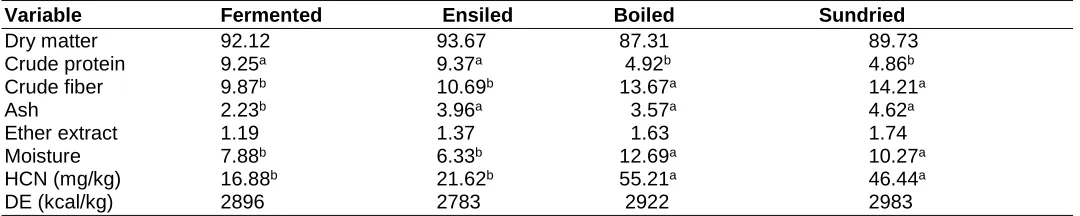
Table 1: Proximate composition of treated cassava peels
Variable Fermented Ensiled Boiled Sundried
Dry matter 92.12 93.67 87.31 89.73
Crude protein 9.25a 9.37a 4.92b 4.86b
Crude fiber 9.87b 10.69b 13.67a 14.21a
Ash 2.23b 3.96a 3.57a 4.62a
Ether extract 1.19 1.37 1.63 1.74
Moisture 7.88b 6.33b 12.69a 10.27a
HCN (mg/kg) 16.88b 21.62b 55.21a 46.44a
DE (kcal/kg) 2896 2783 2922 2983
ab, means on the same row with different superscripts are statistically different (p<0.05)
under the sun for 3-5 days till it dried to constant weight (Obioha and Aniekwe, 1982).
3. Boiling: Washed fresh cassava peels were boiled in 100°C boiling water for 30 minutes. The pot was brought down and the water decanted leaving behind the boiled cassava peels. The cassava peels were spread on a clean polythene sheet under direct sunlight for 3-5 days to dry to constant weight (Perera, 2010).
4. Sun-drying: Washed fresh cassava peels were spread on a clean polythene sheet on a concrete platform and left under direct sunlight for 3-5 days until dried to constant weight. This was collected and packed in an air-tight container for grinding and analysis as described by Perera (2010).
The above processes were replicated thrice.
Data Collection
Each of the above cassava peels got from different processing methods was packaged in an air-tight container for onward grinding to powdery state and appropriately labeled for ease of identification. They were taken to the laboratory for composite chemical composition analysis using procedure of AOAC (1990). The hydrogen cyanide content was determined using the method of Cooke (1978). The most suitable, based on the processing method that best reduced hydrogen cyanide to a tolerable level of not more than 50mg/kg (Iyayi and Tewe, 1992) as well as the method that best improved the crude protein value of the cassava peels was determined.
Nutrients and Cyanide Analysis
Moisture content was estimated by oven drying method at 105°C (Osborne and Voogt, 1978). Protein and fat contents were determined by the Kjeldahl and Soxhlet methods. Crude fiber and ash were determined by the standard method of AOAC (1990). Cyanide level in cassava peels was analyzed both qualitatively using picrate paper (Egan et al., 1998) and quantitatively using acid hydrolysis of cyanogenic glucosides as described by Bradbury et al. (1991).
Statistical Analysis
The data were subjected to one-way analysis of variance and where difference in means was observed, Duncan’s Multiple Range Test was used to separate the means (Duncan, 1955).
RESULTS AND DISCUSSIONS
Table 1 shows the proximate compositions of differently processed cassava peels. The results showed that the dry matter (DM) for ensiled was the highest, followed by fermented, sundried and boiled respectively. The crude protein content of the ensiled was the highest followed by fermented, boiled and sundried respectively. There was no significant difference (p>0.05) between ensiled and fermented as well as between boiled and sun-dried but a significant difference (p<0.05) between ensiled/fermented and boiled/sun-dried. The cyanide (HCN) content was lowest for the fermented followed by ensiled, sundried and boiled. In a reverse stance, there was a significant difference (p<0.05) between boiled/sun-dried and ensiled/fermented in respect of HCN.
Dry Matter
From the proximate analysis, the dry matter content of the fermented cassava peels was similar to the report of Irekhore et al. (2006) and Ahamefule et al. (2006) that reported 93% and 94.76% respectively. In the same vein, the dry matter (DM) content of the ensiled cassava peels was also similar to 95.55% reported by Ahamefule et al. (2006). For the boiled and sundried cassava peels, the DM contents were similar to 80.75, 82.55, 86.22, 89.24 and 87.36% as reported by Adesehinwa et al. (2008), Udoyong et al. (2010), Ukanwoko and Ukandu (2011), Adesehinwa et al. (2011) and Akpabio et al. (2012) respectively. The DM was however higher than that of Adegbola and Asaolu (1986) and Mako et al. (2013) that reported 66.25 and 66.79% respectively.
Crude Protein
ensiled cassava peels could be attributed to the possible secretion of some extracellular enzymes (protein) such as amylases, linamarase and cellulase (Oboh and Akindahunsi, 2003). Also the increase in the growth and proliferation of fungi/bacteria complexes in the form of single cell proteins might possibly account for the apparent increase (Antai and Mbongo, 1994; Oboh et al., 2002). The crude protein contents of the boiled and sundried cassava peels were similar to the findings of Davendra (1977), Onyimonyi and Ugwu (2007) and Ahamefule et al. (2006) that reported 4.8%, 4.5% and 4.38% respectively. The results differed from the reports of Eshiett and Adeosun (1981), Salami (2000), Irekhore et al. (2006), Adesehinwa et al. (2008), Udoyong et al. (2010), Adesehinwa et al. (2011), Akpabio et al. (2012) and Mako et al. (2013) who reported 5.98%, 5.31%, 3.06%, 5.69%, 5.46%, 3.15%, 5.48% and 6.16% respectively. These variations in nutrients could be attributed to the methods of peeling, varieties of cassava, soil conditions and rainfall distributions (Osei and Twumasi, 1989).
Crude Fibre
From the analysis of the results, the crude fiber content for fermented and ensiled cassava peels were similar to the results obtained by Ahamefule et al. (2006) and Aro and Aletor (2012) that got 9.20 and 13.64% respectively while Ukanwoko and Ukandu (2011) got a value of 21.61% for ensiled cassava peel which is higher than the result of this experiment. The crude fibre could be attributed to variety of cassava, soil condition, method of peeling and rainfall distribution (Osei and Twumasi, 1989). In the same vein, the values for boiled and sundried cassava peels were closely related to results of Irekhore et al. (2006), Akpabio et al. (2012) and Abu et al. (2015) that got 7.9, 10.78 (sweet variety) and 9.03% respectively, the findings of Adesehinwa et al. (2008), Udoyong et al. (2010), Adesehinwa et al. (2011), Akpabio et al. (2012) and Aro and Aletor (2012) were higher than this, with the values of 20.49, 18.81, 33.96, 16.12 (bitter variety) and 38.40% respectively. This high fibre content could be traceable to the maturity of the cassava used, peeling process and possible contamination with the tuber stumps. Also soil condition and variety of cassava could be the reasons (Osei and Twumasi, 1989).
Ash
The results of the ash content in the fermented and ensiled cassava peels were comparable to the values obtained by Okeke et al. (1985), Ijaiya (2001), Ahamefule et al. (2003), Ahamefule et al. (2006) and Ukanwoko and Ukandu (2011) that got 3.62, 3.18, 3.71, 3.48 and 3.81% respectively. The values were lower than the values obtained by Aro and Aletor (2012) and Mako et al. (2013) which were 6.62% and 7.05% respectively. The studies by Tewe et al. (1976), Obioha and Anikwe (1982), Tewe and
Kasali (1986), Salami and Odunsi (2003) and Ahamefule et al. (2006) indicated that fermentation and ensiling are the most efficient methods of processing cassava peels and their reports agreed with the present study. Also, there was no discernible trend in fat, crude protein, crude fibre and ash content of the differently processed cassava peels in the study of Oboh (2006). The results obtained were quite low compared to 7.0, 6.50 and 5.89% reported by Adegbola and Asaolu (1986), Irekhore et al. (2006) and Akpabio et al. (2012) respectively. The difference could be due to environmental factors or difference in varieties as well as edaphic factors since ash represents the mineral content which is usually derived from the soil.
Ether Extracts (Fat Content)
The ether extract values were comparably similar to values of 1.10, 1.75, 1.13 and 1.31% reported by Ahamefule et al. (2006), Udoyong et al. (2010), Ukanwoko and Ukandu (2011) and Akpabio et al. (2012) respectively. The values of 4.0, 3.11 and 17.24% documented by Irekhore et al. (2006), Aro and Aletor (2012) and Mako et al. (2013) were higher than these values. In the same vein, the values of 0.75, 0.34 and 0.70% reported by Adesehinwa et al. (2008), Adesehinwa et al. (2011), and Abu et al. (2015) respectively are lower than the values obtained in this experiment. The difference in values could be as a result of cassava varieties, soil factors and processing methods.
Cyanide
Akindahunsi, 2003; Oboh, 2006). Sundrying is only partially effective in reducing cyanogenic glycoside content (Tewe, 1989). Peeling which disrupts tissues helps to release linamarase and hydroxynitrile lyase enzymes that catalyse the degradation of cyanogenic glycosides to release HCN (Kimaryo et al., 2000). Boiling of cassava parenchyma in water for 30 minutes reduces cyanide better than steaming, baking or frying (Nambisan and Sundaresan, 1985). This result was not in consonance with the finding of Olafadehan (2011) that recorded 710.98, 299.21, 165.36 and 98.10mg/kg for unfermented, ensiled, sun-dried and retted CPM (bitter cassava) respectively. Indeed, the chemical composition of the processed CPM compared well with the values obtained elsewhere by Okeke et al. (1985) and Sogunle et al. (2007)
CONCLUSIONS
Fermentation and ensiling of cassava peels proved advantageous with respect to reduction in the HCN contents and improvement in the crude protein unlike the boiled and sun-dried counterparts. Therefore, fermentation or ensiling is veritable in the treatment of cassava peels for enhancement of crude protein and reduction of cyanide.
REFERENCES
Adeoye AO, Lateef A, Gueguim-Kana EB (2015). Optimization of citric acid production using a mutant strain of Aspergillus niger on cassava peelsubstrate. Biocatalysis and Agricultural Biotechnology 4 (4):568-574.
Adesehinwa AOK, Obi OO, Makanjuola BA, Oluwole OO, Adesina MA (2011). Growing pigs fed cassava peel based diet supplemented with or without Farmazyme® 3000 proenx: Effect on growth, carcass and blood. Afr. J. Biotech. 10 (14): 2791-2796.
Adesehinwa AOK (2008). Comparative utilization of two sources of expeller extruded soybean meal as a replacement for on-farm processed soybean in diets of growing-finishing pigs. Afr. J. Agric. Res. 3(8):574-577. Adesehinwa AOK, Dairo FAS, Olagbegi BS (2008).
Response of Growing Pigs to Cassava Peel Based Diets Supplemented with AvizymeR 1300: Growth, Serum and Haematological Indices. Bulgarian J. Agric. Sci. 14(5):491-499.
Abu OA, Onifade AA (1996). Effects of cassava waste substitution for maize in weaner rabbit diets. Bull. Anim. Hlth. Prod. Afr. 44:167-172.
Abu OA, Olaleru IF, Oke TD, Adepegba VA, Usman B (2015). Performance of Broiler Chicken Fed Diets Containing Cassava Peel and Leaf Meals as Replacements for Maize and Soya Bean Meal. Intern. J. Sci. Technol. 4(4): 169-173.
Arowora KA, Tewe OO, Fasein TO, Lamina DRO (1999). Carbohydrate constituents of cassava peel clones and
their utilization in pig grower rations. Trop. Anim. Prod.
Invest. 2:29-34. AOAC (1990). Official methods of analysis (15th Ed.)
Association of Official Analytic Chemists, Arlington, V.A. Amaefule KU, Onwudike OC, Ibe, SN, Abasiekong SF (2006). Performance, cost benefit, carcass quality and organ characteristics of pigs fed high graded levels of brewer’s dried grain in the humid tropics. Pakistan Journal of Nutrition 5(3):242-247.
Akpabio UD, Akpakpan AE, Udo IE, Nwokocha GC (2012). Comparative Study on the Physicochemical Properties of Two Varieties of Cassava Peels (Manihot utilissima Pohl). Intern. J. Env. Bioenergy 2(1):19-32.
Adegbola AA, Asaolu O (1986). Preparation or cassava peels for use in small ruminant production in western Nigeria. In: Proceeding of a workshop held at the University of Alexandria, Egypt, Preston T.R. and Nuwanyakpa. M.Y. (ed) 105-115.
Ahamefule FO, Ibeawuchi JA, Nwankwo DI (2003). Utilization of sundried, fermented and ensiled cassava peel based diets by weaner rabbits. Nig. Agric. J. 35:72-77.
Aderemi FA, Nworgu FC (2007). Nutritional status of cassava peels and root seiviate biodegraded with Aspergillus niger. American-Eurasian J. Agric. and Environ. Sci. 2(3): 308-311.
Adeyemi AI, Balogh E (1985). Biotechnology in food processing prospects in Nigeria. Nigeria Food J. 3:33-39.
Aro SO, Aletor VA (2012). Proximate composition and amino acid profile of differently fermented cassava tuber wastes collected from a cassava starch producing factory in Nigeria. Livestock Res. Rural Dev. 24(3):102-106.
Antia SP, Mbongo PM (1994). Utilization of Cassava Peels as Substrate for crude protein formation. Plant Food Human Nutrtion 46 (4):345- 351.
Adegbola AA, Asaolu O (1985). Preparation of cassava peels for use in small ruminant production in western Nigeria. In: ILRI, Towards optimal feeding of agricultural by-products to livestock in Africa.
Bradbury HJ, SV Egan, MJ Lynch (1991). Cassava toxicity and food security: Analysis of cyanide in cassava using acid hydrolysis of cyanogenic glucosides. J. Sci. Food Agric. 55:277-290.
Cooke RD (1978). An enzymatic assay for the total cyanide content of cassava (Manihot esculenta Crantz). J. of Sci. Food and Agric. 29:345-352.
Chelule PK, Mokoena MP, Gqaleni N (2010). Advantages of traditional lactic acid bacteria fermentation of food in Africa. Technology and education topics in Applied Microbiology and Microbial Biotechnology Ed. Mendez-vilas.
Duncan DB (1955). New Multiple Range Test. Biometrics 11:1-42.
Eruvbetine D, Oguntona EB, James IJ, Osikoya OV, Ayodele SO (1996). Cassava (Manihot esculenta) as an energy source in diets for cockerels. Int. J. Anim. Sci. 11:99-101.
Esonu BO, Udedibia ABI (1993). The effect of replacing maize with cassava peel meal on the performance of weaned rabbits. Nigerian J. Anim. Prod. 20 (1-2):81-85. Eshiett NO, Ademosun AA (1981). Effect of feeding
cassava peel meal to growing pullets on their subsequent laying performance. Bull. Anim. Prod. Afr. 29:237-242.
Egan SV, HH Yeoh, JH Bradbury (1998). Simple picrate paper kit for determination of the cyanogenic potential of cassava flour. J. Sci. Food Agric. 76:39-48.
Essers AJ (1994). Making safe flour from bitter cassava by indigenous solid substrate fermentation. Acta Horticulturae 375:217–224.
Fakolade AT (1997). Effect of polysaccharide supplementation on the performance of layers maintained on 45% corn offal and 40% wheat offal diets. B.sc. Dissertation, University of Ibadan, Ibadan, Nigeria, 84.
Gomez G, Vadic VM, Santos J, Hoyos C (1985). Evaluation of cassava root meal prepared from low and high cyanide containing cultivars in pig and broiler diets. Nutr. Report Int. 28:693-704.
Ikurior SA, Onuh SO (1996). Assessment of practical potential of cassava peels meal for growing and growing–finishing pigs in sub-humid tropics. Bull. Anim. Hlth Prod. Afr. 44:209-214.
IITA (1990). Cyanide in cassava. Its’ not there, it just happens. Annual Report, International Institute of Tropical Agriculture 34-35.
Ijaiya AT (2001). Dry matter and nutrient digestibility in weaner rabbits fed varying levels of maize and fermented cassava peel meal based diet. Proc. Agric. Soc. Nigeria, Abeokuta, 35:98-102.
Irekhore OT, Bamgbose AM, Olubadewa GA (2006). Utilization of cassava peel meal as energy source for growing pigs. J. Anim. Vet. Adv. 5(10):849-851.
Iyayi EA, Tewe OO (1992). Effect of protein deficiency on utilization cassava peel by growing pigs. In: Proc. IITA/ILCA/University of Ibadan Workshop on the Potential Utilization of Cassava as Livestock Feed in Africa, 14-18 November 1988 Ibadan, Nigeria, Eds SK Hahn, L Reynolds, GN Egbunike IITA/ILCA.
Iyayi EA (1986). Varying dietary cyanide and protein levels on the performance of growing pigs. Ph.D Thesis, Dept
of Animal Science, University of Ibadan, Ibadan, Nigeria. Ki OL, Kurniawan A, Lin CX, Ju YH, Ismadji S (2013).
Bio-oil from cassava peel: A potential renewable energy source. Bioresour Technol. 145:157-161.
Kimaryo VM, Massawe GA, Olasupo NA, Holzapfal WN (2000). The use of a starter culture in the fermentation of cassava for the production of ‛‛kivunde’’, a traditional Tanzanian food product. Int. J. Food Microbiol. 56:179-190.
Lateef A, Gueguim-Kana EB (2012). Utilization of cassava wastes in the production of fructosyltransferase by Rhizopus stolonifer LAU 07. Romanian Biotechnol. Lett. 17(3): 7309-7316.
Lateef A, Oloke JK, Gueguim-Kana EB, Oyeniyi SO, Onifade OR, Oyeleye AO, Oladosu OC, Oyelami AO (2008). Improving the quality of Agro-wastes by solid state fermentation: enhanced antioxidant activities and nutritional qualities. World J. Microbiol. Biotechnol. 24(10):2369-2374.
Longe OG (1980). Effect of processing on chemical composition and energy value of cassava. Nutr. Rep. Int. 21:819-828.
Longe OG, Famojuro ED, Oyenuga VA (1997). Available carbohydrates and energy value of cassava, yam and plantain peels for chicks. E. Afr. Agric. Forestry J. 42:408-413.
Mako AA, Akinwandu VO, Oyegunwa AS (2013). Nutritive value assessment of the alternative feed resources using gas fermentation techniques and acceptability by WAD goats. Intern. J. Agric. Sci. 3(4):365-371.
Nambisan B (2011). Strategies for elimination of cyanogens from cassava for reducing toxicity and improving food safety. Food Chem. Toxicol. 49:690-693. Naa AA, Maxwell S, Josephyne T (2010). Fermentation in cassava (Manihot esculenta Crantz) pulp juice improves nutritive value of cassava peel. Afr. J. Biochem. Res. 4(3):51-56.
Nambisan B, Sundaresan S (1985). Effect of processing on the cyanoglucoside content of cassava. Journal of the Science of Food and Agriculture 36:1197–1203.
Obioha FC, Anikwe PCN (1982). Utilization of ensiled and sun-dried cassava peels by growing swine. Nutr. Res. Int. 26(6):961- 972.
Obioha FC, Okeke GC, Onua EC, Obogbunam SI (1983). The effect of varying protein and energy levels on the utilization of processed cassava peels by mice. Nutr.
Rep. Int. 28:531-545. Oboh G, Akindahunsi AA, Oshodi AA (2002). Nutrient and
antinutrient content of Aspergillus niger fermented cassava products (flour and gari). J. food composition and analysis, 15(5): 617-622.
Oboh G (2006). Nutrient enrichment of cassava peels using a mixed culture of Saccharomyces cerevisae and Lactobacillus spp solid media fermentation techniques. Elect. J. Biotechnol. 9:203-206.
Oboh G, Akindahunsi AA (2003). Biochemical Changes in Cassava Products (flour and garri) subjected to saccharomyces cerevisae – solid media fermentation. Food Chem. 82(4):599-602.
Ogbo FC, Odo MO (2011). Potential of Rice Husk and Cassava Peel as Carriers for Bio-fertilizer Production. Nig. J. Biotechnol. 23:1-4.
Okeke GC, Obioha FC, Udeogu AE (1985). Comparison of detoxification methods of cassava borne cyanide. Nutria. Report Intl. 32:139-148.
Olafadehan OA (2011). Haematological parameters, serum constituents and organ development of growing rabbits as affected by feeding processed cassava peels. Anim. Nutri and Feed Technol. 11: 41-51.
Okpako CE, Ntui VO, Osuagwu AN, Obasi FI (2008). Proximate composition and cyanide content of cassava peels fermented with Aspergillus niger and Lectobacillus rhamnos. J. Food Agric. Environ. 6 (2):251 – 255. Onyimonyi AE, Okeke GC (2005). Carcass, organ and
pathological characteristics of grower pigs fed cassava peel meal. J. Agric, Food, Environ and Ext. 4(1):1-4. Onyimonyi AE, Ugwu SOC (2007). Bioeconomic indices of
broiler chicks fed varying ratios of cassava peel/bovine blood. Intern. J. Poult. Sci. 6(5):318-321.
Osborne DR, V Voogt (1978). The Analysis of Nutrients in Foods, Academic Press Inc. London.
Osei SA (1992). Sun-dried cassava peel meal as a feed ingredient in broiler diets. Trop. Agric. (Trinidad) 69(3):273 – 275.
Osei SA, Duodu S (1988). Effect of fermented cassava peel meal on the performance of broilers. Br. Poult. Sci. 29 (3):671-675.
Osei SA, Twumasi IK (1989). Effects of oven-dried cassava peel meal on the performance and carcass characteristics of broiler chickens. Anim. Feed Sci. Technol. 24 (3-4):247–252.
Oyebimpe K, Fanimo AO, Oduguwa OO, Biobaku WO (2006). Response of broiler chickens to cassava peel and maize offal in cashew nut based-diets. Arch.
Zootech. 5.5(211):301-304. Padmaja G, George M, Moorthy SN (1993). Detoxification
of cassava during fermentation with a mixed culture inoculum. J. Sci. Food Agric. 63:473–481.
Perera CO (2010). Removal of cyanogenic glycoside from cassava during controlled drying. Drying Technol. 28:68 – 72.
Ruqayyah TID, Jamal P, Alam MZ, Mirghani MES, Jaswir I, Ramli N (2014). Application of response surface methodology for protein enrichment of cassava peel as animal feed by the white-rot fungus Panus tigrinus. Food Hydrocolloids 42:298-303.
Salami RI (2000). Preliminary studies on the use of parboiled cassava peel as a substitute for maize in layer’s diets. Trop. Agric. 77:199-204.
Salami RI, Odunsi AA (2003). Evaluation of processed cassava peel meals as substitutes for maize in the diets of layers. Int. J. Poult. Sci. 2(2):112-116.
Salami RI (1999). The use of two empirical methods of substitution of feedstuffs: parboiled cassava peel meal versus maize in the diets of growing cockerels. Nig. J. Anim. Prod. 26: 78-83.
Sani A, Awe FA, Akinyanju JA (1992). Amylase synthesis in Aspergillus flavus and Aspergillus niger grown on cassava peel. J. Ind. Microbiol. 10:55-59.
Sivamani S, Baskar R (2015). Optimization of bioethanol production from cassava peel using statistical experimental design. Environ. Prog. Sustainable Energy. 34(2):567-574.
Sogunle OM, Fanimo AO, Abiola SS, Bamgbose AM (2007). Growth response, body temperature and blood constituents of pullet chicks fed cassava peel meal supplemented with cashew nut reject meal. Nigerian J. Anim. Prod. 34:32-44.
Tewe OO (1989). Indices of cassava safety for livestock feeding. In: M. Bokanga, Essers AJA, Poulter N, Rosling H, Tewe OO(eds). Int. Soc. Hort. Sci. 241-249.
Tewe OO, Kasali OB (1986). Effect of cassava peel processing on the performance, nutrient utilization and physiopathology of the African giant rat (Cricetomy gambianus, waterhouse) Trop. Agric. (Trinidad), 63:125-128.
Tewe OO, Job TA, Loosil Jk, Oyenuga VA (1976). Composition of two local cassava varieties and effects of processing on their Hydrocyanic acid content and nutrient digestibility by the rat. Nig. J. Anim. Prod. 3:60 – 66.
Udoyong AO, Kibon A, Yahaya SM, Yakubu B, Augustine C, Isaac L (2010). Haematological Responses and Serum Biochemistry of Broiler Chicken Fed Graded Levels of Enzyme (Maxigrain) Supplemented Cassava Peel Meal (CPM) Based Diets. Global J. Biotechnol. and Biochem. 5(2):116-119.
Ukanwoko AI, Ukandu C (2011). Proximate Composition of Cassava Peels Ensiled with Cassava, Gliricidia and Leucaena Leaf Meals Prepared Under a Humid Environment. Continental J. Anim. Vet. Res. 3(2):36-40.
Accepted 25 July 2017
Citation: Unigwe CR, Raji AM, Popoola AM, Balogun FA,
Adekunle FO and Nwokwu GN (2017). Effect of Different Processing Methods on the Proximate Composition of Cassava Peels. Journal of Plant and Animal Sciences, 2(1): 019-025.
Copyright: © 2017. Unigwe et al. This is an open-access article