University of South Carolina
Scholar Commons
Theses and Dissertations
2017
Simulation-Based Interprofessional Education in a
Rural Setting
Ann D. Scott
University of South Carolina
Follow this and additional works at:https://scholarcommons.sc.edu/etd
Part of theNursing Commons
This Open Access Dissertation is brought to you by Scholar Commons. It has been accepted for inclusion in Theses and Dissertations by an authorized administrator of Scholar Commons. For more information, please [email protected].
Recommended Citation
Scott, A. D.(2017).Simulation-Based Interprofessional Education in a Rural Setting.(Doctoral dissertation). Retrieved from
SIMULATION-BASED INTERPROFESSIONAL EDUCATION IN A RURAL SETTING
by
Ann D. Scott
Bachelor of Science in Nursing Clemson University, 1987
Master of Science in Nursing University of Virginia, 1994
Submitted in Partial Fulfillment of the Requirements
For the Degree of Doctor of Nursing Practice in
Nursing Practice
College of Nursing
University of South Carolina
2017
Accepted by:
Robin Dawson Estrada, Major Professor
Sheryl Mitchell, Committee Member
Courtney Catledge, Committee Member
ii
iii
DEDICATION
First and foremost, I would like to thank my husband who supported and
encouraged me throughout this journey. He edited all of my work and was a shoulder to
lean and rely on when I needed him. I also want to give a shout out to my children who
encouraged me to go back to school (even at my age), as my family was my biggest
cheerleader and supporter. I also would like to thank all my extended family, friends, and
peers for believing in my and encouraging me throughout this journey. And to my
students that motivated me along the way, thank you. I only wish my mom and dad could
have been a part of this incredible journey, but I know they were looking down at me
from heaven. I am thankful to God for directing each and every step of my journey, and
iv
ACKNOWLEDGEMENTS
I am forever indebted to my mentor Dr. Robin Estrada and my committee
members, Dr. Courtney Catledge and Dr. Sheryl Mitchell for your time, guidance, and
encouragement through this long and challenging process. Their knowledge is
unsurpassed and their vision unequalled, and I value their advice, critique, and ability to
share life experiences with me along this journey. Dr. Estrada kept me on track and
focused on my goal of an August graduation, and I cannot thank you enough for the time
you spent from late Friday afternoons at the university to evenings at Waffle House
helping me put my thoughts onto paper. I could not have asked for a better chair and
mentor for my project.
I would also like to express a deep thank you to Michael Wirth who helped with
the statistical analysis, and to Cheri Plyler, Julie Ghent, and Dr. Betsy Blake for helping
recruit students. Without you all I may still be trying to find willing volunteers. I would
also like to acknowledge the J. Marion Sims Foundation and the Herbert and Anna Lutz
Foundation which assisted the USC Lancaster Nursing Simulation Lab with grant money
that was used to purchase much of the equipment needed for the lab and the project.
I am also grateful to my peers as well as other faculty that provided
encouragement, direction, and insight during this educational process. I can only hope
v
ABSTRACT
The purpose of this project was to examine the feasibility and acceptability of a
simulation-based IPE experience for pre-licensure nursing, pharmacy, and medical
students on a rurally-located campus. Using a mixed-methods, explanatory sequential
approach, this project: 1) examined the feasibility of implementing a simulation-based
IPE experience using telehealth tools; and 2) evaluated student perceptions of
inter-professional teamwork, roles and responsibilities, and patient outcomes for collaborative
practice, both pre- and post-scenario.
Quantitative data were analyzed using SPSS. Results revealed 94%
agreed/strongly agreed the IPE experience resembled a real-life situation. 100% of
nursing/medical students and 80% of the pharmacy students indicated they would
recommend this experience to their peers. Significant positive changes in attitudes
towards using an inter-professional team approach were noted for pharmacy students,
especially in regards to patient outcomes, reduced costs, and improved patient-centered
care. Qualitative data were transcribed and analyzed using thematic analysis. Four themes
emerged: 1) better understanding of technology; 2) improved communication among
team members; 3) benefit of true to life experience; and 4) increased knowledge level and
confidence. Participant suggestions for improvement included: 1) improve the
simulation/telehealth equipment orientation; 2) consider a grand round-type simulation;
vi
Although limited by a small sample size, this project confirmed it is feasible and
acceptable to offer simulation-based IPE in a rural setting facilitated by the use of
telehealth tools, and collaborative teamwork is enhanced by using “remote in” technology
during a simulation-based IPE activity. Complex healthcare now requires a collaborative
and team approach to patient care. A simulation-based IPE approach using “remote in”
technology allows for the development and mastery of these competencies. Future work
will incorporate student suggestions to improve the experience, as well as integrate
students from other healthcare disciplines, such as physician assistant students.
Keywords: Interprofessional education, simulation, teamwork, collaboration, rural, and
vii
PREFACE
The goal of any Evidence-Based Practice Project is to integrate best research into
clinical practice evidence thereby enhancing the knowledge base thus improving quality
care and patient outcomes. The project is designed to identify the scope of the clinical
practice problem, analyze the current evidence, synthesize the research as it relates to the
issue, and subsequently determine recommendations for best practices for clinical care.
Additionally, the Evidenced-based Practice Project has been identified as a requirement
for partial fulfillment of the Doctor of Nursing Practice Program. The intent is to examine
the feasibility and acceptability of a simulation-based IPE experience for pre-licensure
nursing, pharmacy, and medical students on a rurally-located campus using telehealth
tools, and to evaluate student perceptions of inter-professional teamwork, roles and
responsibilities, and patient outcomes for collaborative practice, both pre- and
viii
TABLE OF CONTENTS
DEDICATION ... iii
ACKNOWLEDGEMENTS ... iv
ABSTRACT ...v
PREFACE ... vii
CHAPTER 1INTRODUCTION ...1
CHAPTER 2PROJECT RESULTS ...25
CHAPTER 3CONCLUSION ...58
REFERENCES ...65
APPENDIX A–EVIDENCE TABLE ...73
APPENDIX B–LEVELS AND QUALITY OF EVIDENCE ...101
APPENDIX C–SPICE-R2INSTRUMENT ...103
APPENDIX D–SIMULATION DESIGN SCALE (STUDENT VERSION) ...105
1 CHAPTER 1
INTRODUCTION
Introduction and Background
Historically, healthcare education has been delivered in isolated silos of care.
Nursing students learned from a nursing perspective, and likewise medical, pharmacy,
and other healthcare professionals learned about patient care in clinical settings
individualized to those disciplines. Students were not afforded the opportunity to learn
effective communication and teamwork collaboration between the various professions
during their educational experience (Smithburger, Kane-Gill, Kloet, Lohr, & Seybert,
2013). When students approach a situation from these single points of view, their
perspective of the roles and contributions of others may be limited and lacking in scope.
It is no longer acceptable to deliver isolated healthcare education, as complex patient care
now requires a collaborative and team approach. Interprofessional education (IPE)
addresses this need by training professional healthcare students to work as part of a
healthcare team. The premise of IPE is that students who learn from one another, about
one another, and with one another will develop competencies needed to work together in
teams to provide higher quality care to their patients improving overall outcomes (Pippitt,
Moloney-Johns, Jalilibahabadi, & Gren, 2015). Traditionally, IPE experiences are
2
clinical simulation labs to practice patient scenarios. However, the logistics of
coordinating student schedules and travel times present challenges for faculty of rurally
located training programs. Technology-based tools currently used to address healthcare
access issues for rural patients may be an innovative approach to offering IPE
experiences for students in these programs.
Telehealth is a technology-based tool designed to increase access to care for
isolated rural residents. According to the Center for Connected Health Policy (CCHP)
and the Health Resources and Services Administration (HRSA), telehealth is defined as:
“The use of electronic information and telecommunications technologies to support
long-distance clinical healthcare, patient and professional health-related education, public
health and health administration” (CCHP, 2014, para 3; HRSA, 2015). One telehealth
format referred to as remote patient monitoring (RPM) or “remoting in”, uses audio and
video equipment permitting two-way live, real time interactive communication between a
patient in a distance site and the practitioner (CCHP, 2017; HRSA, 2015). Telehealth
increases access to care and improves rural health in many ways. Through telehealth,
patients and other healthcare professionals, can gain access to providers through a virtual
network. Utilizing telehealth technology for consultations saves both time and money as
neither the patient nor the provider have to travel long distances to access services
(HRSA, 2014).
Preparing students to work in interprofessional teams with technology such as
telehealth is a crucial skill for rural settings, as rural primary practitioners often
coordinate care for patients with multiple specialists. While the concept of telehealth has
3
bridge the access gaps in patient care (Gallagher-Lepak, Scheibel, & Gibson,2009), the
components have not been integrated into a comprehensive IPE learning experience. A
collaborative IPE experience combined with simulation activities using telehealth
technology can not only provide nursing students skills needed to care for rural
populations, but also address issues inherent in providing IPE experiences to students in
rurally located educational programs.
Scope of the Clinical Problem
Although IPE and simulation have existed for some time, research involving each
field is relatively new but continues to evolve over time (Palaganas, Epps, & Raemer,
2014). In the traditional education model, learning takes place in an individual clinical or
classroom setting using traditional educational methods of teaching (Palaganas et al.,
2014). Traditional IPE centered around groups of students, led by one or more faculty
members, in which discussion of case-based scenarios in a classroom setting is facilitated
by lectures, power-point presentations, and other faculty-centered models of education.
Additionally, McGahie, Issenberg, Cohen, Barsuk, and Wayne (2011) compared
traditional clinical education, specifically the Halstedian approach, which is “see one, do
one, teach one” to simulation-based education with deliberate practice. Deliberate
practice involves effortful activity with the goal of maximizing performance. According
to the World Health Organization (WHO), this siloed approach to education has fostered
a culture of poor collaboration among team members (WHO, 2010). The research
comparisons concluded that simulation-based education using deliberate practice was
superior to traditional educational methods (McGahie et al., 2011). Studies indicate that
4
require learners to incorporate several actions into learning, including knowing, doing,
and being in the learning process (Baker, Pulling, McGraw, Dagnone, Hopkins-Rosseel,
& Medves, 2008). Simulation-enhanced IPE materialized as early as the 1950s using
standardized patients (i.e., human actors playing the role of patients or family members),
low technology mannequins such as task trainers, and computerized simulations in the
behavioral sciences (Palaganas et al., 2014). In the 1980s, computerized screen-based
anesthesia training simulators were used to train staff in emergency management of crisis
situations. Training was focused on capitalizing on teamwork and enhancing
collaboration (Palaganas et al., 2014). Propelled by the 1999 Institute of Medicine (IOM)
report, To Err is Human (2010), the trend of team-based training continues. The Agency
for Healthcare Research and Quality (AHRQ) also released TeamSTEPPS in 2006 which
again focused on the importance of quality collaborative team training (AHRQ, 2008).
This trend now includes using high fidelity human patient simulation, (HFHPS), or a
controlled and structure learning experience using computerized life-like mannequins
with advanced technology (Hicks, Coke, & Li, 2009). Students are challenged to think
critically while using HFHPS in an environment similar to the clinical setting. As the
scenario unfolds, instructors control the HFHPS responses based on the student
interventions (Hicks et al., 2009).
IPE is proven to promote teamwork and enhance interprofessional attitudes
towards one another. Previous research demonstrated using simulation-based IPE
developed teamwork, communication skills and changed stereotype perceptions that exist
between professional healthcare undergraduates, especially between nursing and medical
5
also been associated with reduction in medical errors, with a potential to improve patient
outcomes. For example, researchers at the University of Virginia used a simulation “room
of errors” to explore the issue of patient safety. In this mock-up of a pediatric intensive
care room, participants (representing several professional healthcare roles) were given
seven minutes to identify as many of the purposely placed errors as possible. When the
participants worked as teams, they could identify many more errors than individually.
The researchers concluded that when teams work together and collaborate effectively,
patient care is improved and quality of care is enhanced (Haizlip & Neumayr, 2016;
Hausman, 2014).
There are barriers to incorporation of simulation into IPE, including a lack of
administrative support, multiple learner needs, lack of qualified faculty to lead the
experience, and lack of structured reflection after the experience (Palaganas et al., 2014).
Administrative support is critical in scheduling students and coordinating the various
professions. Matching students and faculty with different levels of experience and
various curriculum can be logistically challenging. An experienced and dedicated faculty
with expertise in writing scenario takes time to develop, and without a structured
debriefing process post-simulation, student engagement is minimized (Palaganas et al.,
2014). Other barriers to IPE include budgeting constraints, varying timetables, and it is
resource intensive to implement correctly (Lawlis, Anson, &Greenfield, 2014).
Additionally, in a rural setting, barriers to IPE are even more apparent as fewer
opportunities exist for undergraduate nursing, medical and pharmacy program students to
work and learn together in preparing for team based practice (Whelan, Spencer, &
6
healthcare students to come together in one place to problem solve case studies, work on
group projects, or work in teams during simulation-based activities due to the geography
in a rural landscape.
Significance
The IOM has charged academic institutions to incorporate interprofessional
education into the curriculum focused on developing and sustaining collaborative skills
(IOM, 2010). Additionally, accreditation agencies such as the Commission on Collegiate
Nursing Education, the Accreditation Council for Pharmacy Education, and the Liaison
Committee on Medical Education recognize IPE as a vital form of education to achieve
safe, quality patient-centered care (Decker et al., 2015). Patient simulation, using both
high-fidelity simulators and standardized patients, has proven to be an operative tool for
spanning the gap between didactic material learned in the classroom and its application in
the clinical setting. Patient safety and quality healthcare depends on the ability of the
healthcare team to collaborate (cooperate, communicate), and share skills and knowledge
appropriately (Decker et al., 2015). In simulation activities, the student uses a hand on
approach through various learning modes simultaneously. With a simulation-based
experiential learning approach, IPE allows for the development and mastery of these
competencies, which promotes collaboration and teamwork while protecting patients
when practicing.
Shortages in the workforce, limited access to care, and sky rocketing healthcare
costs continues to be a national issue and even more so in rural areas. As these trends
continue, faculty must find new ways to train healthcare students to work more efficiently
7
more people working together to create or produce something (Webster, 2016). In rural
areas, the shortage in healthcare professionals continues to increase as access to
specialists and specialty services is limited, resulting in a broader case-mix of patients.
More collaborative teamwork is needed to care for these patients; the development of
remote IPE experiences to train healthcare professionals to work collaboratively and be
prepared to use technology designed to enhance access for rurally located patients is even
more critical (Whelan et al., 2008a).
Literature Review
Introduction
A wide variety of types and quality of evidence were reviewed to answer the
PICOT question “Among pre-licensure interprofessional education students (nursing,
medical, pharmacy, and other allied healthcare students) in a rural setting, can an IPE
simulation based scenario using “remote in” technology enhance collaborative teamwork
among team members?” An evidence table (see Appendix A) was generated to organize
the critical aspects of the study findings including source, design, limitations, findings
and conclusions. Next, John Hopkin’s Nursing Evidence-Based Practice: Model and
Guidelines byDearholt and Dang (2012) was used to categorize the various sources of
evidence into levels and by quality rating (see Appendix B). The method of literature
analysis, the outcomes of the type and strength of evidence, and limitations to the studies
are explained below.
Description of Search Process
A thorough search of the literature was conducted in 2016 to uncover evidence on
8
database included CINAHL (2006-2016), MEDLINE, PubMed-Medline, Joanna Briggs
Institute, and Cochrane Library database. To further enhance the search, several IPE
websites were reviewed. The searches were conducted using combinations of the
following key words: interprofessional education, simulation, and rural. The modifiers of
collaboration and teamwork were added as a means of refining and targeting the findings.
Inclusion criteria were established to determine which evidence would be
evaluated and utilized in the evidenced-based table. In addition, exclusion criteria were
also established which included simulation studies which did not include some form of
human patient simulation using medium to high fidelity simulation. Since the target
population was pre-licensure interprofessional students, IPE simulation studies targeting
post-licensure personnel were excluded. The search was also limited to articles written in
English and those written before 2006 were excluded in an attempt to disclose the most
current and up to date information. Articles from other countries and regions were
included to provide a diverse viewpoint and expanded application. Each article was
analyzed for inclusion and based on the population (professional healthcare students), the
intervention (simulation – using human patient simulation), and the outcome (improved
collaboration and teamwork among team members), 22 articles were used in the literature
review. Because interprofessional education is being driven by accrediting bodies and
finding new ways to deliver IPE is relatively new in healthcare curriculum, IPE with
simulation-based training continues to be a growing body of literature to explore.
The initial CINAHL search limited to 2006-2016 using interprofessional
education and simulation revealed 106 articles. When the additional modifiers of
9
those, five articles provided information about improved collaboration because of IPE
with simulation-based training. Of those five articles, two were quasi-experimental; two
were pilot studies including an experimental feasibility study and a cohort study; and one
was a retrospective qualitative case report. PubMed provided a variety of useful
resources; 509 results were returned initially when using the search terms
interprofessional education and simulation. When adding the modifiers, collaboration and
teamwork as in earlier research, the results narrowed to 357. Of those, 17 were found to
be useful to the PICOT question including two systematic reviews of the literature, one
randomized control trial (RCT), four quasi-experimental studies, five pilot studies, three
case reports, and two action research studies. One RCT supported the use of simulation as
providing a positive impact on learning (Wang, Shi, Bai, Zheng, & Zhao, 2015). Two
systematic reviews concluded simulation provides students with a learning environment
where mistakes can be made and learned from and patient safety is not jeopardized
(Lawlis et al., 2014; Lewis et al., 2012). An evidence table is included for complete
listing of research (Appendix A).
A search of Joanna Briggs Institute Evidence Based Practice (EBP) returned three
results but none that pertained to the PICOT question as they did not meet inclusion
criteria. The Cochrane search yielded 17 results of which 2 quasi-experimental studies
pertained to the PICOT question. An Ovid database search limited to 2006-2016 using
interprofessional education and simulation returned 344 articles, narrowing to 42 when
the additional modifiers of collaboration and teamwork was added. Of those, two articles
provided information about improved collaboration because of IPE with simulation-based
10
Finally, several IPE websites were reviewed including The University of Virginia
ASPIRE Institute, the Canadian Interprofessional Health Collaborative Practice, and the
Interprofessional Education Collaborative. These websites were searched for various
recommendations regarding implementation of IPE with simulation-based training using
various combinations of the search terms “interprofessional education”, “simulation”,
collaboration”, and “teamwork” and many high-quality studies were found. The results
included two case study reports, and the information on current best practices for
implementing IPE with simulation-based training was helpful in incorporating IPE with
simulation into curriculum.
Analysis and Limitations of Evidence
The 22 studies included in the search were divided into three categories based on
the John Hopkins rating system (see Appendix B for full explanations of the scales). This
system rates the type of study, ranging from Level I-C to Level III-B, as well as the
quality of the evidence ranging from A to C (Dearholt and Dang, 2012). Level I studies
are experimental and include randomized control trials (RCT) or a systematic review of
RCTs with or without meta-analysis. Level II evidence includes quasi-experimental
studies or systematic review in combination of RCTs and quasi-experimental with or
without meta-analysis. Level III studies include non-experimental studies, systematic
review of a combination of RCTs and quasi-experimental and non-experimental studies
with or without meta-analysis. Level III also includes qualitative studies or systematic
reviews with or without meta-synthesis. A quality rating of A is considered high quality
with consistent evidence, generalizable results, sufficient sample size, definitive
11
reasonably consistent, sample size is adequate, some control seen, and fairly definitive
results; whereas a low-quality rating (C) is given when results are inconsistent, sample
size is small, and conclusions are not drawn.
One study was rated as a Level I-C (Wang et al., 2015). The RCT was well
conducted, but the sample size was small for the study design. There were six Level II-A
studies conducted. These quasi-experimental designs demonstrated consistent results,
adequate sample size, and definitive conclusions (Dearholt & Dang, 2012). There was
one Level II-B and two Level II-C studies as well. All were quasi-experimental designs
with reasonably consistent results and fairly definitive conclusions. However, the Level
II-C studies were graded poor due to sample size for the design (Dearholt & Dang, 2012).
The review of literature revealed ten Level III-B studies. These non-experimental designs
were studies with reasonably consistent results, fairly definitive conclusions, and
adequate sample size. Also noted were two Level III-C studies. These non-experimental
designs were studies with reasonably consistent results but very small sample size.
The highest level of research used was a Level I-C randomized controlled trial
supporting the use of simulation in IPE as providing a positive impact towards learning
including better teamwork, improved communication, and enhanced clinical knowledge
(Wang et al., 2015). A low quality C-rating was given as the sample size was small for
the study, and the authors did note that further longitudinal studies were needed to see if
interprofessional simulation education (IPSE) would translate into enhanced workplace
improvements.
Several Level II – A studies were found and classified as highest quality based on
12
2012). As mentioned, several quasi-experimental studies were analyzed, and Vyas,
McCulloh, Dyer, Gregory, and Higbee (2012) concluded after a simulated IPE
experience, student’s scores on team building improved over pre-simulation scores, and
90% of student commented simulation increased their understanding of professional roles
and the importance of interprofessional education. The results were significant (p <.0001)
on knowledge, skills, and attitudes towards IPE. Students felt their training in IPE did not
dilute their own training (p <0.001), determined competent professionals do not make
errors leading to harm (p <0.001), felt staff should be reprimanded when an error occurs
(p <0.001), and sensed increased comfort when disclosing an error (p <0.002). This study
also found simulation provided an opportunity to recognize and react to patient safety
issues and to enhance their interprofessional collaboration. Of note, in order to be
successful in implementing IPSE, faculty must be well-rounded, become involved early
in the process, have adequate faculty and staff to support the program, and be flexible
when it comes to coordinating all the discipline schedules (Vyas et al., 2012). Watters,
Reedy, Ross, Morgan, Handslip, and Jaye (2015) Level II-A study also concluded
simulation training enhances self-efficacy and leads to increases in perceived ability to
communicate/work as a team and leadership/management of clinical situations. However,
time limitations during the study did not allow for measuring nurses in-depth as it did for
physicians. Another Level II-A pilot study looking at 6 universities over a 1-year time
frame, found schools using IPE with simulation can better prepare students to work in
interprofessional teams that deliver improved and safer care. They also concluded
schools that participated in the Retooling for Quality and Safety initiative made major
13
incorporating IPE and simulation into their curricula (Headrick et al., 2012). Shrader,
McRae, King, and Kern (2011) also concluded improved teamwork and increased student
satisfaction occurred when using simulation as a component of IPE.
Other Level II-A studies support simulation-based IPE as having an impact on
collaborative patient centered care with significant correlations in positive attitudes,
increased competency and autonomy, and actual collaboration of students (Liaw et al.,
2014; Mohaupt, van Soeren, Andrusyszyn, MacMillan, Devlin-Cop, & Reeves, 2012).
Whelan, Spencer, and Rooney (2008) conducted a Level II-B study called the “RIPPER”
project which focused on a multi-station learning circuit using team based IPE scenarios.
The authors concluded the program is an effective IPE model resulting in increased
awareness and importance of collaboration among team members. Sustainability of the
project was deemed difficult as resources, time constraints, and commitments were
ongoing issues (Whelan et al., 2008).
Le et al. (2008) conducted a Level II-C quasi-experimental design pilot program
and found through factor analysis three aspects were identified as keys to enhancing
clinical practice to include: appreciation of professional roles, improved teamwork, and
importance of working together. They concluded that all three factors were enhanced
through the use of simulation-based IPE. Smithburger et al. (2013) also concluded
improved teamwork, enhanced communication, and increased student satisfaction
occurred when using simulation as a component of IPE. This study was classified as a
Level II-C as confounding factors might have occurred as improvements in scores
14
feasibility study, they noted students became more comfortable with one another because
of working together previously in teams (Smithburger et al., 2013).
In analyzing the literature review of IPE with a simulation-based educational
component, it is evident that collaboration among team members is enhanced, which
translates to improved patient outcomes. As previously mentioned, two Level III-B
systematic literature reviews were conducted. Lewis et al. (2012) found simulation was
associated with significantly improved communication skills which enhanced team
performance and management in crisis situations. Lawlis et al. (2014) concluded
programs must attain several key essential components (funding, institutional support,
good communication, and shared vision) for programs to be successful in implementing
and sustaining IPE. Both studies were rated as Level III-B due to the array of studies
included which lead to lack of uniformity. In a Level III-B non-experimental longitudinal
cohort study of 312 students, improved confidence in crisis communication (91.7%),
situational awareness (85.7%), safe practice (85.2%), triage (85.2%), and crisis leadership
(79.2%) were identified by the students when simulation-based IPE occurred (Miller,
Rambeck, & Snyder, 2014). The authors did conclude possible maturation of students
occurred with repeated simulations as the fourth time around, scores improved due to
repetition in anchoring behaviors (Miller, et al., 2014).
Several other Level III-B studies supported using simulation-based IPE
experiences to enhance student awareness of maintaining patient safety and improving
communication among students as team roles were better understood after a simulated
experience (Bolesta & Chmil, 2014; Booth & McMullen-Fix, 2012; Neville, Petro,
15
investigators concluded students demonstrated positive attitudes towards IPE allowing
students to work in a team environment contributing to better patient outcomes (Haizlip
& Neumayr, 2016). IPE with simulation provided a realistic teaching opportunity
demonstrating the importance of being able to communicate and practice as a team as
critical elements to any patient care encounter (Bolesta & Chmil, 2014; Booth &
McMullen-Fix, 2012; Neville et al., 2013; Robins et al., 2008). Other non-experimental
studies also concluded simulation as an effective technique in teaching interprofessional
teams the art of difficult communications, in reinforcing the importance of collaboration
and teamwork in delivering effective care, and preparing students to bridge the gap across
silos of care (Baker et al., 2008; Balogun, Rose, Thomas, Owen, & Brasher, 2014;
Marken, Zimmerman, Kennedy, Schremmer, & Smith, 2010; Shoemaker, Platko,
Cleghorn, & Booth, 2014).
Synthesis of Literature and Recommendations
A review of the existing research on collaborative teamwork advocates the
presence of collaboration can result in improved patient outcomes, and simulation-based
IPE has proven to provide students with a learning environment in which skills can be
developed, mistakes can be made and learned from, and patient safety is not jeopardized
(Lewis et al., 2012). One study using simulation found patient safety improves when
nurses and pharmacists collaborate in relation to drug prescription (Walters,
Robertson-Malt, & Stern, 2015). This study also found collaborative teamwork is a key
communication strategy of effective healthcare delivery as it helps to minimize errors and
increase patient safety. Healthcare policy makers and administrators are increasingly
16
collaboration. Liaw et al. (2014) found after an IPE simulated clinical experience, there
was a significant improvement on the medical students' perception of the nursing
profession in terms of decision making and academic abilities and the nursing students'
opinion of the medical profession on interpersonal skills and team-player capabilities.
Also noted there was a positive correlation in IPE with simulation in terms of
improved collaboration and communication among team members which translates to
better patient care and outcomes (Baker et al., 2008; Balogun et al., 2014; Booth &
McMullen-Fix, 2012; Headrick et al., 2012; Le et al., 2008; Lewis et al., 2012; Liaw et
al., 2014; Marken et al., 2010; Mohaupt et al., 2012; Neville et al., 2013; Shoemaker et
al., 2014; Smithburger et al., 2013; Wang et al., 2015; Watters et al., 2015; Whelan et al.,
2008; Vyas et al., 2012). The literature suggests for an IPE program to be successful,
several key elements are necessary including funding, institutional support, good
communication, and shared vision among the key stakeholders and interprofessional
teams (Lawlis et al., 2014). In terms of stakeholders, the faculty involved from the School
of Nursing, Medicine, and Pharmacy schools must work together in a coordinated effort
to support the simulation-based IPE program. These are critical elements needed to
implement and sustain a program over time.
Several other key factors such as flexibility in scheduling, motivated faculty to
facilitate, and early involvement of stakeholders (faculty, local partners, and students) are
required when employing and maintaining a simulation-based IPE program (Vyas et al.,
2012). Studies also concluded schools using IPE with simulation can better prepare
17
2008; Headrick et al., 2012; Mohaupt et al., 2012; Neville et al.,2013; Shrader et al.,
2011).
Statement of the Purpose
During my experiences as an educator interested in best practices, my students
reported to me they wished they had more opportunity to work in interprofessional teams
in activities. Based on the review of the literature, simulation-based IPE enhances the
educational experience and leads to improved collaboration among team members, which
translates to improved quality care and better patient outcomes. To address the challenges
of delivering this educational experience on a rural distance campus, this project
addressed pre-licensure students in nursing, pharmacy, and medicine, and explored the
question “In a rural setting, can an IPE simulation-based scenario using “remote in”
technology enhance collaborative teamwork among team members?”
PICOT Questions and Definitions
The PICOT design for scientific inquiry as identified by Melnyk and
Fineout-Overholt (2015) was used to create the clinical question as well as provide best evidence
for this project. The five components incorporated in the PICOT format include
population of interest, intervention of interest, comparison intervention, outcome, and
time (Melnyk and Fineout-Overholt, 2015, p. 28-29). The PICOT question is “Among
pre-licensure interprofessional education students (nursing, medical, pharmacy, and other
allied healthcare students) in a rural setting, can an IPE simulation-based scenario using
“remote in” technology enhance collaborative teamwork among team members?”
The population of interest was IPE students in nursing, medical, and pharmacy
18
adjunct component to IPE in rural settings. The comparison of interest was looking at the
perceptions of IPE students prior to a simulation–based training as compared to post
simulation-based training. The outcome was the expected result achieved from the
introduction of the intervention on the group and in this study, is improved collaborative
teamwork among team. The time frame was from completion of the pre-questionnaire to
completion of the post-questionnaire post simulation.
Methodology
This project 1) examined the feasibility of adding an IPE component to current
simulation experiences in the rural setting at USCL; 2) determined necessary resources to
implement simulation as a component to IPE; and 3) measured student perception of
interprofessional teamwork, roles and responsibilities, and patient outcomes for
collaborative practice. Challenges included 1) participant recruitment, 2) potential student
and lab scheduling conflicts, and 3) adequate clinical resources to meet the
multidisciplinary team needs. This chapter describes the theoretical framework
underlying this project; setting, sample, and methods of participant recruitment; project
design; instrumentation; data analysis; and feasibility.
Theoretical Framework
The Stetler Model for evidenced based practice (EBP) has five phases including
preparation, validation, decision making, translation/application, and evaluation (Melnyk
& Fineout-Overholt, 2015). Phase I (preparation phase) consists of identifying potential
barriers or catalysts, reaffirming the current problems with practice at hand, considering
influences on timelines, prioritizing the issues, developing a team of stakeholders,
19
assessing the literature review for credibility of evidence, rating the level and quality of
evidence, and determining the qualifiers and limiters for the research. Phase III (decision
making) is a critical phase and addresses the synthesis of the findings to determine
recommendations of the criteria as they relate to feasibility and applicability. Phase IV
(translation into practice) considers how the research will be used either informally in
practice or formally through EBP documents or protocols. Phase V (evaluation) obtains
evidence regarding the implementation approach (system change, change of practice, end
result) to obtain outcome results of the identified goals. Based on Stetler’s model, the
project described in this paper was implemented.
Description of the Setting, Sample, and Participant Recruitment
This project was conducted in the University of South Carolina (USCL) Nursing
Simulation Lab on the USCL campus. At present the University of South Carolina (USC)
College of Nursing (CON) has two distance campuses. USCL is located in a rural setting
and students must travel to USC Columbia to participate in case-study based IPE
exercises without a simulation component. In the study, simulation was introduced as a
component of IPE to a group of interprofessional students consisting of fourth year
nursing students, third year medical students, and third year pharmacy students that were
placed in the local rural clinical setting in the surrounding counties. Based on the review
of literature, scheduling and coordination of groups of students from three different
disciplines in three separate colleges is challenging (Lawlis et al., 2014). In a rural
setting where students are spread out in various clinical sites, “remote in” technology via
20
medical students to be a part of the simulation without being there in person. They were
able to utilize two-way audio and video capability during the simulation activity.
CON students enrolled at USCL during their last semester of senior year were
study participants. The sample also included rurally placed medical and pharmacy
students recruited through Mid-Carolina Area Health Education Consortium (AHEC).
All students were recruited on a voluntary basis, with the goal of having ten senior
nursing students from USCL, five fourth year medical students, and five third year
pharmacy students. Both the pharmacy and medical students were recruited with the help
of Mid-Carolina AHEC representatives, who schedule clinical rotations for healthcare
students in the Lancaster area. These representatives have already agreed to participate. A
total of 29 students participated, including 16 senior nursing students from USCL, 8
third-year VCU medical students, and 5 fourth-year USC pharmacy students. Five IPE
groups consisting of 5-6 students (3-4 nursing, 1 medical, and 1 pharmacy student)
participated in a simulated advanced cardiac IPE scenario held in the USCL Nursing
Simulation Lab. The medical students attended remotely via a robot and the other
students were present in person during the simulation exercise.
Project Design
The design of the project was a non-experimental feasibility study using an
explanatory sequential mixed methods approach (Creswell, 2015). In this approach,
quantitative data are collected first; qualitative data gathered subsequently are used to
more thoroughly explain the quantitative results, especially if there are unexpected
21
integrated during the analysis process to more robustly represent the process under
evaluation.
Instrumentation
A pre- and post-simulation questionnaire was utilized to gather quantitative and
qualitative data about student’s perceptions of the experience in regards to their
understanding and view of collaborative teamwork among the team members. Student
experiences were assessed using the Student Perceptions of Interprofessional Clinical
Education-revised (SPICE-R2) instrument (Appendix C), a 10-item questionnaire using a
five-point Likert scale. This scale contains three factors dedicated to interprofessional
teamwork and team-based practice, roles and responsibilities for collaborative practice,
and patient outcomes for collaborative practice (Dominquez, Fike, MacLaughlin, &
Zorek, 2016). Additionally, students were given a 20 item National League for Nursing
(NLN) Simulation design scale (Appendix D), and were asked to rate the simulated- IPE
experience on a five-point Likert scale. The survey addresses five categories including
information, support, problem-solving, feedback/guided reflection, and realism (NLN,
2005).Both questionnaires are proven to be valid and reliable (Dominquez et al., 2016 &
NLN, 2005). Each simulation was video recorded for review later.
Data Analysis
Quantitative
Pre- and post-scenario SPICE-R2 survey results were analyzed using SPSS
(version 21). Non-parametric Wilcoxon signed-rank tests were calculated to assess
improvements in students’ scores in relation to interprofessional teamwork and
22
for collaborative practice. Wilcoxon signed-rank tests are appropriate for small samples
in which data comes from repeated measures such as pre- and post-test data from the
same subjects, and is not normally distributed. For the normally distributed data, we
employed a t-test, as this approach has more power to test statistically significant
differences between groups than non-parametric tests.
Qualitative
Qualitative data were used to inform more robust understanding of the
quantitative results. A qualitative descriptive approach using a thematic analysis as
described by Clarke and Braun (2013) was used to analyze the debriefing session video
data and post-scenario narrative responses. First, the audio from the debriefing sessions
were transcribed verbatim and de-identified by the first author. The first two authors then
independently read and coded the transcripts; subsequently they met to reconcile the
minor differences in coding and identify relevant themes.
Data integration
The final phase of a mixed-methods approach is data integration, in which the
quantitative and qualitative data are brought together, usually in the form of a joint
display (Creswell, 2015). The strength of this approach is that the statistical information
provides a general understanding of the problem under analysis, while the qualitative
information explores the participants’ perceptions of that problem.
Feasibility
The feasibility of a project is determined by reasonability of time frame for
project, recruiting adequate numbers of participants, accessibility of recruitment setting,
23
study, ethical or legal considerations, and availability of adequate resources (Melnyk and
Fineout-Overholt, 2015). If the answer is no to any of these questions, then the feasibility
of the project is in question. In terms of this project, time frame and resources are the
most feasible.
USCL houses a new nursing simulation lab, although it was lacking some key
equipment. A grant was submitted to the J. Marion Sims Foundation and $36,000 was
secured for the necessary items. These items included emergency equipment such as
crash carts, defibrillators, and advanced airway management items. Other items included
advanced cardiac monitoring, intravenous therapy equipment, and robotics items used for
remoting in. At present the equipment and items have been ordered and have either
arrived or are in the process of being shipped to the lab and tested for functionality.
Limiting factors included recruiting the needed volunteers at USCL. USC
currently offers an IPE course and USCL nursing students are taught in the spring
semester. At present, USC does incorporate IPE into the curriculum, but there is limited
exposure on the rural campus with simulation as a component in the course. To address
this limitation, recruitment of the other healthcare team students (medicine and
pharmacy) was enhanced by partnering with AHEC. Successful implementation of
simulation- based IPE requires buy-in from all stakeholders with flexibility and
adaptability of key players a must. Partnerships were in place including a strong working
relationship with Dr. Sizemore, a local surgeon who precepts many of the medical
students. In addition, Mid-Carolina’s AHEC was excited and committed to work with
USCL in developing simulation-based IPE experiences with locally placed healthcare
24
schedules. Using the robot to “remote in” medical students assisted with coordination
efforts as this allowed the medical student to stay at their assigned rural clinical setting
and to “remote in” once the consultation was initiated by the other team members of the
group. In addition, adding a "buffer period" into the time frame allowed for extra time in
case recruitment of these participants took longer than anticipated (Melnyk and
Fineout-Overholt, 2015).
Chapter 1 presented an overview of the problem, a review and synthesis of the
literature, a description of the methodology, including theoretical framework, project
design, participant recruitment, data collection, data analysis, and project feasibility.
25
CHAPTER 2
PROJECT RESULTS
MANUSCRIPT ONE
SIMULATION-BASED INTERPROFESSIONAL EDUCATION IN A RURAL SETTING USING
REMOTE-IN TECHNOLOGY
1Scott, A. D., Estrada, R. D., Catledge, C. B., & Mitchell, S. Submitted to The Journal of
26
ABSTRACT
The purpose of this project was to examine the feasibility and acceptability of a
simulation-based IPE experience for pre-licensure nursing, pharmacy, and medical
students on a rurally-located campus. Using a mixed-methods, explanatory sequential
approach, this project: 1) examined the feasibility of implementing a simulation-based
IPE experience using telehealth tools; and 2) evaluated student perceptions of
inter-professional teamwork, roles and responsibilities, and patient outcomes for collaborative
practice, both pre- and post-scenario.
Quantitative data were analyzed using SPSS. Results revealed 94%
agreed/strongly agreed the IPE experience resembled a real-life situation. 100% of
nursing/medical students and 80% of the pharmacy students indicated they would
recommend this experience to their peers. Significant positive changes in attitudes
towards using an inter-professional team approach were noted for pharmacy students,
especially in regards to patient outcomes, reduced costs, and improved patient-centered
care.
Qualitative data were transcribed and analyzed using thematic analysis. Four
themes emerged: 1) better understanding of technology; 2) improved communication
among team members; 3) benefit of true to life experience; and 4) increased knowledge
level and confidence.
Participant suggestions for improvement included: 1) improve the simulation/telehealth
equipment orientation; 2) consider a grand round-type simulation; and 3) address
27
Although limited by a small sample size, this project confirmed it is feasible and
acceptable to offer simulation-based IPE in a rural setting facilitated by the use of
telehealth tools, and collaborative teamwork is enhanced by using “remote in” technology
during a simulation-based IPE activity.
Complex healthcare now requires a collaborative and team approach to patient
care. A simulation-based IPE approach using “remote in” technology allows for the
development and mastery of these competencies. Future work will incorporate student
suggestions to improve the experience, as well as integrate students from other healthcare
disciplines, such as physician assistant students.
Keywords: Interprofessional education, simulation, teamwork, collaboration, rural, and
28
Introduction and Background
A single-disciplinary approach to healthcare education does not give students the
opportunity to practice effective communication and collaborative strategies essential to
complex, real-world patient care (Smithburger, Kane-Gill, Kloet, Lohr, & Seybert, 2013).
To address this need, healthcare educators use interprofessional education (IPE), an
interdisciplinary educational approach. Students from a variety of healthcare disciplines,
including nursing, medicine, and pharmacy, work collaboratively to develop skills
necessary for efficient healthcare teamwork, which can lead to higher quality patient care
and improved patient outcomes (Pippitt, Moloney-Johns, Jalilibahabadi, & Gren, 2015).
Traditional IPE centers around groups of students, led by one or more faculty members,
in which discussion of case-based scenarios in a classroom setting is facilitated by
lectures, power-point presentations, and other faculty-centered models of education.
Shifting to a student-centered model, healthcare educators are beginning to employ
experiential learning through the incorporation of patient simulators. Simulation-based
education with deliberate practice (effortful activity with the goal of maximizing
performance) requires students to incorporate several actions, including knowing, doing,
and being in the learning process (Baker, Pulling, McGraw, Dagnone, Hopkins-Rosseel,
& Medves, 2008), and has been demonstrated as superior to traditional clinical education
methods (McGahie, Issenberg, Cohen, Barsuk, & Wayne, 2011). IPE combined with
simulation-based experiential patient scenarios represents an innovative approach in
enhancing learning, as hands-on practice allows students to develop and master core
competencies, promotes interdisciplinary collaboration and communication skills, and
protects patients. However, implementation of this approach may be challenging for
29
Currently simulation-based IPE experiences are administered face-to-face, with
students from different disciplines coming together in clinical simulation labs to practice
patient scenarios. However, the logistics of coordinating student schedules and travel
times may be problematic for faculty at regional campuses, who often must utilize
clinical simulation labs located on the main campus. New and innovative training
approaches may overcome these barriers, and may be especially beneficial for rural
healthcare students (Whelan et al., 2008), as workforce shortages and access barriers to
care are particularly pronounced in rural areas (Rural Health Information Hub, 2017).
Additionally, as healthcare students in rurally-located training programs are more likely
to live and eventually practice in the rural community (RHI Hub, 2017), IPE experiences
that prepare healthcare students to use technology designed to enhance access for
rurally-located patients is even more critical (Whelan et al., 2008).
Telehealth is remote healthcare provision to patients at distant sites using
technology-based tools. Remote patient monitoring (RPM), or “remoting in”, uses audio
and video equipment to permit two-way live, real time interactive communication
between a patient in a distance site and the practitioner (Center for Connected Health
Policy, 2017; Health Resources and Services Administration, 2014). Through telehealth,
patients and other healthcare professionals can gain access to providers and specialists
through a virtual network, saving time and money (HRSA, 2014). Preparing students to
work in interprofessional teams with technology such as telehealth is a crucial skill for
rural settings. Though the concept of telehealth has been incorporated into nursing
curricula to educate students on how this technology can bridge the access gaps in patient
30
integrated into a comprehensive IPE learning experience. A simulation-based IPE
experience using telehealth tools not only provides students the opportunity to work with
the technology, but addresses issues inherent in providing IPE experiences to
rurally-located students. The purpose of this project was to examine the feasibility and
acceptability of a simulation-based IPE experience for pre-licensure nursing, pharmacy,
and medical students on a rurally-located, regional campus.
Methods
Research Design
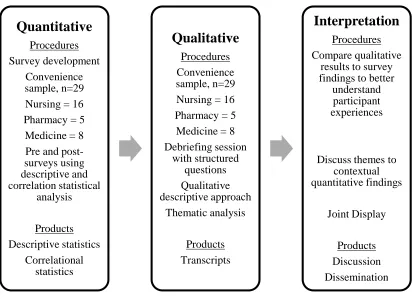
Using a mixed-methods, explanatory sequential approach (Fetters, Curry, and
Creswell, 2013), this feasibility study 1) examined the feasibility of adding an IPE
component to current simulation experiences in a rurally-located program; 2) determined
necessary resources to implement simulation as a component to IPE; and 3) measured
student perception of interprofessional teamwork, roles and responsibilities, and patient
outcomes for collaborative practice (Figure 2.1).
Setting and Sample
This project was conducted in Lancaster, SC, a rural setting 70 miles north of
Columbia, SC. SC in general is rural and poor; in Lancaster County, twenty percent of
residents live in poverty. Healthcare access is problematic for rural SC residents,
including Lancaster. For example, 21 of 46 SC counties only have between 1 and 2.9
family practice physicians per 10,000 residents. Further, there are 8.9 nurses per 1000
residents, but in rural areas, only 36 percent of nurses are bachelor’s prepared (Bureau of
Labor Statistics, 2017).
31
Figure 2.1: Study Overview
Columbia, SC, offers a collaborative nursing program on two distance campuses,
including USC Lancaster (USCL). Students attending these regional campuses can stay
on their local campus all four years and earn a Bachelor’s of Science in Nursing (BSN) in
collaboration with USC Columbia. USCL is unique in that it houses a clinical simulation
lab, minimizing the need to travel to the main campus for some of the experiential
learning activities.
After obtaining Institutional Review Board approval (exempt-status), a
convenience sample of pre-licensure healthcare students were recruited through 1) USCL
nursing program; 2) USC School of Pharmacy; and 3) Mid-Carolinas Allied Health
Education Consortium (AHEC), which helps to arrange rotation sites for Virginia
Commonwealth University (VCU) medical students. A total of 29 students participated,
Quantitative
Procedures Survey development
Convenience sample, n=29 Nursing = 16 Pharmacy = 5 Medicine = 8 Pre and post-surveys using descriptive and correlation statistical analysis Products Descriptive statistics Correlational statistics
Qualitative
Procedures Convenience sample, n=29 Nursing = 16 Pharmacy = 5 Medicine = 8 Debriefing session with structured questions Qualitative descriptive approach Thematic analysis Products TranscriptsInterpretation
Procedures Compare qualitativeresults to survey findings to better
understand participant experiences
32
including 16 senior nursing students from USCL, 8 third-year VCU medical students, and
5 fourth-year USC pharmacy students. The students were randomly assigned to one of
five IPE groups consisting of 5-7 students comprised of 3-4 nursing, 1-2 medical, and 1
pharmacy student.
Five of the nursing students had experience with telehealth in the local facilities
since they precepted in the local Intensive Care Unit or the Emergency Department.
Seven of the rurally placed medical students had no experience with telehealth. Many
students had some form of IPE during school, but the experiences varied by discipline
and by college. The medical students reported that in their previous IPE experiences, they
simulated the roles of the other professions while participating in the IPE scenario though
they were unsure of the specifics of the role. For instance, if they drew an index card
labeled “RN”, they administered medications, or if they pulled the card labeled
“respiratory therapy” they were responsible for administering oxygen. The pharmacy
students did have two simulation-based IPE experiences during their third year of school
in which 6 pharmacy students were paired with 1 medical and 1 nursing student to run
various scenarios. During the simulation, it was necessary to role-play at times as not all
of the medical equipment was functional. None of the nursing students had any
simulation-based IPE; their previous experiences were traditional in nature.
Data Collection
Quantitative Instrumentation. Student experiences were assessed pre- and
post-scenario using the Student Perceptions of Interprofessional Clinical Education-revised
(SPICE-R2), a 10-item questionnaire using a five-point Likert scale (Dominquez, Fike,
33
interprofessional teamwork and team-based practice, roles and responsibilities for
collaborative practice, and patient outcomes for collaborative practice. The SPICE-R2
addresses the teamwork domain by evaluating participant’s assessment of enhanced
educational and teamwork factors. The roles and responsibility domain is evaluated using
criteria that looks at role definition, training requirements of others, and understanding of
others’ roles. Using an interprofessional team approach, the patient outcome domain is
assessed by measuring factors addressing patient centeredness of care, improved care
delivery, and reduced cost of care.
Additionally, students were also asked to rate the simulated IPE experience using
the five category, 20 item National League for Nursing (NLN) Simulation design scale, a
five-point Likert scale addressing information, support, problem-solving,
feedback/guided reflection, and realism (NLN, 2005).Both questionnaires have been
proven to be valid and reliable.
Qualitative Instrumentation. Student perceptions of the IPE experience were
explored through a faculty-led, video-recorded debriefing exercise addressing 1) first
thoughts regarding the experience, 2) what went right and why, and 3) what would you
do differently and why.Additionally, the post-assessment, the SPICE-R2 questionnaire
included narrative response questions.
Simulation Scenario
An informational packet containing an overview of the project, a consent to
participate, a link to a brief video on team communication to view prior to attending, and
pre-simulation information including simulation tips and an advanced cardiac life support
34
On the day of the project, the participants attended a brief orientation to the lab, robot,
simulation room and emergency equipment, then completed the pre-scenario, SPICE-R2
questionnaire.
To ensure integrity of the simulation and to avoid influencing the results, students
were asked to wait in the assigned areas including a pre-simulation waiting area, a
simulation ready room, and a debriefing area. For the simulation, three faculty members
assisted with the project: one faculty member facilitated the simulation, one facilitated
the debriefing sessions, and one served as the overall communication facilitator making
sure each group was in the assigned area. Once all groups completed the orientation,
group one remained in the simulation area, and the other groups went to a pre-simulation
waiting area.
The simulation was designed to mimic how telehealth might be utilized in a
real-life, emergent situation, with each student performing their disciplinary roles. In the
scenario, the simulation patient experiences an acute cardiac event while the nursing
students are at the bedside gathering information and performing a general assessment.
Approximately two minutes into the scenario, the faculty facilitator initiates cardiac
arrest, requiring the nursing students to call a code. The other nursing students and
pharmacy students (code team members), waiting in a simulation ready room, respond
with resuscitation equipment. The code team members then consult with the medical
students, located in a room outside the lab. The medical students utilized two-way audio
and video via a commonly-used telehealth robot (Figure 2.2), simulating
how distance healthcare providers typically provideconsults in SC. Each simulation was
35
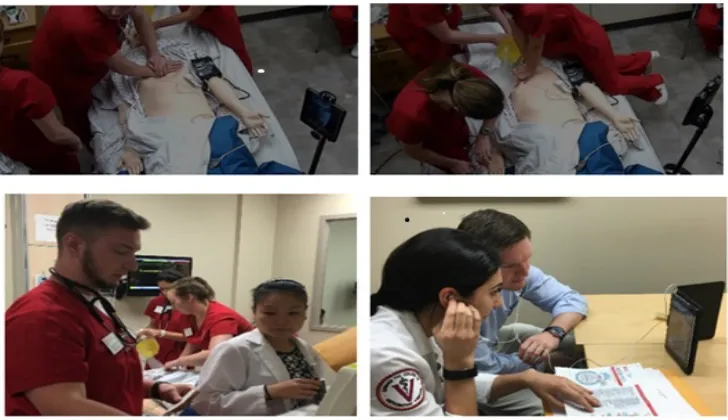
Figure 2.2: Double Robotics robot
The entire group, including the “code team” and remotely-located medical
students, performed CPR, defibrillated the patient twice, and gave emergency drugs
including epinephrine (Figure 2.3). At the conclusion of the scenario, each student
attended the faculty-facilitated, video-recorded debriefing session and completed both the
post-scenario SPICE-R2 and NLN questionnaires.
36
Data Analysis
Quantitative. Pre- and post-scenario SPICE-R2 survey results were analyzed
using SPSS (version 21). A t-test was run on normally distributed data, as this provided
more power to test for statistically significant difference between groups. Non-parametric
Wilcoxon signed-rank tests were calculated to assess improvements in students’ scores in
relation to interprofessional teamwork and team-based practice, roles and responsibilities
for collaborative practice, and patient outcomes for collaborative practice for data that
was not normally distributed. Wilcoxon signed-rank tests are appropriate for small
samples in which data comes from repeated measures such as pre- and post-test data from
the same subjects.
Qualitative. Qualitative data were used to inform more robust understanding of
the qualitative results. A qualitative descriptive approach using a thematic analysis as
described by Clarke and Braun (2013) was used to analyze the debriefing session video
data and post-scenario narrative responses. First, the audio from the debriefing sessions
were transcribed verbatim and de-identified by the first author. The first two authors then
independently read and coded the transcripts; subsequently they met to reconcile the
minor differences in coding and identify relevant themes.
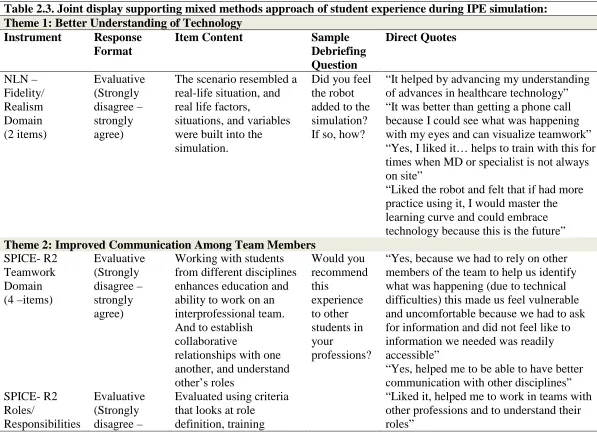
Data integration. The final phase of a mixed-methods approach is data
integration, in which the quantitative and qualitative data are brought together, usually in
the form of a joint display (Creswell, 2015). The strength of this approach is that the
statistical information provides a general understanding of the problem under analysis,
while the qualitative information explores the participants’ perceptions of that problem.
37
explore how the qualitative themes mapped to the factors examined by the quantitative
surveys.
Results
Quantitative Results
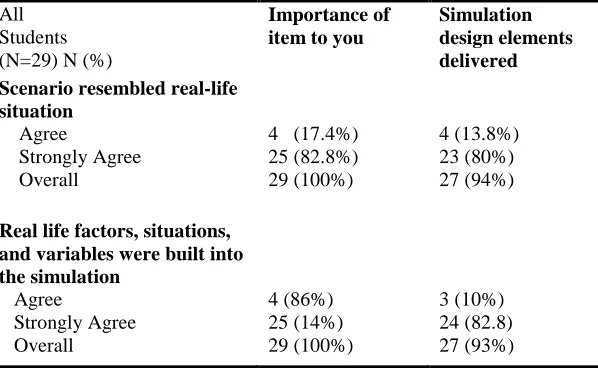
All students completed both pre- and post-scenario SPICE-R2 surveys. The NLN
Simulation Design Scale evaluates in two parts: 1) elements in the simulation; and 2)
student-perceived importance of these elements. For example, in section A of the survey,
one question asked “the scenario resembled a real-life situation”; in the corresponding
question in section B, the participant ranked the importance of that element to him/her.
100 percent of the students completed section A of the NLN survey and 96.5 percent
completed section B. For the purposes of this study, questions on the fidelity of the
simulation equipment and the scenario content and process were evaluated. Descriptive
statistics were used to characterize the sample and summarize the findings including age,
race, gender, and discipline (Table 2.1).
Table 2.1. Participant Demographics
All Students (N=29)
Medical Students N (%)
Pharmacy Students N (%)
Nursing Students N (%)
Discipline 8 (27.5%) 5 (17.2%) 16 (55.1%)
Mean Age 23.8 years 26.3 years 23.4 years 22.6 years
Race
White 20 (69%) 2 (25%) 4 (80%) 14 (87.5%)
African American 3 (11%) 3 (37.5%) 0 0
Other 6 (21%) 6 (37.5%) 1(20%) 2 (12.5%)
Gender
Male 6 (20.7%) 5 (62.5%) 1 (20%) 2 (12.5%)
Female 23 (79.3%) 3 (37.5%) 4 (80%) 14 (87.5%)
SPICE-R2. Correlational statistics did not reveal any significant gender or
race/ethnicity-based differences in the pre- and post-scenario SPICE-R2 surveys.