!
ABSTRACT
HOFFMAN, ASHLEY JO. IAT and Personality: Implicit Personality as a Predictor of Performance. (Under the direction of Adam W. Meade).
Previous research has considered thoroughly the effect of conscientiousness on
performance outcomes. However, there has been a dearth of research examining implicit conscientiousness in the same fashion. The current research uses the Implicit Association Test (IAT) to examine a potential link between implicit conscientiousness and
!
IAT and Personality: Implicit Personality as a Predictor of Performance
by
Ashley Jo Hoffman
A thesis submitted to the Graduate Faculty of North Carolina State University
in partial fulfillment of the requirements for the Degree of
Master of Science
Psychology
Raleigh, NC
2010
APPROVED BY:
____________________________ ____________________________ Dr. Samuel Pond, III Dr. Mark Wilson
!
ii DEDICATION
Jeremiah 29:11
!
iii
BIOGRAPHY
!
iv
ACKNOWLEDGMENTS
First of all, I would like to say a big thank you to my advisor, Dr. Adam Meade for his endless patience in the completion of my Master’s Degree. Without his help, this certainly would not have happened. I would like to extend additional thanks to my
!
v
TABLE OF CONTENTS
List of Tables………. vi
Introduction……….... 1
Method………...13
Results………....16
Discussion………..18
Appendices……….25
Appendix A………26
References………..46
Appendix B………57
Appendix C………59
!
vi
LIST OF TABLES
Table 1 Descriptive statistics for study variables………..22
Table 2 Correlations Among Study Variables………...23
Table 3 Hierarchical regressions of Excel Task and Test
Running Head: IAT and personality " !
Within the field of Industrial Organizational (I/O) psychology, there have been hundreds of attempts to link personality characteristics to performance outcomes (Barrick & Mount, 1991; Colquitt, LePine & Noe, 2000; Dudley, Orvis, Lebiecki, & Cortina, 2006; Hurtz & Donovan, 2000). These studies, as well as the I/O field, consider individual differences a critical component in the behavioral outcomes on the job.
Specifically, many researchers and practitioners alike have identified personality traits as an important predictor of performance outcomes (Dudley et al., 2006; Salgado, 1997; Schmidt & Hunter, 1998; Vinchur, Schippman, Switzer, & Roth, 1998).
Researchers interested in personality have generally attempted to use self-report questionnaires to determine a respondent’s personality characteristics. Such measures can be said to be assessments of explicit personality, which refers to characteristics that a person is aware of possessing (Schmukle & Egloff, 2005). Despite the widespread use of explicit personality measures, some have argued that additional components of
Running Head: IAT and personality # !
personality may be an additional factor to consider as a significant determinant of behavior. The current study examines both implicit and explicit measures of conscientiousness and how they relate to training performance.
The Current Study
Researchers have long been interested in the structure of personality. Personality research has had a tumultuous history, beginning with the compilation and use of over 4,500 adjectives to describe others by Allport and Odbert (1936), to additional research by Norman (1963) to reduce the abundance of these terms. Finally, through continued refinement by Goldberg (1990) and Costa and McCrae (1988), the Five Factor Model (FFM) was established as a parsimonious model of personality. The FFM of personality includes the factors of extraversion, emotional stability, conscientiousness, agreeableness, and openness to experience.
Running Head: IAT and personality $ !
that conscientiousness is a significant predictor of job performance, with a corrected correlation between 0.25 (Salgado, 1997) and 0.31 (Judge & Ilies, 2002).
While an employee’s overall performance is vital to the success of the
organization, an employee’s performance in training sessions is also a critical component of the growth of both the organization and the employee. Previous research has found that training performance is a significant predictor of task performance (Barrick & Mount, 1991; Gellatly, 1996; Kamdar & VanDyne, 2007), which is a major part of overall performance (Motowidlo & Van Scotter, 1994). Previous research has shown that conscientiousness, as measured by explicit measures, correlates positively with training performance outcomes (Barrick & Mount, 1991; Colquitt et al., 2000; Dudley, et al., 2006; Hurtz & Donovan, 2000). A meta-analysis by Schmidt and Hunter (1998) found a corrected correlation of ! = .31 between conscientiousness and performance, while
Barrick and Mount (1991) provide an estimate of the correlation between training performance and conscientiousness of ! = .21 to .23. However, a more recent
meta-analysis by Hurtz and Donovan (2000) found the correlation between training
performance and conscientiousness to be considerably lower at ! = .03. This study will
examine the relationship between several facets of conscientiousness and training performance.
Given these previous findings, Hypothesis 1 proposes:
Running Head: IAT and personality % !
Hypothesis 1b: Explicit measures of the conscientiousness facet orderliness will correlate positively with training performance outcomes.
Hypothesis 1c: Explicit measures of the conscientiousness facet dutifulness will correlate positively with training performance outcomes.
Hypothesis 1d: Explicit measures of the conscientiousness facet achievement striving will correlate positively with training performance outcomes.
Hypothesis 1e: Explicit measures of the conscientiousness facet self-discipline will correlate positively with training performance outcomes.
Hypothesis 1f: Explicit measures of the conscientiousness facet cautiousness will correlate positively with training performance outcomes.
Limitations of personality research
There are two major limitations researchers encounter in personality research: the response distortion endemic with these measures, and a focus solely on explicit measures. Faking occurs when respondents intentionally distort their responses in order to answer in a way that they feel makes them look better, rather than in a way that accurately describes their personality. It is well established that job applicants can and do “fake-good” on self-report measures of personality (Furnham, 1986; Schmukle & Egloff, 2005; Steffens, 2004) in order to make themselves appear in a better light.
Running Head: IAT and personality & !
responding may be unintentional and occurs when an answer is given in order to appear more appropriate to the researcher, particularly in the measurement of sensitive
constructs. In contrast, faking is responding in an intentional way in order to hide true behavior in order to seem better than one actually is. Social desirability response bias occurs when a person’s responses are affected by what he or she believes is the appropriate way of answering based on social norms. These social norms lead a participant to respond in a way that is not accurate because of the possible sensitive nature of the question or response.
Running Head: IAT and personality ' !
fit in with social norms. While they are useful, social desirability scales may underestimate the effect of faking on the reliability of the measure (Holden, 2008). Additionally, while social desirability scales detect aspects that are similar to faking, they are not appropriate proxies for identification of faking. This is because these inventories cannot distinguish the intentionality of the response and whether the response is affected by social norms or personal intent to appear better to the researcher (Holden, 2008).
Another limitation to current personality research is the exclusion of implicit personality as a construct distinct from explicit personality. Explicit personality self-report instruments may either be in the form of adjective-based items (e.g., the Personal Attribute Inventory; Parish, Bryant, & Shirazi, 1976) or Likert scale items where
participants are asked to indicate the extent to which specific phrases describe themselves (e.g., NEO; McCrae & Costa, 1985). Conversely, Greenwald and Banaji (1995) define implicit associations as evaluations without known origin that are triggered automatically from environmental cues and, in turn, influence implicit responses. Unfortunately, there is a dearth of research examining implicit testing methods of personality measurement. The current study examines the construct of implicit personality and the assertion that there are components of personality that are either inaccessible or otherwise
Running Head: IAT and personality ( !
(IAT, Greenwald, McGhee, & Schwartz, 1998), and the Conditional Reasoning Test (CRT, James, 1998) have researchers considered the inclusion of implicit cognitions in I/O psychology.
The Implicit Association Test
This study measures implicit conscientiousness using the IAT. The IAT was originally developed as a measure of attitudinal discrimination towards an out-group (Greenwald, McGhee, & Schwartz, 1998). Since its conception, the IAT has been modified to measure implicit attitudes regarding self-esteem (e.g., Greenwald &
Farnham, 2000), attitudes regarding gender (e.g., Rudman, Greenwald & McGhee, 2001), shyness (e.g., Asendorpf et al., 2002), and various other topics that do not lend
themselves to explicit disclosure.
The IAT attempts to measure a person’s implicit attitudes by presenting the participant with various visual stimuli and then asking the participant to classify the stimuli into one of two groups. These groups are polar opposite categories corresponding to the construct of interest and the stimuli presented. These stimuli may include words or pictures that evoke positive or negative attitudes. Response time latency, the time it takes for the participant to classify the stimulus, is used to examine the strength of these
Running Head: IAT and personality ) !
measure. The difference in means between trials for each block is computed. Finally, the difference in mean latencies of both blocks is divided by the associated pooled standard deviation. The longer it takes a person to react correctly to a particular stimulus, the more the person may have to override their implicit attitudes.
Although the use of the IAT in I/O psychology has been criticized for a lack of validity (Landy, 2008), it is important to note that studies in other domains have demonstrated adequate discrimant validity, adding to the case for overall validity. For example, Meagher and Aidman (2004) examined explicit esteem with a self-liking/self-confidence scale (SLCS-R; Tafarodi & Swann, 2001) and an IAT version of self-esteem (Greenwald et al., 1998). They found no correlation between the IAT and either the explicit self-esteem measures of self-liking or explicit self-competence. The lack of correlation between these two constructs indicates that implicit self-esteem as measured by the IAT, and explicit self-esteem as measured by the SLCS-R, may be measuring different constructs or parts of the construct that have been previously unobserved. The results are encouraging because they indicate there is a possibility that conscientiousness as measured by the IAT could differ from conscientiousness as measured by explicit measures of personality. It is also possible that the measure of implicit self-esteem was only measuring error, rather than the construct of interest because researchers did not report any additional correlations using the IAT.
Running Head: IAT and personality * !
personality behaviors. They posited that reaction time should be shorter if the participant is comfortable categorizing stimuli than if they must overcome negative feelings
associated with the stimuli. For example, an extraverted person would more quickly categorize “talkative” as “extraverted” than they would categorize “withdrawn” as “introverted”. Steffens and König found that although the IAT had limited ability to predict spontaneous behavioral outcomes associated with the FFM, the IAT was a better predictor of spontaneous behavior than explicit measures. The authors argue that a person who may self-report their actions as conscientious when they have time to consider previous actions during an explicit personality test, perhaps based on social desirability. However, the same participant might have a lower conscientiousness score through an implicit test because of the spontaneous nature of the test.
Asendorpf et al. (2002) examined whether IAT and explicit measures of shyness differed in their relationship with self-concept. Participants categorized words such as uninhibited, timid, hesitant, and sociable as either like “me” or like “them.” In addition, participants completed a videotaped role-play exercise in which they acted as though a new boss was replacing their current boss. The participants attended a meeting to become acquainted with the new boss. Half the participants then tried to impress their new boss, while the other half acted as they normally would. The results showed that despite the IAT scores indicating shyness, the participants asked to fake extraversion scored
Running Head: IAT and personality "+ !
measures are more susceptible to the effects of faking and social desirability when they are acting in a potentially socially demanding situation.
While many studies using the IAT have reported significant results, previously collected IAT data were used to attempt replication of results and a verification of the linkage between IAT results and behavioral outcomes (Blanton et al., 2009). Researchers found that with the data acquired from two prominent studies in IAT research, they were unable to reproduce similar results as the original studies. They assert that too few studies are creating the assumption of a connection between implicit associations and behavioral outcomes, both empirically and in the field when one may not exist. Blanton and co-authors focus specifically on racial IATs and the social outcomes of the associations; however, further research using the IAT in all areas of research is critical to the
development of this measurement method as a viable source of decision-making data in the future.
Running Head: IAT and personality "" !
however, did correlate significantly with the social desirability scale. He also determined that implicit conscientiousness was not correlated with performance outcomes as
measured by academic achievement, peer reports, and supervisory ratings. The current study modifies his model by specifically examining training performance and the unique relationship between conscientiousness and training outcomes. In addition, it changes the stimuli to “Like Me” and “Not Like Me” to determine if wording of this stimuli will alter subsequent results. This study also revises the conscientiousness stimulus words to appropriately reflect conscientiousness in the workplace. It is expected that these changes will strengthen the correlation between implicit conscientiousness and training
performance.
Hypothesis 2: The implicit IAT measure of conscientiousness will correlate positively with training performance outcomes.
Running Head: IAT and personality "# !
Research question 1: Does the combination of implicit and explicit measures of conscientiousness predict training performance above the measurement of these two constructs separately?
From previous research using explicit personality measures, it appears that
conscientiousness is a stable predictor of performance (Dudley et al., 2006; Judge & Ilies, 2002; Ones et al., 1996; Salgado, 1997; Schmidt & Hunter, 1998; Tett et al., 1991;
Vinchur, Schippman, Switzer, & Roth, 1998). In this study, I will examine whether implicit conscientiousness is a better predictor of training performance outcomes than the more frequently studied explicit factors of conscientiousness.
Many researchers (Bing et al., 2007; Bornstein, 2002; Kihlstrom, 1999; McClelland, Koestner, & Weinberger, 1989) have proposed that explicit and implicit personality factors are actually measuring two different aspects of each personality trait, rather than mirroring the same facets of the same personality factor. Therefore, explicit and implicit personality measures should result in different correlations with
performance.
Hypothesis 3: Implicit and explicit measures of conscientiousness will exhibit different criterion-related validity with training performance.
Running Head: IAT and personality "$ !
Personality Item Pool (IPIP, Goldberg, 1999) scales for these factors are included. These items will be included because they have shown non-significant correlations with
conscientiousness in previous explicit personality research (Dudley et al., 2006; Judge & Ilies, 2002).
Hypothesis 4: Conscientiousness as measured by the IAT will not correlate with neuroticism and extraversion as measured by the IPIP.
Method
Participants
Participants were 189 students enrolled at a large southeastern university.
Participants were undergraduate students enrolled in introductory psychology classes, as well as personality psychology classes. Participants received academic credit for
participating in the study. The sample was 50% male. Caucasian participants accounted for 73.4% of the sample, while 11.4% reported their race as African American, 5.7% reported a racial group not listed, 5.1% reported themselves as Asian, 2.5% Hispanic, and 1.9% American Indian. After matching and cleaning the data, there were 146 cases to examine. Of the data that were removed, 31 cases were dropped due to matching errors, while 12 cases were omitted due to missing data.
Procedure
Running Head: IAT and personality "% !
information, participants completed the conscientiousness IAT using an open source IAT program, FreeIAT (Meade, 2009). To assess implicit conscientiousness, participants viewed a variety of words related to conscientiousness that specifically related to the workplace. A full list of word pairings is included in Appendix A.
The conscientiousness IAT was based on a design used by Siers (2008). After the stimuli were presented to the participants, the participants were asked to place their fingers on the “i” and “e” keys, which correspond with categories on the right and left side of the screen. Participants were asked to categorize stimuli as they appear on the screen as quickly and as accurately as possible.
Participants completed the conscientiousness IAT in five trials. The first trial was considered a learning trial, and assigned the words “Like Me” to the “e” key and “Not Like Me” to the “i” key. These stimuli appeared in random order on the screen and participants were asked to categorize them as quickly as possible into the categories of “Like Me” and “Not Like Me.” The second trial then used the word pairings listed in Appendix A to introduce the implicit conscientiousness characteristic stimuli to the participant. Participants categorized words as either “dependable” with the “e” key or “undependable” with the “i” key. Stimuli appeared on the screen in random order, and participants categorized words into appropriate categories.
Running Head: IAT and personality "& !
of “Not Like Me” and “Undependable” were associated with the “i” key. The fourth trial paired the categories of “Like Me” on the “i” key, and “Not Like Me” on the “e” key, a reversal of Trial 1. Finally, the fifth trial paired the learning in Trials 2 and 4, where the “i” key was assigned to “Undependable/Like Me” and the “e” to “Dependable/Not Like Me.” The 3rd and 5th trials were identical except that categories were switched to
determine if it takes participants longer to override their implicit associations of themselves as good or bad when the category positions are reversed (Greenwald et al., 1998). Scoring was completed as described in Greenwald, et al. (1998) in which scores from the dependable/like me pairing (3rd trial) are compared with the undependable/like me pairing (5th trial).
After completing the conscientiousness IAT, participants completed a short training program regarding the use of Excel spreadsheets. After watching a short training session, participants completed a knowledge-based test regarding the subject matter of the training they just completed. They also performed a brief skills-based Excel task to determine the effectiveness of training and subsequent training performance. This task contained seven items taught in the training course where the percent correct determined the score.
Measures
Running Head: IAT and personality "' !
"=78), orderliness (10 items, "=.82), dutifulness (10 items, "=.71), achievement striving
(10 items, "=.78), self-discipline (10 items, "=.85), and cautiousness (10 items, "=.76).
In addition to the facet scales for conscientiousness, participants completed the extraversion (10 items, "=.86) and neuroticism (10 items, "=.86) scales of the IPIP.
Finally, participants completed the BIDR social desirability scale (40 items, "= .80;
Paulhus, 1984).
Analysis
To examine Hypothesis 1, the correlations between the IPIP facets of conscientiousness and the Excel training performance were calculated. To examine Hypothesis 2, the correlations between the conscientiousness IAT and the Excel training performance were calculated. To examine convergent validity, I computed the correlation between conscientiousness measures using the IAT and the conscientiousness measures using the IPIP. To examine discriminant validity, I computed the correlation between the conscientiousness IAT and the neuroticism and extraversion measures of the IPIP.
Results
Running Head: IAT and personality "( !
Due to the lack of significant results between both the IAT and performance and the IPIP and performance, differences in the magnitude of the correlations between the IAT-performance correlation and the IPIP-performance correlation could not be
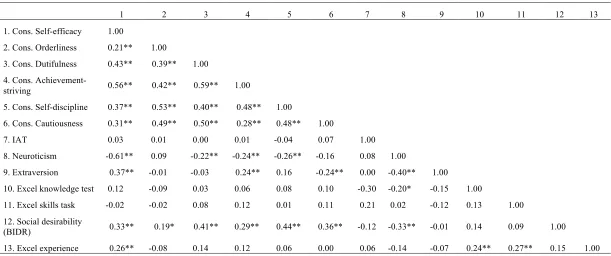
calculated. Additionally, Research Question 1, regarding the relationship of the IAT and IPIP measures when used together on training performance, was unable to be examined due to the lack of significance. Hypothesis 4 examined the correlations between the conscientiousness IAT and the personality traits of neuroticism and extraversion. Results showed no significant results between the IAT and either extraversion or neuroticism measures. These correlations are located in Table 2.
A measure of experience with Excel was included to control for previous Excel experience. A series of hierarchical regressions were performed, in which Excel Experience was included as a predictor in the first block. The second block included Excel Experience and one conscientiousness facet. Independent series of regressions were conducted for both the Excel task and the Excel knowledge test. Both the Excel task and test were significantly correlated with Excel experience; however, none of the
conscientiousness facets were significant for either Excel Task or Excel Test (see Table 3).
Using the BIDR, correlations were computed between social desirability and each IPIP conscientiousness facet, as well as with the IAT. The BIDR was significantly
Running Head: IAT and personality ") !
Discussion
The pattern of results observed was contrary to those expected. While I hypothesized a relationship between implicit personality measured by the IAT and training performance, this was not the case. Additionally, the explicit IPIP measures of conscientiousness were not significantly related to the training performance outcomes. One possible reason these results were not as predicted may be problematic criteria. Testing participants’ training performance based on the Excel test and task may not have been the most appropriate measure of training performance. Rather than using Excel for this training program, it may have been more appropriate to use a more complex and novel exercise.
Running Head: IAT and personality "* !
The current findings are similar to the findings in the previous study using the IAT to measure implicit conscientiousness (Siers, 2008). Despite altering the stimuli presented to the participants, as well as specifically measuring training performance, no significant results were found in either study. This may indicate the IAT may not be the appropriate instrument to measuring implicit personality traits. It also may indicate the need for researchers to reexamine the stimuli included in the IAT to determine if the instrument is measuring the intended construct or merely error.
A very different possibility is that implicit conscientiousness is not the same as explicit conscientiousness. If this is the case, it lends encouraging possibilities to the future of implicit personality research. While it is difficult to test this possibility, it is an exciting area of research that could lend a great deal of information to researchers and practitioners alike. By examining the hypothesis that implicit and explicit
conscientiousness differ in their relationship to performance, researchers may be able to gather more information from participants. To examine this possibility, researchers must be diligent in determining how to measure an entirely new construct in the most accurate way. If implicit and explicit conscientiousness are different constructs, this would lead to the pattern of non-significance exhibited in the correlations between the IAT and the IPIP measures in this study. However, because of the non-significant results, this assumption cannot be made without reservation.
Running Head: IAT and personality #+ !
results would indicate that participants were unintentionally altering their responses to the IPIP scale, but not when responding to the IAT.
Limitations and Future Research
There are some potential limitations in this study. The lack of significant results between the IAT and any study variable could imply that the IAT measure lack sufficient reliability and validity to be useful. As this particular IAT used only words as stimuli, the ability of participants to read and comprehend the words on the screen quickly and accurately in order to categorize them appropriately may have had an effect on reaction times. Additional difficulties may have arisen if the participant’s native language was not English, as the words that appeared on the screen were all in English.
Another factor to consider is that the words chosen to be included in this IAT may not have adequately captured the construct of implicit conscientiousness. While words were obtained by asking subject matter experts to provide a list of words related to conscientiousness at work, the words provided may not represent the construct domain of implicit conscientiousness. This may especially be an issue if implicit conscientiousness is indeed different than explicit conscientiousness, as the IAT words for this study were based on our understanding of explicit conscientiousness traits.
Running Head: IAT and personality #" !
blocks (3 and 5), it is unknown how much the initial confusion with the measure may actually have affected reaction time in the later blocks used for analyses.
Future research should examine the possibility of non-significant results indicating a fundamental difference between the construct of implicit personality and explicit personality. If, in fact, these are two different constructs, the implications for predicting performance could be great should both prove to predict job-relevant criteria. Researchers should attempt to develop a measure in which the possible differences between current explicit conscientiousness measures and the potential facets of implicit conscientiousness could be compared. While I was unable to draw conclusions from the data presented here, the reason for lack of significant results could be the possibility that implicit
conscientiousness is not significantly related to performance outcomes. Additional
research may determine the relevance of implicit personality to performance outcomes, as well as any potential implicit conscientiousness may have in the prediction of
Running Head: IAT and personality ## !
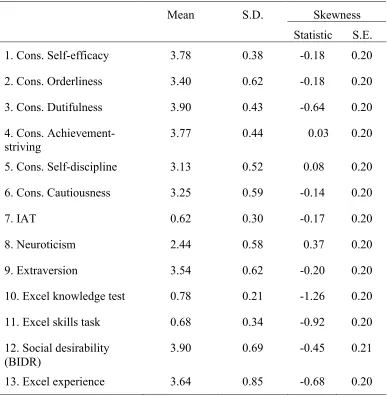
Table 1 Descriptive statistics for study variables
Note: N=146
Skewness
Mean S.D.
Statistic S.E.
1. Cons. Self-efficacy 3.78 0.38 -0.18 0.20
2. Cons. Orderliness 3.40 0.62 -0.18 0.20
3. Cons. Dutifulness 3.90 0.43 -0.64 0.20
4. Cons.
Achievement-striving 3.77 0.44 0.03 0.20
5. Cons. Self-discipline 3.13 0.52 0.08 0.20
6. Cons. Cautiousness 3.25 0.59 -0.14 0.20
7. IAT 0.62 0.30 -0.17 0.20
8. Neuroticism 2.44 0.58 0.37 0.20
9. Extraversion 3.54 0.62 -0.20 0.20
10. Excel knowledge test 0.78 0.21 -1.26 0.20
11. Excel skills task 0.68 0.34 -0.92 0.20
12. Social desirability (BIDR)
3.90 0.69 -0.45 0.21
Running Head: IAT and personality !" #
Table 2 Correlations Among Study Variables
1 2 3 4 5 6 7 8 9 10 11 12 13
1. Cons. Self-efficacy 1.00
2. Cons. Orderliness 0.21** 1.00
3. Cons. Dutifulness 0.43** 0.39** 1.00
4. Cons.
Achievement-striving 0.56** 0.42** 0.59** 1.00
5. Cons. Self-discipline 0.37** 0.53** 0.40** 0.48** 1.00
6. Cons. Cautiousness 0.31** 0.49** 0.50** 0.28** 0.48** 1.00
7. IAT 0.03 0.01 0.00 0.01 -0.04 0.07 1.00
8. Neuroticism -0.61** 0.09 -0.22** -0.24** -0.26** -0.16 0.08 1.00
9. Extraversion 0.37** -0.01 -0.03 0.24** 0.16 -0.24** 0.00 -0.40** 1.00
10. Excel knowledge test 0.12 -0.09 0.03 0.06 0.08 0.10 -0.30 -0.20* -0.15 1.00
11. Excel skills task -0.02 -0.02 0.08 0.12 0.01 0.11 0.21 0.02 -0.12 0.13 1.00
12. Social desirability
(BIDR) 0.33** 0.19* 0.41** 0.29** 0.44** 0.36** -0.12 -0.33** -0.01 0.14 0.09 1.00
Running Head: IAT and personality !" #
Table 3
Hierarchical regressions of Excel Task and Test controlling for Excel Experience R2 Block 1 R2 Block 2
! R2 p-value
Excel Task
Experience .07
Experience + Self-Efficacy .08 .01 .32
Experience + Orderliness .07 .00 .83
Experience + Dutifulness .08 .00 .59
Experience + Achievement Striving .08 .01 .34
Experience+ Self-Discipline .07 .00 .71
Experience + Cautiousness .09 .02 .15
Experience + IAT .06 .00 .64
Excel Test
Experience .08
Experience + Self-Efficacy .09 .00 .49
Experience + Orderliness .08 .00 .64
Experience + Dutifulness .08 .00 .89
Experience + Achievement Striving .08 .00 .63
Experience+ Self-Discipline .09 .01 .27
Experience + Cautiousness .10 .02 .11
Running Head: IAT and personality 25 #
Running Head: IAT and personality 26 #
Appendix A
Within the field of Industrial Organizational (I/O) psychology, there have been
hundreds of attempts to link personality characteristics to performance outcomes (Barrick
& Mount, 1991; Colquitt, LePine & Noe, 2000; Dudley, et al., 2006; Hurtz & Donovan,
2000). These studies, as well as the I/O field, consider individual differences as a critical
component in the behavioral outcomes on the job. Specifically, researchers and
practitioners alike have identified personality traits as the central paradigm in the
prediction of performance outcomes.
Personality measures have generally attempted to use self-report questionnaires to
determine a participant’s personality characteristics. These personality characteristics are
considered explicit personality. Explicit personality refers to the characteristics that a
person is aware of possessing and can identify as traits he or she possesses (Schmukle &
Egloff, 2005). Despite the widespread use of measures of explicit personality, it has been
argued that additional components of personality are not captured by such measures
(Bing, LeBreton, Davison, Migetz, & James, 2007). These components have been
referred to as aspects of implicit personality (Borkenau, 1992) and may be an additional
factor to consider when examining personality as a significant determinant of behavior.
This study will examine implicit conscientiousness and training performance.
Running Head: IAT and personality 27 #
and training performance to the relationship between explicit conscientiousness and
training performance.
Dimensions of Personality
Researchers have long been interested in the structure of personality. Personality
research has had a tumultuous history, beginning with the compilation of over 4,500 traits
to describe others by Allport and Odbert (1936), to additional research by Norman (1963)
to narrow these traits. Finally, through continued refinement by Goldberg (1990) and
Costa and McCrae (1988), the Five Factor Model (FFM) was established as a
parsimonious model of personality (Costa & McCrae, 1988). The FFM of personality
includes the factors of extraversion, emotional stability, conscientiousness, agreeableness,
and openness to experience. This approach advocates the use of five related, but distinct,
factors when assessing the personality of individuals (Block, 2001).
Since its inception, the FFM has been studied frequently in various domains.
Goldberg (1990) in particular has been instrumental in using factor analytic methods to
determine if five is the appropriate number of factors. Goldberg administered a subset of
Norman’s (1963) trait terms to 187 college students, asking participants to rate the terms
on an 8-point Likert scale as to how accurately the term described the participant. These
responses were factor analyzed and five factors were identified. Moreover, Goldberg
found that the factor solution became unstable when attempting to extract more than five
Running Head: IAT and personality 28 #
Each of the factors in the FFM addresses a different aspect of personality. The
first factor is extraversion. Extraversion refers to a person’s assertiveness, talkativeness,
and sociability (Eysenck, 1964). In addition, extraversion is concerned with a person’s
tendency to be active and expressive in their daily life (Barrick & Mount, 1991).
Emotional stability, also called neuroticism (Goldberg, 1990), also stemmed from
Eysenck’s (1964) work in the personality domain. Emotional stability examines aspects
of personality such as anxiety, depression, worry, insecurity, and emotionality. In tandem
with extraversion, emotional stability forms the “Big Two” personality factors previously
defined by Eysenck. The definition of the third factor, conscientiousness, has been
disputed in personality literature. Hogan (1983) defines conscientiousness as being
responsible and dependable. However, other authors take a more volitional approach and
define conscientiousness as someone who is hard working, persistent, and
achievement-oriented (Conley, 1985; Costa & McCrae, 1988; Digman & Inouye, 1986). In the field of
I/O psychology, a conscientious person is someone who is a high achiever, is diligent,
and is goal-oriented (Conley, 1985; Costa & McCrae, 1988; Digman & Inouye, 1986).
The fourth factor in the FFM is agreeableness. Agreeableness has been described as being
likeable and friendly, as well as being courteous, tolerant, and forgiving (Hogan, 1983;
McCrae & Costa, 1985). This factor also can include being good-natured, softhearted,
and trusting of others. The fifth factor in the FFM is known as openness to experience
(McCrae & Costa, 1985) or culture (Norman, 1963). This factor includes being
Running Head: IAT and personality 29 #
The Current Study
Conscientiousness is the personality variable of interest in this study. Explicit
measures of conscientiousness have consistently showed a significant correlation with
performance outcomes (Dudley, Orvis, Lebiecki, & Cortina, 2006; Judge & Ilies, 2002;
Tett, Jackson, & Rothstein, 1991). Various meta-analyses have established a link between
conscientiousness and both overall performance (Dudley et al., 2006; Judge & Ilies,
2002; Tett et al., 1991; Ones et al., 1996; Salgado, 1997; Vinchur, Schippman, Switzer, &
Roth, 1998) as well as specific facets of performance (Dudley et al., 2006; Ones et al.,
1996). These meta-analyses have found that conscientiousness is a significant predictor
of job performance, with a corrected correlation between 0.25 (Salgado, 1997) and 0.31
(Judge & Ilies, 2002).
While overall performance is critical to the success of the organization, an
employee’s performance in training sessions is also a critical component to the growth of
both the organization and the employee. Previous research has also found that training
performance is a significant predictor of task performance, which is a major component
of overall performance (Motowidlo & Van Scotter, 1994). Previous research has also
shown that conscientiousness, as measured by explicit measures, is positively correlated
with training performance outcomes (Barrick & Mount, 1991; Colquitt et al., 2000;
Dudley, et al., 2006; Hurtz & Donovan, 2000). Barrick and Mount (1991) provide an
estimate of the correlation between training performance and conscientiousness of " =
Running Head: IAT and personality 30 #
the correlation between training performance and conscientiousness to be considerably
lower at " = .03.
Given these previous findings, Hypothesis 1 is proposed:
Hypothesis 1: Explicit measures of conscientiousness will be positively correlated
with training performance outcomes.
Limitations in Explicit Research
There are two major limitations typically encountered in personality research: a
focus solely on explicit measures and the response distortion endemic with explicit
measures. Faking occurs when a respondent intentionally distorts his or her responses in
order to answer in a way that he or she feels makes them look better, rather than in a way
that accurately describes his or her personality. It is well established that job applicants
can and do faking self-report measures of personality (Schmukle & Egloff, 2005;
Steffens, 2004). Since faking is believed to be a strong detriment to the accuracy of
results in personality testing, many researchers have attempted to outline the parameters
that are related to faking (Komar, Brown, Komar, & Robie, 2008). Variability between
participant answers on the inventory, magnitude of distortion in responses, proportion of
responses faked, the criterion-related validity of the instrument, the correlation between
faking and performance, and the selection ratio are all parameters that may be important
Running Head: IAT and personality 31 #
Many participants “fake good” when answering survey questions (Furnham,
1986). This occurs when participants feel there is an answer that is the “good” answer.
They will proceed to answer survey items in a way they feel the researcher intended to be
the correct answer or will make them look better than they truly are. This type of bias
skews the results of the survey and can lead to results that are not accurately indicative of
the participants’ true attitudes.
A related concern of explicit personality measures social desirability bias. This
occurs with explicit personality measures when participants respond in a way that paints
them in a favorable light, or in a way they believe is socially acceptable (Schmukle &
Egloff, 2005). Social desirability response bias occurs when a person’s responses are
affected by what they feel is the appropriate way of answering based on social norms.
These social norms lead a participant to unconsciously respond in a way that is not
accurate because of the possible sensitive nature of the question or response.
Social desirability is typically assessed using a social desirability scale. If the
participant answers the social desirability scale in a way that confirms socially desirable
answers, it is assumed the participant also answered the answers on the personality
inventory in a socially desirable way (Stark, Chernyshenko, Chan, Lee, & Drasgow,
2001). To assess the effects of social desirability on responses, a social desirability scale
such as the Balanced Inventory of Desirable Responding (BIDR, Paulhus, 1984) may be
administered. This scale examines self-deception as well as impression management, as
Running Head: IAT and personality 32 #
when a participant uses rationalization to dismiss a situation, whereas impression
management occurs when a participant tries to control the opinion that society or others
have of them. The self-deception scale includes items such as “When I hear people
talking privately, I avoid listening,” and the impression management scale has items such
as “I seldom change my decisions.” However, social desirability scales may
underestimate the effect of faking on criterion-related validity (Holden, 2008).
Additionally, while social desirability scales detect aspects that are similar to faking, they
are not appropriate proxies for identification of faking (Holden, 2008).
Implicit versus Explicit Personality
The other limitation to current personality research is the exclusion of implicit
personality as a distinct construct. Explicit personality measures typically require some
sort of self-report of specific characteristics related to each of the five factors in the
personality model (openness, conscientiousness, extraversion, agreeableness, and
neuroticism). These self-report instruments may either be in the form of adjective-based
items where the participant selects adjectives that best describe features about themselves
(e.g., the Personal Attribute Inventory; Parish, Bryant, & Shirazi, 1976) or rating scale
items where participants are asked to what extent the phrase describes their personality
(e.g., NEO; McCrae & Costa, 1985). Conversely, Greenwald and Banaji (1995) define
implicit attitudes as evaluations without known origin that are triggered automatically
and, in turn, influence implicit responses. Due to the perceived sensitive nature of
Running Head: IAT and personality 33 #
personality characteristics than the more popular explicit measures. Unfortunately, there
is a dearth of research examining implicit testing methods of personality measurement.
The current study will examine the construct of implicit personality and the
assertion that there are components of personality that are inaccessible or otherwise
unreliable as measured by explicit personality inventories.
Implicit Measurement
Within I/O psychology, explicit personality has been examined almost
exclusively. While the psychometric properties of explicit personality measures are
typically favorable, many researchers (Asendorpf, Banse, & Mücke, 2002; Schnabel,
Banse & Asendorpf, 2006; Siers, 2008; Steffens, 2004; Steffens & König, 2006) believe
that personality is also made up of implicit characteristics not easily ascertained by
explicit measures. Only with the use of tests such as the Thematic Apperception Test
(TAT, Morgan & Murray, 1935), Attributional Style Questionnaire (ASQ, Seligman,
Abramson, Semmel, & von Baeyer, C. (1979), Implicit Associations Test (IAT,
Greenwald, McGhee, & Schwartz, 1998), and the Conditional Reasoning Test (CRT,
James, 1998) have researchers begun to consider the inclusion of implicit cognitions in
I/O psychology.
Perhaps the most widely known implicit measure in recent years has been the
CRT (e.g., James, 1998). The underlying theory of CRTs begins with the assumption that
people want their behavior and personal judgments to seem reasonable. These judgments
Running Head: IAT and personality 34 #
lead to differences in behavioral outcomes from person to person. CRTs appear to be
inductive-reasoning problems to participants completing the test; however, because the
way the questions are worded, researchers can score the problems as being answered in a
way that is logical or illogical. Participants are given a situation and then four options of
possible decisions they can make regarding the situation. In the case of the CRT
regarding aggression a respondent can receive either a +1, indicating they chose the
aggressive reasoning answer; a 0, indicating a neutral answer; or a -1, indicating they
chose the non-applicable answer. A low score on the CRT would indicate that a person is
relying on little bias during the reasoning process. Conversely, if a participant were to
score highly on the CRT, this would indicate more bias during their reasoning process
and consequently more implicit justification for their behavior (James et al., 2004).
The Implicit Associations Test
For this study, I will be measuring implicit conscientiousness using the Implicit
Association Test (IAT). The IAT is a measure of attitudinal discrimination towards an
out-group developed by Greenwald, McGhee, and Schwartz (1998). Since its conception,
the IAT has been modified to measure implicit attitudes regarding self-esteem (e.g.
Greenwald & Farnham, 2000); attitudes regarding gender (e.g. Rudman, Greenwald &
McGhee, 2001); shyness (Asendorpf et al., 2002); and various other topics that do not
lend themselves to explicit disclosure.
The IAT attempts to measure a person’s implicit attitudes by presenting the
Running Head: IAT and personality 35 #
evoke positive or negative attitudes. Reaction times and error rates are recorded and
researchers score the IAT using the response time latency of the positive words compared
to the negative words in the stimulus pairs that are being compared (Greenwald, Nosek &
Banaji, 2003). The mean of correct latencies is computed for each block, as well as the
pooled standard deviation (SD) for trials in each condition. The average of the values for
each of the block is taken, and the difference between trials for each block is computed.
Finally, the difference of both blocks is divided by the associated pooled SD. The longer
it takes a person to react correctly to a particular stimuli, the more they have to override
their implicit attitudes about the given stimuli.
While use of the IAT in I/O psychology has been criticized (Landy, 2008), it is
important to note various studies that have demonstrated adequate validity and reliability
of the test. For example, Meagher and Aidman (2004) examined explicit self-esteem with
a self-liking/self-confidence scale (SLCS-R; Tafarodi & Swann, 2001) and an IAT
version of self-esteem (Greenwald et. al., 1998). They found that there was no correlation
between the IAT and either the explicit self-esteem measures of self-liking (r [63] =-.001,
p>.05) or explicit self-competence (r [63] =-.168, p>.05). The lack of correlation between
these two constructs indicates that implicit self-esteem as measured by the IAT and
explicit self-esteem as measured by the SLCS-R are in fact measuring two separate
constructs rather than a continuum of the construct of self-esteem. This is encouraging in
that it indicates there is a possibility that conscientiousness as measured by the IAT could
Running Head: IAT and personality 36 #
In other research on the IAT, Steffens and König (2006) examined the theory that
response latency indicates the strength of associations, specifically spontaneous Big Five
behaviors. They posited that reaction time would be shorter if the participant is
categorizing comfortable stimuli than if they must overcome some sort of negative
association they have with the stimuli. For example, a person would more quickly
categorize a flower as “pleasant” than they would a typically unpleasant item, such as an
insect. Researchers found that the IAT has limited power to predict these spontaneous
behavioral outcomes. The authors speculate this could be due to using too many stimuli
in the IAT, as well as the fact that we do not know how automatic processes are related to
spontaneous behaviors or could be altered.
Asendorpf et al. (2002) examined whether IAT and explicit measures of shyness
differed in their relationship with self-concept. Participants were asked to categorize
words such as uninhibited, timid, hesitant, and sociable as either like “me” or like
“them.” In addition, participants were asked to participate in a videotaped role-play
exercise in which they were instructed to act as though a new boss was replacing their
boss. The participants were asked to attend a meeting to become acquainted with the new
boss. Half the participants were instructed to try to impress their new boss, while the
other half were instructed to act as they normally would. Researchers blind to the shyness
measures rated videos of the participants in regards to their shyness, body movements,
gaze, and tenseness. The results showed that when participants were asked to impress
Running Head: IAT and personality 37 #
shyness. Despite the IAT scores indicating more shyness, the participants asked to fake
extraversion scored significantly less shy on the explicit measures. This indicates that the
explicit personality measures are more susceptible to the effects of faking and social
desirability when they are acting in a potentially socially demanding situation.
In addition to constructs such as shyness, the IAT can be used to examine the link
between personality and performance. Siers (2008) was the only study I have been able to
locate that has examined the relationship between implicit measures of personality and
performance outcomes. The primary goal of this study was to determine if the IAT was
susceptible to socially desirable responding. However, he examined conscientiousness
and overall performance and asked participants to categorize terms “Like Me” and “Like
Others.” Siers found that none of the personality factors as examined by the IAT were
correlated with the social desirability scale, while the explicit personality measures were
significantly correlated with the same scale. He also determined that implicit
conscientiousness was not correlated with performance outcomes as measured by
academic achievement (r=.08), peer reports (r=.01), and supervisory ratings (r=.12). The
current study will modify his model by specifically examining training performance and
the unique relationship between conscientiousness and training outcomes, as well as
changing the stimuli to “Like Me” and “Not Like Me” to determine if wording of this
stimuli will alter subsequent results.
Hypothesis 2: Implicit measures of conscientiousness will be positively correlated
Running Head: IAT and personality 38 #
While I believe that implicit measures hold promise for predicting behavioral
outcomes, it is not necessarily ideal to use implicit measures exclusively. Bing et al.
(2007) address the concept of using both implicit and explicit measures when studying
personality. Using the CRT, they found that there is an implicit component of personality
that is not captured when using explicit personality measures. If we are attempting to gain
a full understanding of the range of personality factors that may contribute to job
performance, it may be beneficial to combine both explicit and implicit measures. By
combining explicit and implicit measures in one study, we can then compare these
methods to determine if they are in fact measuring unique constructs. We can also
determine if these distinct components of personality combine to better predict outcomes
than either can alone.
Research question 1: Does the interaction between implicit and explicit measures
of conscientiousness predict training performance above the measurement of these two
constructs separately?
Outcome variables
In the field of I/O psychology, one of the main criteria of interest is performance.
Performance is typically broken down into the categories of task performance, contextual
performance, and counterproductive work behaviors (Motowidlo, 2003). Task
performance can refer to two types of performance on the job. The first is the direct
transformation of materials into goods and services that the organization produces
Running Head: IAT and personality 39 #
in a school or cashing checks at a bank. The other type of task performance refers to
restocking materials, distributing goods, or planning, supervising, and coordinating staff.
Examples of this include stocking shelves in a retail store or providing staff support, such
as human resource functions.
Contextual performance can be defined as behaviors that do not necessarily
contribute to the main organizational purpose, but still further the objectives of the
organization (Borman & Motowidlo, 1993; Conway, 1996). This type of performance can
be described in three major “bands” or categories of behaviors (Motowidlo, 2003). The
first band is the way that employees interact with each other in the context of an
organization. This interaction can improve interpersonal relationships, group dynamics,
and in turn, improve successful task motivation and goal accomplishment. The second
band of behaviors is related to behaviors people perform to improve their own knowledge
and skills. This type of behavior may include training participation, adapting to changing
work demands, and contributing to organizational values and goals. The third band refers
to perform behaviors that have an effect on the tangible resources of the organization.
These types of behaviors may include turning off the lights when leaving the office or
assisting in clean up after an event. These three bands of behaviors all contribute to the
definition of contextual performance.
The final category typically included in the definition of performance is
counterproductive work behaviors (CWB; Robinson & Bennett, 1995). CWBs can be
Running Head: IAT and personality 40 #
(Zahra, Priem, & Rasheed, 2007), theft (Greenberg, 2002), violence (LeBlanc &
Kelloway, 2002), sabotage (Giacalone, Riordan, & Rosenfeld, 1997), and incivility (Lim
& Cortina, 2005) are all types of counterproductive behaviors that may be exhibited in
the workplace.
While overall performance is important in an organization, training performance
is also important. Not only is training a critical component in organizations, it also can be
a predictor of overall performance (Motowidlo & Van Scotter, 1994). In order to improve
training, researchers have begun to examine various antecedents and outcomes of training
performance. For example, Herold, Davis, Fedor, and Parsons (2002) examined
personality and the effects that individual differences have on the transfer of training
performance outcomes. They used pilots enrolled in a two-phase flight simulation
program. Researchers found that conscientiousness did not have a main effect with
training performance, but did have a significant interaction with Phase 1 learning. The
researchers posited that conscientiousness could offset the effect of early learning
difficulties, but over time does not significantly add to learning. Dean, Conte, and
Blankenhorn (2006) investigated the ability of personality to predict performance in
multiple types of training situations and found that personality has an effect on
performance outcomes, but only in simulations and not in pencil and paper training
sessions.
From previous research using explicit personality measures, conscientiousness is
Running Head: IAT and personality 41 #
conscientiousness is a better predictor of training performance outcomes than the more
frequently studied explicit factors of conscientiousness.
It has been proposed that explicit and implicit personality factors are actually
measuring two different aspects of each personality trait, rather than mirroring the same
facets of the same personality factor (Bing et al., 2007). Therefore, explicit and implicit
personality measures should result in different correlations with performance.
Hypothesis 3: Implicit and explicit measures of conscientiousness will exhibit
different criterion-related validity with training performance.
Finally, it is important to consider additional personality characteristics using the
to ensure that the factor of conscientiousness is not overlapping with other personality
factors. To do this, neuroticism and extraversion International Personality Item Pool
(IPIP, Goldberg, 1999) scales for these factors will be included.
Hypothesis 4: Conscientiousness as measured by the IPIP will yield different
correlations with neuroticism and extraversion.
Method
Participants
Data will be collected from undergraduate students from a large Southeastern
university. Using students in undergraduate level psychology classes, I will gather
approximately 200 participants. Students will be given academic credit for participation
Running Head: IAT and personality 42 #
Procedure
Participants will be seated at a computer and asked to fill out an informed consent
form, as well as a survey regarding demographic information such as gender, age, race,
occupation, and experience with the computer program Microsoft Excel. After
completing the demographic information, participants will be asked to complete an IAT.
Before receiving words associated with conscientiousness, participants will be given a
practice IAT to help them become accustomed to the computer setup and the test
procedure. This will be a standard IAT practice test where participants will be asked to
categorize simple association pairs such as “flower/insect” with “good/bad” categories.
After completing the practice IAT, participants will be directed to the conscientiousness
IAT. The IAT will be administered using an open source IAT program, FreeIAT (Meade,
2009). To assess implicit conscientiousness, participants will be shown a variety of words
related to conscientiousness specifically developed to relate to the workplace. These
words will include pairing such as timely/tardy and a full list of word pairings to be
included can be found in Table 1.
This IAT will be constructed based on a design used by Siers (2008). After the
stimuli are presented to the participants, the participants will be asked to place their
fingers on the “i” and “e” keys, which correspond with categories on the right and left
side of the screen. Participants will be asked to categorize stimuli as they appear on the
Running Head: IAT and personality 43 #
The conscientiousness IAT will be completed in five trials. The first trial is
considered a learning trial, and will assign the words “Like Me” to the “e” key and “Not
Like Me” to the “i” key. These stimuli will appear in random order on the screen and
participants will be asked to categorize them as quickly as possible into the categories of
“Like Me” and “Not Like Me.” The second trial will then use the word pairings listed in
Table 1 to assess the implicit conscientiousness characteristics of the participant.
Participants will be asked to categorize words as either dependable with the “e” key or
undependable with the “i” key. Stimuli will appear on the screen in random order, and
participants will be asked to categorize words into appropriate categories.
The third trial will be a paired trial and will combine the “Like Me/Not Like Me”
and “Dependable/Undependable” categories and stimuli. The categories and stimuli of
“Like me” and “Dependable” will be associated with the “e” key, while the categories
and stimuli of “Not Like Me” and “Undependable” will be associated with the “i” key.
The fourth trial will then combine the categories of “Like Me” on the “i” key, and “Not
Like Me” on the “e” key, a reversal of trial 1. Finally, the fifth trial will combine the
learning in trials 2 and 4, where the “i” key will be assigned to “Undependable/Like Me”
and the “e” to “Dependable/Not Like Me.” The 3rd and 5th trials are identical except that
categories are switched to determine if it takes participants longer to override their
implicit associations of themselves as good or bad when the category positions are
Running Head: IAT and personality 44 #
(1998) in which scores from the dependable/like me pairing (3rd trial) are compared with
the undependable/like me pairing (5th trial).
After completing the conscientiousness IAT, participants will participate in a
short training program regarding the use of Excel spreadsheets. After watching a short
training session, participants will be asked to complete a knowledge-based test regarding
the subject matter of the training they just completed. They will also be asked to perform
a brief skills-based Excel task to determine the effectiveness of training and subsequent
training performance. This task will contain seven tasks taught in the training course and
the score will be determined by the percent correct.
Finally, participants will be asked to complete the conscientiousness facet scale of
the IPIP version of the NEO-PI (Goldberg, 1999). This scale includes the facets of
self-efficacy, orderliness, dutifulness, achievement striving, self-discipline, and cautiousness.
In addition to the facet scale for conscientiousness, participants will be asked to complete
the extraversion and neuroticism scales of the IPIP. Finally, participants will be asked to
complete the BIDR social desirability scale (Paulhus, 1984). Once they have completed
these measures, they will have completed all relevant pieces of the study and may leave.
Analysis
Conscientiousness and training performance
To examine Hypothesis 1, the correlation between the IPIP facets of
Running Head: IAT and personality 45 #
To examine Hypothesis 2, the correlation between the conscientiousness IAT and
the Excel training performance will be examined.
To examine Hypothesis 3, a procedure outlined in Cohen and Cohen (1983) will
be used to compare the magnitude of the IAT-performance correlation to the explicit
conscientiousness-performance correlation.
Convergent validity
To examine convergent validity, I will compute the correlation between
conscientiousness measures using the IAT and the conscientiousness measures using the
IPIP.
Discriminant validity
To examine hypothesis 4, I will examine the correlations between these items and
the conscientiousness items from the IPIP to determine the discriminant validity of these
Running Head: IAT and personality 46 #
References
Allport, G.W. & Odbert, H.S. (1936). Traitnames. A psycho-lexical study. Psychological
Monographs. 47(211), 171.
Asendorpf, J. B., Banse, R., & Mücke, D. (2002). Double dissociation between implicit
and explicit personality self-concept: The case of shy behavior. Journal of
Personality and Social Psychology, 83(2), 380-393.
doi:10.1037/0022-3514.83.2.380
Barrick, M. R., & Mount, M. K. (1991). The big five personality dimensions and job
performance: A meta-analysis. Personnel Psychology, 44(1), 1-26.
doi:10.1111/j.1744-6570.1991.tb00688.x
Bing, M. N., LeBreton, J. M., Davison, H. K., Migetz, D. Z., & James, L. R. (2007).
Integrating implicit and explicit social cognitions for enhanced personality
assessment: A general framework for choosing measurement and statistical
methods. Organizational Research Methods, 10(1), 136-179.
doi:10.1177/1094428106289396
*Block, J. (2001). Millennial contrarianism: The five-factor approach to personality
description 5 years later. Journal of Research in Personality, 35(1), 98-107.
doi:10.1006/jrpe.2000.2293
Borkenau, P. (1992). Implicit personality theory and the five-factor model. Journal of
Running Head: IAT and personality 47 #
*Borman, W.C. & Motowidlo, S.J. (1993). Expanding the criterion domain to include
elements of contextual performance. In N. Schmitt & W. C. Borman (Eds.),
Personnel selection in organizations (pp. 71-98). San Francisco, CA: Jossey Bass.
*Cohen, J. & Cohen, P. (1983). Applied Multiple Regression/Correlation Analysis for the
Behavioral Sciences. Hillsdale, N.J. : Lawrence Erlbaum Associates. (Second
Edition)
Colquitt, J. A., LePine, J. A., & Noe, R. A. (2000). Toward an integrative theory of
training motivation: A meta-analytic path analysis of 20 years of research. Journal
of Applied Psychology, 85(5), 678-707. doi:10.1037/0021-9010.85.5.678
*Conley, J. J. (1985). Longitudinal stability of personality traits: A
multitrait-multimethod-multioccasion analysis. Journal of Personality and Social
Psychology, 49(5), 1266-1282. doi:10.1037/0022-3514.49.5.1266
*Conway, J. M. (1996). Additional construct validity evidence for the task and contextual
performance distinction. Human Performance, 9, 309-329.
doi:10.1207/s15327043hup0904_1
Costa, P. T., & McCrae, R. R. (1988). From catalog to classification: Murray's needs and
the five-factor model. Journal of Personality and Social Psychology, 55(2),
258-265. doi:10.1037/0022-3514.55.2.258
*Dean, M. A., Conte, J. M., & Blankenhorn, T. R. (2006). Examination of the predictive
Running Head: IAT and personality 48 #
Personality and Individual Differences, 41(7), 1229-1239.
doi:10.1016/j.paid.2006.04.020
*Digman, J.M. & Inouye, J. (1986). Further specification of the five robust factors of
personality. Journal of Personality and Social Psychology, 50(1), 116-123.
doi:10.1037/0022-3514.50.1.116
Dudley, N. M., Orvis, K. A., Lebiecki, J. E., & Cortina, J. M. (2006). A meta-analytic
investigation of conscientiousness in the prediction of job performance:
Examining the intercorrelations and the incremental validity of narrow traits.
Journal of Applied Psychology, 91(1), 40-57. doi:10.1037/0021-9010.91.1.40
*Eysenck, H. J. (1964). Principles and methods of personality description, classification
and diagnosis. British Journal of Psychology, 55(3), 284-294.
Furnham, A. (1986). Response bias, social desirability and dissimulation. Personality and
Individual Differences, 7(3), 385-400. doi:10.1016/0191-8869(86)90014-0
Gellatly, I. R. (1996). Conscientiousness and task performance. Journal of Applied
Psychology 81, p. 474. doi: 10.1037/0021-9010.81.5.474
doi:10.1037/0021-9010.81.5.474
*Giacalone, R.A., Riordan, C.A. & Rosenfeld, P. (1997). Employee sabotage: Toward a
practitioner-scholar understanding. In R. Giacalone & J. Greenberg (Eds.),
Antisocial Behavior in Organizations, pp. 109-129. Thousand Oaks, CA: Sage.
Goldberg, L. R. (1999). A broad-bandwidth, public domain, personality inventory