Selection of Nodes on the Basis of Loading
Probabilities
Nidhi Usrethe1, Deepak Paranjape 2
M. Tech Scholar, Dept. of CSE, Global Engineering College, Jabalpur, MP, India1 Assistant Professor, Dept. of CSE, Global Engineering College, Jabalpur, MP, India2
ABSTRACT: An emerging class of Wireless Sensor Network (WSN) applications involves the acquisition of large amounts of sensory data from battery powered, low computation and low memory wireless sensor nodes. The topology of the WSNs can vary from a simple star network to an advanced multi-hop wireless mesh network. The propagation technique between the hops of the network can be routing or flooding. In computer science and telecommunications, wireless sensor networks are an active research area with numerous workshops and conferences arranged each year to improve the performance of the network by using the Probability theory. The conclusion is that if balancing is achieved then all the nodes are always at equal energy level, so that there is no need to measure all the nodes. The measurement may be done by any of the nodes. All the nodes will be dead almost simultaneously. This analysis helps in deciding the better nodes. If balancing may not be achieved then we must select the node having lowest Loading Probability. This method of selection of nnooddee will be very useful for reducing the Traffic jam and risk of Failure the CH in LEACH Protocol.
KEYWORDS: CH, LEACH, WSN, routing, flooding, topology.
I. INTRODUCTION
II. RELATED WORK
A
Annuuppkkuummaarr MM BBoonnggaallee,, AAnnaannddSSwwaarruuppaannddSShhaasshhaannkkSShhiivvaammeett aall 22001177[[11]],, Design and improvement of vitality effective directing conventions for Wireless Sensor Network (WSN) is one of the dynamic research fields. Bunch based steering conventions have turned out to be vitality proficient and LEACH is one of most mainstream group based directing convention for WSN. In any case, LEACH experiences a few downsides, for example, plausibility of picking a low vitality hub as Cluster Head (CH) and non-uniform (unbalancing) dispersion of CHs, and so forth. In this paper EiP-LEACH (Energy affected Probability based LEACH) convention is proposed which is an upgraded adaptation of LEACH convention that is impacted by the vitality parameter for CH determination. EiP-LEACH helps in choosing the better CH hubs and in this manner contributes towards system life prolongation. EiPLEACH is contrasted and fundamental LEACH regarding number of alive hubs, normal vitality exhaustion, First Node Dead (FND) and Last Node Dead (LND) and found that EiP-LEACH is much better [1]. DDhhaarraammVViirr,,DDrr..SS..KK..AAggaarrwwaallaannddDDrr..SS..AA..IImmaamm
e
ettaall22001122[[55]] we saw that control sparing is an imperative advancement objective in remote sensor organize, the power devoured amid correspondence is more overwhelming than the power expended amid preparing on account of Limited stockpiling limit, Communication capacity, figuring capacity and the constrained battery are primary confinements in sensor systems. As the lifetime of the system is rely upon the battery life of the hubs, the plan of intensity effective directing conventions is must. By the perceptions we think about that the effect of intensity limitations on hubs in physical layer and application layer of the systems that DSR offers the best mix of intensity utilization and normal start to finish postpone execution. It has been seen that OLSR has preferred system lifetime over other. Future work, we can decrease the waste power utilization of the hubs by diminishing the quantity of directing control bundles and lessening the power devoured by hubs in an expansive system to build the existence time of system.
Arumugam eett aall 22001155[[11]], the creators proposed a vitality directing convention relies upon the compelling troupe ,
information and ideal bunch head choice. This convention drags out the lifetime of the system. Yet, regardless it experiences the postponement brought about by multifaceted activities. It generally picks the sensor hub that has higher leftover vitality without thought to some other factors, for example, the area of the sensor hub that might be situated far from BS. The motivation to work in this research area is the Dynamic Processing techniques which play a significant role in saving the time. In general algorithm however, choosing the best Node is not a trivial task and a bad choice will give a poor performance. The document delivery speed between a server and a client (Node) depends on the server load, the file retrieving speed at the server, the available bandwidth between the server and the client, and the client load. In this work, we investigate two problems: one deal with finding the Maximum Loading Probabilities. We call it MaxLP problem. The other deals with finding the best group of k Nodes having Minimum Loading Probabilities. We called it MinLP problem. It is assumed that the network topology, the path bandwidth and server performance are known and static. The main objective of the exploration work talked about in this theory is to investigate the execution of novel key pre-appropriation plans for expanding the versatility of the system. The second objective is to investigate vitality productivity bunching approaches which builds the vitality effectiveness of the system. The sensor hubs are utilized to gather and report information to the sensor hub, known as a sink hub. By utilizing a bunching system progressive directing convention enormously limit the vitality devoured in gathering and appropriating the information.
III. CHALLENGES OF WSN
Energy is the scarcest resource of WSN nodes, and it determines the lifetime of WSNs. WSNs are meant to be deployed in large numbers in various environments, including remote and hostile regions, where ad hoc communications are a key component. For this reason, algorithms and protocols need to address the following issues:
Lifetime maximization
Robustness and fault tolerance
IV. PROPOSED METHODOLOGY
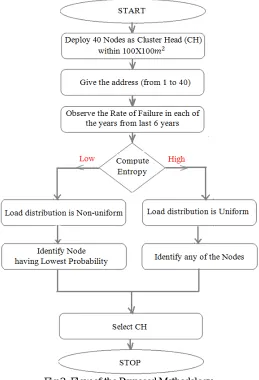
In our research, the ultimate aim is to give an idea for selecting the Node in a generic WSN application with essential and definable Load (Throughput) constituents and the relationship among these constituents so that one can explore strategies for minimizing the overall Congestion and traffic of the entire application. Presently the Wireless Sensor Network in India uses the high resolution Image cameras in the node stations, which are able to capture a picture nicely and then transmit the image towards the central office or Server base station. The data gathered from wireless sensor networks is usually saved a central base station (Server). If a centralized architecture is used in a sensor network and the central node fails, then the entire network will collapse, however the reliability of the sensor network can be increased by using distributed control architecture. This architecture has a drawback that there is a lot of energy consumption and congestion during the propagation of data. The most demanding requirement of wireless sensor hierarchy is to increase the lifetime and decrease the Transmission Delay in the architecture as all the Nodes are prepared with critical battery power.
Fig 2: Flow of the Proposed Methodology
described in average Load per individual node, called Entropy. Let M= Total number of nodes
=− ∑ .log Load/ Node
Then entropy is maximum; if all the nodes have equal load.
=− ∑ .log Load/ Node
For example if we are tossing a coin, then there may be 2 outcomes Head & Tail; it means P=1/2 and Q=1/2. Now entropy for Binary Numbers [H & T] is-
=−[ .log + .log ]
=−log [2].
= 1 Outcome / Toss
This shows that Average or Entropy is maximum if all the probabilities are equal. It means to achieve the load balancing, routing should be such that all the nodes have handled equal traffic load. This is the condition of balancing the Load. If balancing is used then all the Nodes share equal amount of Load. Therefore, the Failure Probabilities of all the Nodes are almost equal. Now the Leach Protocol will be very secure because it can select any of the Nodes as Cluster Head. By this there is no problem of die the Cluster Head before completing the communication. In our simulation, 50 sensors are deployed in 100X100 area that generates data from environment events at random times and places within the area. Sensing applications could equally environment temperature, pollution, or others. We considered the prevalent parameters of energy consumption of process, memory and radio units as constant in the individual constituent of all sensors. Also the duration of the experiments was assumed as constant 60 seconds. Monitoring neighbors and providing a secure communication with neighbors at the local level. In addition, the local constituent may include overhearing, idle listening and collision, if they occur. The global constituent is concerned with maintenance of the whole network, selection of a suitable topology and an energy efficient routing strategy based on the application’s objective. This may include energy wastage from packet retransmissions due to congestion and packet errors. The global constituent is defined as a function of energy consumption (EC) for topology management, packet routing, packet loss, and protocol overheads. The sink constituent includes the roles of manager, controller or leaders in WSNs. The sink tasks include directing, balancing, and minimizing EC of the whole network and the collection of generated data by the network’s nodes.
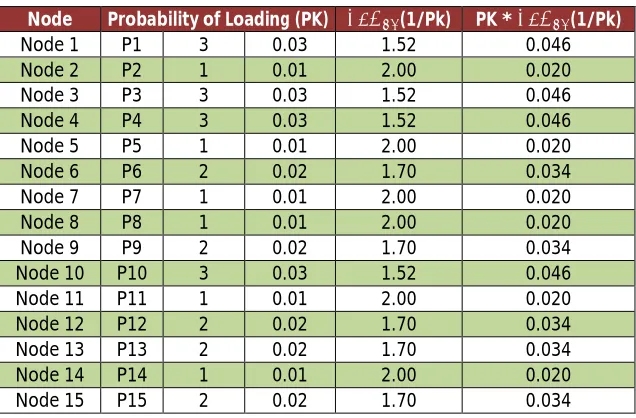
Table 1: Entropy Calculation for 50 Nodes Loading Probabilities
Node Probability of Loading (PK) (1/Pk) PK * (1/Pk)
Node 1 P1 3 0.03 1.52 0.046
Node 2 P2 1 0.01 2.00 0.020
Node 3 P3 3 0.03 1.52 0.046
Node 4 P4 3 0.03 1.52 0.046
Node 5 P5 1 0.01 2.00 0.020
Node 6 P6 2 0.02 1.70 0.034
Node 7 P7 1 0.01 2.00 0.020
Node 8 P8 1 0.01 2.00 0.020
Node 9 P9 2 0.02 1.70 0.034
Node 10 P10 3 0.03 1.52 0.046
Node 11 P11 1 0.01 2.00 0.020
Node 12 P12 2 0.02 1.70 0.034
Node 13 P13 2 0.02 1.70 0.034
Node 14 P14 1 0.01 2.00 0.020
Node 16 P16 3 0.03 1.52 0.046
Node 17 P17 2 0.02 1.70 0.034
Node 18 P18 4 0.04 1.40 0.056
Node 19 P19 1 0.01 2.00 0.020
Node 20 P20 2 0.02 1.70 0.034
Node 21 P21 3 0.03 1.52 0.046
Node 22 P22 2 0.02 1.70 0.034
Node 23 P23 1 0.01 2.00 0.020
Node 24 P24 2 0.02 1.70 0.034
Node 25 P25 1 0.01 2.00 0.020
Node 26 P26 1 0.01 2.00 0.020
Node 27 P27 3 0.03 1.52 0.046
Node 28 P28 5 0.05 1.30 0.065
Node 29 P29 2 0.02 1.70 0.034
Node 30 P30 2 0.02 1.70 0.034
Node 31 P31 1 0.01 2.00 0.020
Node 32 P32 2 0.02 1.70 0.034
Node 33 P33 5 0.05 1.30 0.065
Node 34 P34 3 0.03 1.52 0.046
Node 35 P35 1 0.01 2.00 0.020
Node 36 P36 1 0.01 2.00 0.020
Node 37 P37 6 0.06 1.22 0.073
Node 38 P38 4 0.04 1.40 0.056
Node 39 P39 1 0.01 2.00 0.020
Node 40 P40 2 0.02 1.70 0.034
Node 41 P11 1 0.01 2.00 0.020
Node 42 P12 1 0.01 2.00 0.020
Node 43 P13 1 0.01 2.00 0.020
Node 44 P14 1 0.01 2.00 0.020
Node 45 P15 1 0.01 2.00 0.020
Node 46 P16 1 0.01 2.00 0.020
Node 47 P17 1 0.01 2.00 0.020
Node 48 P18 3 0.03 1.52 0.046
Node 49 P19 1 0.01 2.00 0.020
Node 50 P20 1 0.01 2.00 0.020
TOTAL 100 1 H (X) = 1.62816
The condition of applying Probability theory is that the summation of all the Probabilities must be equal to 1. Here summation is 100. Now, divide each of the Probability by 100, and then the summation of all the Probabilities will be equal to 1. Let, calculate the Entropy.
Let Total number of Nodes=50
=− ∑ .log Load/ Node
= 1.62816 Load/ Node
Probability is 0.025.
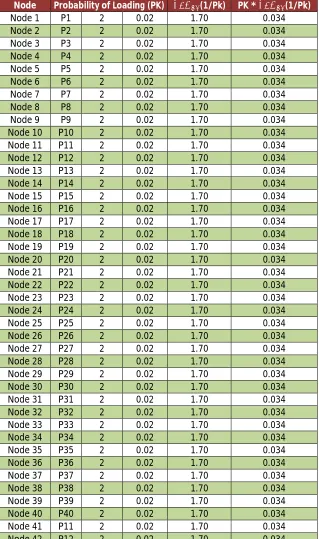
Table 2: Entropy Calculation for 50 Nodes with equal Loading Probabilities
Node Probability of Loading (PK) (1/Pk) PK * (1/Pk)
Node 1 P1 2 0.02 1.70 0.034
Node 2 P2 2 0.02 1.70 0.034
Node 3 P3 2 0.02 1.70 0.034
Node 4 P4 2 0.02 1.70 0.034
Node 5 P5 2 0.02 1.70 0.034
Node 6 P6 2 0.02 1.70 0.034
Node 7 P7 2 0.02 1.70 0.034
Node 8 P8 2 0.02 1.70 0.034
Node 9 P9 2 0.02 1.70 0.034
Node 10 P10 2 0.02 1.70 0.034
Node 11 P11 2 0.02 1.70 0.034
Node 12 P12 2 0.02 1.70 0.034
Node 13 P13 2 0.02 1.70 0.034
Node 14 P14 2 0.02 1.70 0.034
Node 15 P15 2 0.02 1.70 0.034
Node 16 P16 2 0.02 1.70 0.034
Node 17 P17 2 0.02 1.70 0.034
Node 18 P18 2 0.02 1.70 0.034
Node 19 P19 2 0.02 1.70 0.034
Node 20 P20 2 0.02 1.70 0.034
Node 21 P21 2 0.02 1.70 0.034
Node 22 P22 2 0.02 1.70 0.034
Node 23 P23 2 0.02 1.70 0.034
Node 24 P24 2 0.02 1.70 0.034
Node 25 P25 2 0.02 1.70 0.034
Node 26 P26 2 0.02 1.70 0.034
Node 27 P27 2 0.02 1.70 0.034
Node 28 P28 2 0.02 1.70 0.034
Node 29 P29 2 0.02 1.70 0.034
Node 30 P30 2 0.02 1.70 0.034
Node 31 P31 2 0.02 1.70 0.034
Node 32 P32 2 0.02 1.70 0.034
Node 33 P33 2 0.02 1.70 0.034
Node 34 P34 2 0.02 1.70 0.034
Node 35 P35 2 0.02 1.70 0.034
Node 36 P36 2 0.02 1.70 0.034
Node 37 P37 2 0.02 1.70 0.034
Node 38 P38 2 0.02 1.70 0.034
Node 39 P39 2 0.02 1.70 0.034
Node 40 P40 2 0.02 1.70 0.034
Node 41 P11 2 0.02 1.70 0.034
Node 43 P13 2 0.02 1.70 0.034
Node 44 P14 2 0.02 1.70 0.034
Node 45 P15 2 0.02 1.70 0.034
Node 46 P16 2 0.02 1.70 0.034
Node 47 P17 2 0.02 1.70 0.034
Node 48 P18 2 0.02 1.70 0.034
Node 49 P19 2 0.02 1.70 0.034
Node 50 P20 2 0.02 1.70 0.034
TOTAL 100 1 H (X) = 1.69897
=− ∑ .log Load/ Node
= 1.69897 Load/ Node
Fig 3: MATLAB Program for Nodes Deployment and Probability Calculation in WSN
V. EXPERIMENTAL RESULTS AND CONCLUSION
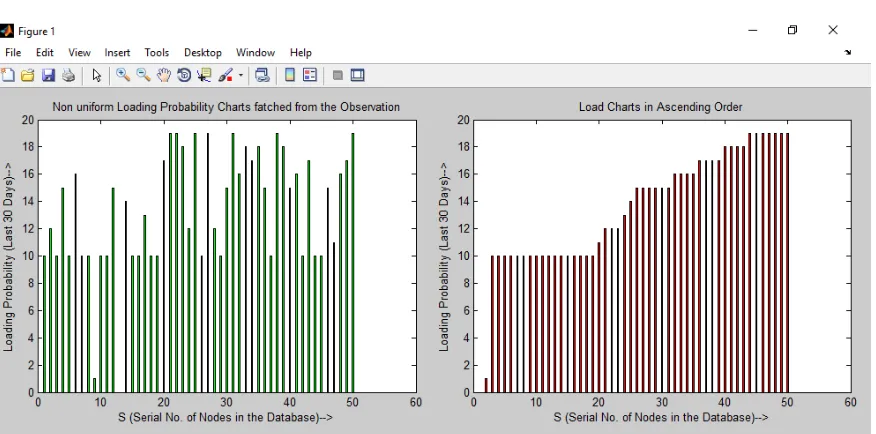
Fig 4: Load Chart of Observed Data in WSN using MATLAB
REFERENCES
[1] Aliouat, Z, Harous, S., “An efficient clustering protocol increasing wireless sensor networks life time”, International Conference on Innovations in Information Technology (IIT), pp. 194 – 199, 2012.
[2] Baghyalakshmi, D., Ebenezer J., SatyaMurty, S.A.V., “Low latency and energy efficient routing protocols for wireless sensor networks”, International Conference on Wireless Communication and Sensor Computing, ICWCSC, pp. 1-6, 2010
[3] Johnson, M., Healy, M., van de Ven, P., Hayes, M.J., Nelson, J., Newe, T., Lewis, E., “ A comparative review of wireless sensor network mote technologies”, Sensors, IEEE, pp. 1439-1442, 2009.
[4] Wan Norsyafizan W,Muhamad,Nani Fadzlina Naim, “Maximizing Network Lifetime with Efficient Routing Protocol for Wireless Sensor Networks” Fifth International Conference on MEMS.2009,IEEE.
[5] Osawa, T.; Inagaki, T.; Ishihara, S., “Implementation of Hierarchical GAF”, 5th International Conference on Networked Sensing Systems, 2008. INSS, pp. 247, 2008.
[6] Ashish Gupta IT, Dev Bhoomi Inst. of Technology Bhupender Singh & Rautela Binay Kumar CSE, Graphic Era University, “Power Management in Wireless Sensor Networks”, International Journal of Advanced Research in Computer Science and Software Engineering, Volume 4, Issue 4, April 2014 ISSN: 2277-128X.
[7] Pratik R. chavda, Prof Paresh kotak, “Comparison LEACH and HEED Cluster Based protocol for Wireless Senser Network”, IOSR Journal of Computer Engineering (IOSRJCE) Volume 7, Issue 3 (Nov. - Dec. 2012), ISSN: 2278-0661.
[8] Jamal N. Al-Karaki, Ahmed E. Kamal, “Routing Techniques in Wireless Sensor Networks: A Survey”, Dept of Electrical & Computer Engineering, IEEE wireless communications, vol. 11, Dec 2004.
[9] Lan F. Akyildiz,Georgia Institute of Technology, USA and Mehmet Can Vuran, University of Nebraska-Lincoln, USA,“Wireless Sensor Network”, first published 2010, John Wiley & Sons Ltd.