Mass and moment of inertia constraints on the lunar crustal thickness:
Relations between crustal density, mantle density, and the reference
radius of the crust-mantle boundary
Hajime Hikida1and Hitoshi Mizutani2
1Institute de Physique du Globe de Paris, 4 Avenue de Neptune, Saint-Maur 94107, France 2Japan Aerospace Exploration Agency, 3-1-1 Yoshinodai, Sagamihara, Kanagawa 229-8510, Japan
(Received March 25, 2005; Revised July 21, 2005; Accepted July 23, 2005)
The gravity inversion for the lunar crustal thickness needs three parameters: the crustal density, mantle density, and the reference radius of the crust-mantle boundary. The assumption of crust and mantle densities is found to significantly affect on the resultant crustal thickness variations. Moreover, the recent seismic analyses suggest the possibility of thinner crustal thickness around the Apollo 12 site than that proposed in the Apollo-era, on which the previous gravity inversions relied upon. Therefore the validity of the assumption used in previous gravity-inversion studies must be re-examined in detail. By using a simple three-layered mass model of the Moon including a uniform crust, mantle, and core, we determine possible combinations of the three parameters, satisfying the mass and moment of inertia constraints. The results show that the set of the parameters used in Neumannet al.(1996) can be consistent with mass and moment of inertia constraints, while those in Wieczorek and Phillips (1998) does not satisfy the constraints.
Key words:Gravity inversion, crustal thickness, mass and moment of inertia.
1.
Introduction
The global gravity data provide an important constraint on the lunar crustal thickness. The gravity inversion for a crustal thickness from topography and gravity data requires the assumption of the crust density, mantle density, and the reference radius of the crust-mantle boundary. The mantle relief derived in this way is highly dependent on the assumed density gap at the crust-mantle boundary.
Although the crustal densities of Zuberet al. (1994) and Neumannet al. (1996) were based on the best available val-ues of nonmare lunar samples, and Wieczorek and Phillips (1998) derived a dual-layered crust model on the basis of several geophysical and petrological evidences, they mod-eled density contrast at the crust-mantle boundary without a detailed discussion.
The reference radii of the crust-mantle boundary used in Zuber et al. (1994) and Neumann et al. (1996) are con-strained so that the crustal thickness at the Apollo 12 site is set to about 55 km (Nakamuraet al., 1979), and that used in Wieczorek and Phillips (1998) is determined so that thick-ness at the Apollo 12 site is set to 60 km (Toks¨oz et al., 1974). The recent re-analyses of the Apollo seismic data, however, suggest a significantly thinner crust in a range of about 30–40 km around the Apollo 12 site (Khan and Mosegaard, 2002; Lognonn´eet al., 2003). Therefore the validity of the three parameters used in previous gravity-inversion studies must be re-examined in a more careful
Copyright cThe Society of Geomagnetism and Earth, Planetary and Space Sci-ences (SGEPSS); The Seismological Society of Japan; The Volcanological Society of Japan; The Geodetic Society of Japan; The Japanese Society for Planetary Sci-ences; TERRAPUB.
way.
In this study, by using a simple three-layered mass distri-bution model of the Moon that consists of a uniform crust, mantle, and core, we derive possible combinations of the three parameters, satisfying the mass and moment of iner-tia constraints of the Moon. We examine sets of the three parameters used in previous gravity-inversion studies, by using the method developed in this study.
2.
Methods
The density distribution in the lunar interior is largely constrained by the measured total mass and the moment of inertia. In this study, we consider a simple three-layered model of the lunar interior (radially-symmetric), which con-sists of a uniform crust (the density ofρCr), mantle (the den-sity ofρM), and core (the density ofρCo), and derive possi-ble combinations ofρCr,ρM, and the radius of crust-mantle boundary RM, satisfying the above constraints. In this model, the radius of the core-mantle boundaries are defined by RCo, and the mean radius of the Moon (R = 1737.1 km; Smithet al., 1997) is used as the surface of the model. Gravitational constantGtimes massMand the average mo-ment inertia factor of the Moon areG M = 4902.8003± 0.0012 km3/s2andI/MR2=0.3931±0.0002 respectively (Konoplivet al., 1998). Using gravitational constant rec-ommended by ‘CODATA-86’ (G = 6.67259±0.00085 m3/kgs2; Cohen and Taylor, 1987), the total mass of the Moon is estimated asM =7.34767±0.00094 1022kg. If ρCr,ρCo, andRCoare assumed, we can derive aRMvs.ρM relation by solving the two equations concerning M andI
simultaneously.
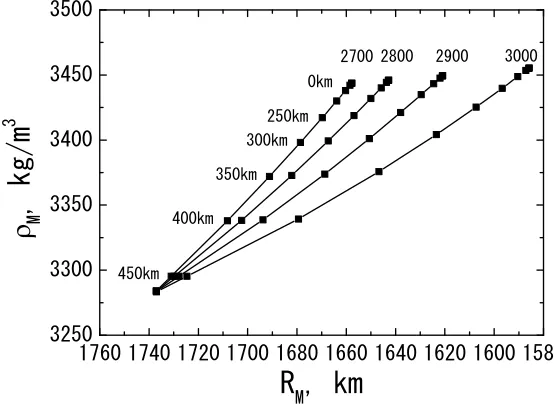
Figure 1 shows resultant relations between the RM and
Fig. 1. TheRMvs.ρM relation constrained by the mass and moment of inertia for several assumed crustal densities. The assumed core sizes are also
shown, where the core densities are assumed to be 6600 kg/m3for all the cases.
ρM relation for various assumed crustal densities ranging from 2700 to 3000 kg/m3(the values of the crustal densities are shown in kg/m3 above each line). The crustal density of 2700 kg/m3is below the normative densities of nonmare lunar samples (2800 to 3000 kg/m3; Papike, 1998), but is possible if the effect of porosity within the crust is con-sidered. We assume here the core density of 6600 kg/m3, which corresponds to the density of the Earth’s core at 1 at-mospheric pressure (Anderson, 1989). The assumption of the core density is somewhat arbitrary. As is discussed in the next section, a resultant RM vs.ρM relation is found to significantly change, asρCochanges. In Fig. 1, the assumed core sizes are shown along the lines. The plots along each line are shown at an interval of 50 km in core size beginning from 0 km at the uppermost of the line. We can see that the crustal density, mantle density, and the reference radius of the crust-mantle boundary are correlated each other so that these values should not be determined independently, which is an ignored point in the previous studies of the gravity in-version for the crustal thickness of the Moon.
3.
Discussions
3.1 Model uncertainties
Although the relation betweenRMandρMis derived by using a simple three-layered mass distribution model, there could be uncertinties inherent with this simplified model. In this section, we examine model uncertainties, and estimate these effects onRM vs.ρMrelation.
First, we estimate contributions of the topography and mantle relief along the crust-mantle boundary to the mass and moment of inertia. Because the crust lies at the outer most part of the Moon, the topographic contribution as well as the contribution of mantle relief with density gap along the crust-mantle boundary may not be negligible. The topo-graphic contributions from the mean radius of the Moon are calculated by using the recent developed topography model of 90th-degree and order obtained by Clementine LIDAR (Nozette et al., 1994; Smith et al., 1997), and the results
show that the contributions to the total mass amd the mo-ment of inertia are less than 0.02% of M and 0.03% of I
respectively.
The contributions of the mantle relief along the crust-mantle boundary are also calculated, where the relief is de-rived so that the gravitational anomalies due to the relief with the density gap(ρM−ρCr)satisfy the Bouguer anoma-lies, residual gravitational anomalies subtracting the gravi-tational attractions due to topography (the Bouguer correc-tion) from observed gravitaional anomalies. In this calcula-tion, the mantle relief is expanded in the spherical harmonic form. The degreen−and orderm−normalized spherical harmonic coefficients of the mantle relief are written as;
HC nm
HS nm
=
Rref
RM
n (
2n+1)M
4π(ρM−ρCr)R2M
CBA nm
SBA nm
(1)
where Rref is the reference radius assumed by the grav-ity model (1738 km; Konopliv et al., 2001). CBAnm and
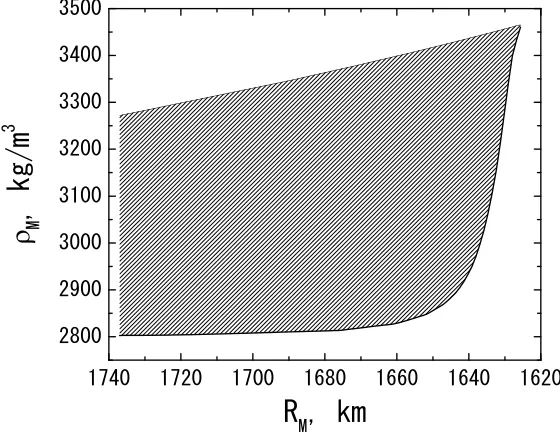
Fig. 2. The uncertainty of the mantle density as a function ofRM(the upper and lower bound), where the crustal density is assumed to be 2800 kg/m3.
moment of inertia. The result show that the mantle relief contributions are found to be about 0.1% of M and about 0.2% ofI respectively.
The sum of the topographic and mantle relief contribu-tions to the mass and moment of inertia are 0.15% ofMand 0.25% of I respectively, which are larger than the uncer-tainties of the mass and moment of inertia by order (the un-certainties of M andI are 0.01% and 0.06% respectively). Therefore the mass and moment of inertia values, which are used in the simple three-layered model of the Moon (with-out any reliefs), must be corrected in this sense. We sub-tract the topographic and mantle relief contributions from the observed mass and moment of inertia, and use the resid-ual mass and moment of inertia as constraints in the fol-lowing discussion. These corrected values of I andM are presented byMcor ≡ M −MrlfandIcor ≡ I−Irlf respec-tively, where Mrlf and Irlf are the topographic and mantle relief contributions to the mass and moment of inertia re-spectively.
Second, we derive upper and lower bound of the mantle density at a given RM, using the uncertainties of the mass and moment of inertia, as well as changing the core density in a reasonable range. For the relations among ρCr, ρM, andρCo, we assign the following condition on the basis of the idea that material is always denser with depth within the Moon;
ρCr ≤ρM ≤ρCo≤ργF e (2)
whereργF e represents the maximum core density, and is assumed to be that ofγ-Fe core (8100 kg/m3). The density of γ-Fe is estimeted from the available experimental data (Kuskov, 1995). The upper bound of ρM at a given RM is derived by using the maximum core density, ργF e, and the allowable maximum values of the mass and moment of inertia, (Mcor+Merr)and(Icor+Ierr), where Merr and
Ierrare the uncertainties of the observed mass and moment of inertia respectively. In the same way, the lower bound of ρM at a given RM is derived by using the minimum
core density, which is equivalent to the mantle density, and the allowable minimum values of the mass and moment of inertia,(Mcor−Merr)and(Icor−Ierr).
The results are shown in Fig. 2 for the case ofρCr=2800 kg/m3. It should be noted that the RM vs. ρM relation for ρCr = 2800 kg/m3 of Fig. 1 is in the upper region of the allowable range shown in Fig. 2. This is because in Fig. 1, we does not correct the contribution of topography and mantle relief to the observed mass and moment of in-ertia. As mentioned previously, the topographic and mantle relief contribution are much larger than the uncertainties of the mass and moment of inertia. Therefore (Mcor+Merr) and (Icor+Ierr), which is used for deriving the upper bound of ρM in Fig. 2, are always smaller than I and M, which is used for deriving RM vs.ρM relation of Fig. 1. As in-creasing the values of the total mass and moment of inertia used in the calculation increase the resultant value ofρMat a given RM, theRM vs.ρM relation of Fig. 1 is beyond the allowable range shown in Fig. 2.
In deriving a lower bound ofρM in Fig. 2, the core den-sity of 3460 kg/m3 is used. For the core density less than 3460 kg/m3, the mass model does not satisfy the condition of Eq. (2). The different assumption of the crustal density is found to derive almost the same results for theρM differ-ence between the cases for the core densities of 6600 and 8100 kg/m3. As is not shown in this paper, the degree of the difference ofρM between the model for the core den-sity of 6600 kg/m3and that for the minimum core density, however, varies with the assumption of crustal density.
ρCr(r)=
wherer is the radial distance from the gravitational cen-ter of the Moon, and the unit of the equation is 106kg/m3. Using the Eq. (3), the resultant value ofρM at a given RM is found to be at most 0.5% higher than that of the upper bound of Fig. 2. Although there are highland samples which has higher iron abundances than 5.5 wt%, Hikida and Mizu-tani (in preparation) shows that the assumption of the higher abundances of iron in the crust, e.g., 10 wt%, which is much lower proportion in the iron map of Lawrenceet al.(2002) in comparison to that for 5.5 wt%, does not change the re-sultant density variation in the crust so much. Note that the result for the vertical variation in the crust is not included in Fig. 2, nor is considered in the following section con-cerning the comparison with the previous gravity inversion studies, because the crustal densities in the previous stud-ies are constant. Although Wieczorek and Phillips (1998) considers vertical density variation in the crustal, it is not gradually changed like the model presented here.
Although our intention is not to determine a detailed structure of the mantle, we discuss the uncertainties due to the simple assumption of uniform mantle, comparing with the lunar internal model of Kuskovet al.(2002). They de-rive a five-layer model of the Moon, including a uniform crust with 3000 kg/m3 for the density and 60 km for the crustal thickness, three-layer mantle whose depths of the boundaries are based on the seismic analysis (Nakamura, 1983), and Fe-FeS-core, satisfying the mass and moment of inertia requirements. Using the Monte-Carlo method, they show numerous possible mass distribution models of the Moon and constrain the density range of each mantle layer, assuming that there is no inversion in the density pro-file within mantle (i.e.,ρ3 ≥ ρ2 ≥ ρ1, whereρ1,ρ2, and ρ3 are the densities in the upper, middle, and lower man-tle, respectively). In Kuskovet al.(2002), the density range of the mantle is also converted into the seismic velocities range from petrological models, which reveals that the den-sity range for the upper mantle of Kuskov et al. (2002) is consistent with the seismic model for the upper mantle of Nakamura (1983). According to Kuskovet al.(2002), the allowable range for the upper-mantle density is between 3220 kg/m3and 3340 kg/m3.
The upper mantle density is always lower than that in uniform mantle if the mantle is stratified in density and increases its density with depth. The maximum value of the upper-mantle density is the same as that derived in our model for the case ofρCr =3000 kg/m3 andRM =1677 km (see Fig. 1). We conclude that the density of uni-form mantle in our study has the uncertainty of (3220–
concerning the comparison with the previous gravity inver-sion studies.).
As mentioned above, Kuskovet al.(2002) does not con-sider any density inversion and/or decrease in the mantle with depth (i.e., the case which does not satisfy the condi-tion ofρ3 ≥ρ2 ≥ρ1). We have to discuss this possibility, because the pressure is low in the lunar mantle, and the ef-fect of temperature increase dominates on the seismic pro-files, as pointed out by Goins (1981). Although the mantle density model of Kuskovet al.(2002) is derived on the as-sumption ofρ3≥ρ2≥ρ1, the density ranges of the middle and lower mantle of Kuskovet al.(2002) are useful for in-terpreting the effect of the density inverse in the mantle on the upper mantle density as an example.
A set of the middle and lower mantle densities of 3290 and 3340 kg/m2, whose values are the lower bound of the middle and lower mantles of Kuskovet al.(2002), respec-tively, is consistent with the seismic model of Nakamura (1983). Note that the associated seismic velocities of the lower mantle with the density of 3340 kg/m3is smaller than those of Nakamura (1983), but has a good agreement if the fact that the seismic velocities of the lower mantle of Naka-mura (1983) is overestimated by about 2% is considered (Kuskovet al., 2002). Assuming that the mantle is strati-fied by the three layers as assumed in Kuskovet al.(2002), and that the middle and lower mantle densities are 3290 and 3340 kg/m2, respectively, the usage of the best values of the mass and moment of inertia, M and I, as well as the maximum core density of 8100 kg/m3 leads to the resul-tant upper mantle density of about 3370 kg/m3for the case of ρCr = 3000 kg/m3 and RM = 1677 km. This value is larger than the result of our study (uniform mantle) by (3370–3340)×100/3340∼ +0.9%.
From the estimation above, we can see that there is a pos-sibility that the upper mantle density is larger than that in uniform mantle (this study) if the mantle is stratified in den-sity and has denden-sity inversion and/or decrease with depth within the deeper mantle. However, because the example presented here is not unique (note again that the density ranges of the middle and lower mantles of Kuskov et al.
(2002) are derived from the condition ofρ3 ≥ ρ2 ≥ ρ1), we does not definitely determine the uncertainty due to the stratified mantle with density inversion within the deeper mantle. Therefore we conclude here that the upper bound of mantle density is potentially larger than that discussed in this study by 0.9%, more or less. Although we does not include this uncertainty in Fig. 2, it is considered in the fol-lowing section concerning the comparison with the previous gravity inversion studies. Clearly, the deeper mantle struc-ture should be constrained from petrological and seismic analyses in the future work.
3.2 Comparison with the previous studies
models from gravity inversions, by using the method devel-oped in this study. The crustal thickness model of Zuberet al. (1994) is a preliminary one of Neumannet al. (1996), and the three parameters used in the model of Zuberet al. (1994) are the same as those of Neumann et al. (1996). Therefore, we examine only the two models of Neumann
et al. (1996) and Wieczorek and Phillips (1998).
A uniform crust and mantle (the densities of 2800 kg/m3 and 3300 kg/m3 respectively) are assumed in the crustal model of Neumannet al. (1996). Their model is derived by anchoring the crustal thickness of 55 km near the Apollo 12 and 14 landing sites, where the reference radius of the mantle is 61 km below a nominal equatorial radius of 1738 km, i.e.,RM =1677 km. For the radially-symmetric model developed in this study, the mantle density at RM =1677 km is found to be 3380 kg/m3, assuming the densities of the crust and core of 2800 and 6600 kg/m3 respectively (Fig. 1), The value of the mantle density used in Neumann
et al.(1996), is smaller than the value expected in Fig. 1, which suggests their model is inconsistent with the mass and moment of inertia constraints. However, the allowable range ofρM at RM = 1677 km in Fig. 2 is 2810 to 3370 kg/m3(the upper bound ofρ
Mis 10 kg/m3smaller than that derived without any uncertainties, because the correction for the topographic and mantle relief contribution to the mass and moment of inertia decreases the resultant mantle density, as discussed in the previous section). In addition to this, integrating the possibility that the mantle is vertically varied in density (−3.5% of ρM if the mantle increases its density with depth, and +0.9% of ρM if the mantle has inversion in the density profile, the latter of which is a nominal value as discussed in the previous section), the range is widened to be 2710 to 3400 kg/m3. As in this study, we assume that the mantle density is always denser than the crustal density, a realistic range ofρMis then 2800 to 3400 kg/m3 for ρ
Cr = 2800 kg/m3. The mantle density used in Neumannet al.(1996) lies within this range, indicating their model is consistent with the mass and moment of inertia, if the uncertainty is considered.
The crustal thickness model of Wieczorek and Phillips (1998) considers the upper anorthositic crust (2800 kg/m3) and the lower crust of more mafic materials (3100 kg/m3) on the basis of several geophysical and petrological evi-dences. Their model had an average 31 km-thick upper crust and a 29 km-thick lower crust (the total crustal thick-ness of 60 km) in order to match the crustal thickthick-ness of 60 km at the Apollo 12 and 14 sites, assumingρM = 3400 kg/m3. By using our three-layered model of the Moon, where the model is properly modified so that the crust is di-vided into two radially-symmetric layers (i.e., 31 km-thick upper crust with the density of 2800 kg/m3and 29 km-thick lower crust with the density of 3100 kg/m3), and assuming the core density of 6600 kg/m3, the resultant mantle density atRM=1677 km is found to be 3350 kg/m3.
Considering the uncertainties discussed in the previous section (i.e., the errors of the mass and moment of inertia, the uncertainties of the core density, the effect of topogra-phy and mantle relief, and the effect of vertical density vari-ation in the mantle), and constraining the mantle density to be larger than that of the crust (here the lower crustal
den-sity, 3100 kg/m3, is used), the allowable range of the mantle density is found to be 3100 to 3370 kg/m3. This shows that the mantle density used in Wieczorek and Phillips (1998) does not lie within the allowable range, indicating that their model is inconsistent with the mass and moment of iner-tia constraints. According to Wieczorek (2003), the over-weight of about 50 kg/m3 of the mantle density leads to the increase of about 10 km of the crustal thickness around the Apollo 12 site, although the overweight can be com-pensated by adjusting both the densities of crust and mantle by the same quantities for the density gap to be the same (e.g., the crust and mantle densities of 3100 and 3400 kg/m3 can be changed to those of 3050 and 3350 kg/m3, in this case), which will not alter the major findings of their work so much.
4.
Conclusions
For possible densities of the crust and core, the relation between the mantle density and the reference radius of the crust-mantle boundary is derived as a function of the size of the core. Our results from the mass and moment of iner-tia constraints of the Moon show that the three parameters of the crust density, the mantle density, and the reference radius of the crust-mantle boundary, which are needed for constructing the crustal structure from gravity inversions, are closely related to each other, and should not be deter-mined independently. The results also show that the set of the parameters used in Neumannet al.(1996) can be con-sistent with mass and moment of inertia constraints, while that used in Wieczorek and Phillips (1998) does not satisfy the constraints.
Acknowledgments. We thank Gregory A. Neumann, Noriyuki Namiki, and Mark Wieczorek for reviews which greatly improved the manuscript.
References
Anderson, D. L.,Theory of the Earth, 366 pp., Blackwell, Boston, MA, 1989.
Binder, A. B., Lunar Prospector: Overview, Science, 281, 1475–1476, 1998.
Cohen, E. R. and B. N. Taylor, The 1986 adjustment of the fundamental physical constants,Rev. Mod. Phys.,59, 1121–1148, 1987.
Goins, N. R., A. M. Dainty, and M. N. Toks¨oz, Lunar seismology, the internal structure of the Moon,J. Geophys. Res.,86, 5061–5074, 1981. Khan, A. and K. Mosegaard, An inquiry into the lunar interior: A nonlinear inversion of the Apollo lunar seismic data,J. Geophys. Res.,107(E6), 3-1–3-23, 2002.
Konopliv, A. S., A. B. Binder, L. L. Hood, A. B. Kucinskas, W. L. Sjogren, and J. G. Williams, Improved gravity field of the Moon from Lunar Prospector,Science,281, 1476–1480, 1998.
Konopliv, A. S., S. W. Asmar, E. Carranza, W. L. Sjogren, and D. N. Yuan, Recent gravity models as a result of the Lunar Prospector mission, Icarus,150, 1–18, 2001.
Kuskov, O. L., Composition and structure of the upper mantle of the Moon, Geokhimiya,12, 1683–1698, 1995.
Kuskov, O. L., V. A. Kronrod, and L. L. Hood, Geochemical constraints on the seismic properties of the lunar mantle,Phys. Earth Planet. Inter., 134, 175–189, 2002.
Lawrence, D. J., W. C. Feldman, R. C. Elphic, R. C. Little, T. H. Prettyman, S. Maurice, P. G. Lucey, and A. B. Binder, Iron abundances on the lunar surface as measured by the Lunar Prospector gamma-ray and nutron spectrometers,J. Geophys. Res.,107, 13-1–13-26, 2002.
crust: global structure and signature of major basins,J. Geophys. Res., 101, 16841–16843, 1996.
Nozetteet al., The Clementine mission to the Moon: Scientific overview, Science,266, 1835–1839, 1994.
Papike, J. J., Planetary Materials. Reviews in Mineralogy Vol. 36, 1014 pp., Mineralogical Society of America, Washington, 1998.
Smith, D. E., M. T. Zuber, G. A. Neumann, and F. G. Lemoine, Topography of the Moon from the Clementine lidar,J. Geophys. Res.,102, 1519–
1715–1724, 1998.
Zuber, M. T., D. E. Smith, F. G. Lemoine, and G. A. Neumann, The shape and internal structure of the Moon from the Clementine mission, Science,266, 1839–1843, 1994.