University of South Carolina
Scholar Commons
Theses and Dissertations
2017
Is That Online Review Fake News? How
Sponsorship Disclosure Influences Reader
Credibility
Mark W. Tatge
University of South Carolina
Follow this and additional works at:https://scholarcommons.sc.edu/etd Part of theMass Communication Commons
This Open Access Dissertation is brought to you by Scholar Commons. It has been accepted for inclusion in Theses and Dissertations by an authorized administrator of Scholar Commons. For more information, please [email protected].
Recommended Citation
IS THAT ONLINE REVIEW FAKE NEWS? HOW SPONSORSHIP DISCLOSURE INFLUENCES READER CREDIBILITY
by
Mark W. Tatge
Bachelor of Arts
Western Illinois University, 1977
Master of Arts
Ohio State University, 1983
Master of Business Administration Ohio University, 2010
Submitted in Partial Fulfillment of the Requirements
For the Degree of Doctor of Philosophy in
Mass Communications
College of Information and Communications
University of South Carolina
2017
Accepted by:
Robert McKeever, Major Professor
Carol Pardun, Committee Member
Bartosz Wojdynski, Committee Member
Tara Marie Mortensen, Committee Member
Dedication
Dedicated to the love of my life, Julie, for her love and support. This
project was very challenging period, but you were always there when I needed
Acknowledgements
The origin of this study stretches back 30 years. My career as a journalist
greatly influenced this project both in its scope and final analysis. For that, I thank
the many, many editors and reporters I worked with at Forbes, The Wall Street
Journal, Dallas Morning News, Denver Post and Cleveland Plain Dealer. These
professionals taught me about journalism. Along the way, I also learned about
life, namely the need for to put stories in context, to treat sources fairly, and to be
transparent in my actions, and always express humility for others, especially
those who are less fortunate.
I wish to offer a warm thanks and tribute to my adviser Dr. Robert
McKeever, committee members - Dr. Carol Pardun, Dr. Bartosz Wojdynski and
Tara Marie Mortensen. I would also like to acknowledge former College of
Information and Communications Dean Charles Bierbauer and the many USC
faculty members who spent countless hours with me explaining things I didn’t
understand. Thank you for your patience, kindness and support.
Finally, this project would not have been possible without the generous
financial support of USC alumnus Ken Baldwin. I cannot thank him enough for
his interest and support of explanatory journalism at USC. Ken, I will miss our
Abstract
In a randomized between-subjects design, participants (N =595) were
assigned one of three online reviews containing disclosure statements (no
disclosure, no sponsor, sponsored) denoting whether the author of an online
review was paid by an advertiser or whether the review was independent of ad
sponsorship. Hayes and Preacher’s bootstrapping procedure was used to test
the indirect and direct effects of related to a hypothesized model examining the
impact of review disclosure on perceived credibility and purchase intention. The
impact of two covariates – involvement and media literacy – was assessed to see
if these variables had a potential confounding impact on predicted outcomes.
Findings show ad sponsored reviews had a significantly negative effect on
perceived credibility and purchase intension. Readers trusted and were more
likely to purchase the product when the review was not disclosed as advertising
but instead was disclosed to be journalistic and independent in nature. The
finding have implications for publishers wishing to perceptions about the
Table of Contents
Dedication ... iii
Acknowledgements ... iv
Abstract ... v
List of Figures ... vii
Introduction ... 1
Chapter 2 Literature Review ... 7
Chapter 3 Methods and Measures ... 39
Chapter 4 Findings ... 54
Chapter 5 Discussion ... 62
References ... 76
Appendix A: Questionnaire ... 100
Appendix B: IRB Approval ... 120
List of Figures
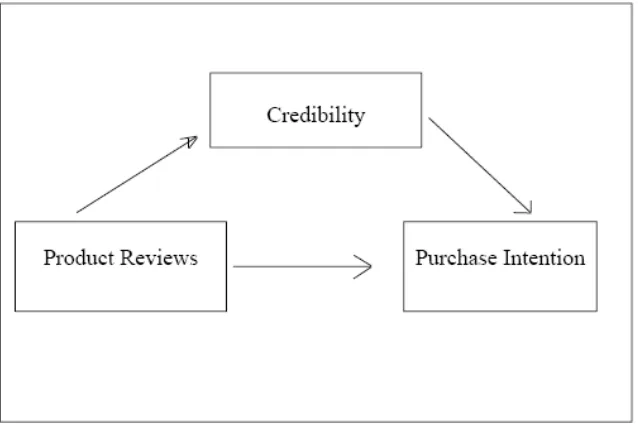
Figure 2.1 Hypothesized Model ... 29
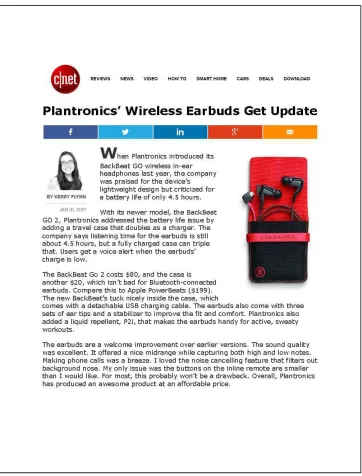
Figure 3.1 Treatment 1 No Disclosure ... 45
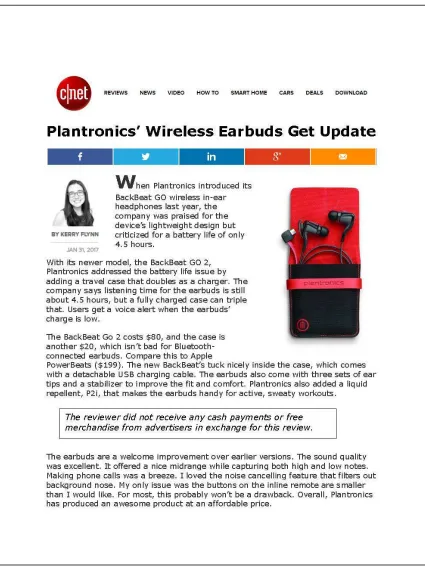
Figure 3.2 Treatment 2 No Sponsor ... 46
Figure 3.3 Treatment 3 Sponsored ... 47
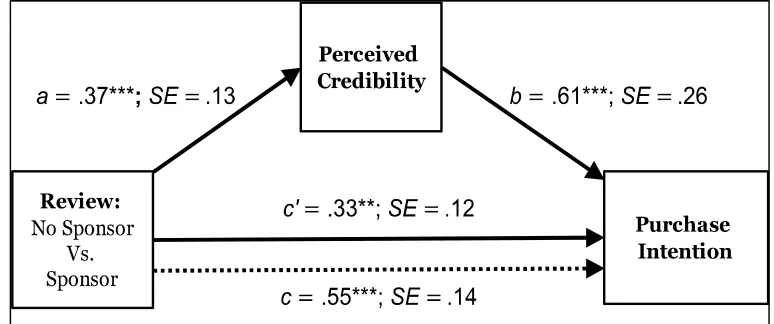
Figure 4.1 Mediation Model. ... 60
Introduction
The Internet is awash in fake content and misinformation (BBC Word
Trending, 2016; Caruso, 1999; Luhn, 2008; Ward, 1997). Almost daily, readers
struggle with the credibility of Internet content, a trend that has sparked public
skepticism about all forms of news, commentary and information being
disseminated in the media marketplace (Barthel, Mitchell & Holcomb, 2016;
Flanagin & Metzger, 2000; Ho, 2012; King, 2010; Metzger, Flanagin, Eyal,
Lemus, & McCann; 2003). Research shows 62% of Americans now get their
news from social media, but 98% of people say they distrust the Internet, fearing
the information is outdated, self-promotional or inaccurate (Borden & Tew, 2007;
Ho, 2012). About two in three U.S. adults (64%) say fabricated stories cause a
great deal of confusion about the basic facts of current issues and events
(Barthel et al., 2016). Marketers have added to the confusion by disguising
advertising as news, creating a new genre of sponsored content called “native
content.” Native content resembles journalistic produced news stories, but native
content’s intensions and ad sponsorship are not always disclosed to the reader.
Instead, native content is represented as something it is not: journalism.
1.1 Project Focus
Previous studies indicate readers need help assessing whether news and
dismissed as spam. Establishing credibility with a reader hinges on the
“believability of a medium, source or message” (Hovland et al.,1953; Kaye &
Johnson, 2011, p. 238; Metzger, 2007). This project focuses on credibility as it
relates to news editorial content produced by journalists. The study examines
whether the disclosure that an online review is not ad sponsored influences
readers’ perceptions about the credibility of the journalist’s message, namely the
evaluation of the product under review.
The study is important for two reasons. The first reason relates to the fact
that the once-distinct lines between journalistic editorial content and advertising
have blurred markedly during the past decade. Native content, a form of
advertising, is deliberately fashioned by advertisers to resemble news written by
journalists. It can be blamed for confusing readers. Research shows readers
often have trouble determining the difference between native content and
journalistic-produced content (e.g. news, online reviews, blogs). “Unlike
traditional print publishing, it may be harder to discern the differences between
the two forms [advertising and journalism] in the online environment because
material is often presented seamlessly, without clear distinctions between
advertising and other information” (Metzger et al., 2003, p.295; Tate & Alexander,
1999).
Publishers are required under federal law to disclose the sponsorship of
news and editorial content, but fail to comply with the law (Swant, 2016). Even
when an advertising label is displayed, consumers often miss the sponsorship
Evans, 2016, 2017). The reason for this oversight may be packaging and
placement of the disclosure. Sponsored content is deliberately fashioned to
mimic journalistic content in terms of its substance, appearance and layout. The
effectiveness of native content hinges on its ability to look like editorial content
produced by journalists and independent freelancers (Schauster, Ferrucci, &
Neill, 2016; Wojdynski, 2016). When readers find they are viewing advertising,
they ignore the content. Advertisers have responded by disguising how they
package sponsored content, producing articles that appear like they were written
by journalists. This created confusion among readers who can’t tell the
difference. One solution to this problem might be to more clearly mark
non-advertising content produced by journalists, pointing out that it is not sponsored
by advertisers but is, in fact, created by independent journalists. Labeling content
as non-sponsored could reassure readers that the information being provided
has not been influenced by an advertiser and can therefore be trusted. This tactic
could potentially help publishers boost credibility with readers and alleviate
confusion in the media marketplace.
The content examined in this research involves online product reviews.
Online reviews were selected because of their widespread popularity and also
because of their susceptibility to fraud and misrepresentation. Ninety percent of
online shoppers report they consult online reviews before making a purchase
decision (Channel Advisor, 2011). Yet past studies show 15-25% of the
published online reviews are fake news (Luca & Zervas, 2016), published either
stayed at or a product they never purchased (Luca & Zervas, 2016; Lu, Chang, &
Chang, 2014; Streitfeld, 2011, Zerbo, 2016). Marketers, seeing the popularity of
reviews, offer individuals cash payments, gift cards and free merchandise in
exchange for writing positive reviews about books, airfares, cruises, hotels and
restaurants (Bambauer-Sachse & Mangold, 2013; Hu, Liu, & Sambamurthy,
2011; Jiménez & Mendoza, 2013; Streitfeld, 2012; Zerbo, 2016). In 2015,
Amazon sued 1,000 companies, alleging they were responsible for bogus
reviews appearing on the Amazon website (Wattles, 2015). TripAdvisor, facing
allegations that millions of its reviews were fake, decided to replace its slogan,
“Reviews you can trust,” with a new one, “Reviews from our Community” (Tuttle,
2012).
Online reviews are typically written by individuals wishing to share their
views about electronics, restaurants, doctors, furniture, vacations and movies
(Liu, 2006). A Nielsen poll (2009) of 25,000 consumers found that 70% of
consumers trust reviews as much as personal recommendations from friends
and family. The average website visitor assumes the reviewers conducting the
evaluations are independent, are not paid, are not receiving free merchandise
and are not working for the company being reviewed (Bambauer-Sachse &
Mangold, 2013; Dellarocas, 2006; Hu et al., 2011; Luca & Zervas, 2016).
The erosion in reader credibility of editorial content is compounded by how
how content is produced and distributed. During the past decade, there has been
an exponential increase in the amount of content produced by freelance
compensation in the form of cash or free merchandise (Sprague & Wells, 2010;
Sullivan, 2009). By compensating the reviewer, advertisers are sponsoring the
review. Absent disclosure, readers are led to believe the review is an
independent assessment rather than paid advertising (Flanagin & Metzger, 2000;
King, Racherla, & Bush, 2014; Tate & Alexander, 1999; Wojdynski, 2016).
In the past, media consumers relied on the established reputation of the
media source publishing the information (Metzger et al., 2003). Editorial content
was created and published by journalists, who were required to adhere to
professional standards regarding accuracy, source disclosure and conflicts of
interest. Advertising content was clearly marked and separated from news and
editorial content. In the Web 2.0 world, past editorial standards governing source
disclosure and fact checking have been abandoned as publishers have turned to
free, crowdsourced content to fill websites. Compounding the problem,
Web-based information is delivered through multiple channels and it is “prone to
alteration which is difficult to detect” (Tate & Alexander, 1999; King, 2010;
Kovach & Rosenstiel, 1999; Metzger et al., 2003, p.295). Fraudulent websites
are created mimicking legitimate media websites. Information from these
websites is then shared by individuals and republished (Tate & Alexander, 1999;
Johnson & Kaye, 1998). It is not surprising then that readers complain they have
difficulty assessing the credibility of the information they consume (Borden &
Tew, 2007; Ho, 2012; Sundar, 2008).
Scholars and media executives have suggested that greater transparency
credibility (Kovach & Rosenstiel, 2010; Tate & Alexander, 1999; Zhang, Liu,
Sayogo, Picazo-Vela, & Luna-Reyes, 2016). It seems only logical that if
publishers offered detailed information about the source and sponsorship of
content, readers would have an easier time assessing credibility (Johnson &
Kaye, 1998, 2004; Kovach & Rosenstiel, 2010, p. 185; Tate &Alexander, 1999).
In the new media age, consumers must bear the responsibility for
determining whether information is fact or fiction (Flanagin & Metzger, 2000).
Journalists are fewer in number today than 10 years ago. Meanwhile, there has
been an explosion in content created and published by individuals not affiliated
with traditional news organizations. On Twitter, more than 500,000 tweets are
produced each day (http://www.internetlivestats.com/twitter-statistics/). The
public has more content at its disposal. Unfortunately, there is a shortage of tools
available to assess the accuracy and validity of information being published.
Including a textual disclosure statement identifying content as not paid for by an
advertiser, is one step publishers could take to help readers assess the true
intention of the message creator. It is the expressed goal of this study to make a
meaningful contribution to the debate about how to best improve reader trust and
improve content credibility in the Web 2.0 world.
1.2 Navigating this Study
Chapter 2 reviews the relevant scholarship in the areas of trust, credibility,
disclosure, purchase intention, and involvement. Chapter 3 discusses the method
used to collect data on the subject under examination. Chapter 4 reports the
Chapter 2 Literature Review
This section reviews relevant literature and theoretical linkages related to
this study. The study spans several fields of interest, most notably mass
communication, psychology, marketing and advertising. The topic of advertising
sponsorship has been studied by scholars, but not the impact of including a
statement denoting a lack of advertising sponsorship. This is a new topic worthy
of examination given readers’ skepticism about information sources in the
Internet age and the need for publishers to improve perceptions regarding the
credibility of their news products.
2.1 News & Native Content
The conceptual definitions of news, sponsored content and native content
are worthy of explication. Sponsored content and native content are used
interchangeably by advertising professionals. It is worth noting that there are key
differences between the two terms. Sponsored content informs individuals about
a brand and it aims to create awareness. Native advertising, however, is
designed to convince or persuade readers in hope of changing their attitudes
(Lazauskas, 2016). Native is avant-garde while sponsored content, native’s
stodgy cousin, has been around for much of the past century. Native is fresh and
comes in many content forms. Native is much more effective at capturing
content as journalism, not advertising (Schauster, Ferrucci & Neill, 2016;
Wojdynski, 2016).
This research is applicable to creators of both sponsored content and
native content, but its main mission is to offers insights into how publishers could
alleviate confusion and improve credibility of news content. The study tests
credibility as it relates to the inclusion of a statement informing readers that the
content was “sponsored” in the context of an online review. This research also
tests the effect of labeling the content as “not-sponsored” by an advertiser. As
the lines between news editorial content have blurred, it would seem imperative
that publishers develop better ways of labeling content thereby establishing
reader trust or risk a further erosion of their core news product. (Lazauskas,
2015).
It is important to note that the definition of news is evolving, too, in part
due to changes in the advertising environment already discussed (i.e. native
content). Simply put, the distinction between advertising and news has blurred.
News is broadly defined as something that is relevant, useful and of interest to a
given audience (Brooks, Moen, Kennedy, & Ranly, 2013) while advertising is
persuasive communication. Traditionally, news was collected and distributed by
journalists who were prohibited from expressing their opinions. Opinion was
reserved for the editorial page. With the emergence of social media networks, the
definition of news has been broadened and now includes the work of citizen
considered a “news feed,” even though the information involves little more than a
personal narrative or individual comments, not traditional journalism based
ooriginal reporting. The accuracy of the news and other information published on
the Web seems to matter less than the “perceived enjoyability, liveliness,
important, timeliness and relevance” of the news and information being shared
by readers (Sundar, 1998, p.64). Content sharing occurs irrespective of source
attribution, “raising significant concerns for publishers committed to serious
journalistic practice on the Internet” (p. 64).
2.2 Online Reviews
It is also worthwhile to define the term online review as it relates to this
research. Online reviews are single-source personal narratives that provide
individuals with relevant information about a product or service. The reviews are
published on multiple platforms. Many individuals create videos reviewing
products and publish the videos on YouTube. Traditional news websites (e.g.
The New York Times, Washington Post) publish reviews written by paid staff
writers on topics ranging from vacations to new cars. Specialized websites (e.g.
cooking, technology, travel) offer reviews written by individuals professing
expertise in a given subject. Finally, e-commerce websites display reviews
written by past shoppers in hope of stimulating future sales. Readers have
difficulty determining whether the published online review is journalism,
advertising or fake news. Unfortunately, sources are not uniformly disclosed by
imposed on the author of the review. “Absent such controls, information
assessment and verification – core components of source, message and medium
credibility – now often become the responsibility of the media consumer”
(Metzger et al., 2003, p.27; Westerman, Spence & van Der Heider, 2014).
2.3 Theoretical basis
The central variable being tested in this study is credibility and whether it
mediates a buyer’s intention to purchase a product evaluated by an online
reviewer. Online reviews contain both a source (author) and a message
component. If users see a source as credible, they trust it (Jackob, 2010;
Kohring & Matthes, 2007). Credibility is key to a message’s acceptance since
readers dismiss sources that they do not consider credible (Gaziano, 1988;
Johnson & Kaye, 1998, 2000, 2011). Credibility is subcomponent of trust, which
is much broader construct, and is discussed in a later section of this literature
review.
When assessing the credibility of a message, readers rely on multiple
factors. Credibility is conceptualized in terms of source, message and media
(Metzger et al., 2003). Literally, dozens of constructs have been used to define
credibility: fairness, accuracy, objectivity, trust, believability and reliability
(Hilligoss & Rieh, 2007; Self, 1996). Past research examines credibility of
editorial content by focusing on a wide range of topics: media brand, message
medium, message content, message source and the impact of technology (see
& Stefanone, 2012; Cole & Greer, 2013; Hovland & Weiss, 1951; Metzger,
Flanagin & Meddlers, 2010; Metzger, Flanagin, Eyal, Lemus & Mccann, 2003;
Gaziano & McGrath, 1986; Nah & Chung, 2012; Sternadori & Thorson, 2009;
Sundar 1999, 2008; Wulfemeyer, 1983). Attempts to measure the credibility of
the media content have been hobbled by a lack of cohesion among academic
researchers when it comes to deciding both the definition of credibility and how to
best measure it (Appelman & Sundar, 2015). And despite decades of research,
there is not a theory of credibility or agreed upon model that scholars use to test
the concept of crediblity.
Credibility’s roots trace back to Aristotle, who held that the effectiveness of
a message was influenced by the expertise and trust of the messenger, the
emotional appeal of the message and the force of evidence and logic contained
in the message. Academic scholars have been studying credibility for more than
60 years, starting with the pioneering work of psychologist Carl Hovland and his
colleagues at Yale University who developed a theoretical structure linking
individual attributes and persuasion to three major factors: source, message
content, and audience. Hovland, Janis & Kelley (1953) found that individuals
assess a message based on their perceptions of the communicator’s motivation
to tell the truth. Gaziano and McGrath (1986) note that interest in measuring the
credibility of media sources didn’t become popular until the 1960s, when
researchers became intrigued with measuring whether TV or newspapers were
more believable when it came to local news. Hovland distilled source credibility
number of other credibility components, including fairness, accuracy,
knowledgeability and completeness, only to conclude that credibility was a
multidimensional concept, “although the dimensions varied from study to study”
(Gaziano & McGrath, p. 452; Meyer, 1974). When the Internet emerged in the
1990s, researchers took a new interest in the subject. Sundar (1998) examined
online news source attribution and reader perceptions about quotations. News
stories containing quotes were found to be significantly more credible than
stories not containing quotations (Sundar, 1998). One practical implication of
Sundar’s study is that poorly sourced stories published on the Internet are
evaluated as being less credible (p. 63). What journalists typically add to a news
story is additional factual information collected from reporting, including personal
interviews. By comparison, online reviews rarely contain quotations, but are
instead first-person narratives written by a single person expressing their views
on a product or service. Since reviews carry the perception they are written by an
individual, readers generally assign the same level of importance to what the
reviewer recommends as to word-of-mouth recommendations offered by friends
and family (Bickart & Schindler, 2001; Filieri, 2016; Dou et al., 2012). The
information provided by the reviewer is considered credible provided readers
believe the reviewer is trustworthy and has the necessary expertise to evaluate
the product or service under review (Hovland & Weiss, 1951; McGinnies & Ward,
1980).
This research attempts to build on past work of Appelman & Sundar
authenticity and accuracy of the message being conveyed by the source. This
study uses a scale developed by Appelman & Sundar (2016) that was specifically
constructed to treat message credibility as a distinct concept that differs from
source credibility and medium credibility (p. 74). “The scale is not only reliable
and valid, but it is also parsimonious and theory driven” (p.73). Appelman and
Sundar (2016) assert that past studies attempting to measure credibility of
crowdsourced information appearing on social media websites have focused on
the perceived credibility of the information (Cunningham & Bright, 2012;
Edwards, Spence, Gentile, Edwards & Edwards, 2013; Hwang, 2013; Park,
Xiang, Josiam & Kim, 2014) or the perceived credibility of the social media
website (Lee & Ahn, 2013) rather than examining the credibility of the content
published on the social media website (Appelman & Sundar, 2016, p. 60)
“Disambiguating message credibility from source credibility and medium
credibility can enhance the clarity and quality of research in a number of
theoretical and practical domains” (Appelman & Sundar, 2016, p. 60).
2.4 Message source
When assessing the source of the message, credibility is examined based
on the user’s perceptions of trustworthiness and expertise of the source of the
message (Hovland & Weiss, 1951). “If the attributed source of a piece of
information is a credible person or organization, then according to conventional
wisdom, that information is probably reliable” (Sundar, 2008, p. 73). Newhagen
1998, p. 56). In communications research, scholars view the term “source” from
the vantage point of media channels.
Other researchers have studied source as it applies to the publisher of the
information. The mainstream media have historically functioned as gatekeepers
of information (Abel & Wirth, 1977; Carter & Greenberg; 1965; Sundar, 1998) but
that role has shifted with the emergence of crowdsourced information produced
by individuals. It is not uncommon for one individual to create content based on
personal opinions or experiences and then publish this account on Facebook,
Twitter or another social media website (Kovach & Rosenstiel, 2010; Metzger et
al., 2003). Unlike a journalistic article, the source and author of what appears on
social media are often one and the same. For example, a Yelp review is based
on one person’s evaluation of one meal at a restaurant. The information or
credibility of the source is not checked by Yelp or the restaurant before it is
published (Tatge & Luchsinger, 2016). The role of the journalist is quite different.
Journalists collect and pass along useful, accurate, fact-checked information
obtained elsewhere (Johnson & Kaye, 1998, 2004; Kovach & Rosenstiel,
2007; Sundar, 1998). Journalists avoid entanglements that would make them an
active part of the story since they view their role as one that requires they remain
impartial and objective (Kovach & Rosensteil, 2007). Becoming a source of the
information used to prepare a story is something journalists see as a conflict that
compromises the integrity, and possibly even the credibility, of the information
In the case of online reviews, information provided by a product reviewer
is assessed by readers for how its correlates with readers’ existing attitudes
about the product the reviewer is evaluating. Information integration theory holds
that development of personal impressions and attitudes involves the integration
of information “into evaluative judgements that have social relevance” (Anderson,
1971, p. 173). Source status, reliability of the source, and expertise are all
weighed by individuals attempting to decide the credibility of the information
contained in an online review or even a news story. How much weight is given to
the information source depends on past experiences with the source, ego
involvement and the strength of their prior convictions about the subject. Whether
the views expressed by an online reviewer are adopted largely depends on
whether that information conforms to the shoppers’ individual attitudes and
beliefs (Anderson, 1981; Sherif & Hovland, 1961).
2.5 Message content
When assessing message credibility, consumers rely on content
characteristics such as tone, word usage and length (Walther, 1996). Metzger et
al. (2003) note that past research examining message credibility has focused on
source and message structure (Hong, 2006; Sharp & McClung, 1996) message
content (Bacon, 1979; Hamilton, 1998; McCroskey, 1969) and message intensity
(Bradac, Bowers, & Courtright, 1980; Hamilton, 1998; Hamilton & Hunter, 1998).
Unorganized messages and messages containing low-quality information and
messages using more opinionated language are viewed as less credible
credibility is supposed to influence perceptions about the message, in fact,
messages also influence perceptions concerning the credibility of the source” (p.
975).
One example of how message content influences source credibility is
native content fashioned to resemble news. Native advertising’s effectiveness
hinges on it being disguised as news/editorial content, resembling an article
written by a journalist. When readers realize news/editorial content is, in fact,
advertising, research shows they reject the content’s message. Amazeen &
Muddiman (2017) note that the emergence of native content has had a
deleterious effect on credibility of legacy news publishers and online news
websites. “Native advertising potentially deceives audiences who are unaware
that native advertising is paid, persuasive content versus editorial, thus
contributing to the diminishing credibility of journalism” (Schauster, Ferrucci, &
Neill, 2016, p. 1408).
2.6 Message medium
Message source is sometimes confused with message medium, or how
the information is published and distributed. Message source, in the case of this
research, should be interpreted to mean message creator. Of course, who
creates the message and who delivers it are sometimes one and the same (e.g.
public speech, a blog, email or text message). Message delivery influences how
the information is interpreted and processed by the viewer (Cantril & Allport,
1935; Haugh, 1952; Knower, 1935; Wilke, 1934). Past research shows printed
the viewer to focus more on the likeability and trustworthiness of the source while
paying less attention to the message contents (Booth-Butterfield & Gutowski,
1993). In the case of Web editorial content, several types of media converge –
text, video, graphics, audio. Overall, the credibility of online media remains
mixed. Flanagin and Metzger (2000) found newspapers were more credible than
“other media channels regardless of news content,” but other studies (Johnson &
Kaye, 1998) found there is no “significant relationship between Internet
experience and relative credibility of the Internet” when compared to other media
(Jo, 2005). As Web editorial content has become more pervasive, studies show
readers find articles appearing on the Web are just as credible as those
appearing in a printed newspaper. Web content credibility is influenced by
content type, presentation, information literacy, pre-existing attitudes and reader
expectations (Carr, Barnidge, Lee, & Tang, 2014; Flanagin & Metzger, 2000,
2007; Metzger, 2007).
For much of the past century, a media message was distributed in one of
two ways: printed word or over the airwaves. Mainstream media outlets
functioned as gatekeepers of information (Lewin, 1947). Sources of information
were rigorously researched, analyzed and validated prior to publication by
mainstream media (Kovach & Rosenstiel, 2007; Metzger et al., 2003). Journalists
could only include viewpoints if the opinion was attached to a source quoted in
the story (Johnson & Kaye, 1998; Kovach & Rosenstiel, 2007). Content was
New York Times, CBS News, Gannett, Knight Ridder) which exerted influence
over what was published and reader perceptions. In the case of journalism,
content was published in accordance with professional standards imposed by
media brands (Gade & Lowrey, 2011; King, 2010, p. 211-250; Kovach &
Rosenstiel, 2007). Information originating from news organizations was
considered relatively credible given editorial procedures and fact checking
procedures (Flanagin & Metzger, 2007, p. 321).
2.7 Trust
Trust is the confidence a person has that other people will act favorably
and as anticipated (Gefen, 2000, p. 726). Trust is acquired over time and is
based on previous interactions with a party. If a party behaves as expected, then
that increases trust (p. 726), allowing individuals to reduce uncertainty. Trust
deals with “beliefs about future actions of other people” (p. 727). Trust is
multidimensional and a critical factor to consider when measuring attitudes and
behavior. Communications scholars view trust it as a subcomponent of credibility.
Online reviews influence consumer attitudes by building trust and by offering
knowledge on a given topic (Gefen, 2000, p. 733; Racherla & Fiske, 2012). One
way to assess trust is to see if it leads to an action or a measurable change in
individual attitudes. Senecal and Nantel (2004) found that consumers who sought
online product recommendations were twice as likely to purchase the
recommended product than someone who didn’t consult the review (Jiménez &
Mendoza, 2013; Robson, Farshid, Bredican, & Humphrey, 2013, p. 2 ; Zhang et
Prior research has found consumers view user-generated reviews as
being more trustworthy than traditional advertisements, a factor that influences
adoption and purchase behavior (Huang et al., 2007; Wang & Benbast, 2005.
Readers consider online reviews to be independently written since the content is
represented as being created by individuals (Hu, Bose, Koh, & Liu, 2011; Luca &
Zervas, 2016; Lim & van Der Heide, 2015; Scott, 2014; FTC, 2011). Because
consumers are promoted as the source, the online review is interpreted without
defensive processing techniques that individuals generally engage in when they
encounter persuasive messages (Quick, Shen, & Dillard, 2012). Aware of this
fact, marketers post promotional reviews to influence consumer decision-making
(Chevalier & Mayzlin, 2006; Racherla & Fiske, 2012, p. 549).
Even though consumers admit regularly consulting online reviews, the
trustworthiness of reviews has come into question. Roughly half Americans
(51%) who read online reviews say they generally give an accurate picture of a
company, but “a similar share (48%) believes it is often hard to tell if online
reviews are truthful and unbiased” (Smith & Anderson, 2016). Online reviews are
viewed by shoppers as honest evaluations of both the strength and weaknesses
of products (Park, Lee, & Han, 2007, p. 127) but empirical research shows
information contained in online reviews is a mix of fact, fiction and advertising
(Associated Press, 2015; Bambauer-Sachse & Mangold, 2013; King, Racherla, &
Bush, 2014; Lim & van Der Heide, 2015; Luca & Zervas, 2016; Scott, 2014).
E-commerce websites typically do not check the factual accuracy of published
pose as real customers and write positive reviews about products or negative
reviews about competitors (Streitfeld, 2011, 2012). A Harvard Business Review
study found that 16% of the reviews appearing on Yelp.com are fraudulent (Luca
& Zervas, 2016). Distinguishing real consumer opinions from fake reviews is next
to impossible (Dellarocas, 2006; Dou, Walden, Lee, & Lee, 2012; Hu et al., 2011;
Racherla & Fiske, 2012).
Determining what information can be trusted has become challenging. In
the past, the public relied upon journalists to sift through information, evaluate its
accuracy and decide whether it merited publication (Kovach & Rosenstiel, 2007;
Lewin, 1947). In the new media environment, individuals are acting as their own
gatekeepers. The role of professional media to check content and determine
source credibility has been greatly diminished (Coddington & Holton, 2014;
Westerman, Spence and van Der Heider, 2014, p. 172). Today, individuals
create text and capture video and photos using mobile cellular phones. Many
individuals pass online information along, including product recommendations,
preferring to redistribute existing content published elsewhere rather than taking
the energy to create original content (Mitchell, Gottfried, Barthel, Shearer, 2016;
Singer, 2014; Thurman, 2008, 2011).
Formally stated, the following hypotheses were posed:
H1: Participants who are shown a product review that includes a
disclosure statement that says the review was not sponsored will perceive
shown a product review that includes a disclosure statement that says the review
was sponsored.
This study also posed the following research questions:
RQ1: What is the relationship between a disclosure statement (no
disclosure, no sponsor or sponsored) and credibility?
RQ2: What is the relationship between disclosure statements (no
disclosure, no sponsor or sponsored) and trust?
2.8 Disclosure
Most the past scholarship regarding disclosure draws from the literature in
the field of advertising, not journalism. There is an obvious reason for this fact:
News organizations face no regulations regarding source disclosure. The
editorial decision about whether to disclose the source of a news article, feature
story or opinion column is left up to the news organization. As a general rule,
articles produced by journalists are not labeled in the same way that is true in
other industries (e.g. food, drug, cosmetics). One exception is entertainment
products, which display the Motion Picture Association of America’s film rating
system. Another exception is advertising media. Federal rules require that
persuasive communication be distinctively marked so it is not confused with other
forms of communication.
Media’s disclosure practices differ markedly from many other industries,
which label products to inform consumers about ingredients, manufacturing
such as those contained on tobacco and pharmaceutical products. Other labels
are more informational in nature such as those contained on food and personal
care products (Konar & Cohen, 1997; Label Insight, 2016; Russell, Swasy,
Russell, & Engel, 2017).
Labeling and source disclosure of Web editorial content (text, graphics,
photos, video) is inconsistent. It lacks transparency, suffers from inaccuracies
and is sometimes fiction (Gade & Lowrey, 2011; Hwang & Jeong, 2016; Kang,
2010; Kovach & Rosenstiel, 2010; Metzger et al., 2003). Federal rules governing
commercial speech state that sponsored editorial content must be clearly marked
as advertising otherwise the message is considered deceptive communication
(FTC, 2009). In today’s contemporary media environment advertising is tailored
to resemble news and positioned to mask its true intention, namely to persuade
readers (Metzger et al. 2003; Keib & Tatge, 2016; Sundar, 1998).
This study tests the impact of informing readers that the author did not
receive compensation from advertiser. Source disclosure allows readers to
assess credibility and builds trust (Hovland & Weiss, 1951, Kovach & Rosenstiel,
2010; McCroskey & Young, 1981; Reich, 2011). Yet, scholarly research indicates
there is a lack of transparency regarding information sources in the Internet world
(Luhn, 2008; Lim & Van Der Heide, 2015; Metzger et al., 2003; Shaw, 1998;
Sundar, 1998). Disclosure of content as paid advertising influences readers’
perceptions about content’s credibility, causing viewers to scrutinize the message
more closely (Boerman, van Reijmersdal & Neijens, 2012, 2013; Wei, Fischer, &
Readers also view sponsored content as less credible than non-advertising
sponsored content (Boerman, van Reijmersdal & Neijens, 2015; Kim, Pasadeos
& Barban, 2001; Wojdynski & Evans, 2016; Wu et al., 2016). What is not known
is whether disclosing an online review as not being sponsored has a similar,
reverse effect on credibility, namely it increases reader’s trust in the message
being conveyed.
Previous studies have paid scant attention to whether readers are told
about a potential conflict raised by advertisers paying freelancers to write
favorable online reviews. Freelancers are required to disclose receiving free
merchandise and payments from advertisers, but this financial arrangement is
not always shared with readers (Boerman et al., 2013; Carlson, 2015; Sahni &
Nair, 2016).
Disclosure of details about the writer of article is an important factor
evaluated by readers in assessing the credibility of blogs, social media posts and
online reviews. Consumers give more weight to reviewers who they feel are
genuine and “have social backgrounds, tastes and preferences” similar to their
own background (Racherla & Friske, 2012, p. 550). Maddux and Rogers (1980)
found that disclosure of personal information such as gender and geographical
origin enhances the credibility of the message. Online reviews containing a
name, photo and other biographical information (hometown, interests, friends)
boost the credibility of the review, making it more useful in the eyes of the reader
(Sussman & Siegal, 2003; Fogg et al., 2001). Online reviews that are perceived
influence with shoppers since they reduce uncertainly (Bae & Lee, 2011;
Robinson, Goh, & Zhang, 2012; West & Broniarczyk, 1998).
Publishers need to do a better job of informing readers that the news
content they are consuming has not been influenced by advertisers (Hoofnagle &
Meleshinsky, 2015) or the publishers will suffer a potential reader backlash
(Campbell et al., 2013; Friestad & Wright, 1994). Lazauskas, 2015; Wojdynski &
Evans, 2016, 2017). One study found that 67% of readers felt deceived after
learning an article was sponsored by a brand and 59% perceived news sites with
sponsored content as less credible. (Lazauskas, 2014; Schauster, Ferrucci, &
Neill, 2016). Four in 10 U.S. consumers report they felt disappointed or deceived
when they learned that content they viewed was sponsored by an advertiser
(Overmyer, 2015). Advertisers will more than likely resist increasing disclosure
since they want sponsored content to be viewed just as credible as journalism
content even though it is persuasive communication (Schauster, Ferrucci & Neill,
2016; Wojdynski, 2016).
Labeling proponents argue, however, that accurately labeling content as
journalism or paid advertising might reduce confusion and increase the credibility
of non-advertising content (e.g. news). By increasing the transparency of the
source of the content, readers can accurately assess the nature of the content
(Kovach & Rosenstiel, 2010, Nelson, Wood & Paek, 2009). Kovach & Rosenstiel
(2007) assert that clear and detailed identification of sources is the most effective
form of transparency. The more information disclosed about the writer of a
assessment even if the conclusions are incorrect (McGinnies & Ward, 1980;
Walden, Bortree, & DiStaso, 2015).
Wojdynski and Evans (2016) assert that a disclosure statement should
convey whether the message has been paid for by an advertiser and whether the
message differs from other content published in the same venue. However, as
previously discussed, that is not always the case. This study adopts one variable
(disclosure) from Wojdynski et al. (2017) to assess the impact of disclosure
statements on credibility: sponsor clarity, disclosure and deception. The variables
from Wojdynski et al. (2017) offer the basis for this study’s third research
question (RQ3). The following research questions is offered:
RQ3: What is the relationship between disclosure statements (no
disclosure, no sponsor or sponsored) and disclosure?
2.9 Purchase intention
This research examines whether the perceived credibility of an online
review containing a disclosure statement mediates a shopper’s intention to
purchase the item evaluated by the reviewer. Previous research shows that
online reviews are influential with consumers by building trust, reducing
uncertainty and mitigating risk related to purchasing decisions (Ba & Pavlou,
2002; Dou et al., 2012; Hamby, Daniloski, & Brinberg, 2014; Pavlou & Gefen,
2004; Lim & van Der Heide, 2015; Metzger & Flanagin, 2013; Racherla & Fiske,
2012; Senecal & Nantel, 2004; Tatge & McKeever, 2016; Wang & Benbast,
2005). Readers trust the information contained in the reviews as much as
Advisor, 2011) and reviews are viewed as more trustworthy than traditional
advertising (Huang, Chou, & Lan, 2007; Reitsma, 2010; Schlosser, 2011).
Nearly half of Americans (46%) who use social media said they are
influenced either “a great deal or a fair amount” by reviews about companies,
brands or products written by friends or family they follow on social networking
sites. Individuals and bloggers who publish evaluations of products have a
strong influence on readers (Kapitan & Silvera, 2016). Consumers rely on
reviews to speed decision making, which explains why reviews have a significant
impact on consumer choice. Yet, only a handful of studies have been conducted
regarding the impact disclosure of advertiser sponsorship on purchasing
decisions (see Campbell, Mohr & Verlegh, 2013; Liljander, Gummerus, &
Söderlund, 2015; Lu, Chang, & Chang, 2014; van Reijmersdal et al., 2016).
There are no known studies examining the impact on purchasing intention of
including a disclosure statement stating editorial content (e.g. online review) is
not sponsored by an advertiser.
Adoption of a online review is commensurate with purchasing intention.
Before readers adopt a reviewer’s recommendations, the reader must have
confidence that the evaluation offers accurate information in an honest manner
and that the source who wrote the review has necessary expertise to make
correct assertions about the product or service they are reviewing (Hovland et al.,
1953; McCroskey & Young, 1981; Lim & van der Heide, 2015; Giffin, 1967;
Ohanian, 1991; Dou et al., 2012). Review adoption is affected by whether a
whether they find it credible (Eisend, 2006; Wang & Benbast, 2005). Adoption of
a review may result in a consumer purchasing an item, or integrating information
into the shopper’s attitudes and beliefs (Anderson, 1981). Before making a
decision, a consumer evaluates the review to see if it conforms with existing
beliefs and attitudes (Sherif & Hovland, 1961). Ultimately, adoption is linked to
perceptions of the review’s completeness, credibility, narrative, timeliness,
accuracy, relevance, clarity and logic (Cheung, Lee, & Rabjohn, 2008; Hong &
Park, 2012; Park & Kim, 2009).
Scholars concede that online reviews influence behavior, but there also is
no consensus regarding why consumers adopt certain reviews, how consumers
process information contained in a review or even what constitutes a useful or
credible review from a consumer’s perspective (see Chevalier & Mayzlin, 2006;
Dellarocas, Awad, & Zhang, 2005; Li, Huang,Tan, & Wei, 2013; Mudambi &
Schuff, 2010; Purnawirawan, De Pelsmacker, & Dens, 2012; Schlosser, 2011;
Sen & Lerman, 2007; Willemsen, Neijens, Bronner & De Ridder, 2011; Zhang,
Craciun, & Shin, 2010). Scholars have applied the theory of reasoned action to
explain how online reviews influence purchasing behavior (Fishbein & Azjen,
1975, Ajzen, 2012; Tatge & McKeever, 2016). TRA and the theory of planned
behavior (Ajzen, 1985, 1991) assert that attitudes, subjective norms and
perceived behavioral control are central to understanding an individual’s
behavioral intention (Madden, Ellen & Ajzen, 1992, p. 4). “Attitude mediates
between belief and intention, although belief can also have a direct effect on
attitudes toward perceived risk can have a negative effect on a customer’s trust
intention and trust intention may positively influence participation behavior” (p.
205). E-commerce companies publish online reviews with the idea that the
information offered by reviewers is credible information that will be read and
acted upon by customers seeking to buy goods and services (McKnight,
Choudhury, & Kacmar, 2002).
Beliefs and consumer attitudes also come into play when consumers
process review information and decide what importance to assign to the
information contained in the review (Lu, Chang & Chang, 2014). Research shows
opinionated statements offering negative information have a greater influence on
attitudes if the message receiver holds a neutral attitude about the topic (Mehrley
& McCroskey, 1970, p.51). By comparison, neutral statements have a greater
favorable attitude change on readers who hold a strong attitude toward the topic
(p.51). Prior beliefs and experiences also play a powerful role in shaping
attitudes about source credibility (Slater & Rouner, 1996), and ultimately, whether
the consumer acts on recommendations favoring purchase or rejection of a
product.
Based on past literature, this study plans to examine the following
hypotheses (see Figure 1):
H2: Participants viewing the review carrying no sponsor will have higher
levels of purchase intentions relative to those viewing the sponsored
H3: Perceived credibility will be positively associated with greater
intentions to purchase the reviewed product.
H4: Perceived credibility will mediate the relationship between the review
sponsorship type (sponsored, no sponsor or no disclosure) and purchase
intention.
Additionally, this research wishes to explore the following research
questions:
RQ4: What is the relationship between disclosure statements (no
disclosure, no sponsor or sponsored) and purchase intention?
Figure 2.1 Hypothesized Model
2.10 Involvement
Involvement theory has received considerable attention in behavioral and
may moderate the relationship between different variables (Huang, Chou, Lin,
2009). In this study, involvement is viewed as a potential moderating or
confounding factor regarding whether online product reviews are perceived as
credible when they contain a statement noting the review was not sponsored by
an advertiser. The study also examines whether involvement moderates
credibility and an individual’s intention to purchase the item evaluated in an
editorial product review written by a journalist when the review contains a
disclosure stating it was not paid for by an advertiser.
What has been learned about involvement in the fields of psychology and
advertising may provide insights into understanding the moderating effects of
involvement on the credibility of news editorial content. Past research holds that
the level of an individual’s involvement in a product influences their attitudes and
purchasing behavior regarding a product (Petty, Cacioppo, Schumann, 1983;
Engel & Blackwell, 1982; Krugman, 1965; Petty & Cacioppo, 1979; Sherif &
Hovland, 1961).
Three major research streams exist regarding involvement and they date
from the 1970s through the 1990s. The work of Blech and Blech (1997),
Dhokakia (1998) and Poiesz and Cees (1995) point to the role involvement plays
in moderating relationships between variables (Huang et al., p. 515).
Zaichkowsky (1986) put involvement in three different buckets: product
involvement, ad involvement and purchase involvement. In the 1990s, Andrews
direct and persistence (Huang et al, p. 515). Huang et. al (2009) notes that most
research examining involvement employ one of the three theories mentioned in
this paragraph. Scholars differ on whether advertising recall or consumer
attitudes has a larger impact on purchasing behavior (see Steward & Furse 1986,
Engel, Blackwell, & Miniard, 1990; Bush, Smith & Martin 1999). Consumer
attitudes influence purchasing intention, but advertising encourages an individual
to purchase a product. Whether a person acts depends on involvement or
interest in the product (Howard & Jagdish, 1969; Hupfer & Gardner, 1971
Zaichkowsky, 1985). The relevance or importance of making a purchase relates
to purchase-decision involvement.
Advertising Involvement. Involvement focuses on attention, acquisition
and the degree of retention of a persuasive message (Greenwald & Leavitt,
1984). The message must also be relevant to the receiver of the message who
will then be motivated to respond to the ad (Taylor & Thompson, 1982).
Involvement generally refers to a “mediating variable in determining if the
advertising is effectively relevant to the consumer” (Zaichkowsky, 1985, p. 4).
Involvement also refers to the relationship between the person and the product
(Zaichkowsky, 1985). Product involvement research focuses on how relevant or
important the person perceives the product category (Howard & Jagdish, 1969;
Hupfer & Gardner, 1971; Zaichkowsky, 1985). Involvement has also been
studied as it relates to the act of the making a purchase (Clark & Belk, 1978). In
the context of studying persuasive messages, social and consumer psychology
of personal relevance while a lower involvement message is considered trivial
(Petty & Cacioppo, 1981). Sherif & Hovland (1961, p.167) argue that a high
involvement message has “intrinsic importance” or “personal meaning” (Sherif et
al. 1973, p. 311). Krugman (1965, p. 355) defines involvement as the number of
“personal references” or connections a message recipient views as relevant to
their life (Petty & Cacioppo, 1981). “Informational advertising appears to be more
effective for highly differentiated products” (Zaichkowsky, 1985, p. 12; Preston,
1970).
Petty & Cacioppo (1981) found that involvement moderates the effects of
a persuasive message. A persuasive message that captures a high level of
involvement has greater personal relevance and will elicit more personal
connections than low involvement messages (Petty, Cacioppo, & Schumann,
1983; Engel & Blackwell, 1982; Krugman, 1965; Petty & Cacioppo, 1979; Sherif
& Hovland, 1961). When subjects are highly interested or involved in the content
(in this case a product review), the greater the persuasive effects (Petty &
Cacioppo, 1981). In high involvement situations, consumers engage in higher
levels of scrutiny of the content of the message but pay less attention to other
non-message cues such as source credibility or attractiveness of the source (Kim
et al., 2001; Petty & Cacioppo, 1981). The converse is true in low-involvement
situations where individuals pay less attention to the content of the message
(Petty & Cacioppo, 1981). Craik and Lockhart (1972) note that the extent or
depth to which an incoming persuasive message is processed and remembered
way, messages that require greater levels of cognitive activity have a more
durable impact on memory (Greenwald & Leavitt, 1984, p. 584).
Zaichkowsky (1985) notes the factors that precede advertising
involvement fall into three factors: a person’s experiences and values, the
physical characteristics of the stimulus and the external environment surrounding
the situation (e.g. being in the market to buy a new car versus not being ready to
buy a car). (p. 5) “Where strong personal involvement already exists, the
arguments must contain good quality statements to suppress counter-arguments
and convince the receiver” (p. 6).
Product Involvement. The level of a consumer’s involvement can
moderate purchasing intentions. A product class may be important to a consumer
or they may be ambivalent to the product being evaluated in an online review.
“Product involvement is viewed as a precursor to purchase-decision involvement,
but not necessarily a determinant of the willingness of the consumer to purchase
the product (Mittal, 1989). Involvement also leads a consumer to search for more
information in hope of making the right selection (Clarke & Belk, 1978;
Zaichkowsky, 1985). How consumers go about reaching a decision is
proportional to the complexity of the decision, meaning complexity increases
involvement (Houston & Rothschild, 1977). When studying product involvement,
two factors are consistently examined to assess whether a product is high or low
involving: personal importance or personal relevance and differentiation of
individual needs and values while differentiation of alternatives considers to what
extent the individual will be “motivated to compare and evaluate” difference
attributes of the products under consideration (Zaichkowsky, 1985, p. 9;
DeBruicker, 1978). The level of a person’s involvement determines how much
elaboration takes place (Petty & Cacioppo, 1986). When involvement is high, the
elaboration likelihood model (Petty & Cacioppo, 1986) holds that the individual
will have greater motivation to process (or elaborate) information about the
product prior to making a decision (Martin, Camarero & Jose, 2011, p. 147).
Purchase-decision involvement.Purchase decision involvement relates to
a behavior change regarding decision strategy and the choice adopted by a
consumer when that consumer sees a purchasing situation of personal relevance
or importance (Clarke & Belk, 1978; Engel & Blackwell, 1982; Howard, 1977; Lu
et al., 2014; Mitchell & Olson, 2000). The importance and relevance of the
product is assessed and weighed in relation to the perceived risk of making the
purchase (Zaichkowsky, 1985). Low involvement products would be less relevant
to the consumer such as a gift purchase while high involvement would involve
something of personal importance to the shopper (Houston & Rothschild, 1978).
When the purchase was important, the consumer expends energy to obtain
information and reduce uncertainty (Zaichkowsky, 1985, p. 9). Based on past
literature, this study examines the following research question:
RQ5: Will involvement influence the effects of the experimental treatments
2.11 Media Literacy
This study attempts to measure a given population’s response to a
journalistic website review containing two different disclosures that will be
randomly assigned to different groups of subjects. Today, individuals have
constant contact with media messages as both a consumer of information and as
a creator of media. However, individuals approach media with varying levels of
expertise and sophistication. Because of this fact, it seems prudent to include a
discussion of the theoretical constructs related to media literacy. An individual’s
level of media literacy could moderate the influence of credibility on purchase
intention and could possibly work as a confounding factor, influencing the
strength of credibility as a mediating variable.
This research specifically examines online reviews published on the
Internet, a form of what scholars call new media as opposed to old media which
is best described as printed word and traditional broadcasting. New media is a
subset of media literacy. Because new media involves the convergence of
different digital technologies that are networked, it requires that an individual
think in more than one dimension, namely “mental imagery, graphic skills and the
capacity to reason spatially” (Aczel, 2014). New media is part of an emergent
media culture in which media producers and consumers interact with each other
“according to a new set of rules that none of us fully understand” (Jenkins, 2008,
p. 3).
involves individuals’ ability to process, interpret, create and distribute content
(Koc & Barut, 2016). There are “technical, cognitive, motoric, sociological and
emotional aspects” to the concept of media literacy (Eshet, 2012, Koc & Barut,
2016, p. 834). The more digitally literate an individual, the better equipped they
are to assess the accuracy, intention of a message and the credibility of the
source of the content. The ability to analyze different types of media messages is
essential in today’s digital world. “Because marketing messages promote a
product rather than provide a balanced representation of benefits and costs of
the product use, critical thinking is required to fill this information gap” (Austin,
Muldrow & Austin, 2016, p. 600) Critical thinking would certainly be needed to
assess the information contained in online reviews. A review is an assessment of
a product or service. It may be written by journalists but reviews are also written
and distributed by marketers attempting to persuade individuals to buy a product
or service.
An individual’s personality and critical thinking skills play a role in how a
message is processed by the receiver (Homer & Kahle, 1990; Vraga, Tully &
Rojas, 2009). When assessing media literacy, two aspects of an individual’s
personality influence how the message is processed: the need for cognition
(NFC) and the need for affect (NFA) (p. 601). Individuals who have a need for
cognition are more thoughtful when processing media messages (Cacioppo &
Petty, 1984) and they are more likely to engage in critical thinking (Priester &
are more likely to focus on overall impression left by the message, rely on
emotional bias such as source attractiveness and impressions relating to source
expertise. These individuals also think less critically about the source of the
message (Austin, Muldrow & Austin, 2016; Chen & Chaiken, 1999; Meyers-Ley &
Malaviya, 1999; Petty & Cacioppo, 1986; Smith & DeCoster, 2000). It should be
noted that personality type can influence how receptive an individual is to
processing media messages, but personality does not predict behavior (Austin,
Muldrow & Austin, 2016).
Media literacy education is viewed as a way to counterbalance the impact
of marketing messages in today’s economy (Austin, Muldrow & Austin, 2016, p.
601). Individuals are taught to understand a message’s content, but they also
need to be able to make use of new digital tools and technologies, act as socially
responsible communicators and be willing to share knowledge and solve
problems (Hobbs, 2010, Marten & Hobbs, 2015, p. 121). Digitally literate
individuals have “photo-visual skills (understanding graphical visual messages),
reproduction skills (creating meaningful media content), branching skills
(constructing knowledge from complex and flexible hypermedia domains),
information skills (judging the accuracy and quality of media content), socio
emotional skills (communicating and working with others in the cyberspace) and
real-time thinking (multi-tasking or processing different kinds of multimedia
Based on the importance of media literacy in how media messages are
processed and understood, this study explores the following research question:
RQ6: Will media literacy influence the effects of the experimental
Chapter 3 Methods and Measures
This section will provide an overview of the experimental research design
employed in this dissertation. It will also outline the methodological rationale for
the sample size and participants selected for this project, and describe how each
of the study’s key dependent variables and control measures were
operationalized. It concludes by delineating the statistical analyses performed to
answer the research questions and test the hypotheses outlined in the previous
chapter.
3.1 Study Participants and Sample Size
Participants were recruited using Qualtrics Panel Management using
methods consistent with other studies that have embedded experimental stimuli
within online survey programs (see, e.g., Brandon, Long, Loraas, Chang &
Vowles, 2013). An often-overlooked advantage of exploratory designs - such as
the current research - is that non-significant findings can be further evaluated for
statistical equivalence, which provides valuable information for scholars
conducting related research as well as those conducting systematic reviews. To
maximize this study’s contribution to the corpus of scholarly knowledge, the
sample size (N = 595) was determined using an a priori power analysis to ensure
the study was adequately powered to conduct tests of statistical equivalence in
experimental treatments and any of the study’s dependent variables. Power
calculations were conducted using G*Power, and based on equivalence bounds
that reflect the inverse of Cohen’s (1988) defined benchmark effect sizes that are
small in nature (transformed in Cohen’s dz = -.0.2 and 0.2). Results from the
power calculation indicated that at least 191 participants would be needed in
each of the three conditions, offering sufficient power (.80 with alpha of .05) to
assess equivalence among group means in cases where the null hypothesis is
accepted (e.g., p >.05), while controlling for familywise error.
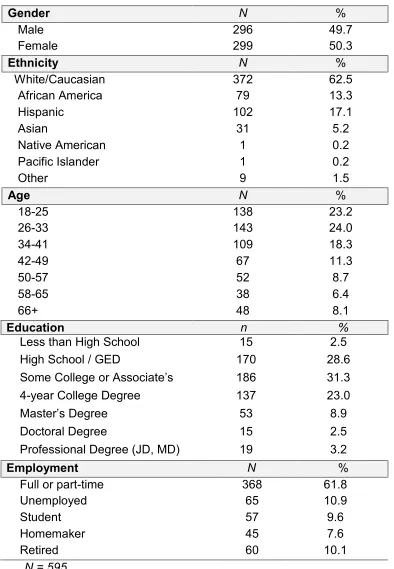
Qualtrics quotas were deployed to construct a representative national
sample of adult U.S. consumers based on U.S. Census Bureau. Specifically,
Qualtrics filtered respondents for the following Census quotas: gender, ethnicity,
employment and age. The U.S. Census Bureau
(https://www.census.gov/quickfacts/table/PST045215/00) estimates there are
242.4 million adults (age 18 or older) living in the U.S., accounting for 76.5% of
the 316 million U.S. population. The U.S. Census also reports that 50.9% of the
population is female and 49.1% is male (Howden & Meyer, 2014). The Census
Bureau reports that the median age of the U.S. population is approximately 38
years of age. The 18-44 working-age population accounted for the largest
segment of the population, 36.5%, representing 112.8 million people. Older,
working-age adults aged 45-64 accounted for 81.5 million people, or 26.4% of
the population, followed by 65 and older, which was 40.3 million people or 13%
(Howden & Meyer, 2011). All participants were asked to sign an electronic