University of South Carolina
Scholar Commons
Theses and Dissertations
2018
Impact Of A Steam Lab On Science Achievement
And Attitudes For Girls
Barbara Cifaldi
University of South Carolina - Columbia
Follow this and additional works at:https://scholarcommons.sc.edu/etd
Part of theCurriculum and Instruction Commons
This Open Access Dissertation is brought to you by Scholar Commons. It has been accepted for inclusion in Theses and Dissertations by an authorized administrator of Scholar Commons. For more information, please [email protected].
Recommended Citation
IMPACT OF A STEAM LAB ON SCIENCE ACHIEVEMENT AND ATTITUDES FOR GIRLS
by
Barbara Cifaldi
Bachelor of Fine Arts University of Georgia, 1986
Master of Arts in Teaching University of South Carolina, 1996
Submitted in Partial Fulfillment of the Requirements
For the Degree of Doctor of Education in
Curriculum and Instruction
College of Education
University of South Carolina
2018
Accepted by:
Leigh D’Amico, Major Professor
Suzy Hardie, Committee Member
Linda Silvernail, Committee Member
Suha Tamim, Committee Member
Copyright by Barbara Cifaldi, 2018
DEDICATION
I would like to dedicate this dissertation to my husband, Paul and two wonderful
ACKNOWLEDGEMENTS
I would like to acknowledge and thank the following people who provided
support and assistance throughout this dissertation journal. First to my doctoral
committee chair and advisor, Dr. Leigh D’Amico for her guidance and encouragement. I
would also like to thank my committee members, Dr. Suzy Hardie, Dr. Linda Silvernail,
and Dr. Suha Tamim.
Thank you to my principal, Gretchen Keefner, for allowing me the freedom to
create and teach in the STEAM lab. Thank you for supporting my ideas, otherwise this
action research study would never have taken place. Thank you to the staff and students
who helped me complete my research.
My appreciation to Dora Fletcher for her unwavering patience and assistance with
the formatting. I would like to acknowledge and thank my fellow cohort members: Molly
Lloyd, Dora Fletcher, Sarah Owen, Chris Gray, Megan DeWeese, and LaWanda Dixon
for their support, encouragement, and friendship.
I am appreciative of my wonderful family and friends that have shown their
untiring support, dedication, and love for me especially to my husband, Paul, my mother,
Barbara, and sister, Brucie.
Finally, thank you to my heavenly Father who gave me the determination, drive,
ABSTRACT
This research identifies a problem of practice with standardized science test
scores declining over the last eight years. The Sea Turtle Elementary School for the
Creative Arts (STESCA; pseudonym) schedule allowed 150 minutes per week for science
instruction, compared with 450 minutes per week for mathematics instruction. Science
instruction has been implemented primarily through direct instruction and the use of
textbooks and videos. In addition to the limited instructional time for science and
predominant use of direct instructional methods, there is a lack of racially diverse and
female role models evident in the curriculum. With STESCA’s standardized science test
scores declining over the last eight years, the staff has embraced the integration of
STEAM (Science, Technology, Engineering, Arts, Math) into the curriculum. The
identification of the problem led to the question: Will implementing a STEAM lab that
promotes inquiry, cooperative learning, and hands-on activities have a positive impact on
science achievement and attitudes towards science of elementary age girls? To answer
the question, an action research study was utilized using the four stages: planning, acting,
developing, and reflecting (Mertler, 2014). The approach of the action research is through
the lens of feminist pedagogy. The action research study was comprised of a one-group
pretest-posttest pre-experimental design.
Key Words: action research, STEAM, STEM, progressivism, constructivism,
TABLE OF CONTENTS
DEDICATION ... iii
ACKNOWLEDGEMENTS ... iv
ABSTRACT ...v
LIST OF TABLES ...x
LIST OF FIGURES ... xi
LIST OF ABBREVIATIONS ... xii
CHAPTER 1: INTRODUCTION ...1
PROBLEM OF PRACTICE ... 2
RESEARCH QUESTION ... 3
PURPOSE STATEMENT ...3
SCHOLARLY LITERATURE ...4
SIGNIFICANCE AND LIMITATIONS OF STUDY ...9
OVERVIEW OF THE DISSERTATION IN PRACTICE ...10
GLOSSARY ...11
HISTORICAL CONTEXT ...15
PROBLEM OF PRACTICE ...16
CURRICULUM THEORIES...18
SOCIAL ISSUES ...26
STRATEGIES THAT SUPPORT STEAM ...31
AUTHENTIC LEARNING, ATTITUDES, AND ACHIEVEMENT ...37
4 CONCLUSION ...44
CHAPTER 3: METHODOLOGY……… ...……….……… 46
PURPOSE OF THE STUDY ... 47
PROBLEM OF PRACTICE ... 48
RESEARCH DESIGN ...48
CONCLUSION ...62
CHAPTER 4: PRESENTATION AND ANALYSIS OF DATA ...64
OVERVIEW OF STUDY ...64
SIGNIFICANCE OF THE STUDY...65
INTERVENTION ...68
ANALYSIS AND FINDINGS ...69
CONCLUSION ...80
CHAPTER 5: DISCUSSION, CONCLUSIONS, AND RECOMMENDATIONS ...81
OVERVIEW OF STUDY ...81
RESULTS RELATED TO EXISTING LITERATURE...88
PRACTICE RECOMMENDATIONS...91
LIMITATIONS AND SUGGESTIONS ...93
RECOMMENDATIONS FOR FUTURE RESEARCH ...94
CONCLUSION ...95
REFERENCES ...96
APPENDIX A: LETTER OF CONSENT ...105
APPENDIX B: ASSENT FORM...107
APPENDIX C: ENGINEERING IS ELEMENTARY: ENGINEERING AN8 SCIENCE ATTITUDES ASSESSMENT ...108
APPENDIX D: USATESTPREP© PREASSESSMENT 5TH GRADE: ECOSYSTEMS...110
APPENDIX E: USATESTPREP© POSTASSESSMENT 5TH GRADE: ECOSYSTEMS...112
APPENDIX F: USATESTPREP© PRE-ASSESSMENT 4TH GRADE: SOUND ...114
APPENDIX G: USATESTPREP© POST-ASSESSMENT 4TH GRADE: SOUND ...116
APPENDIX H: EXAMPLE OF THE FIFTH GRADE LESSON PLAN ...118
APPENDIX I: EXAMPLE OF THE FOURTH GRADE LESSON PLAN ...121
APPENDIX K: OBSERVATIONAL CHECKLIST FOR THE STEAM LAB ...125
APPENDIX L: RUBRIC FOR STRUCTURE ...127
APPENDIX M: RUBRIC FOR INTERVIEW ...128
APPENDIX N: RUBRIC FOR INSTRUMENT ...129
APPENDIX O: RESEARCH TRAJECTORY FOR ACTION RESEARCH STUDY GRADE 5 ...130
LIST OF TABLES
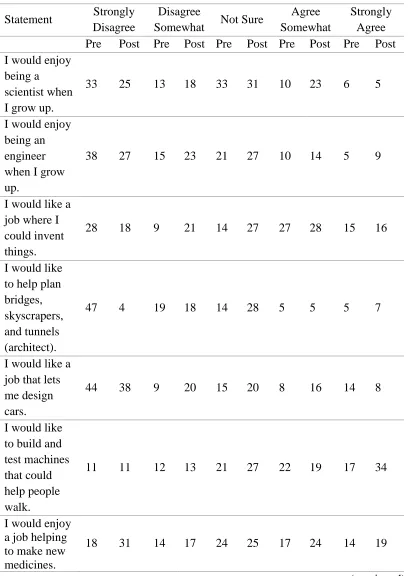
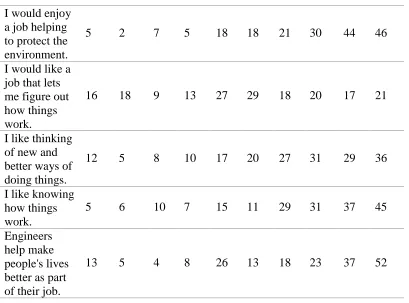
Table 4.1 Engineering and Science AttitudeS Assessment percentage results ...70
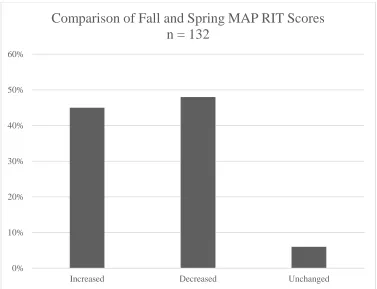
Table 4.2 Science MAP mean RIT scores Fall 2017 and Spring 2018 ...75
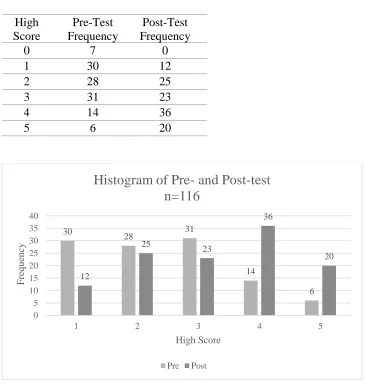
Table 4.3 Pre- and Post-USATestprep© assessment results ...77
LIST OF FIGURES
Figure 4.1 Demographics of females ...67
Figure 4.2 Services provided to females ...67
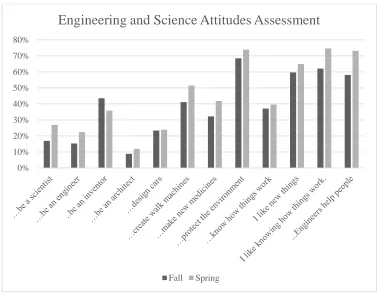
Figure 4.3 Engineering Attitude Survey in agreement fall to spring ...73
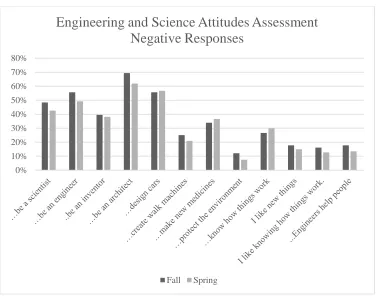
Figure 4.4 Engineering Attitude Survey in disagreement fall to spring ...74
Figure 4.5 Comparison of fall and spring MAP RIT scores ...75
Figure 4.6 Results of USATestPrep© assessment ...76
LIST OF ABBREVIATIONS
ESSA ... Every Student Succeeds Act
MAP ... Measures of Academic Progress
NAEP ... National Assessment of Educational Progress
NCLB ... No Child Left Behind
NGSS ... Next Generation Science Standards
PASS ... Palmetto Assessment of State Standards
STEAM ...Science, Technology, Engineering, Art, & Math
STEM ... Science, Technology, Engineering, & Math
CHAPTER 1
INTRODUCTION
When Sea Turtle Elementary School for the Creative Arts (STESCA; pseudonym)
became arts-infused 12 years ago, there was 100% staff commitment. Both student
achievement and staff morale improved significantly from 2006-2009. In the last eight
years, STESCA has had an influx of new staff who lacked continuous training in
arts-infused curriculum which hampered the effectiveness of the program. The school has
seen a decline in the South Carolina Palmetto Assessment of State Standards (SCPASS)
science scores and has strayed from the arts-infused mission of the school. Recently, the
school has embraced STEAM (Science, Technology, Engineering, Arts, Math) which is
an interdisciplinary approach to teaching science, technology, engineering, art, and math
using real-world applications (Sousa, 2013). To make the transition to a STEAM school,
STESCA has implemented a STEAM lab, provided professional development, hosted
grade level STEAM days for parents to participate in STEAM activities, and applied for
the AdvancedEd STEM accreditation. “AdvancED STEM Certification is a mark of
distinction and excellence that provides institutions and programs within institutions a
research-based framework and criteria for awareness, continuous improvement and
assessment of the quality, rigor and substance of their STEM educational program”
(AdvancedEd, 2018). STEAM is a natural fit for STESCA to expand upon the foundation
of arts infused curriculum and integrate the components of STEM (Science, Technology,
Although schools in the United States are teaching the disciplines of STEM,
students, predominantly females are losing interest in these areas of academic study by
the time they reach high school (Buck, Cook, Quigley, Prince, & Lucas, 2014). The goal
of a STEAM school is to have students meaningfully invested and engaged in these
disciplines to prepare them to be competitive in the global marketplace. Research
demonstrated the significance of the arts in education in that it provides the 21st Century
skills needed to succeed (Fiske, 2001). According to Partnership for 21st Century
Learning (2015), the 21st Century learning skills such as critical thinking and problem
solving; creativity and innovation; communication and collaboration should be
implemented in the classroom in conjunction with rigorous curriculum standards.
The curriculum models of progressivism, constructivism and the Learner
Centered Ideology are the building blocks of the interdisciplinary approach of STEAM
(Sousa, 2013). The integrated methodology of STEAM supports John Dewey’s theory
that education needs to be experiential to be effective. Investigating the impact of
STEAM on increased student achievement and attitudes, especially females, is the
problem of practice being explored.
Problem of Practice
With STESCA standardized science test scores declining over the last eight years,
the staff has embraced the integration of STEAM (Science, Technology, Engineering,
Arts, Math) into the curriculum. Not only is there a decline in test scores, but also
research has found that students, particularly females, are losing interest in science
(Huhman, 2012). Young girls begin their education enthusiastic and motivated to learn
Liston, 2004). During the school year 2016-2017, STESCA began the steps towards
STEAM accreditation. Part of the accreditation process includes a STEAM lab for grades
one through five that provides hands-on, inquiry-based, collaborative activities that
support the science units in the various grade levels. The STEAM lab is a collaborative
effort between lab teacher and the classroom teacher. Teachers are required to
accompany their students to the lab to ensure cohesiveness between the classroom and
lab.
Research Question
The research question for the action research study was: What impact will
authentic learning experiences in a STEAM lab have onscience achievement and
attitudes towards science of elementary age girls? Research objectives include:
• Identifying and correcting social issues that influence attitudes and achievement
of elementary age girls in science.
• Identifying and providing strategies that increase attitudes and achievement of
elementary age girls in science.
Purpose Statement
The primary purpose of this action research study was to determine if
implementing a STEAM lab that promotes inquiry, cooperative learning, and hands-on
activities has a positive impact on science achievement and attitudes towards science of
elementary age girls. There are numerous studies that have addressed females in science.
Bringing Up Girls in Science (BUGS) focused on increasing fourth and fifth grade girls’
academic achievement in science using STEM activities (Tyler-Wood, Ellison, Lim, &
focus on equity in science. The ASPIRES project (Archer, Dewitt, Dillon, & Willis,
2012) was a 5-year longitudinal survey exploring femininity, achievement, and science
among 10-14-year old students. The study examined the stereotypes of girls who identify
with science and plan on pursuing science-related future careers. These studies were
emphasized because they target specific educational issues in the STEAM lab. Research
indicates integrating the arts into the curriculum may advance educational outcomes for
children. The impact of a STEAM lab on student achievement among female students is
being examined especially since the approach of the action research is through the lens of
feminist pedagogy. The STEAM lab instruction encourages students to make real-world
connections and is a collaborative process between the lab and the classroom teacher.
Scholarly Literature
There are social issues that impact the attitudes and achievement of females in
science such as the hidden curriculum, lack of feminist pedagogy, gender bias, gender
equity, social justice, and diversity. The curriculum theories of progressivism,
constructivism, and the Learner Centered Ideology provide the foundations of the
interdisciplinary approach of STEAM. Transdisciplinary integration is one of the most
advanced levels of STEM. Transdisciplinary means to go beyond the disciplines. The
organizing center is the real-world context where students explore a problem or issue
(Drake, Savage, Reid, Bernard, & Beres, 2015). These approaches form the basis of
STEAM. Finally, strategies that increase achievement and improve the attitude such as
authentic and relevant learning, cooperative learning, and the Maker Movement will be
Social Issues
Hidden curriculum, the lack of feminist pedagogy, gender bias, gender equity,
social justice, and diversity are issues that influence the attitudes and achievement of
elementary age girls in science. The hidden curriculum is a set of rules and procedures
that direct the school environment (Sharpe & Curwen, 2012). Feminist pedagogy
recognizes the negative impact of hidden curriculum, highlights the accomplishments of
women and people of color, and challenges prejudices and social injustice (Digiovanni &
Liston, 2004). The educational inequalities regarding girls, especially minority girls, must
be dealt with to insure success as adults (Buck, Cook, Quigley, Prince, & Lucas, 2014).
Examples of educational inequalities include the effects of instructional style on boys and
girls, some gender-biased curricula, and hidden and overt messages give to students (Gor
Ziv, 2015).
Educational Philosophies
Influenced by the philosophy of John Dewey (1938, 1966), the progressive
movement supported an integrated curriculum that would inspire students because it was
pertinent and followed the principles of constructivism (Drake, 2012). Along with
Dewey’s ideas, progressive education relates to Piaget’s ideas about child development
(Piaget, 1970) and Vygotsky’s ideas about socially situated learning (Vygotsky, 1978).
These ideas are known today as constructivist and social-constructivist learning theories.
Both learning theories emphasize that knowledge is constructed when learners are
actively engaged in learning, during which they are exposed to different experiences and
practices (Ertmer, 1993). The STEAM lab provides opportunities for students to
transdisciplinary approach of STEAM promotes meaningful learning through inquiry.
Transdisciplinary integration is the most advanced level of STEAM teaching and learning
(Vasquez, 2014). The transdisciplinary approach encourages intentional multiculturalism
and feminist pedagogy which leads to changing viewpoints and breaking down
stereotypes.
Progressivism. Progressive education is an educational epistemology that was
originated in the works of John Dewey (Barak, 2014). Progressivism emphasizes that
experiences are supported by one’s knowledge and knowledge is sustained by one’s
experiences. Progressivists advocate for the integration of traditional subjects into more
encompassing, cross-disciplinary subject areas (Elgstrom, 2011). The processes of
teaching, problem-based learning, and an integrated curriculum are highlighted with
progressivism (Elgstrom, 2011).
Constructivism. The foundation of constructivist theory is that knowledge cannot
solely be communicated but learners must be engaged in constructing their own
knowledge (Ertmer, 1993). A constructivist inquiry-based learning environment has been
found to promote actual learning in science education by allowing students to be active
participants rather than passive recipients (Brooks, 1999). If interaction with the learning
environment does not occur, student learning is not utilized to the fullest (Singh, 2012).
Transdisciplinary approach. The transdisciplinary approach begins with a
real-life perspective.When transdisciplinary is translated into K to 12 practice, the focus is
usually on problem-solving from a student-centered perspective(Drake, Savage, Reid,
Bernard, & Beres, 2015). “Transdisciplinary scientific training is aimed at producing
address a problem” (Walsh, 2014, p. 48). When students engage in transdisciplinary
integration they feel empowered (Larmer, 2016). “Transdisciplinary STEM education is
the form of integration most often described in the literature because of its relationship to
project-based or problem-based learning” (Vasquez, 2014, p. 13). In problem-based
learning, students are presented with an authentic, challenging question or problem that is
unusual, complex, and open-ended (Larmer, 2016). Environmental issues, which present
social, technical, and scientific challenges, may be addressed most successfully by a
transdisciplinary approach (Walsh, 2014)
STEAM. Integrating the components of STEM (Science, Technology,
Engineering, Math) with the foundation of an arts-infused curriculum leads to STEAM,
an interdisciplinary approach to teaching. Creating a classroom environment that utilizes
a transdisciplinary curriculum such as STEAM empowers students through
differentiation by being student-centered and driven.
STEAM education, which is based on constructivist and design philosophy, puts
students at the center of learning. A constructivist design–based approach to
STEAM, values the arts and design as an essential part of the educational
experience, while preparing students for the 21st-century workplace that requires
creativity and the skills to turn ideas into reality. (Gross, 2016, p. 43)
The STEAM design process provides students with the opportunities to explore and
understand the world around them as they become critical, creative, and independent
thinkers (Jeong & Kim, 2015). STEAM exemplifies progressivism with the
based on the principle of learning by doing, a powerful and memorable way to learn”
(Harper, 2017, p. 71).
Strategies that support STEAM
Strategies that increase achievement and improve the attitude not only for girls,
but all learners are discussed. These strategies include but are not limited to integrating
the Next Generation Science Standards, authentic and relevant learning, cooperative
learning, and the Maker Movement. All the strategies mentioned are utilized in the
STEAM lab.
Next Generation Science Standards. The Next Generation Science Standards
(NGSS) are compatible with STEAM in that integration, higher-order thinking skills, and
seeking answers to real-world problems are encouraged (Marshall, 2015). The Next
Generation Science Standards necessitate inquiry-based instruction, which provides an
equitable strategy for achieving mastery. Studies have shown that classrooms utilizing
inquiry-based instruction outperform classrooms using traditional methods. This is true
for females, males, and all ethnic groups at all ability levels (Marshall, 2015).
Authentic and relevant learning. Many adolescents are indifferent to what they
are learning because they see little or no worth in what they are expected to learn in
school (Shumow, 2014). If students believe that what they are learning might make a
difference in preventing or solving social or environmental problems, they are more
likely to persist in learning (Shumow, 2014).
Feminist pedagogy. Feminist critical pedagogy strives to encourage equality
between different groups in society through education and uncover the instruments in
the feminist beliefs that affirm the basic equality and human dignity of all people, no
matter gender, race, culture, sexual preference, religion, physical and mental ability
(Digiovanni & Liston, 2004).
Cooperative learning. Cooperative learning is based on the belief that learning is
most effective when students are actively involved in sharing ideas and working
collaboratively to complete academic tasks (Ebrahim, 2012). Promoting the skill of
teamwork is particularly significant because competitive environments can be
disheartening to girls and to kids from cultures that value interaction and collaboration
(Cunningham, 2015).
Maker movement. The Maker Movement emphasizes the design-make-play
learning methodologies that correspond to the STEAM design process. The Maker
Movement highlights the importance of identifying problems, problem-solving, and the
power of social learning through sharing and collaborative work to solve issues both big
and small (Smith, 2016).
Significance and Limitations of Study
The action research study is significant in that it provides a potential solution for
the decline of SCPASS science scores at the elementary school being studied. By
replacing the traditional methods of teaching science with interactive small groups and
arts enhanced science experiments, students engage in authentic and meaningful learning
experiences. The study also provides strategies to address the negative social issues that
permeate the field of science and STEM for females. The hidden curriculum, lack of
feminist pedagogy, gender bias, gender equity, social justice, and diversity are issues that
research model is utilized to address inquiries in this study. The main goals of action
research are to enhance the lives of children and to enhance the lives of professionals
(Mills, 2007). This study focuses on science achievement rather than STEAM as a whole,
but both STEAM and science literature drive the theory behind the research.
There are some limitations to this study. One limitation is the sample size of
students participating in the study. The target group is females in fourth and fifth grades,
approximately 141 students. The sample size does not allow for the study to be
generalizable to other schools. A second limitation is that STESCA, being a school of
choice, has a transient population. Students transferring from other schools might not
have the science progression that is available at STESCA. A third limitation is the time
constraints of the study. Because first through fifth grade participate in the STEAM lab,
time in the lab is limited. Students rotate through the STEAM lab on an average of four
days, 50 minutes for each lab in a nine-week period. The action research study is six
weeks. This will limit the exposure to the experiences and benefits of the STEAM lab.
Since the STEAM lab is a collaboration between the lab teacher and classroom teacher,
STEAM strategies should be implemented in the regular classroom, not just in the lab.
Overview of the Dissertation in Practice
Chapter One of this action research study provides an overview of the dissertation
in practice including problem of practice, research question, purpose statement, related
literature review, action research design which involves quantitative data collections, and
ethical considerations. Chapter Two provides a more detailed review of related literature
examining the historical background and the significance of the arts within education.
lack of feminist pedagogy, gender bias, gender equity, social justice, and diversity will be
discussed. Curriculum theories that have influenced STEAM and the importance of the
Next Generation Science Standards will be examined. Finally, strategies that increase
achievement and improve the attitude such as authentic and relevant learning, cooperative
learning, and the Maker Movement will be discussed. Chapter Three is the “Action
Research Methodology”. This chapter includes the introduction, purpose of the study,
statement of the problem of practice, the research design, and conclusion. Chapter Four
includes the findings, discoveries, reflections, and analyses. Chapter Five states the focus,
overview of the study, a summary of the study, a discussion of major points of the study,
and action plan, implications of the findings, suggestions for future research, and a
conclusion.
Glossary
Action Research: Any systematic inquiry conducted by teachers, administrators,
counselors, or others with a vested interest in the teaching and learning process or
environment for gathering information about how their particular schools operate, how
they teach, and how their students learn (Mertler, 2014).
Constructivism: The constructivist theory foundation is that knowledge cannot solely be
communicated but learners must be engaged in constructing their own knowledge
(Ertner, 1993).
Feminist Pedagogy: Feminine pedagogies emerge from the feminist beliefs that affirm
the basic equality and human dignity of all people, no matter gender, race, culture, sexual
preference, religion, physical and mental ability (Digiovanni & Liston, 2004).
Gender Equity: Gender equity implies fairness in the way women and men are treated.
Hidden Curriculum: Hidden curriculum refers to the unwritten, unofficial, and often
unintended lessons, values, and perspectives that students learn in schools (Abbott,
2014).
Interdisciplinary: A curriculum that connects the various disciplines in some way (Drake,
2012).
Progressivism: Progressivism emphasizes the processes of teaching, problem-based
learning, and an integrated curriculum. The emphasis is on exploratory learning, learning
by doing, personalized learning, and students’ social skills (Elgstrom, 2011).
Social Justice: Social justice includes a vision of society in which the distribution of
resources is equitable, and all members are physically and psychologically safe and
secure (Bell, 2013).
Transdisciplinary Approach: An interdisciplinary approach that begins with a real-life
CHAPTER 2
LITERATURE REVIEW
Schools in the United States are actively teaching the disciplines of STEM.
However:
The inequities in STEM education along racial and ethnic, linguistic, cultural,
socioeconomic, gender, disability, and geographic lines are especially troubling
because of the powerful role a foundational STEM education can play and
because the gaps are so pronounced in STEM. (Tanenbaum, 2016, p. 1)
The current educational system in the United States continues to reflect the needs of an
industrial age. It does not reflect the beliefs, priorities and requirements of the creative
age and the needs of our students (Scholes, 2011). “As western society can no longer
succeed with an education system handed down from the industrial age to prepare
assembly line workers, there is a need to reinforce the values, priorities and requirements
of the creative age” (Scholes, 2011, p. 970). STEM content and the needs of society lend
themselves to a connection to the arts, and research supports the importance of the arts in
education in that it provides the 21st Century skills needed to succeed (Fiske, 2001). The
21st Century learning skills include critical thinking and problem solving, creativity and
innovation, and communication and collaboration-- all of which, according to Partnership
for 21st Century Learning (2015), should be fostered in the classroom alongside rigorous
and Math) school is to have students meaningfully invested and engaged in these
disciplines to prepare them to be competitive in the global marketplace.
The integrated approach of STEAM supports John Dewey’s theory that education
needs to be experiential to be effective. John Dewey believed that students should be able
to move and explore through hands-on activities and experiences (Dewey, 1938). The
question arose, “What impact will authentic learning experiences in a STEAM lab have
on science achievement and attitudes towards science of elementary age girls?” The
teacher-researcher was interested in pursuing the impact of STEAM on increased student
achievement and improved student attitude towards science, especially for females. This
review of literature contextualizes a study of the impact of a STEAM lab as means to
improve student attitude toward learning science and student achievement on science
tests.
The literature review section is organized by first examining the historical
background that has influenced the current educational climate. The next section of the
literature review focuses on the curriculum theories that have been the building blocks of
STEAM. These theories include progressivism, constructivism, STEM, STEAM,
significance of the arts in STEAM, and the transdisciplinary approach. The importance of
the Next Generation Science Standards is highlighted and how the standards connect and
support STEAM. The fourth section of the literature view highlights the problematic
areas, such as the hidden curriculum, lack of feminist pedagogy, gender bias, gender
equity, social justice and diversity that impact the attitudes and achievement of girls in
science. The significance of authentic learning is examined, along with ways the arts
the attitude for not only girls, but also all learners are discussed. These strategies include
but are not limited to authentic and relevant learning, cooperative learning, hands-on
activities such as the Maker Movement, and STEAM.
Historical Context
In 1983, The National Commission on Excellence in Education published A
Nation at Risk to highlight the dangers facing the U.S. as the result of the decline in
student achievement in academic areas (Schiro, 2013). The concerns generated from this
report led to new educational initiatives, many of which promoted a Scholar Academic
agenda, an ideology that highlights the influence of academic disciplines and pursuit of
accumulated scholarly knowledge (Schiro, 2013). Examples of outcomes from the 21st
century accountability movement which includes The Race to the Top Fund and its
predecessor, the No Child Left Behind Act were curriculum standards, teacher
effectiveness, student achievement, and high-stake testing (Schiro, 2013). This
standards-based curriculum planning system is reminiscent to what Ellwood Cubberley (as cited in
Sleeter, 2013) described almost a century ago, when he described schools as “factories in
which the raw products (children) are to be shaped and fashioned into products to meet
the various demands of life” (as cited in Sleeter, 2013, p. 266).
Continued concerns about the declining education system especially in the areas
of science, technology, engineering, and mathematics (STEM) led to Congress passing
the America COMPETES Act in 2007 (Sousa, 2013). Nonetheless, test results from the
2011 National Assessment of Educational Process (NAEP) showed only a slight increase
in science scores. Although numerous factors contribute to students’ performance, Blank
spent on English/language arts and mathematics may be contributing to the low level of
science performance in the United States. Test results also showed that students
performed poorly in using higher-level thinking skills, problem solving, and
critical-thinking skills (Sousa, 2013). “Unfortunately, contemporary education appears to place
little emphasis on enhancing emotional intelligence in conjunction with developing
creativity while policy-makers and administrators tend to focus on the external structures
of education such as standards, curriculum and accountability” (Scholes, 2011, p. 972).
The passage of Every Student Succeeds Act (ESSA) in 2015 appears to be a step
in the right direction. The bill encourages an approach to testing by allowing for the use
of multiple measures of student learning and progress, along with other indicators of
student success to make school accountability decisions and moving away from an
exclusive focus on standardized tests to drive decisions around the quality of schools.
This revelation led to the question, “What types of activities would increase student
engagement, raise motivation, focus on relevant issues, and, most importantly, develop
creativity?” (Sousa, 2013, p. 2). The answer may lie in bridging the gap with a merger
between art and science. Integrating arts-related skills into STEM courses could be one
effective way to increase student interest and achievement that leads to the
interdisciplinary approach known as STEAM (Sousa, 2013).
Problem of Practice
One consequence of the No Child Left Behind Act (NCLB) is that science is not
getting the same attention as reading and mathematics (McMurrer, 2007). Science
education time is shrinking, presumably because of pressure placed on schools to
Time spent in classroom instruction in science has declined during the time period
of state and federal accountability testing and reporting, and during the past
decade when the NCLB requirements were implemented by states, the
instructional time on reading and math has gone up while instructional time on
science has continued to decline. (p. 19)
This paper identifies a problem of practice with standardized science test scores
declining over the last eight years at Sea Turtle Elementary School for the Creative Arts
(STESCA; pseudonym). The STESCA schedule allowed 150 minutes a week for science
instruction, compared with 450 minutes a week for mathematics instruction. Science
instruction has been implemented primarily through direct instruction and the use of
textbooks and videos. In addition to the limited instructional time for science and direct
instructional methods, there has been a lack of racially diverse and female role models
that is evident in the curriculum. Because STESCA’s standardized science test scores
have been declining over the last eight years, the staff has embraced the integration of
STEAM (Science, Technology, Engineering, Arts, Math) into the curriculum. The
identification of the problem led to the question: Will implementing a STEAM lab that
promotes inquiry, cooperative learning, and hands-on activities have a positive impact on
science achievement and attitudes towards science of elementary age girls? To answer
the question, an action research study was utilized using the four stages: planning, acting,
developing, and reflecting (Mertler, 2014). Data was collected through pre- and
Curriculum Theories
“STEAM education has the potential to fulfill the promise of progressive
educators such as Dewey (1934) and Freire (2000), who foresaw education as moving
toward a student-centered model, in which students are engaged and central to knowledge
production” (Gross, 2016, p. 38). Both Dewey and Freire built their philosophies around
the core concepts of experience, growth, inquiry, communication, and problem-solving
(Deans, 1999). The main objective of the STEAM lab is to provide a stimulating
environment through inquiry, cooperative learning, and hands-on activities.
The curriculum theories of progressivism, constructivism, and the Learner Centered
Ideology provide the foundations of the interdisciplinary approach of STEAM.
Transdisciplinary integration is one of the most advanced levels of STEM. These
approaches form the basis of STEAM.
Progressivism
“Progressive education is a pedagogical epistemology that originated in the works
of John Dewey, aiming to make schools more effective agencies of a democratic society”
(Barak, 2014, p. 3). Experiences are supported by one’s knowledge, and knowledge is
sustained by one’s experiences. As Dewey states in Experience and Education, “There is
an intimate and necessary relation between the processes of actual experience and
education” (Dewey,1938, p.120). He felt that when children understood why learning
was essential, they could apply the learning to their own lives, thus making it relevant
(Platz & Arellano, 2011). Elstrom and Hellstenius (2011) wrote that progressivism
curriculum. The emphasis is on exploratory learning, learning by doing, personalized
learning, and students’ social skills. Progressive educationists encourage:
A holistic approach to a learner, embedded assessment for learning (not of
learning), and learning that is educational as well as entertaining. Progressive
educationists encourage respect for diversity, recognizing each individual for his
or her own abilities, interests, and cultural identity. (Barak, 2014, p. 3)
The integrated approach of STEAM supports John Dewey’s theory that education needs
to be experiential to be effective. Students participating in the STEAM lab use all their
senses in an experiential manner as they utilize the design process.
Constructivism
The constructivist theory puts the construction of knowledge in one’s mind as the
basis of the educational effort. Its foundation is that knowledge cannot simply be
communicated but learners must be engaged in constructing their own knowledge
(Ertmer, 1993). “Such a philosophy focuses on allowing students to be active participants
rather than passive recipients receiving science information and explanations from
teachers and/or textbooks” (Singh, 2012, p. 198). If interaction with the learning
environment does not occur, student learning is not utilized to the fullest (Singh, 2012). A
constructivist inquiry-based learning environment has been found to promote effective
learning in science education (Brooks, 1999). According to Yager and McCormack (as
cited in Cetin-Dindar, 2016) when students are actively engaged in their learning
environment and can form better connections between the science in their textbooks and
In a constructivist learning environment, students are encouraged thoughtful
reflection on experience, learn to analyze real world issues, learn how to
investigate, enhance social negotiation, develop their collaboratively learning and
inquiry skills, build communication skills, apply and integrate the content of
different subjects, improve their learning strategies skills, and reach a collective
outcome over a period of time. (Cetin-Dindar, 2016, p. 235)
Constructivist pedagogy has proved to be a particularly effective method because
students can design, test and revise their ideas about how things work through
collaborative, scientific inquiry with other students (Peoples, O'Dwyer, Wang, Brown, &
Rosca, 2014). The Learner Centered ideology encompasses the constructivist view.
Learner Centered advocates focus on the needs and concerns of individuals, not on the
needs of society or the academic disciplines (Schiro, 2013). “Learning is a function of the
interaction between people and their environment: It take place when inquiring learners
engage a stimulating environment” (Schiro, 2013, p. 120). A thought-provoking
environment is achieved though the learner, the environment, and the learner’s act of
involvement with that environment through direct experience (Schiro, 2013). The main
objective of the STEAM lab is to provide a stimulating environment through inquiry,
collaboration, and hands-on activities. By utilizing the STEAM design process, teachers
inherently use constructivist practices.
STEM
Science, technology, engineering, and mathematics (STEM) disciplines are the
object of ever-increasing interest and attention to help prepare students for the job
National Science Foundation. STEM education is a method to learning that eliminates the
barriers separating the four disciplines and integrates them into rigorous, real-world,
relevant learning experiences for students (Vasquez, 2014). The focus on STEM has
developed to address the concerns that the United States is inadequately preparing
students to compete with international students in the 21st century global market (Molina,
2016). It is important that students not only have a solid foundational understanding of
the big ideas in science, but they also need to be expert problem solvers and critical
thinkers prior to the end of high school (Isabelle, 2017).
The National Research Council’s 2011 synthesis of research and commissioned
papers on STEM schools concluded that to spark student interest in STEM, instruction
must help students grapple with big ideas and fundamental questions about the natural
world and experience real-world applications of their knowledge (Goodwin, 2015).
While many students start their education with a positive opinion of STEM and the
aptitude needed to pursue and succeed in STEM careers, the STEM aptitude attrition rate
occurs among both females and people of color (Molina, 2016). Application is at the core
of STEM education.
STEAM
“The purpose of education should be understanding rather than simply knowing;
its focus should be the active process of learning and creating rather than the passive
acquisition of facts” (Root-Bernstein, 1999, p. 316). STEAM is an interdisciplinary
approach to teaching science, technology, engineering, art, and math using real-world
applications. Previous results suggest that STEM education would likely benefit our
the arts in education in that it provides the 21st Century skills needed to succeed. These
two educational methods have merged to form STEAM, an educational approach that
integrates science, technology, engineering, arts, and math. “Math, science, and
technology have flourished in the past only when and where all the arts have flourished.
They will flourish or fail together in the future” (Root-Bernstein, 1999, p. 317). Creating
a classroom environment that utilizes a transdisciplinary curriculum such as STEAM
empowers students through differentiation by being student-centered and driven. “In an
effort to initiate, sustain, and support student engagement, problem-based instruction
places students in authentic, contextualized problem-solving environments that bridge
classroom experiences with daily life. All these aspects further support the needs of
diverse students” (Buck, Cook, Quigley, Prince, & Lucas, 2014, p. 436). In STEAM
education, students demonstrate whether they comprehend the disciplinary concepts and
skills as they relate and connect their learning to new situations. This application is the
real power of an integrated approach (Vasquez, 2014). “Without some blended mastery
of STEM with arts and humanities, students will find themselves increasingly “in over
their heads” (Kegan, 1998) and “poorly equipped to deal with mental and ethical
demands of the 21st century” (Charette, 2015, p. 81). STEAM is complimentary with 21st
century skills, mainly the “4 Cs” of communication, creativity, critical thinking, and
collaboration (Saraniero, 2015).
If we truly want students who can think critically, solve problems, and
communicate their thoughts clearly, then some kind of systematic,
cross-disciplinary instruction is required. An integration of STEM with the arts and
The STEAM design process provides students with the opportunities to explore and
understand the world around them as they become critical, creative, and independent
thinkers (Jeong & Kim, 2015). STEAM supports the Next Generation Science Standards
which require students to engage in doing science by modeling, analyzing, and designing.
“Students will need to explore, study, and investigate before they can provide
evidence-based claims or model complex concepts and phenomena observed in the natural and
designed world” (Marshall, 2015, p. 18). By providing a STEAM lab for students, the
components of STEAM which include exploring, questioning, designing, analyzing,
making, problem-solving, critical thinking, and collaborative interactions are provided for
all students to increase achievement and attitudes in science.
The Significance of the Arts in STEAM
The “A” in STEAM represents the arts. One of the main goals of both science and
art is discovery. An effective way to enhance student interest and achievement is by
integrating arts-related skills and activities into the science curriculum (Biffle, 2016). The
Champions of Change: The Impact on Arts in Learning initiative statesthat longitudinal
data of 25,000 students validate that participation in the arts is related to higher academic
performance, increased standardized test scores, more community service and lower
dropout rates. These developmental and cognitive benefits are acquired by students
regardless of their socioeconomic status (Fiske, 2001).
The skills that the arts develop are also considered the 21st Century learning skills.
The 21st Century learning skills are critical thinking and problem solving; creativity and
skills” will be needed by every student in order to survive successfully as an adult in an
increasingly complex and technologically driven world” (Sousa, 2013, p. 15).
Participation in the arts prepares students to solve impending problems by
encouraging risk taking, experimentation, and freedom to fail. Trying new ideas, finding
multiple solutions, and making the most of mistakes are artistic orientations (Cornett,
2007). “Active engagement in the ‘arts’ has been linked with empirical research denoting
positive influences on creativity, motivation, language and literacy development,
mathematical and scientific aptitude, memory, attention and cognition” (Scholes, 2011, p.
971). The arts offer opportunities to participate in all phases of development, not just
intellect. Numerous studies have demonstrated that by integrating the arts into other
content areas, such as STEM, long-term retention of content will occur (Sousa, 2013;
Rinne, Gregory, Yarmolinskaya, & Hardiman, 2011).
Arts and sciences do not compete; they are complementary. The arts create a very
subjective view of the world, while science creates an objective view of the
world. A person’s brain needs both views in order to make suitable decisions.
(Sousa, 2013, p. 10)
There is a need in the work realm for artistic and creative problem solvers.
Employees who can use diverse problem-solving approaches such as intuition, synthesis,
and evaluation to solve problems and make judgments are at a premium (Cornett, 2007).
Research specifies that human resource directors believe that employers consider
creativity vital for the future with directors ranking creativity and innovation as the most
crucial student graduate skill in 10 years’ time (Scholes, 2011). “As we move into a
infusion that connects disciplines in ways that are powerful and motivating for learning”
(Henriksen, 2014, p. 4). To prepare the future work force, integrating arts-related skills
into STEM courses could be one effective way.
Transdisciplinary Approach
Several researchers have endorsed restructuring school science using pedagogical
frameworks that focus on real-world issues relevant to the students’ lives (Fortus, 2005).
“Researchers, educators, employers, and policy makers have stressed the need for
educational practices that prepare students to solve problems through critical thinking and
collaborative multidisciplinary teamwork” (Walsh, 2014, p. 48). The transdisciplinary
approach begins with a real-life perspective. “A transdisciplinary unit usually begins with
the identification of a question, an issue or a problem – the more “problematic”, the
better” (Drake, Savage, Reid, Bernard, & Beres, 2015, p. 23). Environmental issues,
which present social, technical, and scientific challenges, may be addressed most
successfully by a transdisciplinary approach (Walsh, 2014). “Transdisciplinary
integration, grounded in constructivist theory (Fortus, 2005), has been shown to improve
student’s achievement in higher-level cognitive tasks through the application of scientific
processes and mathematical problem solving” (Vasquez, 2014, p. 12). Using the
transdisciplinary approach, scientific training is designed to produce scientists who can
synthesize and apply theory and methods from many disciplines to address a problem
(Walsh, 2014). By pursuing answers to real-world problems, students see purpose and
meaning in school (Marshall, 2015). When students engage in transdisciplinary
integration they feel empowered. “They see that they can make a difference. When they
inclination-to contribute to a solution” (Larmer, 2016, p. 69). Creating a classroom
environment that utilizes a transdisciplinary curriculum empowers students through
differentiation by being student- centered and driven.
STEAM education, which is based on constructivist and design philosophy, puts
students at the center of learning (Gross, 2016). The curriculum theories of
progressivism, constructivism, and the Learner Centered Ideology lay the foundations of
exploratory learning, that learners must be engaged in constructing their own knowledge,
and that learners must be engaged with their environment. Transdisciplinary integration
empowers students through differentiation by being student- centered and driven. STEM
education eliminates the barriers separating the four disciplines and integrates them into
rigorous, real-world, relevant learning experiences for students. All the components
mentioned are the basis of the integrated approach of STEAM.
Social Issues
Interest in science declines more for females than their male classmates, and
women continue to be underrepresented in several science fields (National Research
Council, 2012). The hidden curriculum, lack of feminist pedagogy, gender bias, gender
equity, social justice, and diversity are issues that influence the attitudes and achievement
of elementary age girls in science.
Hidden Curriculum and Lack of Feminist Pedagogy
In the classroom, there is the overt curriculum, what is obvious to the observer.
There is also the hidden curriculum, what is covertly taught. Within the hidden
curriculum are two levels: the classroom environment and the content. The first level is
seating arrangements and the power structure (unspoken rules) between students and
teacher. The second level is the content being taught (Jachim & Posner, 1987). The
hidden curriculum of content relates to gender, race, class, and/or sexual orientation.
These hidden agendas include the lack of power of students, the lack of female and
racially diverse role models, gender bias, the lack of a diverse curriculum, poverty and
culture (Wei, 2013). “Hidden curriculum refers to the unwritten, unofficial, and often
unintended lessons, values, and perspectives that students learn in schools” (Abbott,
2014, p. 1).
Within the hidden curriculum of content are the gender roles. Women are
noticeably absent from curriculum. Very little is mentioned about women in the fields of
science and mathematics (Digiovanni & Liston, 2004). Numerous studies have also
shown that the masculine image of scientists has created an obstacle for elementary girls’
participation in science education (Buck, Cook, Quigley, Prince, & Lucas, 2014). The
role of teachers’ unconscious acceptance of gender-role stereotypes in science is
communicated in their behaviors and teaching practices (Bailey, 1997). “By
overemphasizing the role of males, the curriculum cultivates the message that women are
not as important or as worthy as men” (Digiovanni & Liston, 2004, p. 124). Peggy
McIntosh (1983) examines how history emphasizes that nonwhite males and women are
seen as unworthy of studying in a serious and sustained way, and not worth including in
the version of reality passed on to students (McIntosh, 1983). Gender-specific courses
and careers remain. A majority of males still dominate computer, physics, science and
engineering programs whereas a majority of females major in music, drama, dance,
Feminist pedagogy provides vision and clarity to critique the status quo, challenge
current prejudices and inequities, recognize silences of the hidden curriculum,
reinscribe the achievements of women and people of color, and enhance the
likelihood that all young women and men will achieve their potential. (Digiovanni
& Liston, 2004, p. 129)
By examining the hidden curriculum in the classroom, educators can begin to address the
inequities faced by many of the students.
Gender Bias and Gender Equity
“Although most girls espouse a ‘gender equity’ view of their future options,
perceiving that ‘any’ course and careers are open to them regardless of their sex/gender,
their actual choices remain gender-traditional” (Archer, Dewitt, Dillon, & Willis, 2012, p.
968). The continuous bombardment of media continues to convey a pervasive message:
in areas requiring knowledge and skills based in science, technology, and math, women
can achieve and contribute less than men (Lightbody, 2002). All too often the media
depicts girls and women (or those with disabilities or individuals of color) in less than
equitable situations. In the United States, women make up approximately 50% of the
workforce, yet only 29% are employed as scientists and engineers (National Science
Board, 2016). The combination of cultural identity and gender has a significant impact on
students’ attitude toward school and level of achievement (Buck, Cook, Quigley, Prince,
& Lucas, 2014).. Gender bias leads to a lack of gender equity in the classroom and
workforce. Equity issues continue in science education, and these concerns need to be at
the lead of our educational resolves (Buck, Cook, Quigley, Prince, & Lucas, 2014). The
insure success as adults (Buck, Cook, Quigley, Prince, & Lucas, 2014). In 1994,
Congress adopted the Gender Equity in Education Act which sought to bridge the
achievement gap in math and science between boys and girls (Weber, 2010). However,
gender is still one of the most noteworthy factors influencing the attitude towards science
(Hacieminoglu, 2016).
Social Justice
Social justice is vital to foster an educational system that benefits all who
participate (Molina, 2016). Educators bring to their teaching values and beliefs formed by
their own experiences of teaching and being taught (Flinders, 2013). A necessity of social
justice teaching is that educators approach instruction in ways that support the active,
engaged learning of all students (Molina, 2016).
If there is no discussion of how race, gender, or class impacts those within the
classroom, oppression can be perpetuated and students who are different from the
white male norm will find that their lived experiences and existence are denied
within the classroom. (Digiovanni & Liston, 2004, p. 127)
By understanding social identity, one can identify privileges or oppression that are
associated with the categories of social identity. Privilege occurs when one group has
something of significance that is denied to others merely because of the groups they
belong to such as race, ethnicity, or gender, rather than because of anything they have
done or failed to do (Johnson as cited in Adams, Blumenfeld, Hackman, Peters, &
Xuniga, 2013). Schools tend to view students of poverty and culture through the lens of
trying to fix their deficits instead of building upon their gifts and strengths. In many
students, rather than considering the gifts they brought to the classroom (Tileston &
Darling, 2008).
In low-income communities of color with limited social capital and educational
resources, school is not often a space of liberation but rather continued
marginalization unless there are active and conscious efforts to teach and learn in
a creative context that goes beyond the low expectations for children living in
poverty. (Molina, 2016, p. 19)
It is necessary for educators to incorporate content significant to students’ lives, including
both students’ experiences and the communities in which they live (Molina, 2016).
Diversity
Educators enter the profession with beliefs that are found within their own
sociocultural background, culture plays an important part in how they believe, think,
learn and teach. Regrettably, not all teachers know how to embrace the differences
among themselves and their students and engage in fair teaching (Deaton, 2013). Student
demographics continue to change nationwide; the traditional racial and ethnic minority
students have become the numeric majority (Januszyk, 2016). Traditionally marginalized
communities contend that textbooks and other sources of curriculum were too often
culturally immaterial to students of color, and not applicable to students of non-English
language backgrounds (Sleeter, 2013). Teaching science means addressing diverse
student populations. “While scientists have traditionally been portrayed in popular culture
as white males, nowadays scientists of color and female scientists serve as role models
for students who otherwise might not consider science relevant to their lives or careers”
perspective. Cultural bias is one reason why the content being taught seems irrelevant to
diverse learners (Tileston & Darling, 2008).
Most teachers in North America were raised in a middle-class environment and
see through the lens of a Euro-American cultural value. From that perspective,
teachers have done an incredible job of empowering white-middle class children
to learn and succeed. Having the same culture and background as your students
provides you with a context through which you communicate expectations, rule,
beliefs, appropriate behaviors and assumptions about human development and
learning. (Tileston & Darling, 2008, p. 24)
Educators need to discover ways of accommodating for diverse cultures in ways
that are respectful of the differences (Flinders, 2013). Ladson-Billings’ (1994) and Gay’s
(1995) research on bilingual education and culturally relevant pedagogy, corroborated
how vital it is for all students, and especially second-language learners to build their
academic skills on family-based knowledge and everyday life experiences (Flinders,
2013).
Strategies that Support STEAM
Strategies that increase achievement and improve the attitude for not only girls,
but also all learners are discussed. These strategies include but are not limited to the
importance of the Next Generation Science Standards, authentic and relevant learning,
cooperative learning, and the Maker Movement. The teacher-researcher utilized these
Next Generation Science Standards
With the new Next Generation Science Standards being implemented, change is
on the way in how we teach, what is learned, and how we assess (Marshall, 2015). There
will be a shift from lower-order thinking skills to higher-order thinking skills. The Next
Generation Science Standards integrates specific practices with core concepts. “Students
will engage in science and engineering practices and use disciplinary cores ideas and
crosscutting concepts to make sense of new information, explain phenomena in the world
around them, solve problems, and make informed decisions” (Roseman, 2015, p. 24). The
Next Generation Science Standards necessitate students to participate in doing science by
modeling, designing, and analyzing. These actions, by their very nature, encourage
creativity, critical thinking, meaning, and relevance. (Marshall, 2015). The Next
Generation Science Standards encourage inquiry-based instruction which provides an
equitable strategy for attaining mastery. Studies have shown that classrooms that utilize
inquiry-based instruction outperform classrooms that use traditional manners. This also
holds true for females, males, and all ethnic groups at all ability levels (Marshall, 2015).
The Next Generation Science Standards go hand in hand with STEAM in that it
encourages integration, higher-order thinking skills, and seeking answers to real-world
problems (Marshall, 2015).
Authentic and Relevant Learning
Most adolescents see little or no worth in what they are expected to learn in
school and, as a result, they report being uninterested and disengaged (Shumow, 2014).
By seeing that science has meaning and purpose beyond their own self-interest, students
and their place in it and are often concerned about social justice, moral ideals, and the
well-being of others” (Shumow, 2014, p. 65). If students believe that what they are
learning might make a difference in preventing or solving social or environmental
problems, they are more likely to persist in learning (Shumow, 2014). “When youngsters
have no reason to raise questions, the processes that enable them to learn how to discover
intellectual problems go undeveloped” (Flinders, 2013, p. 283). Some of the achievement
gap seen between the performance of less-privileged students and that of more-privileged
students reflects the disadvantaged students’ perceptions that what they are being asked
to learn does not speak powerfully to them (Perkins, 2016). “There is a deep belief in
making learning purposeful and relevant by tapping interest and engaging students in
hands-on/brains-on experiences” (Cornett, 2007, p. 28). A main objective of education
has to do with what psychologists refer to as transfer of learning. Are students able to
apply what they have learned or what they have learned how to learn? Can they
participate in the type of learning they will need to deal with complications and concerns
outside of the classroom? (Flinders, 2013). By making connections to STEM-related
course content to experience found in the work world, the process gives teachers an
answer to student’s frequent question, “Why do we need to know this?” (Hoachlander,
2015).
Feminist Pedagogy
Feminist pedagogy recognizes the negative impact of hidden curriculum,
highlights the accomplishments of women and people of color, challenges prejudices and
social injustice (Digiovanni & Liston, 2004). Feminine pedagogies emerge from the
gender, race, culture, sexual preference, religion, physical and mental ability (Digiovanni
& Liston, 2004). “Critical feminist pedagogy is concerned with how education creates
and entrenches existing structures of power and seeks to provide practical tools for
redressing inequality both within the classroom and in society at large” (Gor Ziv, 2015, p.
197). It therefore seeks to discover how the downgrading of women takes place through
specific educational practices, such as the effects of instructional style on boys and girls,
some gender-biased curricula, and hidden and overt messages given to students (Gor Ziv,
2015). “Feminist critical pedagogy seeks to promote equality between different groups in
society through education and expose the mechanisms in education that marginalize
certain groups” (Gor Ziv, 2015, p. 198). By recognizing different kinds of oppression in
education, students develop self-awareness and begin to recognize the various forms of
oppression which later manifests into an independent social outlook (Gor Ziv, 2015).
The goal of educators should be to expose stereotypes, help students learn to identify
them, and encourage students to move past them to see each individual’s characteristics,
interests, and strengths (Lightbody, 2002). Educators need to be aware of the gender
differences in communication styles. Typically, males tend to answer questions quickly
and more confidently while females tend to wait longer to respond to a question,
reflecting on the question, choosing their own words carefully and constructing an
answer before they speak (Lee, 2003). Ways to encourage girls in science are by
displaying posters and having literature of women scientists and/or minorities. Other
means of encouragement are by having a female science or STEM teacher as a role
model for girls (Lee, 2003). Many students, particularly girls and underrepresented
how engineering benefits people, animals, the environment, and society demonstrate the
social value of what is being studied (Cunningham, 2015). Maralee Mayberry (1999)
provides the following description of feminist classroom pedagogy:
Feminist educators develop and use classroom process skills, many of which are
used in collaborative learning environments…. where students work together to
design group activities that demonstrate an awareness of race, class, and gender
dynamics that permeate the larger society. Through dialogue and conversation,
students and teachers negotiate a curriculum that articulates their needs and
concerns. These classroom strategies are designed explicitly to empower students
to apply their learning to social action and transformation, recognize their ability
to create a more humane social order, and become effective voices of change
within the broader social world. (as cited in Digiovanni & Liston, 2004, p. 125).
Cooperative Learning
“Cooperative learning represents a shift in educational approach from
completive-based to collaborative completive-based instruction in order to address diversity in the classroom”
(Ebrahim, 2012, p. 295). Cooperative learning is based on the belief that learning is most
effective when students are actively involved in sharing ideas and working
collaboratively to complete academic tasks (Ebrahim, 2012). Cooperative learning has
been utilized within elementary education for quite some time, but many teachers do not
realize the implications of cooperative learning for females and people of color.
Promoting the skill of teamwork is particularly significant because competitive
environments can be disheartening to girls and to kids from cultures that value interaction