University of South Carolina
Scholar Commons
Theses and Dissertations
2017
The Private University Faculty Perspective Of
Community College Transfer Students: An
Ethnographic Interview Study
Sally E. Hyatt
University of South Carolina
Follow this and additional works at:https://scholarcommons.sc.edu/etd Part of theEducational Administration and Supervision Commons
This Open Access Dissertation is brought to you by Scholar Commons. It has been accepted for inclusion in Theses and Dissertations by an authorized administrator of Scholar Commons. For more information, please [email protected].
Recommended Citation
THE PRIVATE UNIVERSITY FACULTY PERSPECTIVE OF
COMMUNITY COLLEGE TRANSFER STUDENTS: AN
ETHNOGRAPHIC INTERVIEW STUDY
by
Sally E. Hyatt
Bachelor of Science
East Tennessee State University, 2006
Master of Arts
East Tennessee State University, 2008
Submitted in Partial Fulfillment of the Requirements
For the Degree of Doctor of Philosophy in
Educational Administration
College of Education
University of South Carolina
2017
Accepted by:
Douglas A. Smith, Major Professor
C. Spencer Platt, Committee Member
Henry Tran, Committee Member
Jonathan H. Ohrt, Committee Member
DEDICATION
I wish to dedicate this dissertation to my family. To my children, I hope this will
inspire you to develop a love of learning and to become intellectually curious throughout
your lives. To my husband, Jeff, thank you. Thank you for all the long days, late nights,
support and love you have given me. This would not have been possible without all you
have done for me and our family.
With sincerest gratitude for all they have given me, I dedicate this work to my
parents. Throughout my life you have modeled and taught me to work hard and set high
goals. Your support, lifelong accomplishments and unconditional love continue to inspire
me. Finally, I am forever grateful for my in-laws, Wayne and Susan. I do not deserve the
encouragement and support you have given me; thank you for being such a blessing in
ACKNOWLEDGMENTS
I cannot express enough appreciation for my dissertation chair and mentor, Dr.
Douglas Smith. Thank you for your support and for providing me opportunities I did not
think were possible, from co-authoring with me, to showing me career and research
possibilities I believed were out of reach. You have remained invested in my success
throughout my PhD, for which I am immensely grateful. I also wish to acknowledge the
rest of my committee, Drs. Tran, Platt, and Ohrt. You have each pushed me to produce
my best work from my comprehensive exams, proposal, and defense, thank you. Finally,
I wish to acknowledge the faculty, staff and administration at Queens University of
Charlotte. Many of my colleagues at Queens have not only helped me complete this
ABSTRACT
Faculty/student relationships have a significant impact on student retention and
success (Tinto, 1975, 1993). However, little is known about how faculty perceive
community college transfer students and how they make meaning of their interactions
with these students. This qualitative, descriptive, ethnographic interview study describes
faculty/student interaction and the ways in which community college transfer students are
perceived by the faculty at one small, private, nonprofit, masters-level university. The
research questions used for this study were designed to investigate the faculty’s
perception of community college students, the students’ academic experiences and the
faculty/student relationship.
The researcher gathered data during 12 in-depth interviews. The site was selected
because of the limited research available on community college transfer students at small
private colleges. An ethnographic design captured the distinct cultural influences of the
study site and helped to answer to the study’s overarching research question: how do
faculty perceive community college transfer students and the institution from which the
student transferred? The findings from this study can guide meaningful conversations on
private, four-year campuses directed toward improving how faculty/student relationships,
systematic transfer processes, transfer programs and campus culture influence community
college transfer student success.
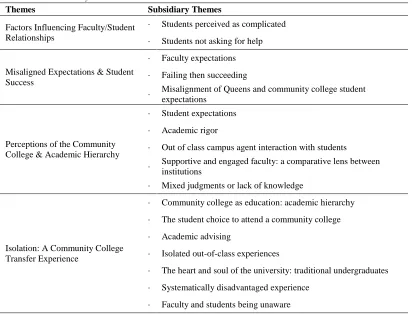
A thematic analysis of the interview data revealed four themes. The first,
how both community college transfer students, and the faculty that teach them, are
hesitant and reluctant to work with one another. The second, A Balancing Act: Aligning
Faculty and Student Expectations, relates to the fact that what a faculty member expects
of a student, and what students perceive to be expected of them, should align for the
student to be successful. The third, A Second Class Institution: The Community College
as a Stepping Stone describes how faculty perceive attending a community college as a
stepping stone towards more prestigious goal of attending a four year institution. Finally,
the fourth theme, Isolation: A Community College Transfer Experience, details the ways
community college transfer students are perceived as intentionally, and unintentionally,
given a separate university experience, and the ways in which this Isolation
disadvantages these students. These findings are significant for both universities similar
to the study site and for those that wish to understand the community college transfer
TABLE OF CONTENTS
DEDICATION ... iii
ACKNOWLEDGMENTS ... iv
ABSTRACT ... v
LIST OF TABLES ... x
LIST OF FIGURES ... xi
LIST OF ABBREVIATIONS ... xii
DEFINITION OF TERMS ... xiii
CHAPTER ONE: INTRODUCTION ... 1
Statement of the Problem ... 3
Purpose ... 5
Research Questions ... 6
Background and Significance ... 7
Methodology ... 8
Conclusion ... 12
CHAPTER TWO: LITERATURE REVIEW ... 15
The Community College Student Profile ... 16
The Faculty Profile ... 21
Student Transfer Pathways ... 29
Community College Transfer Student Programs and Practices ... 37
The Community College Transfer Experience: A Student Perspective ... 39
Community College Student Transfer: A Faculty Perspective ... 47
Faculty Perceptions and Student/Faculty Relationships ... 50
Tinto’s Attrition Theory (1975, 1993) and Predictors of Academic Success for Community College Transfer Students ... 57
Conclusion ... 62
CHAPTER THREE: METHODOLOGY ... 65
Methodological Design ... 65
Research Questions ... 66
Choosing a Study Design ... 67
Epistemic Orientation ... 69
Positionality Statement ... 70
Conceptual and Theoretical Frameworks ... 71
Research Site Selection ... 74
Participant Selection ... 76
Data Collection ... 79
Unit of Analysis and Instrument ... 81
Validity, Reliability and Trustworthiness ... 82
Data Analysis and Coding ... 87
Research Ethics ... 91
Limitations ... 92
Pilot Study ... 93
CHAPTER FOUR: FINDINGS ... 100
Description of the Study Site ... 101
Students at Queens University ... 104
Faculty at Queens University ... 114
Results ... 126
Interpretation ... 169
Summary ... 174
CHAPTER FIVE: DISCUSSION AND IMPLICATIONS ... 177
Research Questions and Findings ... 178
Recommendations for Practice and Research ... 196
Relevance to the Literature ... 203
Summary and Final Thoughts ... 208
REFERENCES ... 211
APPENDIX A: INTERVIEW PROTOCOL ... 222
APPENDIX B: INVITATION LETTER ... 225
APPENDIX C: INFORMED CONSENT ... 227
APPENDIX D: IRB LETTER OF APPROVAL QUEENS UNIVERSITY OF CHARLOTTE ... 229
LIST OF TABLES
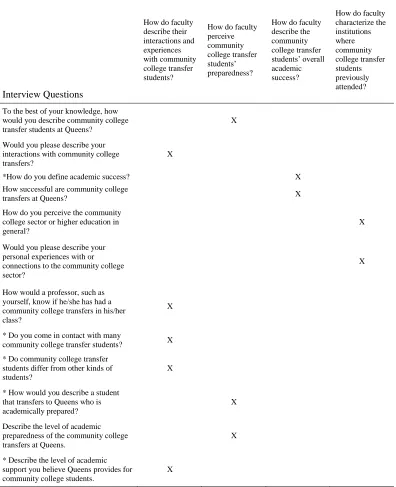
Table 3.1: Interview Questions ... 82
Table 3.2: Analytic Memo Excerpt ... 86
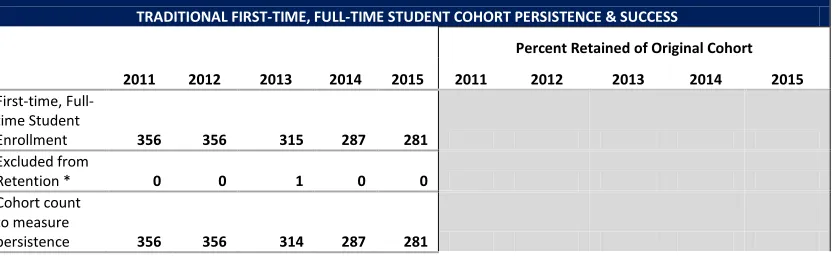
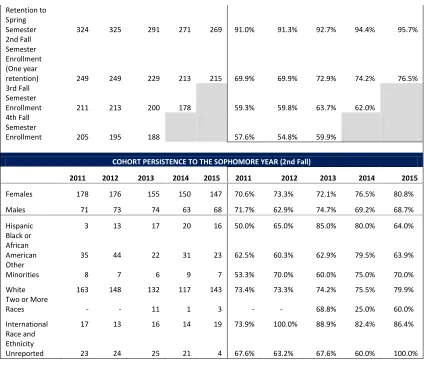
Table 4.1: Student Cohort Persistence and Success... 106
Table 4.2: Student Cohort Graduation Rates ... 107
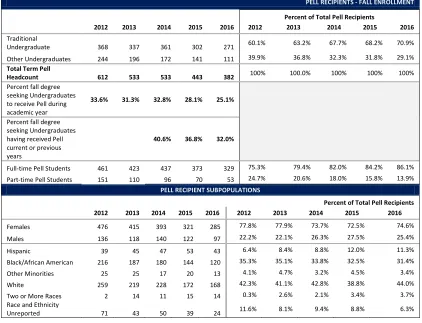
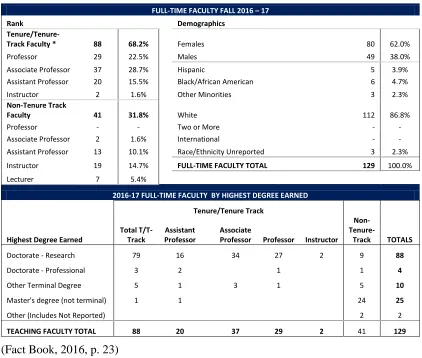
Table 4.3: Full Time Faculty Rank, Demographics, and Credentials ... 109
Table 4.4: All Faculty: Rank, Demographics, and Credentials ... 115
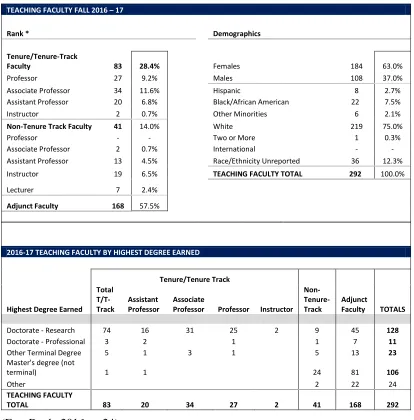
Table 4.5 Teaching Faculty: Rank, Demographics, and Credentials ... 116
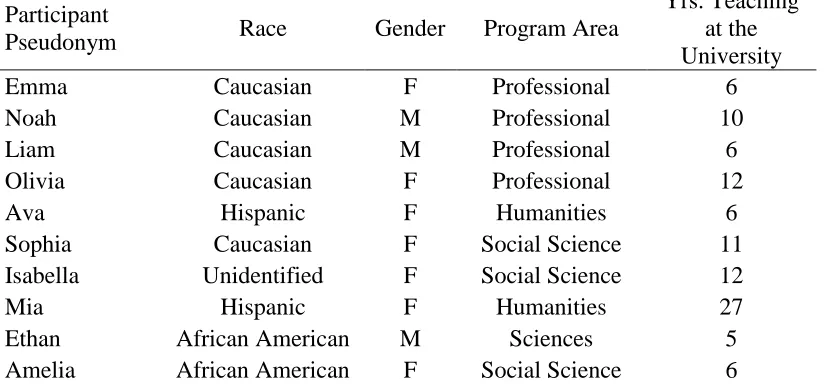
Table 4.6: Descriptive of the Faculty Participants ... 119
LIST OF FIGURES
Figure 2.1: The Pathways Needed to Track Student Transfer ... 18
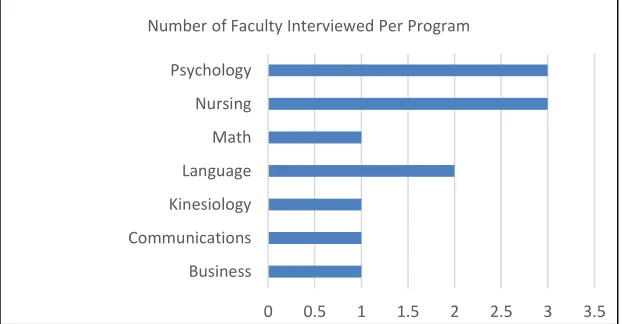
Figure 4.1: Number of Faculty Interviewed Per Program ... 118
Figure 4.2: Number of Faculty Interviewed by Race ... 119
LIST OF ABBREVIATIONS
AACC ... American Association of Community Colleges
AAUP ... American Association of University Professors
FTE ... Full-Time Equivalent
IPEDS ... Integrated Postsecondary Education Data System
IRB ... Institutional Review Board
NCES ... National Center for Education Statistics
SACS... Southern Association of Colleges and Schools
DEFINITION OF TERMS
Articulation Agreement – Articulation is defined by as, “the coordination of lines
of work. This is accomplished by means of the interactional processes of working out
and carrying through of work-related arrangements. Articulation varies in degree and
duration depending upon the degree to which arrangements are in place and operative.”
(Stauss, 1993, p. 87). In this work I adopt the meaning of an articulation agreement to be
the coordination between a four-year institution and a two year institution with the goal
of creating a pathway for student from a two year institution to a four-year institution.
This often means having a set degree pathway between the two schools.
Emic Approach –"Emic is used to refer to first-order concepts—the local
language, concepts, or ways of expression used by members in a particular group or
setting to name their experience." (Schwandt, 2007, p. 81). Counter to an etic or theory
directed approach, an emic perspective allows the researcher to approach the data and
analysis openly without the intentions of testing/applying a particular hypothesis or
theory.
Hayworth Student – The study site defines a student to be considered a Hayworth
if student he/she must be over the age of 23 years. “Nontraditional age prospective
students (age 23 or older) are served by the Hayworth School Program” (Catalog 2015, p.
29). These students also pay a reduced tuition rate which also reduces the number of
Native Student – Native students are, “students who entered four-year institutions
as freshmen” (Glass & Harrington, 2002, p. 416). In congruence with Glass &
Harrington’s definition, this term is used to describe students whose full post-secondary
academic career exists within a single institution.
Post/Nontraditional Student – A nontraditional student can be defined as over the
age of 25, not living on campus and enrolled part-time (Bean & Metzner, 1985). Often
students over a certain age and enrolling full-time are still viewed as nontraditional;
however, in general one or more of these variables can be used to distinguish the term
from a traditional student – age being the most prominent. The site selected for this study
uses age, 23 years or older, as the determining variable. When discussing the study site’s
students this term is synonymous with “Hayworth Student.”
Sticker Price – A university’s sticker price is its “gross tuition” (Winston, 1999, p.
14), meaning the total published cost of one year of annual tuition for a single student.
This amount does not accurately capture the amount an individual student might pay for a
year of tuition out of pocket because it does not account for any financial aid, grants,
scholarships, tuition discount or other kinds of subsidy the student might receive.
Traditional Student – There are three variables that distinguish whether or not a
student in higher education is viewed as traditional or nontraditional: age, residency, and
enrollment status (Bean & Metzner, 1985). For this study, a student is deemed traditional
if he/she begins higher education for the first time under the age or 23 years. These
students pay a comprehensive tuition rate that allows them access to services and
Transfer Student – “Traditional studies of transfer typically define transfer
students based on the number of credit hours earned at the first institution attended”
(Whitfield, 2005, p. 534). Therefore, for the purposes of this study, transfer students are
defined by transferring three or more credits from the first institution they attended.
Within this study, students described as transfer students can be either
CHAPTER ONE:
INTRODUCTION
A student’s relationship with a faculty member can be life changing. According to
Tinto (1975, 1993), student interaction with faculty and staff is part of one of the two
systems used to predict student attrition. A faculty member’s perceptions of a group of
college students can influence his/her interactions with them. Because of what is known
about the importance of student/faculty relationships, it is critical that the faculty lens and
perception of students be valued and explored. The following single site, ethnographic
interview study provides a window to the faculty perspective on community college
student transfer students at a small, private, nonprofit university. The carefully crafted
research questions investigate how faculty make meaning of their relationships with
community college students, as well as their relationship with the community college
sector of higher education in general.
The community college sector makes up more than 41% of students in higher
education today; 57% of students attending a public institution are attending two year
schools (National Center for Education Statistics, 2014). Due to the sector’s size and low
cost, state and federal government officials, as well as students, are looking to the two
year sector as a catalyst to baccalaureate attainment.
Obama’s recent completion agenda and the call to invest in community colleges is
not only important, but there is a growing interest in research and financial investment
around this sector of higher education. This interest comes from the understanding that
community colleges will continue to increase access to higher education and degree
attainment for a growingly diverse student population.
Due to the low cost of a community college enrollment as a gateway to
baccalaureate degree, the post transfer student has been well researched, particularly from
the student perspective at a four-year public university (Chrystal, Gansemer-Topf, &
Laanan, 2013; Owens, 2010; Wilson, 2014; Ellis, 2013; Schmitigal, 2010; Gerhardt and
Ackerman 2014; Rios, 2010). However, the literature from the faculty perspective of the
community college transfer student’s experience is thin. Further explained in Chapter
Two, only one study was found that gives a glimpse of the faculty perception, and it takes
place at a public institution. This study illustrates a glaring need for future research,
particularly within other intuitional contexts (Castellino, 2014).
Not only is the faculty perspective absent from the literature but new research has
presented a need for greater attention on faculty/student relationships, particularly for
community college students (Townsend and Wilson, 2009; D’Amico, Dike, Elling,
Algozzine, & Ginn, 2014). Recent scholarly publications have illustrated dysfunction
within the faculty/student relationship (Rosenthal, et.al, 2000; Cotten & Wilson, 2006)
and community college transfer students having difficulty building relationships with
faculty (Townsend & Wilson, 2009). To better understand the interactions between
faculty and community college student transfers, the researcher interviewed 12 faculty for
this study. The faculty interview data provided results that illustrated institutionalized
developing relationships with those students is difficult for both the students and the
faculty.
Statement of the Problem
The literature on community college transfer students is deep and wide and is
discussed in Chapter Two; however, almost exclusively, researchers focus on students at
public institutions. The private sector of four-year institutions is nearly completely
absent from the literature related to community college transfer students, particularly
those considering the faculty/student relationship. This lack of exploration made
selection of a small, private institution an obvious choice. The absence of literature on
private universities on the topic is fully developed in Chapter Two.
Interest in the United States on community colleges as a pathway to a
baccalaureate degree is growing. Therefore, it is fair to expect, in years to come, that an
increased number of students could be choosing community colleges as a transfer
pathway. This means research on the community college transfer experience is also of
growing importance. As detailed in Chapter Two, students currently using the
community college path into a four-year institution are reporting problems in developing
relationships with their faculty at four-year institutions and once they transfer, they are
not achieving at the same rate as their native student counterparts (Monaghan & Attewell,
2015; Castellino, 2014). These obvious problems inform this study and help illustrate the
significance of the study’s findings.
Recently, researchers have deeply explored the community college transfer
student experience at both private and public four-year institutions. Among other things,
for community college transfer students. Using Tinto’s student attrition theory (1975;
1993), researchers have shown a deeper focus is warranted on the academic system vs.
the social system for community college transfer students (Townsend & Wilson, 2009;
D’Amico, Dike, Elling, Algozzine, and Ginn, 2014). This focus on academics then
places a greater emphasis on the faculty/student relationship; which, according to Tinto
(1975, 1993), is key for student success, particularly within the academic system.
Just recently, Jenkins and Fink (2016) suggested community college transfer
students are not as successful upon transfer to private nonprofit institutions as they are
upon transfer to public universities. According to the researchers, “the average
bachelor’s completion rates were more than 10 percentage points higher for students who
transferred to public four-year institutions than for those who transferred to private
nonprofit four-year institutions” (Jenkins et. al. 2016, p. 38). Although this study is not
designed to investigate that phenomenon specifically, this new research highlights a
problem for community college transfers attending private universities and calls for more
research within the private sector in general (Jenkins et. al, 2016).
The community college transfer student perception of their relationship with
faculty was researched by Townsend and Wilson in 2009. What the researchers found
illustrates a problem for community college transfer students and faculty. Community
college transfers at the various institutions studied found it difficult to build meaningful
relationships with their faculty (Townsend & Wilson, 2009). Their findings warrant
further research into how this might be occurring within different institutional contexts.
There is a limited amount of research from the faculty perspective on community
midsize public institution and calls for more research (Castellino, 2014). In a mixed
methods study, Castellino (2014) interviewed faculty and found that they often expected
community college transfer students to underperform their native counterparts. Using
institutional data, Castellino (2014) found that the community college transfer students
were underperforming when compared to the native students. Castellino (2014) asserts
that there is a connection between the faculty perception and the students’
underperformance. Castellino (2014) called for further study to better understand the
faculty perception of community college transfer students in other institutional contexts.
Castellino’s (2014) study used a structured interview protocol, which focused
very specifically on the differences between disciplines at a public institution. Castellino
(2014) found a possible connection to faculty perception and student achievement, as
well as the discrepancies between the faculty perceptions and the quantitative data,
further explained in Chapter Two. Castellino (2014) calls for a deeper understanding of
the faculty perception, particularly using other kinds of qualitative design and in other
institutional contexts, as well as the faculty perception. If more qualitative research was
provided from the faculty perspective, “faculty could begin to unpack and better
understand them [faculty perceptions of community college transfer students] and how
these perceptions influence their work” (Castellino, 2014, p. 140).
Purpose
The purpose of this study was to examine how faculty describe their interactions
with community college transfer students at a small, private university. The researcher
sought to understand how these students were perceived by the faculty; specifically, the
In an effort to develop the appropriate protocol and rigorous qualitative inquiry, an
ethnographic interview study design was conducted, conceptually informed by Tinto’s
Attrition Theory (1975, 1993).
This study contributes to a body of scholarship on a topic previously unexplored,
as well as informs four-year campuses about how faculty perceive community college
transfer students at one, small private university. The results of this study are important
for four-year campuses, particularly private campuses, because it can help faculty and
administrators have informed conversations about community college students and how
these students might be perceived by the faculty. Not only does this study have greater
significance for a larger audience, but I also plan to take the results of my study back to
the study site to inform meaningful conversations with the campus on faculty/student
interaction and institutionalized Isolation of community college transfer students.
Research Questions
1. How do full-time faculty at a small, private, nonprofit, masters-level university in
the Southeastern United States describe their interactions and experiences with
community college transfer students?
2. How do full-time faculty at a small, private, nonprofit, masters-level university in
the Southeastern United States perceive community college transfer students’
academic preparedness?
3. How do full-time faculty at a small, private, nonprofit, masters-level university in
the Southeastern United States describe the community college transfer students’
4. How do full-time faculty at a small, private, nonprofit, masters-level university in
the southeastern United States describe the institutions from which community
college transfer students transferred?
Background and Significance
Baccalaureate attainment is a pressing issue, not only for students and families,
but for employers, politicians, higher education faculty/staff, and even the average
American. The most cost efficient means to baccalaureate attainment is successfully
transferring community college students to four-year institutions, both public and private.
Private, nonprofit, institutions are able to provide services such as individual attention
and small class size that might make this sector of increased interest for these transfers
(Rios, 2010). The literature indicates that attention to the community college sector,
particularly considering the proven benefits, is warranted. However, an understanding of
the faculty perceptions within this sector is missing and could provide meaningful
insights, helping transfer receiving institutions best serve this growing population of
students.
There are clear challenges for students seeking this pathway, such as transfer
shock or difficulties with integration to the four-year university, as further explained in
Chapter Two. One of the clear and well researched ways for students to overcome these
challenges is by building positive relationships with faculty. However, currently the
faculty perception of these relationships is absent from the literature. The findings from
this study enable transfer receiving campuses to better understand faculty/student
relationships and can help them to unpack why community college transfer students
This study not only provides practical implications for practitioners, but it also
provides scholarly significance. The findings of this study shed light on how faculty
make meaning of relationships with community college students and their perceptions of
these students. This topic provides scholarly implications for future research as well as
previously unexplored knowledge from within a private university context. Researching
the faculty perspective helps shape what is known about faculty relationships with
community college transfer students, as well as helping to create a deeper understanding
of how faculty develop meaning from their interactions with community college transfer
students. My research contributes to the scholarly community though describing the
private, four-year college faculty perspective, a previously unidentified lens.
Practitioners benefit from my research at private, four-year institutions because they are
able to use these findings to inform meaningful conversations about faculty relationships
with community college transfers at their institutions.
Methodology
Because of the types of research questions employed in this study, the most
appropriate method of inquiry is qualitative research. A qualitative design allows for a
deep investigation into how meaning and interpretations are developed by participants,
which specifically addresses the research questions. According to Rolston (2010), the
purpose of ethnographic interview design is “to explore the meanings that people ascribe
to actions and events in their cultural worlds, expressed in their own language” (p. 19).
Therefore, I used an ethnographic interview study design to investigate and describe the
faculty member’s perceptions, assumptions, and experiences with community college
This study explored the faculty’s perspective and interpretation of interactions
they had with community college transfer students. The participants were at the center of
the study’s overarching research question: how do faculty perceive community college
transfer students at a small, private university?A constructivist theoretical framework
informed a method that allowed for the co-construction of knowledge between both
myself, as the researcher and my participants. An ethnographic interview design was the
most appropriate because of the study’s deep focus on a single population: full-time
faculty at a small, private, masters-level university. According to Seidman (2006), “at
the root of in-depth interviewing is an interest in understanding the lived experience of
other people and the meaning they make of that experience” (p. 9). The study’s
ethnographic focus presents a lens that allowed for individual and cultural interpretations
as well as allowing me to provide rich description of lived experience.
I selected a hermeneutic lens which adopts interpretation and a value on lived
experiences, because of the level of meaning I wanted my participants to develop.
(Roulston, 2010). I considered other types of methodological approaches, such as case
study; however, the most appropriate method to explore the faculty perception is through
in-depth interviews. In a case study the researcher often seeks triangulation between
three different kinds of units of analysis. I also considered student interviews and
document analysis, but those methods would not help me understand the topic of inquiry:
how faculty perceive community college transfer students. Chapter Two details the
student perspective at both private and public colleges, the depth at which the student
perspective is provided supports a focus on the faculty perception prior to considering
A pilot study was conducted in November 2015. The findings generated from
the pilot study have informed the methodological design and protocol used for the larger
study. A full discussion of how the findings of the pilot study informed the current study
are also discussed in Chapter Three. Overall, the experience and knowledge gained
through the pilot interviews helped shape the coding process and interview protocol. For
example, through coding the pilot interviews it was discovered there were differences in
how faculty used the term “academic preparedness;” therefore, the interview protocol
was altered to ask faculty how they define academic preparedness prior to asking the
original questions on the topic.
During the full study, conducted in the summer of 2016, a total of 12 faculty were
interviewed. Faculty with experience teaching and/or advising community college
transfer students was important; therefore, both criterion and snowball sampling were
utilized, explained further in Chapter Three. Noy (2008), asserted that when using a
hermeneutic research lens, snowball sampling “can generate a unique type of social
knowledge—knowledge which is emergent, political and interactional.” (p. 327).
A private institution was selected because of the healthy amount of recent
research on public institutions and community college transfer student experiences
(Chrystal, Gansemer-Topf, & Laanan, 2013; D’Amico et. al., 2014; Fee, Prolman, &
Thomas, 2009; Gerhardt & Ackerman, 2014; Wilson 2014; Owens, 2010;)and what little
is known about faculty/student interaction and community college transfer students has
taken place at public institutions (Castellino, 2014; Rios, 2010).
The specific university site selected for the study was chosen using Patton’s
(2015) described purposeful sampling as a method that helps the researcher identify cases
that are saturated with information that applies to the research questions. Using this
method, Queens University of Charlotte was selected because it is both a private
university, and it has a high number of community college transfers. According to an
informant at the university’s office of institutional research, over 40% of the student body
is transfer students, and over half of the transfers are from community colleges. As
explained later in the positionality statement section of Chapter Three, I am employed as
a faculty member and administrator at Queens University; therefore, in addition to
purposeful sampling, Queens was also selected for convenience. As someone whom
works at the university I had a great deal of access to the site and my participants.
I sought to interpret faculty interviews using coding analysis; specifically, the
analytic process was thematic. Rolston (2010) spoke specifically about thematic
representation of data through the use of an interview study design. She describes
“findings that would fit this model [thematic representation] might include ‘participants’
perspectives’ concerning ‘benefits’ or ‘limitations’ of some phenomenon of study”
(p.154). This type of analysis was appropriate for my study because I investigated
participant perspectives. Thematic analysis also lends itself to finding themes and
saturation within the participants’ comments, and reduces as much as possible the
researcher’s agenda (Roulson, 2010). Because I employed a thematic analysis, I
developed categories, which are presented as a level of interpretation, within interviews
and gathered themes across the interviews (Glesne, 2011; Saldaña, 2013). I used analytic
(Saldaña, 2013). A full representation of how both validity and trustworthiness
(reliability) was achieved is explained in Chapter Three.
Using twelve, 60-90 minute faculty interviews, many rounds of coding, analytic
memos and member checking as the primary means of data collection and analysis, four
main themes emerged from the data. The first theme, Student/Faculty Relationship: A
Two-Way Street of Hesitation and Reluctance, describes how both community college
transfer students, and the faculty that teach them, are both hesitant and reluctant to work
with one another. The second theme, A Balancing Act: Aligning Faculty and Student
Expectations, describes how the faculty perceive misalignment between the faculty and
the students’ academic expectations and how both the faculty and students try to find
balance to achieve student success. The third theme, A Second Class Institution: The
Community College as a Stepping Stone, provides rich description of how faculty
perceived attending a community college as a stepping stone towards achieving the
higher and more prestigious goal of attending Queens University of Charlotte. Finally,
the fourth theme, Isolation: A Community College Transfer Experience - this theme is a
description of the ways in which community college transfer students are perceived as
intentionally and unintentionally given an experience separate from other students at
Queens University and how being isolated disadvantages these students. These findings
describe not only how faculty perceive the faculty-student relationship, but also their
perceptions of community college transfer students and the institutions from which these
students transferred.
Conclusion
The body of literature on community college transfer students in growing, but
private university. These findings are important for both a scholarly audience and
practitioners. Researching the faculty perspective using an ethnographic interview study
design helps shape what we know about faculty relationships with community college
transfer students and provides a deeper understanding of how faculty create meaning
from their interactions with community college transfers.
Practitioners at private four-year institutions can use these findings to inform
meaningful conversations about faculty relationships with community college transfer
students at their institutions. These initiatives should be directed toward improving the
faculty-student relationship, systematic transfer processes, transfer programs and campus
culture, all which can influence community college transfer student success. A full list of
recommendations for practice and research using these findings are presented in Chapter
Five. Specifically, student attrition/success (Tinto, 1975, 1993) can be impacted due to
enabling campuses to strengthen the faculty-student relationship. The student success
gains of the faculty-student relationship, along with the study’s conceptual framework,
are more fully described in Chapter Two.
In Chapter One I was able to articulate the overall problem that exists for
community college transfer students, as well as the purpose of my study: to describe how
faculty perceive community college transfers at a small, private, nonprofit university. I
also provided the carefully crafted research questions designed to address the problem, as
well as the knowledge the study’s findings provide both scholars and practitioners.
Finally, a broad explanation of the methodological approach, an ethnographic interview
study design, was provided. The synopsis and research questions presented in this
Once the existing knowledge on the topic of inquiry is described through the literature
review, Chapter Three will present a deep discussion into my methodological design,
design choice, positionality and epistemic identity, as well as how validity and
trustworthiness (reliability) will be asserted and how the pilot study informed the full
study’s protocol. Chapters Four and Five will then present the study’s findings, and
CHAPTER TWO:
LITERATUREREVIEW
In Chapter One the purpose of this study was outlined as seeking to understand
the faculty member’s perception of the community college student at a small, private,
nonprofit university. The following chapter is a detailed account of the research that has
been conducted on community college students and the student/faculty relationship, with
an underpinned focus on the gaps and spaces within the literature I address though my
study’s research questions.
Specifically, there has been increased attention not only from scholarly works, but
from policy makers and media on community college students and the community
college as a gateway to obtaining a baccalaureate degree. The literature presented in this
chapter represents over 60 reports, scholarly works, and other sources. The works
presented will cover the following topic areas as they pertain to my research questions: 1)
overall profile of the community college student, 2) the overall profile of the community
college and private college faculty member, 3) a discussion of the pathways from a
community college to a four year institution, 4) the significance of the community college
pathway to baccalaureate attainment, 5) an overview of community college transfer
programs and practices, 6) the student perspective of the community college transfer
experience, 7) what little is known about the faculty perspective of the community
college student, 8) the influence of faculty perceptions on student/faculty relationships,
student relationship as well as the predictors of academic success specifically for
community college transfer students. Each of these topics are presented with an
underpinned focus on the gaps and spaces for continued research.
The Community College Student Profile
The following section will present from the literature the overall profile of the
community college student, as well as the community college student transfer; although,
there is considerably less information on the latter. Using both scholarly works, reports
and government information, the student profile can be developed. The ways in which
this profile differs from the four-year student will also be discussed.
The National Center for Education Statistics (NCES) publishes reports annually
on the profile of the undergraduate student and how undergraduates are comprised across
the United States. In addition to the student overall, this organization previously
produced reports on community college student outcomes. However, the NCES stopped
reporting on community college student outcomes in 2011; therefore, the most recent
data available comes from the NCES’ 2011 comprehensive report. This further illustrates
the need for greater data and tracking for community college transfer students. Data from
the 2011 report is presented here and illustrates the girth of the community college sector
of higher education; over 41% of the students in higher education are attending two year
schools, and 57% of students attending a public institution are attending two year schools
(NCES, 2011).
The number of underrepresented groups attending community colleges is
significant: 46% of Black and Hispanic students in college attend two year schools,
compared to 41% of students that attend two year schools on average (NCES, 2011). The
(NCES, 2011). Of those attending community colleges, 44% are low socioeconomic
status(SES, household income less than $25,000), whereas only 15% of high SES choose
a community college (NCES, 2011). Similar to the NCES findings on underrepresented
groups, a report by Phillippe (2015) found using Integrated Postsecondary Education
Data System (IPEDS) data that only 50% of all community college students are white,
21% are Hispanic, 14% are black, and 15% are other ethnicities (Phillippe, 2015, p.1).
Quick, Lehmann, and Deniston (2003) also found that there are more students with
disabilities at community colleges than four-year institutions.
More recent data than the NCES 2011 report illustrates an increase in the number
of community college students. Phillippe (2015) reported community colleges are
comprised of 46% of all United States undergraduates, 41% of first-time freshman, 53%
of first-generation students, 56% of single parents, 48% of veterans, and 51% of students
with disabilities (Phillippe, 2015). Since the 2011 NCES reported only 41% of students
were attending community colleges, the AACC 2015 data by Phillippe indicated an
increase to 46% is significant. One of the most staggering statistics about community
college students illustrated in the AACC’s (2015) report by Phillippe, is the number of
single parents attending community colleges; 56% of single parents in college are at
community colleges. These students are also more likely be older than those that attend
four-year institutions. According to the NCES (2011) 59% of students attending public
community colleges are over the age of 23 years.
A policy brief published in October, 2011, by the AACC detailed the trends in
degree attainment from community college students. This brief indicates that, overall,
also clearly depicts the problems with capturing data on transfer students (AACC, 2011).
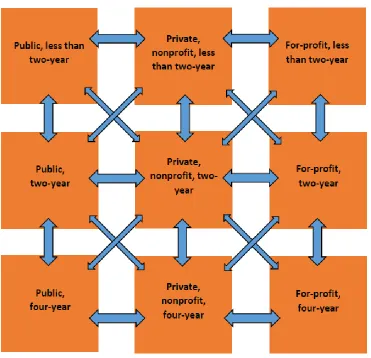
Figure 2.1 was created using Mullin’s model (2011) and illustrates the different kinds of
institutions that would need to communicate to capture accurate transfer data.
Figure 2.1
The Pathways Needed to Track Student Transfer
There is existing data, but it is complex and self-reported, leaving it deeply
flawed. The policy brief provides an example where IPEDS and NCES measure the
same variable (the numbers of students that begin community college and later transfer to
a four-year college), but report very different findings (AACC, 2011). During the same
transferring to four-year schools, whereas NCES reported almost double that with 29.9%.
This further illustrates the problem with the available data on transfer students.
According to resent studies, community college students are motivated to obtain a
baccalaureate degree. Marling and Handel (2013) found that over half of community
college students begin attending because they intend to earn a baccalaureate degree and
that more community college students are enrolling full-time than ever before in an
attempt to move toward transferring and obtaining a baccalaureate degree.
Part of the problem is that once they do transfer they are not always as successful
as their native counterparts. Using national longitudinal transcript data and
propensity-score methods, Monaghan and Attewell (2015) studied community college students
transferring to a four-year institution and how they compared to the traditional freshman
student at the four-year college. The community college transfer six-year graduate rate
was 25% compared to the traditional student rate of 46%. However, using demographic
background, high school preparation, and other metrics proven to influence graduation
rates, they predicted that students starting at a community college are 17% less likely to
graduate just based on these predictive statistics, independent of where they started their
academic careers. Considering this metric and the fact that the burden of transfer often
extends the graduation rate anyway, the disparity in graduation rates between community
college transfers and traditional students is far smaller than prior research suggested.
This study also was limited by looking at only the six-year graduation rates. Considering
community college students often take longer to graduate, it does not tell us how many
To complete the profile of the community college student, a view from the media
can be helpful. The community college and its students are portrayed in many ways
though media. Researchers Bourke, Major, and Harris (2009) sought to capture these
portrayals in the following kinds of media: television, movies, novels, and short stories.
After reviewing hundreds of works, the researchers found themes. The community
college student is depicted as having a full-time job while in school, as well as coming
from diverse backgrounds and are often low SES. The picture of a community college is
one of a stepping stone, a catalyst to a better life. Overall, the students are shown as
hardworking and motivated. In this case, “fiction does reflect fact” (Bourke et. al, 2009,
p. 67).
One of the under-researched areas of community college transfer students is the
for-profit sector. However, there is one recent study that used data from the largest
community college system in the U.S. Ommeren (2001) characterized students from
community colleges that chose to transfer to for-profit four-year institutions over public
universities. Using regression analysis on system-wide data, Ommeren found that
“transfer students who are African American, female, and over the age of 25 are the most
likely to enroll at for-profit institutions” (2001, p. 1). This study developed two
predictors for attending a for-profit private vs. public: the use of financial aid while at
community college, and academic background. The stronger the GPA and the less
financial aid was used, the more likely the student is to attend a public college.
The literature on the community college transfer student profile at a small private
university is not easily found, if it exists at all. This absence of research could be
for many students. Unfortunately, due to the difficulties in tracking students between
sectors in higher education, as indicated by Mullin (2011), we do not have a profile of
what these students might look like. There are general data on the overall transfer, but
those traveling between sectors is more difficult to characterize.
The community college transfer is difficult to capture using available data, but
what is known is the general community college student is diverse, motivated, busy
outside of school (single parent, working), older, and less likely to be financially stable.
With an increased focus from the media, federal and state governments, community
college continues to be an obvious, cost effective option for baccalaureate degree
attainment. For these reasons and others, an increased focus on this population is
warranted, particularly as it pertains to research.
The Faculty Profile
The faculty working within different institutional contexts (e.g. private, for-profit,
community college, etc.) can often have different characteristics and are given different
kinds of job expectations. The following section is a discussion of some of these
differences, with a specific focus on the private, masters-level university faculty member,
as well as faculty teaching at community colleges. These two kinds of institutional
contexts are of importance because of their connections to my study. Using a qualitative
design I seek to understand the four-year private college faculty perception of community
colleges and community college transfer students. This being the case, the two kinds of
institutional contexts involved are both community colleges and private universities.
Therefore, for the purpose of this study, it is important to provide an overview of these
According to Townsend and Twombly (2007), 43% of both full-time and
part-time faculty in postsecondary education are teaching at community colleges. Community
college faculty are seen as teachers and should reverend as “experts in student learning”
(Levin, Kater and Wagoner, 2006, p. 142). However, Townsend and Twombly (2007)
eco sediment expressed in Levin, Kater and Wagoner’s (2006) book expressing concern
for community college faculty being undervalued; both works provide examples of how
community college faculty are presented as lesser than four-year institution faculty. This
is partly due to the greater conversation around the value of scholarship vs. teaching. In
general, the more scholarship the faculty member is involved in, the more associated
prestige (Eagan et. al., 2014); this is similarly true for institutions; meaning community
colleges are viewed as “lesser.” This is not only evident in college rankings, such as US
News and World Report, but also in salary disparities, showing the connection to the
institutional type, scholarship activity and salary which is discussed in detail later in this
section.
One study in particular attempted to capture the connections between salary and
scholarly activity using the 2013–14 HERI Faculty Survey. The survey captured 16,112
faculty surveys across 269 institutions (Eagan, et.al, 2014, p. 9). The faculty participants
each came from four-year institutions and reported a great deal of information, such as
the type and rank of their position, scholarly and service activities, whether or not they
teach online and job satisfaction (Eagan et. al., 2014). The institutions were classified in
a number of ways, such as selectivity and public vs. private. Eagan et. al. (2014) reported
faculty working at institutions with high selectivity were more likely to have higher
high level, peer-reviewed scholarship a faculty member produced, the higher his/her
salary. “Institution type correlates with scholarly productivity; universities tend to
reward scholarship over teaching” (Eagan et. al, 2014, p. 9).
Some researchers have found faculty salary to be one of the biggest differences
for faculty among institutional types. “The gap between average faculty salaries at public
and private institutions has been growing wider over the past 40 years” (Rippner &
Toutkoushian, 2015, p. 103). These researchers did not consider community colleges,
but did find differences between public and private colleges. Using IPEDS data
2001-2011, Rippner and Toutkoushian (2015) found specific discrepancies between nine
month faculty salaries at public and private institutions using Carnegie classifications and
geographic location to differentiate the types of institutions. Faculty at private
institutions were getting paid less than faculty at public institutions by an average of
$5,607 annually (Rippner & Toutkoushian, 2015). However, this was not true for
private, high research institutions. On average, a faculty member employed at a high
research, private institution makes an average of 28% more than a faculty member at the
high research public institution (Rippner & Toutkoushian, 2015).
When looking at Carnegie classification C, or in other words, private,
masters-level universities, there are similar differences in salaries between private and public,
indicating public institutions pay faculty more. It is important to highlight this
classification considering this is the type of institution where my study will take place.
On average, a faculty member teaching at a private masters-level institution makes an
average of $68,185 annually, whereas at a public institution he/she would earn $71,665
different. According to the American Association of University Professor’s (AAUP)
survey data analyzed by Barnshaw and Dunietz, (2015), community colleges pay an
average annual salary of $61,888, significantly less than the other institutional categories.
This salary difference between community colleges and masters-level institutions
is complicated to interpret due to the differences in responsibilities between faculty at
four-year and two-year institutions. Using survey data produced by Townsend and
Rosser (2007) provide a picture of the average faculty workload and the differences
between institutional types; however, their analysis was restricted to exclusively public
institutions, they did disaggregate the data into three institutional types: community
colleges, liberal arts, and comprehensive universities. The data was self-reported by the
faculty, but there was also a large sample size, over 18,000 participants. The researchers
found that community college faculty were teaching on average one more class per
semester than those teaching at liberal arts universities and on average two more than
comprehensive universities. They also found that community college faculty were not
producing the same number of peer-reviewed articles, book chapters, and books than the
other two categories, showing they teach more, yet engage in less scholarship. The
researchers also found how workload overall has changed in recent years. “Faculty
workload, defined simply as the reported weekly number of hours worked by faculty,
significantly increased in the aggregate between 1993 and 2004” (Townsend & Rosser,
2007, p.6). Townsend and Rosser’s (2007) show the clear difference between both
teaching and scholarly expectations between institutional types and increasing demands
One of the most obvious differences between institutional types is the presence of
part-time vs. full-time status of the faculty. For example, according to the AAUP 2014
report, the Employment Status of Instructional Staff Members in Higher Education, over
70% of the faculty teaching at community colleges are part-time faculty. Whereas just
over 50% of masters level universities, both public and private, are taught by part-time
faculty. This often means that some of the data presented on these faculty is not always
an accurate picture because often the faculty researched are exclusively full-time which,
considering the prevalence of part-time faculty, is limiting.
Certain demographics are over and underrepresented at community colleges. In
general, more women are teaching at community colleges and, according to Townsend
and Twombly (2007), are receiving attention within the scholarly literature. After
reviewing a number of sources, Townsend and Twombly (2007) found that women make
up between 29-52% of the faculty at community colleges, a number that has grown over
the past few years. This is not true for faculty of color at community colleges.
Ethnically, community college faculty are white. Less than 20% of community college
faculty, both part-time and full-time, are non-white (Townsend & Twombly, 2007).
Findings on full-time faculty race are as follows: 80% white, 6.9% African American,
and 5.9% Hispanic. They also found that both women and faculty of color, were less
likely to hold the rank of full professor, although the significance of the discrepancy
depended on the study reported (Townsend & Twombly, 2007). Using multiple studies
to describe the average age of a community college faculty member, the researchers, in
full-time and part-full-time to be around middle to late 40’s; the second largest group was middle
50’s to early 60’s (Townsend & Twombly, 2007).
From a boarder perspective, only 25% of all African American faculty in higher
education teach at community colleges (Townsend & Twombly, 2007). This is
disheartening considering student minority representation at community colleges is
relatively high: 46% of African American students in higher education are attending
community colleges (NCES, 2011). It is interesting that the number of African American
students is so high, yet the representation of African American faculty found teaching at
these institutions is so dissimilar.
With an average SAT score of 1055 (combined verbal and math) the site used for
my study would be classified by Eagan et. al. (2014) as having a medium level of
selectivity. Therefore, using Eagan et. al, (2014) findings, the college can be considered
as having a medium level of faculty scholarly productivity, course load and salary.
Although the average salary at the institution is unknown, the faculty work load for a nine
month faculty member is six, four hour courses per year, which according to Townsend
and Rosser (2007), is typical for a liberal arts college and is about one course less per
term than the average public community college.
The HERI survey (Eagan et. al, 2014) reported some overall differences in gender
across all types of institutions. Eagan et. al. (2014) found that women were not only
holding lower ranks, such as assistant professor vs. associate or full professor, but women
were less likely than men to be doing a high level of scholarship. As stated previously,
scholarship is rewarded over teaching and even more so over service to the university
helping students with personal issues at all institutional types, a form of service to the
university. The idea that women are more likely to spend their time on service and
teaching than scholarship touches on a concerning issue considering universities value
scholarship over service for tenure and promotion across all institutional types (Eagan et.
al, 2014).
To better understand the differences between community college faculty positions
and private institutions I conducted an observation of faculty search advertisements
posted between December and March 2016 on the Chronicle of Higher Education
website. I randomly selected ten advertisements, five from each of the two institutional
categories, community colleges and small (less than 3,000 students) private four- year
colleges. The advertisements were posted from across the United States and were
gathered to provide a quick observation of the similarities and differences between the
two institutional categories. The disciplines represented were the following: Art, Art
History, Exercise Science, Filmmaking, Health and PE, History, and English. These are
most likely not representative of the most frequent advertisements for either category
since they were randomly selected. I was not trying to capture differences within
disciplines, but institutional types, so I attempted to find similar disciplines within the
two categories.
As one might expect, many of the components of the advertisements were the
same, making the comparison easy, for example they all indicated the length the position
would be posted, whether or not the position was tenured, or tenure track, and the degree
requirements of the position. The majority of the postings were listed as being “open
Interestingly, of those I observed, there were two tenured or tenure-track positions in
each category, and three non-tenure track positions in each category. It was interesting to
see equal representation of tenured/tenure-track positions in each category. Another
interesting observation were missing course loads. Only one advertisement from either
category mentioned the number of courses the person would be required to teach upon
being hired. It was a community college that required ten courses annually. According
to Townsend and Rosser (2007), ten classes per year is similar to other community
college faculty loads. None of the private universities listed salary either, whereas two of
the community colleges did, ranging from $41,000-$57,000, a bit lower than the average
community college faculty member salary reported by Barnshaw and Dunietz in 2015,
just over $61,000.
Some of the differences between the institutions are surprising, for example, all
but one of the advertisements pulled for the community college were longer than those
from private colleges. On average, the community college advertisements were
two-three pages, whereas the private universities were one-two. The community colleges
were giving much greater detail on their position descriptions, including detailed office
hours, job expectations, and information about the institutions themselves. Curriculum
development, either experience, or as a job responsibility, was mentioned three out of
five times in the community college advertisements. None of the private university
advertisements made any mention of curriculum development. Another clear difference
between institutions was the mention of course modality. None of the private colleges
mentioned modality, whereas again, three of the five community college advertisements
There were items and requirements listed in the private college advertisements
that were not in the community college advertisements. The most obvious was the
requirement of research for tenure. Of the four advertisements leading to tenure, the two
from private universities required publications and/or presentations, whereas the
community college advertisements did not mention research at all. None of the
non-tenure track advertisements had research requirements from either institution. The other
clear difference was the required degree. All the advertisements from the private
universities required a PhD or the applicant to be ABD (all but dissertation). All the
community college advertisements were either bachelors or masters required, none
required or even preferred a candidate with a PhD. However, this could be because
within many of the disciplines observed, a MFA is a terminal degree in the field.
Overall, the profile of the faculty at a small private college is somewhat different
than that of a community college faculty member. When compared to community
college faculty, faculty teaching at a private, masters-level university have higher
scholarship expectations (Eagan et. al., 2014) with lower teaching loads (Townsend &
Rosser, 2007). They often make higher salaries (Rippner & Toutkoushian, 2015;
Barnshaw & Dunietz, 2015) and are more likely to be full-time (AAUP, 2014). The
classes private university faculty teach are also likely to have far fewer students
(Townsend & Rosser, 2007).
Student Transfer Pathways
The community college student transfer pathway is not always linear. In 2005 the
United States Department of Education published a report on transfer students using a
light on what many in higher education had speculated: the number of students in higher
education transferring between institutions is growing. In 1995-1996, 40% of students
had transferred at least once, by 2001 this percentage had jumped to 60% of students.
There was also a clear connection between the number of institutions attended and degree
attainment. In other words, the more institutions a student attended, the less likely he/she
was to graduate, including students that co-enrolled.
Johnson and Muse (2013) studied the student swirl phenomena, where students
were transferring to and from a large research institution. The researchers conducted a
single site study with 7,768 student participants. Using institutional data and the National
Student Clearinghouse, Johnson and Muse tracked students for up to eleven semesters.
They found that students choosing to enroll at more than one institution within a term had
a negative impact on the students’ persistence at their home institution; however, the
number of students that fall into this category is small, less than 0.5% of students in a
given term. Students involved in Greek life were less likely than the rest of the
population to transfer or dual enroll; however, when they did leave their home institution
they were more likely to drop out. There were specific demographics represented in
those choosing not to transfer; the following students were less likely to transfer, stop
enrollment, or dual enroll than other populations: females, Caucasians, and those with
higher high school GPA or ACT scores (Johnson & Muse, 2013). Once a student leaves
his/her home institution certain students are more likely to transfer than stop attending
altogether: out-of-state students and those with higher GPAs at the home institution.
Those with low GPAs, men, and non-whites have a lower chance of successfully
Not surprisingly, the longer the student stays at an institution the less likely it is he/she
will transfer (Johnson & Muse, 2013).
Bahr (2012) researched the lateral transfer between community colleges using
data from the University of California system and the National Student Clearinghouse.
Bahr (2012) identified transfer information on 120,188 students over a period of seven
years; however, the data did not capture those that only attended one institution for one
semester, limiting the actual number of students tracked to 89,057. Using these data Bahr
(2012) reported the following findings: 27% of the students transferred between
community colleges and the longer the student was in the system the more likely he/she
was to transfer between community colleges. The student was less likely to laterally
transfer if he/she had been academically successful at the home institution and took a
high number of credits. However, this study provides a limited scope, particularly since
students going to a four-year school were not captured, nor were reentry students at the
home school. One of the more descriptive statistics within the study was that 48% of
those transferring between community colleges did so through dual enrollment, meaning
they were enrolled at more than one school in a particular term (Bahr, 2012).
De Los Santos and Sutton (2012) studied the transfer relationship between
Maricopa Community Colleges (MCC, ten institutions in total) and Arizona State
University. This study was limited to these institutions and observed the transfer and
matriculation patterns of over 53,000 students. Using institutional data De Los Santos
and Sutton (2012) found only 7.19% of the students were dually enrolled in a given term,
and in most cases were doing so during their first year after transferring. The researchers
one-year persistence/retention of those transferring from local community colleges were
at a rate of 77% and 88% for lower and upper division students respectively. This was
equal to or higher than the persistence of the university’s freshman population, and higher
than those that transferred from other institutions persisted at 73% and 76%. De Los
Santos and Sutton (2012) assert that, at least at Arizona State, those transferring from a
community college were as likely as or more likely to persist than any other student at the
university. The same was true for graduation rates. The freshman class at Arizona State
had an average graduation rate of 56%. The local community college transfer students
graduated at rates of 61% and 76%, lower and upper division transfers respectively.
These graduation rates suggest that students at Arizona State had a higher chance of
successfully transferring from the community college than those starting as freshman (De
Los Santos & Sutton, 2012).
Friedel and Wilson (2015) describe the reverse transfer as a student that transfers
from a two-year college to a four-year college, then successfully completes the
requirements for an associates degree; the student is then awarded an associates degree
from the community college while enrolled at the four-year institution. This method is
utilized by state systems to increase community college completion rates. This kind of
degree completion takes a great deal of coordination between the two and four-year
schools. Using an extensive literature review and qualitative analysis of documents
Friedel and Wilson (2015) offer a synopsis of all 50 states, reporting whether or not a
particular state systems is using the reverse transfer to confer and deliver degrees. They