Ronald C. Petersen, PhD, MD
Ronald G. Thomas, PhD Paul S. Aisen, MD Richard C. Mohs, PhD Maria C. Carrillo, PhD Marilyn S. Albert, PhD For the Alzheimer’s
Disease Neuroimaging Initiative (ADNI) and Foundation for NIH (FNIH) Biomarkers Consortium AD MCI Placebo Data Analysis Project Team
Correspondence to Dr. Petersen: [email protected]
Supplemental data at Neurology.org
Randomized controlled trials in mild
cognitive impairment
Sources of variability
ABSTRACT
Objective:To examine the variability in performance among placebo groups in randomized con-trolled trials for mild cognitive impairment (MCI).
Methods:Placebo group data were obtained from 2 National Institute on Aging (NIA) MCI random-ized controlled trials, the Alzheimer’s Disease Cooperative Study (ADCS) MCI trial and the Alz-heimer’s Disease Neuroimaging Initiative (ADNI), which is a simulated clinical trial, in addition to industry-sponsored clinical trials involving rivastigmine, galantamine, rofecoxib, and donepezil. The data were collated for common measurement instruments. The performance of the placebo participants from these studies was tracked on the Alzheimer’s Disease Assessment Scale– cognitive subscale, Mini-Mental State Examination, and Clinical Dementia Rating–sum of boxes, and for progression on these measures to prespecified clinical study endpoints.APOE
status, where available, was also analyzed for its effects.
Results:The progression to clinical endpoints varied a great deal among the trials. The expected performances were seen for the participants in the 2 NIA trials, ADCS and ADNI, with generally worsening of performance over time; however, the industry-sponsored trials largely showed stable or improved performance in their placebo participants.APOE4 carrier status influenced results in an expected fashion on the study outcomes, including rates of progression and cognitive subscales.
Conclusions:In spite of apparently similar criteria for MCI being adopted by the 7 studies, the im-plementation of the criteria varied a great deal. Several explanations including instruments used to characterize participants and variability among study populations contributed to the findings. Neurology®2017;88:1751–1758
GLOSSARY
AD5Alzheimer disease;ADAS-Cog5Alzheimer’s Disease Assessment Scale–cognitive subscale;ADCS5Alzheimer’s Disease Cooperative Study;ADNI5Alzheimer’s Disease Neuroimaging Initiative;aMCI5amnestic mild cognitive impair-ment;CDR5Clinical Dementia Rating;FDA5Food and Drug Administration;InDDEx5Investigation Into Delay to Diag-nosis of Alzheimer’s Disease With Exelon;MCI5mild cognitive impairment;MMSE5Mini-Mental State Examination;MRK5 Merck rofecoxib trial;SB5sum of boxes.
Randomized controlled trials are necessary for the development of therapeutics in medicine.
However, they are very expensive and, if not designed and conducted with great attention to
detail, can yield uninterpretable results due to methodologic issues. This has been of special
con-cern in the field of Alzheimer disease (AD), since over the last decade a substantial number of
compounds have been tested for efficacy with no new therapeutics being approved by the US
Food and Drug Administration (FDA) in over 10 years.
1A relevant factor contributing to these
From the Department of Neurology (R.C.P.), Mayo Clinic College of Medicine, Rochester, MN; Department of Neurosciences (R.G.T.), University of California, San Diego, La Jolla; University of Southern California (P.S.A.), Los Angeles; Eli Lilly and Company (R.C.M.), Indianapolis, IN; Division of Medical & Scientific Relations (M.C.C.), Alzheimer’s Association, Chicago, IL; and Johns Hopkins School of Medicine (M.S.A.), Baltimore, MD. R.C.M. is currently with Global Alzheimer’s Platform Foundation, Washington, DC.
Data used in preparation of this article were obtained from the Alzheimer’s Disease Neuroimaging Initiative (ADNI) database (adni.loni.usc.edu). As such, the investigators within the ADNI contributed to the design and implementation of ADNI and/or provided data but did not participate in analysis or writing of this report. A complete listing of ADNI investigators can be found in the coinvestigators list at Neurology.org. Go to Neurology.org for full disclosures. Funding information and disclosures deemed relevant by the authors, if any, are provided at the end of the article. The Article Processing Charge was funded by the authors.
failures may be trial designs that do not test
a well-specified hypothesis or that are not
im-plemented sufficiently precisely to test the
hypothesis.
Recently, the National Institute on Aging
and the Alzheimer
’
s Association proposed
cri-teria for the entire AD spectrum from
preclin-ical phases through dementia.
2Intermediary
in that process is the construct of mild
cogni-tive impairment (MCI), which is typically
characterized as a clinical state between normal
cognition of aging and very early dementia.
3–5Over the last decade, there have been several
clinical trials involving participants with MCI,
primarily amnestic MCI (aMCI), but all have
failed to show efficacy.
6–10A key issue in these
studies pertains to participant selection, since
the variability in the performance of the
pla-cebo participants was considerable.
11MCI is
a clinical syndrome like dementia and likely
represents a continuum of symptoms, and with
biomarkers, specificity for underlying etiology
of MCI due to AD is improving. With this
motivation, the Foundation for the National
Institutes of Health Biomarkers Consortium
in conjunction with the Alzheimer
’
s
Associa-tion launched a project to explore 7 MCI
clin-ical trials that had been conducted in an effort
to examine the extent to which placebo-treated
patients from these studies behaved in a fashion
commensurate with previous longitudinal
stud-ies of MCI. Specifically, the study addressed the
following questions:
1. Were the participants equivalent at baseline in all studies?
2. Was the measured change in cognitive function over the follow-up period significantly different across the different studies?
3. Were the participants significantly different at the time of exit, i.e., progression to the endpoint in the study, considering that some studies used clin-ical progression to dementia while others used the Clinical Dementia Rating (CDR)?
4. How did the participants in the various clinical trials perform in the initial 24 months of the stud-ies since that time frame allows us to put 6 of the studies on the same scale?
METHODS Datasets from the 7 large studies with sample sizes greater than 250 participants (2 by the same sponsor using essen-tially identical methodologies) were collected and analyzed. The total number of placebo participants analyzed was 3,308. The duration of the trials ranged from 2 to 4 years.
The essential features of the 7 trials are shown in the table.
Using the Alzheimer’s Disease Assessment Scale–cognitive
sub-scale (ADAS-Cog) as an example of how such common metrics were developed, the first step was to determine whether the individual ADAS-Cog items were collected, or only the total score
was captured.12If total scores were available, the next question
was to determine if the total score was calculated using the ADAS-Cog with 11, 12, or 14 items. To allow the assessment of pop-ulation demographic differences, key descriptive variables were located and extracted from each trial at the participant level: age, sex, race, education, and baseline MMSE (if available),
inves-tigator, and country.13Joining of datasets necessitated locating
unique participant identifiers, and also indicators identifying study populations, e.g., intention to treat, per protocol, or safety. Longitudinal assessment of response measures required determi-nation of the visit schedule and translation of visit codes to
com-mon time units. Other challenges includedAPOEstatus data
(there was no standard method of archiving and determining the set of codes used to indicate missing data items).
Study designs.The characteristics of the 7 studies included in these analyses are outlined in the table. In general, all used the same criteria for aMCI, but varied in their implementation
pro-cedures.3Most used a CDR of 0.5 and a MMSE score in the
range of$24 at entry.12,13The specific criteria for the memory
impairment varied among the studies and included an education-adjusted delayed recall score on Logical Memory from the
Wechsler Memory Scale–Revised, delayed recall on the New York
University paragraph recall test, or delayed recall on the Auditory
Verbal Learning Test.14–16The exit criteria included the clinical
diagnosis of dementia or progression to a CDR of$1. The
duration of the studies ranged from 12 (donepezil) to 48 months
(rivastigmine). The 2 NIH trials, the Alzheimer’s Disease
Cooperative Study (ADCS) and Alzheimer’s Disease
Neuro-imaging Initiative (ADNI), were identical with respect to criteria, while the Eisai (donepezil) trial, the 2 Janssen galantamine trials (Gal-11 and Gal-18), the Novartis rivastigmine trial
(Investiga-tion Into Delay to Diagnosis of Alzheimer’s Disease With Exelon
[InDDEx]), and the Merck rofecoxib trial (MRK) had different entry and exit criteria.
Statistical analyses.The mean ADAS-Cog values were com-pared using a 1-way analysis of variance at baseline and again at
24 months. Following a significant omnibus test,pvalues for
pairwise comparisons were calculated and adjusted using the Holm procedure. The R statistical computing environment, version 3.1, was used for both statistical analysis and data man-agement. Only data from the participants in the ADNI trial who were not using cholinesterase inhibitors or memantine were included so their data corresponded to the placebo participants from the other trials.
RESULTS Overall strategy.The data from the 7 clin-ical trials were combined to evaluate the overall per-formance using instruments in common among the various studies. To allow us to compare the trials, sev-eral common metrics were evaluated, including the ADAS-Cog, the MMSE, and the CDR–sum of boxes (SB). In addition, word recall scores from the ADAS-Cog were used to assess memory function among the trials.
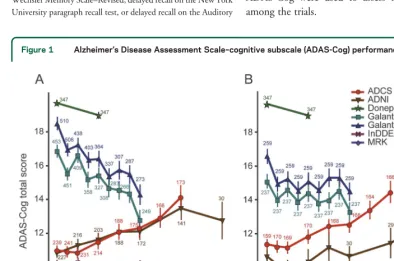
Figure 1 Alzheimer’s Disease Assessment Scale–cognitive subscale (ADAS-Cog) performance
Mean performance with 95% confidence intervals on the ADAS-Cog for the mild cognitive impairment clinical trials for all participants (A) and for participants who completed the trial (B). ADCS5Alzheimer’s Disease Cooperative Study; ADNI5
Demographics. The table demonstrates the demo-graphic and clinical features of participants in all 7 trials at baseline. As is apparent, the general character-istics were reasonably similar, although there were slight differences in the cognitive status of the partic-ipants in the various trials at baseline.
Overall comparisons.Figure 1 shows the performance features of the ADAS-Cog among the 7 clinical trials. Those participants in the ADNI trial who were on cholinesterase inhibitors were removed from the analyses. Panel A demonstrates perfor-mance of all participants, and panel B the com-pleters’ analysis. As is evident, the ADAS-Cog appeared to show cognitive worsening as expected in the ADCS and ADNI trials (NIH trials); how-ever, the participants in the Gal-11 and Gal-18 trials appeared to improve. Similarly, in the In-DDEx, donepezil, and MRK trials, the participants seemed to improve or remain stable. These con-clusions were attenuated in the completers’ analy-sis, but the same trends were seen. When the NIH trials were combined and compared to the 5 combined industry trials, there was strong statis-tical difference in slopes, with the ADAS-Cog performance on the NIH trials worsening with the industry trials remaining stable or improving for all participants (p , 0.01) as well as for the completers (p , 0.01). Similar analyses for the MMSE total participants and completers and CDR-SB total participants and completers (data not shown) corroborate the ADAS-Cog findings.
That is, participants appeared to worsen in a pre-dictable fashion for the ADCS-MCI and ADNI trials but remained stable or improved slightly in the other 5 trials.
Figure 2 Mini-Mental State Examination (MMSE) and Clinical Dementia Rating–sum of boxes (CDR-SB) performance
Mean performance with 95% confidence intervals for 4 trials on the MMSE (A) and on the CDR-SB (B). ADCS5Alzheimer’s Disease Cooperative Study; ADNI5Alzheimer’s Disease Neuroimaging Initiative; InDDEx5Investigation Into Delay to Diagnosis of Alzheimer’s Disease With Exelon; MRK5Merck rofecoxib trial.
Figure 3 Clinical Dementia Rating–sum of boxes (CDR-SB) over 24 months
Mean CDR-SB with 95% confidence intervals for 4 trials truncated at 24 months. InDDEx5Investigation Into Delay to Diagnosis of Alzheimer’s Disease With Exelon; MRK5
Figure 2A demonstrates the MMSE at entry and at point of progression to endpoint in the individual tri-als. Due to attrition over the trials, some data points represent a small number of participants. While the values at entry were similar, it appears that the partic-ipants in the InDDEx trial were a bit less impaired than participants in the ADCS and ADNI trials (p , 0.01). The MRK participants were similar to those in the NIH trials (ADCS and ADNI).
In a similar fashion, figure 2B indicates that, with respect to the CDR-SB, the InDDEx and MRK par-ticipants were less impaired at entry than the partic-ipants in the ADCS and ADNI trials. However, at the time of reaching the endpoint in the respective stud-ies, the InDDEx and MRK participants appeared to be more impaired than the ADCS and ADNI partic-ipants (p,0.01).
In an attempt to compare studies in a more stan-dardized fashion, the 2 NIH studies, ADCS and ADNI, were combined, and the Gal-11 and Gal-18 studies were combined. These data were then plotted relative to the InDDEx and MRK trials with regard to CDR-SB in figure 3. The comparisons were also truncated at 24 months since all studies continued to at least that point. As is apparent from figure 3, the InDDEx and MRK trial participants were slightly less impaired than the NIH participants at entry, but the combined Gal, InDDEx, and MRK participants were more impaired than the NIH participants at 24
months (p,0.001). While the Gal-combined par-ticipants were somewhat less impaired throughout the study until the 24-month point, the InDDEx and MRK studies’ participants were more impaired throughout most of the study, up to 24 months (p,0.01).
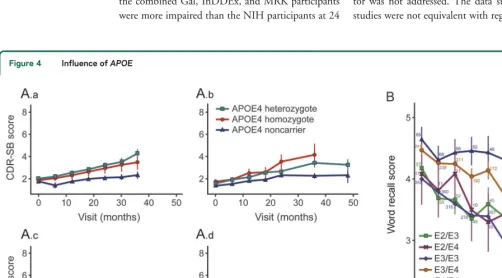
As is shown in figure 4A, theAPOE4 carrier status clearly had an effect on performance, with greater impairment on the CDR-SB amongAPOE4 homo-zygotes across all trials. Similarly, in figure 4B, the delayed recall scores on the ADAS-Cog in the Gal-11 and Gal-18 trials also showed a consistent relation-ship, with poorest performance being observed in the participants who were APOE4 homozygotes, fol-lowed by those who were heterozygotes, and with
APOE3/3 participants performing the best. As is shown in the table, the percentage of participants who wereAPOE4 carriers varied a great deal by trial.
DISCUSSION In spite of the fact that all 7 trials used ostensibly the same MCI criteria for amnestic MCI participants, the performance of the participants in the studies varied considerably. Most of the trials included participants with multidomain aMCI and the degree of impairment in the nonmemory domains varied. In addition, there may have been differences between academic and commercial sites, but this fac-tor was not addressed. The data suggested that the studies were not equivalent with regard to the nature
Figure 4 Influence ofAPOE
of the participants enrolled. In general, it appears that the ADCS and ADNI participants were very similar and were more impaired at entry than participants in Gal-11, Gal-18, InDDEx, or MRK trials. In par-ticular, the InDDEx and MRK participants per-formed better at entry compared to the Gal-11 or Gal-18 participants, and performed more poorly at the time of reaching their endpoints. These con-clusions can be derived from evaluations of the ADAS-Cog, MMSE, and CDR-SB data and suggest that in these trials, the participants may have been less impaired at entry but the exit criteria may have been more strict, resulting in the fact that the participants were categorized as MCI for a longer period of time yielding lower progression rates. There may have been an element of a placebo effect present as well. Therefore, while the studies appeared to be designed in a similar fashion, subtle entry, exit, and procedural differences led to vastly different outcomes for the participants.
In addition, there may have been subtle differences in the conduct of the trials that led to increased variabil-ity in performance. For example, in the InDDEx trial, the investigators made the judgment of progression to the endpoint, clinical dementia, without access to the neuropsychological test data. The clinicians were shown the ADAS-Cog and behavioral measures but not the specific components of the neuropsychology battery. In addition, the site clinicians submitted all of the data to a central review committee that required significant cognitive changes on several metrics prior to declaring that the participant had reached the point of dementia, again without access to neuropsychology test scores. It is possible that the participants in the InDDEx trial, for example, were therefore more impaired at exit than in the other trials, thus having a different threshold for reaching the endpoint of the study. Ultimately, this re-sulted in a lower progression rate and led to the exten-sion of the study to 3 and 4 years in duration.
The role ofAPOE4 carrier status cannot be over-emphasized. As is shown in the table, among the trials, there appeared to be moreAPOE4 carriers in the ADCS and ADNI trials than in the others. Since
APOE4 carrier status is associated with amyloid depo-sition and progression to dementia due to AD, this may have been an important factor in the progression rates observed across the trials.17 The ADCS and
ADNI trials behaved in a more predictable fashion, with participants progressing in a regular fashion through the MCI state with worsening metrics on the ADAS-Cog, MMSE, and CDR-SB, and an approximate annual progression rate of 16% per year was obtained. The progression rates in the other stud-ies were variable and less than what they had antici-pated, and in part, this could be due to fewer participants beingAPOE4 carriers.
A complicating factor may have arisen concerning the state-dependent endpoints. That is, each study required the MCI participants to achieve the diagno-sis of dementia or a surrogate, e.g., CDR 1. If a con-tinuous cognitive measure had been used as the outcome, as suggested by the recent FDA guidelines, more consistent findings may have arisen.18However,
this assertion must be tempered by the variable per-formance on one of the common measures, e.g., ADAS-Cog, as is shown in figure 2.
The non-NIH trials were also conducted in many countries using multiple languages. The MCI con-struct was relatively new, especially during the time that these trials were conducted, and the cultural dif-ferences in characterizing participants with mild im-pairments as well as those reaching the dementia threshold could be variable. It is not clear what effect the translation of the multiple instruments into sev-eral languages would have on the outcome, but that likely added to the variability of the performance of the trials. Several of the trials, e.g., InDDEx trial, commented on the inclusion of participants with multiple comorbidities and exclusions of participants with other relevant conditions like depression. As such, the participant populations at the MCI stage may have been sufficiently variable with regard to co-morbidities and cultural differences to add an element of complexity to interpreting the data.
There are several lessons to be learned from the com-parison of these trials. No single trial was better or worse than any of the others, but there were multiple sources of variability. From the ADCS and ADNI trials, it ap-pears that, if the studies involve a single language and culture, and include multiple academic centers, the im-plementation of the criteria for aMCI may be more stan-dardized. However, given the subtle nature of the clinical abnormalities in some of these participants, there can be differences in performances of the groups. One factor affecting the outcome was the severity of the par-ticipants at the point of entry. Subtle differences in the memory impairment criteria can have a significant effect on the rate of progression of the participants. As such, those trials that had less impaired participants had lower progression rates than those with participants who were more severely impaired at entry. This may have resulted in some participants being further from the endpoint of the study at entry, and the rate of progression in partic-ipants with milder disease is known to be slower.19
trials required the clinical diagnosis of dementia with review by a central committee, and other trials used progression to CDR 1 as the endpoint. It is clear that participants can progress from MCI to dementia while still at the CDR 0.5 stage, and consequently, variability can be introduced by the nature of the endpoint.
Clinical trials designed to involve participants at the MCI due to AD stage can be improved. Clearly, through the use of AD-specific biomarkers, the clini-cal characteristics of the participants can be stratified and a more homogeneous group of participants can be enrolled. If the intervention is targeted at amyloid, amyloid positivity on PET scanning or CSF Ab42
levels can be used to select participants. It is uncertain as to whether these biomarkers will overcome some of the other sources of variability encountered in the trials described, but that is a distinct possibility. The implementation of continuous outcome meas-ures rather than clinical states may improve perfor-mance of trials, but clinical meaningfulness needs to be established. However, attention to other factors such asAPOE4 carrier status, language, culture, and comorbidities still needs to be entertained in design-ing trials in this state of the disease. Finally, these factors are not peculiar to trials of MCI due to AD but have implications for other chronic disorders of a gradually progressive nature. Several important les-sons have been derived from analyzing the previously conducted trials.
AUTHOR CONTRIBUTIONS
Dr. Petersen: drafting/revising the manuscript for content, including medical writing for content, study concept or design, analysis or interpre-tation of data. Dr. Thomas: drafting/revising the manuscript for content, including medical writing for content, study concept or design, analysis or interpretation of data. Dr. Aisen: drafting/revising the manuscript for content, including medical writing for content, study concept or design, analysis or interpretation of data. Dr. Mohs: drafting/revising the manuscript for content, including medical writing for content, study concept or design, analysis or interpretation of data. Dr. Carrillo: draft-ing/revising the manuscript for content, including medical writing for content, study concept or design, analysis or interpretation of data. Dr. Albert: obtaining data, reviewing data, reviewing manuscript.
ACKNOWLEDGMENT
The authors thank the FNIH staff, Judy Siuciak, Steve Hoffmann, Doro-thy Jones-Davis, and Rosa Canet-Aviles for their assistance with this project.
STUDY FUNDING
Supported by NIH and FDA (P50 AG016574, U01 AG006786, U01 AG024904, P50 AG005146, U19 AG033655, T32 AG027668). The data described within this document represent the work of the Bio-markers Consortium Project“Placebo Data Analysis in Alzheimer’s Dis-ease and Mild Cognitive Impairment Clinical Trials.”This project was submitted to the Biomarkers Consortium Neuroscience Steering Com-mittee for execution and was managed by a Biomarkers Consortium Proj-ect Team. In addition to the NIH and FDA, participating and funding organizations include Alzheimer’s Association (HAT-09-136580), Abbott, AstraZeneca, Boehringer-Ingelheim, Bristol-Myers Squibb, Eisai, Inc, Eli Lilly and Company, Merck and Company, Pfizer Inc., and Takeda Global Research and Development Center, Inc.
DISCLOSURE
R. Petersen is a consultant for Roche, Inc., Merck, Inc., Genentech, Inc., Biogen, Inc., and Eli Lilly and Company and receives royalties from Oxford University Press forMild Cognitive Impairment. R. Thomas has nothing to disclose. P. Aisen has served as a consultant to the following companies: NeuroPhage, Elan, Eisai, Bristol- Myers Squibb, Eli Lilly, Merck, Roche, Amgen, Genentech, Abbott, Pfizer, Novartis, AstraZeneca, Janssen, Medivation, Ichor, Toyama, Lundbeck, Biogen Idec, iPerian, Probiodrug, Somaxon, Biotie, Cardeus, Anavex, AbbVie, and Cohbar. R. Mohs was a full-time employee and shareholder of Eli Lilly and Company. M. Carrillo is a full-time employee of the Alzheimer’s Association. M. Albert is a consultant for Biogen Idec, Eli Lilly, and Genentech, Inc. Go to Neurology.org for full disclosures.
Received May 6, 2015. Accepted in final form January 5, 2017.
Comment:
MCI trials—Categorical “square pegs” in dimensional “round
holes”?
Given repeated disappointments from trials of treatments for Alzheimer dis-ease (AD), one hoped for better results from upstream interventions at the mild cognitive impairment (MCI) stage. However, results there have been almost as bleak. A new report1 considers explanations for the latter: varying participant selection, observation methods, and outcomes assessment. Cleverly, the authors avoided differences in efficacy of various treatments by considering only the trials’ placebo-assigned control groups. This design permitted inclusion of the Alz-heimer’s Disease Neuroimaging Initiative (ADNI) MCI cohort, assembled simi-larly to that of the Alzheimer’s Disease Cooperative Study (ADCS).
The findings are sobering. They highlight difficulties in trial design within a clinical diagnosis, MCI, that is increasingly understood as a slice in time, without natural boundaries, in the evolution of AD. The article’s figure 2 shows marked variability in the various trial cohorts’Alzheimer’s Disease Assessment Scale–cognitive subscale (ADAS-Cog) scores at baseline. Importantly also, ADAS scores for all trial cohorts except the ADCS and ADNI trials declined over time, suggesting that familiarity or practice effects may have obscured disease-related cognitive decline. As for outcomes, randomization and masking may protect against bias, but imprecision in diagnosis (owing again to lack of natural boundaries) may still have diluted treatment effects.
Figure 3 suggests a rapid exaggeration in symptoms at the first follow-up examination. Such a phenomenon could reflect selective enrollment of persons with near-normal Mini-Mental State Examination scores who were, in fact, sicker than their entry scores suggested. One might wonder about laxity of some clinics that were reimbursed on a per-person-enrolled basis. After this first follow-up, symptom progress appears haphazard. This suggests there was not much dis-ease-related decline thereafter for the treatments to mitigate.
What to do now? Creation of a category for the slice in time that is MCI, while useful clinically, can be problematic for trial design. Even so, the longitudi-nal performance declines among the ADCS and ADNI cohorts suggest that strict criteria and meticulous methods can offer a target for disease-modifying interven-tions. Addition of more objective endpoints (various biomarkers, perhaps even multiple) may also help.2By contrast, functional difficulty, while of fundamental clinical importance, may be problematic as a trial outcome, since its variable origins may obfuscate real treatment effects. If only we understood better the true nature of AD—not just its features or manifestations or tautological animal models—we might have better luck assessing treatments that modify its progression.
1. Petersen RC, Thomas RG, Aisen PS, et al. Randomized clinical trials in mild
cogni-tive impairment: sources of variability. Neurology 2017;88:1751–1758.
2. Leoutsakos JM, Gross AL, Jones RN, Albert MS, Breitner JCS. Alzheimer progression
score: development of a biomarker summary outcome for AD prevention trials. J Prev
Alz Dis 2016;3:229–235.
John C.S. Breitner, MD, MPH
From the Centre for Studies on Prevention of AD, Douglas Mental Health University Institute Research Centre, and the Department of Psychiatry and Behavioral Sciences, McGill University Faculty of Medicine, Montreal, Canada.
Disclosure: The author reports no disclosures relevant to the manuscript. Go to Neurology.org for full disclosures.
REFERENCES
1. Sperling RA, Jack CR Jr, Aisen PS. Testing the right
target and right drug at the right stage. Sci Transl Med 2011;3:111cm33.
2. Jack CR Jr, Albert MS, Knopman DS, et al. Introduction
to the recommendations from the National Institute on
Aging-Alzheimer’s Association workgroups on diagnostic
guidelines for Alzheimer’s disease. Alzheimers Dement
2011;7:257–262.
3. Petersen RC. Mild cognitive impairment as a diagnostic
entity. J Intern Med 2004;256:183–194.
4. Winblad B, Palmer K, Kivipelto M, et al. Mild cognitive
impairment: beyond controversies, towards a consensus: report of the International Working Group on Mild
Cog-nitive Impairment. J Intern Med 2004;256:240–246.
5. Albert MS, DeKosky ST, Dickson D, et al. The diagnosis of
mild cognitive impairment due to Alzheimer’s disease:
recom-mendations from the National Institute on Aging-Alzheimer’s
Association workgroups on diagnostic guidelines for
Alz-heimer’s disease. Alzheimers Dement 2011;7:270–279.
6. Petersen RC, Thomas RG, Grundman M, et al. Vitamin E
and donepezil for the treatment of mild cognitive
impair-ment. N Engl J Med 2005;352:2379–2388.
7. Winblad B, Gauthier S, Scinto L, et al. Safety and efficacy
of galantamine in subjects with mild cognitive
impair-ment. Neurology 2008;70:2024–2035.
8. Feldman HH, Ferris S, Winblad B, et al. Effect of
riva-stigmine on delay to diagnosis of Alzheimer’s disease from
mild cognitive impairment: the InDDEx study. Lancet
Neurol 2007;6:501–512.
9. Thal LJ, Ferris SH, Kirby L, et al. A randomized,
double-blind, study of rofecoxib in patients with mild
cognitive impairment. Neuropsychopharmacology
2005;30:1204–1215.
10. Doody RS, Ferris SH, Salloway S, et al. Donepezil treatment
of patients with MCI: a 48-week randomized,
placebo-controlled trial. Neurology 2009;72:1555–1561.
11. Grundman M, Petersen RC, Bennett DA, et al.
Alz-heimer’s association Research roundtable meeting on mild
cognitive impairment: what have we learned? Alzheimers
Dement 2006;2:220–233.
12. Rosen WG, Mohs RC, Davis KL. A new rating scale
for Alzheimer’s disease. Am J Psychiatry 1984;141:
1356–1364.
13. Folstein MF, Folstein SE, McHugh PR.“Mini-mental
state”: a practical method for grading the cognitive state
of patients for the clinician. J Psychiatr Res 1975;12:
189–198.
14. Wechsler DA. Wechsler Memory Scale–Revised. San
Antonio: Psychological Corporation; 1982.
15. Mathews M, Abner E, Caban-Holt A, Dennis BC, Kryscio
R, Schmitt F. Quality of education and memory test per-formance in older men: the New York University para-graph recall test normative data. Curr Alzheimer Res 2013;
10:776–783.
16. Rey A. l’Examen Clinique en Psychologie. Paris: Presses
Universitaires de France; 1964.
17. Sanan DA, Weisgraber KH, Russell SJ, et al.
Apolipopro-tein E associates with beta amyloid peptide of Alzheimer’s
disease to form novel monofibrils: isoform apoE4 associ-ates more efficiently than apoE3. J Clin Invest 1994;94:
860–869.
18. Kozauer N, Katz R. Regulation of drugs for early
Alz-heimer’s disease. New Engl J Med 2013;369:288.
19. Farias ST, Mungas D, Reed BR, Harvey D, DeCarli C.
Progression of mild cognitive impairment to dementia in clinic- vs community-based cohorts. Arch Neurol 2009;
66:1151–1157.
Discover Altmetrics
See real-time downloads and online activity for articles!
DOI 10.1212/WNL.0000000000003907
2017;88;1751-1758 Published Online before print April 5, 2017
Neurology
Ronald C. Petersen, Ronald G. Thomas, Paul S. Aisen, et al.
Randomized controlled trials in mild cognitive impairment: Sources of variability
This information is current as of April 5, 2017
ISSN: 0028-3878. Online ISSN: 1526-632X.
Wolters Kluwer Health, Inc. on behalf of the American Academy of Neurology. All rights reserved. Print 1951, it is now a weekly with 48 issues per year. Copyright Copyright © 2017 The Author(s). Published by
® is the official journal of the American Academy of Neurology. Published continuously since
Services
Updated Information &
http://n.neurology.org/content/88/18/1751.full
including high resolution figures, can be found at:
Supplementary Material
907.DC1
http://n.neurology.org/content/suppl/2017/04/05/WNL.0000000000003
Supplementary material can be found at:
References
http://n.neurology.org/content/88/18/1751.full#ref-list-1
This article cites 17 articles, 3 of which you can access for free at:
Citations
http://n.neurology.org/content/88/18/1751.full##otherarticles
This article has been cited by 1 HighWire-hosted articles:
Subspecialty Collections
http://n.neurology.org/cgi/collection/mci_mild_cognitive_impairment
MCI (mild cognitive impairment)
_design_
http://n.neurology.org/cgi/collection/clinical_trials_methodology_study
Clinical trials Methodology/study design
http://n.neurology.org/cgi/collection/alzheimers_disease
Alzheimer's disease
http://n.neurology.org/cgi/collection/all_clinical_trials
All Clinical trials
following collection(s):
This article, along with others on similar topics, appears in the
Permissions & Licensing
http://www.neurology.org/about/about_the_journal#permissions
its entirety can be found online at:
Information about reproducing this article in parts (figures,tables) or in
Reprints
http://n.neurology.org/subscribers/advertise
Information about ordering reprints can be found online:
ISSN: 0028-3878. Online ISSN: 1526-632X.
Wolters Kluwer Health, Inc. on behalf of the American Academy of Neurology. All rights reserved. Print 1951, it is now a weekly with 48 issues per year. Copyright Copyright © 2017 The Author(s). Published by
® is the official journal of the American Academy of Neurology. Published continuously since