c
ERAYS: REVERSE ENGINEERING ETHEREUMS OPAQUE SMART CONTRACTS
BY YI ZHOU
THESIS
Submitted in partial fulfillment of the requirements for the degree of Master of Science in Computer Science
in the Graduate College of the
University of Illinois at Urbana-Champaign, 2019
Urbana, Illinois Adviser:
ABSTRACT
Interacting with Ethereum smart contracts can have potentially devastating financial con-sequences. In light of this, several regulatory bodies have called for a need to audit smart contracts for security and correctness guarantees. Unfortunately, auditing smart contracts that do not have readily available source code can be challenging, and there are currently few tools available that aid in this process. Such contracts remain opaque to auditors. To address this, we present Erays, a reverse engineering tool for smart contracts without the need for source code. Erays takes in smart contract from the Ethereum blockchain and produces high-level pseudocode suitable for manual analysis. We show how Erays can be used to provide insight into several contract properties, such as code complexity and code reuse in the ecosystem. We then leverage Erays to link contracts with no previously avail-able source code to public source code, thus reducing the overall opacity in the ecosystem. Finally, we demonstrate how Erays can be used for reverse-engineering in four case studies: high-value multi-signature wallets, arbitrage bots, exchange accounts, and finally, a popular smart-contract game, Cryptokitties. We conclude with a discussion regarding the value of reverse engineering in the smart contract ecosystem, and how Erays can be leveraged to address the challenges that lie ahead.
ACKNOWLEDGMENTS
This work was a joint effort with my fellow students Deepak Kumar and Surya Bakshi, under the supervision of Joshua Mason, Andrew Miller, and Michael Bailey. I am grateful to all my coauthors who made this possible, especially my advisor Michael Bailey.
This work was supported in part by the National Science Foundation under contract CNS-151874, as well as through gifts from CME Group and Jump Trading. The work was additionally supported by the U.S. Department of Homeland Security contract HSHQDC-17-J-00170. Any opinions, findings, conclusions, or recommendations expressed in this material are those of the authors and do not necessarily reflect the views of their employers or the sponsors.
This work was presented at the 27th USENIX Security Symposium, on August 17th 2018, Baltimore, MD, USA.
TABLE OF CONTENTS
CHAPTER 1 INTRODUCTION . . . 1
CHAPTER 2 BACKGROUND . . . 3
CHAPTER 3 OPACITY IN SMART CONTRACTS . . . 5
3.1 Collecting and Compiling Contracts . . . 5
3.2 Opacity . . . 6
CHAPTER 4 SYSTEM DESIGN . . . 7
4.1 Disassembly and Basic Block Identification . . . 7
4.2 Control Flow Graph Recovery . . . 7
4.3 Lifting . . . 9
4.4 Internal Function Identification . . . 11
4.5 Optimization . . . 13
4.6 Aggregation . . . 13
4.7 Control Flow Structure Recovery . . . 14
4.8 Validation . . . 15
4.9 Limitations . . . 16
CHAPTER 5 MEASURING OPAQUE SMART CONTRACTS . . . 17
5.1 Code Complexity . . . 17
5.2 Code Reuse . . . 19
5.3 Reducing Contract Opacity . . . 21
CHAPTER 6 REVERSE ENGINEERING CASE STUDIES . . . 23
6.1 Access Control Policies of High-Value Wallets . . . 23
6.2 Exchange Accounts. . . 24
6.3 Arbitrage Bots on Etherdelta. . . 25
6.4 De-obfuscating Cryptokitties . . . 26
CHAPTER 7 RELATED WORK . . . 28
CHAPTER 8 DISCUSSION . . . 29
CHAPTER 9 CONCLUSION . . . 30
CHAPTER 1: INTRODUCTION
Ethereum is the second largest cryptocurrency. A prominent feature of Ethereum is smart contract. Smart contracts are programs that automatically execute blockchain transactions as defined by the developer. Due to the nature of verified and irreversible transactions on the blockchain, smart contracts can be used to facilitate a wide range of tasks, including crowdfunding, decentralized exchanges, digital wallet and supply-chain tracking [1].
Ethereum smart contracts are used to manage large balance of cryptocurrency. In 2018, Ethereum smart contracts hold over worth of $10 B USD1. Unfortunately, smart contracts are error-prone [2, 3, 4]. The high financial risk when interacting with faulty smart contracts has drawn the attention of several regulatory bodies, including the FTC [5] and the SEC [6], which intent to audit smart contracts to prevent unexpected financial consequences.
Smart contracts are publicly available in its compiled from on the blockchain. However, the compiled binary is consist of low level Ethereum Virtual Machine (EVM) operations, making it difficult for manual analysis. By default, smart contracts also do not provide the high level source code, making them opaque to auditors.
We start by characterizing the opacity in the Ethereum smart contract ecosystem. We crawl the Ethereum blockchain for all contracts and collect a total of 34 K unique smart contracts up until January 3rd, 2018. Of these, 26 K (77.3%) have no readily available source code. These contracts are involved with 12.7 M (31.6%) transactions, and hold $3 B USD worth of ETH.
To better understand these opaque contracts, we present Erays, a reverse engineering tool for Ethereum smart contracts. Erays takes as input a compiled EVM smart contract from the blockchain and outputs high-level pseudocode suitable for manual analysis. To build Erays, we apply a number of well-known techniques in program analysis and decompilation. Notably, Erays transforms EVM from a stack-based language to a register based machine to ease readability of the output for the end-user.
We leverage Erays to measure the code complexity and code reuse in the ecosystem. We further demonstrate how it can be used to link smart contracts that have no readily available source code to publicly available source code. We build a “fuzzy hash” mechanism that can compare two smart contracts and identify whether a function in one contract has similar syntactic structure to functions in another contract. Using this technique, we are able to map a median 50% of functions and 14.7% of instructions per opaque contract, giving immediate partial insight to opaque contracts in the ecosystem.
1At the time of writing in February 2018 the Ethereum to USD conversion is approximately $1.2 K USD per ETH
Finally, we show how Erays works as a reverse engineering tool applied to four case studies—high-value multi-signature wallets, arbitrage bots, exchange accounts, and finally, a popular smart contract game, Cryptokitties. In investigating high-value wallets, we were able to reverse engineer the access control policies of a large commercial exchange. We find some standard policies, however, also uncover ad-hoc security devices involving timers and deposits. In studying arbitrage contracts, we find examples of new obfuscation techniques. We then successfully reverse engineer the opaque portion of code from the Cryptokitties game, which plays a role in ensuring fair gameplay. In all of these cases, we find that opacity is expected and sometimes important to the correct functionality of these contracts. In light of this, we posit that smart contract developers may be expecting to achieve “security by obscurity” by withholding their high level code.
We conclude with a discussion of the value of audits, reverse engineering, and where Erays can aid in solving the growing needs of the Ethereum community. We hope Erays will prove useful to the security and cryptocurrency communities to address the challenges that lie ahead.
CHAPTER 2: BACKGROUND
Blockchains and Cryptocurrencies. A blockchain is a distributed network that main-tains a globally consistent log of transactions. Public blockchains, such as Bitcoin [7] and Ethereum [8], are typically implemented as open peer-to-peer networks, based on proof-of-work mining. Cryptocurrencies are virtual currencies implemented on a public blockchain, where the transactions are digitally signed messages that transfer balances from one user account (i.e., public key) to another.
Ethereum Smart Contracts. In addition to user accounts, Ethereum also featuressmart contract accounts. A contract account is associated with a fragment of executable code, located at an account address. Smart contracts make up approximately 5% of the total Ethereum accounts, account for 31.2% of the overall transactions, and hold 9.4% of total Ether in their balances.
A smart contract is executed when a user submits a transaction with the contract as the recipient. Users include payload data in the transaction, which in turn is provided as input to the smart contract program. A contract is arranged as a collection of external functions identified by 4-byte signatures, which users can invoke. A contract can also trigger the execution of another smart contract through a CALL instruction that sends a message, similar to a remote procedure call in other programming paradigms.
Smart contract execution must be replicated by validating nodes on the network. To prevent resource exhaustion, users that create transactions must pay an amount of gas for every opcode executed, which translates to certain amount of Ether depending on a market rate.
Contracts are executed in a virtual environment known as the Ethereum Virtual Machine (EVM). EVM defines a machine language called EVM bytecode, which includes approxi-mately 150 opcodes [8]. EVM is a stack-based machine, where opcodes read and write from an operand stack. EVM further provides memory and storage for additional functional-ity. Memory is specified as an array used to store volatile data during contract execution. Storage is a key-value store indexed by 256-bit values (one EVM-word). Unlike memory, storage persists across the execution history of a contract and is stored as a part of the global blockchain state.
Developers typically write smart contract code in high-level languages, which are then com-piled into EVM bytecode. In 2018, the most popular programming language for Ethereum smart contracts is Solidity [9]. Solidity syntax is heavily influenced by Javascript and C++,
and supports a number of complex language features, such as inheritance, libraries, and user-defined types.
Ethereum-based Tokens. In addition to the built-in Ether currency, the Ethereum blockchain is also widely used as a host for “tokens”, which are separate currency-like instruments built on top of a smart contract. There are currently more than 33 K such contracts on the Ethereum network. Tokens can be traded as currencies on a variety of market exchanges. Together, the total market capitalization of tokens exceeds $60 B worth of USD.1 Tokens today are used to support a variety of functions, such as crowd-funding and exchanges.
1At the time of writing in February 2018, the Ethereum to USD conversion is approximately $1.2 K USD per ETH.
CHAPTER 3: OPACITY IN SMART CONTRACTS
The bytecode for every smart contract is readily available on the blockchain. However, bytecode alone is is difficult to read and understand, limiting its use in effectively determining what a smart contract does. We begin our analysis of smart contracts by first investigating how many contracts can not be immediately linked back to source code, and characterizing how important those contracts are in the ecosystem.
3.1. COLLECTING AND COMPILING CONTRACTS
In order to investigate contracts with missing source code, we first collect all Ethereum smart contracts from the beginning of the blockchain through January 3rd, 2018. This resulted in 1,024,886 contract instances. Not all of these contracts have unique bytecode. After removing duplicates, we find only 34,328 unique contracts, which is a 97% reduction in contracts from the original set.
In order to determine how many blockchain contracts have readily accessible source code, we turned to Etherscan [10]. Etherscan has become the de facto source for Ethereum blockchain exploration. Etherscan offers a useful feature called “verified” contracts, where contract writers can publish source code associated with blockchain contracts. Etherscan then independently verifies that the compiled source code produces exactly the bytecode available at a given address. Etherscan then makes the verified source available to the pub-lic. We scraped Etherscan for all verified contracts as of January 3rd, 2018, collecting a total of 10,387 Solidity files.
We then compiled the Etherscan verified contracts to determine exact bytecode matches with blockchain contracts. Etherscan provides the precise compiler version for each verified source file, so to begin, we compiled each source file with its provided compiler version.
Type Contracts Transactions Balance (Ether)
Total 1,024,886 40,380,705 (100%) 9,884,533 (100%)
Unique 34,328 40,380,705 (100%) 9,884,533 (100%)
Opaque 26,594 12,753,734 (31.6%) 2,559,745 (25.9%)
Transparent 7,734 27,626,971 (68.4%) 7,324,788 (74.1%)
Table 3.1: Opacity in Ethereum Blockchain—We show the opacity of contracts in the Ethereum blockchain, as well as the number of transactions and Ether in each category. Although opaque contracts make up 77.3% of unique contracts, they only account for 31.6% of the transactions and 25.9% of the Ether held by contracts.
From these, we collected 7.5 K unique binaries. To identify variants of contracts that were compiled with older versions of the Solidity compiler, we aggregated every major compiler version from v0.1.3 to v0.4.19 and compiled each contract with every version. In total, from the seed set of 10.4 K source files, we collected 88.4 K unique binaries across 35 compiler versions.
3.2. OPACITY
We next investigated contract opacity in the Ethereum ecosystem today. Of the 1 M contract instances, we could not successfully match 965 K, or 96.5% to any compiled source code. We find that of the 34 K unique contracts, we are able to successfully match 7.7 K ( 22.7%) of contracts. Unfortunately, this leaves 77.3% of unique contracts opaque.
We next turn to the question of how important these 77.3% of contracts are to the ecosys-tem. To quantify importance, we use two metrics: the amount of money stored in each contract, and the transaction volume (by number of transactions) with each contract. Ta-ble 3.1 shows a breakdown of the contracts in our dataset by these two metrics. Although opaque contracts make up most of the smart contracts in the ecosystem, we find that they are in the minority by both transaction volume and balance. Opaque contracts are transacted with 12.7 M times, compared with transparent contracts, which are transacted with 27.6 M times. In addition, opaque contracts only hold $3.1 B USD, while transparent contracts hold $7.3 B USD. Although it appears that transparency in the ecosystem prevails, the fact remains that 12.7 M interactions with contracts and a total of $3.1 B USD are held in contracts for which auditors and regulators have no insight into.
CHAPTER 4: SYSTEM DESIGN
In order to investigate opaque contracts in the Ethereum ecosystem, we introduce Erays, an EVM reverse engineering tool. Erays takes a hex encoded contract as input and trans-forms it into human readable expressions. In this chapter, we describe the transformations Erays makes in order to build human-readable representations of smart contracts.
4.1. DISASSEMBLY AND BASIC BLOCK IDENTIFICATION
In the first stage, we disassemble the hex string into EVM instructions, and then partition these instructions into basic blocks. A basic block is a linear code sequence with a single entry point and single exit point [11]. We generate the instructions using a straightforward linear sweep [12]. Starting from the first byte in the hex string, each byte is sequentially decoded into the corresponding instruction.
Next, we aggregate instructions into their resultant basic blocks. These are derived through two simple rules. Instructions that alter the control flow (i.e., exits or branches) mark block exit, while the special instruction JUMPDEST marks block entry. When all block entries and exits are identified, basic block partitioning is complete. Code Block 4.1 shows an example of this transformation.
4.2. CONTROL FLOW GRAPH RECOVERY
In this stage, we recover the control flow graph (CFG) [11] from the basic blocks. A CFG is a directed graph where each node represents a basic block and each edge denotes a branch between two blocks. In a directed edge b0 → b1, we refer to b1 as the successor of b0. At its core, recovering a CFG from basic blocks requires identifying the successor(s) of each basic block.
To determine the successor(s) for a basic blockb, we need to examine the last instruction in the block. There are three cases:
1. An instruction that does not alter control flow
2. An instruction that halts execution (STOP, REVERT, INVALID, RETURN, SELFDESTRUCT) 3. An instruction that branches (JUMP, JUMPI)
In the first case, control simply flows to the next block in the sequence, making that block the successor of b. In the second case, since the execution is terminated, b would have no successor. In the last case, the successor depends on the target address of the branch
hex instruction b0:
6000 PUSH1 0x60
54 SLOAD
600a PUSH1 0xa
6008 PUSH1 0x8 56 JUMP b1: 5b JUMPDEST 56 JUMP ...
Listing 4.1: Assembly Code— We show (part of the) input hex string disassembled and then divided into basic blocks.
instruction, which requires closer scrutiny.
Indirect branches present a challenge when determining the target address [13]. In a direct branch, the destination address is derived within the basic block and thus can be computed easily. In an indirect branch, however, the destination address is placed on the stack before entering a block. Consider block b1 in Code Block 4.1. As mentioned, the destination address is on the top of the stack upon entering the block. We therefore cannot determine the destination address from block b1 alone.
To address this issue with indirect branches, we model the stack state in our CFG recovery algorithm, shown in Code Block 4.2. The algorithm follows a conventional pattern for CFG recovery [13]: we analyze a basic block, identify its successors, add them to the CFG, then recursively analyze the successors.
When analyzing a block, we model the stack effects of instructions. ThePUSHinstructions are modeled with concrete values placed on the stack. All other instructions are modeled only insofar as their effect on stack height. Consider the first two instructions in block b0
in Code Block 4.1. Suppose we start with an empty stack at the block entry. The first instruction PUSH1 0x60 will push the constant 0x60 on the stack. The second instruction
SLOAD will consume the 0x60to load an unknown value from storage.
Using this model, we effectively emulate through the CFG, triggering all reachable code blocks. At each block entrance reached, we compare the current stack image with stack images observed thus far. If a stack image has already been recorded, the block would lead to a path that has already been explored, and so the recovery algorithm backtracks.
explore(block, stack): if stack seen at block:
return
mark stack as seen at block for instruction in block:
update stack with instruction save stack state
if block ends with jump:
successor_block = stack.resolve_jump add successor_block to CFG
explore(successor_block, stack) if block falls to subsequent_block:
revert stack state
add subsequent_block to CFG explore(subsequent_block, stack)
Listing 4.2: CFG Recovery Algorithm— We analyze a basic block, identify its successors, add them to the CFG, then recursively analyze the successors
4.3. LIFTING
In this stage, we lift EVM’s stack-based instructions into a register-based instructions. The register-based instructions preserve most operations defined in the EVM specification. Additionally, a few new operations are introduced to make the representation more concise and understandable:
INTCALL, INTRET: These two instructions call and return from an internal function, re-spectively. Unlike external functions invoked through CALL, internal functions are implicitly triggered through JUMP instructions. We heuristically identify the internal function calls 1, which allows further simplification of the CFG.
ASSERT: As in many high level languages, this instruction asserts a condition. The solid-ity compiler inserts certain safety checks (e.g., array bounds checking) into each produced compiled contract. In order to eliminate redundant basic blocks, we replace these checks with ASSERT.
NEQ, GEQ, LEQ, SL, SR: These instructions correspond to “not equal”, “greater than or equal”, “less than or equal”, "shift left", and “shift right”. While these operations are not part of the original EVM instruction set, the functionalities are frequently needed. These instructions allow us to collapse more verbose EVM instructions equences (e.g., sequence
EQ, ISZERO) into oneNEQ instruction.
MOVE: This instruction copies a register value or a constant value to a register. The instructions SWAP (swap two stack items), DUP (duplicate a stack item) and PUSH (push a stack item) are all translated into MOVE instructions.
To derive the registers on which the instructions operate, we map each stack word to a register, ranging from$s0to$s1023because the EVM stack is specified to have a maximum size of 1,024 words. Additionally, we introduce two other registers in our intermediate representation, namely$m and$t. The Solidity compiler uses memory address0x40to store the free memory pointer. Since that pointer is frequently accessed, we use $m to replace all references to that memory word. The $t register is used as a temporary register for SWAP
instructions.
Each instruction is then assigned appropriate registers to replace its dependency on the stack. Consider the instruction ADD as an example. ADD pops two words off of the stack, adds them together, and pushes the result back onto the stack. In our instruction,ADDreads from two registers, adds the values, and writes back to a register. Figure 4.1 shows both the stack and the registers during an ADDoperation. A key observation is that in order to read and write the correct registers, the stack height must be known [14]. In this example, the initial stack height is three, so the ADD reads from $s1 and $s2, and writes the result back to $s1. Our translation for this instruction would beADD $s1, $s2, $s1, where we place the write_register before read_registers.
$s3 $s2 0x5
$s1 0x3 0x8
$s0 0x4 0x4
Figure 4.1: Lifting an ADD Instruction—We show both the stack image and the registers before and after an ADD is executed. The initial stack height is three, thus, ADD
reads from$s1 and $s2, and writes back the result to $s1.
Knowing the precise stack height is crucial to lifting. As described previously, we collect the stack images for each block during CFG recovery. Given the stack height at the block entrance, all the instructions within the block can be lifted. Code Block 4.3 shows an example of a basic block being lifted given a stack height of three at the block entrance. We note that the stack images recorded at a block might disagree on height. In most cases, the discrepancy arises from internal function, which is resolved by introducing INTCALL. In other cases, we duplicate the reused block for each unique height observed.
PUSH1 0x1 MOVE $s3, 0x1 SLOAD SLOAD $s3, [$s3] DUP2 MOVE $s4, $s2 LT LT $s3, $s4, $s3 ISZERO ISZERO $s3, $s3 PUSH1 0x65 MOVE $s4, 0x65 JUMPI JUMPI $s4, $s3
Listing 4.3: Lifting A Block— We show a block of stack-based instructions lifted to register-based instructions given initial stack height of three.
4.4. INTERNAL FUNCTION IDENTIFICATION
Function identification is an important part of lifting process. As mentioned previously, we introduce INTCALL, INTRET in place of function calls. In our heuristic, an internal function is assumed to have a single entry and a single exit. Consequently, there are four basic blocks involved in an internal call that we namecaller_begin,callee_entry,callee_exit
and caller_end. The caller_begin issues the call by branching to callee_entry, and eventually callee_exitreturns to the caller by branching to caller_end.
We note that callee may have multiple callers. As a result, for an internal function, there is one pair of callee_entry and callee_exit, but there may be multiple pairs of
caller_beginand caller_end. Figure 4.2a illustrates an example callee with two callers. We start by identifyingcallee_exit. We observe that callee_exitwould normally end with an indirect branch, where the branch address is produced bycaller_begin. Moreover,
callee_exitshould have more than one successors (the caller_ends).
We then correlate eachcaller_end with itscaller_begin. As mentioned previously, the branch address produced by caller_begin guides the callee to caller_end. During the CFG recovery, we keep track of where each constant is generated, which enables the corre-lation. As we identify the caller_begins, the callee_entry is their common successor.
We then use INTCALLas an abstraction for the callee. The subgraph for the callee is first extracted using the CFG recovery algorithm. For eachcaller_begin, we insert anINTCALL, and also replace its branch from callee_entry to the corresponding caller_end. The
INTCALL, when “executed”, will transfer the control flow to the callee. For thecallee_exit, we insert an INTRET to replace its indirect branch to caller_ends. The INTRET, when “executed”, will transfer the control flow back to the caller. Figure 4.2b illustrates the transformations.
To make lifting possible, we also need to determine the number of items popped off and pushed onto the stack by INTCALL. In the EVM specification, these are referred to as the
callee subgraph caller_begin_0 callee_entry call caller_begin_1 call callee_exit caller_end_0 return caller_end_1 return
(a) before callee is extracted caller_begin_0 caller_end_0 caller_begin_1 caller_end_1 (b) after callee is extracted Figure 4.2 delta, stack_size = 0, 0 for bytecode in sequence:
stack_size -= bytecode.delta delta = min(delta, stack_size) stack_size += bytecode.alpha delta = -delta
alpha = stack_size + delta
Listing 4.4: Computing the Delta and Alpha of a Sequence
delta (δ) and alpha (α) of an operation. For an INTCALL, they can be interpreted as the number of arguments and return values.
We note that a sequence of bytecode instructions can be viewed as a single operation, thus the delta and alpha value of the sequence computed in the manner shown in 4.4.
The stack size is initialized to be zero upon entering the sequence. When the it becomes negative, the sequence is reading prepositioned values. Delta is therefore set to the negation of the minimal stack size. The end stack size indicates the number of values produced by the sequence, but we also need to account for the values popped off the stack. Therefore alpha is the end stack size plus the delta value.
For an INTCALL, we select a path from callee_entry to callee_exit, and compute its delta and alpha. We note that in most cases, the return address is the first argument (at the bottom of the initial stack) and will be popped off eventually, which allows us to fully exhaust the function arguments.
SLOAD $s3, [0x1] GEQ $s3, $s2, $s3 JUMPI 0x65, $s3
Listing 4.5: Optimizing A Block—We show the optimized version of Code Block 4.3.
4.5. OPTIMIZATION
During the optimization phase, we apply several compiler optimizations to our interme-diate representation. We mainly utilize data flow based optimizations, including constant folding, constant propagation, copy propagation and dead code elimination. The details of these algorithms are outside the scope of this paper, but they are well described in the literature [15, 16, 17].
The optimizations mentioned aim to simplify the code body. A significant number of available EVM instructions are dedicated to moving stack values. As a result, the lifted code contains many MOVE instructions that simply copy data around. These optimizations eliminate such redundancy in the instructions. Code Block 4.5 shows the optimized version of the block from Code Block 4.3. In the example, all theMOVE instructions are eliminated. We also note that the LT, ISZERO sequence is further reduced to GEQ.
4.6. AGGREGATION
Aggregation aims to further simplify the produced intermediate representation by replac-ing many instructions with their analog, compact versions that we term “aggregated expres-sions.” Unlike instructions, expressions can be nested arbitrarily, bearing more resemblance to high level languages.
To begin aggregation, instructions are converted into expressions in three-address form [16]. Each expression is a combination of an assignment and an operator, with thewrite_register
to the left of the assignment and the operator along with the read_registers to the right of the assignment. Code Block 4.6 shows the conversion.
SLOAD $s3, [0x1] $s3 = S[0x1] GEQ $s3, $s2, $s3 $s3 = $s2 ≥ $s3 JUMPI 0x65, $s3 if ($s3) goto 0x65
assert(0x0 == msg.value) $s2 = c[0x4] while (0x1) { if ($s2 >= s[0x0]) break if ($s2 <= 0xa) { $s2 = 0x2 + $s2 } $s2 = 0xc + $s2 } m[$m] = $s2 return($m, (0x20 + $m) - $m)
Listing 4.7: Structural Analysis—A simple example of the final output of Erays, where control flow structures are recovered from blocks of expressions.
Next, we aggregate expressions based on the definitions and usages of registers. A defi-nition is in the form $r = RHS, where $r is a register and RHS is an expression. For each subsequent usage of $r, we replace it with RHS as long as it is valid to do so. We cease propagating a given definition when either $r is redefined or any part of RHSis redefined.
Combined with dead code elimination, the aggregation process pushes the definitions down to their usages, producing a more compact output. Consider the example in Code Block 4.6, by aggregating the first expression into the second one, and then the second into the third, the block can be summarized into a single expression:
if ($s2 ≥ S[0x1]) goto 0x65
4.7. CONTROL FLOW STRUCTURE RECOVERY
We employ structural analysis [18] algorithms to recover high level control constructs (control flow structure recovery). Constructs such as “while” and “if then else” are recovered through pattern matching and collapsing the CFG. If a region is found to be irreducible, we leave the goto expression unchanged. Moreover, each external function is separated by walking through a jump-table like structure at the entrance of the CFG. Code Block 4.7 shows an external function as an example.
4.8. VALIDATION
Erays transforms the contract into more readable expressions. In order to make use of the expressions for further analysis, we must first validate that they arecorrect. The correctness is evaluated through testing. Given specific contract inputs, we “execute” our representation and check if it produces the correct outputs.
We use go-ethereum (Geth) to generate ground truth for the expected behavior. By replaying an execution (transaction), Geth outputs a debug trace, which is a sequence of execution steps. Each step is a snapshot of the EVM machine state, which includes the opcode executed, the program counter, the stack image, the memory image, and the storage image.
We then “execute” our representation and confirm the result is consistent with the debug trace. For that purpose, we implement a virtual machine that runs our representations. During the execution, the arguments of an expression are first evaluated, then the operation itself is executed given the arguments. There are three classes of operations that need to be treated differently.
In the first case, the operations retrieve some inputs for the contract. As an example,
CALLDATALOAD fetches part of the input data (calldata). Operations that are dependent on the blockchain world state also fall into this category. An example would be theBLOCKHASH, which fetches the hash of a recently completed block. For this class of operations, we look up the resultant value from the debug trace. If an operation is missing in the trace (original trace never issued such call), we mark it as a failure.
In the second case, the operations update the blockchain (world) state. Such operations include storage updates, contract creation, log updates and message calls. We also consider
RETURN as a member of this category. These operations define the core semantics of a contract. By making sure that all these operations are executed with the right arguments (memory buffers are checked if applicable), we ensure that our representation is correct. If our execution ends up missing or adding any such operations, we mark it as a failure.
The rest of the operations fall into the third case. These operations include the arithmetic operations, memory operations, as well as all the new operations we introduce in our repre-sentation. The semantics of the operations are implemented in our virtual machine. As an example, when executing $s3 = $s2 + $s3, we would load the values from $s2 and $s3, sum them , modulo by 2256 (word size) and put the result in$s3. If our machine encounters an exception during these operations, we mark it as a failure.
We leverage historical transactions on the blockchain to construct a set of tests. We start with the set of unique contracts (34 K) described in Chapter 3. Then, for each unique
contract, we collect the most recent transaction up to January 3rd, 2018. In total, we gathered ˜15,855 transactions along with the corresponding contracts in our test set. We note this is only 46% of all unique contracts—the remaining were never transacted with.
If Erays fails to generate the representation in the first place, we mark it as a “construction failure”. If our representation behaves incorrectly, we mark it as a “validation failure”. In total we fail 510 (3.22%) of the test set, among which 196 are “construction failures” and 314 are ‘validation failures”.
4.9. LIMITATIONS
Erays is not a full decompiler that produces recompilable Solidity code. The major limi-tation is the readability of the output. While the output is relatively straightforward when only common types are present (uint array, address), Erays cannot succinctly capture operations on complex types such as mapping (uint => string). Erays’s implementation can be improved in a few ways.
Erays does not perform variable recovery and type recovery. Previous work in that area has been focusing on x86 architecture [19, 20]. Though operating with a different instruction set, Erays could draw lessons from the techniques.
Erays uses naive structural analysis for structure recovery. There are several follow-up works on improving the recovery process, including iterative refinement [21] and pattern-independent structuring [22].
CHAPTER 5: MEASURING OPAQUE SMART CONTRACTS
In this chapter, we leverage Erays to provide insight on code complexity and code reuse in the ecosystem. Furthermore, we demonstrate how Erays can be used to reduce contract opacity. We run Erays on the 34 K unique contracts found on the Ethereum blockchain. We fail to create CFGs for 445 (1.3%) unique binaries, which we exclude from our analysis.
5.1. CODE COMPLEXITY 0 0.1 0.2 0.3 0.4 0.5 0.6 0.7 0.8 0.9 1 1 10 100 1000 10000 CDF Blocks
Blocks in Unique Contracts
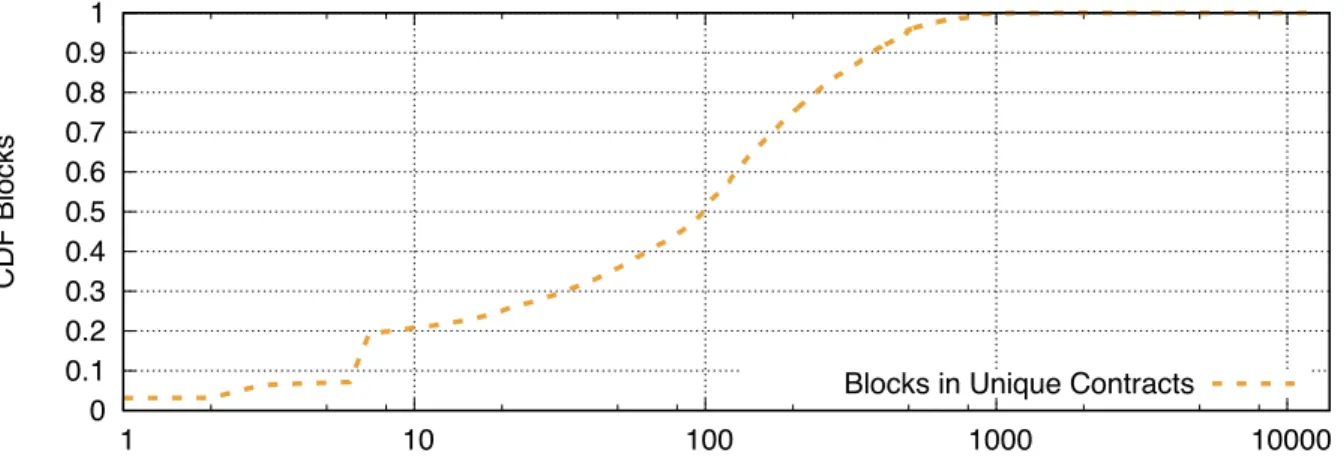
Figure 5.1: CDF Contract Blocks—We show the CDF of the number of basic blocks in unique smart contracts. The median number of basic blocks is 100, which denote
relatively small programs. However, there is a long tail of very large contracts—the largest contract contains a total of 13,045 basic blocks.
Our analysis tools give insight into the complexity of contracts found on the blockchain. We begin by investigating the number of basic blocks in Ethereum contracts (Figure 5.1). Most contracts are fairly small—the median number of blocks found in contracts is 100, and these blocks contain a median 15 instructions. However, there is a long tail of more complicated contracts. In the largest case, one contract contains a total of 13,045 blocks. However, we find that this contract is one entirely filled with STOPinstructions, which each terminate their own basic block.
Basic blocks only give one flavor of contract complexity. Just as important are the edges and the connections between the blocks in the CFG. To quantify this, we measure the cyclomatic complexity of each contract, which is a popular software metric introduced by Thomas McCabe [23]. Cyclomatic complexity measures the number of linearly independent paths in a given control flow graph. McCabe suggested that a given function with cyclomatic
0 0.2 0.4 0.6 0.8 1 0 0.2 0.4 0.6 0.8 1
CDF Cyclomatic Complexity % Functions with Cyclomatic Complexity > 10
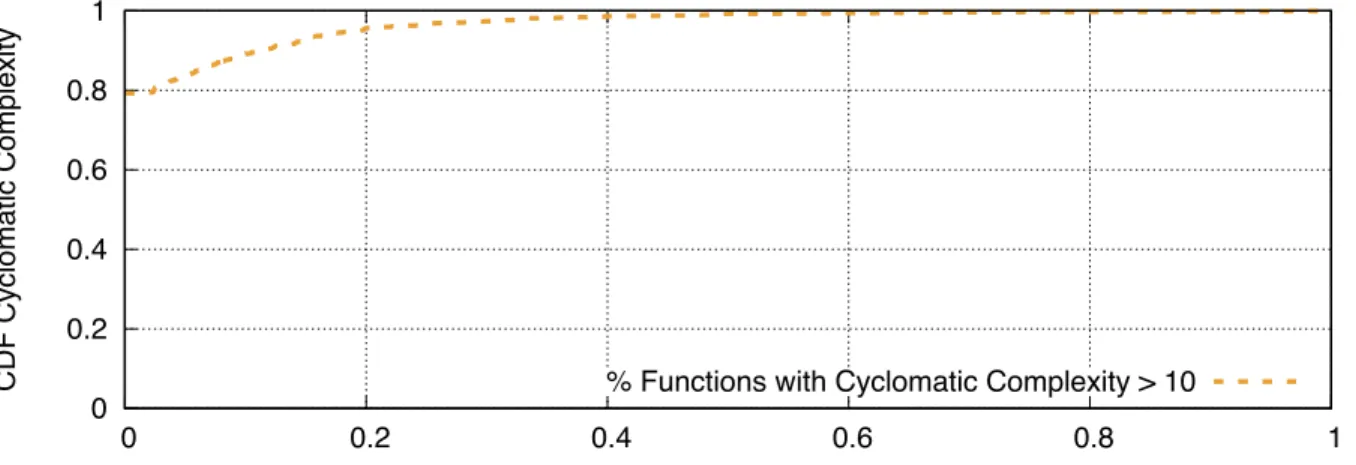
Figure 5.2: Complexity of Contracts—We show the cyclomatic complexity of
contracts on the blockchain, by the fraction of functions in each contract with complexity larger than 10. Only 34% of contracts have no functions in this criteria. The median is 0.3, with a long tail of contracts that have increasingly complex functions.
complexity greater than 10 often needed to be refactored or redone, due to unnecessary complexity and an increased chance of errors in the program. Past work has also noted a weak relationship between increased cyclomatic complexity and software security [24].
Figure 5.2 shows a CDF McCabe complexity by the fraction of functions in contracts with complexity>10. We find that 79% of unique contracts do not contain a single function with complexity greater than 10, which indicates that in addition to being small, many contracts do not contain unnecessarily complex functionality. We additionally observe that there is a long tail of complex contracts, and in the worst case, a handful of contracts are entirely filled with overly complex functions.
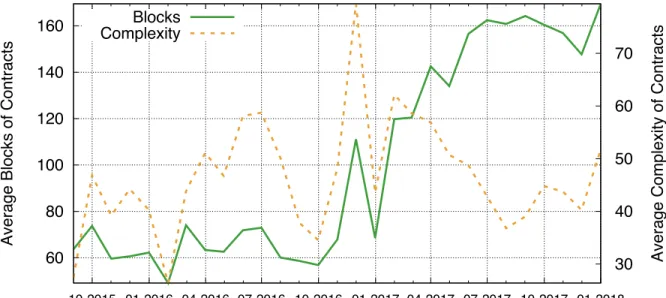
We finally investigate how code complexity has evolved over time. Figure 5.3 shows both the number of blocks and the McCabe complexity of new contracts over time. We find that contracts are growing larger at a steady rate—the average number of blocks in contracts published in January 2018 is 170, which is 350% greater than the first contracts published in late 2015. However, we were surprised to find that McCabe complexity has not followed a similar trend. Around January 2017, contract complexity declined, and has been relatively stable since. This indicates that contract writers are writing code with better hygiene. We note that around this time, there was a sharp rise in ERC20 Tokens on the Ethereum blockchain, which tend to be larger contracts that contain an average of 226 blocks. However, they are not particularly complex, and have an average McCabe complexity of 51.6, which is smaller than many contracts in the ecosystem. ERC20 tokens make up 25% of the unique binaries in our dataset.
60 80 100 120 140 160 10-2015 01-2016 04-2016 07-2016 10-2016 01-2017 04-2017 07-2017 10-2017 01-2018 30 40 50 60 70
Average Blocks of Contracts
Average Complexity of Contracts
Month Blocks
Complexity
Figure 5.3: Longitudinal Complexity—We show the complexity of unique contracts on the blockchain by the number of basic blocks and overall McCabe complexity.
Contracts have steadily increased in the number basic of blocks over time, indicating larger contracts today. Despite this, contracts have not increased in overall McCabe complexity, indicating better code hygiene.
Function Name Contracts Implementations
owner() 11,045 (32.2%) 63 balanceOf(address) 10,070 (29.3%) 240 transfer(address,uint256) 9,424 (27.5%) 1,759 name() 9,154 (26.7%) 109 symbol() 9.087 (26.4%) 120 decimals() 8,916 (26.0%) 96 totalSupply() 8,732 (25.4%) 200 allowance(address,address) 8,102 (23.6%) 152 transferFrom(address,address,uint256) 7,979 (23.2%) 1,441 approve(address,uint256) 7,713 (22.5%) 479
Table 5.1: Function Distribution—We show the distribution of functions in unique smart contracts. All of the top functions are related to ERC20 tokens [25], which are required to implement a specific interface.
5.2. CODE REUSE
Erays groups basic blocks into its higher-level functions. From these groupings, we can further compare the structure and code of functions across contracts, giving us a useful metric for determining function similarity. To enable this measurement, we interpret a function as
a “set of blocks” and compare the sets across functions in different contracts. Each block, however, may contain contract specific data that would render the comparison useless, such as specific return address or other constants compiled into a block. In order to handle these cases, we remove all references to constant data found in EVM opcodes. As an example, consider the following code block:
hex opcode reduced hex
6060 PUSH1 0x60 60 6040 PUSH1 0x40 60 52 MSTORE 52 6004 PUSH1 0x4 60 36 CALLDATASIZE 36 10 LT 10 61006c PUSH2 0x6c 61 57 JUMPI 57
Listing 5.1: Reduced Block— We show how a block of code is reduced by removing the constant values.
The block lists the original hex string, as well as the decoded opcode and the reduced hex after removing constant values. We then take the hashes of the resultant blocks as the “set” of blocks in a function, and compare these sets in further analysis. From here on, we call this resultant hash set a function “implementation”. We find that there are a handful of implementations that are found in many contracts; in the most extreme case, the most popular function appears in 11K contracts. Unfortunately, many of the functions with the same implementation are not particularly interesting—many are simply public “getter” methods for specific data types. For example, the most popular function by implementation is the public getter function for the uint256 data type.
We next turn to investigate popular external functions included in contracts, and the num-ber of implementations of each of those functions. As mentioned previously, each external function is identified via a 4-byte signature in each contract. Table 5.1 shows the top 10 function signatures found in our dataset. We note all of the top functions are related to the ERC20 specification, which ERC20 tokens must conform to [25]. Interestingly, we find that although these functions appear in several contracts, there are far fewer implementations of each function. Some of these can be easily explained, for example, thedecimals() function is simply a ‘getter” method for getting the precision of a token. Other functions, however, are harder to explain. The function transfer(address,uint256) typically contains busi-ness logic for a token that defines how token transfers happen, and are somewhat custom.
20 30 40 50 60 70 80 90 100 0 20 40 60 80 100 CDF Opacity Opacity Reduction
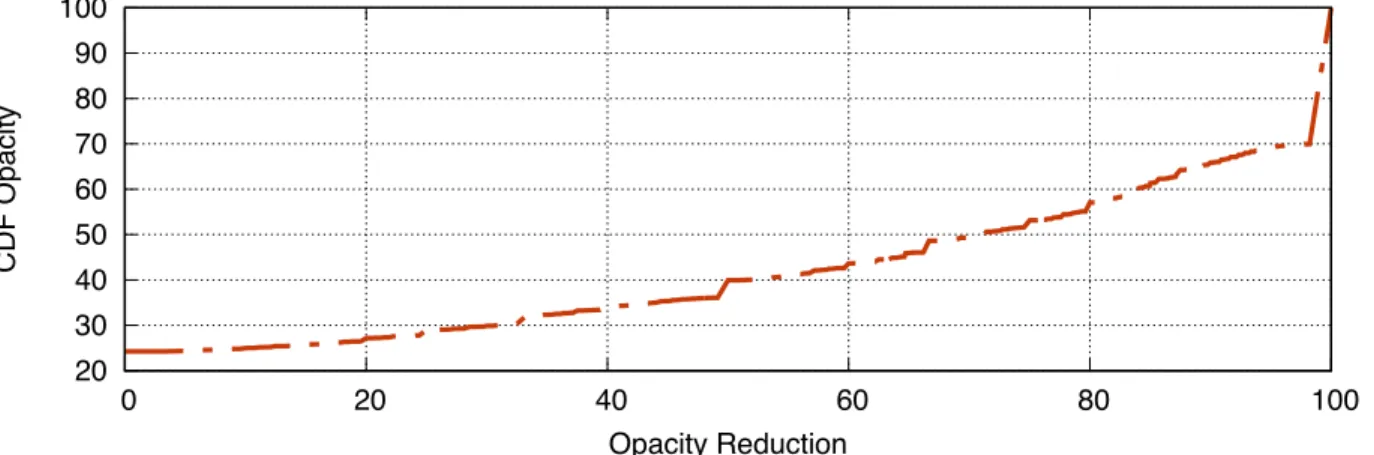
Figure 5.4: Opacity in Blockchain Contracts—We show the opacity in blockchain contracts after applying Erays techniques. Contracts on the blockchain have a median of 70% of their functions readily mapped to a function found in at least one verified source code contract. The spike near the 70% mark is primarily due to the 7.7 K contracts for which we have exact source code matches. There are still 24.2% contracts that remain entirely opaque.
However, despite appearing in 9.4 K contracts, there are only 1.4 K implementations in our dataset. This indicates many contracts sharing the same implementation for such functions.
5.3. REDUCING CONTRACT OPACITY
A useful product of Erays is the ability to identify the functional similarity between two EVM contracts (Section 5.2). We can extend this technique further to not just investigate code reuse, but to reduce opacity in the ecosystem. We do this by leveraging the compiled dataset of 88.4 K binaries generated from verified Etherscan source code as described in Chapter 3. From each of these compiled binaries, we extract its functions, and then compare function implementations pairwise from the compiled binaries to binaries collected from the blockchain. An exact function match to a compiled function thus immediately gives us the source code for that function from its originating source file. We view this as similar to the technique of “binary clone detection” [26, 27], a technique that overlays function symbols onto stripped binaries using a full binary.
We apply this technique to the opaque contracts on the blockchain, i.e the ones that do not have easily linkable source code. Among the 26 K unique opaque contracts, we are able to reduce the opacity of the opaque contracts to varying degrees. We are able to map a median 50% of functions and 14.7% of instructions per opaque contract. Notably, we reveal 2.4 K unique contracts that we now have full source code for. These newly transparent
Code Hash Ether Contracts TXs Verified Opacity Reduction (number of functions) 375196a08a62... 737,021 1 8 5 87.5% 0fb47c13d3b1... 466,648 1 3504 5 100% 69d802105576... 373,023 1 225 3 – a08cfc07745d... 84,920 1 151 5 89.5% 319ee480a443... 76,281 3 7819 3 – a8cc173d9aef... 67,747 3 83 3 – 037ca41c00d8... 67,317 1 20,742 3 – 20f46ba0d13a... 53,961 1 52 5 54.2% 88ec201907d7... 51,879 1 75 3 – c5fbfc4b75ea... 43,418 13 104 5 0%
Table 5.2: Top Contracts by Balance—We show the top 10 contracts by balance, as well as their transaction volume, whether they matched exactly to verified code, and their opacity reduction after applying Erays if they did not match to source code. Of the top contracts without source code, Erays was able to reduce their function opacity by an average of 66%.
contracts are what we call “frankenstein” contracts—contracts for which source code comes from multiple different contracts.
These techniques additionally improve the opacity in the ecosystem for top contracts. Table 5.2 shows the top 10 contracts by balance held—the largest of which holds a total of 737 K Ether. Of these contracts, five could not be directly mapped to a verified source contract. After applying Erays, we are able to successfully uncover an average of 66% of the functions in each contract, and in one case, match 100% of the functions in the contract exactly. This contract holds a total of 488 K Ether, which in 2018, is valued at 500 M USD.
CHAPTER 6: REVERSE ENGINEERING CASE STUDIES
In this chapter, we show how Erays can be used as a reverse engineering tool in analyzing opaque Ethereum smart contracts.
6.1. ACCESS CONTROL POLICIES OF HIGH-VALUE WALLETS
To begin our analysis, we investigate the opaque smart contracts with the highest Ether balance. Using Erays, we find that many of these are multisignature wallets that require multiple individuals to approve any transaction—a standard cryptocurrency security mea-sure.
The opaque wallet with the largest balance contains $597 M USD as of February 2018. Through blockchain analysis using Etherscan, we observed that this contract was accessed every week from the same account, 0xd244..., which belongs to Gemini, a large cryptocur-rency exchange.1 This address also accesses two other high value, opaque wallets in our dataset, with $381 M and $164 M USD in balance, respectively.
We use Erays to reverse engineer these contracts, and uncover their access control policies. We find that the first two contracts are nearly identical. In order to withdraw money from the wallet, they require two out of three administrator signatures. Any party can call the requestWithdrawal method, however, the contract will not release the funds until the
approveWithdrawal function is invoked twice, with at least one invocation message signed by an additional administrator. Thus far, theapproveWithdrawaltransactions are initiated from a different address than the administrators. One administrator address has never been used, indicating that runtime analysis would not adequately capture all of the aspects of this contract.
The third Gemini contract contains a more complicated, time-based access control policy. Withdrawals cannot be approved immediately, but instead must remain pending for a short period of time. Through Erays, we find that therequestWithdrawalmethod in this contract features a time dependency hazard, which is a known class of Solidity hazards. When generating a unique identifier for a new withdrawal, the contract uses the hash of both a global counter as well as the hash of the previously mined block. The dependence on the previous block hash means that if a short “fork” happens in the blockchain, two different log events for the same withdrawal may be received by the exchange. The exchange must,
1Gemini used this address to vote in a public referendum on Ethereum governance, see https://web.archive.org/web/20180130153248/http://v1.carbonvote.com/
as a result, take special care in responding to such log messages on the blockchain. We note that in the past, cryptocurrency exchanges have failed to handle related hazards, resulting in significant losses [28].
Access control policies used internally by financial services would typically be private, not exposed to users or the public. However, due to the public nature of Ethereum bytecode, we have demonstrated the potential to audit such policies when they are implemented as smart contracts.
6.2. EXCHANGE ACCOUNTS.
We next investigate the contracts that appear most frequently on the blockchain. We anticipated many of these contracts would simply be copy-paste contracts based on publicly accessible code—however, we were surprised to find hundreds of thousands of identical con-tracts, all opaque. We find that many of these contracts are associated with large exchanges that create one contract instance for each user account.
Poloniex Exchange Wallets. The largest cluster of identical opaque contracts appears a total of 349,612 times on the Ethereum blockchain. All of these contracts were created by one address, 0xb42b...579, which is thought to be associated with the Poloniex exchange.2 We reverse engineer these contracts and uncover their underlying structure. We find that Poloniex wallets define a customer to whom all wallet deposits are ultimately paid. They directly transfer Ether to the customer whenever Ether is deposited into them, acting as an intermediary between the Poloniex exchange and the customer.
Yunbi Token Wallets. We found another cluster of contracts that appeared 89,133 times on the blockchain, that belongs to the Yunbi exchange. Through reverse engineering, we find that the wallets allow any address to deposit Ether, but restrict withdrawal transactions to a whitelisted administrator (Yunbi 0x42da...63dc). The administrator can trigger Ether and token transfers from the wallet, however, the tokens are transferred out of the balance of the Yunbi exchange—the address of the depositor does not ever own any tokens.
Exchange Splitting Contract. We found several opaque contracts thought to be gad-gets used by the Geminicarbonvote and ShapeShift exchanges [29] to defend against replay attacks following the hard fork between Ethereum and Ethereum Classic. The contracts serve
2An Ethereum Developer on Reddit communicated with Poloniex regarding this address and confirmed it belongs to them.
as a splitter that sits between the exchange and users depositing to it, checking whether a user is depositing coins to the Ethereum Classic chain or the Ethereum chain. Depending on which chain the transaction appears on, the Ether value of the message is sent to a different address.
Opacity in communications with financial institutions over the Internet is expected practice— we do not see the code that runs the online banking services we use. This expectation has seemingly carried over to Ethereum exchanges, but with unforeseen consequences: publicly available bytecode for a particular program can be reverse engineered, and made simpler with tools like Erays. An expectation for opacity is dangerous, as it may lead to lax attention to security details.
6.3. ARBITRAGE BOTS ON ETHERDELTA.
We next leverage Erays to investigate the role of arbitrage bots on EtherDelta [30], a pop-ular decentralized exchange. EtherDelta enables traders to deposit Ether or ERC20 tokens, and then create open offers to exchange their currency for other currencies. EtherDelta is the largest smart contract-based exchange by trade volume, with over $7 million USD daily volume at the time of writing.
On occasion, arbitrage opportunities will appear on EtherDelta, where simultaneously buying and selling a token across two currencies can yield an immediate profit. Such oppor-tunities are short lived, since arbitrageurs compete to take advantage of favorable trades as rapidly as possible. A successful arbitrage requires making a pair (or more) of simultaneous trades. In order to reduce risk, many arbitrageurs have built Ethereum smart contracts that send batch trades through EtherDelta. We use Erays to reverse engineer these contracts and investigate their inner-workings.
To begin, we built a list of 30 suspected arbitrage contracts by scanning transactions within blocks 3,900,000 to block 4,416,600, and selected contracts that both make internal calls to EtherDelta and generate two trade events in a single transaction. To prune our list, we ran our similarity metric (described in Section 5) over every pair of the 30 contracts and found three clusters of highly similar (> 50% similarity) contracts. We then reverse engineered one representative contract from each group.
All three clusters of contracts share the same high-level behavior. The arbitrageur initiates a trade by sending a message to the contract, which first performs an access control check to ensure that it is only invoked by the contract’s original creator. Next, the contract queries the availableVolume method in EtherDelta, to identify how much of their open offer remains for a given trade. For example, consider a trader who makes an offer of 10
Ether at a price of $1,000 USD. If 8 Ether were purchased, availableVolume would return a value of 2. If the contract finds there is sufficient balance on its open offer, it then calls the trade function in EtherDelta twice, thus executing the arbitrage trade. If either trade fails, the entire transaction is aborted using the REVERT opcode.
Several arbitrage contracts we investigated exhibited different variations of this behav-ior. Immediately before calling the trade function, one group of contracts executes the
testTrade function, presumably in an attempt to reduce risk. However, since testTrade
calls theavailableVolumefunctionagain, this is redundant and wastes gas.3 Another group of contracts appears to obscure the values of their method arguments by performing anXOR
with a hardcoded mask. Such obfuscation is presumably intended to prevent network nodes and other arbitrageurs from front-running or interfering with their transaction. However, this thin veneer becomes transparent through reverse engineering with Erays.
6.4. DE-OBFUSCATING CRYPTOKITTIES
Cryptokitties is a popular smart contract based trading game on Ethereum. The game involves buying, breeding, and selling virtual pets. As of January 29, 2018, the top 10 “kitties” are worth more than $2.5 M combined. During their peak, they were so popular that gas prices and transaction confirmation times slowed heavily due to Cryptokitties traffic [32, 33].
Although most of the Cryptokitties source code is published, a central component of the game code is deliberately kept opaque in order to alter the gameplay. Cryptokitties contain an opaque function, mixGenes(uint32, uint32):uint32, which creates a new kitty by splicing together 32-byte genomes from each of two “parents”. Kitties are assigned certain visual characteristics based on their genome, and rare attributes can yield very profitable kitties. The gameplay effect of opacity is to make it challenging for users to “game” the gene splicing contract in order to increase the chances of breeding a rare cat. Although the high-level code is known to the developers, the developers have committed to a policy of not playing the game or utilizing this information. As a final case study, we apply Erays to the Cryptokitties contract.
With 3 hours of reverse engineering work using Erays, we were able to create a Solidity con-tract whose output exactly matches the output of themixGenes function on the blockchain. We find that the mixGenes function is comprised of three main parts. The first selects the randomness that will be used: if the hash of the input block number is 0, it is masked with
the current block number. The new block number and its hash are concatenated with the parent’s genes as input to the keccak256hash function, whose output is used as the source of randomness for the rest of the execution. Second, the genes of each parent are split into 5 bit segments and mixed. For each 5-bit gene, one of the parents’ genes is chosen as the out-put gene with 50% probability. Finally, a particular gene is mutated with 25% probability if the larger of the two parents’ corresponding gene is less than 23 and with 12.5% probability otherwise.
Concurrent to our work in reverse engineering, at least three other teams also attempted to reverse engineer the mixGenes function [34, 35, 36]. Their analysis largely leverages transaction tracing and blockchain analysis to reverse engineer the “protocol” of the con-tract. Erays does not rely on transaction data—it directly translates the bytecode to high level pseudocode. As a result, uncommon or unused control paths that do not appear in transaction traces, such as Cryptokitties mutations, can be replicated faithfully.
Deliberate opacity does not serve the intended purpose of black-boxing the gene mixing functionality. Reconstructing the logic and control flow of the contract using Erays, we identify two opportunities to exploit the game with more effective husbandry. First, we can identify kitties with genes valued 23 or greater which are less likely to encounter random mutation when breeding. Second, since randomness is chosen based on block hashes at the time giveBirth is called, we can wait to submit the giveBirth transaction until after a block hash that results in favorable breeding.
CHAPTER 7: RELATED WORK
Program analysis. Our work is guided by existing works in program analysis [11, 37, 17], as well as studies in decompilation [38, 21, 39]. We draw valuable experience from existing optimization frameworks on JVM. In particular, our system design is largely influenced by Soot [14] and Marmot [40].
Blockchain measurement. Our work is closely related to prior efforts in measurement and analysis of Ethereum and other public blockchains. Much of the analysis on the Bitcoin blockchain has focused on clustering transactions by usage patterns (e.g., gam-bling or trading) [41] and measuring the performance of the underlying peer-to-peer net-work [42, 43, 44, 45].
Bartoletti and Pompianu provide a taxonomy of thetransparent Ethereum contracts avail-able from the Etherscan “verified source” dataset [46], whereas our work is the first to analyze opaque contracts. Bartoletti et al. provide a survey of known smart contract vulnerabili-ties [47].
Comparison with existing Ethereum smart contract analysis tools. Our reverse engineering tool is complementary to a wide range of existing tools in the Ethereum ecosys-tem:
Symbolic Execution Engines. There are several symbolic execution engines for Ethereum smart contracts, including Oyente [48], Manticore [49], and Mythril [50]. These tools also operate on EVM bytecode, they focus primarily on detecting known classes of vulnerabilities, rather than assisting reverse engineering.
Debuggers. Several tools provide debugging utilities, including Remix [51] and Geth. De-buggers enable an analyst to step through a trace of contract execution, which is helpful in understanding the contract. Although debugging at the EVM opcode level is feasible, debugging with the aid of higher level representations is preferable if available.
Decompilers. Porosity is the only other decompiler we know of that produces Solidity from EVM bytecode. We ran Porosity over the 34 K unique contracts in our dataset to evaluate how well it performs in comparison to Erays. Porosity produces high-level source code without error for only 1,818 (5.3%) unique contracts. In contrast, Erays produces aggregated expression for 33,542 (97.7%).
Exploit Generator. TEETHER [52] is a tool that automatically creates exploits on smart contracts. TEETHER is a concurrent work with Erays.
CHAPTER 8: DISCUSSION
We have shown the feasibility of reverse engineering opaque contracts on Ethereum blockchain. Reverse engineering tools like Erays make it easier to reconstruct high level source code even when none is available. We envision that reverse engineering may be used by “white hate” security teams or regulatory bodies in order to carry out public audits of the Ethereum blockchain. Regardless, reverse engineering remains expensive, and such audits would be simplified if the high-level source were available in the first place. We suggest that the Ethereum community should adopt technical mechanisms and conventions that increase the transparency of smart contract programs. Etherscan’s verified source code is a step in the right direction, but more work must be done in order to improve transparency in the ecosys-tem.
Why are so many contracts opaque, given the ease of publishing source code to Ether-scan? In some cases, opacity may be a deliberate decision in order to achieve security through obscurity. Another explanation is that publishing Solidity source code is not yet a strong default, and infrastructure support is only partial. For example, we are not aware of any other block explorer services besides Etherscan that provides a Verified Source code repository. Although Ethereum features a decentralized standard called “Swarm” that sup-ports publishing a contract’s Application Bytecode Interface (ABI), including the method signatures and argument types, this standard does not include the full source code. This standard should be extended to support high-level source code as well.
CHAPTER 9: CONCLUSION
Many Ethereum smart contracts on the blockchain are opaque, where source code is not easily linkable. These contracts accounts for a significant part of the Ethereum ecosystem: there are 26 K (77.3%) unique contracts that are opaque, which control $3.1 B USD in balance, and are transacted with a total of 12.7 M (31.6%) times. Opaque contracts are hard to understand and audit, since they are composed of low level machine language (EVM bytecode). To gain insight into these contracts, we introduced Erays, a reverse engineering tool for EVM. Erays lifts EVM bytecode into higher level representations suitable for manual analysis. We first showed how Erays can be used to quantify code complexity, identify code reuse, and reduce opacity in the smart contract ecosystem. We then applied Erays to four reverse-engineering case studies: high-value multi-signature wallets, arbitrage bots, exchange accounts, and finally, a popular smart contract game. We identified that smart contract developers may be expecting obscurity for the correct functionality of their contracts, and may be expecting to achieve “security by obscurity” in withholding their high level code. We hope Erays will prove useful for both the security and Ethereum communities in improving the transparency in Ethereum.
REFERENCES
[1] R. Marvin, “Blockchain in 2017: The year of smart contracts,” https://www.pcmag. com/article/350088/blockchain-in-2017-the-year-of-smart-contracts.
[2] K. Finley, “A 50 million dollar hack just showed that the dao was all too human,” https://www.wired.com/2016/06/50-million-hack-just-showed-dao-human/, 2016. [3] W. Zhao, “30 million: Ether reported stolen due to parity wallet breach,” https://www.
coindesk.com/30-million-ether-reported-stolen-parity-wallet-breach/.
[4] R. Browne, “Accidental bug may have frozen 280 million worth of digi-tal coin ether in a cryptocurrency wallet,” https://www.cnbc.com/2017/11/08/ accidental-bug-may-have-frozen-280-worth-of-ether-on-parity-wallet.html.
[5] U. F. T. Commission, “Know the risks before investing in cryptocur-rencies,” https://www.ftc.gov/news-events/blogs/business-blog/2018/02/ know-risks-investing-cryptocurrencies.
[6] U. Securities and E. Commission, “Investor bulletin: Initial coin offerings,” https:// www.sec.gov/oiea/investor-alerts-and-bulletins/ib_coinofferings.
[7] s. Satoshi Nakamoto, “Bitcoin: A peer-to-peer electronic cash system,” https://bitcoin. org/bitcoin.pdf.
[8] G. Wood, “Ethereum: A secure decentralised generalised transaction ledger.” [9] “Soldity documentation,” https://solidity.readthedocs.io/en/develop/.
[10] “Etherscan,” https://etherscan.io.
[11] F. E. Allen, “Control flow analysis,” in ACM Sigplan Notices, 1970.
[12] B. Schwarz and G. A. Saumya Debray, “Disassembly of executable code revisited,” in 9th IEEE Working Conference on Reverse Engineering.
[13] Y. Shoshitaishvili, R. Wang, C. Salls, N. Stephens, M. Polino, A. Dutcher, J. Grosen, S. Feng, C. Hauser, C. Kruegel et al., “(state of) the art of war: Offensive techniques in binary analysis,” in Security and Privacy (SP), 2016 IEEE Symposium on. IEEE, 2016, pp. 138–157.
[14] R. Vallée-Rai, P. Co, E. Gagnon, L. Hendren, P. Lam, and V. Sundaresan, “Soot - a java bytecode optimization framework,” in 1999 conference of the Centre for Advanced Studies on Collaborative research.
[15] A. V. Aho, M. S. Lam, R. Sethi, and J. D. Ullman,Compilers: Principles, Techniques, and Tools (2Nd Edition). Boston, MA, USA: Addison-Wesley Longman Publishing Co., Inc., 2006.
[16] L. Torczon and K. Cooper,Engineering A Compiler, 2007.
[17] F. Nielson, H. R. Nielson, and C. Hankin, Principles of Program Analysis. Berlin, Heidelberg: Springer-Verlag, 1999.
[18] M. Sharir, “Structural analysis: A new approach to flow analysis in optimizing compil-ers,” Computer Languages, vol. 5, no. 3-4, pp. 141–153, 1980.
[19] G. Balakrishnan and T. Reps, “Divine: Discovering variables in executables,” in Proceedings of the 8th International Conference on Verification, Model Checking, and Abstract Interpretation, ser. VMCAI’07. Berlin, Heidelberg: Springer-Verlag, 2007. [Online]. Available: http://dl.acm.org/citation.cfm?id=1763048.1763050 pp. 1–28. [20] J. Lee, T. Avgerinos, and D. Brumley, “Tie: Principled reverse engineering of types
in binary programs,” in Proceedings of the Network and Distributed System Security Symposium, NDSS 2011, San Diego, California, USA, 6th February - 9th February 2011, 2011. [Online]. Available: http://www.isoc.org/isoc/conferences/ndss/11/pdf/5_3.pdf [21] E. J. Schwartz, J. Lee, M. Woo, and D. Brumley, “Native x86 decompilation
using semantics-preserving structural analysis and iterative control-flow structuring,” in Proceedings of the 22Nd USENIX Conference on Security, ser. SEC’13. Berkeley, CA, USA: USENIX Association, 2013. [Online]. Available: http: //dl.acm.org/citation.cfm?id=2534766.2534797 pp. 353–368.
[22] K. Yakdan, S. Eschweiler, E. Gerhards-Padilla, and M. Smith, “No more gotos: Decompilation using pattern-independent control-flow structuring and semantic-preserving transformations,” in 22nd Annual Network and Distributed System Security Symposium, NDSS 2015, San Diego, California, USA, February 8-11, 2015, 2015. [Online]. Available: https://www.ndss-symposium.org/ndss2015/
no-more-gotos-decompilation-using-pattern-independent-control-flow-structuring-and-semantics [23] T. J. McCabe, “A complexity measure,”IEEE Transactions on software Engineering.
[24] Y. Shin and L. Williams, “Is complexity really the enemy of software security?” in 4th ACM workshop on Quality of protection.
[25] E. Foundation, “Erc20 token standard,” https://theethereum.wiki/w/index.php/ ERC20_Token_Standard.
[26] A. Sæbjørnsen, J. Willcock, T. Panas, D. Quinlan, and Z. Su, “Detecting code clones in binary executables,” in Proceedings of the Eighteenth International Symposium on Software Testing and Analysis, ser. ISSTA ’09. New York, NY, USA: ACM, 2009. [Online]. Available: http://doi.acm.org/10.1145/1572272.1572287 pp. 117–128.
[27] M. Chandramohan, Y. Xue, Z. Xu, Y. Liu, C. Y. Cho, and H. B. K. Tan, “Bingo: Cross-architecture cross-os binary search,” in Proceedings of the 2016 24th ACM SIGSOFT International Symposium on Foundations of Software Engineering, ser. FSE 2016. New York, NY, USA: ACM, 2016. [Online]. Available: http://doi.acm.org/10.1145/2950290.2950350 pp. 678–689.
[28] C. Decker and R. Wattenhofer, “Bitcoin transaction malleability and mtgox,” in Euro-pean Symposium on Research in Computer Security. Springer, 2014, pp. 313–326. [29] Etherscan, “Shapeshift exchange account,” https://etherscan.io/address/
0x70faa28a6b8d6829a4b1e649d26ec9a2a39ba413. [30] “Etherdelta,” https://etherdelta.com/.
[31] T. Chen, X. Li, X. Luo, and X. Zhang, “Under-optimized smart contracts devour your money,” inSoftware Analysis, Evolution and Reengineering (SANER), 2017 IEEE 24th International Conference on. IEEE, 2017, pp. 442–446.
[32] O. Kharif, “Cryptokitties mania overwhelms ethereum network’s processing,” https://www.bloomberg.com/news/articles/2017-12-04/ cryptokitties-quickly-becomes-most-widely-used-ethereum-app.
[33] “Cryptokitties craze slows down transactions on ethereum,” http://www.bbc.com/ news/technology-42237162.
[34] M. Dong, “Towards cracking crypto kittiesâĂŹ genetic code,” https://medium.com/ @montedong/towards-cracking-crypto-kitties-genetic-code-629fcd37b09b.
[35] A. Hegyi, “Cryptokitties genescience algorithm,” https://medium.com/@alexhegyi/ cryptokitties-genescience-1f5b41963b0d.
[36] K. Turner, “The cryptokitties genome project,” https://medium.com/@kaigani.
[37] F. E. Allen and J. Cocke, “A program data flow analysis procedure,” Commun. ACM, vol. 19, no. 3, pp. 137–, Mar. 1976. [Online]. Available: http: //doi.acm.org/10.1145/360018.360025
[38] C. Cifuentes and K. J. Gough, “Decompilation of binary programs,” Softw. Pract. Exper., vol. 25, no. 7, pp. 811–829, July 1995. [Online]. Available: http://dx.doi.org/10.1002/spe.4380250706
[39] J. Miecznikowski and L. Hendren, “Decompiling java using staged encapsulation,” in Proceedings of the Eighth Working Conference on Reverse Engineering (WCRE’01), ser. WCRE ’01. Washington, DC, USA: IEEE Computer Society, 2001. [Online]. Available: http://dl.acm.org/citation.cfm?id=832308.837159 pp. 368–.
[40] R. Fitzgerald, T. B. Knoblock, E. Ruf, B. Steensgaard, and D. Tarditi, “Marmot: An optimizing compiler for java,” Softw. Pract. Exper., vol. 30, no. 3, pp. 199–232, Mar. 2000. [Online]. Available: http://dx.doi.org/10.1002/(SICI)1097-024X(200003)30: 3<199::AID-SPE296>3.0.CO;2-2
[41] S. Meiklejohn, M. Pomarole, G. Jordan, K. Levchenko, D. McCoy, G. M. Voelker, and S. Savage, “A fistful of bitcoins: characterizing payments among men with no names,” inProceedings of the 2013 conference on Internet measurement conference. ACM, 2013, pp. 127–140.