R E S E A R C H A R T I C L E
Open Access
Perceptions of quality across the maternal
care continuum in the context of a health
financing intervention: Evidence from a
mixed methods study in rural Malawi
Christabel Kambala
1,2,3*, Julia Lohmann
1, Jacob Mazalale
1,2, Stephan Brenner
1, Malabika Sarker
1,4,
Adamson S. Muula
2and Manuela De Allegri
1Abstract
Background:In 2013, Malawi with its development partners introduced a Results-Based Financing for Maternal and Newborn Health (RBF4MNH) intervention to improve the quality of maternal and newborn health-care services. Financial incentives are awarded to health facilities conditional on their performance and to women for delivering in the health facility. We assessed the effect of the RBF4MNH on quality of care from women’s perspectives. Methods:We used a mixed-method prospective sequential controlled pre- and post-test design. We conducted 3060 structured client exit interviews, 36 in-depth interviews and 29 focus group discussions (FGDs) with women and 24 in-depth interviews with health service providers between 2013 and 2015. We used difference-in-differences regression models to measure the effect of the RBF4MNH on experiences and perceived quality of care. We used qualitative data to explore the matter more in depth.
Results:We did not observe a statistically significant effect of the intervention on women’s perceptions of technical care, quality of amenities and interpersonal relations. However, in the qualitative interviews, most women reported improved health service provision as a result of the intervention. RBF4MNH increased the proportion of women reporting to have received medications/treatment during childbirth. Participants in interviews expressed that drugs, equipment and supplies were readily available due to the RBF4MNH. However, women also reported instances of neglect, disrespect and verbal abuse during the process of care. Providers attributed these negative instances to an increased workload resulting from an increased number of women seeking services at RBF4MNH facilities.
Conclusion:Our qualitative findings suggest improvements in the availability of drugs and supplies due to RBF4MNH. Despite the intervention, challenges in the provision of quality care persisted, especially with regard to interpersonal relations. RBF interventions may need to consider including indicators that specifically target the provision of respectful maternity care as a means to foster providers’positive attitudes towards women in labour. In parallel, governments should consider enhancing staff and infrastructural capacity before implementing RBF.
Keywords:Results-Based Financing, Malawi, Quality of care, Demand-side financing, Performance-based financing, Maternal care, Conditional Cash Transfers
* Correspondence:[email protected];[email protected] 1
Institute of Public Health, Faculty of Medicine, Heidelberg University, Im Neuenheimer Feld 324, D-69120 Heidelberg, Germany
2School of Public Health and Family Medicine, College of Medicine, University of Malawi, Private Bag 360, Chichiri, Blantyre 3, Malawi Full list of author information is available at the end of the article
Background
Poor quality of maternal healthcare services has been recognised as the major factor contributing to mater-nal and newborn deaths in most low and middle income countries (LMICs) [1]. Insufficient human resources [2, 3], poor training of health staff [2], inad-equate infrastructures, and shortages in equipment and medications have been identified as the main causes of structural inadequacies contributing to poor health service delivery [3, 4]. In turn, it has been ar-gued that these inadequacies are largely the product of both insufficient and inefficient health financing structures [5]. Specifically, it has been postulated that input-based financing coupled with excessive centralization exacer-bates the constraints already imposed by scarcity of re-sources and ends up depriving healthcare workers of the autonomy needed to make decisions that are conducive to the delivery of quality health services in these settings [6].
Performance Based Financing (PBF) has been ad-vanced as a health system intervention able to improve healthcare service delivery in LMICs [7]. Specifically, PBF is expected to produce changes in quantity and quality of service delivery by promoting a shift from input-based to output-based financing [7, 8]. Under PBF, health-care providers, health facilities, and district health management teams enter in a contractual arrangement with a purchasing agent (either the government or a development partner) and are financially rewarded only upon reaching predefined performance targets related to the quantity and quality of the healthcare services provided [7–9]. Under PBF, both quantity and quality outputs are verified on a regular basis [7]. The shift from input-based to output-based financing is further coupled with increased autonomy, allowing healthcare providers to make independent choices about resource allocation at the level of their facilities [10, 11].
Based on principal-agent theory, it is expected that linking payments to specific quantity and quality outputs can more easily re-align healthcare workers’ behaviour towards the provision of quality services than input-based financing ever did [13, 14]. In addition, increased autonomy is expected to empower healthcare providers to overcome health system barriers that are not condu-cive to quality health service delivery by allowing them to make independent decisions about the investments that can best benefit the facility they work at and the community they serve [10, 11]. Last, but surely not least, verification is expected to make healthcare providers more accountable both towards the communities and the government they work for, in countries where healthcare employees have traditionally lacked account-ability [7, 12].
Over the last decade, several LMIC governments have adopted PBF, either alone or in combination with
demand-side financing interventions, such as Condi-tional Cash Transfers (CCT) [7, 10, 13–18]. CCT are financial incentives acting on the demand-side to motiv-ate consumption of specific healthcare services. While PBF acts on the supply-side by rewarding provision of a given service at a set quality standard, CCT act on the demand-side by rewarding consumption of a given ser-vice [7, 9]. When used in combination, PBF and CCT are expected to produce changes on both supply and demand, resulting in increases both in the quantity and the quality of the services delivered [7]. There have been concerns raised against the provision of CCT. If demand for a given service be increased beyond the current health system capacity, it will potentially counteract the positive effect on quality of service delivery promoted by PBF [19].
With specific reference to maternal care services, which represent the focus of our investigation in this paper, PBF has been shown to improve use and quality of maternal and child health services in Burundi [20]; and to improve utilization, coverage and emergency re-ferrals with enhanced quality of provider performance in Haiti [21]. PBF has also been shown to increase rates of assisted births, antenatal care utilization and uptake of modern family planning in Burundi [22]; to increase utilization and coverage of maternal services in India, Kenya and Uganda [14]; and to increase the number of institutional deliveries in Rwanda [13]. Further, PBF has been shown to improve structural quality such as an in-crease in the availability of staff in Democratic Republic of Congo [10]; and to improve process quality such as history taking, examination of pregnant women, testing blood and urine during ANC in Egypt [23] to name a few.
Additional evidence, however, has indicated that the provision of financial incentives depending on perform-ance is not always sufficient to improve the quality of the care provided [6, 24] and may result in negative out-comes on structural quality, such as a decrease in the level of availability of equipment and drugs [25], may lead to neglect of untargeted services [6, 24], provision of needless or detrimental services and fraud [24, 26]. On the demand side, CCT linked to provision of mater-nity services are treated with caution, albeit the absence of concrete evidence, due to the fear that they may encourage women to have additional children and to decrease access to unrewarded interventions [6].
of quality, that is to say the quality of service delivery as experienced directly by consumers, changes as a function of the introduction of PBF in a given setting. Since quality of care is widely recognized to be a multi-dimensional [1, 27] construct, the exploration of experi-ential dimensions deserves the same attention as the exploration of structural and process elements [28]. Specifically, according to Wilde et al. (1993), “clients’ perceptions of good quality care are formed by the intersection between resources available to the health service organisation and the patient preferences consid-ered from four dimensions: the medical-technical competence of the caregivers, the physical-technical conditions of the care organization, the identity-orientation in the attitudes and actions of the care-givers, and the socio-cultural atmosphere of the care
“[29]. Thus, a full understanding of the effect of PBF on quality of care cannot be limited to quantitative assess-ment of structural and process eleassess-ments, but needs to account for an analysis of these experiential elements as well. Further, little is known on the effect of incen-tives in relation to women’s experiences and percep-tions of quality of care on technical care, quality of amenities and interpersonal relations.
Our mixed-methods study aimed to fill this gap in knowledge, by assessing the effect of an intervention combining PBF and CCT on women’s experiences and perceptions of the quality of maternal and neonatal care services delivered in rural Malawi.
Study setting
This study was conducted in Malawi where a Result Based Financing Initiative (combining PBF and CCT) (described below) is being implemented as a strategy to improve the utilization and the quality of maternal and newborn healthcare services. Malawi is a low income country in sub-Saharan Africa (SSA) and is located to the south of the equator [30]. The country is divided into three regions: the Northern, Central and Southern regions. Each region is divided into districts and there are 28 in total [31]. Estimates in 2015 indicated that the population of Malawi was at 17,261,736 million [32].
Malawi is among the countries with highest maternal and neonatal mortalities worldwide with a Maternal Mortality Ratio (MMR) of 574/100, 000 live births and a Neonatal Mortality Rate (NMR) of 29/1000 live births as estimated in 2015 [31]. A weak health system and poor quality of care are recognized as the main factors con-tributing to continuing high rates of maternal and neonatal deaths [33]. Poor quality of care is mostly attributed to an inequitable distribution of health facil-ities, poor functioning of the referral system, poor structural amenities, often non-functional equipment, poor or no supply of drugs and other essential
supplies, as well as few skilled birth attendants [33–35]. Compounding the problem are factors that hinder access to maternal health services, such as long distances to health facilities and lack of finances for transportation [35–38]. Other hindrances include lack of finances for purchasing delivery related items (i.e. women may fear to go to the health facility without satisfying the require-ments for an expectant mother to bring delivery related items e.g. wrappers for the baby, a basin for bathing the baby and a plastic sheet to be used in place of a Mackintosh roll [waterproof sheet] on the delivery bed) and upkeep while in the facility [35–38]. Furthermore, the literature consistently indicates poor provider-patient interactions, whereby women report rude and disres-pectful treatment during child-birth [36, 37]. In spite of all these hindrances, 96% of women receive antenatal care (ANC) at a health facility at least once, 45% use ANC services at least four times, 90% deliver in a health facility and 81% receive postnatal care (PNC) within 2 days of delivery [31].
Results Based Financing for Maternal and Newborn Health (RBF4MNH) Initiative in Malawi
In 2013, the Ministry of Health (MoH) of Malawi adopted the Results-Based Financing for Maternal and Newborn Health (RBF4MNH) Initiative. The aim of the Initiative is to improve the quality of maternal and new-born care services while maintaining high service utilization in both public and selected private not-for-profit facilities. The MoH implements the Initiative through its Reproductive Health Unit (RHU), with fund-ing from the Norwegian and German governments and with technical support from Options Consultancy Services Limited [39, 40]. The RBF4MNH Initiative is being implemented in 4 (i.e. Balaka, Dedza, Ntcheu and Mchinji) out of 28 districts in Malawi. The four districts together account for about 13.26% (2000000) of the population of Malawi [31]. Before the launch of the Initiative, the MoH conducted a feasibility assessment and identified all facilities able to perform all required emergency obstetric and neonatal care (EmONC) signal functions (essential medical interventions for handling complications in the labour ward). Based on this assess-ment and on geographical location, in 2013, the MoH selected 18 facilities, where to roll out the intervention and 1 year later (i.e. in 2014) added 10 more facilities. Alongside Basic EmOC facilities, all four public (one per district) and one private not for profit Comprehensive EmOC facilities have been included in the intervention already since 2013 [40].
are provided to health facilities upon attainment of a predefined set of indicators pertaining to clinical and organizational performance during labour, delivery, and newborn care [39]. For example, besides many indicators on clinical performance (e.g. use of partographs during childbirth), quality assurance (e.g. record audits) and service management (e.g. equipment maintenance), RBF4MNH facilities conduct patient satisfaction surveys (exit interviews) on a monthly basis with at least 10 women. Independent staff (other than those providing care) in the facilities asks women about their satisfaction with services and provider attitudes. Then, providers choose one issue highlighted by patients in the survey and devise an action plan to mitigate the raised concern. During verification of other indicators on clinical and organizational performance, verifiers also check if health facilities have conducted surveys on client satisfaction. If facilities do not have documentation to prove that they have spoken (surveyed) to at least 10 women, this is doc-umented during verification activities and facility re-wards are negatively affected. Of the total financial rewards received on a quarterly basis, 30% are to be invested into the health facility; the remaining 70% can be paid out to staff as bonuses. At intervention facilities, initial investments were made into facilities’ infrastruc-ture and equipment to ensure minimum standards for provision of quality maternal and neonatal health-care services before the intervention was rolled out [39]. Further to this, healthcare providers in intervention facilities were trained (refresher courses) in antenatal management, obstetric care and quality assurance. In addition to the incentives being directed towards the single facilities, District Health Management Teams are also rewarded based on the overall performance of a district, including both RBF4MNH and non-RBF4MNH facilities. This set of incentives is meant to ensure that that management teams continue to perform adequate supervision across all facilities and do not direct re-sources exclusively towards intervention facilities.
The demand side intervention comprises conditional cash transfers (CCT) to women who deliver in a health facility. A fixed lump sum is provided to recover upfront costs of delivery-related items (e.g. wrappers for the baby) and food while staying at the facility for 48 h after delivery. In addition, a variable sum is reimbursed for transport depending on distance travelled [39]. Receipt of the CCT is conditional upon having already registered at the facility during antenatal care, with Health Surveil-lance Assistants verifying women’s eligibility by checking on their actual village of residence.
In line with the overall theory of change of PBF de-scribed in the introduction, the RBF4MNH Initiative aims at increasing utilization of obstetric services (facility-based delivery and 48-h stay post-partum)
through the application of CCT and quality of service delivery through the application of PBF with incentives being closely tied to specific quality targets (the list is attached as an appendix).
Methods Study design
Our study was conducted within the framework of a lar-ger evaluation set to assess the impact of the RBF4MNH Initiative (including all of its elements, PBF and CCT) on a wide range of indicators related to utilization and quality of maternal and newborn care [39]. The evalu-ation relied on a mixed-methods prospective sequential controlled pre- and post-test design with independent controls, whereby we integrated quantitative and quali-tative methods of data collection and analysis within a single design [39]. The choice of study design was determined in light of the fact that the intervention fa-cilities were purposely (and not randomly) selected by the MoH among the complete set of EmOC facilities in the four concerned districts. As controls, we used the EmOC facilities sampled during the MoH baseline feasibility assessment, but later not included in the intervention. This ensured comparability between inter-vention and control facilities, since the two shared a set of basic characteristics linked to their capacity to per-form EmOC functions. The 2014 expansion of the RBF4MNH Initiative described earlier, however, meant that our count across intervention and control facilities changed over time. At the onset of the project, we had 18 intervention and 15 control facilities, while at end-term we counted 23 intervention and 10 control facil-ities. Thus, 1 year into our study (after midterm data collection), five facilities initially included as controls switched to the intervention group due to a natural scale up of the intervention.
We collected data prospectively following the inter-vention rollout over a 3-year period: at baseline (before the intervention began), at mid-term (a year into the implementation of the intervention), and at end-term (2 years into the implementation of the intervention). We collected quantitative data at all three time-points, while, in line with our sequential design [41], we col-lected qualitative data only at mid-term and end-term. Although the intervention specifically targeted labour and delivery services, our evaluation efforts addressed the complete range of services along the maternal care continuum. Our approach was justified by a wish to ac-count for both the expected and unexpected effects of the Initiative on pregnant and labouring women and their babies.
perceptions over time, while qualitative data were used to explore experiences and perceptions in greater depth, providing a better understanding and contextualization of the emerging quantitative findings [42]. Both our quantitative and qualitative tools were used to measure perceived quality of care in relation to three dimensions (technical care, quality of amenities and interpersonal re-lations) identified as essential components of perceived quality of care (QoC) in the literature [29], as already highlighted in the introduction.
Quantitative instrument, data collection strategy, and sample
In line with the overall design of the impact evaluation [39], we collected quantitative data at three time-points by means of a repeated cross-sectional survey conducted in 2013 (baseline), 2014 (mid-term), and 2015 (end-term) among women exiting maternal and neonatal care services at all 33 health facilities included in the study.
Due to feasibility concerns, we relied on convenience sampling techniques to recruit women for the exit inter-views. Each year, over the designated data collection period, we stationed at each facility included in the study for 3 to 5 days and during these days, we approached women exiting ANC, labour and delivery (L&D), and PNC on a continuous basis. We explained the aim of our study and interviewed all women who agreed to take part in it. To ensure sufficient analytical power, we aimed at interviewing at least eight women for each set of services (ANC, L&D, and PNC) at each concerned fa-cility and in each survey round (i.e. baseline, mid-term and end-line). This yielded a total sample of 3068 (1407 for ANC; 766 for L&D; and 895 for PNC). Of the total sample, 2041 women were interviewed at intervention and 1027 at control facilities with an approximately equal number of interviews per data collection round.
We used structured close-ended questionnaires that only differed in some details depending on the service cohort surveyed (i.e. ANC, L&D, PNC) to collect infor-mation on demographic and socio-economic charac-teristics of the participants, women’s experiences with receiving maternal care at the facility (i.e. recall of which services they received during their visit to the facility), and their perceptions of the quality of care they received. Interviews were administered face-to-face by trained enumerators using digital data collection devices under the direct supervision of the authors.
Quantitative outcome variables
We estimated the impact of RBF4MNH on two sets of outcome variables: women’s experiences of maternal care services received during their facility visits; and women’s perceptions of the quality of these services.
The first set of outcomes variables, women’s experi-ence with maternal care, pertains to women’s recall of the exact services they received during the provider-patient encounter that had concluded just prior to our interview. We measured women’s experience with care by asking whether they had or had not a number of rou-tine elements in the service delivery process central to technical and interpersonal service quality of ANC, L&D, PNC: health worker introduction, having been ex-amined, getting an explanation for the examination, having diagnostic tests, getting an explanation for the diagnostic tests, having a blood pressure check, requested consent before procedures, having received medications/treatment, getting an explanation for medication purpose, encouraged to ask questions, of-fered to have a guardian during delivery and, privacy/ confidentiality protection. Variables were coded as (1) if the woman indicated to have received or experienced a certain treatment and (0) if not (Table 1).
[image:5.595.304.539.372.734.2]The second set of outcome variables pertains to women’s perceptions of the quality of the services they
Table 1Variables on women’s experiences with receiving care and their measurement
Indicator Measurement
Health worker introduction 0 = Not done 1 = Done
Examinations/clinical procedures conducted 0 = Not done 1 = Done
Explanation of examination/clinical procedures 0 = Not explained 1 = Explained
Medications administered 0 = Not administered 1 = Administered
Explanation of dosage and purpose of medication
0 = Not explained 1 = Explained
Blood specimen collected 0 = Not collected 1 = Collected
Explanation of the purpose of the blood specimen collected
0 = Not explained 1 = Explained
Consent sought before procedures 0 = Not sought 1 = Not sought
Encouraged to ask questions 0 = Not encouraged 1 = Encouraged
Encouraged to have a guardian 0 = Not encouraged 1 = Encouraged
Privacy and confidentiality protected 0 = Not protected 1 = Protected
Blood pressure taken during ANC or PNC 0 = Not taken 1 = Taken
Blood pressure taken before delivery 0 = Not taken 1 = Taken
Blood pressure taken after delivery 0 = Not taken 1 = Taken
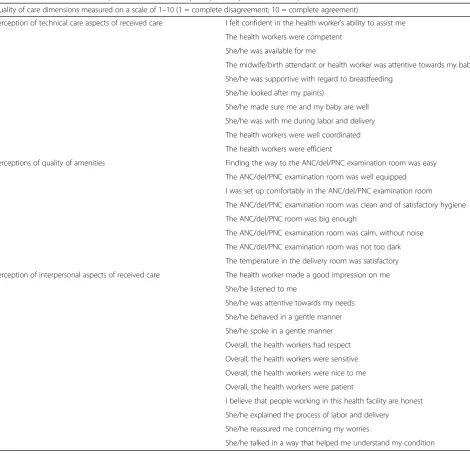
received during the provider-patient encounter that had concluded just prior to our interview. In line with our conceptual model which reflects the theoretical postula-tions on quality outlined by Wilde et al. (1993) [29] to which we refer earlier in the manuscript, we looked at perceived quality on three dimensions for all three ser-vices: technical care (i.e. technical aspects of maternal care), quality of amenities, and interpersonal relations. Quality perceptions included the above service elements for which we inquired women’s experiences, but went beyond. Perceived quality was measured with psycho-metric 10-point Likert scales that encompassed a series of brief statements. We developed three parallel, yet distinct surveys (and scales), each addressing the above-mentioned dimensions of quality of care with reference to the specific services delivered during ANC, L&D, and PNC services. The scales for ANC and PNC each encompassed 27 parallel statements, for example,‘The health worker listened to me’,‘She/he behaved in a gen-tle manner’, ‘The room was clean and hygienic’. For L&D, we added four statements to those used for ANC and PNC to capture additional service aspects, for ex-ample, “The health worker explained the process of labour and delivery”, “The health worker was attentive towards my baby”. For each respondent, a score was then calculated as the un-weighted mean of a woman’s responses to the statements pertaining to the three quality dimensions, respectively [43]. A detailed de-scription of the measurement and calculation of the QoC scores is provided elsewhere [43]. In the analyses, perceived QoC scores are treated as continuous vari-ables. The full list of statements is provided in Table 2 and questionnaires are attached.
Statistical analysis
We estimated the effect of PBF on perceived QoC scores and women’s experiences using a difference-in-differences (DID) regression model. We relied on two different models: the first model estimated changes from baseline (2013) to mid-term (2014), while the second model es-timated changes from baseline to end-term (2015). The purpose of doing so was to differentiate the short-term effect of the intervention (1 year into its implementa-tion) from its longer-term effect (2 years into its implementation).
As the DID model used in our analysis is based on lin-ear regression, corresponding standard errors were esti-mated by Ordinary Least Squares (OLS):
Yit¼ β0þβ1Titþβ2Aiþβ3TiAiþεit;
Where Yit = outcome variable (i.e. QoC and women’s
experience); Tit = 1 if observation i occurred in treated
facilities and 0 otherwise; Ai = 1 for follow-up time
points (mid-term, end-term) after treatment occurred and 0 otherwise and; TiAi = interaction between
treat-ment and time points.
We adjusted both DID regression models to control for women’s age, literacy, socio-economic status (SES; asset index), number of previous pregnancies (gravidity), and a variable that identified the facilities which transi-tioned from comparison to intervention shortly follow-ing our mid-term data collection. The selection of these control variables was informed by previous ana-lyses exploring heterogeneity in our outcome variables [43], to include variables that could potentially mediate the effect of the intervention. Since we observed out-comes at individual level while the intervention was implemented at group level (i.e. health facility), we controlled for clustering at health facility level using the cluster option in Stata [44]. Further, to counteract possible weaknesses in the estimation models due to the limited number of clusters (33), we applied a boot-strapping technique [44–47]. We analysed the data using Stata IC version 13 (StataCorp LP, Texas).
Qualitative procedures
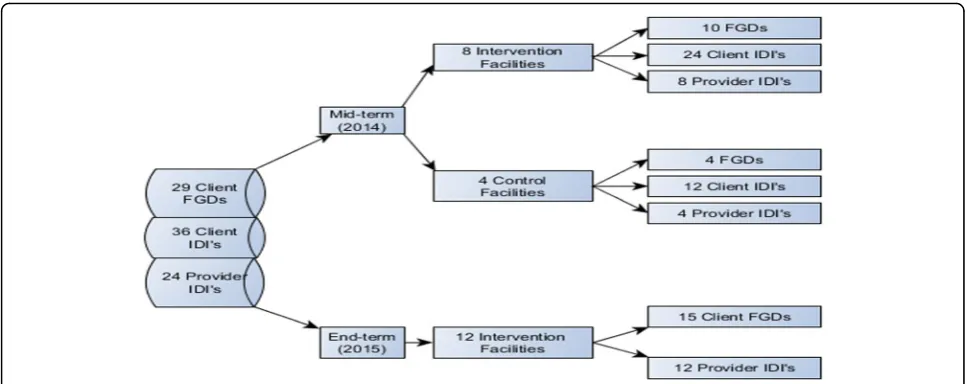
In line with the overall study design, we collected quali-tative data in 2014 (mid-term) and 2015 (end-term). Our qualitative data collection procedures relied on an emer-gent design, with somewhat different decisions taken at mid-term and at end-term, in light of the emerging quantitative findings. At mid-term, we purposely tar-geted both intervention (n = 8) and control (n = 4) facilities, while at end-term, we exclusively targeted intervention facilities (n = 12). This difference in sam-pling choices is due to the fact that while at mid-term, we wished to explore differences between control and intervention areas in relation to the experiential dimen-sion of care, at end-term, we were more interested in exploring the heterogeneity of experiences in relation to the implementation of the RBF4MNH Initiative. Both at mid-term and at end-term, we selected facilities based on how the women included in our quantitative sample had judged their performance, sampling facil-ities whose quality of service delivery had been rated as either high (≥6/10) or low (<6/10). The application of this purposeful criterion was made possible by the sequential nature of our design, with qualitative data collection being informed by emerging quantitative findings.
implementation period. Since during the mid-term data collection round, we observed greater willingness to talk about experiences of care in a collective (i.e. FGD) rather than in an individual setting (i.e. IDI), at end-term we maintained only the FGD as means of data collection. In addition, for triangulation purposes, we interviewed one maternity health-care provider at each of the selected facilities (Fig. 1 indicates total samples). Data collection was continued until saturation and re-dundancy were reached. While the number of facilities was sampled in advance, we did not determine the number of interviews and FGD in advance to ensure that we could reach saturation.
The interview guides for both the IDI and the FGD were largely developed to reflect the three dimensions of care (technical care, quality of amenities and interpersonal rela-tions) measured also by our quantitative tool. Trained qualitative interviewers conducted the interviews and led the FGDs in Chichewa (the local language) under the supervision of the corresponding author. All interviews and discussions were audio-recorded, transcribed verba-tim, and translated into English before analysis.
Qualitative data analysis
[image:7.595.63.534.96.550.2]We analysed data using content analysis which relied on a directed approach to coding [48]. First, we developed Table 2Variables used for composite scores for each perception aspect of care adapted to each service cohort
Quality of care dimensions measured on a scale of 1–10 (1 = complete disagreement; 10 = complete agreement)
Perception of technical care aspects of received care I felt confident in the health worker’s ability to assist me
The health workers were competent
She/he was available for me
The midwife/birth attendant or health worker was attentive towards my baby
She/he was supportive with regard to breastfeeding
She/he looked after my pain(s)
She/he made sure me and my baby are well
She/he was with me during labor and delivery
The health workers were well coordinated
The health workers were efficient
Perceptions of quality of amenities Finding the way to the ANC/del/PNC examination room was easy
The ANC/del/PNC examination room was well equipped
I was set up comfortably in the ANC/del/PNC examination room
The ANC/del/PNC examination room was clean and of satisfactory hygiene
The ANC/del/PNC room was big enough
The ANC/del/PNC examination room was calm, without noise
The ANC/del/PNC examination room was not too dark
The temperature in the delivery room was satisfactory
Perception of interpersonal aspects of received care The health worker made a good impression on me
She/he listened to me
She/he was attentive towards my needs
She/he behaved in a gentle manner
She/he spoke in a gentle manner
Overall, the health workers had respect
Overall, the health workers were sensitive
Overall, the health workers were nice to me
Overall, the health workers were patient
I believe that people working in this health facility are honest
She/he explained the process of labor and delivery
She/he reassured me concerning my worries
an initial set of codes based on the conceptual un-derstanding of quality described earlier and on spe-cific elements emerging from a preliminary analysis of the quantitative findings. Second, we let add-itional codes emerge as we identified new relevant themes while we proceeded through the reading. Third, we grouped similarly coded portions of text according to emerging over-arching themes. Last, we looked for connections and inter-relations across themes to eventually construct a comprehensive nar-rative [49]. Three analysts coded the material inde-pendently and later discussed findings to reach a common interpretation of the material (analysts’ triangulation). Any discrepancy identified was re-solved by returning to the transcribed material for additional analysis. Analysis was carried out with support of QSR NVivo [50].
The final interpretation of the data emerged in discus-sion with the broader research team to appraise findings in the light of the results of the wider impact evaluation.
Results
Quantitative findings
Characteristics of women attending L&D, ANC and PNC care
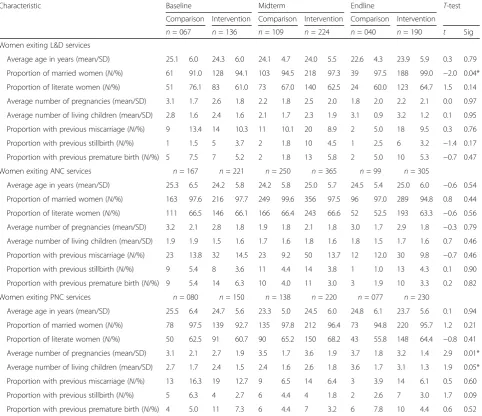
Table 3 reports results, by differentiating them across the three sets of respondents (ANC, L&D, and PNC) and across intervention and control facilities. In the absence of randomization, this comparison was needed to ensure comparability between women interviewed at intervention and at control facilities, before we proceeded with the DID regression model. Across intervention and controls, women’s age in the L&D sample was 24.0 years (SD: 5.6), in the ANC sample was 24.7 years (SD: 5.9) and in the PNC sample was 24.2 years (SD: 5.6). Overall, close to 96% of women were married and close to 65% of women
reported being literate. We observed no significant differ-ences in women’s gravidity between the intervention and controls for the L&D sample and for the ANC sample, with most women reporting having had two pregnancies. Only among PNC respondents, women at comparison facilities reported a higher number of prior pregnancies (3.1, SD: 2.0) than women at intervention facilities (2.6, SD: 2.0).
Effect of RBF4MNH on women’s experiences with
receiving care during labour and delivery As displayed
in Table 4, we observed no statistically significant change attributable to the RBF4MNH on the vast majority of experience indicators reported by women, the exception being a positive effect at end-term on the probability of receiving medication/treatment (p= 0.03) and a negative effect at mid-term on the probability of undergoing a blood test (p= 0.03).
Effect of RBF4MNH on women’s experiences with
receiving care during ANC As shown in Table 5, we
observed no statistically significant change attributable to the RBF4MNH on many of the experience indicators, except for a positive effect at mid-term on the prob-ability of being offered to keep a guardian during ANC consultation (p = 0.04) and a negative effect on the probability of receiving a blood pressure check (p= 0.01).
Effect of RBF4MNH on women’s experiences with
receiving care during PNC We observed no
statisti-cally significant change attributable to the RBF4MNH on indicators related to clients’ experience with PNC (Table 6).
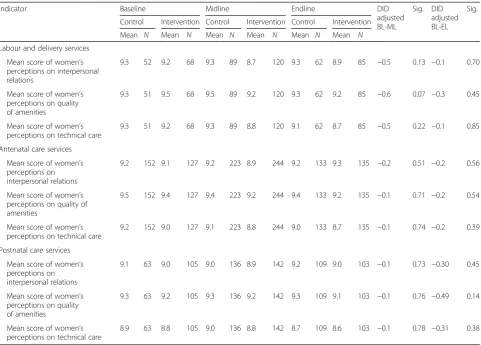
[image:8.595.56.540.87.279.2]Effect of RBF4MNH on perceived quality of care We observed no statistically significant change attributable to the RBF4MNH on the quality of care ratings for any of the three dimensions measured (technical care, qual-ity of amenities, interpersonal relations) for any of the three sets of services observed (L&D, ANC, PNC) (Table 7). We did, however, observe a small decline in perceived quality of care scores in intervention facilities over time, but in the absence of statistical significance, we cannot exclude the possibility that this decline is at-tributable to sampling errors.
Qualitative findings
Respondents’characteristic
Women’s age for both IDIs and FGDs varied between 15 and 43 years. The majority of the women were married, lit-erate, had between 1 and 3 children, and all had
experienced care at the sampled facilities. The majority of the providers interviewed had worked at the sampled facil-ity 2 to 6 years. All except one had a midwifery diploma.
[image:9.595.58.541.100.516.2]Appraising the quantitative findings in relation to the qualitative findings both at mid and end terms suggests that women’s perceptions of quality of care on the three aspects (i.e. technical care, quality of amenities and interpersonal relations) varied. In con-trast with the unanimously positive judgement that emerged from the quantitative scores, the qualitative analysis revealed women’s heterogeneous view on quality with some aspects being appreciated and others still being heavily criticized. Over the two data collection rounds, we observed an increased appreci-ation for services delivered at RBF4MNH facilities as well as a capacity to attribute the changes experi-enced directly to the intervention.
Table 3Sample characteristics of women exiting L&D, ANC and PNC services
Characteristic Baseline Midterm Endline T-test
Comparison Intervention Comparison Intervention Comparison Intervention
n= 067 n= 136 n= 109 n= 224 n= 040 n= 190 t Sig Women exiting L&D services
Average age in years (mean/SD) 25.1 6.0 24.3 6.0 24.1 4.7 24.0 5.5 22.6 4.3 23.9 5.9 0.3 0.79
Proportion of married women (N/%) 61 91.0 128 94.1 103 94.5 218 97.3 39 97.5 188 99.0 −2.0 0.04*
Proportion of literate women (N/%) 51 76.1 83 61.0 73 67.0 140 62.5 24 60.0 123 64.7 1.5 0.14
Average number of pregnancies (mean/SD) 3.1 1.7 2.6 1.8 2.2 1.8 2.5 2.0 1.8 2.0 2.2 2.1 0.0 0.97
Average number of living children (mean/SD) 2.8 1.6 2.4 1.6 2.1 1.7 2.3 1.9 3.1 0.9 3.2 1.2 0.1 0.95
Proportion with previous miscarriage (N/%) 9 13.4 14 10.3 11 10.1 20 8.9 2 5.0 18 9.5 0.3 0.76
Proportion with previous stillbirth (N/%) 1 1.5 5 3.7 2 1.8 10 4.5 1 2.5 6 3.2 −1.4 0.17
Proportion with previous premature birth (N/%) 5 7.5 7 5.2 2 1.8 13 5.8 2 5.0 10 5.3 −0.7 0.47
Women exiting ANC services n= 167 n= 221 n= 250 n= 365 n= 99 n= 305
Average age in years (mean/SD) 25.3 6.5 24.2 5.8 24.2 5.8 25.0 5.7 24.5 5.4 25.0 6.0 −0.6 0.54
Proportion of married women (N/%) 163 97.6 216 97.7 249 99.6 356 97.5 96 97.0 289 94.8 0.8 0.44
Proportion of literate women (N/%) 111 66.5 146 66.1 166 66.4 243 66.6 52 52.5 193 63.3 −0.6 0.56
Average number of pregnancies (mean/SD) 3.2 2.1 2.8 1.8 1.9 1.8 2.1 1.8 3.0 1.7 2.9 1.8 −0.3 0.79
Average number of living children (mean/SD) 1.9 1.9 1.5 1.6 1.7 1.6 1.8 1.6 1.8 1.5 1.7 1.6 0.7 0.46
Proportion with previous miscarriage (N/%) 23 13.8 32 14.5 23 9.2 50 13.7 12 12.0 30 9.8 −0.7 0.46
Proportion with previous stillbirth (N/%) 9 5.4 8 3.6 11 4.4 14 3.8 1 1.0 13 4.3 0.1 0.90
Proportion with previous premature birth (N/%) 9 5.4 14 6.3 10 4.0 11 3.0 3 1.9 10 3.3 0.2 0.82
Women exiting PNC services n= 080 n= 150 n= 138 n= 220 n= 077 n= 230
Average age in years (mean/SD) 25.5 6.4 24.7 5.6 23.3 5.0 24.5 6.0 24.8 6.1 23.7 5.6 0.1 0.94
Proportion of married women (N/%) 78 97.5 139 92.7 135 97.8 212 96.4 73 94.8 220 95.7 1.2 0.21
Proportion of literate women (N/%) 50 62.5 91 60.7 90 65.2 150 68.2 43 55.8 148 64.4 −0.8 0.41
Average number of pregnancies (mean/SD) 3.1 2.1 2.7 1.9 3.5 1.7 3.6 1.9 3.7 1.8 3.2 1.4 2.9 0.01*
Average number of living children (mean/SD) 2.7 1.7 2.4 1.5 2.4 1.6 2.6 1.8 3.6 1.7 3.1 1.3 1.9 0.05*
Proportion with previous miscarriage (N/%) 13 16.3 19 12.7 9 6.5 14 6.4 3 3.9 14 6.1 0.5 0.60
Proportion with previous stillbirth (N/%) 5 6.3 4 2.7 6 4.4 4 1.8 2 2.6 7 3.0 1.7 0.09
Perceptions of quality changes in technical care (clinical care)
Although the quantitative findings did not show any measurable change on women’s perception of technical care (Table 7), women in our qualitative sample reported that over time they experienced improvements in tech-nical aspects of service delivery when accessing care at RBF4MNH facilities. Most women who utilized services from RBF facilities perceived providers to be competent to carry out different technical care activities.
“Things have changed, like when I was delivering this baby, the nurse was there to assist me. I went to the facility late at night. But before taking off
my clothes the baby already came out and had suffocated. But the nurse helped me a lot and the baby got better … I never thought the baby would survive, but they assured me of my baby’s survival”.
(Woman in FGD, RBF4MNH health facility, end-term)
[image:10.595.59.541.98.527.2]Furthermore, when comparing women’s narratives of the provider patient encounter between midterm and end-term data collection rounds at intervention facilities, we noticed a substantial increase in the proportion of women who reported to have been clinically examined, received medication, and received explanations for the medications.
Table 4Impact of RBF4MNH on women’s experience of receiving care during labour and delivery
Indicator Baseline Mid-term End-term DID
adjusted BL-ML
Sig. DID adjusted BL-EL
Sig.
Comparison Intervention Comparison Intervention Comparison Intervention
% N % N % N % N % N % N
Proportion of women reporting health worker introduction
26% 53 37% 68 30% 89 38% 120 40% 62 49% 85 −4% 0.77 −4% 0.82
Proportion of women reporting having been clinically examined
57% 53 46% 68 99% 89 96% 120 92% 62 91% 85 5% 0.73 6% 0.75
Proportion of women reporting having received an explanation of the examination
100% 30 100% 31 64% 88 58% 115 54% 57 58% 77 −5% 0.69 −2% 0.85
Proportion of women reporting having received
medication/treatment
92% 53 71% 68 87% 89 88% 120 66% 62 79% 85 23% 0.07 29% 0.03*
Proportion of women reporting having received an explanation for the medication
59% 49 63% 48 42% 77 46% 106 56% 41 73% 67 −3% 0.85 12% 0.54
Proportion of women reporting having had a blood test done
26% 53 47% 68 21% 89 8% 120 23% 62 36% 85 −35% 0.03 −2% 0.90
Proportion of women reporting having received an explanation for the test
93% 14 75% 32 32% 19 30% 10 64% 14 65% 31 9% 0.69 10% 0.65
Proportion of women reporting consent being sought before procedures were performed
55% 53 61% 66 62% 87 63% 112 68% 60 75% 77 −5% 0.73 1% 0.96
Proportion of women having been encouraged to ask questions
36% 53 49% 68 25% 89 33% 120 45% 62 58% 85 −8% 0.63 2% 0.89
Proportion of women reporting being offered to have guardian during delivery
42% 53 57% 68 22% 89 58% 120 50% 62 55% 85 18% 0.29 3% 0.87
Proportion of women reporting their privacy/confidentiality being protected
96% 53 96% 68 91% 89 94% 120 90% 62 96% 85 3% 0.67 8% 0.55
Proportion of women reporting blood pressure was checked before delivery
53% 53 51% 68 49% 89 37% 120 61% 62 65% 85 −15% 0.22 19% 0.26
Proportion of women reporting blood pressure was checked after delivery
40% 53 44% 68 66% 89 57% 116 45% 58 68% 81 −13% 0.36 19% 0.25
“They do not explain everything most of times we are told to lay on the bed and they examine what they know without informing us. And after examination we are given medication”.(Woman in FGD, RBF4MNH health facility, mid-term)
“After ANC Examination, the health worker informed me well about the condition of the baby and me. The health worker also asked me if the baby was kicking in the womb and I said yes. And thereafter I was given information about the medication and they taught me the importance of the medication. They said that it helps to increase blood because during delivery women lose blood. So I was encouraged to take medication as it was prescribed to me.
In fact, the provider was a caring person. But I do not know if my fellow women were also treated like this”.
(Woman in FGD, RBF4MNH health facility, end-term) Providers at intervention facilities confirmed women’s observations by indicating that they felt more secure in their skills and by reporting greater adherence to recom-mended standards of care following the introduction of the RBF4MNH Initiative. The vast majority of providers at intervention facilities attributed the change to the trainings and increased supervision offered under the RBF4MNH Initiative.
[image:11.595.59.542.99.519.2]“…most of the training which I have done it’s because of RBF, neonatal and maternal care, is been done because of RBF, as of now, am
Table 5Impact of RBF4MNH on women’s experience of receiving care during ANC
Indicator Baseline Mid-term End-term DID
adjusted BL-ML
Sig. DID adjusted BL-EL
Sig.
Comparison Intervention Comparison Intervention Comparison Intervention
% N % N % N % N % N % N
Proportion of women reporting health worker introduction
34% 152 51% 128 49% 223 53% 244 43% 133 61% 135 −12% 0.37 −9% 0.56
Proportion of women reporting having been clinically examined
98% 152 98% 128 99% 223 96% 244 96% 133 98% 135 −3% 0.19 5% 0.39
Proportion of women reporting having received an explanation of the examination
72% 149 84% 126 67% 221 70% 235 80% 128 83% 132 −7% 0.53 1% 0.94
Proportion of women reporting having received
medication/treatment
96% 152 93% 128 86% 223 87% 244 93% 133 93% 135 4% 0.62 −4% 0.43
Proportion of women reporting having received an explanation for the medication
84% 146 86% 119 75% 191 71% 213 90% 124 94% 126 −8% 0.43 2% 0.71
Proportion of women reporting having had a blood test done
74% 152 68% 128 37% 223 36% 244 69% 133 68% 135 6% 0.69 −2% 0.91
Proportion of women reporting having received an explanation for the test
95% 113 94% 87 78% 82 86% 87 96% 92 90% 92 12% 0.18 −1% 0.84
Proportion of women reporting having had any clinical procedures performed
98% 152 100% 128 99% 223 98% 244 100% 133 100% 135 −3% 0.09 −3% 0.11
Proportion of women reporting consent being sought before procedures were performed
68% 149 77% 128 73% 221 74% 239 82% 133 91% 135 −8% 0.41 3% 0.72
Proportion of women having been encouraged to ask questions
61% 152 71% 128 55% 223 58% 244 73% 133 80% 135 −8% 0.52 6% 0.57
Proportion of women having been offered to have a guardian
53% 152 61% 128 36% 223 71% 244 80% 133 70% 135 29% 0.04 −7% 0.60
Proportion of women reporting their privacy & confidentiality being protected
97% 152 99% 128 95% 223 98% 244 94% 133 94% 135 1% 0.65 3% 0.72
Proportion of women reporting blood pressure having been checked
54% 152 82% 128 73% 223 56% 240 69% 130 71% 135 −47% 0.01 −28% 0.10
competent compared to the way I was before. I can manage some of the conditions which were difficult to be managed…I am competent enough to do such things”.(Skilled birth attendant at an RBF4MNH health facility, end-term)
If on one side, women at intervention facilities re-ported being examined and treated more accurately, on the other side, women also reported concerns in relation to procedures whose objective was not clear to them. For instance, women repeatedly referred to the more ac-curate removal of the retained products of conception
(an infection prevention procedure) promoted by the RBF4MNH Initiative as “mopping the uterus” and at times attributed a sinister meaning to it.
[image:12.595.59.542.100.541.2]“In the previous deliveries, they were not cleaning our womb and the remaining things were coming out without them cleaning us. They were only giving us injection after delivery. So I complained to them that the process is painful and the health worker responded to me that this is going to help me to have good health when I get home”.(Woman in FGD, RBF4MNH health facility, end-term)
Table 6Impact of RBF4MNH on women’s experience of receiving care during PNC
Indicator Baseline Mid-term End-term DID
adjusted BL-ML
Sig. DID adjusted BL-EL
Sig.
Comparison Intervention Comparison Intervention Comparison Intervention
% N % N % N % N % N % N
Proportion of women reporting health worker introduction
40% 63 49% 106 36% 136 34% 142 34% 109 50% 103 −11% 0.59 2% 0.92
Proportion of women reporting having been clinically examined
90% 63 67% 106 74% 136 56% 142 65% 109 74% 103 5% 0.76 35% 0.09
Proportion of women reporting having received an explanation of the examination
68% 57 67% 71 65% 100 60% 80 84% 71 63% 76 −4% 0.80 −20% 0.11
Proportion of women reporting having received
medication/treatment
49% 63 42% 106 30% 136 23% 142 44% 109 36% 103 0.2% 0.99 −15% 0.48
Proportion of women reporting having received an explanation for the medication
68% 31 87% 45 63% 41 63% 32 74% 48 64% 37 −20% 0.30 −29% 0.10
Proportion of women reporting having had a blood test done
25% 63 20% 106 4% 136 3% 142 11% 109 20% 103 5% 0.71 4% 0.78
Proportion of women reporting having received an explanation for the test
94% 16 95% 21 17% 6 50% 4 83% 12 86% 21 22% 0.43 3% 0.83
Proportion of women reporting having had any clinical procedures performed
90% 63 75% 106 75% 136 58% 142 67% 109 82% 103 0.3% 0.99 25% 0.10
Proportion of women reporting consent being sought before procedures were performed
68% 57 68% 79 63% 102 61% 83 81% 73 77% 84 −7% 0.69 2% 0.94
Proportion of women having been encouraged to ask questions
65% 63 50% 105 35% 136 36% 142 53% 109 61% 103 17% 0.33 23% 0.25
Proportion of women having been offered to have a guardian
47% 62 39% 102 21% 136 23% 142 39% 109 33% 103 8% 0.60 −2% 0.92
Proportion of women reporting their privacy & confidentiality being protected
95% 63 96% 106 88% 136 92% 142 88% 109 89% 103 1% 0.94 7% 0.54
Proportion of women reporting blood pressure having been checked
51% 63 39% 106 30% 136 28% 142 52% 109 56% 103 9% 0.73 10% 0.74
Proportion of women reporting baby’s weight was checked
90% 63 74% 106 80% 136 70% 142 69% 109 75% 103 6% 0.64 23% 0.27
Similarly, women displayed little appreciation for some procedures, such as consent seeking, which increased across intervention and control facilities over time (Tables 4, 5 and 6). When asked consent seeking, women postulated concerns that this was necessary at all, since to them, seeking care was per se an expression of consent.
“When one is going for ANC you are prepared knowing that where I am going I will be touched in such a way. So I feel there is no need for consent seeking”.(Woman in FGD, RBF4MNH health facility, end-term)
While women at intervention facilities reported considerable improvements in ANC and delivery care, women at both intervention and control facilities contin-ued to be dissatisfied with PNC. Most women indicated that at the PNC encounters, they received no care and even babies were checked only superficially.
“I did not spend much time during the PNC
consultation because the health worker only checked the
navel of my baby”.(Woman in FGD, non-RBF4MNH health facility, mid-term)
“When I went to the hospital to show my child after one week, the nurse just looked at my child and told me that my child was fine. The child was never weighed and the navel was never checked to see if it had healed”.(Woman in FGD, RBF4MNH health facility, end-term)
“When I went to the hospital to show my child after one week, the nurse just looked at my child and told me that my child was fine. The child was never weighed and the navel was never checked to see if it had healed”.(Woman in FGD, RBF4MNH health facility, end-term)
Perceptions of quality changes in amenities (service infrastructure)
[image:13.595.58.540.97.442.2]While respondents from control health facilities com-plained of scarcity of basic resources, respondents from intervention facilities appreciated the availability of equipment, drugs, enhanced visual privacy (through the Table 7Impact of RBF4MNH on perceived quality of care for labour and delivery, ANC and PNC services
Indicator Baseline Midline Endline DID
adjusted BL-ML
Sig. DID adjusted BL-EL
Sig.
Control Intervention Control Intervention Control Intervention
Mean N Mean N Mean N Mean N Mean N Mean N
Labour and delivery services
Mean score of women’s perceptions on interpersonal relations
9.3 52 9.2 68 9.3 89 8.7 120 9.3 62 8.9 85 −0.5 0.13 −0.1 0.70
Mean score of women’s perceptions on quality of amenities
9.3 51 9.5 68 9.5 89 9.2 120 9.3 62 9.2 85 −0.6 0.07 −0.3 0.45
Mean score of women’s perceptions on technical care
9.3 51 9.2 68 9.3 89 8.8 120 9.1 62 8.7 85 −0.5 0.22 −0.1 0.85
Antenatal care services
Mean score of women’s perceptions on interpersonal relations
9.2 152 9.1 127 9.2 223 8.9 244 9.2 133 9.3 135 −0.2 0.51 −0.2 0.56
Mean score of women’s perceptions on quality of amenities
9.5 152 9.4 127 9.4 223 9.2 244 9.4 133 9.2 135 −0.1 0.71 −0.2 0.54
Mean score of women’s perceptions on technical care
9.2 152 9.0 127 9.1 223 8.8 244 9.0 133 8.7 135 −0.1 0.74 −0.2 0.39
Postnatal care services
Mean score of women’s perceptions on interpersonal relations
9.1 63 9.0 105 9.0 136 8.9 142 9.2 109 9.0 103 −0.1 0.73 −0.30 0.45
Mean score of women’s perceptions on quality of amenities
9.3 63 9.2 105 9.3 136 9.2 142 9.3 109 9.1 103 −0.1 0.76 −0.49 0.14
Mean score of women’s perceptions on technical care
8.9 63 8.8 105 9.0 136 8.8 142 8.7 109 8.6 103 −0.1 0.78 −0.31 0.38
use of screens) and infection prevention supplies at both mid-term and end-term periods.
“The equipments are not adequate. We are told to bring a razor blade, plastic sheet/paper and a piece of cloth. There is also need to add the number of nurses at the facility”.(Woman in FGD, non-RBF4MNH health facility, mid-term)
“Our facility is different from how it used to be. Now the environment is looking good. Resources and equipment are also available. Previously, when some of us delivered there, we were told that the facility lacked important equipment.”(Woman in FGD, RBF4MNH health facility, end-term)
Women at intervention facilities also appreciated posi-tive changes in hygiene and cleanliness, which were not reported by women at control facilities.
“Compared to the past, there is cleanliness in the facility. It is well mopped and clean. There is no bad smell like in other hospitals. The cleaners are really doing a good job. They clean the bathrooms and the toilets in the morning and in the evening leaving the premises clean as they knock off [..]. There are even bins inside which are used to throw in any trash and this is also enhancing the cleanliness at the hospital”.
(Woman in FGD, RBF4MNH health facility, end-term)
Most providers agreed with the women’s observations and indicated that an increased availability of resources (i.e. drugs and supplies) and infrastructure upgrades due to the RBF4MNH Initiative had made it possible for them to improve service delivery. Despite the reported improvements, most providers at BEmOC intervention facilities indicated that they still struggled for bed space due a high caseload and to the increase in demand which followed the introduction of the RBF4MNH.
“[…] we have three beds, but we actually have most of the times seven, six, five women delivering at one time
–three on the bed, two or three or four on the floor. So when helping a woman while on the floor, sometimes we take risks and it’s so tiresome. That’s the challenge.”
(Skilled birth attendant at an RBF4MNH health facility, end-term)
Perception of changes in interpersonal care (provider-patient interactions)
A comparison between mid-term and end-term qualita-tive data provides an indication of improvements in provider-patient interactions in RBF4MNH facilities. At mid-term, the majority of women both at intervention
and at control facilities recounted being verbally abused during childbirth.
“…the nurse pushed me out of the door and asked me the number of deliveries I have ever had and I informed her that this was my sixth delivery. She shouted at me, said that I was lying,“this is your tenth delivery and with the problem you have[the woman was HIV positive]you are not supposed to give birth again”. And I was told to deliver alone. Fortunately I delivered a live baby. Then the nurse came and took care of the baby. So this was painful to me”.(Woman in FGD, RBF4MNH health facility, mid-term)
“The health workers are mistreating us. For instance when a patient has called for help they ignore by saying I was not there when you were having sex with your husband”.(Woman in FGD, non-RBF4MNH health facility, mid-term)
At end-term, most women from intervention facilities reported positive experiences in relation to their inter-action with providers. However, some women reported continued instances of disrespect and verbal abuse by some selected providers whereby unpalatable language was used.
“…they were busy passing us and shouting, using obscene language telling me to dress up, saying,“go away, don’t show us your dirty and stinking…”they speak such kind of languages; we have no choice but to endure such abuse, since there is nothing we can do… when we are in the labour room, what we need is just to be assisted. So we put up with their actions, because we know we can’t talk back since they are doctors, we fear that if we answer back they may never help us…”
(Woman in FGD, RBF4MNH health facility, end-term)
Further, both at mid-term and at end-term and both in intervention and control facilities, a few women re-ported having been ignored or not monitored during labour, ending up giving birth alone or with assistance from cleaners or guardians. Many women criticized a common tendency among providers to send them back from labour wards towards the waiting premises without first examining them. Therefore, some women reported to have given birth outside the labour ward or having been rushed back into the labour ward, and in some in-stances, babies were reported to have fallen on the floor.
of the provider rushing to pick the baby, the provider stood and started shouting at the girl.“Didn’t you know that down there something is coming out”the baby was there down rolling. It was me who told the girl,“Girl, if you have some energy please get down and carry your baby, it’s your baby”. The girl got down and picked up her baby….”(Woman in FGD, RBF4MNH health facility, end-term)
In response to instances of verbal abuse, providers confirmed that indeed there are a few “rotten apples” that tarnish the image of all health providers. However, providers at intervention facilities indicated that through the client satisfaction surveys introduced by the RBF4MNH Initiative, facilities receive feedback on issues of concern (e.g. verbal abuse) and make necessary changes to incorporate women’s voices in health care provision.
“yaa..For us staff we usually not speak well so because of that the mothers keep this in their mind that when I will go to the hospital this is the treatment I am going to get”.(Skilled birth attendant at an RBF4MNH health facility, mid-term)
“I can say may be we have improved a little because when women get discharged they respond to a questionnaire asking them what challenges they have met and the experience they had in the past pregnancy and now. Now care is improved a little more
compared to the past pregnancy even though there are some hiccups they say this”.(Skilled birth attendant at an RBF4MNH health facility, end-term)
In response to neglected care, many providers in both intervention and comparison facilities indicated that monitoring the women was difficult due to large work-loads, especially because they were running integrated care services: maternal care (i.e. labour and delivery, ANC and PNC), family planning clinics and blood screening (e.g. for HIV and syphilis). They pointed out that in cases where a provider is working alone, they failed to give exclusive attention to labouring women since they were taking care of other services. As a re-sult, some women could not be closely monitored and sometimes, though not often, they would give birth un-attended. Providers themselves recognized this as a major hindrance to ensuring quality in service delivery, especially at CEmOC facilities where workload is greater.
Discussion
The fundamental question addressed in this study was whether the RBF4MNH Initiative (including both PBF and CCT) had an effect on women’s experiences and
perceptions of quality of maternal and newborn care ser-vices. In the context of this study, we explored three dimensions of women’s perceived QoC: technical care (clinical care); quality of amenities in the facilities, and quality of interpersonal relations (provider-patient inter-actions) and measured each dimension along the con-tinuum of care from ANC to L&D to PNC. In addition, we reconstructed women’s experiences of care through a detailed structured recall of women’s interaction with providers. We complemented both sets of quantitative data with qualitative data originating from interviews and FGD with women and their providers.
Our quantitative analysis did not detect a significant effect of the RBF4MNH on any of the three dimensions of quality or for any of the services observed. Similarly, our models only detected a handful of significant effects on women’s experiences of care. These findings appear surprising in the light of the fact that qualitative find-ings are indicative of a much more complex scenario, characterized by a mixture of positive and negative ex-periences and perceptions in relation to the quality of service provision and to the changes produced by the RBF4MNH Initiative. In spite of reporting considerable improvements following the introduction of the RBF4MNH Initiative, women noted that instances of disrespect, at times leading to overt abuse, continued to overshadow their experiences of care.
This apparent incongruence between quantitative and qualitative findings deserves attention and requires that we take a critical look at the tools we used to quantify experiences and perceived quality of service provision, drawing some important lessons for future research. The lack of effect observed across all scores measuring qual-ity of care can largely be attributed to the high values already recorded at baseline. Detecting further improve-ments with an average baseline value of 9 would have required either a much larger sample (allowing us to de-tect changes of even small magnitude as significant) or a change of a considerable magnitude (with women con-sistently rating quality of care at 10). In addition, as noted in a prior publication [43] and in line with what was observed elsewhere [51], these consistently high ratings are an indication that rural Malawian women struggled to rate quality of service provision along a quantitative scale. In spite of our explicit efforts to de-velop a culturally sensitive tool (including the use of a visual aid to facilitate rating) [43], this difficulty calls into question the applicability of this approach in rural SSA and should encourage researchers to develop alternative quantitative tools to elicit ratings in these settings be-yond the ones currently available.
that women’s high ratings of quality of service provision might have been influenced by fear of future repercus-sions from service providers, since we conducted our exit interviews at the health facilities [43]. Furthermore, we acknowledge the potential of a Hawthorne effect [52], with providers modifying their behaviour for the better during our limited stay at the facility. We also acknowledge that women might have faced difficulties in properly recounting and assessing some dimensions in-cluded in our structured survey (e.g. health workers honesty, competency, co-ordination and sufficiency of equipment in the delivery room), since during a struc-tured interview, the enumerator does not engage exten-sively with respondents to contextualize questions and probe for answers, as it is instead the case during a qualitative encounter [41].
The inability to detect an effect on women’s experi-ence of care may also be influexperi-enced by our study design and by the overall socio-economic context surrounding the implementation of the RBF4MNH Initiative. A closer look at the quantitative findings on women’s experience of care suggests that change occurred on several dimen-sions, but did so in an equal manner across intervention and control facilities (e.g. probability of having been clin-ically examined during L&D). Such an observation nor-mally indicates that change was influenced by a secular trend and that a given intervention did not produce any additional benefit. In our specific case, however, we have reason to believe that the secular trend itself was influenced by the intervention, since, as described earl-ier, the RBF4MNH Initiative included incentives beyond the single facilities, targeting directly the District Health Management Teams. These incentives, linked to the management team’s supervisory role and to the overall district performance, are likely to have produced changes across intervention and control facilities, since the management teams worked to improve overall per-formance at a district level. Selecting control facilities outside the concerned districts would have allowed us to bypass this challenge and better discern the effect of the intervention, but this strategy was not feasible due to political and operational concerns (other health in-terventions supported by other development partners were planned in neighboring districts, thus the MoH could not grant us permission to include them as con-trols). At the same time, one needs to consider that the decline observed on some dimensions of care across intervention and control facilities (e.g. probability of re-ceiving medication during PNC) was probably due to the fact that the RBF4MNH Initiative was implemented at a time when Malawi was suffering from a major eco-nomic crisis [53] during which public resources for the health sector shrank considerably, further limiting sup-plies for intervention and control facilities alike. These
considerations are not meant to cast doubt on the validity of our study, but rather to allow the reader to contextualize the quantitative findings, looking for meaning beyond the mere percentage change and stat-istical significance detected by our models.
We did, however, identify change attributable to the intervention on a few selected items related to women’s experience of care. Apart from the clinical relevance of the single procedures (which is a subject beyond the scope of our investigation in this study), we observed that while the probability of having one’s blood pressure taken during ANC decreased as a function of the inter-vention, the probability of being asked whether the pa-tient would like to keep a companion during ANC and of receiving drugs during delivery increased. Comple-menting the quantitative findings, women’s narrative accounts in our qualitative findings provided indications that the greatest improvements in experiences and qual-ity of service delivery were in relation to improved per-ceived providers’competence and service infrastructure. In relation to providers’competence, women appreciated that physical examinations were conducted; procedures and purpose of medication were explained. For service infrastructure, women appreciated that the facilities were kept clean and hygienic and that drugs, equipment and other essential supplies were readily available and that the women’s privacy was respected. These results indi-cate the potential of the RBF4MNH to improve women’s satisfaction and in turn service use, given that several prior studies have demonstrated perceived staff compe-tency (i.e. knowledgeable and qualified providers) and service infrastructure (i.e. a health facility that is tidy, clean and with adequate drugs and supplies) to be im-portant factors in shaping clients’satisfaction and service use [29, 54–59].
In spite of the improvements experienced as a conse-quence of the RBF4MNH Initiative, it is worrisome and worth the consideration of policy makers that women continued to report instances of disrespect and abuse (D&A), with some women reporting being verbally abused and neglected even under RBF4MNH. Beyond the need to provide care that meets high clinical stan-dards, the international maternal care community unanimously recognizes women’s right to be treated with respect throughout the delivery and childbirth ex-perience [63]. Consensus on the value of providing re-spectful care has emerged as the literature confirmed that the display of D&A behaviours by providers may instil fear in women [60] and affect their satisfaction and subsequent use of the health services [60, 64, 65]. Further, neglectful behaviour may instil a feeling of hopelessness which may lead to postpartum depression or stress disorder [66, 67].
The health-care providers’interviews draw a differenti-ation between neglectful and abusive behaviours. On the one side, they recognized that perceived neglect may arise as they are called to assist to too many patients at once, thus they simply lack capacity to monitor each labouring woman closely. They explained that the human resource investments brought about by the RBF4MNH were not sufficient to compensate for the in-crease in workload that followed the implementation of the intervention. This concern with workload needs to be addressed in a prompt manner for the good of cli-ents, but also for the good of providers, since the litera-ture already indicates how providers’ frustration with inefficiencies in health system structures can easily lead to poor patient-provider interactions [60]. On the other side, the providers we interviewed distanced themselves from the instances of abuse reported by women and at-tributed them to single providers, who are accused of
“spoiling”the name of all providers in the country. Given the absence of comparable studies exploring experiences of care and perceptions of quality of service de-livery within the context of a PBF intervention, it is difficult to gauge to what extent the concerns raised by women in our study are shared in other settings where PBF has been implemented. To our knowledge, however, currently ac-tive PBF programs, including the RBF4MNH Initiaac-tive, reward improvements in infrastructural and process di-mensions of care, but still struggle to set incentives to target directly the provider-patient interaction. As such, in the absence of a specific strategy targeting the inter-personal dimension of care, PBF is unlikely to motivate a behavioural change that leads to improvements in the provider-patient interactions. This difficulty is further enhanced by the fact that providers engaged in PBF programs often face an increased demand for services. In a setting with relatively high baseline workload such
as Malawi, resulting excessive workload can thus pose a threat to the motivational benefits generated by the in-centives, the increased autonomy and the supervision granted by PBF, as for instance reported from Rwanda [68] and Nigeria [69].
The fact that our results on interpersonal relations reflect the status quo (that of D&A) as observed in the literature [37, 38, 61] suggests that D&A is a common concern in Malawi and that the RBF4MNH did not in-clude a sufficient number of instruments to counteract this phenomenon. This is somewhat surprising given the emphasis placed by the programme on hearing women’s voices, for instance through the inclusion of client exit interviews (satisfaction surveys) in the programme’s regular review cycle. Therefore, we urge policy makers and project implementers to consider additional means/specific indicators to counter D&A and stimulate provision of respectful maternal care. Discussion should be initiated in this RBF as well as in parallel ones across SSA on how to integrate an add-itional set of targets and related indicators to promote provision of respectful maternal care.
Conclusion
Overall, we found no effect of the RBF4MNH Initiative on perceived quality of care. However, we did find inter-vention effects on certain elements of women’s experi-ence of care. Our qualitative results also suggest positive improvements in respect to availability of equipment, drugs, supplies, and facility cleanliness. However, there were continued instances of D&A even under the RBF4MNH Initiative, largely influenced by perceived staff shortages and high workload on the part of the pro-viders. Current and future RBF interventions should en-sure that besides the provision of material resources, the quantity of human resources available to provide quality care should be sufficient. In addition, issues of D&A de-serve attention from policy makers. RBF interventions should consider incentivising positive attitudes among providers and adopt rights-based-approaches to defend human dignity and provide women with their basic fun-damental human rights [55].
Abbreviations