City, University of London Institutional Repository
Citation:
Zhang, Haotian (2014). Smart Grid Technologies and Implementations. (Unpublished Doctoral thesis, City University London)This is the accepted version of the paper.
This version of the publication may differ from the final published
version.
Permanent repository link:
http://openaccess.city.ac.uk/5918/Link to published version:
Copyright and reuse: City Research Online aims to make research
outputs of City, University of London available to a wider audience.
Copyright and Moral Rights remain with the author(s) and/or copyright
holders. URLs from City Research Online may be freely distributed and
linked to.
City Research Online: http://openaccess.city.ac.uk/ [email protected]
Smart Grid Technologies and Implementations
By
Haotian Zhang
This thesis is submitted for the Degree of
Doctor of Philosophy
At
City University London
School of Engineering and Mathematical Sciences
Acknowledgements
I wish to take this great opportunity to express my deep sense of respect and gratitude to my supervisor, Professor Loi Lei Lai, and Professor Nicholas Karcanias, who have had faith in me and provided me professional supervision to my Ph.D study with patience. Especially under the guidance from Professor Lai, his encouragement and technical support throughout the completion of my research work always came in time when I met difficulties. I feel highly privileged to worked under them and grateful to their kindness help.
I convey my appreciation and thankfulness to Dr. Fang Yuan Xu, Dr. Ying Nan Ma, Dr. Long Zhou and many other colleagues at energy system group in City University London. We often took time off from our own works and debated for some critical problems, which gave me inspiration and directly helped me in accomplishment of my research.
I gratefully express my deepest acknowledgement and sincere gratitude to my parents, Pei Sheng Zhang and Xiang Dong Zhang, who provided intense support morally and financially for my study abroad. My special thanks to my uncle and aunty Xiang Yang Zhang and Shu-Chiu Hong, who helped me a lot and shared their experiences and lessons of living overseas.
I would like to express my heartfelt thanks to my girlfriend, Ya Qing Lu for her patience, encouragement when I am abroad. Her love is my major impetus to face the future.
Finally, I am thankful to my friends, Kasy Chong Wang, Andrew Lenard, Bryant Xu Sheng Lin, Leanne Heng Liu, Shan Chong, Chun Sing Lai, Qi Ling Lai, Tian Yu Luo, Jie Bei Zhu. They brought love and joy to me, and enriched my spare time during my study in the UK.
Abstract
Smart grid has been advocated in both developing and developed countries in many years to deal with large amount of energy deficit and air pollutions. However, many literatures talked about some specific technologies and implementations, few of them could give a clear picture on the smart grid implementations in a macro scale like what is the main consideration for the smart grid implementations, how to examine the power system operation with communication network deployment, how to determine the optimal technology scheme with consideration of economic and political constraints, and so on. Governments and related institutions are keen to evaluate the cost and benefit of new technologies or mechanisms in a scientific way rather than making decision blindly. Decision Support System, which is an information system based on interactive computers to support decision making in planning, management, operations for evaluating technologies, is an essential tool to provide decision makers with powerful scientific evidence.
The objective of the thesis is to identify the data and information processing technologies and mechanisms which will enable the further development of decision support systems that can be used to evaluate the indices for smart grid technology investment in the future.
First of all, the thesis introduces the smart grid and its features and technologies in order to clarify the benefits can be obtained from smart grid deployment in many aspects such as economics, environment, reliability, efficiency, security and safety.
Besides, it is necessary to understand power system business and operation scenarios which may affect the communication network model. This thesis, for the first time, will give detailed requirements for smart grid simulation according to the power system business and operation.
In smart grid environment, large number of data are need to be processed and useful information are required to be abstracted for further operation in power systems. Machine learning is a useful tool for data mining and prediction. One of the typical machine learning artificial algorithms, artificial neural network (ANN) for load forecasting in large power system is proposed in this thesis and different learning methods of back-propagation, Quasi-Newton and Levenberg-Marquardt, are compared with each other to seek the best result in load forecasting.
Bad load forecasting may leads to demand and generation mismatch, which could cause blackout in power systems. Load shedding schemes are powerful defender for power system from collapsing and keep the grid in integral to a maximum extent. A lesson learned from India blackout in July 2012 is analyzed and recommendations on preventing grid from blackout are given in this work. Also, a new load shedding schemes for an isolated system is proposed in this thesis to take full advantage from information sharing and communication network deployment in smart grid.
Table of Content
Acknowledgements ... I
Abstract ... II
Table of Content ... IV
List of Figures ... VIII
List of Tables ... XI
Glossary of Terms ... XIII
Copyright Declaration ... XVI
Chapter 1 Introduction ... 1
1.1 Background and Objectives ... 1
1.2 Organization of Thesis ... 3
1.3 Original Contribution ... 4
Chapter 2 Smart Grid Overview ... 7
2.1 Introduction ... 7
2.2 The Smart Grid Definitions ... 7
2.3 Differences between Traditional Grid and Smart Grid ... 10
2.4 Smart Grid Features and Technologies ... 11
2.4.1 Advanced Metering Infrastructure (AMI) ... 13
2.4.2 Customer Side Systems (CSS) ... 14
2.4.3 Electric Vehicle Charging and Discharging ... 15
2.4.4 Transmission Enhancement Applications ... 15
2.4.5 Distribution Grid Management System ... 16
2.4.6 Integration with Renewable Energy and Distributed Energy Resources 16 2.4.7 Information and Communication Technology Integration (ICT) ... 17
2.4.8 Wide-area Monitoring, Measurement and Control ... 17
2.5 Benefits of Smart Grid ... 20
2.6 Motivations and Challenges towards Smart Grid ... 24
2.6.1 Motivations ... 24
2.6.2 Challenges ... 25
2.7 Smart Grid Standards ... 26
2.8.1 Additional Simulation Requirement of Smart Grid ... 32
2.9 Conclusion ... 33
Chapter 3 Smart Grid Monitoring with Communication Technologies ... 35
3.1 Introduction ... 35
3.2 Intelligent System Monitoring ... 36
3.3 Power System and Smart Grid Monitoring ... 38
3.4 Smart Grid Communication Business and Operation ... 45
3.4.1 Advanced Distribution Automation ... 46
3.4.2 Feeder Automation... 47
3.4.3 Wide-Area Monitoring and Control... 47
3.4.4 Substation Automation Systems ... 48
3.4.5 Self-Healing Technology ... 48
3.4.6 Distributed Generation, Electricity Storage, Renewable Energy and Micro-Grid Operation ... 49
3.5 Co-Simulation and Power-Communication Integration ... 49
3.6 Conclusion ... 52
Chapter 4 Smart Grid Load Forecasting by Artificial Neural Network ... 53
4.1 Introduction ... 53
4.2 Introduction to Artificial Neural Network (ANN) ... 55
4.3 Perceptron ... 56
4.3.1 Perceptron Model ... 56
4.3.2 Activation Functions ... 57
4.3.3 Multi-Layer Perceptron (MLP) ... 60
4.4 Back-Propagation Training ... 61
4.4.1 Gradient Descent and delta learning rule ... 62
4.4.2 Back-Propagation Theory ... 62
4.4.3 Quasi-Newton Algorithm... 68
4.4.4 Levenberg-Marquardt (LM) Algorithm ... 70
4.4.5 Load Forecasting implemented by Back-Propagation Training ... 71
4.4.6 Indices for Performance Measurement and Comparison ... 73
4.5 Load Forecasting by ANN ... 73
4.5.1 ANN Trained by Delta-Rule ... 74
4.5.2 ANN Trained by Quasi-Newton ... 76
4.6 Result Comparison and Analysis ... 80
4.6.1 Convergence Comparison ... 80
4.7 Conclusion ... 82
Chapter 5 Self-Healing and Load Shedding in Smart Grid ... 83
5.1 Introduction ... 83
5.2 Blackout in India ... 84
5.2.1 Load changes in Northern Region ... 88
5.3 Load Shedding Scheme... 92
5.3.1 Power System Behaviour under Disturbances ... 94
5.3.2 Magnitude of Load Shedding... 95
5.3.3 Load Disconnection ... 97
5.3.4 LLS Relay Operating Delay Impact ... 97
5.3.5 Case Study ... 97
5.4 Conclusion ... 101
Chapter 6 Decision Support Systems for Smart Grid Implementation ... 103
6.1 Introduction ... 103
6.2 Decision Support System Requirements ... 104
6.2.1 DSS Functionalities ... 104
6.2.2 Requirements for DSS ... 106
6.3 Past, Present and Future ... 107
6.3.1 Past ... 107
6.3.2 Present ... 110
6.3.3 Future ... 113
6.4 Power System Stability Scenarios ... 115
6.4.1 Renewable and Solar Penetration Investigation ... 115
6.4.2 Wind Energy Conversion ... 116
6.4.3 Solar Energy Conversion ... 118
6.4.4 DIgSILENT Models for Stability Analysis ... 119
6.5 Reliability Indices ... 125
6.5.1 Generation Investment ... 126
6.5.2 Reliability Indices ... 128
6.6 Conclusion ... 135
Chapter 7 Conclusions and Future Work ... 138
7.2 Trends and Further Work ... 140
List of Publications ... 143
REFERENCES ... 145
Appendix I Biological Neural Networks ... 168
List of Figures
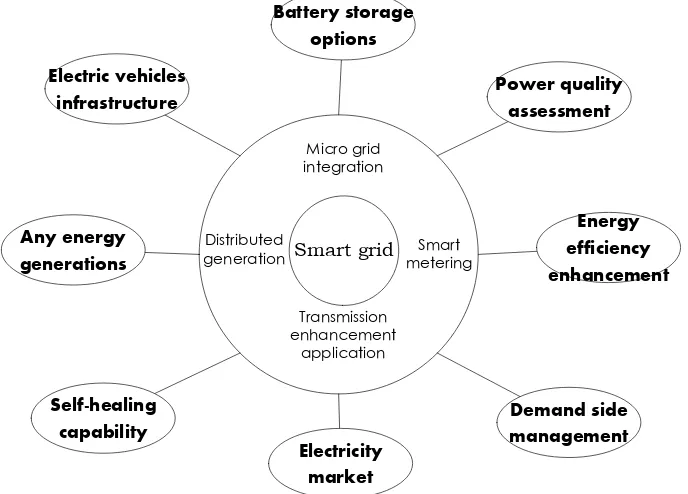
Fig. 2.1 Applications involved in smart grid ... 8
Fig. 2.2 Future network vision ... 10
Fig. 2.3 NIST smart grid framework composed by secure communication and electrical flows throughout 7 smart grid domains... 12
Fig. 2.4 Smart grid technologies deployment in power system ... 13
Fig. 2.5 AMI Technology and Interface ... 14
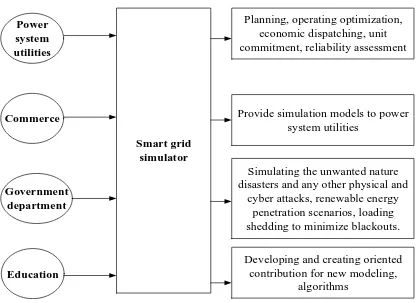
Fig. 2.6 Purposes for smart grid simulator ... 31
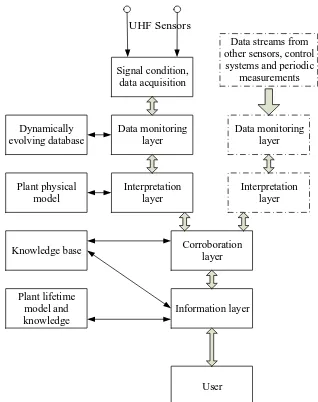
Fig. 3.1 Structure of the integrated approach to condition monitoring and plant lifetime modeling ... 38
Fig. 3.2 COMMAS architecture... 39
Fig. 3.3 Anomaly detection agent architecture ... 40
Fig. 3.4 Building blocks of the FNET system ... 42
Fig. 3.5 FNET application hierarchy and data flow paths ... 42
Fig. 3.6 Heuristic flow diagram ... 44
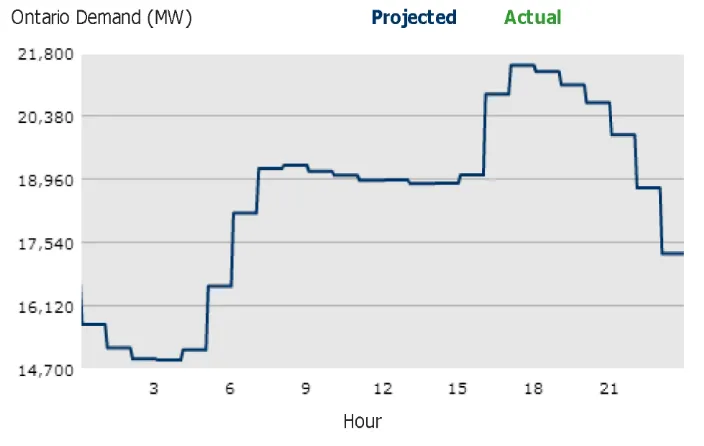
Fig. 4.1 Load forecasting on December 10, 2013 for Canadian Ontario Demand by IESO ... 54
Fig. 4.2 Neuron working procedure ... 56
Fig. 4.3 Perceptron neuron model ... 57
Fig. 4.4 Identity linear function for activation function... 58
Fig. 4.5 Binary Step function for activation function ... 59
Fig. 4.6 Binary Sigmoid function for activation function ... 59
Fig. 4.7 Bipolar Sigmoid function for activation function... 60
Fig. 4.8 Architecture of Multi-layer perceptron feed-forward network ... 61
Fig. 4.9 Feed-forward and back-propagation ... 63
Fig. 4.10 Three-layer Network... 63
Fig. 4.11 Procedure of Batch Training... 68
Fig. 4.12 Architecture for load forecasting ... 71
Fig. 4.13 Population density of Ontario, Canada in 2006 ... 72
Fig. 4.15 The Epoch of Training with 3 different algorithms vs MSE ... 80
Fig. 4.16 Examination plots of actual demand and prediction ... 81
Fig. 5.1 Brief Indian NEW Grid for disturbance study... 86
Fig. 5.2 Frequency response in Western Region when load increasing in Northern Region ... 89
Fig. 5.3 Rotor angle of thermal generator in North with reference to western region when load increasing in Northern Region ... 89
Fig. 5.4 Frequency response in Northern Region when load increasing in Northern Region ... 90
Fig. 5.5 Northern Region grid frequency response when thermal generation is changing from 0% to 25% ... 91
Fig. 5.6 Rotor angle of the thermal generation in northern region when thermal generation is changing from 0% to 25% ... 92
Fig. 5.7 Frequency responses with different magnitudes of load shedding when the grid is subject to a loss-of-main event with system frequency decreased down to 49Hz ... 93
Fig. 5.8 Frequency deviation with different inertia constant when one step load shed is tripped at 48Hz ... 94
Fig. 5.9 IEEE 33-bus distribution system configuration... 96
Fig. 5.10 One step load shedding for 40% when relays set to 48Hz, 48.5Hz, 49Hz and 49.3Hz ... 99
Fig. 5.11 Frequency deviation with different time delay when one step load shed is tripped at 49 Hz ... 99
Fig. 5.12 Frequency derivation under 4 sequences ... 101
Fig. 6.1 A typical structure of DSS ... 106
Fig. 6.2 An XDSS approach ... 107
Fig. 6.3 4 Generations for DSS development ... 108
Fig. 6.4 DSS with 2-layer information management system ... 110
Fig. 6.5 DSS architecture for project risk management ... 111
Fig. 6.6 Business and engineering decision model with dashboard ... 112
Fig. 6.7 DSS structure with cloud-computing technology ... 113
Fig. 6.8 Rotor power coefficient performance Cp against tip speed ratio λ ... 117
Fig. 6.9 Wind speed VS output power curve ... 118
Fig. 6.11 Photo conversion efficiency VS solar radiation ... 119
Fig. 6.12 Modified WSCC 9-bus model ... 120
Fig. 6.13 Wind speed pattern ... 121
Fig. 6.14 Solar radiation pattern ... 121
Fig. 6.15 Total active power and battery storage variation in Bus 3 when solar radiation is changing ... 122
Fig. 6.16 Total active power and battery storage variation in Bus 3 when wind speed is changing ... 122
Fig. 6.17 Total active power and battery storage variation in Bus 3 when wind speed and PV radiation are changing at the same time ... 123
Fig. 6.18 System frequency which is measured in Bus 5 ... 123
Fig. 6.19 Relationship between reliability and cost ... 126
Fig. 6.20 Frequency of failure rate with increasing operational age ... 127
Fig. 6.21 New England 39-bus 10-gnerator systems ... 132
List of Tables
Table. 2.1 Comparison between conventional grid and smart grid ... 11
Table. 2.2 Smart grid technology solutions .vs. benefits ... 11
Table. 2.3 Hardware and software employed into smart grid ... 19
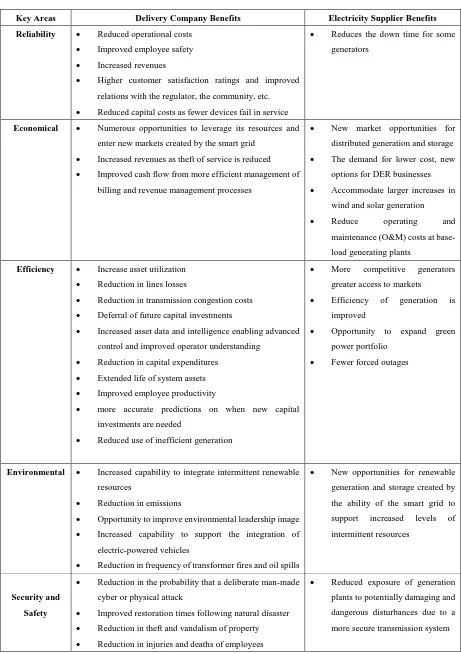
Table. 2.4 Smart grid benefits delivered to delivery company and electricity supplier ... 22
Table. 2.5 Smart grid benefits delivered to residential consumer and broader societal ... 23
Table. 2.6 International standards related to smart grid... 27
Table. 3.1 Application classification list... 43
Table. 3.2 Methods and algorithms applying into the smart grid monitoring ... 46
Table. 3.3 Smart Grid Standard and Co-simulation ... 50
Table. 3.4 Business and Operations and time scales ... 51
Table. 4.1 ANN Training performances with different architectures ... 75
Table. 4.2 Load forecasting by an ANN, Delta-rule training with 20 neurons in hidden layer... 76
Table. 4.3 ANN architecture selection for load forecast with Quasi-Newton (BFGS) Method ... 77
Table. 4.4 Load forecasting by an ANN, Quasi-Newton training with 20 neurons in hidden layer ... 78
Table. 4.5 ANN architecture selection for load forecast with LM Method ... 79
Table. 4.6 Load forecasting by an ANN, Levenberg-Marquardt training with 20 neurons in hidden layer ... 79
Table. 5.1 Generation and Demand Conditions with Power Import and Export before Disturbances ... 87
Table. 5.2 Generation Power Allocation in Each Region ... 88
Table. 5.3 4 scenarios for the load selection ... 100
Table. 6.1 DSS approaches and architectures from the past to the future ... 114
Table. 6.3 Maximum system frequency change with penetration level and battery
storage level changing... 123
Table. 6.4 Maximum frequency error with wind speed pattern dropping when wind penetration is 40 MW... 124
Table. 6.5 Maximum frequency error with wind speed pattern dropping when wind penetration is 84MW... 124
Table. 6.6 Distributed generation investment cost and application ranges... 127
Table. 6.7 Mean installed cost of utility scale wind farms and DGs ... 127
Table. 6.8 system component reliability parameter ... 131
Table. 6.9 Results of reliability index in each bus when deploying DG ... 134
Table. 6.10 Reliability result for different number of wind generation connected to the grid ... 135
Glossary of Terms
ACL Agent Communication Language AI Artificial Intelligence
AIS Artificial Immunity System AMI Advanced Metering Infrastructure ANN Artificial Neural Network
APE Absolute Percentage Error BAU Business as Usual
BP Back-propagation Algorithm CA Computational Algorithm CIS Customer Information System CLAP Collaborative Pattern
CSS Customer Side Systems CV Computer Vision
DER Distributed Energy Resources DFIG Double-Fed-Induction-Generator DFR Digital Fault Recorders
DLR Dynamic Line Rating
DMS Distribution grid Management System DOE Department of Energy, United States DPR Digital Protective Relays
DSS Decision Support System DTR Dynamic Thermal Rating EDB Extensional Database
EMD Empirical Mode Decomposition EMI Electromagnetic Interference ERP Enterprise Resource Planning EV Electric Vehicle
EWEA European Wind Energy Association
FDR Frequency Disturbance Recorders FNET Frequency monitoring network G2V Grid to Vehicles
GIS Geographic Information System GPS Global Positioning System HAN Home Area Network
HSML Hybrid System Modeling Language HTS High-Temperature Superconductors HVDC High Voltage DC Systems
IaaS Infrastructure as a Service
ICT Information and Communication Technology IDB Intentional Database
IEA International Energy Agency, United States IED Intelligent Electronic Device
IEEE Institute of Electrical and Electronics Engineers, United States KBS Knowledge Based System
LED Light-Emitting Diode
LLS Local Load Shedding Scheme LM Levenberg-Marquardt Algorithm
LTE Long-Term Evolution (Communication) MAPE Mean Absolute Percentage Error
MCU Microcontroller Unit
MDMS Meter data management system MG Micro Grid
MLP Multi-layer Perceptron
NETL National Energy Technology Laboratory, United States NILM Nonintrusive Load Monitoring
NIST National Institute of Standard and Technology
NREL National Renewable Energy Laboratory, United States NS-2 Network Simulator 2
PDC Phasor Data Concentrator PLC Power Line Carrier
PMU Phasor Measurement Units PQ Power Quality
PV Photovoltaic
RFI Radio-Frequency Interference RMSE Root Mean Squared Error RTU Remote Terminal Unit S2V Storage to Vehicles SaaS Software as a Service
SCADA Supervisory Control and Data Acquisition SSL Secure Socket Layer
SVM Support Vector Machine TKEO Teager-Kaiser energy operator TTU Telephone Terminal Unit TVE Total Vector Error UHF Ultra High Frequency
UPS Uninterruptible Power Supply V2G Vehicles to Grid
V2S Vehicles to Storage
WAAPCA Wide-Area Adaptive Protection, Control and Automation WAMS Wide-Area Monitoring Systems
WASA Wide-Area Situational Awareness
WIMAX Worldwide Interoperability for Microwave Access WMS Workforce Management System
XDSS DSS Based on Expert Systems Approach
NETL National Energy Technology Laboratory, United States IEA International Energy Agency, United States
Copyright Declaration
The author hereby grants power of discretion to the Librarian of the City University London, to allow this thesis (SMART GRID TECHNOLOGIES AND IMPLEMENTATIONS) to be copied in whole or in part without further reference to the author. This permission covers only single copies made for study purposes, subject to normal conditions of acknowledgement.
Chapter 1
Introduction
1.1
Background and Objectives
With the extremely increasing of the large industry and commerce, energy supply deficit and air pollution issues are becoming more and more critical. In order to solve the problems in both developed and developing countries, smart grid with many advanced architectures, outstanding algorithms and creative frameworks has been advocated [1].
There are few “definitions” to explain what it is, though the conception of smart grid has been proposed for several years, many institutes of power system around the world concentrate on explanations of its functions and technical applications. In addition, many countries and regions research and develop their specific smart grid in accordance with their situations like energy resource distribution and consumption, environment and climate, and commercial, industrial and residential daily life customs. For instance, in Europe, people devote themselves to develop the renewable energies and distributed generation systems, while in the US, smart metering and demand response are the main direction in smart grid implementation. State Grid Corporation of China has proposed to establish the “strong and robust smart grid”, which makes every effort to build HVDC and FACTS in order to transmit electric power from the western region, which is rich in energy, to eastern region in China.
grid from power plants to any consumers like residential, commercial, industrial and agricultural. In addition to the information exchange within power systems, all other systems such as petroleum, natural gas dispatch systems, weather forecasting will also share the information with power systems. With the increasing penetration level of the non-dispatchable energy resources like wind and solar and application of demand response, the effect from weather is playing more and more significant role to power systems.
Load forecasting mechanism is one of a great application for information exchange between weather forecasting and power systems. Accurate short-term load forecasting may contribute to the power economic dispatch and design an appropriate demand response or load shedding plan to prevent the loads from over-withdrawing energy from the grid. Long-term load forecasting can offer a consultative reference to further planning for optimizing energy resource allocation.
It is a step-by-step procedure towards smart grid to replace the old power system elements or build facilities based on existing grid instead of build up a brand new grid. Thus, planning for smart grid may not only consider the effect that comes from the creative technologies, but also respecting for diverse stakeholders’ interests. Cost benefit analysis has to be carried out to make a correct or reasonable decision. One of the most effective tool for estimating the smart grid technologies and implementations is to build the Decision Support System, which is an information system based on interactive computers to support decision making in planning, management, operations for smart grid.
Objectives: This thesis aims to identify the data, specify and develop the information
processing technologies and mechanisms which will further contribute to the development of decision support systems for the smart grid. These will contribute to the evaluation of the investment indices for smart grid technology of the future.
1.2
Organization of Thesis
This thesis consists of 7 Chapters. The main focus is on Smart grid technologies and implementations.
Chapter 2 Smart Grid Overview
Chapter 2 overviews smart grid definitions, features and its technologies. Moreover, the differences between traditional grid and smart grid will be discussed. Strategy planning, motivations, challenges and implementations will also be summarized in this chapter. The key points of the chapter have been published in “An Overview on Smart Grid Simulator”.
Chapter 3 Smart Grid Monitoring with Communication Technologies
Chapter 3 will give a state of the art review on smart grid monitoring systems and communication systems. New technologies applied into intelligent system in many technical fields will be discussed. The development of condition monitoring and smart grid monitoring like wide-area monitoring technologies and commercial electronic monitoring is demonstrated to examine the critical needs for smart grid systems. Mechanisms and algorithms applied into intelligent monitoring system will be summarized in order to find out their impacts reflecting to the power systems. A novel framework for smart grid decision support system design will be proposed. Some of the points have been published in “Monitoring System for Smart Grid”.
Chapter 4 Smart Grid Load forecasting by Artificial Neural Network
Chapter 5 Self-healing and load shedding in Smart grid
Chapter 5 reports lessons learned from India blackout in this chapter as a negative example of real-life case study in load shedding. Also, ideas in published paper “Lessons Learned from July 2012 Indian Blackout” and “Survive Distribution Networks Using an Automatic Local Load Shedding Scheme” are derived in this chapter.
Chapter 6 Decision Support System for Smart Grid Implementation
Chapter 6 reports the development of decision support systems (DSS) for smart grid deployment. Cloud computing and agent-based DSS are discussed in this chapter for smart grid implementation. Reliability, security and stability indices for smart grid are considered for decision support systems through a cost-benefit analysis approach. The integration of these elements together will form a new and novel application. Three conference papers “New Trends for Decision Support Systems”, “Research on Wind and Solar Penetration in a 9-bus Network”, and “Reliability and Investigation Assessment for Wind Energy Generation” have been published from this chapter.
Chapter 7 Conclusions
Chapter 7 summarizes the work done and based on the current finding; direction for future study will be discussed.
1.3
Original Contribution
2. Monitoring systems and Communication system for smart grid has been analyzed. This work summarizes the methods and algorithms applied to the smart grid monitoring, communication technologies for smart grid. Comparison on different types of monitoring systems has been made, which could see the merits and drawbacks in each type of the monitoring system. (Chapter 3)
3. A reasonable method for achieving power system and communication co-simulation by taking into account real-life power system business and operation is proposed. (Chapter 3)
4. Smart grid load forecasting system framework design for Ontario, Canada. This work introduces a smart grid load forecast design procedure with consideration of general influencing factors and Ontario local factors. (Chapter 4)
5. An Artificial Neural Network based load forecasting system design for Ontario, Canada. This work compares results from different ANN training algorithms and provides a novel explanation for the differences. (Chapter 4)
6. July 2012 India blackout was investigated and lessons learned from India blackout will be discussed. The importance of load shedding will be demonstrated to reduce the possibility of blackout occurrence. (Chapter 5)
7. Development of decision support systems to implement smart grid is summarized. Past, present and future of the decision support systems are compared with each other and new findings are discussed. (Chapter 6)
Chapter 2
Smart Grid Overview
2.1
Introduction
Smart grid has been advocated in both developing and developed countries these days to deal with the bottleneck of feeding large requirement in energy consumption as the growing of industry and commerce. As a new concept for power delivery system, smart grid involves plenty of advanced technologies, outstanding methodologies, novel algorithms and creative architectures in service, business and operation to solve problems like carbon emission deduction, resources allocation optimizations, grid security and reliability enhancement and deliver power energy in a more efficient, reliable, and optimal way.
This chapter will critically overview smart grid definitions, features and its technologies. Moreover, the differences between traditional grid and smart grid will be discussed. Benefits from smart grid technology aspects will be illustrated. Strategy planning, motivations, challenges and implementations will also be summarized in the chapter.
2.2
The Smart Grid Definitions
publications concentrate on explain “what the features are in smart grid” or “what kind of technologies will be involved in smart grid” instead of “what is smart grid”. Fig. 2.1 illustrates the main applications which are involved in smart grid, including compatibility with any energy generations, electric vehicles infrastructures, more battery storage options, and more power quality options for consumers, demand side management, and self-healing capability and so on.
[image:26.595.127.471.363.610.2]With understanding of the smart grid, some new issues for smart grid which have never happened in conventional power system need to be considered carefully when planning and operation. For example, with increasing number of consumers participating into power system, how should the system be operated in the most efficient way? If there is a cyber-attack “noise” injected to the communication channel, how could the smart grid detect the attacking “noise” and prevent the network from damaging?
Fig. 2.1 Applications involved in smart grid
According to DOE NETL (Department of Energy, National Energy Technology Laboratory, US), a smart grid uses digital technology to improve reliability, security, and efficiency (both economic and energy) of the electric system from large generation, through the delivery systems to electricity consumers and a growing number of distributed generation and storage resources. Smart grid deployment covers a broad
Power quality assessment
Energy efficiency enhancement Battery storage
options
Any energy generations
Self-healing capability
Electricity market
Demand side management Electric vehicles
infrastructure
Smart grid
Micro grid integration
Transmission enhancement
application Distributed
array of electricity system capabilities and services enabled through pervasive communication and information technology, with the objective of improving reliability, operating efficiency, resiliency to threats, and our impact on the environment [1, 2]. IEA (International Energy Agency, US) denotes smart grid as “an electricity network that uses digital and other advanced technologies to monitor and manage the transport of electricity from all generation sources to meet the varying electricity demands of end-users” [3]. A Smart grid is an electricity network that can intelligently integrate the actions of all users connected to it – generators, consumers and those that do both – in order to efficiently deliver sustainable, economic and secure electricity supplies [10], demonstrated by European Technology Platform. The "smart grid", described by IEEE, is a next-generation electrical power system that is typified by the increased use of communications and information technology in the generation, delivery and consumption of electrical energy [11].
A general future smart grid network vision is shown in Fig. 2.2. No matter which is the most accurate definition, the conception includes following information at least, smart grid:
1. combines digital technologies throughout the whole power systems from generation to end-users
2. improves reliability, security, and efficiency of the power delivery systems
Fig. 2.2 Future network vision [7]
2.3
Differences between Traditional Grid and Smart Grid
Aspects Traditional Grid Smart Grid Interaction between Grid and
Customers
Customers passively accept service from grid
Customers participation on the grid action
Renewable Energy Integration
Having trouble with renewable penetration
Integration with renewable resources enhancement
Options for Customers No choice for customer, monopoly market
With digital market trading, PHEV, introduce bids and competition, more choice for customer
Options on Power Quality (PQ)
No choice on power quality, no price plan options for consumers
Power quality levels for different consumers
System Operation Ageing power assets, no efficient operation
Assets operating optimization, less power loss
Protection Only rely on protection devices, fault detect manually
Have capability of self-healing, less damage affected by fault
Reliability and Security Susceptible to physical and cyber attack
More reliable for national security and human safety
Table. 2.1 Comparison between conventional grid and smart grid [12]
Technology Solutions
Reliability Economics Efficiency Environmental Safety Security
AMI Yes Yes Yes Yes Yes Yes
CSS Yes Yes Yes
DER Yes Yes Yes Yes Yes
DMS Yes Yes Yes Yes Yes
Network Optimization
Yes Yes Yes Yes
Transmission enhancement application
Yes Yes Yes Yes
ICT Yes Yes Yes Yes Yes Yes
EV Charging and Discharging
Yes Yes Yes Yes
Table. 2.2 Smart grid technology solutions .vs. benefits
2.4
Smart Grid Features and Technologies
technologies. NIST (National Institute of Standard and Technology, U.S. Department of Commerce) divided the smart grid into seven domains, as shown in Fig. 2.3, with considerations about supporting planning, requirements developments, documentation, and organization of the diverse, expanding collection of interconnected networks and equipment that will compose the smart grid [13].
Fig. 2.3 NIST smart grid framework composed by secure communication and electrical flows throughout 7 smart grid domains [13]
NETL has addressed 8 technology solutions to achieve improvement on reliability, economics, efficiency, environmental, safety and security, as shown below:
1. Advanced metering infrastructure (AMI) 2. Customer Side Systems (CSS)
3. Electric vehicle charging systems (EV) 4. Transmission enhancement application 5. Distribution grid management system (DMS)
6. Integration with renewable energy and distributed energy resources (DER) 7. Information and communication technology integration (ICT)
8. Wide-area monitoring, measurement and control [14].
to customer side (see Fig. 2.4). To feed consumer’s demand, virtual electricity market will be built to investigate more options for customers.
Fig. 2.4 Smart grid technologies deployment in power systems [3]
2.4.1 Advanced Metering Infrastructure (AMI)
industrial are shown in Fig. 2.5.
Fig. 2.5 AMI Technology and Interface [15]
However, with the deployment of AMI, the risk from communication, which is the inherent factor, will be brought into the smart grid, and will do harm to the national economy, public health, trust in government, public safety and environmental integrity. The risk to economic and trust in government could be rise from low to moderate where there is a clear conflict between regulators and utilities and when residential customer rates are increased [16]. Therefore, system security requirements have to be proposed and identify what the smart grid security objectives are meant to prevent [17].
2.4.2 Customer Side Systems (CSS)
Customer side systems are deployed for helping manage energy consumption in utilization level such as industrial, commercial, service and residential levels. Four aspects are involved in customer side systems [3], which are:
• energy management systems
• intelligent electronic devices
• distributed generations
In-home displays like energy dashboards, smart appliances and load storage deployment could accelerate the profit of energy efficiency and reduction of peak demand. Demand response is end-use customers reducing their use of electricity in response to power grid needs, economic signals from a competitive wholesale market or special retail rates [18]. Both manual customer response and automated, price-responsive appliances and thermostats connect to Energy Management System or controlled with a signal from the utility or system operator [3].
2.4.3 Electric Vehicle Charging and Discharging
Electricity vehicles charging infrastructure can regulate the demand by charging and discharging. There are four operation modes for Electric vehicles charging and discharging, which are grid to vehicles (G2V), vehicles to grid (V2G), storage to vehicles (S2V), and vehicles to storage (V2S). With the increasing penetration of demand response and dynamic price, vehicles could operate as moving storage components to grid. When the grid is under peak demand and the state of EVs is fully charged, EVs will discharge to grid to release the heavy load or discharge to home storage devices to support residential electricity consumption. When the grid is under peak demand and the state of EV is out of electricity, home storage devices will charge the EV for daily utility; when the grid is under low energy demand and the electricity price is getting lower, the EVs will charge from power grid.
2.4.4 Transmission Enhancement Applications
1. Flexible AC Transmission Systems (FACTS) 2. High Voltage DC Systems (HVDC)
3. Dynamic Line Rating (DLR)
4. High-Temperature Superconductors (HTS) [3]
2.4.5 Distribution Grid Management System
The function of DMS is through real-time information processing, deploying advanced sensors and meters to:
• reduce the outage and repair time
• maintain voltage level
• detect the fault locations
• improve asset management
• reconfigure feeders automatically
• optimize voltage and reactive power
• control distributed generation [3]
2.4.6 Integration with Renewable Energy and Distributed Energy Resources
2.4.7 Information and Communication Technology Integration (ICT)
Information and communication technology integration (ICT) is to support data transmission for deferred and real-time operation, and during outages, no matter which communication networks is using, private (including radio networks, meter mesh networks), or public (involving internet, cellular, cable and telephone). Stakeholders are able to use and manage the grid in an efficient way with deploying communication devices, significant computing, system control software and enterprise resource planning software into bi-directional communication infrastructure [3].
2.4.8 Wide-area Monitoring, Measurement and Control
Wide-area monitoring and control supervise every power system component and performance in a real-time way by interconnecting within large geographic areas, and optimize power system components, behaviour and performance via assisting system operators to understand them. Advanced system operation tools encompassing area situational awareness (WASA), area monitoring systems (WAMS), and wide-area adaptive protection, control and automation (WAAPCA), avoid blackouts and facilitate the integration of variable renewable energy resources. In addition, data generated by Wide-area Monitoring, Measurement and Control systems could also facilitate system operating by
• informing decision making;
• mitigating wide-area disturbance;
• improving transmission capacity and reliability [3].
Smart Grid Technologies and Issues
Hardware Systems and Software
Cyber Security Communication equipment (Power line carrier, WIMAX, LTE, TF mesh network, cellular), routes, relays, switches, gateway, computers (servers)
Supervisory control and data acquisition (SCADA), distribution management system (DMS), Firewall rules, Vulnerability management
Protection Fiber communication network, routes, relays, switches, computers (servers)
wide-area adaptive protection, control and automation (WAAPCA), wide-area situational awareness (WASA), distribution management system (DMS), Agent-based Supervision
Wide-Area Monitoring and Control
Phasor measurement units (PMU) and other sensor equipment
Supervisory control and data acquisition (SCADA), wide-area adaptive protection, control and automation (WAAPCA), wide-area situational awareness (WASA)
Information and Communication Technology integration
Communication equipment (Power line carrier, WIMAX, LTE, TF mesh network, cellular), routes, relays, switches, gateway, computers (servers)
Enterprise resource planning software (ERP), customer information system (CIS)
Renewable and Distributed Generation
Integration
Power conditioning equipment for bulk power and grid support, communication and control hardware for generation and enabling storage technology
Energy management system (EMS), distribution management system (DMS), SCADA, geographic information system (GIS)
Transmission Enhancement
Superconductors, FACTS, HVDC Network stability analysis, automatic recovery systems
Distribution Grid Management
Automated re-closers, switches and capacitors, remote controlled distributed generation and storage, transformer sensors, wire and cable sensors
Geographic information system (GIS), distribution management system (DMS), outage management system (OMS), workforce management system (WMS)
Advanced Metering Infrastructure
Smart meter, in-home displays, servers, relays
Meter data management system (MDMS)
Electric Vehicle Charging Infrastructure
Charging infrastructure, batteries, inverters
Energy billing, smart grid-to-vehicle charging (G2V) and discharging vehicle-to-grid (V2G) methodologies
Customer Response Side Smart appliances, routes, in-home display, building automation systems, thermal accumulators, smart thermostat
[image:37.595.92.506.75.738.2]Energy dashboards, energy management systems, energy applications for smart phones and tablets
2.5
Benefits of Smart Grid
According to NETL, the benefit of the smart grid can enhance system operation and utilization in six key areas, shown as follows:
1. Reliability — by reducing the cost of interruptions and power quality disturbances and reducing the probability and consequences of widespread blackouts
2. Economics — by keeping downward prices on electricity prices, reducing the amount paid by consumers as compared to the “business as usual” (BAU) grid, creating new jobs, and stimulating the gross domestic product (GDP).
3. Efficiency — by reducing the cost to produce, deliver, and consume electricity 4. Environment — by reducing emissions when compared to BAU by enabling a
larger penetration of renewables and improving efficiency of generation, delivery, and consumption
5. Security — by reducing the probability and consequences of manmade attacks and natural disasters
6. Safety — by reducing injuries and loss of life from grid-related events [12] Generally, the benefits brought from smart grid are:
– Improved system performance meters – Better customer satisfaction
– Improved ability to supply information for rate cases; visibility of utility operation / asset management
– Availability of data for strategic planning, as well as better support for digital summary
– More reliable and economic delivery of power enhanced by information flow and secure communication
– Life cycle management, cost containment, and end-to-end power delivery is improved in the smart grid design
– Input visibility of utility operation to asset management – Impact access to historical data for strategic planning [19]
Key Areas Delivery Company Benefits Electricity Supplier Benefits Reliability Reduced operational costs
Improved employee safety Increased revenues
Higher customer satisfaction ratings and improved relations with the regulator, the community, etc. Reduced capital costs as fewer devices fail in service
Reduces the down time for some generators
Economical Numerous opportunities to leverage its resources and enter new markets created by the smart grid
Increased revenues as theft of service is reduced Improved cash flow from more efficient management of
billing and revenue management processes
New market opportunities for distributed generation and storage The demand for lower cost, new
options for DER businesses Accommodate larger increases in
wind and solar generation Reduce operating and
maintenance (O&M) costs at base-load generating plants
Efficiency Increase asset utilization Reduction in lines losses
Reduction in transmission congestion costs Deferral of future capital investments
Increased asset data and intelligence enabling advanced control and improved operator understanding
Reduction in capital expenditures Extended life of system assets Improved employee productivity
more accurate predictions on when new capital investments are needed
Reduced use of inefficient generation
More competitive generators greater access to markets
Efficiency of generation is improved
Opportunity to expand green power portfolio
Fewer forced outages
Environmental Increased capability to integrate intermittent renewable resources
Reduction in emissions
Opportunity to improve environmental leadership image Increased capability to support the integration of
electric-powered vehicles
Reduction in frequency of transformer fires and oil spills
New opportunities for renewable generation and storage created by the ability of the smart grid to support increased levels of intermittent resources
Security and Safety
Reduction in the probability that a deliberate man-made cyber or physical attack
Improved restoration times following natural disaster Reduction in theft and vandalism of property Reduction in injuries and deaths of employees
[image:40.595.67.528.63.717.2] Reduced exposure of generation plants to potentially damaging and dangerous disturbances due to a more secure transmission system
Key Areas Residential Consumer Benefits Broader Societal Benefits Reliability Improved level of service with fewer
inconveniences caused by outages and poor power quality
Reduced out-of-pocket costs
Reduced cost of losses suffered by large consumers from outages
Reduced cost of losses suffered by large consumers from poor power quality Virtual elimination of blackouts
Improved conditions for economic development
Economical Downward pressure on energy prices and total customer bills
Increased capability, opportunity, and motivation to reduce consumption
Opportunity to interact with the electricity markets
Opportunity to reduce transportation costs Opportunity to sell consumer-produced
electricity back to the grid
Downward pressure on prices Creation of new jobs Growing the U.S. economy Creation of new electricity markets
Efficiency Increased capability, opportunity, and motivation to be more efficient on the consumption end of the value chain
Increased influence on the electricity market Ability to switch from gasoline to electricity for
transportation
Deferral of capital investments Reduced consumption provides for a
better utilization of resources
Sustained downward pressure on prices as the smart grid enables these efficiency improvements to endure
Environmental Increased capability, opportunity, and motivation to shift to electric vehicle transportation
Optimize energy-consumption behaviour resulting in a positive environmental impact shift from a carbon-based to a “green economy”
Reduced emissions Improved public health
Security and Safety
Increased peace of mind that the electric grid on which they depend is less likely to be vulnerable to terrorist activity
Increased ability of grid workers when outages or power quality events occur
Increased national security
Reduction in the probability of widespread and long-term outages due to terrorist activity
Reduction in the number of injuries and deaths associated with the public’s contacts with grid assets
2.6
Motivations and Challenges towards Smart Grid
2.6.1 Motivations
As the next generation intelligent electricity delivery system, smart grid optimizes the energy efficiency by grafting information technologies onto the existing network and exchanging real-time information between electric suppliers and customers [20]. Besides the benefits to every group of stakeholders from smart grid, there are many driving forces of the smart grid implementation.
Firstly, the conventional grid is aging, old-designed, and with poor reliability, one example is the blackout occurring in many countries. The most serious blackout events occurred in countries around the world are list as following:
1. 9 Nov. 1965, Northeast U.S. and Ontario blackout, over 30 millions of people affected [21]
2. 11 March 1999, Southern Brazil blackout, most of the southern third of the country affected [22]
3. 28 Sept. 2003, Italy, Switzerland blackout, about 45 millions of people affected [23] 4. 14–15 Aug. 2003, Northeast blackout, 50 millions of people affected [24]
5. 18 Aug 2005, Indonesia Java–Bali blackout, 100 millions of people affected[25] 6. 10–11 Nov 2009, Brazil and Paraguay blackout, 190 millions of people affected [26] 7. 30–31 July 2012 July 2012 India blackout, over 700 millions of people affected [27]
In addition, environmental impact is also one of the chief reasons for driving to smart grid. With the dramatically climate changes during the last few decades, large quantities released greenhouse gas and any other pollution gases from combusting fossil fuels in conventional power plants are regarded as the main incentives to develop renewable energies. Besides, improving energy efficiency becomes one of the significant strategic objectives. Plenty of technical solutions (like FACTS, HVDC, UPS, STATCOM and so on), and innovative ideas were applied into the system to promote transmission efficiency and energy conversion efficiency [20].
2.6.2 Challenges
As the brand new concept and with plenty creative technological implementation, smart grid is facing hundreds of challenges.
1. Safety and Security
With communication network integration into power grid, smart grid also brings the issues which never happen in traditional networks. Cyber security issues need to be taken greatly care in order to prevent power grid from operation modification disruption or wrong message inserting. Targets for Power grid self-healing technologies deployment also need to carefully consider to against natural disaster and physical attack.
2. Reliability
3. Power Quality
Disturbance identification and Harmonics suppression technology need to be developed to provide power with a high quality level to consumers. Disturbance identification is still in the early stage of research [30]. Non-dispatchable energy resources like wind and solar need to be forecasted more accurately and exactly with its increasing penetration as well as load consumption.
4. Interactivity between Grid and Customers
In order to produce more reliable power and improving energy efficiency, customer have to participate into grid activities like demand response, choose power quality according their willingness, installing small Distributed Generation devices and purchase electric vehicles, which also need communication network to provide security environment to prevent consumer personal information from leaking deliberately.
2.7
Smart Grid Standards
There are many institutions and organizations in the world attempt to standardize smart grid in technologies and implementations in both regional and national. Some of the most famous organizations and institutions are listed as follow:
1. European Union Technology Platform
2. National Institute of Standards and Technology, U.S. Department of Commerce 3. American National Standards Institute (ANSI)
4. International Electro technical Commission (IEC) 5. Institute of Electrical and Electronics Engineers (IEEE) 6. International Organization for Standardization (ISO) 7. International Telecommunication Union (ITU) 8. Third Generation Partnership Project (3 GPP)
9. Korean Agency for Technology and Standards (KATS) 10.Joint Information Systems Committee (JISC) [29]
listed the international standards related to smart grid.
Name of the Standards Application Description
IEC 61970, 61969 EMS Providing Common Information Model (CIM) in Transmission and Distribution Domains
IEC 61850 Substation
Automation
Flexible, future proofing, open standard, communication between devices in Transmission and distribution and substation automation systems
IEC60870-6/TASE.2, 62351 Parts 1-8
Communication & Cyber Security
Defining cyber security for the communication protocol
IEEE P2030 and P1901
Customer-side applications, In-home
multi-media and smart grid application
Smart grid inter-operability of energy technology and IT operation with the electric power system (EPS), High speed power line communications
ITU-T G.9955 and G.9956
Distribution Automation, AMI
Contain the physical layer specification and the data link layer specification
OpenADR Price Responsive and Load Control
Dynamic Price and Demand Response
BACnet Building Automation Scalable system communications at custom side
HomePlug Green PHY Home Area Network (HAN)
Power line technology to connect the smart appliances to HAN
U-SNAP Home Area Network (HAN)
Providing many communication protocols to connect HAN devices to smart metres
ISA100.11a Industrial Automation Open standard for wireless systems
SAE J2293 Electric Vehicle Supply Equipment
Standard for the electrical energy transfer from electric utility to EVs
ANSI C12.22, C12.18, C12.19
AMI Data network communications, data structure transportation and its flexible metering model
Z-Wave Home Area
Network (HAN)
Dealing with the interference with 802.11/b/g
M-Bus AMI European standard and providing the requirements for remotely reading all kinds of utility meters
PRIME AMI Open, global standard for multi-vendor interoperability
G3-PLC AMI Providing interoperability, cyber security, and robustness
SAE J2836, J2847 Electric Vehicle Supporting use cases for plug-in electric vehicles communication, and communication messages between PEVs and grid components
2.8
Smart Grid Simulation
One of cost-effective ways to evaluate the smart grid behaviours is via simulation with computer-based software. The reason is that to investment in a test bed will cost a large amount of money without foreseeing the consequence after applying the new technologies. Plus, the test beds are not very flexible when comparing two or more similar technologies while simulators could change the technologies without much expense of time and money. There are many organizations and corporations has developed the smart grid simulators with communication network integration, but none of them are considering the co-simulation cases with accordance of the realistic business.
There are some researchers and organizations co-simulate some functions of smart grid. Some of them are co-simulating the smart grid system by hybrid power system simulators and communication network simulators together. Reference [32] emphasized the importance of developing smart grid simulators and its urgency. It pointed out that optimization of the smart grid operation would require modeling the involvement of all other devices, systems, customers and so on. In order to understand the benefit in terms of reliability and economy etc., it is very difficult to have a practical smart grid to get hold of all the results for various studied scenarios.
remains to be studied by taken into account the relay and circuit breaker performance together. In reference [36], the authors described the method to calculate the time delay for communication network which is applied into power system. GridSim is an emulator involving power system toolkit and communication toolkit which is proposed by Washington State University [37]. The authors gave state estimator simulation result on several substations for wide-area monitoring and control.
With the communication channel applying into power system network, information around stakeholders will exchange via computing devices and system control software. Meantime, cyber security becomes a significant issue which has to be considered. Governments around the world have set a series of targets to reduce carbon emission and increasing the penetration of renewable energy. Cost benefit analysis is also important for making decisions around several operation and expansion plans in both power system network and electricity market. Whereas, there is no such powerful simulation software involved all of the areas to give a guideline. Also, there is no detailed model for large scale power system network to plan the expansion stages with the introduction of communication capability.
Current Power grid simulators usually focus on a certain professional domain which is very narrow and less connection with any other field. Basically, there are 5 areas for current power grid simulators.
1. Operation models are designed to estimate the reliability and normal, abnormal operation scenarios for current power system.
2. Expansion models are used for assessing new technologies or network expansion, the system operation under normal and abnormal scenarios to estimate the policy feasibility.
3. Contingency analysis is employed into system modeling to discover inherent risk when load is changing or post-fault operation.
4. Power market models research on market activities between stakeholders from generators to customers under competition environment.
Data cannot be exchanged among the models in real-time, integration is impossible to both market research and operation research on the same model. Communication network does not exist in current simulator. Additional communication channel needs to apply into power system by cooperating with communication network simulation. Unnecessary obstacles such as synchronizing discrete network with continuous network need to be addressed. Reference [39] is presenting SCADA cyber security problems by co-simulating PowerWorld Server with a network emulator. Protection devices are limited in the power system simulators.
In terms of smart grid functions, power grid models need to simulate three general dimension scenarios as a whole, such as operation, system expansion and disruption. In operation scenario, besides the basic functions such as load flow calculation and stability analysis, smart grid simulator is required to carry out contingency analysis and optimization in power system operations. For instance, power flow calculations aim to minimize the power losses, minimize the cost or minimize load shedding need to be presented. Post fault load flow needs to be done to study power transfer margins or inherent risk inside the power system. In addition, power system market operation needs to include simulation of behaviours between stakeholders and market participants [38].
System expansion simulates the new technologies applied into existing grid for assessing power system operation. Researching on scenario feasibility is modeled to meet the future task. For example, to meet the target on renewable energy 30% penetration in 2030, variability and uncertainty of renewable energy need to be simulated and analyzed in a virtual but realistic environment before applying so many wind and solar energy conversion systems in practice.
remote protection devices.
[image:49.595.90.509.301.604.2]Fig. 2.6 illustrates the purpose for different organizations to utilize smart grid simulator. Generally, industrial companies will pay for the existing software for building electrical network models. Commercial companies such as Siemens and ABB will do the same simulation as power system utilities do, however, commercial companies sell products to the power system utilities. To conduct national security and social safety, electricity network operation may need to be under government’s supervision. Self-healing capability which is an important property of smart grid is also considered by government. Higher education including universities pays its attention to improve models accuracy and innovations on new technical methods and requirements [38].
Fig. 2.6 Purposes for smart grid simulator
To satisfy as many groups of people as possible, smart grid simulators will not only concentrate on technical modeling and stability analysis, but also focus on connecting with some other field such as economy, environmental issues, transportation, communication, policy responding and security issues. In the year of 2008, US department of Homeland Security, and Science and Technology Directorate hold 2 days
Smart grid simulator Power
system utilities
Government department Commerce
Education
Planning, operating optimization, economic dispatching, unit commitment, reliability assessment
Simulating the unwanted nature disasters and any other physical and
cyber attacks, renewable energy penetration scenarios, loading shedding to minimize blackouts. Provide simulation models to power
system utilities
Developing and creating oriented contribution for new modeling,
to discuss developing future grid simulation capability issues.
2.8.1 Additional Simulation Requirement of Smart Grid
A. Data accuracy, management and processing
To create a smart grid simulator, there are large number of data involved in building models and operating status. Data accuracy is a significant problem to deal with. Data quality and accuracy need to be justified and guaranteed for applying into models. Since equipment is replaced and reset, data in smart grid simulators also need update and version upgrade, which could be controlled to meet the realistic situation. Moreover, according to the user classifications, data security needs to be warranted by authority. B. New model functions
As mentioned above, operation in market would be modeled to find the relationship between stakeholders and any group of people attending market activity. Stochastic modeling is built for researching on dynamic behaviour of the market activities [41]. Forecasting on renewable energies such as wind and solar, market price must include into smart grid simulator to determine how to optimize power flow, and power dispatch and so on. Besides, appearance of new market products such as electric vehicles will lead to simulate charging and discharging models in power grid. AMI will lead customer charging their electric car during off-peak load time for saving money. As a consequence, customer behaviours would also be modeled to achieve more accurate load forecasting. Models integration to each other would give a whole picture from energy generation to energy consumption.
C. Old model updating
Old models need to be updated to keep consistent with real world. Detailed models would simulate the specified situation. For instance, single phase air conditioner model cannot represent by 3-phase model for stability research [42].
D. Algorithm improvement
accuracy. Modeling template and self-programming capacity should build into the smart grid simulator.
E. Interface integration
Interface between simulator and real system could help industries test and improve the equipment to meet the requirement of utility. More detailed model and simulation could bring the evolution in grid research. Instead of considering the simulation event unilaterally, more comprehensive integrated models could emulate the event more realistic. Reference [43] describes the communication and information capacity could improve the market operation for dispatching energy. Meanwhile, the author also doubted about the capability on grid response since so many conventional power plants connect to the grid and require more time to starting-up. With model integration, this kind of problem will become explicit. Some simulation laboratories intend to combine controls, communications and electro-mechanical dynamics together. Oak Ridge National Laboratory (ORNL) connects power system models to communication network with discrete event [44].
2.9
Conclusion
This Chapter critically overview smart grid definitions, features and its technologies. In addition, the differences between traditional grid and smart grid have been discussed. Also, this work summarized the smart grid technologies and its benefits in different aspects. Strategy planning, motivations, challenges and implementations are summarized in the chapter as well.
![Fig. 2.2 Future network vision [7]](https://thumb-us.123doks.com/thumbv2/123dok_us/1530948.105692/28.595.92.510.76.301/fig-future-network-vision.webp)
![Table. 2.3 Hardware and software employed into smart grid [3]](https://thumb-us.123doks.com/thumbv2/123dok_us/1530948.105692/37.595.92.506.75.738/table-hardware-software-employed-smart-grid.webp)
![Fig. 3.2 COMMAS architecture [47]](https://thumb-us.123doks.com/thumbv2/123dok_us/1530948.105692/57.595.121.476.146.466/fig-commas-architecture.webp)
![Fig. 3.3 Anomaly detection agent architecture [59]](https://thumb-us.123doks.com/thumbv2/123dok_us/1530948.105692/58.595.96.502.450.690/fig-anomaly-detection-agent-architecture.webp)
![Fig. 3.4 Building blocks of the FNET system [60]](https://thumb-us.123doks.com/thumbv2/123dok_us/1530948.105692/60.595.129.475.163.737/fig-building-blocks-fnet.webp)