UNIVERSITY OF SOUTHERN QUEENSLAND
IMPLEMENTING PROBLEM-BASED LEARNING IN SOFTWARE
ENGINEERING IN A SRI LANKAN UNIVERSITY
A Dissertation submitted by
Deborah Macan Markar, B.Ed. (Hons), Grad Dip Comp, M Comp Studies, For the award of
Abstract
CERTIFICATION OF DISSERTATION
I certify that the ideas, experimental work, results, analyses, software and conclusions reported in this dissertation are entirely my own effort, except where otherwise acknowledged. I also certify that the work is original and has not been previously submitted for any other award, except where otherwise acknowledged.
___________________________ ___________________
Signature of Candidate Date
ENDORSEMENT
____________________________ ____________________
ACKNOWLEDGEMENTS
I would like to acknowledge the support of the academic and non-academic staff of the University of Moratuwa, Sri Lanka without whom this research would not have been possible. The Faculty of Information Technology generously allowed me full and unrestricted access to students and staff and supported me at every step from adopting the Moodle™ Content Management System for all courses to providing transport to allow students to attend focus group sessions. FIT have given their consent to disclose the results of this study in full in this thesis report. To the students of the Faculty of Information Technology who selflessly gave of their time and energy to provide feedback and improve their course for future students, I wish you well in all of your future endeavours and thank you for your support and cooperation.
I would also like to thank the Faculty of Engineering and Surveying at the University of Southern Queensland, Australia, for their time and support in shaping this research from its inception. In particular, I would like to acknowledge the contributions of Mrs. Lynn Brodie and Dr. Mark Porter. Similarly, I would like to acknowledge the contributions of the PBL unit at Temasek Polytechnic, Singapore.
Finally I would like to thank my supervisors, Dr. Jerry Maroulis (University of Southern Queensland) and Dr. Ajith Madurapperuma (University of Moratuwa) for their support and guidance. I would also like to thank Prof. James Cameron of the Northern Territory University for reading and providing feedback on the penultimate draft of this thesis.
Mr Gradgrind … in Charles Dickens' book “Hard
Times” saw his pupils as „...little vessels, there and
then arranged in order, ready to have imperial gallons
TABLE OF CONTENTS
i)1)
ABSTRACT ... ii
CERTIFICATION PAGE ... iii
ACKNOWLEDGEMENTS ... iv
LIST OF TABLES ... 4
LIST OF FIGURES ... 5
CHAPTER 1 Introduction ... 9
1.1 The Research Setting ... 9
1.1.1 Student Profile – Faculty of Information Technology (FIT), University of Moratuwa ... 9
1.2 Rationale for the Research ... 11
1.2.1 Pedagogical Issues ... 11
1.2.2 Problem-based Learning (PBL)... 12
1.2.2.1 PBL at FIT ... 13
1.2.2.2 Introduction of PBL: FIT‟s starting point ... 14
1.2.2.3 eLearning Tools ... 14
1.3 Research Questions ... 15
1.4 Outline of the Thesis ... 16
CHAPTER 2 Study Design and Research Methodology ... 17
2.1 Design-Based Research (DBR) ... 17
2.1.1 Emphasizing Context ... 18
2.1.2 Theory embodied as Design ... 18
2.1.3 Contributing to the Theory Base ... 19
2.2 Methodology ... 19
2.2.1 The Role of the Researcher ... 20
2.2.2 Addressing the Issue of Bias ... 22
2.2.3 Data Analysis ... 25
2.3 Towards an initial Design ... 27
CHAPTER 3 The Gap between Employer Expectations and Educational Inputs . 28 3.1 National Sector Surveys ... 28
3.2 Employer Perception Survey ... 29
3.3 Limitations of the Learning Environment ... 31
3.3.1 Sri Lankan post-Independence education system ... 31
3.3.1.1 The Sri Lankan “Diploma Disease” ... 33
3.3.1.2 The English language as a barrier to social mobility ... 35
3.3.2 Change Initiatives in the Education Sector ... 37
3.3.3 The Context of Higher Education... 38
3.3.3.1 Moratuwa University and FIT (2004 – 2007) ... 39
3.3.4 Recent reforms in higher education ... 41
3.3.4.1 Recognition of Issues and Level of Support for PBL among FIT Academic Staff... 44
3.4 Student Perceptions – a Baseline Study ... 46
3.4.1 Problem-solving Skills ... 46
3.4.2 Teamwork Skills ... 49
3.4.3 Communication Skills ... 51
3.4.4 Learning to Learn ... 55
3.5 Implications of the review of context for the design of the initial
intervention ... 57
CHAPTER 4 Initial Design Phase of the Learning Initiative (2005) ... 59
4.1 Operating Constraints ... 59
4.2 Situating the Intervention in a Problem-based Learning (PBL)Framework ... 61
4.3 Cultivating Teamwork ... 64
4.3.1 Promoting Collaborative Learning ... 64
4.3.1.1 Structuring Teams to Promote Collaborative Learning ... 66
4.3.2 The need for facilitated teams ... 68
4.3.3 Teambuilding and teamwork skills building activities ... 69
4.3.4 Promoting Higher Level Learning ... 75
4.3.5 Building Communication and English Skills ... 82
4.3.6 Building self-directed learning ability ... 84
4.3.7 Assessment ... 86
4.3.7.1 Peer Assessment ... 87
4.4 Summary ... 89
CHAPTER 5 Analysis of Phase I (2005) and Implications for Design of Phase 2 (2006) ... 90
5.1 Impact of the Course Design – Analysis of the Data ... 91
5.1.1 An Explanation of the Concept Map ... 92
5.1.2 Teamwork ... 94
5.1.2.1 The Contributions of Assignments to Team Bonding ... 97
5.1.2.2 Understanding of Team Roles ... 99
5.1.2.3 Contribution of Facilitators ... 99
5.1.2.4 Peer Assessment ... 101
5.1.2.5 Teamwork overview ... 101
5.1.3 Problem Solving ... 103
5.1.4 Communication Skills ... 105
5.1.5 Independent Learning Skills ... 106
5.2 Discussion ... 110
5.2.1 Design for Phase II (2006) ... 111
CHAPTER 6 Analysis of Phase 2 (2006) and Implications for Design of Phase 3 (2007) ... 114
6.1 Data Collection and Analysis ... 114
6.2 Results ... 115
6.2.1 An Explanation of the Concept Map ... 115
6.2.2 Year typified by high levels of student stress ... 116
6.2.3 Teamwork skills ... 118
6.2.3.1 Peer Assessment ... 121
6.2.4 Problem Solving skills ... 124
6.2.5 Communication skills ... 127
6.2.6 Independent learning skills ... 129
6.3 Discussion ... 134
6.3.1 Implications of the results for teamwork ... 134
6.3.2 Implications of the English Language Issue ... 135
6.3.2.1 Failure to facilitate code-switching ... 137
6.3.2.2 Failure to build CALP ... 138
CHAPTER 7 Analysis of Phase 3 (2007) and Implications for an Optimal Learning
Environment ... 147
7.1 Results ... 147
7.1.1 Teamwork skills ... 151
7.1.2 Peer Assessment ... 153
7.1.3 Problem solving skills ... 155
7.1.4 Communication skills ... 157
7.1.5 Independent Learning Skills ... 160
7.1.6 Learning Preferences ... 165
7.1.6.1 Learning Styles ... 166
7.1.6.2 Preferred Learning Context ... 167
7.2 Discussion ... 168
7.2.1 Implications for developing teamwork skills ... 169
7.2.2 Implications for developing problem solving skills ... 172
7.2.3 Implications for communication skills ... 173
7.2.4 Implications for Learning ... 174
7.2.4.1 The need for an orientation program ... 174
7.2.4.2 Influence of learning styles ... 175
7.2.4.3 Student Pedagogical Preferences ... 177
7.3 Conclusion ... 178
CHAPTER 8 Conclusions – A Framework for Professional Education and Skills Training in Sri Lanka (PESTS) ... 179
8.1 Reflections on effective and ineffective approaches ... 179
8.2 Parameters of an optimal Learning Environment ... 181
8.2.1 Explanation of the Concept Map ... 184
8.3 PESTS Framework ... 186
8.3.1 Application of the Framework to FIT ... 188
8.4 Feasibility of Scaling-up the Model ... 191
8.4.1 Administrative and Management Support ... 192
8.4.1.1 Facilitation of team work ... 193
8.4.1.2 ESL Support ... 194
8.4.2 Curriculum and Instruction Support ... 195
8.4.3 Assessment Support Base ... 196
8.4.4 Policy Support Base ... 197
8.4.5 Technology Support Base ... 198
8.5 Recommendations for future study ... 198
REFERENCES ... 201
APPENDIX A: Desirable Attributes for IT Graduates in Sri Lanka ... 212
APPENDIX B: Instruments ... 228
APPENDIX C: FIT Syllabus... 261
APPENDIX D: Moodle ™ Interface ... 266
APPENDIX E: Student Assessment Instruments ... 290
LIST OF TABLES
Table 2.1: Phases of the Study Program ...20
Table 3.1: Comparative ranking of graduate attributes in Sri Lankan and Australian Studies ... 29
Table 4.1 : Assessment Scheme for Software Engineering (2005) ... 59
Table 4.2: Overview of Course Design ... 61
Table 4.3: Marking Rubric for Assignments ... 86
Table 5.1 : Responses to Course Experience Questionnaire 2004 & 2005 ... 94
Table 5.2 : Software Engineering student assignments 2005 ... 97
Table 6.1: Results of Student Course Experience Survey, 2004 – 2006 ... 116
Table 7.1: Student responses to 2007 Course Experience Questionnaire ... 149
Table 7.2: Comparison of Student Course Experience Survey responses, 2004-2007 ... 150
Table 7.3: Myers-Briggs Type preferences of FIT students (2007) ... 167
Table 7.4: Learning preferences of FIT students compared to US & UK population sample based on MBTI scores ... 176
LIST OF FIGURES
Figure 1.1 : Enrolment levels of 2nd year FIT students 2004-2007 ... 9
Figure 1.2 : FIT students first preference for university enrolment in 2006-2007 ... 10
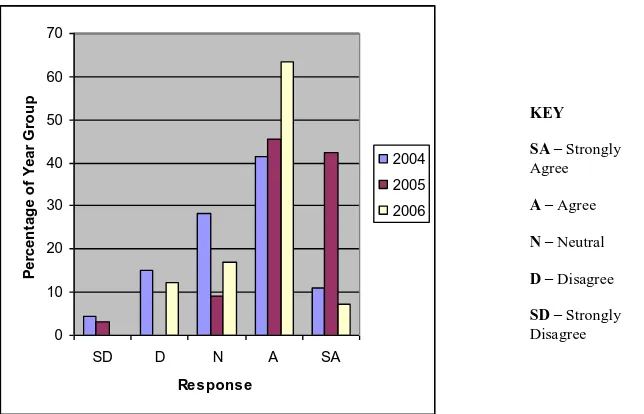
Figure 3.1: Student response (2004) to the statement, "To do well in this subject all you really need is a good memory". ... 47
Figure 3.2 : Student response (2004) to the statement, “In this subject, I was tested more on what I had memorized than what I had understood”. ... 47
Figure 3.3 : Student response (2004) to the statement, “The subject was interesting and made me think”. ... 48
Figure 3.4: Student response (2004) to the statement, "Doing this subject has improved my problem-solving skills"... 48
Figure 3.5: Student response (2004) to the statement, "My spoken communication skills are better as the result of doing this subject". ... 53
Figure 3.6: Student response (2004) to the statement, "I often made comments and asked questions in class". ... 54
Figure 3.7 : Student perceptions of soft skills important to employers as expressed in 2004 focus group sessions ... 56
Figure 3.8 : Student Perceptions of key success factors for university as expressed in 2004 focus group sessions ... 57
Figure 4.1: Guidelines for preparation of Code of Ethics (Software Engineering 2005) ... 68
Figure 4.2: Moodle™ snapshot – Week 1 of course design ... 71
Figure 4.3: Moodle™ snapshot – Week 2 of course design ... 72
Figure 4.4: Moodle™ snapshot – Week 3 of course design ... 73
Figure 4.5: Moodle™ snapshot – Week 4 of course design ... 74
Figure 4.6: Moodle™ snapshot – Week 5-6 of course design ... 76
Figure 4.7: Moodle™ snapshot – Weeks 9-10 of course design ... 78
Figure 4.8: Moodle™ snapshot – Weeks 10-11 of course design ... 79
Figure 4.10: Moodle™ snapshot – Weeks 12-13 of course design ... 81
Figure 4.11: Moodle™ snapshots – Week 13 of course design ... 82
Figure 4.12: Moodle™ snapshots - Weeks 7-8 of course design ... 84
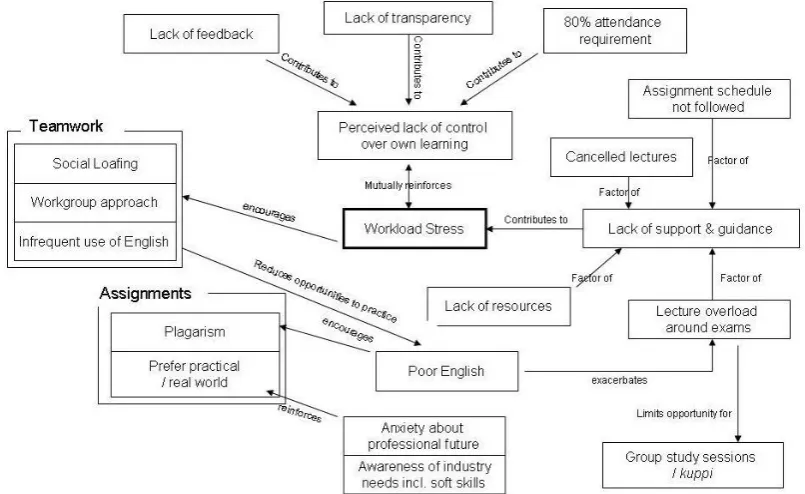
Figure 5.1: Concept Map of Categories emerging from the 2005 Data ... 93
Figure 5.2: Student response (2005) to the statement, "Doing this subject helped me to develop my ability to work as a team member". ... 96
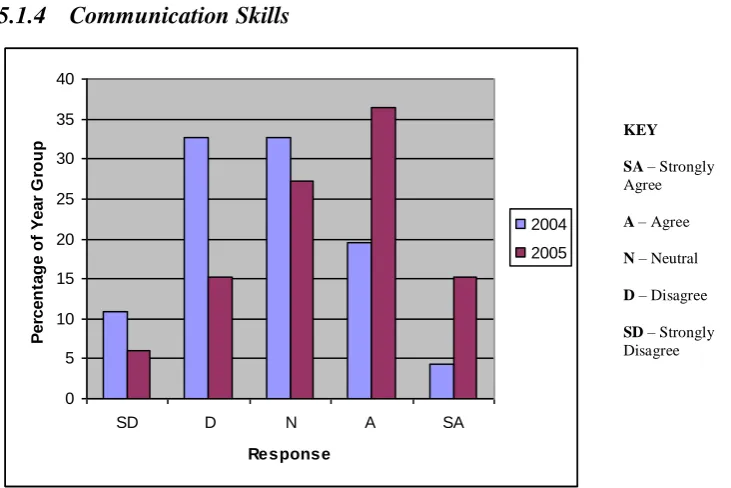
Figure 5.3: Comparison of 2004/2005 student responses to the statement, "I often made comments and asked questions in lectures". ... 100
Figure 5.4: PARs awarded within student groups for Assignment 3 (2005) ... 102
Figure 5.5: Comparison of 2004/2005 student response to the statement, "Doing this subject has improved my problem-solving skills". ... 104
Figure 5.6: Comparison of 2004/2005 student response to the statement, "To do well in this subject, all you really need is a good memory". ... 105
Figure 5.7: Comparison of 2004/2005 student response to the statement, "My spoken communication skills are better as a result of doing this subject". ... 105
Figure 5.8: Comparison of 2004/2005 student response to the statement, "I sometimes felt that my time in class was being wasted". ... 107
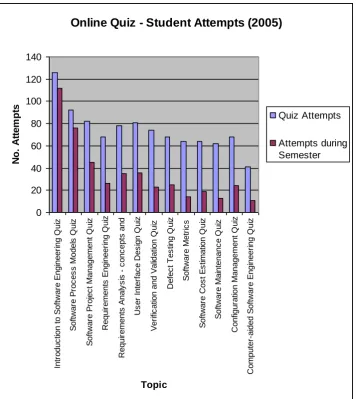
Figure 5.9: Student attempts at online quizzes during and at the end of semester (2005). ... 108
Figure 5.10: Example of an online quiz question targeting understanding of terminology ... 108
Figure 5.11: Example of an online quiz question targeting application of knowledge ... 109
Figure 5.12: Example of a true/false online quiz question ... 109
Figure 6.1: Concept map of emerging categories from 2006 data ... 115
Figure 6.2: Comparison of 2004/2005/2006 student responses to the statement, “Because there is so much work in this subject, it is difficult to understand it all”. 117 Figure 6.3: Comparison of 2004/2005/2006 student responses to the statement, “The workload was too heavy”. ... 118
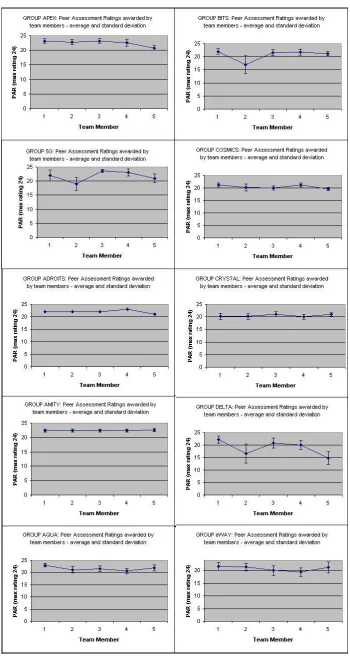
Figure 6.5: PAR awarded within student groups 1-10 for Assignment 2 (2006) ... 122
Figure 6.6: PAR awarded within student groups 11-20 for Assignment 2 (2006) ... 123
Figure 6.7: Perceived usefulness of learning activities experienced in 2006 ... 125
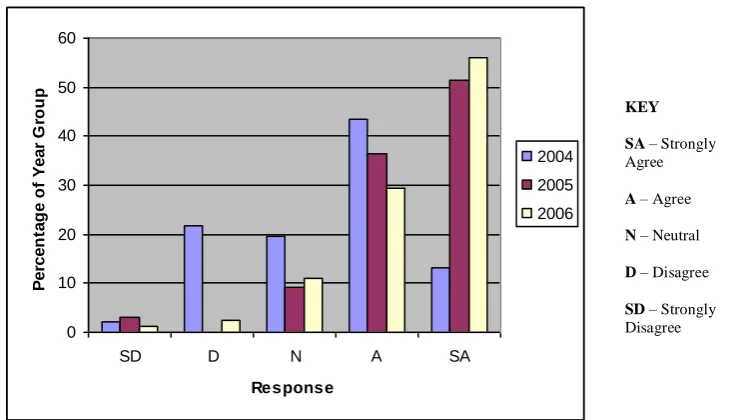
Figure 6.8: Comparison of 2004/2005/2006 student responses to the statement, "Doing this subject has improved my problem-solving skills". ... 126
Figure 6.9: Comparison of 2004/2005/2006 responses to the statement, "My spoken communication skills are better as a result of doing this subject". ... 127
Figure 6.10: Student response (2007) to the statement, "Doing the course in English was difficult for me". ... 128
Figure 6.11: Comparison of 2004/2005/2006 student responses to the statement, "After doing this subject, I feel that I understand how software engineering is used in the IT industry". ... 130
Figure 6.12: Comparison of numbers of students attempting quizzes in 2006 and 2005. ... 131
Figure 6.13: Comparison of 2004/2005/2006 student responses to the statement "I often made comments and asked questions in lectures". ... 132
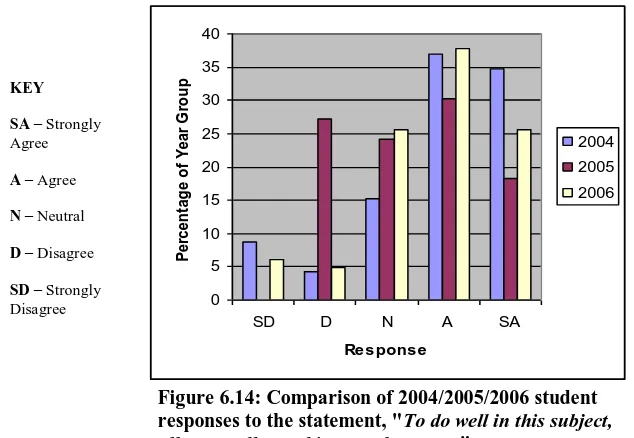
Figure 6.14: Comparison of 2004/2005/2006 student responses to the statement, "To do well in this subject, all you really need is a good memory". ... 133
Figure 6.15: Example of a slide from the Software Evolution lecture ... 139
Figure 6.16: Snapshot of a lesson showing part of the text and an end-of-page quiz question ... 142
Figure 6.17: Snapshot of a glossary entry showing a technical term. ... 143
Figure 6.18: Snapshot of a glossary entry for a non-technical term ... 144
Figure 7. 1: Concept map of emerging categories from data coding in 2007 ... 148
Figure 7.2: Comparison of 2004/2005/2006/2007 student responses to the statement “Doing this subject helped me to develop my ability to work as a team member”. 151 Figure 7.3: Student response (2007) to the statement "I would prefer to do individual assignments rather than team assignments". ... 152
Figure 7.6: Average continuous assessment results 2004 – 2007 Note: Error bars indicate standard deviations ... 155 Figure 7.7: Perceived usefulness of learning activities experienced in 2007 ... 156 Figure 7.8: Comparison of 2004/2005/2006/2007 student responses to the statement “Doing this subject has improved my problem-solving skills”. ... 157
Figure 7.9: Usage statistics for students accessing electronic lecture notes with
voiceover in 2007. ... 159 Figure 7.10: Comparison of 2004/2005/2006/2007 student responses to the statement "Doing this subject has improved my skills in written communication". ... 159 Figure 7.11: Pattern of student usage of Moodle™ lessons over the semester in 2007 ... 160 Figure 7.12: Pattern of student usage of online quizzes over the semester in 2007 . 161 Figure 7.13: Snapshot of SoftChalk™ lesson showing quiz inline with SoftChalk™ lesson text ... 162 Figure 7.14: Quiz feedback shown inline with SoftChalk™ lesson text ... 163 Figure 7.15: Comparison of average grades for summative assessment 2004–2007 ... 165 Figure 7.16: Comparison of 2004/2005/2006/2007 student responses to the statement “After doing this subject, I feel that I understand how software engineering is used in the IT industry”. ... 166
Figure 7.17: Factors contributing to the development of teamwork skills (arrows show what the factor contributes to)... 170 Figure 7.18: Proposed approach to building teamwork skills over the course of the degree ... 171 Figure 8.1: Parameters of an optimal learning environment for FIT students ... 185 Figure 8. 2: PESTS Framework showing the tools that scaffold the integrated
CHAPTER 1
Introduction
1.1
The Research Setting
The evolution of education systems is a challenging process encountering resistance at every turn. This is no less true in Sri Lankan than anywhere else. In the tertiary sector, resistance to change comes from stakeholders at all levels - from senior academic staff who have made their way to the top in a system they understand well and from students who have gained entry to the precious few seats available in universities after a lifetime of competition in primary and secondary schools where the didactic teacher-centered learning environment mirrors that of the universities. The introduction of new technology into education systems can be an opportunity to do the same things that have always been done more efficiently or more cost-effectively or it can be an opportunity to overcome resistance and bring about change. This thesis is a report of a study which attempted to use the introduction of a content management system (CMS) built around a constructivist approach to learning (Moodle™) to a traditional university context to usher in a change in pedagogy. The study, conducted between 2004 and 2007, looks at the impact of introducing the new pedagogy.
The research base was the Faculty of Information Technology (FIT) within the University of Moratuwa near Colombo. Sri Lanka has a total of 17 public universities of which the University of Moratuwa is regarded by many as the premier technical university. Moratuwa has traditionally had Faculties of Engineering and Architecture. Students enrolling in the BSc (Engineering) can elect to specialize in Computing. In June 2001, the university established the Faculty of Information Technology to help meet the unsatisfied demand for IT professionals in the country. 1.1.1 Student Profile – Faculty of Information Technology (FIT), University of
[image:14.595.184.444.510.735.2]Moratuwa
Students participating in this study were in their second year of the three-year B.Sc. offered through FIT. During the period of the study, 47 students were enrolled in second year in 2004, 49 in 2005, 104 in 20061 and 102 in 2007 (Fig. 1.1). Of those enrolled roughly 75% were male and 25% female. These proportions remained constant over the course of the study. The ethnic breakdown of the 2004/2005 groups were around 75% Sinhala, 20% Tamil and 5% Muslim but by 2007, with the escalation of the civil war, the numbers of Tamil students fell so that the proportions were close to 85% Sinhala, 10% Tamil and 5% Muslim. Many students come from outside Colombo and most have been educated in their mother tongue (Sinhala or Tamil) and attended single sex schools.2 In contrast, the language of instruction at the University of Moratuwa is English and the university is co-educational. In Sri Lanka, students follow the General Certificate in Education (G.C.E.) studying to sit their G.C.E. Ordinary Level (O/L) examinations at the end of year 11. Those who pass the O/L examination and wish to go onto tertiary study, must take an additional two years (grades 12 and 13) to sit for the Advanced Level (A/L) examination. Students in second year of university are usually around 22 years of age because of delays experienced in making the move from school to university.3
Figure 1.2 : FIT students first preference for university enrolment in 2006-2007
In most cases, IT was a second or third preference when seeking university entrance (Fig. 1.2); most FIT enrolees would have preferred to have studied Engineering if their marks had supported it.4 Few had any formal study of computing at school
1
This sudden doubling of the enrolment was imposed on the faculty by the University Grants Commission who were under political pressure to provide more tertiary opportunities for high school graduates.
2
Of the 78 students responding to the 2007 course feedback survey, 87% said that they had been educated in Sinhala, 13% in Tamil and none in English. 68% had attended single sex schools.
3
To get a good A/L pass, many students repeat their A levels (up to a legal maximum of 3 times). There are also delays of up to a year while they wait for their A/L examination results and their university applications to be processed.
4
although some had undertaken short courses with private providers after leaving school and while waiting for university entrance.5
1.2
Rationale for the Research
From its inception, FIT has embraced its role of training young professionals for industry by working closely with local employers in the Information and Communications Technology (ICT) industry. Through this close association the faculty became aware that, although University of Moratuwa graduates are highly sought after by industry, employers often expressed disappointment with their lack of “soft” skills such as teamwork, problem-solving and communication skills and a lack of commitment to ongoing independent learning. These issues, described in more detail in Chapter 3, are often mentioned and cited in studies conducted by national industry bodies (SLICTA 2005; CSSL 2000/2001). The same can be said of IT graduates from the public university sector in general (CSSL 2000/2001).
At the time that this research study was initially proposed, the Dean and faculty staff were exploring ways to address these deficiencies and to improve the overall learning environment for students. Faculty staff had recognized the potential of eLearning technologies to create supportive learning environments for their students and so many had taken the initiative to make lecture notes and past examination papers available online. However this did not address the underlying pedagogical issues nor did it address the concerns about poor soft skills development. In a workshop organized by the US National Academy of Sciences in June 2000, Harvard University professor Christopher Dede noted a similar tendency internationally commenting that while many educators had, until recently, viewed IT primarily as a way to increase student access and provide economies of scale for traditional modes of education, IT has the power to do more, namely to „transform education by supporting shared creation, collaboration, and mastery of knowledge‟ (Dede 2000 in Hilton 2002, p.3). He went on to say, „IT is powerful only if the medium is used well‟ (Dede 2000 in Hilton 2002, p.3) and concluded that „in the pedagogy lies the power‟ (Dede 2000 in Hilton 2002, p.3).
1.2.1 Pedagogical Issues
At Moratuwa University, a traditional educational model was used based on lectures (as a vehicle to transfer knowledge from lecturer to students) and lab sessions (where students had the opportunity to practice elements of programming taught in lecture sessions) with examinations being largely a test of the student‟s ability to recall the content conveyed in the lectures. From its inception in 2001, FIT has taken steps to nurture the development of higher order learning skills by including project units at each year level of the syllabus. However, the full potential of these project subjects has not been fully realized and faculty lecturers were concerned about the propensity of the student body to simply rote learn for exams and to plagiarize the Internet and other sources in the production of assignments.
Students themselves, when surveyed prior to the start of the study (refer to Chapter 3), felt that much of what they did at university was geared to rote learning and
5
passing content laden end-of-semester examinations. This was particularly the case for the more conceptual or less practical subjects.
Students received no specific training to develop the necessary soft skills demanded by industry but instead were expected to develop teamwork, problem-solving and communication skills through the experience of working in groups to do assignments and through following lectures and giving class presentations in English (refer to Chapter 3). Group work was encouraged in principle and was mandatory for the project subjects although, prior to this study, no direct training was given on how to work productively in a group or team.
1.2.2 Problem-based Learning (PBL)
A review of the literature (refer to Chapter 4) suggested that Problem-Based Learning (PBL), an approach to professional education used widely across the world (Barg et al. 1999; Dirckinck-Holmfeld 2009; Savin-Baden 2004), would have great potential to assist students to develop the soft skills desired by industry while also providing an environment within which higher order learning skills and analytical/problem-solving skills could be nurtured.
The term Problem-Based Learning (PBL) was originally coined by Don Woods, based on his work with Chemistry students in McMaster‟s University in Canada. However, the popularity and subsequent worldwide spread of PBL is mostly linked to the introduction of this educational method at the Medical School of McMaster University in the end of 1960s (Dirckinck-Holmfeld 2009).
Brodie (2007, p. 32) draws on the work of Mayo et al. to describe PBL as „a pedagogical strategy where students are presented with open ended, contextualised, real world situations. They develop content knowledge, application of knowledge and problem solving skills by defining the problem, sourcing resources (including prior knowledge and experience of team members) and identifying gaps in their own knowledge‟. She further draws on the work of Wilkerson & Gijselaers and that of Brodeur et al. to claim that, „PBL is now a widespread teaching method in disciplines where students must learn to apply knowledge, not just acquire it‟ (Brodie 2007, p.32).
PBL is a teaching-learning methodology that reflects a constructivist pedagogy (Bichelmeyer & Hsu 1999; Savery & Duffy in Bentley et al. 1999) and, as such, can be argued to be more suited to information technology (IT) education than behaviourist approaches which focus on identifying a body of knowledge to be taught and instructional techniques to assist the learner to acquire that knowledge (Bichelmeyer & Hsu 1999). Knowledge in the field of IT is characterised by rapid obsolescence (Bentley 1999; Kirsch 1996; McCracken & Waters 1999). In such an environment, learning how to learn becomes more important than acquiring specific knowledge which may soon be out of date. Constructivist pedagogies such as PBL which emphasise metacognition (Barg et al. 1999; Bichelmeyer & Hsu 1999) as well as mastery of subject knowledge are more appropriate.
Bentley (1999, p. 70) cites a working group report by Ellis et al which suggests that „PBL suits the Information Systems (IS) and computing fields as:
IS and computing are, for the most part, problem driven;
Practitioners must constantly update their skills and competencies in order to keep abreast of new technology;
The project group is the predominant mode of operation within the industry; IS and computing cross discipline boundaries‟.
This analysis is particularly relevant to the area of Software Engineering which focuses on finding IT solutions for organizations. This point is elaborating in Section 1.2.2.2 below.
The outcomes ascribed to PBL such as improved communication, independent learning, critical thinking, collaboration and teamwork skills, increased confidence, and increasing readiness to take responsibility for one‟s own learning (Aldred et al. 1997; Bentley et al. 1999; Kabir & Nelson 2007; Madden et al. 2007; Nuradhi & Kiswandono 2007) also suggest that a PBL approach would help students develop the graduate attributes targeted in this study.
Currently, the label of PBL is used „to cover an amazing diversity of educational practices such as problem-solving learning, case-based learning, enquiry-based learning, problem-oriented learning, and action learning‟ (Dirckinck-Holmfeld 2009, p.4). While there is some debate in the literature as to what truly constitutes PBL, Dirckinck-Holmfeld (2009, p.4) maintains that „the various PBL models all share a focus on learning through investigating real world problems rather than traditional subject based teaching, and student centred learning approaches‟. This is the concept of PBL adopted in the current study. The theory of situated cognition suggests that knowledge gained through the investigation of real world and open problems can more readily be applied to the resolution of new and different problems than conceptual content transferred without a meaningful context (O‟Donnell 1999) and it is this problem solving skill which software engineers require.
1.2.2.1 PBL at FIT
Despite the potential value of PBL, it is not an approach used in Sri Lanka outside some medical faculties (Khoo 2003). It was not until the Dean (my Associate Supervisor) had the opportunity to observe PBL learning environments first hand that he became convinced that a PBL approach might well be the answer for FIT. This opportunity arose on a trip to Australia to meet University of Southern Queensland staff in 2004. In Singapore, he was able to meet with the staff of Temasek Polytechnic who have been using a problem-based learning approach across all faculties since 1999 and who are regarded as a centre of excellence in the field6 in Singapore, hosting annual conferences, publishing books and articles on the subject, and conducting a range of training programs. At USQ, the Faculty of Engineering and Surveying, also an award-winning7 faculty for PBL, was very supportive allowing us to observe PBL sessions first hand and to speak to a number of lecturers about their personal experience with the PBL approach.
6
Temasek Polytechnic received The Enterprise Challenge Shield from the Prime Minister's Office in Singapore for successfully bringing to fruition the development of a Problem-based Learning Education Model. The award recognizes the project which has contributed the highest new value to the Public Service.
7
The following is an excerpt from an interview with the Dean of FIT after this visit and in the first year of the study,
We have done some research on different learning methodologies and we have started looking at a learning methodology called Problem-Based Learning where the students are guided, rather than taught, how to solve problems. Problems that are very much real life problems, where they have to learn how to work in teams, they have to learn how to gather the knowledge and resources required and put all these things together to solve the problem and also then, to present this solved problem in a professional way. By trying to do this, we not only want them to learn the subject content because the industry is generally happy about the subject knowledge of these graduates when they go out. But the problem that we have is not in the subject knowledge but in how to use this subject in a real development environment.
(Dean FIT, Academic Staff Interview 2005)
Although it was anticipated that the highly traditional university culture, evident in the attitudes and expectations of both lecturing staff and students, might pose significant challenges to the introduction of a new pedagogy, the Dean and I were optimistic that, if we were able to provide a „proof of concept‟ through piloting a PBL approach successfully - initially in a single subject area - we would be able to win support for changes to the learning environment of a wider scope, eventually integrating the approach across the syllabus.
From the first year we will introduce this new learning environment, the problem-based learning environment, but very slowly because we don‟t want to try to make a drastic change and fail because we are going against traditionally established system that span years and years of getting use to a lecturer coming and giving lecture notes and then going for an exam that is based on the lectures that are given. So we don‟t want to drastically change this but slowly introduce, little-by-little, this environment where the students will learn for themselves what they have to learn, with our support. Of course we will give them guidance, we will give them resources, but they will take charge of their learning process and this is extremely important in a subject like ours which changes day by day.
(Dean FIT, Academic Staff Interview 2005)
1.2.2.2 Introduction of PBL: FIT’s starting point
It was thus decided to introduce PBL initially into the Software Engineering course, a second year, first semester subject. Software Engineering was a logical starting point since software engineers are the problem solvers of the IT industry. They usually work in teams, often comprising representatives of both the business and the IT side of an organisation. In these teams, it is usually the Software Engineers and Project Managers who interface with the client and, as such, communication skills are critically important. All members of the team lend their collective experience to the design and implementation of systems – each one unique with its unique set of problems to be solved. Hence Software Engineers are expected to have well developed problem-solving, teamwork and communication skills and, like everyone in the ICT industry, they need to work hard at keeping up with the rapid change which is the hallmark of the industry – lifelong independent learning skills.
1.2.2.3 eLearning Tools
tools to academic staff. Consequently, the Moodle™ Content Management System was installed on the faculty server and student accounts established. Moodle was chosen because the constructivist philosophy behind its design matched the pedagogical philosophy of PBL.
1.3
Research Questions
Since PBL was being introduced to the faculty on a pilot basis,8 close monitoring of its impact on student learning was imperative. However, I felt that the research needed to go beyond the simple monitoring and evaluation of a new initiative and gained the support of the Dean of FIT to pursue a program of research relevant to the PBL pilot. For instance, while PBL has been used successfully in professional education courses as diverse as engineering and education since the 1970s (Bichelmeyer & Hsu, 1999), I was wary of simply taking an approach from a western setting and using it without modification in the Sri Lankan context. In this instance, the advice of Dimmock (2000), working in Hong Kong is relevant,
Questions arise about the relevance, applicability, validity and appropriateness of theories, perspectives and policies which are adopted and „cloned‟ by education systems whose cultures and socio-political-economic contexts are quite dissimilar from those in which they were conceived…Western ideas and practices tend to prevail even in non-Western settings, a situation reinforced by the unquestioning assumptions made and the ready willingness on both the exporting and importing sides to regard theories, policies and practices as culturally neutral (Dimmock 2000, p.40).
Khoo (2003), started his paper with the question, “Can Asian medical schools and their students adapt to problem-based learning (PBL)?” which he then defends with the explanation, „so far no one has questioned whether the outcomes expected of the learner in a PBL setting are applicable to students from different cultural upbringings … [and]the practice of PBL is premised on certain attitudes and characteristics of the learner that may not necessarily be applicable to medical students of different cultural backgrounds‟ (Khoo 2003, p.401).
Not only did I anticipate the need to modify or scaffold PBL approaches to suit the social culture of Sri Lanka and the organizational culture of the university, I also wanted to be able to understand the basis for any modifications that needed to be made. How could established learning theory together with my own understanding of the local context help me to understand more about which teaching-learning methods could be successfully transported and which could not? Would this newly found understanding help, in turn, to contribute to that same body of knowledge about learning theory?
In order to answer these questions, my research focuses on the impact of the educational context on the implementation of PBL in FIT.
Accordingly the research questions are,
1. How can a problem-based learning approach be implemented effectively in FIT to provide students with the opportunity to develop problem-solving, teamwork, communication and independent learning skills?
2. How can the lessons learnt from the experience be used to derive a theoretical framework which could be applied beyond the limited context of the study?
8
1.4
Outline of the Thesis
Chapter 2 of this thesis will describe, in more detail, the design of the study implemented to answer these research questions. Chapter 3, will sketch out the background to the study – employer expectations, the learning environment and the background of the students participating in the study – all of which have been briefly described in this introduction. The initial design of the intervention was based on an understanding of the context derived from Chapter 3 and is described in Chapter 4. Chapters 5 – 7 follow the cycle of intervention, reflection and redesign that is the basis of the study, dealing with the results of implementing the design in 2005, 2006 and 2007 respectively and the impact that reflection on these findings had for changes to the design in the subsequent year. Chapter 7 discusses the final year of the study and looks at the trends emerging over the course of the research. Finally, Chapter 8 considers the implications of the findings in deriving a theoretical framework and a model for how this framework might be applied in other contexts.
CHAPTER 2
Study Design and Research Methodology
It is the intent of this study to explore in depth the application of PBL in a particular context in order to formulate a framework within which the approach can be later effectively scaled-up. As there is only limited research available on the implementation of PBL in similar contexts - either in Sri Lankan or South Asian generally - a design-based research approach was adopted to explore and refine the potential applicability of PBL. It is argued in the literature that design-based research is an approach particularly suited to educational research where there is a need to inform practice where such practice will always be situated in unique social contexts (Lagemann 2002; Barab & Squire 2004). The research questions themselves emphasize context and the need to understand the interplay between pedagogy, as represented by the designed intervention, and social context. In investigating these interactions, the study will not seek to control the variables which constitute the context but instead seek to describe and understand them. The designed intervention will be informed by existing learning theory. In turn, it is intended that the results of the study will contribute to a greater understanding of the underlying theory. Through an exploration of relevant, recent literature, this chapter will show how such aims and objectives are consistent with design-based research approaches.
In conducting the study, participants including lecturers, instructors and, to some extent, students were involved as co-participants. This chapter explains how such an approach is consistent with design-based research and the measures undertaken to be able to draw from this rich source of data without compromising the objectivity of the study.
2.1
Design-Based Research (DBR)
Yutdhana (2005) claims that, over the last decade, educators have come to realise that there is a gap between educational research and the problems and issues of everyday educational practice. She explains that, while much valuable research has been done using the methods or techniques of other disciplines, it is often difficult to translate these results into practice. Hence, what is required is a „new methodological approach guiding [researchers] to conducting research that speaks directly to practice‟ (Yutdhana 2005, p.170). Lagemann (2002) concurs, arguing that the test of the value of educational research is whether, if acted upon, it is likely to achieve the desired result(s). She, like Yutdhana (2005), acknowledges the value of research that has been conducted using research methodologies borrowed from other disciplines but argues for new approaches specifically tailored for the needs of education. She posits that it is research which combines „knowledge of many sorts … thereby providing evidence about the chances of accomplishing one's goals, that should distinguish education research from other kinds of investigation. It is the capacity to predict outcomes from specific actions taken in practice that should set education research apart from other kinds of scientific inquiry‟ (Lagemann 2002). She cites the American National Research Council as stating that,
specialization of education research. Among the features that make science in education different from science in other fields, none is more important than the fact that education varies constantly depending on the physical, social, cultural, economic, or historical environment (Lagemann 2002).
2.1.1 Emphasizing Context
According to Lagemann (2002), the key to generating educational research that speaks to practice lies in providing the practitioner, whose task it is to assess the applicability of the research to his/her own circumstances, with a detailed sketch of the context (physical, social, cultural, economic and historic) within which the research results were obtained and hence an idea of the extent to which the research results can be generalised to the practitioner‟s own context. This emphasis on the importance of context in educational research is the foundation of design-based research (DBR).
The DBRC (Design-Based Research Collective) state that „design-based research methods are of value in addressing research questions related to the enactment of interventions in varying contexts‟ (DBRC 2003, p.8). Barab & Squire (2004, p.2) claim that design-based research offers the benefit of „research results that consider the role of social context and have better potential for influencing educational practice, and creating tangible products, and programs that can be adopted elsewhere‟.
In this study, the context is the Faculty of Information Technology (FIT) at the University of Moratuwa in Sri Lanka. Chapter 3 provides an introduction to this context by sketching the historical background to tertiary education in Sri Lanka highlighting factors which have had significant impact on the profile of FIT students and lecturers. It then goes on to describe the findings of a baseline survey conducted with students at the very beginning of the study before any intervention. These findings shed further light on the context while, at the same time, helping to set the parameters of the study. Data from the student survey is supplemented with excerpts from interviews conducted with academic staff in the first year of the study. Although the research was confined to a single faculty in a single university, it will be argued that the homogeneous nature of the public university system in Sri Lanka make it likely that the findings will have wider relevance. By describing the context in detail, this report seeks to provide evidence which will allow practitioners elsewhere in the Sri Lankan university system to decide whether the study is relevant to their own particular context.
2.1.2 Theory embodied as Design
„The term design-based research was first used in Hoadley (2002) to describe work combining software design and research in education‟ (Yutdhana 2005, p.170). Trialing teaching-learning methods and software tools has been at the heart of design-based research ever since.
In education, this kind of research has been typically associated with the development of curricular products, teaching and learning methods or software tools (Collins 1992). At the core of such research is the development of an artifact for the purposes of improving teaching and learning (Gorard 2004, p.100).
context might be improved. Hence, whereas in other methodologies one might set out to test a hypothesis, DBR embodies the hypothesis in an artifact and sets out to test the validity of the artifact in the given context (DBRC 2003). Further, while other research approaches might seek to control environmental variables, DBR takes the stance that any educational context will be multi-variant and that the task of the researcher is not to control these variables but to describe the context in sufficient detail to allow an assessment of the extent to which the research results can be generalized (Barab & Squire 2004; Hoadley 2004).
2.1.3 Contributing to the Theory Base
Design-based researchers endeavour to promote understanding and further development of educational theory by testing how different pedagogical approaches / methods / tools work or fail in different contexts. Collins et al. (2004, p.19) state that, „Design research is not aimed simply at refining practice. It should also address theoretical questions and issues if it is to be effective‟. In the current study, I was interested in understanding how a PBL approach might be implemented successfully given the challenges of the educational context within FIT but also given the opportunity to significantly scaffold the approach with appropriate educational technologies. However, beyond creating an educational product to support the teaching-learning process in a particular context, I also wanted to be able to understand the outcomes of implementing the approach in terms of established educational theory and, if appropriate, to be able to go beyond this to positing a model for professional education and skills training which might be of use in the wider context of Sri Lankan undergraduate education.
This focus of the study on understanding and explaining the results in terms of learning theory and indeed contributing, in turn, to learning theory is again consistent with DBR approaches.
Importantly, design-based research goes beyond merely designing and testing particular interventions. Interventions embody specific theoretical claims about teaching and learning, and reflect a commitment to understanding the relationships between theory, design artifacts, and practice…The intention of design-based research in education is to inquire more broadly into the nature of learning in a complex system and to refine generative or predictive theories of learning. Models of successful innovation can be generated through such work - models, rather than particular artifacts or programs, are the goal (Brown & Campione in DBRC 2003, p.6-7).
and
[I]nstructional designs materially embody theoretical conjectures about how people learn. They therefore carry expectations about how designs should function in a setting, and tracing how such expectations are met or unmet can refine the underlying theoretical conjecture (Sandoval & Bell 2004, p.200).
In summary, in the design-based research tradition, this study focuses on the design of a teaching-learning strategy and education technology tools based on established theory but with the expectation that testing how these tools and strategies work or do not work in the selected context will support generating a theoretical framework of relevance.
2.2
Methodology
Gorard (2004, p.102) describes the steps of DBR as follows,
required for the classroom context, and allows reflection on the educational processes involved in attaining those aims.
Consistent with this explanation of DBR, the current study adopted an iterative approach over a period of four years with the goal of perfecting an educational artifact for teaching Software Engineering – a second year subject in the FIT BSc syllabus. The artifact comprised a work plan, student exercises and assignments, and a supporting set of eLearning tools. The specifics of each phase of the program are presented in Table 2.1.
Table 2.1: Phases of the Study Program
2004 Collection of baseline data and implementation of an employer survey (Appendix A) to understand more clearly the existing educational context and the gap between graduate skills and employer expectations. The baseline study included a course feedback survey, focus group interviews and an exercise given to test students‟ ability to apply their knowledge to a case study (Appendix B). A review of the literature provided background information about the educational culture of the country and the tertiary sector.
2005 Design and implementation of the intervention based on established theory and an understanding of the existing culture and workforce challenges revealed by the literature review.
2006 Revision of the intervention based on the results of focus groups and the course feedback survey conducted in 2005 (Appendix B).
2007 Revision of the intervention based on the results of focus groups and the course feedback survey conducted in 2006 (Appendix B).
At the time that the study was commenced, the Dean of FIT (my Associate Supervisor) and I had agreed that the faculty should look at adopting the PBL approach in additional courses after the initial pilot. Although the level of input required for the revision of interventions precluded this, I did request, and was granted permission, to take on the co-supervision of industry projects for the 2006 student batch9 in my capacity as Visiting Lecturer. The objective here was to try to assess whether any of the gains made in the Software Engineering course were being carried over to the project. This would have been consistent with the different aims of the PBL-based Software Engineering course and the project subject. As Perrenet et al. (2000, p.348) point out, „Project work is more directed to the application of knowledge, whereas PBL is more directed to the acquisition of knowledge‟. The second year Industry Project (IT2999: ICT Design Project) that these students were enrolled in requires students to make contact with local businesses and negotiate to design new software systems for them. As the first stage of this project was the development of a Software Requirement Specification (SRS) similar to that prepared for the final assignment of the Software Engineering subject, it presented itself as an ideal avenue for checking whether skills acquired in Software Engineering were successfully being applied by students beyond that context.
2.2.1 The Role of the Researcher
Throughout the four years over which the research was conducted, I worked in partnership with the course lecturer and a number of other faculty staff. In the first year of piloting the intervention, I was able to draw on the expertise of two lecturers who had experienced undergraduate study overseas where small group and collaborative learning were the norm. All three lecturers participated in my
9
introductory seminars on the topic of PBL made to the faculty in 2004/5 following a study tour of institutions using the PBL approach by myself and the Dean in 2004. Additionally, in 2005, the course lecturer and one of the other facilitators attended a PBL Conference at Temasek Polytechnic in Singapore.10 With the departure of the two supporting lecturers in 2006 in pursuit of higher studies in the UK, the course lecturer obtained the services of three university instructors11 to help provide support to student groups in tutorials. Unfortunately, these people did not have a background in small group work and so could not be expected to facilitate groups by themselves without extensive training for which they could not be released. At this point I discussed with the Dean and the principal lecturer the possibility of taking a more direct role in conducting the Software Engineering course to compensate for the loss of capacity caused by the departure of the original facilitators. We agreed that I should co-teach the course as a Visiting Lecturer. For the most part, the principal lecturer conducted the lectures whilst I and the instructors took on responsibility for tutorial sessions. The instructors acted as “floating facilitators” working with teams as questions or problems arose. I directed the group as a whole to alternating small group discussion, class discussion, mini-lectures and report back sessions. In this, we followed the model of implementing PBL in large class settings recommended by Duch (2001).
Since the primary goal of the intervention was to pilot the adoption of PBL in FIT, I felt that it was important that lecturers and tutors/instructors worked closely with me, not only in implementing the intervention, but also in planning the design and analyzing the results. Robinson (in DBRC 2003, p.7) states,
[I]n design-based research, practitioners and researchers work together to produce meaningful change in contexts of practice (e.g. classrooms, after-school programs, teacher on-line communities). Such collaboration means that goals and design constraints are drawn from the local context as well as the researcher's agenda, addressing one concern of many reform efforts.
It was also important that we all had a shared understanding of, and commitment to, what the course design was meant to achieve to avoid “lethal mutations” - a term used by Brown and Campione (in Collins et al. 2004, p.17) to describe the situation where the goals and principles underlying the design are undermined by the way the design is enacted. As well as sharing the teaching load, the research team met weekly both to discuss observations of student reactions to the course and to plan for the following week. Once a semester, I recorded formal interviews with my co-researchers. I anticipated that the familiarity of my co-researchers with the local context would be a valuable guide at all stages of the research.
Participants in DBR are acknowledged as co-participants in the design and analysis. In traditional experimental studies, participants are usually known as "subjects" who are assigned randomly to treatments. In DBR, co-participants' expertise and in-depth understandings are essential to the research process and outcomes (Yutdhana 2005, p.171).
Although the traditional role of the researcher is that of observation at a distance removed from the classroom, I elected to interact directly with students in tutorial classes and the occasional lecture. I felt that my interaction with the students and lecturers and my direct experience of the university learning environment allowed me to better understand the feedback received through focus groups and
10
“Adaptive Strategies for PBL in a Supercomplex World”, 15-16 March, 2005
11
questionnaires. My direct involvement with the students also gave me the opportunity to stress to them the importance of their own roles in helping to improve the course learning environment by providing meaningful feedback on what they had experienced in focus group sessions and through the participant course experience questionnaire.
Hoadley (2004, p.205), taking on the dual roles of teacher and researcher argues,
In design-based research, the process of forcing the same people to engage the theory, the implementation of intervention, and the measurement of outcomes encourages a greater degree of methodological alignment. … forcing individuals to carry ideas all the way from explanation to prediction to falsification to application seems like the missing link in educational research that will ensure our theories have practical implications. Indeed, we may have been deceiving ourselves all along, in that we never really had a handle on whether our treatments really represented the theory-interpreted conditions they were standing in for. In situations where the relevant variables of learning are multitudinous (thousands of contextual, individual, and group factors; myriad teacher decisions made on the fly) and hard to control out, being intimate with the research setting and linking on an extremely fine scale, the designed and enacted intervention may be our best hope for relevance.
In program evaluation methodologies oriented more to ethnographic procedures than to measurement procedures, the researcher is required to maintain a physical presence in the research setting. One such approach, the illuminative evaluation model, was originally developed as an educational evaluation approach that emphasized context and interpretation (Patton 2002). In its emphasis on documenting how a program has changed and been shaped by its context, in its focus on stakeholders' personal perceptions and experiences, and in its progressive focusing on emergent issues which are identified and explored gradually over time (Maxwell 1984), the illuminative evaluation model closely parallels the approach used in this study.
The aims of illuminative evaluation are to study the innovative program: how it operates, how it is influenced by the various school situations in which it is applied; what those directly concerned regard as its advantages and disadvantages; and how students' intellectual tasks and academic experiences are most affected. It aims to discover and document what it is like to be participating in the scheme, whether as teacher or pupil, and, in addition, to discern and discuss the innovation's most significant features, recurring, concomitant, and critical processes (Parlett & Hamilton in Patton 2002, p.172).
Whilst I would argue that the aims and approaches of the illuminative evaluation model and similar ethnographic methodologies are consistent with my own, mandating my presence in the research setting, it must be acknowledged that direct interaction with research subjects always brings with it a risk of bias (Lagemann 2002; Barab & Squire 2004).
[S]cholars of education have … now begun working to develop new approaches to education research. These have often involved design experiments in which a researcher develops an innovation and then investigates it while implementing it. According to traditional disciplinary canons of rigor, this mode of research can be seen as subjective and open to bias. And yet, such research is likely to be extremely productive in education, where research must be usable to be effective. The challenge now is to find new ways to address matters of bias so the results of such work can be trusted (Lagemann 2002).
2.2.2 Addressing the Issue of Bias
Reliability of findings and measures can be promoted through triangulation from multiple data sources, repetition of analyses across cycles of enactment, and use (or creation) of standardized measures or instruments (DBRC 2003, p.8).
With this in mind, I drew on the following range of data sources in presenting the results of the research:
1. Personal Observations of the researcher and lecturers. These draw on notes made after weekly meetings with the research team (the course lecturer and/or instructors).
2. Focus Group Interviews – 3 groups were interviewed after each semester of the intervention. This represented the views of 24 students (equivalent to 51% of the baseline batch of 2004, 49% of the 2005 batch, 23% of the 2006 batch, and 23.5% of the 2007 batch).12
3. Student Surveys – all students were asked to fill in a Course Experience Questionnaire after each semester of the intervention. The return rates were as follows : 94% of the baseline year group, 67% of the 2005 group, 78% of the 2006 group, and 76% of the 2007 group).
4. Student reflections – students were asked to reflect on aspects of the course and submit written reflection papers. The 2005 batch was asked to submit two reflection papers – one on learning and one on teamwork and the 2006 batch to submit a single reflection on teamwork. Submission of reflection papers was part of required coursework.
5. An in-class exercise was given to students in their Software Engineering class in the baseline study to test application of knowledge skills. This exercise required them to put themselves in the role of a consultant interviewing a client in order to prepare a cost estimate for a project. To complete the exercise they had to use their theory knowledge of software cost estimating and apply it to the context of the imaginary client‟s corporate profile. A copy of the exercise is included in Appendix B.
6. Assessment marks (formative and summative assessment results were used as separate indicators given that the former was based on assignment work and the latter on examination results).
7. Convergent interviews with faculty lecturers at the beginning of the study followed by informal discussions thereafter. Convergent interviewing is a form of diagnostic interview which can be used to probe for opinion on an issue where interviewees may have widely divergent viewpoints. Interviews are unstructured; apart from an initiating question, interview questions are not pre-set which decreases the likelihood of responses being constrained by the questions asked. Instead respondents are led to talk about the issue of interest for something between 45 minutes and one hour by the use of prompts which either ask the interviewee to explain divergent opinions expressed by his/her colleagues or which challenge him/her to find exceptions in areas where there has been broad agreement (Dick 2002a; Dick 2002b). In this case the initial
12
question posed to seed the interview was, “What sort of graduates should FIT try to produce and what is being done or can be done to achieve this?”
8. Formal interviews with the research team at the end of each iteration of the course (2005, 2006 and 2007).
Care was taken throughout the study to ensure that students knew that their feedback was given anonymously. Focus groups were conducted by a third party external to the university who stressed to respondents that anything said in the focus group would be treated confidentially. Accordingly, they provided session transcripts with the names of respondents substituted by a code.
Focus group discussion guides for each year, copies of the Course Experience Questionnaire for each year, copies of questions inviting student reflections, and a copy of the in-class exercise given to students as part of the baseline study are included in Appendix B.
Hoadley (2004, p.205) cautions that,
[B]ecause the researchers [in DBR] are participant-observers who intervene deliberately in the settings they study, it is incumbent on the researcher to describe and monitor ways that their own agenda is responsible for the results. A researcher may produce a successful outcome due to a wonderful theory or an effective treatment or through unintended aspects of her or his own participation in the situation. Design-based researchers must not only document their perspective or starting point, but must also document any plausibly relevant interventional strategies used not only by participants observed, but also by the researcher herself or himself.
This caution is well-founded and is echoed by Denscombe (2003, p.273) who advises,
[T]he role of the self in qualitative research is important, and there is a growing acceptance among those involved in qualitative data analysis that some biographical
details about the researcher warrant inclusion as part of the analysis, thus allowing
the writer to explore the ways in which he or she feels personal experiences and values might influence matters.
As an outsider in Sri Lanka my views and actions, even my very presence, were likely to influence the students particularly when they came to know me better through my involvement in both the IT2999 and IT2104 courses in 2006 and IT2104 in 2007. My philosophical orientation to education is constructivist with a personal preference for self-learning in the context of well-crafted learning experiences. It may well have been apparent to students that I was sceptical of the value of lectures – particularly those presented in Software Engineering which were content-heavy, highly conceptual and used a level of English that did not make concessions for learners of the language. I was also convinced that PBL in particular and collaborative learning in general should be foundations of the learning environment at FIT.
Other possible sources of influence include;
coursework conducted by a foreigner (refer to Chapter 3 for a discussion of the Jathika Chintanaya movement).;
That I, the course lecturer, and all of the instructors (with the exception of one of the facilitators in the first year), were female;13
Activities that I introduced to build team spirit such as team games and competitions with team prizes;
That I was observed to meet frequently with the Dean and senior staff of FIT and was prepared to take student concerns as expressed in focus groups / questionnaires to senior staff meetings;
That I was involved in setting and marking assignments while the course lecturer (a member of FIT academic staff) was involved in setting and marking examinations.
Brown (1992) cautions about a possible “Hawthorne Effect” referring to the fact that „[a]ny intervention tends to have positive effects merely because of the attention of the experimental team to the subject's welfare‟ (Brown 1992, p.163).There may well have been a Hawthorne Effect on the study. A student in the 2007 focus group made the comment that only I did research to understand students and their progress; other lecturers did not.
While students certainly knew me better as the result of my direct involvement in the course after 2006, I feel that I would have had an influence on the outcome of the study whether I had been directly involved in conducting the course or not. Even in the first year of the study, when I was not directly involved with students and conducted most of my meetings with lecturers off-campus, students were aware of who I was and took a keen interest in what I was doing. The question of whether the study did achieve the results it did because of a Hawthorne Effect or whether better results might have been achieved with a different lecturer and/or researcher cannot be answered in a small-scale study of this nature. The limitations that the scope of the research imposes on the ability to generalise the findings beyond the immediate scope of the course and the Faculty is recognised and Chapter 8 presents a plan for a future study with a wider scope.
2.2.3 Data Analysis
Denscombe (2003, p.277) makes the important point that, unlike in quantitative analysis,
The process that leads from the data to the researcher's conclusions gets ignored, with the reader of the research report being given little or no indication of how the data - for example, tape-recorded interviews - were actually analysed. This missing element is being noted increasingly as a weakness of qualitative research. Quite rightly, those who use qualitative data are now expected to include in their accounts of research a description of the process they used to move from the raw data to their findings.
Accordingly, in this section, I propose to give a general account of how the data (the focus group transcripts, interview transcripts, notes taken from anecdotal discussions with staff members, course participation questionnaires, student reflections and
13
assignments described above) were analysed. More detailed accounts are given in Chapters 5-7 as the analysis of findings from each year of the study are discussed. In reviewing focus group and questionnaire responses and student reflections, I used inductive data analysis strategies to allow themes and categories to emerge from the data. As such, I did not start the coding process with a list of predetermined codes but instead used a process of open coding whereby the ideas presented in the data were categorized as they were encountered. In this way I hoped to provide myself with ample opportunity to discover unexpected ideas in the data. The idea of allowing the theory to emerge entirely from the data wi