Mapping Qualifications and Training
for the Children and Young People’s
Workforce
Short Report 4
Common Core of Skills and Knowledge:
Characteristics of qualifications and issues in the
field
Sylvia Johnson
Karen Dunn
John Coldron
Contents
1. Background and context to the study 2
2. About this report 4
3. Awareness of the Common Core in current training and development
practice 4
4. Mapping qualifications to the Common Core 6
5. Assessing the Common Core, evidence, target groups 10
6. Summary of issues and recommendations 12
1. Background and context to the study
In December 2004 DfES commissioned Sheffield Hallam University to produce a mapping of qualifications and training developments across the children and young people’s (CYP) workforce to inform the development of an integrated qualifications framework (IQF).
The project was commissioned as part of the Government’s commitment to learn from the Victoria Climbié case and secure the service implementation of the Green Paper Every Child Matters which highlighted the imperative for children and young people’s services to communicate effectively and work in an integrated way.
The DfES has, in consultation with stakeholders, developed an understanding of the skills all staff within the workforce will need to have in common to provide an effective and integrated service. The Children’s Workforce Strategy consultation document (DfES, 2005) provides a vision of the approaches by which a skilled workforce for children and young people’s services can be achieved and maintained. The Common Core of Skills and Knowledge prospectus for the Children’s Workforce, published in April 2005, outlines the basic skills and knowledge needed by people whose work brings them into regular contact with children, young people and their families.
An integrated service depends on an integrated workforce, that is, people who share a common vision of how to provide effective services, share knowledge and information and have a common career structure that provides pathways to move vertically and horizontally so that good practice and expertise can be best shared. An effective qualifications framework is a key part of developing such a workforce.
In working to inform such a framework, the scope of this project has been extensive. The mapping covers all major occupational groups within the children’s workforce, nationally available and approved qualifications from Levels 1 to 8 together with a mapping of the detailed content of significant qualifications against the Common Core. A database was constructed which could capture information about job roles linked to workforce clusters, information about relevant qualifications at individual module level, links between modules and the Common Core.
Contextualising studies undertaken in 6 Children’s Trust Pathfinders (CTPs) provided indicators of the range of existing and planned training and development for all occupational groups and identified significant issues arising currently on the ground in implementation of the Children’s Workforce Strategy. The 6 CTPs were Gateshead, Greenwich, North Lincolnshire, Trafford, West Sussex and Wokingham.
The main research questions:
For the CYP workforce
• What is the list of relevant subjects (from QCA framework for sectors and
subjects)?
• How do job roles cluster?
• What is the agreed list of job roles for each sector cluster?
About qualifications
• What is the range of qualifications available in each of the clusters and
occupational groups?
• What is the volume of qualifications and take up of qualifications?
• What are the constituent elements of qualifications, their commonalities and
complementarities?
• What are gaps?
About training and development provision
• What elements of existing training provision meet the skill expectations of
the proposed core competencies?
• Where are the gaps in this 'match' and what would need to be developed to
fill them?
• Are some occupational groups served better than others in respect of
training provision allied to the proposed core competencies?
• Where does good practice in planned training programme development for
the CYP workforce exist and how can this be shared?
• What forms of delivery are most useful?
This report is one of 6, each with a different theme and targeted at different audiences. These are listed below and details can be found at the end of this report.
Report 1 Developing and maintaining a database of qualifications for the children and young people’s workforce
Report 2 Defining the children and young people’s workforce in a changing scenario
Report 3 Qualification issues that inform the design of an integrated qualifications framework (IQF)
Report 4 The Common Core of Skills and Knowledge and its coverage by existing qualifications
Report 5 Training and qualifications issues, needs and gaps, including data from contextualising studies
2. About this report
This report discusses the findings from an analysis of the extent to which existing qualifications cover the Common Core of Skills and Knowledge and the perceptions on the ground of the significance of the Common Core as identified within the contextualising studies.
The Common Core of Skills and Knowledge was finalised during the lifetime of this project following extensive partnership work between service users, employers and worker interest groups. It was published by the DfES in April 2005 and is non statuary guidance which articulates skills and knowledge needed by all those in the children's workforce. It covers six areas:
Effective communication and engagement with children, young people, their families and carers
Child and young person development
Safeguarding and promoting the welfare of the child
Supporting transitions
Multi-agency working
Sharing information
These areas link directly to the Change for Children outcomes framework published within the Green Paper Every Child Matters. The Common Core Prospectus can be found at http://www.everychildmatters.gov.uk/.
3. Awareness of the Common Core in current training and development practice
At present, knowledge of the Common Core is patchy on the ground. CTPs feel they are working towards particular local agendas, national agendas for particular groups within the workforce and the national agenda for the children's workforce (Every
Child Matters). The Common Core can be lost in this. Data from the contextualising
studies reveals that the Common Core is not well known in Social Care sectors of CTPs although elements of the Common Core (though not necessarily with the same headings) exist within qualifications that are already developed.
Education services or education led joint teams seem more advanced in their awareness of the Common Core. This may partly be explained by the need to make changes to their workforce driven by the workforce remodelling agenda for schools. The use of qualifications for teaching assistants is evident in CTPs and key aspects of the Common Core are demonstrated through the mandatory units.
Other examples of activity directly relating to the Common Core which were identified during the contextualising studies were:
• In Gateshead, the multi-agency training group (organisational and training
consider how to deliver multi-agency training on the common core but this is at an early stage. However, there was recognition that to some extent the common core is being addressed through existing training.
• North Lincolnshire CTP is just starting to match the Common Core to existing
training provision. This hasn’t been a priority to date. There is a shared view that introducing the Common Core into initial training would be a more manageable strategy in terms of a starting point than matching it to post qualifying training.
The Common Core has provided a useful tool for CTPs to begin the process of self evaluation in respect of their current training provision and where the strengths and weaknesses of it lie:
“When I look across our workforce here I can say with certainty that in all sectors current qualifications and training don’t necessarily cover all aspects of the Common Core at the moment. There is a difficulty in matching to them all and that gives us important and useful knowledge. But equally it helps us to map progress being made, for example - the vocational qualification we are going to be introducing shortly through Learning and Skills funding has two mandatory units one is working with children and people and the other is working with adults and I think that’s the first pilot that is using the Common Core”
However, there was also a feeling that real engagement will come later:
“I think the difficulty is at the moment is that we are not far along enough with cultural change for people to look at core competencies. Everybody is still pretty focused on their professional or clinical competencies - and this is especially true for health colleagues.”
It is important to note that the process of informing and communicating about the content of the Common Core has contributed to understanding on the ground being limited:
"I am sorry to raise this again but we have found it very difficult to absorb and plan to, as it keeps changing. You know every time you read a new document there is a different interpretation..."
There is a perceived conflict with the NHS Core Skills initiative, both in the failure to match the Common Core and the Core Skills and in the conflicting priorities for workforce development. Could there be some reading across of Common Core to the NHS core skills? Communication is a common area. The predominant view was that we should be ‘reading across’ and filling gaps between existing competencies rather than creating new competencies.
4. Mapping qualifications to the Common Core
Work commissioned by DfES and completed by Elaine Sauve on mapping National Occupational Standards to the Common Core informed a wider mapping of the Common Core to a subset of qualifications held in the database developed for this project.
Identification of the most significant qualifications in each workforce cluster as a group that could be mapped, was extremely problematic and is discussed further in Report 3. However, about 200 qualifications have been mapped across workforce roles.
The methodology for mapping was discussed at some length by the research team. Sauvé's work had generated a simple mapping which identified whether or not a particular occupational standard addressed any of the relevant 6 Common Core areas.
Following discussion with Sauvé and consultation with the DfES it was agreed to follow this approach with its consequent level of detail, and identify by module/unit of each of the selected qualifications, whether or not any aspect of an area of the Common Core was addressed within that module/unit.
How far each qualification covers the Common Core was judged by assessing how far the content and intended learning match the skills and knowledge required. The SHU database matched at the level of the title of the elements of modules, and/or against a list of learning outcomes and/or mandatory professional standards.
For each qualification the content was read and a preliminary judgment made for each of the six areas of expertise as to whether or not it was covered. This was recorded on a simple grid. At the beginning of the process each of these judgements was refereed/moderated to ensure consistency of judgement. Once consistency was established only a sample needed to be moderated..
Of course this approach raises questions (as all mappings do) about the extent to which a Common Core area is actually addressed by a particular module/unit. A mapping is also to some extent a question of judgement. Common Core areas themselves incorporate a significant number of skills and a significant amount of knowledge. Furthermore the Common Core does not refer to the level or volume of learning. In one sense then, this is an elementary mapping, rather than a complex mapping.
Which Common Core Areas are currently best covered by existing significant qualification?
As 'qualifications' have been mapped by module/unit, this equates to approximately 3500 modules which have been mapped against the Common Core areas.
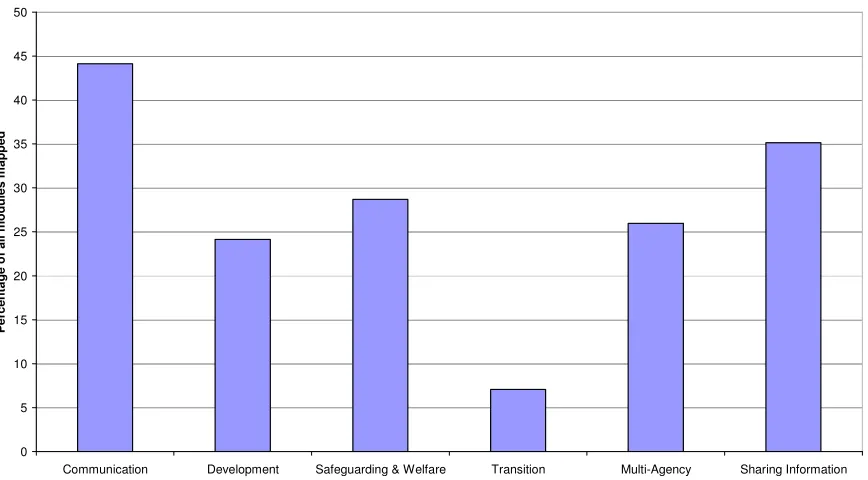
[image:8.595.83.517.409.649.2]The percentage of these total modules mapped to each of the Common Core areas is shown in Figure 4.1.
Figure 4.1 Percentage of modules (from approx 200 qualifications) mapped to each area of the Common Core
Communication Child development
Safeguarding and welfare
Supporting Transitions
Multi-agency working
Sharing Information
No Mapping
44 24 29 7 26 35 23
These percentages do not total 100% since some modules map to more than one area of the Common Core.
This data highlights the relatively low coverage in modules of the area 'Supporting Transitions', and the relatively high coverage in modules of 'Communication'.
Figure 4.2 Percentage of modules mapped to each area of Common Core
Mapping of qualifications and modules against Common Core
0 5 10 15 20 25 30 35 40 45 50
Communication Development Safeguarding & Welfare Transition Multi-Agency Sharing Information
P
e
rc
e
n
ta
g
e
o
f
a
ll
m
o
d
u
le
s
m
a
p
p
e
d
Figure 4.3 Percentage of mapped qualifications covering 1 - 6 areas of the Common Core
Number of Common Core areas covered
1 2 3 4 5 6
% of those qualifications mapped (approx 200)
2.4 4.7 12.4 20.5 30 30
This is a reasonably positive perspective as it shows that about 60% of this set of roughly 200 significant qualifications for the Children's workforce covers 5 or 6 areas of the Common Core to some degree or another.
Some care is needed in the interpretation of this figure as mapping an NVQ with all its options may include mappings which are not applicable to some individuals who have not taken those options which map well.
How does coverage vary by level of qualification?
We considered how coverage varied with level of qualification. In Figure 4.4 below, the relative coverage by level across the set of mapped qualifications (approximately 200) is shown. As the number of modules mapped at Levels 1, 7 and 8 is small, they have been excluded from the analysis.
Figure 4.4 Common Core mapping by Level
Common Core mapping of modules by level
0 10 20 30 40 50 60 70
Level 2 Level 3 Level 4 Level 5 Level 6
P
e
rc
e
n
ta
g
e
o
f
m
o
d
u
le
s
m
a
p
p
e
d
Comm'cate Develop Welfare Transition Multi-Ag Share Info
[image:9.595.79.519.445.687.2]How does coverage of the Common Core vary across significant qualifications in the different workforce clusters?
It is possible to gains some indications of how qualifications appropriate for each workforce cluster address the Common Core by considering the mapping to the Common Core for qualifications that have been linked to particular clusters.
This entails a degree of overlap as some qualifications are appropriate to roles in more than one cluster. The data should be treated with care as there is not always agreement about the assignment of qualifications to given workforce roles and clusters.
Significant qualifications which had been mapped were linked to individual roles within the workforce. These roles were then clustered by occupational group.
This gave a distribution of qualifications as shown below in Figure 4.5.
Figure 4.5 Number of qualifications mapped in each workforce cluster against Common Core
Early Years
Education &
Training
Health Health & Fitness
Outdoor Education
Play work
Social Care
Sport & Leisure
Voluntary Sector work
Youth Justice
Youth Work
48 20 31 10 9 29 110 19 4 172 17
This distribution includes repeats of qualifications as a given qualification may have been linked to one or more roles, some of which will have been drawn together into the same workforce cluster. The total number of modules counted by this method is just over 10000, indicating that on average, each module is mapped to three roles.
Notwithstanding these caveats, this analysis provides some indication of how coverage of the Common Core within modules of qualifications for different workforce clusters compare and indications for further investigation.
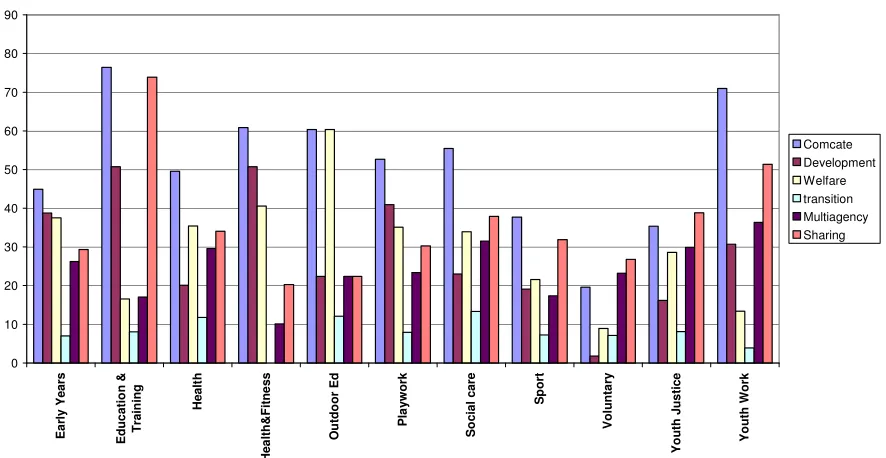
Figure 4.6 shows, for each occupational cluster the percentage of modules assigned to that cluster which are mapped to each area of the Common Core.
Note that interpretation of data on Voluntary sector roles/qualifications needs to treated with care as the number of module mappings was only just over 50.
As for the overall mapping, communication is reasonably well mapped in all workforce areas and mapping against the Transition area is low for all sectors and not covered at all by roles in the health and fitness cluster.
Figure 4.6 Common Core mapping across occupational clusters
Common Core mapping of modules across the workforce clusters Percentage of modules mapped to each area in each cluster.
0 10 20 30 40 50 60 70 80 90 E a rl y Y e a rs E d u c a ti o n & T ra in in g H e a lt h H e a lt h & F it n e s s O u td o o r E d P la y w o rk S o c ia l c a re S p o rt V o lu n ta ry Y o u th J u s ti c e Y o u th W o rk Comcate Development Welfare transition Multiagency Sharing
5. Assessing the Common Core, evidence, target groups
There was a general feeling that there is not much detail available in CTPs on what evidence of achievement of the Common Core might constitute. Individuals interviewed articulated a need for clarity about how to evidence core competencies:
"If you think about the old NVQ where you have to provide several bits of evidence, well I am not saying that everything has to be that way, but you need to give people some clear direction on what kind of evidence you are looking for in a particular competency. The guidelines on this are skeletal. There might be something which constitutes information sharing but it might also be communication. So for me I would want to know how to evidence, say via two or three examples of what might be good communication and two or
three examples of what might be good information sharing"
There was concern about how to require higher level professionals to demonstrate Common Core Knowledge and Skills, but also wider concerns about ensuring that everyone did have competence in the Common Core.
“An IQF is difficult as it takes you into a very detailed analysis of what you mean by good practice. Multiply this across the whole workforce and this becomes even more complex. We are worried that you won’t get underpinning knowledge by doing different
‘composite’ modules to hit Common Core.”
focused. There was criticism of a competency mentality that creates score sheets with, say, 30 competencies and is only focussed on what can be measured.
“Small scale compilation of individual staff portfolios for discussion could be a useful starting point for discussion of the Common Core. You need an incentive to train; need to give people credits early on regarding the CC. We also need to be selective. We don’t want to put experienced professionals through training programmes they might find patronising and will make them angry. ‘Teaching them to suck eggs’.”
Greenwich intends to use appraisal systems to identify existing skills, but also wants to identify skills mentors who can develop skills in the workforce through good practice examples and support. Accreditation could be a passport to enable staff to move across different occupations.
Some CTPs asked whether the Common Core was for people who work in children’s services or for people who work with children - bus drivers, librarians, housing officers and the like. They felt that the latter group raised different issues over level at which Common Core Knowledge and Skills should be attained.
“In a way I suppose the people who are best served with core competencies are and its difficult to say without sound hierarchal but the kind of people who are perhaps like the teaching assistants, primary mental health workers, school nurses, those who are not really high up the hierarchy or up the scale with their clinical excellence because they are going along to things which are about more general concerns about the child rather than specific. So if you are a teaching assistant or you are an assistant social worker or family centre worker you may be working at the more general levels than the more specific so I suppose they are in a way more likely to be able to evidence more of the competencies in the core. Whereas if you take your head teacher or your SENCO or your community paediatrician or your psychiatrists they probably wouldn’t be able to hit any of those buttons because they are very much focused on a specific. That’s my observation really.”
There are models of good practice in some CTPs in terms of providing multi-agency training which covers Common Core areas.
GOOD PRACTICE EXAMPLE
JAT training is based on giving participants real and difficult casework to discuss together and respond to - for example, referrals coming up that staff are not quite managing or finding challenging. These are discussed in multi professional training groups who come to the cases fresh and negotiate responses from their different professional standpoints. This promotes a sense of ownership, of consultation and trains staff in joint working.
6. Summary of issues and recommendations
Awareness of the
Common Core •
Knowledge of and familiarity with the Common Core is patchy on the ground. CTPs visited felt they had other priorities at present.
• Some evidence of auditing against Common
Core Knowledge and Skills was noted.
• There is a perceived conflict between the NHS
Core Skills and the Common Core of Knowledge and Skills. A cross mapping may be helpful.
• There is concern about consistency and
ownership of the Common Core.
Mapping
qualifications to the Common Core
• Of the 200 or so qualifications mapped to the
Common Core, 60% had some coverage of 5 or 6 areas.
• Communication is the area most frequently
mapped (nearly half of all modules within the selected qualifications)
• Supporting Transitions is the area least
frequently mapped (less than 10% of all modules within the selected qualifications). Nearly a quarter of all modules did not map to any area of the Common Core.
• Modules at Level 5 are the least well mapped
modules to any aspect of the Common Core.
• Health and Fitness modules are well mapped to
the first 3 areas of the Common Core but less well mapped to the last 3 areas.
• Education and Training modules are less well
mapped to Safeguarding and Welfare and Multi-agency working
• Health and Social Care modules appear well
mapped to the Common Core.
Assessing the Common Core, evidence, target groups
• There is concern about who the Common Core is
actually aimed at – those in Children’s Services or all those working with children.
• CTPs visited expressed the need to exemplify
evidence for acquisition of the Common Core.
• There were good examples of ways to collect
also of multi-professional training in areas of the Common Core.
• The latter addressed concerns about how to
ensure high level professionals had demonstrated the Common Core.
7. Details of project reports
Report 1
Developing and maintaining a database of qualifications for the children and young people’s workforce
This report is aimed at those who will need to maintain a database of qualifications for the children's workforce. It discusses the issues arising and lessons learned from the construction of the database, updating and resource issues for maintenance.
Report 2
Defining the children and young people’s workforce in a changing scenario
This report is aimed at those who are focussing on the nature and composition of the children's workforce. It discusses issues that have emerged in (a) the identification of roles to include (b) the varying qualification requirements for given roles that have merged and (c) issues on the ground about roles which emerged in the contextualising studies.
Report 3
Qualification issues that inform the design of an integrated qualifications framework (IQF)
This report is aimed at those responsible for the development of an Integrated Qualifications Framework. It discusses the issues that have arisen in the identification of qualifications and training and their inclusion in the database and which could influence any design of an IQF. It also discusses issues emerging from the research on the needs of users in relation to knowledge about qualifications and training.
Report 4
The Common Core of Skills and Knowledge and its coverage by existing qualifications
This report is for those who are concerned to progress coverage of the Common Core of Skills and Knowledge by those within the children's workforce. It discusses the findings from an analysis of the extent to which existing qualifications cover the Common Core of Skills and Knowledge and the perceptions on the ground of the significance of the Common Core as identified within the contextualising studies.
Report 5
Training and qualifications issues, needs and gaps
Report 6
Research review
SHU Project Team
Project Directors
Sylvia Johnson Karen Dunn John ColdronProject Managers
Ihsan Caillau Michael ColdwellProject Team
Paul Close Helen Finlayson Damien Fitzgerald Ros Garrick Lesley Gornall Anne Hollows Janet Kay Anne MorganDatabase Designer
Dave JefferiesProject Administrator
Brenda BottomleyContact
Brenda Bottomley
Centre for Education Research 33 Collegiate Crescent
Sheffield S10 2BP
Tele: 0114 225 5652
Email: [email protected]