VOLUME 20 ISSUE 89 NOVEMBER 2016 ISSN 1366-5278
The second Randomised Evaluation of the
Effectiveness, cost-effectiveness and Acceptability
of Computerised Therapy (REEACT-2) trial:
does the provision of telephone support enhance
the effectiveness of computer-delivered cognitive
behaviour therapy? A randomised controlled trial
Sally Brabyn, Ricardo Araya, Michael Barkham, Peter Bower,
Cindy Cooper, Ana Duarte, David Kessler, Sarah Knowles, Karina Lovell,
Elizabeth Littlewood, Richard Mattock, Stephen Palmer, Jodi Pervin,
David Richards, Debbie Tallon, David White, Simon Walker,
Effectiveness, cost-effectiveness and
Acceptability of Computerised Therapy
(REEACT-2) trial: does the provision
of telephone support enhance the
effectiveness of computer-delivered
cognitive behaviour therapy?
A randomised controlled trial
Sally Brabyn,
1
Ricardo Araya,
2
Michael Barkham,
3
Peter Bower,
4
Cindy Cooper,
5
Ana Duarte,
6
David Kessler,
7
Sarah Knowles,
4
Karina Lovell,
8
Elizabeth Littlewood,
1
Richard Mattock,
1,6
Stephen Palmer,
6
Jodi Pervin,
1
David Richards,
9
Debbie Tallon,
10
David White,
11
Simon Walker,
6
Gillian Worthy
12
and Simon Gilbody
1
* on behalf of
the REEACT Team
1
Department of Health Sciences, University of York, York, UK
2
Department of Population Health, Centre of Global Mental Health, London
School of Hygiene and Tropical Medicine, London, UK
3
Centre for Psychological Services Research, University of Sheffield, Sheffield, UK
4Centre for Primary Care, University of Manchester, Manchester, UK
5
School of Health and Related Research, University of Sheffield, Sheffield, UK
6Centre for Health Economics, University of York, York, UK
7
Academic Unit of Primary Health Care, University of Bristol, Bristol, UK
8School of Nursing, Midwifery and Social Work, University of Manchester,
Manchester, UK
9
University of Exeter Medical School, University of Exeter, Exeter, UK
10
School of Social and Community Medicine, University of Bristol, Bristol, UK
11Clinical Trials Research Unit, University of Sheffield, Sheffield, UK
12
York Trials Unit, University of York, York, UK
*Corresponding author
This report should be referenced as follows:
Brabyn S, Araya R, Barkham M, Bower P, Cooper C, Duarte A,et al. The second Randomised Evaluation of the Effectiveness, cost-effectiveness and Acceptability of Computerised Therapy (REEACT-2) trial: does the provision of telephone support enhance the effectiveness of
computer-delivered cognitive behaviour therapy? A randomised controlled trial.Health Technol Assess2016;20(89).
ISSN 1366-5278 (Print)
ISSN 2046-4924 (Online)
Impact factor: 4.058
Health Technology Assessmentis indexed in MEDLINE, CINAHL, EMBASE, The Cochrane Library and the ISI Science Citation Index.
This journal is a member of and subscribes to the principles of the Committee on Publication Ethics (COPE) (www.publicationethics.org/).
Editorial contact: [email protected]
The full HTA archive is freely available to view online at www.journalslibrary.nihr.ac.uk/hta. Print-on-demand copies can be purchased from the report pages of the NIHR Journals Library website: www.journalslibrary.nihr.ac.uk
Criteria for inclusion in theHealth Technology Assessmentjournal
Reports are published inHealth Technology Assessment(HTA) if (1) they have resulted from work for the HTA programme, and (2) they are of a sufficiently high scientific quality as assessed by the reviewers and editors.
Reviews inHealth Technology Assessmentare termed‘systematic’when the account of the search appraisal and synthesis methods (to minimise biases and random errors) would, in theory, permit the replication of the review by others.
HTA programme
The HTA programme, part of the National Institute for Health Research (NIHR), was set up in 1993. It produces high-quality research information on the effectiveness, costs and broader impact of health technologies for those who use, manage and provide care in the NHS.
‘Health technologies’are broadly defined as all interventions used to promote health, prevent and treat disease, and improve rehabilitation and long-term care.
The journal is indexed in NHS Evidence via its abstracts included in MEDLINE and its Technology Assessment Reports inform National Institute for Health and Care Excellence (NICE) guidance. HTA research is also an important source of evidence for National Screening Committee (NSC) policy decisions.
For more information about the HTA programme please visit the website: http://www.nets.nihr.ac.uk/programmes/hta
This report
The research reported in this issue of the journal was funded by the HTA programme as project number 06/43/504. The contractual start date was in November 2013. The draft report began editorial review in July 2015 and was accepted for publication in February 2016. The authors have been wholly responsible for all data collection, analysis and interpretation, and for writing up their work. The HTA editors and publisher have tried to ensure the accuracy of the authors’report and would like to thank the reviewers for their constructive comments on the draft document. However, they do not accept liability for damages or losses arising from material published in this report.
This report presents independent research funded by the National Institute for Health Research (NIHR). The views and opinions expressed by authors in this publication are those of the authors and do not necessarily reflect those of the NHS, the NIHR, NETSCC, the HTA programme or the Department of Health. If there are verbatim quotations included in this publication the views and opinions expressed by the
interviewees are those of the interviewees and do not necessarily reflect those of the authors, those of the NHS, the NIHR, NETSCC, the HTA programme or the Department of Health.
© Queen’s Printer and Controller of HMSO 2016. This work was produced by Brabynet al.under the terms of a commissioning contract issued by the Secretary of State for Health. This issue may be freely reproduced for the purposes of private research and study and extracts (or indeed, the full report) may be included in professional journals provided that suitable acknowledgement is made and the reproduction is not associated with any form of advertising. Applications for commercial reproduction should be addressed to: NIHR Journals Library, National Institute for Health Research, Evaluation, Trials and Studies Coordinating Centre, Alpha House, University of Southampton Science Park, Southampton SO16 7NS, UK.
Editor-in-Chief
Health Technology Assessment
NIHR Journals Library
Professor Tom Walley Director, NIHR Evaluation, Trials and Studies and Director of the EME Programme, UK
NIHR Journals Library Editors
Professor Ken Stein Chair of HTA Editorial Board and Professor of Public Health, University of Exeter Medical School, UK
Professor Andree Le May Chair of NIHR Journals Library Editorial Group (EME, HS&DR, PGfAR, PHR journals)
Dr Martin Ashton-Key Consultant in Public Health Medicine/Consultant Advisor, NETSCC, UK
Professor Matthias Beck Chair in Public Sector Management and Subject Leader (Management Group), Queen’s University Management School, Queen’s University Belfast, UK
Professor Aileen Clarke Professor of Public Health and Health Services Research, Warwick Medical School, University of Warwick, UK
Dr Tessa Crilly Director, Crystal Blue Consulting Ltd, UK
Ms Tara Lamont Scientific Advisor, NETSCC, UK
Professor William McGuire Professor of Child Health, Hull York Medical School, University of York, UK
Professor John Norrie Chair in Medical Statistics, University of Edinburgh, UK
Professor John Powell Consultant Clinical Adviser, National Institute for Health and Care Excellence (NICE), UK
Professor James Raftery Professor of Health Technology Assessment, Wessex Institute, Faculty of Medicine, University of Southampton, UK
Dr Rob Riemsma Reviews Manager, Kleijnen Systematic Reviews Ltd, UK
Professor Helen Roberts Professor of Child Health Research, UCL Institute of Child Health, UK
Professor Helen Snooks Professor of Health Services Research, Institute of Life Science, College of Medicine, Swansea University, UK
Professor Jim Thornton Professor of Obstetrics and Gynaecology, Faculty of Medicine and Health Sciences, University of Nottingham, UK
Please visit the website for a list of members of the NIHR Journals Library Board: www.journalslibrary.nihr.ac.uk/about/editors
Editorial contact: [email protected]
Professor Geoffrey Meads Professor of Health Sciences Research, Health and Wellbeing Research Group, University of Winchester, UK
Editor-in-Chief
Professor Hywel Williams Director, HTA Programme, UK and Foundation Professor and Co-Director of the Centre of Evidence-Based Dermatology, University of Nottingham, UK
Professor Jonathan Ross Professor of Sexual Health and HIV, University Hospital Birmingham, UK
Dr Eugenia Cronin Senior Scientific Advisor, Wessex Institute, UK
Abstract
The second Randomised Evaluation of the Effectiveness,
cost-effectiveness and Acceptability of Computerised
Therapy (REEACT-2) trial: does the provision of telephone
support enhance the effectiveness of computer-delivered
cognitive behaviour therapy? A randomised controlled trial
Sally Brabyn,
1Ricardo Araya,
2Michael Barkham,
3Peter Bower,
4Cindy Cooper,
5Ana Duarte,
6David Kessler,
7Sarah Knowles,
4Karina Lovell,
8Elizabeth Littlewood,
1Richard Mattock,
1,6Stephen Palmer,
6Jodi Pervin,
1David Richards,
9Debbie Tallon,
10David White,
11Simon Walker,
6Gillian Worthy
12and Simon Gilbody
1*
on behalf of the REEACT Team
1Department of Health Sciences, University of York, York, UK
2Department of Population Health, Centre of Global Mental Health, London School of Hygiene
and Tropical Medicine, London, UK
3Centre for Psychological Services Research, University of Sheffield, Sheffield, UK 4Centre for Primary Care, University of Manchester, Manchester, UK
5School of Health and Related Research, University of Sheffield, Sheffield, UK 6Centre for Health Economics, University of York, York, UK
7Academic Unit of Primary Health Care, University of Bristol, Bristol, UK
8School of Nursing, Midwifery and Social Work, University of Manchester, Manchester, UK 9University of Exeter Medical School, University of Exeter, Exeter, UK
10School of Social and Community Medicine, University of Bristol, Bristol, UK 11Clinical Trials Research Unit, University of Sheffield, Sheffield, UK
12York Trials Unit, University of York, York, UK
*Corresponding author [email protected]
Background:Computerised cognitive behaviour therapy (cCBT) is an efficient form of therapy potentially improving access to psychological care. Indirect evidence suggests that the uptake and effectiveness of cCBT can be increased if facilitated by telephone, but this is not routinely offered in the NHS.
Objectives:To compare the clinical effectiveness and cost-effectiveness of telephone-facilitated free-to-use cCBT [e.g. MoodGYM (National Institute for Mental Health Research, Australian National University, Canberra, ACT, Australia)] with minimally supported cCBT.
Design:This study was a multisite, pragmatic, open, two-arm, parallel-group randomised controlled trial with a concurrent economic evaluation.
Setting:Participants were recruited from GP practices in Bristol, Manchester, Sheffield, Hull and the north-east of England.
Interventions:Participants were randomised using a computer-generated random number sequence to receive minimally supported cCBT or telephone-facilitated cCBT. Participants continued with usual general practitioner care.
Main outcome measures:The primary outcome was self-reported symptoms of depression, as assessed by the PHQ-9 at 4 months post randomisation.
Secondary outcomes:Secondary outcomes were depression at 12 months and anxiety, somatoform complaints, health utility (as assessed by the European Quality of Life-5 Dimensions questionnaire) and resource use at 4 and 12 months.
Results:Clinical effectiveness: 182 participants were randomised to minimally supported cCBT and
187 participants to telephone-facilitated cCBT. There was a difference in the severity of depression at 4 and 12 months, with lower levels in the telephone-facilitated group. The odds of no longer being depressed (defined as a PHQ-9 score of<10) at 4 months were twice as high in the telephone-facilitated cCBT group [odds ratio (OR) 2.05, 95% confidence interval (CI) 1.23 to 3.42]. The benefit of telephone-facilitated cCBT was no longer significant at 12 months (OR 1.63, 95% CI 0.98 to 2.71). At 4 months the between-group difference in PHQ-9 scores was 1.9 (95% CI 0.5 to 3.3). At 12 months the results still favoured
telephone-facilitated cCBT but were no longer statistically significant, with a difference in PHQ-9 score of 0.9 (95% CI–0.5 to 2.3). When considering the whole follow-up period, telephone-facilitated cCBT was asssociated with significantly lower PHQ-9 scores than minimally supported cCBT (mean difference–1.41, 95% CI–2.63 to–0.17;p=0.025). There was a significant improvement in anxiety scores over the trial period (between-group difference 1.1, 95% CI 0.1 to 2.3;p=0.037). In the case of somatic complaints (assessed using the Patient Health Questionnaire-15), there was a borderline statistically significant difference over the trial period (between-group difference 1.1, 95% CI 0.0 to 1.8;p=0.051). There were gains in quality-adjusted life-years at reduced cost when telephone facilitation was added to MoodGYM. However, the results were subject to uncertainty.
Conclusions:The results showed short-term benefits from the addition of telephone facilitation to cCBT. The effect was small to moderate and comparable with that of other primary care psychological
interventions. Telephone facilitation should be considered when offering cCBT for depression.
Limitations:Participants’depression was assessed with the PHQ-9, cCBT use was quite low and there was a slightly greater than anticipated loss to follow-up.
Future research recommendations:Improve the acceptability of cCBT and its capacity to address coexisting disorders. Large-scale pragmatic trials of cCBT with bibliotherapy and telephone-based interventions are required.
Trial registration:Current Controlled Trials ISRCTN55310481.
Funding:This project was funded by the National Institute for Health Research (NIHR) Health Technology Assessment programme and will be published in full inHealth Technology Assessment; Vol. 20, No. 89. See the NIHR Journals Library website for further project information.
Contents
List of tables xiii
List of figures xv
List of abbreviations xvii
Plain English summary xix
Scientific summary xxi
Chapter 1Background 1
Depression 1
Psychological therapy for depression 1 Evidence for computerised cognitive behaviour therapy 1 Existing Health Technology Assessment programme-funded research into computerised
cognitive behaviour therapy for depression: the results of the REEACT trial and the need for further research on the effectiveness of supported computerised cognitive
behaviour therapy 2
Research objectives 3
Chapter 2Methods 5
Trial design 5
Approval 5
Trial sites 5
Participants 5
Inclusion criteria 6
Exclusion criteria 6
Participant recruitment 6
Direct referral 6
Participation identification from general practitioner records 6 Screening for eligibility 7 Consenting participants 7 Baseline assessment 7
Randomisation 7
Sample size 7
Intervention 7
Rationale 9
Materials 9
Procedures 9
Comparator intervention: minimally supported computerised cognitive behaviour therapy 9
Providers 9
Mode of delivery 10
Locations 10
When/how much 10
Tailoring 10
Adherence 10
Fidelity 11
Statistical analysis methods 11
Primary analysis 11
Secondary analyses 13
Adverse events 13
Economic methods 13
Health-related quality of life 13 Resource use and cost data 14 Economic analysis: statistical methods 14
Overview 14
Resource use and costs 14 Health-related quality of life 15
Cost-effectiveness analysis 15
Base-case and sensitivity analysis 16 Patient and public participation 16
Chapter 3Protocol changes 17
Protocol change 1: additional baseline questionnaires 17 Protocol change 2: baseline client report form 17 Protocol change 3: extension to the study date and sample size 17 Protocol change 4: primary care depression cohort 17
Chapter 4Clinical effectiveness results 19
Randomisation and centre details 19
Baseline data 20
Participant characteristics 20
Primary outcome 25
Patient Health Questionnaire-9 descriptive summaries 25 Primary analyses: depressed/not depressed (Patient Health Questionnaire-9) at month 4 25 Secondary analyses: depressed/not depressed (Patient Health Questionnaire-9) at
month 12 26
Secondary analyses: repeated measures analysis of Patient Health Questionnaire-9 score 27 Generalised Anxiety Disorder Scale-7 items 28 Secondary analyses: Generalised Anxiety Disorder Scale-7 items 28 Patient Health Questionnaire-15 30 European Quality of Life-5 Dimensions 33 Computerised cognitive behaviour therapy usage 35 Medication to help with depression use 35
Adverse events 35
Chapter 5Economic evaluation results 39
Health-care resource use 39
Costs 40
Health-related quality of life 41
Cost-effectiveness analysis 41
Base-case cost-effectiveness results 41
Summary 43
Chapter 6Discussion 45
Trial-based estimates of the clinical effectiveness of telephone-facilitated
computer-delivered cognitive behaviour therapy 45 Summary of trial-based estimates of cost-effectiveness 46
Discussion of main findings 46
Conclusion 48 Implications for health care 48 Recommendations for research 48
Acknowledgements 49
References 51
Appendix 1Sources and details of unit costs 55
Appendix 2Patient information leaflet 57
List of tables
TABLE 1 Assessments and time points at which they were carried out 12
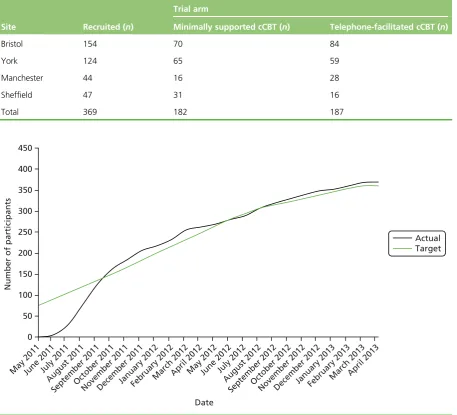
TABLE 2 Participant recruitment by site and allocation 19
TABLE 3 Participant characteristics: age and sex 20
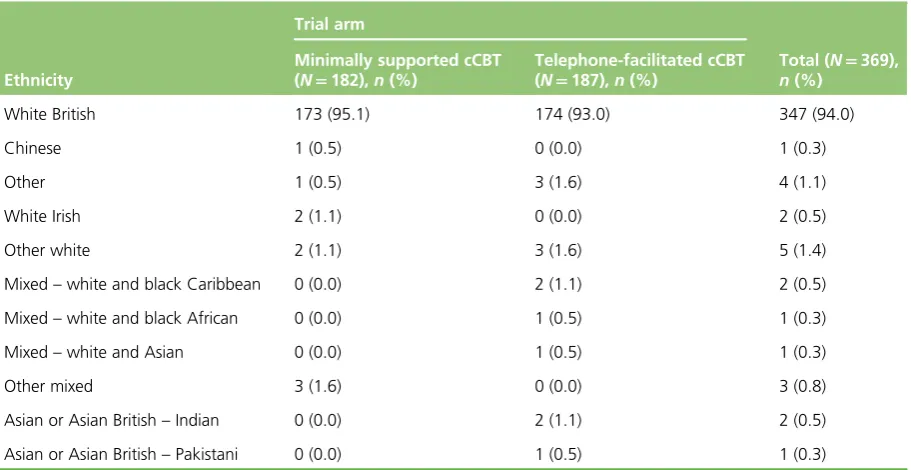
TABLE 4 Ethnicity 21
TABLE 5 Education 21
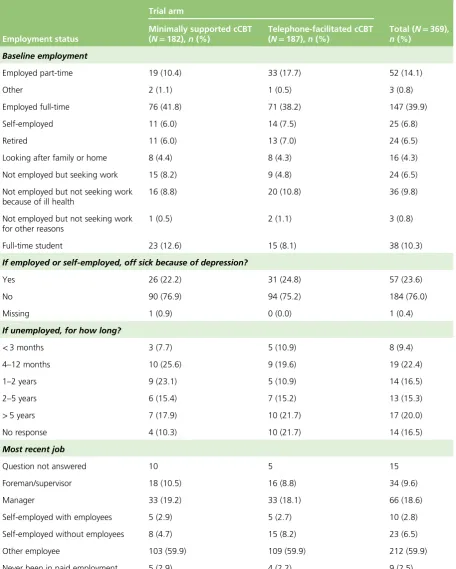
TABLE 6 Employment details 22
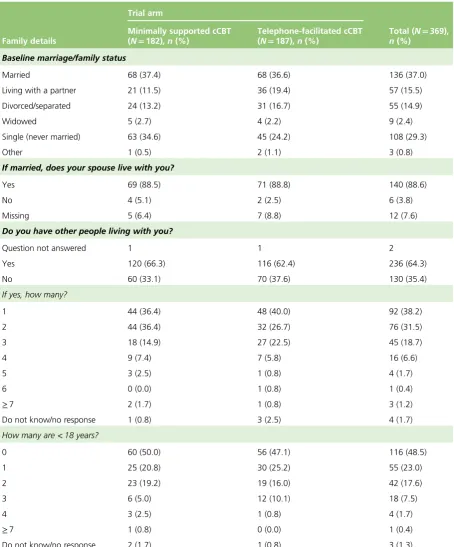
TABLE 7 Family details 23
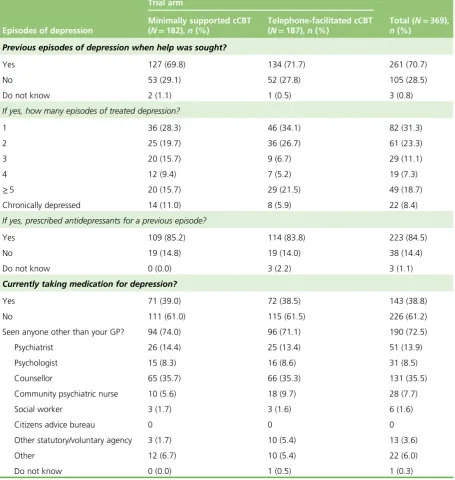
TABLE 8 Previous episodes of depression 24
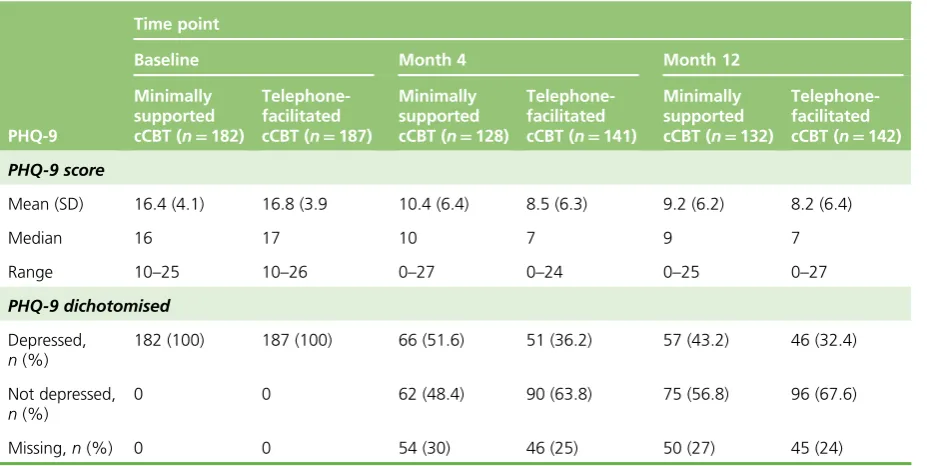
TABLE 9 Patient Health Questionnaire-9 scores at each time point 25
TABLE 10 Primary analysis of depression at 4 months as a discrete outcome 25
TABLE 11 Sensitivity analysis 26
TABLE 12 Depression at 12 months as a discrete outcome 26
TABLE 13 Sensitivity analysis of depression at 12 months as a discrete outcome,
assuming that those with missing data were still depressed 27
TABLE 14 Analysis of PHQ-9 score at each time point 28
TABLE 15 Mean differences in PHQ-9 score 28
TABLE 16 Generalised Anxiety Disorder Scale-7 items score 29
TABLE 17 Repeated measures analysis of GAD-7 scores 30
TABLE 18 Mean differences in GAD-7 score 30
TABLE 19 Secondary analyses: PHQ-15 score 31
TABLE 20 Repeated measures analysis of PHQ-15 score 32
TABLE 21 Mean differences in PHQ-15 score 32
TABLE 22 European Quality of Life-5 Dimensions mobility at each time point 33
TABLE 23 European Quality of Life-5 Dimensions self-care at each time point 33
TABLE 25 European Quality of Life-5 Dimensions pain/discomfort at each time point 34
TABLE 26 European Quality of Life-5 Dimensions anxiety/depression at each
time point 35
TABLE 27 MoodGYM usage data 36
TABLE 28 Self-reported antidepressant medication use 37
TABLE 29 Serious adverse events 37
TABLE 30 Resource use from baseline to 12 months of follow-up in available
case data set 39
TABLE 31 Summary of costs 40
TABLE 32 European Quality of Life-5 Dimensions summary scores and QALY
estimates (mean, standard error) 41
TABLE 33 Cost-effectiveness analysis summary table: base case 41
TABLE 34 Cost-effectiveness analysis summary table: sensitivity analysis excluding
non-mental health-related hospital costs 43
TABLE 35 Sources and details of key unit costs 55
TABLE 36 Costs 63
List of figures
FIGURE 1 Flow of recruitment to the trial 8
FIGURE 2 Cumulative recruitment graph for the REEACT-2 trial 19
FIGURE 3 The CONSORT flow diagram 20
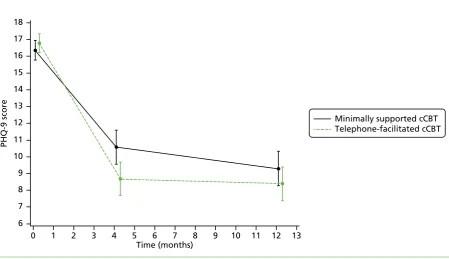
FIGURE 4 Mean and 95% CI of PHQ-9 score at each assessment 27
FIGURE 5 Mean and 95% CI of GAD-7 scores at each assessment 29
FIGURE 6 Mean and 95% CI of PHQ-15 score at each assessment 31
FIGURE 7 MoodGYM usage session by session 37
FIGURE 8 Cost-effectiveness acceptability curves: base case 42
FIGURE 9 Cost-effectiveness acceptability curves: sensitivity analysis excluding
List of abbreviations
CBT cognitive behaviour therapy
cCBT computerised cognitive behaviour therapy
CI confidence interval
CONSORT Consolidated Standards of Reporting Trials
CRF client report form
CSRI Client Service Receipt Inventory
EQ-5D European Quality of Life-5 Dimensions
GAD-7 Generalised Anxiety Disorder Scale-7 items
GP general practitioner
HRQoL health-related quality of life
ICER incremental cost-effectiveness ratio
ISRCTN International Standard Randomised Controlled Trial Number
NICE National Institute for Health and Care Excellence
OLS ordinary least squares
OR odds ratio
PHQ-9 Patient Health Questionnaire-9
PHQ-15 Patient Health Questionnaire-15
QALY quality-adjusted life-year
REEACT Randomised Evaluation of the Effectiveness and Acceptability of Computerised Therapy
SD standard deviation
Plain English summary
D
epression is a common mental health problem. An effective talking treatment for depression is cognitive behaviour therapy (CBT). Computerised CBT (cCBT) is a more recently developed form of CBT that is delivered with help from a computer rather than a face-to-face therapist. Previous research indicates that the effectiveness of cCBT can be increased when it is supported with guidance delivered by telephone. We conducted a fair test of a freely available cCBT program [MoodGYM (National Institute for Mental Health Research, Australian National University, Canberra, ACT, Australia)] delivered in two different ways. In the first way, cCBT was delivered with minimal support, as offered in the UK NHS at the moment. In the second, the same cCBT program was delivered, but in conjunction with weekly telephone calls providing guidance delivered according to a manual (telephone-facilitated cCBT).A total of 369 people with depression were allocated either (1) cCBT with minimal support or
(2) telephone-facilitated cCBT. People recruited to the trial completed questionnaires about symptoms of depression, and general and mental well-being, at 4 and 12 months after the study started.
Scientific summary
Background
Depression is one of the most common reasons for consulting a general practitioner (GP) and its associated personal and economic burden is considerable. Although antidepressants remain an important treatment option, many patients and health-care professionals would like access to psychological therapy as an alternative or adjunct to drug therapy. Cognitive behaviour therapy (CBT) is the leading evidence-supported form of brief psychological therapy for people with depression, but the demand for CBT cannot be met with existing therapist resources. One promising alternative to therapist-delivered CBT that has the potential to increase access to psychological therapy is the provision of therapy via computers. The National Institute for Health and Care Excellence (NICE) guidelines recommend the provision of computerised CBT (cCBT) as an initial lower-intensity treatment for depression as part of a‘stepped care’approach in primary care. Much of the existing evidence for the short-term clinical effectiveness of cCBT for depression comes from research conducted by the developers of the cCBT programs. National Institute for Health Research-funded research [the Randomised Evaluation of the Effectiveness and Acceptability of Computerised Therapy (REEACT) trial] has recently shown that cCBT is no more effective than usual GP care and is not cost-effective. A possible explanation for the lack of effect is the low level of engagement with computer technology. Indirect evidence suggests that increasing the level of support that is offered beyond that which is routinely offered in NHS primary care psychological therapy services might increase uptake and, in turn, make the technology more effective. However, this has not been tested in a large-scale pragmatic trial conducted in primary care. The provision of a facilitated self-help program will increase the costs of cCBT, and the cost-effectiveness of a more intensively facilitated form of cCBT is not known. If psychological services were to begin routinely to offer cCBT with a higher level of support than is currently made available, then this should be on the basis of robust evidence of clinical effectiveness and cost-effectiveness. The REEACT-2 trial examines the potential of guided telephone facilitation to enhance the uptake and benefit of computer-delivered CBT.
Objectives
This was a fully randomised patient trial to examine the additional benefits of telephone facilitation and structured guidance alongside a free-to-use computer-delivered CBT package [MoodGYM (National Institute for Mental Health Research, Australian National University, Canberra, ACT, Australia)]. The comparator was a minimally supported mode of delivery of the same cCBT package that replicated the mode of delivery of cCBT, as offered in primary care in the NHS. The REEACT-2 study included a concurrent economic evaluation to meet the following specific aims:
l to establish the clinical effectiveness of a telephone-facilitated cCBT package compared with minimally supported cCBT over a 1-year trial follow-up period
l to establish the cost-effectiveness of a telephone-facilitated cCBT package compared with minimally supported cCBT over a 1-year trial follow-up period.
Methods
Design
randomised using simple randomisation with allocation concealed. Treatment allocation and outcome measurement were not concealed.
Setting
Participants were recruited from UK-based GP practices in Bristol, Manchester, Sheffield, Hull and the north-east of England.
Participants
Potential participants were identified by (1) direct referral by a GP or health professional attached to a GP practice or (2) following a written approach by the GP after identification via GP practice database screening. Potential participants were eligible to participate in the trial if they were aged≥18 years, scored
≥10 on a validated depression severity instrument [Patient Health Questionnaire-9 (PHQ-9)] and were not currently in receipt of cCBT or specialist psychological therapy.
Interventions
Participants were randomised to receive either minimally supported cCBT (MoodGYM alone) or telephone-facilitated cCBT. Each participant randomised to the telephone-facilitated cCBT arm was allocated a telephone support worker, who provided weekly telephone calls to (1) facilitate the use of a cCBT package (MoodGYM) and (2) engage in between-session exercises with problem formulation and adherence to CBT principles. All participants were also offered usual GP care.
Given the pragmatic design of the trial, no restrictions were imposed on the range of treatments that could be offered by a GP in either arm. The intervention programme was based on CBT and had been endorsed at the time of design of REEACT-2 by NICE in the initial treatment of depression in primary care. The cCBT program involved internet-based, interactive therapy sessions that could be accessed at the participant’s home, in a central location close to the participant’s home or at the GP practice, depending on patient preference and availability. All participants were given access to a free telephone helpline, in addition to which participants allocated to the telephone-facilitated cCBT arm were called on a weekly basis by a telephone support worker, who delivered structured guidance on the use of the cCBT program.
Main outcome measures
The primary outcome was depression at 4 months as indicated by a score of≥10 on the PHQ-9.
Secondary outcomes were depression severity at 4 and 12 months (PHQ-9) and anxiety [as assessed by the Generalised Anxiety Disorder Scale-7 items (GAD-7)], somatoform complaints (as assessed by the PHQ-15), health state utility (as assessed by the European Quality of Life-5 Dimensions questionnaire) and resource use at 4 and 12 months.
Results
Clinical effectiveness
One hundred and eighty-two participants were randomised to minimally supported cCBT and 187 participants were randomised to telephone-facilitated cCBT (MoodGYM). There was a difference in the severity of
depression at 4 months and at 12 months, with lower levels of depression in the telephone-facilitated group. The odds of no longer being depressed (defined as a PHQ-9 score of<10) at 4 months were twice as high in the facilitated cCBT group than in the minimally supported cCBT group [odds ratio (OR) 2.05, 95% confidence interval (CI) 1.23 to 3.42]. The benefit of telephone-facilitated cCBT was no longer significant at 12 months (OR 1.63, 95% CI 0.98 to 2.71). At 4 months the between-group difference in PHQ-9 scores was 1.9 (95% CI 0.5 to 3.3), with a standardised effect size (Cohen’sd) of 0.32 (p=0.009). At 12 months, there was no longer evidence of a between-group difference in PHQ-9 scores (0.9, 95% CI–0.5 to 2.3). Over the whole trial period, the between-group difference in PHQ-9 scores was 1.4 (95% CI 0.2 to 2.6).
There was a significant improvement in anxiety scores (GAD-7) when all time points were considered (between-group difference 1.1, 95% CI 0.1 to 2.3;p=0.037). In the case of somatic complaints there was a borderline significant difference when all time points were considered (between-group difference 1.1, 95% CI 0.0 to 1.8;p=0.051).
Scrutiny of computer records revealed that few participants completed all five sessions of either minimally supported or telephone-facilitated cCBT, but use was substantially higher among participants offered telephone facilitation.
Cost-effectiveness
Trial-based cost-effectiveness analyses showed gains in quality-adjusted life-years (QALYs) at a reduced cost when telephone facilitation was added to MoodGYM, suggesting that this was a dominant enhancement. In a more conservative sensitivity analysis, telephone facilitation was no longer cost saving but was likely to be cost-effective at £6933 per additional QALY gained. The addition of telephone facilitation was likely to be cost-effective at a £20,000 per QALY threshold (probability of cost-effectiveness of 0.55).
Conclusions
Our previous research (REEACT) has demonstrated that minimally supported cCBT is largely ineffective. Based on the results of REEACT-2, the provision of telephone facilitation appears to offer statistically significant benefits. Telephone facilitation of a free-to-use cCBT program (MoodGYM) resulted in reduced depression severity, and reduced the chances of being depressed in the short and medium term. Additional benefits were seen across secondary outcomes, including anxiety and somatoform complaints. The
magnitude of effect was small to moderate and was comparable with that of other primary care-delivered psychological interventions. Telephone facilitation represented good value for money (i.e. was well within conventional thresholds used to determine value for money in the NHS). cCBT is one of a range of effective low-intensity psychological treatments that can be offered to patients, but only with telephone support.
Minimally supported cCBT (which is routinely offered in the NHS in many services) is likely to be ineffective. NHS services that currently offer cCBT should consider how best to support this technology, and this will require sufficient staff being available to offer guidance and facilitation by telephone. The results of the REEACT-2 study provide a template for telephone facilitation, which the NHS could adopt to deliver low-intensity psychological therapy at a higher volume.
The magnitude of benefits was modest, but was achieved using a low-cost low-intensity intervention.
Implications for health care
l In this trial for primary care patients with moderate depression, telephone-facilitated cCBT was clinically effective compared with minimally supported cCBT. Practice recommendations, such as those offered by NICE, and IAPT (Improving Access to Psychological Therapies) stepped models of care might usefully be re-examined in the light of these findings with due consideration of the level of support that should be offered alongside cCBT.
l Minimally supported cCBT (which is routinely offered in the NHS in many services) is ineffective and our research suggests that it should be offered only when there is sufficient staff in place to support this technology with guidance and facilitation by telephone. This can be offered by telephone according to structured delivery manuals, and allows support to be offered at low intensity and higher volume.
Recommendations for research
l The uptake and use of cCBT was not as high as expected. More research is needed to understand the reasons for lower uptake and more development is needed for cCBT products to evolve further, such that they are more acceptable to people with depression. This requires further research and innovation at the human–computer interface.
l People with depression commonly have coexisting anxiety and somatoform complaints. Although some benefits were observed in these symptoms, the cCBT materials did not specifically address these problems. Further research and development is needed to ensure that cCBT products are able to address coexisting common mental disorders within a single-treatment programme.
l cCBT is a form of self-help. It would be useful to know how cCBT compares with other forms of guided self-help, since computer-delivered therapy is not acceptable to a significant portion of patients. Large-scale pragmatic trials of treatments such as bibliotherapy or telephone-based psychological interventions are therefore needed.
l There is a need to examine the comparative effectiveness of cCBT and traditional face-to-face therapy in head-to-head trials.
l All effectiveness studies should be framed in primary care and conducted by researchers other than product developers.
Trial registration
This trial is registered as ISRCTN55310481.
Funding
Funding for this study was provided by the Health Technology Assessment programme of the National Institute for Health Research.
Chapter 1
Background
Depression
Depression is the most common mental health disorder in community settings and is estimated to become the second largest cause of global disability by 2020.1It is one of the most common reasons for consulting with a general practitioner (GP) and its associated personal and economic burden is considerable.2
Psychological therapy for depression
Although antidepressants remain an important treatment option, many patients and health-care professionals would like access to psychological therapy as an alternative or adjunct to drug therapy.3 Cognitive behaviour therapy (CBT) has emerged as the leading evidence-supported form of brief psychological therapy for people with depression.4,5However, demand for CBT cannot be met from existing therapist resources.6One promising alternative to therapist-delivered CBT is the use of self-help interventions including the provision of therapy via a computer.7In recent years a number of interactive computer programs have been developed that enable CBT to be delivered by a computer. The National Institute for Health and Care Excellence (NICE) guidelines for depression recommend the provision of computerised CBT (cCBT) as an initial, lower-intensity treatment for depression as part of a‘stepped care’ approach in primary care.5If effective, such programmes have the potential to expand the provision of psychological therapy in primary care and may represent an efficient and effective form of care for depression.8
For those who decide to use (or commission the provision of) cCBT there are a number of interactive internet-based products, some commercially produced and others free to use.7In the first category, a number of commercial products have been marketed to bodies such as the NHS. Free-to-use products comprise a range of programs that have been developed by the public sector or by research institutes. These can be accessed at no direct purchase cost to health-care providers. An example of a free-to-use cCBT program is MoodGYM (National Institute for Mental Health Research, Australian National University, Canberra, ACT, Australia), which was developed in Australia and can be accessed by patients with depression, either directly or at the suggestion of their health-care provider.
Evidence for computerised cognitive behaviour therapy
Computerised CBT represents an alternative form of therapy delivery that has the potential to enhance access to psychological care. A number of systematic reviews have been conducted studying the effectiveness of cCBT. An overall beneficial effect of cCBT has been found within trials, although there is a high level of variability in effect size between studies. An early health technology assessment review by Kaltenthaleret al.,6 published in 2006, noted preliminary evidence of clinical effectiveness and cost-effectiveness. The authors noted the existence of internet-based free-to-use packages, such as MoodGYM, which had been evaluated in randomised trials, but also noted that a major limitation of the existing literature was that the trials had been conducted by the package developers.8Since this review there have been few independent evaluations of cCBT packages and the randomised literature remains dominated by developer-led studies.
depression to engage with a self-help computer-based technology. Research by Waller and Gilbody11has shown that people with depression often do not engage with cCBT, and only a minority actually complete all of the planned sessions of the computer package. This observation is consistent with a broader body of research into the uptake and effectiveness across the range of self-help interventions for depression, including bibliotherapy (self-treatment using written materials). Research in the area of self-help treatments for depression has demonstrated that entirely self-guided materials (with no professional support) are likely to be less effective than self-help technologies for which there is a level of guidance and professional support (‘guided self-help’). Unsupported self-help treatment (including unsupported computer-delivered self-help) has been shown in systematic reviews to have minimal or relatively small effect sizes. In contrast, more intensively and professionally supported treatments have generally been found in efficacy trials to have moderate effect sizes claimed to be comparable to those achieved with face-to-face therapy. To our knowledge the comparative effectiveness of minimally supported cCBT versus more intensively supported cCBT has not been directly tested in large-scale, independently conducted, head-to-head effectiveness trials. Based on indirect estimates drawn from systematic reviews of trials of cCBT the effect is therefore potentially enhanced through the provision of professional support. The magnitude of benefit associated with supported cCBT in groups of patients is, on average, larger than that with unsupported/minimally supported cCBT [pooled effect size for professionally supported therapy, Cohen’sd=0.61, 95% confidence interval (CI) 0.45 to 0.77 vs. unsupported therapy, Cohen’sd=0.25, 95% CI 0.14 to 0.35].9
Existing Health Technology Assessment programme-funded
research into computerised cognitive behaviour therapy for
depression: the results of the REEACT trial and the need
for further research on the effectiveness of supported
computerised cognitive behaviour therapy
On the basis of a UK technology appraisal by Kaltenthaleret al.6and the identified need for independent (non-developer-led) research into cCBT, the Randomised Evaluation of the Effectiveness and Acceptability of Computerised Therapy (REEACT) trial was commissioned in 2008, recruited in 2010–12 and reported in 2015.12The design of the REEACT trial was to compare the clinical effectiveness and cost-effectiveness of commercially developed cCBT (Beating the Blues; Ultrasis, London, UK) versus free-to-use cCBT (MoodGYM) versus usual GP care. The trial was pragmatic in design and recruited 691 participants in UK primary care. The level of support that was offered to both cCBT packages was designed to replicate current practice in NHS primary care in which professional facilitation is not routinely offered. In view of the findings of systematic reviews, and evidence of lower uptake of packages in entirely self-directed/ unsupported therapies, the REEACT trial included technical telephone support. Participants were
proactively offered technical support and weekly encouragement to use the computer packages, but we purposely did not augment psychological therapy over the telephone. Telephone support in the REEACT trial did not involve explanations of CBT and did not involve a review of homework or between-session tasks. The cCBT was therefore a form of supported self-help, but was not one that was guided by a clinician. The REEACT trial is, at the time of writing, the largest publicly funded, independently conducted primary care trial of cCBT.
The main finding of the REEACT trial was that for the primary outcome of depression severity at 4 months, there was no significant benefit when participants were offered technically supported cCBT in addition to usual GP care. This negative finding was true for both a free-to-use package (MoodGYM) and commercially produced cCBT (Beating the Blues). The most likely explanatory mechanism of lack of effect was poor uptake and use of computer packages by trial participants. For both cCBT packages (MoodGYM and Beating the Blues) the median number of actual computer therapy sessions that were completed by participants was between 1 and 2. The conclusion of the REEACT trial was that technically supported cCBT was clinically ineffective when added to usual GP care, and that this treatment should not routinely be offered in this form to patients with depression.
Preliminary findings from a concurrent qualitative evaluation in REEACT, and anecdotal evidence from recruiting researchers, indicated that participants were demotivated as a consequence of depression and struggled to engage with computer sessions despite appreciating the offer of technical support. Participants expressed an interest in computer packages, but identified a preference for guidance. We postulated on the basis of these findings and on the basis of emerging trial-based evidence summarised in systematic reviews (e.g. Andersson and Cuijpers9) that cCBT might show an effect but only if offered alongside a greater level of facilitation and support and designed the REEACT-2 study to run alongside, but
independently of, REEACT and test this hypothesis. The REEACT-2 trial represents a follow-on trial from the REEACT trial to answer this related question, and most of the fundamental aspects of trial design (primary care setting, recruitment process and inclusion criteria) are replicated in the two trials.
Research objectives
This was a fully randomised patient trial to examine the additional benefits of telephone facilitation alongside a free-to-use computer-delivered CBT package (MoodGYM). The comparator was a minimally supported mode of delivery of the same cCBT package that replicated the mode of delivery of cCBT as offered in primary care in the NHS. The REEACT-2 study included a concurrent economic evaluation to meet the following specific aims:
l to establish the clinical effectiveness of a telephone-facilitated cCBT package compared with minimally supported cCBT over a 1-year trial follow-up period
Chapter 2
Methods
Trial design
This study was as a multisite, pragmatic, open, two-arm, parallel-group randomised controlled trial. Participants were recruited from primary care through direct referral by their GP or a postal invitation from GP records. Participants were individually randomised to one of two arms:
1. minimally supported cCBT 2. telephone-facilitated cCBT.
Participants in both arms were given access to a free-to-use cCBT program (MoodGYM), an accompanying booklet, and a Freephone number for technical support, and continued with usual GP care. Participants in the telephone-facilitated cCBT arm were additionally allocated a telephone support worker (TSW) who provided a programme of weekly telephone calls. The programme is described in more detail inIntervention.
Participants were followed up over the course of 12 months, with data collected at 4 and 12 months post randomisation.
Approval
Ethics approval was granted by Bradford Research Ethics Committee (10/H1302/95) on 20 December 2010 and from relevant research and development committees. The trial was assigned the International
Standard Randomised Controlled Trial Number (ISRCTN) ISRCTN55310481.
Trial sites
The study was conducted in four UK sites with well-established networks of practices from which to recruit. These were the Universities of York, Bristol, Sheffield and Manchester.
Participants
The study population included patients in primary care with depression or low mood as determined by a score of≥10 on the Patient Health Questionnaire-9 (PHQ-9).13This cut-off point is known to detect clinical depression (major depression) in a UK primary care population with a sensitivity of 91.7% and a specificity of 78.3%.
Inclusion criteria
Participants who met the following criteria were eligible to enter the study:
l aged≥18 years
l not currently in receipt of cCBT or specialist psychological therapy
l score of≥10 overall (indicating moderate, moderately severe or severe depression) and<3 for item 9 (measuring suicidal thoughts)14on the PHQ-9 depression severity measure.
Both incident and prevalent cases were included. In line with the pragmatic nature of this trial reflecting usual GP care, patients were eligible to participate whether or not they were in receipt of antidepressant medication, and those with comorbid physical illness or non-psychotic functional disorders were
not excluded.
Exclusion criteria
We excluded potential participants who
l were actively suicidal as identified by the GP or as reported by item 9 on the PHQ-9
l had been bereaved within the last year
l had given birth within the last year
l had a diagnosis of psychotic depression
l had a primary diagnosis of alcohol or drug abuse
l were not able to read and write in English.
Participant recruitment
All recruiting researchers were given training in all aspects of the trial including trial recruitment, informed consent, adverse event reporting procedures, and risk assessment and reporting procedures. Each
researcher was also given a study reference manual with full instructions on all the standard procedures. Participating GPs were provided with a GP manual with details of the trial processes, a GP information leaflet, adverse event reporting guidance, information about the interventions and contact details for the trial team.
Direct referral
Practices taking part in this study were provided with patient information packs containing a cover letter, patient information sheet, copy of the consent form and a prepaid envelope addressed to the local researcher, to give to patients with depression who were receptive to participating in the trial. The GP or representative could complete and fax a referral form and patient permission-to-contact form to the study researcher who, following a consideration period of at least 2 days, then approached the patient to discuss the study in more detail and confirm eligibility and continuing interest. The study design and approvals allowed that other health-care professionals attached to practices, such as nurses or primary care mental health workers, could refer patients to the study in the same way, but in the event participants were only referred by GPs.
Participation identification from general practitioner records
General practitioner practices were also asked to conduct a search of their records to identify patients presenting with depression or low mood, and screen for potentially eligible participants. Patient information packs supplied by the research team were sent from the GP practice inviting interested patients to return a completed permission-to-contact form to the research team. A member of the study team then made contact to confirm eligibility and discuss the study in further detail.
Screening for eligibility
After receiving permission-to-contact forms, the researcher contacted the potential participant to discuss the study, answer any questions and then confirm that the patient was still interested and eligible. To assess eligibility the potential participant was asked to confirm that he or she still met the inclusion criteria, in particular those that may not have been known to the GP, such as bereavement and drug and alcohol problems. The researcher also ensured that the participant understood what participation entailed, had access to the internet and wanted to take part in the trial. Participants were then asked whether they preferred the baseline assessment to be conducted over the telephone or at a face-to-face interview.
Consenting participants
Potential participants who preferred to have baseline data collected by telephone were asked to return the signed consent form in the prepaid envelope in the information pack. Those who preferred a face-to-face interview completed the consent process at the first meeting.
All potential participants were given a full explanation of the study and the opportunity to ask any questions or discuss concerns. Researchers emphasised that participants could withdraw consent at any point and would not have to give any explanation nor would their joining the study or leaving it at any point affect their GP care. Participants were also reminded that by consenting they agreed to their GPs being informed of their participation. Written informed consent was then taken, both participant and researcher signing and dating the consent forms and each keeping a copy.
Baseline assessment
Having consented to join the trial, participants completed a series of baseline questionnaires providing biographical, health status, health state utility and service use data. The participant was then randomly allocated according to the process outlined below (Figure 1).
Randomisation
Participants were randomly allocated in a ratio of 1 : 1 to one of two treatment conditions: (1) minimally supported cCBT or (2) telephone-facilitated cCBT. Both conditions included log-in details for a free-to-use cCBT program (MoodGYM), a booklet accompanying the program, usual GP care, and access to a free helpline for troubleshooting and general help with the program. Simple randomisation was performed using a computer-generated random number sequence. The REEACT-2 trial researchers telephoned a secure randomisation line at the York Trials Unit and were given the participant’s allocation and log-in details for the MoodGYM program. By default, randomisation was done at the face-to-face interview and the participant informed immediately and given a copy of the MoodGYM booklet. If the interview finished after the randomisation line closed, the participant was informed the next day. The researcher then informed the trial manager who allocated TSWs to participants in the supported cCBT arm.
Sample size
The REEACT-2 trial was powered on the basis of an ability to detect a between-group difference in depression severity. We sought to recruit 350 patients with depression–175 participants per arm. The REEACT-2 trial was designed to have sufficient power to detect a Cohen’sdeffect size of 0.30 with 80% power (one-sided 5% significance level) allowing for loss to follow-up of 20%, in line with our empirically based estimates from the REEACT trial. The final sample size for the two arms was 369 participants.
Intervention
• Potentially eligible patients are approached by their HCP as they present to practice
• If patient is interested in taking part the patient completes a for-researcher contact form. The HCP completes a referral checklist • The HCP faxes both forms to the local researcher and provides the patient with an invitation-to-participate letter, a patient information sheet, consent form and prepaid envelope
Direct HCP referral
• At least 48 hours after receiving the permission-to-contact form, the researcher contacts the patient to discuss the study further
Patients are identified by their GP practice through either direct referral or a recording screening method
• GP records are searched for potentially eligible patients using a Read code algorithm
• List of potential participants screened by GPs to ensure appropriateness of study invite
• Potentially eligible patients sent a recruitment pack from the practice including an invitation-to-participate letter, a patient information sheet, consent form, permission-for-researcher contact form and a prepaid envelope
Record screening approach
• Patient returns permission-to-contact form and consent form to researcher in prepaid envelope provided • Researcher contacts the patient to discuss the study further
Only proceed with baseline questions once consent form has
been returned
Baseline PHQ-9 conducted • Patient no longer interested in participating
• Identifiable information removed from study database
• No further contact with the patient
• Informed consent confirmed by researcher
• Researcher completes brief screening questions to check for eligibility • Researcher completes brief screening
questions to check for eligibility
• Patient thanked for their time • Identifiable information removed from study database
• No further contact with patient • GP informed of outcome of referral
• Suitable time arranged with patient to complete baseline questions over telephone
• Post confirmation of telephone appointment letter and baseline questionnaire guide
• Alternatively, researcher arranges a face-to-face interview
• Patient asked to return consent form if they have not already done so • Suitable time arranged with patient to complete baseline questions over telephone – allow sufficient time if consent form has not yet been returned • Post confirmation of telephone appointment letter and baseline questionnaire guide
• Alternatively, researcher arranges a face-to-face interview
Ineligible
• 4 months: follow-up questionnaires completed either by postal questionnaire, telephone interview, online or face-to-face interview
• 12 months: follow-up questionnaires; same choice of methods as before
Follow-up
Withdrawal
At any point during the study participants can choose to withdraw consent
Eligible Eligible
• Scored < 10 on PHQ-9 in total or 3 on question 9
• Patient thanked for their time • Identifiable information removed from study database
• Activate suicide protocol as appropriate • No further contact with patient • GP informed of outcome of referral • Scored > 10 on PHQ-9 in total and < 3 on
question 9
• Continue with the rest of the baseline questionnaires
• Randomise and inform participant of allocation
• GP informed of outcome
Ineligible Eligible
• Provided with access details for cCBT program
• Provided with freephone helpline • Participants work through cCBT program either at home or at a central location. Expected to take 6–8 weeks
• Provided with access details for cCBT program
• Provided with freephone helpline • TSW contacts participant to arrange weekly calls
• Participants work through cCBT program either at home or at a central location. Expected to take 6–8 weeks
[image:34.595.105.517.65.744.2]Telephone-facilitated cCBT group Minimally supported cCBT group
FIGURE 1 Flow of recruitment to the trial. HCP, health-care professional.
Rationale
This trial built on preliminary findings from the REEACT trial (ISRCTN91947481). In the REEACT trial, we found that participants were not always keen to engage with the cCBT programs, and they expressed a desire to receive a greater level of support. Participants were happy to receive this support over the telephone, but felt that this should reflect and emphasise the practical elements of CBT. One way to encourage engagement with self-help technologies is to offer complementary low-intensity support by telephone.16The REEACT-2 study was designed to examine if a programme of structured telephone facilitation would enhance engagement with the MoodGYM program and whether or not enhanced engagement would lead to better outcomes. The telephone-facilitation programme was designed to be capable of delivery by appropriately trained and supervised individuals who are not necessarily people with a professional background in mental health. The support programme was designed to be delivered after a brief structured training programme and with reference to a treatment manual.
Materials
MoodGYM is a free-to-use, internet-based, interactive CBT program for depression, developed and copyrighted at the Australian National University Centre for Mental Health Research. The online program is accompanied by a booklet with exercises and quizzes, and consists of five interactive modules released sequentially and lasting approximately 30–45 minutes and a sixth session that is predominantly consolidation and revision. Study participants were asked to aim to complete one session each week. The program provides patients with CBT techniques to overcome patterns of unhelpful thinking using cartoon characters to represent habits of thought.17
Procedures
Experimental intervention: weekly supportive/facilitative telephone calls plus cCBT (telephone-facilitated cCBT).
Participants in the experimental group received regular (ideally weekly) telephone calls from a trained worker to offer support, guidance and encouragement.
The telephone facilitation programme comprised eight telephone calls to be completed alongside the cCBT program within the 12–14 weeks between the first contact from the TSW and the 4-month follow-up time point. The purpose of the first and longest session (30–40 minutes) was to introduce the participant to the principles of CBT and the MoodGYM program and booklet, explain the process and help the participant identify difficulties and goals, and feel confident about engaging with the intervention.
The following six sessions were between 10 and 20 minutes long and were intended to provide motivation and to help participants identify any barriers to engagement and to the achievement of their goal(s). The final session helped participants to consolidate what they had learned and discussed their next steps and, if appropriate, how they might use the program in the future. The telephone-facilitation programme was delivered according to a manual developed by Professor Karina Lovell in conjunction with the REEACT-2 trial team.
Comparator intervention: minimally supported computerised cognitive behaviour therapy
All patients in the control group were registered as users of MoodGYM and given a unique password. As with the intervention group, they were supplied with a free helpline number to ring if they had technical problems or needed advice, but they did not receive regular telephone calls. This comparator intervention replicates NHS care in most settings and represents what would happen if a patient were given the website of a cCBT package such as MoodGYM by their GP or primary care mental health worker without being offered proactive support.
Providers
were not recruited to act as psychotherapists to the participant and were not instructed to replicate or consolidate the therapeutic content of the packages, as they were not trained or instructed to act as cognitive behaviour therapists.
The professional background was mixed and included psychology graduates and people who
demonstrated good interpersonal skills who had worked as counsellors, social workers, psychiatric nurses and volunteers with mental health charities (e.g. Samaritans). The telephone facilitation programme was delivered according to a manual developed for the REEACT-2 trial. Full training in delivery of the programme, including the management of information that may be troubling or indicate risk, was given to all potential TSWs and their suitability to take on the role was assessed during the training and with recorded mock facilitation sessions with an experienced TSW.
Follow-up training meetings took place during the trial on a roughly bimonthly basis and TSWs had access at all times by telephone to a supervisor with a professional background in mental health (KL, mental health nursing; DK, primary care physician; and SG, psychiatrist). Between training meetings with KL, regular contact was maintained with the trial manager via e-mail and telephone. TSWs were provided with continuing case supervision every 2 weeks from the trial manager who managed the majority of day-to-day queries. Sessions with participants were recorded (with consent) and early sessions were monitored by a senior trial principal investigator for fidelity to the manual.
Mode of delivery
Participants were given a copy of the MoodGYM booklet at the baseline interview and the MoodGYM program was generally delivered via participants’own internet-connected computer, enabling participants to log on at their convenience. The default mode of delivery of the support programme was via the telephone. Three participants requested an alternative mode of communication (e-mail) because they felt too anxious to use the telephone.
Locations
Participants could log on to the MoodGYM application anywhere with broadband internet access. They were encouraged to make sure that they had a suitable environment for an appropriate length of time. Researchers could help participants to identify and book time at alternative locations with computer access such as public libraries or GP practices if they had no internet access at home or their home was not a suitable location for any reason.
Participants were encouraged to be at home, or somewhere comfortable and private for the telephone appointments. Whatever the location, to maintain privacy, the participant and TSW agreed a code word in the first session that the participant could use to indicate that it was not appropriate to continue with the conversation and that they would reconvene later.
When/how much
The TSWs contacted the participants at pre-arranged times to suit, as far as possible, the participant. This included some weekend and evening calls. The intervention provided eight telephone calls. The first of these was expected to last between 30 and 45 minutes, the following seven calls between 10 and 15 minutes, and the final call 20 minutes.
Tailoring
Telephone support workers worked to a manual but their conversations were not scripted. The telephone support programme could be tailored to some extent because there was some variation in the severity of participants’depression, their availability and their willingness or ability to complete a module each week.
Adherence
Adherence by participants to the computer program was measured by requesting information from the website providing MoodGYM (hosted by the developers of MoodGYM at the Australian National
University, Canberra, ACT, Australia). We obtained computer usage data on the number of times each participant logged on to the MoodGYM program and whether or not each module was 25%, 50%, 75% or 100% complete.
Telephone support workers kept records of the number and length of telephone sessions as well as detailed records of all attempts to contact the participants.
Fidelity
Fidelity to the telephone support manual was monitored in supervision discussion and from the recordings of the sessions. In keeping with the pragmatic nature of the trial there was a certain amount of variation in the delivery between TSWs and between participants. Telephone sessions were not formally scrutinised or analysed as a research activity, but the recordings have been retained for future reference.
Outcomes
Primary outcome measure
The primary outcome was depression severity and symptomatology as measured by a validated self-report measure (the PHQ-9)14at 4 months because this is the point at which the largest between-group
difference might be expected. The PHQ-9 logs the core symptoms of depression and takes the form of a questionnaire comprising nine sections.
Data were collected in one of four ways according to participant preference:
1. by telephone interview with a recruiting researcher 2. completion of a client report form (CRF) sent out by post 3. online
4. at a face-to-face interview with a recruiting researcher.
Secondary outcome measures
The secondary outcome measures comprised the PHQ-9 at 12 months, anxiety [as measured by the Generalised Anxiety Disorder Scale-7 items (GAD-7)];18somatoform complaints [as measured by the Patient Health Questionnaire-15 (PHQ-15)];19health state utility [as measured by the European Quality of Life-5 Dimensions (EQ-5D)];20and service use using the adapted Client Service Receipt Inventory (CSRI)21and Client Satisfaction Questionnaire-8 items.22The secondary outcome measures were recorded at 4 and 12 months. A summary of assessments and data collection time points can be found inTable 1.
Statistical analysis methods
Analyses were performed using SAS version 9.3 (SAS Institute Inc., Cary, NC, USA) on a two-sided basis and using a 5% significance level.
Primary analysis
All outcomes were summarised descriptively by intervention group and at each time point using mean, median, standard deviation (SD), range and number of patients for continuous outcomes, and number of patients and percentage for discrete outcomes.
Patient Health Questionnaire-9 at 4 months
The primary outcome was the severity of depression as measured by the PHQ-9 at 4 months, a self-reported questionnaire. The primary analysis used the PHQ-9 score as a dichotomous outcome with a score of
more severe depression. It is categorised as follows: 0–4, none to minimal depression; 5–9, mild depression; 10–14, moderate depression; 15–19, moderately severe depression; and 20–27, severe depression. The cut-off point of 10 was used to categorise participants as depressed or not depressed at 4 and 12 months (PHQ-9 score of≥10 depressed, PHQ-9 score of<10 not depressed). To be included in the study, participants had to score of≥10 on the PHQ-9 at baseline. The PHQ-9 score at each time point was calculated as the sum of all nine items. If one item was missing it was replaced with the mean of the other eight, but if two or more items were missing, then the whole questionnaire was treated as missing (using the same scoring method used in the REEACT trial).
The number and percentage of participants who were not depressed/depressed were reported at 4 and 12 months and treatment groups were compared using a chi-squared test. The missing responses were summarised and possible reasons explored by summarising and comparing baseline data between those with and without a missing outcome. The primary analysis compared minimally supported cCBT with telephone-facilitated cCBT using a logistic regression model adjusting for the baseline PHQ-9 score, age, sex, baseline GAD-7 score and treatment. Odds ratios (ORs) with 95% CIs are reported.
[image:38.595.79.538.91.476.2]The primary analysis was on a complete case basis (only including those with a 4-month assessment). As some missing data were expected, sensitivity analyses were performed using imputation. A simple imputation on a worst-case scenario was used assuming that all participants with a missing outcome were still depressed. Anyone with a missing PHQ-9 score was assumed still to be depressed and have a score of≥10.
TABLE 1 Assessments and time points at which they were carried out
Assessment
Time point
Baseline 4 months 12 months
Eligibility and consent
Eligibility ✗
Consent ✗
Background and follow-up
Personal details ✗
Education ✗
Employment status ✗ ✗
Marital status/living arrangements ✗
Previous episodes of depression ✗ ✗ ✗
Current antidepressant medication use ✗ ✗ ✗
Questionnaires
PHQ-914 ✗ ✗ ✗
Anxiety (GAD-7)18 ✗ ✗ ✗
Somatoform symptoms (PHQ-15)19 ✗ ✗ ✗
Health state utility (EQ-5D)20 ✗ ✗ ✗
Health economics/service utilisation questionnaire (adapted CSRI)21 ✗ ✗ ✗
Client satisfaction survey (CSQ-8)22 ✗ ✗ ✗
Need for affect23 ✗
Self-efficacy24 ✗
CSQ-8, Client Satisfaction Questionnaire-8 items.