Activity and Learning Agreement
Pilots
Programme Theory Evaluation
Working Paper 4
Learning Agreement Provision
Research Report DCSF-RR121
Research Report No
DCSF-RR121
Activity and Learning Agreement Pilots
Programme Theory Evaluation
Working Paper 4 - Learning Agreement Provision
Rosie Page, Claire Johnson and Miranda Munro
Institute for Employment Studies
The views expressed in this report are the authors’ and do not necessarily reflect those of the Department for Children, Schools and Families.
INSTITUTE FOR EMPLOYMENT STUDIES Mantell Building
University of Sussex Campus Brighton BN1 9RF
UK
Tel. +44 (0) 1273 686751 Fax +44 (0) 1273 690430
www.employment-studies.co.uk
Contents
Executive Summary 1
1 Introduction 5
1.1 What is programme theory evaluation? 5
1.2 Background 6
1.3 Hypothesis and research aims 6
1.4 Methodology 7
1.5 Structure of this Working Paper 9
1.6 Acknowledgements 9
2 Awareness and Availability of Provision 10
2.1 Team structures 10
2.2 Advisers’ awareness of provision 10
2.3 Eligible provision under the LAP 11
2.4 Availability of provision 12
2.5 Impact of funding on availability 15
3 Brokering Provision 17
3.1 The importance of having a choice 17
3.2 Engaging young people and employers 18
3.3 Brokering provision 26
3.4 Filling gaps in provision 29
4 Young People’s Contexts and Experiences of the LAP 32
4.1 Young people’s contexts 32
4.2 Experiences of doing the Learning Agreement 35
4.3 Benefits of doing the Learning Agreement 36
4.4 Further learning and progression 36
4.5 Impact on provision 37
5 Conclusions and Implications 38
5.1 A ‘menu of choice’? 38
5.2 Brokering provision 39
5.3 Implications for provision with a raised participation age 42
Executive Summary
Background and research aims
The Activity and Learning Agreement Pilots were launched in 12 areas of England in April 2006. Activity Agreements were designed for young people (aged 16 or 17) not in
employment, education or training (NEET) and operate in eight of the 12 areas. Learning Agreements were aimed at 16 to 17 year olds in jobs without training (JWT) and also operated in eight of the 12 pilots areas. Under a Learning Agreement (LAP), young people took part in agreed activities, which included undertaking a designated course.
This paper is part of the programme theory strand of the Learning Agreement Pilots evaluation. This is a realist evaluation method which focuses on testing some of the key ‘theories’ which underlie the LAP policy to identify which components of the policy work (or not), how, for whom, why, and in what circumstances.
The paper is based on research undertaken among LAP Advisers, training providers, and young people in three Connexions Partnership areas. The aim of this particular focused study was to gather evidence in relation to two theories about LAP provision, in particular the range of provision on offer and the enablers and constraints on brokerage arrangements:
The ‘menu of choice’ theory : If the policy provides a ‘menu of choice’ to the young person there is a greater likelihood of being able to provide them with learning activities they need and want in order to progress. The subject of the learning on offer may not be the most important or appealing aspect to the young person, rather the opportunity to learn in a setting that is ‘not like school’ (eg at work or in an open learning centre) or using a mode of learning which is work rather than classroom-based.
The ‘broker’ theory: For an agreement to work, the broker must access provision that meets young people’s needs, and to do this effectively a) they need to be fully informed about the range of provision available to them, b) they may need to negotiate with the young person about what provision best suits them/ is most appropriate and c) the
provision needs to be responsive and available when and where the young person can do it.
Methodology
Key findings
Co-location could strengthen Adviser-provider partnerships
Advisers generally felt well-informed about available provision in their local area and kept up-to-date through a variety of formal and informal structures. In one area, some Advisers were co-located within providers and this was felt to be critical not just to keeping informed but to building buy-in from providers and helping providers to understand more about dealing with the needs of young people in jobs without training.
In the same area, local ‘buddy meetings’ between Advisers and providers were useful for identifying patterns of unmet demand or where provision was available but needed to be delivered in a different way. Also in this area, a dedicated role of Learning Development Adviser had been created: these staff specialised in sourcing less common provision and filling gaps. In other areas, where this role was only one aspect of what general Learning Agreement Advisers did, there were fewer examples of new provision being specifically developed to meet the needs of young people and employers.
Some providers more flexible than others
With some exceptions, private training providers were generally found to be more responsive than colleges, which faced greater constraints on their flexibility to run roll-on, roll-off
provision as well as placing more emphasis internally on meeting their mainstream targets. Many private training providers in particular had worked flexibly to meet the specific needs of individual young people. However, there were resource constraints involved in this and it was also more difficult for those based in larger, rural areas.
Many courses widely available, but some specific gaps
In two of the areas, Advisers were generally happy with the range of provision available and felt that this had improved as the pilot progressed. In the other area, there was felt to be a general lack of work-based and specialist provision, which meant that key skills and general courses such as customer service were more commonly used as a fall-back.
Specific gaps could be in a particular subject or in a particular locality. Construction training existed but it was difficult for many young people in jobs without training to get access to it, due to the amount of competition for places. Other gaps were identified in more specialised areas such as window manufacturing, carpet fitting, provision for rural industries, and
courses in the creative industries. Some young people were working in occupations for which there was no relevant NVQ qualification at Level 1. These issues led to some cases where the course could ‘pick itself’ as there was only one option. However, this was not necessarily a deterrent for young people as long as it fitted with what they wanted to do.
Funding criteria limit the ‘menu’
The LAP offer is limited to certain courses on Section 96 of the LSC Learning Aims
Engaging young people: what do brokers need to offer in the ‘menu of choice’?
Young people in jobs without training came to the LAP from a variety of different contexts in terms of prior qualifications, past experiences of school/college, and whether they liked their current job. Advisers stressed that each young person was different and had to be treated on a case-by-case basis. However, the common factors identified as engaging young people were:
Being able to offer learning that leads somewhere. This did not necessarily have to be related to the young person’s current job - it could be a key skills qualification (to gain entry to another course or type of work that required C grades in maths and English). Some learners were doing aspiration-led vocational qualifications, with a view to changing to a different type of work, although these were often more difficult to broker because of the need to have some form of voluntary work placement which could provide an opportunity for gaining work-based evidence.
Progression was important to many of the young people and some had even done more than one course within the LAP. In order to make learning more attractive, some courses were being broken down into ‘smaller steps’, for example doing the Technical Certificate
component of an Apprenticeship. Offering courses in such a way was felt to build up young people’s confidence over time, as it was less daunting for them to sign up for a shorter course, while still allowing them flexibility to complete the full Apprenticeship qualification at their own pace.
Help with travel, or brokering learning that comes to the young person. Advisers mentioned that travel was a key barrier for some young people in terms of both cost and the time it could take to make journeys using public transport. This was a particular problem for, but not limited to, rural areas. Ways around this tended to be ad hoc and dependent on the goodwill of Advisers or providers, therefore it is questionable how sustainable they would be if an LAP-style policy were to be rolled out nationally. Examples included Advisers providing lifts for young people, liaising with providers to arrange dedicated transport for small groups of learners, or finding providers who would make home visits or visit at times outside of their usual hours. In a few cases, discretionary funding was used to pay towards travel, if this was a significant barrier.
Sourcing provision that can fit around work. This was particularly important for young people who were doing learning that was un-related to their current job and/or did not want their employer to be involved. Many young people worked irregular hours and needed the flexibility of an open learning centre, or of assessor visits at times that fitted into their shifts, including early mornings, evenings and weekends. However, some providers were not able to offer this level of flexibility or were doing so as a ‘loss leader’. In some areas Advisers had tried to broker distance learning courses but raised doubts about how appropriate this was for this client group of young people.
What makes brokerage more straightforward?
The factors which made brokerage easier were:
■ Strong partnerships with providers. Factors which could help facilitate this included co-location, regular meetings between Advisers and providers, and having dedicated
■ Flexible provision that could start fairly soon, hence roll-on, roll-off provision was often preferred to college courses which had fixed start dates. Long delays while waiting for a course to start could deter some young people and their employers.
■ Employer support was critical if the young person wanted to do a work-based qualification such as an Apprenticeship or NVQ related to their current job.
What makes brokerage difficult?
The following circumstances made brokerage more difficult, but not impossible:
■ When young people wanted to do an aspiration-led course, that is courses that would lead them away from their current job and towards an industry they aspired to work in. Voluntary work placements had been brokered in a small number of cases, but these were only usually possible for young people who worked part-time.
■ When the young person worked irregular shifts (particularly if they also worked full-time hours). This increased the need for flexible provision including open learning and home visits from assessors.
■ When the young person’s job role involved a limited range of tasks, this could mean they did not have enough opportunity to provide the full range of evidence required for certain work-based qualifications. In this situation, young people had to do a lower level or more general courses, or none at all. In one area, a ‘carousel’ system had been instigated among local farmers in order to provide experience and evidence for employees from different farms to gain a full qualification.
Brokerage had enabled some provision gaps to be filled
Advisers had sometimes been able to broker new provision to fill specific gaps in their area. This had been achieved via use of sub-contracting to bring in a wider range of providers than was originally contracted; transferring successful outreach models from partner organisations into the LAP; and brokering between young people, employers and providers to provide shared opportunities for work experience.
Generally, it was felt that providers had become more flexible as the LAP pilot had
progressed, in terms of how they delivered courses (for example through the use of more drop-in sessions), and providers themselves felt that the LAP had increased their
1 Introduction
The Activity and Learning Agreements Pilots were launched in 12 areas of England in April 2006. Learning Agreements were aimed at 16 and 17 year olds in jobs without training (JWT) and operated in eight of the 12 pilots areas. Under a Learning Agreement (LAP), young people took part in agreed activities, which included undertaking a designated course. If successful, young people could receive a monetary bonus.
The Department for Children, Schools and Families (DCSF), formerly the Department for Education and Skills (DfES), has commissioned the Institute for Employment Studies (IES), the Centre for Education and Industry (CEI) and the National Centre for Social Research (NatCen), to undertake the evaluation of the Activity and Learning Agreement Pilots. The evaluation had three main strands:
■ a quantitative element, using surveys of young people to measure the impact of the pilots in comparison to a number of control areas
■ a programme theory element, focusing on testing some key aspects of the policy to identify what works or not and why
■ a process evaluation, examining how the pilots have been set up and delivered and the main implementation issues.
1.1 What is programme theory evaluation?
Programme theory evaluation is considered a useful tool for conceptualizing programmes,
guiding evaluations, planning empirical research, and analysing why programmes are
successful (or not). It seeks to identify the ‘theory of change’ that lies behind an intervention and assess to what extent, why and how this change has occurred. In doing so, any
unintended as well as intended outcomes are considered.
The results of this type of evaluation are explanatory rather than providing a clear-cut answer
on whether a policy ‘works’, and can be fed back into the policy design in order to make improvements.
The guiding principle of this approach is that policy interventions are originally underpinned
by theories. Pawson et al. (2004)1 sum up the basic ‘if then’ logic of this as follows:
‘If we deliver a programme in this way or we manage services like so, then this will bring about some improved outcome.’
The theories that underpin interventions are informed by assumptions about a) the reasons for behaviour and b) what might cause that behaviour to change. But these theories are also mediated by individual, social and institutional effects that influence how policy is delivered. Hence, a key focus of programme theory evaluation is to examine how policy mechanisms are supposed to work and compare this to how they do work. The evaluation can then assess whether there is any gap between the two, and if so, explore the extent, nature and causes of that gap, and resulting impacts on outcomes.
1
The outcome is not to provide an unequivocal answer about whether the ‘Learning Agreements’ work, but rather to highlight the components that inform the successful operation of the policy (as well as ones that hinder it). This will help to refine the theories implicit within the policy design to better articulate what works, for whom, how, and in what circumstances, so that this learning can be embedded into any subsequent revision of the policy, or nationwide roll-out.
The programme theory approach to evaluation adopted by this study has two main elements. The first is to identify, assess and refine the theories that underpin the Learning Agreement policy (the ‘theory elicitation’ stage). The second is to then test these theories via empirical research. This will take the form of a series of ‘focused studies’, each of which will be a discrete research project, linked under the umbrella of the identified programme theories.
1.2 Background
The theory elicitation stage presented 25 different theories and sub-theories, which were formulated after a review of related research and in-depth interviews with a number of key policy architects and stakeholders. These theories and sub-theories were collated under different elements of the ALA policy: financial incentives, agreements, personalised support, flexible options, brokerage and progression. The next stage of the study entailed prioritising which theories to investigate within a programme of ‘focused studies’. In consultation with representatives from the Department for Children, School and Families (DCSF), LSC, Treasury and other key stakeholders, it was decided to prioritise research into provision (involving the theories relating to flexible options and brokerage).
1.3 Hypothesis and research aims
The aim of this study was to gather evidence in relation to two theories about LAP provision, in particular the range of provision on offer and the enablers and constraints on brokerage arrangements. The theories for investigation in this Working Paper are as follows:
The ‘menu of choice’ theory : If the policy provides a ‘menu of choice’ to the young person there is a greater likelihood of being able to provide them with learning activities they need and want in order to progress. The subject of the learning on offer may not be the most important or appealing aspect to the young person, rather the opportunity to learn in a setting that is ‘not like school’ (eg at work or in an open learning centre) or using a mode of learning which is work rather than classroom-based.
The ‘menu of choice’ theory hypothesises that a broad menu of provision is needed to be able to provide young people with the learning opportunities they want. This ‘menu’ may include being able to learn in different settings, work-based learning, classroom learning, short courses and longer courses. Within this theory we will seek to investigate the types of learning that appeal to young people and their employers.
The ‘broker’ theory hypothesises that for an agreement to work, the Adviser must be able to access provision that meets young people’s needs. Within this we will explore: how Advisers keep up-to-date about provision; how they work with employers and young people to decide upon and choose provision; and the availability and responsiveness of provision and how far this meets young people’s and employer’s needs.
The research aims set out below relate to the Learning Agreement1. The main aims of this
project are to:
■ Investigate the broker role - how does the Adviser negotiate provision that meets the needs of the young person (and their employer, where relevant)?
■ Examine the constraints on provision - from the perspectives of young people and Advisers - and what impact(s) these have, including how they can be overcome.
■ Identify the circumstances where new provision (in terms of subjects or settings) has been developed or brokered under the LAP. How were any gaps identified and filled?
■ Explore the extent and impact of choice of provision on young people’s
participation - do they really get a ‘menu of choice’? What scope is there for flexibility?
When we refer to choice of provision we mean in the context of provision that is eligible under the Learning Agreement (see Section 2.1 for a brief overview).
1.4 Methodology
The methodology for this study consisted of a review of interviews undertaken in the case-study areas as part of the process evaluation, followed by qualitative research with
Connexions staff, young people on the Learning Agreement (and, if directly involved, their employer), and training providers.
The study was conducted in three Learning Agreement pilot areas: Area A (a mixed urban/ suburban area), Area B (a mixed area, with some rural pockets), and Area C (mainly a rural area).
1.4.1 Review of interviews undertaken for the process evaluation
A range of stakeholders were interviewed about Learning Agreements as part of the process evaluation, including Connexions management and advisory staff, employers, training providers, and representatives from local Learning and Skills Councils.
1
A review of the notes and transcripts from Round 2 (undertaken in 2006-07) and Round 3 (undertaken in 2007-08) was conducted looking for relevant evidence in the three case-study areas which could inform the two provision theories. This was used to inform the
development of the research tools, and also underpins the content analysis presented in this working paper.
1.4.2 Adviser focus groups
In each Connexions Partnership area, two or three ‘mini’ focus groups were conducted among Advisers. These were frontline staff dealing with young people, training providers, and employers - part of whose remit is to fulfil the ‘brokerage’ role.
Eight mini-groups took place, and in total 36 Advisers participated. Each group lasted between an hour and 90 minutes. Advisers were asked to discuss how they kept up-to-date about provision, the sorts of learning provision that was available in their local area, and the extent to which this met young people’s and employers’ needs. They were also asked to discuss how they negotiated courses with young people and employers, and whether/ how any gaps in provision were resolved.
1.4.3 Interviews with young people
Advisers who had attended the mini-groups were asked to consider their caseloads and identify a range of young people whom the research team could approach to interview. By using this method, the research team sought to access ‘critical cases’ where brokering the provision had played a key role. Advisers were asked to identify examples of young people for whom:
■ provision that did not exist before was brokered or newly developed
■ the Adviser played a key role in helping the young person to decide on a course
■ the Adviser had a key role in liaising with the employer and getting them on board
■ no suitable provision could be brokered.
The aim was to interview 24 young people (c. eight young people per Connexions
Partnership area). In one area the number of leads gained via this method was too small to achieve this target, so the ‘critical case’ criteria was opened up, and Advisers provided the research team with leads from among any of the young people in their caseload.
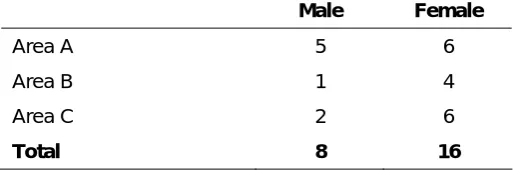
[image:13.595.169.426.685.770.2]In total, Advisers gained consent from 53 young people to be contacted by the research team and the target of 24 interviews was achieved. The majority of interviews were undertaken face-to-face, although a small number were undertaken over the telephone where it was not possible to arrange a convenient time to meet in person. Table 1.1 indicates the range of young people interviewed by gender and Connexions Partnership area.
Table 1.1: Profile of young people interviewed, by Connexions Partnership area and gender
Male Female
Area A 5 6
Area B 1 4
Area C 2 6
1.4.4 Interviews with employers
Where appropriate, for example if the employer had been involved in choosing that young person’s course, the young people who took part in an interview were asked whether someone from the research team could also contact their employer to discuss how the course was negotiated and the extent to which it met their needs.
It was anticipated that the research team would be able to conduct approximately eight employer interviews ‘matched’ to a young person who had also participated. However, in the majority of cases the young person’s employer was not involved in the Learning Agreement.
In some cases where the employer was involved, the young person did not want them to be
contacted. In a few cases the young person’s employer had been involved when they originally signed up, but they had since left their work and continued the LAP in a different job where the employer had not taken part. Therefore, only one employer interview was undertaken.
1.4.5 Interviews with training providers
A number of training providers had been interviewed as part of the process evaluation, and these transcripts were reviewed for content relevant to the provision theories.
In addition, Connexions staff were also asked to provide the research team with a number of training provider contacts within each area. In total, an additional 15 providers were
interviewed (five in each Connexions Partnership area). These interviews were conducted by telephone.
1.5 Structure of this Working Paper
The remainder of this Working Paper is structured as follows:
■ Section 2 details how Advisers keep up-to-date with the provision available under the
Learning Agreement in their local area and examines the range of provision that is available more broadly.
■ Section 3 examines what Advisers do to engage young people and employers in the
Learning Agreement, and explores how courses are brokered, including which
circumstances make brokerage more straightforward and which make it more challenging.
■ Section 4 looks at young people’s education and employment contexts and, in light of this,
their experience of doing Learning Agreement courses. Finally this section looks at the impact of the Learning Agreement on provision available to young people in jobs without training.
The conclusion assesses the research findings in relation to the original hypotheses. Some broader implications, in terms of raising the learning participation age, are also considered.
1.6 Acknowledgements
2 Awareness and Availability of Provision
This section examines how Advisers kept up-to-date about the provision on offer in their local
area. This relates to the ‘brokerage’ theory (to broker courses effectively Advisers need
to be fully informed about the range of provision available to them). It also explores the range of provision that was available to Advisers within their local area, and the impact of the funding guidelines on availability of various types of course. This relates to elements of both
the ‘menu of choice’ and ‘brokerage’ theories, that the broker must be able to access
provision that meets young people’s needs and the provision needs to be responsive and available when and where the young person can do it.
2.1 Team structures
The structure of teams and types of roles varied between the case study areas:
■ Area A - Advisers were structured into two teams covering the north and south of the area. Team Leaders had primary responsibility for resolving any specific issues with brokering provision.
■ Area B - Advisers were structured into three local teams, each of which also had a
Learning Development Adviser who was responsible for dealing with, and resolving, more challenging provision enquiries. In this area, a number of Advisers were co-located within learning providers.
■ Area C - Advisers worked from their local Connexions office overseen by a Team Leader who had responsibility for a number of Connexions offices. Team Leaders each had a number of training providers that they were responsible for liaising with. Where there were issues with provision, Advisers would complete a ‘system failure form’ to raise the issue with their Team Leader, who would then take it up with the relevant training provider and / or local LSC.
The way that teams were organised did have an impact on how quickly information could be shared and on relationships between Advisers and providers, which in turn impacted on the extent and nature of the brokerage that could be achieved. This is discussed in more detail in Section 2.2 and Section 3.3.1.
2.2 Advisers’ awareness of provision
In all the areas, Advisers generally felt informed about available provision and kept up-to-date through a variety of formal and informal structures. Team meetings were used to provide updates on local provision, as were more informal emails and telephone conversations. Advisers in Area A used a ’provision matrix’ to gather information about courses, but some mentioned that this was not always as up-to-date as it might be.
‘If they know in advance that something will be coming on at a certain point then they tell us in team meetings. Because sometimes there is a delay with the matrix because it has to come from the LSC.’ Adviser
‘We can drop an email out to them and someone will get back to us in minutes saying I’ve done that, this training provider will access that.’ Adviser
In Area B, Advisers used regular ‘buddy group meetings’ to stay informed about local
provision and to discuss any gaps. The meetings were held at a sub-team level, and included representatives from all the providers in that locality. These were felt to be particularly useful:
‘You can start to pre-determine how things can be delivered in a different way, meeting the demand that the PA is identifying in those little groups.’ Adviser
As noted earlier, Area B had also based some Advisers within a number of colleges and private training providers. Among other benefits, such as increasing the buy-in of providers to the LAP pilot, Advisers felt that these links were critical in keeping them informed about provision and the sometimes rapid changes in the provider market. Provider-based PAs were
described as ‘an instant source of information’, helping to answer any queries about
provision within that specific provider.
2.3 Eligible provision under the LAP
Learning that can be funded under the Learning Agreement comprises all qualifications listed
under Section 96 of the LSC’s Learning Aims Database. This includes qualifications
accredited at Level 2 or above but does not include stand-alone NVQs at Level 2. It can include:
■ Apprenticeships or Advanced Apprenticeships
■ BTEC and similar FE courses
■ GCSEs or A-levels
■ NVQ Level 2, if done alongside another course.
Funded LAP provision may include that which supports progression to Level 2, as long as the learning plan also addresses basic and/or key skills; including:
■ NVQ Level 1
■ Technical Certificate components of an Apprenticeship framework
■ Literacy, numeracy or IT (key skills)
■ Short courses if they are over ten guided learning hours (and on Section 96).
Towards the start of the pilots there was some confusion about what could, and what could
not, be offered within the LAP1. This resulted in some LAs being offered which included
stand-alone NVQ qualifications at Level 2. Apprenticeships comprise Level 2 qualifications, as well as key skills and a Technical Certificate, ie a full framework agreement. There was anxiety that offering stand-alone NVQs at Level 2 would undermine the take-up of the Apprenticeships, despite it being widely reported that these were highly sought after by young people and their employers.
Subsequent changes to the national guidance on delivery of the LAP pilots clearly set out the boundaries of the qualifications that could be offered. Connexions staff were concerned that aligning Learning Agreement provision more closely with the qualification attainment
specification within the Apprenticeship framework, had made Learning Agreements less attractive to some young people and their employers. Some young people in jobs without accredited training had refused the offer of an Apprenticeship in the past, and it was argued that greater flexibility and innovation was needed within the Learning Agreement in order to widen participation in learning and training.
2.4 Availability of provision
2.4.1 Some providers more flexible than others
Advisers in all areas reported that private training providers had generally been more responsive than colleges, although there were some notable exceptions to this. Colleges tended to have two main entry points to courses, in January and September, rather than flexible course starts. This limited their responsiveness to the range of start times required by young people on the LAP:
‘Others [providers] are, this is the way it works, this is the time it works, this is where it works, and if that doesn’t fit in - tough.’ Adviser
Flexibility within colleges was also reported to differ between departments, with some who
worked flexibly to meet the requirements of the young person and others that did not. In Area C, Advisers described how the work-based assessment approach of the hospitality
department in one college was being explored to assess how feasible it was to extend to other departments:
‘They’re looking at the success that the hospitality department has had because of the Learning Agreement, mainly going out and assessing in the workplace and they are trying to get that kind of provision within other departments, but it takes time I guess.’ Adviser
The constraints on flexibility, in terms of course start and end times, were also acknowledged by some providers themselves, in particular for popular courses such as construction:
‘In terms of capacity basically those areas are running at capacity through the full-time and the work-based provision. It has been quite difficult to be flexible, where we have had learners who have been in the position of wanting to start a construction course in September that has not really been an issue, but it is where it is outside normal
college start and end period that it has been difficult.’ College, Area B
1
Advisers felt that generally the Learning Agreement was a lesser priority for colleges which were more focused on achieving their mainstream targets, and on Entry to Employment (E2E) provision. Some reported that they understood why this might be the case, due to the scale of the courses and the amount of forward planning that was involved:
‘Colleges have to set their stall out 12 months in advance so they’re very set in their guidelines and it’s not because they don’t want to be helpful, they just haven’t the means to do it. But with training providers they have more flexibility because it’s roll-on, roll-off and they can set a two day training course up at a moment’s breath.’ Adviser
There were some large colleges which openly supported this view. For example, a college reported that they had tens of thousands of students per year, but had tutored just 40 students through the Learning Agreement pilot over the past two years. They explained that it was difficult to promote smaller initiatives to all the staff in a large college and that, in relation to larger programmes, sometimes such initiatives had to take a lower priority:
‘The organisation has got that many things going on, Train to Gain, Apprenticeships, and everything else, so it [the Learning Agreement] wasn’t seen as a priority.’ College, Area C
Advisers described how some providers were flexible in how they arranged learner assessments, and worked at weekends or evenings. In Area B, for example, one group discussed how a provider had recruited a hospitality assessor to work evenings and nights, specifically to be able to deliver a qualification to a young person who worked in a 24-hour bar. It was reported that some providers were willing to work flexibly to meet the specific needs of a young person in other ways, for example visiting them at home where there were issues with transport, or where they had particular learning needs (see Section 4.2. for examples of how this impacted on young people).
In Area C, Advisers were more likely to report that providers worked from their own sites and preferred the young people to travel to the learning rather than to undertake home or work visits, although there was a minority that would go out to meet the young person. The reasons for this were linked to the large geographical coverage of this area and its rurality: it was not economical for providers to visit individual young people.
‘They [training providers] do like them [young people] to come into the base [the training providers’ site] to do it [the training] which is convenient for them and not so convenient for the young person or employer.’ Adviser
2.4.2 Many courses widely available, but some specific gaps
Advisers in Areas A and B reported that there was a good range of provision available in the areas, although there were some specific gaps, either in subjects or in specific localities. For example, provision for some construction trades was reported to be difficult to source
(particularly if the young person was not working in that field):
‘It’s the trades, the main trades that especially young lads are wanting to do. It’s so difficult to get them a place.’ Adviser
Advisers also reported that some young people were working in occupations for which there was no relevant NVQ at Level 1. This meant there was a gap in work-based provision, if the young person was not ready to undertake a qualification at Level 2.
Lack of provision was in some instances reported to be because of a shortage of assessors in the subject, which could cause delays in starting. Gaps could be more acute in specific local areas depending on their rurality and the number and types of provider operating in the area. This was the case across all of the Connexions Partnerships involved in the study:
‘We have found a couple of times the courses they can deliver, we obviously offer it to the young person, phone the training provider and then they say, “oh sorry no we can’t deliver it because we haven’t got an assessor in your area”…so that’s where we have barriers really because of our location.’
Advisers
A limited range of provision, particularly work-based and specialist training, was more frequently mentioned as a constraint by Advisers in Area C:
‘There’s only a limited amount of training providers. They only offer certain courses basically, so sourcing that sort of elsewhere has been very difficult and like we said the basics they all do, literacy, numeracy, customer service.’
‘Ultimately we have a lot that we can’t help youngsters with because we can’t get the provision.’
Advisers
In this area, the lack of work-based provision, and hence choice of courses, influenced both the sorts of young people that Advisers approached and the likelihood of engaging the employer. Some Advisers said they avoided approaching young people working in sectors where they knew provision was most limited:
‘It’s pointless to be honest, well going back to construction again, to see a builder, a small jobbing builder with a lad who he’s employing as a labourer, because there’s going to be nothing. If that lad’s working full-time there’s going to be absolutely nothing we could offer.’ Adviser
Where there was no scope to undertake a work-based qualification, employers were reported to be less willing to give the young person time off to train, and many young people were doing key skills courses instead, in their own time. This often meant they had to travel to the provider and this could cause time and cost issues for the young people involved.
2.4.3 Some learning is ‘second-best’ option
Where there were gaps in provision that could not be filled, Advisers discussed developing a Plan B, or brokering alternative provision that might also be relevant to the young person. Advisers said it was important to work up a number of possibilities and to plan for the eventuality that provision would not be available, so that young people were better able and more prepared to work around gaps and to take another course of action if necessary.
For many young people working toward a key skills qualification became part of a ‘stepping stone’ process, with several identified actions required to achieve a longer-term aim, such as working in a different industry. Advisers felt that the mentoring and ongoing support they could offer was particularly important for young people wanting to change direction. Key skills courses were often used to fill gaps in provision:
‘They usually go onto Key skills if there is nothing we can do that is work-related.’ Adviser
However, this was not an option for those young people who already had GCSE Maths and English at grade C or above, who therefore had fewer fallback options if their first choice was unavailable.
A small number of individuals voiced concern that Advisers were filling gaps in provision with ‘second-best’ options and this could mask the actual demand for courses from this group of young people. One LSC representative reported that demand was being manipulated to fit in with supply:
‘We also get this hidden number of young people who say “I don’t really want to do a Learning Agreement because you can’t give me what I want”. But the brokers
persuade them that literacy is the way to go.’
2.5 Impact of funding on availability
Advisers in all areas felt that limiting LAP funding to Section 96 constrained the choice of provision they could offer young people:
‘Like medical secretary, legal secretary, they are accredited qualifications, but they are not on Section 96 so we can’t provide them. That’s quite difficult because we’ve got a young person who is interested and knows what they want to do, they are just in the wrong box.’ Adviser
Advisers and providers alike felt that LAP funding should be extended to cover shorter courses than were currently supported, modules or parts of qualifications, such as units of NVQs:
‘They [young people and employers] wanted things that the LSC don’t fund, so that was always a difficulty because we have had to say no. For instance, ECDL was really popular, but it is no longer fundable yet it is an industry standard
qualification…there is the Health and Safety, and First Aid, Catering and Food Hygiene type things, which would equip all these people to do better work, but because the government doesn’t fund it we can’t deliver it.’ College, Area C
‘The short courses like the two day First Aid course or food hygiene…around here we’ve got a lot of hotel industries and if a young person goes for an interview for a job and they’ve got their food hygiene they have a start against the others…I feel there should be more short courses and some NVQ 2s. Perhaps not in all areas, perhaps not where there’s a Level 1 and I still think to fund units towards an NVQ to get them inspired is a good idea.’ College, Area B
‘We’re not allowed to deliver Level 2, so as regards to what the employer wants, and what the candidate wants, they want Level 2, but they can’t have that because the LSC won’t fund it without the full framework, but these candidates don’t want the full framework, which is why they’re on a Learning Agreement in the first place…I would put a clear Level 2 progression system in place.’ Specialist provider, Area B
‘We need to be able to do NVQ Level 2 because there’s a lot of very bright youngsters who have the ability to work, who are well above the Level 1, but they’re not at Level 3 because they are not working in supervisory level jobs, and for us to find them
3 Brokering Provision
This section first discusses the evidence on whether a choice of course is important to young
people (in relation to the ‘menu of choice theory’ that young people need to be presented
with a learning option or range of options that they need or want to enable them to progress). It then presents the various different types of provision and ways of working that have engaged young people and employers, before exploring the factors that make
brokering provision challenging or more straightforward, and lastly how the areas filled any identified gaps. These issues also relate to the following elements of the ‘brokerage’ theory:
that Advisers may need to negotiate with the young person about what provision best
suits them/ is most appropriate and that provision needs to be responsive and available when and where the young person can do it.
3.1 The importance of having a choice
Good to offer a choice, but the course can ‘pick itself’
Advisers generally felt that it was good to offer young people a sense of choice about what learning to do, and where and how to learn, because it created ‘ownership’:
‘They’re [the young people] making decisions and I think that sometimes gains quite a lot of respect from the off really doesn’t it…because you’re kind of putting the ball in their court…and I think that’s just going to encourage them even more because they are making the decision.’ Adviser
However, choice could be guided by the Adviser, and/or the availability of provision,
particularly when some young people were unaware of the learning options available to them or where there were only one or two suitable courses that fitted their circumstances:
‘Sometimes a decision makes itself. There’s only certain things that are available for that young person.’ Adviser
In Area C, where Advisers seemed to be more constrained by the range of provision they could broker, one Adviser reported that the most important outcome of the Learning
Agreement was that the young person undertook some training and achieved a qualification, rather than was necessarily able to do their ideal course in the first instance.
From the perspective of the young people, having a choice between different courses was especially useful for those who were unsure about what they wanted to do or their future career direction. For example, one young person chose between a qualification in Retail (related directly to her current job) and one in Customer Service (which was more general and transferable into other areas of work). Having a choice between courses was not always a necessity - it was being able to get onto the right course that was more motivating:
‘I would have taken what they offered, I’m not a picky person. As long as I get a good outcome at the end I’ll be happy. If they [Connexions] had come to me and said we only do this, this is all we can offer, I would probably have said yes [as long as it was] in my area of work.’ Mike, Area A
3.2 Engaging young people and employers
3.2.1 Engaging young people
Advisers stressed that each young person was different and the provision best suited to their needs varied on a case by case basis. For example, some young people liked their current job and others did not; some wanted to learn in a learning centre and others preferred work-based learning. However, there were some common factors that Advisers felt engaged young people.
Learning that leads somewhere
For the vast majority of young people the key factor affecting their course choice was how much it would benefit their work and learning prospects. Perceived benefits included advancing in their current line of work, improving grades to enable them to access higher level courses, or gaining the necessary qualifications and experience to move into a different type of work. Very rarely were the young people undertaking courses without a vision of where they hoped it might lead.
A small number of young people had planned to undertake a series of courses in order to achieve their desired work goal. Others chose a course that would give them the most options in the future. Overall, it was important that the learning was relevant to current or future work or learning ambitions for young people to be motivated and engaged. Learning could be relevant in a variety of ways:
■ Transferability: keeping future work options as wide as possible.
‘I could have had a choice of customer services or retail. Customer service I can take anywhere, into any job. I can’t take retail into teaching. I said customer service would be better I can take it anywhere…I would have taken what they had offered…as long as I get a good outcome at the end of it I’ll be happy.’ Mike, Area A
■ A safety net: a fall-back plan in case other work aspirations do not work out.
‘Because I am in a retail job at the moment, and in a couple of years if I don’t get where I want to be [working in care], then I have still got it [the qualification] to get another job in retail.’ Aimee, Area A
■ Proof: being able to prove to future employers and learning providers that they have the skills required for the job or higher level course.
‘I just needed something to prove I’ve got the basic maths and English and IT skills to get onto a college course. I knew I could do it myself, but I didn’t have the paper to prove it…I didn’t have the qualifications to get onto the courses that I really wanted.’ Jade, Area B
■ A platform for progression: a first step that can be built on and helps them to move towards a longer-term work goal.
‘There were telephone courses and things, whereas I thought an office one would be more beneficial for me working in an office than just a telephone course… with this you can keep progressing and keep building up, like you can move from marketing to something else, to a manager, whatever, I’m looking high!’ Clara, Area A
Learning that is not like school
Although some young people were reported not to mind learning in a classroom-based environment, the majority of Advisers agreed that it was important to be able to offer learning opportunities that ‘were not like school’:
‘I think they [young people] like the thought of working or training in the workplace because they get more of a thrill factor that they’re still getting paid to work… but yet they’re getting a bit of time out.’
‘If you talk to them about going up to the college as part of the Learning Agreement they absolutely refuse to go and often you’ll find an alternative training
provider…young people will experience college as school.’ Advisers
Several providers also reported that being able to offer learning opportunities outside of the classroom environment was critical to engaging young people. One college had started delivering provision for the Learning Agreement off-site in another building to try and separate it from the standard college environment:
‘Young people have found it [a Meet and Greet course] was a very different type of learning to they have had before usually in school and they have become quite hooked, it’s like I have done that, what can I do now? That has been quite nice that there has been a more grown-up, more self-reliant, more fun learning.’ College, Area B
Evidence from the interviews with young people reinforces the importance of offering learning opportunities that are seen to be different from school. Several young people reported negative experiences of school or college in the past. Some also reported that they found a group environment intimidating, particularly joining a class where they did not know people. Earning while learning was also an important factor in some young people’s
preference for work-based provision.
‘I wanted to be working and I wanted to learn as I were working so I felt like I were going towards something rather than just being at college …because I felt I knew where I was going.’ Samantha, Area A
‘I really didn’t want to go back to college from the experience I had before with it not working out…going back to college with a bunch of people I don’t know, it worried me.’ Chris, Area C
One-to-one support
Many of the learning opportunities under the Learning Agreement were delivered in a small group setting or on a one-to-one basis. The level of support that the young people could get from tutors was reported by Advisers to motivate and engage them. A one-to-one setting also appealed to young people who lacked confidence or were apprehensive about group settings and particularly to those who had had negative past experience of school or college.
Advisers said:
‘I do think that a lot of young people do prefer to do it on a one-to-one basis rather than a classroom because they are scared of looking silly…I think because it is just the assessor and the learner they [the learner] tend to feel more comfortable and they express themselves better.’ Specialist provider, Area B
Young people also mentioned that they valued being able to learn in a one-to-one setting and had benefited from individual tutoring:
‘It’s just one-to-one and if I get stuck and then I haven’t got to wait for X to shut up talking… one-to-one is alright as well if I don’t quite understand some things. I understand more then, it helps me listen more. I haven’t got so many distractions.’ Hayley, Area C
Help with travel, or learning that comes to them
Advisers mentioned that transport was a key barrier to learning for some young people, particularly in rural areas and areas with poor public transport links:
‘They’re expecting young people …to do journeys that I wouldn’t do on local
transport…how do you encourage young people that are traditionally disengaged from learning to make those trips when they’ve been doing a days work.’ Adviser
Cost was not always the biggest issue (although it could be if young people worked part-time hours and for low pay). What was often more important for those who worked full-time or irregular hours was long journey times on public transport, especially if they had to change buses or trains. Where travel was identified as a particular barrier, Advisers tried to think of ways to overcome this. These included:
■ Advisers transporting young people to courses some miles from their home and inaccessible by public transport, waiting outside while they took part, and then dropping them back home. Clearly, this was dependent on the goodwill and capability of individual Advisers and would not be sustainable on a larger scale.
■ Liaising with providers to arrange dedicated transport for learners to get them to and from classes. In Area A, one young person was doing a childcare course at an open learning centre in a nearby city. In order to facilitate access to the provider, a mini-bus pick-up service had been arranged from the town centre nearest to where the young person lived, to the provider’s premises. This service had greatly reduced the travel time for this young person.
‘It is hard for me to get across to [local town]. I have to get the bus into town, that takes about 25 minutes, and then a minibus picks me up from there…but without the bus it would take me a lot longer to get there.’ Helen, Area A
■ Using discretionary funding to pay towards travel for some young people. One girl described how she received money to enable her to get a taxi back home from her evening course at college during the winter. Although the college was fairly close, there was no direct bus route, and getting there involved walking through subways and underpasses in what she described as a ‘rough area’. Without this financial support, the young person said she would have been deterred from attending college because of the walk home on dark evenings. Again, it is unlikely that this level of individualised support would be sustainable on a larger scale, without significant additional investment. A common issue raised by Advisers was the lack of a dedicated travel budget to support learners:
Provision that fits around work
It was also important that the provision fitted around the young person’s existing work commitments. Especially for aspiration-led courses, where the course was not directly related to their work, young people often reported that they did not want their learning to affect the amount of hours they could work and the money that they earned.
Many young people also worked irregular hours, in terms of both the number of hours they worked and the times of their shifts - this meant that they appreciated being able to learn in a flexible setting such as in an open learning centre.
‘I knew it was best if I did it at night so I didn’t lose any time at work.’ Graham, Area A ‘They told me that on a Wednesday they stayed open late so I could come in after I’d been to work or before. They didn’t expect me to turn up religiously every day. If I come in a couple of hours a week I remember them saying work through it at my own speed, they were fine by that.’ Thomas, Area A
‘I work some weeks at 7am, because [my shifts] are different each week, so if it was a set time then I don’t think I’d have been able to do it.’ Hayley, Area C
There were several examples of assessors going out of their way to schedule appointments around young people’s working hours:
‘I met [the assessor] on the Saturday which is meant to be her day off but she had a word with her manager and her manager said she could work that day, so she like fitted it around me because I couldn’t go in on a weekday because I was working.’ Shelley, Area A
Some even made home visits, usually those providing key skills, in order to fit around working hours or other LAP training that the young person was doing during work:
‘She comes around 8:30am because I have to go to work and then I sometimes have the food course afterwards, so it’s better to fit the maths one in the morning.’ Beth, Area B
Although young people wanted provision that was flexible and fitted around their work
commitments, some providers felt the level of funding to support this tailored service was not high enough. Some providers discussed needing to ensure a minimum number of young people in a group, or had been subsidising their work on the Learning Agreement through other contracts.
‘That's been a limiting factor, we have to make sure we have 3-4 young people together before we can run a course, otherwise we're in danger of losing money.’ College, Area C
Others reported that they took a long term view of the costs of engaging with the Learning Agreement and hoped to progress a proportion of the young people onto higher level courses in the future, such as Apprenticeships.
‘The money is not that great. Our whole point is if we can move them into an
Apprenticeship it becomes worthwhile, if we don’t it is sort of a loss lead. A lot of time for very little financial income.’ Specialist provider, Area C
In some areas Advisers had tried to overcome combined travel barriers and work
commitments by brokering distance learning courses. Although this engaged some young people, both Advisers and training providers discussed that retention and completion among this group of learners had been less favourable. They reported that the young people
involved had needed more support and structure than was possible under this learning method:
‘It was blended learning really. There was a taught module, we have got three taught days and the rest of the assignments we did by distance, and telephone
conversations and emails, things like that and it seemed, that not entirely surprisingly that really wasn’t working for this group of young people.’ College, Area B
‘We are looking at trying to get a cohort and build more structure to it because
obviously distance learning is quite difficult to keep people motivated…we are actually looking at completion rates at the moment to look at how we can improve those.’ Specialist provider, Area C
Tasters and short courses
Helping aspirational learners
Short taster courses were felt to be particularly helpful for aspirational learners (ie those wanting to move into a different area of work). Tasters could help this group of learners to clarify or confirm whether or not they wanted to undertake a specific course or to work in a specific area. It was also reported to be useful if taster courses offered young people a certificate of some kind that they could use to help them when applying for courses or for jobs. Advisers said:
‘I had a girl who really wanted to be a hairdresser and she went for a taster day and hated every minute of it.’
‘Something like that [a taster] gives them a little bit of a foot in, one I think to see whether they like it, and to see whether it’s something they would want to do, but it’s also a qualification, some sort of certificate that gives them just the tiny little step up the ladder when they’re applying for jobs.’
Advisers
Engaging young people
Advisers said that breaking down qualifications into smaller ‘bite-sized chunks’ was felt to engage young people. Examples of this included undertaking a stand-alone Technical Certificate, and a ‘meet and greet’ module of an Apprenticeship.
‘Sometimes we offer them the chance to do a Technical Certificate first, and then move onto the rest of the Apprenticeship framework. It’s a question of getting the ball rolling…some learners don’t want to commit to a longer-term course. Offering them something quite short often helps them to realise how important it is to get some training. It opens their minds to learning.’ Specialist provider, Area B
Short courses were also reported to increase young people’s confidence that they could achieve and succeed in learning, and to increase their motivation to undertake further learning and perhaps longer qualifications:
‘Some of the young people needed that bite sized training to get back into it. Some were very education and training shy. That was a good tool for those young people, trying to persuade them to do something.’ Adviser
Shorter courses could also be useful because many young people frequently changed employer and or occupation.
‘We agreed to change the model…reducing the assessment time down to a three month as a standard maximum and with delivery times usually in around six weeks. They wanted it to be over six months, but candidates are young people in construction and aren’t going to stay in one place for six months.’ Specialist provider, Area B
Several providers in Area B were adopting a more innovative approach and creating
‘bundles’ of learning, in which short courses could be packaged up so that they offered more than the minimum of ten guided learning hours, or were packaged to lead on to a full
qualification such as key skills or a Technical Certificate.
Breaking down courses into smaller parts was often done as part of the brokerage by Advisers, without young people knowing this was the case. However, a small number of young people also mentioned the benefits of short courses and breaking down qualifications into what they saw as more manageable parts, or qualifications they could gain relatively quickly before undertaking something else. For example:
‘My Adviser helped me…he explained that it would be easier to do Key skills first rather than the retail GNVQ as when I go onto do that one it will be half the work on the GNVQ.’ Shelley, Area A
‘If it [the course] was going to take me a year to then it would have run over into the time when I could have done the Apprenticeship [in care], so if it’s only going to take three months, then I can get two courses done in that time.’ Chrissie, Area C
However, other young people, particularly those who said that their course was directly relevant to their current job, were happy to undertake qualifications that lasted a year or more:
Learning at their own pace
A number of young people discussed their progress with the course and liked the fact that they had control over how quickly they completed. Some young people liked to take things slowly, whereas others were keen to put in a concentrated amount of effort to complete the qualification as quickly as they could. This underlines the importance of personalised provision under the Learning Agreement.
For example, one young person undertaking an NVQ Level 1 in Food Catering had been learning for almost a year. She explained that she wanted to do the course a ‘little bit at a time’, so that she could continue to fit it around her work, social life and other commitments. Conversely, other young people preferred to work faster:
‘I’m impatient, very impatient. I don’t know, I try and get things over and done with, but not so they’re done badly…I just like working at my own pace. With stuff like this [her NVQ] I tend to work quicker because I do want to get it over and done with and I want to move onto the next one and carry on.’ Clara, Area A
Learning that can start soon
Advisers in all areas reported that when young people had to wait for courses their motivation and enthusiasm waned. Access to roll-on, roll-off provision, that could start as soon as the young person had shown an interest in the course and signed up to the Learning Agreement, was seen to be important in minimising the risk of drop out. Quick access to provision was also felt to be important due to the frequency with which some of the young people changed job:
‘With these youngsters you’ve got to do it now, it’s no use waiting till September and we’ll put you on the course then, they’ll probably be gone and in a different job by then.’ Adviser
3.2.2 What employers want
Advisers described how employers ranged from very supportive to not at all supportive of young people on the Learning Agreement. Some were willing to support their young employee irrespective of whether the learning was directly related to their present job, and others were not. For example, one young person who had done a Key skills course while working at a supermarket said:
‘They [her employer] knew I were doing it, but didn’t mind it as long as it didn’t get involved in my work.’ Shelley, Area A
However, in many instances the employers’ view was not consulted when choosing a course, because the young person wanted to undertake a course unrelated to work in order to
change job, they did not want their employer involved, or they saw their learning as something quite separate from their current job. The degree of employer involvement depended on the extent to which it was a necessity. Employers tended only to have been involved with the Learning Agreement where the course was work-based learning and would require on-site visits or to agree set days off for young people who worked shifts in order for them to attend learning.
Whether or not the employer was involved was dependent upon the young person’s
‘It depends on how well the young person is doing at work. They could tell you that they love the job and they work all these hours and in reality they have been off sick three times that week and are not pulling their weight. An employer is not going to want to talk about work-based learning if they are not pulling their weight, or let them off on day release.’
‘We have quite a few young people that don’t want the employer involved. They don’t even want us to ring the employer; they’re absolutely frightened to death of
mentioning training to the employer.’ Advisers
Advisers reported that employer support could depend on whether the young person was a full-time or part-time employee. If they worked part-time then Advisers felt that employers were more reluctant to offer time out of the workplace, or work-based training, than they were for employees who worked full-time.
Work-based learning
Where employers were supportive and bought into the Learning Agreement, it was reported by Advisers and training providers that they generally preferred work-based learning rather than releasing their employee from the workplace to train. None of the participating
Connexions Partnership areas offered the wage compensation variant of the Learning Agreement.
‘I think they [employers] prefer work-based learning for the simple fact that it boils down to money really. An assessor is going to come in to the workplace for one hour, then that is only one hour of the company’s time, whereas if they are doing on a day release somewhere obviously they are going to have to have new staff in to cover for that member of staff.’ Specialist provider, Area A
Qualifications related to work
Employer buy-in was dependent on the nature of the qualification being undertaken. It was the view of Advisers that the more related the qualification was to the employer’s sector and business, the more willing they were to support the young person:
‘Some employers, like an engineering company I went to, he wanted the young person to do a specific type of engineering course and we couldn’t offer it and so we had to discuss the NVQ and he was reluctant because he just wanted the specialist technical engineering qualification.’
‘The Health and Safety course and the Welding course was what the employer needed and the provision wasn’t there, so therefore he didn’t allow him time off to do anything else because it wasn’t in the interests of the employer.’
Advisers
3.2.3 Whose demand takes precedence?
‘It depends where the lead comes from. If that young people comes to you, then it’s definitely the young person. If the employer comes to you and you don’t know the young person…you have to focus on what the employer wants.’
‘If you find a young person who wants to do something in the workplace and the employer’s willing to support them, then it’s the employer that you need to focus on as well. By meeting the employer’s needs, you’re meeting the young person’s as well.’ Advisers
Overall, most employers were reported by Advisers to have a fairly hands-off role in choosing a course. This tended to be left to the Adviser and the young person, albeit -where the
employer was going to give time off for training - constrained by the young person’s job role and the needs of the business. One Adviser said:
‘I haven’t had an employer specifically say, well I really need this, so do this, this and the other. They generally give you a free hand, so you can really do what’s best for the young person, but you also have to bear in mind you have to stay within the restraints of doing the best for the young person whilst they’re in that business.’
3.3
Brokering provisionWhen brokering provision for a young person the Advisers did not typically have to undertake a ‘negotiating’ role. This could be because the choice of provision was straightforward, or because young people were not aware of their learning options and therefore were not well-informed enough to ‘negotiate’. Often