DEVELOPMENT OF FAST DISSOLVING TABLETS OF
BISOPROLOL FUMARATE AND STATISTICAL OPTIMIZATION
BY USING 3
2FACTORIAL DESIGN
Dissertation submitted to
THE TAMILNADU DR. M.G.R. MEDICAL UNIVERSITY,
CHENNAI.
In partial fulfillment of the requirement for the award of the degree of
MASTER OF PHARMACY
(PHARMACEUTICS)
Submitted By
Reg.No:26105103
Under the guidance of
Mrs. T. SUDHAMANI, M PHARM.,
Assistant Professor,
Department of Pharmaceutics
The Erode College of Pharmacy and Research Institute, Erode-638112
MAY 2012
THE ERODE COLLEGE OF PHARMACY
AND RESEARCH INSTITUTE
The Erode College of Pharmacy & Research Institute
Mrs. T. Sudhamani.,M. Pharm.,
Assistant Professor,
Department of Pharmaceutics,
The Erode College of Pharmacy & Research Institute Erode – 638112.
CERTIFICATE
This is to certify that the investigation in this thesis entitled “Development of fast
dissolving tablets of Bisoprolol Fumarate and statistical optimization by using 32 factorial design” submitted to the TamilNadu Dr. M.G.R Medical University, Chennai,
for the partial fulfillment of the award of Degree of Master of pharmacy in Pharmaceutics, was carried out by Reg. No. 26105103 in the Department of
Pharmaceutics, The Erode College of Pharmacy & Research Institute, Erode-
638112, under my guidance and supervision.
This work is original and has not been submitted in part or full to any other degree or diploma of this or any other university.
Place: Erode Date:
Mrs. T. Sudhamani
The Erode College of Pharmacy & Research Institute
Prof. Dr .V. Ganesan, M. Pharm., Ph.D.,
Principal cum HOD of Pharmaceutics,
The Erode College of Pharmacy & Research Institute Erode- 638112.
CERTIFICATE
This is to certify that the investigation in this thesis entitled “Development of fast
dissolving tablets of Bisoprolol Fumarate and statistical optimization by using 32 factorial design” submitted to the Tamil Nadu Dr. M.G.R Medical University, Chennai,
for the partial fulfillment of the award of Degree of Master of pharmacy in Pharmaceutics, was carried out by Reg. No. 26105103 in the Department of Pharmaceutics, The Erode College of Pharmacy & Research Institute, Erode-
638112, under the guidance of Mrs. T. Sudhamani, M. Pharm., Department of Pharmaceutics, The Erode College of Pharmacy & Research Institute, Erode- 638112
This work is original and has not been submitted in part or full to any other degree or diploma of this or any other university.
Place: Erode Date:
ENDORSEMENT BY THE PRINCIPAL
This is to certify that the investigation in this thesis entitled “Development of fast
dissolving tablets of Bisoprolol Fumarate and statistical optimization by using 32 factorial design”, submitted in partial fulfillment for the award of degree of Master of
Pharmacy in Pharmaceutics, was carried out in the laboratories of The Erode College of Pharmacy & Research Institute, Erode, by Reg. No. 26105103 under the guidance of
Mrs. T. Sudhamani, M. Pharm., Department of Pharmaceutics, The Erode College of Pharmacy & Research Institute, Erode- 638112.
Place: Erode
Date
DECLARATION
The research work embodied in this dissertation work entitled “Development of
fast dissolving tablets of Bisoprolol Fumarate and statistical optimization by using 32
factorial design” was carried out by me in Department of Pharmaceutics, The Erode
College of Pharmacy & Research Institute, Erode-638112, under the direct supervision
of Mrs. T. Sudhamani, M. Pharm., Department of Pharmaceutics, The Erode College of
Pharmacy & Research Institute, Erode – 638112.
This dissertation submitted to The Tamil Nadu Dr. M. G. R. Medical University,
Chennai, as a partial fulfillment for the award of degree of Master of Pharmacy in
Pharmaceutics during the academic year 2011 – 2012.
The work is original and has not been submitted in part or full for the award for
any other Degree or Diploma of this or any other University.
Place: Erode.
Date: Reg. No. 26105103
ACKNOWLEDGEMENT
The joyness, satisfaction and euphoria that come along with successful completion of any work would be incomplete unless we mention the names of the people who made it possible, whose constant guidance and encouragement served as a beam of light and
crowned out the efforts.
First of all, it is by the love and blessings of God (my parents) that I am able to
complete my investigation studies successfully and I present this piece of work which I am eternally indebted.
I owe a debt of gratitude to my Research Guide Mrs. T. Sudhamani, M. Pharm.,
Department of Pharmaceutics, The Erode College of Pharmacy & Research Institute, Erode-638112,for spending her valuable time for giving me knowledge and guiding me in successful completion of my research work.
I now take this opportunity to express sincere thanks to our Principal, HOD, Dr. V. Ganesan, M. Pharm., PhD., Department of Pharmaceutics, The Erode College of Pharmacy & Research Institute, Erode-638112 for valuable guidance and constant encouragement throughout the project work.
I also thankful to our Department Staff Mr. S. P. Senthil M.Pharm., (Ph.D)., Mr. T. Ethiraj M.Pharm., and Mrs. Allimalarkodi M.Pharm.
I am also thankful to, Dr. V. S. Saravanan, M. Pharm., Ph.D., Professor & HOD, Department of Pharmaceutical Analysis for helping me in guiding throughout the research work. I am also thankful to, Mr. A. Nataraajan, B.A., HDC, Secretary and Correspondent. The Erode College of Pharmacy & Research Institute, Erode-638112
I am greatly indebted to All DEPARTMENT FACULTIES of The Erode College of Pharmacy and Research Institute, Erode, for their scholarly guidance,
precious advice, direct supervision and constant encouragement for carrying out this work successfully. .
With no words I can hearties and deep gratitude to my dear frie nds Ankur Shah, T. Arun, R. Kumar, Sudhir Ramani, Sandip Bhansali, Santosh Kore, Balkrishna Dikkatwar and Bipin Shinde who always believed in me and stood with me in good and bad times, special thanks to them for their friendship adherent love affection, encouragement they always showered on me. I take this opportunity to thank all my dearest friends.
The completion of this dissertation is not only fulfillment of my dreams but also the dreams of my Parents, Mr. Vishwanath, Mrs. Kusum, Brother Mr.
Vikram, Mr. Krishna., relatives and friends who have taken a lot of pain for me in completion of higher studies.
A word of thanks to all those gentle people associate with this work directly or indirectly whose names have been to unable to mention here.
ERODE – 638112.
INDEX
Chapter No Chapter name Page No
1 Introduction 1
2 Literature Review 38
3 Aim & Objective 46
4 Plan of Work 47
5 Drug Profile 48
6 Superdisintegrant Profile 51
7 Materials & Instruments 66
8 Methodology 68
9 Results & Discussion 78
10 Conclusion 106
LIST OF TABLES
S.No. Name of tables Page
No.
1
Processing steps commonly required in the various tablet granulation
preparation techniques 5
2
Examples of commercially available, preapproval, or submitted orally
disintegrating tablet products 33
3 Uses of PVP K-30 58
4 Grade of microcrystalline cellulose 60
5 Pharmaceutical application of MCC 60
6 Materials used for the research work 66
7 Instruments used for the research work 67
8 Formulation of blend 72
9 Weight variation limits 73
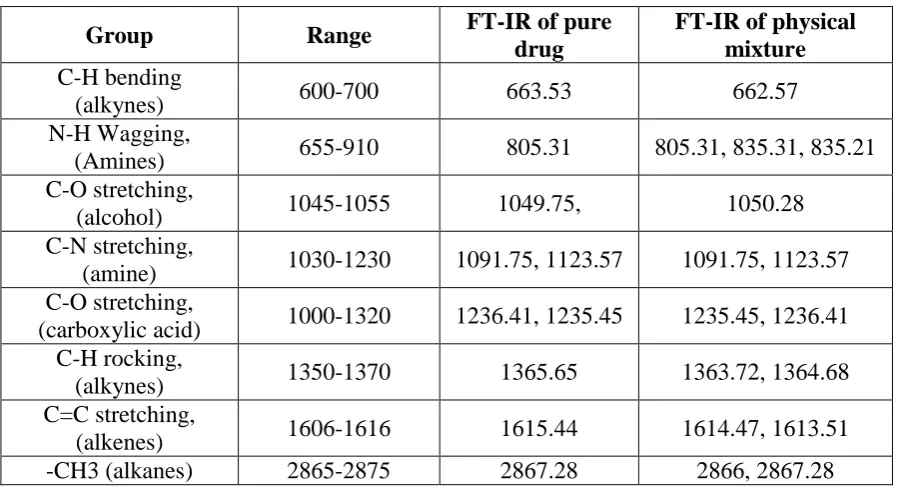
10 FT-IR interpretation of Bisoprolol Fumarate 78
11
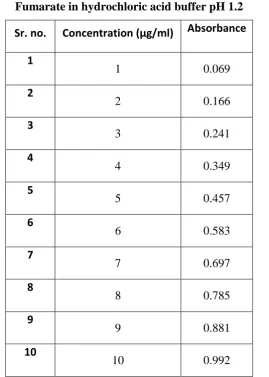
Absorbance values for standard calibration curve of Bisoprolol Fumarate
in hydrochloric acid buffer pH 1.2 80
12 Organoleptic characteristics of Pure Drug 81
13 Drug and excipients compatibility 82
14 Comparison of Pre compression parameters 87
15 comparative study of post compression parameters 90
16 % drug content 93
17 In-vitro release studies of batch F1-F3 in 0.1N HCL 94 18 In-vitro release studies of batch F4-F6 in 0.1N HCL 95 19 In-vitro release studies of batch F7-F9 in 0.1N HCL 96 20 In-vitro release studies of batch F10-F12 in 0.1N HCL 97
21 Comparative in-vitro drug release profile 98
22 Stability study at 40˚C/75% RH 99
23 Selected factor levels for the experimental design for optimization 100
24 Observations of FDT parameter evaluation for factorial design trials 100
25 Analysis of Variance for Dependent Variables from Factorial Design 105
26 Comparison between the experimental (E) and predicted (P) values for
LIST OF FIGURES
S.No Name of figures Page
No
1 Absorption of drug from intact tablet 8
2 Disintegration of tablet by wicking and swelling 11
3 Bulk swelling and water uptake apparatus 12
4 Disintegration by deformation and repulsion 13
5 Zydis dosage form and blister pack 16
6 Moisture sorption model explaining the increase mechanical strength of
FDT 25
7
Model describing the increase in tablet strength by transformation of amorphous sucrose to crystalline sucrose upon storing under a certain relative humidity
25
8 Schematic view of the manufacturing apparatus using moisture treatment 26
9 Typical PakSolv package 29
10 FTIR Spectrum of drug sample 79
11 Standard calibration curve of Bisoprolol Fumarate in pH 1.2 buffer 80
12 FT-IR Spectrum of Drug with Ac-di-sol 83
13 FT-IR Spectrum of Drug with sodium starch glycolate 84
14 FT-IR Spectrum of Drug with Crospovidone 85
15 FT-IR Spectrum of Drug with PVP K-30 86
16 Formulated tablet 89
17 Disintegration time of F6 at different time intervals 92 18 In-vitro release studies of batch F1-F3 in 0.1N HCL 94 19 In-vitro release studies of batch F4-F6 in 0.1N HCL 95 20 In-vitro release studies of batch F7-F9 in 0.1N HCL 96 21 In-vitro release studies of batch F7-F9 in 0.1N HCL 97 22 Comparative in-vitro drug release profile of Bisoprolol Fumarate FDT in
0.1N HCL 99
23 Correlation between actual and predicted values for % Friability (R1). 101
24 Response surface plots showing the effect of Lactose and Mag.Stearate
(R1) 101
25 Correlation between actual and predicted values for Wetting time (R2) 102 26 Response surface plots showing the effect of Lactose and Mg. sterate on
Wetting time (R2). 102
27 Correlation between actual and predicted values for disintegration time
(R3). 103
28 Response surface plots showing the effect of Lactose and Mg. Sterate on
disintegration time (R3). 103
29 Correlation between actual and predicted values for In-vitro Release (R4). 104 30 Response surface plots showing the effect of Lactose and Mg. sterate on
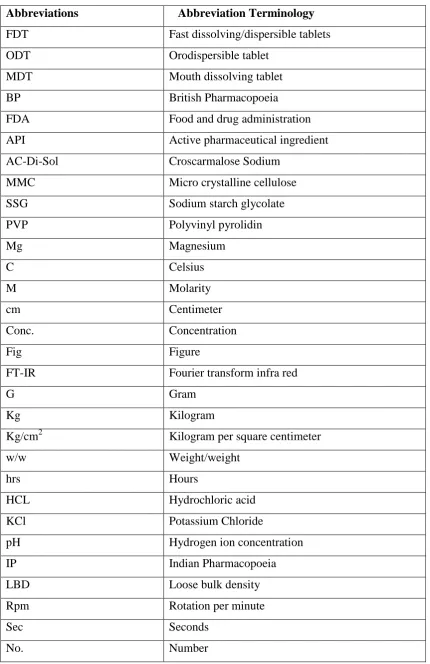
Abbreviations Abbreviation Terminology
FDT Fast dissolving/dispersible tablets
ODT Orodispersible tablet
MDT Mouth dissolving tablet
BP British Pharmacopoeia
FDA Food and drug administration
API Active pharmaceutical ingredient
AC-Di-Sol Croscarmalose Sodium
MMC Micro crystalline cellulose
SSG Sodium starch glycolate
PVP Polyvinyl pyrolidin
Mg Magnesium
C Celsius
M Molarity
cm Centimeter
Conc. Concentration
Fig Figure
FT-IR Fourier transform infra red
G Gram
Kg Kilogram
Kg/cm2 Kilogram per square centimeter
w/w Weight/weight
hrs Hours
HCL Hydrochloric acid
KCl Potassium Chloride
pH Hydrogen ion concentration
IP Indian Pharmacopoeia
LBD Loose bulk density
Rpm Rotation per minute
Sec Seconds
[image:11.595.92.523.93.758.2]S. no. Serial number
# Mesh size
µg Microgram
Mg Milligram
Mm Millimeter
Ml Milliliter
Min Minutes
nm Nanometer
% Percentage
θ Angle of repose
RS Reference standard
± Standard Deviation
TBD Tapped bulk density
T Time
1. INTRODUCTION
(1, 2)Oral routes of drug administration have wide acceptance up to 50-60% of total dosage forms. Solid dosage forms are popular because of ease of administration, accurate
dosage, self-medication, pain avoidance and most importantly the patient compliance. The most popular solid dosage forms are being tablets and capsules; one important drawback
of this dosage forms for some patients, is the difficulty to swallow. Drinking water plays an important role in the swallowing of oral dosage forms. Often times people experience inconvenience in swallowing conventional dosage forms such as tablet when water is not available, in the case of the motion sickness (kinetosis) and sudden episodes of coughing during the common cold, allergic condition and bronchitis. For these reason, tablets that can rapidly dissolve or disintegrate in the oral cavity have attracted a great deal of attention. Fast dissolving tablets (FDT) are not only indicated for people who have swallowing difficulties, but also are ideal for active people.
FDT are also called as mouth-dissolving tablets, melt-in mouth tablets, Orodispersible tablets, rapimelts, porous tablets, quick dissolving etc. FDT are those when put on tongue disintegrate instantaneously releasing the drug which dissolve or disperses in the saliva. The faster the drug into solution, quicker the absorption and onset of clinical effect. Some drugs are absorbed from the mouth, pharynx and esophagus as the saliva passes down into the stomach. In such cases, bioavailability of drug is significantly greater than those observed from conventional tablets dosage form. The advantage of fast dissolving dosage forms are increasingly being recognized in both, industry and academics.
According to European pharmacopoeia, the FDT should disperse/disintegrate in less than three minutes. The basic approach in development of FDT is the use of
superdisintegrants like cross linked carboxymethyl cellulose (croscarmellose), sodium starch glycolate (primogel, explotab), polyvinylpyrollidone (polyplasdone) etc, which provide instantaneous disintegration of tablet after putting on tongue, their by release the drug in saliva.
sugar-based excipients, tablet compression, and disintegration addition. As a result of increased life expectancy, the elderly constitute a large portion of the worldwide population today. These people eventually will experience deterioration of their physiological and physical abilities.
Recent developments in technology have presented viable alternatives for the patients who may have difficulty in swallowing tablets or liquids.
To overcome these drawbacks, FDT or orally disintegrating tablets (ODT) has emerged as alternative oral dosage forms. These are novel types, of tablets that
disintegrate/dissolve/disperse in saliva within few seconds.
1.1 TABLETS 3:
Tablets may be defined as solid pharmaceutical dosage forms containing medicament or medicaments with or without suitable recipients & prepared either by compression or molding.
1.1.1 Advantages of tablets:
Some of the potential advantages of tablets are as follows.
They are the unit dosage form having greatest capabilities amongst all the oral dosage
form for the dose precision and least content variability.
Their cost is lowest amongst all the oral dosage forms.
They are easiest and cheapest for packaging and transportation.
Tablets are better suited to large-scale production than other unit oral dosage forms.
They lend themselves to certain special release profile products such as enteric or
delayed release products.
They have the best-combined properties of chemical, mechanical, microbiological
stability amongst all the oral dosage forms.
1.1.2 Classification of tablets:
Based on the route of administration or the function, the tablets are classified as follows.
i) Tablets ingested orally: Compressed tablet
a) Layered Tablet
b) Compression coated Tablet
Repeat action Tablet
Delayed action and enteric-coated Tablet
Sugar and chocolate-coated tablet
a) Film coated tablet b) Chewable Tablet
ii) Tablets used in the oral cavity: Buccal Tablet
Sublingual Tablet
Troches and Lozenges
Dental cones
iii) Tablets administered by other routes:
Implantation Tablet
Vaginal Tablets
vi) Tablets used to prepare solution: Effervescent Tablet
Dispensing Tablet
Hypodermic Tablet
Tablets Triturates
1.1.3 Manufacturing Methods 3:
Tablets are manufactured by Wet granulation, Dry granulation or direct compression method.
Wet granulation is the process in which a wet mass of powder is formed by addition of liquid in a vessel equipped with any type of agitation that will produce agglomeration or granules. These granules after drying are compressed to form tablets.
ii) Dry Granulation:
In this technique, there is no use of liquids. The process involves the formation of slugs. Then the slugs are screened or milled to produce granules. The granules formed are then compressed to form tablets.
iii) Direct Compression:
The term direct compression is used to define the process by which tablets are compressed directly from powder blends of active ingredient and suitable excipients, which will flow uniformly in the die cavity & forms a firm compact.
Table No.1.1 Processing steps commonly required in the various tablet
granulation preparation techniques
Processing
steps
Wet
Granulation
Dry
Granulation
Direct
Compression
Raw materials
Screen
Mix -
Compress (slug) - -
Wet mass - -
Mill - -
Dry - -
Mill -
Mix -
Compress
1.1.4 Advantages of Dry Method:
This process is more economical. It requires fewer manufacturing steps, less
processing time & thus reduces labour cost & less process validation.
The processing steps required no need of moisture, heat, and high compaction
pressure.
There is an optimization of tablet disintegration, in which each primary drug
particle is liberated from the tablet mass & is available for dissolution.
Disintegrating agents like starch are more effective when processed by dry
granulation compression than wet granulation technique
In the present aging society, easy-to-use dosage forms for elderly patient, whose swallowing function is often decreased, are in great demand. The use of conventional tablets, capsules, and liquid or syrup preparations were not always easy-to-use dosage forms for elderly patients because of their decrease motor function. Similarly the use of conventional tablets is challenging to paediatric, geriatric, and uncooperative patients who may have difficulty to swallow tablets and is also problematic when water is unavailable or when patients have a persistent cough or gag-reflux.
1.2 FAST DISSOLVING TABLETS (FDT) 4:
In recent decades, a variety of pharmaceutical research has been conducted to develop new dosage forms. Considering quality of life, most of these efforts have been focused on ease of medication. Among the dosage form developed to facilitate ease of medication, the rapid disintegrating tablet is one of the most widely employed commercial products.
1.2.1 Definition:
A fast-dissolving drug delivery system in most cases is a tablet that dissolving or disintegrates in the oral cavity without the need of water or chewing. Most fast-dissolving drug delivery system films must include substances to mask the taste of the active ingredient. This masked active ingredient is then swallowed by the patients saliva along with the soluble and insoluble excipients.
These are also called melt-in-mouth, repimelt, porous tablet, oro-dipersible, quick dissolving or rapid disintegrating tablets. FDTs are also called as Oro-dispersible tablets, Quick disintegrating tablets, Oral Disintegrating tablets, rapid dissolving tablets, Porous tablets and Rapimelts.
Recently, European Pharmacopoeia has used the term FDT that disperses readily and within 3 min in mouth before swallowing.
United State Food and Drug Administration (FDA) defined FDT as, ―A solid dosage form containing medicinal substance of active ingredient which disintegrates usually within a matter of seconds.‖
“FDT are solid dosage form that contains medicinal substances and that disintegrate and dissolve rapidly without water (within seconds).‖
The need for delivering drugs to patients efficiently and with few side effects has prompted pharmaceutical companies to engage in the development of new drug delivery
systems. A solid dosage form that dissolves or disintegrates rapidly in oral cavity, resulting in solution or suspension without the need of water is known as fast dissolving
dosage form or oral dissolving tablets. When this type of tablet is gone into the stomach, the 0.1N HCL will serve to rapidly dissolve the tablet.
water are also good candidates for fast dissolving / disintegrating tablets. Other groups that may experience problems using conventional oral dosage form include the mentally ill, developmentally disable and patients who are uncooperative. A difficulty in swallowing (dysphasia) tablets or capsules is common problem among all age groups, especially in elderly and paediatrics. For this reasons, tablets that can dissolve or disintegrate in oral cavity, have attracted a great deal of attention.
Indeed, the FDT is an important and attractive alternative to liquid dosage form. Syrups are best for paediatrics but they are bulky and drugs are not as stable in liquid form
as in solid form like tablets.
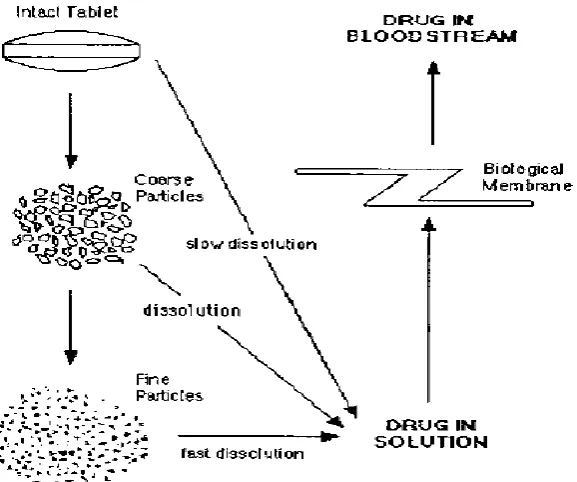
[image:19.595.180.469.491.732.2]FDT are characterized by high porosity and low hardness, when administered an in-situ suspension is created in the oral cavity as the tablet disintegrates and is subsequently swallowed. Some tablets are designed to dissolve in saliva remarkably fast, within a few seconds, and are true FDT. Others contain agents to enhance the rate of tablet disintegration in the oral cavity, and are more appropriately termed fast-disintegrating tablets, as they may take up to a minute to completely disintegrate. When put on tongue, this tablet disintegrates instantaneously, releasing the drug, which dissolves or disperses in the saliva. Some drugs are absorbed from the mouth, pharynx and oesophagus as the saliva passes down into the stomach. In such cases, bioavailability of drug is significantly greater than those observed from conventional tablet dosage form. The disintegration time of these tablets depend largely on size and hardness parameters.
1.2.2 Criteria for Fast Dissolving Drug Delivery System:2
The tablets should not require water to swallow, but it should dissolve or
disintegrate in the mouth in matter of seconds.
Be compatible with taste masking.
Be portable without fragility concern.
Have a pleasant mouth feel.
Leave minimum or no residue in the mouth after oral administration.
Exhibit low sensitive to environmental condition as temperature and humidity.
Allow the manufacture of the tablet using conventional processing and packaging
Equipments at low cost.
1.2.3 Requirements of FDT:
An ideal FDT should
Require no water for oral administration, yet dissolving/disperse/disintegrate in a
matter of seconds.
Leave minimal or on residue in mouth after administration.
Be harder and less friable.
Exhibit low sensitivity to environment condition (temperature and humidity).
Allow the manufacture of tablet by using conventional processing and packing
equipment.
1.2.4 Advantages of FDT:
Ease of administration to patient who refuses to swallow a tablet, such as
paediatric, geriatric, and psychiatric patient.
No need of water to swallow the dosage form, which is highly convenient feature
for patient who are travelling and do not have immediate access to water.
Convenience of administration and accurate dosing as compared to liquid.
Rapid dissolution of drug and absorption, which may produce rapid, onset of
action.
Ability to provide advantage of liquid medication in the form of solid preparation.
Some drugs are absorbed from the mouth and oesophagus as the saliva passes
Pregastric absorption can result in improved bioavailability and as a result of
reduced dosage, improved bioavailability and as a result of reduced dosage improved clinical performance through a reduction of unwanted effect.
Achieve increased bioavailability/rapid absorption through pregastric absorption
of drug from mouth, pharynx and oesophagus as saliva passes down.
The risk of chocking or suffocation during oral administration of conventional
formulation due to physical obstruction is avoided, thus providing improved safety.
1.2.5 Disadvantages of FDT:
The tablets may leave unpleasant taste and/or grittiness in mouth if not formulated
Properly
The tablets usually have insufficient mechanical strength. Hence, careful handling
is required.
Tablets are very fragile and lack physical resistance. Because the tablets are very
porous and low compression forces are used to prepare them. They cannot be packed in conventional strips or in bottles and special packaging is required.
Bitter drugs have to be taste masked by various techniques which in turn increases
the time and cost of production
1.2.6 Silent feature of Fast Dissolving Drug Delivery System:
Ease of administration for patients who are mentally ill, disabled and
uncooperative.
Quick disintegration and dissolution of the dosage form.
Overcomes unacceptable taste of the drugs.
Allows high drug loading.
Ability to provide advantages of liquid medication in the form of solid preparation.
1.2.7 Mechanism of tablet disintegrates 5:
Capillary action
Because of heat of wetting
Disintegrating particle/particle repulsive forces
Deformation
Release of gases
Enzymatic action
i) Capillary action:
Disintegration by capillary action is always the first step. When we put the tablet into suitable aqueous medium, the medium penetrates into the tablet and replaces the air adsorbed on the particles, which weakens the intermolecular bond and breaks the tablet into fine particles. Water uptake by tablet depends upon hydrophilicity of the drug /excipients and on tableting conditions. For these types of disintegrates maintenance of porous structure and low interfacial tension towards aqueous fluid is necessary which helps in disintegration by creating a hydrophilic network around the drug particles.
ii) Swelling:
Fig. No. 1.2 Disintegration of tablet by wicking and swelling
Fig. No. 1.3 Bulk swelling and water uptake apparatus
The apparatus is useful for the quantification of swelling and hydration rates for many excipients and polymers. Swelling tests depends on number of variables including water transport and rate of hydration through membrane. This metho is used to evaluate intrinsic swelling through the use of high speed cinemicroscopy in conjuction with computerized image analysis.
When disintegrates with exothermic properties gets wetted, localized stress is generated due to capillary air expansion, which helps in disintegration of tablet. This explanation, however, is limited to only a few types of disintegrates and cannot describe the action of most modern disintegrating agents.
iv) Disintegrating particle / particle repulsive forces:
Another mechanism of disintegration attempts to explain the swelling of tablet made with ‗non-swellable‘ disintegrates. Guyot-Hermann has proposed a particle
repulsion theory based on the observation that non-swelling particle also cause disintegration of tablet. The electric repulsive forces between particles are the mechanism of disintegration and water is required for it. Researchers found that repulsion is secondary to wicking.
v) Deformation:
Hess had proved that during tablet compression, disintegrated particles get deformed and these deformed particles get into their normal structure when they come in contact with aqueous media or water. Occasionally, the swelling capacity of starch was improved when granules were extensively deformed during compression. This increase in size of the deformed particles produces a breakup of the tablet.
Fig. No. 1.4 Disintegration by deformation and repulsion
Carbon dioxide released within tablets on wetting due to interaction between bicarbonate and carbonate with citric acid or tartaric acid. The tablet disintegrates due to generation of pressure within the tablet. This effervescent mixture is used when pharmacist needs to formulate very rapidly dissolving tablets or fast disintegrating tablet. As these disintegrates are highly sensitive to small changes in humidity level and temperature ,strict control of environment is required during manufacturing of the tablets .The effervescent blend is either added immediately prior to compression or can be added in to two separate fraction of formulation.
vii) Enzymatic reaction:
Here, enzymes presents in the body act as disintegrates. These enzymes destroy the binding action of binder and helps in disintegration.
viii) Fundamentals of fast dissolving /disintegrating tablets:
For rapid dissolution or disintegration of dosage form, water must rapidly penetrate into the tablet matrix to cause quick disintegration & instantaneous dissolution of the tablet. Several techniques are used to achieve these fundamentals, to formulate mouth-dissolving tablet. Some of the techniques are described below.
1.3 FORMULATION PROCESSES FOR MAKING FDT 6:
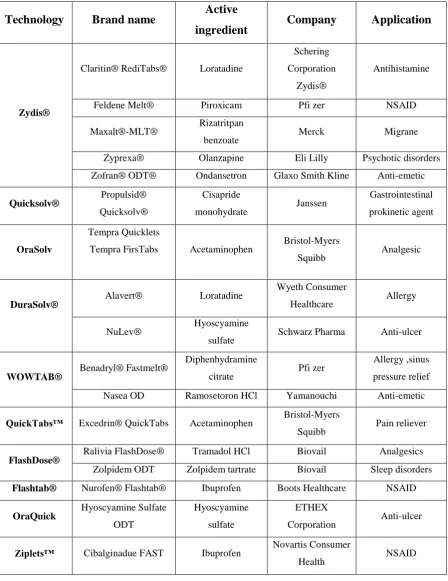
There are several technologies that produce commercially available FDTs. Zydis (Cardinal Health, Dublin, Ohio), OraSolv/DuraSolv (Cima Labs, Eden Prairie, Minnesota), and WOWTAB (Yamanouchi Pharma Technologies, Norman, Oklahoma) are widely known technologies (Table 1). Some of the FDT products on the market are listed in Table 2. Although these technologies meet the special requirements for FDTs to some extent, none has all the desired properties. The currently available technologies have been reviewed in the literature. The technologies are usually grouped according to the method used in making FDTs, such as freeze drying, molding and compression; compression is the most widely used method for making FDTs. Some methods are focused on unique granulation methods, such as spray-drying and flash-heating, to make shear form
some are focused on special treatment after compression, such as sublimation, sintering, and humidity treatments. Each method is examined in more detail below.
1.3.1 Freeze Drying:
Freeze drying (lyophilization) is a process in which solvent is removed from a frozen drug solution or a suspension containing structure-forming excipients. The resulting tablets are usually very light and have highly porous structures that allow rapid dissolution or disintegration. When placed on the tongue, the freeze dried unit dissolves almost instantly to release the incorporated drug. The entire freeze drying process is done
at non elevated temperatures to eliminate adverse thermal effects that may affect drug stability during processing. When stored in a dried state, the freeze-dried dosage form has relatively few stability problems during its shelf life. The freeze-drying process may result in a glassy amorphous structure of excipients as well as the drug substance, leading to the enhanced dissolution rate. Freeze drying, however, is a relatively expensive manufacturing process, and the formulation has poor stability at higher temperature and humidity.
The Zydis technology is the most well known example of the freeze drying method. In the Zydis formulations, the drug is physically trapped in a matrix composed of two components, a saccharide (e.g., mannitol) and a polymer. The carrier polymers commonly used in the Zydis system include (par tially hydrolyzed) gelatin, hydrolyzed dextran, dextrin, alginates, poly (vinyl alcohol), polyvinylpyrrolidone, acacia, and the mixtures. After the solution or dispersion is filled into blister cavities, it is then frozen in a liquid nitrogen freezing tunnel. The solvent in the frozen state is removed to produce porous wafers. Because the units are fragile and light-weight, they cannot withstand the pressure of being pushed through the foil of a conventional blister. A special peelable backing foil is used to package the Zydis units. Because the water content in the final freeze-dried product is too low for microbes to grow, the Zydis formulation is also
self-preserving.
However, the Zydis formulation is so sensitive to moisture that the tablet may melt
between sweaty fingers when it is taken out of the package. This dosage form may degrade at humidity greater than 65%, so a pinhole or minor damage to the package will lead to collapse of the tablet. There are some requirements for the Zydis technology. The drug should be chemically stable and water insoluble, with a particle size smaller than 50 μm. Precipitation may occur during manufacturing if large drug particles are used. The
the rigid structure necessary to support itself after solvent is removed, which may cause collapse of the freeze dried cake. For this reason, the dose for water-soluble drugs is usually limited to 60 mg. Higher drug dosing can be accommodated without losing the rapid disintegration property, however, if a thickened (i.e., paste-like) form of an oil-in-water emulsion is directly placed in the blister cell. There are 13 products currently available based on the Zydis technology.
Fig. No. 1.5 Zydis dosage form and blister pack
The products on the US market include Claritin Reditab, Dimetapp Quick Dissolve, Feldene Melt, Maxalt-MLT, Pepcid RPD, Zofran ODTR, and Zyprexa ZydisR. In the worldwide market, oxazepam, lorazepam, loperamide, and enalapril are available in the Zydis formulations (Table 1).
Quicksolv (Janssen Pharmaceutica, Beese, Belgium) and Lyoc (Farmalyoc Laboratorie L., Lefon, Maisons-Alfort, France) are also prepared by the freeze drying method. In the Quicksolv formulation, the matrix compositions are dissolved in the first solvent (usually water), and then the solution is frozen. At the temperature at which the first solvent will remain in the solid form, the frozen solution contacts the second solvent, which is substantially miscible with the first solvent. For example, ethanol, menthol, or acetone is used as the second solvent with water as the first solvent. The matrix composition should be immiscible to the second solvent. Thus, the first solvent is substantially removed after a few hours of contacting the second solvent to result in a
formulation requires a large proportion of undissolved inert filler to increase the viscosity of the suspension. The high proportion of filler reduces the porosity of the tablet, and as a result, the disintegration is slower. It is also noted that the tablet still has poor mechanical resistance.
NanoCrystal technology (Elan, King of Prussia, Pennsylvania) uses orally administered nanoparticles (<2 μm) in the form of rapidly disintegrating tablet matrix. The NanoCrystal orally disintegrating tablet dosage form was developed to facilitate the preparation of small-scale clinical supplies. NanoCrystal colloidal dispersions of drug
substance are combined with water-soluble ingredients, filled into blisters, and lyophilized. This approach is especially attractive when working with highly potent or hazardous materials because it avoids manufacturing operations such as granulation, blending, and tableting, which generate large quantities of aerosolized powder and present much higher risk of exposure. The freeze-drying approach also enables small quantities of drug to be converted into FDTs because manufacturing losses are negligible. The final tablet is durable enough for conventional blister or bottle packaging and accepts as much as 200 mg of drug per unit. Other features include conventional, compendial inactive components and non-moisture sensitive inactive ingredients.
1.3.2 Molding:
The major components of molded tablets typically are water-soluble ingredients. The powder mixture is moistened with a solvent (usually ethanol or water), and then the mixture is molded into tablets under pressures lower than those used in conventional tablet compression. (This process is known as compression molding.) Then the solvent can be removed by air-drying. Because molded tablets are usually compressed at a lower pressure than are conventional compressed tablets, a higher porous structure is created to enhance the dissolution. To improve the dissolution rate, the powder blend usually has to
be passed through a very fine screen. Recently, the molded forms have also been pre pared directly from a molten matrix in which the drug is dissolved or dispersed (known as
feel) vary based on the type of the dispersion or dissolution. Because of their water-soluble sugar components, molded tablets disintegrate more rapidly and offer improved taste. However, molded tablets typically do not have great mechanical strength. The chance of erosion and breakage of the molded tablets during tablet handling and opening blister pockets is high. If hardness enhancing agents are added to the formulation, the rate of tablet disintegration usually decreases. Mechanical strength and good disintegration of the tablets can be improved by using nonconventional equipment and/or multistep processes. Using a nonconventional approach, however, requires substantially larger
investment in machinery. Compared with freeze-drying, molded tablets can be produced more simply and efficiently at an industrial scale, although disintegration times may not be com parable to those of lyophilized forms. Takeda Chemical Industries (Osaka, Japan) and Nippon Shinyaku (Kyoto, Japan) have disclosed in compression-molding. The wetted mass was compressed at low pressure and subsequently dried to produce porous tablets with sufficient mechanical strength. The disintegration time was about 30–50 seconds in the mouth. In a patent by Novartis Consumer Health (Basel, Switzerland), the drug solution or suspension was dispersed into molds. The solvent was removed from the units usually by heating, pressure reduction, or microwave radiation. In a patent by Okada, the molded tablets contained a drug, a saccharide having a solubility of 30 (w/w) % or less at room temperature (e.g., lactose and mannitol), and a saccharide having a solubility of 30 (w/w) % or more at room temperature (e.g., glucose, fructose, sucrose, xylose, trehalose, xylitol, sorbitol, erythritol, dextrin, and pullulan). The amount of this saccharide was slightly above its solubility. The mixture was a creamy aqueous suspension having both low solubility and high solubility saccharides in water. The moisture was then removed from the suspension to obtain molded tablets.
1.3.3 Compaction:
Using a conventional tablet press to make fast-dissolving tablets is a very
attractive method because of the low manufacturing cost and ease in technology transfer. However, the tablet press has been designed to make conventional tablets. When making
The third approach is to compress tablets at low pressure and apply various after-treatments to the soft tablets. The three most widely used approaches are described in detail below.
i) Granulation methods:
a. Wet granulation:
It was found that even with effervescent agents presented in the tablet with lower than 5%, quick disintegration times could be achieved. Furthermore, it was also found that fast disintegration time could be achieved using only the acid component of the
effervescent couple. In the patent, the formulation includes polyalcohols (e.g., mannitol, xylitol, sorbitol, maltitol, erythritol, and lactitol), 1–30% of an edible acid, and an active ingredient as the dry mixture. This mixture was wet granulated with an aqueous solution of a water-soluble or water-dispersible polymer (e.g., poly(ethylene glycols), carrageenan, and ethylcellulose), which consisted of 1–10% of the final weight of the granule in a fluid bed. Granules with high porosity and low apparent density were obtained, and the tablets made by such granules had rapid disintegration times ranging from 3 to 30 seconds in the saliva.
b. Dry granulation:
Higher density alkali earth metal salts and water-soluble carbohydrates usually do not provide quick disintegration and a smooth mouth feel. Low-density alkali earth metal salts and water soluble carbohydrates are also difficult to compress and caused inadequate content uniformity. For these reasons, low-density alkali earth metal salts or water-soluble carbohydrates were precompacted, and the resulting granules were compressed into tablets that could dissolve fast. In this process, a powdered material with a density of 0.2– 0.55 g/mL was precompacted to increase the density to 0.4–0.75 g/ml by applying a force ranging from 1 to 9 kN/cm. The resulting granules were compressed into tablets.
c. Melt granulation:
A new approach of preparing FDTs with sufficient mechanical strength, involving the use of a hydrophilic waxy binder (SuperpolystateR, PEG-6-stearate) by melt
agent. Then, granules were blended with crosscarmellose, aspartame, and magnesium stearate and compressed into tablets. The melt granulation FDTs had better hardness results than the wet granulation FDTs. The disintegration times of melt granulation tablets, however, was more than 1 minute.
d. Spray drying:
Spray drying methods are widely used in pharmaceutical and biochemical processes. Spray drying provides a fast and economical way of removing solvents and producing highly porous, fine powders. Allen and Wang produced a particulate support
matrix for use in making FDTs by a spray-drying technique. The components included supporting agents composed of two polypeptide components of the same net charge (preferably nonhydrolyzed and hydrolyzed gelatin), a bulking agent (mannitol), and a volatilizing agent. To maintain the net charges of the polypeptide components, an acidifying or alkalinizing agent was included. The mixtures of the above components were spray dried to obtain porous granules. The reason to use polypeptide components of the same charge was that molecules would repel each other even after spray drying, so porous and low-bulk-density particles could be formed. By incorporating a volatilizing agent (ethanol in most cases), the surfacetension of the droplets was further reduced during spray drying, and more pores and channels were created. The dissolution rate of the matrix was further increased when combined with a bulking agent. A minimal amount of an effervescent agent was optionally included to further accelerate the dissolution rate. To aid in keeping the tablets intact during handling, a thin coating of polymeric material could be applied externally. This coating should not inhibit the capillary uptake of water during dissolution. Active ingredients can be microencapsulated or nanoencapsulated to further achieve taste masking.
e. Flash heat process:
Fuisz Technologies (Chantilly, Virginia) has introduced the Shearform
Technology to make Flashdose. The Shearform Technology uses a unique spinning mechanism to produce a floss-like crystalline structure, much like cotton candy. In this
thereof. There were two systems used to create the Shearform floss having self-binding properties. The first system was named a single floss or unifloss. Typical flosses of this kind, made of sucrose, sorbitol, and xylitol, yielded effective selfbinding properties. The second system used two separate flosses. One was xylitolcontaining binder flosses and the other was base flosses that contain different sugar alcohols or saccharide. When the two flosses were combined, it was termed a dual floss system. The produced floss needed to be recrystallized to form freely flowing granules with self-binding properties. Two techniques were used in recrystallization. One was using crystallization enhancers
including ethanol, polyvinylpyrrolidone, water (e.g., moisture), glycerin, and radiant energy (e.g., microwaves). The other was using crystallization modifiers, which were included in floss ingredients at 0.01–20.0% the weight of the floss. Typical crystallization modifiers were surfactants having an HLB of about 6 or more. A hygroscopic material such as xylitol must be present in the system to provide good self-binding characteristics to the final matrices. In order to produce and control the self-binding properties, this hygroscopic material must have a substantially higher hygroscopicity than that of the carrier carbohydrate (e.g., sucrose). The initial floss coming out of the spinning machine is in its amorphous state. However, because of its tendency to pick up moisture in the floss and induce crystallization by crystallization enhancers or modifiers, the floss recrystallizes into a more crystalline structure. Because of intimate contacts among all components in the matrix, recrystallization of one component can have significant impact on the characteristics of surrounding components and further change the properties of the matrix as a whole. The floss gradually loses its amorphous character as the recrystallization continues. The flowability of the floss is enhanced to make it suitable for the conventional tableting process.
ii) Direct compression:
From the pharmaceutical manufacturer‘s point of view, direct compression is the
simplest and most cost-effective tablet manufacturing procedure. Pharmaceutical
a. Disintegrants used in FDT:
Some patents use effervescent couples as their disintegrant, while others use a combination of disintegrants.
Dobetti summarized different types of non-effervescent disintegrants used in the pharmaceutical area.
• Starch and modified starches. This group includes natural starches (such as maize
starch and potato starch), directly compressible starches (such as starch 1500), modified starches (such as carboxymethylstarches and sodium starch glycolate), and starch
derivatives (such as amylose).
• Cross-linked polyvinylpyrrolidone
• Modifi ed celluloses such as cross-linked sodium carboxymethylcellulose
• Alginic acid and sodium alginate • Microcrystalline cellulose
• Methacrylic acid-divinylbenzene copolymer salts
In addition, poly (acrylic acid) superporous hydrogel (SPH) microparticles were recently reported as superdisintegrants possessing a unique porous structure.31 They were used as a wicking agent to decrease the disintegration time of FDTs. The poly(acrylic acid) SPH microparticles can swell approximately 80 times in distilled water and 50 times in pH 6.8 which contains 0.2 M phosphate buffer. The SPH microparticle size had a significant effect on the disintegration time and tensile strength of ketoprofen FDTs. The minimum disintegration time was observed when the microparticle size was in the range of 75-106 μm. Tensile strength of the tablets decreased as the SPH microparticle sizes decreased from 180-250 μm to 25-44 μm. However, when the microparticle sizes were smaller than 25 μm, the tensile strength of the resultant tablets increased as the size
decreased. The optimal microparticle size should be in the range of 75-106 μm. The FDTs made of SPH microparticles in the range of 75-106 μm showed the fastest disintegration
time (15.0 ± 2.0 s) and higher tensile strength (84.4 ± 4.1 N/cm2).
b. Inorganic excipients used in FDT:
strength and low friability. The disintegration rates were not significantly affected by the high compression force. In the formulation, three major components were used:
• Substantially water insoluble components: This group includes water-insoluble
excipients, water-insoluble drugs (either coated or uncoated), and water- insoluble lubricant and glidant. The water-insoluble excipients include insoluble inorganic salt (e.g., di- or tri-basic calcium phosphate) or organic filler (e.g., microcrystalline cellulose).
• Substantially soluble components: This group includes compressible sugars,
flavouring agents, sweeteners, binders, and surfactants.
• Disintegrants: Examples are maize starch or modified starch, cross-linked
polyvinylpyrrolidone, or sodium carboxymethylcellulose.
The disintegration time increased as the amount of insoluble component decreased. If the active ingredient was only a small portion of the whole formulation, the disintegration time could be optimized by including insoluble fillers (e.g., microcrystalline cellulose and silicon dioxide) or by increasing the amount of insoluble inorganic excipients (e.g., calcium salt such as dibasic calcium phosphate).
iii) Compaction and subsequent treatments:
a. Sublimation:
The slow dissolution of the compressed tablet containing even highly water-soluble ingredients is due to the fact that the low porosity of the tablets reduces water penetration into the matrix. When volatile materials are compressed into tablets using the conventional method, they can be removed via sublimation, resulting in highly porous structures. The volatile materials include urea, ammonium carbonate, ammonium bicarbonate, hexa methylene tetramine, and camphor. Heinemann disclosed a process to prepare porous tablets by sublimation. The mixtures of volatile adjuvants were made into tablets, which were subsequently heated to remove them. Roser and Blair used vacuum to remove the volatile materials. The full dissolution time was reduced from 10–15 minutes
for the tablets formed from trehalose alone to less than 1 minute. In some cases, menthol, camphor, thymol, an organic acid such as adipic acid, and a lower fatty acid such as
arachidic acid, capric acid, myristic acid, and palmitic acid were used as the volatile materials, and the sublimation temperature ranged from 40 to 60 °C. The disintegration time in the human mouth was claimed to be about 25 seconds.
is substantially molten. The formulation is disposed in a mold and solidified, and the menthol is sublimed from the solidified molded formulation. Preferably, the solidification occurs at a temperature sufficient to provide a substantially amorphous menthol structure.
b. Humidity Treatment:
The mechanical strength of some tablets increased substantially after moisture treatment, compared with the tablets before the treatment. The increase is known to be due to the formation of liquid bridges in the presence of moisture and then formation of solid bridges after drying. As shown in Fıg. No.1.6, when solid particles start to pick up
moisture from the atmosphere, the water is adsorbed onto the surface (A), and then water molecules form a film on it with the vapor pressure over the adsorbed moisture layer equal to Pb (B). The solid starts to dissolve into the adsorbed moisture layer and the dissolution of solid in the adsorbed moisture will lead to a decrease in the vapor pressure Pb (C). The decrease in Pb is effectively off set by the increase in temperature of the film (and the solid) caused by the heat released on condensation of the water vapor. The moisture sorption occurs spontaneously, and the thickness of the condensate film grows as long as Pa > Pb. The solid continues to dissolve and saturate the fi lm, maintaining the vapor pressure over the adsorbed moisture layer (Pb). After drying, a solid bridge is believed to occur and increase bonding between the particles (D). It is also known that certain types of sugar change from the amorphous to the crystalline state when their solution is spray dried or used as a binder solution. Further investigations have shown that when an amorphous sugar is treated to go through the humidification and drying process, it changes to a crystalline state. This change increases the tablet strength substantially. The conceptual process of structural changes of amorphous sucrose to crystalline sucrose is shown in Fıg. No.1.7.
Fig.No.1.6 moisture sorption model explaining the increase mechanical strength of
Fig.No.1.7 model describing the increase in tablet strength by transformation of
amorphous sucrose to crystalline sucrose upon storing under a certain relative
humidity
In a patent by Mizumoto et al., a drug, a sugar, and an amorphous sugar capable of
transforming from amorphous to crystalline state were mixed and compressed into tablets. After the tablets were formed, they were humidified and dried. The amount of the sugar in
the formulation can be adjusted according to the drug content and tablet size. The ―amorphous sugars‖ are those that can form an amorphous state by spray drying, freeze
drying, or other granulation methods. These amorphous sugars include glucose, lactose, maltose, sorbitol, trehalose, lactitol, and fructose. The relative humidity is determined by the apparent critical relative humidity of the mixture of a drug and an amorphous sugar. A relative humidity greater than or equal to the critical relative humidity of this mixture is chosen for the humidity condition. The advantage of using amorphous sugars is that they have low critical relative humidity, so that they can absorb water even at low moisture levels. The crystalline form of the sugars has difficulty in controlling moisture absorption. Moisture absorption of the crystalline form is not sufficient to strengthen the tablets at a low humidity condition. If a high humidity condition is used, tablets may adhere together, causing manufacturing problems. Another advantage of using amorphous sugars is that transformation of the amorphous state to the crystalline state is irreversible. The sugars in crystalline state have a high critical moisture point, so the strengthened tablets are less susceptible to moisture. System for making FDTs by humidity treatment consist following steps: (1) a water-soluble polymer was used as a binder solution to granulate active ingredients and other excipients, such as low modability sugars; (2) the granules were then compressed into tablets; (3) the tablets were humidified at relative humidity of about 50– 100%; and (4) the tablets were dried. The hardness of the tablet was about 0.5–12.0
Fig.No.1.8 Schematic view of the manufacturing apparatus using moisture treatment The left side of a dotted line shows the conventional compression and dedusting steps, while the right side shows the additional step requiring special chambers for moisture treatment and drying.
Tatara et al. also used moisture treatment and devised an apparatus to handle the
fragile tablets before moisture treatment. An active ingredient and other excipients were compressed in low pressure, and then the resultant tablets were moisturized and dried to produce porosity between 20 and 40%. the manufacturing apparatus includes a rotary punch-press, a relay conveyor for transferring tablets, a moisturizing section, a drying section, and a delivery conveyor. In the moisturizing section, the condition was set to allow tablets moisturized at 45 °C, 95% relative humidity for 60 seconds. In the drying section, the temperature was set to 50 °C for 60 seconds. With this apparatus the fragile tablets before moisture treatment were gently transferred throughout the process.
c. Sintering:
Lagoviyer et al. disclosed a process that increased tablet strength by sintering the tablet components at high temperatures and then resolidifying them at lower temperatures. The components in this formulation include bulk agents, structure agents, solvent, and binding agents. A bulk agent in this formulation is used to provide bulk volume to the overall tablet, and suitable agents include carbohydrates, calcium carbonate, and magnesium carbonate. The suitable structure agents should provide dedusting, moisturizing, drying and conventional compression steps. The left side of a dotted line shows the conventional compression and dedusting steps, while the right side shows the additional step requiring special chambers for moisture treatment and drying. A porous support structure to allow quick dissolution of the tablets in the mouth. The structural
dissolved in a suitable solvent, and the dissolved mixture was spray dried or dispersed to obtain a bead or granulated product with a low density. Choice of the solvent is based on its ability to provide a desired porosity to the bead or granulated product upon drying. Solvents can be chosen from water, ethyl alcohol, isopropyl alcohol, or a mixture thereof. The binders need to melt at the sintering stage, form bonding among granules, and resolidify as the temperature of the final sintering or heating step decreases. Binders are water soluble polymers such as poly (ethylene glycol) (PEG), with a molecular weight of approximately 1000 to 1,000,000. PEG melts at 50–90 °C. PEG has the advantage of
functioning both as a binder and as a capillary attractant. The amount of binding polymer ranged from 0.5% to 25% of the weight of the final product. The binding agents and active ingredients can be introduced to the formulation in several ways. A binding agent and active ingredient can also be dry blended to the spray-dried or dispersed granulated product. They can alternatively be dissolved into solvent with bulking agent and spray dried into granules. The granules are then lightly compressed to form tablets. These tablets are heated for a sufficient time and temperature to allow the binding agent to melt. The heating step is intended to melt the binding agent to create intra-tablet bonds and help weld the product shape together. Typically, a laboratory oven is set at around 50–100 °C. The heating time ranges from 3 to 45 minutes. The binding agents are resolidified as the temperature is reduced to ambient temperature. The disintegration time is generally within 3–60 seconds. The heat treatment or sintering step in the patent improved the product‘s strength and durability. Because the active ingredient can be introduced into the formulation in several ways, taste-masking technologies can be easily incorporated into the process. The dosage form allows the incorporation of a wide range of dosage levels. Because of the high temperature treatment, when heat-labile drugs are incorporated in the formulation, careful attention should be given in this process. These technologies are commonly applied for the production and development of FDTs.
1.4 FDT FORMULATION TECHNOLOGY:
Because the direct compression is most desirable in terms of producing FDTs with
high mechanical strength, ease of manufacturing, and low cost, currently available FDT formulations using direct compression are described in detail.
1.4.1. OraSolv and DuraSolv Technology 7:
carbonate source. The acid sources include citric acid, tartaric acid, malic acid, fumaric acid, adipic acid, and succinic acids. The carbonate sources include sodium bicarbonate, sodium carbonate, potassium bicarbonate, and potassium carbonate. The carbon dioxide evolved from the reaction may provide some ―fizzing‖ sensation, which is a positive
organoleptic sensation. The amount of effervescent agent is in general about 20–25% of the total weight of the tablet. Because of the soft and fragile nature of OraSolv tablets, a special packaging system, known as PakSolv, was developed to protect the tablets from breaking during transport and storage. PakSolv is a ―dome-shaped‖ blister package that
prevents the vertical movement of the tablet within the depressions, because the diameter of the lower portion of the dome is too narrow to accommodate the tablet. PakSolv also offers light, moisture, and child resistance. As a second-generation technology, the DuraSolv technology was developed by Ciba to provide stronger tablets for packaging in blisters or bottles. The key ingredients in this formulation are nondirect compression filler and lubricant. The particle size of the nondirect compression filler is preferably between about 20 and 65 μm, while for direct compressible fillers at least 85% of the particles are over 100 μm in size. These nondirect compression fillers, such as dextrose, mannitol,
sorbitol, lactose, and sucrose, have the advantage of quick dissolution and avoid some of the gritty or sandy texture usually present in direct compressible versions of the sugar. The amount of a nondirect compression filler is usually about 60–95% of the total tablet weight. The tablets have low friability, which is about 2% or less when tested according to the USP, and the hardness of the tablets is at least about 15–20 N. The disintegration time is less than 60 seconds. About 1–2.5% of lubricant can be added to the formulation, compared with 0.2–1% of lubricant in conventional tablets. The lubricant blending times can also be increased to 10–25 minutes or longer. Relatively modest compressive force is needed to compress the formulation. This method can produce tablets by the direct compression method and use conventional tableting methodologies and conventional
Fig. No. 1.9 Typical PakSolv package
1.4.2. Wowtab Technology:
WOWTAB technology employs a combination of low- and high-moldability saccharides to produce fast-dissolving tablets using conventional granulation and tableting
techniques. According to the patent, saccharides were divided into two groups: those with high moldability and those with low moldability. Lowmoldability saccharides produce tablets with hardness between 0 and 2 kg, when 150 mg of such a saccharide is
compressed under pressure of 10–50 kg/cm2 using a die 8 mm in diameter. The typical low-moldability saccharides include lactose, mannitol, glucose, sucrose, and xylitol. High-moldability saccharides produce tablets with hardness above 2 kg when prepared under the identical conditions. The typical high- moldability saccharides are maltose, maltitol, sorbitol, and oligosaccharides. When tablets are made by compressing a saccharide having low moldability or high moldability alone, the desired properties of adequate hardness and quick disintegration in the mouth cannot be achieved simultaneously.
Moreover, if saccharides having low moldability and high moldability are mixed (physical mixture) before tableting, quick disintegration and dissolution in the mouth cannot be obtained. As clearly indicated in the patents, there is no single saccharide that can make tablets having both high strength and fast disintegration properties. For this reason, a saccharide having low moldability was granulated with a saccharide having high moldability as a binder. The low-moldability saccharides were used as the main component. The tablets show an adequate hardness and fast disintegration and dissolution when put in the mouth.
1.4.3. Flashtab Technology:
compressed tablets. Excipients used in this technology comprise two groups of components: disintegrating agents, such as carboxymethylcellulose or insoluble reticulated polyvinylpyrrolidone; and swelling agents, such as carboxymethylcellulose, starch, modified starch, carboxymethylated starch, microcrystalline cellulose, and possibly directly compressible sugars. The mixture of excipients is prepared by either dry or wet granulation methods. The produced tablets are known to have satisfactory physical resistance and disintegrate in the mouth within 1 minute.
1.4.4. AdvaTab Technology:
AdvaTab technology (Eurand) produces FDT tablets based on a proprietary tablet composition that was designed and patented by Kyowa Hakko Kogyo (Tokyo, Japan), in which the lubrication is dispensed onto each tablet by using a spray during the production process. Traditional tablets are produced using an internal lubrication system, which disperses lubricant on the inside and the surface of the tablets. This method can decrease tablet mechanical strength. AdvaTab is produce d using 10–30 times less hydrophobic lubricant and can be 30–40% stronger than conventional tablets. As a result, the tablets are hard and durable yet do not impede liquid entry upon contact with saliva. AdvaTab can handle high drug loading and coated drug particles. Importantly, the technology does not require specialty packaging and, as a result, can be packaged in both standard bottles and push-through blisters.
1.4.5. Dispersible Tablet Technology:
Lek in Yugoslavia was issued patents for dispersible tablets of dihydroergotoxine and cimetidine, which were claimed to disintegrate in less than 1 minute when in contact with water at room temperature. Dihydroergotoxine is poorly soluble in water in the free base form. An improved dissolution rate of dihydroergotoxine methanesulphonate was observed with dispersible tablets containing 0.8–10%, preferably about 4% by weight, of an organic acids. One of the essential excipients in the cimetidine formulation was a
disintegrating agent. It provides rapid swelling and/or good wetting capability to the tablets and thereby a quick disintegration. The disintegrating agents include starch or
modified starches, microcrystalline cellulose, alginic acid, cross-linked sodium carboxymethyl cellulose, and cyclodextrin polymers. A combination of two or more disintegrating agents produced better disintegration results.
1.4.6. Pharmaburst Technology: