FORMULATION AND EVALUATION OF ORODISPERSIBLE
TABLETS OF METOCLOPRAMIDE HYDROCHLORIDE
A Dissertation submitted to
THE TAMILNADU DR. M.G.R. MEDICAL UNIVERSITY, CHENNAI,
In partial fulfillment of the requirement for the award of the degree of
MASTER OF PHARMACY
(PHARMACEUTICS)
Submitted By
Registration No: 26104216
Under the guidance of
K. RAJA, M. PHARM. (Ph.D.).,
Department of Pharmaceutics
SEPTEMBER 2012
NANDHA COLLEGE OF PHARMACY AND RESEARCH INSTITUTE
ERODE – 638 052
Prof. K. RAJA. M. Pharm. (Ph.D.)
Department of Pharmaceutics,
Nandha College of Pharmacy, Erode-638 052
CERTIFICATE
This is to certify that the work embodied in this thesis entitled, “FORMULATION AND
EVALUATION OF ORODISPERSIBLE TABLETS OF METOCLOPRAMIDE
HYDROCHLORIDE” submitted to The Tamil Nadu Dr. M.G.R. Medical University, Chennai,
was carried out by Mr. NILESH CHINDHU PATIL, Department of Pharmaceutics, Nandha College of Pharmacy, Erode-52 for the partial fulfilment for the award of degree of Master of Pharmacy in Pharmaceutics under my supervision.
This work is original and has not been submitted in part or full for any other degree or diploma of this or any other university.
Place: Erode Prof. K. RAJA M. Pharm., (Ph.D.) Date: Department of Pharmaceutics
EVALUTION CERTIFICATE
This is to certify that the work embodied in this thesis entitled “FORMULATION AND
EVALUATION OF ORODISPERSIBLE TABLETS OF METOCLOPRAMIDE
HYDROCHLORIDE” submitted to the Tamil Nadu Dr. M.G.R. Medical University Chennai,
was carried out by Mr. NILESH CHINDHU PATIL in the department of pharmaceutics, Nandha College of Pharmacy, Erode-52 in the partial fulfilment of the degree of “Master of Pharmacy” in pharmaceutics under supervision of Prof. K. RAJA M. Pharm. (Ph.D.)., Prof. Pharmaceutics department, Nandha College of Pharmacy, Erode-52.
This work is original and has not been submitted in part or full for the award of any other degree or diploma of any other University.
Internal Examiner External Examiner
DECLARATION
The work presented in this thesis entitled “FORMULATION AND EVALUATION OF
ORODISPERSIBLE TABLETS OF METOCLOPRAMIDE HYDROCHLORIDE” was
carried out by me in the Department of Pharmaceutics, Nandha College of Pharmacy, Erode-52 under the direct supervision of Prof. K. RAJA M. Pharm, (Ph.D.), Prof. Pharmaceutics, Nandha College of Pharmacy, Erode-52.
This work is original and has not been submitted in part or full for the award of any other degree or diploma of any other University.
ACKNOWLEDGEMENT
Any successful task is not an individual’s effort but it is joint venture of many people. It
would not be justifiable to forget those people’s dedication and efforts while sailing in the boat
of success, so now this is a time to thank all of them whose kindness, support and guidance has
brought my project work possible.
My first and foremost appreciation is extended to my true and encouraging guide Prof.
K. RAJA M. Pharm, (Ph.D.), professor Department of Pharmaceutics Nandha College of
Pharmacy, Erode, for his valuable guidance, keen interest, inspiration, unflinching
encouragement and moral support throughout my dissertation work make my task successful and
complete.
It is a pleasure to express my sincere gratitude to Dr. T. Shivakumar, Principal, Nandha
College of Pharmacy, Erode, with a deep sense of gratitude for his constant support,
encouragement, cooperation, kind suggestions and providing the best facilities during this work.
I express my deepest thanks to Mr. Thiru V. Shanmugan, B. Com., Chairman and Mr.
S. Nandhakumar Pradeep, M.B.A., Secretary, Nandha College of pharmacy, Erode-52, for
providing all the facilities to make this work a success.
It is my privilege to express my heartfelt thanks to my co-guide Mr. N.T. Mahajan, Plant
Manager and Mr. V.R. Zope, R & D Incharge JCPL PHARMA LTD., Jalgaon. For providing
all the facilities and precious guidance in carrying out my work.
I would like to give special thanks to colleague of JCPL PHARMA LTD., Jalgaon. who
helped me a lot while working in the industry.
I express my sincere thanks to Dr. S. Tamilzharasi, M. Pharm., Ph.D., HOD,
efforts in the form of suggestions, guidance, and encouragement throughout the course of this
thesis.
I owe my warmest and humble thanks to Prof. Jagdeeshwaran, M. Pharm, Asst. Prof.
Dept. Pharmaceutical Analysis and Dr. Sengotuvelu, M. Pharm., Ph.D. Head of the Dept. of
Pharmacology and Prof. R. Rajvel M. Pharm., Dept. of Pharmaceutical Chemistry and Dr.
Durai Swami M. Pharm. Ph.D. Asst. Prof. Dept. of Pharmacognosy, for their immense help
throughout the course of study.
I also express my deepest thanks to respected teachers Dr. P. R. Radhika, M. Pharm.
Ph.D., Asst. Prof. Dept. of Pharmaceutics and Mrs. P. Amsa M. Pharm., Asst. Prof. Dept. of
Pharmaceutics, who constantly support me throughout the course of study.
I extend a special thanks to the entire non-teaching staff and Balu, Lab Asst. of
Pharmaceutics, for their kind help and co-operation throughout the course.
I am very much thankful to my seniors and friends Sagar, Dilip, Madhukar, Nilesh,
Bhushan, Pankaj, Subhash, Prakash for giving proper guidance, constant support and
co-operation.
How can I forget my lots of friends who travelled to my life path, some of them are
unforgettable. I am very thankful to god to have real friends Kishor, Kundan, Vishal, Hemant,
Niranjan, Vivek, Shahu boosted up my spirits with their love, care and moral support and make
every task easy.
I express my heartfelt thanks to my brother, Avinash Patil for providing me moral
At last but not least are ‘My Parents’. There are no words to express my gratitude to my
parents for lifting me up till the phase of life. They give all support in every task to reach
completion. I owe everything to them.
I am thankful to all those people who spend their valuable time for guiding me
throughout these two years.
Place: Erode Reg. No.: 26104216
Date: M. Pharm. II Year Pharmaceutics
Nandha College of Pharmacy and Research Institute, Erode.
CONTENTS
Sr.No TITLE Page. no
1. INTRODUCTION 01-17
2. REVIEW OF LITERATURE 18-26
3. AIM AND OBJECTIVE 27-28
4. PLAN OF WORK 29-30
5. DRUG PROFILE 31-33
6. EXCIPIENTS PROFILE 34-51
7. MATERIALS AND METHODS 52-64
8. RESULTS AND DISCUSSION 65-88
9. SUMMARY AND CONCLUSION 89-90
LIST OF ABBREVIATIONS
Abbreviations Abbreviation Terminology
ODTs Oro-dispersible tablet GERD Gastro Esophageal Reflux Disease
CTZ Chemo Receptor Trigger Zone FTIR Fourier Transform Infra-Red
USP United States Pharmacopoeia NF National Formulary
IP Indian Pharmacopoeia BP British Pharmacopoeia
IR Infra-Red
UV Ultraviolet
HCL Hydrochloric acid Ac-Di-Sol Croscarmellose Sodium
MCC Microcrystalline cellulose
0
C Degree Celsius
% Percentage
W/V Weight by volume W/W Weight by weight
Ml Milliliter
Cm Centimeter
Mm Millimeter
Nm Nanometer
Mg Milligram
Gm Gram
µg Microgram
Kg Kilogram
T Time
pH Hydrogen ion concentration
Hrs Hours
Sec Second
Min Minutes
SD Standard Deviation Rpm Revolutions per minute
1. INTRODUCTION
Oral route of drug administration is the most common and preferred method of delivery as it is the simplest and easiest way of administering drugs. The rout offers ease of drug administration in a convenient manner and patients are more familiar with this rout. So, patient compliance and thus drug treatment is typically more effective with orally given medications.¹The tablet is most widely used dosage form existing today because of its convenience in term of self administration, compactness and ease in manufacturing. However, geriatric, paediatric and mentally ill patients experiences difficulty in swallowing conventional tablets, which is common among all age groups, especially in elderly which leads to poor patient compliance. To overcome these problem, scientists have developed innovative drug delivery system known as mouth dissolving or disintegrating tablets. This dosage forms dissolve and disintegrates in the oral cavity within minutes without need of water or chewing. This formulation is useful in administration of drug in paediatric and geriatric patients.2
1.1 Orodispersible Tablet
dosage forms are increasingly being recognized in both, industry and academics. Their growing importance was underlined recently when European pharmacopoeia adopted the term “Orodispersible tablet” as a tablet that to be placed in the mouth where it disperses rapidly before swallowing.3
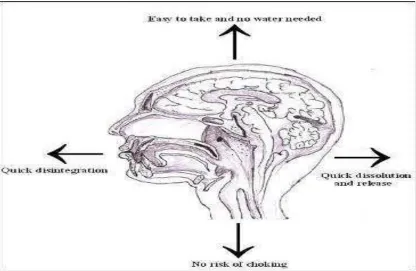
Figure 1.1: Mechanism of action of orodispersible tablet
The oral rout remains the preferred route for administration of therapeutic agents because of accurate dosage, low cost therapy, self medication, non invasive method and ease of administration leading to high level of patient compliance. However, traditional tablets and capsules administered with a glass of water may be inconvenient or impractical for some geriatric patients because of changes in various physiological and neurological conditions associated with aging including difficulty in swallowing/dysphagia, hand tremors, deterioration in their eyesight, hearing, memory, risk of choking in addition to change intaste and smell. For these reasons, it is said that age is a convenient „red flag‟ that pharmacists can use to alert themselves for patients who may have special counselling needs. Solid dosage forms also present significant administration challenges in other patient groups, such as children, mentally challenged, bed ridden and uncooperative patients. Paediatric patients may suffer from ingestion problems as a result of underdeveloped muscular and nervous control. Moreover, patients travelling with little or no access to water, limit utility of orally administered conventional tablets or capsules. Therefore, to cater the needs of such patients, recent advancements in technology have resulted in development of viable dosage alternatives popularly known as orally disintegrating tablets (ODTs). These dosage forms are preferable alternative for oral medication in improving the quality of life and patient acceptability. ODTs are the solid unit dosage form/entities containing medicinal substances which disintegrate or dissolve rapidly in oral cavity usually within a few seconds even without the need of water or chewing. As the tablet disintegrate in mouth, this can enhance the clinical effect of drug through pregastric absorption from the mouth, pharynx and esophagus. The advantages of these dosage forms are continuously and increasingly being identified in both pharmaceutical industries as well as in academia.5
paediatric, geriatric population along with institutionalized patients and patients with nausea, vomiting, and motion sickness complications. ODTs with good taste and flavour increase the acceptability of bitter drugs by various groups of population.6
i) Definition
The US Food and Drug Administration Center for Drug Evaluation and Research
(CDER) defines, in the „Orange Book‟, an ODT as “a solid dosage form containing medicinal
substances, which disintegrates rapidly, usually within a matter of seconds, when placed upon the tongue”. The significance of these dosage forms is highlighted by the adoption of the term, “Orodispersible Tablet”, by the European Pharmacopoeia which describes it as a tablet that can be placed in oral cavity where it disperses rapidly before swallowing.7
Orodispersible tablets are those when put on tongue, disintegrates instantaneously, releasing the drug, which dissolves or disperses in the saliva. The faster the drug into solution, quicker the absorption and onset of clinical effect.3
ii) Need to formulate orodispersible tablets
The need for non-invasive drug delivery systems continues due to patients poor acceptance and compliance with existing delivery regimes, limited market size for drug companies and drug uses coupled with high cost of disease management. ODT is one such dosage form which is useful for geriatric patients mainly suffering from conditions like hand tremors and dysphasia.
Paediatric patients who are unable to swallow easily because their central nervous system and internal muscle are not developed completely.
Travelling patients suffering from motion sickness and diarrhoea that do not have easy access to water.
Especially for patients with persistent nausea for a long period of time are unable to swallow.
Mentally challenged patients, bedridden patients, and psychiatric patients.
iii) Limitation of ODTs
Drugs with relatively larger doses are difficult to formulate into ODTs e.g. antibiotics like ciprofloxacin with adult dose tablet containing about 500mg of the drug.
Patients with sjogrens syndrome or dryness of mouth due to decreased saliva production may not be good candidates for these tablet formulations.6,7
iv) Criteria for Orodispersible Drug Delivery System
The tablets should :
Not require water to swallow, but it should dissolve or disintegrate in the mouth in matter of seconds.
Be compatible with taste masking. Be portable without fragility concern. Have a pleasing mouth feel.
Leave minimal or no residue in the mouth after oral administration.
Exhibit low sensitivity to environmental conditions as humidity and temperature. Allow the manufacture of tablet using conventional processing and packaging
equipments at low cost.3
v) Salient Features of Orodispersible Drug Delivery System
Ease of administration to patient who refuses to swallow a tablet, such as paediatric geriatric patients and psychiatric patients.
No need of water to swallow the dosage form, which is highly convenient feature for patients who are travelling and do not have immediate access to water.
Rapid dissolution and absorption of drug, which will produce quick onset of action. Some drugs are absorbed from mouth, pharynx and oesophagus as the saliva passes
down into the stomach; in such cases bioavailability of drugs increased.3
vi) Advantages of ODTs
Rapid onset of action and may offer an improved bioavailability. Improved patient compliance.
Useful for paediatric, geriatric and psychiatric patients. Suitable during travelling where water may not be available.
No specific packaging required, can be packaged in push through blisters. Smooth mouth feel and pleasant taste.
Cost effective.
Good chemical stability as conventional oral solid dosage form.
Convenience of administration and accurate dosing as compared to liquid formulations.
More rapid drug absorption from the pre-gastric area i.e. mouth, pharynx and oesophagus which may produce rapid onset of action.
Pre-gastric absorption can result in improved bioavailability, reduced dose and improved clinical performance by reducing side effects.
Beneficial in case such as motion sickness, suede-episodes of allergic attack (or) coughing, where an ultra rapid onset of action required.
Portable without fragility concern.
Advantageous over liquid medication in terms of administration as well as.
First pass metabolism is reduced, thus offering improved bioavailability and thus reduced dose and side effects.
Offering improved safety.8
vii) Disadvantages of ODTs
Orodispersible tablet is hygroscopic in nature so must be keep in dry place. Some time it possesses mouth feeling.
ODT require special packaging for properly stabilization and safety of stable product.9
1.2 Superdisintegrants
Figure 1.2 : Disintegration mechanism of superdisintegrant materials.
1.2.1 Selection of Superdisintegrants :-
Since supredisintegrant is used as an excipient in the tablet formulation, it has to meet certain criteria other than its swelling properties. The requirement placed on the tablet disintegrant should be clearly defined. The ideal disintegrant should have-
1) Poor solubility. 2) Poor gel formation. 3) Good hydration capacity.
4) Good moulding and flow properties.
5) No tendancy to form complexes with the drugs. 6) Good mouth feel.
7) It should also be compatible with the other excipients and have desirable tableting properties.
1.2.2 Advantages of Superdisintegrants
1) Effective in lower concentrations than starch. 2) Less effect on compressibility and flow ability. 3) More effective intragranularly.
1.2.3 Mechanism of Superdisintegrants
Superdisintegrants are used to improve the efficacy of solid dosage forms. This is achieved by various mechanisms. The mechanism by which the tablets are broken into small pieces and then produces a homogeneous suspension is based on :
2) Porosity and capillary action (wicking) 3) Heat of wetting
4) Chemical reaction (Acid-Base reaction) 5) Particle repulsive forces
6) Deformation recovery 7) Enzymatic reaction
1)Swelling
Swelling is probably the most widely accepted mechanism of action for tablet disintegrants. Particles of disintegrant swell on coming in contact with suitable medium and a swelling force develop which leads to break-up of the matrix. Tablets with high porosity show poor disintegration due to lack of adequate swelling force. On the other hand, sufficient swelling force is exerted in the tablet with low porosity. It is worthwhile to note that if the packing fraction is very high, fluid is unable to penetrate in the tablet and disintegration is again slows down.
2)Porosity and capillary action (Wicking)
Effective disintegrants that do not swell are believed to impart their disintegrating action through porosity and capillary action. Tablet porosity provides pathways for penetration of fluid into tablets. When we put the tablet into suitable aqueous medium, the medium penetrates into the tablet and replace the air adsorbed on the particles, which weakens the inter molecular bond and breaks the tablet into fine particles. Water uptake by tablet depends upon hydrophilicity of the drug / excipient and on tableting conditions. For these type of disintegrants maintenance of porous structure and low interfacial tension towards aqueous fluid is necessary which helps in disintegration by creating a hydrophilic network around the drug particles.
Particles swell, volume increases Liquid is drawn up into the to break apart the tablet, swelling pores and rupture the inter sets up localised stress spread particulate bonds causing the throught the matrix. tablet to break apart.
Figure 1.3 :Disintegration of tablets by swelling and wicking mechanism.
3)Heat of wetting
limited to only a few types of disintegrants and can not describe the action of most modern disintegrating agents.
4)Chemical reaction (Acid-Base Reaction)
The tablet is quickly broken apart by internal liberation of co2 in water due to interaction
between tartaric acid and citric acid (acids) with alkali metal carbonates or bicarbonates (bases) in presence of water. The tablet disintegrates due to generation of pressure within the tablet. Due to lberation of co2 gas, the dissolution of active pharmaceutical ingredients in water as well as
taste masking effect is enhanced. As these disintegrants are highly sensitive to small changes in humidity level and temprature, strict control of environment is requiredduring preparation of the tablets. The effervescent blend is either added immediately prior to compression or can be added in two separate fraction of formulation.
5)Particle repulsive forces
This is another mechanism of disintegration that attempts to explain the swelling of tablet made with non-swellable disintegrants. According to Guyot-Hermann‟s particle-particle repulsion theory, water penetrates into tablet through hydrophilic pores and a contineous starch network is created that can convey water from one particle to the next, imparting a significant hydrostatic pressure. The water then penetrates between starch grains because of its affinity for starch surface, there by breaking hydrogen bonds and other forces holding the tablet together. The electric repulsive forces between particles are the mechanism of disintegration and water is required for it.
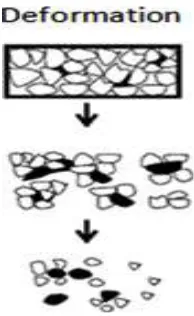
6)Deformation recovery
Water is drawn into the pores Particles swells to pre-compression and particles repel each other size and break up the matrix of the becaues of the resulting electrical force. tablet.
Figure 1.4 : Disintegration of tablets by repulsion and deformation mechanism.
7)By enzymatic reaction
[image:19.612.381.478.71.229.2]Enzymes present in the body also act as disintegrants. These enzymes dearth the binding action of binder and helps in disintegration. Due to swelling, pressure is exerted in the outer direction that causes the tablet to burst or the accelerated absorption of water leads to an enormous increase in the volume of granules to promote disintegration.
Table No. 1.1 : Disintegrating Enzymes
Enzyme Binder
Amylase Starch Protease Gelatin
Cellulase Cellulose and its derivatives Invertase Sucrose
1.3 Various technologies used in the manufacture of ODT
1. Freeze-Drying or Lyophilization. 2. Tablet Moulding.
3. Spray Drying. 4. Sublimation.
5. Direct Compression. 6. Mass-Extrusion.
1)Freeze-Drying or Lyophilization
Freeze drying is the process in which water is sublimed from the product after it is frozen. This technique creates an amorphous porous structure that can dissolve rapidly. A typical procedure involved in the manufacturing of ODT using this technique is mentioned here. The active drug is dissolved or dispersed in an aqueous solusion of a carrier/polymer. The mixture is dosed by weight and poured in the wells of the preformed blister packs. The trays holding the blister packs are passed through the liquid nitrogen freezing tunnel to freeze the drug solution or dispersion. Then the frozen blister packs are placed in the refrigerated cabinets to continue freeze drying. After freeze drying the aluminium foil backing is applied on a blister sealing machine. Finally the blisters are packged and shipped. The major disadvantages of lyophilization technique are that it is expensive and time consuming; fragility makes conventional packgaing unsuitable for these products and poor stability under stressed conditions.
2)Tablet Moulding
incorporated. Taste masking is an added problem to this technology. To overcome this, Van Scoik incorporated taste masked drug particles. The taste masked drug particles were prepared by spray congealing a molten mixture of hydrogenated cottonseed oil, sodium bicarbonate, lecithin, polyethylene glycol and an active ingredient into a lactose based tablet triturate form. Compared to the lyophilization technique, talets produced the by molding technique are easier to scale up for industrial manufacture. Masaki uses an agar solution as a binding agent and a blister packaging as well as a mold to prepare an intra buccally fast disintegrating tablet.
3)Spray Drying
Spray drying is used in pharmaceutical industries to produce highly porous powdres. The pocessing solvents is evaporated rapidly by spray drying, which renders the product highly porous and thus can be used in manufacturing ODT. In this technique, gelatin can be used as a supporting agent and as a matrix, mannitol as a bulking agent and sodium starch glycolate or cross carmellose or crospovidone are used as superdisintegrants. Tablets manufactured form the spray-dried powder have been reported to disintegrate in less than 20 seconds in aqueous medium. Allen and wang have reported this technique for preparing fast dissolving tablets. The formulation contained bulking agent like mannitol and lactose, a superdisintegrant like sodium starch glycolate and crosscarmellose sodium and acidic ingredients (citric acid) and/or alkaline ingredients (e.g. sodium bicarbonate). This spray dried powder, which compressed into tablets showed rapid disintegration and enhanced dissolution.
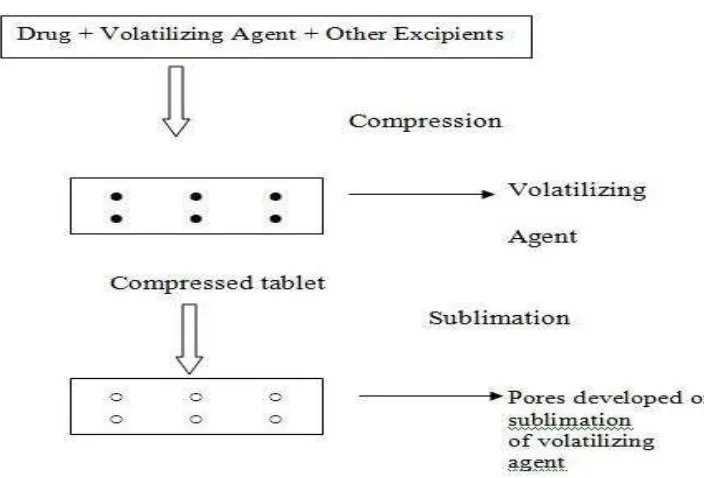
4)Sublimation
This technique is based on the use of volatile ingredients (e.g. camphor, ammonium bicarbonate, naphthalene, urea, urethane etc.) to other tablet excipients and the mixture is then compressed into tablets. Entrapped volatile material is then removed via sublimation, which leads to formation of a porous structure. These compressed tablets which have high porosity (approximately 30%) rapidly dissolved within 15 seconds in saliva. Several solvents like cyclohexane, benzene etc. can also be used as pore forming agents. Orodispersible tablets with highly porous structure and good mechanical strength have been developed by this method.
Makino et al. described a method of producing a fast dissolving tablet using water as a pore forming material. They used a mixture containing active ingredient and carbohydrates (glucose, mannitol, xylitol etc) which then moistened with water (1-3%w/w) and compressed into tablets. Then water was removed, yielding highly porous tablet.
Figure 1.5 : Steps involved in sublimation technique
5)Direct Compression
Microcristalline cellulose, cross linked carboxymethyl cellulose sodium, cross linked polyvinyl pyrrolidone and partially substituted hydroxypropyl cellulose, through water insoluble, absorb water and swell due to capillary action and are considered as effective disintegrants in the preparation of fast dissolving tablets. Bi et al. and Watanbe et al. used microcristalline cellulose (MCC) and low substituted hydroxypropyl cellulose (HPC) to manufacture rpidly disintegrating tablets. The ratios of MCC to HPC varied from 8:2 to 9:1. Ito and sugihan investigated applying agar powder as a disintegrants because the powder absorbs water and swell considerably with forming a gel at physiological tempratures
Fast disintegration of tablets can also be achived by incarporating effervescent disintegrating agents, which generates carbon dioxide. This phenomenon also resulted in partial taste masking of unacceptable taste of the drug. The major drawback of effervescent excipients is their hygroscopicity (i.e. the ability to absorb atmospheric moisture). Hence, their manufacture requires control of humidity conditions and protection of the final product. This is reflected by the overall cost of the product.
Another approach to fast dissolving tablets or orodispersible tablets by direct compression is the use of sugar based excipients (e.g. dextrose, fructose, isomalt, maltitok, maltose, mannitol, sorbitol, starch hydrolyse, polydextrose and xylitol), which display high aqueous solubility and sweetness, and hence, impart taste masking and pleasing mouthfeel.
Figure 1.6 : steps involved in direct compression technique
6)Mass Extrusion
In this technique, a blend of active drug and other ingredients is softened using solvent mixture of water soluble polyethylene glycol, using methanol and then softened mass is extruded through the extruder or syringe to get a cylinder of product, which is finally cut into even segments with the help of heated blades to get tablets. The dried cylinder can be used to coat the granules of bitter tasting drugs and thereby masked their bitter taste.
The various technologies are developed for the preparation of orodispersible drug delivery system that are –
1. Zydis technology. 2. Durasolv technology. 3. Orasolv technology. 4. Flash dose technology. 5. Wowtab technology. 6. Flashtab technology. 7. Oraquick technology.
1)Zydis technology
Zydis, the best known of the fast dissolving/disintegrating tablet preparations, was the first marketed new technology tablet. The tablet dissolves in the mouth within seconds after placement on the tongue. A zydis tablet is produced by lyophilizing or freeze drying the drug in a matrix usually consisting of gelatin (Gregory et al, 1981 and Mizumoto et al, 1996). The product tablet is very lightweight and fragile and must be dispensed in a special blister pack. Patients should be advised not to push the tablets through the foil film, but instead peel the film back to release the tablet. The zydis product is made to dissolve on the tongue in 2 to 3 seconds. The zydis formulation is also self preserving because the final water concentration in a freeze dried product is too low to allow for microbial growth. A major claim of zydis product is increased bioavailability compared to traditional tablets. Because of its dispersion and dissolution in saliva while still in the oral cavity, there can be a substantial amount of pregastric absorption from this formulation.
2)Durasolv technology
with larger doses of active ingredients, because the formulation is subjected to such high pressure on compaction.
3)Orasolv technology
Orasolv was cima‟s first dissolving dosage form. The orasolv technology unlike zydis dispers in saliva with the aid of almost imperceptile effervescence. The orasolv technology is best described as a fast dissolving tablet; the tablet matrix dissolves in less than one minute, leaving coated drug powder. The taste masking associated with the orasolv formulation is twofold. The unpleasant flavour of a drug is not merely counteracted by sweetners or flavour; both coating the drug powder and effervescence are means of taste masking in orasolv. This technology is frequently used to develop over the counter formulation, (wehling et al, 1996 and 1993).
4)Flash dose technology
A fuize technology has three oral drug delivery systems that are related to fast disslution. The first two generation of quick dissolving tablets, soft chew and ez chew, require some chewing. However, these paved the way for fuize‟s most recent development, flash dose technology. The flash dose technology utilizes a unique spinning mechanism to produce floss- like crystalline structure; much like cotton candy. This crystalline sugar can then incorporate the active and be compressed into the tablet. This procedure has been patented by fuize and is known as shearform. The final product has a very high surface area for dissolution. It disperses and dissolves quickly once placed onto the tongue.
5)Wowtab technology
The wowtab technology has been on the japanese market for a number of years. Wowtab technology is patented by Yamanouchi pharmaceutical co. The wow in wowtab signifies the tablet is to be given “with out water”. It has just recently been introduced into the US. The wowtab technology utilizes sugar and sugar – like (e.g. mannitol) excipients. This process uses a combination of low mouldability saccharides (rapid dissolution) and hihg mouldability saccharides (good binding property) the two type of saccharides are combined to obtain a tablet formulation with adequate hardness and fast dissolution rate due to its significants hardness, the wowtab formulation is a bit more stable to the environment than the zydis and orasolv (Mizumoto et al, 1996 and 2003).
Prographarm laboratories have patented the flashtab technology. This technology involves the preparation of rapidly disintegrating tablet which consists of an active ingredient in the form of microcrystal. Drug microgranules may be prepared by using the conventional techniques like coacervation, extrusion- spheronization, simple pan coatin methods and microencapsulation (cousin et al, 1995). The microcrystals of micogranules of the active ingredient are added to the granulated mixture of excipients prepared by wet or dry granulation and compressed into tablets.
7)Oraquick technology
The oraquick fast dissolving / disintegrating tablet formulation utilizes a patented taste masking technology. Kv pharmaceutical claims its microsphere technology, known as micromask, has a superior mouthful over taste masking alternatives. The taste masking process does not utilize solvents of any kind, and therefore leads to faster and more efficient production. Also, lower heat of production than alternative fast dissolving / disintegrating technologies makes oraquick appropriate for heat sensitive sterilization.
Patented technology
Basis of
technology
Technology developed
by company
Active ingredient
Zydis Lyophilization R.p scherer , inc Loratidine
Durasolv Direct compression
Cima lab, inc Zolmitriptan
Orasolv Direct compression
Cima lab, inc Zolmitriptan
Flashdose Cotton candy processs
Fuize technology ltd. Tramadol
Flashtab Direct compression
Ethypharm Ibuprofen
Wowtab Direct compression
Yamanouchi pharma yech. Inc.
Famotidine
Oraquick Micromask taste masking
Kv pharm Co. inc. Hyoscyamine sulphate mdt
2. REVIEW OF LITERATURE
Nitin Mohire et al., (2009) Metronidazole orodispersible tablets have been prepared by
three different techniques of taste masking and three different disintegrating agents‟ viz. sodium starch glycolate (SSG), Bamboomanna (BB), Chitosan (CHN) and combination thereof. Metronidazole is a choice of drug in most of the oro-dental problems. The metallic taste and large dose size limits its use in dentistry. Pleasantly flavored and taste masked orodispersible metronidazole in tablet form helps to overcome these drawbacks and thereby increases patient compliance. The combination of SSG:BB and SSG:CHN in the proportion of 1:1 and have been found most effective in disintegrant property. Bamboomanna used alone did not show superdisintegrant property. However it when it was in combination with other established superdisintegrants, showed significant increase in disintegrant property. Complex formation of drug with glycerrhiza glabra extract showed good result of taste masking.
B. G. Shiyani et al., (2009) Compare the disintegrants efficiency of the three
superdisintegrants (Ac-De-Sol, Polyplasdone XL and Explotab) and also to compare the disintegrant properties and disintegrant efficiency of agar (AG) and gellan gum (GG) with treated agar (TAG) and treated gellan gum (TGG) by formulating Metoclopramide HCL immediate release tablets by direct compression method. Disintegration efficiency of powder disintegrants compared by swelling and hydration capacity of disintegrants. While efficiency of disintegrants in tablets compared by various test like disintegration time, dissolution test, wetting time and maximal water uptake study of metoclopramide HCL immediate release tablets. The rapid disintegration observed for the TAG and TGG containing tablets due to high porous structure of treated form of disintegrants which confirmed by photomicroscope study.
Bhunia Biswajit et al., (2011) Have prepared orodispersible tablets of Amlodipine
Sutradhar et al., (2012) Prepared taste masked oral dispersible tablets of Domperidone by sublimation method and investigate the effects of superdisintegrants (Kollidone CL) on the disintegration time as well as the percent release of a model drug from Kollidone 30, Ispaghula husk, and Guar Gum based formulation. Domperidone, an anti-emetic drug was taken as the model drug for the study. A high porosity was achieved using camphor as volatilizing agent which allowed easy penetration of dissolution media followed by rapid release of the drug. The granules and tablets were evaluated and found to be acceptable according to standard limits. In-vitro release studies were performed using USP apparatus –II (paddle method) in 900 ml of 0.1N HCL (pH 1.2) at 50 rpm. The release mechanisms were explored and explained with different kinetic model.
Honey Goel et al., (2008) Formulate fast disintegrating tablets (FDTs) for nausea and
vomiting using aminoacetic acid, carmellose, and sodium alginate with enough mechanical strength. Ondansteron HCL (water soluble) or domperidone (water insoluble) drug were added to FDTs and their disintegration behaviour was evaluated. Placket Burman Screening Design was used to screen the dependent and independent variables for the drugs. Ondansteron HCL is soluble in water (1g in 3 ml) whereas dompridone is insoluble in water. Therefore, Ondansteron HCL and domperidone with different solubility profiles were selected for formulating FDTs containing aminoacetic acid, carmellose and sodium alginate. Thus, FDTs of these drugs will be helpful in rapid drug delivery, even without the intake of water, thereby alleviating nausea and vomiting sensation at an early stage.
Anilkumar J. Shinde et al., (2009) Developed fast dissolving tablet of Cephalexin. A
to vacuum drier at 600 for 12 hrs. all the formulations were evaluated for their characteristics such as average weight, hardness, wetting time, friability, content uniformity, disintegration time and dissolution rate.
Bhupendra G. Prajapati et al., (2010) Developed fast dissolving tablets of
Domperidone by wet granulation method. Sodium Starch Glycolate, was taken as superdisintegrant and starch paste as a binder for the study. The domperidone (anti-emetic) is taken as the model drug for the study an wet granulation as a method of preparation of the fast dissolving tablet. The disintegrant may be incorporated during the wet granulation process as extra granular incorporation. Full factorial design was applied to investigate the combine effect of 2 formulation variables : Sperdisintegrants and starch paste. The concentration of superdisintegrants and concentration of starch paste were taken as independent variables, X1 and
X2 respectively. And there effect of Disintegration time, wetting time Q30 and friability were
investigated which are taken as dependent parameters. And also studied the efficiency of different sperdisintegrant for the wet granulation.
Kulkarni et al., (2010) Developed fast dissolving tablets of Meloxicam by employing
vacuum drying technique utilizing single and multi-volatile components. Analysis revealed that, formulation containing camphor and menthol as subliming agents yielded the best result in term of dissolution rate (M7). Result also revealed that, all the formulations had enough mechanical strength, good mouth feel and lesser wetting and disintegration time. Stability study indicates that upon storage disintegration and wetting time of tablets decreased significantly without losing their mechanical strength.
Basawaraj S. Patil et al., (2011) Prepared fast dissolving tablets (FDTs) of Granisteron
HCL by sublimation technique. Granisteron HCL is a selective 5-HT3 receptar antagonist, which
may have beneficial therapeutic effects in the treatment of vomiting and nausea resulting from cancer therapy. The prepared formulation were evaluated for pre-compressional and post-compressional parameters. The compatibility of drug with other ingredients was checked by FTIR studies , the result revealed that there was no interaction between drug and other excipients. The disintegration time of the tablets decreased significantly with increase in the concentration of subliming agent.
Reeta et al., (2012) Review onrecent advancement in orally disintegrating preparations.
of compliance mainly the pediatrics and geriatrics. It is regarded as the most economical and safest method of drug delivery. Formulation of a orally disintegrating dosage form is beneficial for patients suffering from motion sickness, repeated emesis, mental disorder and dysphasia because they cannot swallow large quantity of water and it is easy to administer. The unique property of orally disintegrating dosage form is that they are readily disintegrating and dissolve in saliva and avoids requirement of water which is the major benefit over conventional dosage form.
Rakesh Pahwa et al., (2010) studies of Orally Disintegrating Tablets - Friendly to
Pediatrics and Geriatrics to obviate the problem of dysphagia and to improve patient compliance, ODTs have gained considerable attention as preferred alternatives to conventional tablet and capsule formulations these techniques render the disintegration of tablet rapidly and dissolve in mouth without chewing or additional water intake.
Ashok Kumar et al., (2009) Developed orally disintegrating tablet of Terbutaline
Sulphate for asthma by wet granulation technique. Asthma is defined simply as reversible airway obstruction characterized by attacks of breathlessness, tight chest, wheezing and coughing. Granules containing drug, diluent, subliming agents, aspartame were prepared by wet granulation technique using alcoholic solution of polyvinyl pyrrolidone K25 (10% w/v) as a binder. The dried granules were then mixed with lubricant magnesium stearate and glidant talc and compressed into tablets. Subliming agents was sublimed from the tablet by exposing it to drying at 60 0C. the tablets were evaluated for percentage friability, hardness, weight variation, disintegration time and percentage drug content. Menthol containing tablets resulted in rapid disintegration as compared with tablets containing ammonium bicarbonate and camphor.
Pooja et al., (2010) Prepared and evaluate orodispersible tablets of Levocetrizine HCL to
disintegrate in mouth (without the aid of water), to enhance the clinical effects and bioavailability through pre-gastric absorption. Orodispersible tablets were formulated using two technique, that is direct compression (containing superdisintegrant) and effervescent technique. Various formulation batches B1-B9 were prepared; all ingredients were passed through sieve no
Avani R. Gosai et al., (2008) Developed orodispersible tablets of Ondansetron HCL, because of its application in emesis condition, fast onset of action and avoidance of water is highly desirable. Tablets were prepared by direct compression using sodium starch glycolate and croscarmellose as superdisintegrants, as the combination of these two agents gives better disintegration of the tablet. Microcrystalline cellulose was used as diluent and mannitol, mint flavor, sodium saccharine to enhance the organoleptic properties of tablets. The tablets were evaluated for weight variation, mechanical strength, in-vitro disintegration time, in-vivo disintegration time, wetting time and drug release characteristics. Hardness and friability data indicated good mechanical strength of tablets. Dissolution study revealed faster release rate of Ondansetron HCL from the tablets as compared to pure drug and marketed conventional tablet formulation of Ondansetron hydrochloride.
Radke R.S. et al., (2009) Have been prepared Orodispersible tablets of baclofen using
various concentrations of superdisintegrant agents like Ac-Di-Sol, crospovidone, sodium starch glycolate by direct compression method. Nine formulations having superdisintegrants at different concentration levels were prepared. These tablets were evaluated for drug content, weight variation, friability, hardness, wetting time and in-vitro disintegration time. The superdisintegrants addition technique is a useful method for preparing orodispersible tablets by direct compression method.
M. Kruthi et al., (2012) Developed taste masked orodispersible tablets of Drotaverine
HCL. Taste masking is means of masking the bitter taste of drug for the improvement of palatability of the drug. Drotaverine HCL drug is a highly potent spasmolytic agent. These drug is capable for relieving the spasms of various organs, but it is a very bitter drug and slightly soluble in water. Formulate and evaluate orodispersible tablets of Drotaverine HCL, highly bitter drug, in which its bitter taste can be masked. Solid dispersion technique such as melt granulation and kneading method are used to mask the taste of the drug. The carriers like Glyceryl Behenate (Compritol 888 ATO), Glyceryl pamito sterate (precirol ATO 5) and sucrose fatty acid ester (D 1811) are used to mask the bitterness of the drug by solid dispersion technique and these dispersion will be formulated further using super disintegrates.
Sharma Deepak et al., (2012) Review on taste masking technologies for the drug.
when they dissolve in saliva. In market, there are numbers of pharmaceutical preparations available in which actives in bitter taste. The improved palatability in these products has prompted the development of numerous forfulations, which improved performance and acceptability. These techniques are not only mask the bitter taste of drug but also enhance the bioavailability and performance of drug dosage form. It includes adding sugars, flavors, sweeteners, use of lipoproteins, numbing taste buds, granulation, use of adsorbates, coating of drug, microencapsulation, multiple emulsion, viscosity modifier, vesicles and liposomes, prodrug and salt formation, inclusion and molecular complex, solid dispersion and Ion Exchange Resins (IERs) which have been tried by the formulators to mask the unpleasant taste of the bitter drugs.
Tejash Serasiya et al., (2009) Design and optimization of orodispersible tablets of
Pheniramine maleate were prepared by direct compression method using various superdisintegrants like crospovidone, croscarmellose, sodium starch glycolate, low substituted hydroxypropyl cellulose, pregelatinized starch. The prepared tablets were evaluated for uniformity of weight, hardness, friability, wetting time in-vitro disintegration time, in-vitro dispersion time and drug release study. The concentration of superdisintegrants had an effect on disintegration time and in-vitro drug dissolution whereas hardness and friability of resulting tablets were founds to be independent of disintegrant concentration. The two formulations, one containing 10% of crospovidone and second containing 10% of croscarmellose sodium were found to give the best result.
P.V. Swamy et al., (2010) Designed cost effective orodispersible tablets of
Diethylcarbamazine Citrate. The Diethylcarbamazine Citrate an anthelmintic for improving patients compliance, especially, those of pediatric and geriatric categories with difficulty in swallowing, with the prime objective of arriving at cost effective product by effervescent method. In the effervescent method mixture of sodium bicarbonate and tartaric acid along with treated agar were used as disintegrants.
Ramesh veeraveni et al., (2011) Developed orodispersible tablets of Valdecoxib, to
of excipients consisting of MCC and L-HPC by mass extrusion technique. Sublimation method also employed to formulate orodispersible tablets using camphor as subliming material and water soluble materials like mannitol.
Paramita Dey et al., (2012) Review on orodispersible tablets, a new trend in drug
delivery. The most common and preferred route of drug administration is through the oral route. Orodispersible tablets are gaining importance among novel oral drug delivery system as they have improved patients compliance and have some additional advantages compared to other oral formulation. They are also solid unit dosage forms, which disintegrate in the mouth within a minute in the presence of saliva due to super disintegrants in the formulation. Thus this type drug delivery helps a proper peroral administration in pediatric and geriatric population where swallowing is a matter of trouble.
Monica R P Rao et al., (2010) Designed and developed immediate release tablets of
Metoclopramide HCL using simplex centroid mixture design. Metoclopramide HCL is mainly used as an anti-emetic agent in the cancer chemotherapy. Immediate release tablet formulations is based on the use of super disintegrants separately or in combination. Seven formulations were prepared by using simplex centroid mixture design where sodium starch glycolate (X1), cross
carmellose sodium (X2), pregelatinised starch (X3) were selected as independent variables and
dependent variables were disintegration time (Y1), and release at 15 minutes (Y2). Optimum
formulation were selected by grid search method. X1, X2 andX3 when used individually gave
satisfactory results but when used in combination gave better results. The results showed a good relationship between the experimental and predicted values.
Rajesh Roshan Rai et al., (2012) Fast dissolving tablets a novel approach to drug
delivery. Oral delivery is currently the gold standard in the pharmaceutical industry where it is regarded as thesafest, most convenient and most economical method of the drug delivery having the highest patient compliance. Yet, dysphagia is a common problem encountered in all age groups in concern to solid dosage forms. To overcome such problems, certain innovative drug delivery systems, like fast dissolving tablets (FDT) have been developed. Fast dissolving tablets have received ever- increasing demand during the last decade and the field has become a rapidly growing area in the pharmaceutical industry.
Supriya Shidhaye et al., (2009) Developed novel melt granulation using sugars for
was carried out by forming complex with indion 244 using batch process. Further this complex was formulated into ODT using melt granulation technique. A blend of low melting and high melting sugar was used in this technique.
Mathew Ebin P Sovichan et al., (2012) Developed Amoxicillin Trihydrate dispersible
tablets in a low production value, using cheap amoxicillin trihydrate raw materials available in the market, with direct compression or wet granulation. Amoxicillin trihydrate is a semisynthetic antibiotic, an analogue of ampicillin with a broad spectrum of bactericidal activity against gram positive and gram negative organism. Amoxicillin trihydrate dispersible tablets was manufactured with the different disintegrants such as maize starch, crospovidone, croscarmellose, sodium starch glycolate. And then tablets are evaluate, the wet granulation was excluded from the formulation due to its high cost of production, direct compression was selected due to its low cost and easy of production.
Amrutkar et al., (2010) Designed chewable dispersible tablet of Lamotrigine by melt
granulation. Lamotrigine, an antiepileptic drug (AED) of the phenyltriazine class, is chemically unrelated to existing antiepileptic drugs. But it is a bitter drug and slightly soluble in water. Thus, in the work under taken, an attempt was made to mask the taste and to formulate into a chewable dispersible tablet by complexation with precirol ATO-05 ratio of 1:2, 1:1.5, 1:1, 1:0.5. the prepared tablets were then evaluated for general appearance, content uniformity, hardness, friability, taste evaluation, mouth feel, in-vitro disintegration time and in-vitro dissolution studies. Tablets with preciol ATO-05 have shown good disintegrating features, also, the dispersion not showing any bitter taste.
Srinivasa Rao et al., (2011) Developed fast dissolving tablets of taste masked
Adel M. Aly et al., (2011) Prepared and evaluate rapidly disintegrating tablets of Glimepiride by direct compression, and also evaluate Pharmaburst as a newly introduced diluent for this type of tablets, either alone or in combination with other well-known tablet excipients. Orange flavor was the most preferred flavor for the prepared rapidly disintegrating tablets containing pharmaburst as a single diluent. The prepared Glimepiride RDT were found to have faster onset of action than the conventional Glimepiride tablets.
Rajesh M. et al., (2012) Developed taste masked Cefuroxime Axetil tablet by direct
3. AIM AND OBJECTIVE
NEED AND SCOPE OF THE STUDY:
Tablets and capsules are most papular solid dosage forms. However, many people face difficulty in swallowing tablets and hard gelatin capsules. This difficulty in swallowing is called as dysphasia. This problem has been encountered in all groups of patients, but especially with pediatric and geriatric populations. Thus, these conventional dosage forms result in high incidence of noncompliance and ineffective therapy with respect to swallowing specially in the case of pediatric, geriatric, or any mentally retarded persons. An Orodispersible tablet of metoclopramide hydrochloride is developed by direct compression techniques which disintegrate in oral cavity without the need of water within a matter of seconds when placed upon the tongue. “Orodispersible tablet are not only indicated for people who have swallowing difficulties, but also ideal for active people.” Hence, to resolve these problems the present work is aimed to develop and evaluate orodispersible tablets of metoclopramide hydrochloride using different superdisintegrants.
The aim of study is to develop and evaluate the orodispersible tablets of metoclopramide Hcl. To improve patient compliance.
To develop cost effective product.
To enhanced the onset of action of metoclopramide Hcl. To enhance the safety and efficacy of metoclopramide Hcl.
The main aim of the present study is to develop orodispersible tablets of metoclopramide hydrochloride (an antiemetic) for improving patient compliance, especially those of pediatric and geriatric categories with difficulty in swallowing, nausea and vomiting with prime objective of arriving at cost effective product, by direct compression techniques.
The objective is to increase the release rate of dissolution by increase the release rate of drug from the solid oral dosage form by using different superdisintegrants.
effective antiemetic. Metoclopramide hydrochloride is rapidly absorbed from orally its oral bioavailability is 80% and half-life is 5-6 hrs. Metoclopramide hydrochloride is a dopamine antagonist, it blocks D2 receptors in the CTZ. And shows the antiemetic action. On high dose it
shows a 5-HT3 receptor antagonist. It is also used to treat gastroesophageal reflux disease
(GERD). The dose of metoclopramide hydrochloride is 5 to 10mg for adults and 0.25 to 0.5mg for childrens t.i.d. orally.
The objective of present work is to mask the taste of metoclopramide hydrochloride by using flavours and sweetners. And to develop the orodispersible tablets by simple and cost effective methods. The scope of this orodispersible drug delivery system is suitable for patients who suffering from dysphasia, nausea and vomiting, bedridden. And in the present work we have find out the comparative dissolution and disintegration study between our tablet formulation of metoclopramide hydrochloride orodispersible tablet.
OBJECTIVES OF THE STUDY:
1. To prepare ODT of metoclopramide Hcl. by direct compression using different concentration of superdisintegrants like crospovidone (polyplasdone), croscarmellose sodium (Ac-Di-Sol), and sodium starch glycolate (explotab).
2. To evaluate the formulated tablets for various parameters, including stability study.
4. PLAN OF WORK
1. Literature survey.
2. Procurement of drug,polymer and excipients.
3. Preformulation studies.
I) Identification and characterization of Metoclopramide Hcl. Melting point.
Infrared absorption spectrophotometer. Ultra visible spectrophotometer. Identification test.
Solubility.
II) Drug Excipient Interaction study by FTIR.
III) Development of standard calibration curve of Metoclopramide Hcl.
4. Formulation Design.
Development of oro-dispersible tablet formulation using three different Superdisintegrating agent.
Preparation of powder blend of drug and excipients.
5. Pre-compression assessment of powder blend.
Angle of repose. Bulk density. Tapped density. Compressibility index. Hausner ratio.
6.Compression of powder blend into tablet by direct compression method.
Hardness. Friability. Thickness. Weight variation. In-vitro dispersion time. Wetting time.
Water absorption ratio. Disintegration time. Drug content. In-vitro dissolution.
8. Stability study.
9. Comparison of Best Formulation with all batches.
10. Result and discussion.
5. DRUG PROFILE
METOCLOPRAMIDE HYDROCHLORIDE
Molecular Formula :C14H22ClN3O2.HCl.H2O
Chemical Structure :
IUPAC Name : 4-amino-5-chloro-N-[ 2-(diethylamino)
ethyl]-2methoxybenzamide hydrochloride monohydrate.
Brand Name : Emetid, Imperan, Maxolon, Reclomide, Reglan.
Drug Category : Antiemetics,Dopamine Antagonists,Prokinetic Agents.
Molecular Weight : 354.3
State : solid
Melting Point : 182.5-184 0C
Description : A white or almost white, crystalline powder or crystals.
Solubility : Very soluble in water, freely soluble in alcohol, sparingly soluble
in methylene chloride.
Indication : For the treatment of nausea and vomiting.
Bioavailability : 80±15% (oral)
Protein Binding : 30%
Half Life : 5-6 hr
Absorption : Rapidly and well absorbed from orally
Biotransformation : Hepatic
Excretion : 70-85% renal, 2% faecal
Pharmacology :
Metoclopramide hydrochloride, although chemically related to procainamide, does not possess local anesthetic or antiarrhythmic properties. Metoclopramide hydrochloride is used to enhance GI motility, to treat diabetic gastroparesis, as an antinauseant, and to facilitate intubation of the small bowel during radiologic examination. Metoclopramide hydrochloride may be used to treat chemotherapy induced emesis.
Mechanism of Action :
Metoclopramide hydrochloride inhibits gastric smooth muscle relaxation produced by dopamine, therefore increasing cholinergic response of the gastrointestinal smooth muscle. It appears to bind to dopamine D2 receptors where it is a receptor antagonist. The antiemetic action
of metoclopramide hydrochloride is due to its antagonist activity at D2 receptors in the
chemoreceptor trigger zone (CTZ) in the central nervous system this action prevents nausea and vomiting triggered by most stimuli. It accelerates intestinal transit and gastric emptying by preventing relaxation of gastric body and increasing the phasic activity of antrum. Simultaneously, this action is accompanied by relaxation of the upper small intestine, resulting in an improved coordination between the body and antrum of the stomach and upper small intestine. Metoclopramide hydrochloride also decreases reflux into the esophagus by increasing the resting pressure of the lower esophageal sphincter.
Therapeutic indication are used to treat nausea and vomiting, it is effective and popular drug for many types of vomiting. Gastrokinetic: to accelerate gastric emptying, Dyspepsia, Gastroesophageal reflux disease (GERD).
Adverse Effects :
Common adverse drug reactions arerestlessness, drowsiness, dizziness, fatigue, and focal dystonia. Rare but serious adverse drug reactions are agranulocytosis, tardive dyskinesia.
Contraindications :
Metoclopramide hydrochloride is contraindicated in phaeochromocytoma, It should be used with caution in parkinson‟s disease.
Drug Ineraction :
Drug Interaction
Cyclosporine Metoclopramide hydrochloride increases serum levels of cyclosporine.
Levodopa Levodopa decreases the effect of metoclopramide hydrochloride.
Paliperidone Metoclopramide hydrochloride may increase the risk of extrapyramidal side effects of paliperidone.
Tacrolimus Metoclopramide hydrochloride may incerase the concentration of taccrolimus in the blood.
Venlafaxine Possible serotoninergic syndrome with this combination.
Food Interaction : Food reduces availability, take 30 minutes before meals. Avoid alcohol.
6. EXCIPIENTS PROFILE
A)
Croscarmellose sodium
Nonproprietary Name : USP-NF :Croscarmellose sodium.
Synonyms : Ac-Di-Sol, cross-linked carboxymethyl cellulose sodium,
Chemical Name : Cellulose, carboxymethyl ether, sodium salt, crosslinked.
CAS RegestryNumber : 74811-65-7.
Molecular Weight : 90000-700000.
Functional Category : Tablet and capsule disintegrant.
Description : Croscarmellose sodium occurs as an odorless, white or grayis
white powder.
Structural formula :
Specific Surface Area : 0.81-0.83 m2/g.
Solubility : Insoluble in water. Although croscarmellose sodium rapidly swells
to 4-8 times its original volume on contact with water. Practically insoluble in acetone and ethanol.
Application:
Croscarmellose sodium is used in oral pharmaceutical formulation as a disintegrant for capsules, tablets and granules.In tablet formulation, croscarmellose sodium may be used in both direct compression and wet granulation processes.Whenused in wet granulations, the croscarmellose sodium should beadded in both the wet and dry stages of the processes (intra and exatra granulary) so that the wicking and swelling ability of the disintegrant is best utilized. Croscarmellose sodium atconcentrations up to 5% w/w may be used as tablet disintegrant, although normally 2% w/w is used in tablet prepared by direct compression and 3% w/w in tablet prepared by a wet granulation process.
Stability And Storage Condition:
Croscarmellos sodium is a stable though hygroscopic material. A model tablet formulation prepared by direct compression,with croscarmellose sodium as a disintegrant, showed no significant difference in drug dissolution after storage at 300c for 14 months. Croscarmellose sodium should be stored in a well-closed container in a cool, dry place.
Incompatibilities:
The efficacy of disintegrants, such as croscarmellose sodium, may be slightly reduced in tablet formulations prepared by either the wet granulation or direct compression process that contain hygroscopic excipients such as sorbitol.
Saftey:
B)
Crospovidone
Nonproprietary Name : BP : Crospovidone.
PhEur : Crospovidonum.
USPNF : Crospovidone.
Synonyms : Croslinked povidone, kollidon CL, polyplasdone XL,
PVPP, polyvinyl polypyrrolidone.
Chemical name : 1-Ethenyl-2-polypyrrolidinone homopolymer.
CAS Regestry Number : 9003-39-8.
Molecular Weight : >1 000 000.
Functionly Category : Tablet disintegrant.
Description : Crospovidone is a white to creamy white, finely divided,free flowing, practically tasteless, odorlessor nearly odorless, hygroscopic powder.
pH : 5.0-8.0 (1% w/v aqueous slurry).
Density : 1.22 g/cm3.
Solubility : Practically insoluble in water and most common organic
Solvents.
Moisture Content : Maximum miosture sorption is approximately 60%.
Application :
Crospovidone is a water insoluble tablet disintegrants and dissolution agent used at 2-5% concentration in tablet prepared by direct compression or wet and dry granulation methods. It rapidly exhibits high capillary activity and pronounced hydration capacity, with little tendency to form gels. Studies suggest that the particle size of crospovidone strongly influences disintegration of analgesic tablets. Larger particle provides afaster disintegration than smaller particles. Crospovidone can also be used as a solubility enhancer with the technique of co-evaporation, crospovidone can be used to enhance the solubility of poorly soluble drugs. The drug is adsorbed on to crospovidone in the presence of a suitable solvent and the solvent is then evaporated. This technique results in faster dissolution rate.
Stability And Storage Condition :
Since crospovidone is hygroscopic, it should be stored in air tight container in a cool and dry place.
Incompatibilities :
Crospovidone is compatible with most organic and inorganic pharmaceutical ingredients. When exposed to a high water level, crospovidone may form molecular adducts with some materials.
Safety :
C)
Sodium Starch Glycolate
Nnonproprietary Name : BP : Sodium starch glycollate.
PhEur : Carboxymethylamylum natricum.
USPNF : Sodium starch glycolate.
Synonyms : Carboxymethyl starch, Sodium salt, Explotab, Primojel.
Chemical Name : Sodium carboxymethyl starch.
CAS Regestry Number : 9063-38-1.
Molecular Weight : 5×10⁵-1×10⁶.
Functional Category : Tablet and capsule disintegrant.
Description : Sodium starch glycolate is a white to off-white, odorless,
tasteless, free-flowing powder. It consist of oval or spherical granules 30-100µm in diameter.