Western University Western University
Scholarship@Western
Scholarship@Western
Electronic Thesis and Dissertation Repository
12-9-2011 12:00 AM
Acoustic Signal Encoding in Children with Auditory Processing
Acoustic Signal Encoding in Children with Auditory Processing
Disorders
Disorders
Chris M. Allan
The University of Western Ontario
Supervisor
Dr. Prudence Allen
The University of Western Ontario
Graduate Program in Health and Rehabilitation Sciences
A thesis submitted in partial fulfillment of the requirements for the degree in Doctor of Philosophy
© Chris M. Allan 2011
Follow this and additional works at: https://ir.lib.uwo.ca/etd
Part of the Communication Sciences and Disorders Commons
Recommended Citation Recommended Citation
Allan, Chris M., "Acoustic Signal Encoding in Children with Auditory Processing Disorders" (2011). Electronic Thesis and Dissertation Repository. 362.
https://ir.lib.uwo.ca/etd/362
This Dissertation/Thesis is brought to you for free and open access by Scholarship@Western. It has been accepted for inclusion in Electronic Thesis and Dissertation Repository by an authorized administrator of
ACOUSTIC SIGNAL ENCODING IN CHILDREN WITH AUDITORY PROCESSING DISORDERS
(Spine title: Acoustic Signal Encoding in Clinical Populations)
(Thesis format: Monograph)
by
Chris Marie Allan
Graduate Program in Health and Rehabilitation Sciences (Hearing Science Field)
A thesis submitted in partial fulfillment of the requirements for the degree of
Doctor of Philosophy
The School of Graduate and Postdoctoral Studies The University of Western Ontario
London, Ontario, Canada
ii
THE UNIVERSITY OF WESTERN ONTARIO School of Graduate and Postdoctoral Studies
CERTIFICATE OF EXAMINATION
Supervisor
______________________________ Dr. Prudence Allen
Supervisory Committee
______________________________ Dr. Meg Cheesman
______________________________ Dr. Vijay Parsa
Examiners
______________________________ Dr. Tony Leroux
______________________________ Dr. Debra Jared
______________________________ Dr. Susan Stanton
______________________________ Dr. Meg Cheesman
The thesis by
Chris Marie Allan
entitled:
ACOUSTIC SIGNAL ENCODING IN CHILDREN WITH AUDITORY PROCESSING DISORDERS
is accepted in partial fulfillment of the requirements for the degree of
Doctor of Philosophy
iii
Abstract
Auditory perception, as measured through the ability to resolve and discriminate
acoustic signal features, has been shown to be a problem for some children with
learning, language, reading, or attention disorders. Evaluation of discrimination
abilities, as part of an auditory processing test battery, has been recommended but few
commercial tools are available for the audiologist to accomplish this task. The
investigation of signal feature discrimination or resolution has occurred in the
laboratory, but few studies have been conducted with children at risk for an auditory
processing disorder (APD). The purpose of this project was to investigate signal
encoding abilities in children suspected of having APD.
School-aged children, part of a clinical population referred for auditory processing
evaluation, participated in the project. Children underwent a clinical auditory processing
assessment and were designated into APD or non-APD groups. To assess signal
encoding abilities, an adaptive procedure with feedback was combined with a three
alternative forced choice task and presented with graphics in a game-like format. A
series of five studies was designed to represent spectral, level, and temporal features of
sound and allow for a sampling of the encoding abilities of the clinical population. The
series included evaluation of frequency resolution, frequency discrimination, intensity
discrimination, temporal resolution and temporal integration.
Results demonstrated that some children (APD and non-APD) in the clinical population
have difficulty accurately and efficiently encoding acoustic signal features. Poor
performance varied on an individual and group basis across signal encoding tasks but
most listeners demonstrated difficulty with spectral and temporal encoding. Elevated
and outlying thresholds were not restricted to the APD group although the largest
numbers of poor performers were those in that group. In addition to the threshold
values, trial-by-trial data provided qualitative information about the nature of the poor
performance and assisted in differentiating poor signal encoders from children who were
iv
It was concluded that the clinical assessment of signal feature encoding can contribute to
the accurate identification of children with APD and should be included in a clinical test
battery. The psychoacoustic task can successfully assess signal encoding in the clinical
setting.
Keywords
Auditory processing disorder, (central) auditory processing, psychoacoustics, auditory
signal feature encoding, discrimination, temporal processing, spectral processing,
v
Acknowledgments
I would like to thank all the children, and their families, who participated in this project.
I am grateful not only for the time they committed to the project but also for the
opportunity I had to work with them.
I extend my utmost gratitude to my supervisor, Dr. Prudence Allen, for her guidance,
support, insight and encouragement during my doctoral study journey. Dr. Allen has
been an inspiration, a valued collaborator, and a mentor. I will always treasure our
friendship. I also express my appreciation to the members of my advisory committee,
Dr. Meg Cheesman and Dr. Vijay Parsa for their thoughtful contributions to my
research. I extend my sincere thanks to Steve Beaulac and David Grainger for their
expertise, advice, guidance, and attention through the technical challenges of my
research. A special thank-you goes to Karen Ballem for editorial advice.
It would not have been possible for me to complete this work without the love, prayers,
and support of family and friends. I would like to thank my family and friends who, in a
variety of ways, encouraged me through this endeavour. My husband, Gary, and
children, Keegan and Mitchell, along with my extended family have been my strongest
supporters and have shown both love and patience through the challenge of my doctoral
studies. Thanks to Keegan for never allowing “quitter talk” and to Mitchell, for being an
example of perseverance. Thanks to my parents and sister who have been unfailing in
their support of all my professional and academic pursuits. I also extend my thanks to
friends and colleagues that offered encouragement through the good times and the bad. I
deeply appreciate your understanding and faith. Finally, I would like to recognize and
thank my classmates, Wenonah Campbell, Christine Guptill, and Flora Stephenson, for
always being available when most needed. Thank you for sharing with me your
thoughts and perspectives on life, career, and academics. I will always cherish our
friendship.
vi
Dedication
Revelation 4:11
vii
Table of Contents
CERTIFICATE OF EXAMINATION ... ii
Abstract ... iii
Acknowledgments ... v
Dedication ... vi
Table of Contents ... vii
List of Tables... xii
List of Figures ... xiii
List of Appendices ... xv
Chapter 1 ... 1
1 Auditory perception and processing ... 1
1.1 Auditory Processing Disorder ... 2
1.2 Clinical Assessment of Auditory Processing Abilities ... 5
1.3 Acoustic Signal Encoding ... 8
1.4 Auditory abilities in special populations ... 9
1.4.1 Learning disability ... 9
1.4.2 Attention Deficit Hyperactivity Disorders (ADHD) ... 11
1.4.3 Reading Impairment ... 12
1.4.4 Specific Language Impairment ... 14
1.4.5 Auditory Processing Disorder ... 15
1.5 Statement of Purpose... 17
Chapter 2 ... 19
2 General Method ... 19
viii
2.2 Participants ... 19
2.3 Clinical Auditory Processing Assessment ... 23
2.4 Procedure... 27
2.5 Evaluation of acoustic signal feature encoding ... 27
2.6 Signal Generation ... 31
2.7 Signals ... 32
Chapter 3 ... 33
3 Frequency Discrimination ... 33
3.1.1 Frequency discrimination in adults ... 33
3.1.2 Frequency discrimination in typically developing children ... 33
3.1.3 Frequency discrimination summary ... 35
3.2 Method ... 35
3.2.1 Participants ... 35
3.2.2 Signals & Procedure ... 35
3.3 Results ... 36
3.4 Discussion ... 41
Chapter 4 ... 44
4 Intensity Discrimination ... 44
4.1.1 Intensity discrimination in adults ... 44
4.1.2 Intensity discrimination in typically developing children ... 46
4.1.3 Summary ... 47
4.2 Method ... 48
4.2.1 Participants ... 48
4.2.2 Signals & Procedure ... 49
ix
4.4 Discussion ... 51
Chapter 5 ... 57
5 Frequency Resolution ... 57
5.1.1 Frequency resolution in adults ... 57
5.1.2 Frequency resolution in typically developing children ... 59
5.1.3 Summary ... 61
5.2 Method ... 62
5.2.1 Participants ... 62
5.2.2 Signals & Procedure ... 62
5.3 Results ... 63
5.4 Discussion ... 70
Chapter 6 ... 73
6 Temporal Resolution as measured by gap detection thresholds... 73
6.1.1 Gap detection abilities in adults ... 73
6.1.2 Gap detection abilities in typically developing children ... 75
6.1.3 Gap detection in clinical populations ... 76
6.1.4 Summary ... 78
6.2 Method ... 79
6.2.1 Participants ... 79
6.2.2 Signals & Procedure ... 79
6.3 Results ... 80
6.4 Discussion ... 82
Chapter 7 ... 89
7 Temporal Integration ... 89
x
7.2 Temporal integration in typically developing children ... 94
7.3 Temporal integration in the clinical population ... 96
7.4 Purpose of the study ... 97
7.5 Method ... 98
7.5.1 Ethics Approval ... 98
7.5.2 Participants ... 98
7.5.3 Procedure and test signals ... 99
7.6 Results ... 103
7.7 Discussion ... 114
7.7.1 Brief tone audiometry in children suspected of having an auditory processing disorder... 114
7.7.1.1 Method ... 114
7.7.1.2 Participants ... 114
7.7.1.3 Signals & Procedure ... 115
7.7.1.4 Results... 115
7.7.1.5 Discussion ... 120
7.8 Summary and general discussion ... 121
Chapter 8 ... 125
8 Project Summary & Discussion ... 125
8.1 Performance variability ... 127
8.2 Signal feature encoding ... 128
8.3 Trial-by-trial analysis ... 129
8.4 Clinical implications ... 130
8.5 Signal feature encoding as part of a clinical auditory processing assessment .... 132
8.6 Comparison of two Gap Detection tests ... 133
xi
8.6.1.1 Ethics Approval ... 133
8.6.1.2 Participants ... 133
8.6.1.3 Procedure ... 134
8.6.1.4 Hearing Assessment ... 134
8.6.1.5 Auditory processing tests ... 135
8.6.1.6 Gap Detection Tasks ... 136
8.6.2 Results ... 140
8.6.3 Discussion ... 150
8.7 Future Directions ... 154
8.8 Final Comments ... 155
References ... 157
Appendices ... 176
Appendix A: Approval for Research Involving Human Participants... 177
Appendix B: Letter of Information and Consent ... 180
Appendix C: Approval for Research Involving Human Participants ... 184
Appendix D: Letters of Information and Consent ... 186
xii
List of Tables
Table 1. Test results for the repeated measures analysis of variance between the
thresholds obtained for three blocks of trials for each of the six signal conditions. .... 104
Table 2. Test results for homogeneity of variance are shown for each of the six steady
state signal conditions. . ... 109
Table 3. Results from the univariate analysis of variance evaluating threshold
differences across groups.. ... 110
Table 4. Test results for homogeneity of variance across groups for each of the five
function variables that are fit to the threshold data.. ... 112
Table 5. Results from the univariate analysis of variance evaluating differences between
xiii
List of Figures
Figure 1 Age and gender distribution for all project participants. ... 21
Figure 2 Number of children that failed each test included in the auditory processing
test battery. ... 25
Figure 3: Proportion of participants that met the clinical requirements for a diagnosis of
auditory processing disorder. ... 26
Figure 4 Sample screen-shots from one of the video game graphics. ... 29
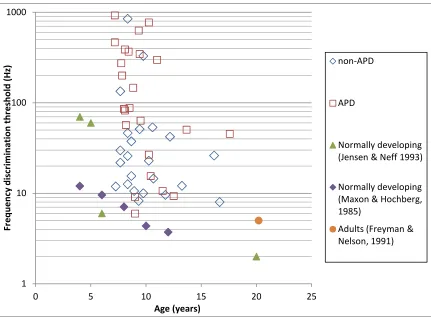
Figure 5 Frequency discrimination thresholds for study participants ... 38
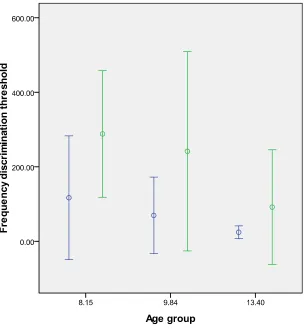
Figure 6 Frequency discrimination thresholds displayed according to age group and
clinical group allocation.. ... 40
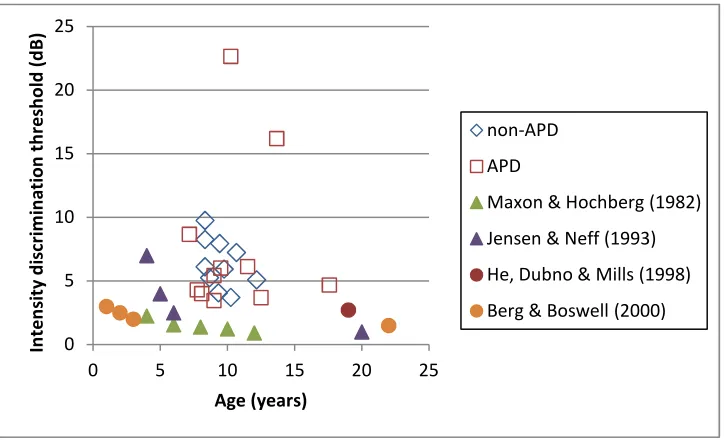
Figure 7 Intensity discrimination thresholds shown as a function of listener age and
diagnostic group.. ... 50
Figure 8 Trial-by-trial responses for a 10-year-old listener. ... 55
Figure 9 Trial-by-trial responses for a 13-year-old listener. ... 56
Figure 10 Thresholds for the flat noise condition shown as a function of age and
diagnostic group.. ... 65
Figure 11 Thresholds for the notch noise condition shown as a function of age and
diagnostic group.. ... 66
Figure 12 Frequency Resolution thresholds (flat noise threshold – notch noise threshold)
shown as a function of age and diagnostic group.. ... 69
Figure 13 Gap detection thresholds shown as a function of listener age and diagnostic
xiv
Figure 14 Trial-by-trial responses for non-APD listeners... 85
Figure 15 Trial-by-trial responses for two APD listeners ... 86
Figure 16. Graphic representation of the 6 tone stimuli used as the signal series in the
temporal integration study... 102
Figure 17. Absolute detection thresholds by adults for 6.25 kHz pure tones. ... 105
Figure 18. Absolute detection thresholds by typically developing children for 6.25 kHz
pure tones. ... 106
Figure 19. Absolute detection thresholds by APD children for 6.25 kHz pure tones .... 107
Figure 20. Absolute threshold for 1000Hz tones. ... 118
Figure 21. Temporal integration thresholds for 1000Hz signals... 119
Figure 22 Comparison of the gap detection threshold obtained on the first and second
block of trials... 142
Figure 23 Average gap detection thresholds shown as a function of age ... 143
Figure 24 Comparison of the AFT-R fusion threshold obtained on the first and second
tests. ... 145
Figure 25 Average AFT-R fusion thresholds shown as a function of age. ... 146
xv
List of Appendices
Appendix A: Approval for Research Involving Human Participants ………177
Project: Individual Differences in Auditory Processing Abilities
Appendix B: Letter of Information and Consent ………180
Project: Individual Differences in Auditory Processing Abilities
Appendix C: Approval for Research Involving Human Participants ………184
Project: Children’s Performance on Tests of Auditory Processing
Appendix D: Letters of Information and Consent ………...186
1
Chapter 1
1
Auditory perception and processing
The world is rich with complex auditory signals that include speech, music and a
cacophony of environmental sounds. Of these sounds, speech is the primary means of
communication and the conduit for learning in the traditional educational system. The
importance of speech cannot be understated when considering its relevance to daily
communication and learning. To understand auditory information, including speech, an
individual requires not only normal hearing sensitivity but also good perception, an
ability that changes as a child matures. Sensation requires perception in order for
meaning to be assigned to the stimulus and in turn, for the perceptions to be learned.
Perceptual learning begins with exposure to physical stimuli. For the auditory system,
the stimuli are the sounds that we hear. With repeated exposure to sound, specific
signals become more familiar and learning takes place. Goldstone (1998, 2003)
explained that perception occurs early in information processing and that perceptions
develop over time. Such learning improves responsiveness to stimuli in the
environment. Goldstone provided insight into the way we perceive, learn to perceive,
and ultimately associate sensation with meaning. Mechanisms that come into play
include attentional weighting, stimulus imprinting, differentiation, and unitization.
Through these perceptual mechanisms the efficiency of stimulus processing is
developed. They allow for the fast and accurate recognition of stimuli.
Goldstone (1998) explained that children gain experience in their environment as they
interact with their surroundings and the physical properties of the world, including the
sounds that they hear. As this experience grows, children begin to make associations
between sound and meaning. The more frequently sounds are heard the more likely they
are to be recognized. This occurs in part through the enhancement of neural connections
in the central auditory nervous system (stimulus imprinting). Children can begin to
focus attention towards salient features or dimensions of sounds that are important for
2
weighting). As groups of sounds occur repeatedly together, the individual elements
become associated (begin to be recognized as a whole) so that detection of one part of
the unit triggers recognition of the whole, even in degraded conditions (unitization).
This significantly speeds the processing of auditory information. As signals are better
learned, finer detail can be perceived (differentiation) which seems to improve
discrimination abilities.
It is with the presence of normal hearing sensitivity and efficient processes of perceptual
learning that children are able to become good auditory processors and listeners,
understand oral communication, and learn. Any degree of hearing loss can, and
typically does, have a negative impact on auditory related abilities (Holstrum, Biernath,
McKay, & Ross, 2009; Ross, Gaffney, Green, & Holstrum, 2008; Yoshinaga-Itano,
Johnson, Carpenter, & Brown, 2008). An interruption or interference in the perceptual
learning process can also have a negative impact on auditory abilities (Moore, Hogan,
Kacelnik, Parsons, Rose, & King, 2001). When sensation or perception is compromised,
the ability to hear may be insufficient for the appropriate development of
speech-language skills (Moore, Amitay, & Hawkey, 2003). Academic success as defined by
performance in a typical classroom setting for which signals may be unfamiliar or
unclear can also be compromised (Bamiou & Luxon, 2008; Carneol, 2008; Levy &
Parkin, 2003). Difficulties with auditory tasks and listening, despite the presence of
normal hearing sensitivity, are known as auditory processing disorders.
1.1
Auditory Processing Disorder
Not all children possess and develop good auditory processing abilities. Many have
difficulty with encoding sound features and associating meaning to them. Some have
difficulty with detection of sounds, although the co-morbidity between deficits in
detection (peripheral hearing loss) and processing disorders has not been extensively
researched (Jerger, 2007; Jutras & Gagne, 1999; Koravand, Jutras, & Roumy, 2010).
The presence of hearing loss or an auditory processing disorder can interfere with
learning in a traditional educational system which relies on oral communication (Palmer,
3
Children with hearing loss are often identified during infancy because of universal
hearing screening programs. This results in early intervention that reduces the negative
impact of the hearing loss on the child’s learning, speech-language, and social
development (Fitzpatrick & Durieux-Smith, 2011; Moeller, 2000; Wolff, Hommerich,
Riemsma, Antes, Lange & Kleijnen, 2009). Elementary school integration and academic
performance may also be influenced through early intervention (McCann, Worsfold, Law, Mullee, Petrou, Stevenson, Yuen & Kennedy, 2009; Verhaert, Willems, Van Kerschaver, & Desloovere, 2008). Unfortunately, young children with auditory
processing problems are frequently identified after school entry, when they have already
begun to experience academic failure. Identification of and intervention for perceptual
problems occurs at a much later age than for losses of sensitivity due to factors such as
the complex nature of the auditory nervous system and its relatively long developmental
trajectory for auditory abilities. Extensive variability of performance in typically
developing children on auditory perceptual tasks and the wide range of important
auditory processing abilities preclude the feasibility of a single test for identification.
These issues coupled with diverse presentation of the disorder, are key reasons for late
identification of auditory processing disorder in children.
Children experiencing a developmental delay or disorder in their auditory processing
and perceptual abilities are more likely than typically developing children to experience
problems in a classroom setting. Learning to read, which typically occurs after school
entry, places the most significant demands on auditory processing. Prior to that, children
often find themselves in homes where oral communication with parents and other
children is conducted at relatively close distances and vocabulary is relatively familiar,
requiring less focus on the acoustics. Such a favorable communication environment
makes signals more audible, improves clarity and improves signal-to-noise ratios. In
school classrooms, auditory demands increase, noise levels may be higher (Bradley,
2005; Howard, Munro & Plack, 2010; Klatte & Hellbruck, 2010) and much of the
information presented by the teacher is novel. Auditory information that has never
before been encountered by children requires additional resources to be understood
4
combinations have already triggered unitization, is less available with novel information.
The ability to differentiate signals as novel, attend to the relevant features, and process
the acoustic information for understanding and future reference becomes a constant
demand in the classroom setting, where learning new information is an ongoing process
for children.
Poor auditory perception can have a negative impact on academic success and the ability
to listen and learn in a typical classroom (Hutchinson & Mauer, 1998). Increased stress
from demands on auditory skills in the classroom may lead to poor academic
performance and/or behaviour problems. It is through observed behaviours, often
associated with difficulties in academic achievement, that the possibility of an auditory
problem is initially suspected (Bamiou, Musiek, & Luxon, 2001; Bench, 1998). A child
with an auditory processing problem tends to show typical behaviours such as frequent
requests for the repetition of auditory information and frequent misunderstanding of
auditory information especially when it is degraded or when the listening conditions are
compromised (Yalcinkaya & Keith, 2008). They may be more distractible, have a
slower processing time for auditory information, and show difficulty learning through
the auditory modality (Keith, 1999; Willeford & Burleigh, 1985, Chapter 3). Children
with auditory processing difficulties may also show a short attention span, be easily
distracted, become frustrated when learning new information, have a poor ability to
organize information, have trouble with memory, appear to daydream, be slow to
respond to questions or instructions, display disruptive behaviour, become isolated, give
up easily and fail to complete tasks that are difficult (Friel-Patti, 1999; Keith, 2004;
Sahli, 2009). It is most often these behaviours and the beginning of academic
difficulties that lead to a hearing test and evaluation of auditory processing abilities
(Keith, 2004; Willeford, 1985).
The extent to which an auditory processing disorder and other associated behaviours are
expressed or impact the ability to function in a regular classroom setting can vary
(Friel-Patti, 1999; Heine & Slone, 2008; Katz & Wilde, 1994; Lasky, 1983; Medwetsky, 1994;
Schwartz & Gurian, 2003; Smoski, Brunt, & Tammahill, 1992). Children can present
5
experienced may vary between children, or within a child across situations. When a
child arrives at the audiology clinic the expectation is that an assessment of auditory
processing and perception abilities will be conducted that is tailored to their needs, has
sufficient scope to result in an accurate description of strengths and deficits, and
ultimately provides the child, parents and educators with an understanding of the
disorder as well as effective intervention strategies. The challenge for the audiologist is
that there is no clear link between behavioural descriptions and a specific auditory
ability or profile. This has led to the development and use of a test battery approach to
the clinical assessment of auditory processing abilities.
1.2
Clinical Assessment of Auditory Processing Abilities
Clinical audiologists were assessing the auditory processing abilities of children for
more than 20 years before the American Speech and Hearing Association (ASHA, 1996)
published the first consensus statement on the topic. The 1996 report from the ASHA
Task Force on Central Auditory Processing Consensus Development offered both a
definition for central auditory processing and central auditory processing disorders. It
also offered guidance for best practice in diagnosis and management. The ASHA Task
Force agreed on the following definition:
Central auditory processes are the auditory system mechanisms and processes
responsible for the following behavioural phenomena:
• Sound localization and lateralization
• Auditory discrimination
• Auditory pattern recognition
• Temporal aspects of audition, including
o Temporal resolution
o Temporal masking
o Temporal integration
o Temporal ordering
• Auditory performance decrements with competing acoustic
6
• Auditory performance decrements with degraded acoustic signals.
These mechanisms and processes are presumed to apply to nonverbal as well as
verbal signals and to affect many areas of function, including speech and
language. They have neurophysiological as well as behavioural correlates.
(ASHA, 1996, p. 43)
With this definition in place it followed that “A central auditory processing disorder
(CAPD) is an observed deficiency in one or more of the above-listed behaviours”
(ASHA, 1996, p. 43).
The first ASHA report (ASHA, 1996) and one that followed 10 years later (ASHA,
2005a) included recommendations for best practice for the assessment of auditory
processing skills. The assessment recommendations advocated for a test battery
approach. The battery should include an exhaustive case history, observation of the
behaviours in question (conducted in person by the audiologist or through the
administration of surveys and questionnaires), the behavioural evaluation of auditory
abilities, the objective evaluation of the integrity of the auditory nervous system through
electrophysiologic measures, and a speech-language assessment. The speech-language
assessment should be completed by a speech-language pathologist as part of an
interdisciplinary team approach. The case history and behavioural observation provide
the audiologist with a context for parental or teacher concerns. This information can be
used for the individualization of the assessment battery. The auditory processing
assessment itself is recommended to include a standard assessment of hearing sensitivity
that includes pure tone thresholds, speech audiometry, acoustic immittance and
otoacoustic emission testing, and the assessment of auditory processing abilities. Each
portion of the evaluation is expected to meet the recommended standards for hearing
(ASHA, 1988, 1997, 2005b, 2006) and auditory processing (ASHA, 1996, 2005a)
assessment.
Offering autonomy to the audiologist in the selection of specific test measures for the
auditory processing assessment, the guidelines only dictate the framework and general
7
ASHA recommends inclusion of tasks that assess performance with competing acoustic
signals, pattern recognition, and auditory discrimination. The details of how these are to
be assessed are not well defined. Several tests measuring performance with a competing
signal are available; for example, the SCAN-C (Keith, 2000a), the Staggered Spondaic
Word test (Katz, 1998), or the Auditory Figure Ground (Ivey, 1969, 1987) and
Competing Sentences tests (Ivey & Willeford, 1988). Tests of pattern recognition such
as the Pitch Pattern Sequence test (Pinheiro, 1977), and the Duration Pattern Sequence
test (Musiek, Baran, & Pinheiro, 1990) are also available. Tests of general auditory
discrimination ability are less readily available to the audiologist.
Many clinicians, when asked about auditory discrimination testing would only include
the repetition of single words in ideal quiet conditions (Emanuel, Ficca, Korczak, 2011).
Tests incorporating minimally contrast pairs of words such as Wepman’s Auditory
Discrimination Test, Second Edition (Wepman & Reynolds, 1987),
Goldman-Fristoe-Woodcock Test of Auditory Discrimination (Goldman, Fristoe, & Goldman-Fristoe-Woodcock, 1970),
Developmental Test of Auditory Perception (Reynolds, Voress, & Pearson, 2008), and
Test of Auditory Processing Skills, Third Edition, (Martin & Brownell, 2005) are in use
by speech-language pathologists. They are also confounded by top-down processing
and are language specific. These speech tasks provide only a gross estimate of the
discrimination and encoding abilities of the auditory system, given the extent to which
word recognition relies on top down processing. For more detailed feature level
discrimination to be assessed, different types of tests are required. As recent ASHA
reports imply (ASHA, 1996; 2005a), there is increasing awareness of the importance of
auditory discrimination assessment to estimate the processing of basic acoustic features
in the time, frequency and level domains, without being subject to language factors:
With the exception of speech and language tests that assess speech sound
discrimination, there are few commercially available tests of auditory
discrimination developed expressly for use in APD assessment and
diagnosis. Yet the ability to discriminate among similar-sounding
auditory stimuli is arguably one of the most important determinants of
8
1.3
Acoustic Signal Encoding
All sound is comprised of basic physical elements that can be described by their spectral,
level and temporal properties. To understand signals the ear must accurately detect,
discriminate, and encode these physical properties for further analysis, comparison, and
synthesis in the auditory nervous system. It is important that the encoding and
transmission of features be accurate if signal clarity is to be preserved at all levels of the
auditory system. Although some error in the encoding of signal features may be
tolerated, especially with very familiar signals, poor encoding can lead to difficulty
perceiving auditory signals. Determining an individual’s ability to detect, or recognize
small differences or changes in signals may provide some insight into the accuracy with
which acoustic signals are represented in the auditory system. Ability to recognize small
differences in a signal may suggest good signal encoding, while ability to recognize only
large differences in features may suggest an impaired auditory system (Kidd, 2002).
A problem detecting and discriminating the acoustic features of a signal is likely to
impact higher levels of processing in a negative way. For this reason, assessment of
basic signal feature encoding should be an important component of a comprehensive
assessment of auditory processing in children. Tests of auditory discrimination,
employing rigorous psychophysical methods, have been conducted for many years in the
laboratory setting. To this date, however there has not been a substantial transfer of
these laboratory tests and methods to the clinical setting. Lack of suitable technology
and the large number of trials typical of laboratory research have been limiting factors in
the clinical implementation of signal feature encoding assessment. Advances in
technology and digital signal processing that allow for the rigorous control of signals
and test protocols now make it possible to transfer laboratory tests to the clinical setting.
The adaptation of procedures to the testing of children inclines their use in clinical
assessment. For example, Allen and colleagues (Allen & Wightman, 1992; Allen,
Wightman, Kistler, & Dolan, 1989; Wightman, Allen, Dolan, Kistler, & Jamieson, 1989)
adapted test procedures used with adults to make them suitable for working with
children. Modifications included the use of colourful graphics to guide children through
9
blocks with more breaks to keep the test within the attention span of a young child.
When using an adaptive test method these researchers showed that a sufficient number
of reversal points could be obtained in a relatively short trial block to reliably estimate a
threshold level. The use of feedback for each response promoted an impression of
success and encouraged the children to complete the block of trials. Shorter, more
numerous trial blocks allowed for both the natural and necessary breaks in testing a
young child required while still allowing for good estimates of performance. Graphics
to visually support the presentation of signals in a game-like format kept the children
interested in completing the tests. The combination of these test procedures and
advanced signal generation technology is the means through which these laboratory
signal encoding tests can be transferred successfully into the clinical setting.
1.4
Auditory abilities in special populations
Laboratory results have provided a significant amount of information about the feature
encoding ability of adults and typically developing children. Auditory processing and
signal feature encoding has been investigated in a number of special populations
including learning disabled, dyslexic, language impaired, and attention deficit disorders.
The purpose for these investigations has been to better characterize the disorder and/or
to determine their possible linkage with auditory impairment (Hickson & Newton, 2000;
Katz & Wilde, 1994).
1.4.1
Learning disability
Assessment of auditory abilities in children with general learning disabilities has
demonstrated performance ranging from the apparent absence of auditory deficits to the
presence of severe auditory problems (Welsh, Welsh, & Healy, 1996). In a study of
temporal resolution, as measured by the Auditory Fusion Test, McCroskey and Kidder
(1980) found that learning disabled children demonstrated the largest fusion thresholds
(poor temporal resolution) when compared to normal and reading disordered groups that
were matched for IQ and age. Other investigations of temporal processing abilities in
learning disabled groups resulted in less clear findings. For example, rapid auditory
10
presented in rapid succession, showed a correlation with academics but performance
between the normal and impaired learners was similar for a number of conditions and
only marginal differences were observed on others (Waber, Weiler, Wolff, Bellinger,
Marcus, Ariel, Forbes, & Wypij, 2001). In studies where numerous auditory tasks have
been included in an assessment of auditory skills in learning disabled groups, the
reported co-occurrence of auditory deficits (temporal encoding) with learning
impairment was 43% (Iliadou, Bamiou, Kaprinis, Kandylis & Kaprinis, 2009) and
differences in performance were found on only some, not all, of the measures
administered to the groups (Moav, Nevo, & Banai, 2009; Wright, Zecker, &
McClelland, 2004). As a result of the age range included in the assessment of auditory
skills in their study, Wright, Zecker, and McClelland (2004) postulated that not only do
learning impaired individuals have co-occurring auditory perceptual deficits but that the
deficits may be the result of delayed development. They suggested that the delayed
development hypothesis is supported by the observation that older children
demonstrating impaired auditory perception often achieve performance levels that are
similar to younger, normal children. Wright et al. (2004) theorized that these
developmental delays contribute to the auditory clinical presentation and learning
problems of this population and that even if some auditory skills reach normal adult
levels, the developmental delay may have interfered with the learning process to the
point where residual disordered function persists.
The evidence indicates that children diagnosed with learning disability may have a
concurrent diagnosis of auditory processing disorder. The rate of co-occurrence of these
disorders in any study will depend on the age-range of the sample and the characteristics
of the learning disability studied. Although not a wide range of signal encoding abilities
have been investigated with learning disabled children there is evidence to suggest that
temporal processing abilities in this group, as measured by gap detection and various
11
1.4.2
Attention Deficit Hyperactivity Disorders (ADHD)
Auditory and attention disorders share a similar clinical presentation and have a reported
co-morbidity in children that ranges between 29 to 80% (Keller & Tillery, 2002). The
somewhat frequent report of a concurrent diagnosis led to the question of whether
ADHD and auditory processing disorders were the same entity, or if they had
overlapping characteristics that may have a common underlying deficit (Chermak,
Hall,& Musiek, 1999). Chermak and her colleagues (Chermak, Somers, & Seikel,
1998; Chermak, Tucker & Seikel, 2002) challenged the perception of overlapping
characteristics when they found that groups of professionals, surveyed audiologists and
psychologists, involved in the diagnosis of auditory and attention disorders demonstrated
a clear differentiation of the clinical presentation and behaviours in these two groups.
Using a combination of clinical auditory test measures and attention surveys, Riccio,
Hynd, Cohen, and Molt (1996) found a co-occurrence of auditory and attention disorders
of 55% in the group of children referred for testing in their study. Although the
co-occurrence of these disorders was high, the correlation between the test scores was low
suggesting that ADHD and auditory processing disorders may co-occur in children but
are not the same entity. Auditory processing was investigated using the SCAN and
Lindamood test batteries in a group of normal performing children and two clinical
groups of children including one diagnosed as having ADHD and one with ADHD in
combination with general learning disability (Gomez & Condon, 1999). The SCAN was
considered by the authors to assess auditory perception and the Lindamood battery
tapped concept comprehension. The three groups did not differ in age or IQ. Gomez
and Condon (1999) found that the groups did not differ on the Lindamood subtest
performance. The AHDH and normal groups did not differ in their performance on the
SCAN subtests but the learning disabled with ADHD group demonstrated scores that
were significantly poorer on the competing words subtest of the SCAN in comparison to
the other two groups. The authors interpreted this finding as meaning that auditory
processing disorders and attention disorders are separate entities and that they can
co-occur in children experiencing learning problems. The conclusion that auditory
perception and attention disorders are different entities but frequently co-occur in
12
using a variety of clinical test and auditory perception tasks (Cook, Mausbach, Burd,
Gascon, Slotnick, Patterson, Johnson, Hankey, & Reynolds, 1993; Riccio, Cohen,
Garrison & Smith, 2005).
1.4.3
Reading Impairment
Auditory perception has been investigated in children who demonstrate a range of
impaired reading abilities. Using a battery of clinically available auditory processing
tests, Dawes and Bishop (2010) found that approximately half of dyslexic children tested
demonstrated an auditory processing deficit. Since the early studies by Tallal (1976)
and colleagues (Tallal & Newcombe, 1978; Tallal & Piercy, 1973) into the ability to
detect auditory signals separated by various inter-stimulus interval durations, the
question frequently posed by studies investigating auditory perception in the reading
impaired population involves temporal signal encoding abilities. Typically, these
studies investigate the theory that children with language and/or reading impairment
have difficulty processing short duration signals or signals that occur in rapid
succession. Temporal processing deficits were confirmed by rapid auditory perception
and temporal order judgment tasks by Heiervang, Stevenson and Hugdahl (2002) in a
study with reading impaired individuals. They found that signal duration and rate of
presentation were significant variables but proposed that memory may actually be the
most relevant factor affecting the ability to process, accurately perceive, and respond to
the acoustic signals. Cestnick and Jerger (2000) also reported poor rapid auditory
perception in reading impaired groups of children. They suggested that variation in
auditory performance may be related to the type of reading impairment (lexical or
non-lexical) but did not report the same kind of memory influence observed by Heiervang et
al. (2002). Measures investigating temporal signal encoding, other than rapid processing
tests, have been used in studies with reading impaired children. In an investigation of
age related changes on a gap detection task, Hautus, Setchell, Waldie and Kirk (2003)
discovered very poor temporal resolution in the youngest age groups tested (6 – 9 years)
but that by 10 years of age impaired readers were demonstrating similar performance to
13
Wright et al. (2004) that a delay in development of auditory perception results in
lingering impaired function.
In a study with a large group of reading impaired individuals, aged 7 to 22 years, Fischer
and Hartnegg (2004) administered a number of signal encoding tasks including gap
detection, intensity and frequency discrimination, and signal order judgments. They
reported poor signal encoding ability for all tasks at younger ages and normal adult-like
performance for some but not all tasks with increasing age. When performance was
considered as the number of tasks completed at levels above chance, a clear separation
was observed between dyslexic and control groups across age. Boets, Wouters, van
Wieringen, and Ghesquiere, (2007) conducted a longitudinal study with children
considered at risk for reading impairment. Signal encoding was assessed through gap,
frequency modulation, and tone-in-noise detection tasks. They found an
overrepresentation of signal encoding problems in children with impaired reading
abilities. In the dyslexic group investigated by Rosen and Manganari (2001) temporal
processing deficits were identified through a backward masking task. Auditory
perception problems in dyslexic children are not limited to temporal feature encoding.
Elevated frequency discrimination thresholds have been observed in several studies
involving dyslexic children (France, Rosner, Hansen, Calvin, Talcott, Richardson &
Stein, 2002; Halliday & Bishop, 2006). Amitay, Ahissar, and Nelken (2002)
investigated frequency discrimination ability as well as temporal processing ability as
tested through tasks such as lateralization and amplitude modulation detection. They
found that half of the reading impaired group demonstrated elevated (poor) frequency
discrimination abilities and one third had overall poor auditory perception, showing that
reading impaired children experience varying degrees of competence in spectral and
temporal signal feature encoding.
The review of studies that assessed signal encoding abilities in reading impaired
individuals revealed a frequent concurrent diagnosis of auditory processing disorder.
The rate of co-occurrence of these disorders depended on the age-range of the sample
group and the characteristics of the reading disability studied. Signal encoding abilities
14
features through a variety of tasks (gap detection, temporal order judgment, signal
discrimination, etc.). Evidence from these studies suggested that temporal and spectral
signal encoding abilities in one third to one half of the reading impaired population are
poor in comparison to age-matched typically developing peers.
1.4.4
Specific Language Impairment
The link between hearing abilities and speech language development is well known but
there are children that have normal hearing sensitivity and fail to acquire normal
speech-language skills. Tallal and Piercy (1973) investigated auditory temporal processing in
children who had normal hearing and impaired language development. Their hypothesis
was that this group of children had failed to develop normal speech and language skills
because the rate at which speech occurs was too fast for them to process. In experiments
that manipulated presentation rate, Tallal and Piercy (1973) found many
language-impaired children had difficulty with temporal feature encoding. Since publication of
this study, the ability of language-impaired children to encode signal features has been
investigated (Rosen, 2003). Some of the signal encoding abilities identified as
disordered in children with diagnosed specific language impairment include amplitude
envelope and duration cues (Corriveau, Pasquini, & Goswami, 2007), signal parametric
comparisons such as temporal order judgment (Banai & Ahissar, 2006), rapid auditory
processing as measured with brief inter-stimulus-intervals (Tallal, Merzenich, Miller, &
Jenkins, 1998), frequency discrimination (Hill, Hogben, & Bishop, 2005; McArthur &
Bishop, 2004a, 2004b; Nickisch & Massinger, 2009), and masked signal thresholds
(Hartley & Moore, 2002). Although children with language and/or reading delays may
demonstrate poor performance on auditory perception tasks such as temporal order
judgment, frequency discrimination, binaural processing or backward masking tests of
signal encoding, it is evident that this is not the case for all children (Bailey & Snowling,
2002). Co-occurrence of auditory deficits in children with language impairment has
been reported to exist in 40 – 50% of cases (Boets, Wouters, van Wieringen, &
Ghesquiere, 2007; McArthur, Ellis, Atkinson, & Coltheart, 2008; Rosen, 2003; Sharma,
Prudy, & Kelly, 2009) but there have been studies where more or less than 50% of
15
Wright, Lombardino, King, Puranik, Leonard, & Merzenich, 1997). It is likely that this
range of concurrent presentation is a result of the characteristics of the study sample. As
an example, studies report that memory has also been identified as an area of weakness
in children with language and discrimination deficits (Fernell, Norrelgen, Bozkurt,
Hellberg, & Lowing, 2002; Norrelgen, Lacerda, & Forssberg, 2002) so if a sample group
did have a higher incidence of memory deficits this may impact the overall study
outcome.
A high prevalence of auditory processing disorders has been identified in children
diagnosed with specific language impairment (Dawes & Bishop, 2009). In the review of
studies that assessed signal encoding abilities in children with language disorders, poor
performance was identified in temporal and spectral features as measured through a
variety of tasks (e.g. gap detection, temporal order judgment, signal discrimination).
Evidence suggested that difficulty encoding temporal and spectral signal features is
commonly observed in children with language impairment.
1.4.5
Auditory Processing Disorder
The presence of auditory processing deficits and reduced signal feature encoding
abilities has received attention in a variety of special populations. However, signal
feature encoding abilities in children suspected of having an auditory processing
disorder have not been well studied even though it has been hypothesized that poor
signal encoding may be a contributing factor to listening skill deficits in some of them
(Moore, 2006; Vanniasegaram, Cohen, & Rosen, 2004). The number of investigations
into signal encoding abilities in a confirmed or suspected APD population has been very
limited (Hurley & Fulton, 2007). McFadden (2006) investigated prosodic understanding
in a group of normal children and a group of children identified with auditory processing
disorder. Included in the study were tests of spectral, level and temporal encoding.
Findings indicated that signal encoding abilities, including discrimination of frequency
and intensity differences, gap detection, and temporal integration of some children with
APD were poor in comparison to a group of normal developing children. The poor
16
negative impact on the ability to detect and identify prosodic cues. Dawes, Bishop,
Sirimanna and Bamiou (2008) conducted a retrospective study of a research database
that included children assessed for auditory processing disorder. The retrospective
review included questionnaires about auditory behaviour, medical histories and auditory
processing measures. Some children diagnosed with auditory processing disorder
demonstrated poor temporal encoding abilities as measured by the Random Gap
Detection Test (Keith, 2000b) and the Gaps in Noise Test (Musiek, Shinn, Jirsa,
Bamiou, Baran, & Zaidan, 2005). Auditory processing in children attending a UK
school system was investigated by Moore, Ferguson, Edmondson-Jones, Ratib, and
Riley (2010). Test measures employed in this study included acoustic signal encoding,
communication and hearing checklists, as well as the evaluation of attention, cognition,
memory, phonology, and reading. Signal feature encoding tests included frequency
discrimination, frequency resolution, temporal resolution, and masked signal detection.
Considerable variability in performance was reported both within and between listeners
on tests of signal encoding. Investigators reported that performance improved with
increasing age and adult performance was achieved for all tests between 7 and 9 years of
age. The analysis of individual performance revealed that children with poorest signal
encoding abilities, across test measures, also demonstrated poorest performance on
listening, communication, language, and literacy tests. The researchers concluded that
signal encoding may be a problem for children suspected of having auditory processing
problems. Based on this small number of studies, there is an indication that some
children with auditory processing deficits may have difficulty encoding acoustic signals.
Unfortunately the scope and extent of signal feature encoding deficits in children
suspected or identified with auditory processing disorder remains unknown. Further
investigation into the prevalence and nature of signal feature encoding problems in
children referred for auditory processing assessment is important for improving the
understanding of this disorder (Rosen, 1999) for at least three reasons. First, if only
some children in the clinical population suspected of having an auditory processing
disorder have poor signal feature encoding abilities, this may be an important differential
17
nature of the auditory disorder. The second reason to achieve a better understanding of
signal feature encoding in children relates to the development of treatment programs. A
clear indication of whether auditory deficits include signal encoding problems and
specification of the type of encoding difficulty can lead to more effective intervention
programs that efficiently target areas of weakness. Finally, if inefficient and inaccurate
encoding of signal features is a known contributing factor to the lack of normal language
and reading ability development in some children, then early identification of signal
encoding problems can become instrumental in development of early intervention
programs to reduce the negative impact of these disorders in at-risk children. At present,
very little is known about the extent to which acoustic signal encoding is disordered in
children suspected of having auditory processing disorder and the degree to which
presently available clinical tests of auditory processing abilities reflect signal encoding
abilities. Although many recent studies, as described earlier, evaluate the contribution of
signal feature encoding to other disorders, or describe signal encoding in groups of
children attending regular or learning disabled classrooms, there have been few studies
attempting to evaluate signal feature encoding in a systematic way in a group of children
suspected of auditory processing disorder. This project was a group of studies designed
to address the gap in understanding of acoustic signal feature encoding in children
referred for auditory processing disorders.
1.5
Statement of Purpose
This project investigated basic signal encoding abilities of children suspected of having
an auditory processing disorder. The signal features selected for investigation were
chosen to address the three properties of acoustic signals including spectral, level and
temporal aspects of sound, and identify those areas that might be most problematic in
this clinical population of children. With potentially several areas of signal feature
encoding difficulties in children suspected with auditory processing disorder
(McFadden, 2006), the study was designed to have sufficient scope to direct future
research to features that would result in the most sensitive diagnostic tools, and to
develop the most necessary treatment programs. Spectral encoding ability was assessed
18
masker procedure, and frequency discrimination, via the evaluation of a just noticeable
difference for frequency. Intensity discrimination ability was assessed via evaluation of
a just noticeable difference for level. Temporal processing was assessed through a
measure of temporal resolution (gap detection) and a measure of temporal integration at
threshold.
There were two key questions posed for this study:
• Do children with auditory processing disorder experience poorer signal encoding
than normally developing children?
• Do children who demonstrate learning and behavioural problems without
meeting the criterion for auditory processing disorder have reduced encoding
abilities?
19
Chapter 2
2
General Method
The method described in this chapter applies to all studies included in this project unless
otherwise stated.
2.1
Ethics Approval
Approval of this project was secured from the University of Western Ontario, Office of
Research Ethics (Appendix A). Parents were required to read the study Letter of
Information and sign a consent form for study participation prior to the child’s
enrollment in the study (Appendix B). Verbal assent was obtained from each child at
the beginning of the study and continued to be obtained from the participant on an
ongoing basis in advance of each measure or activity during the test sessions. There was
no penalty for withdrawal from the study.
2.2
Participants
The participants in this study were part of a larger group of children participating in a
comprehensive study investigating auditory processing disorders. School-aged children
were recruited from the London, Ontario and surrounding area by way of the letter of
information that invited typically developing children and children with, or suspected as
having, an auditory processing deficit to participate in a study of hearing and auditory
processing (listening). The letter was provided to local schools and audiology clinics for
distribution to families. Individuals who contacted the researchers after hearing about
the study through other sources were provided with the letter of information and, if
interested, also participated in the study. All participants were native English speakers.
Because the participants were involved in a larger project the number, age range and
gender of children varied across signal feature encoding study. A total of 59 children,
21 female and 38 male, ages 7.2 to 16.6 and 7.2 to 17.6 years respectively, participated
in the studies. Some children may have completed more than one signal encoding study,
20
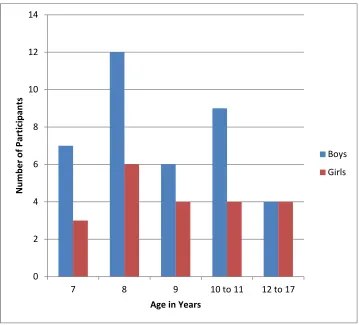
children enrolled, 12 completed all 5 of the signal feature encoding studies. Figure 1
displays the age and gender distribution for overall study participation. It shows that the
male participants outnumber the females by a factor of two, reflecting the general
reports of referral demographics for auditory processing assessment in clinical settings
(Keith, 2004). Anecdotal reports from typical audiology clinics and some prevalence
reports (Chermak, 2002; Keith, 2004) suggest that a higher number of boys than girls are
referred for auditory processing assessment and that children are referred at younger
rather than older ages.
To be enrolled in the study the participants were required to demonstrate normal pure
tone thresholds and middle ear function (ASHA 1988, 1997). During the hearing test,
participants sat comfortably in an IAC double-walled sound isolation room (controlled
acoustical environment) where pure tone thresholds for 250, 500, 1000, 2000, 4000 and
8000 Hz were obtained bilaterally, employing conventional test methods. The
Interacoustics AC40 Clinical Audiometer was used to obtain the hearing thresholds.
Signals from the AC40 were routed through Etymotic Research EAR 5A insert
earphones coupled to the ear with sponge insert eartips. Participants sat comfortably in a
quiet room adjacent to the sound isolation rooms for the assessment of middle ear
function. The Grason Stadler Tympstar diagnostic middle ear analyzer assessed middle
ear function for both ears by obtaining tympanograms as well as ipsilateral and
contralateral acoustic reflexes at 500, 1000, and 2000 Hz. Following the hearing
assessment children with normal hearing sensitivity were entered into the study. If a
child was excluded from the study due to hearing loss and/or middle ear dysfunction,
their parents were informed of their child’s hearing assessment results and they were
referred to the appropriate community professionals for follow-up. Thresholds for
individual listeners fell within the normal range. Hearing thresholds, averaged across
the frequency range, for the group of 59 children were 2.89 dB HL with a standard
deviation of 4.61 dB in the right ear and 4.24 dB HL with a standard deviation of 4.39
21
Figure 1 Age and gender distribution for all project participants.
0 2 4 6 8 10 12 14
7 8 9 10 to 11 12 to 17
N
u
m
b
e
r
o
f
P
a
rt
ic
ip
a
n
ts
Age in Years
22
The cognitive, academic and language abilities of the participants were assessed as part
of the larger project. One participant did not undergo assessment in these areas.
Standard scores were obtained for 58 participants on the Peabody Picture Vocabulary
Test (Dunn & Dunn, 1997) (PPVT), the Oral and Written Language Scales
(Carrow-Woolfolk, 1996) (OWLS), the Wide Range Achievement Test (Wilkinson, 1993)
(WRAT), and the Wechsler Abbreviated Scales of Intelligence (Wechsler, 1999)
(WASI). The average standard score (standard deviation) on the PPVT, a test of
receptive vocabulary, was 101.66 (14.52), revealing that the group had age appropriate
receptive vocabulary abilities. The WRAT Reading and Arithmetic average standard
test scores (standard deviation) were 87.91 (16.33) and 87.90 (15.06) respectively. The
scores reflect the lower than average academic performance of this group of children.
The average WASI Full Scale IQ standard score (standard deviation) for the group of
children was 99.62 (15.81) showing that the children participating in this study have
intelligence scores within the normal range. The mean standard scores (standard
deviation) for the OWLS Comprehension and Oral Expression tests were 90.74 (13.53)
and 91.03 (13.29) respectively for the group of participants. These results show that the
receptive and expressive language abilities for this sample of children fall within the
normal range.
As would be expected in a clinical population of children referred for auditory
processing assessment, the children participating in this study were experiencing some
level of academic failure. The children had either been identified as having an auditory
processing deficit (determined by a community audiologist using a typical clinical test
battery) or, as in most cases, concern was being expressed by teachers and/or parents
about the participant’s auditory skills and their ability to listen in a classroom setting.
The reported auditory difficulties experienced by the participants were representative of
referrals to community clinics for assessment of auditory processing abilities and for this
23
2.3
Clinical Auditory Processing Assessment
All children completed five commercially available auditory processing tests to confirm
a diagnosis of auditory processing disorder, in keeping with the ASHA 2005a and
American Academy of Audiology (AAA) 2010 recommendations for a test battery
approach. The auditory processing test battery included the Filtered Speech test (Ivey
& Willeford, 1988), the Auditory Fusion Test – Revised (McCroskey & Keith, 1996),
the Pitch Pattern Sequence test (Pinheiro, 1977), the Staggered Spondaic Word test (Katz, 1998), and the Words in Ipsilateral Competition (Ivey, 1987) test. The Filtered
Speech test is a monaural low redundancy test and was selected to assess auditory
closure abilities and address performance with degraded acoustic signals. The Auditory
Fusion Test – Revised was selected because it was one of the few commercially
available tests of auditory fusion or gap detection able to evaluate temporal resolution
abilities. Pitch Pattern Sequence is a test able to evaluate auditory sequencing, temporal
ordering, and pattern recognition abilities. The Staggered Spondaic Word and Words in
Ipsilateral Competition tests evaluate performance decrements in competing signals
through the assessment of dichotic listening and auditory figure-ground discrimination
abilities. In combination these five tests evaluate four of the six major classes, of
behavioural phenomena ASHA (2005a) describes as reflecting the underlying
mechanisms of auditory processing that include sound localization, auditory
discrimination, auditory pattern recognition, temporal processing, auditory performance
with competing acoustic signals and auditory performance with degraded acoustic
signals. Test order administration was randomized. All tests were available as compact
disc recordings and were played in a JVC XL-Z232 Compact Disc Player. Children
were comfortably seated in an IAC double walled sound isolation room across from the
examiner who could be viewed through the isolation room window. Auditory signals
from the CD player were presented at the recommended levels by way of the
Interacoustics AC40 Clinical Audiometer. The signals leaving the audiometer were
heard by the participants through Etymotic Research EAR 5A Insert Earphones coupled
to the ear with sponge insert eartips. Test instructions were provided as dictated by the
instruction manual through the earphones by way of the AC40 talk forward capabilities.
24
required by the participant. Tests were administered in sequence which provided a
short break between tests as the CDs were changed and the audiometer adjusted as
required for accurate test presentation. During this break children were reassured and
encouraged to continue their good work.
Upon completion each test was scored according to its standard directions and compared
to the normative data provided in the test manual. Chermak and Musiek (1997, Chapter
4) recommended that a diagnosis of APD be made if a single test result fell at greater
than 3 standard deviations below the age mean or if 2 or more test scores fell at greater
than 2 standard deviations below the age mean. These criteria for APD diagnosis have
been generally accepted as a guide for clinical practice. Designation of an auditory
processing disorder (APD) was made if 2 or more tests fell at greater than two standard
deviations below the age mean. The results obtained from the auditory processing
assessment battery are displayed in Figure 2 as a bar graph representing the total number
of children that failed each test. There was a higher failure rate for some tests than for
others. Highest failure rates were observed for the Auditory Fusion Test – Revised, the
Staggered Spondaic Word test, and the Pitch Pattern Sequence test. These tests
represent the assessment of temporal processing, auditory pattern recognition and
performance with competing acoustic signals. The lowest failure rates were seen for the
Filtered Speech and Words in Ipsilateral Competition tests that represent the assessment
of performance with degraded and competing acoustic signals.
The children who participated in this study were part of a clinical population. All were
experiencing some level of academic failure and displaying behaviour that suggested the
possible presence of an auditory processing disorder. Figure 3 shows the proportion of
children that met the recommended criteria for diagnosis with an Auditory Processing
Disorder (APD), according to age. As can be seen in Figure 3, more than half of the
children in all but the oldest age group met the criteria for auditory processing disorder
diagnosis. The oldest age group had only 3 participants and only 1 of 3 children
received the diagnosis. In total, 35 children of the total 59 participants met the criteria
for a clinical diagnosis of auditory processing disorder. The remaining 24 children did
Figure 2 Number of children
deviations below age mean) each test included in the auditory processing test battery
(SSW=Staggered Spondaic Word test; AFT
FS=Filtered Speech Test; WIC=Words in Ipsilateral Competition test; PPS=Pitch
Pattern Sequence test).
0 5 10 15 20 25 30 35 40 N u m b e r o f C h il d re n 25
Number of children who failed (performance at or greater than 2 standard
deviations below age mean) each test included in the auditory processing test battery
ed Spondaic Word test; AFT-R=Auditory Fusion Test – Revised;
FS=Filtered Speech Test; WIC=Words in Ipsilateral Competition test; PPS=Pitch failed (performance at or greater than 2 standard
deviations below age mean) each test included in the auditory processing test battery
Revised;
FS=Filtered Speech Test; WIC=Words in Ipsilateral Competition test; PPS=Pitch