ClinicoEconomics and Outcomes Research
Dovepress
R E v i E w
Open Access Full Text Article
open access to scientific and medical research
Procedure costs associated with the use of
Harmonic devices compared to conventional
techniques in various surgeries: a systematic
review and meta-analysis
Hang Cheng1
Jeffrey w Clymer1
Rana A Qadeer2
Nicole Ferko2
Behnam Sadeghirad2
Chris G Cameron2
Joseph F Amaral1
1Ethicon inc, Cincinnati, OH, USA;
2Cornerstone Research Group,
Burlington, ON, Canada
Background: As compared to conventional techniques, recent meta-analyses have reported cost
savings with Harmonic devices; however, only in thyroidectomy. Thus, the aim of this study was to evaluate the costs associated with Harmonic devices versus conventional techniques across a range of surgical procedures.
Methods: A systematic search of MEDLINE, EMBASE, and Cochrane Library was conducted
from inception to October 01, 2016 without language restrictions to identify randomized con-trolled trials comparing Harmonic devices to conventional techniques and reporting procedure costs (operating time plus operating equipment/consumables/device costs). Costs were pooled using the ratio of geometric means, and a random effects model was applied. Sensitivity analyses varying statistical methods, number of included studies, and cost outcomes were completed to test the robustness of the results.
Results: Thirteen studies met the inclusion criteria. A total of 561 and 540 participants had
procedures performed with Harmonic devices and conventional methods, respectively, with procedures including gastrectomy, thyroidectomy, colectomy, cholecystectomy, Nissen fundopli-cation, and pancreaticoduodenectomy. As compared to conventional methods, Harmonic devices reduced total procedure costs by 8.7% (p=0.029), resulting in an absolute reduction of US$227.77 from mean conventional technique costs, derived primarily from a reduction in operating time costs. When operating time costs, excluding operating equipment/consumables/device costs, were analyzed, costs were reduced by $544 per procedure with the use of Harmonic devices. The results from all sensitivity analyses demonstrated cost reductions with Harmonic devices.
Conclusion: This systematic review and meta-analysis showed that despite a higher device
cost, Harmonic devices provide a statistically significant reduction in procedure costs, derived primarily from a reduction in operating time costs, across surgical procedures. In addition to functionality benefits, Harmonic devices may represent a potentially cost saving method to reduce overall hospital resource use. Future research should focus on potential costs and benefits from use of Harmonic devices in procedures not covered here.
Keywords: Harmonic, ultrasonic, meta-analysis, costs, surgery, efficiency, operating time
Introduction
Surgical care plays a critical role in preventing, diagnosing, and treating a broad spec-trum of diseases across the life span; as such, the global need for surgical procedures is large. In 2010, it was estimated that 321.5 million inpatient surgical procedures were required to address the global burden of disease.1 Moreover, researchers have estimated Correspondence: Rana A Qadeer
Cornerstone Research Group inc., 204-3228 South Service Road, Burlington, ON L7N 3H8, Canada
Tel +1 905 637 6231
Email rqadeer@cornerstone-research. com
Journal name: ClinicoEconomics and Outcomes Research Article Designation: Review
Year: 2018 Volume: 10
Running head verso: Cheng et al
Running head recto: Harmonic devices and procedure costs DOI: http://dx.doi.org/10.2147/CEOR.S164747
ClinicoEconomics and Outcomes Research downloaded from https://www.dovepress.com/ by 118.70.13.36 on 21-Aug-2020
For personal use only.
Dovepress
Cheng et al
that an additional 143 million surgical procedures are needed each year to meet the global need for preventative and cura-tive surgery.2 The aging population is expected to further propel the need for surgical care in the foreseeable future.3
Given the widespread and indispensable use,2 surgical care is associated with substantial costs that have continued to increase unabatedly. In the USA, it is estimated that aggregate surgical expenditures will grow from $572 billion in 2005 to $912 billion in 2025.4 Consequently, payers, hospitals, and health care providers are now placing a greater emphasis on reducing surgical costs to combat the ever-tightening bud-getary constraints without sacrificing the quality of care.5 Research suggests that one avenue for hospital and surgical cost savings is through the adoption of innovative medical devices and techniques that improve outcomes and reduce surgical complications (eg, bleeding, transfusions).6–8
Developed in the early 1990s, Harmonic surgical devices (Harmonic, Ethicon Endo-Surgery, Cincinnati, OH, USA) have emerged as an alternative to conventional hemosta-sis techniques such as clamp and tie, sutures, metal clips, staples, and monopolar and bipolar electrocautery. Harmonic devices use mechanical vibration to perform simultaneous ultrasonic cutting and coagulation, producing hemostasis at a lower temperature than electrosurgical devices while providing excellent dissecting capability. Meta-analyses have demonstrated that Harmonic devices are associated not only with significant reductions in operating time,9–12 blood loss,9,10,12,13 post-operative pain,10 complications,13 and length of hospital stay,9,13 but also with cost savings8,14 as compared to conventional methods. In fact, two recent meta-analyses in thyroidectomy have suggested that the use of ultrasonic coagulation (including Harmonic devices) is associated with lower costs as compared to conventional techniques.8,14
Presently, meta-analyses examining the costs for Harmonic devices and conventional techniques have not considered surgical procedures other than thyroidectomy. Thus, the aim of this systematic review and meta-analysis of randomized controlled trials (RCTs) was to evaluate the costs associated with Harmonic devices versus conventional techniques across a range of surgical procedures.
Methods
Literature search
A systematic search of MEDLINE, EMBASE, and the Cochrane Library was conducted. The search strategy focused on a comprehensive set of terms related to Harmonic devices from inception to October 01, 2016. A detailed
search strategy is provided in Figure S1. The reference lists of retrieved articles were also hand-searched.
Study selection
Specific inclusion criteria were defined according to PICOS (ie, population, intervention, comparator, outcomes, and study design). Studies were considered eligible for inclusion if they were RCTs comparing Harmonic devices to conven-tional techniques (eg, monopolar or bipolar electrocautery, clips, cut and ligature, knot-tying) in human subjects, for all types of surgical procedures. Based on the inclusion criteria, the eligibility of each publication was evaluated in a title and abstract review. If the abstract and title review suggested potential eligibility, a full-text screening fol-lowed. Full-text studies were then excluded if they were not RCTs, did not report cost outcomes, did not provide a cost breakdown (ie, only reported total costs), or did not compare Harmonic devices to conventional techniques. If more than one study using the same dataset met the inclusion criteria, only the most recent or comprehensive (ie, provided the largest amount of data) publication was retained. Records were evaluated for eligibility by two independent reviewers (BS, NF). Disagreements regarding study inclusion were resolved through consensus or consultations with a third reviewer (HC).
Data extraction
Details (ie, baseline characteristics and outcomes) from the included studies were extracted using a standardized data extraction form developed in Microsoft Excel. The following study details were extracted: study authors, publication year, study time frame, country of origin, sample size, key patient characteristics, type of surgical procedure, type of surgical devices and/or techniques utilized, and detailed cost data. One reviewer conducted the data extraction (BS); a second reviewer cross-checked the extracted data for accuracy and completeness (RAQ). In the case of discrepancies, resolution was reached through consensus.
When available, the type of costs included in the studies were extracted and comprised one or more of the following: operating room (OR) time and/or personnel, OR equipment and/or consumables, preoperative examinations, anesthesia resources, medications, hospital admission/discharge, length of stay, and device-related (eg, Harmonic) costs. Due to inconsistencies in the type and number of cost parameters included across studies, total procedure costs were denoted as the primary outcome of the study. Total procedure costs
ClinicoEconomics and Outcomes Research downloaded from https://www.dovepress.com/ by 118.70.13.36 on 21-Aug-2020
Dovepress Harmonic devices and procedure costs
included operating time costs as well as operating equip-ment/consumables/device costs. Studies (n=5) that reported on costs, but did not provide a breakdown of costs such that procedure-only costs could be extracted, were excluded from the analysis to ensure a consistent definition of costs across all included studies.
Risk of bias
Risk of bias of individual studies was assessed using the Cochrane Collaboration tool (version 5.1; London, UK). The various domains assessed included sequence genera-tion, allocation concealment, blinding, incomplete outcome data, selective reporting, and other sources of bias. For each domain, the risk of bias was assigned as low, unclear, or high. One author (RAQ) assessed the risk of bias.
Statistical analysis
For the analysis, mean procedure costs and standard devia-tions (SDs) in original cost units were extracted from the included studies. All costs were converted to 2016 US dollars (USD) using the Campbell and Cochrane Economics Meth-ods Group and the Evidence for Policy and Practice Informa-tion and Coordinating Centre cost converter (Version 1.4) to maximize comparability. If the estimates for the mean and SD were not provided, standard imputation methods outlined by Cochrane were used.15 As such, the authors carefully looked for, and used, any statistics that would allow the calculation or estimation of the mean or the SD (eg, range, CIs, standard errors [SEs], p-values). For three studies, estimation of the SD was not possible. As per the Cochrane guidelines, SDs were then imputed using the average SD from other studies included in the meta-analysis. Furthermore, the impact of imputation was tested in a sensitivity analysis.15
Given that skewness can occur with cost data, the pri-mary meta-analysis compared the procedure costs (2016 USD) for surgical procedures performed with Harmonic devices versus conventional techniques using the ratio of geometric means (RoGM) method.16 The natural loga-rithm and SE of each trial’s RoGM were computed using equations presented in Figure S2. The inverse-variance method was then used to aggregate the natural logarithm-transformed ratios across studies in STATA (Version 14.2; StataCorp LP, College Station, TX, USA). A random effects model was used for the meta-analysis and forest plots were generated. Heterogeneity was assessed through the c2 test. An I2 value was also calculated to describe the percentage of variance attributable to heterogeneity among studies.
The following sensitivity analyses were performed to test the robustness of the results: 1) analysis using the ratio of means (RoM) method17 instead of the RoGM; 2) a fixed effects model instead of the random effects model; and 3) analysis with the exclusion of imputed studies. An additional sensitivity analysis was completed for operative time costs only (ie, device and consumable costs were excluded) to specifically assess the hospital resource use averted within procedures with the Harmonic device, apart from potentially variable product acquisition costs.
Based on the RoGM or the RoM, percentage reductions in costs were calculated for the primary and sensitivity analyses. These reductions were then converted to absolute reductions by applying the percentage reductions to the mean and range values of the total costs for conventional techniques.
Results
Search results
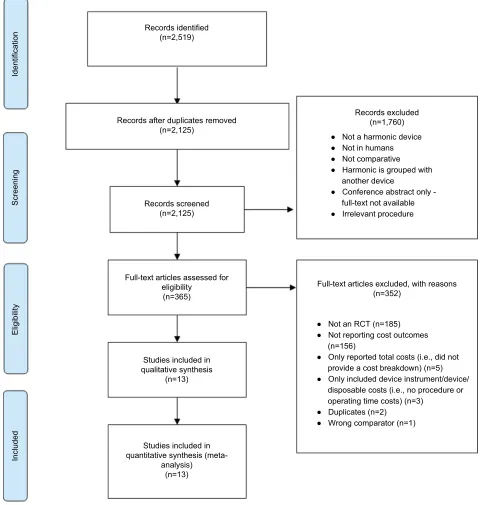
A total of 2,519 citations were identified. After removing duplicates, 2,125 unique records were reviewed. Following title and abstract review, 1,760 citations were excluded if the studies were not assessing a Harmonic device, not in humans, not comparative, conference abstracts only, grouped Harmonic devices with another device, or conducted in an irrelevant procedure. Of the 365 full texts retrieved for review, 352 were further excluded if the studies were non-RCTs (n=185); did not report cost outcomes (n=156); only included instrument, device, or disposable costs (ie, did not report procedure or operating time costs) (n=3); exclusively reported total costs and did not provide a cost breakdown (n=5); used an irrelevant comparator (ie, LigaSure) (n=1); and were duplicates (n=2). Thirteen stud-ies, consisting of a total of 1,101 patients, that reported costs associated with the use of Harmonic devices and conventional techniques were included in the meta-analysis (Figure 1).18–30
The study characteristics are presented in Table 1. The sam-ple sizes of the included studies ranged from 20 to 261 patients. Six studies reported cost data for thyroidectomy,18,19,22,23,25,26 two studies reported data for Nissen fundoplication,24,27 two stud-ies reported data for colectomy,20,28 and three studies reported data for other surgical procedures (ie, cholecystectomy,29 pancreaticoduodenectomy,30 and gastrectomy21). In all studies, Harmonic devices were compared to conventional techniques. The UltraCision Harmonic Scalpel or Shears were used in seven studies,18–20,24,27–29 the Harmonic Focus was used in three studies,21,22,26 the Harmonic CS-14C25 and the Harmonic Wave30 were used in one study each, and one study did not specify the type of Harmonic device that was used.23
ClinicoEconomics and Outcomes Research downloaded from https://www.dovepress.com/ by 118.70.13.36 on 21-Aug-2020
Dovepress
Cheng et al
Different comparators were used for the Harmonic devices in these studies; eight studies used monopolar or bipolar electrocautery with one or more of sutures, clips, clamp and tie, or ligation,19–22,26,28–30 while ligatures and cauterization,18 cut and ligature,23 right-angled multifire clip applier,24 knot-tying,25 and Ligaclips27 were used by one study each. Three studies had three arms (ie, Harmonic device, conventional techniques, LigaSure vessel sealing system [n=2], or electrothermal bipolar vessel sealers [n=1]). The
third comparator from these studies was excluded from our analyses.20,26,28 Most studies (n=9) originated in Europe (eg, Italy, Spain, France, Sweden). Other regions included Japan (n=1),21 Brazil (n=1),23 and USA (n=2).24,27
Risk of bias assessment
Risk of bias assessments and individual study quality assess-ments are presented in Figure S3. The quality of studies varied in terms of random sequence generation, allocation
Figure 1 PRiSMA diagram for the systematic literature search.
Abbreviation: RCT, randomized controlled trial.
Records identified (n=2,519)
Identification
Screening
Records after duplicates removed (n=2,125)
Records excluded (n=1,760)
Full-text articles excluded, with reasons (n=352)
● Not a harmonic device ● Not in humans ● Not comparative ● Harmonic is grouped with another device
● Conference abstract only full-text not available ● Irrelevant procedure
● Not an RCT (n=185) ● Not reporting cost outcomes (n=156)
● Only reported total costs (i.e., did not provide a cost breakdown) (n=5) ● Only included device instrument/device/ disposable costs (i.e., no procedure or operating time costs) (n=3)
● Duplicates (n=2) ● Wrong comparator (n=1) Records screened
(n=2,125)
Full-text articles assessed for eligibility
(n=365)
Studies included in qualitative synthesis
(n=13)
Studies included in quantitative synthesis
(meta-analysis) (n=13)
Eligibilit
y
Included
ClinicoEconomics and Outcomes Research downloaded from https://www.dovepress.com/ by 118.70.13.36 on 21-Aug-2020
Dovepress Harmonic devices and procedure costs
Table 1
Study and baseline characteristics for studies meeting the inclusion criteria
Study
Country
Patient population/ procedure
Intervention/comparator
n
Age, years (mean
±
SD)
Male (%)
Original cost units
Types of costs included
Frazzetta et al
18
italy
Total thyroidectomy
UltraCision Harmonic Scalpel
60 54.5 (23–83) # 25.0 2005 Euros • Anesthesia kit •
OR time and personnel
• OR equipment • Drugs • HS device
Ligatures and cauterization
60
53.5 (21–83)
#
36.7
Hallgrimsson et al
19
Sweden
Patients with Graves’ disease Total thyroidectomy
UltraCision Harmonic Scalpel
27 42 (20–70)* 33.3 2006 SEK • Anesthesia kit • OR equipment • HS device
Mono/bipolar coagulation, ligatures/clips
24
34 (20–59)*
12.5
Hubner et al
20,**
Switzerland
Patients with benign and malignant colon disease Left-sided colorectal resection
UltraCision Harmonic Scalpel
20
60 (44–80)*
50.0
2007 CHF
•
OR time (anesthesia included)
•
OR consumables (eg, clips)
•
HS device
Monopolar electrosurgery scissors
20 62 (33–80)* 45.0 inoue et al 21 Japan
Patients with adenocarcinoma of the stomach various gastrectomy procedures
Harmonic FOCUS 30 64 (41–79)* 70.0 2010 USD • OR time • OR consumables • HS device
Monopolar electrocautery and ligation
29
67 (45–92)*
73.3
Konturek et al
22
Poland
Patients with bilateral, non- toxic multinodular goiter Total thyroidectomy Ultrasonic Harmonic FOCUS shears
41 41.1 ± 7.5 17.1 2012 Euros • OR time • Anesthesia time •
OR consumables (eg, ligatures)
•
HS device
Bipolar coagulation and clip- ligation
41
42.0
±
7.5
19.5
Kowalski et al
23
Brazil
Patients with benign or malignant disease Total thyroidectomy
Ultrasonic Harmonic Scalpel
128 47.9 ± 12.9 8.6 2009 USD • OR time • intra-operative resources • Drugs • LOS • HS device
Cut and ligature
133
48.8
±
11.7
6.8
Laycock et al
24
USA
Nissen fundoplication for anti-reflux
UltraCision Harmonic Scalpel
10 N/R N/R 1994 USD • Operative time • HS device
Right-angle multifire clip applier
10
N/R
N/R
Lombardi et al
25
italy
Patients with euthyroid multinodular goiter, toxic multinodular goiter, Graves’ disease, intermediate or suspicious nodule, or papillary carcinoma Total thyroidectomy
Harmonic Scalpel CS-14C
100 49.5 ± 14.2 25.0 2008 Euros • OR personnel • OR utilization • Disposable materials • Drugs • Admissions/discharge •
Medical assistance and nursing charges
•
Preoperative examination
•
Unit general cost
• HS device Knot-tying 100 52.5 ± 23.4 22.0 ( Continued )
ClinicoEconomics and Outcomes Research downloaded from https://www.dovepress.com/ by 118.70.13.36 on 21-Aug-2020
Dovepress
Cheng et al
Study
Country
Patient population/ procedure
Intervention/comparator
n
Age, years (mean
±
SD)
Male (%)
Original cost units
Types of costs included
Pons et
al
26,Ω
France
Patients with multinodular goiter and benign disease Total thyroidectomy
Harmonic FOCUS
20
55.0
±
11.0
20.0
2009 USD
•
OR staff cost
•
Annual investment in materials
•
Consumables
•
Assume HS device cost included
Clamp and tie, bipolar cautery
20
Targarona et al
28,Ω
Spain
Patients with cancer, diverticulitis, polyps Left colectomy, sigmoidectomy, anterior resection
UltraCision Harmonic Scalpel
12
63 (45–82)*
75.0
2005 Euros
•
OR time
•
Disposables
•
HS device
Electrosurgery
11
71 (59–82)*
81.8
Uzunoglu et al
30
Germany,
italy,
Greece
Patients with malignant and benign pathologies of pancreatic head PD and pylorus preserving PD
Harmonic wave
57
64.8
±
10.9
57.9
2008 Euros
•
OR time and personnel
•
Materials
•
Assume HS device cost included
Electrocautery, clipping or suturing
44
65.2
±
12.0
65.9
Swanstrom and Pennings
27
USA
Patients with gastroesophageal reflux Nissen fundoplication
UltraCision Harmonic Shears
16
53 (37–71)*
56.3
1994 USD
•
Disposable instrument cost
•
OR time
•
HS device
Ligaclips
15
51 (39–82)*
66.7
Tempé et
al
29
Sweden
Cholecystectomy
UltraCision Harmonic Shears
40
43.2
±
11.8
32.5
2010 SEK
•
Preoperative visit
•
Surgical ward
•
Anesthesia
•
Operation time
•
Electrocautery
•
HS device
•
Sick leave
Electrocautery
33
45.8
±
11.6
21.2
Notes:
#Age reported as mean (range). *Age reported
as median (range). **Three-armed study; electrothermal bipolar vessel sealer arm was excluded from the analysis.
ΩThree-armed study; LigaSure arm was excluded from the analysis.
Abbreviations:
CHF, Swiss Franc; HS, Harmonic Scalpel; JPY, Japanese Yen; LOS, length of stay; N/R, not reported; OR, operating room; PD, pancreaticoduodenectomy; SEK, Swedish Krona; USD, US dollars.
Table 1
(
Continued
)
ClinicoEconomics and Outcomes Research downloaded from https://www.dovepress.com/ by 118.70.13.36 on 21-Aug-2020
Dovepress Harmonic devices and procedure costs
concealment, and selective reporting. Overall, the quality of studies was acceptable, with most studies having low or unclear risk of bias across most domains. Seven studies reported the methods used for random sequence generation such as drawing sealed envelopes (n=3),19,20,22 computer-generated random numbers (n=3),23,28,30 and drawing tech-niques (n=1).26 The methods for allocation concealment were defined by four studies; three studies used sealed enve-lopes19,20,22 and one study used a central telephonic system.23 Although six studies reported blinding of patients or outcome assessors,22,23,25,26,29,30 the risk of bias was considered low for cost outcomes because of their objectivity (ie, not requiring blinding to avoid bias). Across all studies, patient withdraw-als, loss to follow-up, and missing data were minimal. For nine studies, the bias associated with selective reporting was unclear. However, based on protocol assessment, three studies had a low risk of bias21,23,30 and one study had a high risk of bias (outcome noted in the methods was not included in the results).26
Analysis
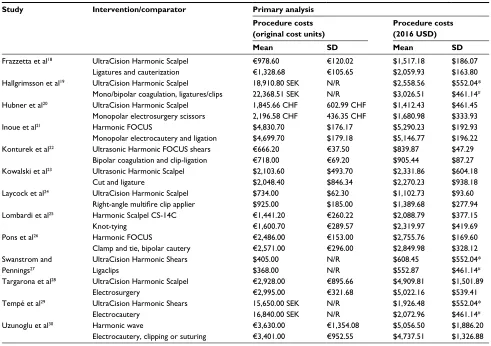
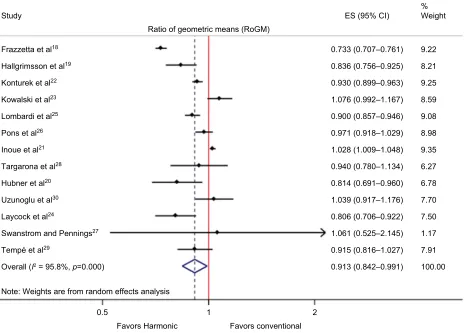
Across all included studies, the mean procedure costs (2016 USD) ranged from $608.45 to $5,290.23 for surgical pro-cedures conducted with Harmonic devices. Comparatively, the mean procedure costs for surgical procedures performed with the conventional techniques ranged from $552.87 to $5,146.77 (Table 2). Nine of the 13 included studies (69%) reported either a statistically significant (n=5) or numerical (n=4) reduction in procedure costs with the use of Harmonic devices as compared to conventional techniques. The remain-ing four studies reported effect measures that hovered near cost neutrality, with no studies reporting significantly higher procedure costs with the use of Harmonic devices (Figure 2).
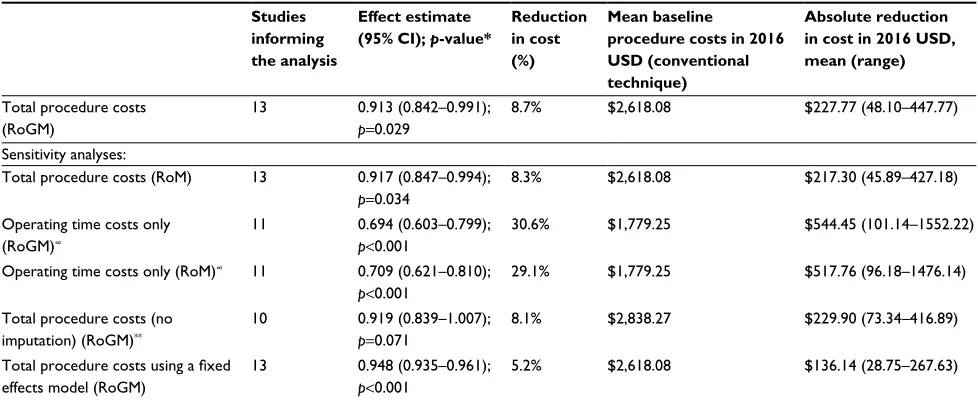
The primary meta-analysis of the 13 included studies showed that procedure costs were statistically significantly reduced by 8.7% (RoGM=0.913; 95% CI=0.842–0.991; p=0.029; I2=95.8%) with the use of Harmonic devices in contrast to conventional techniques (Figures 3 and 4). The absolute reduction from mean (conventional) baseline costs
Table 2 Cost inputs and assumptions for primary analysis on procedure costs
Study Intervention/comparator Primary analysis
Procedure costs (original cost units)
Procedure costs (2016 USD)
Mean SD Mean SD
Frazzetta et al18 UltraCision Harmonic Scalpel
Ligatures and cauterization
€978.60 €1,328.68 €120.02 €105.65 $1,517.18 $2,059.93 $186.07 $163.80
Hallgrimsson et al19 UltraCision Harmonic Scalpel
Mono/bipolar coagulation, ligatures/clips
18,910.80 SEK 22,368.51 SEK N/R N/R $2,558.56 $3,026.51 $552.04* $461.14#
Hubner et al20 UltraCision Harmonic Scalpel
Monopolar electrosurgery scissors
1,845.66 CHF 2,196.58 CHF 602.99 CHF 436.35 CHF $1,412.43 $1,680.98 $461.45 $333.93
inoue et al21 Harmonic FOCUS
Monopolar electrocautery and ligation
$4,830.70 $4,699.70 $176.17 $179.18 $5,290.23 $5,146.77 $192.93 $196.22
Konturek et al22 Ultrasonic Harmonic FOCUS shears
Bipolar coagulation and clip-ligation
€666.20 €718.00 €37.50 €69.20 $839.87 $905.44 $47.29 $87.27
Kowalski et al23 Ultrasonic Harmonic Scalpel
Cut and ligature
$2,103.60 $2,048.40 $493.70 $846.34 $2,331.86 $2,270.23 $604.18 $938.18
Laycock et al24 UltraCision Harmonic Scalpel
Right-angle multifire clip applier
$734.00 $925.00 $62.30 $185.00 $1,102.73 $1,389.68 $93.60 $277.94
Lombardi et al25 Harmonic Scalpel CS-14C
Knot-tying €1,441.20 €1,600.70 €260.22 €289.57 $2,088.79 $2,319.97 $377.15 $419.69
Pons et al26 Harmonic FOCUS
Clamp and tie, bipolar cautery
€2,486.00 €2,571.00 €153.00 €296.00 $2,755.76 $2,849.98 $169.60 $328.12 Swanstrom and Pennings27
UltraCision Harmonic Shears Ligaclips $405.00 $368.00 N/R N/R $608.45 $552.87 $552.04* $461.14#
Targarona et al28 UltraCision Harmonic Scalpel
Electrosurgery €2,928.00 €2,995.00 €895.66 €321.68 $4,909.81 $5,022.16 $1,501.89 $539.41
Tempé et al29 UltraCision Harmonic Shears
Electrocautery 15,650.00 SEK 16,840.00 SEK N/R N/R $1,926.48 $2,072.96 $552.04* $461.14#
Uzunoglu et al30 Harmonic wave
Electrocautery, clipping or suturing
€3,630.00 €3,401.00 €1,354.08 €952.55 $5,056.50 $4,737.51 $1,886.20 $1,326.88
Notes: *imputed as the average of the reported SDs from other studies included in the meta-analysis assessing the costs of Harmonic devices. #imputed as the average of the reported SDs from other studies included in the meta-analysis assessing the costs of conventional techniques.
Abbreviations: CHF, Swiss Franc; JPY, Japanese Yen; N/R, not reported; SEK, Swedish Krona; USD, US dollars.
ClinicoEconomics and Outcomes Research downloaded from https://www.dovepress.com/ by 118.70.13.36 on 21-Aug-2020
Dovepress
Cheng et al
was then calculated to be $227.77 (range=$48.10–$447.77) (Table 3). The results from all sensitivity analyses demon-strated cost reductions with the use of Harmonic devices as compared to conventional techniques (Table 3; Figure 5). When the RoM method was used, a statistically significant reduction of 8.3% (RoM=0.917; 95% CI=0.847–0.994; p=0.034; I2=95.6%) in mean procedure costs or an absolute reduction of $217.30 (range=$45.89–$427.18) was noted with the use of Harmonic devices (Figure S4). Similar results were observed when operative time costs, reported by 11 of the 13 included studies, were analyzed. When these studies were meta-analyzed, a statistically significant reduction of 30.6% or 29.1% was reported by the RoGM (0.694; 95% CI=0.603–0.799; p<0.001; I2=95.6%) and the RoM (0.709; 95% CI=0.621–0.810; p<0.001; I2=95.1%) methods in favor of the Harmonic devices, respectively (Table 3, Figure 4, Figures S5 and S6). Consequently, the Harmonic devices resulted in an absolute reduc-tion of $544.45 (range=$101.14–$1,552.22) or $517.76
Figure 2 Proportion of studies reporting statistically significant or nonsignificant
reductions or increases in procedure costs using the Harmonic devices as compared to conventional methods.
31% (4 studies)
Statistically significant reduction in cost
Increase in cost (not statistically significant) Reduction in cost (not statistically significant)
Statistically significant increase in cost
38% (5 studies)
31% (4 studies)
Figure 3 Forest plot of primary meta-analysis results for procedure costs (2016 US dollars [USD]) expressed as ratio of geometric means (RoGM); p-value (test of effect size [ES]=1) = 0.029.
Frazzetta et al18
Study ES (95% CI) %Weight
Ratio of geometric means (RoGM)
Hallgrimsson et al19 Konturek et al22 Kowalski et al23 Lombardi et al25 Pons et al26 Inoue et al21 Targarona et al28 Hubner et al20 Uzunoglu et al30 Laycock et al24
Swanstrom and Pennings27 Tempé et al29
Note: Weights are from random effects analysis
Favors Harmonic Favors conventional
1 2
0.5 Overall (I2 = 95.8%, p=0.000)
0.733 (0.707–0.761) 0.836 (0.756–0.925) 0.930 (0.899–0.963) 1.076 (0.992–1.167) 0.900 (0.857–0.946) 0.971 (0.918–1.029) 1.028 (1.009–1.048) 0.940 (0.780–1.134) 0.814 (0.691–0.960) 1.039 (0.917–1.176) 0.806 (0.706–0.922) 1.061 (0.525–2.145) 0.915 (0.816–1.027) 0.913 (0.842–0.991)
9.22 8.21 9.25 8.59 9.08 8.98 9.35 6.27 6.78 7.70 7.50 1.17 7.91 100.00
ClinicoEconomics and Outcomes Research downloaded from https://www.dovepress.com/ by 118.70.13.36 on 21-Aug-2020
Dovepress Harmonic devices and procedure costs
Figure 4 Cost breakdown by operating time costs and device/consumable (ie, anesthesia, clips, ligature, gauze, drugs, intraoperative resources) costs for Harmonic and conventional techniques using the ratio of geometric means (RoGM) method. Although the device/consumable cost for Harmonic is higher, the lower operating time costs offset these higher costs, such that the total procedure costs for Harmonic are 8.7% lower than those for conventional techniques (p=0.029).
$1,779
$1,235 $839
$1,156
$0 $500 $1,000 $1,500 $2,000 $2,500 $3,000
Conventional Harmonic
Operating time costs Device/consumable costs $2,618
$2,390 8.7% Reduction
Table 3 Percentage and absolute reduction in procedure costs with Harmonic devices compared with conventional techniques
Studies informing the analysis
Effect estimate (95% CI); p-value*
Reduction in cost (%)
Mean baseline
procedure costs in 2016 USD (conventional technique)
Absolute reduction in cost in 2016 USD, mean (range)
Total procedure costs (RoGM)
13 0.913 (0.842–0.991);
p=0.029
8.7% $2,618.08 $227.77 (48.10–447.77)
Sensitivity analyses:
Total procedure costs (RoM) 13 0.917 (0.847–0.994);
p=0.034
8.3% $2,618.08 $217.30 (45.89–427.18)
Operating time costs only
(RoGM)∞
11 0.694 (0.603–0.799);
p<0.001
30.6% $1,779.25 $544.45 (101.14–1552.22)
Operating time costs only (RoM)∞ 11 0.709 (0.621–0.810);
p<0.001
29.1% $1,779.25 $517.76 (96.18–1476.14)
Total procedure costs (no
imputation) (RoGM)**
10 0.919 (0.839–1.007);
p=0.071
8.1% $2,838.27 $229.90 (73.34–416.89)
Total procedure costs using a fixed effects model (RoGM)
13 0.948 (0.935–0.961);
p<0.001
5.2% $2,618.08 $136.14 (28.75–267.63)
Notes:*A random effects model was applied if not specified. ∞Excludes Konturek et al,22 and Uzunoglu et al.30 **Excludes Hallgrimsson et al,19 Swanstrom and Pennings,27 and Tempé et al.29
Abbreviations: RoM, ratio of means; RoGM, ratio of geometric means; USD, US dollars. (range=$96.18–$1,476.14) in mean (conventional) base-line costs if only operative time costs were considered (ie, initial acquisition costs of the Harmonic devices and consumables were excluded) using the RoGM and the RoM
methods, respectively. However, as might be expected, the device/consumable costs were 38% higher in the Harmonic group (Figure 4). As mentioned earlier, the SDs had to be imputed for three studies;19,27,29 when these studies were excluded from the analysis, Harmonic devices were associ-ated with a numerical reduction of 8.1% in procedure costs (RoGM=0.919; 95% CI=0.839–1.007; p=0.071; I2=96.8%) (Figure S7). Finally, if a fixed-effects model was used, a statistically significant reduction of 5.2% (RoGM=0.948; 95% CI=0.935–0.961, p<0.001; I2=95.8%) or an absolute reduction of $136.14 (range=$28.75–$267.63) was noted (Figure S8).
Discussion
Surgical costs are rising and one method to help control such costs is by using innovative and effective technologies that reduce hospital resource use while improving patient outcomes. Harmonic devices have demonstrated effectiveness and safety across a wide variety of surgical procedures. Using the most comprehensive evidence-based available and robust statisti-cal methods, our findings suggest that Harmonic devices can provide cost savings to hospital payers across many types of surgeries. Specifically, this meta-analysis of 13 studies showed that Harmonic devices were associated with a statistically sig-nificant reduction in total costs of ~$228 USD per procedure compared with conventional methods. These findings remained consistently in favor of Harmonic devices when a range of sensitivity analyses were conducted. Based on the methods
ClinicoEconomics and Outcomes Research downloaded from https://www.dovepress.com/ by 118.70.13.36 on 21-Aug-2020
Dovepress
Cheng et al
outlined by the Cochrane Collaboration, most included studies were of acceptable quality with low risk of bias.
The studies within our meta-analysis included a range of surgical procedures, many of which are commonly performed and thus are of high relevance. In a recent health care cost and utilization project (HCUP) statistical report, two of the procedure types included (ie, cholecystectomy and colorectal resection) were shown to be amongst the 15 most common inpatient procedures completed in the USA in 2012.31 Fur-thermore, gastrectomy, which was a focus of one study in our meta-analysis, is a procedure that showed the greatest rate of change over the period of 2003–2012 of all procedures assessed in the HCUP report, increasing in frequency by 150% from 9.3 to 23.6 per 100,000 individuals.31 Thyroidec-tomy, a focus of several of the studies in our meta-analysis, is also a common procedure, with over 130,000 procedures completed each year in the USA.32
The results presented in the current meta-analysis cor-roborate findings from studies that have compared cost outcomes between ultrasonic devices (including Harmonic) and conventional methods. All published meta-analyses to date have demonstrated either numerical or statistically sig-nificant cost reductions with ultrasonic/Harmonic devices; however, these studies focused solely on thyroid surgery.8,14 With the most recently published meta-analysis, Cheng et al,8 demonstrated that Harmonic devices were associated with a statistically significant reduction of 10% or $229 USD in total reported costs as compared with conventional techniques based on seven studies in thyroidectomy. The current meta-analysis, including a greater number of stud-ies as well as additional procedure types, demonstrated findings that were aligned with the recent Cheng et al’s publication, showing a statistically significant reduction of 8.7% or $228 USD in procedure costs with Harmonic devices (RoGM=0.913; 95% CI=0.842–0.991; p=0.029; 13 studies). Furthermore, the methods of this latter published meta-analysis are highly aligned to those of the current study as they adhered to best practices and methodologi-cal rigor to address pooling of cost data across regions.8 In
brief, these methods included the conversion of baseline costs to a common currency (ie, USD), inflation of costs to a common year (eg, 2016), and use of the RoGM and RoM effect measures to handle skewness that can occur with cost data and ease interpretation of outcomes expressed in different units.
As surgical needs continue to grow, increasing economic burden is inevitable. With rising costs, it is essential that decision-making for the adoption of new surgical tech-nologies comprehensively considers clinical, efficiency, and economic outcomes. As such, there is a greater push towards use of increasingly efficient and cost-effective technologies.33 Defining cost-effectiveness in the context of surgical devices in the hospital setting can be variable. Nevertheless, an innovative device with an acquisition cost that is higher than current care should improve outcomes and thereby help reduce downstream health care resource use. Such resources could include both direct and indirect costs such as operating staff time, nursing time, hospital days, complication treatments, re-operations, and additional product use. From a hospital purchaser’s perspective, a technology that is cost-effective could be one where costs (including upfront and downstream) are higher for the new technology but the additional benefit achieved is deemed to be worth the extra cost. A cost neutral technology could be one whereby savings in downstream resources completely offset its additional upfront cost, which is still a very desirable situation given that there is no increase in cost but there is additional benefit. A cost saving technology offers incremental clinical benefit and is associated with total costs that are less than current standard of care. The results of our analysis fit into this latter category; Harmonic devices were associated with a statistically significant reduction in procedure costs compared with conventional methods. When assessing individual studies that comprised the meta-analysis, studies that did not show a reduction in procedure costs still showed results that were cost neutral for the Harmonic devices and no studies reported statisti-cally significantly higher procedure costs with Harmonic
Figure 5 Forest plot of ratio of geometric means (RoGM) and ratio of means (RoM) summary effect measures for the primary and sensitivity analyses. Total procedure costs (RoGM)
Total procedure costs (RoM) Operating time costs only (RoGM) Operating time costs only (RoM) Total procedure costs (no imputation) (RoGM) Total procedure costs using a fixed effects model (RoGM)
0.913 (0.842–0.991); p=0.029 0917 (0.847–0.994); p=0.034 0.694 (0.603–0.799); p<0.001 0.709 (0.621–0.810); p<0.001 0.919 (0.839–1.007); p=0.071 0.948 (0.935–0.961); p<0.001
96% Heterogeneity
(I2 value)
RoM/RoGM
Summary effect; 95% Cl; p-value Summary effect; 95% Cl
0.7 0.9 1.1
96% 96% 95% 97% 96%
ClinicoEconomics and Outcomes Research downloaded from https://www.dovepress.com/ by 118.70.13.36 on 21-Aug-2020
Dovepress Harmonic devices and procedure costs
devices as compared to conventional methods (still a desir-able scenario).
Our analysis demonstrated that a large part of the cost savings associated with the Harmonic devices was due to reduced operating time costs (excluding the consumable cost of Harmonic) (Figure 5). As compared to conventional techniques, Harmonic devices incorporate multiple func-tions into one device (ie, perform simultaneous cutting and coagulation) and lead to improvements in both the control of the hemostasis and the precision of tissue dissection, thereby minimizing operating time.34 Several studies have demonstrated reduced operative time with Harmonic devices as compared to conventional techniques in different surgical areas, including gastrectomy,12 mastectomy,13 thyroidec-tomy,35 cholecystectomy,36 and parotidectomy.37 Previous meta-analyses of the Harmonic devices have shown that operating time can be reduced by up to 30 minutes.12,35 This can reduce resource use such as operative staff time, anes-thesia time, and operative equipment and materials. Another important concept that was not factored into this analysis is that of opportunity cost. Chatterjee et al33 discussed the notion of surgical opportunity cost and built a model to estimate this for various surgeries by considering procedure volume, profit margin, and surgery duration. In essence, if operating time is extended, this reduces the potential for fitting in more surgeries and obtaining further profits from those surgeries. For example, the opportunity cost per min-ute of general surgery was predicted to be $9 per minmin-ute, with higher procedure profit margins leading to even higher opportunity cost multipliers.33 If a less efficient technology added 30 minutes of operating time relative to a more efficient comparator, it would be associated with an opportunity cost of $270. This concept becomes more applicable for more common procedures as it would be easier to accumulate a sufficient number of cases to accrue the time necessary to perform an additional profitable procedure. As such, even if the fixed and direct costs of a device are high, the device can be extremely desirable if the surgical procedure has a high opportunity cost per minute and the device substantially reduces operating time.33
When the costs of the Harmonic devices and other con-sumables were excluded, a reduction of 30.6% or $544 per procedure was noted in our meta-analysis. Of course, there will always be an acquisition cost for the Harmonic device; however, it is likely to vary across regions and hospitals. Analyses that exclude the acquisition cost may allow regional consideration of the results in context of local Harmonic acquisition prices. Clearly, the lower the Harmonic device
cost, the higher the potential for greater cost savings to be achieved. The cost per minute of operating time can also vary across regions. In a few of the European studies included in our analysis, a low cost of ~€4 per minute was integrated into the study’s analysis.19,22 In the USA, higher operating costs per minute have been reported in recent literature, for example, a value of $62 per OR minute has been quoted in the USA.38 In general, reduction of operating time can provide substantial benefit for surgical practice; however, the saving of operating time should be set in relation to higher material costs, which needs to be evaluated within each institution.39
This systematic review and meta-analysis has several strengths including the comprehensive literature search, inclusion of a greater number of studies than any other pre-viously published cost meta-analysis assessing Harmonic devices, assessment of study quality, and the use of the most appropriate statistical methods for pooling and interpreting cost data. Furthermore, this meta-analysis included studies from various regions (ie, North America, Europe, Australia, South America, Asia) across the world. The findings, how-ever, should be interpreted in the context of the following limitations. First, the meta-analyses yielded high heterogene-ity, which may have been due to factors such as pooling cost data across surgical procedures, smaller number of studies within a specific surgical procedure (eg, only one study assessed cost outcomes in gastrectomy), and variability in study populations and settings. As such, a random effects model, which accommodates for heterogeneity, was used. Moreover, multiple sensitivity analyses demonstrated that the results remained robust and supported the main conclu-sions. As further data become available for cost outcomes with the Harmonic device across the procedure types stud-ied, subgroup analyses on various procedure types may be more achievable. Future research should also focus on the cost-effectiveness of Harmonic devices in procedures not covered here and as compared to other newer techniques and devices. Until such analyses are completed, the authors note that the results from this analysis are restricted to the surgical procedures included in the presented analyses (ie, gastrectomy, thyroidectomy, colectomy, cholecystectomy, Nissen Fundoplication, and pancreaticoduodenectomy). Second, a few studies that assessed cost outcomes for the Harmonic device could not be included because procedure costs were not reported (ie, studies only reported device or disposable costs or exclusively reported total costs without providing a cost breakdown). In brief, these studies reported mixed findings on whether the Harmonic scalpel saved or
ClinicoEconomics and Outcomes Research downloaded from https://www.dovepress.com/ by 118.70.13.36 on 21-Aug-2020
Dovepress
Cheng et al
added costs in procedures such as cholecystectomy, Nissen fundoplication, breast surgery, hysterectomy, gastrectomy, and thyroidectomy;40–47 however, it would be impossible to predict how these findings could have impacted the current meta-analysis in the absence of procedure costs. Third, not all studies specified the individual cost components that were present in their cost analyses. Where possible, these details were extracted and reported in the results of this manuscript. Although it is reasonable to assume that many of the core variables such as operating time, surgical materials, and devices costs were captured in all study-specific analyses, some inconsistencies such as the use of charges versus costs existed. Future costing studies in this area should clearly delineate all cost variables as well as capture total hospital-related costs (including procedure costs) where possible to optimize accuracy and utility of cost analyses for decision-making. Fourth, conference abstracts, which might have relevant cost information, especially for recent studies without a manuscript, were excluded, potentially increasing the risk of publication bias. However, published literature has suggested that conference abstracts frequently report preliminary results, which may not be representative of the final results.48 Furthermore, conference abstracts often involve insufficient information to determine study validity, a lack of a rigorous peer review process, and uncertainty regarding the methodological quality of evidence.49 With our analysis, it was also essential to understand the individual components included within the total reported costs, which are often only detailed in full-text publications. Fifth, the results of this analysis may not be entirely generalizable across settings, as resource use and costs are variable both within and between countries. Although several regions were included in the analysis, local variation in the key compo-nents of this study, namely Harmonic device prices and cost per OR minute, needs to be considered. Our analysis can nevertheless be used as a framework for guiding institution-specific assessments.
Conclusion
This systematic review and meta-analysis provided a cost comparison of Harmonic devices with conventional tech-niques in various surgical procedures. The results showed a statistically significant reduction of 8.7% in procedure costs or ~$228 USD per procedure in favor of the Harmonic devices. Therefore, Harmonic devices may represent a potentially cost saving hemostatic method for various surgi-cal procedures, as reductions in hospital resource use (eg, operative time) may offset the device costs. Future research
should focus on the cost-effectiveness of Harmonic devices in procedures not covered here and as compared to other newer techniques and devices.
Acknowledgments
This work was sponsored by Ethicon, Inc., manufacturer of the Harmonic devices, who provided funding to conduct the analysis and prepare the manuscript.
Author contributions
HC, JWC, and JFA were involved in the conception and design of the study, interpretation of the data, revising paper critically for intellectual content, and final approval. RAQ, NF, and BS were involved in data acquisition, data analysis, interpretation of the data, drafting of the paper, and final approval. CGC was involved in analyses and interpretation of the data, revising the paper critically for intellectual content, and final approval. All the authors agree to be accountable for all aspects of the work.
Disclosure
HC, JWC, and JFA are employees of Ethicon, Inc., manu-facturer of the Harmonic devices. RAQ, NF, BS and CGC are employees of Cornerstone Research Group, who were sponsored to perform this study by Ethicon, Inc. The authors report no other conflicts of interest in this work.
References
1. Rose J, Weiser TG, Hider P, Wilson L, Gruen RL, Bickler SW. Esti-mated need for surgery worldwide based on prevalence of diseases: a
modelling strategy for the WHO Global Health Estimate. Lancet Glob
Health. 2015;3 Suppl 2:S13–S20.
2. Meara JG, Leather AJ, Hagander L, et al. Global Surgery 2030: evidence and solutions for achieving health, welfare, and economic development.
Lancet. 2015;386(9993):569–624.
3. Etzioni DA, Liu JH, Maggard MA, Ko CY. The aging population and
its impact on the surgery workforce. Ann Surg. 2003;238(2):170–177.
4. Muñoz E, Muñoz W 3rd, Wise L. National and surgical health care
expenditures, 2005–2025. Ann Surg. 2010;251(2):195–200.
5. Ismail I, Wolff S, Gronfier A, Mutter D, Swanström LL. A cost
evaluation methodology for surgical technologies. Surg Endosc.
2015;29(8):2423–2432.
6. Snowdon A, Zur R, Shell J. Transforming Canada into a Global Centre for
Medical Device Innovation and Adoption. London, ON: Ivey Centre for
Health Innovation and Leadership, University of Western Ontario; 2011. 7. Vonlanthen R, Slankamenac K, Breitenstein S, et al. The impact of
complications on costs of major surgical procedures: a cost analysis of
1200 patients. Ann Surg. 2011;254(6):907–913.
8. Cheng H, Soleas IM, Ferko NC, Cameron CG, Clymer JW, Amaral JF. Hospital costs associated with thyroidectomy performed with a Harmonic device compared to conventional techniques: a systematic
review and meta-analysis. J Med Econ. 2016;19(8):750–758.
9. Cannizzaro MA, Borzì L, Lo Bianco S, Okatyeva V, Cavallaro A, Buffone A. Comparison between Focus Harmonic scalpel and other hemostatic techniques in open thyroidectomy: a systematic review and
meta-analysis. Head Neck. 2016;38(10):1571–1578.
ClinicoEconomics and Outcomes Research downloaded from https://www.dovepress.com/ by 118.70.13.36 on 21-Aug-2020
Dovepress Harmonic devices and procedure costs
10. Revelli L, Damiani G, Bianchi CB, et al. Complications in thyroid surgery. Harmonic Scalpel, Harmonic Focus versus Conventional
Hemostasis: a meta-analysis. Int J Surg. 2016;28 Suppl 1:S22–S32.
11. Ren ZH, Xu JL, Fan TF, Ji T, Wu HJ, Zhang CP. The harmonic scalpel versus conventional hemostasis for neck dissection: a meta-analysis of
the randomized controlled trials. PLoS One. 2015;10(7):e0132476.
12. Cheng H, Hsiao CW, Clymer JW, et al. Gastrectomy and D2 lymphad-enectomy for gastric cancer: a meta-analysis comparing the harmonic
scalpel to conventional techniques. Int J Surg Oncol. 2015;2015:397260.
13. Cheng H, Clymer JW, Ferko NC, et al. A systematic review and meta-analysis of Harmonic technology compared with conventional techniques in mastectomy and breast-conserving surgery with
lymph-adenectomy for breast cancer. Breast Cancer (Dove Med Press).
2016;8:125–140.
14. Zhang ZJ, Zhang P, Tian JH, et al. Ultrasonic coagulator for
thyroidec-tomy: a systematic review of randomized controlled trials. Surg Innov.
2010;17(1):41–47.
15. Higgins JPT, Green S. The Cochrane Handbook for Systematic Reviews
of Interventions. Oxford: Cochrane Collaboration; 2011. Available from: http://handbook-5-1.cochrane.org/.
16. Friedrich JO, Adhikari NK, Beyene J. Ratio of geometric means to analyze continuous outcomes in meta-analysis: comparison to mean differences and ratio of arithmetic means using empiric data and
simula-tion. Stat Med. 2012;31(17):1857–1886.
17. Friedrich JO, Adhikari NK, Beyene J. Ratio of means for analyzing continuous outcomes in meta-analysis performed as well as mean
dif-ference methods. J Clin Epidemiol. 2011;64(5):556–564.
18. Frazzetta M, Furgiuele G, Raimondo D, et al. [Ultrasonic dissector for total thyroidectomy: results of prospective randomized study] Tiroid-ectomia totale con impiego del dissettore ad ultrasuoni: risultati di uno
studio prospettico randomizzato. G Chir. 2005;26(8–9):295–301. Italian
[with English abstract].
19. Hallgrimsson P, Lovén L, Westerdahl J, Bergenfelz A. Use of the har-monic scalpel versus conventional haemostatic techniques in patients with Grave disease undergoing total thyroidectomy: a prospective
ran-domised controlled trial. Langenbecks Arch Surg. 2008;393(5):675–680.
20. Hubner M, Demartines N, Muller S, Dindo D, Clavien PA, Hahnloser D. Prospective randomized study of monopolar scissors, bipolar vessel
sealer and ultrasonic shears in laparoscopic colorectal surgery. Br J
Surg. 2008;95(9):1098–1104.
21. Inoue K, Nakane Y, Michiura T, et al. Ultrasonic scalpel for gastric
cancer surgery: a prospective randomized study. J Gastrointest Surg.
2012;16(10):1840–1846.
22. Konturek A, Barczyński M, Stopa M, Nowak W. Total thyroidectomy for non-toxic multinodular goiter with versus without the use of harmonic
FOCUS dissecting shears – a prospective randomized study. Wideochir
Inne Tech Maloinwazyjne. 2012;7(4):268–274.
23. Kowalski LP, Sanabria A, Vartanian JG, et al. Total thyroidectomy with
ultrasonic scalpel: a multicenter, randomized controlled trial. Head
Neck. 2012;34(6):805–812.
24. Laycock WS, Trus TL, Hunter JG. New technology for the division of short gastric vessels during laparoscopic Nissen fundoplication. A
prospective randomized trial. Surg Endosc. 1996;10(1):71–73.
25. Lombardi CP, Raffaelli M, Cicchetti A, et al. The use of “harmonic scalpel” versus “knot tying” for conventional “open” thyroidectomy:
results of a prospective randomized study. Langenbecks Arch Surg.
2008;393(5):627–631.
26. Pons Y, Gauthier J, Ukkola-Pons E, et al. Comparison of LigaSure vessel sealing system, harmonic scalpel, and conventional hemostasis in total
thyroidectomy. Otolaryngol Head Neck Surg. 2009;141(4):496–501.
27. Swanstrom LL, Pennings JL. Laparoscopic control of short gastric
vessels. J Am Coll Surg. 1995;181(4):347–351.
28. Targarona EM, Balague C, Marin J, et al. Energy sources for laparo-scopic colectomy: a prospective randomized comparison of conven-tional electrosurgery, bipolar computer-controlled electrosurgery and
ultrasonic dissection. Operative outcome and costs analysis. Surg Innov.
2005;12(4):339–344.
29. Tempé F, Jänes A, Cengiz Y. Cost analysis comparing ultrasonic fundus-first and conventional laparoscopic cholecystectomy using
electrocautery. Surg Endosc. 2013;27(8):2856–2859.
30. Uzunoglu FG, Stehr A, Fink JA, et al. Ultrasonic dissection versus conventional dissection techniques in pancreatic surgery: a
random-ized multicentre study. Ann Surg. 2012;256(5):675–679; discussion
679–680.
31. Fingar KR, Stocks C, Weiss AJ, Steiner CA. Most Frequent Operating
Room Procedures Performed in U.S. Hospitals, 2003–2012. Available
from: http://www.hcup-us.ahrq.gov/reports/statbriefs/sb186-Operating-Room-Procedures-United-States-2012.pdf.
32. Doheny K. For best thyroid surgery results, pick doctor with 25-plus cases a year [updated November 05, 2016]. Available from: https:// www.endocrineweb.com/news/thyroid-diseases/20364-best-thyroid-surgery-results-pick-doctor-25-plus-cases-year. Accessed October 02, 2017.
33. Chatterjee A, Payette MJ, Demas CP, Finlayson SR. Opportunity cost:
a systematic application to surgery. Surgery. 2009;146(1):18–22.
34. Grochola LF, Vonlanthen R. Surgical energy devices or devices for hemostasis. In: Clavien PA, Sarr MG, Fong Y, Miyazaki M, editors.
Atlas of Upper Gastrointestinal and Hepato-Pancreato-Biliary Surgery.
Berlin:Springer. 2016:37–44.
35. Cheng H, Soleas I, Ferko NC, Clymer JW, Amaral JF. A systematic review and meta-analysis of Harmonic Focus in thyroidectomy
com-pared to conventional techniques. Thyroid Res. 2015;8:15.
36. Catena F, Di Saverio S, Ansaloni L, et al. The HAC trial (harmonic for acute cholecystitis): a randomized, double-blind, controlled trial comparing the use of harmonic scalpel to monopolar diathermy for
laparoscopic cholecystectomy in cases of acute cholecystitis. World J
Emerg Surg. 2014;9(1):53.
37. Polacco MA, Pintea AM, Gosselin BJ, Paydarfar JA. Parotidectomy using the Harmonic scalpel: ten years of experience at a rural academic
health center. Head Face Med. 2017;13(1):8.
38. Shippert RD. A study of time-dependent operating room fees and how
to save $100 000 by using time-saving products. Am J Cosmet Surg.
2005;22(1):25–34.
39. Contin P, Gooßen K, Grummich K, et al. ENERgized vessel seal-ing systems versus CONventional hemostasis techniques in thyroid surgery--the ENERCON systematic review and network meta-analysis.
Langenbecks Arch Surg. 2013;398(8):1039–1056.
40. Bulus H, Basar O, Tas A, et al. Evaluation of three instruments for laparoscopic cholecystectomy: harmonic scalpel, bipolar vessel sealer,
and conventional technique. Minerva Chir. 2013;68(6):537–542.
41. Underwood RA, Dunnegan DL, Soper NJ. Prospective, randomized trial of bipolar electrosurgery vs ultrasonic coagulation for division of
short gastric vessels during laparoscopic Nissen fundoplication. Surg
Endosc. 1999;13(8):763–768.
42. Burdette TE, Kerrigan CL, Homa K. Harmonic scalpel versus
electro-cautery in breast reduction surgery: a randomized controlled trial. Plast
Reconstr Surg. 2011;128(4):243e–249e.
43. Holub Z, Voracek J, Jun LK, Lukac J. Laparoscopic hysterectomy:
randomized study of harmonic scalpel and electrosurgery. J Gynecol
Surg. 2000;16(1):33–39.
44. Holub Z, Jabor A, Kliment L, Voracek J, Lukac J, Barany B. Laparo-scopic staging of endometrial cancer using laparosonic instruments:
comparison with electrosurgery. Eur J Obstet Gynecol Reprod Biol.
2001;100(1):81–86.
45. Fitz-Gerald AL, Tan J, Chan KW, et al. Comparison of ultrasonic shears and traditional suture ligature for vaginal hysterectomy: randomized
controlled trial. J Minim Invasive Gynecol. 2013;20(6):853–857.
46. Kawabata R, Takiguchi S, Kimura Y, et al. A randomized phase II study of the clinical effects of ultrasonically activated coagulating shears
(Harmonic scalpel) in open gastrectomy for gastric cancer. Surg Today.
2016;46(5):561–568.
47. Ortega J, Sala C, Flor B, Lledo S. Efficacy and cost-effectiveness of the UltraCision harmonic scalpel in thyroid surgery: an analysis of 200 cases
in a randomized trial. J Laparoendosc Adv Surg Tech A. 2004;14(1):9–12.
ClinicoEconomics and Outcomes Research downloaded from https://www.dovepress.com/ by 118.70.13.36 on 21-Aug-2020
Dovepress
Cheng et al
ClinicoEconomics and Outcomes Research
Publish your work in this journal
Submit your manuscript here: https://www.dovepress.com/clinicoeconomics-and-outcomes-research-journal ClinicoEconomics and Outcomes Research is an international,
peer-reviewed open-access journal focusing on health technology assess-ment, pharmacoeconomics and outcomes research in the areas of diagnosis, medical devices, and clinical, surgical and pharmacological intervention. The economic impact of health policy and health systems
organization also constitute important areas of coverage. The manu-script management system is completely online and includes a very quick and fair peer-review system, which is all easy to use. Visit http://www.dovepress.com/testimonials.php to read real quotes from published authors.
Dovepress
48. Balshem H, Stevens A, Ansari M, et al. Finding Grey Literature Evidenceand Assessing for Outcome and Analysis Reporting Biases When Com-paring Medical Interventions: AHRQ and the Effective Health Care Pro-gram. Methods Guide for Comparative Effectiveness Reviews. (Prepared by the Oregon Health and Science University and the University of Ottawa Evidence-based Practice Centers under Contract Nos. 290-2007-10057-I and 290-2007-10059-I.) AHRQ Publication No. 13(14)-EHC096-EF. Rockville, MD: Agency for Healthcare Research and Quality. November 2013.
49. Tam VC, Hotte SJ. Consistency of phase III clinical trial abstracts presented at an annual meeting of the American Society of Clinical
Oncology compared with their subsequent full-text publications. J Clin
Oncol. 2008;26(13):2205–2211.
ClinicoEconomics and Outcomes Research downloaded from https://www.dovepress.com/ by 118.70.13.36 on 21-Aug-2020