Volume 2007, Article ID 29502,9pages doi:10.1155/2007/29502
Research Article
Effects of Digital Filtering in Data Processing of
Seismic Acceleration Records
Guergana Mollova
Department of Computer-Aided Engineering, University of Architecture, Civil Engineering and Geodesy, 1046 Sofia, Bulgaria
Received 12 April 2006; Revised 8 August 2006; Accepted 24 November 2006
Recommended by Liang-Gee Chen
The paper presents an application of digital filtering in data processing of acceleration records from earthquakes. Butterworth, Chebyshev, and Bessel filters with different orders are considered to eliminate the frequency noise. A dataset under investigation includes accelerograms from three stations, located in Turkey (Dinar, Izmit, Kusadasi), all working with an analogue type of seismograph SMA-1. Records from near-source stations to the earthquakes (i.e., with a distance to the epicenter less than 20 km) with different moment magnitudes Mw=3.8, 6.4, and 7.4 have been examined. We have evaluated the influence of the type of digital filter on time series (acceleration, velocity, displacement), on some strong motion parameters (PGA, PGV, PGD, etc.), and on the FAS (Fourier amplitude spectrum) of acceleration. Several 5%-damped displacement response spectra applying examined filtering techniques with different filter orders have been shown. SeismoSignal software tool has been used during the examples.
Copyright © 2007 Hindawi Publishing Corporation. All rights reserved.
1. INTRODUCTION
This material presents a study on the influence of signal pro-cessing techniques (digital filtering) used in data propro-cessing of acceleration records from earthquakes.
The recorded raw ground motion signals are always pre-processed by seismologists before any engineering and seis-mological analysis takes place. Strong-motion data process-ing has two main objectives to make the data useful for engi-neering analysis: (1) correction for the response of strong-motion instrument itself (analogue or digital type of in-strument can be used) and (2) reduction of random noise in the recorded signals [1]. Different authors and agen-cies around the world use various steps in data processing. The major three organizations in the United States (USGS, PEER, CSMIP) (USGS (US Geological Survey), PEER (Pa-cific Earthquake Engineering Research Centre), CSMIP (Cal-ifornia Strong-Motion Instrumentation Program)) also use different signal processing techniques to process records. For example, CSMIP realizes several basic steps [2]: (i) baseline correction (described inSection 2), (ii) instrument correc-tion, (iii) high-frequency filtering (Ormsby filter or lowpass Butterworth with 3rd-/4th-order for digital records), (iv) computation of response spectra (for damping values of 0, 2, 5, 10, and 20% of critical), and (v) high-pass filtering (the most important issue here is the choice of filter corner).
Another investigation is done in the frame of Italian Net-work ENEA [3]. A comparison between corrected accelera-tion for Campano-Lucano earthquake (Italy, 23/11/1980) us-ing time-domain FIR (Ormsby filter), IIR (elliptic filter), and frequency-domain FIR (FFT windows half-cosine smoothed in the transition band) is given there, using alternatively time-domain FIR (Ormsby filter), IIR (elliptic filter), and frequency-domain FIR (FFT windows half-cosine smoothed in the transition band). Other European countries also re-port about the specific data processing steps adopted by them [4].
4-pole filters (currently used by PEER), cascade acausal Butterworth 2-pole/2-pole filter (to emulate current USGS processing), and acausal Butterworth 4-pole filter (used by CSMIP). The effect of the filter order and high-pass cor-ner frequency for some real records has been evaluated as well. A new method for nonlinear filtering based on the wavelet transform is introduced in [9]. Further, the proposed approach is compared to two 4th-order linear filter banks (Butterworth and elliptic filters) using the synthetic and real earthquake database.
Another specific application of digital filters concerns seismic acquisition systems. The high performance of mod-ern digital seismic systems (Quanterra, MARS88, RefTek, STL, Titan) is commonly obtained by the use of oversam-pling and decimation techniques. In order not to violate the sampling theorem, each digital sampling rate reduction must include a digital antialias filter [10]. To achieve maximum resolution during oversampling, the filters must be maxi-mally steep. In addition, they should be stable and cause no distortion of the input signal, at least not within the fil-ter’s passband. This requires linear-phase filters which are passing signals without phase changes, causing only a con-stant time shift. Digital antialias filters are generally imple-mented as zero-phase FIR filters [10]. From practical point of view it is important to know that they can “generate” pre-cursory signals to impulsive seismic arrivals because of their symmetrical impulse response. These artifacts lead to the se-vere problems for the determination of onset times and on-set polarities (i.e., they can be easily misinterpreted as seis-mic signals). Different methods to suppress them have been reported (e.g., the zero-phase filter can be changed into a minimum-phase one, prior to any analysis of onset polari-ties).
There are a lot of software packages used in the field of digital seismology. One good example is SeismoSignal [11]. This program gives an easy and efficient way to process strong-motion data and the capability of deriving a num-ber of strong-motion parameters often required by seismol-ogists and earthquake engineers. We have decided to use this program to set different filter configurations and to evalu-ate the obtained strong-motion parameters. PREPROC [12] is another package, designed to assist seismologists in pre-processing data in some standard way prior to analysis (so-called cleaning of raw digital data—removing glitches and dropouts), to simulate standard and user-defined instru-ments and to generate synthetic seismograms for selected earthquakes. In its early development, PREPROC was closely linked to the program PITSA [10]. PITSA contains numerous tools for digital signal processing and routine analysis: tering functions (Butterworth, Gaussian bandpass, notch fil-ters, etc.), estimation of earthquake magnitude, baseline cor-rection, instrument corcor-rection, simulation of arbitrary in-struments characteristics, and so forth. The USGS develops own software package BAP [13] to process strong-motion earthquake records. BAP calculates velocity and displace-ment from the input acceleration, makes linear baseline cor-rection, applies instrument corcor-rection, filters high-frequency and/or low-frequency content from the time series, calculates
the Fourier amplitude spectrum (FAS), and determines the response spectra.
2. DATA CORRECTION AND FILTERING
We follow data correction steps proposed by Zar´e and Bard [14]. According to this procedure, a threshold level of 3 (∼10 dB) for the normalized signal-to-noise ratio (SNR) is selected
Rsn(f)=
S(f)/√ts
N(f)/√tn ≥3 ∀f ∈
fp1,fp2
. (1)
Here,S(f) and N(f) are Fourier transforms of the signal and noise, calculated over lengthstsandtn, respectively. The
same authors propose a catalogue of accelerometric data of Turkey which includes frequency edges fp1 and fp2 for the records from different stations, computed according to the above procedure. It is proved [14] that in the band [fp1,fp2] the information from the records is meaningful and a band-pass filter should be applied to eliminate the frequency noise. A Butterworth bandpass filter of order 2 is applied there. In other words, the appropriate frequency band for each record is calculated on the basis of the ratio of FAS of appropriately selected signal and noise windows. Then, the resulting FAS is compared with the theoretical shape of the far-field FAS of acceleration.
The band [fp1,fp2] is also known as usable data band-width (UDB). The UDB gives the frequency or period range within which the data can be used for seismological and earthquake engineering applications. Outside this band, the bandpass filter should remove as much as possible because of noise contamination [2]. Rinaldis [3] also reports about the usefulness of application of SNR procedure to extract fre-quency edges of bandpass filter.
We have decided to vary with different types of causal bandpass filters (not only Butterworth of order 2) and to evaluate the resulting effect on time series (acceleration, ve-locity, displacement), on the strong-motion parameters, and on the FAS of acceleration.
The dataset under our investigation includes accelero-grams from three stations in Turkey (Dinar, Izmit, Ku-sadasi), all working with analogue type of seismograph SMA-1 (Kinemetrics). Information for the stations and corre-sponding earthquakes is given in Table 1 (extracted from the catalogue of the accelerometric data of Turkey [14]). We choose to examine only records from near-source sta-tions to the earthquakes (i.e., with a distance to the epicenter less than 20 km) with different moment magnitudes Mw of earthquakes, namely, Mw =3.8, 6.4, and 7.4. The last two earthquakes are known as Dinar earthquake of October 1, 1995 (Mw=6.4) and Kocaeli earthquake of August 17, 1999 (Mw=7.4).
Table1: Stations and data under investigation.
Station Coordinates of station fp1[ Hz] fp2[ Hz] Earthquake (date) Coordinatesof epicenter Mw Distance to theepicenter [ Km]
DIN Dinar Meteo 38.06N 0.2 20 01/10/1995 38.11N 6.4 10
30.15E 30.05E
IZT Izmit Meteo 40.79N 0.12 20 17/08/1999 40.70N 7.4 13
29.96E 29.91E
KUS Kusadasi Meteo 37.86N 3.5 18 29/05/1997 37.89N 3.8 7
27.26E 27.31E
Table2: Parameters of uncorrected acceleration records and baseline correction coefficients.
Station Components PGA ( m/s2) Number of data Baseline correctiony=a0+a1x
a0 a1
Dinar
NS 2.816282 5599 −6.16367·10−2 3.82333·10−6
EW 3.297235 5593 −5.76997·10−2 −1.23158·10−5
V 1.506781 5595 −5.34008·10−2 1.73586·10−6
Izmit
NS 1.711672 10 398 −1.78769·10−2 1.09724·10−6
EW 2.249119 10 391 −1.37701·10−2 −5.69802·10−6
V 1.463919 10 397 −1.77262·10−2 2.02909·10−6
Kusadasi
NS 0.214332 1244 −6.69740·10−4 7.84655·10−5
EW 0.212107 1241 −4.32803·10−3 5.95435·10−5
V 0.188608 1246 −1.18139·10−3 −3.68099·10−5
digital equipment have been downloaded1 (in raw format with no instrument correction or other processing). Full dataset in our case includes 9 files, or 3 files per North-South (NS), East-West (EW), and Vertical (V) components for each record. The PGA (peak ground acceleration) and the num-ber of data with a time step of 0.005 second for the uncor-rected records are shown inTable 2. The coefficients of linear baseline correction are also given there. As can be seen, the longest is Izmit record.
Baseline correction, as implemented in SeismoSignal [11], consists in (i) determining through regression analysis (least squares fit method), the polynomial curve that best fits the time-acceleration pairs of values and then (ii) subtract-ing from the actual acceleration values their correspondsubtract-ing counterparts as obtained with the regression-derived equa-tion. The aim of baseline correction [16] is to remove all spurious baseline trends, usually noticeable in the displace-ment time history, obtained from double-time integration of uncorrected acceleration records. Polynomials of up to the third degree can be employed for this purpose. We use a lin-ear baseline correctiony=a0+a1x(as accepted in [11]) and do not examine here the role of this processing technique.
For our investigation we apply bandpass filters with dif-ferent ordersN designed by Butterworth, Chebyshev (type I), and Bessel approximation methods. Butterworth filters
1Accelerograms (raw records) obtained through the National
Strong-Motion Network of Turkeyhttp://angora.deprem.gov.tr
have a maximally flat response in the passband but at the cost of smaller roll-offslope (in comparison to a Chebyshev filter of the same order). The later, however, can be easily overcome by the use of a higher order filter. In the case of Chebyshev-type I approximation, we obtain an equiripple amplitude characteristic in the passband. In our examples we are interested in how the value of the ripple in the pass-band will affect strong-motion parameters. When compared to their Butterworth and Chebyshev counterparts, Bessel fil-ters produce the slowest frequency roll-offand require the highest order to meet an attenuation specification. In addi-tion, all causal IIR filters cause time-delay distortion in the filtered signal (usually measured by group delay).
We investigate how the choice of the digital filter influ-ences the following strong-motion parameters, calculated us-ing SeismoSignal:
(i) peak ground acceleration: PGA=max|a(t)|; (ii) peak ground velocity: PGV=max|v(t)|; (iii) peak ground displacement: PGD=max|d(t)|; (iv) Arias intensity:
Ia= π
2g tr
0
a(t)2dt; (2)
0 2 4 6 8 10 12 14 16 18 20 22 24 26 28 Time (s)
3.5 2 0.5 1 3
A
cce
le
ra
ti
o
n
(m/s
2)
Uncorrected (gray)
0 2 4 6 8 10 12 14 16 18 20 22 24 26 28 Time (s)
0.4 0.2 0 0.2 0.4
V
elocit
y
(m/s)
0 2 4 6 8 10 12 14 16 18 20 22 24 26 28 Time (s)
0.1 0.06 0.02 0.02 0.06 0.1
Displac
eme
nt
(m)
(a) Butterworth
0 2 4 6 8 10 12 14 16 18 20 22 24 26 28 Time (s)
3 2 1 0 1 2
A
cce
le
ra
ti
o
n
(m/s
2)
Uncorrected (gray)
0 2 4 6 8 10 12 14 16 18 20 22 24 26 28 Time (s)
0.3 0.2 0.01 0.1 0.2 0.3
V
elocit
y
(m/s)
0 2 4 6 8 10 12 14 16 18 20 22 24 26 28 Time (s)
0.08 0.04 0 0.04 0.08
Displac
eme
nt
(m)
(b) Chebysher (3dB)
0 2 4 6 8 10 12 14 16 18 20 22 24 26 28 Time (s)
3 2 1 0 1 2 3
A
cce
le
ra
ti
o
n
(m/s
2)
Uncorrected (gray)
0 2 4 6 8 10 12 14 16 18 20 22 24 26 28 Time (s)
0.3 0.2 0.1 0 0.1 0.2 0.3
V
elocit
y
(m/s)
0 2 4 6 8 10 12 14 16 18 20 22 24 26 28 Time (s)
0.12 0.08 0.04 0 0.04 0.08 0.12
Displac
eme
nt
(m)
(c) Bessel
Figure1: Corrected Dinar acceleration, velocity, and displacement (EW component) using bandpass filter:N=4,fp1=0.2 Hz,fp2=20 Hz.
(vi) significant duration TD: the interval of time over which a proportion (percentage) of the totalIais
accu-mulated (by default: the interval between the 5% and 95% thresholds).
The parametertrin (2) denotes the total seismic duration,g
is the acceleration of gravity.
3. ANALYSIS OF RESULTS AND CONCLUSIONS
0 0.5 1 1.5 2 2.5 3 Rp (dB)
1.2 1.4 1.6 1.8 2 2.2 2.4 2.6 2.8
PGA
(m/s
2)
Dinar Izmit
Kusadasi (0.1)
(a)
0 0.5 1 1.5 2 2.5 3 Rp (dB)
0.2 0.22 0.24 0.26 0.28 0.3 0.32 0.34 0.36
PGV
(m/s)
Dinar Izmit
Kusadasi (0.01)
(b)
0 0.5 1 1.5 2 2.5 3 Rp (dB)
0.05 0.055 0.06 0.065 0.07 0.075 0.08 0.085 0.09 0.095 0.1
PGD
(m)
Dinar Izmit
Kusadasi (0.001)
(c)
0 0.5 1 1.5 2 2.5 3 Rp (dB)
0.4 0.6 0.8 1 1.2 1.4 1.6
Ia
(m/s)
Dinar Izmit
Kusadasi (0.001)
(d)
0 0.5 1 1.5 2 2.5 3 Rp (dB)
0 5 10 15 20 25 30 35
TD
(s)
Dinar Izmit
Kusadasi
(e)
Figure2: Strong-motion parameters as a function of the passband ripple Rp [dB] (NS component). Note: different scales for Kusadasi
record.
records are bandpass filtered with ordersN = 2, 4, 6 (and
N = 8 for the weakest earthquake with Mw=3.8). Exam-ples have shown that only these filters orders could be applied (under given corner frequency conditions fromTable 1). For
10 20 30 40 1
2
Frequency (Hz)
F
o
ur
ier
amplitude
(m/s)
10 20 30 40
1 2
Frequency (Hz)
F
o
ur
ier
amplitude
(m/s)
10 20 30 40
1 2
Frequency (Hz)
F
o
ur
ier
amplitude
(m/s)
(a) Butterworth
10 20 30 40
1 2
Frequency (Hz)
F
o
ur
ier
amplitude
(m/s)
10 20 30 40
1 2
Frequency (Hz)
F
o
ur
ier
amplitude
(m/s)
10 20 30 40
1 2
Frequency (Hz)
F
o
ur
ier
amplitude
(m/s)
(b) Chebyshev (3 dB)
10 20 30 40
1 2
Frequency (Hz)
F
o
ur
ier
amplitude
(m/s)
10 20 30 40
1 2
Frequency (Hz)
F
o
ur
ier
amplitude
(m/s)
10 20 30 40
1 2
Frequency (Hz)
F
o
ur
ier
amplitude
(m/s)
(c) Bessel
Figure3: Fourier spectra of acceleration for bandpass filtered Izmit record between 0.12 Hz and 20 Hz for ordersN =2, 4, and 6 (from up to down) NS component. Note: the graphics in gray color show the uncorrected records.
(fp1=0.2 Hz, fp2 =20 Hz) are shown in Figures1(a),1(b),
1(c), respectively. It is obvious that in all cases corrected ac-celeration is affected by the time shift (due to the application of causal IIR filters).
We have obtained the numerical values of the examined strong-motion parameters for Butterworth, Chebyshev, or Bessel processed records using filters from different orders (not shown here). The only parameter which does not de-pend on the choice of the filter is TP.
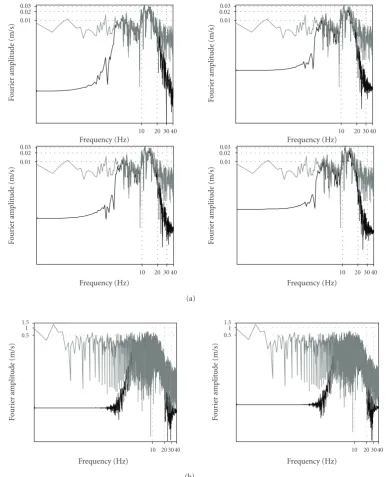
Figure 2shows the influence of the Chebyshev passband ripple Rp [dB] on the NS component of Dinar, Izmit, and Kusadasi records (forN =4). Different examinations vary-ing Rp in the range from 0.2 to 3 dB have been made. The predominant period TP is a constant value in the above range and does not depend on Rp. Significant duration TD is al-most constant too (see the last graphic ofFigure 2). However,
the peak values of processed time series and Arias intensityIa
depend significantly on the variation of Rp (it is valid for all station records). We have found that PGA decreases substan-tially (with up to 15–20%) with increasing Rp. The PGA is one of the main parameters of interest for engineering appli-cation. As we have expected, values of all parameters for Rp= 0.2 dB are the closest to the values obtained with Butterworth 4th-order filter (i.e., maximally flat passband case).
10 20 30 40 0.01
0.02 0.03
Frequency (Hz)
F
o
ur
ier
amplitude
(m/s)
10 20 30 40 0.01
0.02 0.03
Frequency (Hz)
F
o
ur
ier
amplitude
(m/s)
10 20 30 40 0.01
00..0203
Frequency (Hz)
F
o
ur
ier
amplitude
(m/s)
10 20 30 40 0.01
00..0203
Frequency (Hz)
F
o
ur
ier
amplitude
(m/s)
(a)
10 20 3040 0.5
1 1.5
Frequency (Hz)
F
o
ur
ier
amplitude
(m/s)
10 20 3040 0.5
1 1.5
Frequency (Hz)
F
o
ur
ier
amplitude
(m/s)
(b)
Figure4: (a) Fourier spectra of acceleration for bandpass Chebyshev filtered Kusadasi record between 3.5 Hz and 18 Hz forN = 4, V component with Rp=0.2 dB and 1.1 dB (left column), and Rp=2 dB and 3 dB (right column). Note: the graphics in gray color show the uncorrected records. (b) Fourier spectra of acceleration for bandpass Chebyshev filtered Izmit record between 0.12 Hz and 20 Hz forN=4, V component with Rp=1.2 dB (left) and 3 dB (right). Note: the graphics in gray color show the uncorrected records.
that the frequency content of the given accelerogram can be fully determined.
As explained in [14], a more or less constant amplitude of the FFT spectrum at frequencies lower than fp1 or at frequencies beyond fp2 is generally an indication of large low- or high-frequency noise, respectively. We can see in
Figure 3 that the parts of the FAS (uncorrected) below 0.12 Hz and beyond 20 Hz are abnormally high. This proves the necessity of application of bandpass filter with the above
frequency edges regarding low-and high-frequency noise suppression.
0 10 20 30 40 50 60 Period (s)
0.03 0.06 0.09 0.12 0.15 0.18 0.21 0.24 0.27
R
esponse
displac
ement
(m)
N=2 (upper plot) N=4 (in gray color)
N=6 (lower plot)
(a)
0 10 20 30 40 50 60
Period (s) 0.05
0.1 0.15 0.2 0.25 0.3 0.35 0.4 0.45
R
esponse
displac
ement
(m)
N=2 ( lower plot) N=4 (in gray color)
N=6 (upper plot)
(b)
0 10 20 30 40 50 60
Period (s) 0.05
0.1 0.15 0.2 0.25 0.3 0.35 0.4
R
esponse
displac
ement
(m)
N=2 ( upper plot) N=4 (in gray color)
N=6 (lower plot)
(c)
Figure 5: Displacement response spectra for bandpass filtered Izmit record, NS component, using (a) Butterworth, (b) Chebyshev (3 dB), (c) Bessel filters.
Finally, the 5%-damped displacement response spectra (SD) for Izmit record (NS component) have been computed (Figures 5(a),5(b)),5(c), applying different filtering tech-niques and filter orders. The evaluation is done for periods between 0.02 second and 60 seconds with a period step of 0.02 second. The graphical results fromFigure 5correspond to these ones fromFigure 3(Fourier spectra for Izmit record filtered with the same edge frequencies). As could be seen, changing the filter order (between two and four/or between two and six) influences the smaller SD. The only exception is Chebyshev filter with orderN=6 (Figure 5(b)) which re-flects larger values of SD.
We would like finally to emphasize that all investigations in this study are carried out using chosen filtering techniques (Butterworth, Chebyshev-type I, or Bessel methods) and un-der given parameters (orun-der, edge frequencies, and passband ripple for Chebyshev filter). The obtained numerical and graphical results may not be relevant when other filtering techniques or parameters are applied.
ACKNOWLEDGMENTS
This work is supported by the Alexander von Humboldt Foundation (Project BUL 1059420). The author would like also to thank all anonymous reviewers for their useful rec-ommendations and remarks.
REFERENCES
[1] B. Darragh, W. Silva, and N. Gregor, “Strong motion record processing for the PEER centre,” in Proceedings of COS-MOS Invited Workshop on Strong-Motion Record Processing, Richmond, Calif, USA, May 2004,http://www.cosmos-eq.org/ recordProcessingPapers.html.
[2] A. F. Shakal, M. J. Huang, and V. M. Graizer, “CSMIP strong-motion data processing,” inProceedings of COSMOS Invited Workshop on Strong-Motion Record Processing, Rich-mond, Calif, USA, May 2004, http://www.cosmos-eq.org/ recordProcessingPapers.html.
[3] D. Rinaldis, “Aquisition and processing of analogue and dig-ital accelerometric records: ENEA methodology and experi-ence from Italian earthquakes,” in Proceedings of COSMOS Invited Workshop on Strong-Motion Record Processing, Rich-mond, Calif, USA, May 2004, http://www.cosmos-eq.org/ recordProcessingPapers.html.
[4] “Internet Site of the European Strong-Motion Database,”
http://www.isesd.cv.ic.ac.uk.
[5] D. M. Boore and S. Akkar, “Effect of causal and acausal fil-ters on elastic and inelastic response spectra,”Earthquake En-gineering and Structural Dynamics, vol. 32, no. 11, pp. 1729– 1748, 2003.
[6] D. M. Boore, “On pads and filters: processing strong-motion data,”Bulletin of the Seismological Society of America, vol. 95, no. 2, pp. 745–750, 2005.
[8] P. Bazzurro, B. Sjoberg, N. Luco, W. Silva, and R. Darragh, “Effects of strong motion processing procedures on time his-tories, elastic and inelastic spectra,” inProceedings of COS-MOS Invited Workshop on Strong-Motion Record Processing, Richmond, Calif, USA, May 2004,http://www.cosmos-eq.org/ recordProcessingPapers.html.
[9] A. Pazos, M. J. Gonz´alez, and G. Alguacil, “Non-linear filter, using the wavelet transform, applied to seismological records,” Journal of Seismology, vol. 7, no. 4, pp. 413–429, 2003. [10] F. Scherbaum, Of Poles and Zeros: Fundamentals of Digital
Seismology, Kluwer Academic, Dordrecht, The Netherlands, 2nd edition, 2000.
[11] “SeismoSignal - a computer program for signal processing of strong-motion data,” 2004, ver.3.1.0,http://www.seismosoft .com.
[12] A. Plesinger, M. Zmeskal, and J. Zednik,Automated Preprocess-ing of Digital Seismograms - Principles and Software, Prague-Golden, Prague, Czech Republic, 1996.
[13] A. M. Converse and A. G. Brady, “BAP: basic strong-motion accelerogram processing software; ver.1.0,” Open-File Report 92-296A, p. 178, U.S. Geological Survey, Denver, Colo, USA, 1992.
[14] M. Zar´e and P.-Y. Bard, “Strong motion dataset of Turkey: data processing and site classification,”Soil Dynamics and Earth-quake Engineering, vol. 22, no. 8, pp. 703–718, 2002.
[15] D. Rinaldis, J. M. H. Menu, and X. Goula, “A study of vari-ous uncorrected versions of the same ground acceleration sig-nal,” inProceedings of the 8th European Conference on Earth-quake Engineering (ECEE ’86), vol. 7, pp. 1–8, Lisbon, Portu-gal, September 1986.
[16] D. M. Boore, “Effect of baseline corrections on displacements and response spectra for several recordings of the 1999 Chi-Chi, Taiwan, earthquake,”Bulletin of the Seismological Society of America, vol. 91, no. 5, pp. 1199–1211, 2001.
Guergana Mollovareceived the M.S. and Ph.D. degrees both in electronics from the Technical University of Sofia, Bulgaria. Since 1992, she is with the Department of Computer-Aided Engineering of the Uni-versity of Architecture, Civil Engineering and Geodesy of Sofia, where she is currently an Associate Professor. Her main research area is digital signal processing theory and methods, including the least-squares